DNA Interaction, DNA Photocleavage, Photocytotoxicity In Vitro, and Molecular Docking of Naphthyl-Appended Ruthenium Complexes

Abstract
1. Introduction
2. Results and Discussion
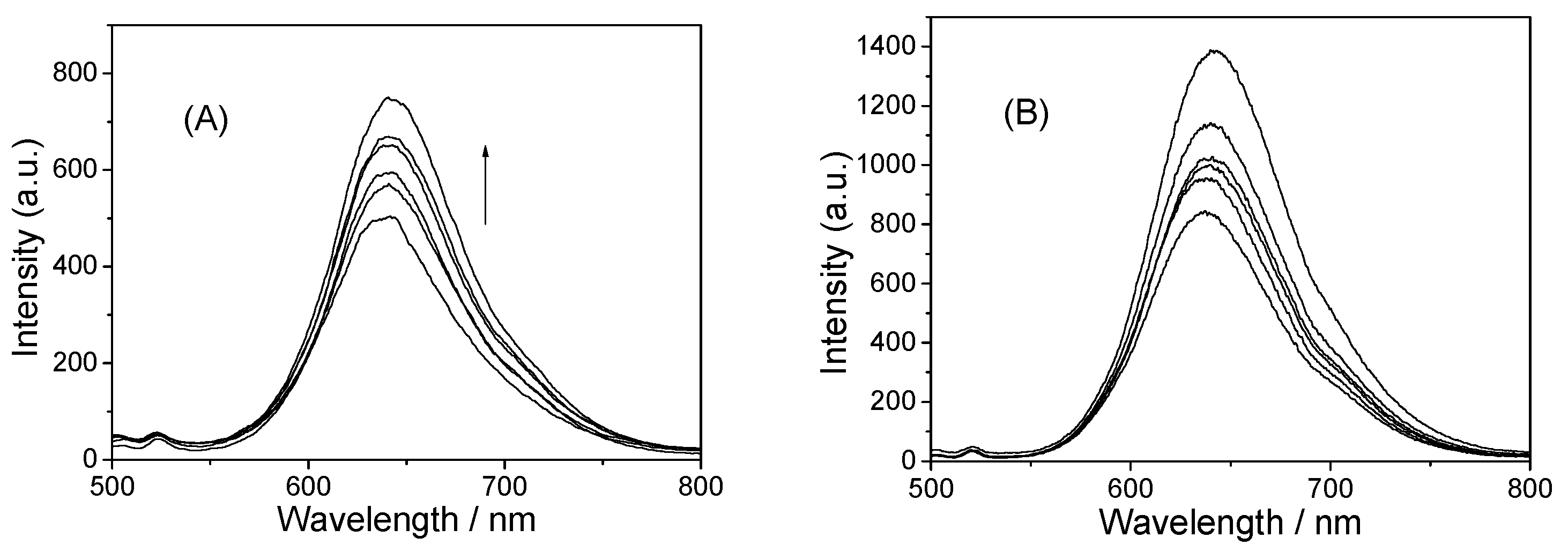
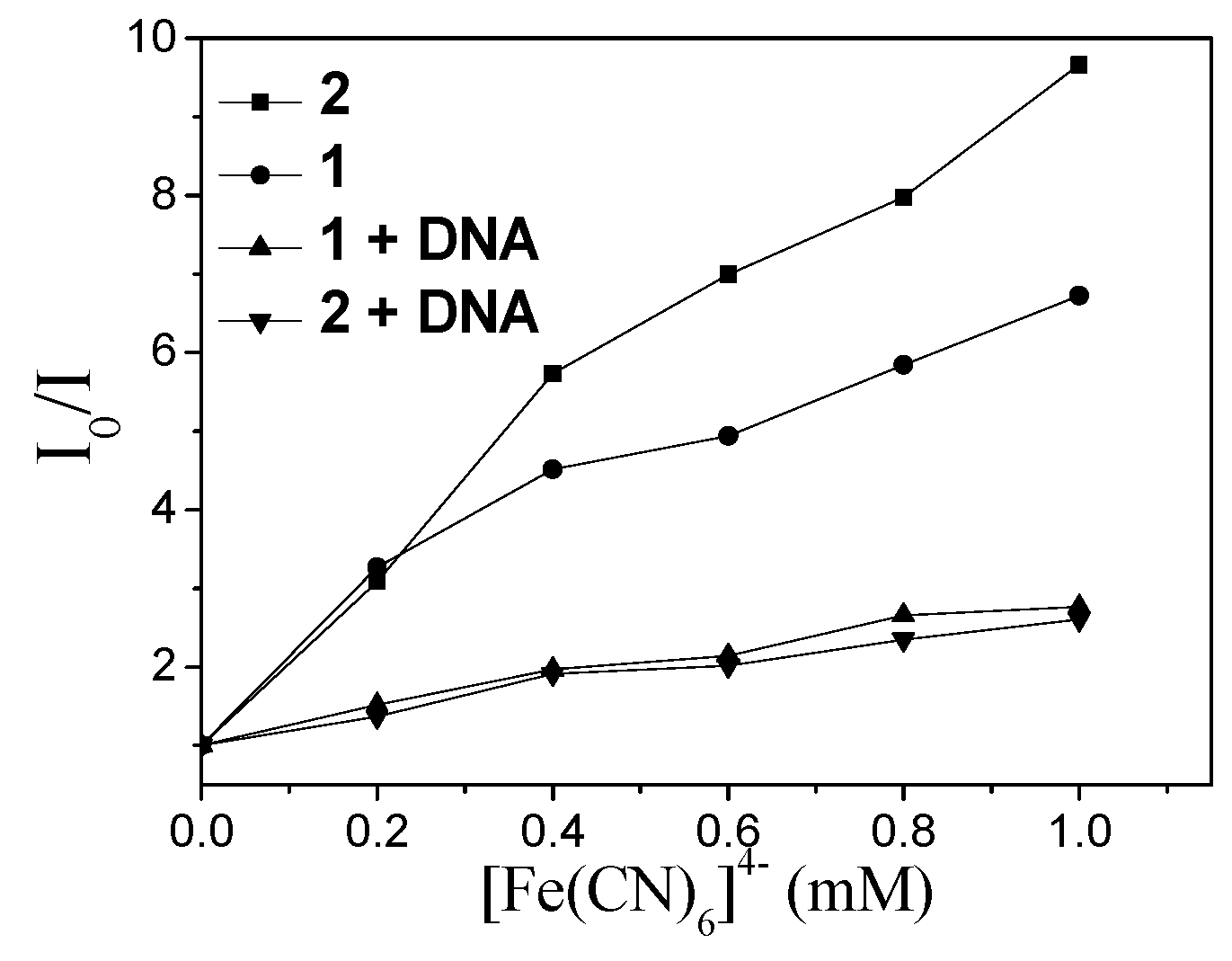
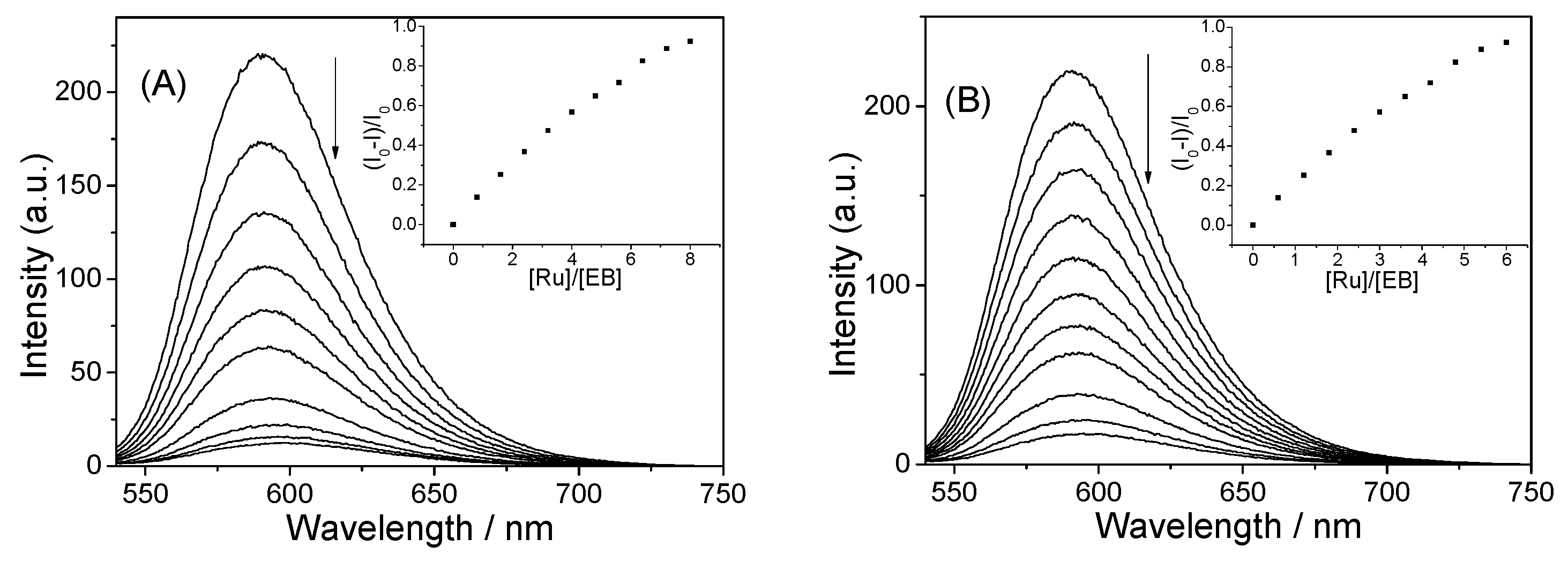
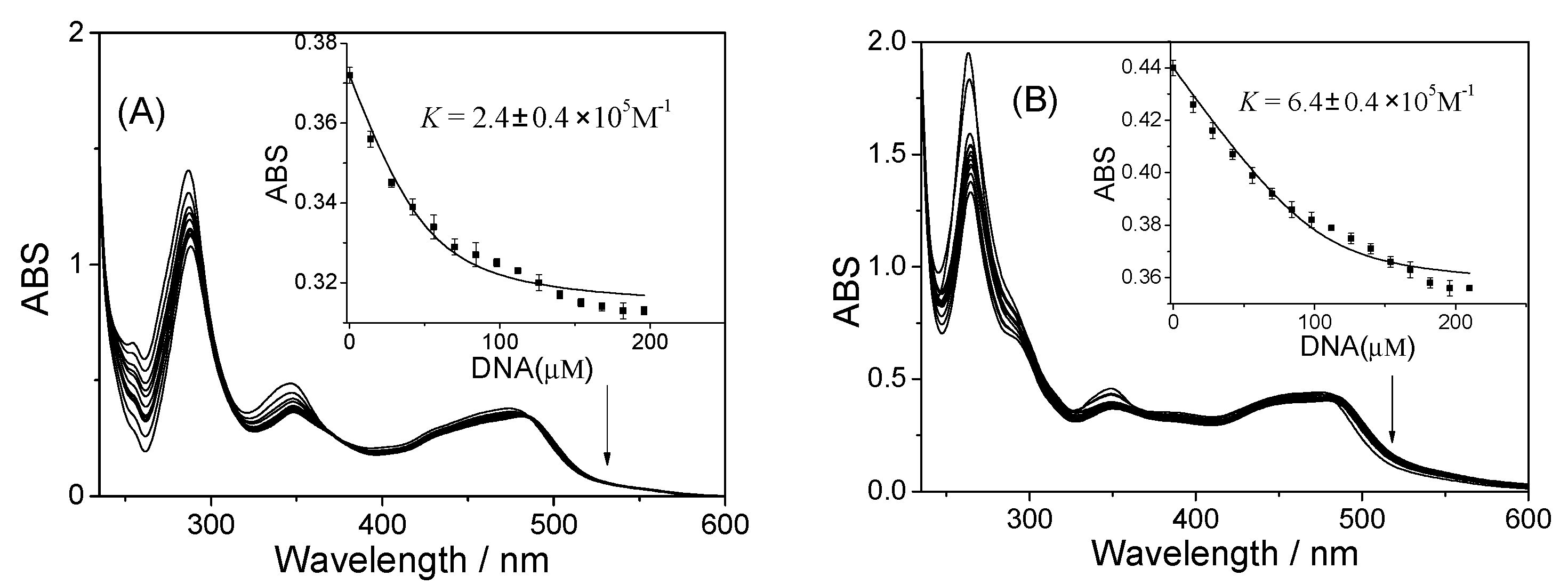
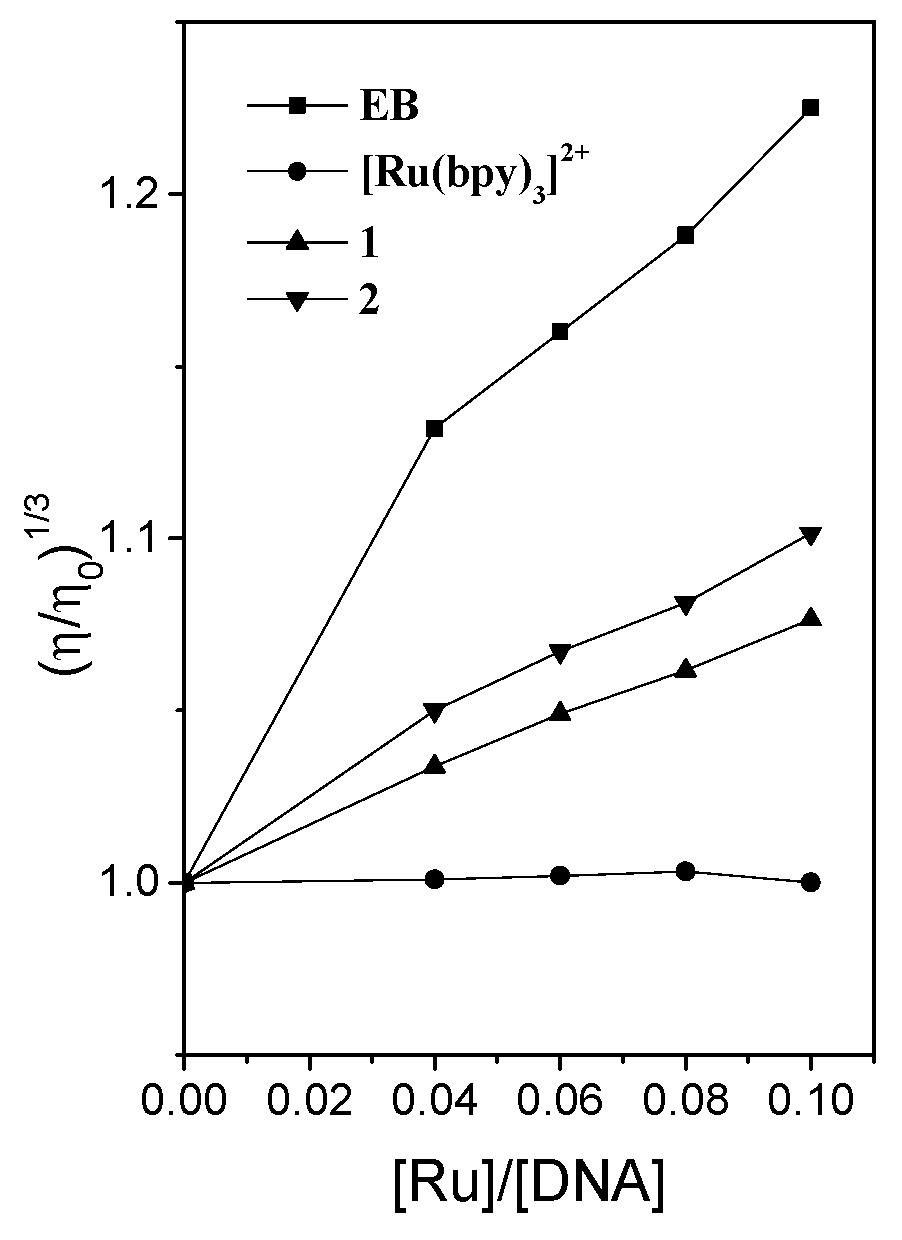
2.1. Studies on DNA Interaction
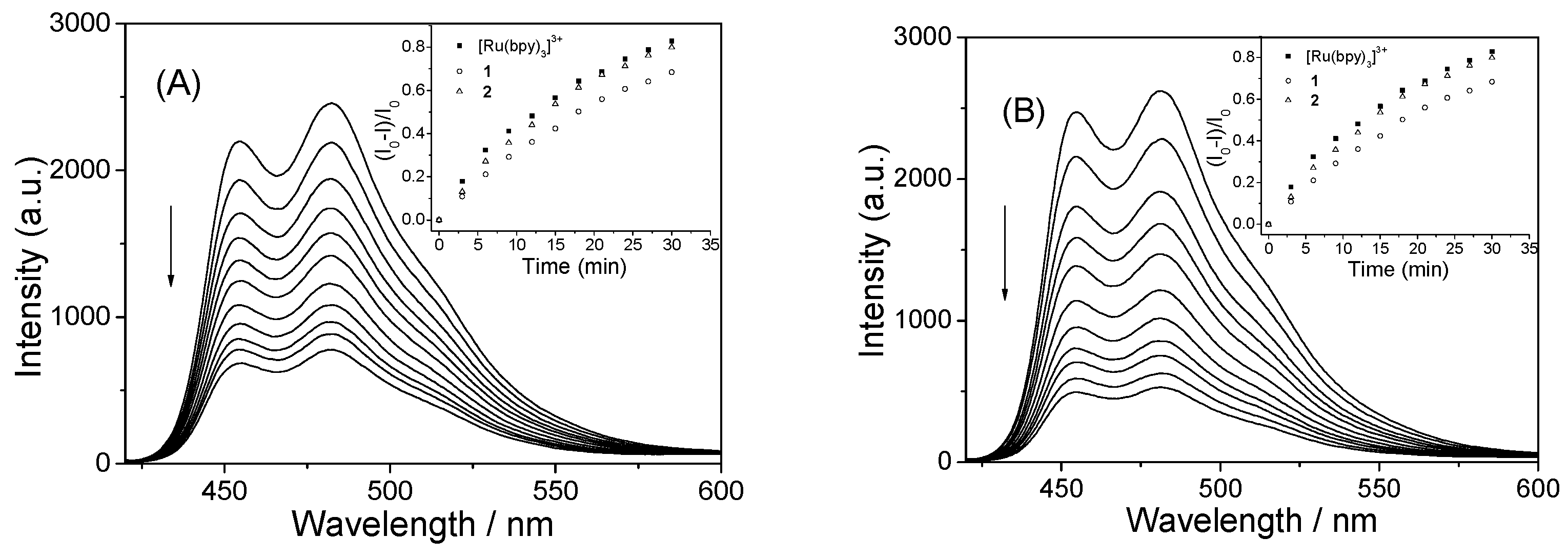
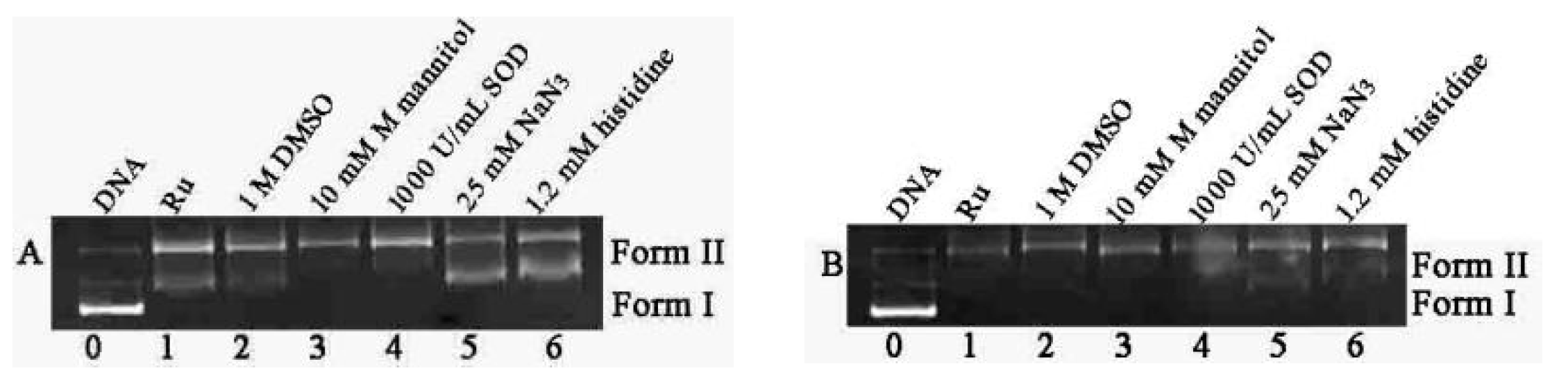
2.2. DNA Photocleavage Activities
2.3. Photocytotoxic Activity In Vitro
3. Materials and Methods
3.1. Instrumentation
3.2. UV-Visible Titrations
3.3. Viscosity Measurement
3.4. Emission Measurements
3.5. DNA Photocleavage Experiments
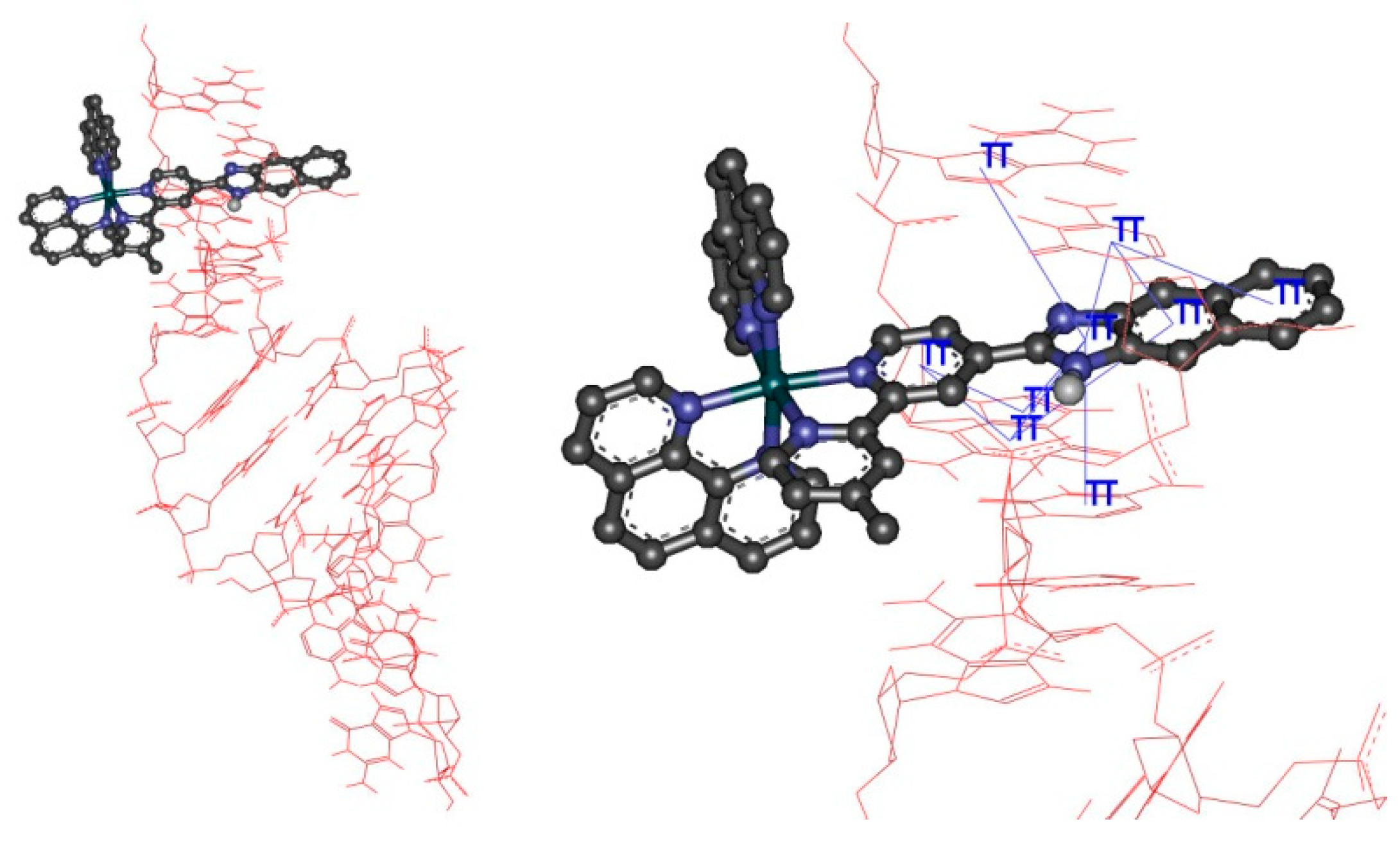
3.6. Molecular Docking
3.7. Photocytotoxicity
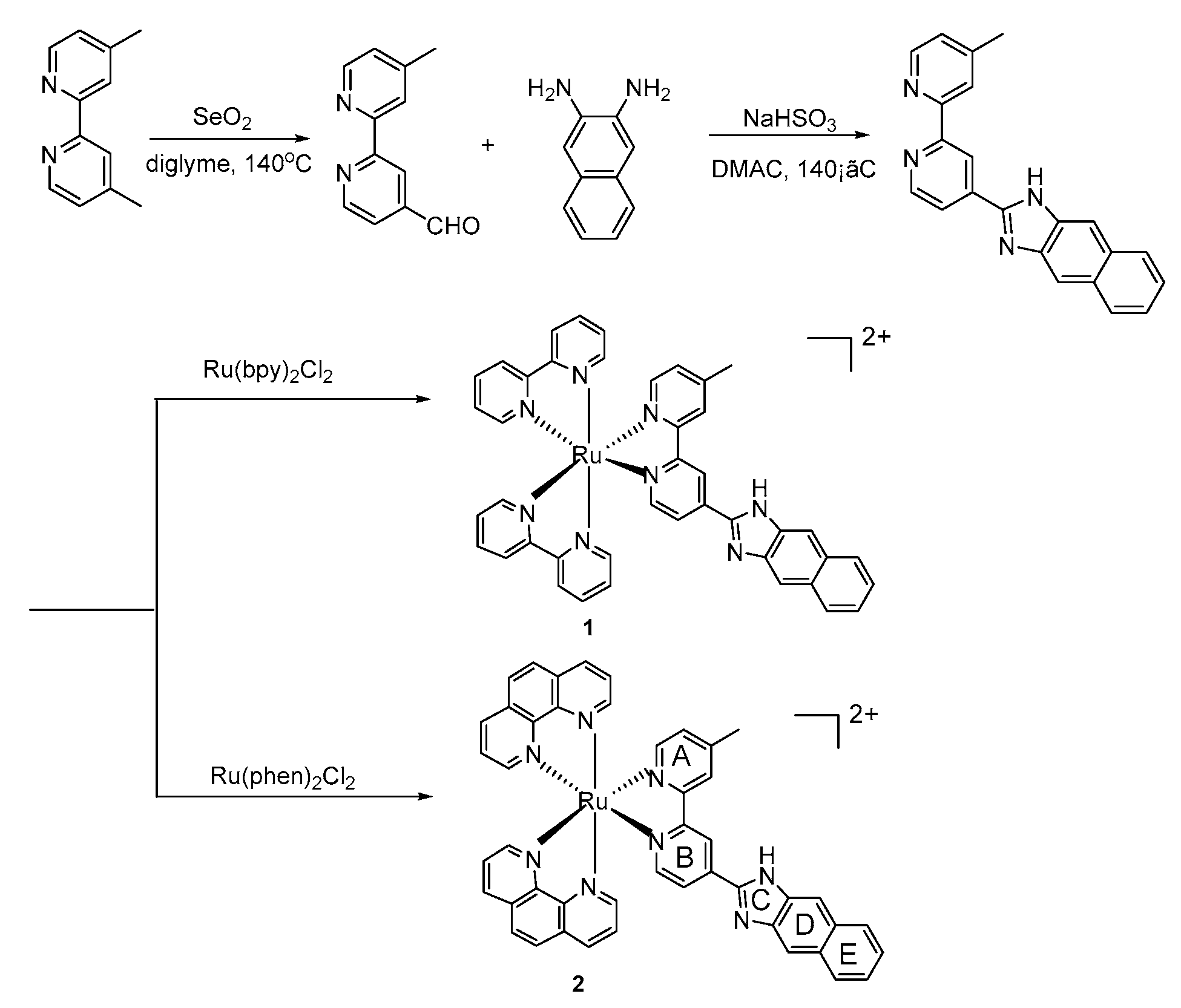
3.8. Synthesis
3.8.1. 2-(4′-Methyl-bipyridine-4-yl)-1H-imidazo[4,5-b]Naphthalene (Mbin)
3.8.2. Synthesis of Ruthenium Complexes
[Ru(bpy)2(mbin)](PF6)2(1)
[Ru(phen)2(mbin)](PF6)2 (2)
4. Conclusions
Supplementary Materials
Author Contributions
Funding
Institutional Review Board Statement
Informed Consent Statement
Data Availability Statement
Acknowledgments
Conflicts of Interest
Sample Availability
References
- Wang, Y.Y.; Liu, Y.C.; Sun, H.; Guo, D.S. Type I photodynamic therapy by organic-inorganic hybrid materials: From strategies to applications. Coord. Chem. Rev. 2019, 395, 46–62. [Google Scholar] [CrossRef] [Scilit]
- Sztandera, K.; Gorzkiewicz, M.; Klajnert-Maculewicz, B. Nanocarriers in photodynamic therapy-in vitro and in vivo studies. Wires Nanomed. Nanobiotechnol. 2020, 12, e1509. [Google Scholar] [CrossRef] [Scilit] [PubMed]
- Li, X.Z.; Shi, Z.L.; Wu, J.G.; Wu, J.L.; He, C.; Hao, X.R.; Duan, C.Y. Lighting Up Metallohelices: From DNA Binders to Chemotherapyand Photodynamic Therapy. Chem. Commun. 2020, 56, 7537–7548. [Google Scholar] [CrossRef] [Scilit]
- McKenzie, L.K.; Bryant, H.E.; Weinstein, J.A. Transition metal complexes as photosensitisers in one-and two-photon photodynamic therapy. Coord. Chem. Rev. 2019, 379, 2–29. [Google Scholar] [CrossRef] [Scilit]
- Shi, G.; Monro, S.; Hennigar, R.; Colpitts, J.; Fong, J.; Kasimova, K.; Yin, H.; DeCoste, R.; Spencer, C.; Chamberlain, L. Ru(II) dyads derived from α-oligothiophenes: A new class of potent and versatile photosensitizers for PDT. Coord. Chem. Rev. 2015, 282, 127–138. [Google Scholar] [CrossRef] [Scilit]
- Zeng, L.L.; Gupta, P.; Chen, Y.; Wang, E.; Ji, L.N.; Chao, H.; Chen, Z.S. The development of anticancer ruthenium (II) complexes: From single molecule compounds to nanomaterials. Chem. Soc. Rev. 2017, 46, 5771–5804. [Google Scholar] [CrossRef] [Scilit]
- Furrer, J.; Süss-Fink, G. Thiolato-bridged dinuclear arene ruthenium complexes and their potential as anticancer drugs. Coord. Chem. Rev. 2016, 309, 36–50. [Google Scholar] [CrossRef] [Scilit]
- Li., F.; Collins, J.G.; Keene, F.R. Ruthenium complexes as antimicrobial agents. Chem. Soc. Rev. 2015, 44, 2529–2542. [Google Scholar] [CrossRef] [Scilit]
- Martnez, R.; Chacn-Garca, L. The search of DNA-intercalators as. antitumoral drugs: What it worked and what did not work. Curr. Med. Chem. 2005, 12, 127–151. [Google Scholar] [CrossRef] [Scilit]
- Dougherty, T.J. Photodynamic therapy. Photochem. Photobiol. 1993, 58, 895–900. [Google Scholar] [CrossRef] [Scilit]
- Li, J.J.; Tian, Z.Z.; Xu, Z.S.; Zhang, S.M.; Feng, Y.Q.; Zhang, L.D.; Liu, Z. Highly potent half-sandwich iridium and ruthenium complexes as lysosome-targeted imaging and anticancer agents. Dalton Trans. 2018, 47, 15772–15782. [Google Scholar] [CrossRef] [Scilit] [PubMed]
- Saravanan, A.; Shyamsivappan, S.; Kalagatur, N.K.; Suresh, T.; Maroli, N.; Bhuvanesh, N.; Kolandaivel, P.; Mohan, P.S. Application of real sample analysis and biosensing: Synthesis of new naphthyl derived chemosensor for detection of Al3+ ions. Spectrochim. Acta A 2020, 241, 118684. [Google Scholar] [CrossRef] [Scilit] [PubMed]
- Singh, A.K.; Kundu, M.; Roy, S.; Roy, B.; Shah, S.S.; Nair, A.V.; Pal, B.; Mondal, M.; Singh, N.D.P. A two-photon responsive naphthyl tagged p-hydroxyphenacyl based drug delivery system: Uncaging of anti-cancer drug in the phototherapeutic window with real-time monitoring. Chem. Commun. 2020, 56, 9986–9989. [Google Scholar] [CrossRef] [Scilit] [PubMed]
- Goswami, T.K.; Gadadhar, S.; Roy, M.; Nethaji, M.; Karande, A.A.; Chakravarty, A.R. Ferrocene-Conjugated Copper(II) Complexes of L-Methionine andPhenanthroline Bases: Synthesis, Structure, and PhotocytotoxicActivity. Organometallics 2012, 31, 3010–3021. [Google Scholar] [CrossRef] [Scilit]
- Mondal, A.; Paira, P. Hypoxia efficient and glutathione-resistantcytoselective ruthenium(II)-p-cymenearylimidazophenanthroline complexes:biomolecular interaction and live cell imaging. Dalton Trans. 2020, 49, 12865–12878. [Google Scholar] [CrossRef] [Scilit]
- Ghosh, G.; Yin, H.M.; Monro, S.M.A.; Sainuddin, T.; Lapoot, L.; Greer, A.; McFarland, S.A. Synthesis and Characterization of Ru(II) Complexes with p-ExpansiveImidazophen Ligands for the Photokilling of Human Melanoma Cells. Photochem. Photobiol. 2020, 96, 349–357. [Google Scholar] [CrossRef] [Scilit]
- Cole, H.D.; Roque, J.A., III; Lifshits, L.M.; Hodges, R.; Barrett, P.C.; Havrylyuk, D.; Heidary, D.; Ramasamy, E.; Cameron, C.G.; Glazer, E.C.; et al. Fine-Feature Modifications to Strained Ruthenium Complexes RadicallyAlter Their Hypoxic Anticancer Activity. Photochem. Photobiol. 2021, 98, 73–84. [Google Scholar] [CrossRef] [Scilit]
- Abreu, F.D.; Paulo, T.F.; Gehlen, M.H.; Ando, R.A.; Lopes, L.G.F.; Gondim, A.C.S.; Vasconcelos, M.A.; Teixeira, E.H.; Sousa, E.H.S.; Carvalho, I.M.M. Aryl-Substituted Ruthenium(II) Complexes: A Strategy for EnhancedPhotocleavage and Efficient DNA Binding. Inorg. Chem. 2017, 56, 9084–9096. [Google Scholar] [CrossRef] [Scilit]
- Abreu, F.D.; Diógenes, I.C.N.; Lopes, L.G.d.; Sousa, E.H.S.; Carvalho, I.M.M. Ruthenium(II) Bipyridine Complexes with Pendant Anthracenyl and NaphthylMoieties: A Strategy for a ROS Generator with DNA binding Selectivity. Inorg. Chim. Acta 2016, 439, 92–99. [Google Scholar] [CrossRef] [Scilit]
- Zeng, L.L.; Kuang, S.; Li, G.Y.; Jin, C.Z.; Ji, L.N.; Ji, C.H. A GSH-activatable ruthenium(II)-azo photosensitizer for twophoton photodynamic therapy. Chem. Commun. 2017, 53, 1977–1980. [Google Scholar] [CrossRef] [Scilit]
- Chen, Y.J.; Lei, W.H.; Jiang, G.Y.; Zhou, Q.X.; Hou, Y.J.; Li, C.; Zhang, B.W.; Wang, X.S. A ruthenium(II) arene complex showing emissionenhancement and photocleavage activity towards DNAfrom singlet and triplet excited states respectively. Dalton Trans. 2013, 42, 5924–5931. [Google Scholar] [CrossRef] [Scilit] [PubMed]
- Liu, J.G.; Ye, B.H.; Li, H.; Zhen, Q.X.; Ji, L.N.; Fu, R.H. Polypyridyl ruthenium(II) complexes containing intramolecular hydrogen-bond ligand: Syntheses, characterization, and DNA-binding properties. J. Inorg. Biochem. 1999, 76, 265–271. [Google Scholar] [CrossRef] [Scilit]
- McGhee, J.D.; Hippel von, P.H. Theoretical aspects of DNA-protein interactions: Co-operative and non-cooperative binding of large ligands to a one-dimensional homogeneous lattice. J. Mol. Biol. 1974, 86, 469–489. [Google Scholar] [CrossRef] [Scilit]
- Ambroise, A.; Maiya, B.G. Ruthenium (II) complexes of 6; 7-dicyanodipyridoquinoxaline: Synthesis; luminescence studies and DNA interaction. Inorg. Chem. 2000, 39, 4256–4263. [Google Scholar] [CrossRef] [Scilit]
- Liu, J.G.; Ye, B.H.; Li, H.; Ji, L.N.; Li, R.H.; Zhou, J.Y. Synthesis, characterization and DNA-binding properties of novel dipyridophenazine complex of ruthenium (II):[Ru(IP)2(DPPZ)]2+. J. Inorg. Biochem. 1999, 73, 117–122. [Google Scholar] [CrossRef] [Scilit]
- Pyle, A.M.; Rehmann, J.P.; Meshoyrer, R.; Kumar, C.V.; Turro, N.J.; Barton, J.K. Mixed-Ligand Complexes of Ruthenium(11): Factors Governing Binding to DNA. J. Am. Chem. Soc. 1989, 111, 3051–3058. [Google Scholar] [CrossRef] [Scilit]
- Satyanarayana, S.; Dabroniak, J.C.; Chaires, J.B. NeitherDELTA- nor LAMBDA-tris (phenanthroline) ruthenium (II) binds to DNA by classical intercalation. Biochemistry 1992, 31, 9319–9324. [Google Scholar] [CrossRef] [Scilit]
- Satyanarayana, S.; Dabroniak, J.C.; Chaires, J.B. Tris(phenanthroline) ruthenium (II) enantiomer interactions with DNA: Mode and specificity of binding. Biochemistry 1993, 32, 2573–2584. [Google Scholar] [CrossRef] [Scilit]
- Cohen, G.; Eisenberg, H. Viscosity and sedimentation study of sonicated DNA–proflavine complexes. Biopolymers 1969, 8, 45–55. [Google Scholar] [CrossRef] [Scilit]
- Ji, L.N.; Zou, X.H.; Liu, J.G. Shape-and enantioselective interaction of Ru (II)/Co (III) polypyridyl complexes with DNA. Coord. Chem. Rev. 2001, 216, 513–536. [Google Scholar] [CrossRef] [Scilit]
- Barton, K.; Danishefsky, A.; Goldberg, J. Tris(phenanthroline)ruthenium(II): Stereoselectivity in binding to DNA. J. Am. Chem. Soc. 1984, 106, 2172–2176. [Google Scholar] [CrossRef] [Scilit]
- Burya, S.J.; Lutterman, D.A.; Turro, C. Absence of quenching by [Fe(CN)6]4− is not proof of DNA intercalation. Chem. Commun. 2011, 47, 1848–1850. [Google Scholar] [CrossRef] [Scilit]
- LePecq, J.B.; Paoletti, C. A fluorescent complex between ethidium bromide and nucleic acids: Physical-Chemical characterization. J. Mol. Biol. 1967, 27, 87–106. [Google Scholar] [CrossRef] [Scilit]
- Kumar, C.V.; Turro, N.J.; Barton, J.K. Photophysics of ruthenium complexes bound to double helical DNA. J. Am. Chem. Soc. 1985, 107, 5518–5523. [Google Scholar] [CrossRef] [Scilit]
- Waring, M.J. Complex formation between ethidium bromide and nucleic acids. J. Mol. Biol. 1965, 13, 269–282. [Google Scholar] [CrossRef] [Scilit]
- Mei, H.Y.; Barton, J.K. Tris (tetramethylphenanthroline) ruthenium (II): A chiral probe that cleaves A-DNA conformations. Proc. Natl. Acad. Sci. USA 1988, 85, 1339–1343. [Google Scholar] [CrossRef] [Scilit]
- Nilsson, F.R.; Merkel, P.B.; Kearns, D.R. Unambiguous evidence for the participation of singlet oxygen (1δ) in photodynamic oxidation of amino acids. Photochem. Photobiol. 1972, 16, 117–124. [Google Scholar] [CrossRef] [Scilit]
- Yu, H.J.; Huang, S.M.; Li, L.Y.; Ji, H.N.; Chao, H.; Mao, Z.W.; Liu, J.Z.; Ji, L.N. Synthesis, DNA-binding and photocleavage studies of ruthenium complexes [Ru (bpy)2(mitatp)]2+ and [Ru (bpy)2(nitatp)]2+. J. Inorg. Biochem. 2009, 103, 881–890. [Google Scholar] [CrossRef] [Scilit]
- Gao, F.; Chao, H.; Zhou, F.; Yuan, Y.X.; Peng, B.; Ji, L.N. DNA interactions of a functionalized ruthenium(II) mixed-polypyridyl complex [Ru(bpy)2ppd]2+. J. Inorg. Biochem. 2006, 100, 1487–1494. [Google Scholar] [CrossRef] [Scilit]
- Abdel-Shafi, A.A.; Beer, P.D.; Mortimer, R.J.; Wilkinson, F. Photosensitized Generation of Singlet Oxygen from Vinyl Linked Benzo-Crown-Ether−Bipyridyl Ruthenium(II) Complexes. J. Phys. Chem. A 2000, 104, 192–202. [Google Scholar] [CrossRef] [Scilit]
- Stephenson, M.; Reichardt, C.; Pinto, M.; Wächtler, M.; Sainuddin, T.; Shi, G.; Yin, H.M.; Monro, S.; Sampson, E.; Dietzek, B.; et al. Ru(II) Dyads Derived from 2-(1-Pyrenyl)-1H-imidazo[4,5-f][1,10]phenanthroline: Versatile Photosensitizers for Photodynamic Applications. J. Phys. Chem. A 2014, 118, 10507–10521. [Google Scholar] [CrossRef] [Scilit] [PubMed]
- Albani, B.A.; Peña, B.; Leed, N.A.; de Paula, N.A.B.G.; Pavani, C.; Baptista, M.S.; Dunbar, K.R.; Turro, C. Marked Improvement in Photoinduced Cell Death bya New Tris-Heteroleptic Complex with Dual Action: Singlet Oxygen Sensitization and Ligand Dissociation. J. Am. Chem. Soc. 2014, 136, 17095–17101. [Google Scholar] [CrossRef] [Scilit] [PubMed]
- Mishra, A.; Ekka, M.K.; Maiti, S. Influence of ionic liquids on thermodynamics of small molecule–DNA interaction: The binding of ethidium bromide to calf thymus DNA. J. Phys. Chem. B 2016, 120, 2691–2700. [Google Scholar] [CrossRef] [Scilit]
- Huang, W.; Chen, Z.; Hou, L.; Feng, P.; Li, Y.; Chen, T. Adjusting the lipid–water distribution coefficient of iridium(iii) complexes to enhance the cellular penetration and treatment efficacy to antagonize cisplatin resistance in cervical cancer. Dalton Trans. 2020, 49, 11556–11564. [Google Scholar] [CrossRef] [Scilit]




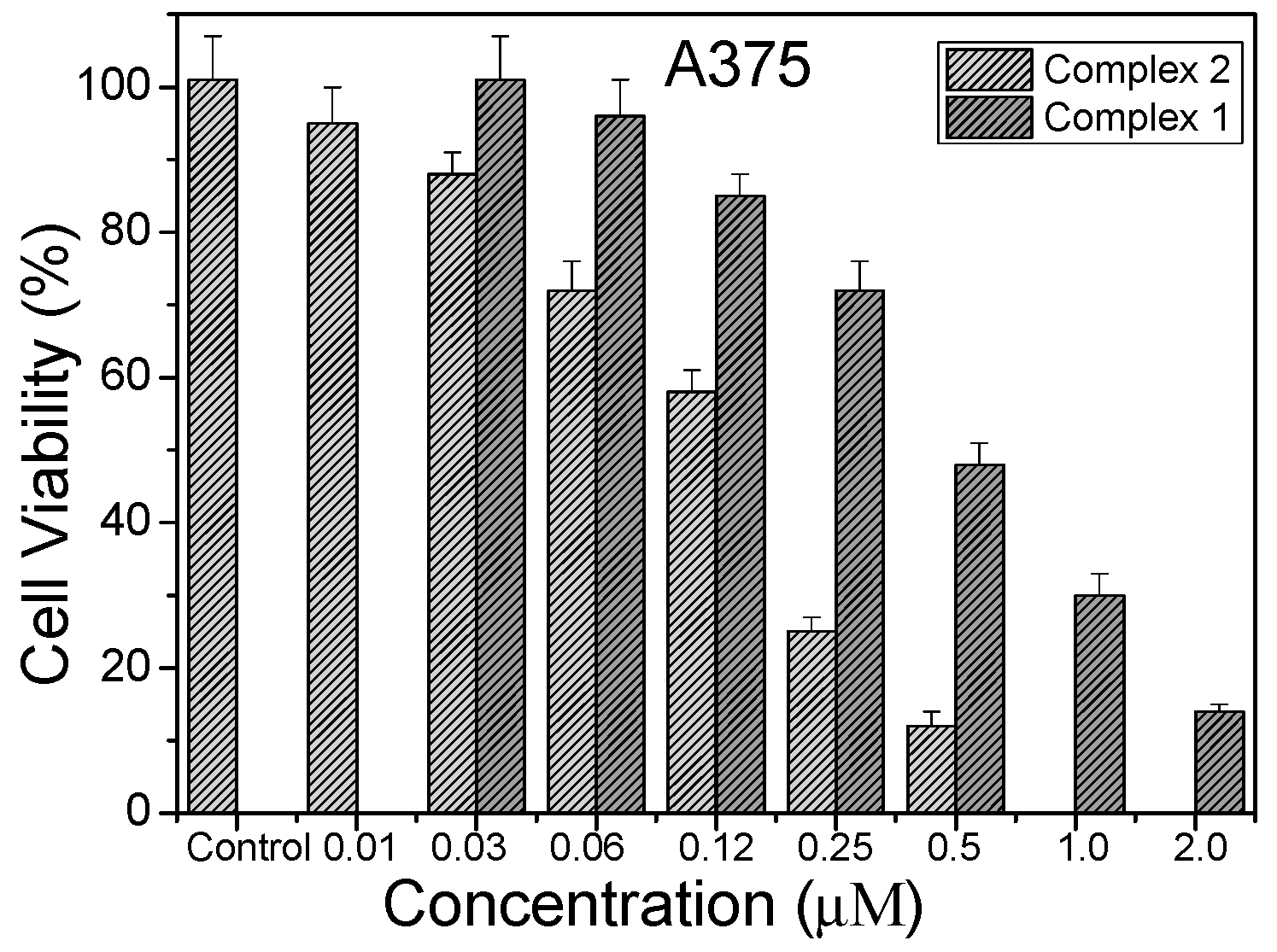

| Complex | IC50 (μM) | ||||||||
|---|---|---|---|---|---|---|---|---|---|
| HeLa | A549 | A375 | |||||||
| Dark | Light | PI | Dark | Light | PI | Dark | Light | PI | |
| 1 | >100 | 0.95 ± 0.21 | 105 | >100 | 0.85 ± 0.26 | 117 | >100 | 0.48 ± 0.16 | 208 |
| 2 | >100 | 0.67 ± 0.15 | 149 | 92.67 ± 3.28 | 0.58 ± 0.06 | 160 | 90.34 ± 4.87 | 0.12 ± 0.01 | 753 |
| [Ru(bpy)3]2+ [20] | >300 | 161 ± 5.62 | 1.86 | >300 | 152 ± 4.34 | 1.97 | |||
| [Ru(bpy)2dppn]2+ [42] | 110 ± 28 | 0.39 ± 0.06 | 282 | ||||||
| Cisplatin | 45.75 ± 3.31 | 43.61 ± 5.52 | 1.05 | 38.27 ± 2.46 | 33.81 ± 5.17 | 1.13 | 33.86 ± 3.82 | 30.63 ± 5.47 | 1.11 |
Publisher’s Note: MDPI stays neutral with regard to jurisdictional claims in published maps and institutional affiliations. |
© 2022 by the authors. Licensee MDPI, Basel, Switzerland. This article is an open access article distributed under the terms and conditions of the Creative Commons Attribution (CC BY) license (https://creativecommons.org/licenses/by/4.0/).
Share and Cite
Hu, X.; Luo, Q.; Qin, Y.; Wu, Y.; Liu, X.-W. DNA Interaction, DNA Photocleavage, Photocytotoxicity In Vitro, and Molecular Docking of Naphthyl-Appended Ruthenium Complexes. Molecules 2022, 27, 3676. https://doi.org/10.3390/molecules27123676
Hu X, Luo Q, Qin Y, Wu Y, Liu X-W. DNA Interaction, DNA Photocleavage, Photocytotoxicity In Vitro, and Molecular Docking of Naphthyl-Appended Ruthenium Complexes. Molecules. 2022; 27(12):3676. https://doi.org/10.3390/molecules27123676
Chicago/Turabian StyleHu, Xia, Qian Luo, Yao Qin, Yao Wu, and Xue-Wen Liu. 2022. "DNA Interaction, DNA Photocleavage, Photocytotoxicity In Vitro, and Molecular Docking of Naphthyl-Appended Ruthenium Complexes" Molecules 27, no. 12: 3676. https://doi.org/10.3390/molecules27123676
APA StyleHu, X., Luo, Q., Qin, Y., Wu, Y., & Liu, X.-W. (2022). DNA Interaction, DNA Photocleavage, Photocytotoxicity In Vitro, and Molecular Docking of Naphthyl-Appended Ruthenium Complexes. Molecules, 27(12), 3676. https://doi.org/10.3390/molecules27123676