Article

Oxidation of Ethanol in Cu-Faujasites Studied by IR Spectroscopy

by
Łukasz Kuterasiński
,
Jerzy Podobiński
and
Jerzy Datka
*
Jerzy Haber Institute of Catalysis and Surface Chemistry, Polish Academy of Sciences, ul. Niezapominajek 8, 30-239 Kraków, Poland
*
Author to whom correspondence should be addressed.
Molecules 2021, 26(9), 2669; https://doi.org/10.3390/molecules26092669

Submission received: 9 March 2021 / Revised: 24 April 2021 / Accepted: 28 April 2021 / Published: 2 May 2021
(This article belongs to the Special Issue Zeolites and Mesoporous Materials: Properties and Applications)

Abstract

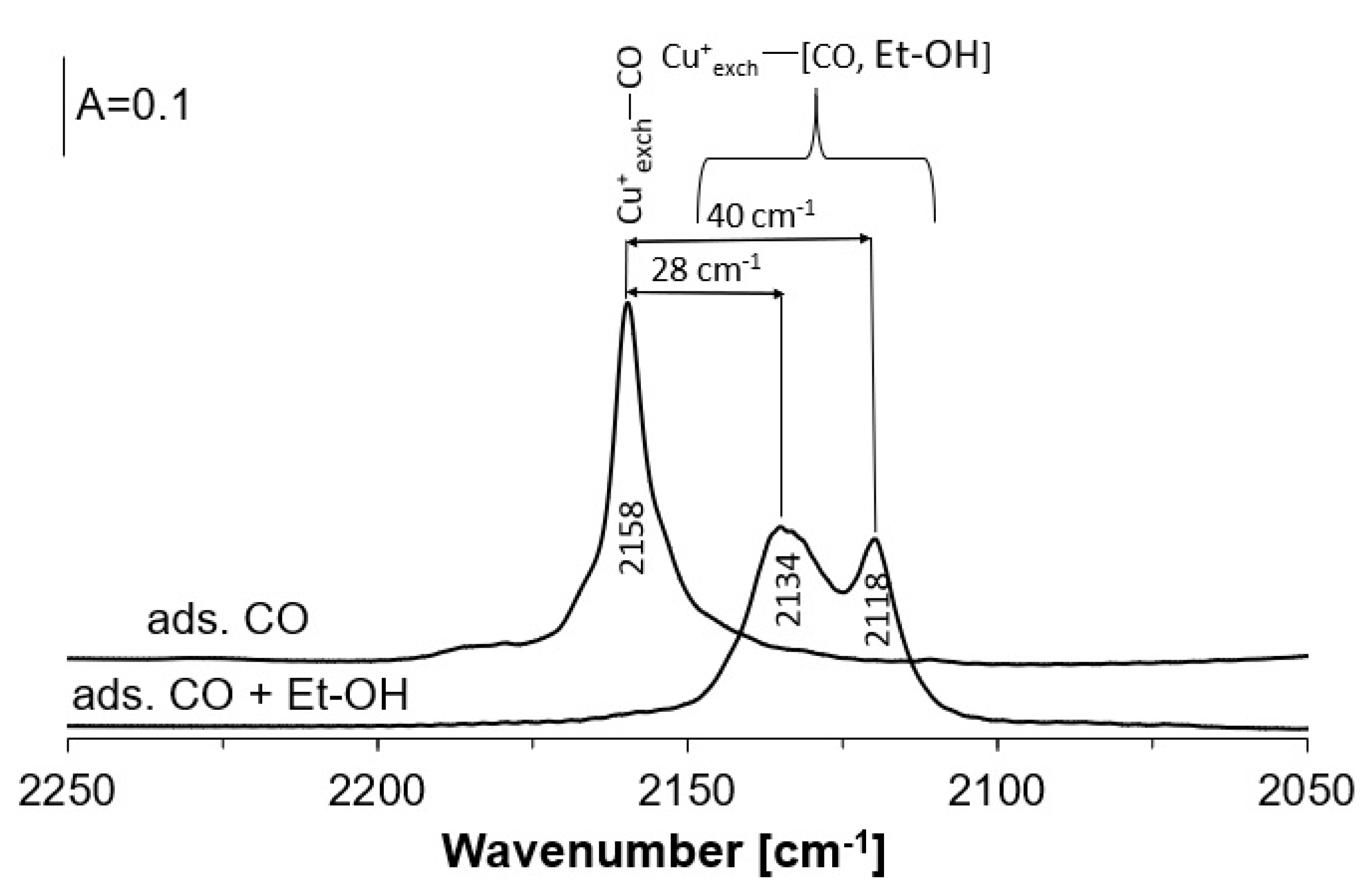
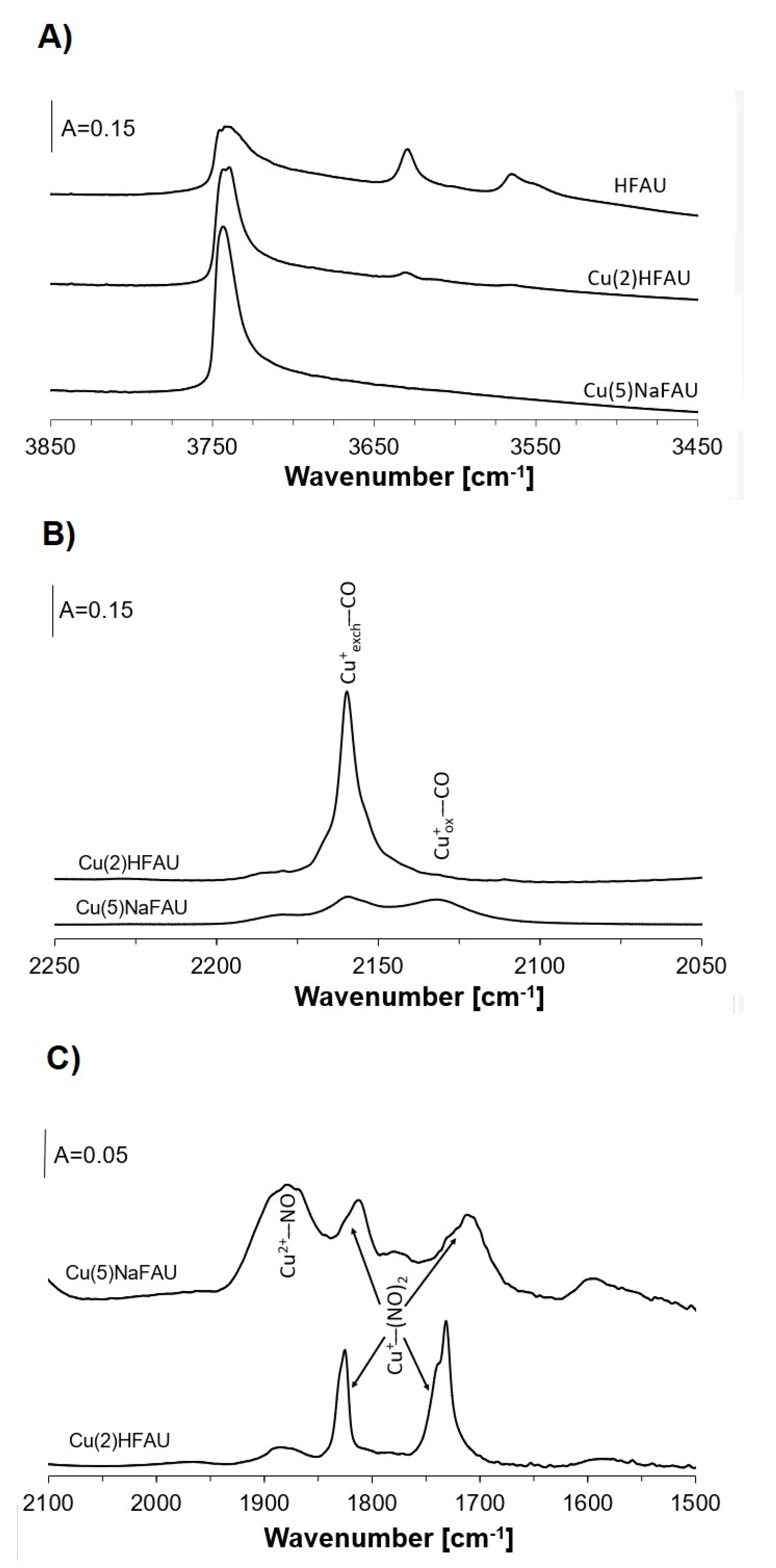
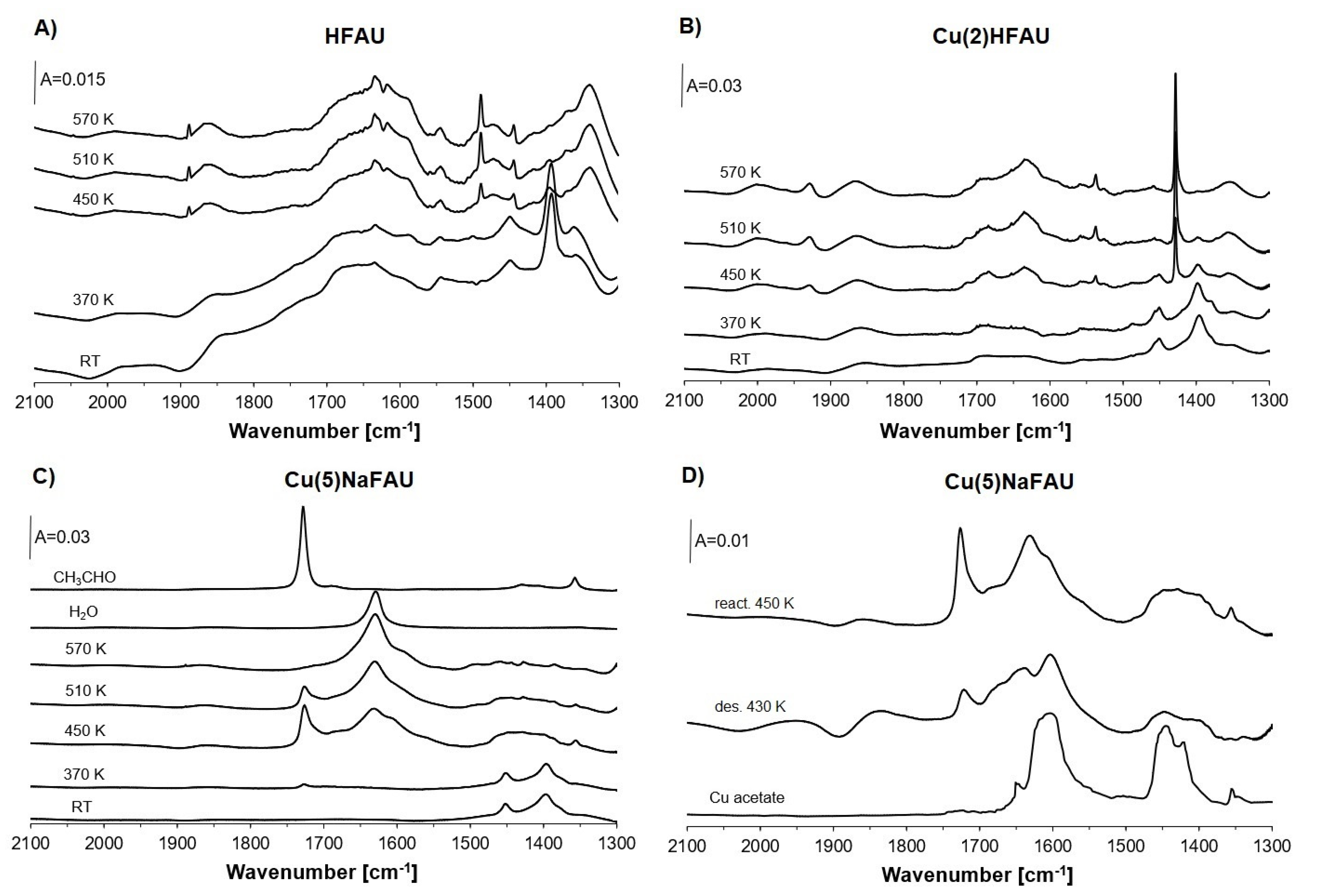
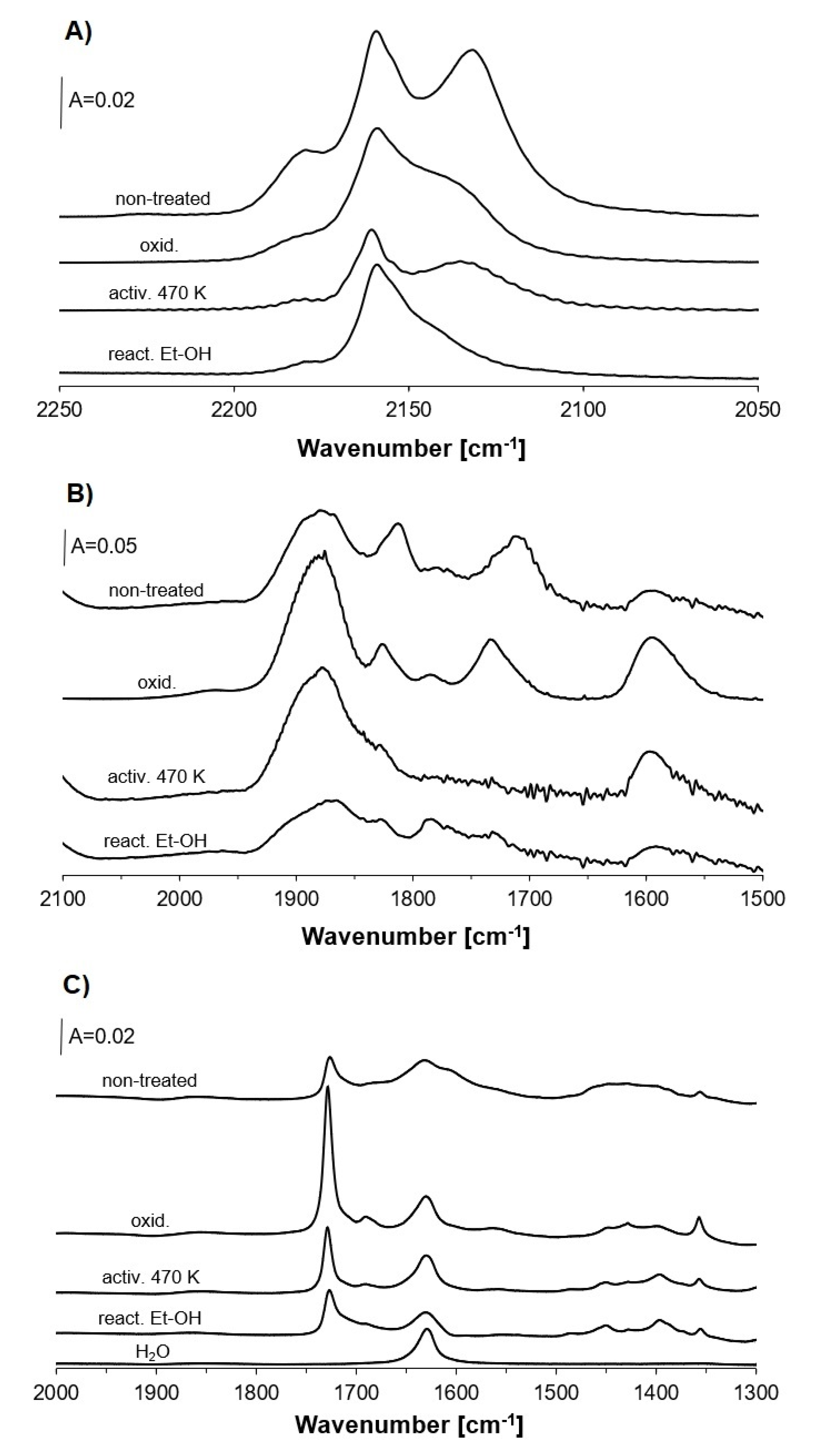
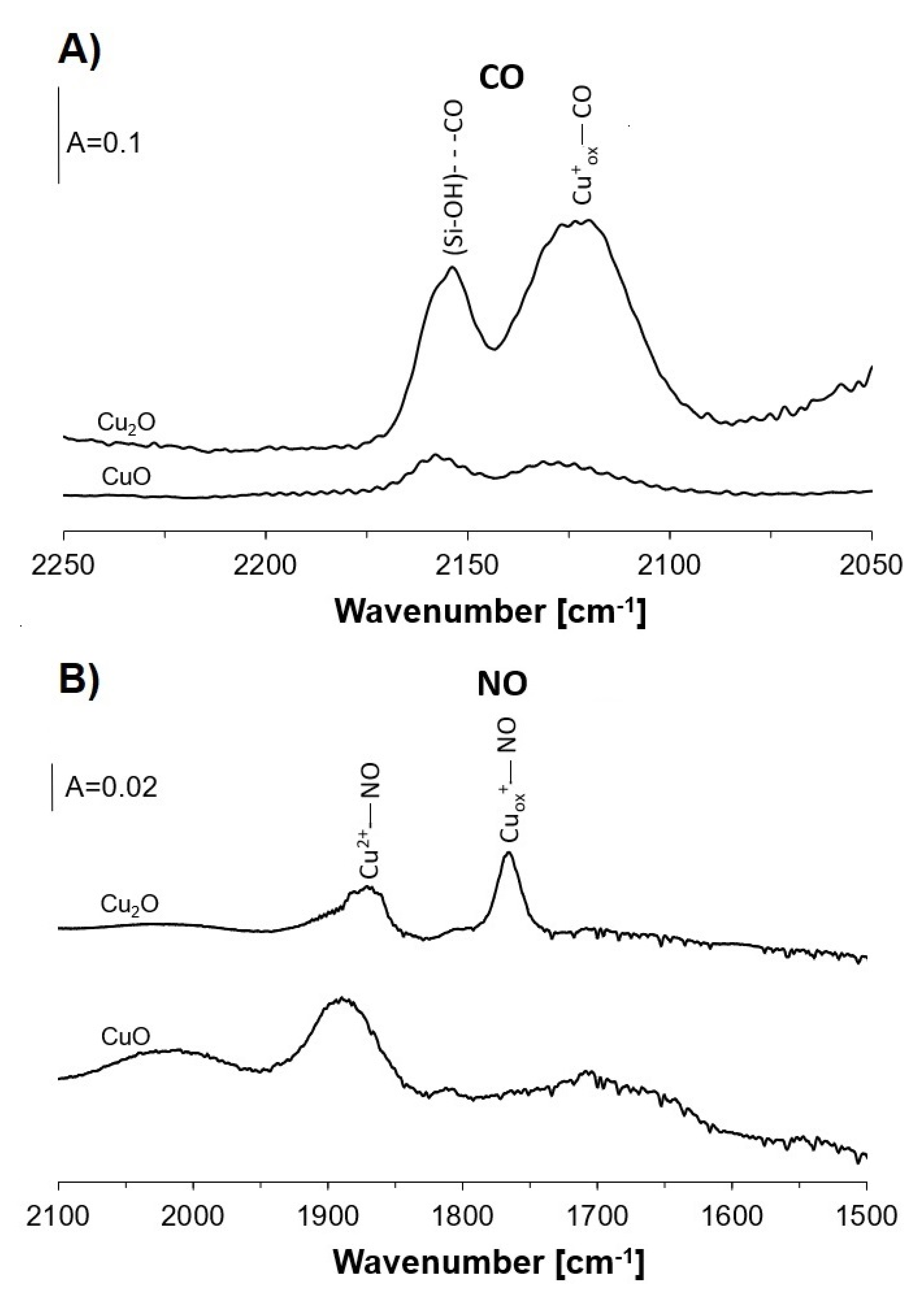
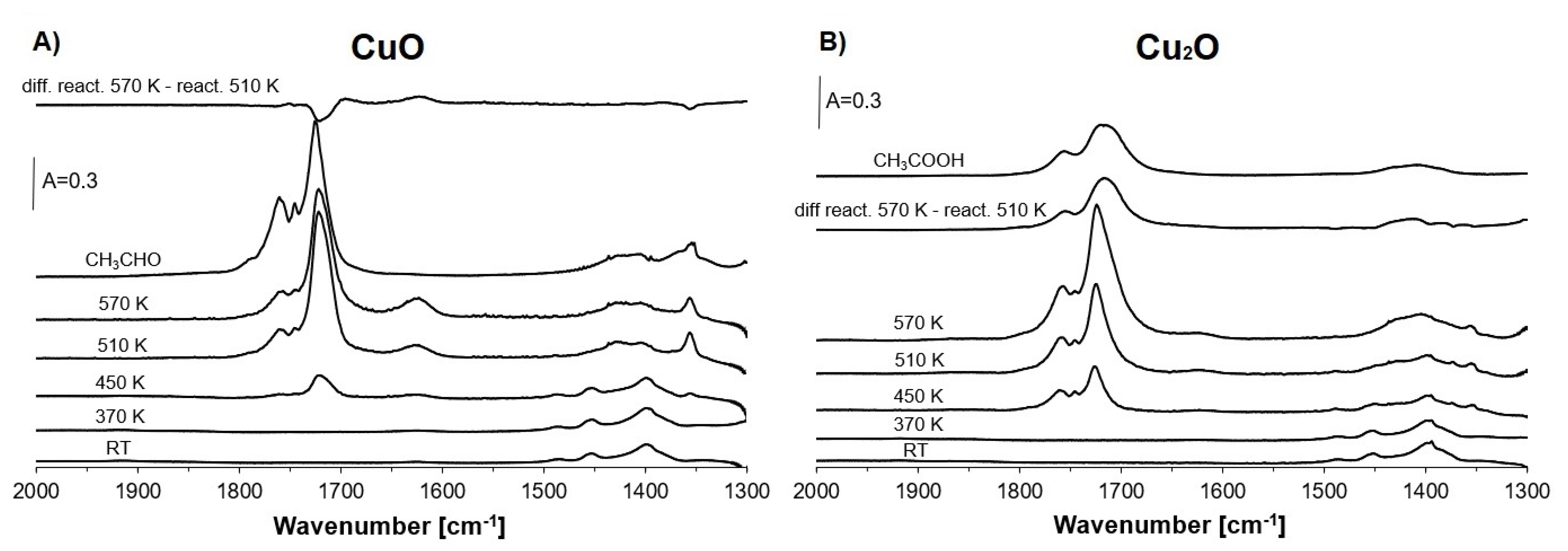
In this study, IR studies of the coadsorption of ethanol and CO on Cu+ cations evidenced the transfer of electrons from ethanol to Cu+, which caused the lowering of the frequency of the band attributed to CO bonded to the same Cu+ cation due to the more effective π back donation of d electrons of Cu to antibonding π* orbitals of CO. The reaction of ethanol with acid sites in zeolite HFAU above 370 K produced water and ethane, polymerizing to polyethylene. Ethanol adsorbed on zeolite Cu(2)HFAU containing acid sites and Cu+exch also produced ethene, but in this case, the ethene was bonded to Cu+ and did not polymerize. C=C stretching, which is IR non-active in the free ethene molecule, became IR active, and a weak IR band at 1538 cm−1 was present. The reaction of ethanol above 370 K in Cu(5)NaFAU zeolite (containing small amounts of Cu+exch and bigger amounts of Cu+ox, Cu2+exch and CuO) produced acetaldehyde, which was further oxidized to the acetate species (CH3COO). As oxygen was not supplied, the donors of oxygen were the Cu species present in our zeolite. The CO and NO adsorption experiments performed in Cu-zeolite before and after ethanol reaction evidenced that both Cu+ox and Cu2+ (Cu2+exch and CuO) were consumed by the ethanol oxidation reaction. The studies of the considered reaction of bulk CuO and Cu2O as well as zeolites, in which the contribution of Cu+ox species was reduced by various treatments, suggest that ethanol was oxidized to acetaldehyde by Cu2+ox (the role of Cu+ox could not be elucidated), but Cu+ox was the oxygen donor in the acetate formation.
Keywords: ethanol oxidation; Cu species; faujasite ethanol oxidation; Cu species; faujasite