


Synthesis and Olfactory Properties of Seco-Analogues of Lilac Aldehydes

Abstract
1. Introduction
2. Results and Discussion
3. Materials and Methods
3.1. Materials and Methods
3.2. Synthetic Procedures and Analytical Data
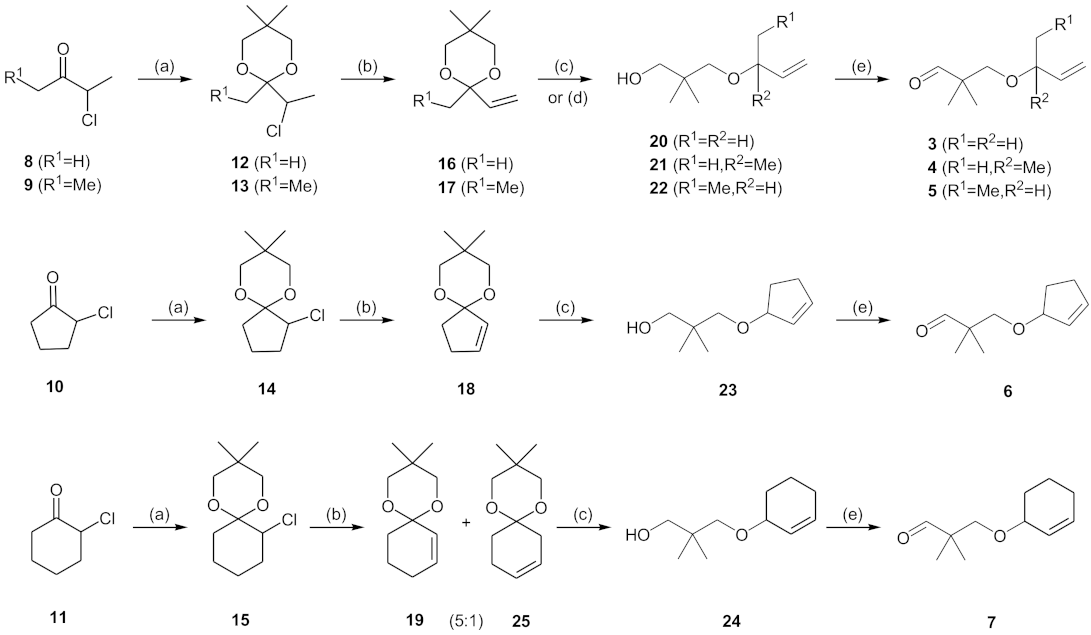
3.2.1. General Experiment for the Preparation of Chloroketals (12–15)
2-(1-Chloroethyl)-2,5,5-trimethyl-[1,3]dioxane (12)
2-(1-Chloroethyl)-2-ethyl-5,5-dimethyl-[1,3]dioxane (13)
1-Chloro-8,8-dimethyl-6,10-dioxaspiro [4.5] decane (14)
7-Chloro-3,3-dimethyl-1,5-dioxaspiro[5.5]undecane (15)
3.2.2. General Experiment for the Preparation of Alkene Ketals (16–19, 25)
2,5,5-Trimethyl-2-vinyl-[1,3]dioxane (16)
2-Ethyl-5,5-dimethyl-2-vinyl-[1,3]dioxane (17)
8,8-Dimethyl-6,10-dioxaspiro[4.5]dec-1-ene (18)
3,3-Dimethyl-1,5-dioxaspiro[5.5]undec-7-ene (19) and 3,3-Dimethyl-1,5-dioxaspiro[5.5]undec-8-ene (25)
3.2.3. Preparation of Alcohol (21)
2,2-Dimethyl-3-(2-methyl-but-3-en-2-yloxy)propan-1-ol (21)
3.2.4. General Experiment for the Preparation of Alcohols (20, 22, 23)
3-(But-3-en-2-yloxy)-2,2-dimethylpropan-1-ol (20)
2,2-Dimethyl-3-(pent-1-en-3-yloxy)propan-1-ol (22)
3-(Cyclopent-2-enyloxy)-2,2-dimethylpropanol (23)
3.2.5. Preparation of Alcohol (24)
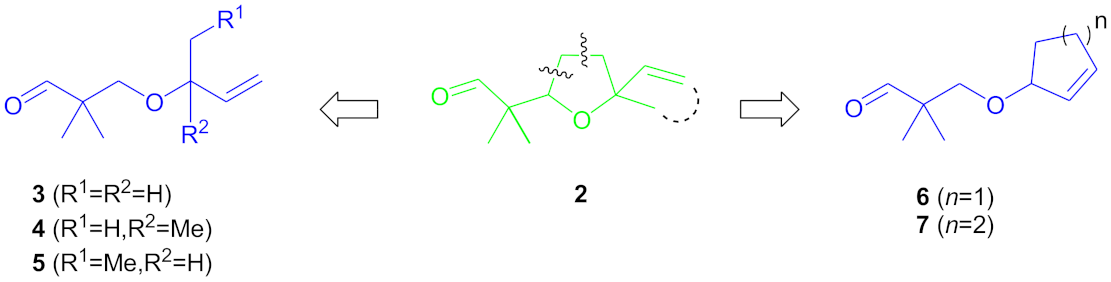
3.2.6. General Experiment for the Preparation of Aldehydes (3–7)
3-(But-3-en-2-yloxy)-2,2-dimethylpropan-1-al (3)
2,2-Dimethyl-3-(2-methyl-but-3-en-2-yloxy)propan-1-al (4)
2,2-Dimethyl-3-(pent-1-en-3-yloxy)propan-1-al (5)
3-(Cyclopent-2-enyloxy)-2,2-dimethylpropan-1-al (6)
3-(Cyclohex-2-enyloxy)-2,2-dimethylpropan-1-al (7)
4. Conclusions
Supplementary Materials
Author Contributions
Funding
Institutional Review Board Statement
Informed Consent Statement
Data Availability Statement
Acknowledgments
Conflicts of Interest
Sample Availability
References
- Wakayama, S.; Namba, S. Lilac Aldehydes. Bull. Chem. Soc. Jpn. 1974, 47, 1293–1294. [Google Scholar] [CrossRef] [Scilit]
- Kreck, M.; Mosandl, A. Synthesis, Structure Elucidation, and Olfactometric Analysis of Lilac Aldehyde and Lilac Alcohol Stereoisomers. J. Agric. Food Chem. 2003, 51, 2722–2726. [Google Scholar] [CrossRef] [Scilit] [PubMed]
- Kreck, M.; Püschel, S.; Wüst, M.; Mosandl, A. Biogenetic studies in Syringa vulgaris L.: Synthesis and bioconversion of deuterium-labelled precursors into lilac aldehydes and lilac alcohols. J. Agric. Food Chem. 2003, 51, 463–469. [Google Scholar] [CrossRef] [Scilit] [PubMed]
- Matich, A.J.; Young, H.; Allen, J.M.; Wang, M.Y.; Fielder, S.; McNeilage, M.A.; MacRae, E.A. Actinidia arguta: Volatile compounds in fruit and flowers. Phytochemistry 2003, 63, 285–301. [Google Scholar] [CrossRef] [Scilit]
- Dötterl, S.; Wolfe, L.M.; Jürgens, A. Qualitative and quantitative analyses of flower scent in Silene latifolia. Phytochemistry 2005, 66, 203–213. [Google Scholar] [CrossRef] [Scilit]
- Plepys, D.; Ibarra, F.; Löfstedt, C. Volatiles from flowers of Platanthera bifolia (Orchidaceae) attractive to the silver Y moth, Autographa gamma (Lepidoptera: Noctuidae). Oikos 2002, 99, 69–74. [Google Scholar] [CrossRef] [Scilit]
- Plepys, D.; Ibarra, F.; Francke, W.; Löfstedt, C. Odour-mediated nectar foraging in the silver Y moth, Autographa gamma (Lepidoptera: Noctuidae): Behavioural and electrophysiological responses to floral volatiles. Oikos 2002, 99, 75–82. [Google Scholar] [CrossRef] [Scilit]
- Dötterl, S.; Jürgens, A.; Seifert, K.; Laube, T.; Weißbecker, B.; Schütz, S. Nursery pollination by a moth in Silene latifolia: The role of odours in eliciting antennal and behavioural responses. New Phytol. 2006, 169, 707–718. [Google Scholar] [CrossRef] [Scilit]
- Dötterl, S.; Burkhardt, D.; Weißbecker, B.; Jürgens, A.; Schütz, S.; Mosandl, A. Linalool and lilac aldehyde/alcohol in flower scents. Electrophysiological detection of lilac aldehyde stereoisomers by a moth. J. Chromatogr. A 2006, 1113, 231–238. [Google Scholar] [CrossRef] [Scilit]
- Andersson, S. Antennal responses to floral scents in the butterflies Inachis io, Aglais urticae (Nymphalidae), and Gonepteryx rhamni (Pieridae). Chemoecology 2003, 13, 13–20. [Google Scholar] [CrossRef] [Scilit]
- Andersson, S.; Dobson, H.E.M. Antennal Responses to Floral Scents in the Butterfly Heliconius melpomene. J. Chem. Ecol. 2003, 29, 2319–2330. [Google Scholar] [CrossRef] [Scilit] [PubMed]
- Jhumur, U.S.; Dötterl, S.; Jürgens, A. Floral Odors of Silene otites: Their Variability and Attractiveness to Mosquitoes. J. Chem. Ecol. 2008, 34, 14–25. [Google Scholar] [CrossRef] [Scilit] [PubMed]
- Nyasembe, V.O.; Torto, B. Volatile phytochemicals as mosquito semiochemicals. Phytochem. Lett. 2014, 8, 196–201. [Google Scholar] [CrossRef] [Scilit]
- Lahondère, C.H.; Vinauger, C.; Okubo, R.P.; Wolff, G.H.; Chan, J.K.; Akbari, O.S.; Riffella, J.A. The olfactory basis of orchid pollination by mosquitoes. Proc. Natl. Acad. Sci. USA 2020, 117, 708–716. [Google Scholar] [CrossRef] [Scilit] [PubMed]
- Castro-Vázquez, L.; Díaz-Maroto, M.C.; Pérez-Coello, M.S. Aroma composition and new chemical markers of Spanish citrus honeys. Food Chem. 2007, 103, 601–606. [Google Scholar] [CrossRef] [Scilit]
- Špánik, I.; Pažitná, A.; Šiška, P.; Szolcsányi, P. The determination of botanical origin of honeys based on enantiomer distribution of chiral volatile organic compounds. Food Chem. 2014, 158, 497–503. [Google Scholar] [CrossRef] [Scilit] [PubMed]
- Yang, Y.; Battesti, M.-J.; Costa, J.; Dupuy, N.; Paolini, J. Volatile components as chemical markers of the botanical origin of Corsican honeys. Flavour Fragr. J. 2018, 33, 52–62. [Google Scholar] [CrossRef] [Scilit]
- Machado, A.M.; Miguel, M.G.; Vilas-Boas, M.; Figueiredo, A.C. Honey Volatiles as a Fingerprint for Botanical Origin—A Review on their Occurrence on Monofloral Honeys. Molecules 2020, 25, 374. [Google Scholar] [CrossRef] [Scilit]
- ZZhang, J.; Liu, S.; Walton, W.C.; Wang, Y. Volatile organic compounds of Eastern oyster (Crassostrea virginica) cultured by two treatments and their changes during cold storage. Aquac. Res. 2021, 52, 1442–1452. [Google Scholar] [CrossRef] [Scilit]
- Naegeli, P.; Weber, G. The total synthesis of racemic davanone. Tetrahedron Lett. 1970, 12, 959–962. [Google Scholar] [CrossRef] [Scilit]
- Wakayama, S.; Namba, S.; Hosoi, K.; Ohno, M. The Synthesis and Absolute Configurations of Lilac Alcohols. Bull. Chem. Soc. Japan 1971, 44, 875. [Google Scholar] [CrossRef] [Scilit]
- Wakayama, S.; Namba, S.; Hosoi, K.; Ohno, M. The synthesis and the absolute configurations of lilac alcohols, new naturally occurringodorous ingredients of lilac flower. Bull. Chem. Soc. Jpn. 1973, 46, 3183–3187. [Google Scholar] [CrossRef] [Scilit]
- Weerdt, A.J.; Heide, R.; Jägers, P.; Dort, H.M. Narcissus trevithian and Narcissus geranium: Analysis and synthesis of compounds. J. Agric. Food. Chem. 1993, 41, 2063–2075. [Google Scholar]
- Katsuta, Y.; Fujita, A.; Takagi, K. Preparation of Lilac Aldehyde from 4-methyl-4-acetoxy-5-hexenal or Lilac Alcohol. Patent JP0533 9252 1993. [Google Scholar]
- Ito, N.; Azuma, M.; Wada, S.; Imano, H.; Hasebe, A. Preparation of Lilac Aldehyde. Patent JP200033 6083 2000. [Google Scholar]
- Sabitha, G.; Prasad, N.M.; Bhikshapathi, M.; Yadav, J.S. Stereospecific Total Synthesis of (+)-Davana Acid, (+)-Nordavanone and (+)-Davanone. Synthesis 2010, 5, 807–810. [Google Scholar] [CrossRef] [Scilit]
- Schneider, M.-A.; Dötterl, S.; Seifert, K. Diastereoselective Synthesis of a Lilac Aldehyde Isomer and Its Electrophysiological Detection by a Moth. Chem. Biodivers. 2013, 10, 1252–1259. [Google Scholar] [CrossRef] [Scilit]
- Nacsa, E.D.; Fielder, B.C.; Wetzler, S.P.; Srisuknimit, V.; Litz, J.P.; van Vleet, M.J.; Quach, K.; Vosburg, D.A. Direct, Biomimetic Synthesis of (+)-Artemone via a Stereoselective, Organocatalytic Cyclization. Synthesis 2015, 47, 2599–2602. [Google Scholar]
- Šiška, P.; Fodran, P.; Szolcsányi, P. Synthesis and olfactory properties of unnatural derivatives of lilac aldehydes. Tetrahedron 2014, 70, 6420–6427. [Google Scholar] [CrossRef] [Scilit]
- Knowles, J.P.; Whiting, A. The Effects of Ring Size and Substituents on the Rates of Acid-Catalysed Hydrolysis of Five- and Six-Membered Ring Cyclic Ketone Acetals. Eur. J. Org. Chem. 2007, 2007, 3365–3368. [Google Scholar] [CrossRef] [Scilit]
- Newitt, L.A.; Steel, P.G. Evidence for oxacarbenium ion intermediates in the Lewis acid promoted cleavage of spirocyclic dioxanes. J. Chem. Soc. Perkin Trans. 1997, 1, 2033–2036. [Google Scholar] [CrossRef] [Scilit]
- Kumar, V.S.; Floreancig, P.E. Electron Transfer Initiated Cyclizations: Cyclic Acetal Synthesis through Carbon−Carbon σ-Bond Activation. J. Am. Chem. Soc. 2001, 123, 3842–3843. [Google Scholar] [CrossRef] [Scilit] [PubMed]
- Bluhm, N.; Kalesse, M. Synthesis of a C20-Deoxygenated Spirangien Derivative for Target Identification. Synlett 2015, 26, 797–801. [Google Scholar]
- Lautens, M.; Colucci, J.T.; Hiebert, S.; Smith, N.D.; Bouchain, G. Total Synthesis of Ionomycin Using Ring-Opening Strategies. Org. Lett. 2002, 4, 1879–1882. [Google Scholar] [CrossRef] [Scilit] [PubMed]
- Mursakulov, I.G.; Guseinov, M.M.; Kasumov, N.K. Stereochemical Studies—XXVI. Conformational Equilibria of Ketals of 2-Substituted Cyclohexanones. Tetrahedron 1982, 38, 2213–2220. [Google Scholar] [CrossRef] [Scilit]
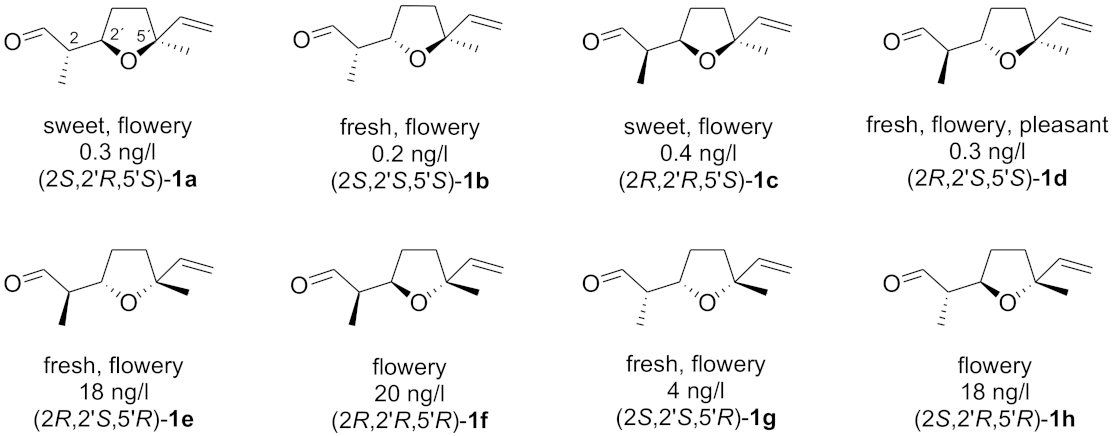
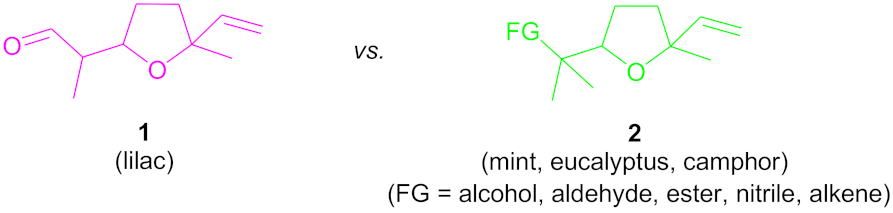

| Alcohol | Aroma | Aldehyde | Aroma |
|---|---|---|---|
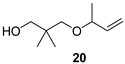 | Sweet, herbal, minty, eucalypty | 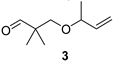 | Spicy, terpenic, pungent |
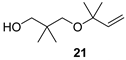 | Balsamic, pleasant, minty, eucalypty | 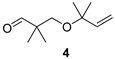 | Spicy, camphor, sharp, with green notes |
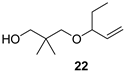 | Oily, sweetish, turpentine-like | 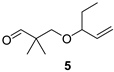 | Herbal, green, sweetish, ethereal, sharp |
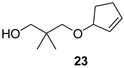 | Fruity-sweetish, fatty, turpentine | 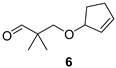 | Sweet, fruity, with eucalyptus notes |
 | Bitter-sweet, turpentine-like | 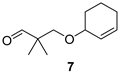 | Herbal, slightly green, with earthy notes |
Publisher’s Note: MDPI stays neutral with regard to jurisdictional claims in published maps and institutional affiliations. |
© 2021 by the authors. Licensee MDPI, Basel, Switzerland. This article is an open access article distributed under the terms and conditions of the Creative Commons Attribution (CC BY) license (https://creativecommons.org/licenses/by/4.0/).
Share and Cite
Dacho, V.; Szolcsányi, P. Synthesis and Olfactory Properties of Seco-Analogues of Lilac Aldehydes. Molecules 2021, 26, 7086. https://doi.org/10.3390/molecules26237086
Dacho V, Szolcsányi P. Synthesis and Olfactory Properties of Seco-Analogues of Lilac Aldehydes. Molecules. 2021; 26(23):7086. https://doi.org/10.3390/molecules26237086
Chicago/Turabian StyleDacho, Vladimír, and Peter Szolcsányi. 2021. "Synthesis and Olfactory Properties of Seco-Analogues of Lilac Aldehydes" Molecules 26, no. 23: 7086. https://doi.org/10.3390/molecules26237086
APA StyleDacho, V., & Szolcsányi, P. (2021). Synthesis and Olfactory Properties of Seco-Analogues of Lilac Aldehydes. Molecules, 26(23), 7086. https://doi.org/10.3390/molecules26237086

