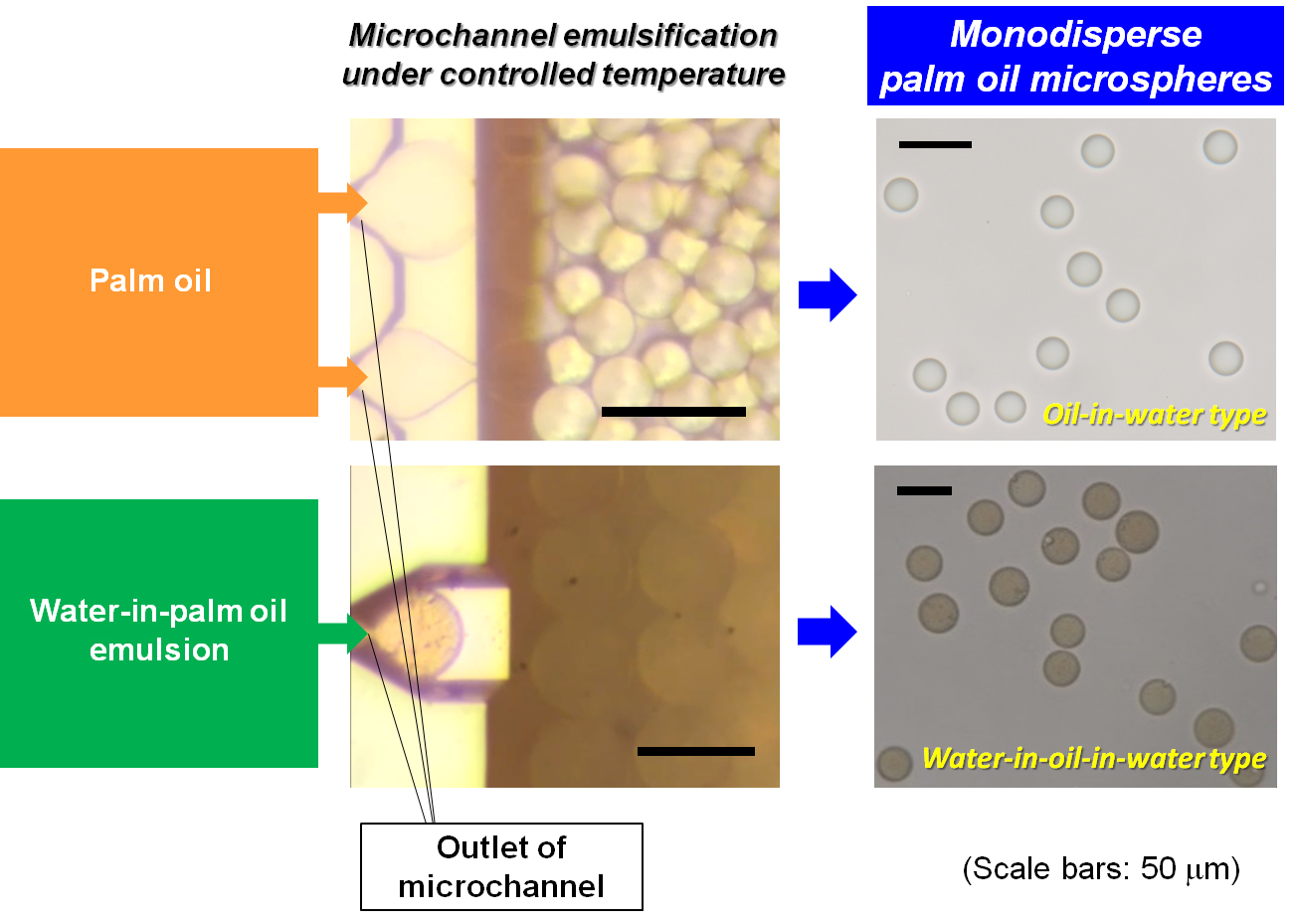
Protein-Stabilized Palm-Oil-in-Water Emulsification Using Microchannel Array Devices under Controlled Temperature

Abstract
Share and Cite
Kuroiwa, T.; Ito, M.; Okuyama, Y.; Yamashita, K.; Kanazawa, A. Protein-Stabilized Palm-Oil-in-Water Emulsification Using Microchannel Array Devices under Controlled Temperature. Molecules 2020, 25, 4805. https://doi.org/10.3390/molecules25204805
Kuroiwa T, Ito M, Okuyama Y, Yamashita K, Kanazawa A. Protein-Stabilized Palm-Oil-in-Water Emulsification Using Microchannel Array Devices under Controlled Temperature. Molecules. 2020; 25(20):4805. https://doi.org/10.3390/molecules25204805
Chicago/Turabian StyleKuroiwa, Takashi, Miki Ito, Yaeko Okuyama, Kanna Yamashita, and Akihiko Kanazawa. 2020. "Protein-Stabilized Palm-Oil-in-Water Emulsification Using Microchannel Array Devices under Controlled Temperature" Molecules 25, no. 20: 4805. https://doi.org/10.3390/molecules25204805
APA StyleKuroiwa, T., Ito, M., Okuyama, Y., Yamashita, K., & Kanazawa, A. (2020). Protein-Stabilized Palm-Oil-in-Water Emulsification Using Microchannel Array Devices under Controlled Temperature. Molecules, 25(20), 4805. https://doi.org/10.3390/molecules25204805