Article

Probing the Proton-Loading Site of Cytochrome C Oxidase Using Time-Resolved Fourier Transform Infrared Spectroscopy

by
Elena Gorbikova
1,
Sergey A. Samsonov
2 and
Ruslan Kalendar
3,*
1
Institute of Biotechnology, University of Helsinki, FIN-00014 Helsinki, Finland
2
Faculty of Chemistry, University of Gdansk, 80-308 Gdansk, Poland
3
Department of Agricultural Sciences, University of Helsinki, FI-00014 Helsinki, Finland
*
Author to whom correspondence should be addressed.
Molecules 2020, 25(15), 3393; https://doi.org/10.3390/molecules25153393

Submission received: 7 July 2020 / Revised: 21 July 2020 / Accepted: 23 July 2020 / Published: 27 July 2020
(This article belongs to the Special Issue Cellular and Molecular Bioengineering)

Abstract

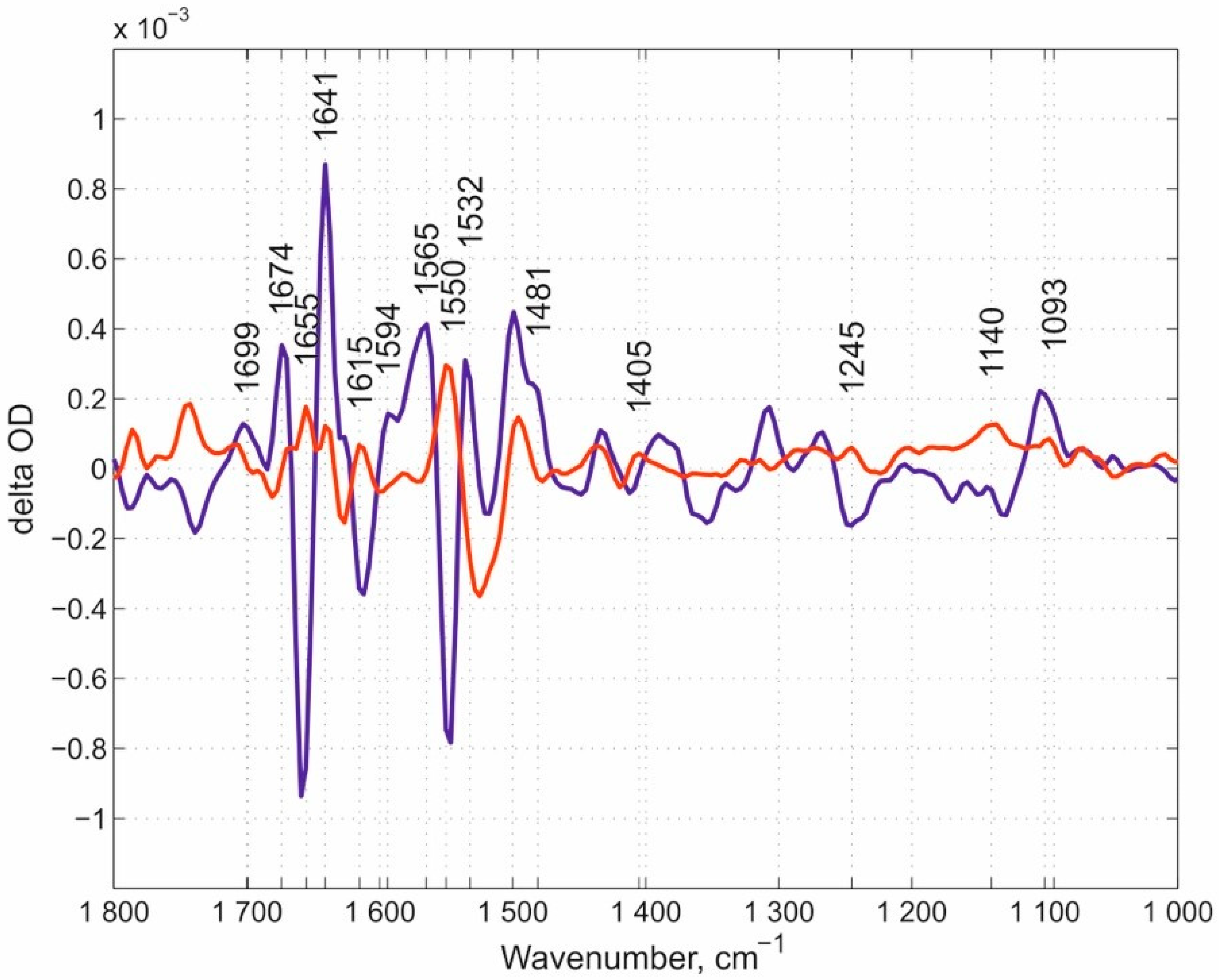
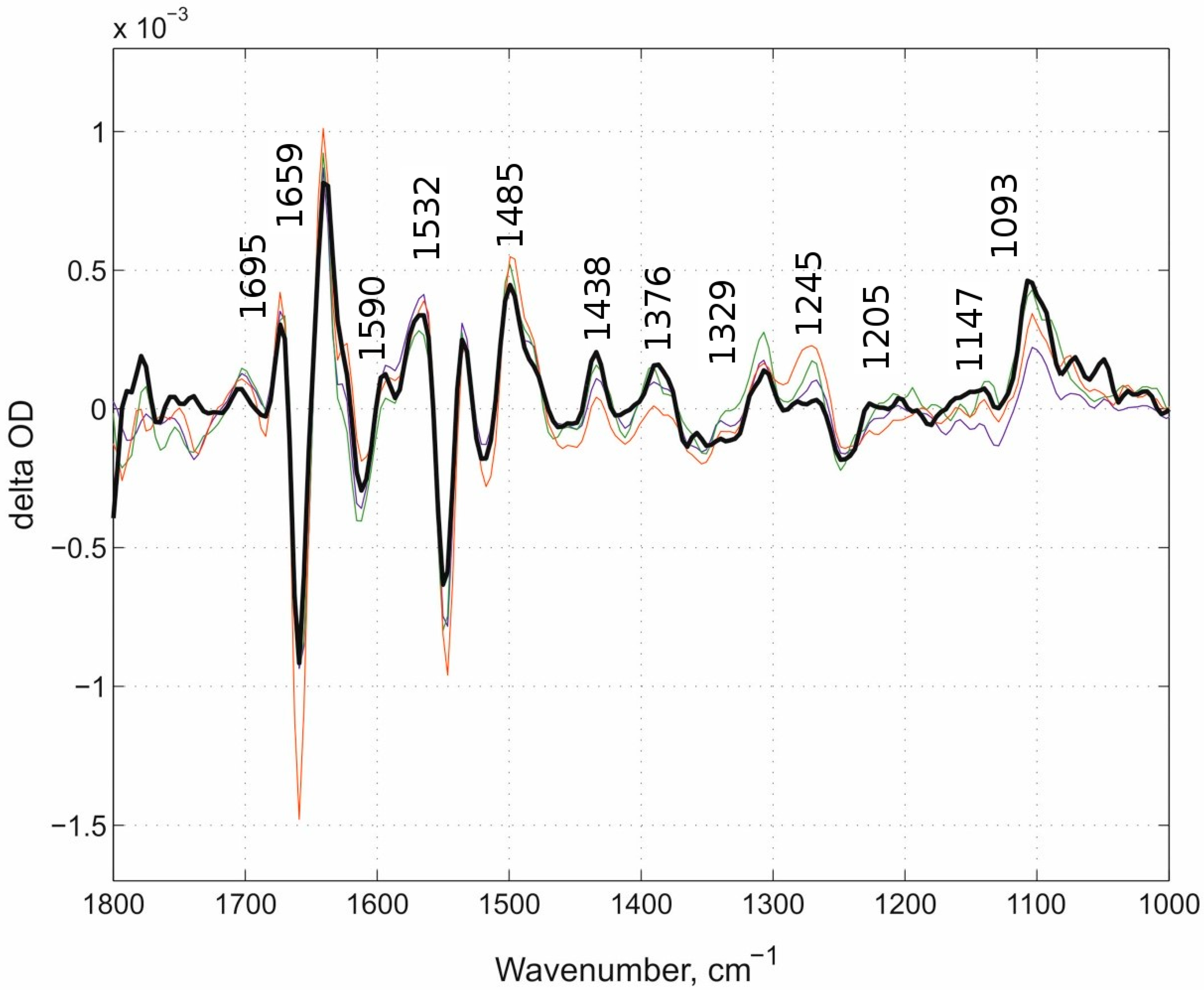
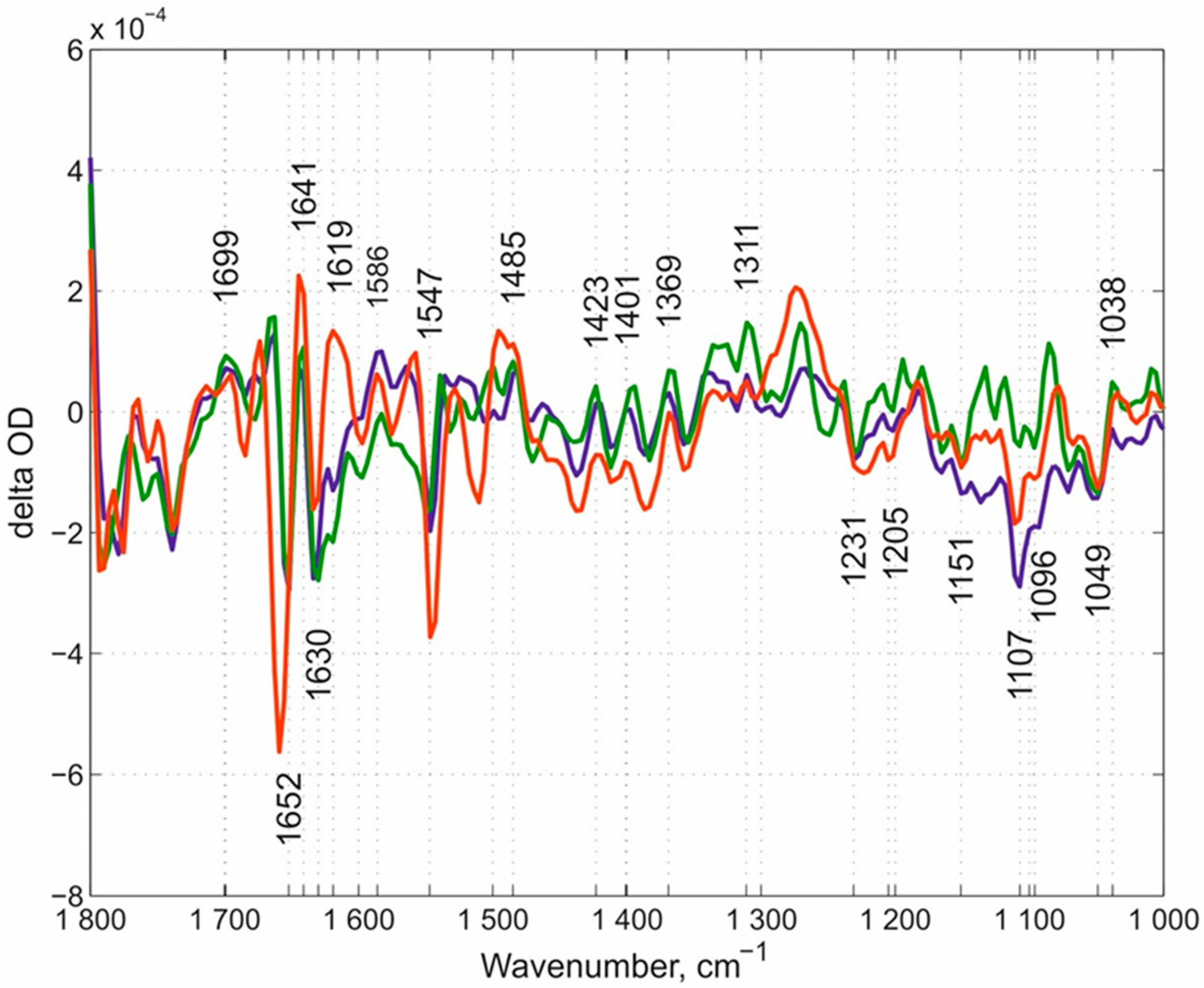
Crystal structure analyses at atomic resolution and FTIR spectroscopic studies of cytochrome c oxidase have yet not revealed protonation or deprotonation of key sites of proton transfer in a time-resolved mode. Here, a sensitive technique to detect protolytic transitions is employed. In this work, probing a proton-loading site of cytochrome c oxidase from Paracoccus denitrificans with time-resolved Fourier transform infrared spectroscopy is presented for the first time. For this purpose, variants with single-site mutations of N131V, D124N, and E278Q, the key residues in the D-channel, were studied. The reaction of mutated CcO enzymes with oxygen was monitored and analyzed. Seven infrared bands in the “fast” kinetic spectra were found based on the following three requirements: (1) they are present in the “fast” phases of N131V and D124N mutants, (2) they have reciprocal counterparts in the “slow” kinetic spectra in these mutants, and (3) they are absent in “fast” kinetic spectra of the E278Q mutant. Moreover, the double-difference spectra between the first two mutants and E278Q revealed more IR bands that may belong to the proton-loading site protolytic transitions. From these results, it is assumed that several polar residues and/or water molecule cluster(s) share a proton as a proton-loading site. This site can be propionate itself (holding only a fraction of H+), His403, and/or water cluster(s).
Keywords: cytochrome c oxidase; proton-loading site; proton transfer; FTIR spectroscopy; D-channel mutants cytochrome c oxidase; proton-loading site; proton transfer; FTIR spectroscopy; D-channel mutants