

Development of Zinc-Doped Hydroxyapatite by Sol-Gel Method for Medical Applications

 ,
,  and
and 
Abstract
1. Introduction
2. Results and Discussions
3. Materials and Methods
4. Conclusions
Author Contributions
Funding
Conflicts of Interest
References
- Georgescu, M.; Ginghina, O.; Raita, S.; Tapaloaga, D.; Ilie, L.; Negrei, C.; Popa, D.E.; Varlas, V.; Multescu, R.; Rosca, A.C.; et al. Natural alternative remedies in the background of updated recommendations for the prophylactic and therapeutic approach of clostridium difficile infections. Farmacia 2018, 66, 563–572. [Google Scholar] [CrossRef] [Scilit]
- Raita, S.; Cornilă, N.; Dănacu, V.; Belu, C.; Georgescu, B.; Roșu, P.; Bărbuceanu, F. Blackwell verlag GmbH. Ana. Histol. Embryol. 2014, 43, 17–101. [Google Scholar]
- Szcześ, A.; Hołysz, L.; Chibowski, E. Synthesis of hydroxyapatite for biomedical applications. Adv. Colloid Interface Sci. 2017, 249, 321–330. [Google Scholar] [CrossRef] [Scilit] [PubMed]
- Stan, G.E.; Popa, A.C.; Bojin, D. Bioreactivity evaluation in simulated body fluid of magnetron sputtered glass and glass-ceramic coatings: A FTIR spectroscopy study. Dig. J. Nanomater. Biostruct. 2010, 5, 557–566. [Google Scholar]
- Ciobanu, C.S.; Andronescu, E.; Prodan, A.M.; Pall, L.; Costescu, A.; Coustumer, P.L.E.; Huneau, F.; Marutescu, L.; Ene, N.I.; Trusca, R.; et al. Physico-chemical and antibacterial studies on silver doped nano-hydroxyapatite. J. Optoelectron. Adv. Mater. 2013, 15, 918–922. [Google Scholar]
- Iconaru, S.L.; Prodan, A.M.; Turculet, C.S.; Beuran, M.; Ghita, R.V.; Costescu, A.; Groza, A.; Chifiriuc, M.C.; Chapon, P.; Gaiaschi, S.; et al. Enamel Based Composite Layers Deposited on Titanium Substrate with Antifungal Activity. J. Spectroscop. 2016, 2016, 4361051. [Google Scholar] [CrossRef] [Scilit]
- Iconaru, S.L.; Prodan, A.M.; Buton, N.; Predoi, D. Structural Characterization and Antifungal Studies of Zinc-Doped Hydroxyapatite Coatings. Molecules 2017, 22, 604. [Google Scholar] [CrossRef] [Scilit] [PubMed]
- Popa, A.C.; Stan, G.E.; Husanu, M.A.; Mercioniu, I.; Santos, L.; Fernandes, H.R.; Ferreira, J.M.F. Bioglass implant-coating interactions in synthetic physiological fluids with varying degrees of biomimicry. Int. J. Nanomed. 2017, 12, 683–707. [Google Scholar] [CrossRef] [Scilit] [PubMed]
- Prodan, A.M.; Beuran, M.; Turculet, C.S.; Popa, M.; Andronescu, E.; Bleotu, C.; Raita, S.M.; Soare, M.; Lupescu, O. In vitro evaluation of glycerol coated iron oxide nanoparticles in solution. Rom. Biotechnol. Lett. 2018, 23, 13901–13908. [Google Scholar]
- Yang, H.; Qu, X.; Lin, W.; Wang, C.; Zhu, D.; Dai, K.; Zheng, Y. In vitro and in vivo studies on zinc-hydroxyapatite composites as novel biodegradable metal matrix composite for orthopedic applications. Acta Biomater. 2018, 71, 200–214. [Google Scholar] [CrossRef] [Scilit] [PubMed]
- Dojana, N.; Cotor, G.; Codreanu, I.; Raita, S.; Balaceanu, R.A.; Budica, C. Investigation into the effect of season on oestrus in gilts over two years of climate adaptation. S. Afr. J. Anim. Sci. 2017, 47, 187–193. [Google Scholar] [CrossRef] [Scilit]
- Cheng, J.; Liu, B.; Wu, Y.H.; Zheng, Y.F. Comparative in vitro Study on Pure Metals (Fe, Mn, Mg, Zn and W) as Biodegradable Metals. J. Mater. Sci. Technol. 2013, 29, 619–627. [Google Scholar] [CrossRef] [Scilit]
- Sahin, D. Determining the Trace Amounts of Zinc by Membrane Filtration-Sensitized Flame Atomic Absorption Spectrometry in Water Samples. Rom. Biotechnol. Lett. 2018, 2, 13940–13945. [Google Scholar]
- Yamaguchi, M.; Goa, Y.H. Potent Effect of Zinc Acexamate on Bone Components in the Femoral–Metaphyseal Tissues of Elderly Female Rats. Gen. Pharmac. 1988, 30, 423–427. [Google Scholar] [CrossRef] [Scilit]
- Eberle, J.; Schmidmayer, S.; Erben, R.G.; Stangassinger, M.; Roth, H.P. Skeletal Effects of Zinc Deficiency in Growing Rats. J. Trace Elem. Med. Biol. 1999, 13, 21–26. [Google Scholar] [CrossRef] [Scilit]
- Johal, K.K. In vivo response of strontium and zinc-based ionomeric cement implants in bone. J. Mater. Sci. Mater. Med. 2002, 13, 375–379. [Google Scholar] [CrossRef] [Scilit] [PubMed]
- Kraus, T.; Fischerauer, S.F.; Hänzi, A.C.; Uggowitzer, P.J.; Löffler, J.F.; Weinberg, A.M. Magnesium alloys for temporary implants in osteosynthesis: In vivo studies of their degradation and interaction with bone. Acta Biomater. 2012, 8, 1230–1238. [Google Scholar] [CrossRef] [Scilit] [PubMed]
- Bowen, P.K.; Drelich, J.; Goldman, J. Zinc exhibits ideal physiological corrosion behavior for bioabsorbable stents. Adv. Mater. 2013, 25, 2577–2582. [Google Scholar] [CrossRef] [Scilit] [PubMed]
- Prakash, A.; Bharti, K.; Majeed, A.B. Zinc: Indications in brain disorders. Fundam. Clin. Pharmacol. 2015, 29, 131–149. [Google Scholar] [CrossRef] [Scilit] [PubMed]
- Frederickson, C.J.; Jae-Young, K.; Bush, A.I. The neurobiology of zinc in health and disease. Nat. Rev. Neurosci. 2005, 6, 449–462. [Google Scholar] [CrossRef] [Scilit] [PubMed]
- Prasad, A.S. Zinc in Human Health: Effect of Zinc on Immune Cells. Mol. Med. 2008, 14, 353–357. [Google Scholar] [CrossRef] [Scilit] [PubMed]
- Broadley, M.R.; White, P.J.; Hammond, J.P.; Zelko, I.; Lux, A. Zinc in plants. New Phytologist. 2007, 173, 677–702. [Google Scholar] [CrossRef] [Scilit] [PubMed]
- Yamaguchi, M. Role of zinc in bone formation and bone resorption. J. Trace Elem. Exp. Med. 1998, 11, 119–135. [Google Scholar] [CrossRef]
- Danacu, V.; Raita, S.; Ionita, C. Morphological studies on visceral lymph nodes of the abdominal cavity in the rabbit: 38. Anat. Histol. Embryol. 2014, 43, 34–35. [Google Scholar]
- Predoi, D.; Popa, C.L.; Chapon, P.; Groza, A.; Iconaru, S.L. Evaluation of the Antimicrobial Activity of Different Antibiotics Enhanced with Silver-Doped Hydroxyapatite Thin Films. Materials 2016, 9, 778. [Google Scholar] [CrossRef] [Scilit] [PubMed]
- Turculet, C.S.; Prodan, A.M.; Negoi, I.; Teleanu, G.; Popa, M.; Andronescu, E.; Beuran, M.; Stanciu, G.A.; Hristu, R.; Badea, M.L.; Iosif, A.; et al. Preliminary evaluation of the antifungal activity of samarium doped hydroxyapatite thin films. Rom. Biotechnol. Lett. 2018, 23, 13928–13932. [Google Scholar]
- Predoi, D.; Iconaru, S.L.; Deniaud, A.; Chevallet, M.; Michaud-Soret, I.; Buton, N.; Prodan, A.M. Textural, Structural and Biological Evaluation of Hydroxyapatite Doped with Zinc at Low Concentrations. Materials 2017, 10, 229. [Google Scholar] [CrossRef] [Scilit] [PubMed]
- Erakovic, S.; Jankovic, A.; Ristoscu, C.; Duta, L.; Serban, N.; Visan, A.; Mihailescu, I.N.; Stan, G.E.; Socol, M.; Iordache, O.; et al. Antifungal activity of Ag:hydroxyapatite thin films synthesized by pulsed laser deposition on Ti and Ti modified by TiO2 nanotubes substrates. Appl. Surf. Sci. 2014, 293, 37–45. [Google Scholar] [CrossRef] [Scilit]
- Iconaru, S.L.; Motelica-Heino, M.; Guegan, R.; Predoi, M.V.; Prodan, A.M.; Predoi, D. Removal of Zinc Ions Using Hydroxyapatite and Study of Ultrasound Behavior of Aqueous Media. Materials 2018, 11, 1350. [Google Scholar] [CrossRef] [Scilit] [PubMed]
- Groza, A.; Ciobanu, C.S.; Popa, C.L.; Iconaru, S.L.; Chapon, P.; Luculescu, C.; Ganciu, M.; Predoi, D. Structural Properties and Antifungal Activity against Candida albicans Biofilm of Different Composite Layers Based on Ag/Zn Doped Hydroxyapatite-Polydimethylsiloxanes. Polymers 2016, 8, 131. [Google Scholar] [CrossRef] [Scilit]
- Ohtsu, N.; Kakuchi, Y.; Ohtsuki, T. Antibacterial effect of zinc oxide/hydroxyapatite coatings prepared by chemical solution deposition. Appl. Surf. Sci. 2018, 445, 596–600. [Google Scholar] [CrossRef] [Scilit]
- Stanic, V.; Dimitrijevic, S.; Antic-Stankovi, J.; Mitric, M.; Jokic, B.; Plecas, I.B.; Raicevic, S. Synthesis, characterization and antimicrobial activity of copper and zinc-doped hydroxyapatite nanopowders. Appl. Surf. Sci. 2010, 256, 6083–6089. [Google Scholar] [CrossRef] [Scilit]
- Thian, E.S.; Konishi, T.; Kawanobe, Y.; Lim, P.N.; Choong, C.; Ho, B.; Aizawa, M. Zinc-substituted hydroxyapatite: A biomaterial with enhanced bioactivity andantibacterial properties. J. Mater. Sci. Mater. Med. 2013, 24, 437–445. [Google Scholar] [CrossRef] [Scilit] [PubMed]
- Samani, S.; Hossainalipour, S.M.; Tamizifar, M.; Rezaie, H.R. In vitro antibacterial evaluation of sol–gel-derived Zn−, Ag−, and (Zn + Ag)-doped hydroxyapatitecoatings against methicillin-resistant Staphylococcus aureus. J. Biomed. Mater. Res. A 2013, 101, 222–230. [Google Scholar] [CrossRef] [Scilit] [PubMed]
- Bakan, F.; Laçin, O.; Sarac, H. A novel low temperature sol–gel synthesis process for thermally stable nano crystalline hydroxyapatite. Powder Technol. 2013, 233, 295–302. [Google Scholar] [CrossRef] [Scilit]
- Lutterotti, L. Total pattern tting for the combined size-strainstress- texture determination in thin film diffraction. Nucl. Instrum. Meth. Phys. Res. B 2010, 268, 334–340. [Google Scholar] [CrossRef] [Scilit]
- Toby, B.H. R factors in Rietveld analysis: How good is good enough? Powder Diff. 2006, 21, 67–70. [Google Scholar] [CrossRef] [Scilit]
- Lopez, D.A.; de Sanchez, S.R.; Simison, S.N. The influence of steel microstructure on CO2 corrosion. EIS studies on the inhibition efficiency of benzimidazole. Electrochim. Acta 2003, 48, 845–854. [Google Scholar] [CrossRef] [Scilit]
- Serra, J.; Gonzalez, P.; Liste, S.; Serra, C.; Chiussi, S.; Leon, B.; Perez-Amour, M.; Ylanen, H.O.; Hupa, M. FTIR and XPS studies of bioactive silica based glasses. J. Non-Cryst. Solids 2003, 332, 20–27. [Google Scholar] [CrossRef] [Scilit]
- Boyd, K.J.; Marton, D.; Todorov, S.S.; Al-Bayati, A.H.; Kulik, J.; Zuhr, R.A.; Rabalais, J.W. Formation of C–N thin films by ion beam deposition. J. Vac. Sci. Technol. A 1995, 13, 2110–2122. [Google Scholar] [CrossRef] [Scilit]
- Bhattacharyya, S.; Cardinaud, C.; Turban, G. Spectroscopic determination of the structure of amorphous nitrogenated carbon films. J. Appl. Phys. 1998, 83, 4491–4500. [Google Scholar] [CrossRef] [Scilit]
- Bhattacharyya, S.; Hong, J.; Turban, G. Determination of the structure of amorphous nitrogenated carbon films by combined Raman and x-ray photoemission spectroscopy. J. Appl. Phys. 1998, 83, 3917–3919. [Google Scholar] [CrossRef] [Scilit]
- Moulder, J.F.; Stickle, W.F.; Sobol, P.E.; Bomben, K.D. Handbook of X-ray Photoelectron Spectroscopy; Physical Electronics: Minessota city, MN, USA, 1995. [Google Scholar]
- Gaggiotti, G.; Galdikas, A.; Kaciulis, S.; Mattongo, G.; Setkus, A. Surface-Chemistry of Tin Oxide-Based Gas Sensors. J. Appl. Phys. 1994, 76, 4467–4471. [Google Scholar] [CrossRef] [Scilit]
- Kawabe, T.; Shimomura, S.; Karasuda, T.; Tabata, K.; Suzuki, E.; Yamaguchi, Y. Photoemission study of dissociatively adsorbed methane on a pre-oxidized SnO2 thin film. Surf. Sci. 2000, 448, 101–107. [Google Scholar] [CrossRef] [Scilit]
- Hegde, M.S.; Ayyoob, M. O2− and O1− types of oxygen species on Ni and barium-dosed Ni and Cu surfaces. Surf. Sci. 1986, 173, L635–L640. [Google Scholar] [CrossRef] [Scilit]
- Rao, C.N.R.; Vijayakrishnan, V.; Kulkarni, G.U.; Rajumon, M.K. A comparative study of the interaction of oxygen with clusters and single-crystal surfaces of nickel. J. Appl. Phys. 1995, 84, 285–289. [Google Scholar] [CrossRef] [Scilit]
- Kulkarni, G.U.; Rao, C.N.R.; Robert, M.W. Coadsorption of dioxygen and water on the Ni (110): Role of O−1 type species in the dissociation of water. Langmuir 1995, 11, 2572–2575. [Google Scholar] [CrossRef] [Scilit]
- Kaciulis, S.; Mattogno, G.; Pandolfi, L.; Cavalli, M.; Gnappi, G.; Montenero, A. XPS study of apatite-based coatings prepared by sol-gel technique. Appl. Surf. Sci. 1999, 151, 1–5. [Google Scholar] [CrossRef] [Scilit]
- Stoica, T.F.; Morosanu, C.; Slav, A.; Stoica, T.; Osiceanu, P.; Anastasescu, C.; Gartner, M.; Zaharescu, M. Hydroxyapatite films obtained by sol-gel and sputtering. Thin Solid Films 2008, 516, 8112–8116. [Google Scholar] [CrossRef] [Scilit]
- Battistoni, C.; Casaletto, M.P.; Ingo, G.M.; Kaciulis, S.; Mattogno, G.; Pandolfi, L. Surface characterization of biocompatible hydroxyapatite coatings. Surf. Interface Anal. 2000, 29, 773–781. [Google Scholar] [CrossRef]
- Lou, L.; Nelson, A.E.; Heo, G.; Major, P.W. Surface chemical composition of human maxillary first premolar as assessed by X-ray photoelectron spectroscopy (XPS). Appl. Surf. Sci. 2008, 254, 6706–6709. [Google Scholar] [CrossRef] [Scilit]
- Li, J.; Li, Y.; Zhang, L.; Zuo, Y. Composition of calcium deficient Na-containing carbonate hydroxyapatite modified with Cu (II) and Zn (II) ions. Appl. Surf. Sci. 2008, 254, 2844–2850. [Google Scholar] [CrossRef] [Scilit]
- Feliu, S.; Barranco, V. XPS study of the surface chemistry of conventional hot-dip galvanised pure Zn, galvanneal and Zn–Al alloy coatings on steel. Acta Mater. 2003, 51, 5413–5424. [Google Scholar] [CrossRef] [Scilit]
- MATLAB. The Language of Technical Computing. The MathWorks, Inc. 2016. Available online: www.mathworks.com/matlab (accessed on 21 October 2018).
- COMSOL Multiphysics 5.4; Modeling Software; Comsol Inc.: Burlington, VT, USA, 2018.
- Kim, I.S.; Kumata, P.N. Sol-gel synthesis and characterization of nanostructured hydroxyapatite powder. Mater. Sci. Eng. B 2004, 111, 232–236. [Google Scholar] [CrossRef] [Scilit]
- Ciobanu, C.S.; Iconaru, S.L.; Le Coustumer, P.; Constantin, L.V. Predoi, D. Antibacterial activity of silver-doped hydroxyapatite nanoparticles against gram-positive and gram-negative bacteria. Nanoscale Res. Lett. 2012, 7, 324. [Google Scholar] [CrossRef] [Scilit] [PubMed]
- Popa, C.L.; Deniaud, A.; Michaud-Soret, I.; Guégan, R.; Motelica-Heino, M.; Predoi, D. Structural and Biological Assessment of Zinc Doped Hydroxyapatite Nanoparticles. J. Nanomater. 2016, 2016, 1062878. [Google Scholar] [CrossRef] [Scilit]
- MAUD Version 2.79. Available online: http://maud.radiographema.eu/ (accessed on 3 November 2017).
Sample Availability: Samples of the compounds are not available from the authors. |
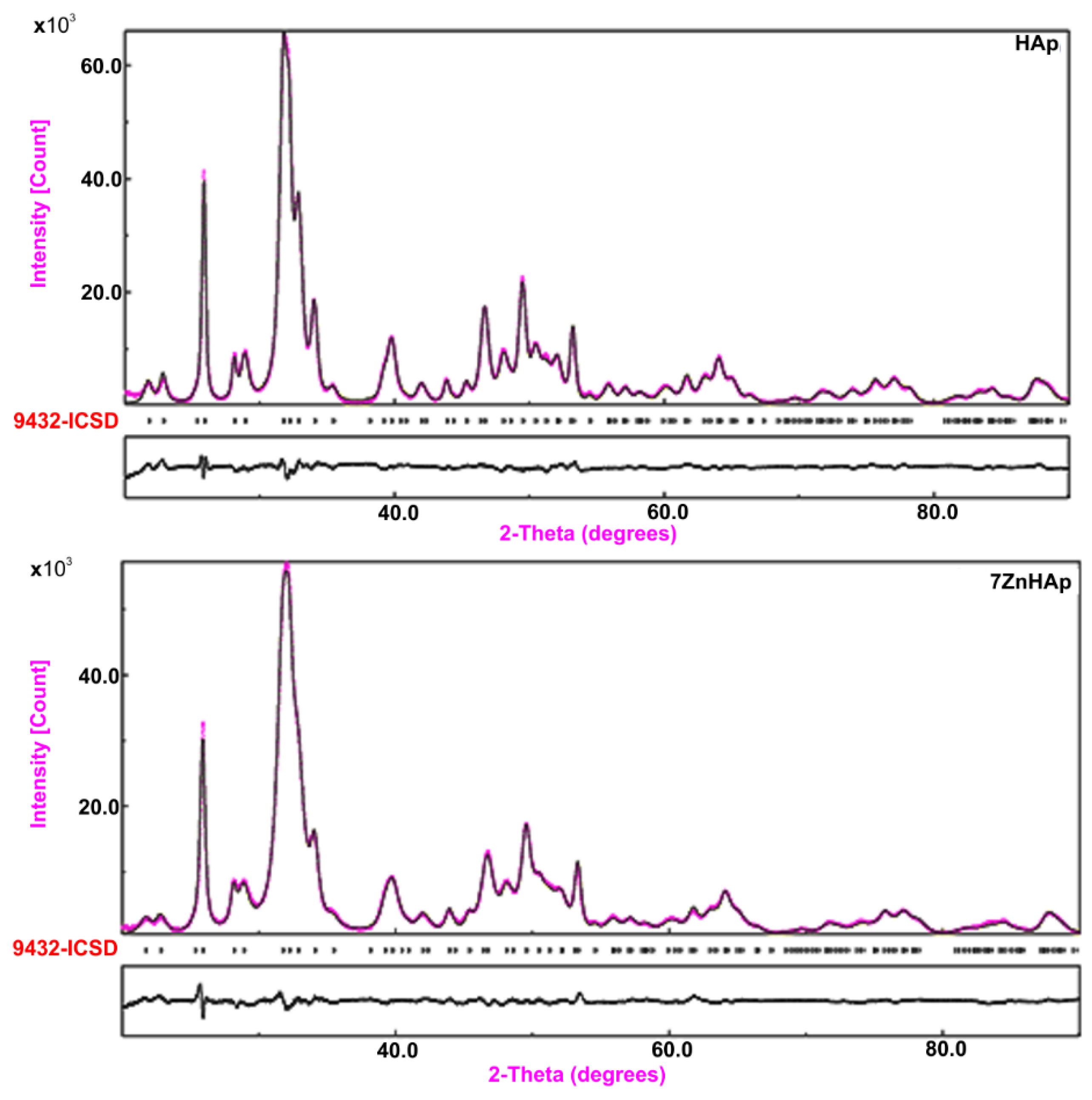
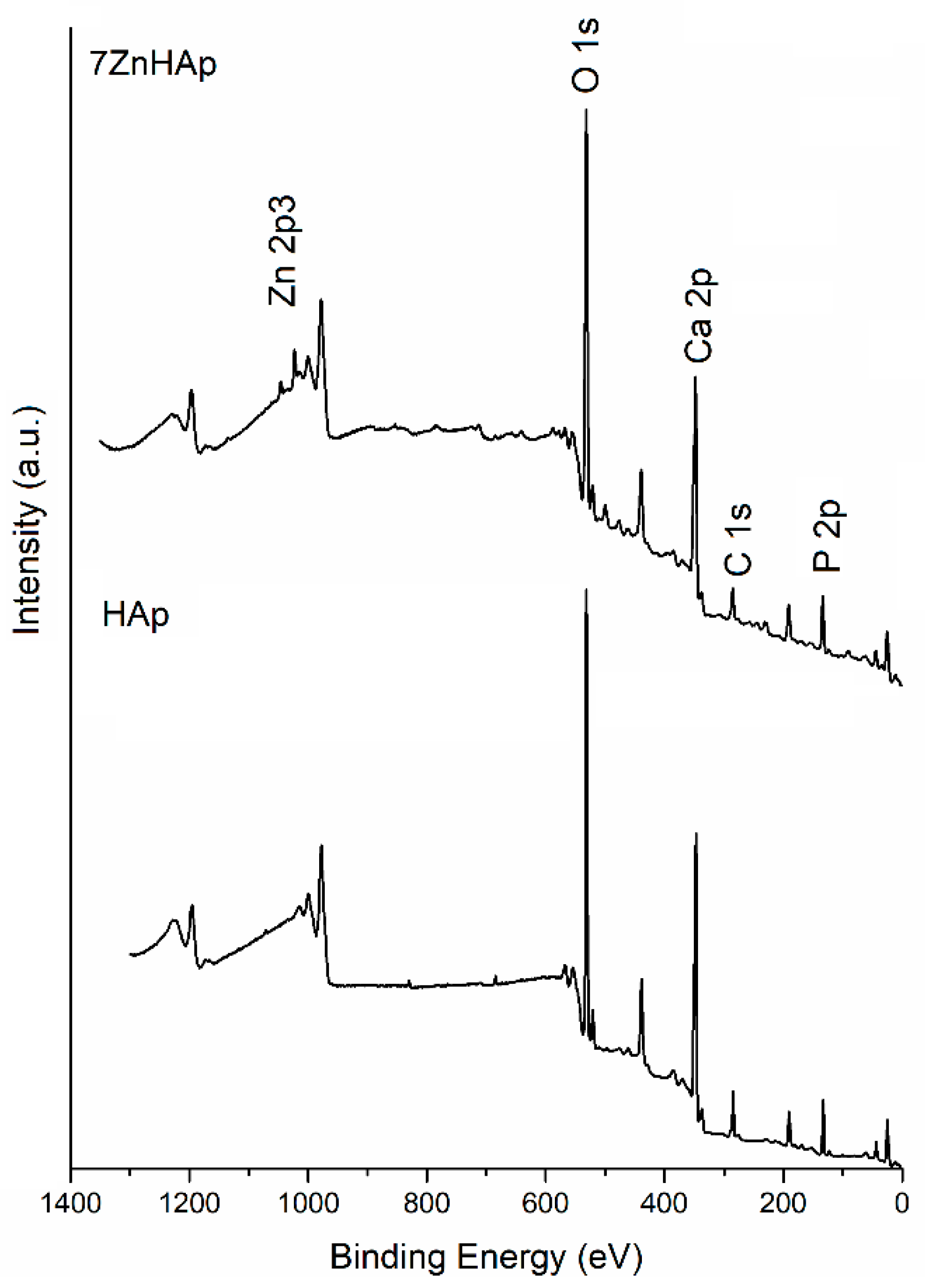
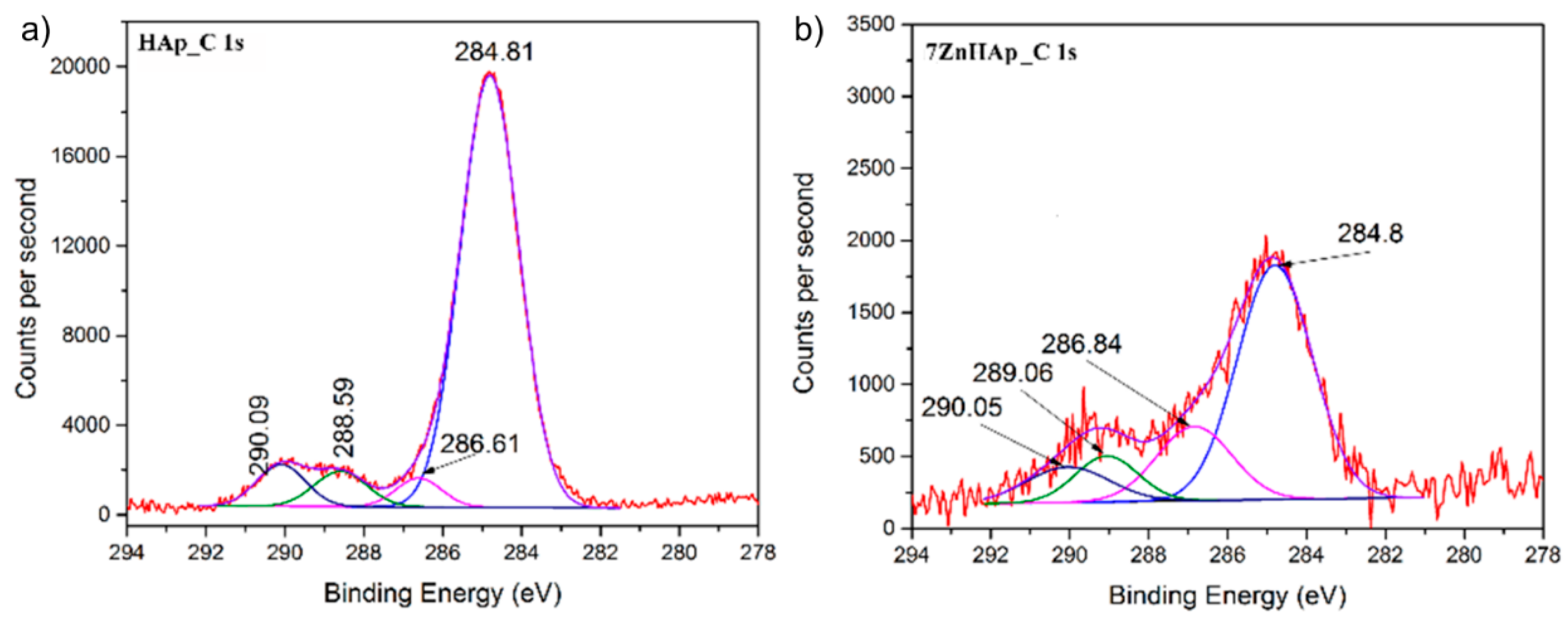
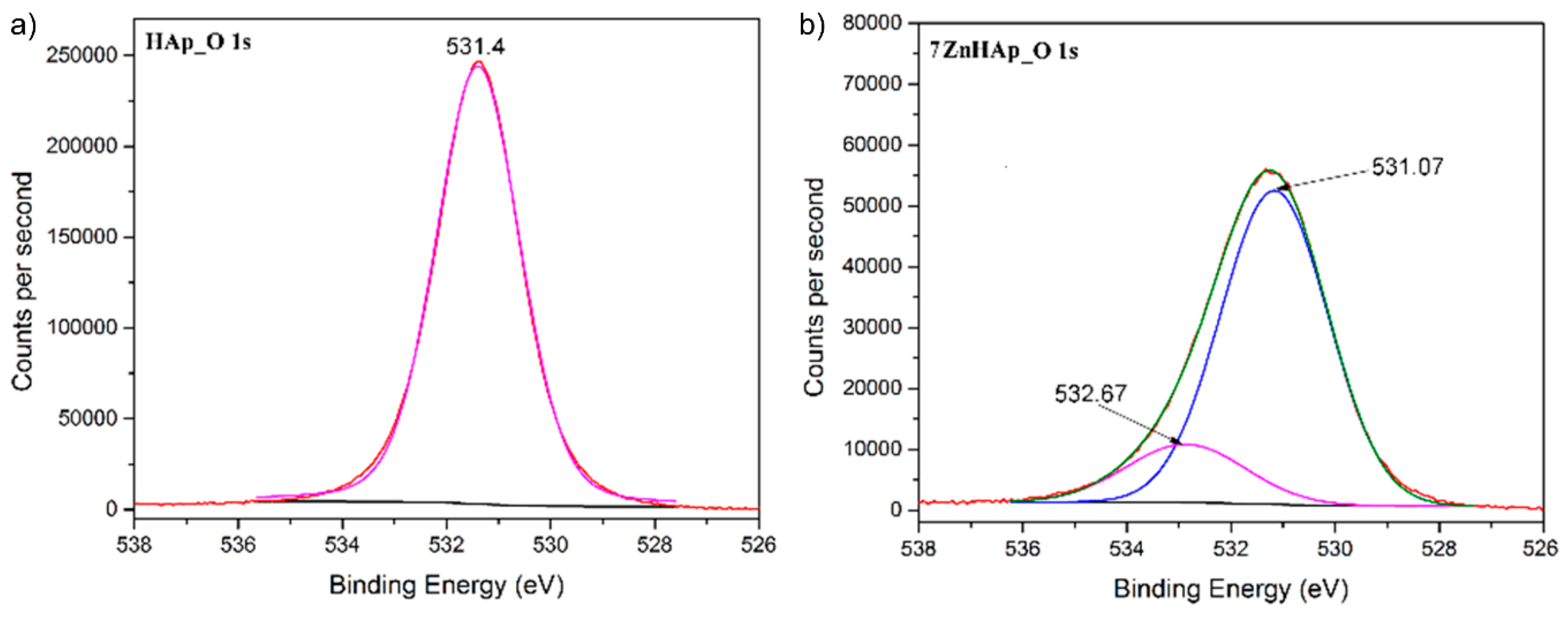

| Sample | Rwp (%) | Rexp (%) | RBragg (%) |
|---|---|---|---|
| HAp | 2.4121 | 0.9341 | 1.8474 |
| 7ZnHAp | 2.3299 | 0.9188 | 1.7531 |
| HAp | 7ZnHAp | |
|---|---|---|
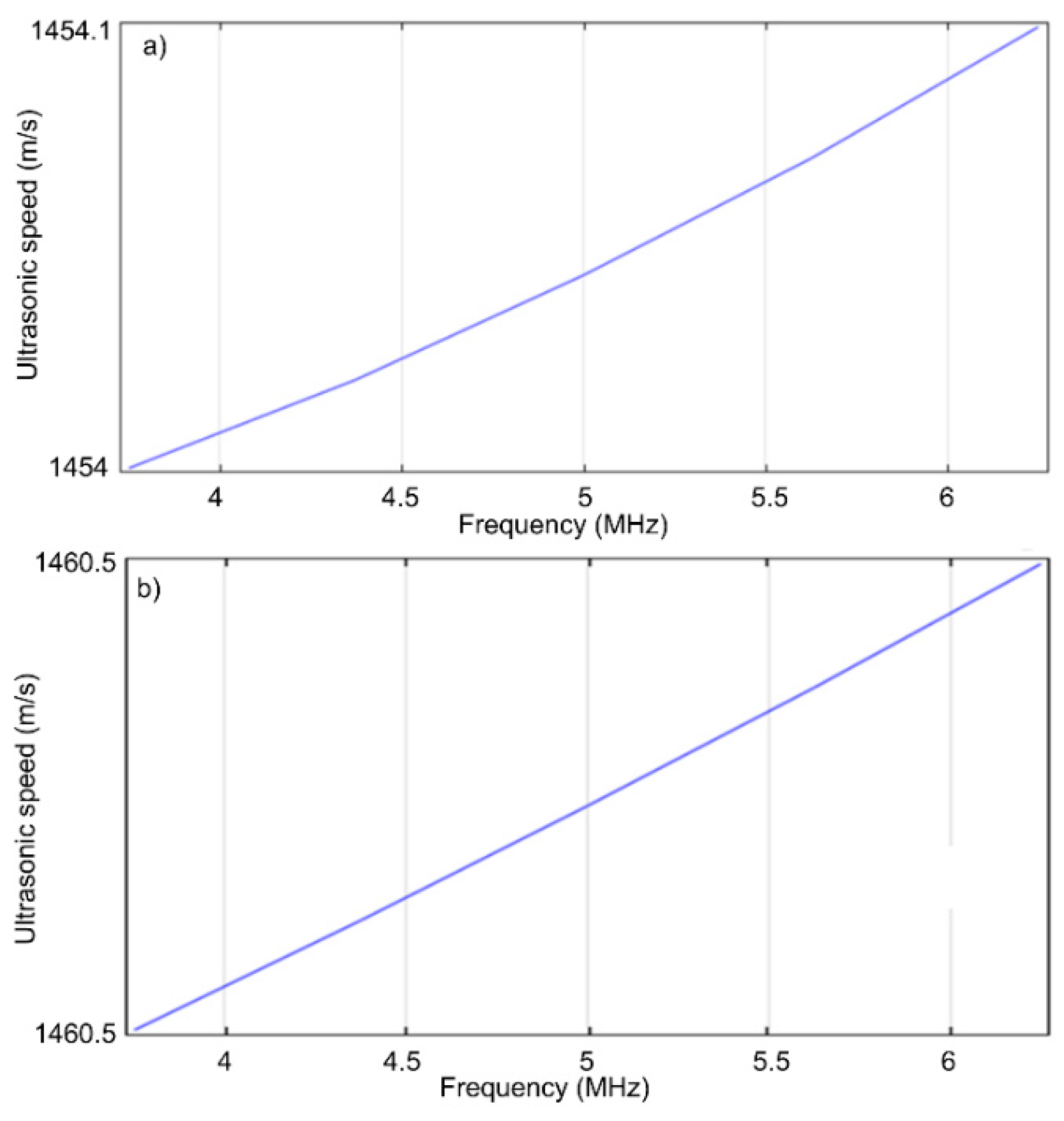
| F (Hz) | velocity (m/s) | velocity (m/s) |
| 3.7500 × 10⁶ | 1454.0 | 1460.5 |
| 4.3750 × 10⁶ | 1454.1 | 1460.5 |
| 5.0000 × 10⁶ | 1454.1 | 1460.5 |
| 5.6250 × 10⁶ | 1454.1 | 1460.5 |
| 6.2500 × 10⁶ | 1454.1 | 1460.5 |
| HAp | 7ZnHAp | ||||||
|---|---|---|---|---|---|---|---|
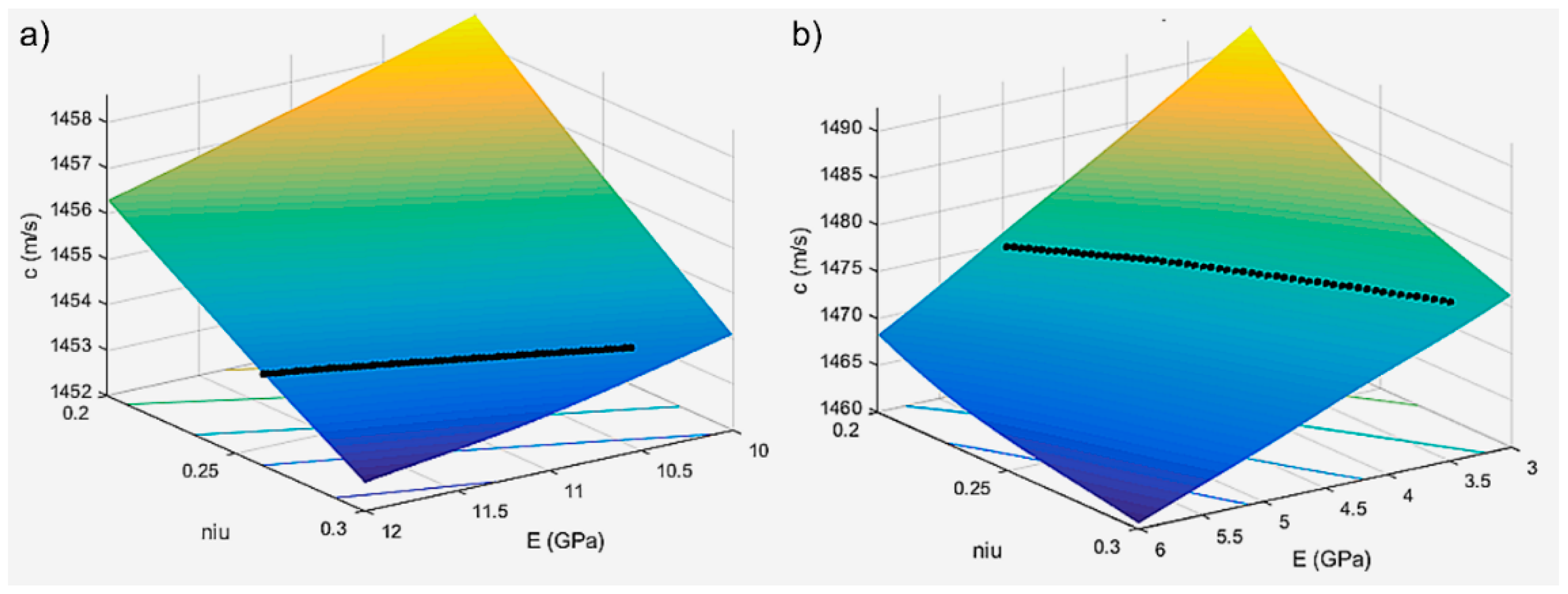
| E/ν | Ν = 0.2 | Ν = 0.25 | Ν = 0.3 | E/ν | Ν = 0.2 | Ν = 0.25 | Ν = 0.3 |
| E = 10 | 1458.6 | 1456.3 | 1454.1 | E = 3 | 1492.5 | 1484.3 | 1476.2 |
| E = 11 | 1457.4 | 1455.3 | 1453.2 | E = 4 | 1480.2 | 1468.3 | 1468.3 |
| E = 12 | 1456.3 | 1454.4 | 1452.6 | E = 6 | 1468.3 | 1464.4 | 1460.5 |
© 2018 by the authors. Licensee MDPI, Basel, Switzerland. This article is an open access article distributed under the terms and conditions of the Creative Commons Attribution (CC BY) license (http://creativecommons.org/licenses/by/4.0/).
Share and Cite
Negrila, C.C.; Predoi, M.V.; Iconaru, S.L.; Predoi, D. Development of Zinc-Doped Hydroxyapatite by Sol-Gel Method for Medical Applications. Molecules 2018, 23, 2986. https://doi.org/10.3390/molecules23112986
Negrila CC, Predoi MV, Iconaru SL, Predoi D. Development of Zinc-Doped Hydroxyapatite by Sol-Gel Method for Medical Applications. Molecules. 2018; 23(11):2986. https://doi.org/10.3390/molecules23112986
Chicago/Turabian StyleNegrila, Catalin Constantin, Mihai Valentin Predoi, Simona Liliana Iconaru, and Daniela Predoi. 2018. "Development of Zinc-Doped Hydroxyapatite by Sol-Gel Method for Medical Applications" Molecules 23, no. 11: 2986. https://doi.org/10.3390/molecules23112986
APA StyleNegrila, C. C., Predoi, M. V., Iconaru, S. L., & Predoi, D. (2018). Development of Zinc-Doped Hydroxyapatite by Sol-Gel Method for Medical Applications. Molecules, 23(11), 2986. https://doi.org/10.3390/molecules23112986

