Abstract
In this study, a polymer dispersed cholesteric liquid crystal (PDChLC) film obtained via a one-step fabrication technique based on photopolymerization of a thiol-acrylate reaction system was prepared and characterized for the first time. The effects of the chiral dopant, the influence of thiol monomer functionality and content on the morphology and subsequent performance of the PDChLC films were systematically investigated. It was demonstrated that the addition of a small amount of chiral dopant slightly increased the driving voltage, but decreased the off-state transmittance significantly. Furthermore, scanning electron micrographs (SEM) shown that the liquid crystal (LC) droplet size decreased at first and then increased with the increasing amount of thiol monomer functionality, while increasing the thiol content increased the LC droplet size. Correspondingly, the electro-optical switching behavior was directly dependent on LC droplet size. By tuning the raw material composition, PDChLC film with optimized electro-optical performance was prepared.
1. Introduction
Polymer dispersed liquid crystal (PDLC) films are a kind of functional macromolecular material, which consist of liquid crystal droplets dispersed in a semi-continuous polymer matrix [1,2,3]. Generally, a PDLC film shows electro-optical properties in a normal mode, which exhibits a light scattering and a transparent state without and with the application of an electric field, respectively. The normal scattering state (off-state) is due to the randomly oriented liquid crystal (LC) droplets dispersed in the polymer matrix, and the transparent state (on-state) is attributed to the parallel alignment of the LC directors with the applied electric field if there is a refractive index match between the LC droplets and the polymer matrix. These optical properties are valuable for optical shutters, display devices, smart windows and other devices [4,5,6,7], and combinations with other materials could expand the scope of application [8,9]. Nanostructures based on LCs are also getting more and more attention [10,11,12].
Four methods have been used to prepare PDLC films, including the encapsulation process (MP), thermally induced phase separation (TIPS), solvent-induced phase separation (SIPS) and polymerization-induced phase separation (PIPS) [13,14,15]. PIPS is considered the most popular method since the fabrication process is relatively simple, clean and solvent-free. Compared with the thermal curing method which takes several hours at least, the UV-initiated polymerization method is more efficient and controllable. At present, researchers are focusing more on the photo-polymerization-induced phase separation method based on acrylate and methacrylate monomers [16]. It is well known that the polymer precursor composition influences the performance characteristics of PDLC films such as transmittance and switching voltage. For example, introducing fluorinated acrylates into PDLCs can reduce the LC anchoring energy and subsequently lower the switching voltage [17]. In addition, a number of studies examining PDLCs have utilized the thiol-ene system consisting of a series of thiols with different functionality and urethane allyl ether as well as vinyl ether monomers [18,19]. Compared with the acrylate systems, the thiol-ene system has significant advantages, such as less light initiator dosage, excellent thermal insulation, high refractive index, inertia to oxidation and water resistance [20,21,22,23,24,25,26,27,28,29].
However, up till now, little attention has been paid to the use of acrylate monomer/thiol monomer for ultraviolet (UV)-initiated polymerization. In this study, a polymer dispersed cholesteric liquid crystal (PDChLC) film was prepared based on photopolymerization of the thiol-acrylate reaction system and characterized for the first time. The influences of the thiol functionality and the amount of thiol on the morphology and electro-optical properties of the resulting PDChLC films were carefully investigated.
2. Results and Discussions
2.1. The Effects of Different Amounts of Chiral Dopant on the PDChLC Films
2.1.1. Morphology of the Polymer Network in PDChLC Films
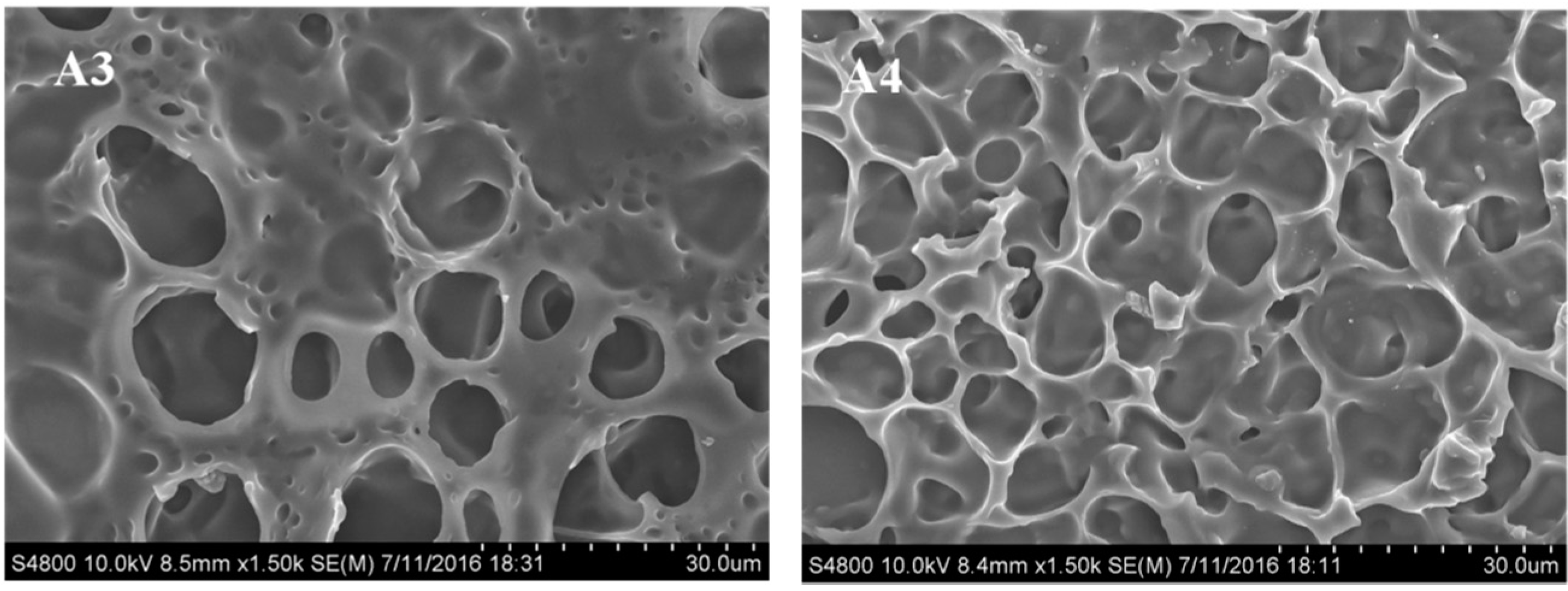
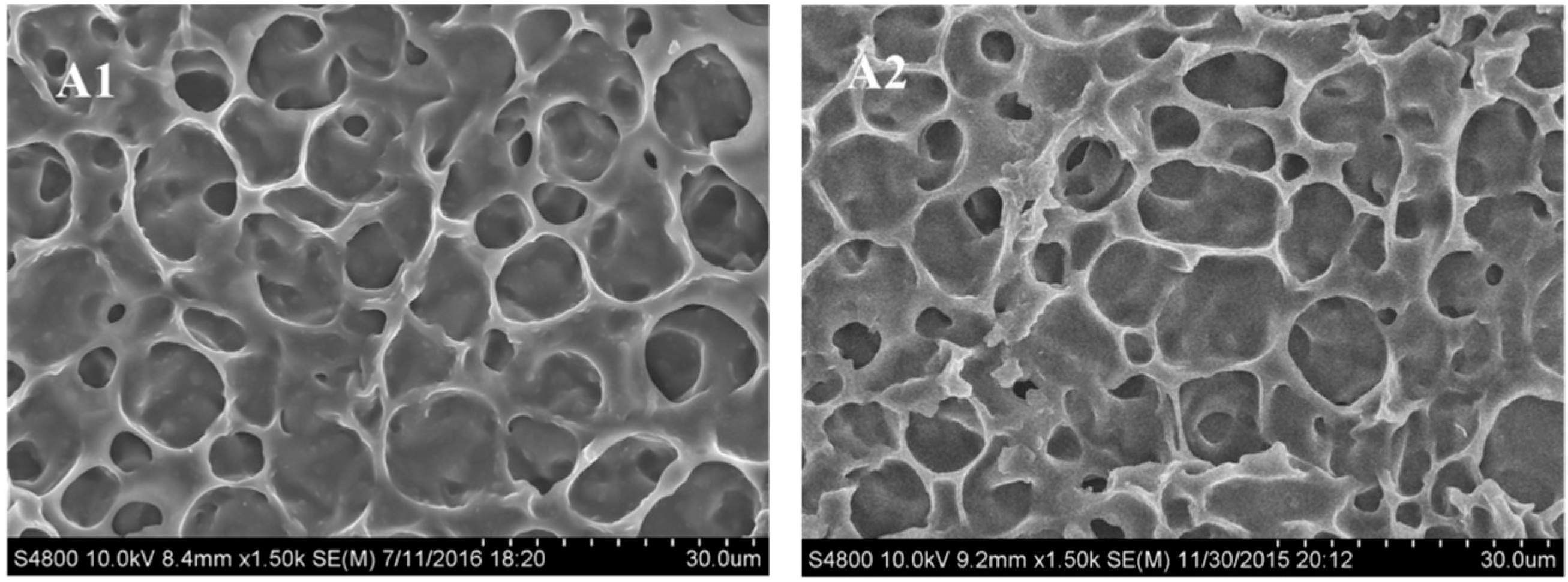
Figure 1 shows scanning electron micrographs (SEM) micrographs of the polymer networks of samples A1–A4. As can be seen the LC domain size was slightly decreased with increasing chiral dopant (S811) content. It is well known the droplet size is controlled by the relative content of the photopolymerizable monomers and LC, the rate of polymerization, and some physical parameters such as the viscosity, rate of diffusion, and solubility of the LC in the polymer. For a definite system, the relative content of photopolymerizable monomer and LC remains the same, so increasing the S811 content caused the pitch to decrease, the anchoring force from the polymer network on the liquid crystals to increase, and this resulted in a decrease in the LC droplet size, which was not obvious because of the low amount of chiral dopant used.

Figure 1.
Scanning electron micrographs (SEM) of the polymer networks of the samples A1–A4.
2.1.2. Electro-Optical Properties of PDChLC Films
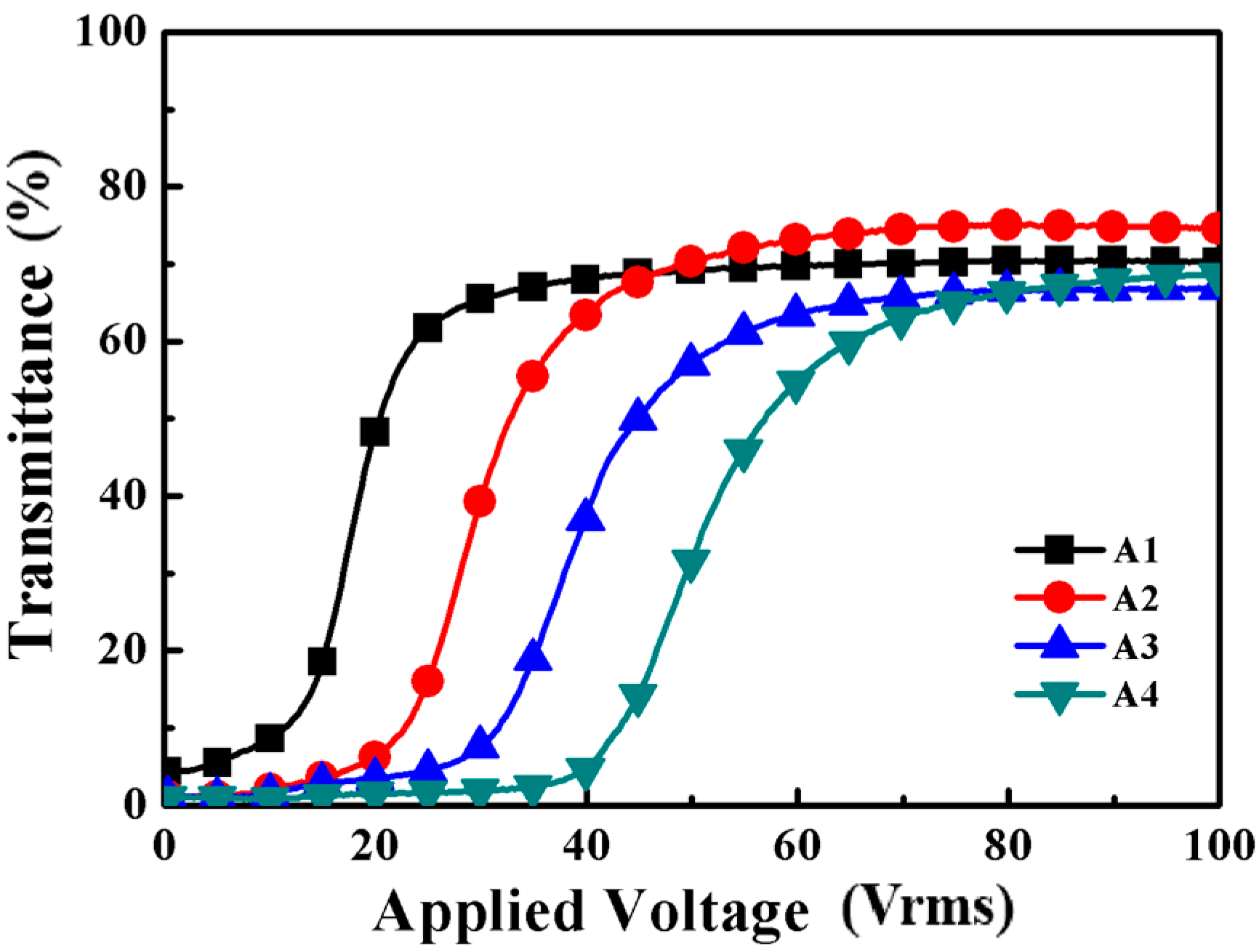
The electro-optical properties of PDChLC films include driving voltages, response times and contrast ratio (CR) which are affected by the size, shape and anchoring energy of the LC droplets. The applied voltage-transmittance curves of samples A1–A4 are shown in Figure 2.
Figure 2.
The transmittance-applied voltage curves of samples A1–A4.
The threshold voltage (Vth) and the saturation voltage (Vsat) are defined as the electric voltage required for the transmittance to reach 10% and 90%, respectively. Generally, the threshold voltage Vth is a linear function of the reciprocal of the size of the droplets R according to:
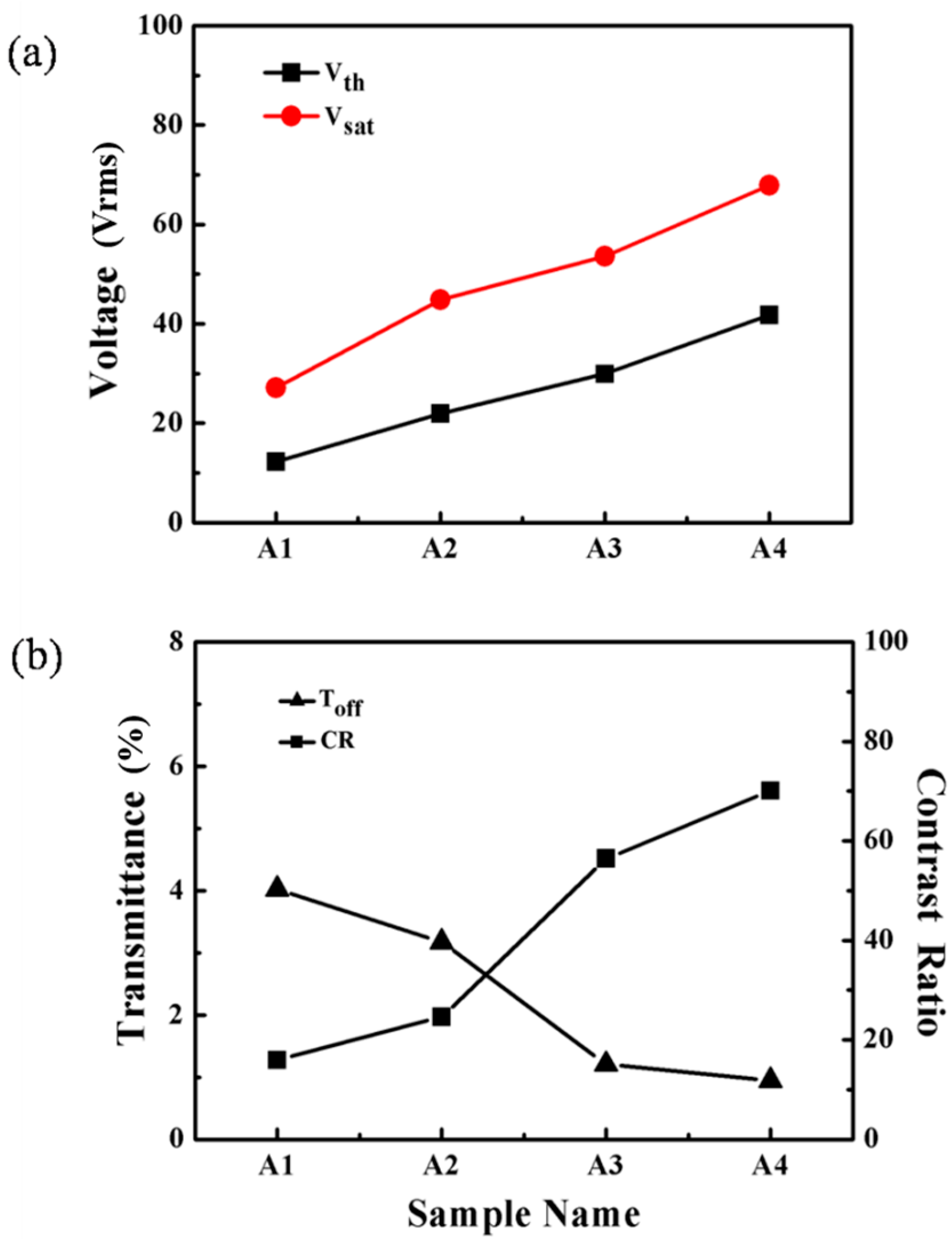
where d, K, ω and Δε represent film thickness, elastic constant, aspect ratio and dielectric anisotropy of the LC, respectively [30,31,32,33]. Vth is in inverse proportion to the LC domain size. Figure 3a shows Vth and Vsat of samples A1–A4, with the increase of S811 in contents, the Vth and the Vsat gradually increased from 15.9 V to 34.6 V and from 35.1 V to 58.1 V, respectively. It is possible to observe a change in the Vth and the Vsat whose increase could decrease the LC domain size. It is well known that for a defined system the increasing content of S811 could cause the pitch to decrease and the viscosity to increase, so the anchoring force from the polymer network on liquid crystals increases, which results in a decreasing of the LC droplet size. Therefore, Vth and Vsat of the PDLC films increased with the increasing content of S811.
Figure 3.
(a) Threshold voltage (Vth) and saturation voltage (Vsat) of samples A1–A4; (b) Off-state light transmittance (Toff) and contrast ratio (CR) of samples A1–A4.
The CR is an important measure of the electro-optical performance in a PDChLC system. The contrast ratio (CR, Ton/Toff) is commonly known as the switching contrast ratio, where Ton and Toff are the ultimate on-state transmittance and the initial off-state transmittance respectively. It is well-known that Toff of PDChLC films depends greatly on LC domain size, and appropriate LC domain sizes could provide sufficient scattering centers. As shown in Figure 3b, the CR of the samples A1–A4 increased with the increasing content of the S811.
It is well-known that the CR of PDChLC films depends greatly on LC domain size, so the CR increases with the decreasing LC droplet size. It can be seen that the sample A2 had a slightly lower contrast ratio, but it had a good polymer network leading to a high on-state transmittance and low Vth, which are of great importance for the performance of the films. Hence, the optimum electro-optical properties of the PDLC films were obtained when the content of the chiral dopant was 3 wt %.
2.2. The Thiol Functionality Effects in PDChLC Films
2.2.1. Morphology of the Polymer Network in PDChLC Films
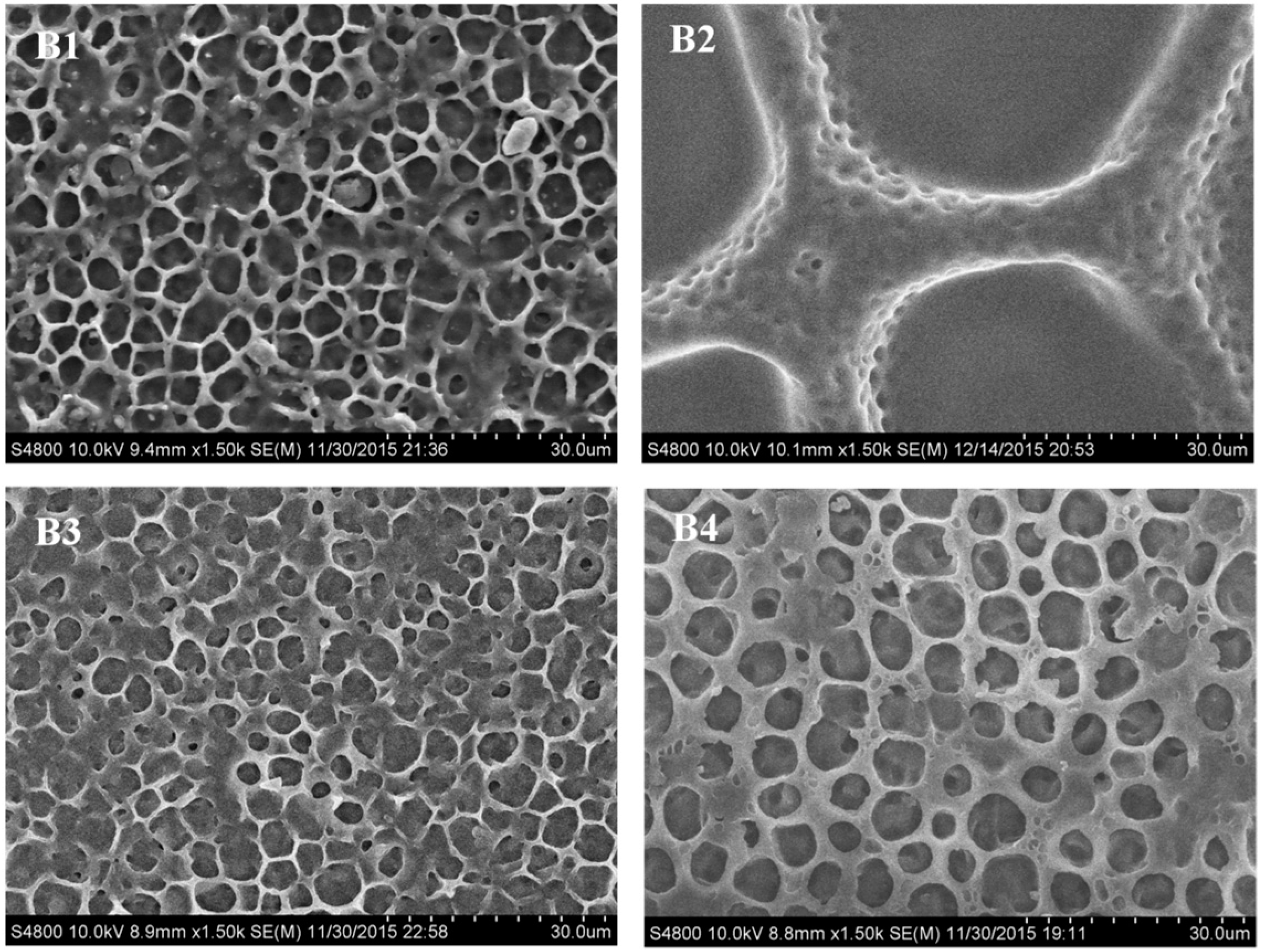
Figure 4 shows the SEM micrographs of the polymer networks of samples B1–B4. Compared with sample B1, samples B2–B4 introduced co-polymerized thiol monomer into the compositions.
Figure 4.
SEM micrographs of the polymer networks of the samples B1–B4.
As a result of the reactivity of thiol monomer which only forms C–S bond though “thiol-ene” polymerization, the crosslinking density of acrylate monomers would be deceased due to the introduction of thiol monomer, so there were larger and more inhomogeneous domains, which may result from competition between thiol-acrylate reactions and acrylate monomer polymerization reactions. It can be seen that with the increase of thiol monomer functionality, the mesh size initially presented a decreasing trend, followed in sequence by an increase (as shown in samples B2–B4), which is related to the crosslinking density. Due to the linear molecular structure of 2,2′-(ethylenedioxy)diethanethiol (DET), the crosslinking density of sample B2 is lower than that of sample B3, leading to a bigger LC domain in sample B2. As for changes in the thiol monomer functionality, the LC droplet size increased with thiol monomer change from trimethylopropane tris(3-mercaptopropionate) (TTMP) to pentaerythritol tetra(3-mercaptopropionate) (PETMP), which may be due to the steric hindrance of the PETMP monomer that hinders the internal rotation of the molecular chain. The LC domain size increased with decreasing polymerization rate. The results suggest that it is possible to regulate the LC domain size by adjusting the functionality of the co-polymerized thiol monomer.
2.2.2. Electro-Optical Properties of PDChLC Films
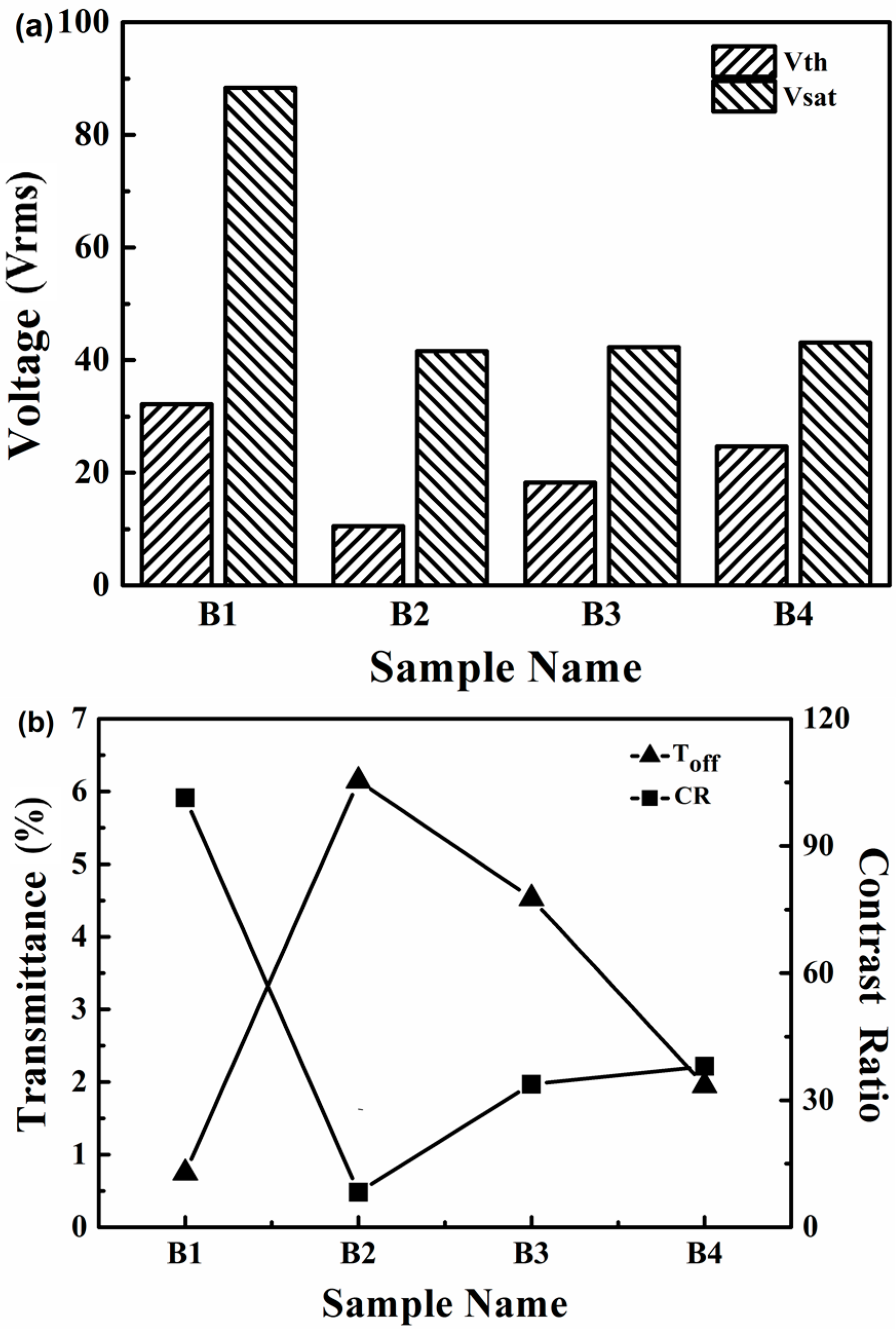
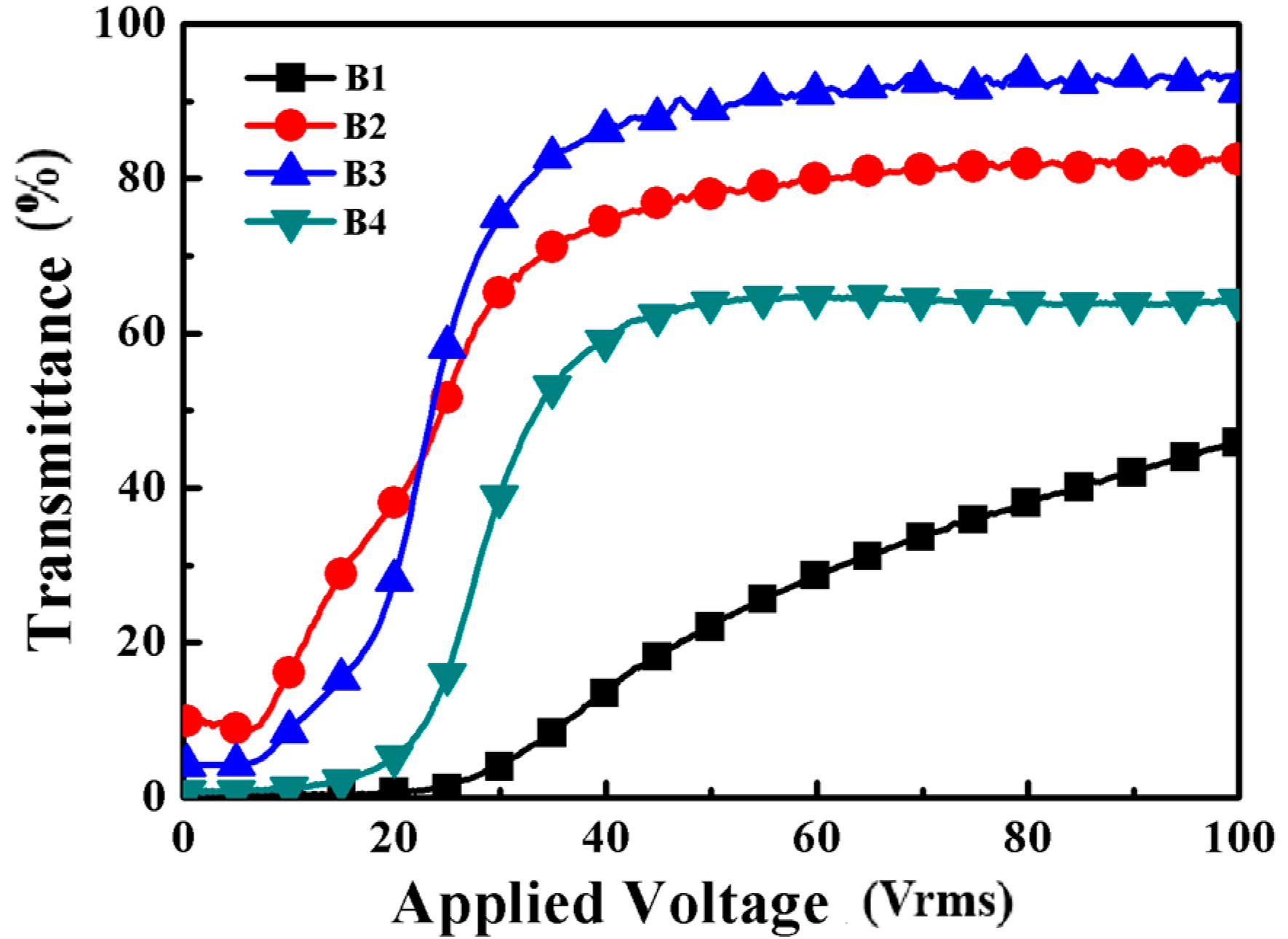
Electro-optical properties are very important in the evaluation of PDLC films. As shown in Figure 5, the Vth and Vsat of sample B1 which was prepared without thiol were obviously higher than the others. The results show that it was an efficient method to reduce the driving voltage of PDChLC films by introducing co-polymerized thiol monomer. With the increase of the thiol monomer functionality of sample B2 to sample B4, the Vth increased gradually, while the Vsat fluctuated a little. The Vth of sample B3 was higher than that of sample B2 resulted from the decreasing size of the LC droplets. On the contrary, the Vth of sample B3 was smaller than that of sample B4, maybe due to a much more homogeneous porous structure. Therefore, the size and shape of the LC droplets synergistically affect the electro-optical performance of the film. The Vth and Vsat values of the samples were summarized in Figure 6a. Figure 6b shows the off-state light transmittance and the CR of samples B1–B4. It can be seen the sample B1 without thiol had the highest CR value due to the strong light scattering from smaller LC droplets. However, the low on-state transmittance limits its practical application. With the increase of the thiol functionality, the Toff of the samples B2–B4 decreased dramatically from 6.1% to 2.0%, while the Ton initially increased followed by a slight decrease. The CR of sample B4 is up to 85.6. However, the on-state transmittance of sample B4 was not very good, so subsequent studies were conducted to investigate the effect of different amounts of PETMP on the properties of the films.
Figure 5.
The transmittance-applied voltage curves of samples B1–B4.
Figure 6.
(a) Vth and Vsat of samples B1–B4; (b) Toff and CR of samples B1–B4.
2.3. The Effects of Different Amounts of Thiol on the PDChLC Films
2.3.1. Morphology of the Polymer Network in PDChLC Films
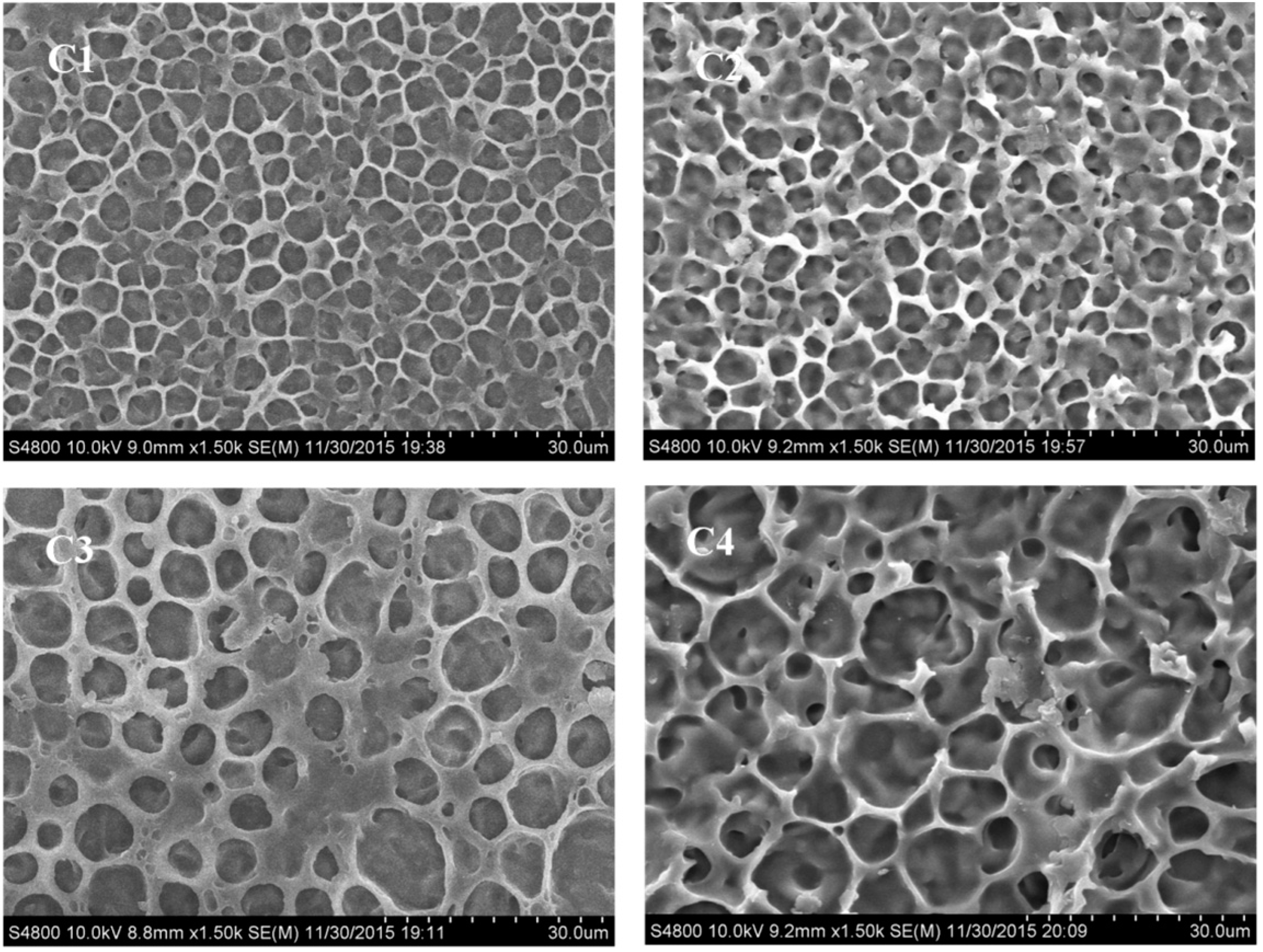
From Figure 7, it can be seen that as the ratio of monomer PETMP increased from 1 wt % to 7 wt %, the number of LC domains decreased and the domain sized increased. This phenomenon may be due to the competitive reaction between the thiol-acrylate reaction and acrylate monomer polymerization reaction. However, the inhomogeneous LC domains made the electro-optical properties of the PDChLC films complicated, and it was necessary to conduct further study of the electro-optical properties.
Figure 7.
SEM micrographs of the polymer network in the samples C1–C4.
2.3.2. Electro-Optical Properties of PDChLC Films
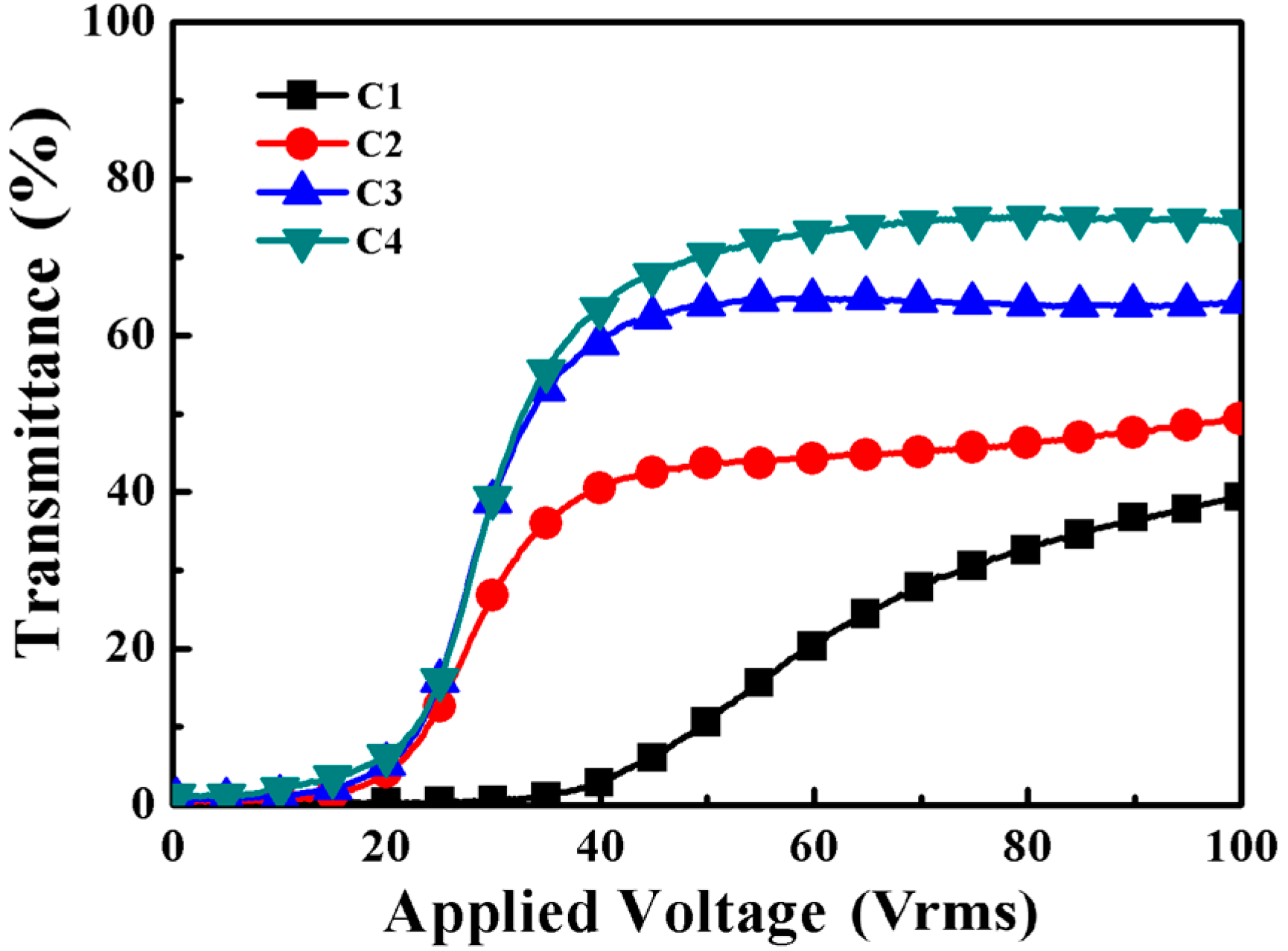
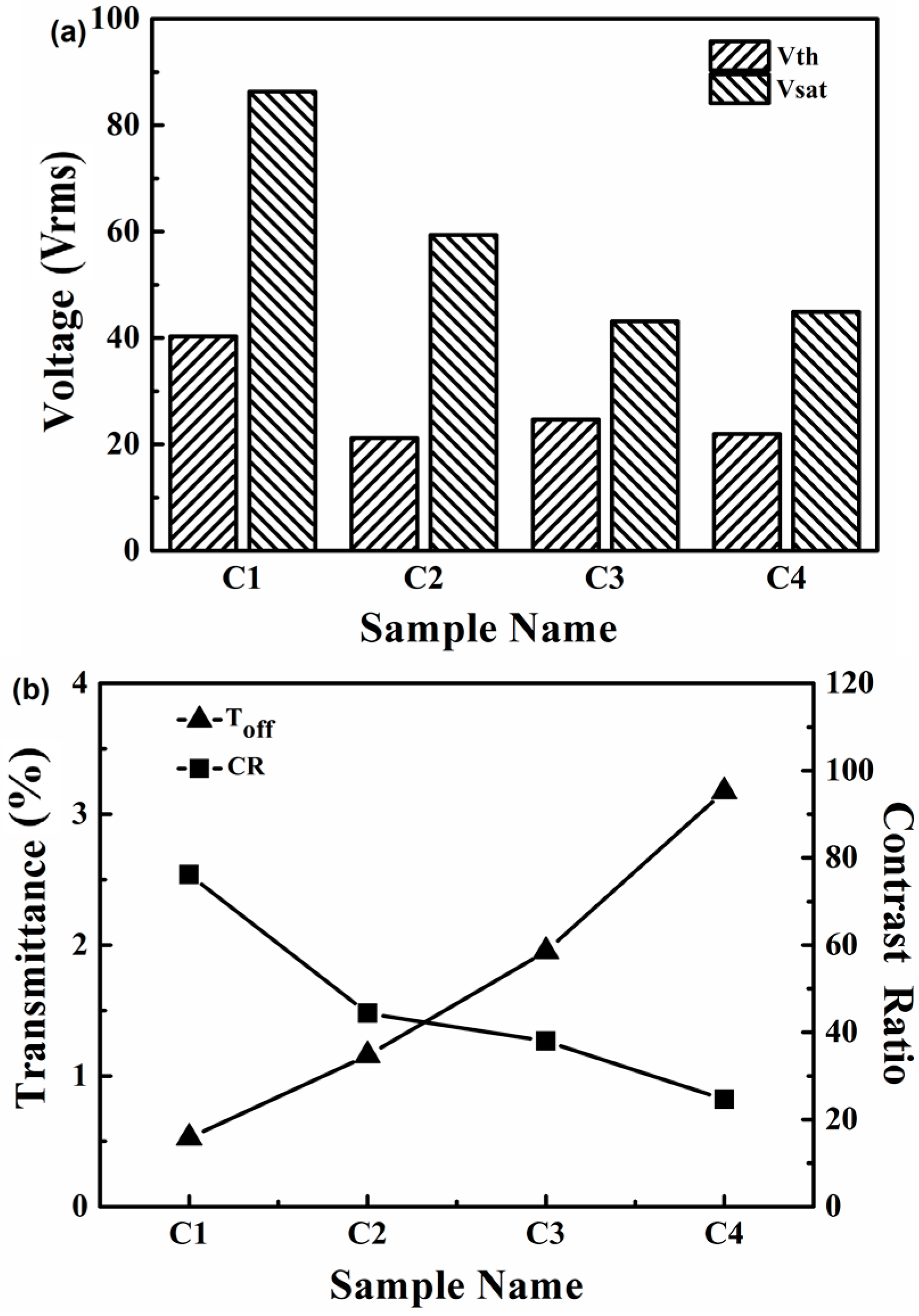
The electro-optical properties of samples C1–C4 are shown in Figure 8. Sample C4 prepared with 7 wt % PETMP presented better properties than the others. According to Equation (1), the electro-optical properties of PDLC films can be controlled by the LC domain size and some other factors, such as film thickness, the resistivity and the dielectric anisotropy of the LC. Therefore, Vth and Vsat of the PDLC films decreased with the increasing LC domain size. For C1, the domains were smaller with higher Vth and Vsat, and its on-state transmittance was too low to be taken into consideration, although its contrast ratio was high. Secondly, the LC domain size and distribution variations were also related to Ton and Toff, as shown in Figure 9. As the LC domains became larger, the anchoring energy decreased and this led the Toff of the samples C1–C4 to increase from 0.5% to 3.2%, while the Ton increased dramatically from about 40.2% to 74.4%, as shown in Figure 9. Compared to C2 and C3, sample C4 with 7 wt % PETMP had a slightly lower contrast ratio, but it had a good polymer network leading to a high on-state transmittance, which was of great importance for the performance of the films. Hence, we can reach the conclusion that adding 7 wt % PETMP as the co-polymerized monomer could result in a “thiol-acrylate” PDChLC film with optimized electro-optical performance.
Figure 8.
The transmittance-applied voltage curves of samples C1–C4.
Figure 9.
(a) Vth and Vsat of samples C1–C4; (b) Toff and CR of samples C1–C4.
3. Materials and Methods
3.1. Materials
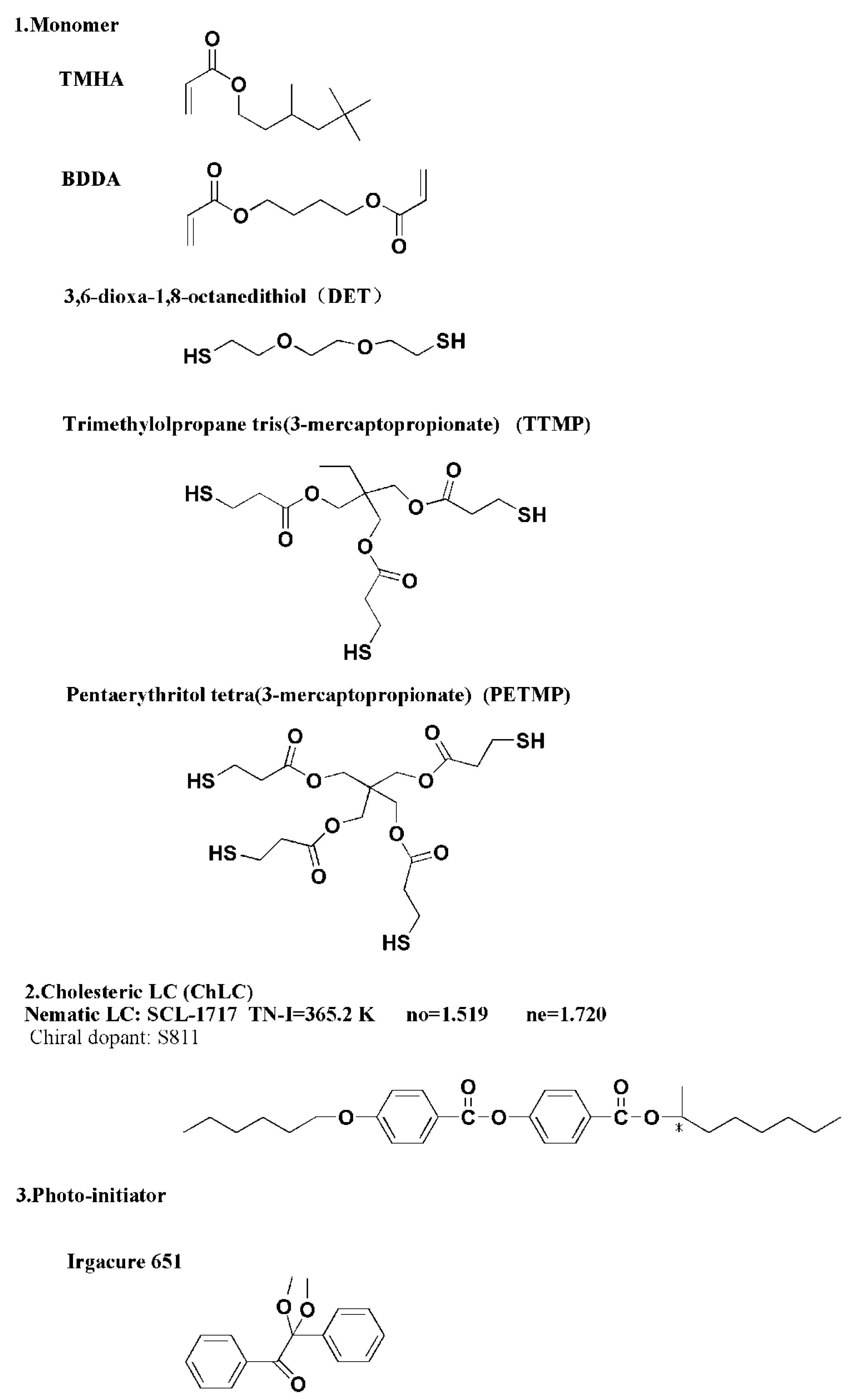
The cholesteric liquid crystal (ChLC) used consisted of a nematic LC (SLC-1717, Shijiazhuang Chengzhi Yonghua Display Material Co., Ltd., Shijiazhuang, China) and a chiral dopant (S811, Merck Co., Ltd., Kenilworth, NJ, USA). The acrylate monomer was a mixture of 3,5,5-trimethelhexyl acrylate (TMHA, 98%, Sigma-Aldrich, St. Louise, MO, USA) and 1,4-butanedioldiacrylate (BDDA, 98%, Tokyo Chemical Industry Co., Ltd., Tokyo, Japan). The mercaptan monomers were 2,2′-(ethylenedioxy)diethanethiol (95%), trimethylopropane tris(3-mercaptopropionate) (95%) and pentaerythritol tetra(3-mercaptopropionate) (95%) which were purchased from J&K Scientific Ltd. (Chaoyang District Beijing, China). The photoinitiator was Irgacure 651 (Ciba Geigy, Jingjiang Hongtai Chem. Co., Ltd., Jingjiang, China). All these materials were used without further purification and the structures are shown in Figure 10.
Figure 10.
The chemical structures of the materials used. TMHA: 3,5,5-Trimethylhexylacrylate; BDDA: 1,4-butanedioldiacrylate; LC: liquid crystal; SCL-1717: nematic liquid crystal; no: ordinary refraction index; ne: extraordinary refraction index.
3.2. Sample Preparation
The prepared samples consisted of acrylate monomers, thiol, photo-initiator and a constant amount of ChLC (80.0 wt %). Firstly, they were thoroughly mixed in the specified proportions until a homogeneous mixture was formed. Then, based on capillary action, the mixture was filled into the LC cell whose inner faces had been coated with indium tin oxide (ITO). The film thickness was controlled by a 20.0 ± 1.0 μm polyethylene terephthalate (PET) spacer. After this, the samples were irradiated for polymerization by a UV lamp (365 nm, 35 W Hg lamp, PS135, UV Flood, Stockholm, Sweden) for 5 min at 25 °C, and the curing intensities at the cell surface were about13.5 mW/cm2 at 365.0 nm. The compositions of the samples are listed in Table 1.
Table 1.
The compositions of all the samples.
3.3. Measurements
Scanning electron microscopy (S-4800, Hitachi, Tokyo, Japan) was used to observe the morphologies of the PDChLC films. The films were first cut into small pieces and then soaked in hexane for 9 days at room temperature to extract the LC from the polymer matrix. After that, the samples were dried under vacuum for 10 h. Then the surface of the polymer matrix was sputtered with gold and the microstructure of the polymer network was observed by SEM. A liquid crystal device (LCD) parameter tester (LCT-5016C, Changchun Liancheng Instrument Co., Ltd., Changchun, China) was used to measure the electro-optical properties of the samples at room temperature. A halogen laser beam (λ = 560 nm) was used as the incident light source. The transmittance of the PDChLC films was recorded by a photodiode, which was further monitored by a digital storage oscilloscope. An electric field square wave (100 Hz) was applied and the distance between the PDChLC film and photodiode was 300 mm. The collection angle of the transmitted intensity was about ±1° so that the forward scattering was mainly detected.
4. Conclusions
In summary, PDChLC films based on thiol/acrylate monomers were prepared and characterized. The morphology of the PDChLC film was strongly influenced by the chiral dopant and the addition of different amounts of S811 along the network bone affected the LC domain size distribution, which in turn influenced the electro-optical properties of the PDChLC films. Furthermore, the effect of the co-polymerized thiol monomer functionality and its content in the PDChLC films has been studied. As mentioned above, the PDChLC film prepared with 7 wt % PETMP to which 3 wt % S811 was added had better electro-optical properties than that prepared with other amounts of PETMP. The results in this study suggest that the chiral dopant plays an important role in the formation of the polymer network, and it is possible to regulate the LC domain size and optimize the electro-optic properties of PDLC films by adjusting the content of S811 and the thiol/acrylate feed ratio.
Acknowledgments
Financial support from the National Natural Science Foundation (Grant No. 51333001, 51372029, 51402006 and 51573003) and the Fok Ying Tung Education Foundation (Grant No. 142009) are gratefully acknowledged.
Author Contributions
Yujian Sun: overall organizing of the experiments; Yanzi Gao: analyze the experiment data and explain them; Le Zhou: sample preparation; Jianhua Huang and Hua Fang: scanning electron microscopy; Haipeng Ma, Yi Zhang and Jie Yang: liquid crystal device parameter tester; Ping Song and Cuihong Zhang: theoretical calculation; Lanying Zhang, Fasheng Li, Yuzhen Zhao and Kexuan Li: provide ideas of the experiments.
Conflicts of Interest
The authors declare no conflict of interest.
References
- Masutani, A.; Roberts, T.; Schüller, B.; Hollfelder, N.; Kilickiran, P. Improvement of dichroic polymer dispersed liquid crystal performance using lift-off technique. Appl. Phys. Lett. 2006, 89, 183514. [Google Scholar] [CrossRef]
- Li, W.B.; Yu, L.L.; He, W.L.; Yuan, X.; Zhao, D.; Huang, W.; Cao, H.; Yang, Z.; Yang, H. Effect of a Photopolymerizable Monomer Containing a Hydrogen Bond on Near-Infrared Radiation Transmittance of Nematic Liquid Crystal/Monomers Composites. J. Phys. Chem. C 2008, 112, 13739–13743. [Google Scholar] [CrossRef]
- Doane, J.W.; Golemme, A.; West, J.; Whitehead, J.B., Jr. Polymer dispersed liquid crystals for display application. Mol. Cryst. Liq. Cryst. 1988, 165, 511–532. [Google Scholar] [CrossRef]
- Jain, S.C.; Thakur, R.S. Thermo-electro-optic switch based on polymer dispersed liquid crystal composite. Appl. Phys. Lett. 1992, 61, 1641–1642. [Google Scholar] [CrossRef]
- Drzaic, P.S. Polymer dispersed nematic liquid crystal for large area displays and light valves. J. Appl. Phys. 1986, 60, 2142–2148. [Google Scholar] [CrossRef]
- Kurihara, S.; Masumoto, K.; Nonaka, T. Optical shutter driven photochemically from anisotropic polymer network containing liquid crystalline and azobenzene molecules. Appl. Phys. Lett. 1998, 73, 160–162. [Google Scholar] [CrossRef]
- Doane, J.W.; Vaz, N.A.; Wu, B.G.; Žumer, S. Field controlled light scattering from nematic microdroplets. Appl. Phys. Lett. 1986, 48, 269–271. [Google Scholar] [CrossRef]
- Cheng, Z.; Wang, T.; Li, X.; Zhang, Y.; Yu, H.F. NIR-Vis-UV Light-Responsive Actuator Films of Polymer-Dispersed Liquid Crystal/Graphene Oxide Nanocomposites. ACS Appl. Mater. Interfaces 2015, 7, 27494–27501. [Google Scholar] [CrossRef] [PubMed]
- Yu, L.; Cheng, Z.; Dong, Z.; Zhang, Y.; Yu, H.F. Photomechanical Response of Polymer-Dispersed Liquid Crystals/Graphene Oxide Nanocomposites. J. Mater. Chem. C 2014, 2, 8501–8506. [Google Scholar] [CrossRef]
- Ren, H.; Chen, D.; Shi, Y.; Yu, H.F.; Fu, Z. Multi-Responsive Fluorescence of Amphiphilic Diblock Copolymer Containing Carboxylate Azobenzene and N-isopropylacrylamide. Polymer 2016, 97, 533–542. [Google Scholar] [CrossRef]
- Yu, L.; Yu, H.F. Light-Powered Tumbler Movement of Graphene Oxide/Polymer Nanocomposites. ACS Appl. Mater. Interfaces 2015, 7, 3834–3839. [Google Scholar] [CrossRef] [PubMed]
- Yu, H.F.; Liu, H.; Kobayashi, T. Fabrication and Photoresponse of Supramolecular Liquid-Crystalline Microparticles. ACS Appl. Mater. Interfaces 2011, 3, 1333–1340. [Google Scholar] [CrossRef] [PubMed]
- Kim, S.H.; Heo, C.P.; Park, K.S.; Kim, B.K. Effect of prepolymer structure on the electro-optic performance of polymer dispersed liquid crystals. Polym. Int. 1998, 46, 143–149. [Google Scholar] [CrossRef]
- Malik, P.; Raina, K.K. Droplet orientation and optical properties of polymer dispersed liquid crystal composite films. Opt. Mater. 2004, 27, 613–617. [Google Scholar] [CrossRef]
- Tao, H.J.; Zhang, J.; Wang, X.L.; Gao, J.L. Phase separation and polymer crystallization in a poly(4-methyl-1-pentene)-dioctylsebacate-dimethylphthalate system via thermally induced phase separation. J. Polym. Sci. B Polym. Phys. 2007, 45, 153–161. [Google Scholar] [CrossRef]
- Liu, F.; Cao, H.; Mao, Q.; Song, P.; Yang, H. Effects of monomer structure on the morphology of polymer networks and the electro-optical properties of polymer-dispersed liquid crystal films. Liq. Cryst. 2012, 39, 419–424. [Google Scholar] [CrossRef]
- Schulte, M.D.; Clarson, S.J.; Natarajan, L.V.; Tomlin, D.W.; Bunning, T.J. The effect of fluorine-substituted acrylate monomers on the electro-optical and morphological properties of polymer dispersed liquid crystals. Liq. Cryst. 2000, 27, 467–475. [Google Scholar] [CrossRef]
- Senyurt, A.F.; Warren, G.; Whitehead, J.B.; Hoyle, C.E. Matrix physical structure effect on the electro-optic characteristics of thiol-ene based H-PDLC films. Polymer 2006, 47, 2741–2749. [Google Scholar] [CrossRef]
- White, T.J.; Natarajan, L.V.; Tondiglia, V.P.; Bunning, T.J.; Guymon, C.A. Polymerization Kinetics and Monomer Functionality Effects in Thiol-Ene Polymer Dispersed Liquid Crystals. Macromolecules 2007, 40, 1112–1120. [Google Scholar] [CrossRef]
- Hoyle, C.E.; Lee, T.Y.; Roper, T. Thiol–enes: Chemistry of the past with promise for the future. J. Polym. Sci. A Polym. Chem. 2004, 42, 5301–5338. [Google Scholar] [CrossRef]
- Morgan, C.R.; Magnotta, F.; Ketley, A.D. Thiol/ene photo-curable polymers. J. Polym. Sci. A Polym. Chem. 1977, 15, 627–645. [Google Scholar] [CrossRef]
- Cramer, N.B.; Scott, J.P.; Bowman, C.N. Photopolymerizations of thiol-ene polymers without photoinitiators. Macromolecules 2002, 35, 5361–5365. [Google Scholar] [CrossRef]
- Szczepanski, C.R.; Pfeifer, C.S.; Stansbury, J.W. A new approach to network heterogeneity: Polymerization induced phase separation in photo-initiated, free-radical methacrylic systems. Polymer 2012, 53, 4694–4701. [Google Scholar] [CrossRef] [PubMed]
- Kade, M.J.; Burke, D.J.; Hawker, C.J. The power of thiol-ene chemistry. J. Polym. Sci. A Polym. Chem. 2010, 48, 743–750. [Google Scholar] [CrossRef]
- Northrop, B.H.; Coffey, R.N. Thiol–ene cick chemistry: Computational and kinetic analysis of the influence of alkene functionality. J. Am. Chem. Soc. 2012, 134, 13804–13817. [Google Scholar] [CrossRef] [PubMed]
- Seung, W.O.; Jong, M.B.; Joon, H.; Tae, H.Y. Dye-doped cholesteric liquid crystal light shutter with a polymer dispersed liquid crystal film. Dyes Pigments 2016, 134, 36–40. [Google Scholar]
- Liu, J.; Ozga, K.; Liu, X.; Zhen, Z.; Plucinski, K.J.; Szota, M.; Kityk, I.V. The Relationship between the Monomer Chain Length and the Electro-Optical Properties of Polymer Dispersed Liquid Crystals. Arch. Metall. Mater. 2016, 61, 457–460. [Google Scholar] [CrossRef]
- Liu, J.L.; Liu, X.H.; Zhen, Z. Effects of chiral additives on the electro-optical properties of polymer dispersed liquid crystal. Mater. Lett. 2016, 163, 142–145. [Google Scholar] [CrossRef]
- Wang, J.; Zhang, Y.; Cao, M.; Song, X.; Che, Y.; Zhang, H.; Zhang, H.; Yao, J. Platinum-scatterer-based random lasers from dye-doped polymer-dispersed liquid crystals in capillary tubes. Appl. Opt. 2016, 55, 5702–5706. [Google Scholar] [CrossRef] [PubMed]
- Wu, B.G.; Erdmann, J.H.; Doane, J.W. Response times and voltages for PDLC light shutters. Liq. Cryst. 1989, 5, 1453–1465. [Google Scholar] [CrossRef]
- Drzaic, P.S. Reorientation dynamics of polymer dispersed nematic liquid crystal films. Liq. Cryst. 1988, 3, 1543–1558. [Google Scholar] [CrossRef]
- Maschke, U.; Coquerent, X.; Benmouna, M. Electro-Optical Properties of Polymer–Dispersed Liquid Crystals. Macromol. Rapid Commun. 2002, 23, 159–170. [Google Scholar] [CrossRef]
- Jain, S.C.; Rout, D.K. Electro–optic response of polymer dispersed liquid crystal films. J. Appl. Phys. 1991, 70, 6988–6992. [Google Scholar] [CrossRef]
- Sample Availability: Samples of the compounds are not available from the authors.
© 2017 by the authors. Licensee MDPI, Basel, Switzerland. This article is an open access article distributed under the terms and conditions of the Creative Commons Attribution (CC BY) license ( http://creativecommons.org/licenses/by/4.0/).