Article

Unimolecular Solvolyses in Ionic Liquid: Alcohol Dual Solvent Systems
by
Elizabeth D. Kochly
*,
Nicole Jean Lemon
and
Anne Marie Deh-Lee
Department of Chemistry, Mills College, 5000 MacArthur Blvd, Oakland, CA 94613, USA
*
Author to whom correspondence should be addressed.
These authors contributed equally to this work.
Molecules 2016, 21(1), 60; https://doi.org/10.3390/molecules21010060

Submission received: 2 November 2015 / Revised: 12 December 2015 / Accepted: 24 December 2015 / Published: 6 January 2016
(This article belongs to the Special Issue Ionic Liquids in Organic Synthesis)

Abstract

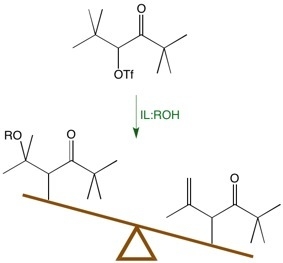
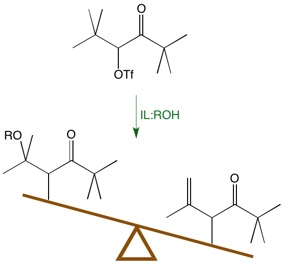
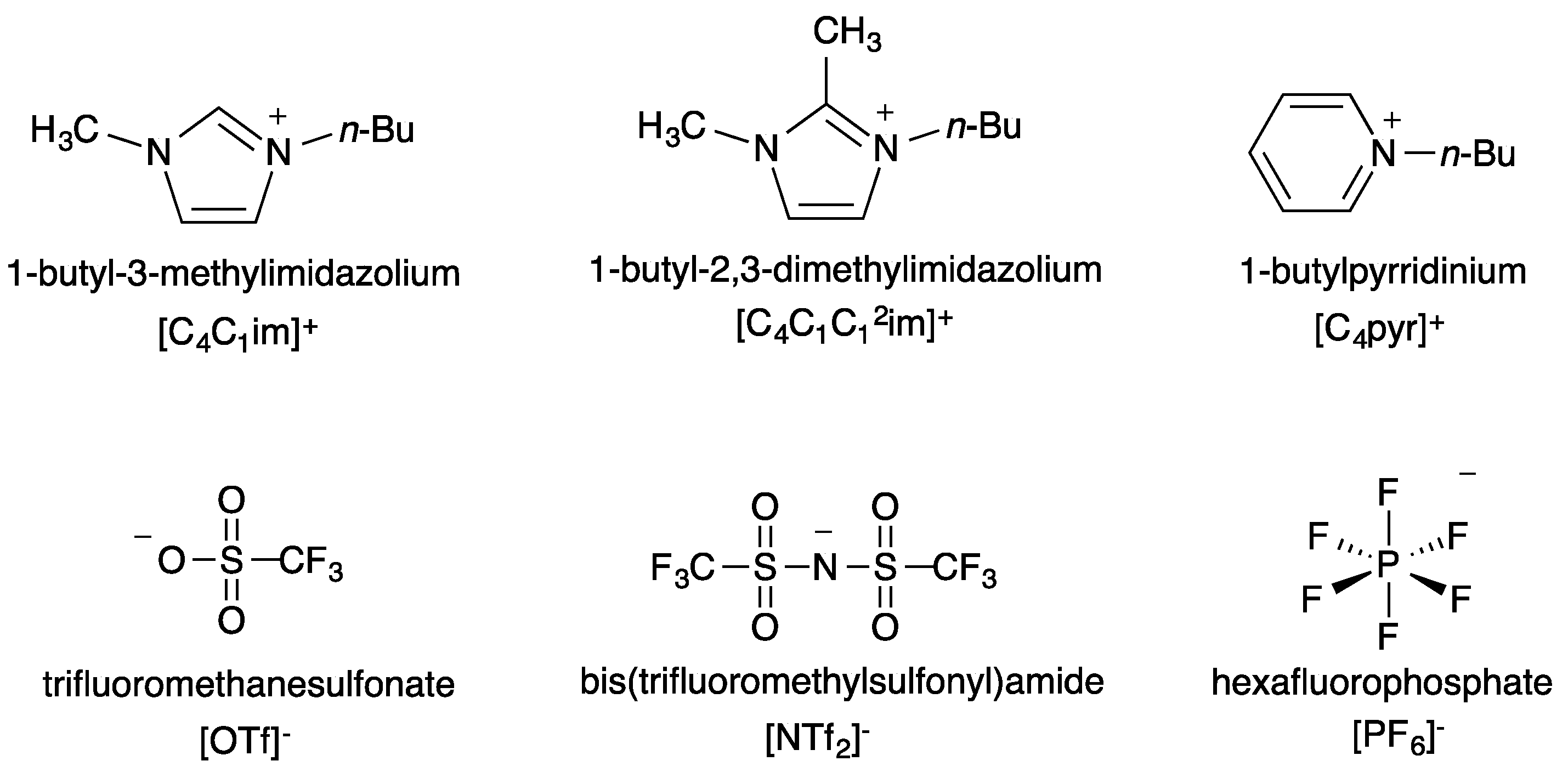
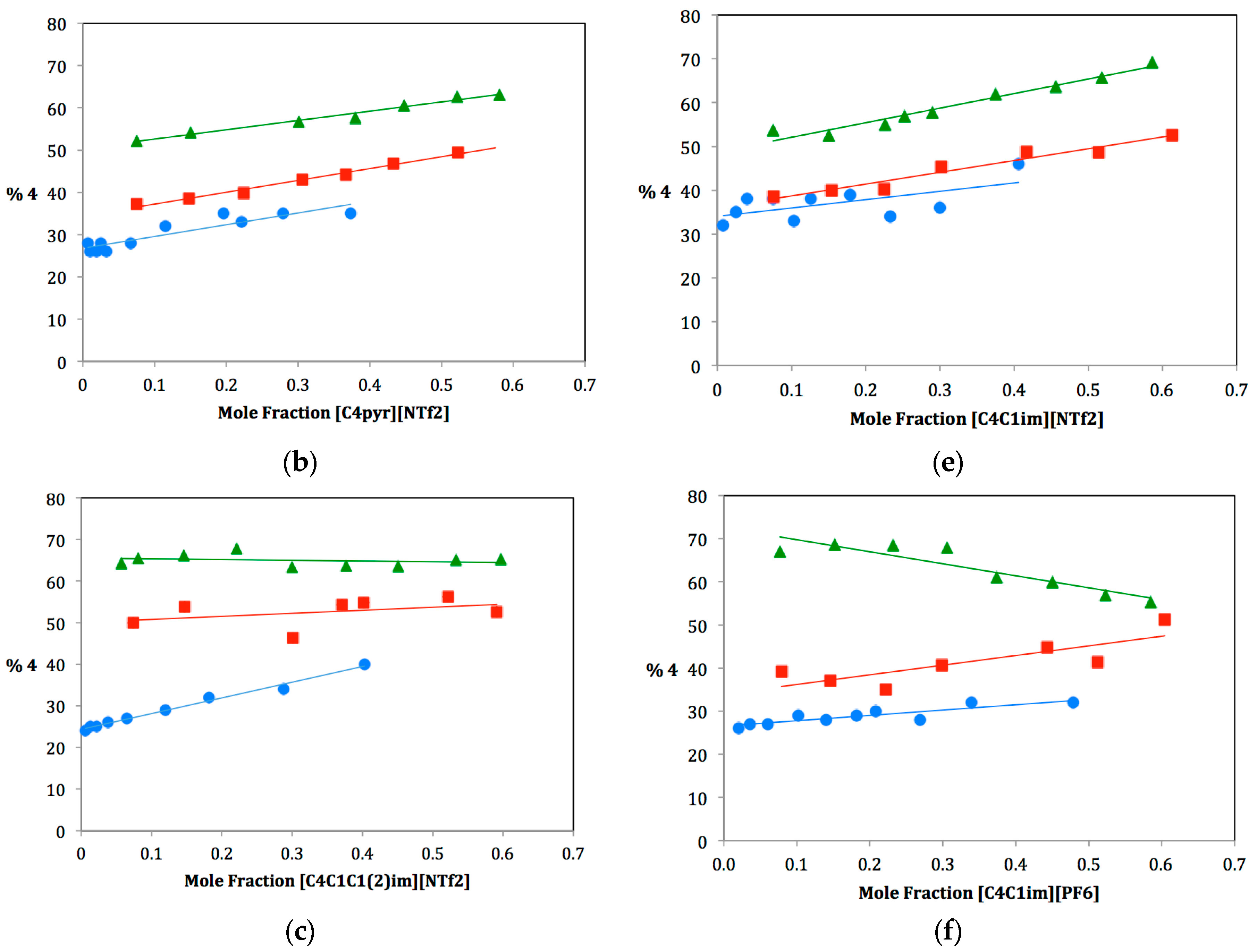
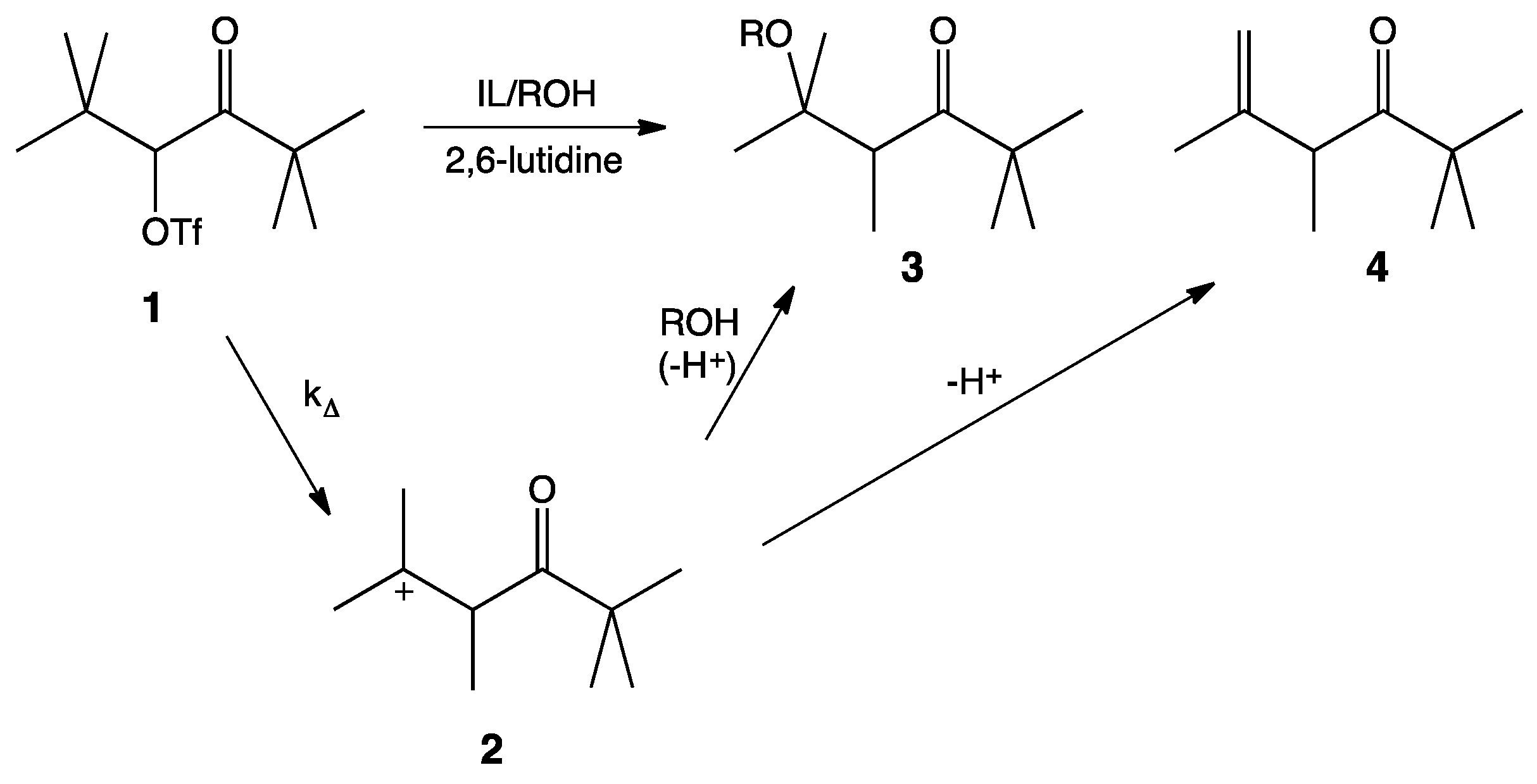
A study was undertaken of the solvolysis of pivaloyl triflate in a variety of ionic liquid:alcohol solvent mixtures. The solvolysis is a kΔ process (i.e., a process in which ionization occurs with rearrangement), and the resulting rearranged carbocation intermediate reacts with the alcohol cosolvent via two competing pathways: nucleophilic attack or elimination of a proton. Five different ionic liquids and three different alcohol cosolvents were investigated to give a total of fifteen dual solvent systems. 1H-NMR analysis was used to determine relative amounts of elimination and substitution products. It was found, not surprisingly, that increasing the bulkiness of alcohol cosolvent led to increased elimination product. The change in the amount of elimination product with increasing ionic liquid concentration, however, varied greatly between ionic liquids. These differences correlate strongly, though not completely, to the Kamlet–Taft solvatochromic parameters of the hydrogen bond donating and accepting ability of the solvent systems. An additional factor playing into these differences is the bulkiness of the ionic liquid anion.
Keywords: ionic liquids; organic synthesis; green chemistry; solvolysis; carbocation; nucleophile; dual solvent; Kamlet–Taft parameters; hydrogen bonding ionic liquids; organic synthesis; green chemistry; solvolysis; carbocation; nucleophile; dual solvent; Kamlet–Taft parameters; hydrogen bonding
Graphical Abstract