Article

A Quantum-like Approach to Semantic Text Classification

by
Anastasia S. Gruzdeva
1,†,
Rodion N. Iurev
2,†,
Igor A. Bessmertny
2,†,
Andrei Y. Khrennikov
3,*,† and
Alexander P. Alodjants
1,†
1
National Center for Cognitive Research, National Research University for Information Technology, Mechanics and Optics (ITMO), St. Petersburg 197101, Russia
2
Faculty of Software Engineering and Computer Systems, National Research University for Information Technology, Mechanics and Optics (ITMO), St. Petersburg 197101, Russia
3
International Center for Mathematical Modeling in Physics, Engineering, Economics and Cognitive Science, Linnaeus University, S-35195 Vaxjo-Kalmar, Sweden
*
Author to whom correspondence should be addressed.
These authors contributed equally to this work.
Entropy 2025, 27(7), 767; https://doi.org/10.3390/e27070767
Submission received: 27 May 2025 / Revised: 15 July 2025 / Accepted: 16 July 2025 / Published: 19 July 2025
(This article belongs to the Section Multidisciplinary Applications)

Abstract

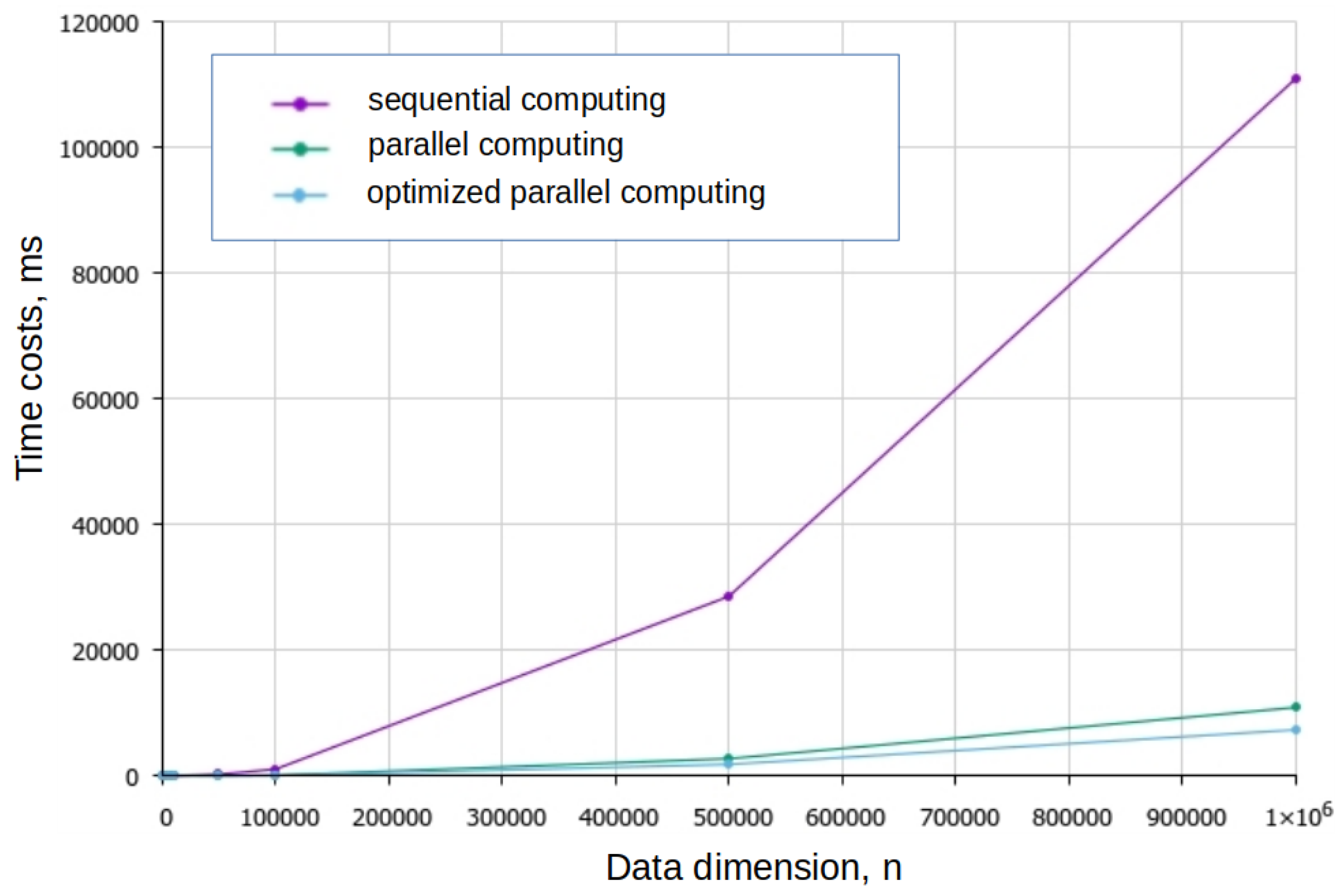
In this work, we conduct a sentiment analysis of English-language reviews using a quantum-like (wave-based) model of text representation. This model is explored as an alternative to machine learning (ML) techniques for text classification and analysis tasks. Special attention is given to the problem of segmenting text into semantic units, and we illustrate how the choice of segmentation algorithm is influenced by the structure of the language. We investigate the impact of quantum-like semantic interference on classification accuracy and compare the results with those obtained using classical probabilistic methods. Our findings show that accounting for interference effects improves accuracy by approximately 15%. We also explore methods for reducing the computational cost of algorithms based on the wave model of text representation. The results demonstrate that the quantum-like model can serve as a viable alternative or complement to traditional ML approaches. The model achieves classification precision and recall scores of around 0.8. Furthermore, the classification algorithm is readily amenable to optimization: the proposed procedure reduces the estimated computational complexity from O(n2) to O(n).
Keywords: quantum-like heuristic algorithms; text classification; sentiment analysis; interference; vector-space language model quantum-like heuristic algorithms; text classification; sentiment analysis; interference; vector-space language model