Article

Numerical Calculation of the Irreversible Entropy Production of Additively Manufacturable Off-Set Strip Fin Heat-Transferring Structures

Institute of Thermodynamics, Leibniz University Hannover, An der Universität 1, 30823 Garbsen, Germany
*
Author to whom correspondence should be addressed.
Entropy 2023, 25(1), 162; https://doi.org/10.3390/e25010162
Submission received: 18 November 2022 / Revised: 8 January 2023 / Accepted: 11 January 2023 / Published: 13 January 2023
(This article belongs to the Special Issue Applications of CFD in Heat and Fluid Flow Processes)

Abstract

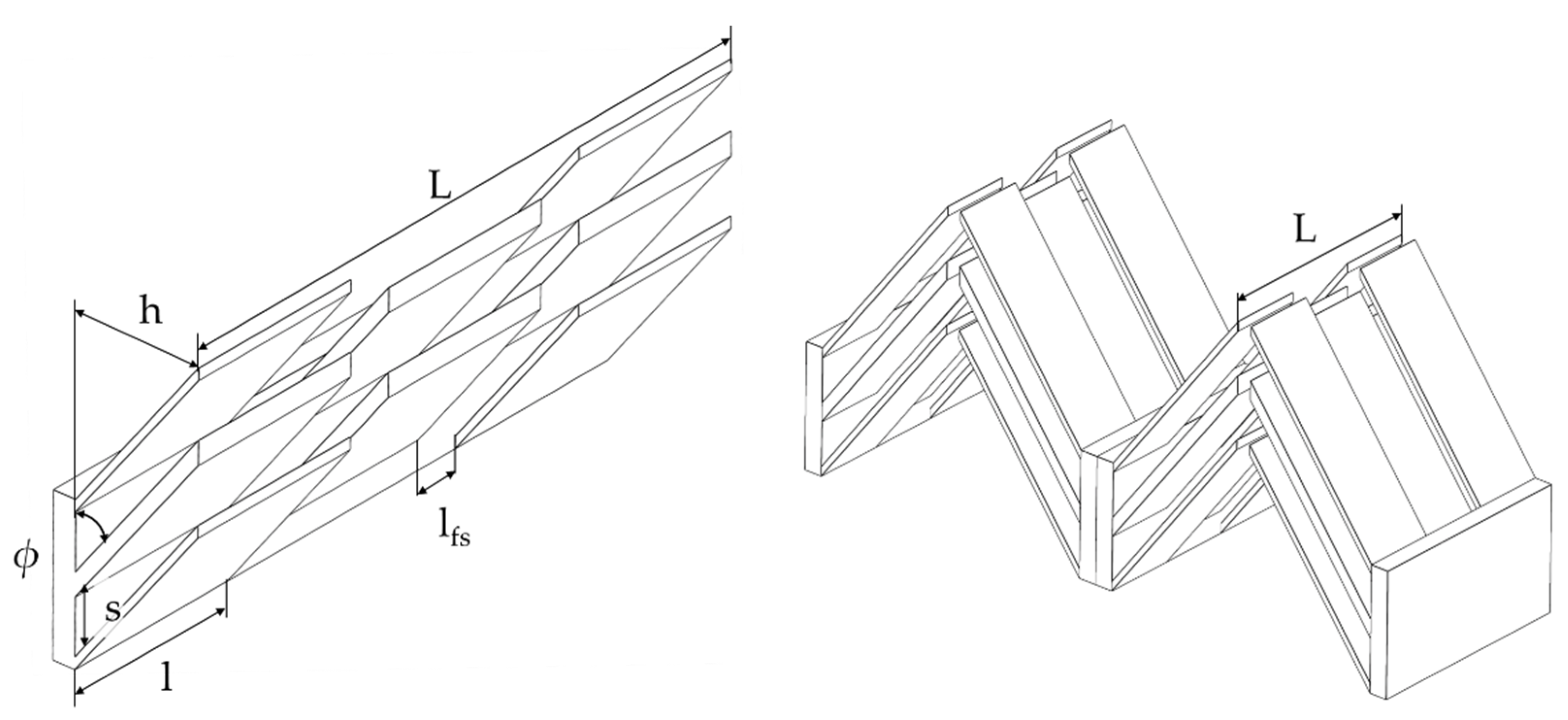
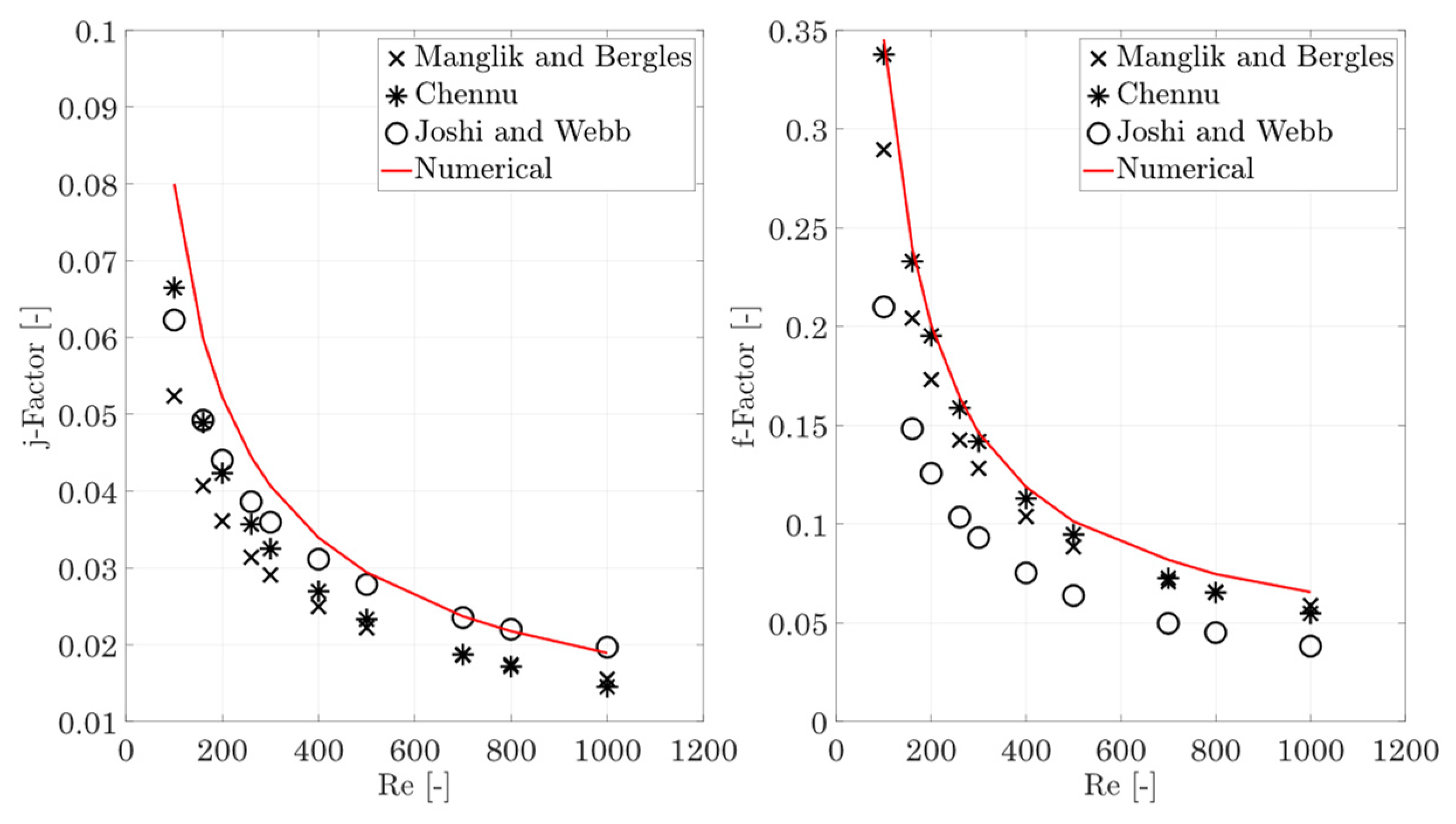
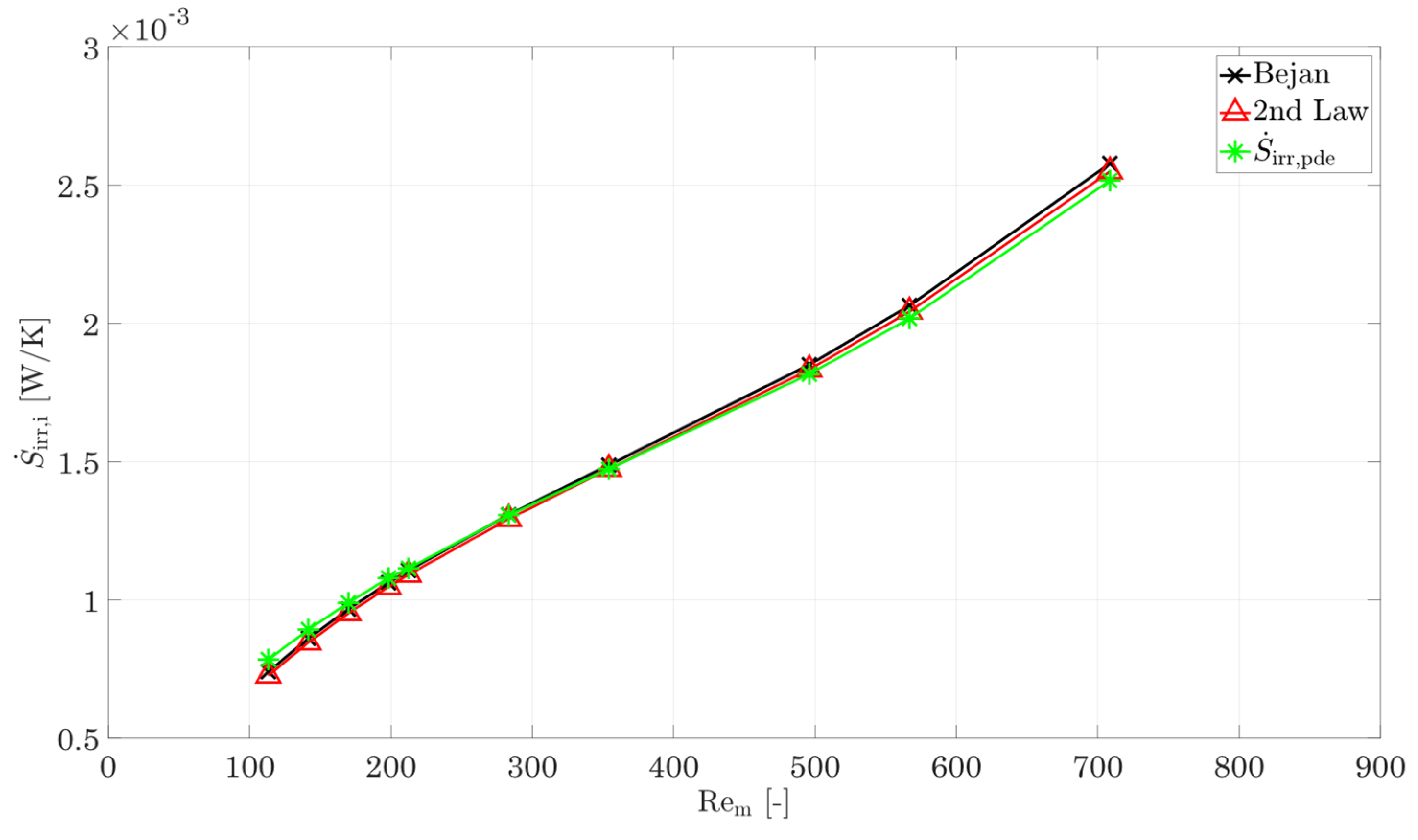
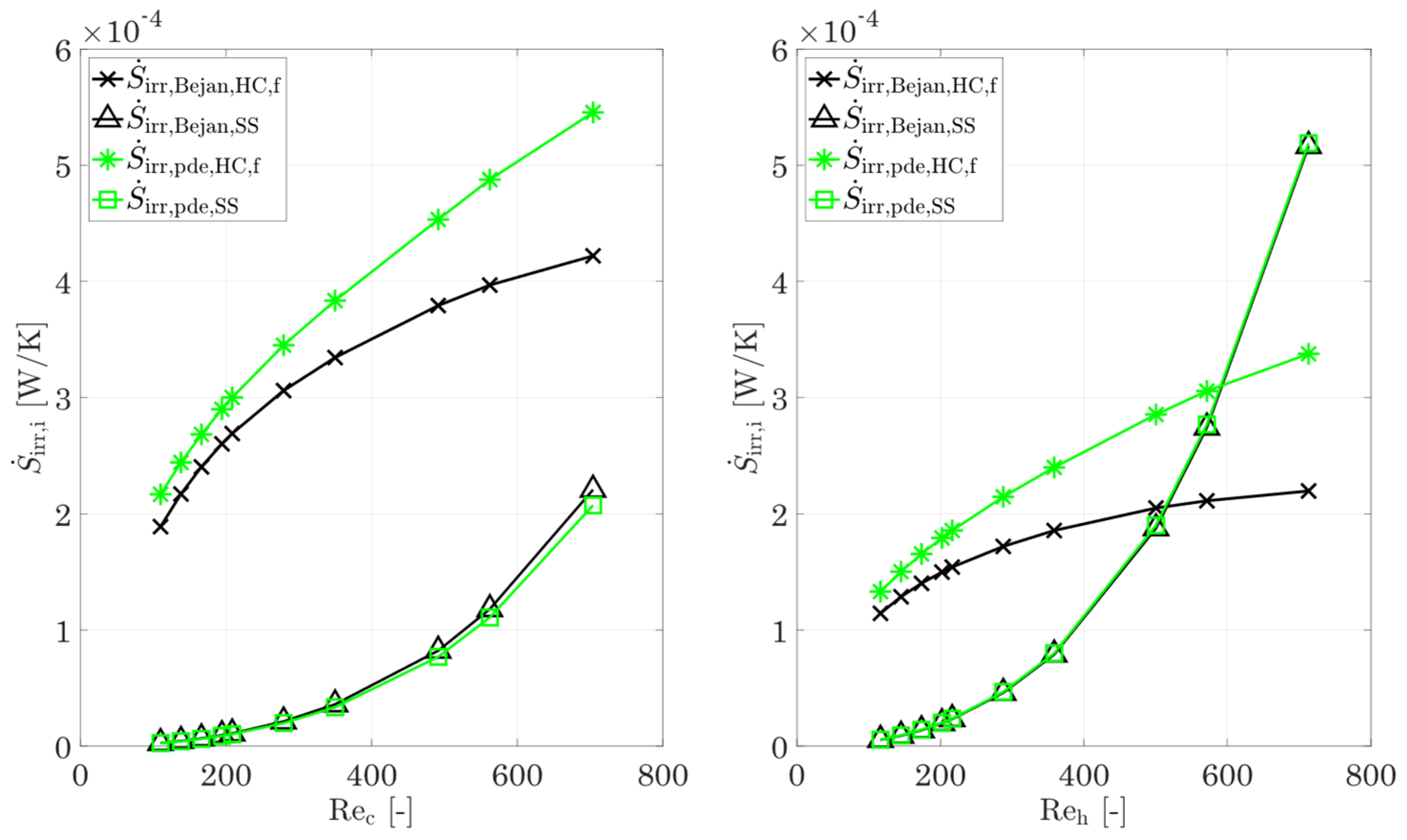
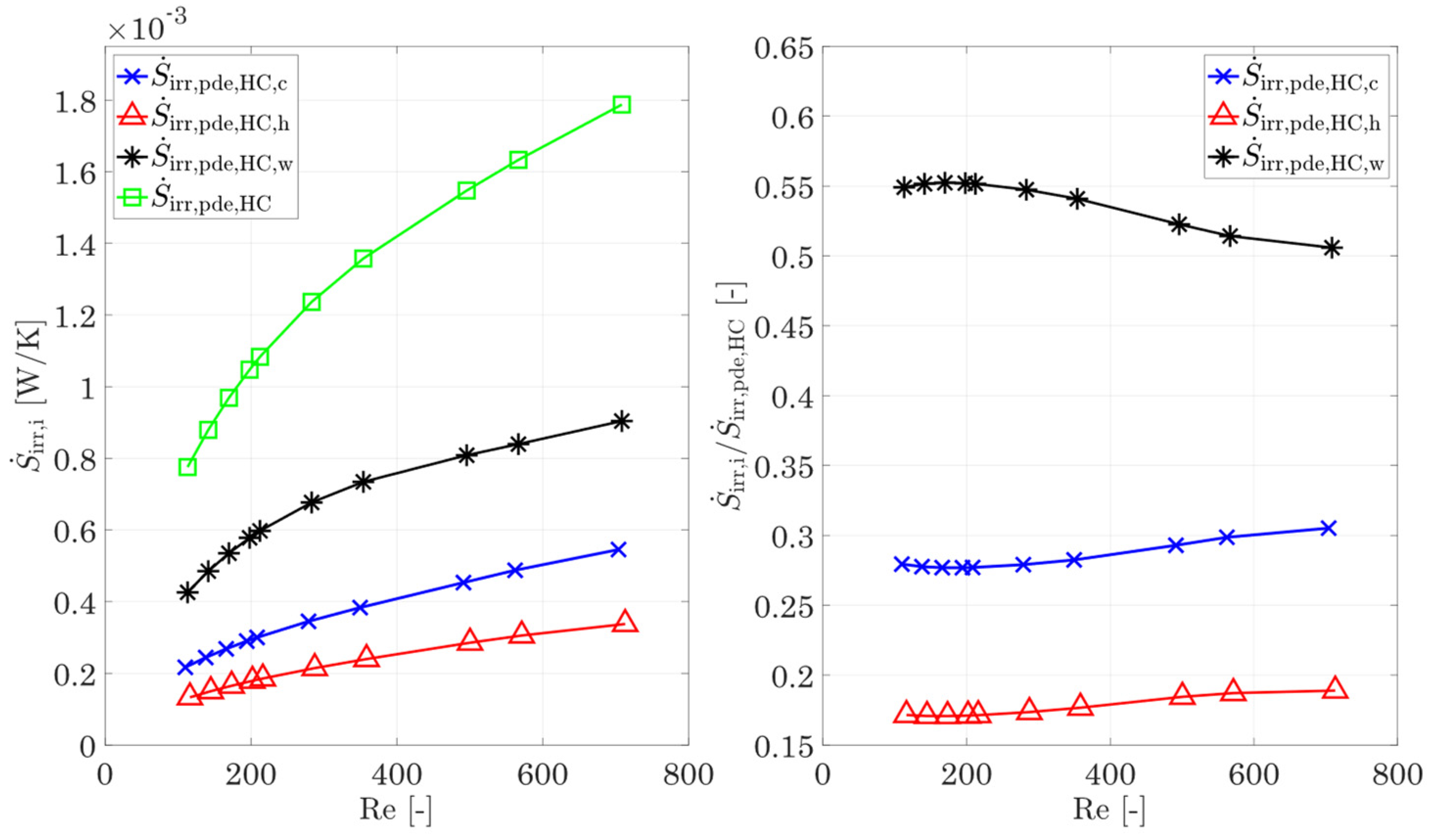
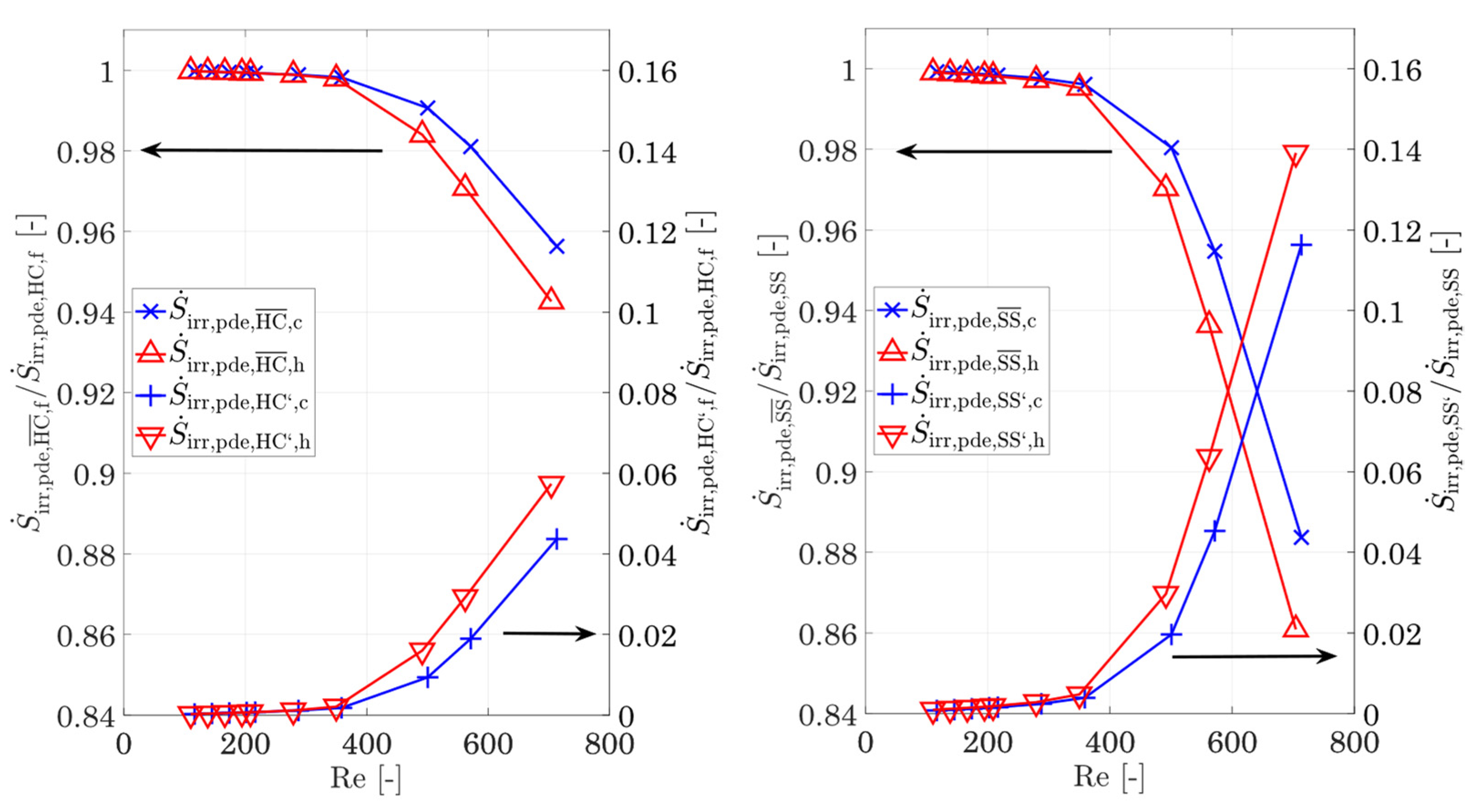
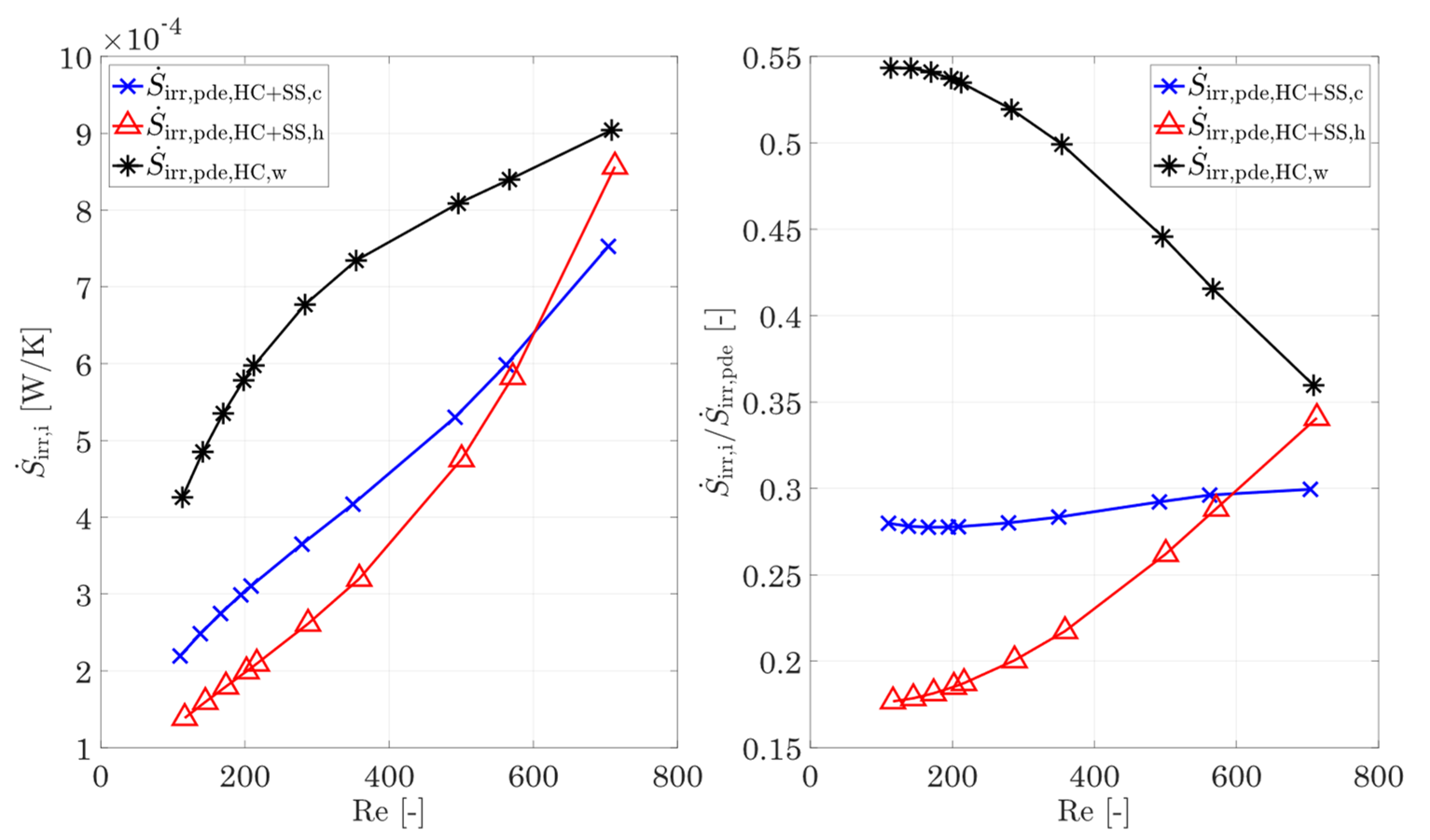
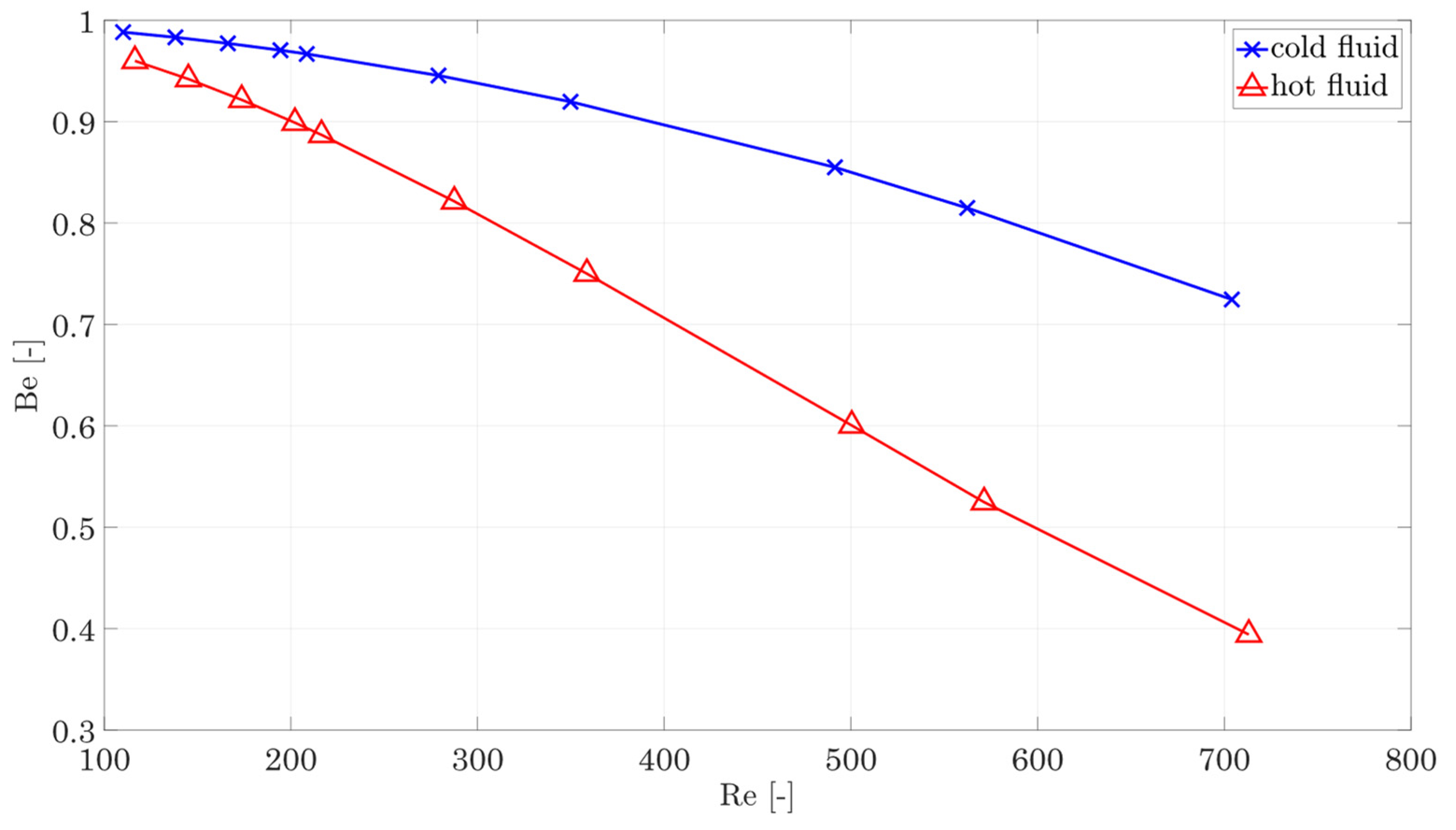
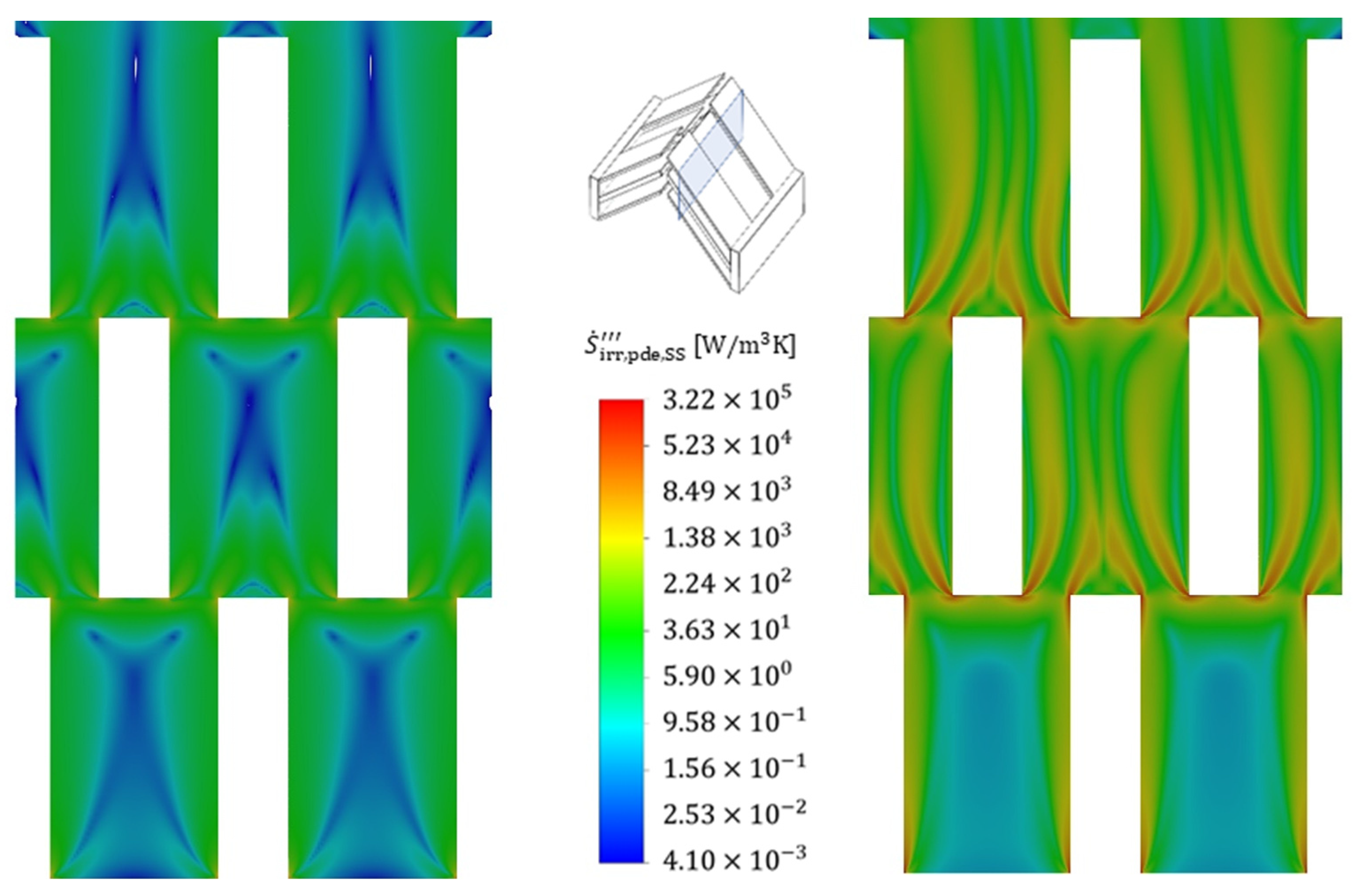
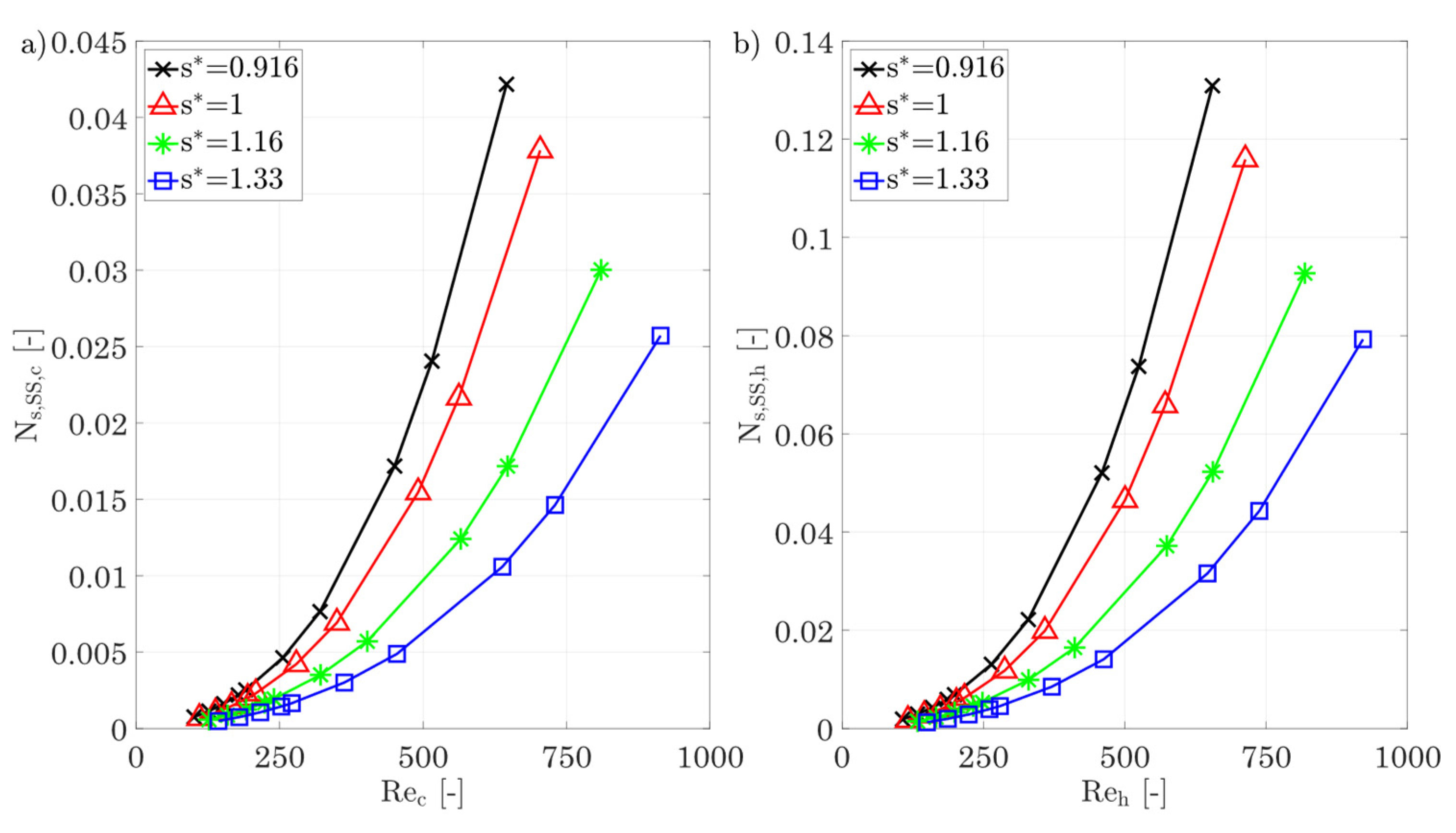
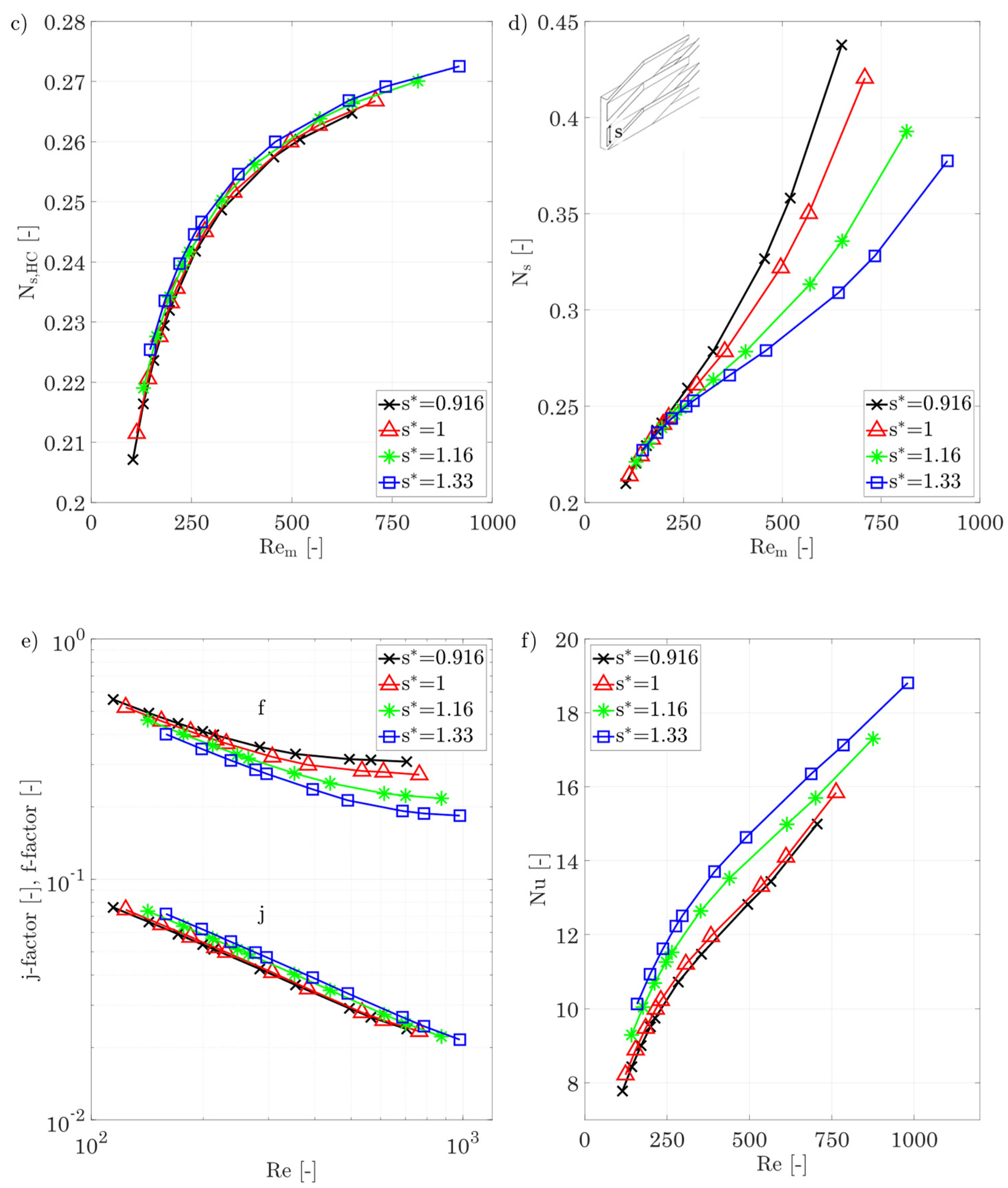
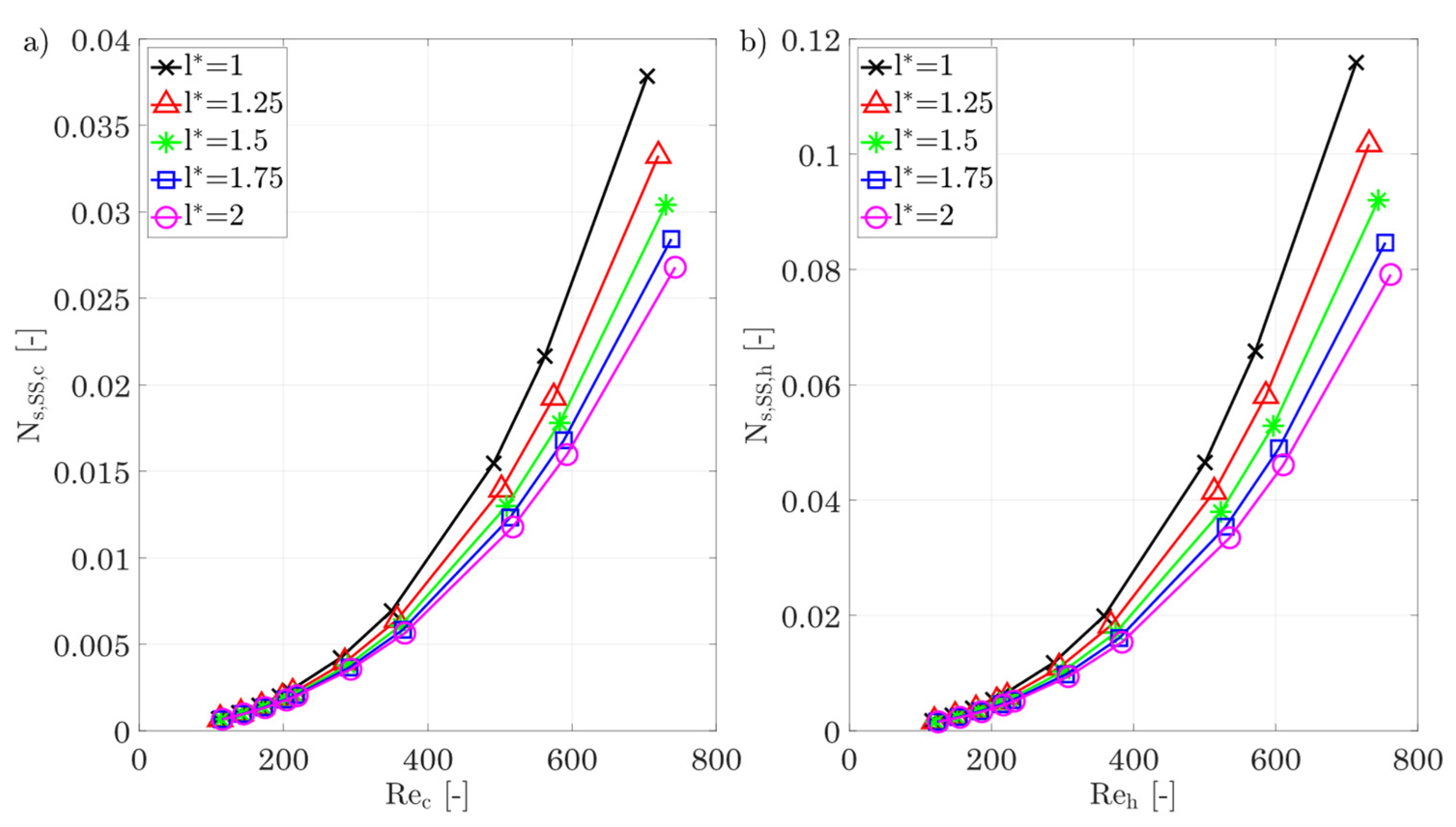
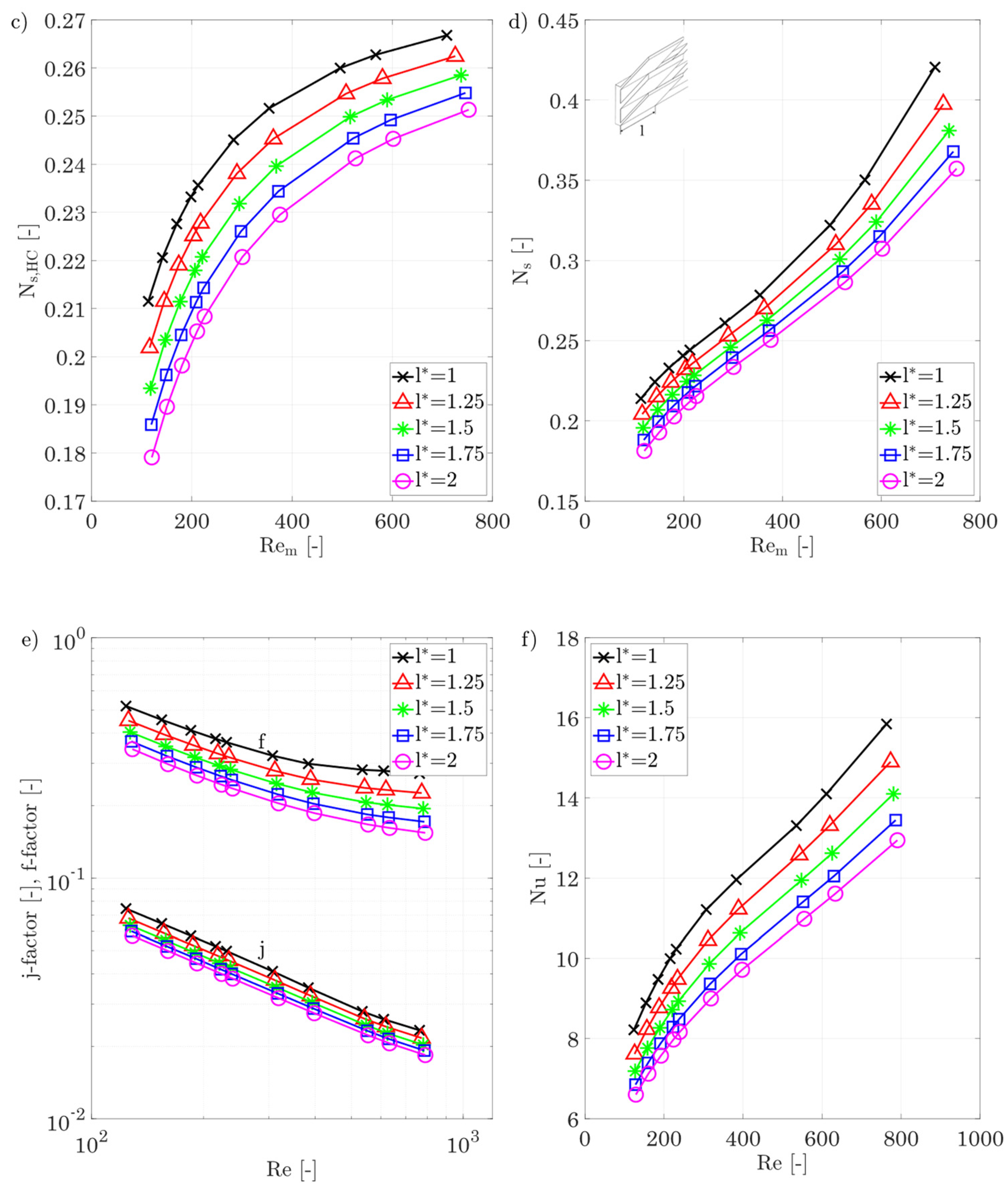
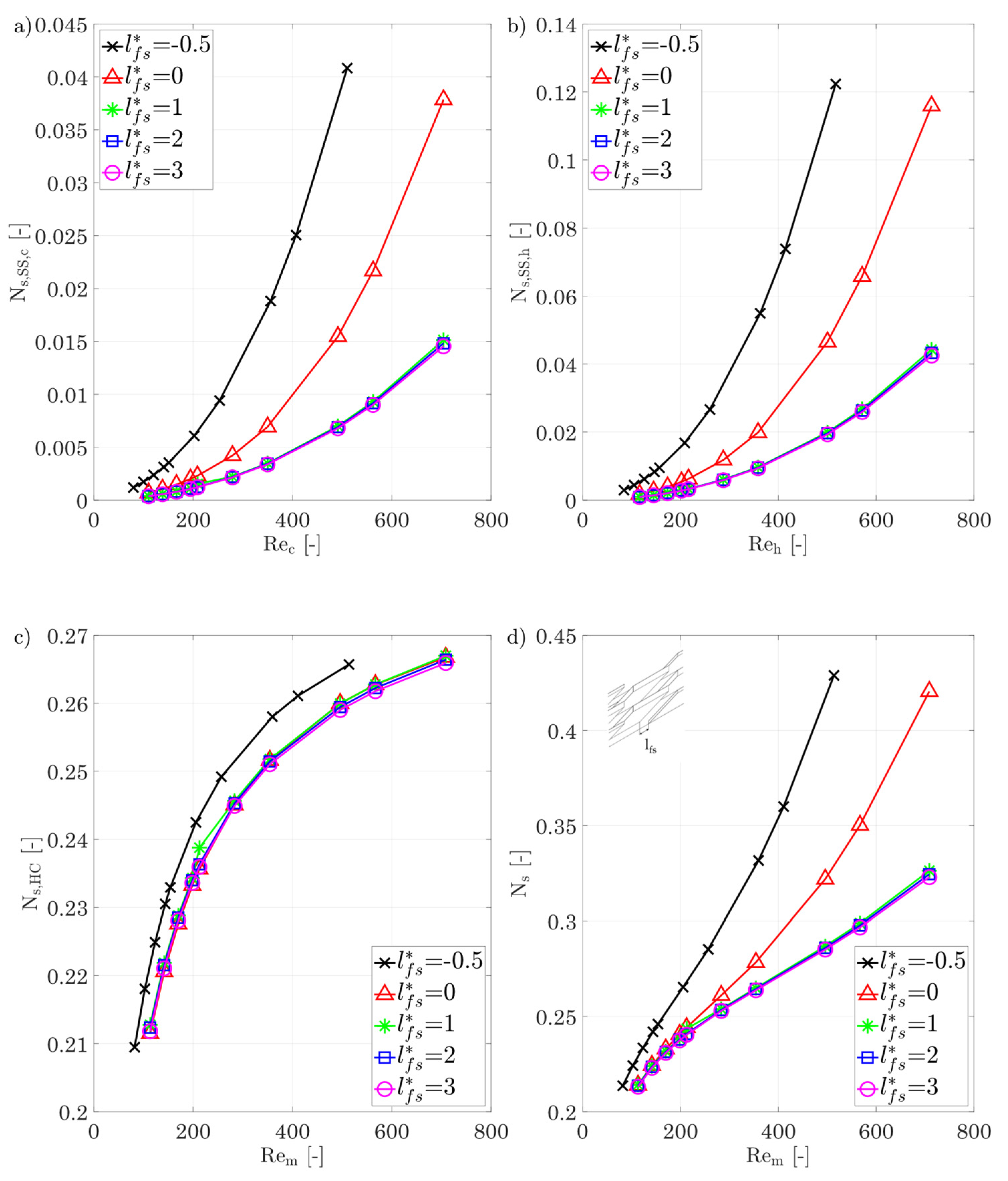
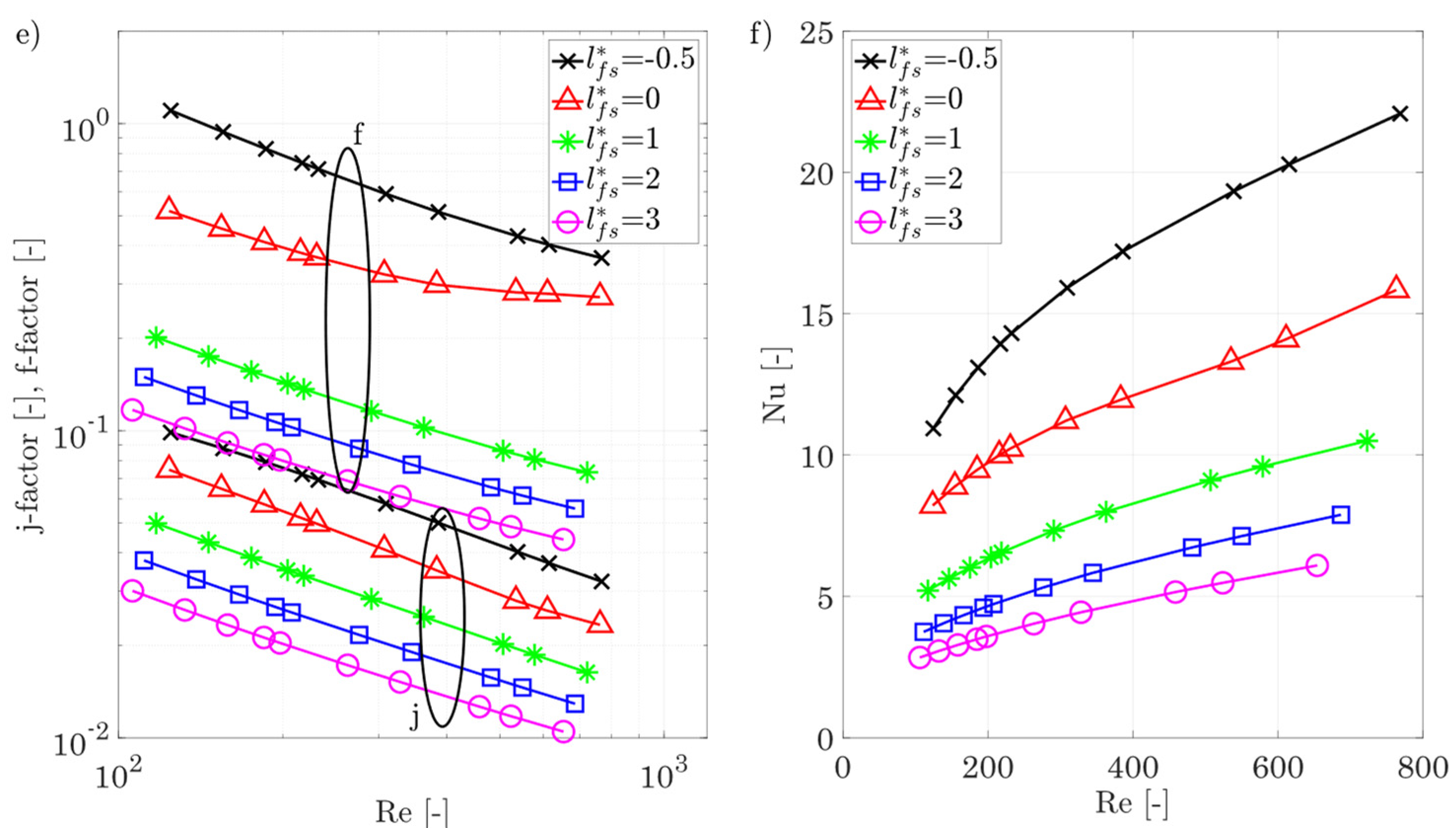
In this manuscript, off-set strip fin structures are presented which are adapted to the possibilities of additive manufacturing. For this purpose, the geometric parameters, including fin height, fin spacing, fin length, and fin longitudinal displacement, are varied, and the Colburn j-factor and the Fanning friction factor are numerically calculated in the Reynolds number range of 80–920. The structures are classified with respect to their entropy production number according to Bejan. This method is compared with the results from partial differential equations for the calculation of the irreversible entropy production rate due to shear stresses and heat conduction. This study reveals that the chosen temperature difference leads to deviation in terms of entropy production due to heat conduction, whereas the dissipation by shear stresses shows only small deviations of less than 2%. It is further shown that the variation in fin height and fin spacing has only a small influence on heat transfer and pressure drop, while a variation in fin length and fin longitudinal displacement shows a larger influence. With respect to the entropy production number, short and long fins, as well as large fin spacing and fin longitudinal displacement, are shown to be beneficial. A detailed examination of a single structure shows that the entropy production rate due to heat conduction is dominated by the entropy production rate in the wall, while the fluid has only a minor influence.
Keywords: off-set strip fin structures; numerical calculation; irreversible entropy production rate; shear stresses; heat conduction; additive manufacturing off-set strip fin structures; numerical calculation; irreversible entropy production rate; shear stresses; heat conduction; additive manufacturing