Article

Dynamical Pattern Representation of Cardiovascular Couplings Evoked by Head-up Tilt Test

1
Institute of Theoretical Physics and Astrophysics, Faculty of Mathematics, Physics and Informatics, University of Gdańsk, Wita Stwosza 57, 80-308 Gdańsk, Poland
2
Institute of Experimental Physics, Faculty of Mathematics, Physics and Informatics, University of Gdańsk, Wita Stwosza 57, 80-308 Gdańsk, Poland
3
Department of Hypertension and Diabetology, Medical University of Gdańsk, M. Skłodowskiej-Curie 3a, 80-210 Gdańsk, Poland
4
Graduate School of Education, University of Tokyo, 7-3-1 Hongo, Bunkyo-ku, Tokyo 113-0033, Japan
5
RIKEN, Brain Science Institute, 2-1 Hirosawa, Wako-shi 351-0198, Japan
*
Author to whom correspondence should be addressed.
Entropy 2018, 20(4), 235; https://doi.org/10.3390/e20040235
Submission received: 14 February 2018 / Revised: 23 March 2018 / Accepted: 23 March 2018 / Published: 28 March 2018
(This article belongs to the Special Issue Entropy and Cardiac Physics II)

Abstract

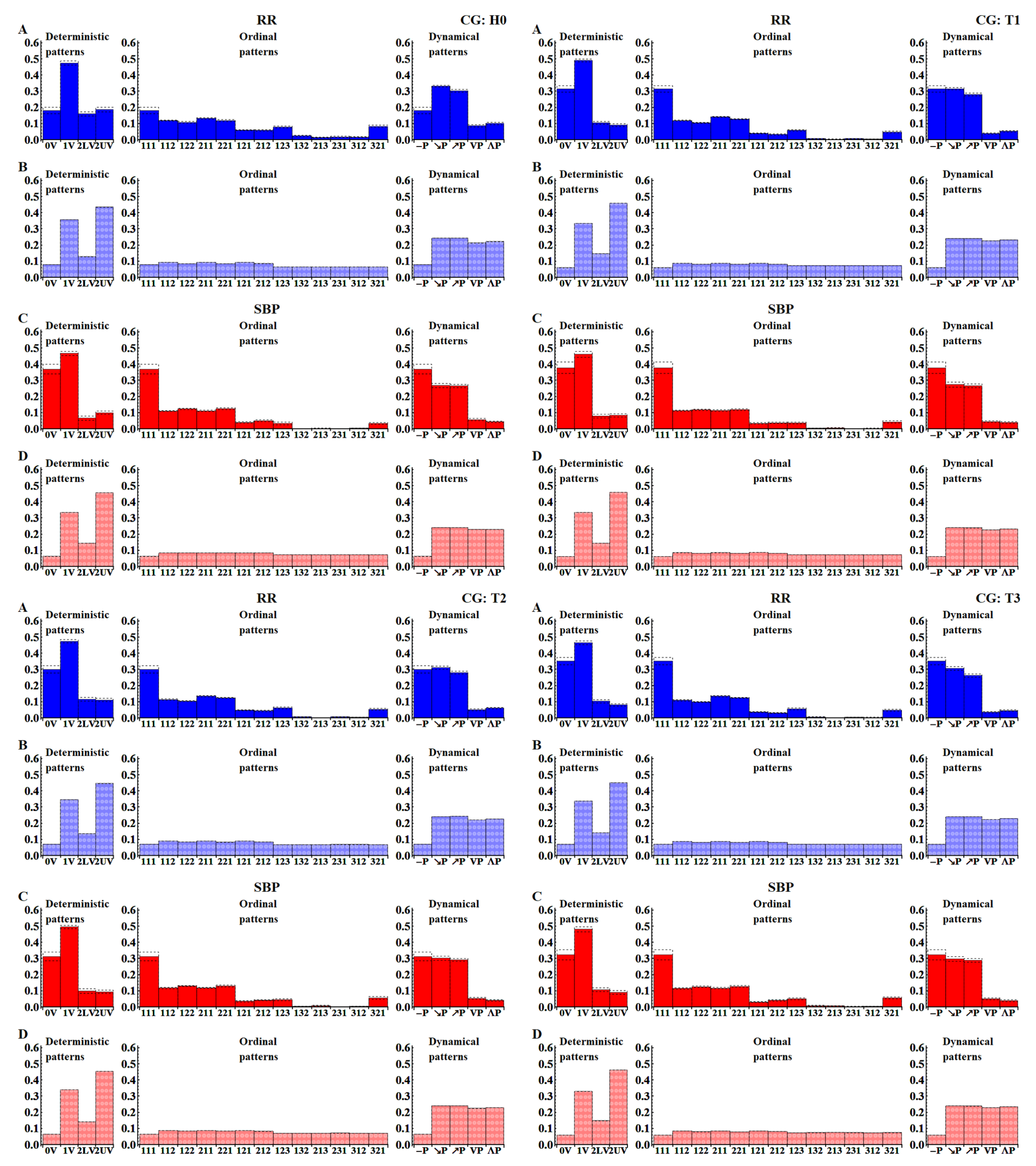
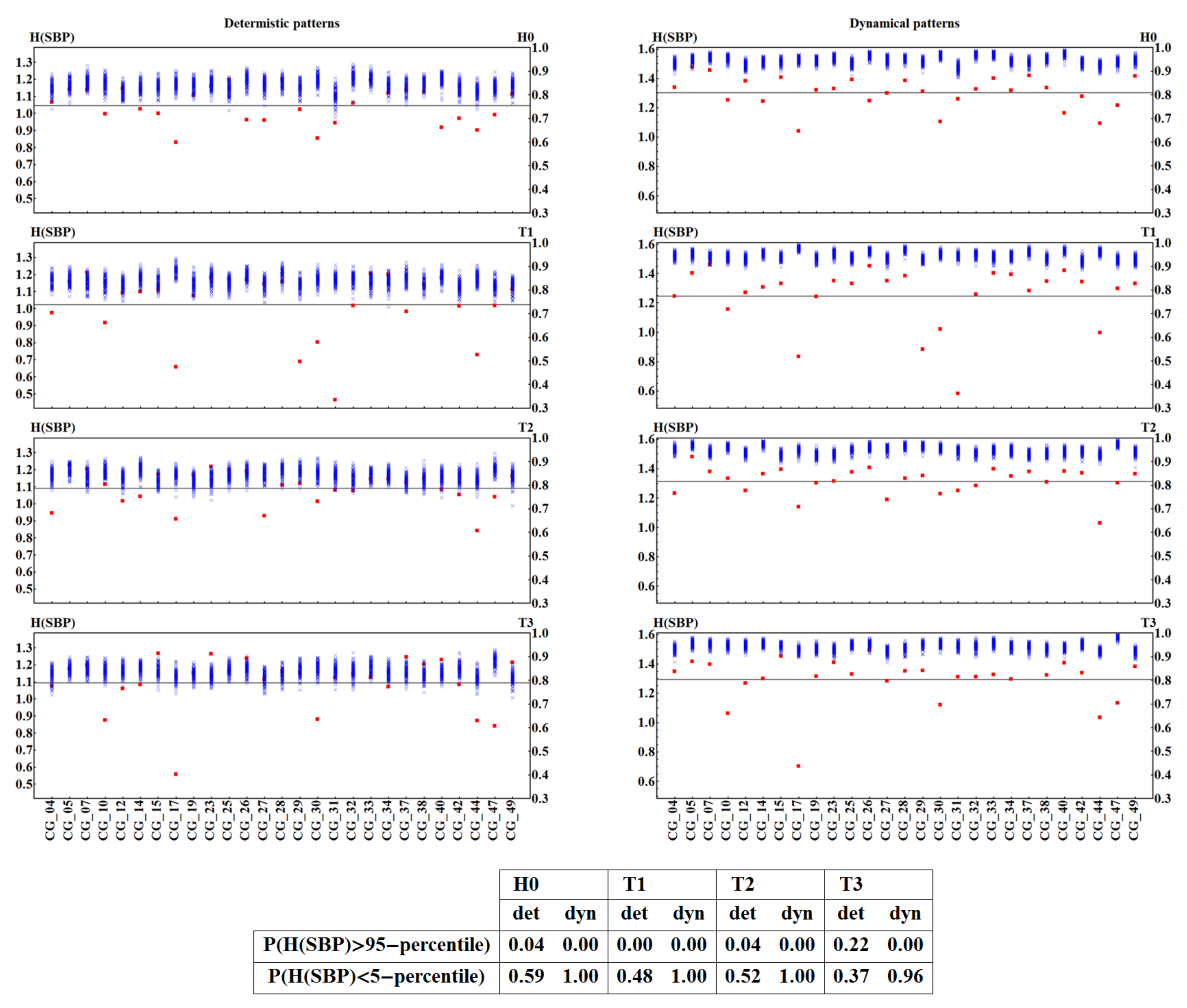
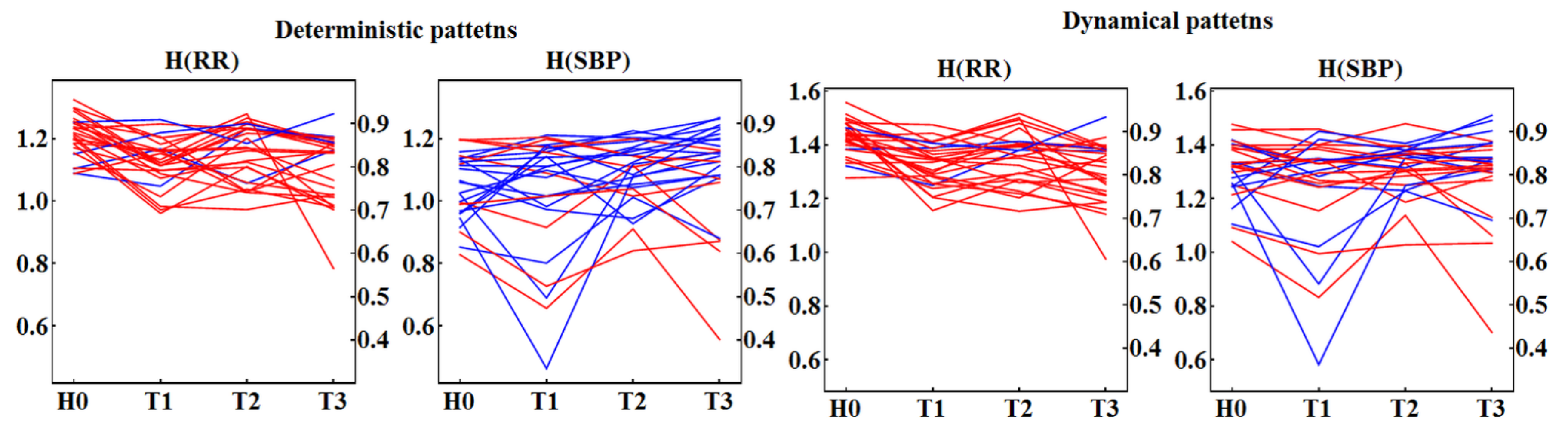
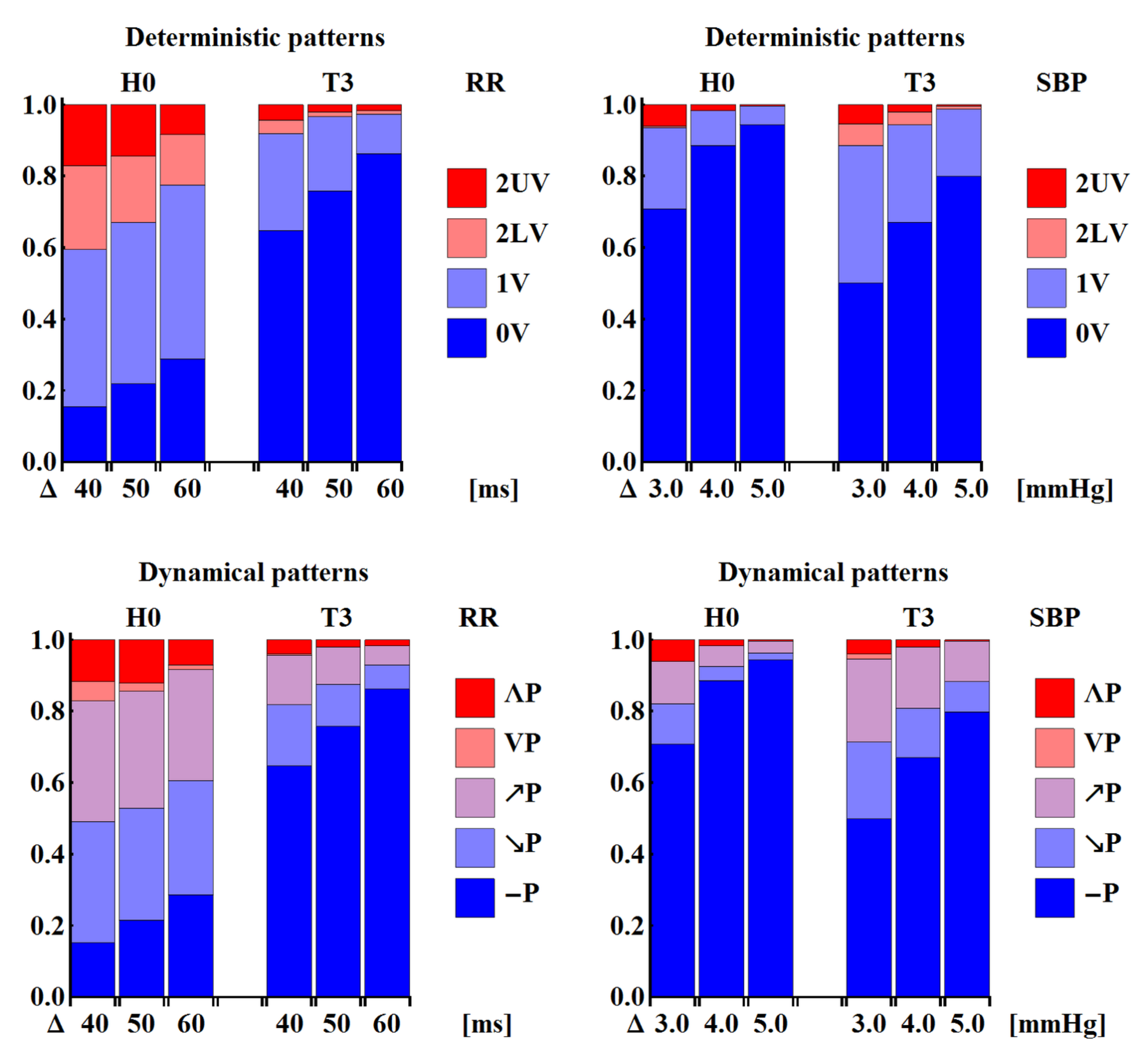
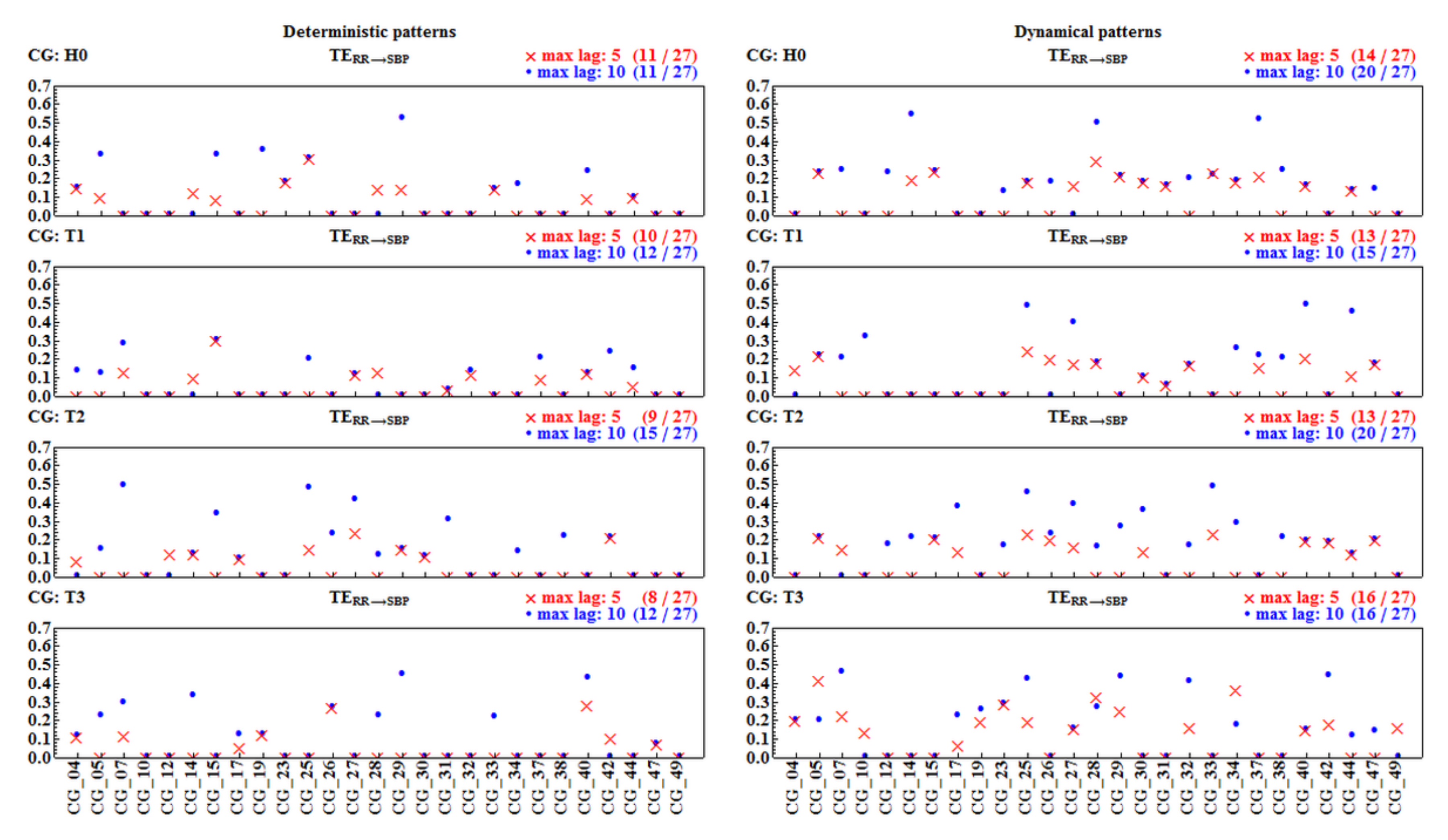
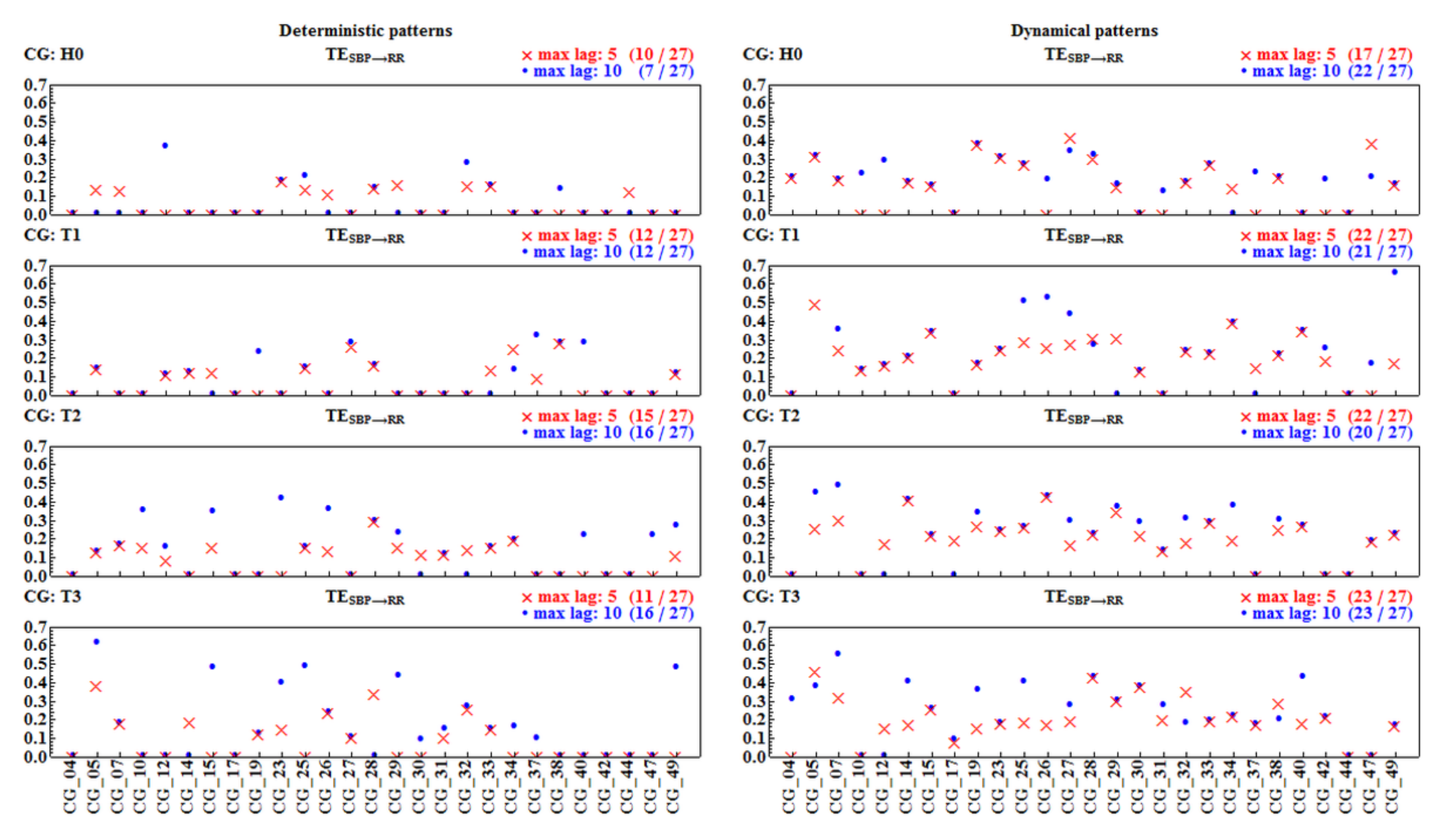
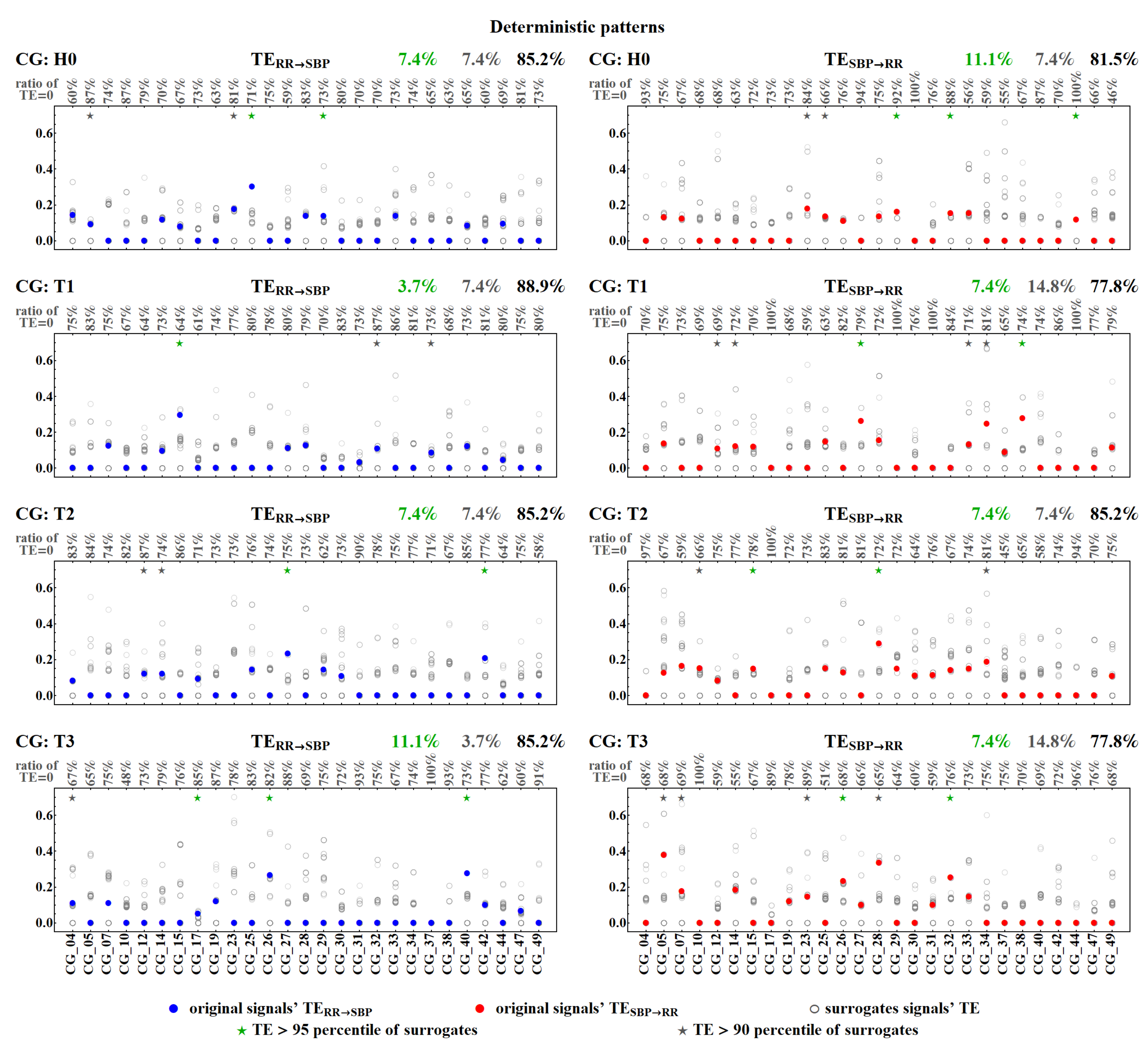
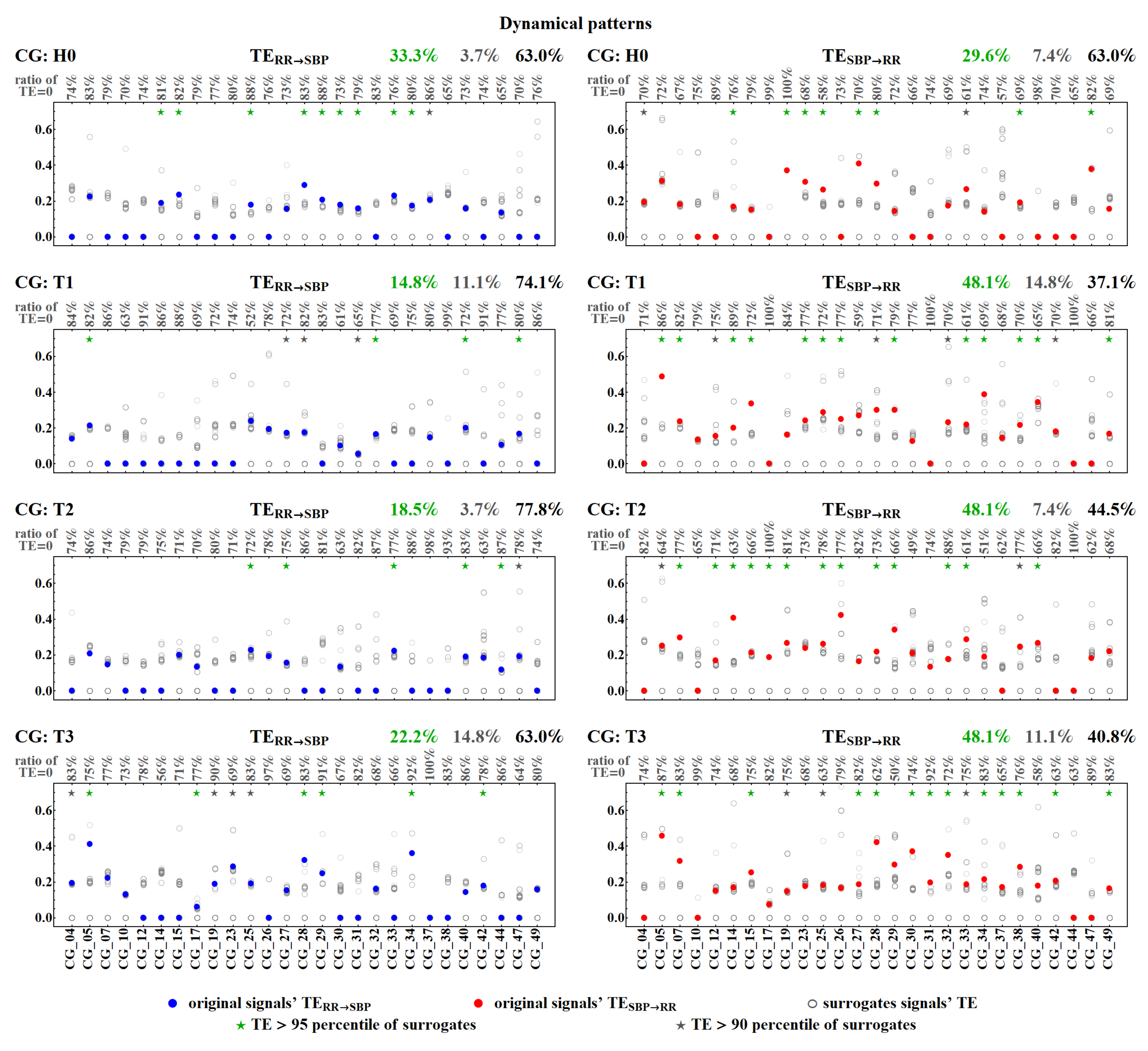
Shannon entropy (ShE) is a recognised tool for the quantization of the temporal organization of time series. Transfer entropy (TE) provides insight into the dependence between coupled systems. Here, signals are analysed that were produced by the cardiovascular system when a healthy human underwent a provocation test using the head-up tilt (HUT) protocol. The information provided by ShE and TE is evaluated from two aspects: that of the algorithmic stability and that of the recognised physiology of the cardiovascular response to the HUT test. To address both of these aspects, two types of symbolization of three-element subsequent values of a signal are considered: one, well established in heart rate research, referring to the variability in a signal, and a novel one, revealing primarily the dynamical trends. The interpretation of ShE shows a strong dependence on the method that was used in signal pre-processing. In particular, results obtained from normalized signals turn out to be less conclusive than results obtained from non-normalized signals. Systematic investigations based on surrogate data tests are employed to discriminate between genuine properties—in particular inter-system coupling—and random, incidental fluctuations. These properties appear to determine the occurrence of a high percentage of zero values of TE, which strongly limits the reliability of the couplings measured. Nevertheless, supported by statistical corroboration, we identify distinct timings when: (i) evoking cardiac impact on the vascular system, and (ii) evoking vascular impact on the cardiac system, within both the principal sub-systems of the baroreflex loop.
Keywords: time series analysis; dynamic symbolization; pattern representation; information transfer; orthostatic stimulus time series analysis; dynamic symbolization; pattern representation; information transfer; orthostatic stimulus