
Article

Drivers of Consumer Engagement Towards Influencer Marketing: Empirical Evidence from Sponsored Video Campaigns

1
School of Management, Fudan University, Shanghai 200433, China
2
School of Business, East China University of Science and Technology, Shanghai 200237, China
*
Author to whom correspondence should be addressed.
J. Theor. Appl. Electron. Commer. Res. 2026, 21(7), 212; https://doi.org/10.3390/jtaer21070212 (registering DOI)
Submission received: 1 May 2026 / Revised: 27 June 2026 / Accepted: 29 June 2026 / Published: 4 July 2026

Abstract

As video-based influencer marketing becomes central to digital brand communication, understanding what drives consumer engagement on interactive platforms is increasingly critical. This study examines how content and contextual features influence engagement behavior in influencer-sponsored videos on Bilibili. Drawing on the theory of conversation and the customer-perceived-value framework, we propose a four-part framework—Who (influencer characteristics), What (message content), How (presentation strategy), and When (timin g)—to explain engagement variation. Using a manually coded dataset of 457 sponsored videos, we find that hedonic appeal, comparative messaging, and message sidedness significantly enhance engagement, while signals of brand control, promotional incentives, and technical features (e.g., plug-ins, progress bars) have no significant effect. Notably, perceived expertise and posting during the platform’s “golden period” also do not affect engagement, underscoring the importance of relatability and content salience over authority or timing. By integrating message strategy with interactive design, this study advances marketing communication theory in digital contexts and offers practical insights for optimizing content strategy on social video platforms.

1. Introduction

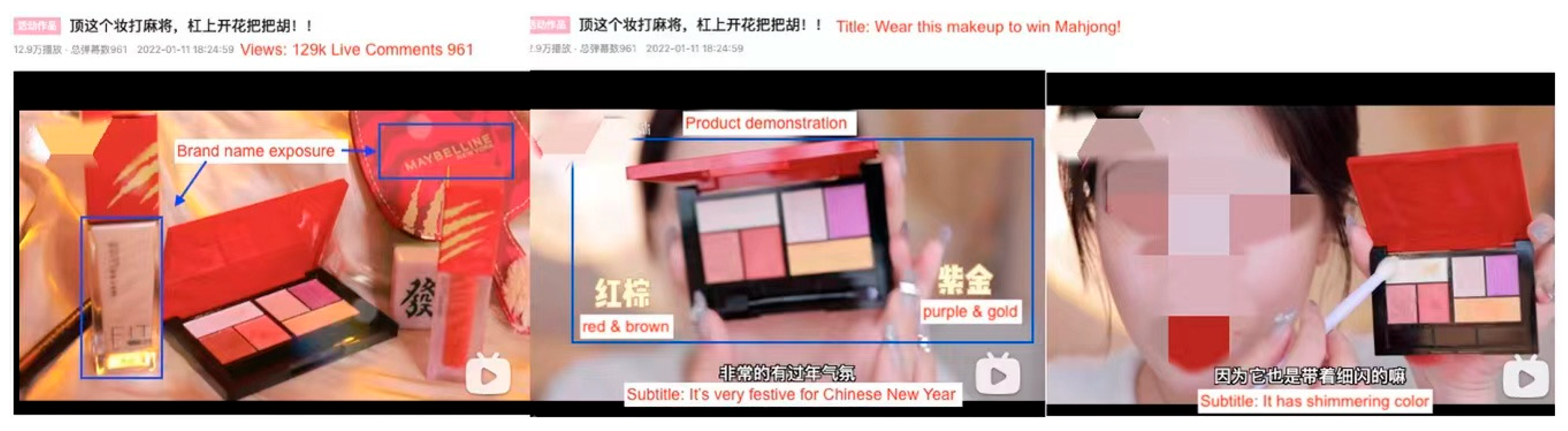
On a typical Saturday evening, millions of Gen Z users in China are glued not to TV screens but to influencer videos on platforms like Bilibili. In one such video, a beauty creator showcases a red-and-gold eyeshadow palette, with the Maybelline logo subtly visible as she highlights its festive color scheme (Figure 1). As she speaks, viewer comments, commonly known as bullet comments, scroll across the screen with spontaneous reactions such as “I’ve tried this one!” or “Where can I get it?” Viewers respond by liking, saving, and reposting the video. These forms of engagement go far beyond passive consumption [1,2]. This scene illustrates a broader shift in brand communication: from traditional one-way messaging to dynamic, influencer-driven interactions. As engagement behaviors such as likes, shares, and comments become key metrics of campaign effectiveness, a critical question emerges: What drives consumers to engage with influencer-sponsored video content?
Prior research has explored how influencer attributes (e.g., expertise, credibility) [3,4] and message features (e.g., emotional versus informational appeals) [5,6] influence consumer responses such as brand attitude and purchase intention [7,8]. More recently, the focus has shifted from persuasion outcomes to engagement behaviors as key indicators of influencer marketing effectiveness [9,10]. However, most of these studies are grounded in static media environments like images or text-based posts [11] and offer limited insight into how engagement operates in more dynamic, video-based contexts where advertising creativity is pivotal for capturing consumer attention [12]. Mid-to-long-form pre-recorded videos, now prevalent on platforms like Bilibili or YouTube, present unique affordances in terms of message complexity, pacing, and viewer interaction [13]. However, existing research lacks a unified theoretical framework to explain how content design and contextual factors jointly influence consumer engagement in these richer media settings.
To address this gap, we propose a conceptual framework that combines Gricean conversational maxims with a cost–benefit trade-off perspective informed by the customer-perceived-value framework [14]. The framework organizes engagement drivers around four questions central to sponsored video communication. “Who” captures influencer characteristics, operationalized by perceived expertise [15]. “What” refers to message content, including brand control [16], promotional incentives [17], practical knowledge [9], and hedonic appeal [5,18]. “How” concerns content presentation strategy, including comparative messaging [19,20], message sidedness [21], sponsorship disclosure [22], interaction cues [23], plug-in use, and progress bar signposting. “When” reflects temporal placement, particularly posting during the platform’s “golden period” of heightened user activity. By linking conversational maxims with viewers’ perceived benefits and costs, the framework explains how sender-side communication choices become engagement-relevant in interactive sponsored video settings.
We test this framework using a manually coded dataset of 457 influencer-sponsored videos on Bilibili. Results show that perceived expertise (Who) does not significantly affect engagement, suggesting that relatability may matter more than authority on peer-driven platforms. Among content features (What), hedonic appeal strongly enhances engagement, while signals of brand control and promotional incentives are ineffective, likely due to viewers’ high tolerance for commercial content. In terms of presentation (How), comparative strategy and message sidedness significantly increase engagement by enhancing message clarity and relevance, while interaction cues have a marginal effect. However, technical features such as plug-ins and progress bars show no effect, possibly due to poor usability or limited adoption. Finally, timing (When) does not significantly influence engagement, as the benefits of high-traffic periods are offset by heightened competition for attention.
This research makes three key contributions to the influencer marketing, digital engagement, and Gen Z consumer literature. First, while individual Gricean maxims have been applied to isolated message attributes in prior marketing research—assertive language [24], figurative language [25], two-sided messaging [26], and sponsorship disclosure [27,28]—the four maxims have not been operationalized jointly as a predictor structure, nor has the sender-side pragmatic logic been paired with a receiver-side value calculus. This study addresses both gaps by integrating Grice’s theory of conversation with the customer-perceived-value framework [14], linking sender-side communication features with receiver-side benefit–cost evaluations to explain how each pragmatic choice in a sponsored video shapes the viewer’s decision to engage. Second, it contextualizes Gricean conversational maxims within a Who–What–How–When framework for examining influencer characteristics, message content, presentation strategy, and timing in mid-to-long sponsored videos [29]. Third, it introduces platform-specific variables such as interaction plug-ins and chapter progress bars and adopts a comprehensive engagement metric that includes both conventional indicators (likes, comments, and shares) and native platform behaviors (coins, live comments). Together, these contributions provide practical implications for brands, influencers, and platforms seeking to optimize communication strategies for Gen Z consumers in emerging social commerce environments.

2. Conceptual Framework and Hypotheses

2.1. Conceptual Framework

Influencer marketing can be understood as a communication process in which influencers act as senders of brand-related messages and viewers act as receivers who evaluate, interpret, and respond to those messages. In sponsored video campaigns, this communication process is especially complex because the influencer must simultaneously maintain authenticity, deliver brand information, and invite viewer participation. Accordingly, the effectiveness of influencer communication can be examined from two connected perspectives: the sender-side organization of the message and the receiver-side evaluation of its value.
Sender-side logic: Grice’s theory of conversation. On the sender side, Grice’s theory of conversation provides a useful language for organizing sponsored video communication. The maxim of quantity concerns whether a message provides sufficient and useful information; quality concerns credibility, truthfulness, and perceived authenticity; relation concerns the fit between the message and viewers’ interests, needs, or comparison context; and manner concerns clarity, structure, and ease of processing. Prior research on online posts similarly suggests that audience reactions depend on what is communicated, who communicates it, how the message is delivered, and when it reaches the audience [30]. These maxims therefore help organize the Who–What–How–When framework: influencer cues relate to the sender of the message, content features reflect what is communicated, presentation strategies capture how the message is delivered, and timing captures the contextual moment in which the message reaches viewers.
Earlier discourse-analytic work established that ad copy systematically exploits Gricean implicature [31]. Building on this tradition, empirical marketing research has tested individual maxims against persuasion outcomes: assertive language as a manner-related signal [24], figurative language as a quality and manner signal [25], two-sided messaging as a quality signal [26], and sponsorship disclosure as a quantity signal in both native [27] and influencer [28] contexts. What this stream has not done is treat the four maxims as a joint predictor structure, pair them with a receiver-side value calculus, or test them against engagement-behavior outcomes in interactive mid-to-long sponsored video. The present study is positioned in this gap.
Receiver-side logic: customer perceived value. On the receiver side, engagement behaviors such as likes, comments, shares, coins, and live comments can be understood as responses to viewers’ perceived value from the video. Consistent with the customer-perceived-value framework [14], viewers evaluate content by weighing perceived benefits, such as utility, enjoyment, credibility, and social connection, against perceived sacrifices, such as time, cognitive effort, distraction, or psychological discomfort [32]. Engagement becomes more likely when the video increases perceived benefits or reduces perceived costs.
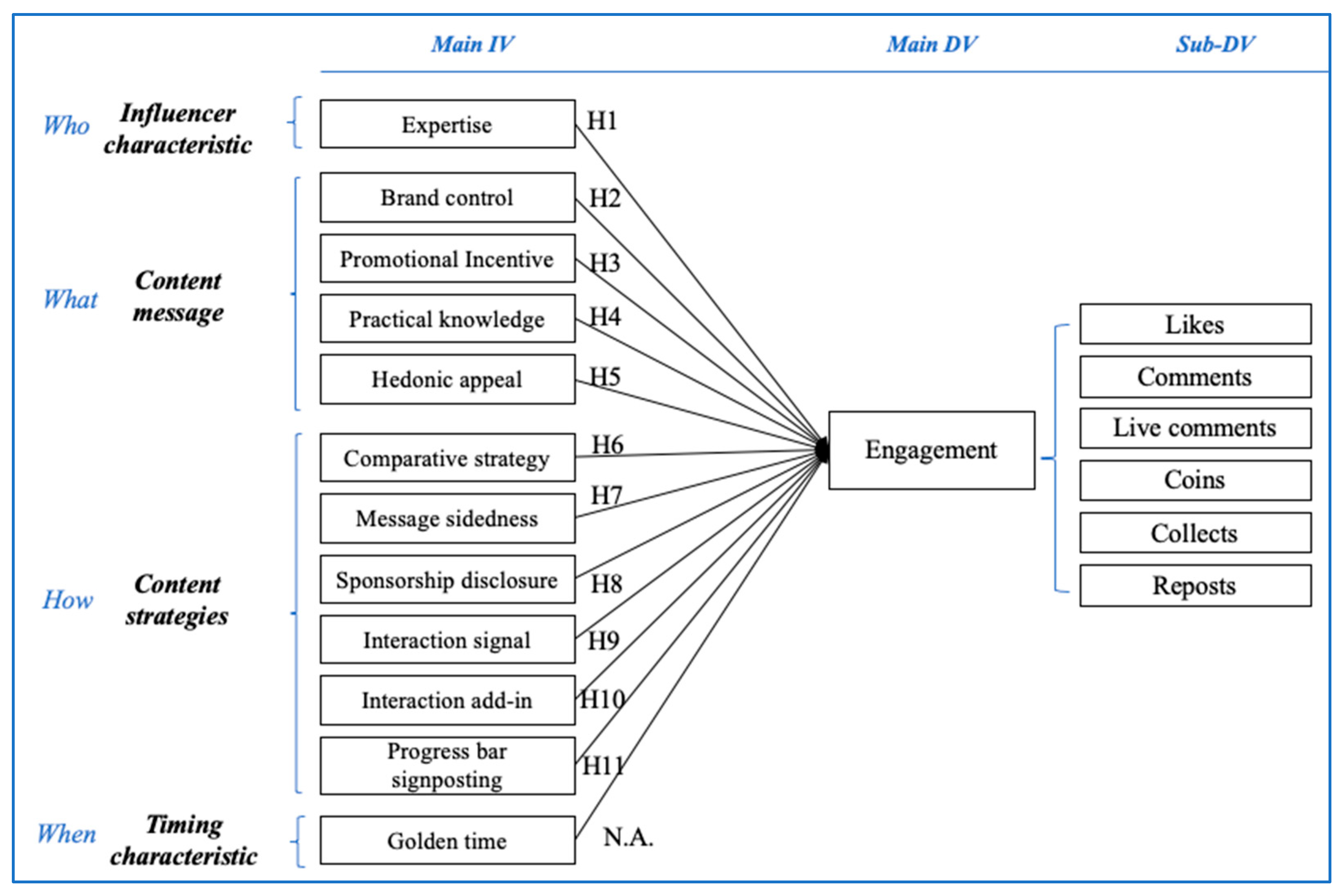
Conceptual framework: Integrating these two perspectives, Figure 2 presents a conceptual framework for explaining consumer engagement with sponsored mid-to-long-form videos. At the communication level, Grice’s conversational maxims [33] provide the theoretical basis for organizing engagement predictors into Who, What, How, and When. At the viewer-evaluation level, the customer-perceived-value framework explains why these predictors may encourage or discourage engagement by changing the perceived benefits and costs of responding to the video. For example, perceived expertise may increase functional value, hedonic appeal may increase emotional value, strong brand control may raise psychological costs, and timing may affect the opportunity cost of attention. In this way, the framework links message organization with the viewer’s engagement decision before the empirical variables and hypotheses are specified. Notably, this sender × receiver pairing is the specific theoretical move that the prior Gricean-advertising literature reviewed above has not undertaken that literature stops at the message-pragmatic level and does not specify how a viewer converts pragmatic compliance into the benefit–cost calculus that determines whether and how to engage.
Based on this framework, we identify four sets of explanatory variables corresponding to the Who–What–How–When structure. Table 1 summarizes these variables and their associated hypotheses, classifying them according to whether they primarily function as perceived benefits or perceived costs. This structured approach enables a theory-driven examination of the factors that shape consumer engagement in influencer-sponsored video content.

2.2. Hypotheses Development

2.2.1. Influencer Characteristic (Who)

Expertise. According to cooperative principle in the theory of conversation, the initiator of a conversation plays a key role in its relevance. In influencer videos, this initiator is the spokesperson, whose perceived expertise shapes audience engagement. Prior studies have demonstrated that high source expertise enhances persuasion, elicits favorable brand attitudes, and promotes behavioral change [34]. Expertise encourages deeper message processing [35], which enhances perceived functional value and encourages engagement from information-seeking audiences. Thus, viewers are more likely to respond positively to expert influencers who deliver credible content, especially when it fulfills their underlying social and interactive motivations [36].
H1. 
Influencer expertise positively affects consumer engagement. The higher the influencer’s expertise, the more total engagements the video receives.

2.2.2. Content Message (What)

Brand control. When brands impose strict control over influencer content through prescriptive briefs, script checks, or promotional framing, consumer engagement tends to decrease. Excessive control often signals overt commercial intent, which may trigger skepticism and reduce perceived authenticity [16]. In contrast, allowing influencers creative flexibility improves message acceptance by reducing psychological resistance and perceived persuasion costs [35]. Therefore, stronger brand control likely lowers perceived value and engagement.
H2. 
Brand control negatively affects engagement; videos with high control receive fewer engagements than those with low control.
Promotional incentive. Incentives such as giveaways, discount codes, or exclusive offers are direct marketing actions designed to trigger consumer responses [9,17]. These incentives reduce monetary cost and increase perceived value, prompting audiences to engage in exchange-based behaviors like liking, commenting, or reposting.
H3. 
Promotional incentives are positively associated with engagement. Content offering incentives leads to more user interactions.
Practical knowledge. Informative content that provides utility such as product tutorials or skincare tips enhances perceived functional value [26] and aligns with quantity maxim in the theory of conversation. Consumers are more likely to collect or save content they find educational. Influencers themselves recognize this pattern, often embedding such knowledge to sustain audience interest and content longevity.
H4. 
Practical knowledge increases total engagement. More practical knowledge leads to more user responses.
Hedonic appeal. Emotional, entertaining, or humorous content brings hedonic value, positively influencing consumer mood and lowering resistance to branded messages [37]. Prior studies have shown that emotional arousal facilitates social sharing and online participation [5,38].
H5. 
Hedonic appeal positively affects engagement. Higher emotional appeal leads to more user responses.

2.2.3. Content Strategies (How)

Comparative strategy. Comparative appeals, such as direct or indirect comparisons with competing products, have proven effective in eliciting consumer responses on social media [19]. This strategy helps consumers save cognitive effort by consolidating product information in one video, offering functional value. It also encourages viewers to contribute their own product experiences, enriching the information environment and fostering engagement. Common formats include “product battle” or “collection” videos comparing items across categories.
H6. 
Comparative strategies positively influence consumer engagement. Comparing products or brands in influencer videos generates more user interactions.
Message sidedness. Grice’s maxim of manner suggests that clarity improves communication. Two-sided messages highlighting both pros and cons align with this norm and increase perceived credibility [21,39]. In influencer marketing, videos that acknowledge drawbacks appear more authentic and less commercially biased, increasing perceived trustworthiness and aiding decision-making. Compared to one-sided content, two-sided messages are seen as more genuine, enhancing functional value and engagement [40].
H7. 
Message sidedness positively affects engagement. Two-sided messages elicit more engagement than one-sided messages.
Sponsorship disclosure. Under Grice’s maxim of quantity, supplying the commercial nature of a message provides information viewers need to interpret the speaker’s cooperativeness, whereas withholding it leaves that information underspecified. Across native advertising and social media influencer marketing, explicit disclosure has been shown to activate persuasion knowledge and dampen favorable consumer responses, with effect magnitudes shaped by disclosure position and wording [27,28]. In China, where disclosure practices remain inconsistent and Bilibili leaves it largely to influencers’ discretion to verbally note sponsorships or mark products with asterisks, open disclosure increases the salience of commercial intent [36,37] and can reduce trust and dampen engagement [22]. Consequently, influencers often withhold disclosure to maintain perceived authenticity.
H8. 
Sponsorship disclosure reduces consumer engagement. Visible disclosure of sponsorship information negatively impacts viewer response.
Interaction signal. Verbal cues such as “please like or comment” serve as interaction prompts that reinforce the influencer’s desire for dialogue. These cues enhance parasocial identification [23,41] and increase user arousal and perceived connectedness. Studies on other platforms (e.g., LinkedIn) also confirm that interaction cues promote response behavior [30].
H9. 
Verbal interaction signals positively affect engagement. Influencer encouragement increases viewer interaction.
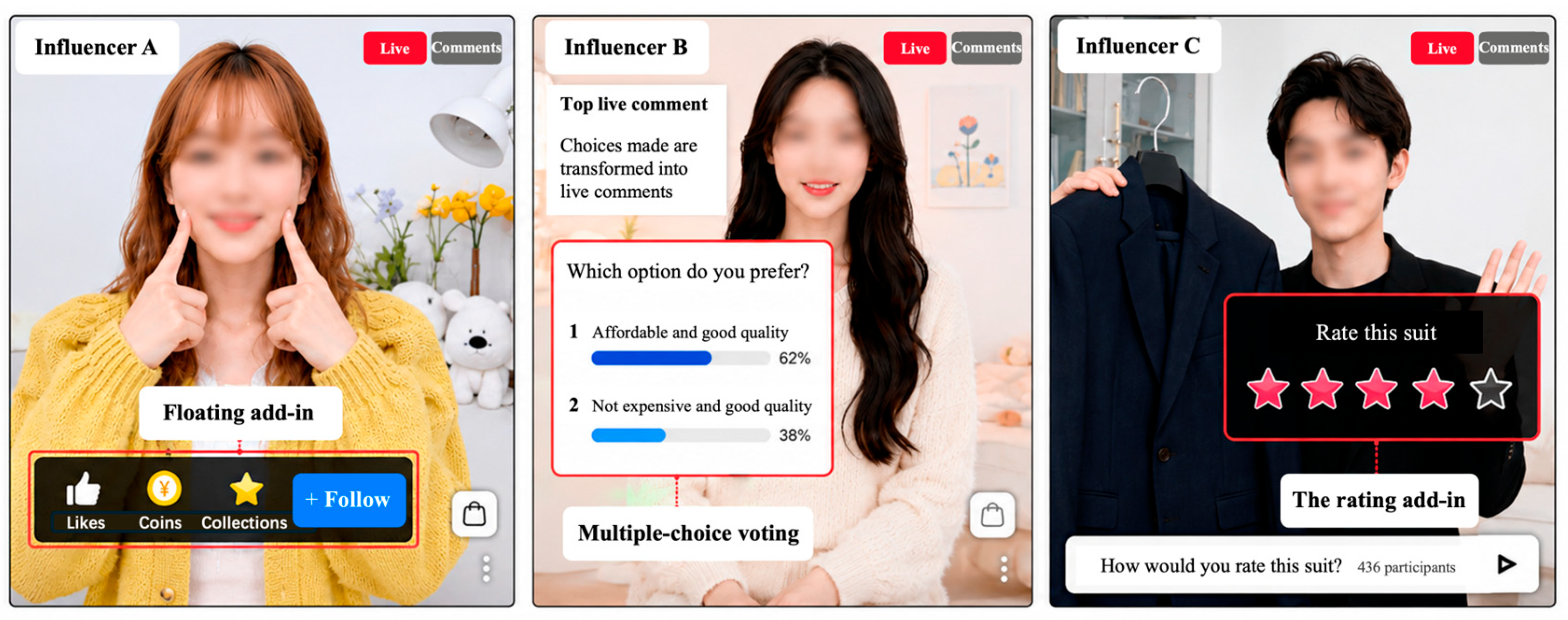
Interaction add-ins. Bilibili’s unique features such as floating buttons for likes or “coin” submissions and voting widgets (see Figure 3) lower behavioral costs and facilitate seamless engagement. According to the Elaboration Likelihood Model [42], these peripheral cues trigger effortless participation by minimizing user effort. These add-ins are especially effective in mobile or full-screen viewing contexts, as they eliminate the need for typing or screen switching.
H10. 
Interaction add-ins enhance engagement. The presence of engagement widgets increases user interactions with the video.
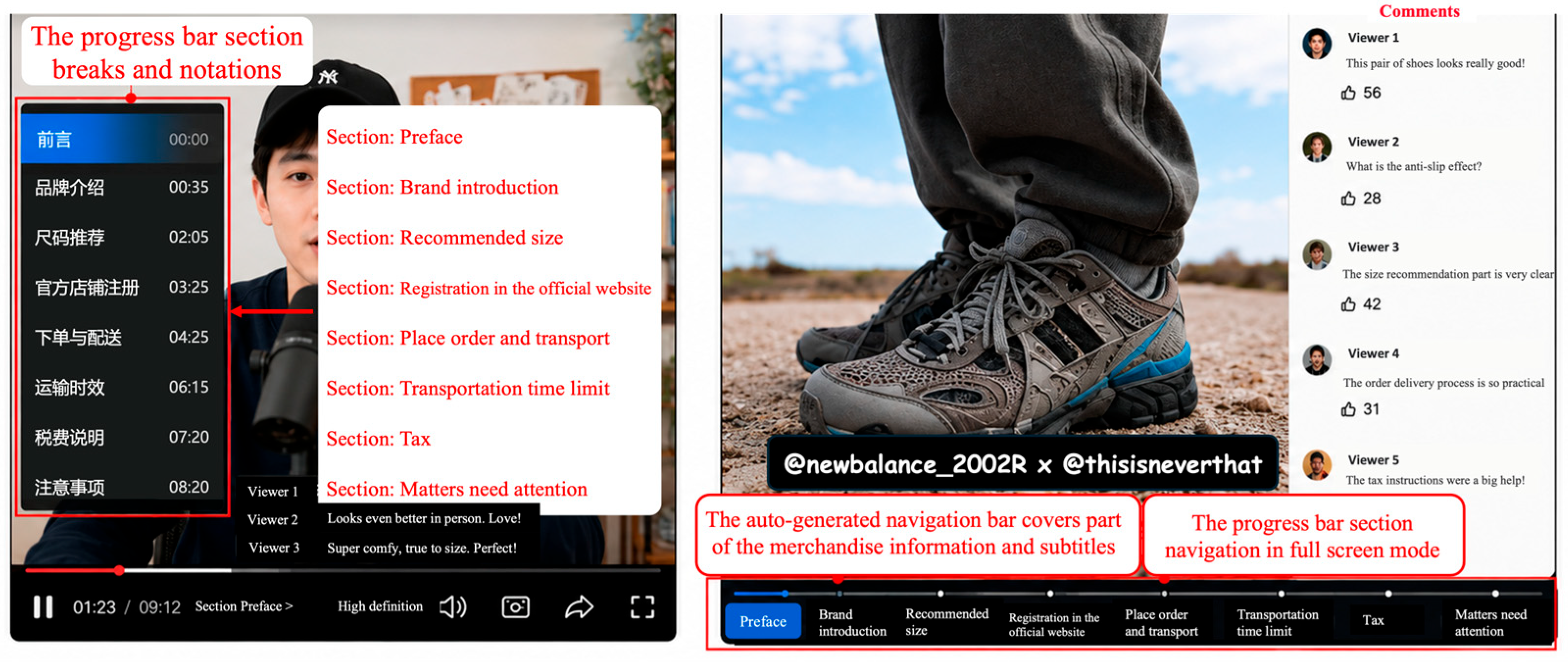
Chapter Progress Bar. On Bilibili, chapter progress bars, whether self-designed by influencers or automatically generated through the platform’s slicer function, visually divide mid-to-long-form videos into labeled sections (see Figure 4). This structural aid allows viewers to quickly locate content of interest, reducing the time cost associated with navigating longer videos. As a peripheral cue [43], chapter segmentation enhances the perceived utility and efficiency of video consumption, thereby increasing viewers’ perceived value. Given its role in facilitating selective attention and minimizing cognitive effort, we expect chapter progress bars to positively influence consumer engagement.
H11. 
Chapter progress bars have a positive impact on consumer engagement.

2.2.4. Timing Characteristic (When)

Golden Period. Although the golden period (Friday afternoon through the weekend) corresponds to peak platform traffic, it also brings heightened competition due to a flood of new uploads from multiple influencers. While this may increase overall visibility, the saturated content environment dilutes individual video attention, limiting the incremental benefit for engagement. As a result, the timing advantage of the golden period may not translate into higher consumer engagement.
H12. 
Golden period release has no significant effect on consumer engagement.

3. Methods

3.1. Data

3.1.1. Data Source

This study examines the drivers of consumer engagement in influencer marketing by analyzing video data from Bilibili, a leading Chinese video-sharing platform. Known for its interactive features (e.g., likes, comments, bullet chats, coins, collections, and reposts), Bilibili has evolved from an ACG-focused community into a Gen Z-oriented hub of mid-to-long-form user-generated content. Established in 2009, Bilibili reached 102 million daily active users (DAU) in the first quarter of 2024, with users spending an average of 105 min on the platform [44]. Focusing on the fashion sector—where influencer marketing is most prominent, particularly among FMCG brands—we collected video content with recognizable brand exposure, reflecting sponsored video campaigns typical of this vertical. Similar to prior studies examining sponsored videos on Bilibili [22], we used Python 3.9 to collect engagement indicators and control variables from publicly accessible Bilibili video pages and uploader profiles.

3.1.2. In-Depth Interviews

To inform the empirical design, we conducted ten semi-structured interviews using purposive sampling with key stakeholders: four digital marketing experts, three fashion influencers on Bilibili, and three active viewers. Interviewees were selected based on their direct experience with sponsored video campaigns on Bilibili, including marketers responsible for influencer collaborations, influencers with sponsored content experience and varying follower scales, and active viewers with extensive experience consuming fashion-related content. Each interview lasted at least 45 min. These interviews provided insights into industry practices, influencer selection criteria, and campaign evaluation mechanisms (see Supplementary Files S1–S3). The findings helped identify valid indicators of branding effort and shaped the sampling framework for subsequent data analysis.

3.1.3. Data Collection

Based on insights from in-depth interviews, we applied a set of screening criteria to identify videos that best reflect influencer-driven brand promotion. First, we included only those influencers with more than 10,000 followers to distinguish professional key opinion leaders (KOLs) from general users or key opinion customers (KOCs), who typically lack video-based promotional capacity. To ensure the data reflected current and relevant engagement, only influencers who uploaded content during the week of 10–16 January 2022, were considered. We used a one-week sampling window to construct a cross-sectional dataset in which videos were observed under the same platform and market conditions. The selected week was a regular week without major public holidays or shopping festivals, which helps reduce abnormal traffic fluctuations. In line with standard marketing evaluation practices, we tracked engagement outcomes for at least 30 days post-release, capturing the full interaction cycle. To further isolate potential branding efforts, we retained videos with more than 10,000 views, as these are more likely to involve commercial exposure. Finally, given that Bilibili emphasizes mid-to-long-form content while short-form videos are often directed to platforms like Douyin, we restricted our sample to videos exceeding five minutes in duration. Applying these criteria yielded a final dataset of 457 videos. Using Python, we extracted engagement metrics—including likes, comments, coins, bullet chats, shares, and collections—along with influencer follower counts and video length as control variables. Supplementary File S5 presents the descriptive statistics of the final sample. All variables used in the main regression models had complete observations after screening, and no additional observations were excluded because of missing values (N = 457).

3.2. Variables and Measurements

3.2.1. Dependent Variables

The dependent variables, including likes, comments, bullet chats (live comments), coins, collections, and reposts, were extracted from publicly accessible Bilibili video pages using Python. These indicators capture observable consumer engagement behaviors generated by each sponsored video. Following prior research on digital engagement behavior [22], we constructed aggregate engagement as the sum of likes, comments, bullet chats, coins, collections, and reposts to capture the overall volume of engagement activity directed toward the focal video.
Because the six engagement indicators are count variables and exhibit substantial right skewness, we further examined their dimensionality using log(x + 1)-transformed and standardized indicators. This transformation is appropriate for count-based behavioral measures because it reduces the influence of extreme observations while retaining zero values and preserving the relative ordering of engagement levels. The dimensionality analysis supported a clear one-factor structure. The KMO statistic was 0.883, and Bartlett’s test of sphericity was significant, χ2(15) = 2808.289, p < 0.001. Only the first eigenvalue exceeded 1 (eigenvalue = 4.658), and the first factor explained 77.64% of the total variance. All six indicators loaded strongly on this factor, with loadings ranging from 0.801 to 0.942. Cronbach’s alpha was 0.942.
These results indicate that the six behaviors exhibit a strong common engagement dimension. Accordingly, we retain aggregate engagement as the main dependent variable and interpret it as the overall volume of observable consumer engagement activity directed toward the focal sponsored video. Full diagnostic results are reported in Supplementary File S8.

3.2.2. Independent and Control Variables

Several independent variables reflecting subjective perceptions (e.g., perceived expertise, hedonic appeal, practical knowledge) and platform-specific features embedded within the video (e.g., interaction plug-ins and progress bar signposting) could not be directly retrieved and thus required manual coding.
To capture these dimensions, we recruited 101 independent coders who were active Bilibili users and regular viewers of fashion-related content. Coders were recruited from a large university and selected based on their familiarity with Bilibili and regular consumption of fashion-related videos, ensuring familiarity with the platform context and content genre under evaluation. Each coder assessed a small subset of 4–5 videos, and each video was independently evaluated by two coders. All coders received standardized training, followed a detailed coding protocol, and were blind to the study’s hypotheses.
Inter-rater reliability was evaluated using intraclass correlation coefficients (ICC). As reported in Table 2, all manually coded variables demonstrated excellent agreement, with ICC values ranging from 0.945 to 0.979. For subjective rating scales, the average of the two coders’ scores was used to construct the final measure. For objective observations, any discrepancies were resolved through adjudication based on the predefined coding protocol and verification against the original video content. Table 2 presents the definitions and measurements of all variables, while detailed coding instructions are provided in Supplementary File S4.

3.3. Models

The dependent variables comprising individual engagement metrics such as likes, comments, reposts, collects, live comments, and coins along with their aggregate sum consist of non-negative integers representing count data. These variables represent independent events that do not follow a normal distribution. Preliminary analysis revealed that the distribution of total engagement is long-tailed with high variability, suggesting overdispersion.
Given that the variance of the response variable significantly exceeds its mean, the equidispersion assumption of Poisson regression is violated. Consequently, a negative binomial (NB) regression model was adopted, as it incorporates a latent heterogeneity term to account for overdispersion. For each video i, the model is specified as follows:
log ( Y i ) = β 0 + β 1 E x p e r t i s e i + β 2 B r a n d   c o n t r o l i + β 3 P r o m o t i o n a l   i n c e n t i v e i + β 4 P r a c t i c a l   k n o w l e d g e i + β 5 H e d o n i c   a p p e a l i + β 6 C o m p r a t i v e   s t r a t e g y i + β 7 M e s s a g e   s i d e d n e s s i + β 8 S p o n s o r s h i p   d i s c l o s u r e i + β 9 I n t e r a c t i o n   s i g n a l i + β 10 I n t e r a c t i o n   a d d i n i + β 11 P r o g r e s s   b a r   s i g n p o s t i n g i + β 12 G o l d e n   p e r i o d i + β 13 N .   o f   F o l l o w e r s i + β 14 V i d e o   l e n g t h i
where Y i refers to the number of engagements video i received.

3.4. Results and Discussion

Diagnostic tests using Variance Inflation Factors (VIFs) and tolerance levels indicated no significant multicollinearity issues. However, the correlation between expertise and practical knowledge was 0.58, considered moderately high. To ensure estimate stability, separate regression models were constructed using a backward stepwise approach.
As shown in Table 3, all models yielded consistent results regarding the direction and significance of the coefficients. Furthermore, the models exhibited negligible variations in goodness-of-fit statistics, including Deviance/df, AIC, BIC, and the Likelihood Ratio Chi-Square value. Robustness checks were also performed by redefining the dependent variable and adjusting for platform-specific mechanical relationships (see Supplementary Files S6 and S7).
Control variables (followers and video length) were significantly positive (p < 0.01), confirming that a larger fandom and longer duration facilitate greater engagement exposure. Overall, four main predictors significantly drive engagement: hedonic appeal, comparative strategy, message sidedness, and interaction signals.
  • Who
Influencer expertise was not significant (β = −9.318 × 10⁻⁵), with an incidence rate ratio close to 1, rejecting H1. This may reflect the platform’s Gen Z-oriented UGC culture. On Bilibili, influencers, despite their commercial role, are still primarily perceived as fellow users and product users rather than as authoritative experts. Viewers tend to value genuine sharing, real usage experience, and feedback from an equal consumer perspective. As a result, they are more likely to treat favored influencers as relatable peers than as distant professionals. This pattern also aligns with current influencer selection logic, in which brands may prioritize fit with the target audience over professional expertise. Greater professionalism may reduce perceived closeness and identification, whereas engagement is more likely to occur when the influencer–viewer relationship feels socially balanced and friend-like.
  • What
Brand control was not statistically significant (β = −0.006), rejecting H2. This likely reflects Gen Z users’ relatively low sensitivity to sponsored content on Bilibili. Because sponsored videos are a common and accepted monetization format on the platform, users are generally familiar with influencer–brand collaborations and do not appear to react strongly against commercial intent. Although the coefficient is negative, its magnitude is very small, suggesting little backlash toward perceived brand presence.
Similarly, promotional incentive showed a non-significant negative coefficient (β = −0.137), rejecting H3. While coupons, giveaways, or discount codes may increase perceived benefit, they are usually presented directly to all viewers through video descriptions or pinned comments and therefore do not require engagement as a prerequisite. Interested viewers may also leave the platform to redeem the offer, reducing subsequent engagement within Bilibili. In addition, promotional incentive is positively correlated with brand control (r = 0.219, p < 0.01), suggesting that it also serves as a cue of commercial intent, which helps explain its similar pattern of insignificance.
Practical knowledge was also statistically insignificant (β = −0.011), rejecting H4. Its incidence rate ratio is close to 1, indicating a negligible effect on total engagement. This may partly reflect its moderately high correlation with expertise (r = 0.580, p < 0.01), but it also fits the entertainment-oriented nature of Bilibili. Users may appreciate useful information, yet overly informational content may be less effective in stimulating engagement when leisure and enjoyment are primary motives.
By contrast, hedonic appeal significantly increased engagement (p < 0.001), supporting H5. Creative thematic settings can provide novel viewing experiences, evoke emotional resonance, and enhance perceived hedonic value. This finding is consistent with prior works, who similarly found that hedonic value significantly drives engagement, whereas functional value does not [9].
  • How
Both comparative strategy (β = 0.218, p < 0.05) and message sidedness (β = 0.252, p < 0.05) are positively associated with engagement, supporting H6 and H7. These results suggest that viewers respond more favorably to messages perceived as balanced, objective, and authentic. Comparative and two-sided messages may enhance trust because they appear less tightly controlled by brands, which are typically reluctant to present negative product information. Consistent with this interpretation, message sidedness is negatively correlated with brand control (r = −0.216, p < 0.01), indicating that highly controlled brand messages are more likely to be one-sided.
Sponsorship disclosure is not significant, although its coefficient is negative, rejecting H8. A clear disclosure makes commercial intent more explicit, but Gen Z users on Bilibili appear relatively accustomed to sponsored content and therefore do not react strongly against it. This interpretation is consistent with the positive correlation between sponsorship disclosure and brand control (r = 0.435, p < 0.01), which suggests that disclosure functions as another cue of brand presence. Thus, despite the negative sign, disclosure does not materially reduce engagement.
Interaction signal is marginally significant (β = 0.048, p < 0.1), supporting H9. This is consistent with prior works who found that encouraging users to respond can increase engagement [30]. By contrast, interaction add-in is not significant, rejecting H10, although its coefficient remains positive (β = 0.091). A likely explanation is that the feature was still relatively new and not fully optimized, whereas verbal prompts are more natural and persuasive than interface-based cues in encouraging viewer response.
Progress bar signposting is also not significant, rejecting H11, and its coefficient is negative. This may reflect two possibilities. First, progress bars give viewers an immediate preview of the video structure, which may reduce curiosity and encourage early exit if the upcoming content appears uninteresting. Second, as a newly introduced feature, progress bar signposting may not yet have been well integrated into the viewing experience and may even interfere with content display. Together, these results suggest that communication style matters more than technical design features in stimulating engagement.
  • When
Lastly, posting during the platform’s golden period is not statistically significant, although the coefficient is positive. This suggests that higher traffic may increase exposure but does not necessarily translate into active engagement. Unlike views, which reflect passive consumption, engagement requires additional user initiative. As a result, the benefits of higher traffic may be offset by intensified competition among newly uploaded videos during peak periods. This finding supports our initial caution that the most crowded posting window may not always be the most effective for generating engagement. Table 4 summarizes the results of the hypothesis tests.

3.5. Robustness Check

To enhance confidence in the robustness of our findings, we conducted additional analyses by modifying the model specification and redefining the dependent variable, with detailed results presented in Supplementary File S6. First, to address potential omitted variable bias, we incorporated two additional control variables: influencer gender and nationality. The negative binomial regression results remained consistent, with hedonic appeal (p < 0.01), comparative strategy (p < 0.05), and message sidedness (p < 0.05) continuing to exert significant positive effects on engagement, while interaction signals maintained marginal significance (p < 0.1). Critically, the newly added controls (gender and nationality) were statistically insignificant, confirming that our core findings are not confounded by these demographic factors. Second, we re-specified the total engagement metric by adjusting for the platform’s automatic conversion feature, where two “coins” equate to one “like.” By subtracting half the number of coins from total likes to account for this mechanical relationship, we re-ran the analysis. These results further validated our primary conclusions, as the significance levels and coefficient directions of the key predictors remained unchanged, reinforcing the stability of our model. Collectively, these robustness checks provide strong assurance that our findings are not sensitive to model specification or measurement choices.

4. Discussion

4.1. Findings

This study uses negative binomial regression to examine the drivers of engagement in 457 fashion-related sponsored videos on Bilibili, a Gen Z-oriented mid-to-long-form video platform. Drawing on Grice’s theory of conversation [33] and the customer-perceived-value framework [14], we analyze engagement across four dimensions: influencer characteristics (Who), content message (What), content strategy (How), and timing (When), while controlling for follower count and video duration.
The findings reveal a clear pattern in this Bilibili sample: Gen Z engagement is driven more by content experience than by commercial cues, technical features, or posting schedules. Hedonic appeal is the strongest predictor of engagement, followed by comparative strategy, two-sided message framing, and verbal interaction cues. These results suggest that viewers are more likely to engage when sponsored content is entertaining, balanced, and explicitly inviting.
Another notable finding is that several factors commonly assumed to improve campaign performance do not significantly increase engagement. Brand control, promotional incentives, and sponsorship disclosure show no significant effects. Likewise, influencer expertise and practical knowledge do not predict higher overall engagement. These null findings suggest that Gen Z viewers on Bilibili respond less to professionalism or overt persuasion and more to relatability and communication style. Notably, practical knowledge does predict “collects,” indicating that informational value still matters for low-effort, utility-oriented engagement.
A third finding concerns the limited role of platform mechanics and timing. Interaction add-ins, progress bar signposting, and golden-period posting do not significantly affect engagement. This suggests that how the message is communicated matters more than when it is posted or which technical tools accompany it. Viewers appear to respond more strongly to authentic verbal cues than to interface-based prompts, and peak traffic does not automatically translate into interaction when attention is fragmented by content competition.

4.2. Theoretical Contributions

This research makes three key contributions to the influencer marketing, digital engagement, and Gen Z consumer literature. First, it integrates Grice’s (1975) conversational maxims with the customer-perceived-value framework [14] to explain engagement with influencer-sponsored videos. Pragmatic-advertising research to date has applied the Gricean toolkit one maxim at a time and largely against classical persuasion outcomes such as attitude or purchase intent—through assertive-language [24] and figurative-language [25] work testing the manner maxim, through two-sided message research grounded in the Quality maxim [35], and through native-ad [27] and influencer-ad [28] disclosure studies invoking the quantity maxim. The present integration moves beyond this fragmentation in three respects. It operationalizes all four maxims as a single Who–What–How–When predictor structure for the engagement-behavior outcome family; it connects the sender-side maxim structure to a receiver-side perceived-value calculus, making explicit how pragmatic features shape engagement by shifting viewers’ perceived benefits (functional, emotional, credibility, interaction) and costs (cognitive effort, distraction, psychological discomfort); and it extends the analysis to mid-to-long-form interactive sponsored video and to platform-native engagement behaviors such as coins and live comments. The findings suggest that Gen Z viewers are especially responsive to content that is emotionally engaging [38], relatable, balanced, and interaction-oriented [45]. In doing so, this study situates engagement behavior within the communicative and psychological logic of Gen Z-oriented social media environments.
Second, this study contextualizes the Who–What–How–When framework for mid-to-long sponsored videos by connecting influencer characteristics, content message, content strategy, and timing to specific engagement behaviors. By examining a richer and more interactive video setting, the framework explains how conversational features are operationalized through concrete video design choices, such as comparative strategy, message sidedness, interaction cues, plug-ins, and progress bar signposting. This provides a more fine-grained account of influencer effectiveness in mid-to-long-form video platform environments, where engagement depends not only on who delivers the message, but also on how the message is structured and experienced.
Third, this study introduces platform-specific variables such as interaction plug-ins and chapter progress bars and adopts a more comprehensive measure of engagement that includes not only likes, comments, and shares, but also native platform behaviors such as coins and live comments. This approach advances the literature by capturing the multifaceted and platform-embedded nature of Gen Z engagement, which is expressed not only through conventional social media metrics but also through behaviors shaped by the norms and affordances of interactive video platforms. As such, the study offers a more nuanced account of how Gen Z consumers respond to branded content in emerging social commerce settings.

4.3. Managerial Implications

This study offers practical implications for three key stakeholders seeking to engage Gen Z consumers through influencer marketing: platforms, brands, and influencers, especially in sponsored video campaigns on mid-to-long-form video platforms such as Bilibili.
For platforms, the findings suggest that adding new technical features alone is unlikely to increase engagement unless those features are intuitive and improve the viewing experience. The non-significant effects of interaction add-ins and progress bar signposting indicate that adoption depends not only on availability but also on usability and platform fit. Platforms should therefore refine these functions based on viewer and creator feedback. They may also improve campaign evaluation by providing more granular performance metrics, such as cost per like or cost per live comment.
For brands, the non-significance of brand control, promotional incentives, and sponsorship disclosure suggests that Gen Z users on Bilibili are relatively tolerant of commercial content when it is integrated naturally into the viewing experience. Rather than concealing sponsorship, brands should focus on embedding branded messages in ways that fit the platform’s communicative style. Because Bilibili is shaped by strong subcultural norms and distinctive interaction practices, effective campaigns should align with platform language, community expectations, and content genres rather than rely on overt persuasion.
For influencers, the results highlight the value of entertaining, relatable, and interaction-oriented content. Hedonic appeal is the strongest driver of engagement, while comparative strategy, two-sided messaging, and verbal interaction cues also improve performance. This suggests that influencers should embed branded messages into everyday or emotionally engaging scenarios, present products in a balanced way, and use direct verbal invitations to encourage participation. Compared with technical prompts, such communication-based strategies appear more effective in motivating Gen Z viewers to respond.

4.4. Limitations and Future Research Directions

This study has several limitations that suggest directions for future research. First, the analysis is conducted at the video level using publicly available data and therefore cannot link engagement behaviors to specific user profiles. Future research could collaborate with platforms to examine user-level motivations and audience heterogeneity more directly. Second, although this study incorporates four major predictor categories and several controls, it does not examine interaction effects or underlying mechanisms. Future studies could explore mediating or moderating processes such as trust, parasocial relationships, or perceived authenticity. Third, the engagement measures are based on interaction counts rather than the content of user responses. Future research could apply linguistic tools such as LIWC or NLP methods to analyze comment sentiment, thematic focus, or brand perception, thereby providing a richer understanding of consumer reactions and campaign effectiveness. Fourth, the data were collected during a specific period in early 2022, which may limit the temporal generalizability of the findings. Since then, Bilibili has continued to evolve, including growth in its user base, increasing commercialization, and the expansion of short-form video features [44]. Although the platform remains centered on user-generated video content and interactive engagement mechanisms, future research could examine whether the observed relationships remain stable under these evolving platform conditions. Relatedly, because the empirical setting is limited to a specific platform and observation window, the broader generalizability of the proposed framework remains to be further examined. Future studies could extend the framework to other platforms, product categories, video formats, user groups, and multi-period datasets to assess whether the same engagement logic applies across settings.

Supplementary Materials

The following supporting information can be downloaded at: https://www.mdpi.com/article/10.3390/jtaer21070212/s1, Supplementary File S1. In-depth Interview Outline; Supplementary File S2. Interview Result Summary; Supplementary File S3. Summarized interview transcripts; Supplementary File S4. Coding sheet for variable measurement; Supplementary File S5. Descriptive statistics; Supplementary File S6. Robustness Checks; Supplementary File S7. Extended Analysis; Supplementary File S8. Dimensionality Analysis of Engagement Indicators.

Author Contributions

Conceptualization, B.Y. and X.W.; methodology, B.Y. and X.W.; data curation, B.Y.; writing—original draft preparation, B.Y.; writing—review and editing, B.Y. and X.W. All authors have read and agreed to the published version of the manuscript.

Funding

This research was supported by the Fundamental Research Funds for the Central Universities (Grant number 222202622010).

Institutional Review Board Statement

According to Article 32 of the Measures for Ethical Review of Life Sciences and Medical Research Involving Human Subjects issued by the National Health Commission of the PRC (2023), research that “does not cause harm to the human body and does not involve sensitive personal information or commercial interests” is exempt from ethical review to reduce the unnecessary burden on researchers. Given that our interviews were non-interventional, posed minimal risk, and utilized fully de-identified data from professional consultants, they fall strictly within this legal exemption category.

Informed Consent Statement

The video data used in the quantitative analysis were collected from publicly available online sources. For the interview component, participants were informed of the research purpose, and their responses were anonymized; no personal identities or brand names are disclosed in the manuscript or Supplementary Materials.

Data Availability Statement

The raw data were collected from publicly accessible online sources. The processed data supporting the findings of this study are not publicly available due to privacy, confidentiality, and data-use restrictions, but may be made available from the corresponding author upon reasonable request.

Acknowledgments

During the preparation of this manuscript, the authors used ChatGPT 5.5, developed by OpenAI, for language editing and improving the clarity of expression. The authors have reviewed and edited the output and take full responsibility for the content of this publication.

Conflicts of Interest

The authors declare no conflicts of interest.

References

  1. Ismail, A.R.; Nguyen, B.; Chen, J.; Melewar, T.C.; Mohamad, B. Brand Engagement in Self-Concept (BESC), Value Consciousness and Brand Loyalty: A Study of Generation Z Consumers in Malaysia. Young Consum. 2021, 22, 112–130. [Google Scholar] [CrossRef]
  2. Rabbanee, F.K.K.; Lee, S.; Phau, I. Guest Editorial for the Young Consumers Special Issue on “Social Media, Cyberbullying and Gen Z”. Young Consum. Insight Ideas Responsible Mark. 2026, 27, 165–167. [Google Scholar] [CrossRef]
  3. Kay, S.; Mulcahy, R.; Parkinson, J. When Less Is More: The Impact of Macro and Micro Social Media Influencers’ Disclosure. J. Mark. Manag. 2020, 36, 248–278. [Google Scholar] [CrossRef]
  4. Tian, Z.; Dew, R.; Iyengar, R. Mega or Micro? Influencer Selection Using Follower Elasticity. J. Mark. Res. 2024, 61, 472–495. [Google Scholar] [CrossRef]
  5. Berger, J.; Kim, Y.D.; Meyer, R. What Makes Content Engaging? How Emotional Dynamics Shape Success. J. Consum. Res. 2021, 48, 235–250. [Google Scholar] [CrossRef]
  6. Tellis, G.J.; MacInnis, D.J.; Tirunillai, S.; Zhang, Y. What Drives Virality (Sharing) of Online Digital Content? The Critical Role of Information, Emotion, and Brand Prominence. J. Mark. 2019, 83, 1–20. [Google Scholar] [CrossRef]
  7. Lou, C.; Yuan, S. Influencer Marketing: How Message Value and Credibility Affect Consumer Trust of Branded Content on Social Media. J. Interact. Advert. 2019, 19, 58–73. [Google Scholar] [CrossRef]
  8. Xiao, M.; Wang, R.; Chan-Olmsted, S.M. Factors Affecting YouTube Influencer Marketing Credibility: A Heuristic-Systematic Model. J. Media Bus. Stud. 2018, 15, 188–213. [Google Scholar] [CrossRef]
  9. Hughes, C.; Swaminathan, V.; Brooks, G. Driving Brand Engagement Through Online Social Influencers: An Empirical Investigation of Sponsored Blogging Campaigns. J. Mark. 2019, 83, 78–96. [Google Scholar] [CrossRef]
  10. Odoom, R. Digital Content Marketing and Consumer Brand Engagement on Social Media- Do Influencers’ Brand Content Moderate the Relationship? J. Mark. Commun. 2025, 31, 491–514. [Google Scholar] [CrossRef]
  11. Li, Y.; Xie, Y. Is a Picture Worth a Thousand Words? An Empirical Study of Image Content and Social Media Engagement. J. Mark. Res. 2020, 57, 1–19. [Google Scholar] [CrossRef]
  12. Liu, X.; Shi, S.W.; Teixeira, T.; Wedel, M. Video Content Marketing: The Making of Clips. J. Mark. 2018, 82, 86–101. [Google Scholar] [CrossRef]
  13. Munaro, A.C.; Hübner Barcelos, R.; Francisco Maffezzolli, E.C.; Santos Rodrigues, J.P.; Cabrera Paraiso, E. To Engage or Not Engage? The Features of Video Content on YouTube Affecting Digital Consumer Engagement. J. Consum. Behav. 2021, 20, 1336–1352. [Google Scholar] [CrossRef]
  14. Zeithaml, V.A. Consumer Perceptions of Price, Quality, and Value: A Means-End Model and Synthesis of Evidence. J. Mark. 1988, 52, 2–22. [Google Scholar] [CrossRef] [PubMed]
  15. Elsharnouby, T.H.; Shaalan, A.; Elsharnouby, M.H.; Elbedweihy, A.M. Boosting Brand Image through Influencers: Investigating the Role of Influencer Credibility and Consumer–Influencer Similarity. J. Mark. Commun. 2025, 1–27. [Google Scholar] [CrossRef]
  16. Martínez-López, F.J.; Anaya-Sánchez, R.; Fernández Giordano, M.; Lopez-Lopez, D. Behind Influencer Marketing: Key Marketing Decisions and Their Effects on Followers’ Responses. J. Mark. Manag. 2020, 36, 579–607. [Google Scholar] [CrossRef]
  17. Verlegh, P.W.J.; Ryu, G.; Tuk, M.A.; Feick, L. Receiver Responses to Rewarded Referrals: The Motive Inferences Framework. J. Acad. Mark. Sci. 2013, 41, 669–682. [Google Scholar] [CrossRef]
  18. Berger, J.; Milkman, K.L. What Makes Online Content Viral? J. Mark. Res. 2012, 49, 192–205. [Google Scholar] [CrossRef]
  19. Ashley, C.; Tuten, T. Creative Strategies in Social Media Marketing: An Exploratory Study of Branded Social Content and Consumer Engagement. Psychol. Mark. 2015, 32, 15–27. [Google Scholar] [CrossRef]
  20. Chandy, R.K.; Tellis, G.J.; Macinnis, D.J.; Thaivanich, P. What to Say When: Advertising Appeals in Evolving Markets. J. Mark. Res. 2001, 38, 399–414. [Google Scholar] [CrossRef]
  21. Pizzutti, C.; Basso, K.; Albornoz, M. The Effect of the Discounted Attribute Importance in Two-Sided Messages. Eur. J. Mark. 2016, 50, 1703–1725. [Google Scholar] [CrossRef]
  22. Chen, L.; Yan, Y.; Smith, A.N. What Drives Digital Engagement with Sponsored Videos? An Investigation of Video Influencers’ Authenticity Management Strategies. J. Acad. Mark. Sci. 2023, 51, 198–221. [Google Scholar] [CrossRef]
  23. Guo, Y.; Zhang, Y.; Goh, K.-Y.; Peng, X. Can Social Technologies Drive Purchases in E-Commerce Live Streaming? An Empirical Study of Broadcasters’ Cognitive and Affective Social Call-to-Actions. Prod. Oper. Manag. 2025, 34, 4039–4059. [Google Scholar] [CrossRef]
  24. Kronrod, A.; Grinstein, A.; Wathieu, L. Enjoy! Hedonic Consumption and Compliance with Assertive Messages. J. Consum. Res. 2012, 39, 51–61. [Google Scholar] [CrossRef]
  25. Kronrod, A.; Danziger, S. “Wii Will Rock You!” The Use and Effect of Figurative Language in Consumer Reviews of Hedonic and Utilitarian Consumption. J. Consum. Res. 2013, 40, 726–739. [Google Scholar] [CrossRef] [PubMed]
  26. Goodrich, K.; Schiller, S.Z.; Galletta, D. Consumer Reactions to Intrusiveness of Online-Video Advertisements: Do Length, Informativeness, and Humor Help (or Hinder) Marketing Outcomes? J. Advert. Res. 2015, 55, 37–50. [Google Scholar] [CrossRef]
  27. Wojdynski, B.W.; Evans, N.J. Going Native: Effects of Disclosure Position and Language on the Recognition and Evaluation of Online Native Advertising. J. Advert. 2016, 45, 157–168. [Google Scholar] [CrossRef]
  28. Evans, N.J.; Phua, J.; Lim, J.; Jun, H. Disclosing Instagram Influencer Advertising: The Effects of Disclosure Language on Advertising Recognition, Attitudes, and Behavioral Intent. J. Interact. Advert. 2017, 17, 138–149. [Google Scholar] [CrossRef]
  29. Lacap, J.P.; Discartin, C.M.; Salac, R.A.K.; Del Rosario, J.A.M.R. How TikTok Videos from Local Fashion Brands Influence Generation Z’s Purchase Intentions: The Roles of Attitude and Trust. Young Consum. 2025, 26, 1069–1089. [Google Scholar] [CrossRef]
  30. Rooderkerk, R.P.; Pauwels, K.H. No Comment?! The Drivers of Reactions to Online Posts in Professional Groups. J. Interact. Mark. 2016, 35, 1–15. [Google Scholar] [CrossRef]
  31. Cooke, A.D.J.; Meyvis, T.; Schwartz, A. Avoiding Future Regret in Purchase-Timing Decisions. J. Consum. Res. 2001, 27, 447–459. [Google Scholar] [CrossRef] [PubMed]
  32. Blut, M.; Chaney, D.; Lunardo, R.; Mencarelli, R.; Grewal, D. Customer Perceived Value: A Comprehensive Meta-Analysis. J. Serv. Res. 2024, 27, 501–524. [Google Scholar] [CrossRef]
  33. Grice, H.P. Logic and Conversation. Syntax Semant. 1975, 3, 41–58. [Google Scholar] [CrossRef]
  34. Fan, L.; Li, X.; Jiang, Y. Room for Opportunity: Resource Scarcity Increases Attractiveness of Range Marketing Offers. J. Consum. Res. 2019, 46, 82–98. [Google Scholar] [CrossRef]
  35. Uribe, R.; Buzeta, C.; Velásquez, M. Sidedness, Commercial Intent and Expertise in Blog Advertising. J. Bus. Res. 2016, 69, 4403–4410. [Google Scholar] [CrossRef]
  36. Gui, Y.; Huang, L. Willingness to Share, Comment, like: Mediating Role of Influencer Credibility and Parasocial Relationship in Gratifying Generation Z Follower Needs. Young Consum. 2025, 26, 1046–1068. [Google Scholar] [CrossRef]
  37. Lee, J.; Hong, I.B. Predicting Positive User Responses to Social Media Advertising: The Roles of Emotional Appeal, Informativeness, and Creativity. Int. J. Inf. Manag. 2016, 36, 360–373. [Google Scholar] [CrossRef]
  38. Nguyen, D.H.; Hoang, L.C. Customers’ Engagement with Virtual Influencers: The Roles of Parasocial Relationship, Emotional Attachment. Young Consum. Insight Ideas Responsible Mark. 2025, 27, 109–129. [Google Scholar] [CrossRef]
  39. Eisend, M. Understanding Two-Sided Persuasion: An Empirical Assessment of Theoretical Approaches. Psychol. Mark. 2007, 24, 615–640. [Google Scholar] [CrossRef]
  40. Eisend, M. Two-Sided Advertising: A Meta-Analysis. Int. J. Res. Mark. 2006, 23, 187–198. [Google Scholar] [CrossRef]
  41. Jung, J.; Bapna, R.; Golden, J.M.; Sun, T. Words Matter! Toward a Prosocial Call-to-Action for Online Referral: Evidence from Two Field Experiments. Inform. Syst. Res. 2020, 31, 16–36. [Google Scholar] [CrossRef]
  42. Petty, R.E.; Cacioppo, J.T.; Schumann, D. Central and Peripheral Routes to Advertising Effectiveness: The Moderating Role of Involvement. J. Consum. Res. 1983, 10, 135. [Google Scholar] [CrossRef] [PubMed]
  43. Li, Y.; Liu, C.; Ji, M.; You, X. Shape of Progress Bar Effect on Subjective Evaluation, Duration Perception and Physiological Reaction. Int. J. Ind. Ergon. 2021, 81, 103031. [Google Scholar] [CrossRef]
  44. Bilibili Inc. 2025 Annual Report. 2026. Available online: https://ir.bilibili.com/media/1z2kdszd/bilibili-inc-2025-annual-report_en.pdf (accessed on 1 April 2026).
  45. Suprawan, L.; Oentoro, W.; Suttharattanagul, S.L. A Test of Moderated Serial Mediation Model of Compulsive Buying among Gen Z Fandoms Moderated by Trash Talking. Young Consum. Insight Ideas Responsible Mark. 2024, 27, 207–226. [Google Scholar] [CrossRef]
Figure 1. A typical sponsored video content.
Jtaer 21 00212 g001
Figure 2. Conceptual framework.
Jtaer 21 00212 g002
Figure 3. Floating add-in shortcut in full-screen mode and multiple-choice voting and rating add-in.
Jtaer 21 00212 g003
Figure 4. Progress bar slicer signpost and annotated progress bar in full-screen mode.
Jtaer 21 00212 g004
Table 1. Summary of variables and the cost–benefit trade-off assessment.
Variable BenefitsCostsEngagement
Influencer characteristics (Who)
Expertise+functional benefit +
Content message (What)
Brand control +psychological cost
Promotional incentives+economic benefit−monetary cost+
Practical knowledge+functional benefit +
Hedonic appeal+psychological benefit +
Content strategies (How)
Comparative strategy+functional benefit−energy cost +
Message sidedness+functional benefit +
Sponsorship disclosure +psychological cost
Interaction signal+psychological benefit +
Interaction add-in −energy cost
Progress bar signposting −time cost +
Timing characteristic (When)
Golden time N.A.
Table 2. Variables and measurement.
VariablesDefinitionMeasurementICC
Dependent Variable
EngagementConsumer engagement behavior in online video platforms.Aggregate countN/A
Independent Variables
Who
ExpertiseExpertise refers to the perceived professionalism and level of experience of the influencer of the posted video.Three-item scale0.946
What
Brand ControlThe perceived brand presence and commercial orientation of the video content.Three-item scale0.945
Promotional Incentivesor the possibility of winning free goods (lucky draw) are regarded as promotional incentives.Binary indicator0.979
Practical KnowledgeThe perceived practical utility, usefulness, or informativeness of the video, including dressing skills, makeup techniques, skincare knowledge, product screening, and recommendations.Three-item scale0.955
Hedonic AppealThe enjoyment and entertainment a potential consumer experiences from watching the video.Three-item scale0.951
How
Comparative StrategyWhether the influencer compares the focal product with a competitor product.Binary indicator0.947
Message SidednessWhether the video contains either one-sided information (advantages only) or two-sided information (both advantages and disadvantages).Binary indicator0.959
Sponsorship DisclosureWhether the influencer discloses the partnership or sponsorship in the video or accompanying notes.Binary indicator0.951
Interaction SignalThe number of times the influencer verbally encourages audience interaction.Count variable0.970
Interaction Add-inWhether the video contains built-in interaction tools such as voting, rating, or one-click engagement buttons.Binary indicator0.961
Chapter Progress Bar Whether a clear signpost in the progress bar is inserted in the video for navigation and information processing.Binary indicator0.978
When
Golden PeriodHigh traffic on Bilibili is observed on Friday afternoon and night, Saturday, and Sunday, which are regarded as the golden period.Archival variableN/A
Note. Engagement was operationalized as the sum of likes, collections, coins, comments, live comments, and reposts. All three-item scales were measured on five-point Likert scales (1 = strongly disagree, 5 = strongly agree). Binary indicators were coded as 1 = presence and 0 = absence. ICC = intraclass correlation coefficient.
Table 3. Model results.
Engagement
(1)(2)(3)
(Intercept)6.869 ***
(0.3190)
6.870 ***
(0.3534)
6.869 ***
(0.3536)
Who
   Expertise −0.007
(0.0665)
−9.318 × 10⁻⁵
(0.0825)
What
   Brand control−0.006
(0.0583)
−0.005
(0.0578)
−0.006
(0.0583)
   Promotional incentive−0.137
(0.1650)
−0.141
(0.1632)
−0.137
(0.1655)
   Practical knowledge−0.011
(0.0591)
−0.011
(0.0733)
   Hedonic appeal0.273 ***
(0.0663)
0.270 ***
(0.0630)
0.273 ***
(0.0665)
How
   Comparative strategy0.218 **
(0.1052)
0.217 **
(0.1052)
0.218 **
(0.1053)
   Message sidedness0.252 **
(0.1163)
0.246 **
(0.1098)
0.252 **
(0.1163)
   Sponsorship disclosure−0.119
(0.1643)
−0.120
(0.164)
−0.119
(0.1643)
   Interaction signal0.048 *
(0.0282)
0.048 *
(0.0284)
0.048 *
(0.0284)
   Interaction add-in0.091
(0.1228)
0.090
(0.1228)
0.091
(0.1233)
   Chapter progress bar−0.080
(0.1324)
−0.079
(0.1329)
−0.080
(0.1330)
When
   Golden period0.099
(0.0993)
0.099
(0.0997)
0.099
(0.0997)
Control variables
   N. of followers2.77 × 10−6 ***
(2.32 × 10⁻⁷)
2.77 × 10⁻⁶ ***
(2.30 × 10⁻⁷)
2.766 × 10⁻⁶ ***
(2.3262 × 10⁻⁷)
   Video length−0.010
(0.0091)
−0.010
(0.0091)
−0.010
(0.0091)
Likelihood Ratio Chi-Square353.253 ***353.231 ***353.253 ***
Deviance/df1.2141.2141.217
AIC8795.6498795.6728797.649
AICC8796.6008796.6228798.738
BIC8853.3958853.4188859.520
CAIC8867.3958867.4188874.520
Notes. All columns control for N. of followers and video length; model (1) excludes variable expertise retaining practical knowledge, model (2) excludes variable practical knowledge retaining expertise. Coefficients are not transformed into exponential parameter estimates, and standard errors are in parentheses. Likelihood Ratio Chi-Square is in a “larger-is-better” form; information criteria (deviance/df, AIC, AICC, BIC, CAIC) are in “smaller-is-better” form. *** p < 0.01, ** p < 0.05, * p < 0.1.
Table 4. Summary of hypothesis testing results.
HypothesisExpected EffectResult in Main ModelConclusion
H1 ExpertisePositiveNot significantNot supported
H2 Brand controlNegativeNot significantNot supported
H3 Promotional incentivePositiveNot significantNot supported
H4 Practical knowledgePositiveNot significantNot supported
H5 Hedonic appealPositivePositive, p < 0.01Supported
H6 Comparative strategyPositivePositive, p < 0.05Supported
H7 Message sidednessPositivePositive, p < 0.05Supported
H8 Sponsorship disclosureNegativeNot significantNot supported
H9 Interaction signalPositivePositive, p < 0.10Marginally supported
H10 Interaction add-inPositiveNot significantNot supported
H11 Chapter progress barPositiveNot significantNot supported
H12 Golden periodNo significant effectNot significantSupported
Disclaimer/Publisher’s Note: The statements, opinions and data contained in all publications are solely those of the individual author(s) and contributor(s) and not of MDPI and/or the editor(s). MDPI and/or the editor(s) disclaim responsibility for any injury to people or property resulting from any ideas, methods, instructions or products referred to in the content.