1. Introduction
Live-streaming commerce has rapidly emerged as a prominent form of digital retailing that integrates synchronous engagement, entertainment, and commercial exchange within a single service encounter [
1]. Unlike traditional e-commerce formats, live-streaming commerce relies heavily on human mediation, with live streamers serving as the primary interface between products and consumers [
2]. Through live video, instant communication, and ongoing interaction, live streamers simultaneously perform the roles of product presenters, service providers, and relational partners [
3,
4]. Consumer evaluations in live-streaming commerce are thus shaped not only by product attributes but also by the perceived qualities and conduct of the live streamer [
5].
Existing research has demonstrated that live streamers significantly influence consumer trust, engagement, and purchase intention through factors such as credibility [
6], expertise [
7], attractiveness [
8], and parasocial interaction [
9]. While this research offers valuable insights, it has largely conceptualized live streamers in terms of discrete, independently examined attributes or behavioral cues. Such an approach risks overlooking the broader identity structures through which streamers consistently present themselves and generate meaning, structures that cannot be reduced to isolated traits.
As live-streaming commerce becomes increasingly competitive and professionalized, live streamers face growing pressure to differentiate themselves and sustain long-term audience relationships [
10]. In practice, many streamers actively cultivate a recognizable personal brand, strategically shaping how they appear, communicate, and interact with viewers [
8,
11]. Yet academic research has yet to provide a theoretically coherent account of what constitutes personal brand identity in this context. Existing personal branding scholarship has predominantly treated identity as a self-directed, producer-driven process [
12,
13]. This perspective offers limited insight into how audience co-participation and dynamic live engagement reshape identity construction in interactive retail environments.
Brand identity theory, and in particular Kapferer’s [
14] Brand Identity Prism, offers a more structured point of departure. The Prism integrates six facets, namely personality, physique, culture, relationship, reflection, and self-image, into a holistic account of how brands define themselves and communicate meaning to audiences. Its emphasis on the dynamic interaction between brand expression and audience perception makes it especially relevant for interactive service contexts. However, the framework was developed primarily for corporate and product brands; its applicability to personal brands in real-time digital environments has not been systematically examined.
Against this backdrop, this study adopts a qualitative, theory-guided approach to explore how live streamers conceptualize and construct their personal brand identity. Guided by Kapferer’s Prism as a theoretical framework rather than a model for direct empirical validation, the study allows identity dimensions to emerge from streamer accounts while remaining theoretically anchored. Specifically, it addresses the following research question: What are the core dimensions of personal brand identity as conceptualized and enacted by live streamers in live-streaming commerce, and in what ways do these dimensions extend, deepen, or reconfigure existing brand identity theory?
This study makes three interrelated theoretical contributions, stated with deliberate precision. First, it demonstrates that four of Kapferer’s six original facets require contextual deepening rather than replacement in live-streaming commerce, where real-time interaction, continuous audience feedback, and platform affordances substantively reshape how identity dimensions operate. Second, it proposes a reconceptualization of Kapferer’s reflection and self-image facets into a unified construct named Audience-Aligned Identity. This revision is based on the theoretical grounds that these two processes are structurally inseparable in synchronous interactive retail environments. Third, this study contributes to influencer marketing and digital retail research by identifying Content-Oriented Identity as a dimension that finds no direct structural equivalent in Kapferer’s [
14] original Brand Identity Prism, while extending and recontextualizing prior observations about content in personal branding research. While prior personal branding research has addressed the role of content as a vehicle for audience reach and self-promotion [
15] or as a professional positioning tool for career advancement [
16], neither account theorizes content production as a constitutive mechanism of identity formation in the specific sense advanced here. The present study extends those accounts by demonstrating how content functions as the structural medium through which a streamer’s values, expertise, and brand legitimacy are enacted, sustained, and evaluated over time in synchronous, commercially consequential interactive environments. This theorization challenges the prevailing emphasis on personality and aesthetics as the primary drivers of streamer credibility and invites future research to examine content coherence, thematic consistency, and audience evaluation as key variables in the live streamer–consumer relationship.
4. Findings
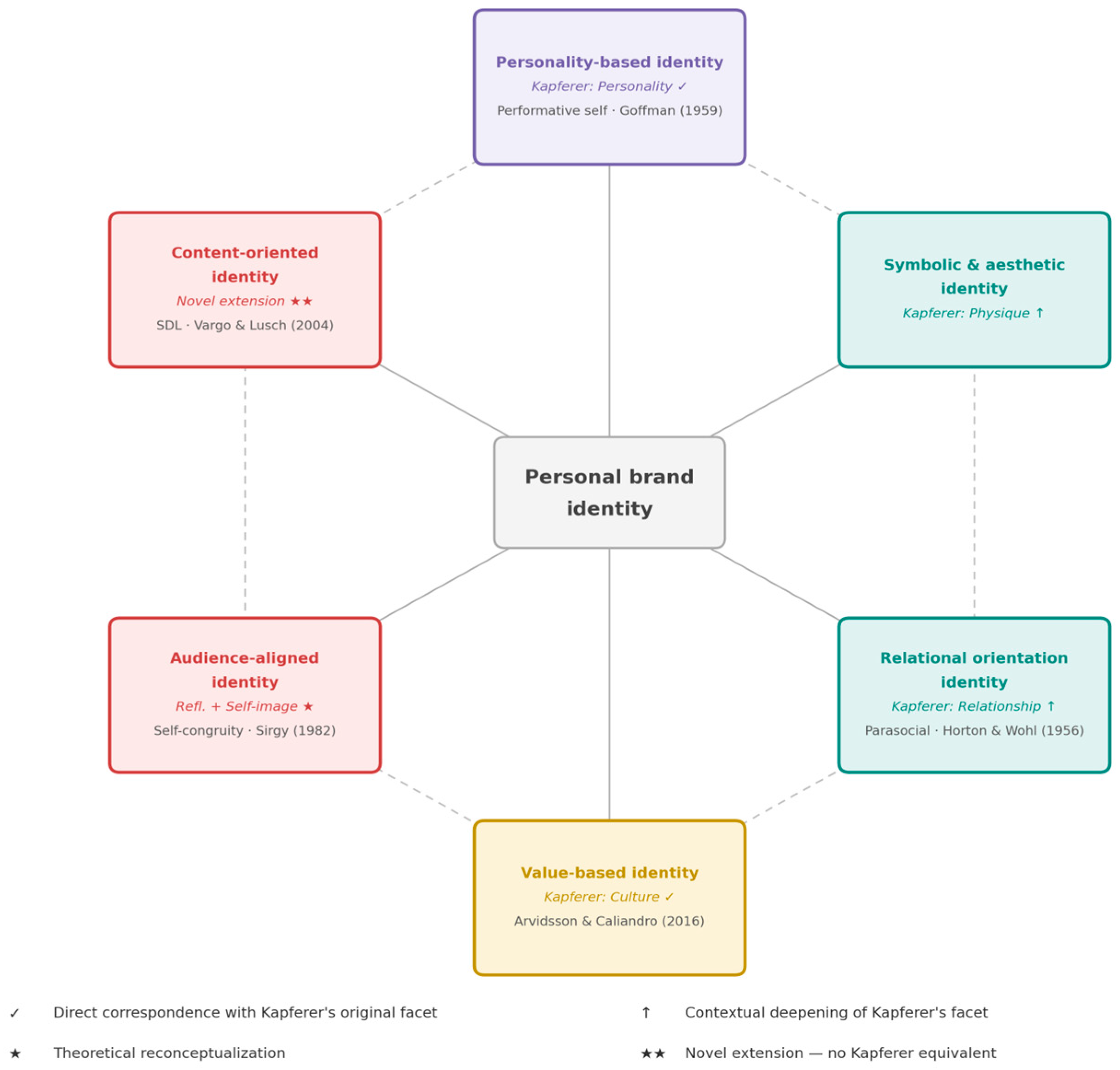
The analysis identifies six interrelated dimensions that collectively constitute live streamers’ personal brand identity in live-streaming commerce: (1) Personality-Based Identity, (2) Symbolic and Aesthetic Identity, (3) Relational Orientation Identity, (4) Value-Based Identity, (5) Audience-Aligned Identity, and (6) Content-Oriented Identity. These dimensions emerged from participants’ accounts and were refined through iterative constant comparison across all 13 cases.
While analytically distinct, the dimensions exhibit functional relationships. Symbolic and Aesthetic Identity operates as a foundational gateway, as visual presentation is what audiences encounter first, providing the initial perceptual scaffold through which subsequent identity expressions become legible. Personality-Based Identity and Value-Based Identity represent relatively stable, internally anchored orientations that persist across contexts. Relational Orientation Identity and Content-Oriented Identity are enacted and sustained through ongoing interactive and productive labor, making them more dynamically responsive to platform and audience conditions. Audience-Aligned Identity functions as an integrative and reflexive dimension, continuously mediating the expression and calibration of the remaining five dimensions in response to real-time audience signals.
It is important to note that the relative salience and sequencing of these dimensions vary across streamer types, platform contexts, and career stages. Streamers in knowledge-based or professional categories may foreground Content-Oriented Identity as a primary legitimation anchor, whereas entertainment-oriented streamers may initially prioritize Personality-Based Identity and Relational Orientation Identity. A systematic comparative analysis of such variation, however, falls beyond the scope of the present study, which focuses on conceptualizing the dimensional structure of personal brand identity rather than examining cross-participant differences in its enactment; this is identified as a direction for future research in
Section 6.
Figure 1 presents an integrative overview of the six dimensions and their relationships.
4.1. Personality-Based Identity
Personality-Based Identity refers to the way live streamers strategically construct and perform a distinctive personal persona as a central component of their brand identity. Interview data indicate that personality in live-streaming commerce is not understood as a fixed or purely intrinsic trait, but as an intentionally cultivated orientation shaped through ongoing audience interaction. This dimension functions as a primary mechanism through which streamers generate emotional resonance, sustain viewer engagement, and differentiate themselves competitively.
Participants consistently described adopting recognizable personality styles, including humor, emotional expressiveness, high interactivity, or a grounded “down-to-earth” demeanor, to shape the affective atmosphere of their streams. Rather than simply “being themselves,” they emphasized the selective amplification of personality features that align with audience expectations and platform dynamics: “You need to reflect on your own characteristics, determine whether users like these characteristics, and then combine the current actual situations of society, and further integrate them to create your own unique personal IP” (P2).
Authenticity emerged as a core element, but was consistently framed as a strategic identity choice rather than a moral disposition. Streamers described making deliberate decisions to avoid exaggerated or scripted personas, positioning genuineness as a brand signal: “Her straightforward personality is very honest on the internet. This kind of personality is liked by many people because she always remains true” (P10, referring to a peer streamer). Several participants explicitly noted that forced or contradictory personas undermine credibility, suggesting that the performance of authenticity must remain grounded in genuine personal traits to be sustainable.
The emphasis on personality over appearance was striking: “Many successful live streamers do not rely on looks, but on their personality and emotional intelligence” (P10). This suggests that personality-based identity functions as a long-term differentiator that outlasts the initial attractiveness of visual presentation.
Theoretically, Personality-Based Identity aligns directly with Kapferer’s personality facet, but extends it in an important direction. In Kapferer’s framework, brand personality is characterized as a relatively stable set of traits communicated through brand expression. The present findings reveal that in live-streaming commerce, personality is not merely expressed but continuously performed and calibrated in real time, a condition that intensifies Goffman’s [
60] concept of performative self-presentation beyond its original dramaturgical context. Crucially, the strategic construction of authenticity rather than its simple expression extends influencer marketing research [
35,
36] by demonstrating that perceived genuineness in live streaming is actively managed, not merely displayed. Personality-Based Identity is analytically distinct from Value-Based Identity. The former concerns the expressive traits and interactional style through which a streamer presents themselves, with authenticity functioning as a strategic performance choice rather than a moral disposition. The latter, by contrast, concerns the moral and social values the streamer actively communicates and enacts as a core component of their brand meaning. Authenticity in Personality-Based Identity is thus a presentational strategy, whereas sincerity in Value-Based Identity is an ethical orientation.
4.2. Symbolic and Aesthetic Identity
Symbolic and Aesthetic Identity captures how live streamers strategically mobilize visual and symbolic elements to construct a coherent, recognizable, and immediately legible personal brand. Participants consistently emphasized that visual presentation, encompassing personal appearance, background setting, lighting, and overall aesthetic coherence, functions as a primary identity cue in live-streaming commerce. Viewers often form evaluative judgments within the first seconds of entry: “When viewers enter the live streaming room, they will definitely first pay attention to your clothing, makeup, background and lighting. Without knowing you, they will definitely focus on these aspects first” (P8).
Beyond individual appearance, interviewees highlighted the importance of scene–content congruence in reinforcing symbolic meaning. Backgrounds and settings should align with the nature of the products or content being promoted, such that agricultural products are associated with rural environments, food products with kitchen or production spaces, and lifestyle products with aspirational yet credible settings. Misalignment between visual setting and content was described as undermining authenticity and viewer comfort, suggesting that visual coherence rather than visual sophistication per se functions as the operative criterion for effective identity signaling.
Participants also emphasized the creation of visual memory cues through recurring color schemes, distinctive motifs, and stable live-stream layouts, enabling audience recognition across sessions: “Through your overall video style and lighting, audiences can immediately tell it is you” (P3). In competitive, scroll-based streaming environments, where audiences make rapid platform-switching decisions, this visual distinctiveness functions as a form of brand equity.
Symbolic and Aesthetic Identity extends Kapferer’s physique facet substantively. Kapferer’s physique refers to a brand’s physical and visual foundation, including its key product features and visual identity elements. The present findings reveal that in live-streaming commerce, visual identity is not merely emblematic but operationally consequential: it functions as the first and most immediate gateway through which audiences evaluate brand fit, product credibility, and streamer legitimacy. The concept of scene–content congruence, understood as the alignment of visual setting with product and persona in real-time performance, constitutes a dimension not captured in static brand identity models. This suggests that symbolic identity in interactive retail requires a performative and contextually situated understanding that exceeds Kapferer’s original formulation.
4.3. Relational Orientation Identity
Relational Orientation Identity refers to the way live streamers construct and sustain their personal brand identity through ongoing relational engagement with viewers. Participants consistently emphasized the transformation of transactional encounters into socially meaningful relationships, positioning themselves as “friends” or “one of us” and stressing equality, familiarity, and emotional closeness: “I think sometimes when we talk more about that, it makes you feel more like a friend-like relationship” (P4).
Trust emerged as the central relational currency. Streamers associated trust with moral conduct, sincerity, and consistency rather than relying solely on product quality or promotional technique: “The audience will have greater trust in you. Even if they don’t have a deep understanding of a certain product, they will be more willing to purchase it because they respect you as a person” (P6). This cultivated relational closeness served to validate endorsements as advice offered in the viewer’s interest rather than as transactional promotion.
Some participants described cultivating a broader sense of community identity, encouraging interaction among viewers and framing the live stream as a collective space. Streamers maintained off-stream engagement through group chats and holiday greetings, indicating that relational identity extends well beyond episodic broadcast encounters: “He hopes you are someone close by, not someone high above him, and it needs to feel like friendship” (P13).
Importantly, disconfirming variation was observed in this dimension. Two participants (P7, P12), both university student streamers with shorter experience (one year each), described their relational orientation as less developed and more transactional, acknowledging that sustained friendship-type bonds with audiences were goals to be cultivated over time rather than established practices. This variation suggests that Relational Orientation Identity intensifies with streaming experience and may require sustained audience-building to fully operationalize.
Theoretically, Relational Orientation Identity extends Kapferer’s relationship facet, which captures how brands interact with consumers. The present findings reveal a qualitatively different dynamic: streamers actively cultivate and reciprocate relational bonds through real-time responsiveness, off-stream maintenance, and explicit friendship framing, transforming what Kapferer characterizes as a symbolic association into an active, bidirectional relational practice. This transforms classical parasocial attachment [
44] into a mode of quasi-social identity co-construction involving mutual behavioral investment, with direct implications for relationship marketing theory [
63]. Relational Orientation Identity is analytically distinct from Audience-Aligned Identity. The former concerns the quality and maintenance of the relational bond between streamer and audience, focusing on how streamers cultivate trust, friendship, and community through ongoing interactional and off-stream relational labor. The latter, by contrast, concerns how audience responses, self-projections, and feedback feed back into the streamer’s own identity construction and calibration. The two dimensions are thus complementary rather than redundant, operating at different levels of the streamer–audience dynamic: one concerns the relational practices streamers direct toward their audiences, while the other concerns the identity-shaping influence that audience responses exert on the streamer.
4.4. Value-Based Identity
Value-Based Identity refers to the extent to which live streamers articulate, perform, and sustain a set of moral, social, and cultural values as a core component of their personal brand identity. Participants did not view live streaming merely as a commercial activity but as a value-laden practice through which they communicated responsibility, integrity, positivity, and social contribution: “As public figures, whether in livestreams or videos, we are always promoting positive energy” (P5).
Several participants explicitly contrasted value-driven live streaming with purely profit-oriented selling, warning that prioritizing short-term monetary gain without ethical consideration undermines credibility: “If you only focus on making money, especially in livestream selling, it’s very easy to fail, as high-quality selling has to give something back to society” (P3). Value-based identity was also grounded in social responsibility and community contribution, particularly among streamers embedded in rural or culturally specific contexts: “A personal IP is not for making quick money, but for contributing to society, and if you shift too much toward profits, it will damage your personal brand” (P2).
Participants consistently linked value-based identity to trust and relational stability, framing sincerity, integrity, and ethical selling as prerequisites for durable audience relationships: “Only by doing business sincerely, selling reasonably priced and good-quality products, can the relationship between me and my audience become stronger” (P12). It should be noted, however, that the articulation of Value-Based Identity was not uniform across the sample. Participants embedded in rural, agricultural, or knowledge-based contexts expressed value commitments in explicit and morally elaborated terms, whereas entertainment-oriented streamers tended to enact value identity more implicitly, through relational warmth and audience care rather than direct ethical discourse. This variation suggests that the surface expression of Value-Based Identity is modulated by content domain and audience context, even as its underlying function as a trust-building mechanism remains consistent.
Value-Based Identity corresponds to Kapferer’s culture facet, which encompasses the values and principles governing brand behavior. The present findings deepen this facet in two ways. First, whereas Kapferer’s culture facet primarily addresses organizational heritage and country-of-origin associations, Value-Based Identity in live-streaming commerce is personally enacted and morally inflected, grounded in individual ethics, social responsibility, and community care. Second, the findings reveal that value-based identity operates simultaneously as a moral signal and a commercial strategy: streamers who explicitly communicate ethical selling practices and social contribution do so partly to build long-term consumer trust, suggesting that moral identity and market legitimacy are strategically intertwined [
62]. This instrumental dimension distinguishes live streamer value identity from conventional celebrity endorsement, where values are typically peripheral to rather than constitutive of brand meaning.
4.5. Audience-Aligned Identity
Audience-Aligned Identity refers to how live streamers construct their personal brand identity through ongoing alignment between their self-presentation and their perceptions of audience characteristics, expectations, and self-images. Rather than defining identity in isolation, participants consistently described understanding who they are as streamers through how audiences respond to them, identify with them, and project idealized or reflected selves onto the streamer.
Many participants described audiences who perceived aspects of themselves, or their desired selves, in the streamer. Some audiences identified through shared life experiences such as rural origins, emotional hardship, or work and family pressures: “When I talk about childhood memories, rural life, or feelings of displacement, viewers often resonate deeply because they see their own past or current situation reflected in my experiences” (P2). Others described audiences who viewed them as embodying a more positive or emotionally resilient version of themselves: “Audiences felt that we are similar in what we go through, but I handle things more openly and positively, and they hope to learn that way of thinking” (P3).
Participants further described identity formation as a reflexive process shaped by continuous audience feedback. Comments, interaction patterns, and viewer requests informed streamers’ understanding of how they were perceived and which aspects of their identity resonated most strongly: “Some viewers will directly tell me what they want to see, and I will adjust based on their ideas” (P6). This ongoing adjustment was not passive conformity but selective alignment, as streamers interpreted feedback to reinforce traits that elicited recognition and gradually stabilized a positioning that audiences could clearly identify with.
In addition, participants articulated a clear mental image of their “typical” or “ideal” audience, defined by age, gender, life stage, occupation, values, and emotional needs. Streamers targeting audiences who felt caught between geographic and social belonging, described as those with “no work at home and no sense of belonging in the city” (P5), used this shared condition as the emotional foundation of their audience base. This imagined audience construction operated alongside real-time feedback to produce a continuous loop of projection, recognition, adjustment, and reinforcement.
The theoretical decision to unify Kapferer’s reflection and self-image facets into a single dimension warrants explicit justification. In Kapferer’s [
14] original framework, reflection refers to how a brand represents its target customer, while self-image refers to how consumers see themselves through brand use, two facets treated as analytically separable. In the present data, however, the processes of imagining the audience (reflection) and responding to how audiences identify with the streamer (self-image) were consistently and inextricably intertwined in participants’ accounts: streamers adjusted how they imagined their audience in direct response to how that audience responded to them, while audiences simultaneously projected both actual and aspirational selves onto the streamer. These processes could not be meaningfully separated in the data, not because the sample was too small to distinguish them, but because they operate as a single co-constitutive loop in real-time interactive retail environments. This structural inseparability is a theoretically grounded finding rather than a data-level limitation: it suggests that Kapferer’s original distinction presupposes a temporal and relational distance between brand and consumer that does not exist in synchronous live-streaming contexts. The present findings extend self-congruity theory [
45] by demonstrating that congruence in live streaming is not static but actively co-produced through ongoing interaction.
4.6. Content-Oriented Identity
Content-Oriented Identity refers to how streamers construct and stabilize their personal brand identity through the substance, coherence, and symbolic meaning of the content they continuously produce. Participants consistently emphasized that content functions as the core carrier through which personal values, expertise, and long-term brand meaning are communicated and recognized: “Through your content output, audiences come to understand who you are and what you stand for, and it is through this process that they recognize and validate your brand” (P1).
Many streamers described content as a deliberate means of projecting personal values, particularly positivity, optimism, and resilience: “We have always created videos around being optimistic, positive, and strong. When people consistently see this side of you, they begin to recognize you as that kind of person and are more willing to follow you” (P5). Participants clearly differentiated content substance from surface-level presentation: “Having a good background or nice clothing alone is not enough, as live stream content and product explanations are equally important” (P4).
Participants emphasized thematic coherence and vertical consistency as essential for identity clarity: “If a streamer’s videos reflect inconsistent personalities or central ideas, users will not like you, because they cannot clearly understand who you are” (P2). Content production was also framed as a strategic and labor-intensive process, with participants describing pre-planning of themes, strategic timing around meaningful events, and systematic post-broadcast review.
For streamers operating in professional or knowledge-based tracks, content-oriented identity was closely tied to expertise and value output. Several emphasized that while appearance may matter at the beginning, “in the later stage, core content output is still required to support the persona; only then can it truly develop into a brand” (P10). This suggests a developmental trajectory in which content becomes increasingly central to brand legitimation as a streaming career matures. Conversely, earlier-career streamers, particularly those with one year of experience, described content production as more spontaneous and less strategically structured, indicating that Content-Oriented Identity, like Relational Orientation Identity, may intensify and become more deliberate as streaming careers develop.
Content-Oriented Identity represents the most context-specific contribution of this study and the dimension that finds no direct structural equivalent in Kapferer’s [
14] original Brand Identity Prism, though it extends and recontextualizes prior observations about content in personal branding research. It is important to specify precisely how this dimension differs from adjacent treatments in prior personal branding research. Chen’s [
15] study of YouTube personal branding treats content primarily as a vehicle for audience reach and self-promotion. Philbrick and Cleveland [
16] similarly frame content as a professional positioning tool for career advancement. Neither study theorizes content as a constitutive mechanism of identity formation, understood as the structural medium through which a personal brand’s meanings, values, and legitimacy are enacted, sustained, and evaluated over time. A further clarification is needed regarding what distinguishes Content-Oriented Identity from the general observation that all live streamers produce content. The defining characteristic of this dimension is not content production per se, but the degree to which content is consciously and strategically deployed as the primary vehicle through which a streamer’s values, expertise, and brand meaning are constructed, communicated, and evaluated over time. Content-Oriented Identity is thus present when content coherence, thematic consistency, and audience validation of content substance function as the structural backbone of personal brand legitimation, rather than merely as a communication channel or promotional tool. As one participant noted, ‘appearance matters at first, but in the long run, it is your content that allows audiences to understand you, recognize your value, and validate your brand’ (P5), illustrating that it is the strategic and sustained deployment of content, rather than its mere production, that constitutes personal brand identity in this sense.
Furthermore, both studies examined asynchronous media contexts (pre-recorded YouTube videos, blog posts) in which content is produced independently of real-time audience evaluation. In live-streaming commerce, content is simultaneously produced, performed, and commercially evaluated by audiences in real time, conditions absent from these earlier contexts. Content-Oriented Identity thus extends prior observations in two specific ways: it theorizes content as constitutive of identity rather than merely as a vehicle for it, and it situates this process within a synchronous, commercially consequential interactive environment. This parallels the service-dominant logic argument that value is co-created through interaction rather than embedded in goods [
61], and extends it to identity: in live-streaming commerce, personal brand identity is co-produced through content delivery and audience evaluation. This co-productive dynamic has direct commercial implications: audiences who recognize and identify with a streamer’s content identity are more likely to trust product recommendations and act on purchase intentions, positioning Content-Oriented Identity as both a legitimation mechanism and a driver of consumer engagement in live-streaming commerce [
10,
36].
4.7. Consistency of Identity Dimensions Across Streamer Characteristics
Because prior influencer research suggests that follower scale, gender, and product category may shape streamer behavior, the coded data were re-examined to assess whether the six identity dimensions varied systematically across these characteristics. Although the present study was designed to conceptualize the dimensional structure of personal brand identity rather than to test between-group differences statistically, the purposive sampling strategy deliberately maximized variation in follower scale (from under 10 K to 100 K–500 K), gender (five male and eight female streamers), and product category (specialty food, agricultural produce, educational and professional-training courses, beauty products, entertainment and virtual gifts, and mixed general merchandise). Instances of all six dimensions were observed among streamers spanning these different follower tiers, genders, and product categories, and no dimension was confined to a single subgroup. This pattern indicates that the proposed framework captures a shared underlying structure of personal brand identity that recurs across heterogeneous streamer profiles, rather than describing the practices of any single audience size, gender, or product domain.
Where variation did appear, it concerned the relative salience and mode of expression of certain dimensions rather than their presence or absence. As reported in
Section 4.3,
Section 4.4, and
Section 4.6, Relational Orientation Identity and Content-Oriented Identity were enacted more deliberately by more experienced streamers, whereas Value-Based Identity was articulated in explicit moral terms by streamers in rural, agricultural, and knowledge-based domains but more implicitly by entertainment-oriented streamers. Because streaming experience and follower scale were correlated in this sample, these two factors cannot be fully disentangled; however, the variation observed within a single follower tier is consistent with a career-stage rather than a purely audience-size interpretation. For example, among streamers in the 10 K–50 K follower tier, a more experienced professional-training streamer (P10, three years) described content as the long-term foundation of brand legitimation, whereas a first-year student streamer in the same tier (P12) described relational and content practices that were still developing. All six dimensions were present in both male and female participants’ accounts, although, as discussed in
Section 6, the surface salience of Symbolic and Aesthetic Identity may differ for male practitioners in content categories not represented in this sample. Taken together, these observations indicate that the dimensional structure of personal brand identity is broadly stable across the streamer characteristics examined, while the relative salience and expression of individual dimensions appears modulated by career stage and content domain. Formal quantitative testing of whether dimension salience differs systematically across follower scale, gender, and product type is identified as a direction for future research in
Section 6.
5. Discussion
5.1. Interpretation of Findings
The six dimensions identified in this study collectively suggest that personal brand identity in live-streaming commerce is neither a fixed attribute nor a purely self-directed project, but a dynamic, multidimensional structure that is continuously performed, negotiated, and stabilized through streamer–audience interaction. Taken together, the dimensions reveal a coherent internal logic: Symbolic and Aesthetic Identity establishes the perceptual gateway through which audiences first encounter the streamer; Personality-Based Identity and Value-Based Identity provide the stable, internally anchored orientations that sustain brand coherence across interactions; Relational Orientation Identity and Content-Oriented Identity represent the ongoing labor through which identity is enacted and legitimized; and Audience-Aligned Identity functions as the reflexive integrating mechanism through which all other dimensions are continuously calibrated in response to audience signals. This configuration suggests that personal brand identity in live-streaming commerce operates as an integrated system rather than a set of independent attributes, with each dimension playing a functionally distinct role in the overall identity architecture.
This integrated identity architecture has direct implications for consumer behavior in live-streaming commerce. A coherent and consistently enacted personal brand identity reduces audience uncertainty, reinforces perceived authenticity, and strengthens the relational and value-based foundations upon which purchase decisions are made. Streamer identity thus functions not only as a symbolic resource but as a commercially consequential structure that shapes the conditions under which viewers are motivated to trust, engage with, and ultimately purchase from a given streamer [
10,
36,
38].
5.2. Theoretical Contributions
This study contributes to the literature on live-streaming commerce and retail services by advancing an identity-based understanding of live streamers as frontline retail actors. Prior research has largely relied on attribute-level explanations, including credibility, attractiveness, expertise, and parasocial interaction, to account for consumer responses. While valuable, this stream of work typically conceptualizes live streamers as bundles of persuasive cues rather than as identity-bearing service actors embedded in ongoing retail interactions. The present study conceptualizes live streamers’ personal brand identity as a multidimensional, integrated structure that shapes how streamers consistently present themselves, interact with audiences, and enact value in live retail environments.
This study advances three interrelated theoretical contributions spanning brand identity theory, personal branding research, and influencer marketing scholarship. The first concerns brand identity theory: the findings demonstrate that Kapferer’s Brand Identity Prism requires substantive contextual deepening and extension in live-streaming commerce rather than simple transposition. Four of the six dimensions correspond to Kapferer’s original facets, including Personality-Based Identity, Symbolic and Aesthetic Identity, Relational Orientation Identity, and Value-Based Identity. Their operation in live-streaming commerce is shaped by conditions that Kapferer’s framework was not designed to address: real-time audience interaction, continuous performance pressure, platform-mediated visibility, and the structural fusion of entertainment and commerce. How personality is performed, how visual identity functions as a first-impression gateway, how relationships are cultivated through synchronous exchange, and how values are communicated under commercial constraints all differ meaningfully from their brand-management counterparts. The contribution is thus one of empirically grounded elaboration, illustrating where the framework holds, where it requires extension, and under what contextual conditions its original logic is transformed.
Crucially, the findings demonstrate that synchronous interaction is not merely a contextual backdrop but a structural condition that fundamentally reconfigures how identity dimensions operate: personality must be performed and calibrated in real time rather than projected through controlled messaging; visual identity functions as an immediate evaluative gateway rather than a stable brand emblem; relational bonds are built through ongoing behavioral investment rather than symbolic association; and values must be enacted under commercial pressure rather than communicated through curated brand narratives.
The second contribution concerns Audience-Aligned Identity, which reconceptualizes Kapferer’s reflection and self-image facets as a unified, dynamic, and reflexively co-constructed process. The theoretical justification for this reconceptualization, namely the structural inseparability of audience imagining and identity adjustment in synchronous interactive contexts, is grounded in the distinctive temporal and relational conditions of live streaming rather than in a general claim about branding. Future research in other interactive retail formats (e.g., social commerce, virtual influencer environments) could test whether this unification holds beyond live streaming.
The third contribution, Content-Oriented Identity, identifies a dimension that finds no direct structural equivalent in Kapferer’s [
14] original Brand Identity Prism, advancing prior personal branding research by demonstrating how content functions as a constitutive mechanism of identity formation and legitimation in the specific context of synchronous, commercially evaluated interactive retail environments. By demonstrating that content is constitutive of personal brand identity rather than merely a communication vehicle, this finding challenges influencer marketing research that foregrounds personality and aesthetics as the primary drivers of credibility [
8,
10]. The finding invites future research to examine content quality, thematic consistency, and audience evaluation as key mediating variables in the live streamer–consumer relationship.
5.3. Mapping Identity Dimensions onto Kapferer’s Brand Identity Prism
Table 2 summarizes the mapping of the six identified dimensions onto Kapferer’s original facets, specifying the type of theoretical relationship in each case.
5.4. Identity Enactment and Legitimation in Practice
Beyond the six identity dimensions, the findings reveal that identity is enacted and legitimized through a range of operational and organizational practices, including traffic acquisition strategies, team collaboration, systematic training, and post-broadcast performance review. These practices function as identity-supporting mechanisms rather than identity-defining dimensions: they scaffold the consistent performance of identity over time without being constitutive of its meaning. This distinction between identity structure and identity enactment contributes to personal branding research by highlighting how brand coherence in live-streaming commerce depends not only on symbolic consistency but also on institutional and operational routines that enable sustained identity performance.
5.5. Managerial Implications
The findings offer concrete practical implications for four groups of stakeholders. For live streamers, the results underscore the importance of developing a coherent and integrated personal brand identity rather than relying on fragmented tactics or short-term performance strategies. Each of the six dimensions offers actionable guidance: streamers should consciously cultivate and selectively amplify personality traits that resonate with their target audience; invest in visual coherence between personal appearance, broadcast setting, and product category; prioritize relational labor both during and between broadcasts through community building and off-stream engagement; articulate and consistently enact a set of core values that distinguish their brand from purely transactional competitors; develop a clear understanding of their audience’s self-image and aspirational identities to enable more resonant communication; and commit to thematic content consistency as a long-term legitimation strategy rather than optimizing for short-term traffic.
For live-streaming platforms and agencies, the findings suggest that streamer development programs should move beyond technical training to include structured identity cultivation. Supporting streamers in articulating, refining, and consistently enacting their personal brand identity across all six dimensions may enhance service consistency, consumer trust, and platform differentiation. The finding that Content-Oriented Identity becomes increasingly central as streaming careers mature has direct implications for talent development timelines and content coaching investment. Agencies managing streamers under full organizational direction should be aware that excessive constraint on streamer autonomy may inhibit personal brand identity formation, as evidenced by the comparatively underdeveloped identity profiles observed among agency-managed participants in this study.
For brand marketers and advertisers seeking to collaborate with live streamers, the six-dimension framework provides a structured basis for evaluating streamer–brand fit beyond surface-level metrics such as follower count or engagement rate. Assessing the alignment between a streamer’s Value-Based Identity and the brand’s own values, or between a streamer’s Audience-Aligned Identity and the brand’s target consumer profile, may yield more sustainable and credible collaborations than purely reach-based selection criteria.
For platform developers and policymakers, recognizing live streamers as identity-bearing service agents rather than mere content producers has implications for platform governance, content moderation, and creator support infrastructure. Platforms could consider developing dedicated identity support infrastructure for streamers, such as content planning guidance, audience insight dashboards, and community engagement tools, as investment in these areas may foster higher-quality streamer–audience relationships and more sustainable commercial ecosystems.
6. Limitations and Future Research
This study has several limitations that should be acknowledged alongside directions for future research.
First, the qualitative design based on in-depth interviews with 13 live streamers provides rich, contextualized insights but cannot support statistical generalizability. Future research should employ quantitative or mixed-method approaches to assess the dimensional structure, robustness, and prevalence of the identified identity dimensions across larger and more diverse samples. In particular, while the present study found the six-dimension structure to be consistent across follower scale, gender, and product category (
Section 4.7), larger-sample quantitative designs could formally test whether the relative salience or weighting of individual dimensions differs systematically across these subgroups, thereby establishing whether personal brand identity strategies are independent of, or moderated by, streamers’ own characteristics.
Second, the sample includes five male and eight female participants, a distribution that broadly reflects the demographic composition of certain live-streaming content categories on Chinese platforms, where female practitioners are disproportionately represented in entertainment, education, and food domains. Nonetheless, the relative underrepresentation of male streamers means findings may not fully capture gender-specific identity construction practices. Certain dimensions, notably Symbolic and Aesthetic Identity with its emphasis on makeup and visual styling, may carry different salience for male practitioners in sports, gaming, or professional training contexts. Future research should deliberately recruit across gender identities to examine whether gender moderates the enactment of personal brand identity dimensions.
It should also be noted that the eligibility criterion of a minimum of one year of active commercial live-streaming experience, while appropriate for ensuring that participants had sufficient practice to reflect meaningfully on personal brand identity construction, does not constitute a uniform standard of professional maturity. Participants with one year of experience, notably P7, P12, and P13, represent earlier-career streamers whose identity practices were comparatively less developed than those of more established participants. Future research should adopt more granular experience-based sampling criteria to examine how personal brand identity construction evolves across distinct career stages.
Third, the interview guide disclosed the overall role of Kapferer’s Brand Identity Prism to participants in the background introduction prior to any questioning. Although the first part of the guide did not present Kapferer’s facets as explicit prompts, participants’ prior awareness of the framework may have shaped how they framed their accounts from the outset. The risk that the six dimensions identified partly reflect this disclosure rather than emerging entirely independently of the framework cannot be excluded. Readers should weigh this when interpreting the correspondence between the identified dimensions and Kapferer’s original facets, and future studies may consider designs in which the theoretical framework is not disclosed until after initial open-ended data collection is complete.
Fourth, the study does not incorporate consumer or audience perspectives. While the producer-oriented lens is appropriate for uncovering identity meanings and self-definitions, it does not capture how these identity dimensions are interpreted or validated by viewers. Future research could incorporate consumer perspectives, observational data, or interaction-level analysis to examine the co-construction and reception of personal brand identity.
Fifth, the identity framework was developed from a Chinese platform context (Douyin and Kuaishou), and the salience, configuration, and relative weight of dimensions may vary across different cultural, regulatory, and platform environments. Value-Based Identity, particularly the emphasis on social responsibility and rural revitalization, may reflect specific socio-cultural conditions and state-backed platform incentives of the Chinese live-streaming ecosystem that do not generalize directly to Western contexts such as Instagram Live or Amazon Live. Similarly, the algorithmic recommendation systems governing content visibility on Douyin and Kuaishou may amplify the salience of Content-Oriented Identity in ways that differ in intensity from other platform architectures. Cross-cultural and cross-platform replications are essential to assess the generalizability and boundary conditions of the framework.
Sixth, the present study focuses on identifying and conceptualizing the core dimensions of personal brand identity rather than examining how their relative salience varies across streamer types, career stages, or platform contexts. The sample size of 13, while appropriate for the conceptual aims of this study, is insufficient to support systematic cross-participant comparison of dimension prominence. Future research employing larger and more diverse samples could investigate whether certain dimensions are more central to specific streamer profiles, such as knowledge-based, entertainment, or agency-managed streamers, and how the configuration of identity dimensions evolves across career trajectories and platform environments.
Finally, the six identity dimensions provide a conceptual basis for future scale development. Subsequent research may operationalize these dimensions into measurement instruments suitable for empirical investigation, enabling systematic examination of personal brand identity in live-streaming commerce and its downstream effects on consumer engagement, trust, and loyalty. The study relies exclusively on self-reported interview data and does not incorporate observational data such as live-stream recordings or archived video content. This design choice reflects the study’s primary interest in how live streamers subjectively conceptualize and construct their personal brand identity, a focus that privileged access to participants’ own interpretive frameworks over behavioral observation of enacted practices. Interview-based accounts are well suited to capturing the meanings, intentions, and strategic reasoning underlying identity construction, which are not readily accessible through video observation alone. Nonetheless, self-reported accounts may not fully correspond to enacted branding behaviors, and participants’ retrospective descriptions of their practices are subject to impression management and post hoc rationalization. Future research could complement interview-based accounts with systematic observation of live-stream recordings to assess the consistency between self-reported identity construction and enacted branding practices, and to examine how identity dimensions manifest in real-time streamer behavior.