1. Introduction
High-quality development has become a central objective of China’s modernization strategy, in which brand building is regarded as a critical mechanism for enhancing national competitiveness and facilitating industrial upgrading. Within this context, time-honored brands represent a distinctive category of legacy enterprises. In China, time-honored brands (laozihao) typically refers to firms officially recognized by the Ministry of Commerce as having a long operating history (often spanning several decades or centuries), distinctive products or services, inherited craftsmanship, and strong cultural embeddedness. Conceptually, they correspond to what prior literature describes as heritage brands—brands with a stable core identity rooted in longevity, tradition, and intergenerational continuity [
1,
2]. Beyond their economic value, they represent an important form of cultural capital and are therefore integral to the pursuit of culturally grounded modernization [
3]. Despite their symbolic and economic significance, many time-honored brands have experienced long-term decline. More than 90% of China’s time-honored brands have disappeared since the early years of the People’s Republic [
4], reflecting structural weaknesses in innovation, market adaptation, and consumer engagement.
A key challenge is that many time-honored brands continue to rely heavily on traditional, offline marketing strategies, while lagging behind in digital transformation and platform-based retailing [
5,
6]. Limited online presence, weak e-commerce capability, and insufficient digital communication have constrained their market reach and eroded competitiveness [
7,
8]. These limitations are especially problematic given the growing dominance of digital-native consumers, who expect interactive, personalized, and omnichannel experiences [
9,
10]. Such challenges are particularly acute among young consumers, who dominate contemporary consumption but often perceive time-honored brands as outdated in style, packaging, and engagement logic [
11]. Understanding how time-honored brands can regain identification among this cohort has therefore become both a practical and theoretical priority.
Existing research on time-honored brands has largely focused on brand equity [
12], brand extension [
13], and perceived authenticity [
14], but has paid comparatively little attention to the transformation of marketing contexts, particularly the rise of e-commerce livestreaming [
15]. Livestream commerce represents a fundamentally different mode of consumer–brand interaction, characterized by real-time communication, influencer mediation, and socially embedded purchasing. In this environment, consumers rely less on static product information and more on experiential cues generated through interaction, observation, and social interpretation [
16,
17]. Despite its growing importance, livestreaming remains under-theorized in time-honored branding research [
18].
Moreover, most existing studies treat “consumers” as a homogeneous group, overlooking generational differences in media usage patterns, consumption psychology, and social interaction preferences [
19,
20]. However, consumer behavior literature consistently demonstrates that generational cohorts differ significantly in digital engagement, brand perception, and technology adoption [
21,
22]. In this study, “young consumers” refers to individuals aged 18–40, encompassing late Generation Y (Millennials) and early Generation Z. This cohort represents the most digitally immersed segment of the population and constitutes the dominant user base of social media and livestream commerce platforms [
23]. Compared with older cohorts, young consumers exhibit stronger preferences for interactivity, immediacy, peer influence, and participatory online experiences [
24]. These characteristics make them particularly responsive to livestream shopping environments, where real-time interaction and social presence are central features. Despite their prominence in livestream commerce, limited research has examined how young consumers shape brand identification, especially in the context of time-honored brands that traditionally rely on heritage, authenticity, and cultural symbolism.
From a theoretical perspective, prior studies of heritage-brand livestreaming have also tended to rely on single-framework explanations, most commonly the stimulus–organism–response (SOR) model [
25,
26,
27]. Although SOR theory has proven useful for analyzing how environmental cues influence consumer reactions, its linear logic is limited in capturing the socially rich and psychologically layered interactions that define livestreaming. In this context, consumer responses are not driven by stimuli alone but by the subjective experience of being socially and emotionally present with others. To address this limitation, this study advances the SOR framework by integrating social presence theory (SPT) and parasocial interaction theory (PSI) to more precisely conceptualize the socio-emotional mechanisms underlying livestreaming commerce. Although the SOR model provides a robust structure for explaining how environmental stimuli shape internal states and subsequent behavioral responses [
28], the “organism” component has often been treated as an undifferentiated psychological construct in prior e-commerce research. In livestreaming contexts, however, consumers’ internal states are shaped not only by technological affordances but also by relational dynamics embedded in streamer–viewer interactions. SPT explains how mediated communication conveys warmth, immediacy, and the sense of human co-presence [
29]. Subsequent research has extended this perspective to online commerce, demonstrating that perceived social presence enhances trust, involvement, and relational perceptions [
30,
31,
32]. Nevertheless, livestreaming commerce differs from traditional online environments because it fosters asymmetrical yet emotionally meaningful relationships between viewers and streamers. PSI posits that audiences can develop one-sided perceptions of intimacy, friendship, and emotional attachment toward media figures [
33]. In contemporary digital environments, such parasocial bonds are intensified through real-time interaction, self-disclosure, and influencer authenticity [
34,
35]. Integrating SPT and PSI within the SOR framework is therefore theoretically necessary. SPT captures the perception of “being with” the streamer, whereas PSI explains the deeper perception of “being connected to” the streamer. Together, they provide a multidimensional conceptualization of the organism as a structured socio-emotional process encompassing co-presence, perceived intimacy, and relational attachment.
Furthermore, existing studies have typically examined either mediating or moderating mechanisms in isolation, resulting in partial explanations of how livestreaming affects time-honored brands [
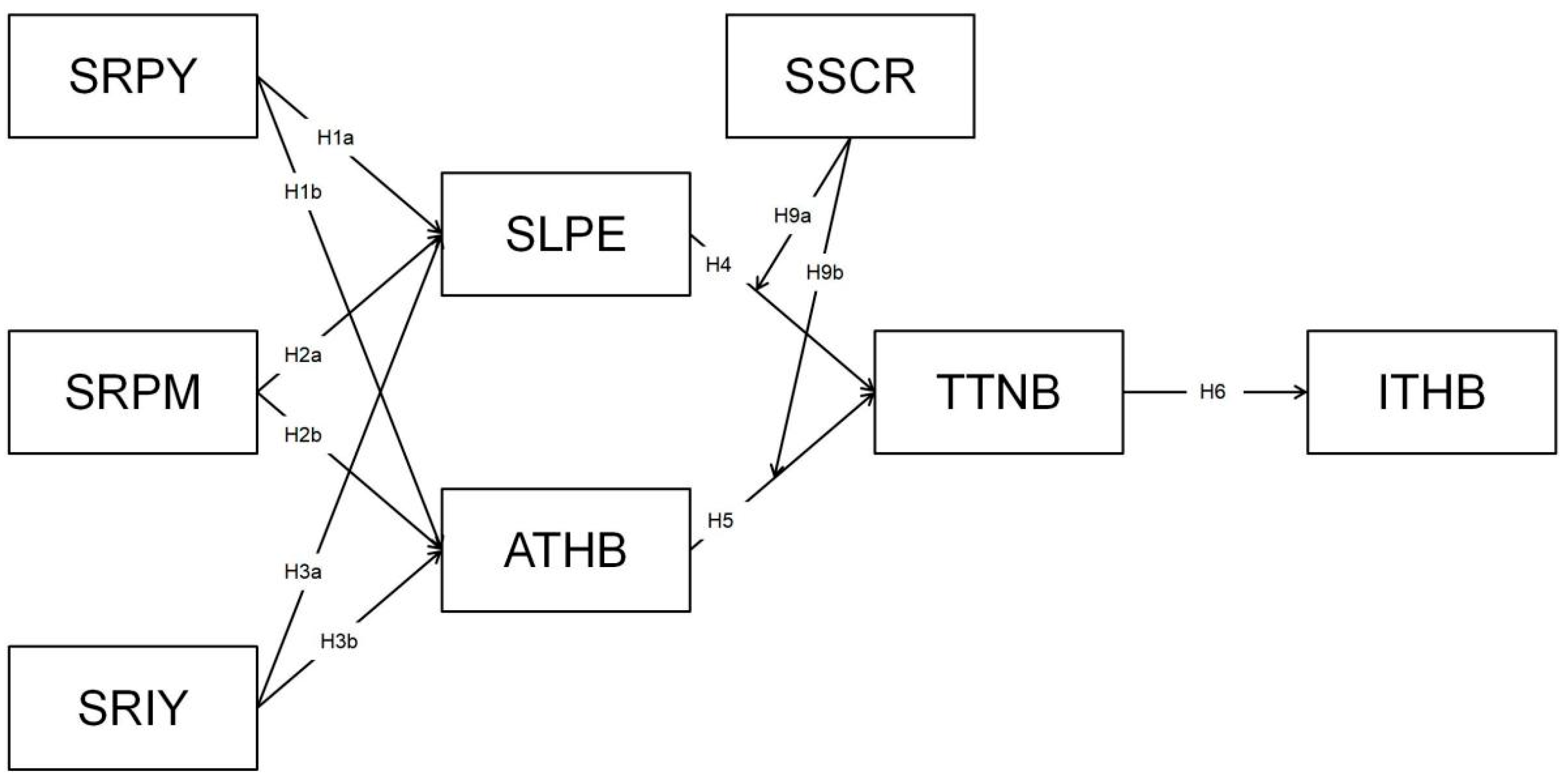
13]. By jointly modelling serial mediators (social presence, brand authenticity, and brand trust) and a key relational moderator (consumer–streamer relationship strength), this study opens the “black box” between livestreaming stimuli and brand identification.
Using quantitative methods, this research examines how streamer characteristics (popularity, professionalism, and interactivity) influence brand identification with time-honored brands among young consumers in livestreaming environments. By integrating SOR, SPT, PSI, serial mediation, and relational moderation into a unified framework, the study provides new theoretical and empirical insight into how time-honored brands can sustain relevance and cultural value in the digital economy.
3. Research Design and Data Analysis
3.1. Data Collection
Data were collected through a questionnaire survey administered to young consumers aged 18–40 who had watched live-streaming commerce sessions featuring time-honored brands within the past six months. This sampling strategy was adopted for two primary reasons. First, young consumers constitute the core audience and purchasing force in live-streaming commerce, while time-honored brands are actively pursuing strategies of market rejuvenation through digital channels. Focusing on this demographic therefore provides practical relevance for understanding brand development. Second, restricting participation to individuals with recent viewing experience ensured that respondents possessed clear and accurate memories of live-streaming interactions, thereby reducing recall bias and enabling reliable measurement of emotional responses and brand identification.
The questionnaire employed a five-point Likert scale and consisted of seven sections. The first section screened respondents based on whether they had viewed live-streaming commerce related to time-honored brands within the past six months; respondents without such experience were excluded from further participation. The second section measured perceptions of streamer characteristics, including streamer popularity, professionalism and interactivity. The third and fourth sections assessed perceived social presence and perceived authenticity of time-honored brands, respectively, based on respondents’ subjective experiences. The fifth and sixth sections measured trust in time-honored brands and brand identification following exposure to live-streaming commerce. The final section collected demographic information, including gender, age, education level, occupation, frequency of viewing time-honored brand live streams and monthly income. To improve data quality, attention-check items were embedded at multiple points in the questionnaire.
The survey was administered online using the Wenjuanxing platform, with participants completing the questionnaire primarily via mobile devices by scanning a QR code provided by the researchers. Online data collection offered several advantages, including geographic flexibility, lower administrative costs and rapid response rates. Participants were informed in the survey introduction that all data would be used solely for academic research, which helped encourage accurate and honest responses.
Data collection was conducted between 6 June and 13 September 2025. A pilot study involving 30 participants was first carried out to identify issues related to item clarity and redundancy; feedback from the pilot was used to refine the questionnaire before formal distribution. A total of 492 questionnaires were distributed. Responses were excluded if they met any of the following criteria: (i) straight-line responding (selecting the same option for all items); (ii) abnormally short completion time (less than 200 s); (iii) failure to pass attention-check questions (e.g., items instructing respondents to select a specific response). After data cleaning, 434 valid questionnaires were retained, yielding an effective response rate of 88%.
Table 1 summarizes the demographic characteristics of the respondents. The sample consisted of 48.4% male and 51.6% female participants. In terms of age, respondents aged 31–35 accounted for the largest proportion (31.3%), followed by those aged 26–30 (25.8%) and 18–25 (24.0%), with the smallest proportion aged 36–40 (18.9%). Regarding education, most respondents held a bachelor’s degree (58.3%), followed by master’s degree holders (16.6%), associate degree holders (15.7%), doctoral degree holders (1.8%) and others (7.6%). In terms of occupation, the majority were employed (65.7%), followed by students (19.8%), with smaller proportions self-employed (7.6%), unemployed or job-seeking (4.1%) and other categories (4.1%). Most respondents reported watching live-streaming commerce one to three times per week (51.6%), while 30.9% watched four to five times per week and 17.5% watched six times or more per week. Monthly income was most commonly reported in the range of RMB 6001–9000 (27.4%), followed by below RMB 3000 (20.0%), RMB 3001–6000 (19.4%), RMB 9001–12,000 (19.1%) and above RMB 12,000 (14.1%).
3.2. Measurement of Variables
This study examines eight constructs: streamer popularity, streamer professionalism, streamer interactivity, perceived social presence, perceived authenticity of time-honored brands, consumer–streamer relationship strength, trust in time-honored brands, and brand identification with time-honored brands (see
Table 2).
Drawing on prior research, consumer decision-making in live-streaming commerce differs from traditional e-commerce contexts, as purchase behavior is increasingly driven by streamer-related cues rather than product information alone. Factors such as streamer attractiveness, expertise, interactive engagement, visibility and popularity have been shown to exert significant influence on consumer responses [
45]. Accordingly, streamer popularity, streamer professionalism and streamer interactivity are specified as independent variables.
Streamer popularity refers to the degree to which a streamer is recognized by the public and reflects influence, popularity and market value within a given social or professional domain. Streamer professionalism is defined as the extent to which a streamer demonstrates systematic knowledge, technical competence, emotional stability and professional conduct in achieving live-streaming objectives (e.g., entertainment, sales or information dissemination). Streamer interactivity denotes the direct and reciprocal communication between streamers and consumers, as well as among consumers, enabled by the visibility and real-time characteristics of live-streaming platforms, unconstrained by temporal or spatial boundaries. Measures for these three constructs were adapted from Wei et al. (2022) [
45], with four items each used to assess streamer popularity, professionalism and interactivity.
The mediating variables include perceived social presence, perceived authenticity of time-honored brands and trust in time-honored brands. Perceived social presence is defined as the extent to which individuals perceive the real existence of others during online communication. This construct was measured using a five-item scale adapted from Gong et al. (2023) [
50]. Perceived authenticity of time-honored brands captures the extent to which a brand maintains originality, consistency and credibility across dimensions such as historical heritage, core values, product or service quality, cultural meaning and consumer relationships. This construct was measured using a five-item scale adapted from Morhart et al. (2015) [
59]. Trust in time-honored brands refers to a stable and positive psychological reliance based on consumers’ perceptions of a brand’s historical continuity, consistent quality assurance, distinctive cultural value and established social reputation. This construct was measured using a four-item scale adapted from Jung et al. (2014) [
79].
The moderating variable, consumer–streamer relationship strength, is conceptualized as the overall bonding force that stabilizes and sustains the relationship between consumers and streamers. Consistent with Shi et al. (2005) [
80], relationship strength comprises affective and cognitive components, reflecting emotional attachment and belief-based evaluation of relationship value. In the livestreaming commerce context, repeated real-time interactions and community engagement foster relational embeddedness beyond transactional exchange. Accordingly, this construct was measured using a five-item scale adapted from Shi et al. (2005) [
80]. Items such as “Ending my relationship with this streamer would be costly for me” and “Switching to another streamer would have a significant impact on my life” capture the cognitive dimension of relationship strength, operationalized as the belief that maintaining the relationship is valuable and important. In this context, “cost” and “impact” refer not merely to economic switching barriers but to perceived psychological, social, and experiential losses (e.g., trust, familiarity, and community connection), thereby reflecting perceived relational indispensability rather than calculative loyalty.
The dependent variable is identification with time-honored brands, which refers to consumers’ deep cognitive recognition and emotional attachment to a brand’s identity and values, derived from its historical legacy, cultural heritage, distinctive craftsmanship and credibility commitments. Brand identification with time-honored brands was measured using a three-item scale adapted from Urska et al. (2011) [
81]. All measurement items were assessed using five-point Likert scales ranging from 1 (strongly disagree) to 5 (strongly agree).
Table 2.
Measurement Items and Sources.
Table 2.
Measurement Items and Sources.
| Variable | Measurement Items | Source |
|---|
| Streamer popularity | The streamer is well known on live-streaming platforms or within the relevant field. | Wei et al., 2022 [45] |
| The streamer has a good public reputation. |
| The streamer enjoys high popularity and attention within the industry. |
| The streamer has achieved notable accomplishments in the industry. |
| Streamer professionalism | I believe the streamer possesses relevant knowledge about the product domain. | Wei et al., 2022 [45] |
| I believe the streamer has a good understanding of the products being recommended. |
| I believe the streamer has extensive experience related to the products. |
| I believe the streamer can effectively evaluate the products being promoted. |
| Streamer interactivity | The streamer’s live-streaming content allows me to participate actively. | Wei et al., 2022 [45] |
| When watching the live-stream, I can communicate with the streamer in a timely manner. |
| When watching the live-stream, I can communicate with other viewers in real time. |
| When watching the live-stream, I can freely express my opinions through on-screen comments. |
| Social presence | During this live-streaming session, I feel a sense of human contact. | Gong et al., 2023 [50] |
| During this live-streaming session, other participants are aware of my presence. |
| During this live-streaming session, I experience a sense of social interaction. |
| During this live-streaming session, I can exchange information with other participants. |
| During this live-streaming session, I can perceive a sense of human warmth. |
| Authenticity of time-honored brands | After watching the live-stream, I believe this time-honored brand has a strong historical heritage. | Morhart et al., 2015 [59] |
| After watching the live-stream, I believe this time-honored brand is a timeless classic. |
| After watching the live-stream, I believe this time-honored brand has stood the test of time. |
| After watching the live-stream, I believe this time-honored brand is honest and reliable. |
| After watching the live-stream, I believe this time-honored brand adheres to a set of moral values. |
| Consumer–streamer relationship strength | I have a strong personal connection with this streamer. | Shi et al., 2005 [80] |
| I maintain a very close relationship with this streamer. |
| Ending my relationship with this streamer would be costly for me. |
| Switching to another streamer would have a significant impact on my life. |
| Regardless of how I feel, I believe I should maintain my relationship with this streamer. |
| Trust in time-honored brands | After watching the live-stream, I believe this time-honored brand meets my expectations. | Jung et al., 2014 [79] |
| After watching the live-stream, I have strong confidence in this time-honored brand. |
| After watching the live-stream, I believe this time-honored brand will not disappoint me. |
| After watching the live-stream, I believe this time-honored brand guarantees satisfaction. |
| Brand identification with time-honored brands | I feel that my personality is very similar to the personality of this time-honored brand. | Urska et al., 2011 [81] |
| I feel that I have much in common with other users of this time-honored brand. |
| I feel that my values are very similar to the values represented by this time-honored brand. |
3.3. Data Analysis
The research model was estimated using partial least squares structural equation modelling (PLS-SEM) implemented in SmartPLS 4.0. Although the proposed model consists exclusively of reflective constructs and could, in principle, be estimated using covariance-based SEM (CB-SEM), several methodological and research-design considerations support the use of PLS-SEM in the present study.
First, the primary objective of this research is not merely theory confirmation but the explanation and prediction of brand identification with time-honored brands in livestreaming contexts. Specifically, the model incorporates multiple serial mediation paths (social presence → trust; authenticity → trust) and moderation effects (consumer–streamer relationship strength), forming a moderated serial mediation structure. PLS-SEM is particularly appropriate for analyzing complex predictive models that integrate mediation and moderation simultaneously, as it prioritizes maximization of explained variance (R
2) in endogenous constructs [
40,
82]. In this study, brand identification represents a key endogenous outcome variable with substantive managerial implications, making variance explanation and predictive accuracy central analytical objectives.
Second, although the measurement model is reflective, the structural model exhibits substantial complexity, including eight latent constructs, four exogenous predictors, two serial mediation mechanisms, and interaction terms. Compared with CB-SEM, PLS-SEM provides greater estimation stability in models involving multiple indirect and interaction effects, especially when the research emphasis lies in examining structural relationships and indirect pathways rather than global model fit [
83].
Third, PLS-SEM is distribution-free and does not assume multivariate normality. Preliminary assessment of the dataset indicated deviations from normality in several observed indicators (absolute skewness and kurtosis values exceeding recommended thresholds). Given that CB-SEM relies on large-sample normal theory for maximum likelihood estimation, the use of PLS-SEM reduces the risk of biased parameter estimates under non-normal conditions [
84].
Fourth, the study adopts a latent variable interaction approach to test moderation effects. PLS-SEM enables direct estimation of interaction terms through the product indicator approach and two-stage method without imposing restrictive distributional assumptions. This flexibility makes it well suited for modelling the moderating role of consumer–streamer relationship strength within a multi-mediator framework [
85].
The empirical analysis was conducted using partial least squares structural equation modeling (PLS-SEM). Consistent with established methodological guidelines [
86], the analysis followed a two-stage procedure: (1) assessment of the measurement model and (2) evaluation of the structural model. Statistical analyses were conducted using SmartPLS 4.0 and SPSS 27.0. Specifically, SmartPLS 4.0 was employed to estimate the measurement and structural models, perform bootstrapping procedures (10,000 resamples), and conduct PLSpredict analyses, whereas SPSS 27.0 was used for preliminary data screening, descriptive statistics, normality assessment, exploratory factor analysis, and Harman’s single-factor test.
Given that all constructs were measured using a single survey instrument, procedural and statistical remedies were applied to assess potential common method bias (CMB). Statistically, Harman’s single-factor test was conducted through exploratory factor analysis to determine whether a single dominant factor accounted for the majority of covariance among the measurement items. In addition, variance inflation factors (VIFs) were examined to assess potential collinearity issues that may indicate common method variance. These procedures jointly ensured that CMB did not threaten the validity of the empirical analysis.
The measurement model was assessed prior to hypothesis testing to ensure adequate reliability and validity of the constructs. Indicator reliability was evaluated by examining the outer loadings of the reflective measurement items on their respective latent constructs. Internal consistency reliability was assessed using Cronbach’s alpha and composite reliability (CR). Convergent validity was evaluated using the average variance extracted (AVE), ensuring that each construct captured a substantial proportion of variance from its indicators. Discriminant validity was examined using the Fornell–Larcker criterion and cross-loading analysis. The square root of AVE for each construct was compared with its inter-construct correlations, and item loadings were assessed to confirm that each indicator loaded highest on its intended construct.
After establishing the adequacy of the measurement model, the structural model was evaluated to test the hypothesized relationships. Collinearity diagnostics were conducted to ensure that predictor constructs did not exhibit problematic multicollinearity. Path coefficients were estimated to assess the direction and strength of the hypothesized relationships among constructs. The statistical significance of the structural paths was evaluated using a non-parametric bootstrapping procedure with 10,000 resamples. The explanatory power of the model was assessed using the coefficient of determination (R2) for endogenous constructs. Mediation effects were examined by estimating indirect effects through bootstrapping to assess the significance of hypothesized mediating mechanisms. Moderation effects were tested by incorporating interaction terms into the structural model, and their significance was evaluated using bootstrapping procedures.
Predictive relevance was examined using PLSpredict with 10-fold cross-validation. As shown in
Table 3, all endogenous constructs exhibited positive Q
2 predict values, indicating adequate predictive relevance. Specifically, social presence (Q
2 = 0.507), authenticity of time-honored brands (Q
2 = 0.471), and trust in time-honored brands (Q
2 = 0.512) demonstrated large predictive relevance, while brand identification with time-honored brands (Q
2 = 0.317) showed moderate predictive relevance. In addition, out-of-sample predictive performance was evaluated by comparing PLS-based prediction errors with linear model (LM) benchmarks. The results of
Table 4 indicate that the majority of indicators (11 out of 17) yielded lower RMSE values under the PLS model compared to the LM benchmark, suggesting moderate predictive power and supporting the predictive superiority of the PLS-SEM approach for the present research model.
Taken together, the use of PLS-SEM is theoretically and methodologically justified in this study. Although CB-SEM would be suitable for strict covariance-based theory testing, the present research emphasizes variance explanation, predictive capability, and the simultaneous estimation of moderated serial mediation effects in a complex livestreaming commerce context. PLS-SEM therefore provides an analytically appropriate and robust estimation approach aligned with the study’s research objectives and data characteristics.
3.3.1. Common Method Bias
Given the single-source, self-report survey design, we implemented several procedural remedies to mitigate potential common method bias (CMB). First, respondents were assured of anonymity and confidentiality to reduce evaluation apprehension. Second, the questionnaire clearly emphasized that there were no right or wrong answers and that participants should respond honestly based on their personal perceptions. Third, measurement items were carefully worded to minimize ambiguity and reduce socially desirable responding. In addition, items measuring different constructs were interspersed throughout the questionnaire to create psychological separation and reduce respondents’ ability to infer the study’s hypotheses.
Statistically, we first conducted Harman’s single-factor test as an initial diagnostic. An exploratory principal component analysis of all measurement items revealed six factors with eigenvalues greater than 1, jointly accounting for 64.4% of the total variance. The first (largest) factor explained only 12.697% of the variance, indicating that no single factor dominated the covariance among the measures (See
Table 5). Although Harman’s test is widely considered insufficient as a standalone assessment of CMB, it provides preliminary evidence that common method variance is unlikely to be severe [
87,
88].
Because Harman’s test alone does not conclusively rule out CMB, we further applied the full collinearity VIF approach, which is commonly recommended in PLS-SEM research as a more rigorous diagnostic [
89]. As shown in
Table 6, all inner VIF values ranged from 1.000 to 2.079, well below the conservative thresholds of 3.3 and 5. These results suggest that multicollinearity and common method bias are unlikely to materially distort the structural relationships. Taken together, the procedural and statistical evidence indicates that CMB does not pose a serious threat to the validity of the findings.
3.3.2. Reliability and Validity of the Measurement Model
The evaluation of the outer (measurement) model comprised assessments of indicator reliability, internal consistency, convergent validity, and discriminant validity. Indicator reliability was examined by loading each item onto its corresponding latent construct. As shown in
Table 7, factor loadings ranged from 0.658 to 0.887, exceeding the recommended threshold of 0.60 [
90], indicating that the observed variables adequately captured their underlying constructs.
Internal consistency was supported by Cronbach’s α values between 0.731 and 0.898 and composite reliability (CR) values between 0.832 and 0.912, all exceeding the recommended minimum of 0.70 [
91]. Convergent validity was further confirmed by average variance extracted (AVE) values ranging from 0.554 to 0.676, which are well above the 0.50 criterion [
92], indicating that each construct explained more than half of the variance of its indicators.
Discriminant validity was assessed using the Fornell–Larcker criterion and cross-loading analysis. As shown in
Table 8, the square root of the average variance extracted (AVE) for each construct exceeds its correlations with all other constructs, satisfying the Fornell–Larcker criterion and indicating adequate discriminant validity [
92]. Consistent with this result, the cross-loading matrix (
Table 9) shows that each measurement item loads more strongly on its intended construct than on any other construct, providing further evidence of discriminant validity [
83].
As shown in
Table 6, all variance inflation factor (VIF) values for the various constructs in this study ranged between 1.000 and 2.079, well below the conservative threshold of 5, indicating that multicollinearity does not pose a concern in the structural model [
89]. The overall quality of the model was further evaluated using the goodness-of-fit (GOF) index. The GOF value was 0.538, which substantially exceeds the recommended benchmark of 0.36 [
93], indicating strong explanatory power and an overall satisfactory model fit.
3.3.3. Hypothesis Testing
Direct Effects
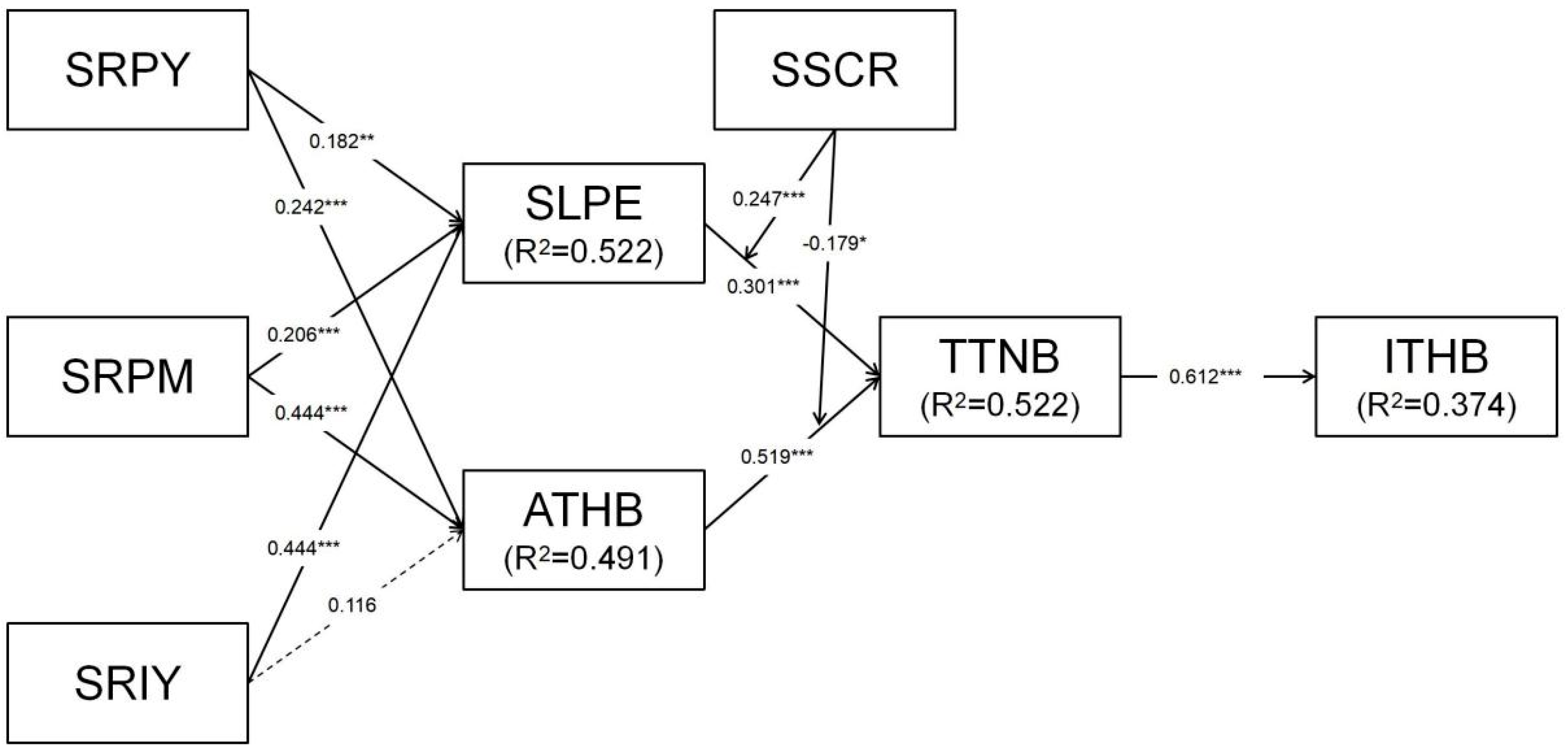
The results of the structural model are summarized in
Table 10. Streamer popularity (β = 0.182,
p < 0.01), streamer professionalism (β = 0.206,
p < 0.001), and streamer interactivity (β = 0.444,
p < 0.001) each exerted a significant positive effect on social presence, supporting hypotheses H1a, H2a, and H3a, respectively.
Streamer popularity (β = 0.242, p < 0.001) and streamer professionalism (β = 0.444, p < 0.001) also showed significant positive effects on authenticity of time-honored brands, providing support for H1b and H2b. In contrast, the effect of streamer interactivity on authenticity of time-honored brands was not significant (β = 0.116, p > 0.05), and H3b was therefore not supported.
Social presence (β = 0.301, p < 0.001) and authenticity of time-honored brands (β = 0.519, p < 0.001) both had significant positive effects on trust in time-honored brands, supporting H4 and H5. Finally, trust in time-honored brands had a strong positive effect on brand identification with time-honored brands (β = 0.612, p < 0.001), providing support for H6.
Moderation Analysis
The moderating effects of consumer–streamer relationship strength were tested using SmartPLS, with the results reported in
Table 12. The interaction between consumer–streamer relationship strength and social presence was positive and statistically significant (β = 0.247,
p < 0.001), indicating that relationship strength positively moderates the effect of social presence on trust in time-honored brands, thereby supporting H9a.
In contrast, the interaction between consumer–streamer relationship strength and authenticity of time-honored brands was negative and significant (β = −0.179, p < 0.05), indicating that relationship strength weakens the positive effect of authenticity of time-honored brands on trust in time-honored brands, providing support for H9b.
Structural Model Evaluation
The hypotheses were tested using partial least squares (PLS) analysis of the inner (structural) model. Path coefficients and coefficients of determination (R2) were estimated to evaluate both the strength and direction of the relationships among constructs, as well as the predictive accuracy of the model. Path coefficients capture the magnitude and direction of the hypothesized causal effects, whereas R2 values indicate the proportion of variance explained in each endogenous variable.
Statistical significance was assessed using a bootstrapping procedure, which provides more accurate inference than asymptotic approximations when working with empirical data [
94]. This resampling approach was therefore used to evaluate the significance of all structural paths.
As illustrated in
Figure 2, all hypothesized paths were statistically significant except for the effect of streamer interactivity on authenticity of time-honored brands, which was not supported. The model explained 52.2% of the variance in social presence (R
2 = 0.522), 49.1% of the variance in authenticity of time-honored brands (R
2 = 0.491), 52.2% of the variance in trust in time-honored brands (R
2 = 0.522), and 37.4% of the variance in brand identification with time-honored brands (R
2 = 0.374), indicating a strong overall predictive performance.
4. Discussion and Conclusions
4.1. Research Findings
Grounded in the SOR framework, SPT and PSI, this study examined how e-commerce livestreaming enhances brand identification with time-honored brands among young consumers. Using survey data from 434 respondents aged 18–40 who had viewed time-honored brands livestreams within the previous six months, we investigated how streamer characteristics—namely popularity, professionalism, and interactivity—influence social presence and perceived authenticity of time-honored brands, which in turn shape brand trust and ultimately brand identification with time-honored brands. We further examined the moderating role of consumer–streamer relationship strength. Statistical analyses were conducted using SmartPLS 4.0 and SPSS 27.0, yielding several theoretically and practically important findings for time-honored brands operating in livestreaming environments.
First of all, all three streamer attributes—popularity, professionalism, and interactivity—were found to exert significant positive effects on social presence. This result is consistent with prior work showing that livestreamer characteristics enhance viewers’ perceptions of social presence [
56]. By extending this line of inquiry to time-honored brands livestreaming, our findings demonstrate that even in contexts shaped by tradition, history, and cultural continuity, digitally mediated interactions with streamers can meaningfully reconstruct consumers’ sense of social connectedness. This not only broadens the application of social presence theory but also provides new insight into how time-honored brands can revitalize their cultural relevance through digital intermediaries. In addition, streamer popularity and professionalism were found to positively influence perceived authenticity of time-honored brands, whereas streamer interactivity showed no significant effect. This pattern is broadly consistent with previous research indicating that knowledgeable and reputable streamers can reinforce authenticity perceptions [
49]. Importantly, our study extends this insight into the livestreaming context, showing how authenticity of time-honored brands is reconfigured when historical brands are presented in real-time digital marketplaces. The absence of a significant effect of interactivity on perceived authenticity diverges from some prior livestreaming studies [
95]. This discrepancy may reflect the distinctive nature of time-honored brands, whose authenticity is deeply rooted in historical legacy, traditional craftsmanship, and enduring quality. These attributes are more effectively communicated through authoritative narratives and culturally grounded storytelling than through highly interactive, entertainment-oriented exchanges. In livestreaming, interactivity often emphasizes immediacy, promotion, and affective engagement, which may inadvertently dilute the gravitas and cultural depth that underpin authenticity of time-honored brands. Excessive or overly commercialized interaction may even conflict with consumers’ expectations of time-honored brands as stable, dignified, and historically anchored. By demonstrating these boundary conditions, our findings challenge the prevailing assumption that interactivity is universally beneficial in livestream commerce and call for a more nuanced understanding of how different interaction modes shape brand meaning.
Secondly, with respect to the serial mediation of social presence and trust in time-honored brands, our results show that streamer characteristics—namely popularity, professionalism, and interactivity—exert significant positive effects on brand identification with time-honored brands through this two-stage pathway. These findings are consistent with prior work demonstrating that livestreamer attributes enhance consumers’ perceptions of informational authenticity and social connection, thereby strengthening brand trust and identification [
64,
65,
66]. By explicitly modelling social presence and trust in time-honored brands as sequential mediators, this study advances existing research by clarifying how livestreaming stimuli are transformed into deep brand identification. Streamer attributes do not influence brand identification directly; rather, they first create a strong sense of social presence in the livestreaming environment, fostering feelings of interpersonal connection and warmth. This experiential “being there” facilitates the emergence of trust toward time-honored brands in the livestreaming context, which in turn becomes the critical psychological mechanism through which enduring brand identification is formed. A second serial mediation pathway, operating through authenticity of time-honored brands and trust in time-honored brands, was found to be significant for streamer popularity and streamer professionalism. These findings are consistent with prior work [
51]. When streamers are widely recognized and perceived as highly knowledgeable, consumers are more likely to perceive time-honored brands as authentic, and this enhanced authenticity perception subsequently reinforces brand trust, ultimately strengthening brand identification with time-honored brands. These findings reveal a progressive causal chain: streamer attributes shape authenticity perceptions, authenticity consolidates trust, and trust crystallizes into stable brand identification. This model provides a coherent explanation of how externally mediated signals in livestreaming environments are translated into deep-seated consumer–brand bonds. In contrast, streamer interactivity did not significantly affect brand identification with time-honored brands through the authenticity–trust pathway. This result diverges from the dominant digital marketing assumption that interactivity universally promotes authenticity and trust [
95]. In the context of time-honored brands, identification is rooted in consumers’ emotional resonance with historical legacy, cultural meaning, and enduring quality—forms of value that are built through temporal continuity rather than transactional immediacy. Typical livestream interactions, which emphasize promotions, price incentives, and entertainment, may stimulate short-term engagement but risk reducing brand communication to momentary exchanges, thereby weakening the symbolic gravity and cultural distinctiveness that underpin authenticity of time-honored brands. By demonstrating this boundary condition, our findings challenge the presumed universality of the “interactivity–authenticity–trust–identification” chain and call for a more context-sensitive theory of brand identification in heritage settings.
Finally, our analysis further reveals a dual moderating role of consumer–streamer relationship strength. Specifically, relationship strength positively moderates the link between social presence and trust in time-honored brands, but negatively moderates the relationship between authenticity of time-honored brands and trust in time-honored brands. The positive moderation of the social presence–trust relationship aligns with previous research showing that stronger consumer–streamer relationships amplify viewers’ perceived social presence and emotional engagement, thereby strengthening brand-related outcomes [
46]. By extending this logic to time-honored brands, our findings demonstrate that when consumers feel psychologically closer to a streamer, the sense of “being there” in the livestreaming environment is more readily translated into trust in the time-honored brands. Importantly, this indicates that the trust-building function of social presence is contingent on relational proximity: the stronger the consumer–streamer bond, the more effectively social presence fosters brand trust and, ultimately, brand identification. In contrast, the negative moderation of the authenticity–trust relationship reveals a more complex dynamic that diverges from some prior studies [
72]. Time-honored brands already possess a strong authenticity foundation rooted in historical continuity, cultural meaning, and long-term quality reputation. When consumer–streamer relationships become excessively strong, attentional focus may shift from the brand to the streamer as a person. Under these conditions, trust is increasingly anchored in interpersonal attachment rather than in the brand’s intrinsic authenticity. As a result, the role of perceived brand authenticity as the primary basis of trust is weakened, explaining why relationship strength attenuates, rather than amplifies, the authenticity–trust linkage. Together, these findings highlight that consumer–streamer relationship strength does not simply magnify all trust-building mechanisms. Instead, it selectively strengthens trust derived from experiential social presence while simultaneously diluting trust grounded in authenticity of time-honored brands, thereby reshaping the pathways through which brand identification with time-honored brands is formed in livestreaming contexts.
4.2. Theoretical Contributions
First, this study advances time-honored brand research by introducing e-commerce livestreaming as a novel and theoretically meaningful context for understanding brand identification with time-honored brands. Existing scholarship on the revitalization and development of time-honored brands has largely focused on offline strategies, such as traditional advertising and physical retailing, which reflect the logic of conventional brand communication [
13,
14]. While this body of work has generated important insights into how time-honored brands survive and evolve in traditional market environments, it offers limited explanatory power for understanding brand identification formation under conditions of digital transformation. By contrast, livestreaming represents a fundamentally different mode of consumer–brand interaction, characterized by real-time communication, social embeddedness, and influencer-mediated persuasion. Despite its growing economic and cultural significance, this context has received little systematic attention in time-honored brand theory. By theorizing and empirically testing how livestreaming reshapes the formation of brand identification with time-honored brands among younger consumers, this study fills a critical gap in the literature and extends time-honored branding theory into the domain of platform-based, interactive commerce.
Second, this study makes a conceptual advance by explicitly centering young consumers as the focal population in time-honored brand research. Most existing studies treat the consumer base of time-honored brands as a largely homogeneous group [
17,
19,
20], thereby obscuring systematic differences in how distinct demographic cohorts construct brand identification. This limitation is particularly problematic in contemporary media environments, where digital platforms have fundamentally altered how brands are encountered, interpreted, and evaluated. As digital natives, young consumers constitute the most active participants in livestreaming commerce and represent a pivotal force shaping future market trajectories. Their consumption practices and brand perceptions are therefore critical to the long-term sustainability and revitalization of time-honored brands. Yet, this strategically important group has remained under-theorized in the literature, resulting in models of brand identification with time-honored brands that lack generational sensitivity and predictive power. By foregrounding young consumers as a distinct analytical category, this study provides a more fine-grained account of how brand identification with time-honored brands is formed under conditions of platform-mediated interaction. In doing so, it offers a theoretically grounded basis for understanding how time-honored brands can engage emerging consumer cohorts through targeted, differentiated, and digitally embedded communication strategies.
Third, this study advances theory by integrating the SOR framework with SPT and PSI to construct a more comprehensive and dynamic model of brand identification with time-honored brands in livestreaming environments. Although prior research grounded in the SOR paradigm has effectively demonstrated how external stimuli in e-commerce livestreams shape consumer responses, the linear stimulus–organism–response logic remains limited in explaining the psychologically nuanced and socially embedded interactions that characterize contemporary livestreaming commerce [
26,
96]. By incorporating SPT, this study elucidates the mechanism through which livestreaming stimuli are translated into psychological and behavioral outcomes. In livestream commerce, external cues do not trigger responses directly; rather, they first evoke a sense of social presence—a subjective perception of interpersonal connection and co-presence—which subsequently shapes authenticity perceptions, trust and brand identification. This perspective refines the “organism” component of the SOR framework by conceptualizing it as a socially constructed and relationally embedded psychological state, thereby enhancing the model’s explanatory precision in digitally mediated environments. Furthermore, by integrating PSI, this study extends the analysis from general social presence to the formation of quasi-social, one-sided relational bonds between viewers and livestream hosts. PSI emphasizes that audiences can develop enduring feelings of intimacy, familiarity, and emotional attachment toward media figures despite the absence of reciprocal interaction. In livestreaming contexts, where hosts communicate in real time and often adopt personalized, conversational styles, such parasocial bonds become particularly salient. These bonds not only intensify perceived social presence but also strengthen authenticity judgments and trust transfer mechanisms, ultimately fostering deeper brand identification with time-honored brands. The simultaneous integration of SOR theory, SPT, and PSI enables this study to capture both situationally induced socio-emotional states and relationally sustained psychological attachments. This tripartite theoretical framework moves beyond purely cognitive or affective explanations and accounts for the dynamic interplay between environmental stimuli, socio-emotional processing, and quasi-relational bonding processes. As a result, the explanatory scope of the SOR framework is substantially expanded for socially mediated digital consumption contexts, offering a more robust and theoretically coherent foundation for understanding how livestreaming environments reshapes consumer behavior and reinforce brand identification with time-honored brands.
Fourth, this study advances the literature by jointly modelling mediation and moderation mechanisms in explaining brand identification with time-honored brands in e-commerce livestreaming. Previous research on time-honored in digital commerce has typically examined either mediating processes or moderating conditions in isolation, resulting in partial and fragmented explanations of how livestreaming influences brand outcomes [
97,
98]. By integrating serial mediators with relational moderators in a single analytical framework, this study captures both the internal psychological transmission processes and the contextual contingencies under which these processes operate. This combined moderated–mediation perspective moves beyond single-path explanations and reveals how multiple mechanisms interact dynamically to shape brand identification with time-honored brands in livestreaming environments. In doing so, the model opens the “black box” between livestreaming stimuli and brand outcomes, providing a more complete and theoretically coherent account of how and when time-honored brands succeed in building identification among young consumers. This integrative approach offers a stronger conceptual foundation for both future research and evidence-based practice in digital time-honored branding.
4.3. Practical Implications
First, the findings demonstrate that streamer characteristics—popularity, professionalism, and interactivity—are key drivers of brand identification with time-honored brands. For time-honored brands seeking renewal and long-term relevance, this underscores the strategic importance of building a rigorous and systematic framework for streamer selection and development. Rather than relying on audience size or short-term traffic metrics alone, brands should adopt a multidimensional evaluation model that integrates visibility, professional credibility, and interactive capability. At the level of popularity, streamers with strong reputations and loyal follower bases provide immediate reputational leverage, effectively serving as trust intermediaries that lower consumers’ perceived risk and accelerate brand acceptance. Professionalism is even more critical: streamers must possess not only detailed product knowledge but also the ability to articulate the historical depth, cultural meaning, and craftsmanship that define time-honored brands. When delivered by a knowledgeable and credible host, livestreaming can transform routine product demonstrations into compelling narratives of brand heritage, thereby generating emotional value alongside functional information. Interactivity acts as a catalytic mechanism that converts attention into engagement and affiliation. Streamers with strong empathic and communicative skills can foster immersive, socially rich environments through responsive dialogue and creative formats, enabling viewers to feel personally acknowledged and socially embedded. This sense of relational inclusion strengthens emotional attachment and community identification. When these three attributes operate in concert, the role of the streamer extends far beyond that of a sales agent. Streamers become digital brand ambassadors and relational connectors, actively co-constructing the brand’s contemporary meaning. Through repeated interactions, they help shift consumers from awareness to trust and from trust to enduring identification, thereby enabling time-honored brands to build resilient and renewable brand equity in platform-based markets.
Second, the findings show that social presence and perceived authenticity of time-honored brands are pivotal antecedents of brand trust and brand identification. Accordingly, time-honored brands should seek to transform livestreaming spaces into culturally rich and trust-enhancing environments. The goal is not technological sophistication per se, but the integration of setting, interaction, and narrative to generate a strong sense of co-presence and experiential authenticity. Rather than relying on generic studio backdrops, brands should situate livestreams within their most historically and culturally meaningful physical spaces, such as heritage retail stores, traditional workshops, or production facilities. These environments provide visual and symbolic evidence of continuity, craftsmanship, and legacy, allowing authenticity to be communicated through tangible cues rather than abstract claims. Interaction should likewise move beyond transactional promotion and scripted question-answer exchanges. Streamers should act as knowledgeable guides and authentic companions, leading audiences through production processes, demonstrating traditional techniques, and openly discussing sourcing standards and imperfections. Such transparency humanizes the brand and provides a credible foundation for trust. At the same time, interactive tools such as live chat and call-ins can be used to invite consumers to share their own brand experiences, converting one-way broadcasting into a participatory community dialogue. Through these practices, livestreaming can evolve from a sales channel into a social and cultural hub that simultaneously strengthens social presence and authenticity perceptions. This dual activation creates the conditions under which trust deepens and durable brand identification with time-honored brands can emerge.
Third, the results show that consumer–streamer relationship strength exerts opposite moderating effects on the two key trust-building pathways: it amplifies the impact of social presence on trust in time-honored brands while attenuating the effect of perceived brand authenticity. This duality implies that time-honored brands must adopt a carefully balanced livestreaming strategy that leverages relational closeness without allowing brand meaning to become overshadowed by the streamer’s personal appeal. On the one hand, brands should actively cultivate streamers who are capable of forming deep relational bonds with their audiences. High-frequency and personalized interactions—such as addressing viewers by name, remembering individual preferences, and fostering shared community symbols—can maximize social presence and transform livestreams into emotionally resonant “affective communities.” Under these conditions, strong consumer–streamer ties efficiently translate social presence into brand trust. On the other hand, brands must ensure that authenticity of time-honored brands is communicated through institutionalized and verifiable channels that do not depend solely on the streamer. This can be achieved by regularly featuring brand custodians, master artisans, or heritage experts in livestreams; by directing visual attention to sourcing sites, production facilities, and quality-control processes; and by maintaining a consistent repository of brand narratives through short videos and editorial content across platforms. These practices anchor authenticity in observable facts and enduring brand narratives rather than in the fluctuating credibility of individual streamers. Together, this dual strategy stabilizes trust formation: even when consumer–streamer relationships are exceptionally strong, brand trust continues to derive not only from interpersonal attachment but also from a firm cognitive and cultural understanding of the brand itself. This synergy enables time-honored brands to harness the benefits of relational intimacy without compromising the integrity of their authentic brand foundations.
4.4. Limitations and Future Directions
First, the formation of brand identification with time-honored brands is a multidimensional and complex process. Owing to constraints of scope and model parsimony, this study does not incorporate all potentially relevant drivers, such as consumers’ nostalgic attachment, perceived product quality, or competitive market conditions. Instead, we focused on the emerging role of streamer characteristics as a theoretically and practically salient factor in digital commerce. Future research should extend this framework by integrating additional dimensions, including social interaction climate, perceived brand innovativeness, and cross-cultural communication strategies, to develop a more comprehensive and dynamic model of brand identification with time-honored brands in the digital era.
Second, the analysis was conducted within a single livestreaming context and did not explicitly compare online livestreaming with traditional offline or other digital retail environments. Comparative studies across multiple consumption contexts would enable a more precise assessment of how brand identification with time-honored brands pathways vary by channel and interaction mode, thereby providing more nuanced strategic guidance for time-honored brand management across heterogeneous marketing environments.
Third, although the moderating effect of relationship strength produced theoretically meaningful findings—strengthening the impact of social presence on trust while weakening the effect of authenticity on trust—the present explanation remains inferential rather than directly tested. Specifically, the study does not empirically examine whether stronger relational ties shift consumers’ evaluative orientation from brand-based cognitive assessment toward streamer-based relational trust transfer. If such a reorientation occurs, consumers embedded in stronger relationships may rely more heavily on streamer cues and less on brand-level authenticity signals in forming trust judgments. Future research should therefore incorporate additional relational and trust-transfer constructs and employ experimental or longitudinal designs to explicitly test whether relationship strength structurally reweights trust antecedents. Such efforts would clarify whether the observed moderation reflects a substantive shift in trust formation mechanisms rather than a context-bound effect.
4.5. Conclusions
Drawing on the SOR framework, SPT and PSI, this study examined how streamer characteristics—popularity, professionalism, and interactivity—shape brand identification with time-honored brands among young consumers in e-commerce livestreaming. Using survey data, we show that these streamer attributes influence brand identification through their effects on social presence and perceived authenticity of time-honored brands, which in turn build trust in time-honored brands. The analysis further incorporated consumer–streamer relationship strength as a moderating condition, allowing a more nuanced assessment of how relational proximity alters the trust-building process. The results demonstrate that streamer popularity, professionalism, and interactivity all enhance social presence, whereas popularity and professionalism also strengthen perceived authenticity of time-honored brands. Both social presence and authenticity significantly increase trust in time-honored brands, which, in turn, is a strong predictor of brand identification with time-honored brands. Moreover, streamer popularity and professionalism influence brand identification through two serial mediation pathways—via social presence and trust, and via authenticity and trust—while streamer interactivity operates primarily through the social presence–trust pathway. Consumer–streamer relationship strength further conditions these effects, amplifying the role of social presence in building trust while attenuating the influence of authenticity on trust. By positioning livestreaming as a central site for the contemporary reconstruction of time-honored brand meaning, this study develops an integrated model that combines SOR framework with SPT and PSI to explain how digital interactions translate into enduring brand identification. In doing so, it provides new theoretical insight into the psychological and relational mechanisms through which time-honored brands can engage younger generations in platform-based commerce. Although the study cannot encompass all possible determinants of brand identification with time-honored brands and does not compare livestreaming with traditional marketing contexts, it offers a systematic foundation for future research. In particular, while the findings reveal a differentiated moderating role of relationship strength, the underlying mechanism—whether stronger relational ties redirect consumers’ trust formation from brand-based evaluation toward streamer-based trust transfer—remains to be empirically verified. Future research may therefore incorporate additional relational and trust-transfer constructs and adopt multi-method designs to clarify this potential structural shift in trust antecedents. By extending the framework across additional dimensions, mechanisms, and settings, subsequent studies can further refine our understanding of how time-honored brands sustain relevance and legitimacy in increasingly relational and digitally mediated commerce environments.