A Heptamethine Cyanine-Based Near-Infrared Optical Sensor for Copper(II) Detection in Aqueous Solutions and Living Cells
Abstract
1. Introduction
2. Materials and Methods
2.1. Chemicals
2.2. Instrumentation and Spectroscopy
2.3. Synthesis and Characterization of IRPhen
2.4. Cell Culture and Confocal Imaging
3. Results and Discussion
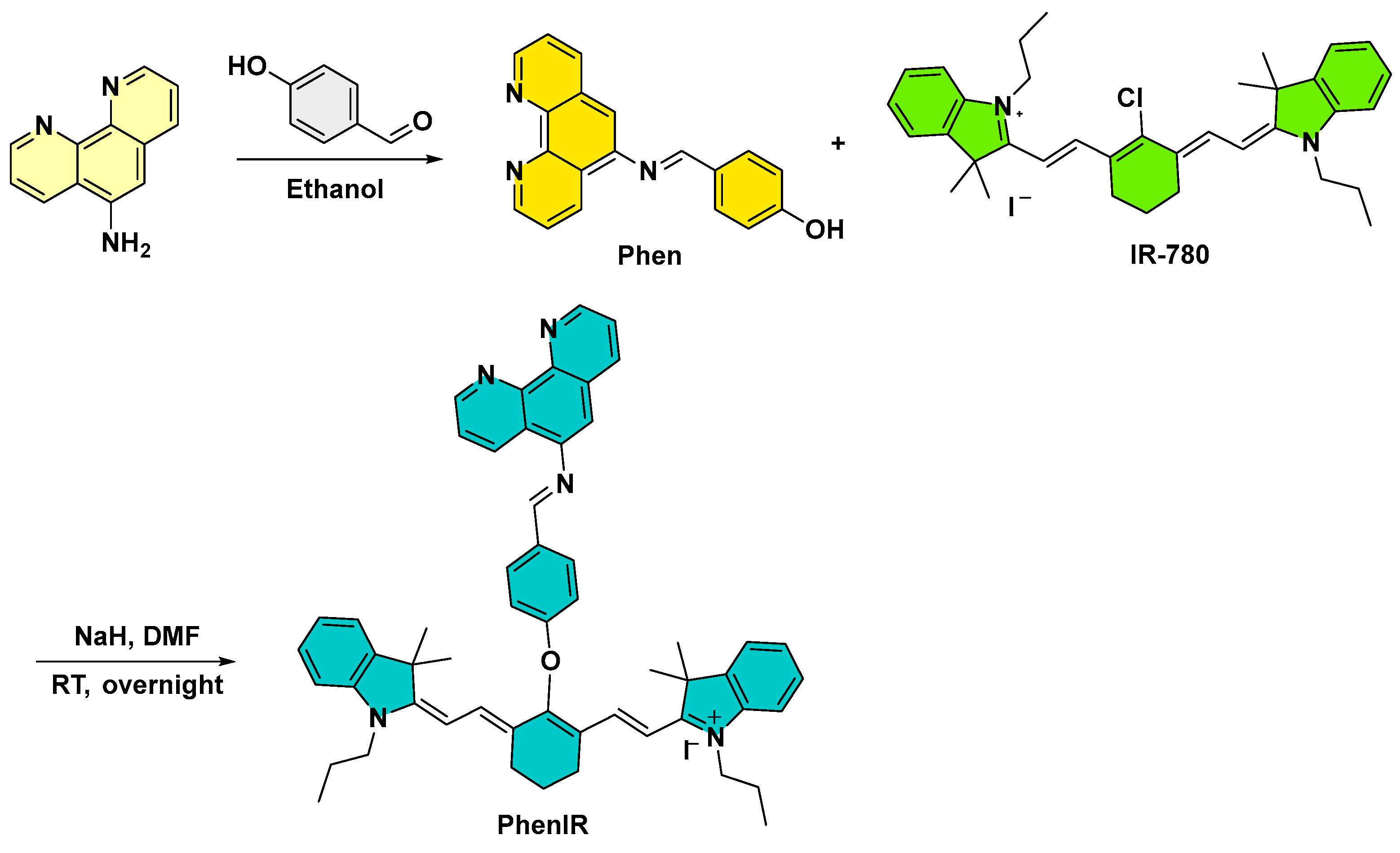
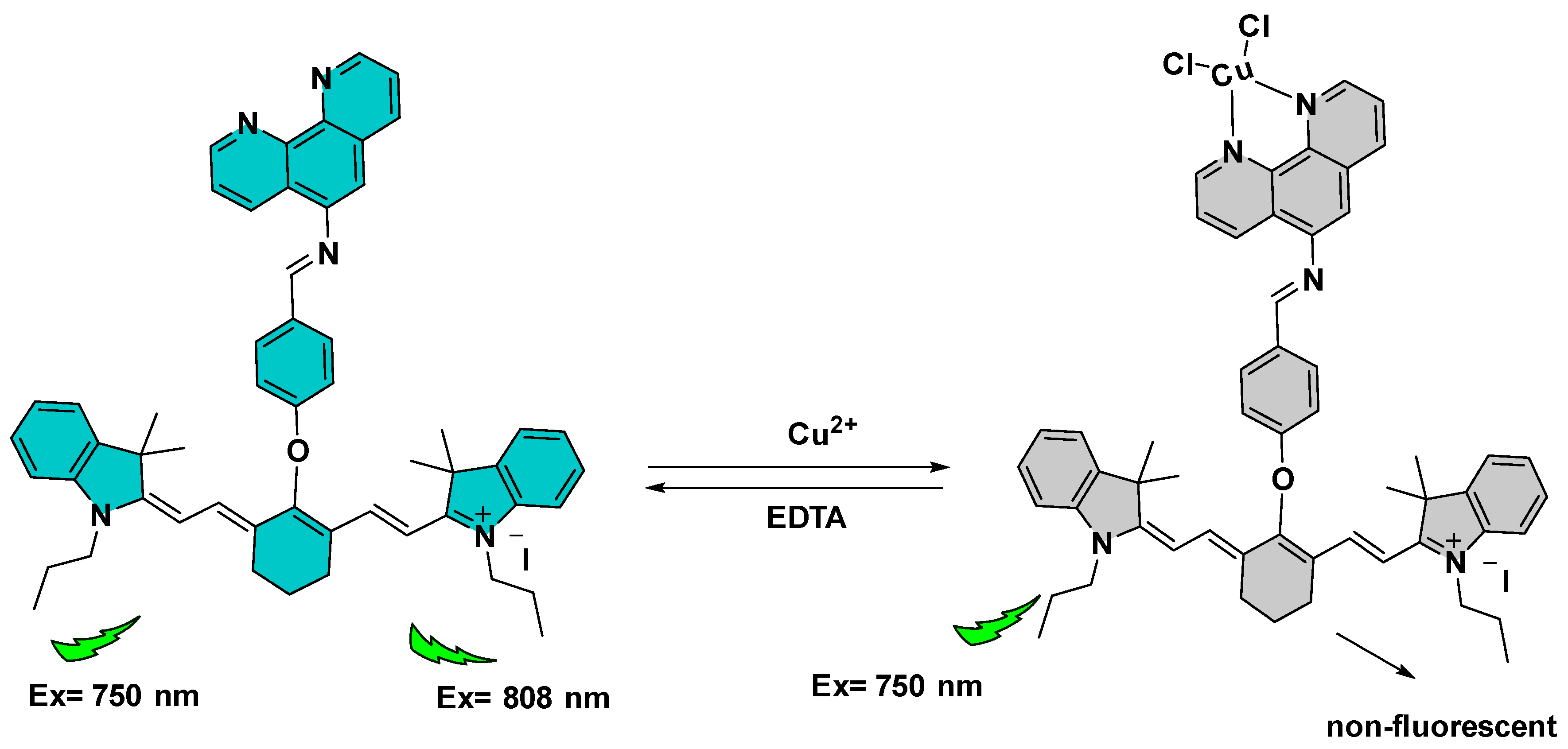
3.1. Design and Synthesis of the Cu2+ Sensor IRPhen
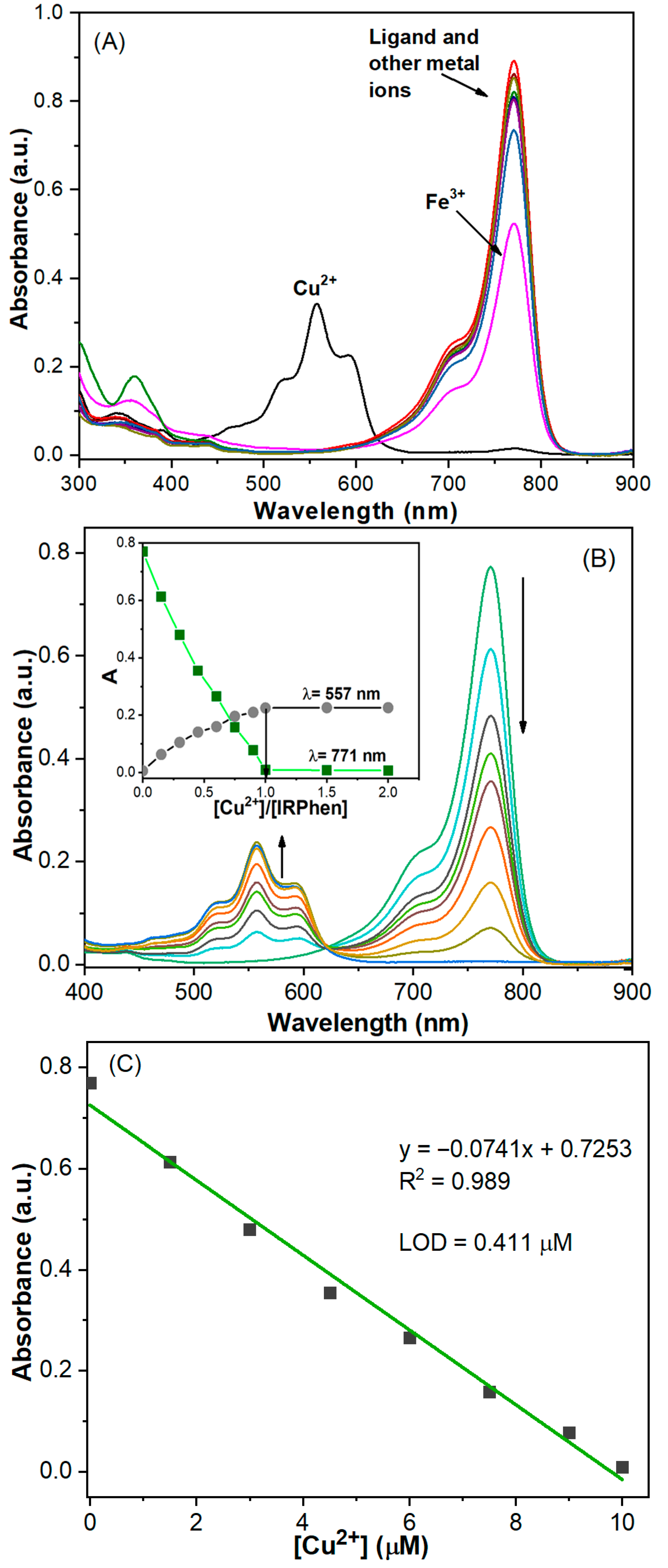
3.2. UV-Vis-NIR Absorption Spectra and Metal Ion Selectivity
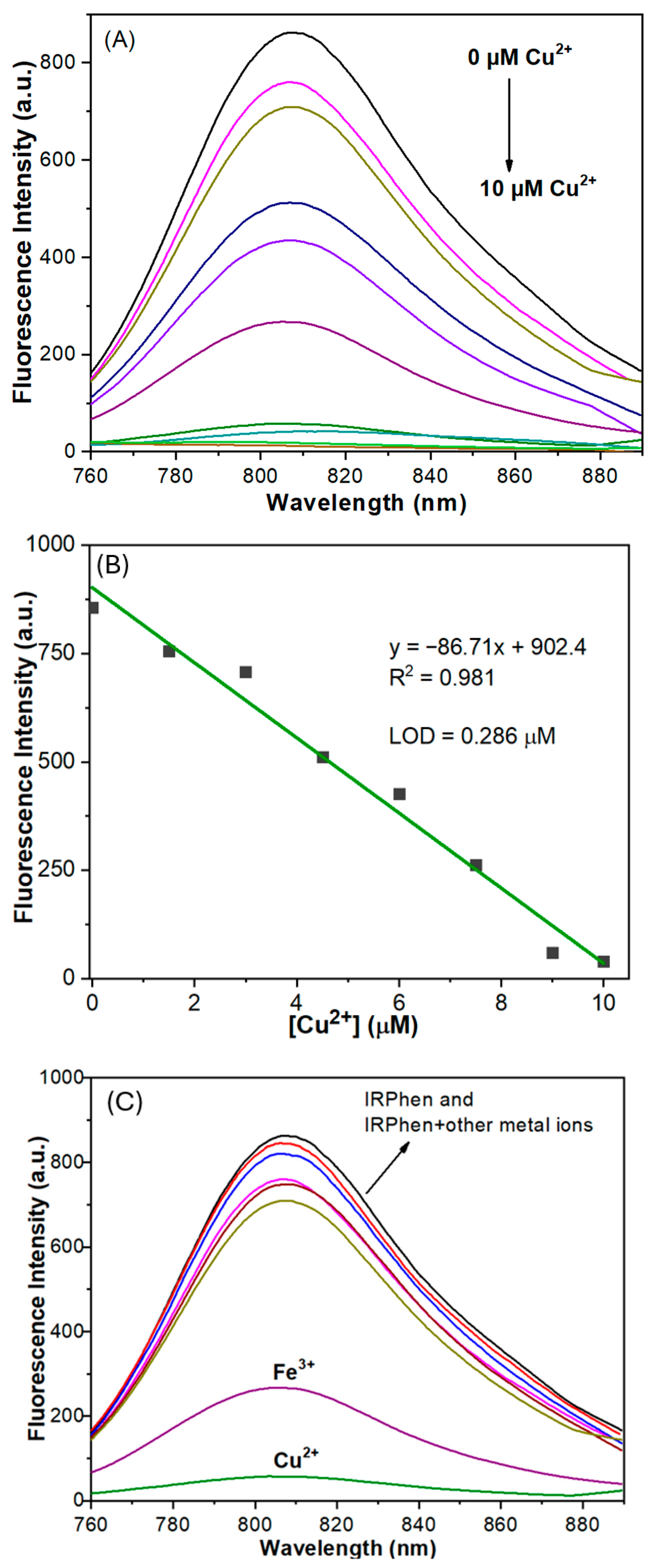
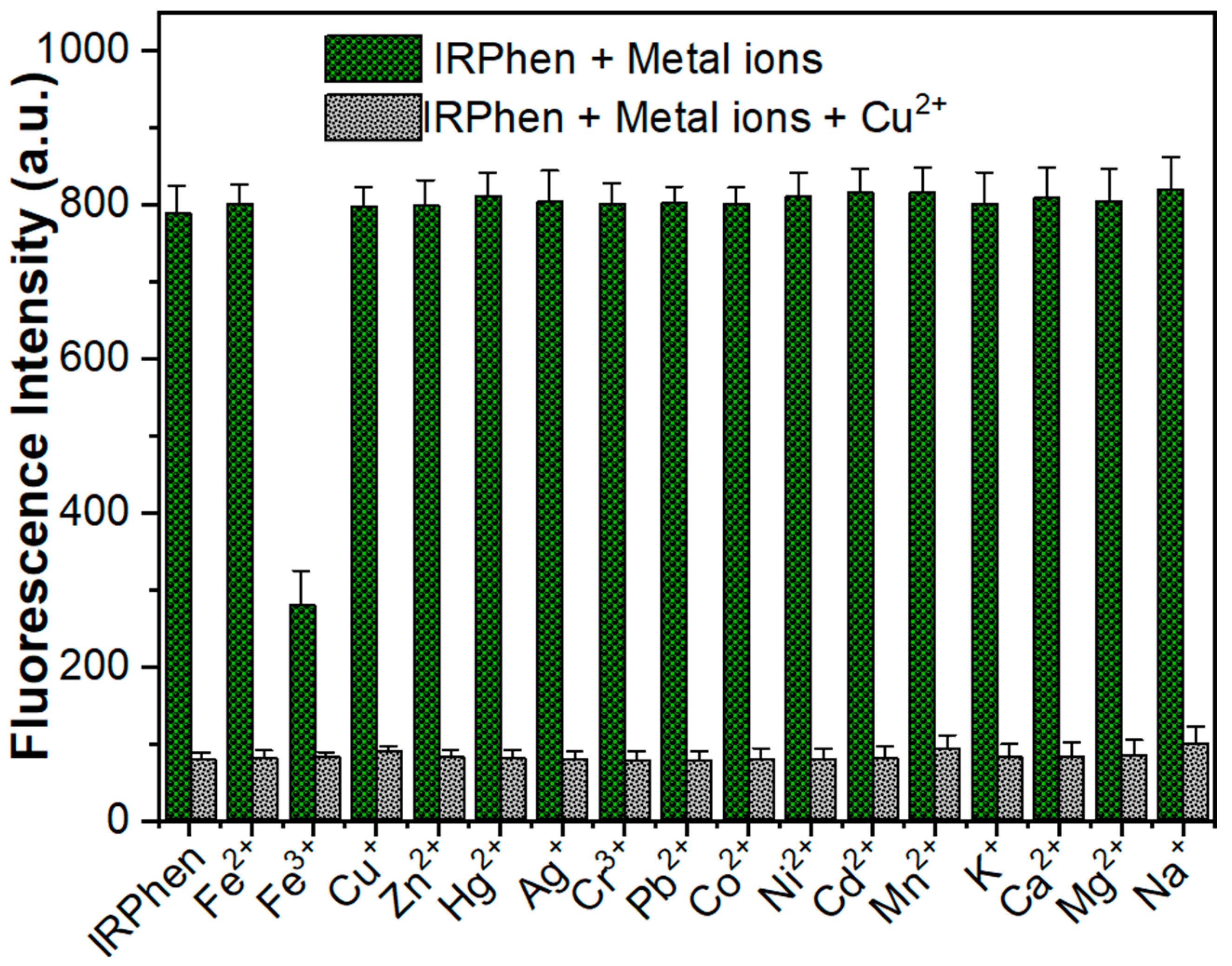
3.3. Fluorescent Properties of IRPhen
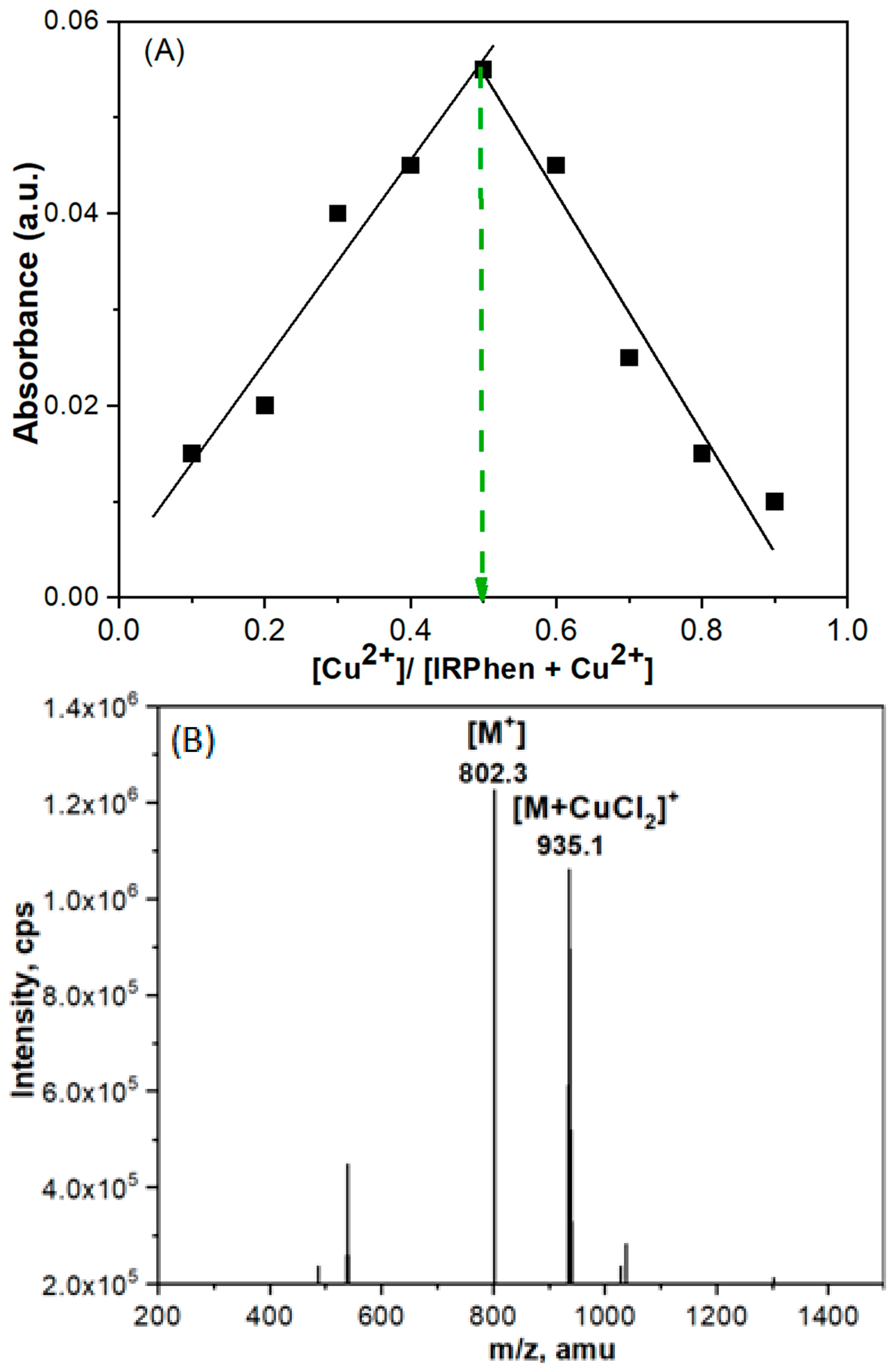
3.4. Binding Stoichiometry and Affinity Between IRPhen and Cu2+
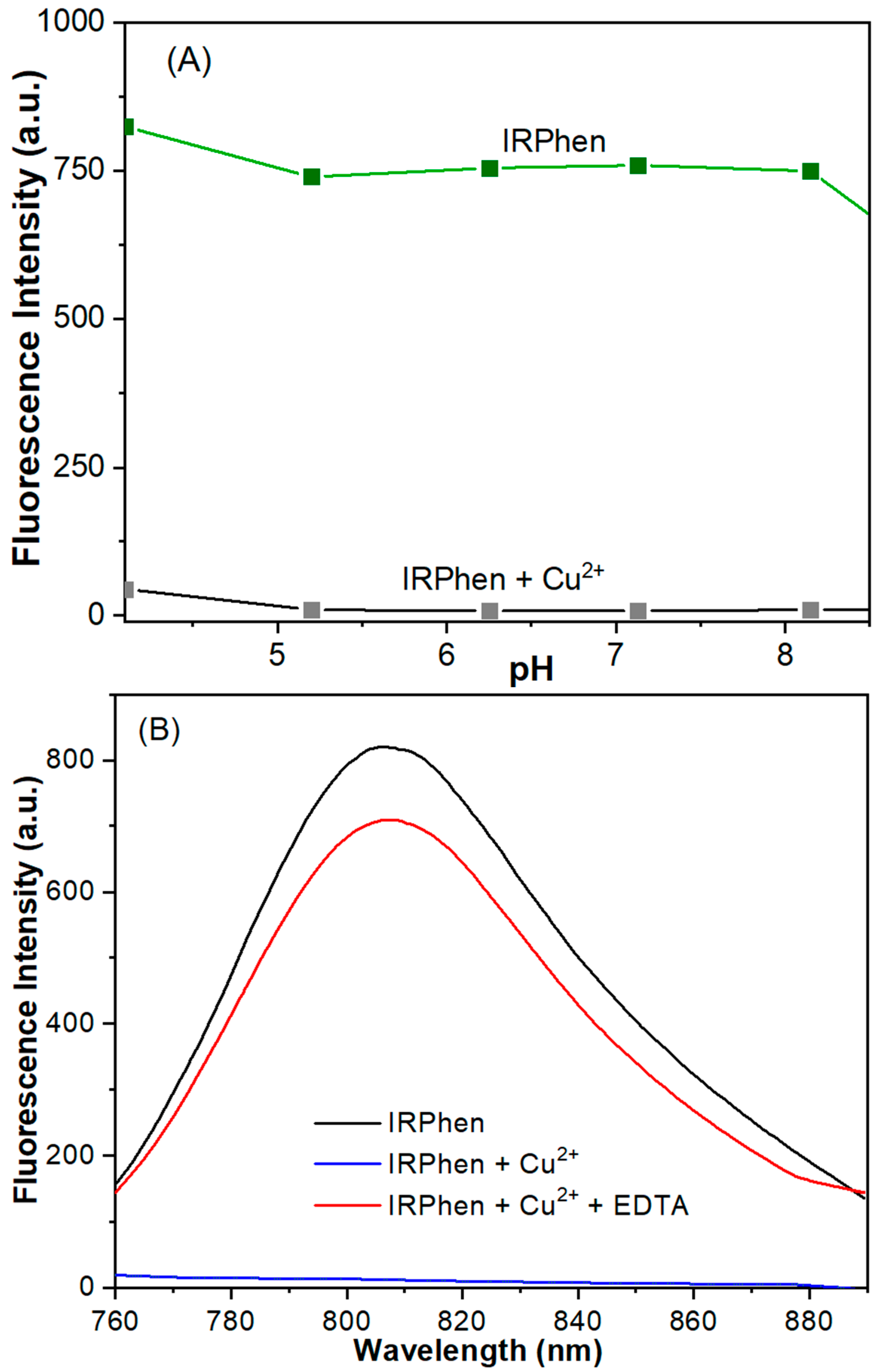
3.5. Reversibility and pH Effects on the Binding Between IRPhen and Cu2+
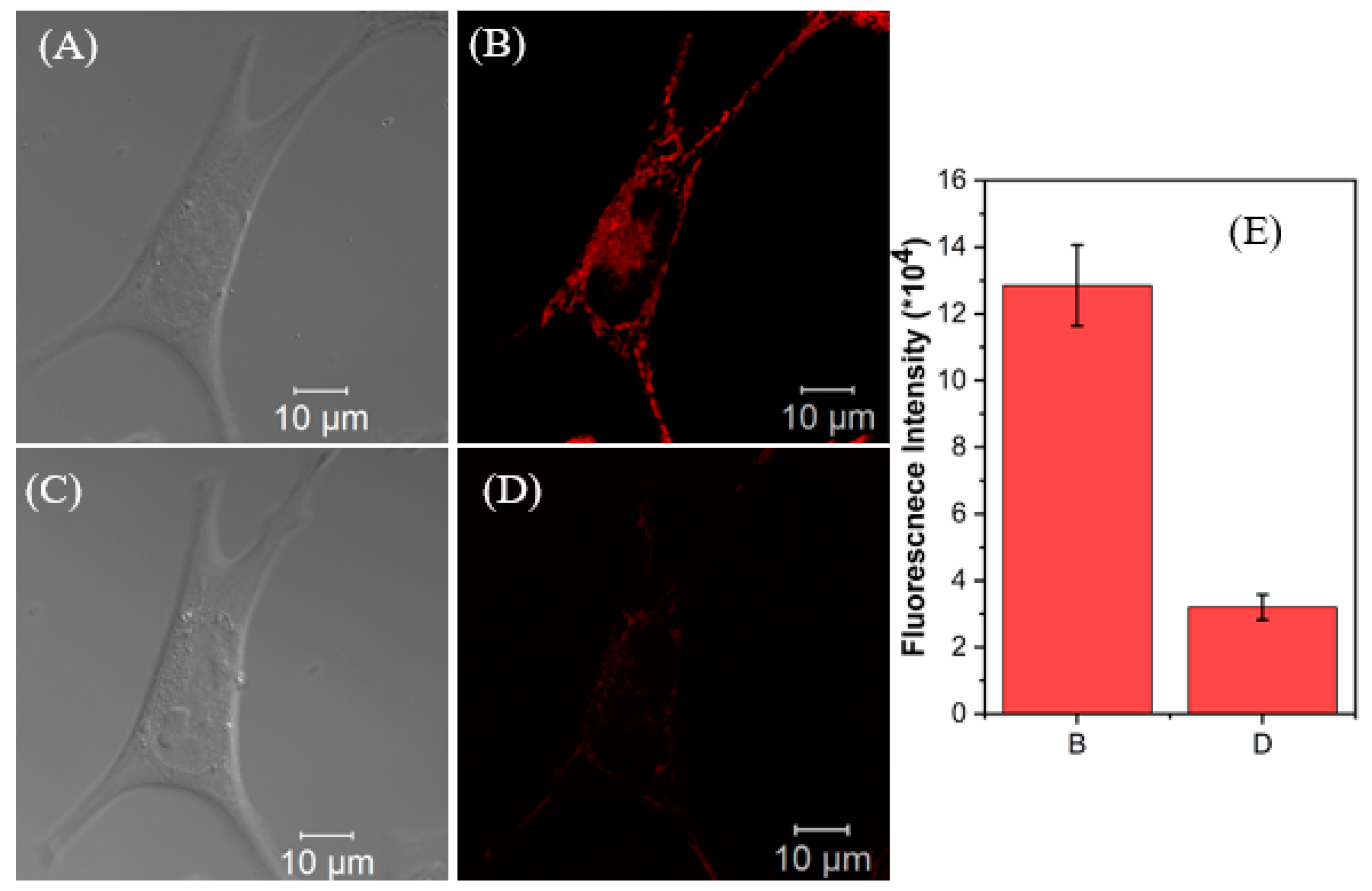
3.6. Cell Imaging Studies
3.7. Comparison with Previously Reported NIR Cu2+ Sensors
4. Conclusions
Author Contributions
Funding
Data Availability Statement
Acknowledgments
Conflicts of Interest
References
- Kaplan, J.H.; Maryon, E.B. How Mammalian Cells Acquire Copper: An Essential but Potentially Toxic Metal. Biophys. J. 2016, 110, 7–13. [Google Scholar] [CrossRef] [PubMed]
- Robinson, N.J.; Winge, D.R. Copper Metallochaperones. Annu. Rev. Biochem. 2010, 79, 537–562. [Google Scholar] [CrossRef] [PubMed]
- Gaggelli, E.; Kozlowski, H.; Valensin, D.; Valensin, G. Copper Homeostasis and Neurodegenerative Disorders (Alzheimer’s, Prion, and Parkinson’s Diseases and Amyotrophic Lateral Sclerosis). Chem. Rev. 2006, 106, 1995–2044. [Google Scholar] [CrossRef] [PubMed]
- Barceloux, D.G.; Barceloux, D. Copper. J. Toxicol. Clin. Toxicol. 1999, 37, 217–230. [Google Scholar] [CrossRef]
- Waggoner, D.J.; Bartnikas, T.B.; Gitlin, J.D. The Role of Copper in Neurodegenerative Disease. Neurobiol. Dis. 1999, 6, 221–230. [Google Scholar] [CrossRef]
- Barnham, K.J.; Masters, C.L.; Bush, A.I. Neurodegenerative diseases and oxidative stress. Nat. Rev. Drug Discov. 2004, 3, 205–214. [Google Scholar] [CrossRef]
- Kozlowski, H.; Luczkowski, M.; Remelli, M.; Valensin, D. Copper, zinc and iron in neurodegenerative diseases (Alzheimer’s, Parkinson’s and prion diseases). Coord. Chem. Rev. 2012, 256, 2129–2141. [Google Scholar] [CrossRef]
- Tsvetkov, P.; Coy, S.; Petrova, B.; Dreishpoon, M.; Verma, A.; Abdusamad, M.; Rossen, J.; Joesch-Cohen, L.; Humeidi, R.; Spangler, R.D.; et al. Copper induces cell death by targeting lipoylated TCA cycle proteins. Science 2022, 375, 1254–1261. [Google Scholar] [CrossRef]
- Yang, W.; Jaramillo, D.; Gooding, J.J.; Hibbert, D.B.; Zhang, R.; Willett, G.D.; Fisher, K.J. Sub-ppt detection limits for copper ions with Gly-Gly-His modified electrodes. Chem. Commun. 2001, 19, 1982–1983. [Google Scholar] [CrossRef]
- Xiong, X.; Jiang, T.; Zhou, R.; Wang, S.; Zou, W.; Zhu, Z. Microwave plasma torch mass spectrometry for the direct detection of copper and molybdenum ions in aqueous liquids: Microwave plasma torch mass spectrometry. J. Mass Spectrom. 2016, 51, 369–377. [Google Scholar] [CrossRef]
- Lin, T.-W.; Huang, S.-D. Direct and Simultaneous Determination of Copper, Chromium, Aluminum, and Manganese in Urine with a Multielement Graphite Furnace Atomic Absorption Spectrometer. Anal. Chem. 2001, 73, 4319–4325. [Google Scholar] [CrossRef] [PubMed]
- Tonon, A.P.; Oliveira, M.C.; Soriano, E.M.; Colepicolo, P. Absorption of metals and characterization of chemical elements present in three species of Gracilaria (Gracilariaceae) Greville: A genus of economical importance. Rev. Bras. Farm. 2011, 21, 355–360. [Google Scholar] [CrossRef]
- Chrastný, V.; Komárek, M. Copper determination using ICP-MS with hexapole collision cell. Chem. Pap. 2009, 63, 512–519. [Google Scholar] [CrossRef]
- Osipova, E.; Sladkov, V.; Kamenev, A.; Shkinev, V.; Geckeler, K. Determination of Ag(I), Hg(II), Cu(II), Pb(II), Cd(II) by stripping voltammetry in aqueous solutions using complexing polymers in conjunction with membrane filtration. Anal. Chim. Acta 2000, 404, 231–240. [Google Scholar] [CrossRef]
- Cheng, D.; Liu, X.; Yang, H.; Zhang, T.; Han, A.; Zang, L. A Cu2+-Selective Probe Based on Phenanthro-Imidazole Derivative. Sensors 2016, 17, 35. [Google Scholar] [CrossRef]
- Aydin, Z.; Wei, Y.; Guo, M. An “off–on” optical sensor for mercury ion detection in aqueous solution and living cells. Inorg. Chem. Commun. 2014, 50, 84–87. [Google Scholar] [CrossRef]
- Maiti, S.; Aydin, Z.; Zhang, Y.; Guo, M. Reaction-based turn-on fluorescent probes with magnetic responses for Fe2+ detection in live cells. Dalton Trans. 2015, 44, 8942–8949. [Google Scholar] [CrossRef]
- Wei, Y.; Aydin, Z.; Zhang, Y.; Liu, Z.; Guo, M. A Turn-on Fluorescent Sensor for Imaging Labile Fe3+ in Live Neuronal Cells at Subcellular Resolution. ChemBioChem 2012, 13, 1569–1573. [Google Scholar] [CrossRef]
- Ozdemir, M. A novel chromogenic molecular sensing platform for highly sensitive and selective detection of Cu2+ ions in aqueous environment. J. Photochem. Photobiol. A Chem. 2019, 369, 54–69. [Google Scholar] [CrossRef]
- Reineck, P.; Gibson, B.C. Near-Infrared Fluorescent Nanomaterials for Bioimaging and Sensing. Adv. Opt. Mater. 2017, 5, 1600446. [Google Scholar] [CrossRef]
- Li, J.-B.; Liu, H.-W.; Fu, T.; Wang, R.; Zhang, X.-B.; Tan, W. Recent Progress in Small-Molecule Near-IR Probes for Bioimaging. Trends Chem. 2019, 1, 224–234. [Google Scholar] [CrossRef] [PubMed]
- Gong, Y.-J.; Zhang, X.-B.; Mao, G.-J.; Su, L.; Meng, H.-M.; Tan, W.; Feng, S.; Zhang, G. A unique approach toward near-infrared fluorescent probes for bioimaging with remarkably enhanced contrast. Chem. Sci. 2016, 7, 2275–2285. [Google Scholar] [CrossRef] [PubMed]
- Smith, A.M.; Mancini, M.C.; Nie, S. Second window for in vivo imaging. Nat. Nanotechnol. 2009, 4, 710–711. [Google Scholar] [CrossRef] [PubMed]
- Huang, Y.; Li, C.-F.; Shi, W.-J.; Tan, H.-Y.; He, Z.-Z.; Zheng, L.; Liu, F.; Yan, J.-W. A near-infrared BODIPY-based fluorescent probe for ratiometric and discriminative detection of Hg2+ and Cu2+ ions in living cells. Talanta 2019, 198, 390–397. [Google Scholar] [CrossRef]
- Zhu, J.; Graziotto, M.E.; Cottam, V.; Hawtrey, T.; Adair, L.D.; Trist, B.G.; Pham, N.T.; Rouaen, J.R.C.; Ohno, C.; Heisler, M.; et al. Near-Infrared Ratiometric Fluorescent Probe for Detecting Endogenous Cu2+ in the Brain. ACS Sens. 2024, 9, 2858–2868. [Google Scholar] [CrossRef]
- Zhang, B.; Zeng, D.; Zhang, Y.-X.; Pan, P.; Wang, J.; Shen, A.; Lu, J.-X.; Zhu, Y.-J.; Xing, A.-P.; Yuan, J. A highly sensitive and selective rectilinearly π-extended NIR fluorescent rhodamine probe for Cu2+ detection in real food samples and fluorescence bioimaging in living cells and mice. Spectrochim. Acta Part A Mol. Biomol. Spectrosc. 2025, 340, 126310. [Google Scholar] [CrossRef]
- Chang, Z.; Li, S.; Ye, J.-H.; Lin, F.; Chen, Y.; Guo, Z.; He, W. A dual-response ratiometric near-infrared fluorescence probe based on cyanine platform for Cu2+ detection and its imaging in vitro and vivo. Spectrochim. Acta Part A Mol. Biomol. Spectrosc. 2024, 325, 125115. [Google Scholar] [CrossRef]
- Cao, X.; Lin, W.; He, L. A Near-Infrared Fluorescence Turn-On Sensor for Sulfide Anions. Org. Lett. 2011, 13, 4716–4719. [Google Scholar] [CrossRef]
- Xu, Z.-H.; Wang, H.-W.; Hou, X.-F.; Xu, W.-L.; Xiang, T.-C.; Wu, C.-Z. A novel ratiometric colorimetric and NIR fluorescent probe for detecting Cu2+ with high selectivity and sensitivity based on rhodamine-appended cyanine. Sensors Actuators B Chem. 2014, 201, 469–474. [Google Scholar] [CrossRef]
- Chen, X.; Nam, S.-W.; Kim, G.-H.; Song, N.; Jeong, Y.; Shin, I.; Kim, S.K.; Kim, J.; Park, S.; Yoon, J. A near-infrared fluorescent sensor for detection of cyanide in aqueous solution and its application for bioimaging. Chem. Commun. 2010, 46, 8953–8955. [Google Scholar] [CrossRef]
- Tachapermpon, Y.; Thavornpradit, S.; Charoenpanich, A.; Sirirak, J.; Burgess, K.; Wanichacheva, N. Near-infrared aza-BODIPY fluorescent probe for selective Cu2+ detection and its potential in living cell imaging. Dalton Trans. 2017, 46, 16251–16256. [Google Scholar] [CrossRef] [PubMed]
- Chen, J.; Luo, R.; Li, S.; Shao, J.; Wang, T.; Xie, S.; Xu, L.; You, Q.; Feng, S.; Feng, G. A novel NIR fluorescent probe for copper(ii) imaging in Parkinson’s disease mouse brain. Chem. Sci. 2024, 15, 13082–13089. [Google Scholar] [CrossRef] [PubMed]
- Ahmed, N.; Liu, J.; Xu, X.; Hussain, A.; Mustafai, A.; Yar, M.; Ayub, K.; Alothman, A.A.; Mohammad, S.; Ye, Y.; et al. An activatable NIR turn-on fluorescent probe for copper (II) ion and live cell imaging. Sci. Rep. 2024, 14, 1–13. [Google Scholar] [CrossRef] [PubMed]
- Li, P.-J.; Yang, J.; Yan, L. A near-infrared fluorescent probe for detecting Cu2+ and its versatile applications. Anal. Methods 2025, 17, 4679–4685. [Google Scholar] [CrossRef]
- Zhao, J.; Wang, Y.-Y.; Chen, W.-L.; Hao, G.-S.; Sun, J.-P.; Shi, Q.-F.; Tian, F.; Ma, R.-T. A salicylaldehyde benzoyl hydrazone based near-infrared probe for copper(ii) and its bioimaging applications. RSC Adv. 2022, 12, 3073–3080. [Google Scholar] [CrossRef]
- Aydin, Z.; Yan, B.; Wei, Y.; Guo, M. A novel near-infrared turn-on and ratiometric fluorescent probe capable of copper(ii) ion determination in living cells. Chem. Commun. 2020, 56, 6043–6046. [Google Scholar] [CrossRef]
- Cheng, G.; Fan, J.; Sun, W.; Cao, J.; Hu, C.; Peng, X. A near-infrared fluorescent probe for selective detection of HClO based on Se-sensitized aggregation of heptamethine cyanine dye. Chem. Commun. 2013, 50, 1018–1020. [Google Scholar] [CrossRef]
- Lou, Z.; Li, P.; Han, K. Redox-Responsive Fluorescent Probes with Different Design Strategies. Accounts Chem. Res. 2015, 48, 1358–1368. [Google Scholar] [CrossRef]
- Yu, F.; Li, P.; Li, G.; Zhao, G.; Chu, T.; Han, K. A Near-IR Reversible Fluorescent Probe Modulated by Selenium for Monitoring Peroxynitrite and Imaging in Living Cells. J. Am. Chem. Soc. 2011, 133, 11030–11033. [Google Scholar] [CrossRef]
- Cheng, F.; Tang, N.; Chen, L. Synthesis, Photophysical, and Electrochemical Properties of Ruthenium(II) Polypyridyl Complexes containing Open-Chain Crown Ether. Z. Fur. Anorg. Allg. Chem. 2008, 634, 1608–1612. [Google Scholar] [CrossRef]
- Wong, J.K.-H.; Todd, M.H.; Rutledge, P.J. Recent Advances in Macrocyclic Fluorescent Probes for Ion Sensing. Molecules 2017, 22, 200. [Google Scholar] [CrossRef]
- Bergonzi, R.; Fabbrizzi, L.; Licchelli, M.; Mangano, C. Molecular switches of fluorescence operating through metal centred redox couples. Coord. Chem. Rev. 1998, 170, 31–46. [Google Scholar] [CrossRef]
- Kemlo, J.A.; Shepherd, T. Quenching of excited singlet states by metal ions. Chem. Phys. Lett. 1977, 47, 158–162. [Google Scholar] [CrossRef]
- Mishra, A.; Behera, R.K.; Behera, P.K.; Mishra, B.K.; Behera, G.B. Cyanines during the 1990s: A Review. Chem. Rev. 2000, 100, 1973–2012. [Google Scholar] [CrossRef] [PubMed]
- Gao, X.; Wu, W.; Xi, J.; Zheng, H. Manipulation of monomer-aggregate transformation of a heptamethine cyanine ligand: Near infrared chromogenic recognition of Hg2+. RSC Adv. 2017, 7, 32732–32736. [Google Scholar] [CrossRef]
- Strekowski, L.; Lipowska, M.; Patonay, G. Substitution reactions of a nucleofugal group in heptamethine cyanine dyes.Synthesis of an isothiocyanato derivative for labeling of proteins with a near-infrared chromophore. J. Org. Chem. 1992, 57, 4578–4580. [Google Scholar] [CrossRef]
- Comba, P.; Krämer, R.; Mokhir, A.; Naing, K.; Schatz, E. Synthesis of New Phenanthroline-Based Heteroditopic Ligands—Highly Efficient and Selective Fluorescence Sensors for Copper(II) Ions. Eur. J. Inorg. Chem. 2006, 2006, 4442–4448. [Google Scholar] [CrossRef]
- Gorai, S.; Ghosh, A.; Chakraborty, S.; Retailleau, P.; Ghanty, T.K.; Patro, B.S.; Mula, S. Fluorescent Cu2+ sensor based on phenanthroline-BODIPY conjugate: A mechanistic study. Dye. Pigment. 2022, 203, 110343. [Google Scholar] [CrossRef]
- Guo, M.; Perez, C.; Wei, Y.; Rapoza, E.; Su, G.; Bou-Abdallah, F.; Chasteen, N.D. Iron-binding properties of plant phenolics and cranberry’s bio-effects. Dalton Trans. 2007, 43, 4951–4961. [Google Scholar] [CrossRef]
- Alhawsah, B.; Yan, B.; Aydin, Z.; Niu, X.; Guo, M. Highly Selective Fluorescent Probe With an Ideal pH Profile for the Rapid and Unambiguous Determination of Subcellular Labile Iron (III) Pools in Human Cells. Anal. Lett. 2022, 55, 1954–1970. [Google Scholar] [CrossRef]
- Wang, K.; Gu, K.-F.; Cao, J.; Yang, Y.-S.; Zhu, H.-L.; Shang, J.-H.; Zhou, J.-L. Activatable Photoacoustic/Near-Infrared Probes for the Detection of Copper Ions of Cardiovascular Disease In Vivo and in Urine. ACS Sensors 2024, 9, 4898–4905. [Google Scholar] [CrossRef]
- Deshpande, S.S.; Khopkar, S.S.; Shankarling, G.S. A thiazoloquinoxaline based “turn-on” chemodosimeter for detection of copper ions. Dye. Pigment. 2017, 147, 393–399. [Google Scholar] [CrossRef]
- Guo, R.; Wang, Q.; Lin, W. A Ratiometric and near-Infrared Fluorescent Probe for Imaging Cu2+ in Living Cells and Animals. J. Fluoresc. 2017, 27, 1655–1660. [Google Scholar] [CrossRef]



| Probe | Solvent System | Excitation/Emission Wavelength (nm) | Reversible Binding | LOD (µM) | Bioimaging Cell Models | Reference |
|---|---|---|---|---|---|---|
 | ACN/H2O (1/1, v/v) | Ex = 750 nm, Em = 808 nm | Yes | 0.286 | Living cells/WS1 | This work |
 | THF/H2O (6/4, v/v) | Ex = 450 nm, 750 nm Em = 593 nm, 825 nm | No | 1.4 | Living cells/HeLa | [27] |
 | ACN/H2O (4/6, v/v) | Ex = 620 nm Em = 689 nm | No | 0.33 | Living cells/HepG-2 | [33] |
 | EtOH/PBS (2/8, v/v) | Ex = 640 nm, Em = 730 nm | No | 0.362 | Living cells/THP-1 | [51] |
 | ACN | Ex = 670 nm, Em = 975 nm | No | 4.44 | --- | [52] |
 | ACN/HEPES (1/4, v/v) | Ex =533 nm, 720 nm, Em = 636 nm, 778 nm | ND | 0.089 | Living cells/SMMC7721 | [53] |
 | ACN/PBS (1/1, v/v) | Ex = 690 nm, Em = 744 nm | No | 0.028 | Living cells/A549, Hela | [35] |
 | HEPES/DMSO/ CrEL (99/1/0.1, v/v) | Ex = 523 nm, 710 nm Em = 600 nm, 810 nm | No | 0.053 | Living cells/SH-SY5Y | [25] |
 | HEPES/DMSO (99.5/0.5, v/v) | Ex = 602 nm, Em = 662 nm | No | 0.0018 | Living cells/PC-12 | [32] |
 | ACN/MOPS (1/1, v/v) | Ex = 425 nm, 650 nm, Em = 520 nm, 696 nm | Yes | 0.020 | Living cells/WS1 | [36] |
Disclaimer/Publisher’s Note: The statements, opinions and data contained in all publications are solely those of the individual author(s) and contributor(s) and not of MDPI and/or the editor(s). MDPI and/or the editor(s) disclaim responsibility for any injury to people or property resulting from any ideas, methods, instructions or products referred to in the content. |
© 2025 by the authors. Licensee MDPI, Basel, Switzerland. This article is an open access article distributed under the terms and conditions of the Creative Commons Attribution (CC BY) license.
Share and Cite
Aydin, Z.; Yan, B.; Guo, M. A Heptamethine Cyanine-Based Near-Infrared Optical Sensor for Copper(II) Detection in Aqueous Solutions and Living Cells. Sensors 2026, 26, 130. https://doi.org/10.3390/s26010130
Aydin Z, Yan B, Guo M. A Heptamethine Cyanine-Based Near-Infrared Optical Sensor for Copper(II) Detection in Aqueous Solutions and Living Cells. Sensors. 2026; 26(1):130. https://doi.org/10.3390/s26010130
Chicago/Turabian StyleAydin, Ziya, Bing Yan, and Maolin Guo. 2026. "A Heptamethine Cyanine-Based Near-Infrared Optical Sensor for Copper(II) Detection in Aqueous Solutions and Living Cells" Sensors 26, no. 1: 130. https://doi.org/10.3390/s26010130
APA StyleAydin, Z., Yan, B., & Guo, M. (2026). A Heptamethine Cyanine-Based Near-Infrared Optical Sensor for Copper(II) Detection in Aqueous Solutions and Living Cells. Sensors, 26(1), 130. https://doi.org/10.3390/s26010130