Review

A Survey on the Design of Virtual Reality Interaction Interfaces

Cheung Kong School of Art and Design, Shantou University, Shantou 515063, China
*
Author to whom correspondence should be addressed.
Sensors 2024, 24(19), 6204; https://doi.org/10.3390/s24196204
Submission received: 23 July 2024 / Revised: 20 September 2024 / Accepted: 23 September 2024 / Published: 25 September 2024
(This article belongs to the Section Intelligent Sensors)

Abstract

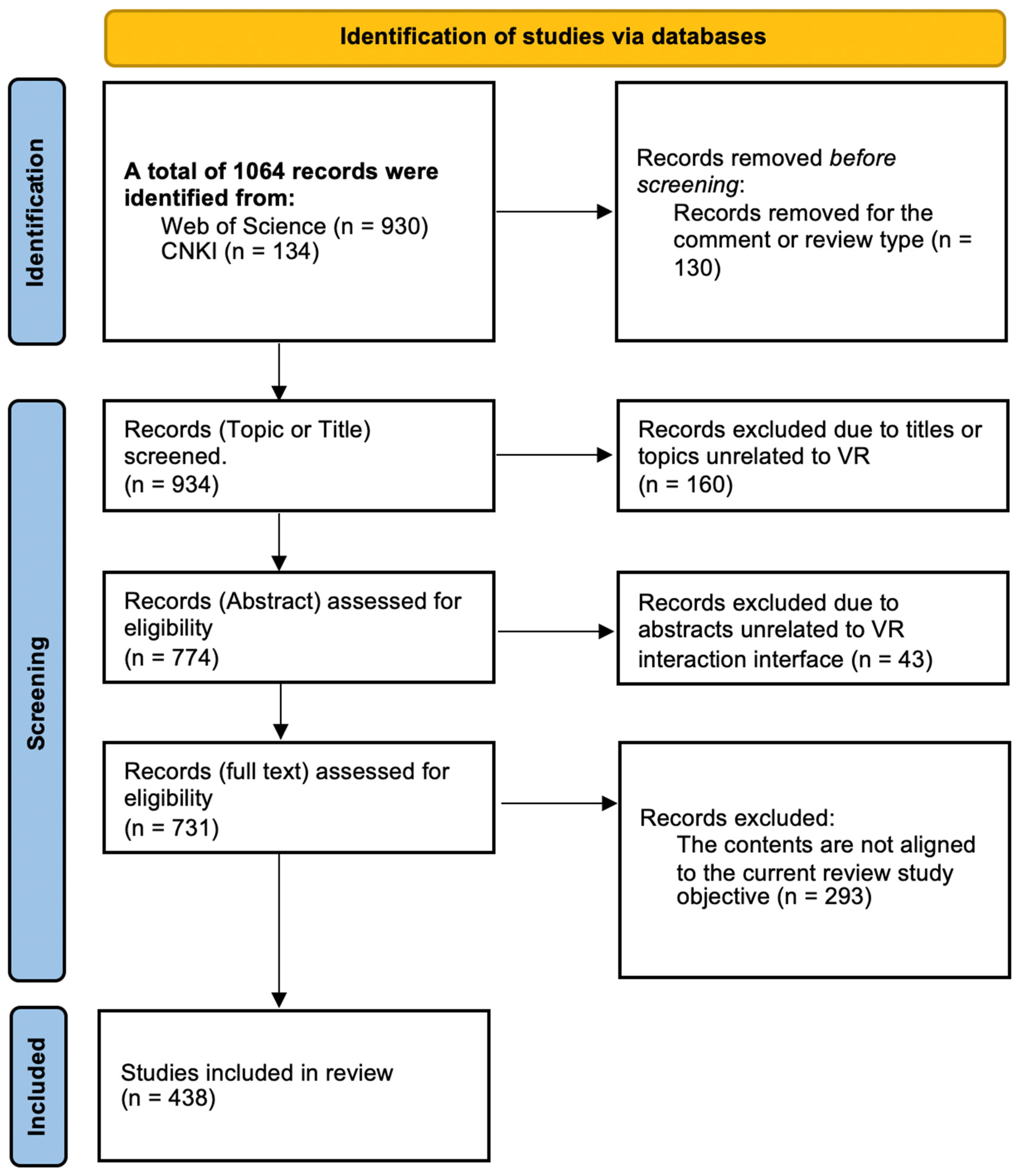
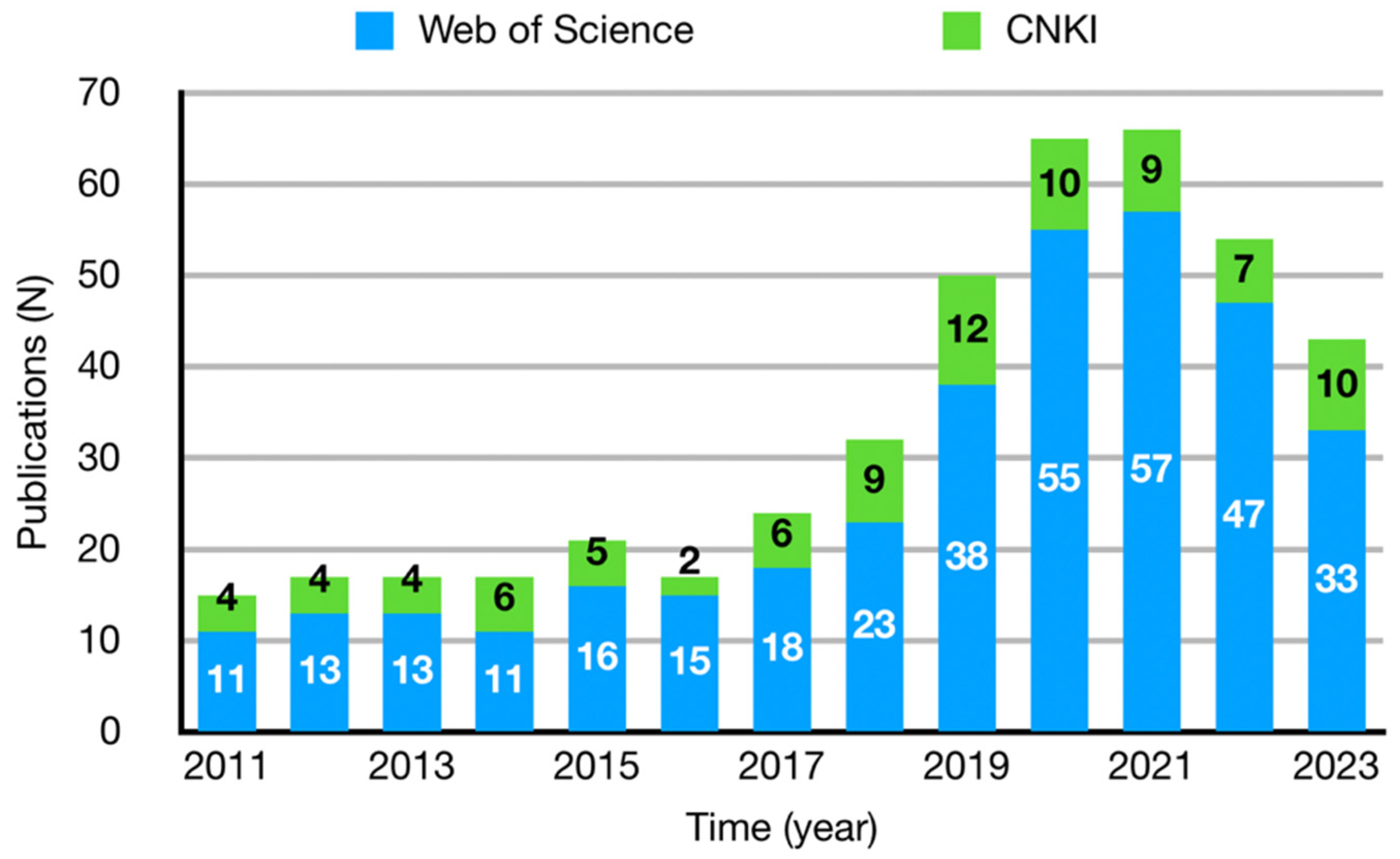
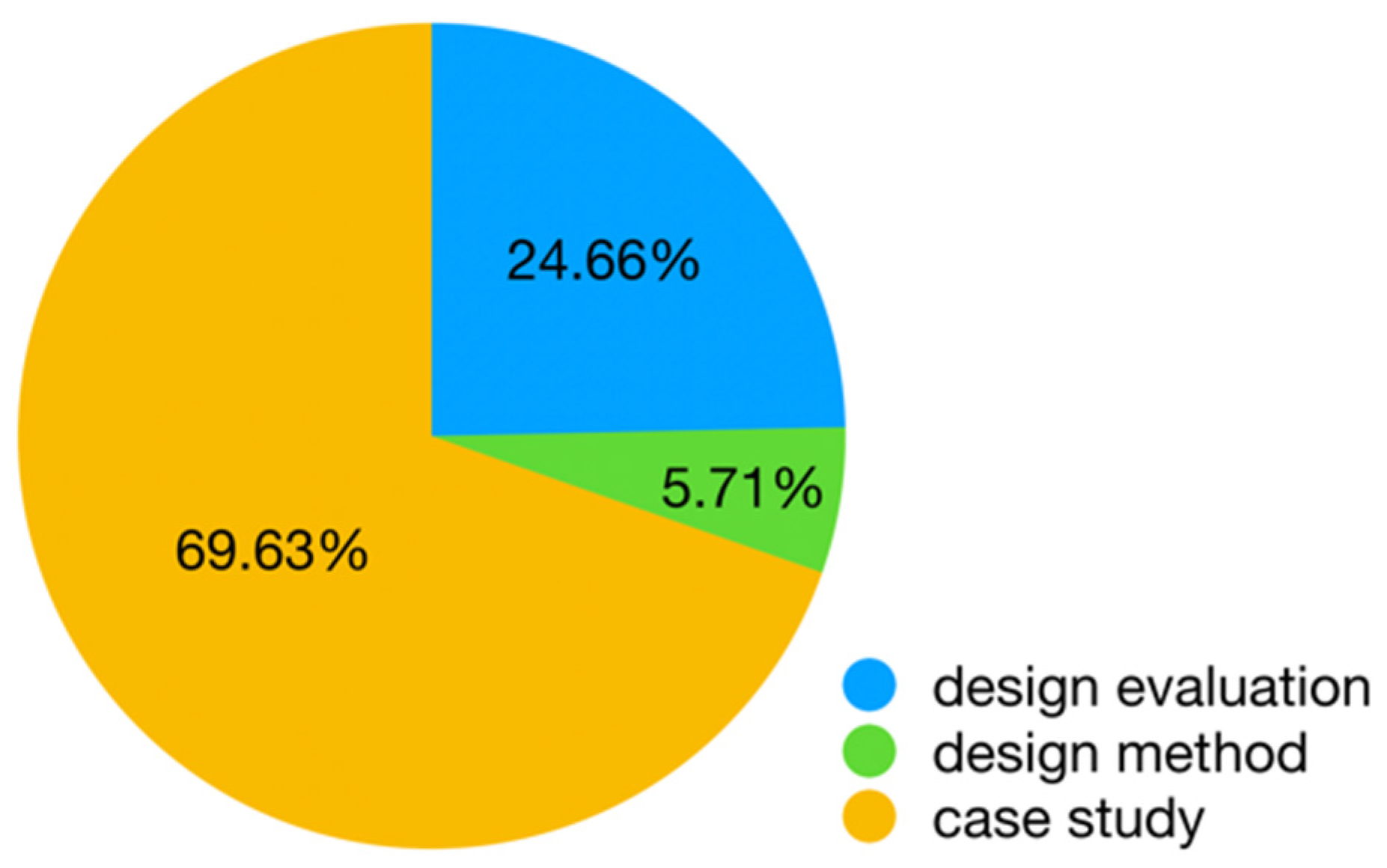
Virtual reality (VR) technology has made remarkable progress in recent years and will be widely used in the future. As a bridge for information exchanges between users and VR systems, the interaction interface is pivotal for providing users with a good experience and has emerged as a key research focus. In this review, we conducted a comprehensive search of the Web of Science and CNKI databases from 2011 to 2023 to identify articles dedicated to VR interaction interface design. Through a meticulous analysis of 438 articles, this paper offers a substantial contribution to the emerging field of VR interactive interface research, providing an in-depth review of the principal research advancements. This review revealed that the majority of studies are centered on practical case analyses within specific application scenarios, employing empirical evaluation methods to assess objective or subjective metrics. We then concentrated on elucidating the foundational principles of interface design and their evaluation methodologies, providing a reference for future research endeavors. Additionally, the limitations, challenges, and future directions in VR interaction interface design research were discussed, highlighting the need for further research in design evaluation to continuously refine the development of standards and guidelines for VR interactive interface design. According to the findings of this review, there is a necessity to enhance research on information design for multi-channel interactive interfaces. Furthermore, it is essential to focus on the diverse characteristics of users to propose more inclusive design solutions. Adopting interdisciplinary approaches could lead to breakthroughs in the creation of personalized and adaptive VR interaction interfaces.
Keywords: virtual reality; interaction interface; user experience; design evaluation virtual reality; interaction interface; user experience; design evaluation