1. Introduction
In Poland, as in other European countries, the population aged ≥85 years is steadily increasing, with projections suggesting a doubling by 2050 [
1]. Current estimates indicate that approximately 840,000 individuals in Poland fall within this age group [
2]. Atrial fibrillation (AF) is particularly prevalent among the elderly, affecting an estimated 15–25% of individuals aged ≥85 years [
3,
4,
5,
6]. Data from the NOMED-AF study, which used 30-day electrocardiographic monitoring, reported an even higher prevalence of 31.9% in this population [
7,
8].
If these estimates hold, this would correspond to approximately 270,000 very elderly individuals with AF in Poland and nearly 4 million across the European Union. Patients in this age group frequently present with multiple comorbidities, including dementia, chronic kidney disease, hypertension, diabetes, and an increased risk of falls, all of which complicate clinical management.
Advancing age is associated with both increased thromboembolic and bleeding risk, as reflected by higher CHA
2DS
2-VA and HAS-BLED scores. Age-related physiological changes—such as altered coagulation factor levels, impaired fibrinolysis, endothelial dysfunction, and reduced mobility—further promote thrombus formation [
9,
10,
11,
12]. In addition, age-related organ dysfunction, particularly involving the kidneys and liver, along with changes in body composition and polypharmacy, significantly alter drug pharmacokinetics and pharmacodynamics. These factors collectively increase the risk of adverse drug reactions, including bleeding complications.
Consequently, anticoagulation therapy in very elderly patients with AF remains particularly challenging, requiring a careful balance between the benefits of stroke prevention and the increased risk of bleeding. Despite the rapidly growing number of patients aged ≥85 years, evidence to guide treatment decisions in this population is still limited because very elderly individuals are rarely well-represented in randomized clinical trials of direct oral anticoagulants. At the same time, the ≥85-year threshold is commonly used in AF registries and observational studies to define the “oldest-old” population, facilitating comparisons between studies and highlighting the specific clinical challenges associated with very advanced age. Nevertheless, real-world data on factors influencing anticoagulant selection in these patients remain limited.
Therefore, the aim of this study was to evaluate the clinical characteristics and determinants of anticoagulant therapy in patients with AF, with a particular focus on those aged ≥85 years. Using data from the CRAFT registry, we sought to identify the key clinical factors influencing treatment decisions and to determine whether these differ between younger elderly patients and those of very advanced age.
2. Materials and Methods
2.1. Study Design
This study was based on data from the CRAFT registry (MultiCenter expeRience in AFib patients Treated with OAC), registered at ClinicalTrials.gov (Bethesda, MA, USA) (NCT02987062). The registry comprises a retrospective analysis of hospital discharge records for patients with AF treated with oral anticoagulants, including vitamin K antagonists (VKAs) and direct oral anticoagulants (DOACs).
The study was based on retrospective analysis of anonymized registry data and did not involve any intervention or direct patient contact. According to national regulations governing non-interventional retrospective studies using anonymized data, formal Institutional Review Board approval was not required. The registry initially included all adult patients hospitalized with AF at an academic center and a regional hospital between 2011 and 2016. Patients receiving anticoagulation for indications other than AF—such as venous thromboembolism or mechanical heart valves—were excluded.
The registry collected data on demographics, comorbidities, AF type (paroxysmal, persistent, or permanent), selected laboratory parameters, and treatment details. Since 2017, the registry has been maintained exclusively at the regional hospital, and the present analysis is based on these data. The design, objectives, and selected findings of the registry have been reported previously [
13,
14,
15].
2.2. Statistical Analysis
Statistical analyses were performed using SPSS software version 26.0 (IBM Corp., Armonk, NY, USA).
Continuous variables were summarized using mean (M), median (Md), standard deviation (SD), and sample size (N), and group comparisons were conducted using the Mann–Whitney U test due to non-normal data distribution.
Categorical variables were expressed as counts and percentages and compared using Pearson’s chi-square (χ2) test to assess associations between age groups (<85 vs. ≥85 years), clinical characteristics, comorbidities, and treatment patterns.
Logistic regression analysis was used to identify clinical factors independently associated with antithrombotic treatment strategies. Associations were expressed as odds ratios (ORs) with corresponding confidence intervals. Model performance was evaluated using −2 log-likelihood, the chi-square test, and pseudo-R2 statistics (Cox and Snell, Nagelkerke). A p-value <0.05 was considered statistically significant.
Separate logistic regression models were constructed for each anticoagulant regimen, defined as a specific drug–dose combination (e.g., apixaban 2.5 mg, rivaroxaban 20 mg). Thus, the dependent variable in each model was the prescription of a given anticoagulant strategy.
Due to the registry’s retrospective nature, some variables had limited missing data. Cases with incomplete data for variables included in a given regression model were excluded from that specific analysis using a complete-case approach.
Due to limited variability in some treatment categories in the ≥85 years group, regression models could not be constructed for all therapies. Only successfully developed models are presented.
3. Results
3.1. Baseline Characteristics
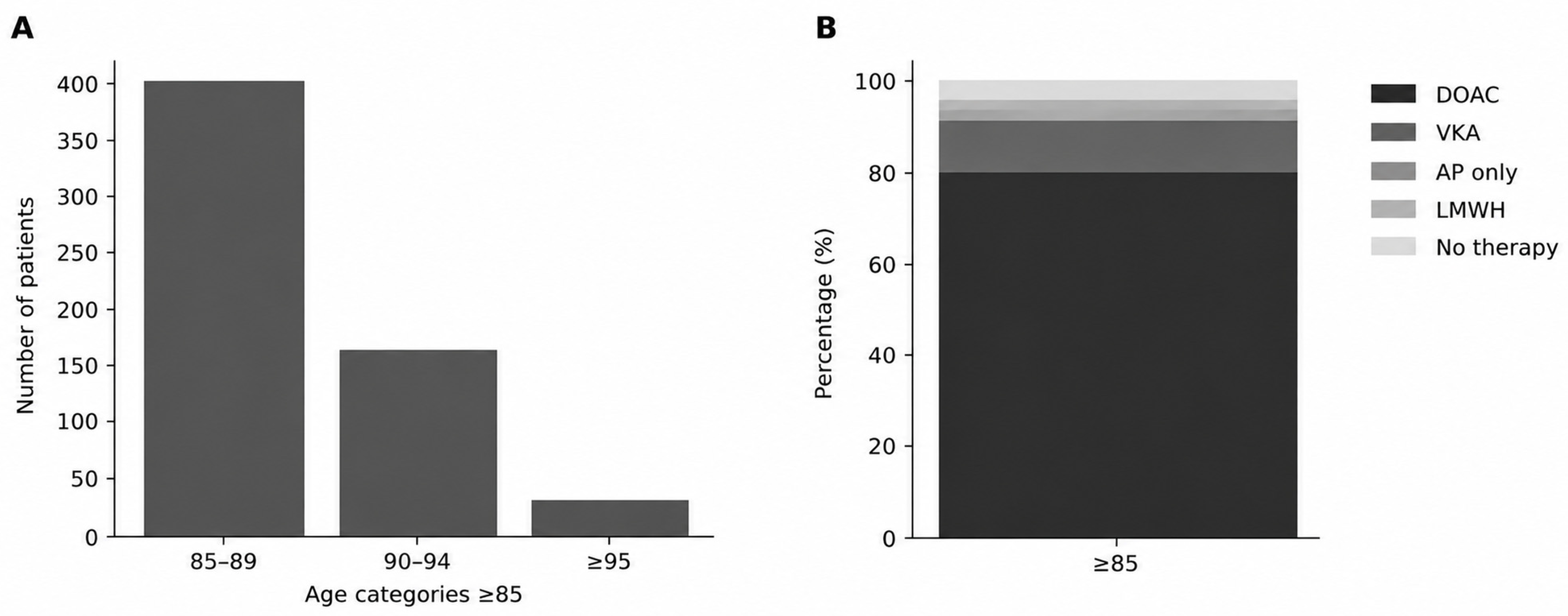
The study included 2914 patients with AF, of whom 2322 (79.7%) were <85 years and 592 (20.3%) were ≥85 years. In the older group, the mean age was 88.43 ± 2.99 years. Most patients were aged 85–89 years (n = 403), followed by 90–94 years (n = 162) and ≥95 years (n = 27).
In patients aged ≥85 years, direct oral anticoagulants (DOACs) were the most commonly used treatment (480 patients, 81.1%), followed by vitamin K antagonists (63 patients, 10.6%). Other treatment strategies included no anticoagulation (28 patients, 4.7%), low-molecular-weight heparin (11 patients, 1.9%), and antiplatelet therapy alone (10 patients, 1.7%) (
Figure 1A,B).
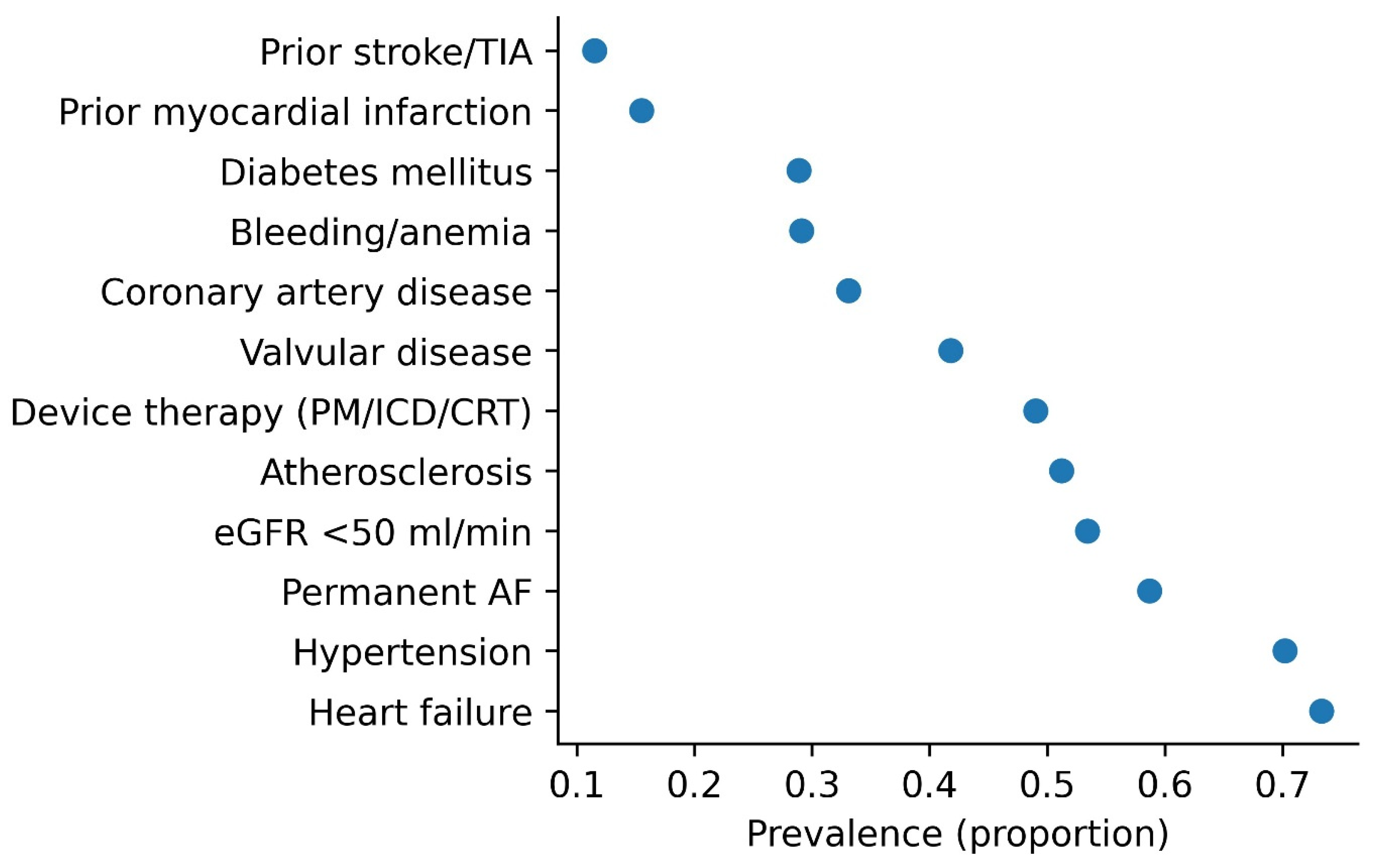
A marked difference in sex distribution was observed, with a higher proportion of women in the ≥85 years group (62.8% vs. 39.5%; χ2 = 102.89, p < 0.001). Patients aged ≥85 years had higher CHA2DS2-VA scores than younger patients (4.60 vs. 3.77; p < 0.001). Permanent AF was the predominant subtype (58.7%).
Comorbidities were common and included heart failure (73.3%), atherosclerosis (51.2%), and valvular heart disease (41.8%). Diabetes mellitus was present in 28.9% of patients, and 15.5% had a history of myocardial infarction. Bleeding or anemia was reported in 29.1% of patients.
Renal dysfunction was highly prevalent in the ≥85 years group: 316 patients (53.4%) had an eGFR < 50 mL/min, including 82 patients (13.9%) with severe renal impairment (eGFR < 30 mL/min).
Baseline characteristics stratified by age are summarized in
Table 1 and
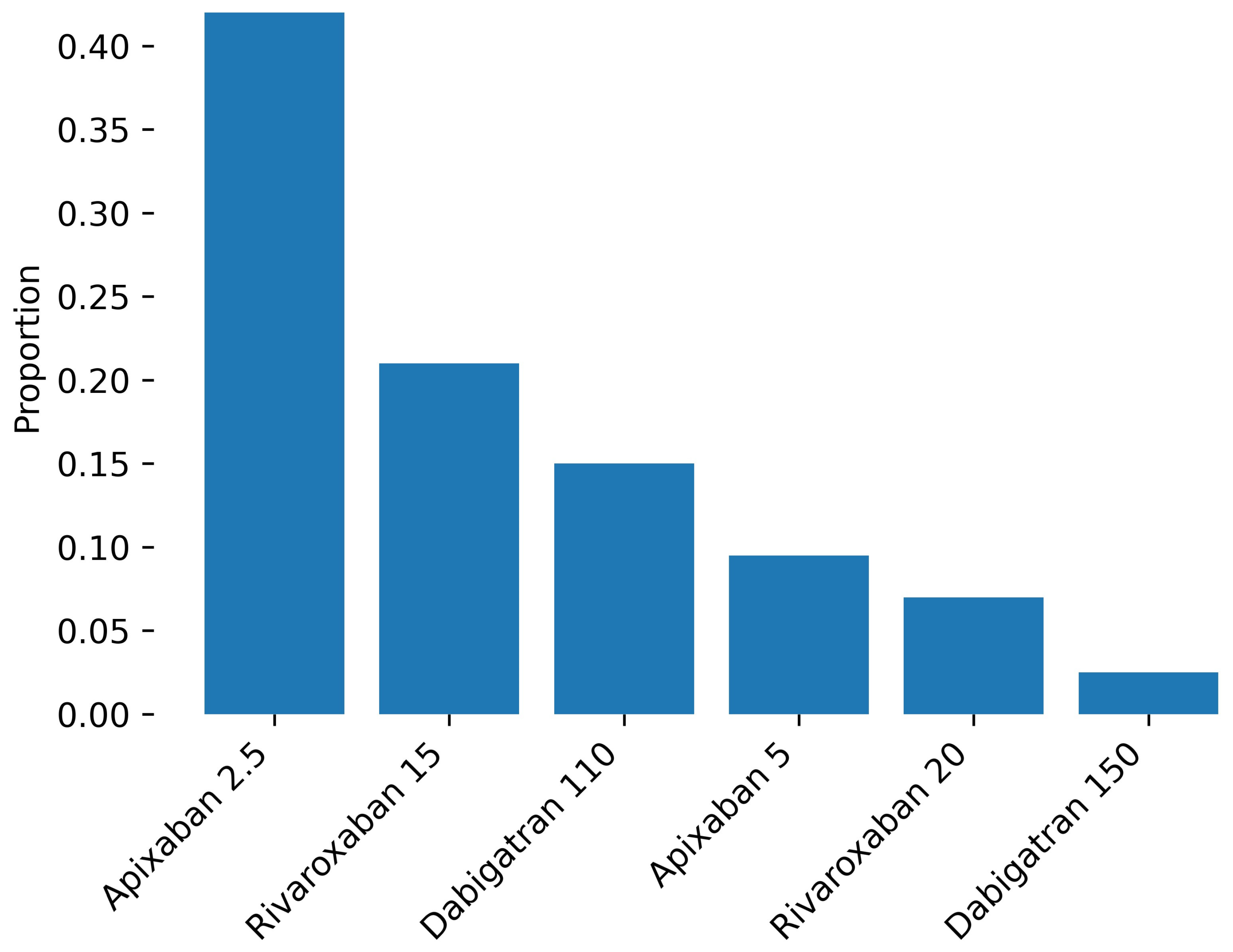
Figure 2. The distribution of specific DOAC regimens is presented in
Figure 3.
3.2. Multivariable Logistic Regression
Multivariable logistic regression in patients aged <85 years showed that treatment decisions were influenced by multiple clinical factors, including CHA
2DS
2-VA, renal function, coronary artery disease, PCI, and bleeding risk. Detailed model characteristics are presented in
Supplementary Table S2.
In patients aged ≥85 years, only two logistic regression models reached statistical significance, likely reflecting both the smaller sample size and more uniform treatment patterns in this group (
Table 2). The administration of reduced-dose apixaban (2.5 mg) was associated with a higher CHA
2DS
2-VA score and lower eGFR, indicating that greater thromboembolic risk and impaired renal function increased the likelihood of its prescription. In contrast, higher CHA
2DS
2-VA scores were associated with a lower probability of receiving dabigatran 150 mg, suggesting a cautious approach to full-dose therapy in very elderly patients with higher thromboembolic risk.
4. Discussion
This study provides insight into real-world anticoagulation practice in patients aged ≥85 years with atrial fibrillation (AF)—a rapidly expanding and clinically vulnerable population that remains underrepresented in randomized trials. Several findings merit particular attention.
First, patients aged ≥85 years in our cohort exhibited a markedly higher thromboembolic risk, along with a greater burden of comorbidities, including heart failure, structural heart disease, and renal dysfunction. The relatively preserved left ventricular ejection fraction observed in the ≥85 years group likely reflects the predominance of heart failure with preserved ejection fraction, which is common in very elderly patients with atrial fibrillation. This profile is in line with observations from large registries such as Fushimi AF [
16], ANAFIE [
17], and GARFIELD-AF [
18,
19], which consistently describe very elderly patients as a high-risk group with a more adverse clinical profile and worse outcomes. Our data reinforce the view that age should be understood not simply as a demographic characteristic, but as a composite marker of cumulative clinical risk in AF.
Importantly, the coexistence of elevated thromboembolic and bleeding risks highlights the fundamental therapeutic dilemma in this population. Anticoagulation decisions in patients aged ≥85 years are rarely straightforward; rather, they involve a continuous balancing of competing risks and inevitably rely on clinical judgment. The consistency of our findings with international data suggests that this high-risk phenotype is largely independent of geographic setting or healthcare system.
Second, we observed a clear predominance of reduced-dose DOACs, with apixaban 2.5 mg accounting for a substantial proportion of prescriptions, while full-dose regimens were used infrequently. This pattern mirrors real-world data from studies such as ELDERCARE-AF [
20], Fushimi AF [
16], ANAFIE [
17], POL-AF [
21], FRAIL-AF [
22], and GLORIA-AF [
23]. However, it also raises important questions regarding the appropriateness of dose reduction in very elderly patients.
Although dose reduction is often justified by impaired renal function or concerns about bleeding, growing evidence suggests that underdosing may be common in routine practice. Our findings likely reflect a cautious, risk-averse approach in which clinicians prioritize bleeding avoidance, potentially at the expense of optimal thromboembolic protection. At the same time, the widespread use of DOACs in our cohort is consistent with data from COMBINE-AF [
24] and other studies demonstrating a favorable risk–benefit profile of these agents across age groups.
Third, and perhaps most strikingly, treatment allocation in our study appeared to be driven primarily by two factors: thromboembolic risk (CHA2DS2-VA score) and renal function (eGFR). The inability to construct robust multivariable models—due to limited variability in clinical decision-making—represents an important finding in itself. It suggests that therapeutic strategies for this age group may be either highly standardized or overly simplified.
While the central role of CHA
2DS
2-VA and renal function is well-established, the apparent underweighting of other clinically relevant factors—such as frailty, functional status, polypharmacy, or prior bleeding—raises concerns as to whether current decision-making fully reflects the complexity of very elderly patients. Although similar determinants have been described in studies such as ENGAGE AF–TIMI 48 [
25], few analyses have specifically addressed the potential narrowing of decision frameworks in the oldest-old population.
Taken together, our findings support the concept of a “restricted therapeutic landscape” in patients aged ≥85 years, where treatment decisions are based on a relatively limited set of parameters. While this approach may improve feasibility and perceived safety in everyday practice, it may also point to a gap between guideline recommendations and real-world clinical reasoning. A comprehensive comparison of anticoagulation patterns across major registries and trials is provided in
Supplementary Table S1.
In summary, the CRAFT study confirms that very elderly patients with AF constitute a distinct high-risk population characterized by multimorbidity, renal dysfunction, and increased thromboembolic risk. In this group, anticoagulation strategies are dominated by reduced-dose DOACs, and treatment decisions appear to rely primarily on a narrow set of clinical indicators. Compared with other cohorts, the CRAFT population showed a particularly high rate of anticoagulation use (91.7%), a strong predominance of DOAC therapy, frequent use of apixaban, and a substantial burden of heart failure and renal impairment.
5. Conclusions
Very elderly patients with atrial fibrillation represent a distinct, high-risk population characterized by a substantial burden of comorbidities, impaired renal function, and increased thromboembolic risk. In this group, anticoagulation strategies are largely based on reduced-dose direct oral anticoagulants, with clinical decision-making primarily guided by thromboembolic risk and renal function.
The high rate of anticoagulation use observed in the CRAFT cohort—predominantly with DOACs, particularly apixaban—reflects a pragmatic, safety-oriented approach in routine practice. However, these findings also suggest that current treatment strategies may be overly simplified and may not fully capture the complexity of this population. More nuanced, individualized, and evidence-based approaches are needed to optimize care in very elderly patients with AF.
6. Study Limitations
This study has several limitations. First, it is based on registry data from a single healthcare setting, which may limit the generalizability of the findings to other institutions or populations. Second, although the overall cohort was large, the number of very elderly patients was relatively smaller compared with younger groups, which may have reduced the statistical power to detect certain associations in this subgroup.
Third, because this is an observational study, causal relationships between clinical characteristics and treatment decisions cannot be established. Treatment choices may have been influenced by factors not captured in the registry, such as frailty, cognitive status, patient preferences, or other individualized considerations. In addition, complete HAS-BLED score calculation was not consistently available for all patients due to limitations inherent to retrospective registry data collection. Therefore, individual bleeding-related variables, including prior bleeding/anemia and renal dysfunction, were analyzed instead. Finally, detailed outcome analyses, such as bleeding events or long-term thromboembolic risk, were not included. Future studies should address these aspects to provide a more comprehensive understanding of anticoagulation management in this population.
Supplementary Materials
The following supporting information can be downloaded at
https://www.mdpi.com/article/10.3390/jcm15103806/s1, Table S1: Anticoagulation Patterns Across Major AF Registries and Trials; Table S2: Multivariable Logistic Regression Models for Antithrombotic Therapy in Patients Aged <85 Years.
Author Contributions
J.B.: data analysis, manuscript drafting, study conception, supervision. M.W.: manuscript revision, M.S., M.G., E.K., M.K. and K.W.: data collection. All authors approved the final manuscript. All authors have read and agreed to the published version of the manuscript.
Funding
This study received no external funding.
Institutional Review Board Statement
The study was conducted in accordance with the Declaration of Helsinki. Due to the retrospective nature of the study, based on anonymized registry data, formal approval from the local Institutional Review Board was not required under national regulations.
Informed Consent Statement
Patient consent was waived due to the study’s retrospective design and anonymized data.
Data Availability Statement
All data analyzed in this study are available from the corresponding author upon request.
Acknowledgments
During the preparation of this manuscript, the authors used ChatGPT (OpenAI, GPT-5.5) for language editing and stylistic improvement of the text. The authors reviewed and edited the content as needed and take full responsibility for the final version of the manuscript. The authors thank Hab. inż. Mariusz Topolski (Wroclaw University of Science and Technology) for statistical consultation.
Conflicts of Interest
The authors declare no conflicts of interest.
Abbreviations
| AF | atrial fibrillation |
| ACE-I | angiotensin-converting enzyme inhibitor |
| ANAFIE | All Nippon AF In the Elderly Registry |
| APT | antiplatelet therapy |
| BMI | body mass index |
| CABG | coronary artery bypass grafting |
| CHA2DS2-VA | Congestive heart failure, Hypertension, Age, Diabetes, Stroke/transient ischemic attack, Vascular disease (sex category excluded) |
| CI | confidence interval |
| COMBINE-AF | Collaborative Analysis of Anticoagulation in Atrial Fibrillation |
| CRAFT | MultiCenter expeRience in AFib patients Treated with OAC |
| DOAC | direct oral anticoagulant |
| eGFR | estimated glomerular filtration rate |
| EF | ejection fraction |
| ELDERCARE-AF | Edoxaban Low-Dose for Elder Care Atrial Fibrillation |
| ENGAGE AF–TIMI 48 | Effective Anticoagulation with Factor Xa Next Generation in Atrial Fibrillation–Thrombolysis in Myocardial Infarction 48 |
| GLORIA-AF | Global Registry on Long-Term Oral Antithrombotic Treatment in Patients with Atrial Fibrillation |
| GARFIELD-AF | Global Anticoagulant Registry in the FIELD–Atrial Fibrillation |
| HAS-BLED | Hypertension, Abnormal renal/liver function, Stroke, Bleeding, Labile INR, Elderly, Drugs/alcohol |
| LMWH | low-molecular-weight heparin |
| MRA | mineralocorticoid receptor antagonist |
| NT-proBNP | N-terminal pro-B-type natriuretic peptide |
| NOAC | Non-vitamin K antagonist oral anticoagulant |
| OAC | oral anticoagulant |
| OR | odds ratio |
| PCI | percutaneous coronary intervention |
| POL-AF | Polish Atrial Fibrillation Registry |
| RCT | randomized controlled trial |
| SD | standard deviation |
| TIA | transient ischemic attack |
| VKA | vitamin K antagonist |
References
- Eurostat. Population Structure and Aging. 2024. Available online: https://ec.europa.eu/eurostat/statistics-explained/SEPDF/cache/1271.pdf (accessed on 16 November 2025).
- Główny Urząd Statystyczny. Informacja o Sytuacji Osób Starszych w Polsce za 2024 r. 2024. Available online: https://www.gov.pl/attachment/84772355-b55e-49e1-af90-817518e42503 (accessed on 16 November 2025).
- Krijthe, B.P.; Kunst, A.; Benjamin, E.J.; Lip, G.Y.; Franco, O.H.; Hofman, A.; Witteman, J.C.; Stricker, B.H.; Heeringa, J. Projections on the number of individuals with atrial fibrillation in the European Union, from 2000 to 2060. Eur. Heart J. 2013, 34, 2746–2751. [Google Scholar] [CrossRef]
- Khurshid, S.; Ashburner, J.M.; Ellinor, P.T.; McManus, D.D.; Atlas, S.J.; Singer, D.E.; Lubitz, S.A. Prevalence and incidence of atrial fibrillation among older primary care patients. JAMA Netw. Open 2023, 6, e2255838. [Google Scholar] [CrossRef]
- Zoni-Berisso, M.; Lercari, F.; Carazza, T.; Domenicucci, S. Epidemiology of atrial fibrillation: European perspective. Clin. Epidemiol. 2014, 6, 213–220. [Google Scholar] [CrossRef]
- Lehto, M.; Haukka, J.; Aro, A.; Halminen, O.; Putaala, J.; Linna, M.; Mustonen, P.; Kinnunen, J.; Kouki, E.; Niiranen, J.; et al. Comprehensive nationwide incidence and prevalence trends of atrial fibrillation in Finland. Open Heart 2022, 9, e002140. [Google Scholar] [CrossRef]
- Kalarus, Z.; Średniawa, B.; Mitręga, K.; Wierucki, Ł.; Sokal, A.; Lip, G.; Bandosz, P.; Stokwiszewski, J.; Boidol, J.; Zieleniewicz, P.; et al. Prevalence of atrial fibrillation in the ≥65 Polish population: NOMED-AF study. Kardiol. Pol. 2023, 81, 14–21. [Google Scholar] [CrossRef]
- Mitrega, K.; Lip, G.Y.H.; Sredniawa, B.; Sokal, A.; Streb, W.; Przyludzki, K.; Zdrojewski, T.; Wierucki, L.; Rutkowski, M.; Bandosz, P.; et al. Predicting silent atrial fibrillation in the elderly: NOMED-AF study. J. Clin. Med. 2021, 10, 2321. [Google Scholar] [CrossRef]
- Mangoni, A.A.; Jackson, S.H.D. Age-related changes in pharmacokinetics and pharmacodynamics: Basic principles and practical applications. Br. J. Clin. Pharmacol. 2004, 57, 6–14. [Google Scholar] [CrossRef] [PubMed]
- Shi, S.; Klotz, U. Age-related changes in pharmacokinetics. Curr. Drug Metab. 2011, 12, 667–675. [Google Scholar] [CrossRef] [PubMed]
- Ngcobo, N.N. Influence of aging on the pharmacodynamics and pharmacokinetics of chronically administered medicines in geriatric patients: A review. Clin. Pharmacokinet. 2025, 64, 335–367. [Google Scholar] [CrossRef] [PubMed]
- Khoddam, A.; Vaughan, D.E.; Wilsbacher, L. Role of plasminogen activator inhibitor-1 (PAI-1) in age-related cardiovascular pathophysiology. J. Cardiovasc. Aging 2024, 4, 38. [Google Scholar] [CrossRef]
- Bednarski, J.; Balsam, P.; Tymińska, A.; Ozierański, K.; Żukowska, K.; Zaleska, M.; Szepietowska, K.; Maciejewski, K.; Peller, M.; Praska-Ogińska, A.; et al. Clinical characteristics of atrial fibrillation patients treated with oral anticoagulants. Pol. Arch. Intern. Med. 2018, 128, 274–279. [Google Scholar] [CrossRef]
- Balsam, P.; Gawałko, M.; Peller, M.; Tymińska, A.; Ozierański, K.; Zaleska, M.; Żukowska, K.; Szepietowska, K.; Maciejewski, K.; Grabowski, M.; et al. Thromboembolic risk in atrial fibrillation patients with heart failure. Medicine 2018, 97, e13074. [Google Scholar] [CrossRef]
- Balsam, P.; Lodziński, P.; Gawałko, M.; Kraj, L.; Śliwczyński, A.; Maciejewski, C.; Krzowski, B.; Tymińska, A.; Ozierański, K.; Grabowski, M.; et al. Antithrombotic management in atrial fibrillation: CRAFT study. J. Clin. Med. 2021, 10, 1780. [Google Scholar] [CrossRef]
- Akao, M.; Chun, Y.-H.; Wada, H.; Esato, M.; Hashimoto, T.; Abe, M.; Hasegawa, K.; Tsuji, H.; Furuke, K. Current status of clinical background of patients with atrial fibrillation in a community-based survey: The Fushimi AF Registry. J. Cardiol. 2013, 61, 260–266. [Google Scholar] [CrossRef]
- Hiasa, K.-I.; Kaku, H.; Inoue, H.; Yamashita, T.; Akao, M.; Atarashi, H.; Koretsune, Y.; Okumura, K.; Shimizu, W.; Ikeda, T.; et al. Age-Related Differences in the Clinical Characteristics and Treatment of Elderly Patients with Atrial Fibrillation in Japan—Insight From the ANAFIE Registry. Circ. J. 2020, 84, 388–396. [Google Scholar] [CrossRef] [PubMed]
- Goldhaber, S.Z.; Bassand, J.-P.; Camm, A.J.; Virdone, S.; Pieper, K.; Cools, F.; Corbalan, R.; Gersh, B.J.; Goto, S.; Haas, S.; et al. Clinical outcomes in older patients with atrial fibrillation: Insights from the GARFIELD-AF registry. Am. J. Med. 2024, 137, 128–136. [Google Scholar] [CrossRef] [PubMed]
- Kakkar, A.K.; Mueller, I.; Bassand, J.-P.; Fitzmaurice, D.A.; Goldhaber, S.Z.; Goto, S.; Haas, S.; Hacke, W.; Lip, G.Y.H.; Mantovani, L.G.; et al. Risk profiles and antithrombotic treatment of patients newly diagnosed with atrial fibrillation. PLoS ONE 2013, 8, e63479. [Google Scholar] [CrossRef]
- Okumura, K.; Akao, M.; Yoshida, T.; Kawata, M.; Okazaki, O.; Akashi, S.; Eshima, K.; Tanizawa, K.; Fukuzawa, M.; Hayashi, T.; et al. Low-dose edoxaban in very elderly patients with atrial fibrillation (ELDERCARE-AF). N. Engl. J. Med. 2020, 383, 1735–1745. [Google Scholar] [CrossRef]
- Gorczyca, I.; Jelonek, O.; Uziębło-Życzkowska, B.; Chrapek, M.; Maciorowska, M.; Wójcik, M.; Błaszczyk, R.; Kapłon-Cieślicka, A.; Gawałko, M.; Budnik, M.; et al. Trends in the prescription of non-vitamin K antagonist oral anticoagulants for atrial fibrillation: Results of the Polish Atrial Fibrillation (POL-AF) registry. J. Clin. Med. 2020, 9, 3565. [Google Scholar] [CrossRef]
- Joosten, L.P.; van Doorn, S.; van de Ven, P.M.; Köhlen, B.T.; Nierman, M.C.; Koek, H.L.; Hemels, M.E.; Huisman, M.V.; Kruip, M.; Faber, L.M.; et al. Safety of Switching from a Vitamin K Antagonist to a Non–Vitamin K Antagonist Oral Anticoagulant in Frail Older Patients with Atrial Fibrillation: Results of the FRAIL-AF Randomized Controlled Trial. Circulation 2023, 148, 1107–1117. [Google Scholar] [CrossRef]
- Huisman, M.V.; Rothman, K.J.; Paquette, M.; Teutsch, C.; Diener, H.C.; Dubner, S.J.; Halperin, J.L.; Ma, C.; Zint, K.; Elsaesser, A.; et al. Antithrombotic Treatment Patterns in Patients with Newly Diagnosed Nonvalvular Atrial Fibrillation: The GLORIA-AF Registry, Phase II. Am. J. Med. 2015, 128, 1306–1313.e1. [Google Scholar] [CrossRef] [PubMed]
- Carnicelli, A.P.; Hong, H.; Connolly, S.J.; Eikelboom, J.; Giugliano, R.P.; Morrow, D.A.; Patel, M.R.; Wallentin, L.; Alexander, J.H.; Bahit, M.C.; et al. Direct oral anticoagulants versus warfarin in patients with atrial fibrillation: Patient-level network meta-analyses. Circulation 2022, 145, 242–255. [Google Scholar] [CrossRef] [PubMed]
- Giugliano, R.P.; Ruff, C.T.; Braunwald, E.; Murphy, S.A.; Wiviott, S.D.; Halperin, J.L.; Waldo, A.L.; Ezekowitz, M.D.; Weitz, J.I.; Špinar, J.; et al. Edoxaban versus warfarin in patients with atrial fibrillation. N. Engl. J. Med. 2013, 369, 2093–2104. [Google Scholar] [CrossRef]
| Disclaimer/Publisher’s Note: The statements, opinions and data contained in all publications are solely those of the individual author(s) and contributor(s) and not of MDPI and/or the editor(s). MDPI and/or the editor(s) disclaim responsibility for any injury to people or property resulting from any ideas, methods, instructions or products referred to in the content. |




 ,
,