3.1. Synthetic Materials and Methods
All chemicals and reagents used in the synthesis process were acquired from Merck Ltd. (Mumbai, India), and S.D. Fine Chemicals Ltd. (Mumbai, India). Analytical grade pure solvents were used. The synthesis of compounds was carried out using a parallel synthesizer (Radley’s Carousel 6 Plus reaction station). The compounds synthesized were characterized using melting point, FT-IR,
1H NMR,
13C NMR, and mass spectroscopy (see
Supplementary data). FT-IR spectra were recorded using a Fourier Transform InfraRed Spectrometer (8400S, Shimadzu Corporation, Kyoto, Japan). Bruker Avance III HD NMR 500 MHz (Bruker Corporation, Billerica, MA, USA) was used to record
1H NMR, i.e., proton nuclear magnetic spectra, and
13C NMR, i.e., carbon nuclear magnetic spectra, using CDCl
3 as solvent. The Bruker Impact II UHR-TOF Mass Spectrometer System was used to obtain HR-MS. The melting point in degrees Celsius of test derivatives was determined using an Electronics Digital melting point apparatus.
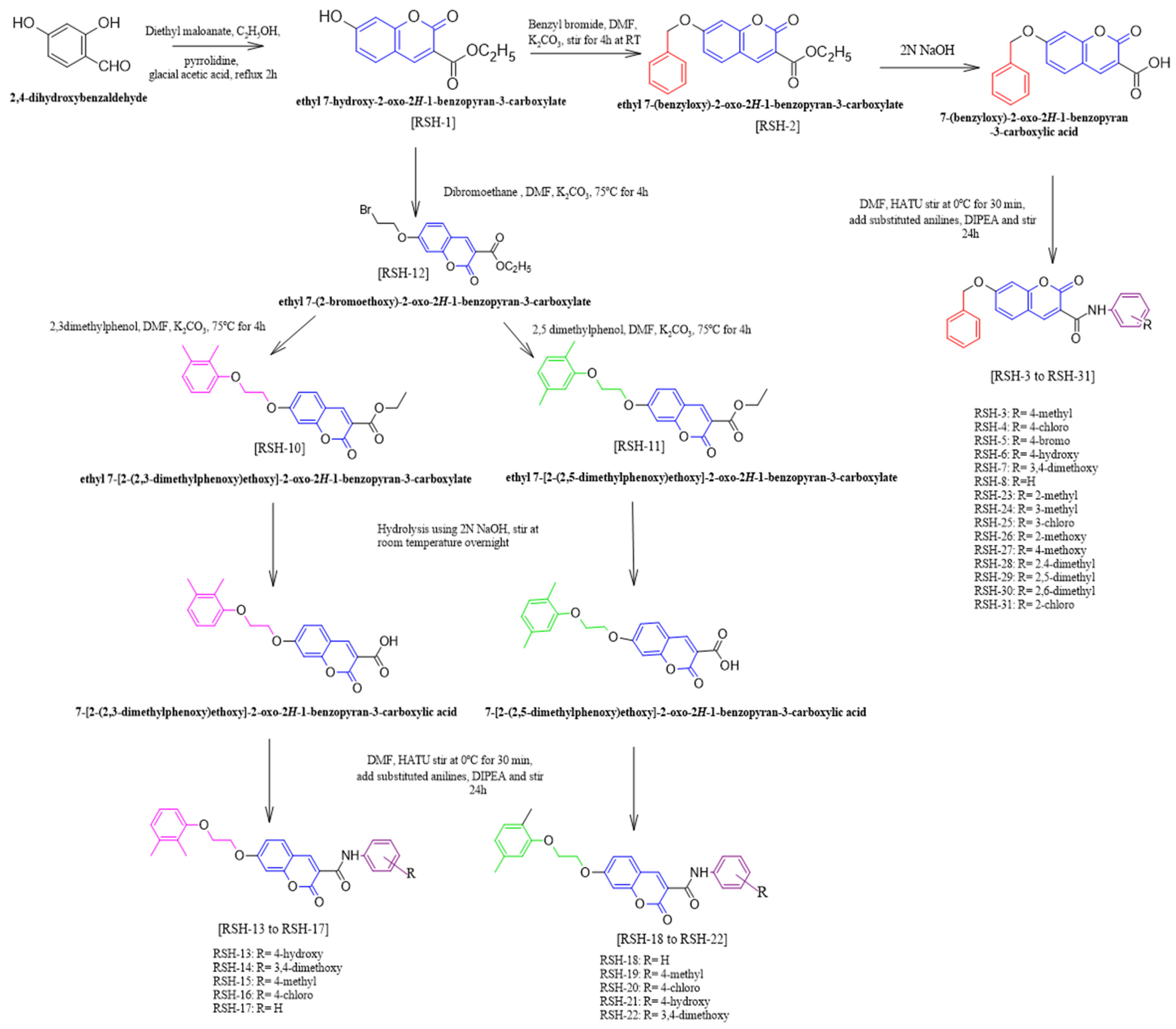
3.1.1. Synthesis of Ethyl 7-Hydroxy-2-oxo-2H-1-benzopyran-3-carboxylate (RSH-1)
2,4 dihydroxy benzaldehyde (2.0 mmol, 1-equiv) and Diethylmalonate (2.4 mmol, 1.2-equiv) were mixed in 2 mL of ethanol at room temperature. Subsequently, pyrrolidine 2–3 drops and glacial acetic acid were added in order, and the mixture was refluxed for two hours. Once the reaction was completed, the resulting product was poured into chilled water to obtain the product. The product was filtered, washed, and dried. The purified solid was obtained using column chromatography (hexane: ethyl acetate) [
27,
28]. Yellow solid; %Yield 85%; mp. 140–141 °C;
Rf: 0.33 (7:13 EtOAc: hexane); IR (cm
−1): 3500.92 (OH), 1724.42 (C=O Ester), 1600.97 (C=O lactone), 1496.30 (C=C), 1242.20 (C-C), 1026.16 1141.50 (C-O-C),
1H NMR (500 MHz, CDCl
3) δ: 1.39–1.42 (t, 3H, CH
3), 4.39–4.43 (q, 2H, CH
2), 6.87–6.89 (d,
J = 10 Hz, 1H, -C
5H-chrom), 6.92 (s, 1H, C
8H-chrom.), 7.50–7.51 (d,
J = 5 Hz, 1H, -C
6H-chrom), 8.53 (s, 1H, C
4H-chrom.) (
Figure S1),
13C NMR (500 MHz, CDCl
3) δ: 165.55, 163.91, 157.78, 156.97, 149.74, 132.52, 114.91, 110.55, 102.33, 61.17, 24.11, 14.62.
3.1.2. Synthesis of Ethyl 7-(Benzyloxy)-2-oxo-2H-1-benzopyran-3-carboxylate (RSH-2)
An appropriate quantity of ethyl 7-hydroxy-2-oxo-2
H-chromene-3-carboxylate (0.236 g, 1.0 mmol) was dissolved in 2 mL of dimethylformamide (DMF) at room temperature. Subsequently, Benzyl bromide (0.171 mL, 1.2 mmol) was added. The potassium carbonate (0.151 g, 1.1 mmol) as a catalyst was added to the reaction mixture and stirred for 4 h at RT. Afterwards, the product was precipitated out using ice water and was filtered, washed, and dried. Using hexane: ethyl acetate as a solvent, column chromatography was performed to purify the crude solid. Yellow solid; %Yield: 91%; mp. 180–182 °C;
Rf: 0.54 (7:13 EtOAc: hexane); IR (KBr) (cm
−1): 1745.64 (C=O ester), 1610.61 (C=O lactone), 1392.65 (C=C), 1024.26 1120.68 (C-O-C);
1H NMR (500 MHz, DMSO) δ: 1.28–1.31 (t, 3H, CH
3), 4.25–4.29 (q, 2H, CH
2), 5.26 (s, 2H, OCH
2Ar), 7.07–7.09 (d,
J = 10 Hz, 1H, C
5H-chrom.), 7.13 (s, 1H, C
8H-chrom.), 7.35–7.37 (t, 1H, Ar), 7.40–7.43 (t, 2H, Ar), 7.47–7.49 (d,
J = 10 Hz, 2H, Ar), 7.85–7.86 (d,
J = 5 Hz, 1H, C
6H-chrom.), 8.72 (s, 1H, C
4H-chrom.) (
Figure S2);
13C NMR (125 MHz, CDCl
3) δ: 164.24, 163.29, 157.35, 156.71, 149.56, 136.45, 132.16, 129.03, 128.69, 128.47, 114.31, 113.99, 112.08, 101.67, 70.69, 61.41, 14.59; HR-MS (
m/
z):
m/
z calcd for [M+H]
+ C
19H
16O
5 325.45; found 325.10.
3.1.3. Synthesis of 7-(Benzyloxy)-2-oxo-2H-1-benzopyran-3-carboxylic Acid
An appropriate quantity of ethyl 7-(benzyloxy)-2-oxo-2
H-chromene-3-carboxylate (2.0 mmol) was dissolved in ethanol as a solvent. A solution of 40 mL 2N NaOH was added, and the stirring of the solution was carried out overnight. Next, 2N HCl was added to neutralize the solution, which resulted in a precipitate that was filtered and washed twice with water. The resulted product was used as is for further reaction [
29]. Pale Yellow solid; %Yield: 85%; mp. 184–185 °C;
Rf: 0.45 (7:13 EtOAc: hexane); IR (cm
−1): 3043.77 (C-H), 1716.70 (C=O acid), 1595.18 (C=O), 1408.03 (C=C), 1246.05 (C-C), 1132.25 (C-O-C).
3.1.4. Synthesis of Compounds (RSH-3 to RSH-8 and RSH-23 to RSH-31)
7-(benzyloxy)-2-oxo-2
H-1-benzopyran-3-carboxylic acid (1.0 mmol, 1-equiv) was dissolved in 4–5 mL of DMF previously kept in ice. Further Hexafluorophosphates Azabenzotriazole Tetramethyl Uronium (HATU) (0.72 mmol) was added to the solution and was stirred for 30 min. Next, corresponding substituted anilines (0.75 mmol) and N,N-Diisopropylethylamine (DIPEA) (1.4 mmol) were added and stirred overnight. This mixture was poured into chilled water, then extracted with ethyl acetate as a solvent, and the final product was obtained. After drying with magnesium sulfate, rotary evaporation was used to remove the ethyl layer. Through column, solvent system ethyl acetate: n-hexane was used for purification of crude product (RSH-3 to RSH-8 and RSH-23 to RSH-31) [
29,
30,
31].
3.1.5. 7-(Benzyloxy)-N-(4-methylphenyl)-2-oxo-2H-chromene-3-carboxamide (RSH-3)
Brown solid, Yield: 75%; mp: 220–222 °C;
Rf: 0.80 (7:13 EtOAc: hexane); IR (cm
−1): 3419.56 (N-H), 3033.82 (C-H), 1703.03 (C=O lactone), 1610.45 (C=O amide), 1508.23 (C=C), 1373.22 (C-N), 1253.64 (C-C), 1074.28 (C-O-C);
1H NMR (500 MHz, CDCl
3) δ: 2.34 (s, 3H, CH), 5.19 (s, 2H, OCH
2Ar), 6.96–6.97 (s, 1H, C
8H-chrom), 7.03–7.05 (d,
J = 10 Hz, 2H, C
5H-chrom.), 7.17–7.18 (d,
J = 5 Hz, 2H, Ar), 7.42–7.44 (m, 4H, Ar), 7.61–7.62 (d, 2H, C
6H-chrom), 7.2–7.64 (d, 2H, Ar), 8.94 (s, 1H, C
4H-chrom.), 10.71 (s, 1H, amide) (
Figure S3);
13C NMR (125 MHz, CDCl
3) δ: 164.07, 162.20, 159.73, 156.62, 148.65, 135.29, 134.29, 131.11, 129.54, 128.61, 128.87, 127.56, 120.50, 115.11, 114.84, 112.72, 101.9, 70.86, 20.95 (
Figure S4); HR-MS (ESI):
m/
z calcd for [M+H]
+ C
24H
20NO
4 386.42; found 386.1399 (
Figure S5).
3.1.6. 7-(Benzyloxy)-N-(4-chlorophenyl)-2-oxo-2H-chromene-3-carboxamide (RSH-4)
Pale brown solid, Yield: 67%; mp. 220–221 °C;
Rf: 0.83 (7:13 EtOAc: hexane); IR (cm
−1): 3267.19 (N-H), 1706.88 (C=O amide), 1610.45 (C=O), 1236.29 (C-C), 1010.63, 1091.63 (C-O-C);
1H NMR (500 MHz, CDCl
3) δ: 5.19 (s, 2H, OCH
2Ar), 6.97 (s, 1H, C
8H-chrom), 7.04–7.06 (d,
J = 10 Hz, 1H, C
5H-chrom.), 7.32–7.34 (d,
J = 10 Hz, 3H, Ar), 7.43–7.44 (d,
J = 5 Hz, 4H, Ar), 7.63–7.65 (d,
J = 10 Hz, 1H, C
6H-chrom), 7.68–7.70 (d,
J = 10 Hz, 2H, Ar), 8.93 (s, 1H, C
4H-chrom.), 10.83 (s, 1H, amide) (
Figure S6); HR-MS (ESI):
m/
z calcd for [M+H]
+ C
23H
17NO
4Cl 406.84; found 406.0841 (
Figure S7).
3.1.7. 7-(Benzyloxy)-N-(4-bromophenyl)-2-oxo-2H-chromene-3-carboxamide (RSH-5)
Brown solid; Yield: 45%; mp. 180–182 °C;
Rf: 0.80 (7:13 EtOAc: hexane); IR (cm
−1): 3496.13 (N-H), 3026.41 (C-H), 1703.20 (C=O lactone), 1599.04 (C=O amide), 1491.02 (C=C), 1375.29 (C-N), 1257.63 (C-C), 1124.54, 1018.45 (C-O-C);
1H NMR (500 MHz, CDCl
3) δ: 5.19 (s, 2H, OCH
2Ar), 6.97 (s, 1H, C
8H-chrom), 7.04–7.06 (d,
J = 10 Hz, 1H, C
5H-chrom.), 7.42–7.44 (m, 5H, Ar), 7.47–7.49 (d,
J = 10 Hz, 2H, Ar), 7.63–7.65 (d,
J = 10 Hz, 3H, Ar, C
6H-chrom.), 8.93 (s, 1H, C
4H-chrom.), 10.83 (s, 1H, amide) (
Figure S8); HR-MS (ESI):
m/
z calcd for [M+H]
+ C
23H
16NO
4Br 450.28; found 450.0329 (
Figure S9).
3.1.8. 7-(Benzyloxy)-N-(4-hydroxyphenyl)-2-oxo-2H-1-benzopyran-3-carboxamide (RSH-6)
Yellow solid; Yield: 60%; mp: 160–161 °C;
Rf: 0.64 (7:13 EtOAc: hexane); IR (cm
−1): 3419.56 (N-H), 3045.39 (C-H), 1693.38 (C=O lactone), 1622.02 (C=O amide), 1510.16 (C=C), 1367.44 (C-N), 1236.29 (C-C), 1020.27 (C-O-C);
1H NMR (500 MHz, CDCl
3) δ: 5.19 (s, 2H, OCH
2Ar), 6.83–6.85 (d, 2H, Ar), 6.97 (s, 1H, C
8H-chrom.), 7.03–7.05 (d,
J = 10 Hz, 1H, C
5H-chrom), 7.38–7.39 (d,
J = 5 Hz, 2H, Ar), 7.41–7.44 (m, 3H, Ar), 7.59–7.61 (d,
J = 10 Hz, 2H, Ar.), 7.62–7.63 (d,
J = 5 Hz, 1H, C
6H-chrom.), 8.93 (s, 1H, C
4H-chrom.), 10.66 (s, 1H, amide); (
Figure S10);
13C NMR (125 MHz, CDCl
3) δ: 163.05, 159.65, 148.56, 131.08, 130.40, 128.86, 128.61, 127.55, 122.30, 115.90, 115.64, 115.07, 114.84, 101.39, 89.08, 70.86, 29.70, 29.67; HR-MS (ESI):
m/
z calcd for [M+H]
+ C
23H
18NO
5 388.39; found 388.1181 (
Figure S11).
3.1.9. 7-(Benzyloxy)-N-(3,4-dimethoxyphenyl)-2-oxo-2H-1-benzopyran-3-carboxamide (RSH-7)
Yellow solid; Yield: 65%; mp. 180–181 °C;
Rf: 0.56 (7:13 EtOAc: hexane); IR (cm
−1): 3419.56 (N-H), 3045.39 (C-H), 1693.38 (C=O lactone), 1622.02 (C=O amide), 1510.16 (C=C), 1367.44 (C-N), 1236.29 (C-C), 1020.27 (C-O-C);
1H NMR (500 MHz, CDCl
3) δ: 3.89 (s, 3H, OCH
3), 3.93 (s, 3H, OCH
3), 5.19 (s, 2H, OCH
2Ar), 6.85–6.87 (s, 1H, Ar), 6.97–6.98 (s, 1H, C
8H-chrom.), 7.03–7.05 (d,
J = 10 Hz, 1H, C
5H-chrom), 7.17–7.19 (d,
J = 10 Hz, 1H, Ar), 7.42–7.44 (m, 5H, Ar), 7.50–7.51 (s, 1H, Ar), 7.61–7.63 (d,
J = 10 Hz, 1H, C
4H-chrom), 8.93 (s, 1H, C
4H-chrom.), 10.70 (s, 1H, amide) (
Figure S12);
13C NMR (125 MHz, CDCl
3) δ: 164.11, 162.23, 159.60, 156.61, 149.28, 148.53, 146.08, 135.24, 131.50, 131.10, 128.88, 128.63, 127.55, 115.05, 114.89, 112.72, 111.33, 105.05, 101.4, 70.86, 56.11, 29.70 (
Figure S13); HR-MS (ESI):
m/
z calcd for [M+H]
+ C
25H
22NO
6 432.44; found 432.1441 (
Figure S14).
3.1.10. 7-(Benzyloxy)-2-oxo-N-phenyl-2H-1-benzopyran-3-carboxamide (RSH-8)
Pale Yellow solid; Yield: 43%; mp. 220–221 °C;
Rf: 0.69 (7:13 EtOAc: hexane); IR (cm
−1): 3423.41 (N-H), 3047.32 (C-H), 1701.10 (C=O lactone), 1608.52 (C=O amide), 1496.66 (C=C), 1373.22 (C-N), 1222.79 (C-C), 1026.06 (C-O-C),
1H NMR (500 MHz, CDCl
3) δ: 5.19 (s, 2H, OCH
2Ar), 6.97 (s, 1H, C
8H-chrom), 7.03–7.05 (d,
J = 10 Hz, 1H, C
5H-chrom.), 7.14–7.17 (t, 1H, Ar), 7.38–7.39 (t, 3H, Ar), 7.42–7.44 (d,
J = 10 Hz, 4H, Ar), 7.62–7.64 (d,
J = 10 Hz, 1H, C
6H-chrom), 7.73–7.74 (d,
J = 5 Hz, 2H, Ar), 8.94 (s, 1H, C
4H-chrom.), 10.79 (s, 1H, amide) (
Figure S15);
13C NMR (125 MHz, CDCl
3) δ: 164.04, 162.21, 159.63, 156.61, 148.82, 135.29, 131.15, 129.03, 128.61, 128.87, 127.56, 124.63, 122.07, 120.50, 115.11, 114.88, 112.73, 101.39, 70.85, 55.49 (
Figure S16); HR-MS (ESI):
m/
z calcd for [M+H]
+ C
23H
18NO
4 372.39; found 372.1234 (
Figure S17).
3.1.11. 7-(Benzyloxy)-N-(2-methylphenyl)-2-oxo-2H-1-benzopyran-3-carboxamide (RSH-23)
Brown solid; Yield: 50%; mp: 180–182 °C; Rf: 0.75 (7:13 EtOAc: hexane); IR (cm−1): 3475.49 (N-H), 3045.39 (C-H), 1704.96 (C=O lactone), 1693.38 (C=O amide), 1622.02 (C=O), 1510.16 (C=C), 1367.44 (C-N), 1236.29 (C-C), 1020.27 (C-O-C); 1H NMR (500 MHz, CDCl3) δ: 2.42 (s, 3H, CH3), 5.19 (s, 2H, OCH2Ar), 6.98 (s, 1H, C5H-chrom), 7.03–7.06 (d, 1H, C8H-chrom), 7.07–7.10 (d, 2H, Ar), 7.42–7.44 (m, 6H, Ar), 7.63–7.65 (d, J = 10 Hz, 1H, C6H-chrom), 8.24–8.25 (d, J = 5 Hz, 1H, Ar), 8.96 (s, 1H, C4H-chrom.), 10.73 (s, 1H, amide).
3.1.12. 7-(Benzyloxy)-N-(3-methylphenyl)-2-oxo-2H-1-benzopyran-3-carboxamide (RSH-24)
Brown solid; Yield: 77%; mp: 210–211 °C;
Rf: 0.77 (7:13 EtOAc: hexane); IR (cm
−1): 3687.98 (N-H), 2935.20 (C-H), 1742.98, 1705.69 (C=O lactone), 1609.73 (C=O amide), 1447.24 (C=C), 1369.64 (C-N), 1281.15 (C-C), 1160.78 (C-O-C);
1H NMR (500 MHz, CDCl
3) δ: 2.37 (s, 3H, CH
3), 5.18 (s, 2H, OCH
2Ar), 6.96–6.97 (s, 2H, Ar, C
5H-chrom), 7.02–7.04 (d, 1H, C
8H-chrom.), 7.41–7.43 (m, 5H, Ar), 7.53–7.55 (d,
J = 10 Hz, 2H, Ar), 7.61–7.63 (d,
J = 10 Hz, 1H, C
6H-chrom), 8.93 (s, 1H, C
4H-chrom.), 10.71 (s, 1H, amide) (
Figure S40).
3.1.13. 7-(Benzyloxy)-N-(3-chlorophenyl)-2-oxo-2H-1-benzopyran-3-carboxamide (RSH-25)
Pale brown solid; Yield: 83%; mp. 160–161 °C; Rf: 0.78 (7:13 EtOAc: hexane); IR (cm−1): 3291.32 (N-H), 2874.09, (C-H), 1701.97 (C=O lactone), 1683 (C=O amide), 1571.46 1489.39 (C=C), 1373.67 (C-N), 1210.84 (C-C), 1072.41, (C-O-C); 1H NMR (500 M Hz, CDCl3) δ: 5.19 (s, 2H, OCH2Ar), 6.97 (s, 1H, C8H-chrom), 7.04–7.06 (d, J = 10 Hz, 1H, C5H-chrom.), 7.12–7.13 (d, J = 5 Hz, 1H, Ar), 7.43–7.44 (d, J = 5 Hz, 5H, Ar), 7.35–7.55 (d, J = 10 Hz, 1H, Ar), 7.63–7.65 (d, J = 10 Hz, 1H, C6H-chrom), 7.89 (s, 1H, Ar), 8.93 (s, 1H, C4H-chrom.), 10.84 (s, 1H, amide).
3.1.14. 7-(Benzyloxy)-N-(2-methoxyphenyl)-2-oxo-2H-1-benzopyran-3-carboxamide (RSH-26)
Yellowish brown solid; Yield: 84%; mp: 164–165 °C;
Rf: 0.78 (7:13 EtOAc: hexane); IR (cm
−1) 3781.39 (N-H), 2872.88 (C-H), 1710.65 (C=O), 1610.26 (C=O), 1442.30 (C=C), 1373.20 (C-N), 1208.71 (C-C), 1156.22 (C-O-C);
1H NMR (500 MHz, CDCl
3) δ: 3.97 (s, 3H, OCH
3), 5.18 (s, 2H, OCH
2Ar), 6.93–6.94 (d,
J = 10 Hz, 1H, C
5H-chrom), 6.96 (s, 1H, C
8H-chrom), 7.00–7.03 (m, 1H, Ar), 7.08–7.11 (t, 1H, Ar), 7.41–7.43 (m, 5H, Ar), 7.61–7.63 (d, 1H, C
6H-chrom), 8.54–8.55 (d, 1H, Ar), 8.92 (s, 1H, C
4H-chrom.), 11.24 (s, 1H, amide) (
Figure S41).
3.1.15. 7-(Benzyloxy)-N-(4-methoxyphenyl)-2-oxo-2H-1-benzopyran-3-carboxamide (RSH-27)
Yellowish brown solid; Yield: 62%; mp: 170–172 °C;
Rf: 0.70 (7:13 EtOAc: hexane); IR (cm
−1) 3788.88 (N-H), 2873.96 (C-H), 1704.62 (C=O), 1573.23 (C=O), 1490.74 (C=C), 1374.31 (C-N), 1212.71 (C-C), 1068.59 (C-O-C);
1H NMR (500 MHz, CDCl
3) δ:3.82 (s, 3H, OCH
3), 5.20 (s, 2H, OCH
2Ar), 6.90–6.92 (d,
J = 10 Hz, 2H, Ar), 6.96 (s, 1H, C
8H-chrom), 7.03–7.05 (d,
J = 10 Hz, 1H, C
5H-chrom.), 7.42–7.44 (d,
J = 10 Hz, 4H, Ar), 7.61–7.63 (d,
J = 10 Hz, 2H, C
6H-chrom.), 7.63–7.65 (m, 2H, Ar), 8.93 (s, 1H, C
4H-chrom.), 10.67 (s, 1H, amide) (
Figure S42).
3.1.16. 7-(Benzyloxy)-N-(2,4-dimethylphenyl)-2-oxo-2H-1-benzopyran-3-carboxamide (RSH-28)
Brown solid; Yield: 85%; mp. 200–201 °C;
Rf: 0.71 (7:13 EtOAc: hexane); IR (cm
−1): 3789.33 (N-H), 2873.27 (C-H), 1704.44 (C=O lactone), 1610, 1573.50 (C=O amide), 1438.51 (C=C), 1373.28 (C-N), 1211.81 (C-C), 1068.78 (C-O-C);
1H NMR (500 MHz, CDCl
3) δ: 2.31 (s, 1H, CH
3), 2.37 (s, 1H, CH
3), 5.19 (s, 2H, OCH
2Ar), 6.96 (s, 1H, C
8H-chrom), 7.03–7.05 (d,
J = 10 Hz, 1H, C
5H-chrom.), 7.05–7.07 (d, 3H, Ar), 7.43–7.44 (m,
J = 5 Hz, 5H, Ar), 7.62–7.63 (d,
J = 10 Hz, 1H, C
6H-chrom), 8.07–8.08 (d,
J = 5 Hz, Ar), 8.95 (s, 1H, C
4H-chrom.), 10.64 (s, 1H, amide) (
Figure S43);
13C NMR (125 MHz, CDCl
3) δ: 164.02, 162.31, 159.73, 156.57, 148.63, 135.26, 134.58, 134.43, 133.65, 131.11, 130.88, 128.84, 128.73, 128.66, 128.16, 129.03, 128.61, 128.87, 127.56, 121.99, 115.26, 114.77, 112.71, 101.36, 70.65, 20.89, 18.00 (
Figure S44); HR-MS (ESI):
m/
z calcd for [M+H]
+ C
25H
22NO
4 400.45; found 400.1555 (
Figure S45).
3.1.17. 7-(Benzyloxy)-N-(2,5-dimethylphenyl)-2-oxo-2H-1-benzopyran-3-carboxamide (RSH-29)
Brown solid; Yield: 62%; mp. 171–172 °C;
Rf: 0.75 (7:13 EtOAc: hexane); IR (cm
−1): 3782.26 (N-H), 2876.28 (C-H), 1663.63 (C=O lactone), 1609 (C=O amide), 1490.00 (C=C), 1380.72 (C-N), 1214.66 (C-C), 1074.60 (C-O-C);
1H NMR (500 MHz, CDCl
3): 2.36 (s, 1H, CH
3), 2.37 (s, 1H, CH
3), 5.19 (s, 2H, OCH
2Ar), 6.89–6.91 (d,
J = 10 Hz, 1H, Ar), 6.98 (s, 1H, C
8H-chrom), 7.03–7.05 (d,
J = 10 Hz, 1H, C
5H-chrom.), 7.10–7.11 (d,
J = 5 Hz, 1H, Ar), 7.43–7.44 (d,
J = 5 Hz, 5H, Ar), 7.63–7.65 (d,
J = 10 Hz, 1H, C
6H-chrom), 8.07 (s, 1H, Ar), 8.95 (s, 1H, C
4H-chrom.), 10.68 (s, 1H, amide) (
Figure S46).
3.1.18. 7-(Benzyloxy)-N-(2,6-dimethylphenyl)-2-oxo-2H-1-benzopyran-3-carboxamide (RSH-30)
Brown solid; Yield: 62%, mp. 172–173 °C;
Rf: 0.71 (7:13 EtOAc: hexane); IR (cm
−1): 3782.26 (N-H), 2876.28 (C-H), 1710.34 (C=O lactone), 1611.02 (C=O amide), 1490.00 (C=C), 1380.72 (C-N), 1214.66 (C-C), 1074.60 (C-O-C);
1H NMR (500 MHz, CDCl
3): 2.30 (s, 2H, 2CH
3), 5.21 (s, 2H, OCH
2Ar), 6.99–7.00 (s, 1H, C
8H-chrom), 7.05–7.07 (d,
J = 10 Hz, 1H, C
5H-chrom.), 7.14–7.15 (t,
J = 5 Hz, 1H, Ar), 7.43–7.46 (m,
J = 5 Hz, 5H, Ar), 7.63–7.65 (d,
J = 10 Hz, 1H, C
6H-chrom), 8.97 (s, 1H, C
4H-chrom.), 10.14 (s, 1H, amide) (
Figure S47).
3.1.19. 7-(Benzyloxy)-N-(2-chlorophenyl)-2-oxo-2H-1-benzopyran-3-carboxamide (RSH-31)
Pale brown solid, Yield: 52%, mp. 120–122 °C;
Rf: 0.75 (7:13 EtOAc: hexane); IR (cm
−1): 2882.60, (C-H), 1708.89 (C=O lactone), 1611.68 (C=O amide), 1439.75 (C=C), 1374.85 (C-N), 1207.47 (C-C), 979.89 (C-O-C);
1H NMR (500 MHz, CDCl
3) δ: 5.21 (s, 2H, OCH
2Ar), 6.99 (s, 1H, C
8H-chrom), 7.07–7.09 (d,
J = 10 Hz, 1H, C
5H-chrom.), 7.10–7.12 (t, 1H, Ar), 7.32–7.35 (t, 1H, Ar), 7.44–7.46 (m, 5H, Ar), 7.65–7.66 (d,
J = 5 Hz, 1H, C
6H-chrom), 7.57–7.59 (d,
J = 10 Hz, 1H, Ar), 8.96 (s, 1H, C
4H-chrom.), 11.30 (s, 1H, amide) (
Figure S48).
3.1.20. Synthesis of 7-(2-Bromoethoxy)-3-propanoyl-2H-1-benzopyran-2-one (RSH-12)
A suitable quantity of ethyl 7-hydroxy-2-oxo-2H-1-benzopyran-3-carboxylate (0.236 g, 1.0 mmol) and potassium carbonate (0.828 g, 6 mmol) were mixed in 10 mL of DMF and heated for 15 min at 75 °C. In the reaction mixture, 1,2-dibromoethane (0.561 mL, 1.5 mmol) was dissolved in 5 mL of DMF and then heated at 75 °C for 2–3 h. As soon as the reaction was complete, the product was washed with water and dried. For purification of the product, column chromatography (hexane: ethyl acetate) was used. White powder; % Yield 80%, Rf: 0.69 (7:13 EtOAc: hexane); mp. 120–121 °C, IR (cm−1): 1758.96 (C=O), 1620.09 (C=O), 1496.66 (C=C), 1282.57 (C-C), 1022.20 (C-O-C), 669.25 (C-Br); 1H NMR (500 MHz, CDCl3) δ: 1.39–1.42 (t, 3H, CH3), 3.67–3.69 (t, 2H, CH2), 4.37–4.40 (q, 2H, CH2), 4.40–4.42 (t, 2H, CH2), 6.81–6.82 (s, 1H, C5H-chrom), 6.91–6.93 (d, J = 10 Hz, 1H, C8H-chrom.), 7.52–7.53 (d, J = 5 Hz, 1H, C6H-chrom.), 8.50 (s, 1H, C4H-chrom.).
3.1.21. Synthesis of Ethyl 7-[2-(2,3-Dimethylphenoxy)ethoxy]-2-oxo-2H-1-benzopyran-3-carboxylate (RSH-10)
2,3-dimethylphenol (0.13 mL, 1.0 mmol) and potassium carbonate (0.414 g, 3 mmol) were mixed in DMF (10 mL) and were heated (75 °C) for 15 min. Next, 7-(2-bromoethoxy)-3-propanoyl-2
H-1-benzopyran-2-one (0.34 g, 1 mmol) dissolved in DMF (5 mL) was added to the mixture and further heated for 4 h. Once the reaction had been completed, the mixture was poured into cold water. The precipitated product was filtered, washed, and dried. The product is purified using column chromatography. Brown powder; % Yield: 55%; mp. 112–113 °C;
Rf: 0.75 (7:13 EtOAc: hexane); IR (cm
−1): 2941.24 (C-H), 1768.60 (C=O ester), 1616.24 (C=O), 1488.94 (C=C), 1201.57 (C-C), 1037.63 (C-O-C);
1H NMR (500 MHz, CDCl
3) δ: 1.39–1.42 (t, 3H, CH
3), 2.13 (s, 3H, CH
3), 2.27 (s, 3H, CH
3), 4.34–4.36 (q, 2H, CH
2), 4.39–4.41 (m, 1H, CH
2), 4.42–4.44 (q, 3H, CH
2), 6.74–6.76 (d,
J = 10 Hz, 1H, Ar), 6.82–6.83 (d,
J = 5 Hz, 1H, Ar) 6.89–6.90 (s, 1H, C
8H-chrom.), 6.94–6.96 (d,
J = 10 Hz, 1H, C
5H-chrom), 7.05–7.08 (t, 1H, Ar), 7.51–7.52 (d,
J = 5 Hz, 1H, C
6H-chrom), 8.51 (s, 1H, C
4H-chrom.) (
Figure S18);
13C NMR (125 MHz, CDCl
3) δ: 164.27, 163.46, 157.49, 157.10, 156.33, 148.89, 138.29, 130.76, 125.86, 123.09, 114.38, 114.02, 111.87, 109.55, 103.44, 101.16, 99.54, 67.53, 66.75, 61.75, 20.09, 14.29, 11.70 (
Figure S19); HR-MS (ESI):
m/
z calcd for [M+H]
+ C
22H
23O
6383.41; found 383.1982 (
Figure S20).
3.1.22. Synthesis of Ethyl 7-[2-(2,5-Dimethylphenoxy)ethoxy]-2-oxo-2H-benzopyran-3-carboxylate (RSH-11)
2,5-dimethylphenol (0.122 g, 1.0 mmol) and potassium carbonate (0.414 g, 3 mmol) in 10 mL of DMF were heated at 75 °C for 15 min. Next, 7-(2-bromoethoxy)-3-propanoyl-2
H-1-benzopyran-2-one (0.34 g, 1 mmol) dissolved in DMF (5 mL) was added to the reaction mixture, and further heated (75 °C) for 4 h. The reaction mixture was poured into chilled water. Using a vacuum, the product was filtered, washed, and dried. A column chromatography technique (hexane: ethyl acetate) was used for the purification of the product. Brown powder; % Yield: 60%; mp. 110–111 °C;
Rf: 0.80 (7:13 EtOAc: hexane); IR (cm
−1): 2941.24 (C-H), 1757.03 (C=O ester), 1610.45 (C=O), 1492.80 (C=C), 1218.9 (C-C), 1041.49 (C-O-C);
1H NMR (500 MHz, CDCl
3) δ: 1.39–1.42 (t, 3H, CH
3), 2.16 (s, 3H, CH
3), 2.33 (s, 3H, CH
3), 4.34–4.36 (q, 2H, OCH
2), 4.38–4.41 (m, 2H, CH
2), 4.42–4.44 (m, 2H, CH
2), 6.69 (s, 1H, Ar), 6.71–6.72 (d,
J = 5 Hz, 1H, Ar), 6.89–8.90 (s, 1H, C
5H-chrom), 6.94–6.96 (d,
J = 10 Hz, 1H, C
8H-chrom), 7.01–7.03 (d,
J = 10 Hz, 1H, Ar), 7.51–7.52 (d,
J = 5 Hz, 1H, C
6H-chrom), 8.51 (s, 1H, C
4H-chrom) (
Figure S21).
3.1.23. Synthesis of 7-[2-(2,3-Dimethylphenoxy)ethoxy]-2-oxo-2H-1-benzopyran-3-carboxylic Acid
A suitable quantity of ethyl 7-[2-(2,3-dimethylphenoxy)ethoxy]-2-oxo-2H-1-benzopyran-3-carboxylate (0.237 g) was added in dimethyl sulfoxide (DMSO) as a solvent. 4 mL 2N NaOH was added and refluxed at 100 °C for 2 h. In the following step, 2N HCl was added to neutralize the solution, which resulted in precipitation. The resulted precipitate was filtered, and the resulted product was used as is for further reaction. Pale brown powder; % Yield: 75%; mp. 130–133 °C; Rf: 0.48 (7:13 EtOAc: hexane).
3.1.24. Synthesis of 7-[2-(2,5-Dimethylphenoxy)ethoxy]-2-oxo-2H-1-benzopyran-3-carboxylic Acid
A suitable quantity of ethyl 7-[2-(2,5-dimethylphenoxy)ethoxy]-2-oxo-2H-1-benzopyran-3-carboxylate (0.237 g) was dissolved in dimethyl sulfoxide (DMSO) as a solvent. A solution of 4 mL 2N NaOH was added to it and was refluxed at 100 °C for two h. In the following step, 2N HCl was added to neutralize the solution, which resulted in precipitation. It was filtered and washed twice with water. The resulting product was used as is for further reaction. Pale brown powder; % Yield: 80%; mp. 132–134 °C; Rf: 0.45 (7:13 EtOAc: hexane).
3.1.25. Synthesis of Compounds (RSH-13–RSH-17) [31]
A 7-[2-(2,3-dimethylphenoxy)ethoxy]-2-oxo-2H-1-benzopyran-3-carboxylic acid (0.354 g, 1.0 mmol) was dissolved in DMF previously kept in ice. Further Hexafluorophosphate Azabenzotriazole Tetramethyl Uronium (HATU) (0.274 g, 0.72 mmol) was added to the above solution, and it was stirred for 30 min. Next, corresponding substituted anilines (0.75 mmol) and DIPEA (0.127 g, 1 mmol) were added and stirred overnight. On reaction completion, the mixture is dumped in ice and extracted with ethyl acetate. The ethyl layer was dried with magnesium sulfate and evaporated. The crude product was purified using column chromatography to afford final compounds (RSH-13–RSH-17).
3.1.26. 7-[2-(2,3-Dimethylphenoxy)ethoxy]-N-(4-hydroxyphenyl)-2-oxochromene-3-carboxamide (RSH-13)
Brown solid; Yield 45%; mp. 210–211 °C;
Rf: 0.60 (7:13 EtOAc: hexane); IR (cm
−1): 2918.40 (C-H), 1703.99 (C=O amide), 1599.04 (C=O), 1445.66 (C=C), 1232.56 (C-C), 1373.52 (C-N), 1037.74 (C-O-C);
1H NMR (500 MHz, CDCl
3) δ: 2.14 (s, 3H, CH
3), 2.27 (s, 3H, CH
3), 4.36–4.38 (t, 2H, CH
2), 4.45–4.47 (t, 2H, CH
2), 6.75–6.77 (d,
J = 10 Hz, 1H, Ar), 6.82–6.86 (t, 3H, Ar), 6.98 (s, 1H, C
8H-chrom), 7.02–7.04 (d, 2H,
J = 10 Hz, C
5H-chrom) 7.05–7.07 (d,
J = 10 Hz, 1H, Ar), 7.60–7.61 (d,
J = 10 Hz, 1H, C
6H-chrom), 7.63–7.65 (d,
J = 10 Hz, 2H, Ar), 8.94 (s, 1H, C
4H-chrom.), 10.68 (s, 1H, amide) (
Figure S23);
13C NMR (125 MHz, CDCl
3) δ: 164.16, 161.65, 159.84, 156.57, 154.56, 148.14, 137.87, 132.12, 130.13, 126.42, 124.95, 122.95, 122.03, 115.82, 114.69, 112.87, 110.26, 101.51, 68.13, 67.18, 20.17, 11.90 (
Figure S24).
3.1.27. 7-[2-(2,3-Dimethylphenoxy)ethoxy]-N-(3,4-dimethoxyphenyl)-2-oxochromene-3-carboxamide (RSH-14)
Brown solid; Yield: 60%; mp. 140–141 °C;
Rf: 0.58 (7:13 EtOAc: hexane); IR (cm-1): 2914.40 (C-H), 1703.99 (C=O lactone), 1583.51 (C=O amide), 1450.52 (C=C), 1238.34 (C-C), 1039.57 (C-O-C);
1H NMR (500 MHz, CDCl
3) δ: 2.14 (s, 3H, CH
3), 2.27 (s, 3H, CH
3), 3.89 (s, 3H, CH
3), 3.94 (s, 3H, CH
3), 4.36–4.38 (t, 2H, CH
2), 4.45–4.47 (t, 2H, CH
2), 6.75–6.77 (d,
J = 10 Hz, 1H, C
8H-chrom.), 6.82–6.84 (d,
J = 10 Hz, 1H, Ar), 6.86–6.88 (d,
J = 10 Hz, 1H, Ar), 6.99 (s, 1H, Ar), 7.02–7.07 (m, 2H, Ar), 7.17–7.19 (d,
J = 10 Hz, 1H, Ar), 7.51 (s, 1H, Ar), 7.63–7.64 (d,
J = 5 Hz, 1H, C
5H-chrom), 8.94 (s, 1H, C
4H-chrom.), 10.72 (s, 1H, amide) (
Figure S25);
13C NMR (125 MHz, CDCl
3) δ: 164.23, 161.58, 160.09, 156.56, 149.17, 148.31, 147.02, 146.01, 137.87, 132.15, 131.98, 126.42, 124.95, 122.95, 115.98, 114.67, 112.94, 110.26, 105.40, 103.24, 101.53, 98.74, 68.15, 67.18, 56.16, 20.17, 11.89 (
Figure S26); HR-MS (ESI):
m/
z calcd for [M+H]
+ C
28H
27O
7N 490.52; found 490.1875 (
Figure S27).
3.1.28. 7-[2-(2,3-Dimethylphenoxy)ethoxy]-N-(4-methylphenyl)-2-oxochromene-3-carboxamide (RSH-15)
Brown solid; Yield 52%; mp. 230–231 °C;
Rf: 0.66 (7:13 EtOAc: hexane); IR (cm
−1): 3417.14 (N-H), 2869.58 (C-H), 1702.95 (C=O lactone), 1572.63 (C=O amide), 1488.26 (C=C), 1154.90 (C-C), 1373.74 (C-N), 961.90 (C-O-C);
1H NMR (500 MHz, CDCl
3) δ: 2.14 (s, 3H, CH
3), 2.27 (s, 3H, CH
3), 2.35 (s, 3H, CH
3), 4.35–4.37 (t, 2H, CH
2), 4.45–4.47 (t, 2H, CH
2), 6.75–6.77 (d,
J = 10 Hz, 1H, Ar), 6.82–6.84 (d, 1H, Ar), 6.99 (s, 1H, C
8H-chrom.), 7.02–7.04 (d, 1H, C
5H-chrom), 7.05–7.09 (t, 1H, Ar), 7.17–7.19 (t, 1H, Ar), 7.61–7.65 (d, 3H, Ar, C
6H-chrom), 8.95 (s, 1H, C
4H-chrom.), 10.73 (s, 1H, amide) (
Figure S28);
13C NMR (125 MHz, CDCl
3) δ: 164.20, 162.20, 159.72, 156.63, 156.32, 148.64, 138.31, 135.30, 134.29, 131.13, 129.54, 128. 87, 127.56, 125.87, 125.12, 123.12, 120.50, 115.18, 114.84, 112.77, 109.55, 101.39, 70.86, 67.61, 66.75, 22.95, 20.09, 11.70 (
Figure S29); HR-MS (ESI):
m/
z calcd for [M+H]
+ C
27H
26NO
5 444.50; found 444.15 (
Figure S30).
3.1.29. 7-[2-(2,3-Dimethylphenoxy)ethoxy]-N-(4-chlorophenyl)-2-oxochromene-3-carboxamide (RSH-16)
Brown solid; Yield 82%; mp. 210–212 °C;
Rf: 0.81 (7:13 EtOAc: hexane); IR (cm
−1): 3783.71 (N-H), 2875.22 (C-H), 1710.24 (C=O lactone), 1605.84 (C=O amide), 1441.53 (C=C), 1143.52 (C-C), 1372.79 (C-N), 989.17 (C-O-C);
1H NMR (500 MHz, CDCl
3) δ: 2.14 (s, 3H, CH
3), 2.27 (s, 3H, CH
3), 4.36–4.38 (t, 2H, CH
2), 4.46–4.48 (t, 2H, CH
2), 6.75–6.77 (d,
J = 10 Hz, 1H, Ar), 6.82–6.84 (d,
J = 10 Hz, 1H, Ar), 6.99 (s, 1H, C
8H-chrom.), 7.02–7.04 (d, 1H, C
5H-chrom), 7.07–7.09 (t, 1H, Ar), 7.33–7.35 (d, 2H,
J = 10 Hz, Ar), 7.64–7.66 (d,
J = 10 Hz, 1H, C
6H-chrom), 7.69–7.71 (d,
J = 10 Hz, 2H, Ar,), 8.96 (s, 1H, C
4H-chrom.), 10.87 (s, 1H, amide) (
Figure S31); HR-MS (ESI):
m/
z calcd for [M+H]
+ C
26H
23NO
5Cl 464.92; found 464.11 (
Figure S32).
3.1.30. 7-[2-(2,3-Dimethylphenoxy)ethoxy]-N-phenyl-2-oxochromene-3-carboxamide (RSH-17)
Brown solid, Yield: 55%, mp. 180–181 °C;
Rf: 0.85 (7:13 EtOAc: hexane); IR (cm
−1): 3378.54 (N-H), 2872.87 (C-H), 1662.49 (C=O lactone), 1570.35 (C=O amide), 1486.37 (C=C), 1136.60 (C-C), 1394.37 (C-N), 1081.78 (C-O-C);
1H NMR (500 MHz, CDCl
3) δ: 2.14 (s, 3H, CH
3), 2.27 (s, 3H, CH
3), 4.36–4.38 (t, 2H, CH
2), 4.45–4.47 (t, 2H, CH
2), 6.75–6.77 (d,
J = 10 Hz, 1H, Ar), 6.82–6.84 (d,
J = 10 Hz, 1H, Ar), 6.99 (s, 1H, C
8H-chrom.), 7.02–7.04 (d,
J = 10 Hz, 1H, C
5H-chrom), 7.05–7.09 (t, 1H, Ar), 7.15–7.17 (t, 1H, Ar), 7.37–7.40 (t, 2H, Ar), 7.64–7.65 (d, 1H, C
6H-chrom), 7.73–7.75 (d,
J = 10 Hz, 2H, Ar), 8.96 (s, 1H, C
4H-chrom.), 10.80 (s, 1H, amide) (
Figure S33);
13C NMR (125 MHz, CDCl
3) δ: 164.27, 162.19, 159.87, 156.67, 156.30, 148.81, 138.31, 131.29, 11.17, 129.04, 125.73, 124.63, 123.12, 120.53, 115.08, 114.63, 112.74, 109.54, 101.18, 67.62, 66.74, 20.09, 11.70 (
Figure S34); HR-MS (ESI):
m/
z calcd for [M+H]
+ C
26H
24NO
5 430.47; found 430.1653 (
Figure S35).
3.1.31. Synthesis of Compounds (RSH-18–RSH-22) [32]
7-[2-(2,5-dimethylphenoxy)ethoxy]-2-oxo-2H-1-benzopyran-3-carboxylic acid (0.354 g, 1.0 mmol) was dissolved in 4–5 mL of DMF previously kept on ice. Further Hexafluorophosphates Azabenzotriazole Tetramethyl Uronium (HATU) (0.274 g, 0.72 mmol) was added to the above solution, and it was stirred for 30 min. Then, corresponding substituted anilines (0.75 mmol) and DIPEA (0.127 g, 1 mmol) were added and stirred at RT overnight. The mixture is then added to ice and extracted with ethyl acetate. Using magnesium sulfate, the ethyl layer was dried and rotary evaporated. Final pure compounds were obtained using column chromatography (Mobile Phase: ethyl acetate and n-hexane) (RSH-18–RSH-22).
3.1.32. 7-[2-(2,5-Dimethylphenoxy)ethoxy]-N-phenyl-2-oxochromene-3-carboxamide (RSH-18)
Brown solid; Yield 65%; mp. 170–172 °C;
Rf: 0.75 (7:13 EtOAc: hexane); IR (cm
−1) 3278.04 (N-H), 2873.92 (C-H), 1705.14 (C=O lactone), 1573.13 (C=O amide), 1491.61 (C=C), 1142.52 (C-C), 1374.34 (C-N), 1072.42 (C-O-C);
1H NMR (500 MHz, CDCl
3) δ: 2.17 (s, 3H, CH
3), 2.33 (s, 3H, CH
3), 4.36–4.38 (t, 2H, CH
2), 4.46–4.48 (t, 2H, CH
2), 6.69 (s, 1H, Ar), 6.72–6.73 (d,
J = 5 Hz, 1H, Ar), 6.99 (s, 1H, C
5H-chrom.), 7.02–7.04 (d,
J = 10 Hz, 1H, Ar), 7.14–7.16 (d,
J = 10 Hz, 1H, C
8H-chrom), 7.36–7.40 (t, 3H, Ar), 7.64–7.65 (d,
J = 5 Hz, 1H, C
6H-chrom), 7.73–7.75 (d,
J = 10 Hz, 2H Ar), 8.96 (s, 1H, C
4H-chrom.), 10.80 (s, 1H, amide) (
Figure S36).
3.1.33. 7-[2-(2,5-Dimethylphenoxy)ethoxy]-N-(4-methylphenyl-2-oxochromene-3-carboxamide (RSH-19)
Brown solid; Yield 55%; mp. 190–192 °C;
Rf: 0.65 (7:13 EtOAc: hexane); IR (cm
−1): 3758.39 (N-H), 2881.75 (C-H), 1703.20 (C=O lactone), 1600.97 (C=O amide), 1483.1 (C=C), 1253.71 (C-C), 1383.01 (C-N), 1018.45 (C-O-C);
1H NMR (500 MHz, CDCl
3) δ: 2.16 (s, 3H, CH
3), 2.33 (s, 3H, CH
3), 2.35 (s, 3H, CH
3), 4.36–4.38 (t, 2H, CH
2), 4.45–4.47 (t, 2H, CH
2), 6.69 (s, 1H, Ar), 6.71–6.73 (d,
J = 10 Hz, 1H, Ar), 6.98 (s, 1H, C
5H-chrom), 7.02–7.03 (d,
J = 5 Hz, 2H, C
8H-chrom), 7.17–7.19 (d, 2H, Ar), 7.61–7.64 (dd, 3H, C
6H-chrom, Ar), 8.94 (s, 1H, C
4H-chrom.), 10.72 (s, 1H, amide) (
Figure S37).
3.1.34. 7-[2-(2,5-Dimethylphenoxy)ethoxy]-N-(4-hydroxyphenyl-2-oxochromene-3-carboxamide (RSH-21)
Brown solid, Yield: 45%, mp. 180–182 °C;
Rf: 0.63 (7:13 EtOAc: hexane); IR (cm
−1): 3790.14 (N-H), 2880.17 (C-H), 1712.90 (C=O lactone), 1611.77 (C=O amide), 1496.42 (C=C), 1207.96 (C-C), 1373.31 (C-N), 976.34 (C-O-C);
1H NMR (500 MHz, CDCl
3) δ: 2.18 (s, 3H, CH
3), 2.31 (s, 3H, CH
3), 4.36–4.38 (t, 2H, CH
2), 4.45–4.47 (t, 2H, CH
2), 6.69 (s, 1H, Ar), 6.72–6.73 (d,
J = 5 Hz, 1H, Ar), 6.82–6.88 (d, 3H, Ar), 6.98 (s, 1H, C
5H-chrom), 7.02–7.09 (m, 2H, C
8H-chrom), 7.58–7.64 (d, 3H, Ar), 8.94 (s, 1H, C
4H-chrom.), 10.68 (s, 1H, amide) (
Figure S38); HR-MS (ESI):
m/
z calcd for [M+H]
+ C
26H
24O
6 N 446.47; found 446.1609 (
Figure S39).
3.2. In Vitro Studies
3.2.1. Cell Culture
Human NCI-H716 enteroendocrine cell line was purchased from the American Type Culture Collection (ATCC, #CCL-251,
https://www.atcc.org/products/ccl-251 accessed on 6 December 2017). Cells were cultured in RPMI 1640 with L-glutamine (GenClone). Cell culture media were supplemented with 10% fetal bovine serum (FBS), 100 units/mL of penicillin, and 100 µg/mL of streptomycin (GenClone). Cells were grown in this RPMI with FBS- and antibiotic-containing ‘complete’ media at 37 °C in a culturing incubator in an atmosphere of 5% CO
2.
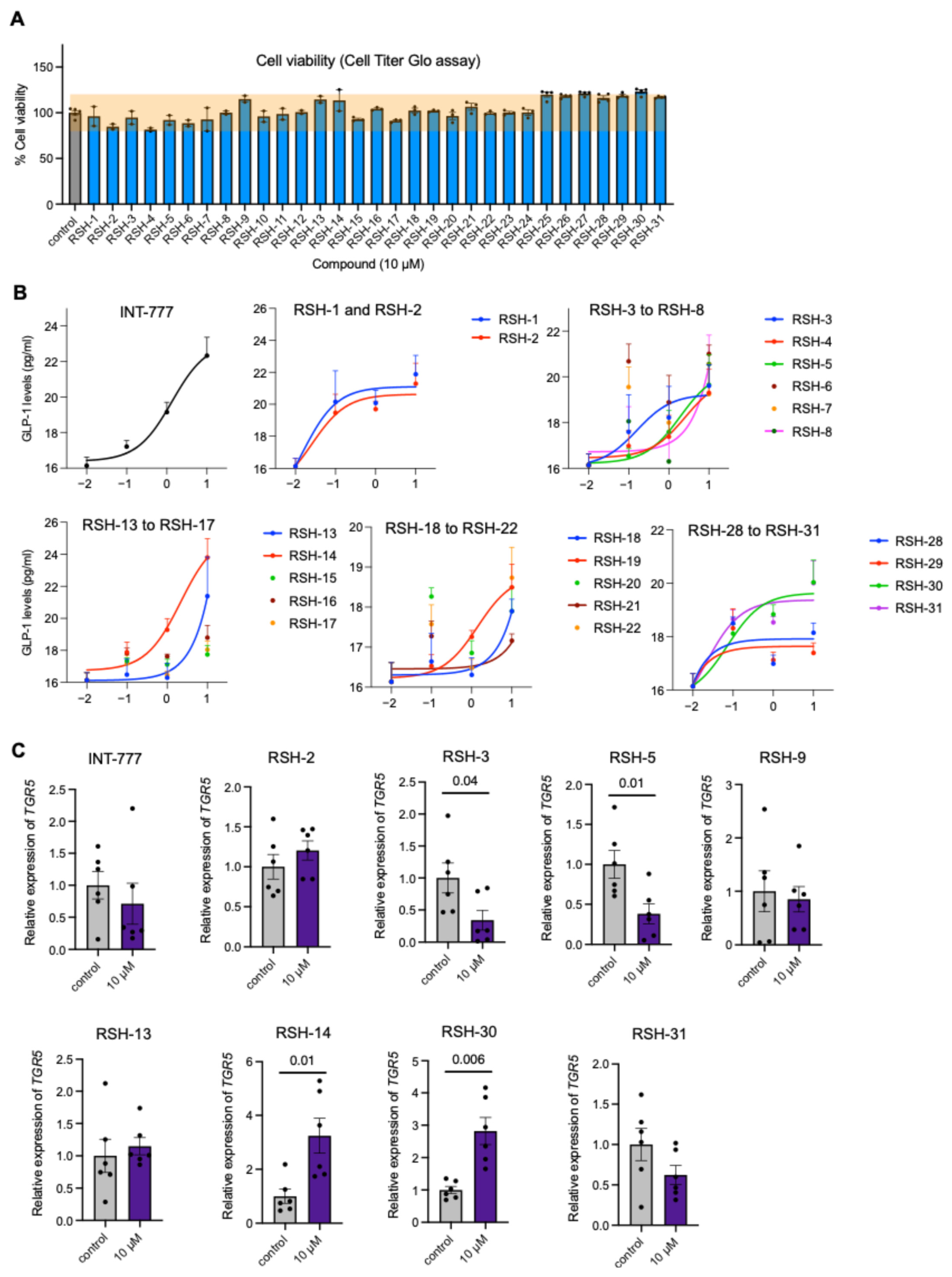
3.2.2. Cell Viability Assay
NCI-H716 cells were treated with the indicated compounds in complete media. Compounds were dissolved in DMSO, and DMSO was used as a negative control, while the DMSO concentration was kept constant in all treatments with dose responses. Cells were incubated with compounds overnight in complete RPMI media in a culturing incubator at 37 °C in a 5% CO2 atmosphere. Cell viability was measured using Cell Titer-Glo Luminescent Cell Viability Assay (G7570, Promega, Madison, WI, USA) according to the manufacturer’s instructions. Luminescence was measured using a Varioskan Lux plate reader (ThermoFisher Scientific, Waltham, MA, USA). Luminescence reading was normalized to the DMSO control and plotted as relative cell viability.
3.2.3. GLP-1 Secretion Assay
NCI-H716 cells are a suspension cell line, and need to be attached and polarized for GLP-1 secretion. Cells were seeded in plastic cell culture plates coated with Matrigel (Corning Life Sciences, Tewksbury, MA, USA, catalog no. 356234), which was diluted while ice cold in refrigerated Hanks’ balanced salt solution (HBSS, Gibco, Thermo Fisher Scientific, Waltham, MA, USA) according to the manufacturer’s instructions. The cells were allowed to grow for 2 days in complete RPMI medium with FBS and antibiotics as detailed in
Section 3.2.1. On the day of the treatment with compounds, Matrigel-attached cells were washed with low-serum (0.5% FBS) RPMI media without antibiotics. Compounds were diluted in DMSO and added to cells carefully in the low-serum medium (0.5% FBS, RPMI 1640) without antibiotics. DMSO concentrations were kept constant throughout the treatments and used as a negative control. After a 2 h incubation, the cell culture media containing secreted GLP-1 were collected in 96-well plates and stored at −20 °C until further analysis. Secreted total GLP-1 levels were then measured using the Invitrogen, Waltham, MA, USA, Human GLP-1 (1-37a) ELISA Kit from ThermoFisher Scientific, Waltham, MA, USA (catalog # EH221RB) according to the manufacturer’s instructions.
3.2.4. Real-Time qPCR Assay
NCI-H716 enteroendocrine cells were treated with compounds in complete RPMI media with DMSO as the negative control, as detailed in
Section 3.2.1 and
Section 3.2.2. Cells were incubated with compounds overnight in complete RPMI media with FBS and antibiotics in a mammalian cell culture incubator at 37 °C in a 5% CO
2 atmosphere. The next day, cells were collected in RNase-free Eppendorf tubes and washed with 1X PBS by centrifugation at 4 °C at 500×
g to remove compound and media. Cell pellets were resuspended in TRIzol (Ambion, Life Technologies, Thermo Fisher Scientific, Waltham, MA, USA) and tubes were snap frozen in liquid N
2 and stored at −80 °C until further analysis. Tubes with cells were thawed on ice for RNA extraction and kept on ice throughout the extraction process using TRIzol extraction and ethanol precipitation. Briefly, tubes were vortexed for 30 s to disrupt cell membranes and release RNA. Chloroform was added (200 mL chloroform/1 mL TRIzol) and vortexed for 30 s. Tubes were centrifuged at 12,000 rpm for 15 min at 4 °C. The clear top layer containing RNA was transferred to new RNase-free Eppendorf tubes, to which an equal volume of 2-propanol was added, and the tubes were inverted to mix (500 mL 2-propanol/1 mL TRIzol). Tubes were then centrifuged at 12,000 rpm for 10 min at 4 °C. The RNA pellet was washed with 70% EtOH (made with RNase and DNase-free water) and centrifuged at 14,000 rpm for 5 min at 4 °C. The RNA pellet was air-dried and resuspended in RNase-free water. cDNA synthesis was performed using the Maxima First Strand cDNA Synthesis Kit with DNase (ThermoFisher Scientific). qPCR was performed using the SYBR Green Master Mix (ThermoFisher Scientific) in a 384-well format using the QuantStudio 5 (ThermoFisher Scientific). The 2
−ΔΔCt method was used to calculate the relative change in gene expression normalized to the loading control. Data were then averaged for comparison between groups. qPCR primers used were human
TGR5: Forward: 5′-CCTAGGAAGTGCCAGTGCAG-3′, Reverse: 5′-CTTGGGTGGTAGGCAATGCT-3′; human
GAPDH: Forward: 5′-GAAGGTGAAGGTCGGAGT-3′, Reverse: 5′-CATGGGTGGAATCATATTGGAA-3′.
3.2.5. CRISPR KO Cell Lines
Guide RNAs targeting human TGR5 and SpCas9 protein were purchased from EditCo (Redwood City, CA, USA). Transfection was performed using the Neon Transfection System (ThermoFisher Scientific) according to the manufacturer’s instructions. Briefly, gRNA (30 µM) and SpCas9 protein (20 µM) were combined to create an RNP solution and incubated for 10 min to allow gRNA and SpCas9 protein to complex. NCI-H716 cells were centrifuged at 150× g for 5 min, then resuspended in 50 µL of Buffer R (10 µL per 200k cells). A total of 10 μL of cell suspension was added to each RNP solution. Electroporation was performed with Buffer E as instructed by the manufacturer. Electroporation parameters used were 1700 V, 20 ms, 1 pulse. Cells were allowed to recover for 3–4 days, and knockout was confirmed with PCR and Sanger Sequencing.
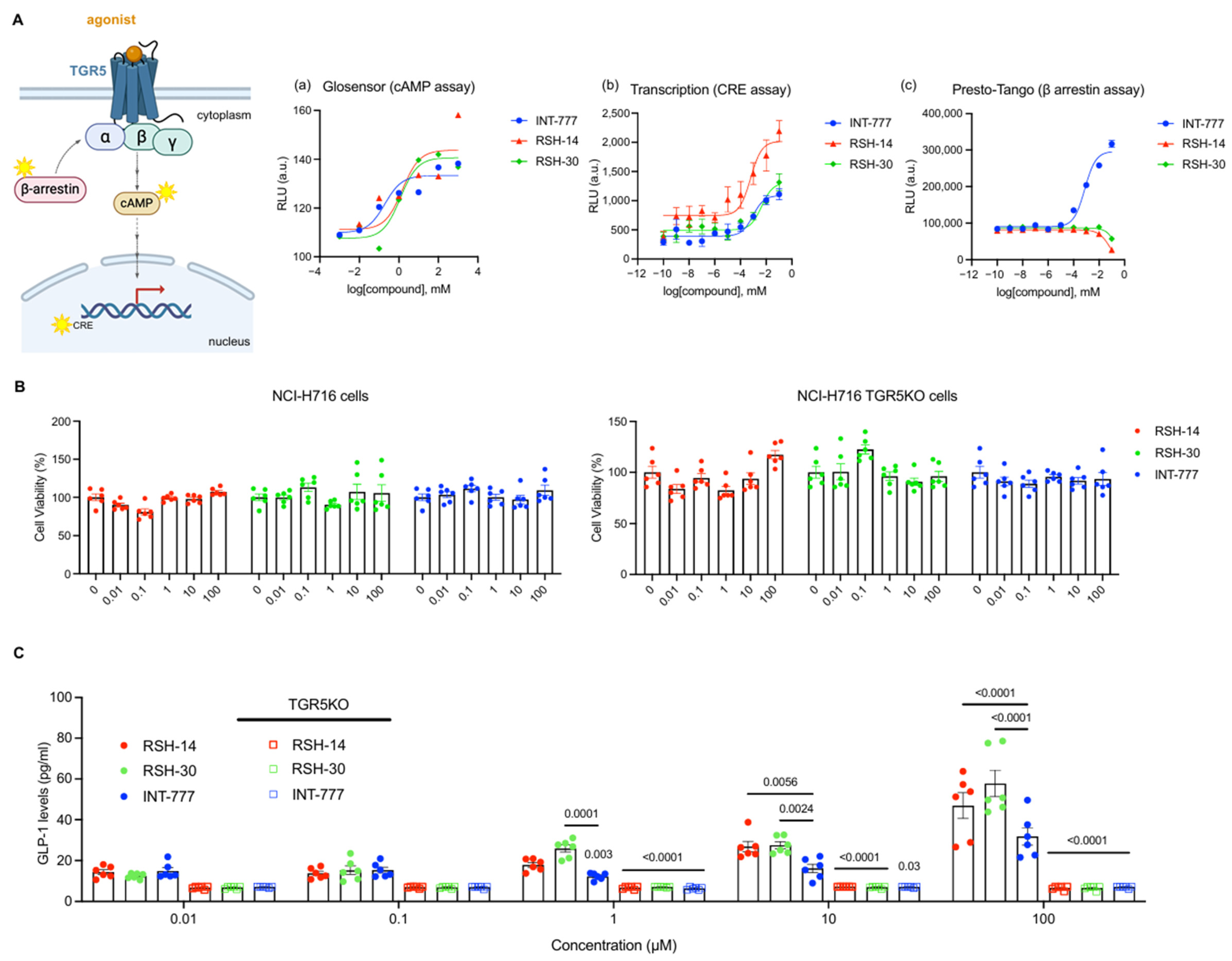
3.2.6. Luciferase Reporter Assay
For luciferase reporter assays for TGR5 activation, we used the cAMP response element (CRE)-driven luciferase construct pGL4.29 [luc2P/CRE/Hygro] plasmid (Promega Corporation, Madison, WI, USA) and the pGL4.74 [hRluc/CMV] plasmid (Promega Corporation) at a concentration of 2 μg/mL and 0.05 μg/mL of cell culture media volume, respectively. All plasmids were transfected using Opti-MEM (Gibco, Thermo Fisher Scientific, Waltham, MA, USA) and Lipofectamine 2000 (Invitrogen, Life Technologies, Grand Island, NY, USA). Transfections were performed in RPMI media without antibiotics with 10% FBS. After overnight incubation with plasmids, compounds were added in complete RPMI media with FBS and antibiotics, incubated overnight, and harvested the next day for luciferase assay. Cells were washed with PBS and lysed in PLB from the kit. Matrigel-attached cells were scraped in PLB. Luminescence was measured using the Dual-Luciferase Reporter Assay System (Promega Corporation) according to the manufacturer’s instructions. Luminescence readings were captured using the Varioskan Lux Reader. Luminescence was normalized to Renilla luciferase activity.
3.2.7. Presto-Tango Assay
Human TGR5-Tango construct (GPBA-Tango, #66298) was purchased from Addgene, Watertown, MA, USA. HTLA cells were a kind gift from Dr. Richard Axel. A total of 4 million HTLA cells were seeded in a T-75 flask. At 80% confluence, 30 µg of GPBA-Tango plasmid was transfected into cells using Opti-MEM (Gibco) and Lipofectamine CRISPRMAX (Invitrogen, Life Technologies, Grand Island, NY, USA). After 24 h, cells were trypsinized and transferred to a PLL-coated 96-well plate. Cells were allowed to attach for 2 h at 37 °C in an atmosphere of 5% CO2. Compounds were added to the complete media and incubated overnight. BrightGlo (Promega, Madison, WI, USA) was used to trigger luminescence. Luminescence was measured using the Varioskan Lux Reader.
3.2.8. ATF6α siRNA
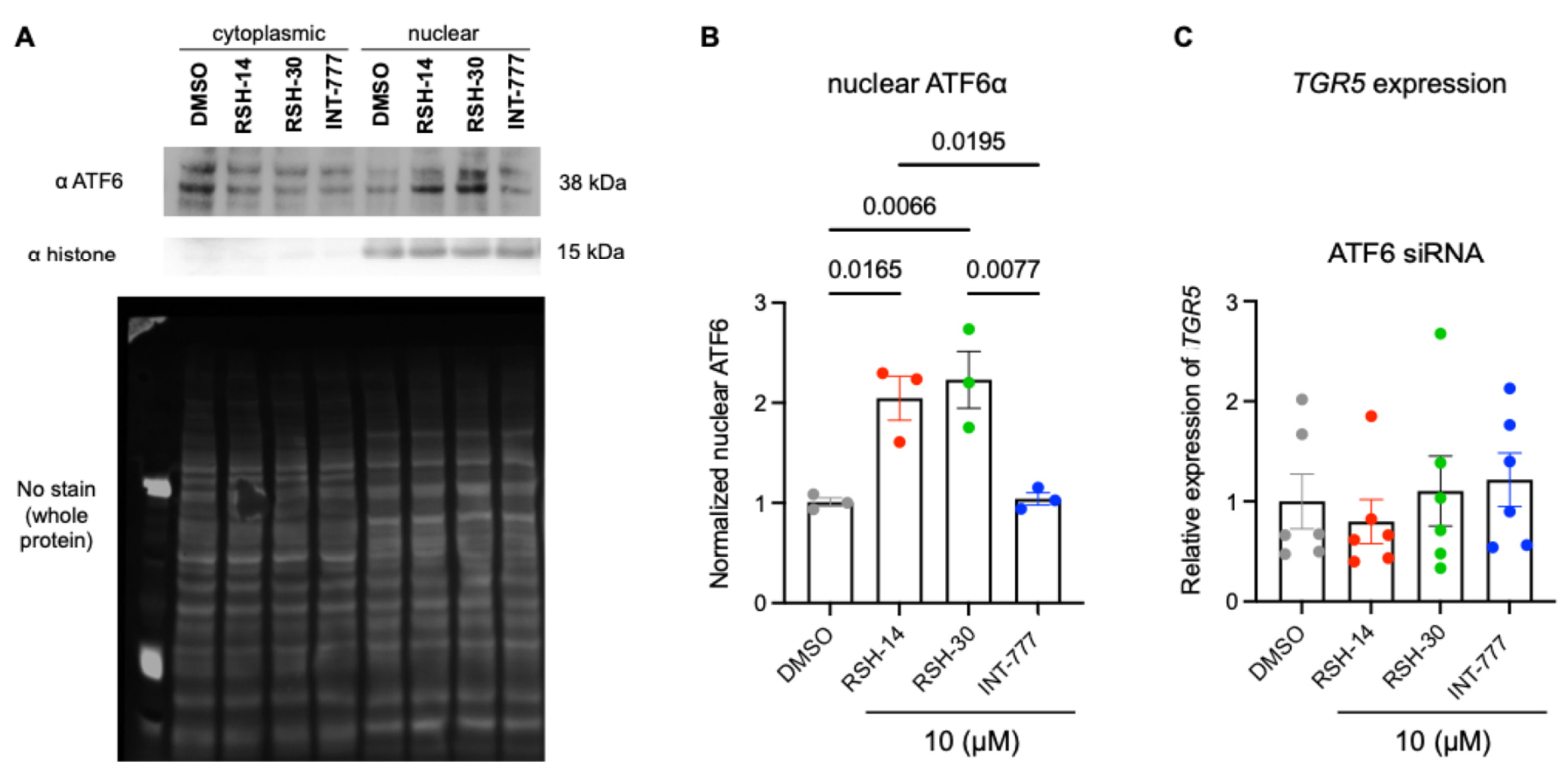
ATF6α siRNA (Santa Cruz Biotechnology, Dallas, TX, USA) and negative siRNA (Ambion, Thermo Fisher Scientific, Waltham, MA, USA) transfection was performed using Opti-MEM and Lipofectamine RNAiMAX according to the manufacturer’s instructions. Briefly, siRNAs were resuspended and diluted in RNase-free water (SCBT) and added at a final concentration of 40 nM in RPMI media without FBS and antibiotics. After siRNA transfection, cells were incubated in antibiotic- and FBS-free media for 24 h and then complete RPMI media with FBS and antibiotics for an additional 24 h. Compounds were then added (48 h post-siRNA transfection) in complete RPMI media with FBS and antibiotics. After an overnight incubation, cells were harvested for RNA extraction as described in
Section 3.2.4.
Subcellular Fractionation
Cells treated with compounds overnight were harvested, and subcellular fractionation was performed on the same day on fresh (never-frozen) samples. Cells were harvested from a T-75 flask into 500 μL of cold fractionation buffer by scraping. Fractionation buffer components: 20 mM HEPES (pH 7.4), 10 mM KCl, 2 mM MgCl2, 1 mM EDTA, 1 mM EGTA; just before use, 1 mM DTT, and Protease and Phosphatase inhibitor cocktail (Roche) was added. The fractionation buffer was chilled on ice for at least 15 min. Using a 1 mL syringe, cells were passed through a 27-gauge needle 10 times (or until all cells are lysed). Lysate was incubated on ice for 20 min, followed by centrifugation at 720× g for 5 min. The pellet was the crude nuclear fraction, and the supernatant contained the cytoplasm, membrane, and mitochondria. The supernatant was transferred into a fresh tube and kept on ice. The nuclear pellet was resuspended in 500 μL fractionation buffer and passed through a 25-gauge needle 10 times. Samples were centrifuged at 720× g for 10 min. The supernatant was discarded, and the pellet was snap frozen as the nuclear fraction. The cytoplasm, mitochondria, and membrane supernatant were centrifuged at 10,000× g for 5 min to pellet the mitochondria. The pellet was discarded, and the supernatant was snap frozen as the cytoplasm fraction.
3.2.9. Western Blot Analysis
Protein was extracted from cell lysates using Cell Lysis Buffer (Cell Signaling Technology, Danvers, MA, USA) supplemented with Protease and Phosphatase inhibitor cocktail (Roche, Basel, Switzerland). Samples were vortexed for 30 s, followed by centrifugation at 10,000× g for 10 min to pellet debris. Supernatant was denatured with NuPAGE LDS Sample Buffer (ThermoFisher Scientific) with 1% β-mercaptoethanol, and boiled at 100 °C for 5 min. Samples were centrifuged briefly to collect condensates and loaded onto Bolt Bis-Tris Plus Mini Protein Gels, 4–12% (Life Technologies) for SDS PAGE in X-Cell SureLock Mini-Cell apparatus (Invitrogen). Transfer was performed in the X-Cell Sure Lock on PVDF membranes (Invitrogen), and stained with No-Stain Protein Labeling Reagent (Invitrogen) according to the manufacturer’s instructions. Blots were imaged for total protein on an iBright imager (ThermoFisher Scientific), then blocked with Pierce Protein-free blocking buffer (ThermoFisher Scientific). Blots were incubated with primary and HRP-conjugated secondary antibodies (Cell Signaling Technology) in 5% BSA. Blots were developed with the Pierce ECL Plus Western Blotting Substrate (ThermoFisher Scientific) and imaged on an iBright imager, and band intensity was quantified and normalized to No-Stain using Adobe Photoshop.
3.3. In Vivo Studies
3.3.1. Animals
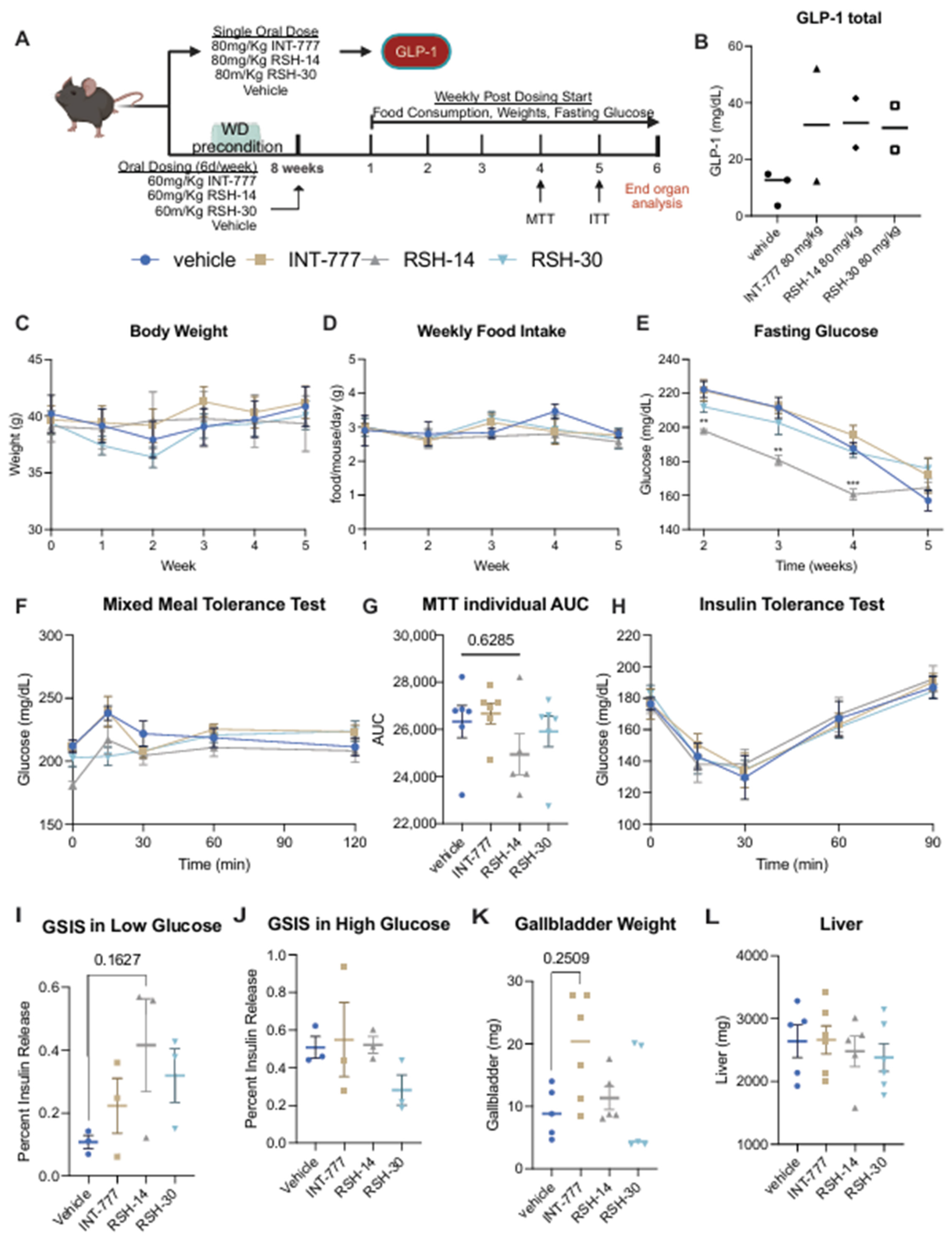
We ascribed to and followed the ARRIVE guidelines for all experiments. C57BL/6J male mice were purchased from Jackson Laboratories at five weeks of age. For acute experiments, mice were preconditioned on a high-fat WD (Inotiv TD.88137; 42% calories from fat; 30% w/v sucrose) for 8 weeks to induce obesity and glucose intolerance. Mice were housed in groups of two and had ad libitum access to food and water in a climate-controlled environment with a 12-h light/dark cycle. For acute drug dosing experiments, mice were assigned to weight-matched groups for drug testing: vehicle, INT-777, RSH-14, and RSH-30.
Guided by our acute experiment, we completed a power calculation to inform our chronic experiment (G*Power 3.1.9.6, Heinrich-Heinie Universität Düsseldorf). We calculated an effect size of 2.33 between RSH-14 and the vehicle. Thus, with 5 animals per group, we would be able to detect a difference in efficacy with an alpha of 0.05 and a power of 0.9. To account for loss, we started with 6 mice per group. For chronic dosing experiments, mice were assigned to weight-matched groups for 6 weeks of drug testing: vehicle, INT-777, RSH-14, and RSH-30. One mouse died during preconditioning, and thus the RSH-14 group had only 5 mice per group. A single mouse in the vehicle arm died after a traumatic gavage, and all data after this were excluded. Animal data were collected in an unblinded fashion.
C57BL/6J mice purchased from Jackson Laboratories at five weeks of age were preconditioned on a high-fat WD (Inotiv TD.88137; 42% calories from fat; 30% w/v sucrose) for 5 weeks to induce obesity and glucose intolerance. Mice were housed in groups of two and had ad libitum access to food and water in a climate-controlled environment with a 12-h light/dark cycle. All procedures were approved by the Institutional Animal Care and Use Committee (UW-Madison), and animals were cared for according to guidelines set forth by the American Association for Laboratory Animal Science in an AALAC-accredited facility.
3.3.2. Functional Glucose Testing
Animal body weights and food consumption were quantified throughout the experiment. For MTT assays, animals were fasted for 4 h (7 a.m. to 11 a.m.). ITT assays were performed without a fast. The MTT assay was performed in week 4. Fasted mice were administered an oral bolus of Ensure (Abbot Nutrition, IL, USA; 10 mL/kg) and blood glucose was measured at time points 0, 15, 30, 60, and 120 min. The ITT assay was performed in week 5. Non-fasted mice received an intraperitoneal injection of regular insulin (0.5 U/kg; Novolin® R, Novo Nordisk). Blood glucose was measured at time points 0, 15, 30, 60, and 90 min. The blood glucose measurements were made using a Bayer Contour glucose meter with test strips. Total GLP-1 was measured using the total GLP1 ELISA kit (Thermo Fisher BMS2194) according to the manufacturer’s instructions.
3.3.3. Pancreatic Islet Isolation
Pancreatic islets were isolated by collagenase (Sigma #C7657-5G, Sigma-Aldrich, St. Louis, MO, USA) digestion of the pancreas and purified by gradient centrifugation using Lymphocyte Separation Media (Corning #25-072-CV, Glendale, AZ, USA). Islets were hand-picked and cultured in RPMI (Gibco #11879-020, Paisley, Scotland) containing 8 mM glucose, supplemented with 10% FBS (Corning 35-010-CV), 100 I.U./mL penicillin, and 100 μg/mL streptomycin (Corning 30-001-CI) at 37 °C and 5% CO2. (PMC7028949).
3.3.4. Glucose-Stimulated Insulin Secretion
Following overnight culture, glucose-stimulated insulin secretion assays were performed in Krebs-Ringer Bicarbonate buffer (KRB) at pH 7.4 containing (mmol/L) NaCl (120), KCl (4.8), CaCl
2 (2.5), MgCl
2 (1.2), NaHCO
3 (24), and 1 g/L BSA. Batches of 10 islets were pre-incubated for 45 min in 1 mL of KRB containing 2 mM glucose in non-coated 24-well plates (Costar #3738, Corning Life Sciences Inc., Tewksbury, MA, USA) at 37 °C. Then islets were transferred into 1 mL of KRB containing either 2 mM (low) or 17 mM (high) glucose and incubated for an additional 45 min. Afterwards, media samples were collected, and islets were lysed in 1 mL 1X Cell Lysis Buffer (Cell Signaling Technology #9803S, Danvers, MA, USA). Insulin content was measured using an in-house ELISA as previously described [
32].





 ,
,