Lactic Acid-Loaded Hydrogels for Post-Episiotomy Wound Healing: Microenvironment Engineering and Regenerative Strategies—A Narrative Review

Abstract
1. Introduction
2. Post-Episiotomy Wound Healing as a Microenvironmental Challenge
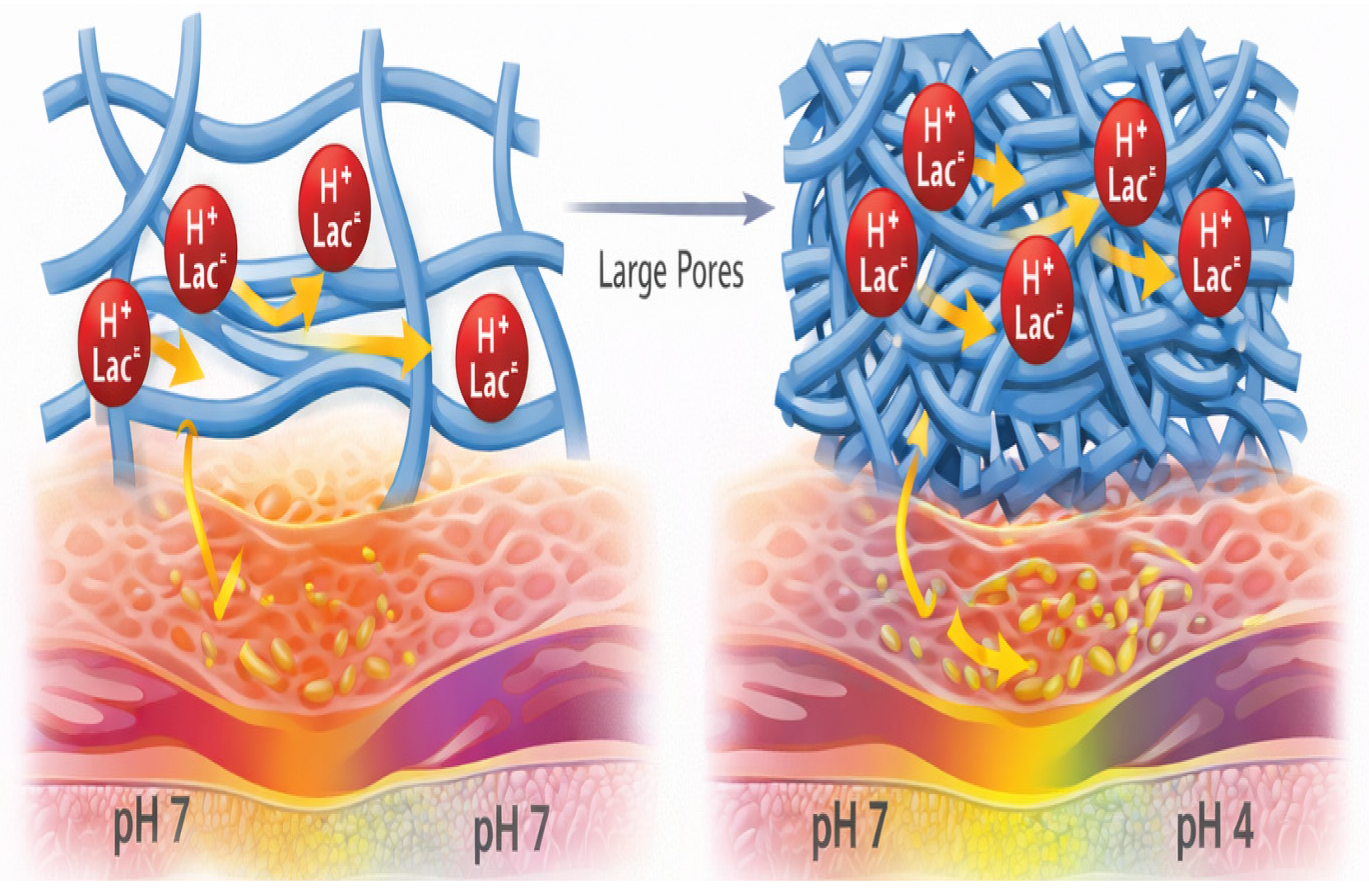
2.1. Therapeutic pH Targeting in the Postpartum Perineal Niche
2.2. Biocompatibility and Mucosal Tolerance in a Vulnerable Postpartum Setting
2.3. Controlled Release and Temporal Alignment with Wound Healing Phases
2.4. Biological Effects of Controlled Lactate Release on Wound Healing
2.5. Mechanical Compatibility Within a Dynamic Anatomical Region
2.6. Microbiome Interaction and Ecological Modulation
2.7. Regulatory Pathways and Translational Implementation
2.8. Clinical Integration Perspective
3. Hydrogel Design Principles for Lactic Acid Delivery
3.1. Acid–Base Equilibria and Buffering Dynamics in Confined Polymeric Networks
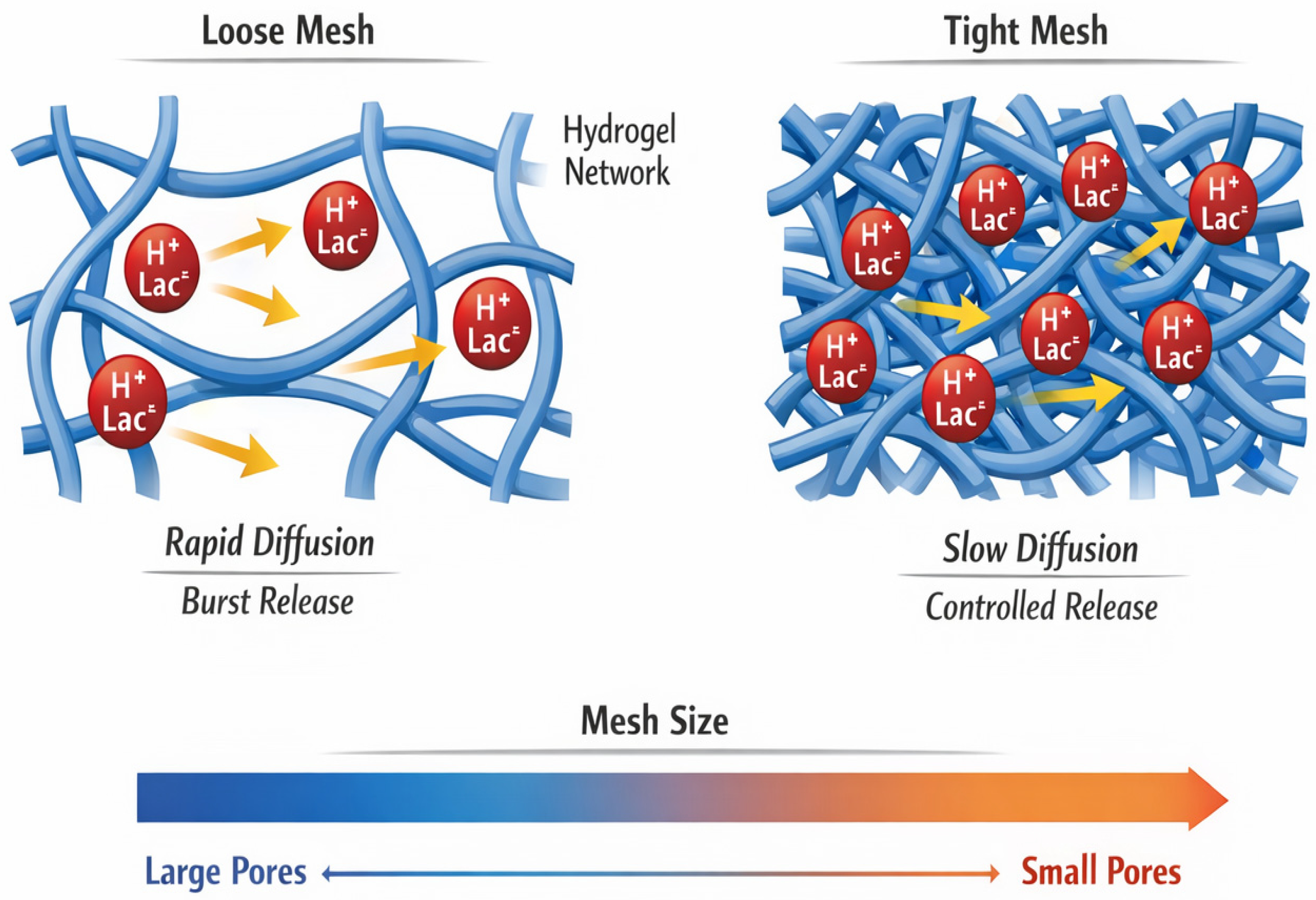
3.2. Network Architecture, Crosslink Density, and Mesh Size Control
3.3. Swelling Behavior and Osmotic Regulation
3.4. Diffusion Modeling and Release Kinetics
3.5. Rheological and Mechanical Optimization
3.6. Stability, Storage, and Functional Longevity
3.7. Quantitative Considerations: Typical Mesh Size and Diffusion Coefficients in Biomedical Hydrogels
3.8. Types of Hydrogels Used in Wound Healing and Tissue Regeneration
3.9. Comparative Performance of Hydrogel Platforms for Lactate Administration
3.10. Key Parameters Controlling Hydrogel Performance
3.11. Current Trends in Hydrogel Engineering for Lactate Delivery and Regenerative Obstetrics
4. Clinical Evidence for Lactic Acid in Post-Episiotomy Repair
4.1. Evidence Consolidation: The Systematic Review as a Foundational Layer
4.2. Randomized Clinical Validation: Intravaginal Lactic Acid Gel as Proof-of-Concept
4.3. Mechanistic–Clinical Correlation: A Coherent Biological Narrative
4.4. Clinical Relevance Beyond Statistical Significance
4.5. Translational Implications for Hydrogel-Based Optimization
5. Toward Regenerative Obstetrics: Integrating Microenvironment Engineering and Biologic Stimulation
5.1. From Passive Healing to Active Regenerative Modulation
5.2. Lactic Acid: Microenvironment-Oriented Regeneration
5.3. Platelet-Rich Plasma: Growth Factor-Driven Regeneration
5.4. Convergent Mechanisms: Acid–Growth Factor Synergy
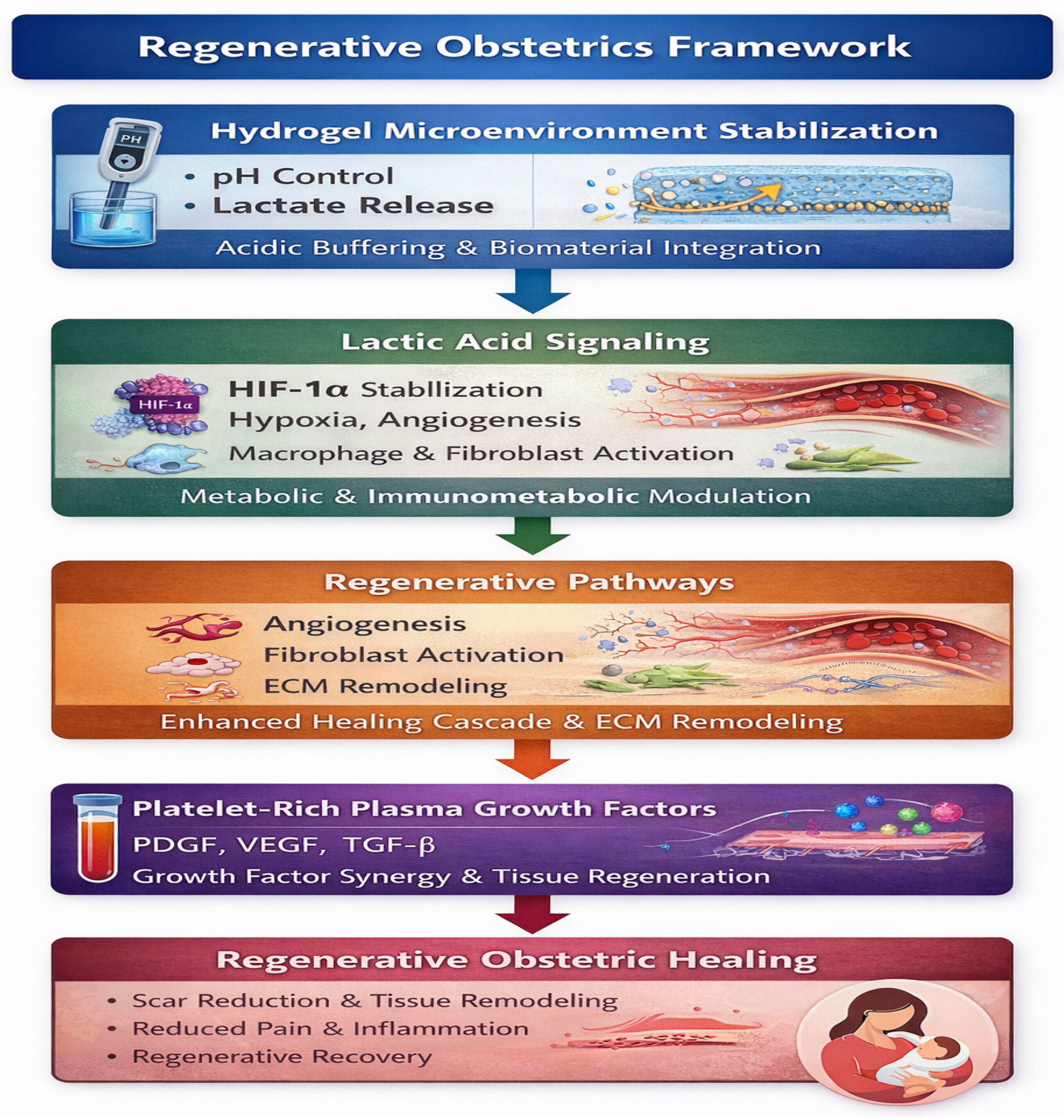
5.5. A Unified Regenerative Model for Obstetric Tissue Repair
5.6. Translational Implications: Toward Integrated Regenerative Platforms
5.7. Obstetrics as a Translational Model for Regenerative Medicine
6. Limitations and Future Research Directions
7. Conclusions
Author Contributions
Funding
Institutional Review Board Statement
Informed Consent Statement
Data Availability Statement
Conflicts of Interest
Abbreviations
| PRP | Platelet-rich plasma |
| HIF-1α | Hypoxia-inducible factor-1α |
| VEGF | Vascular endothelial growth factor |
| PEG | Polyethylene glycol |
| PDGF | Platelet-derived growth factor |
| TGF-β | Tumour growth factor-beta |
| EGF | Epidermal growth factor |
References
- Goh, R.; Goh, D.; Ellepola, H. Perineal Tears—A Review. Aust. J. Gen. Pract. 2018, 47, 35–38. [Google Scholar] [CrossRef]
- Alaya, F.; Worrall, A.P.; Farah, N.; Eogan, M.; Monteith, C.; Salameh, F. Optimizing and Enhancing Perineal Repair Knowledge and Teaching among Obstetricians and Midwives: A Prospective Three-Site Study. Int. J. Gynaecol. Obstet. 2025, 170, 1284–1292. [Google Scholar] [CrossRef] [PubMed]
- Frohlich, J.; Kettle, C. Perineal Care. BMJ Clin. Evid. 2015, 2015, 1401. [Google Scholar]
- Gommesen, D.; Nohr, E.A.; Drue, H.C.; Qvist, N.; Rasch, V. Obstetric Perineal Tears: Risk Factors, Wound Infection and Dehiscence: A Prospective Cohort Study. Arch. Gynecol. Obstet. 2019, 300, 67–77. [Google Scholar] [CrossRef]
- Wilkinson, H.N.; Hardman, M.J. Wound Healing: Cellular Mechanisms and Pathological Outcomes. Open Biol. 2020, 10, 200223. [Google Scholar] [CrossRef]
- Jin, C.; Jin, Y.; Ding, Z.; Nuch, K.S.; Han, M.; Shim, J.; Chien, P.N.; Heo, C.Y. Cellular and Molecular Mechanisms of Wound Repair: From Biology to Therapeutic Innovation. Cells 2025, 14, 1850. [Google Scholar] [CrossRef]
- Holdcroft, A.M.; Ireland, D.J.; Payne, M.S. The Vaginal Microbiome in Health and Disease—What Role Do Common Intimate Hygiene Practices Play? Microorganisms 2023, 11, 298. [Google Scholar] [CrossRef]
- Barbara, G.; Barbaro, M.R.; Fuschi, D.; Palombo, M.; Falangone, F.; Cremon, C.; Marasco, G.; Stanghellini, V. Inflammatory and Microbiota-Related Regulation of the Intestinal Epithelial. Barrier. Front. Nutr. 2021, 8, 718356. [Google Scholar] [CrossRef] [PubMed]
- Houlbracq, R.; Le Ray, C.; Blondel, B.; Lelong, N.; Chantry, A.A.; Desplanches, T.; ENP2021 Study Group. Episiotomies and Obstetric Anal Sphincter Injuries Following a Restrictive Episiotomy Policy in France: An Analysis of the 2010, 2016, and 2021 National Perinatal Surveys. PLoS Med. 2025, 22, e1004501. [Google Scholar] [CrossRef] [PubMed]
- Girsang, B.M.; Elfira, E. A Literature Review on Postpartum Perineal Wound Care: Epidemiology, Impact, and Future Interventions. Open Access Maced. J. Med. Sci. 2023, 11, 73–80. [Google Scholar] [CrossRef]
- Boleti, A.P.d.A.; Jacobowski, A.C.; Frihling, B.E.F.; Cruz, M.V.; Santos, K.F.D.P.; Migliolo, L.; de Andrade, L.R.M.; Macedo, M.L.R. Wound Healing: Molecular Mechanisms, Antimicrobial Peptides, and Emerging Technologies in Regenerative Medicine. Pharmaceuticals 2025, 18, 1525. [Google Scholar] [CrossRef] [PubMed]
- Jing, S.L.; Suh, E.J.; Huang, K.X.; Griffin, M.F.; Wan, D.C.; Longaker, M.T. Understanding and Advancing Wound Healing in the Era of Multi-Omic Technology. Bioengineering 2026, 13, 51. [Google Scholar] [CrossRef]
- Son, B. Regulation of Tissue Regeneration by Immune Microenvironment–Fibroblast Interactions. Int. J. Mol. Sci. 2025, 26, 11950. [Google Scholar] [CrossRef]
- Lane, S.W.; Williams, D.A.; Watt, F.M. Modulating the stem cell niche for tissue regeneration. Nat. Biotechnol. 2014, 32, 795–803. [Google Scholar] [CrossRef]
- Alayat, M.S.; Sroge, R.A.; Alshiakh, F.M.; Abd El-Kafy, E.M.; Fadil, A.; Awali, A.; Subahi, M.S.; Almutairi, A.A. The Effectiveness of Photobiomodulation Therapy on Perineal Pain and Wound Healing After Episiotomy—A Systematic Review and Meta-Analysis. J. Clin. Med. 2026, 15, 964. [Google Scholar] [CrossRef]
- Brezeanu, D.; Brezeanu, A.-M.; Chirilă, S.; Tica, V. The Role of Lactic Acid in Episiotomy Wound Healing: A Systematic Review. Healthcare 2025, 13, 956. [Google Scholar] [CrossRef] [PubMed]
- Gerosa, D.; Santagata, M.; Martinez de Tejada, B.; Guittier, M.-J. Application of Honey to Reduce Perineal Laceration Pain during the Postpartum Period: A Randomized Controlled Trial. Healthcare 2022, 10, 1515. [Google Scholar] [CrossRef] [PubMed]
- Donarska, J.; Burdecka, J.; Kwiatkowska, W.; Szablewska, A.; Czerwińska-Osipiak, A. Factors affecting for women’s sexual functioning after childbirth-pilot study. Eur. J. Midwifery 2023, 7, A89. [Google Scholar] [CrossRef]
- Adams, Y.J.; Miller, M.L.; Agbenyo, J.S.; Ehla, E.E.; Clinton, G.A. Postpartum care needs assessment: Women’s understanding of postpartum care, practices, barriers, and educational needs. BMC Pregnancy Childbirth 2023, 23, 502. [Google Scholar] [CrossRef]
- Olteanu, G.; Neacșu, S.M.; Joița, F.A.; Musuc, A.M.; Lupu, E.C.; Ioniță-Mîndrican, C.B.; Lupuliasa, D.; Mititelu, M. Advancements in Regenerative Hydrogels in Skin Wound Treatment: A Comprehensive Review. Int. J. Mol. Sci. 2024, 25, 3849. [Google Scholar] [CrossRef]
- Cao, D.; Ding, J. Recent advances in regenerative biomaterials. Regen. Biomater. 2022, 9, rbac098. [Google Scholar] [CrossRef]
- Chen, G.; Liu, J.; Guo, Y.; Sun, P. Mechanisms for Regulatory Effects of Exercise on Metabolic Diseases from the Lactate–Lactylation Perspective. Int. J. Mol. Sci. 2025, 26, 3469. [Google Scholar] [CrossRef]
- Saravanan, P.R.P.; Balachander, N.K. Anti-inflammatory and wound healing properties of lactic acid bacteria and its peptides. Folia Microbiol. 2023, 68, 337–353. [Google Scholar] [CrossRef]
- Bădăluță, V.A.; Curuțiu, C.; Dițu, L.M.; Holban, A.M.; Lazăr, V. Probiotics in Wound Healing. Int. J. Mol. Sci. 2024, 25, 5723. [Google Scholar] [CrossRef]
- Ishikawa, T.; Sasaki, D.; Aizawa, R.; Yamamoto, M.; Yaegashi, T.; Irié, T.; Sasaki, M. The Role of Lactic Acid on Wound Healing, Cell Growth, Cell Cycle Kinetics, and Gene Expression of Cultured Junctional Epithelium Cells in the Pathophysiology of Periodontal Disease. Pathogens 2021, 10, 1507. [Google Scholar] [CrossRef]
- Lee, T.Y. Lactate: A multifunctional signaling molecule. Yeungnam Univ. J. Med. 2021, 38, 183–193. [Google Scholar] [CrossRef] [PubMed]
- Amabebe, E.; Anumba, D.O.C. The Vaginal Microenvironment: The Physiologic Role of Lactobacilli. Front. Med. 2018, 5, 181. [Google Scholar] [CrossRef] [PubMed]
- Waterman, S.R.; Small, P.L.C. Acid-sensitive enteric pathogens are protected from killing under extremely acidic conditions of pH 2.5 when they are inoculated onto certain solid food sources. Appl. Environ. Microbiol. 1998, 64, 3882–3886. [Google Scholar] [CrossRef]
- Sim, P.; Strudwick, X.L.; Song, Y.; Cowin, A.J.; Garg, S. Influence of Acidic pH on Wound Healing In Vivo: A Novel Perspective for Wound Treatment. Int. J. Mol. Sci. 2022, 23, 13655. [Google Scholar] [CrossRef]
- Puissegur, A.; Accoceberry, M.; Rouzaire, M.; Pereira, B.; Herault, M.; Bruhat, C.; Delabaere, A.; Gallot, D. Risk Factors for Perineal Wound Breakdown in Early Postpartum: A Retrospective Case–Control Study. J. Clin. Med. 2023, 12, 3036. [Google Scholar] [CrossRef] [PubMed]
- Serro, A.P.; Silva, D.C.; Fernandes, A.I. Hydrogel-Based Novel Biomaterials: Achievements and Prospects. Gels 2024, 10, 436. [Google Scholar] [CrossRef]
- Sutradhar, S.C.; Shin, H.; Kim, W.; Jang, H. Hydrogel Films in Biomedical Applications: Fabrication, Properties and Therapeutic Potential. Gels 2025, 11, 918. [Google Scholar] [CrossRef]
- Yan, Y.; Chen, Y.; Huang, L.; Cai, M.; Yin, X.; Zhu, Y.Z.; Ye, L. Bioengineered In Situ-Forming Hydrogels as Smart Drug Delivery Systems for Postoperative Breast Cancer Immunotherapy: From Material Innovation to Clinical Translation. J. Funct. Biomater. 2025, 16, 381. [Google Scholar] [CrossRef] [PubMed]
- Capuana, E.; Lopresti, F.; Ceraulo, M.; La Carrubba, V. Poly-l-Lactic Acid (PLLA)-Based Biomaterials for Regenerative Medicine: A Review on Processing and Applications. Polymers 2022, 14, 1153. [Google Scholar] [CrossRef] [PubMed]
- Segneanu, A.-E.; Bejenaru, L.E.; Bejenaru, C.; Blendea, A.; Mogoşanu, G.D.; Biţă, A.; Boia, E.R. Advancements in Hydrogels: A Comprehensive Review of Natural and Synthetic Innovations for Biomedical Applications. Polymers 2025, 17, 2026. [Google Scholar] [CrossRef]
- Casadidio, C.; Censi, R. Prospects of Hydrogels in Wound Healing: Toward the Next Generation of Smart Biomaterials. Pharmaceutics 2025, 17, 1486. [Google Scholar] [CrossRef]
- Chelu, M.; Calderon Moreno, J.M.; Musuc, A.M.; Popa, M. Natural Regenerative Hydrogels for Wound Healing. Gels 2024, 10, 547. [Google Scholar] [CrossRef] [PubMed]
- Brezeanu, D.; Brezeanu, A.-M.; Chirila, S.I.; Tica, V. A Preliminary Study of Intravaginal Lactic Acid Gel (Canesbalance®) for Post-Episiotomy Healing: A Randomized Clinical Trial. Healthcare 2025, 13, 1581. [Google Scholar] [CrossRef]
- Frank, D.S.; Matzger, A.J. Effect of Polymer Hydrophobicity on the Stability of Amorphous Solid Dispersions and Supersaturated Solutions of a Hydrophobic Pharmaceutical. Mol. Pharm. 2019, 16, 682–688. [Google Scholar] [CrossRef]
- Dudognon, E.; Bama, J.-A.; Affouard, F. Exploring the Relationship Between Stability and Dynamics in Polymer-Based Amorphous Solid Dispersions for Pharmaceutical Applications. Polymers 2025, 17, 1210. [Google Scholar] [CrossRef]
- Bakhshandeh, B.; Ranjbar, N.; Abbasi, A.; Amiri, E.; Abedi, A.; Mehrabi, M.R.; Dehghani, Z.; Pennisi, C.P. Recent progress in the manipulation of biochemical and biophysical cues for engineering functional tissues. Bioeng. Transl. Med. 2023, 8, e10383. [Google Scholar] [CrossRef]
- Hao, D.; Lopez, J.-M.; Chen, J.; Iavorovschi, A.M.; Lelivelt, N.M.; Wang, A. Engineering Extracellular Microenvironment for Tissue Regeneration. Bioengineering 2022, 9, 202. [Google Scholar] [CrossRef]
- Miller, E.A.; Beasley, D.E.; Dunn, R.R.; Archie, E.A. Lactobacilli dominance and vaginal pH: Why is the human vaginal microbiome unique? Front. Microbiol. 2016, 7, 1936. [Google Scholar] [CrossRef]
- Şenel, S. An Overview of Physical, Microbiological and Immune Barriers of Oral Mucosa. Int. J. Mol. Sci. 2021, 22, 7821. [Google Scholar] [CrossRef]
- Lund, P.A.; De Biase, D.; Liran, O.; Scheler, O.; Mira, N.P.; Cetecioglu, Z.; Fernández, E.N.; Bover-Cid, S.; Hall, R.; Sauer, M.; et al. Understanding how microorganisms respond to acid pH is central to their control and successful exploitation. Front. Microbiol. 2020, 11, 556140. [Google Scholar] [CrossRef] [PubMed]
- Costello, E.K.; DiGiulio, D.B.; Robaczewska, A.; Symul, L.; Wong, R.J.; Shaw, G.M.; Stevenson, D.K.; Holmes, S.P.; Kwon, D.S.; Relman, D.A. Abrupt perturbation and delayed recovery of the vaginal ecosystem following childbirth. Nat. Commun. 2023, 14, 4141. [Google Scholar] [CrossRef] [PubMed]
- Pan, R.; Guo, M.; Chen, Y.; Lin, G.; Tian, P.; Wang, L.; Zhao, J.; Chen, W.; Wang, G. Dynamics of the Gut Microbiota and Faecal and Serum Metabolomes during Pregnancy—A Longitudinal Study. Nutrients 2024, 16, 483. [Google Scholar] [CrossRef]
- Mutic, A.D.; Jordan, S.; Edwards, S.M.; Ferranti, E.P.; Thul, T.A.; Yang, I. The postpartum maternal and newborn microbiomes. MCN Am. J. Matern. Child. Nurs. 2017, 42, 326–331. [Google Scholar] [CrossRef]
- O’Hanlon, D.E.; Moench, T.R.; Cone, R.A. Vaginal pH and lactic acid concentration determine antimicrobial activity in the female reproductive tract. BMC Microbiol. 2019, 19, 13. [Google Scholar] [CrossRef] [PubMed]
- Aldunate, M.; Srbinovski, D.; Hearps, A.C.; Latham, C.F.; Ramsland, P.A.; Gugasyan, R.; Cone, R.A.; Tachedjian, G. Lactic acid in the cervicovaginal microenvironment: Key mediator of mucosal protection. Front. Physiol. 2013, 4, 1–9. [Google Scholar]
- Chuhuaicura, P.; Rodríguez-Niklitschek, C.; Oporto, G.H.; Salazar, L.A. Distinct Molecular Mechanisms in Oral Mucosal Wound Healing: Translational Insights and Future Directions. Int. J. Mol. Sci. 2025, 26, 10660. [Google Scholar] [CrossRef] [PubMed]
- Argyropoulos, C.; Rondon-Berrios, H.; Raj, D.S.; Malhotra, D.; Agaba, E.I.; Rohrscheib, M.; Khitan, Z.; Murata, G.H.; Shapiro, J.I.; Tzamaloukas, A.H. Hypertonicity: Pathophysiologic concept and experimental studies. Cureus 2016, 8, e596. [Google Scholar] [CrossRef]
- Groulx, N.; Boudreault, F.; Orlov, S.N.; Grygorczyk, R. Membrane reserves and hypotonic cell swelling. J. Membr. Biol. 2006, 214, 43–56. [Google Scholar] [CrossRef]
- Arpa, M.D.; Erim, Ü.C.; Kesmen Salik, E.E.; Kaleli, S.N.B.; Erol, I. Effect of Organic Acid Selection on the Physicochemical Properties, Bioadhesion, and Stability of Chitosan Hydrogels. Gels 2025, 11, 778. [Google Scholar] [CrossRef] [PubMed]
- Kegele, C.S.; Dijkers, E.; Polonini, H. Antimicrobial Stability, pH, and Physical Appearance of Cardiovascular Drug Suspensions in SyrSpend® SF PH4: A Complementary Evaluation. Int. J. Pharm. Compd. 2025, 29, 310–318. [Google Scholar] [PubMed]
- De Seta, F.; Larsen, B. Antimicrobial Activity of a Vaginal Gel Formulation: Considerations Related to Vaginal Infection and Dysbiosis. Pathogens 2021, 10, 1576. [Google Scholar] [CrossRef]
- Stroppel, L.; Schultz-Fademrecht, T.; Cebulla, M.; Blech, M.; Marhöfer, R.J.; Selzer, P.M.; Garidel, P. Antimicrobial Preservatives for Protein and Peptide Formulations: An Overview. Pharmaceutics 2023, 15, 563. [Google Scholar] [CrossRef]
- Al-Taweel, R.; Hammad, A.S.; Tajammul, A.; Crovella, S.; Al-Asmakh, M. Wounds and the Microbiota: The Healing Interplay Between Host and Microbial Communities. Int. J. Mol. Sci. 2025, 26, 11365. [Google Scholar] [CrossRef]
- Fang, Y.; Li, Z.; Yang, L.; Li, W.; Wang, Y.; Kong, Z.; Miao, J.; Chen, Y.; Bian, Y.; Zeng, L. Emerging Roles of Lactate in Acute and Chronic Inflammation. Cell Commun. Signal. 2024, 22, 276. [Google Scholar] [CrossRef]
- Tiskratok, W.; Chuinsiri, N.; Limraksasin, P.; Kyawsoewin, M.; Jitprasertwong, P. Extracellular Matrix Stiffness: Mechanotransduction and Mechanobiological Response-Driven Strategies for Biomedical Applications Targeting Fibroblast Inflammation. Polymers 2025, 17, 822. [Google Scholar] [CrossRef]
- Gupta, S.; Poret, A.J.; Hashemi, D.; Eseonu, A.; Yu, S.H.; D’Gama, J.; Neel, V.A.; Lieberman, T.D. Cutaneous Surgical Wounds Have Distinct Microbiomes from Intact Skin. Microbiol. Spectr. 2023, 11, e03300-22. [Google Scholar] [CrossRef]
- Correa, S.; Grosskopf, A.K.; Lopez Hernandez, H.; Chan, D.; Yu, A.C.; Stapleton, L.M.; Appel, E.A. Translational Applications of Hydrogels. Chem. Rev. 2021, 121, 11385–11457. [Google Scholar] [CrossRef]
- Tian, J.; Song, X.; Wang, Y.; Cheng, M.; Lu, S.; Xu, W.; Gao, G.; Sun, L.; Tang, Z.; Wang, M.; et al. Regulatory Perspectives of Combination Products. Bioact. Mater. 2022, 10, 492–503. [Google Scholar] [CrossRef] [PubMed]
- Vigata, M.; Meinert, C.; Hutmacher, D.W.; Bock, N. Hydrogels as Drug Delivery Systems: A Review of Current Characterization and Evaluation Techniques. Pharmaceutics 2020, 12, 1188. [Google Scholar] [CrossRef] [PubMed]
- Balla, E.; Daniilidis, V.; Karlioti, G.; Kalamas, T.; Stefanidou, M.; Bikiaris, N.D.; Vlachopoulos, A.; Koumentakou, I.; Bikiaris, D.N. Poly(lactic Acid): A Versatile Biobased Polymer for the Future with Multifunctional Properties—From Monomer Synthesis, Polymerization Techniques and Molecular Weight Increase to PLA Applications. Polymers 2021, 13, 1822. [Google Scholar] [CrossRef]
- Visan, A.I.; Negut, I. Development and Applications of PLGA Hydrogels for Sustained Delivery of Therapeutic Agents. Gels 2024, 10, 497. [Google Scholar] [CrossRef] [PubMed]
- Çalbaş, B.; Albreiki, F.; Carey, Z.; Wang, K.; Ford, R.; Nair, A.K.; Nguyen, N.; Wright, T.A. Polymer Network Architecture of Single Network and Semi-Interpenetrating Network Hydrogels Modulates Water Retention and Degradation in Soil Conditioning Applications. ChemBioEng Rev. 2025, 2, 423–430. [Google Scholar] [CrossRef]
- Zhou, X.; Zhao, F.; Guo, Y.; Rosenberger, B.; Yu, G. Architecting Highly Hydratable Polymer Networks to Tune the Water State for Solar Water Purification. Sci. Adv. 2019, 5, eaaw5484. [Google Scholar] [CrossRef]
- Méndez, P.A.; López, B.L. Polyelectrolyte Nanoparticles of Amphiphilic Chitosan/Pectin from Banana Peel as Potential Carrier System of Hydrophobic Molecules. Polymers 2020, 12, 2109. [Google Scholar] [CrossRef]
- Yi, K.; Priyangga, A.; Atmaja, L.; Santoso, M. Characteristics and Performance Studies of a Composite Polymer Electrolyte Membrane Based on Chitosan/Glycerol–Sulfosuccinic Acid Modified Montmorillonite Clay. RSC Adv. 2022, 12, 30742–30753. [Google Scholar]
- Ho, T.-C.; Chang, C.-C.; Chan, H.-P.; Chung, T.-W.; Shu, C.-W.; Chuang, K.-P.; Duh, T.-H.; Yang, M.-H.; Tyan, Y.-C. Hydrogels: Properties and Applications in Biomedicine. Molecules 2022, 27, 2902. [Google Scholar] [CrossRef] [PubMed]
- Quazi, M.Z.; Quazi, A.S.; Song, Y.; Park, N. Functional Hydrogels: A Promising Platform for Biomedical and Environmental Applications. Int. J. Mol. Sci. 2025, 26, 9066. [Google Scholar] [CrossRef] [PubMed]
- Roca-Arroyo, A.F.; Gutierrez-Rivera, J.A.; Morton, L.D.; Castilla-Casadiego, D.A. Hydrogel Network Architecture Design Space: Impact on Mechanical and Viscoelastic Properties. Gels 2025, 11, 588. [Google Scholar] [CrossRef]
- Feng, W.; Wang, Z. Tailoring the Swelling-Shrinkable Behavior of Hydrogels for Biomedical Applications. Adv. Sci. 2023, 10, e2303326. [Google Scholar] [CrossRef]
- De Piano, R.; Caccavo, D.; Barba, A.A.; Lamberti, G. Swelling Behavior of Anionic Hydrogels: Experiments and Modeling. Gels 2024, 10, 813. [Google Scholar] [CrossRef]
- Mohsin, M.E.A.; Siddiqa, A.J.; Mousa, S.; Shrivastava, N.K. Design, Characterization, and Release Kinetics of a Hybrid Hydrogel Drug Delivery System for Sustained Hormone Therapy. Polymers 2025, 17, 999. [Google Scholar] [CrossRef]
- Lavrentev, F.V.; Shilovskikh, V.V.; Alabusheva, V.S.; Yurova, V.Y.; Nikitina, A.A.; Ulasevich, S.A.; Skorb, E.V. Diffusion-Limited Processes in Hydrogels with Chosen Applications from Drug Delivery to Electronic Components. Molecules 2023, 28, 5931. [Google Scholar] [CrossRef]
- Brezeanu, D.; Brezeanu, A.-M.; Chirilă, S.; Tica, V.-I. The Effectiveness of Topical Lactic Acid Gel in Episiotomy Wound Healing and Its Impact on Sexual Quality of Life After Childbirth: A Prospective Study. Cureus 2025, 17, e84517. [Google Scholar] [CrossRef] [PubMed]
- Bashir, S.; Hina, M.; Iqbal, J.; Rajpar, A.H.; Mujtaba, M.A.; Alghamdi, N.A.; Wageh, S.; Ramesh, K.; Ramesh, S. Fundamental Concepts of Hydrogels: Synthesis, Properties, and Their Applications. Polymers 2020, 12, 2702. [Google Scholar] [CrossRef]
- Stojkov, G.; Niyazov, Z.; Picchioni, F.; Bose, R.K. Relationship between Structure and Rheology of Hydrogels for Various Applications. Gels 2021, 7, 255. [Google Scholar] [CrossRef]
- Velghe, I.; Buffel, B.; Vandeginste, V.; Thielemans, W.; Desplentere, F. Review on the Degradation of Poly(lactic acid) during Melt Processing. Polymers 2023, 15, 2047. [Google Scholar] [CrossRef]
- Hallstein, J.; Metzsch-Zilligen, E.; Pfaendner, R. Long-Term Thermal Stabilization of Poly(Lactic Acid). Materials 2024, 17, 2761. [Google Scholar] [CrossRef] [PubMed]
- Kharbedia, M.; Herráez-Aguilar, D.; Calero, M.; López-Menendez, H.; Luque-Rioja, C.; Moleiro, L.H.; Santos, C.; Lillo, P.; Monroy, F. Extensile Active Hydrogels Driven by Living FtsZ Polymers. Small 2026, 22, e10218. [Google Scholar] [CrossRef] [PubMed]
- Erickson, H.P. Size and Shape of Protein Molecules at the Nanometer Level Determined by Sedimentation, Gel Filtration, and Electron Microscopy. Biol. Proced. Online 2009, 11, 32–51. [Google Scholar] [CrossRef]
- Petsev, D.N.; Chen, K.; Gliko, O.; Vekilov, P.G. Diffusion-Limited Kinetics of the Solution–Solid Phase Transition of Molecular Substances. Proc. Natl. Acad. Sci. USA 2003, 100, 792–796. [Google Scholar] [CrossRef]
- Brazel, C.S.; Peppas, N.A. Dimensionless Analysis of Swelling of Hydrophilic Glassy Polymers with Subsequent Drug Release from Relaxing Structures. Biomaterials 1999, 20, 721–732. [Google Scholar] [CrossRef]
- Renslow, R.S.; Majors, P.D.; McLean, J.S.; Fredrickson, J.K.; Ahmed, B.; Beyenal, H. In Situ Effective Diffusion Coefficient Profiles in Live Biofilms Using Pulsed-Field Gradient Nuclear Magnetic Resonance. Biotechnol. Bioeng. 2010, 106, 928–937. [Google Scholar] [CrossRef]
- Abdollahpour, D.; Homayouni, A.; Nourizadeh, R. The effect of probiotic supplementation on episiotomy wound healing among primiparous women: A triple-blind randomized clinical trial. BMC Complement. Med. Ther. 2023, 23, 149. [Google Scholar] [CrossRef]
- Smith, K.; Johnson, R. Antiseptic solutions for episiotomy wound healing: A comparative study. J. Obstet. Gynecol. Res. 2021, 47, 512–520. [Google Scholar]
- Jones, L.M.; Brown, P. Lactic acid applications in obstetric wound healing: A randomized trial. Int. J. Gynecol. Obstet. 2022, 158, 243–250. [Google Scholar]
- Green, T.; Anderson, M. Comparison of lactic acid and iodine-based solutions in perineal wound healing. Med. J. Women’s Health 2020, 12, 45–53. [Google Scholar]
- Lee, S.; Kim, J. Efficacy of lactic acid gel in reducing post-episiotomy infection rates. Korean J. Obstet. Gynecol. 2019, 47, 330–339. [Google Scholar]
- White, R.; Black, H. Healing times in episiotomy wounds treated with lactic acid. J. Reprod. Med. 2023, 68, 99–107. [Google Scholar]
- Davis, C.; Patel, V. Patient-reported pain relief with lactic acid-based wound care. Pain. Manag. J. 2021, 17, 554–561. [Google Scholar]
- Clarke, B.; Wilson, N. Evaluating infection rates after episiotomy: The role of antiseptic solutions. J. Women’s Health 2022, 19, 789–795. [Google Scholar]
- Brezeanu, A.-M.; Brezeanu, D.; Stase, S.; Chirila, S.; Tica, V.-I. Intraoperative Platelet-Rich Plasma Application Improves Scar Healing after Cesarean Section: A Prospective Observational Pilot Study. Healthcare 2025, 13, 2905. [Google Scholar] [CrossRef] [PubMed]
- Brezeanu, A.-M.; Brezeanu, D.; Tica, V.-I. Intraoperative Platelet-Rich Plasma (PRP) for Post-Cesarean Scar Healing: A Single-Center Randomized Controlled Pilot Study. Healthcare 2025, 13, 2928. [Google Scholar] [CrossRef]
- Ahmed, A.-B.; Thatcher, S.; Khorsandi, J.; Ahmed, Z.; Lee, M.; Jaouhari, A.; Bond, B.; Merchant, A. Platelet-Rich Plasma (PRP) and Recombinant Growth Factor Therapies in Cutaneous Wound Healing: Mechanisms, Clinical Applications, and Future Directions. J. Clin. Med. 2025, 14, 8583. [Google Scholar] [CrossRef] [PubMed]
- Everts, P.; Onishi, K.; Jayaram, P.; Lana, J.F.; Mautner, K. Platelet-Rich Plasma: New Performance Understandings and Therapeutic Considerations in 2020. Int. J. Mol. Sci. 2020, 21, 7794. [Google Scholar] [CrossRef]
- Arciola, C.R.; Panichi, V.; Bua, G.; Costantini, S.; Bottau, G.; Ravaioli, S.; Capponi, E.; Campoccia, D. Smart Healing for Wound Repair: Emerging Multifunctional Strategies in Personalized Regenerative Medicine and Their Relevance to Orthopedics. Antibiotics 2026, 15, 36. [Google Scholar] [CrossRef]
- Mercader Ruiz, J.; Beitia, M.; Delgado, D.; Sánchez, P.; Bilbao, A.M.; Fiz, N.; Aizpurua, B.; Azofra, J.; Sánchez, M. New Formulations of Platelet-Rich Plasma: The Relevance of Extraplatelet Molecules. In Pearls in Biological and Molecular Tissue Repair Pathways; IntechOpen: London, UK, 2024. [Google Scholar]



| Hydrogel Type | Representative Materials/Examples | Lactic acid or Lactate Formulation Relevance | Key Physical Properties | Application Context | Main Advantages | Main Limitations | Translational Relevance for Post-Episiotomy Wound Healing |
|---|---|---|---|---|---|---|---|
| Natural hydrogels | Hyaluronic acid, alginate, gelatin, collagen | Direct lactic acid incorporation is not consistently reported in obstetric studies; relevant as candidate matrices for localized acidic delivery | High water content, strong swelling capacity, soft-tissue compliance, generally limited standalone mechanical strength | Mostly in vitro/in vivo wound-healing and regenerative studies; indirect obstetric relevance | High biocompatibility, moist wound support, ECM-like interaction | Batch variability, enzymatic instability, less predictable release control | Suitable for mucosal repair where hydration and tissue tolerance are priorities |
| Chitosan-based biological hydrogels | Chitosan hydrogels, acid-containing mucoadhesive gels | Particularly relevant for acidic formulations; specific lactic acid concentration varies by formulation and is not standardized in obstetric literature | Mucoadhesive behavior, moderate swelling, tunable viscosity, moderate mechanical stability, possible antimicrobial-supportive profile | In vitro/in vivo biomaterials studies; indirect translational relevance to postpartum applications | Good mucosal adhesion, compatibility with acidic environments, prolonged residence time | Physicochemical behavior depends strongly on acid type and formulation design | Among the most promising biological platforms for postpartum lactate delivery |
| Synthetic hydrogels | PEG-based, polyacrylate-based, PVA-derived systems | Strong relevance for controlled lactate release and buffering design, although direct obstetric data remain limited | Tunable crosslink density, predictable mesh size, controlled swelling, improved reproducibility | Mostly experimental drug-delivery and wound-healing systems | High formulation precision, reproducibility, adjustable release kinetics | Limited intrinsic bioactivity, weaker mucoadhesion unless modified | Attractive for engineering sustained and quantifiable lactate delivery |
| Hybrid hydrogels | Natural–synthetic blends; chitosan–alginate, collagen–synthetic, HA-based composites | Highly relevant for lactate/lactic acid delivery because they can combine retention with release control | Balanced swelling, improved mechanical behavior, adaptable rheology, tunable diffusion | Experimental in vitro/in vivo regenerative systems | Combine biocompatibility with structural tunability, better residence time | Greater formulation complexity and scale-up challenges | Likely the most promising translational direction for post-episiotomy applications |
| Stimuli-responsive hydrogels | pH-responsive, thermo-responsive, ion-sensitive systems | Potential future platforms for adaptive lactate release; not yet established in obstetric wound care | Dynamic swelling, trigger-responsive release, variable structural stability depending on design | Primarily advanced experimental systems | Smart release behavior, multifunctionality, precision control | Technical complexity, limited clinical validation | High future potential, but still premature for definitive obstetric ranking |
| Topical acidic vaginal gel systems | Lactic acid-containing vaginal/perineal gels used clinically | Direct clinical relevance for local lactic acid exposure; concentration and release kinetics heterogeneous across studies | Usually softer gel behavior, mucosal spreadability, variable retention and buffering stability | Clinical postpartum/perineal applications | Proof-of-concept clinical evidence, ease of use, tolerability | Often not fully characterized as engineered hydrogels; limited physicochemical reporting | Important bridge between conceptual hydrogel engineering and real postpartum clinical use |
| Study (Ref.) | Hydrogel Type/Composition | Lactic Acid Concentration | Key Physicochemical Properties Reported | Experimental/Clinical Context | Key Outcomes | Relevance to Post-Episiotomy Repair |
|---|---|---|---|---|---|---|
| Brezeanu et al. [38] (Healthcare 2025) | Commercial intravaginal gel (Canesbalance®)—carbomer-based acidic gel | Lactic acid-based formulation; exact % not disclosed by manufacturer | Mucosal spreadability; acidic pH buffering; moderate viscosity; gel consistency | RCT, n = 100 postpartum women; mediolateral episiotomy; 7-day intravaginal application; outcomes at day 7 and day 40 | Significant reduction in scar severity (Cohen’s d = 0.76) and pain (VAS d = 0.83; NRS d = 0.79) at day 40; no adverse systemic effects | Highest-quality direct clinical evidence; proof-of-concept for lactic acid gel in episiotomy healing |
| Brezeanu et al. [78] (Cureus 2025) | Topical lactic acid gel—not fully characterized as engineered hydrogel | Lactic acid-based; concentration not standardized in report | Gel formulation; mucosal application; pH-buffering intended | Prospective study; post-episiotomy wound healing and sexual quality of life after childbirth | Improved wound healing outcomes; positive impact on sexual QoL postpartum | Supports translational link between lactic acid topical application and functional obstetric recovery |
| Brezeanu et al. [16] (Healthcare 2025)—systematic review | Various: gels, sprays, solutions containing lactic acid; not exclusively hydrogel-based | Heterogeneous across 8 studies; typical clinical formulations range ~1–3% lactic acid (not standardized) | Variable: pH range ~3.5–4.5; formulation type (gel vs. spray vs. solution); no standardized physicochemical reporting | Systematic review of 8 RCTs/clinical studies; in vivo postpartum perineal repair | ~30% faster epithelialization; ~45–50% reduction in infection rates; VAS pain reduction 2–3 points; RR infection 0.68 (95% CI 0.52–0.85) | Foundational evidence layer; establishes clinical signals for lactic acid in perineal healing |
| Arpa et al. [54] (Gels 2025) | Chitosan hydrogels with organic acids (including lactic acid); mucoadhesive gel systems | Lactic acid used as acidifying/crosslinking agent; specific concentrations tested (formulation-dependent; multiple ratios evaluated) | pH: 3.5–5.0; swelling behavior characterized; viscosity and bioadhesion measured; stability assessed | In vitro physicochemical characterization; mucosal application focus | Lactic acid selection significantly affects bioadhesion, swelling, and stability of chitosan hydrogels; optimal acid type-dependent | Direct relevance: chitosan + lactic acid combination shows strong mucoadhesive profile suitable for postpartum vaginal/perineal use |
| Lavrentev et al. [77] (Molecules 2023) | Hydrogel matrices (various polymer compositions); diffusion modeling focus | Small molecule diffusion modeled (lactic acid-relevant MW range); no direct LA loading reported | Deff ~10−6 to 10−7 cm2·s−1 for small molecules; mesh size ξ ~5–100 nm; diffusion-limited behavior characterized | In vitro/theoretical modeling; drug delivery hydrogel systems | Defines quantitative diffusion parameters for small molecules in hydrogel networks; anomalous/non-Fickian transport identified in dense networks | Provides physicochemical benchmarks for engineering controlled LA release in wound-healing hydrogels |
| Ho et al. [71] (Molecules 2022) | Multiple hydrogel types: natural (HA, alginate, gelatin, chitosan), synthetic (PEG, PVA), hybrid | Not a lactic acid study; review of hydrogel properties relevant to biomedical use | Swelling ratios, mechanical moduli, mesh size ranges, degradation profiles—class-level data | Comprehensive review; in vitro and in vivo wound healing and tissue regeneration | Establishes comparative physicochemical profiles across hydrogel classes; identifies chitosan and hybrid systems as top candidates for mucosal repair | Provides classification framework directly applied in Table 1 of the present review |
| Correa et al. [62] (Chem. Rev. 2021) | Translational hydrogels: PEG-based, polyacrylate, natural polymer systems | Not LA-specific; reviews controlled release of small molecules including acids | Crosslink density, mesh size, swelling equilibrium ratio (Q), rheological parameters (G′, G″); mucosal compatibility data | Translational review; in vitro to clinical applications | Defines design parameters for controlled small-molecule delivery; highlights importance of D_eff and network architecture | Underpins hydrogel design framework for LA delivery described in Section 3 of the review |
| Vigata et al. [64] (Pharmaceutics 2020) | Drug-loaded hydrogels: natural, synthetic, hybrid platforms | Characterization methodology for loaded systems; LA-relevant concentration testing approaches | Release kinetics (Fickian vs. non-Fickian); swelling behavior; pH stability; diffusion coefficients measured | In vitro characterization; drug delivery systems | Standardizes evaluation techniques for hydrogel release systems; burst vs. sustained release profiles characterized | Methodological reference for future lactic acid hydrogel characterization protocols |
| O’Hanlon et al. [49] (BMC Microbiol. 2019) | Vaginal fluid/acidic formulations; not hydrogel-based | Lactic acid concentrations tested: ~0.5–3% w/v range; pH range 3.5–5.0 | Antimicrobial activity correlated with pH and LA concentration; MIC/MBC-equivalent data for vaginal pathogens | In vitro antimicrobial; vaginal/cervicovaginal microenvironment model | Lactic acid at physiologic concentrations (1–3%) provides significant antimicrobial activity against BV-associated pathogens; pH and LA act synergistically | Establishes therapeutic concentration range for lactic acid in vaginal microenvironment—directly informs hydrogel loading targets |
| Aldunate et al. [50] (Front. Physiol. 2013) | Vaginal lactic acid—endogenous/formulated solutions; not hydrogel-based | Physiologic lactic acid: ~1–2% in cervicovaginal fluid; L-lactic acid isomer predominant | pH ~3.8–4.5; D- vs. L-lactic acid isomer activity compared; buffer capacity measured | In vitro; cervicovaginal microenvironment; mucosal immunity | L-lactic acid demonstrated superior antimicrobial and immunomodulatory effects vs. D-isomer; pH and isomer type both critical determinants | Informs isomer selection and concentration targets for lactic acid-loaded hydrogels in postpartum perineal applications |
| Fang et al. [59] (Cell Commun. Signal. 2024) | Not a hydrogel study; lactate signaling review | Tissue lactate concentrations: ~2–20 mM (normoxic); up to ~40 mM (wound/inflammatory context) | Lactate signaling via MCT transporters, HIF-1α stabilization, GPR81; concentration-dependent immunomodulation | In vitro and in vivo; inflammation and wound healing models | Lactate modulates macrophage polarization (M1 → M2 shift), promotes angiogenesis via VEGF, suppresses NF-κB inflammatory axis | Provides molecular rationale for sustained lactate delivery targets from hydrogel systems in post-episiotomy repair |
| Sim et al. [29] (Int. J. Mol. Sci. 2022) | Acidic wound solutions/topical pH-modulating formulations; not hydrogel-based | pH range tested: 4.0–6.0; lactic acid among acidifying agents evaluated | Tissue pH modulation; in vivo wound pH measurement; correlation with healing rate | In vivo wound healing study; animal models; topical pH intervention | Acidic pH (4.0–5.5) accelerated wound healing vs. neutral pH; enhanced re-epithelialization and reduced bacterial burden | Supports pH-targeting rationale for lactic acid hydrogels; identifies therapeutic pH window relevant to perineal repair |
| Healing Phase | Observed Clinical Signal | Proposed Lactic Acid Mechanism |
|---|---|---|
| Inflammation | Reduced long-term pain | pH-mediated microbial suppression; modulation of TNF-α/IL-6 |
| Proliferation | Improved POSAS scores | Enhanced fibroblast activity; TGF-β1 signaling |
| Remodeling | Better scar maturation at 40 days | Optimized collagen turnover; ECM reorganization |
| Regenerative Target | Lactic Acid Mechanism | PRP Mechanism |
|---|---|---|
| Angiogenesis | HIF-1α stabilization | VEGF release |
| Fibroblast activity | Metabolic signaling | PDGF stimulation |
| Collagen remodeling | pH-modulated MMP activity | TGF-β signaling |
| Inflammation control | Acidic antimicrobial effect | Cytokine modulation |
Disclaimer/Publisher’s Note: The statements, opinions and data contained in all publications are solely those of the individual author(s) and contributor(s) and not of MDPI and/or the editor(s). MDPI and/or the editor(s) disclaim responsibility for any injury to people or property resulting from any ideas, methods, instructions or products referred to in the content. |
© 2026 by the authors. Licensee MDPI, Basel, Switzerland. This article is an open access article distributed under the terms and conditions of the Creative Commons Attribution (CC BY) license.
Share and Cite
Brezeanu, D.; Brezeanu, A.-M.; Tica, V. Lactic Acid-Loaded Hydrogels for Post-Episiotomy Wound Healing: Microenvironment Engineering and Regenerative Strategies—A Narrative Review. Molecules 2026, 31, 1094. https://doi.org/10.3390/molecules31071094
Brezeanu D, Brezeanu A-M, Tica V. Lactic Acid-Loaded Hydrogels for Post-Episiotomy Wound Healing: Microenvironment Engineering and Regenerative Strategies—A Narrative Review. Molecules. 2026; 31(7):1094. https://doi.org/10.3390/molecules31071094
Chicago/Turabian StyleBrezeanu, Dragos, Ana-Maria Brezeanu, and Vlad Tica. 2026. "Lactic Acid-Loaded Hydrogels for Post-Episiotomy Wound Healing: Microenvironment Engineering and Regenerative Strategies—A Narrative Review" Molecules 31, no. 7: 1094. https://doi.org/10.3390/molecules31071094
APA StyleBrezeanu, D., Brezeanu, A.-M., & Tica, V. (2026). Lactic Acid-Loaded Hydrogels for Post-Episiotomy Wound Healing: Microenvironment Engineering and Regenerative Strategies—A Narrative Review. Molecules, 31(7), 1094. https://doi.org/10.3390/molecules31071094