The geopolitical landscape in South Asia is a dynamic and intricate tapestry shaped by historical legacies, regional rivalries, and global power politics. As the world undergoes rapid transformations, South Asia stands at a crossroads, grappling with a myriad of challenges that have far-reaching implications for regional stability. To understand the current geopolitical landscape in South Asia, one must appreciate the historical underpinnings that have shaped the region. The partition of British India in 1947 resulted in the creation of India and Pakistan, marking the beginning of complex inter-state relations. The Kashmir dispute, a longstanding territorial conflict between India and Pakistan, has been a persistent flashpoint, namely in 1965 and 1998, influencing regional dynamics for decades (see
Table 1). India, as the largest and most populous country in South Asia, plays a pivotal role in shaping the regional geopolitical landscape. With a growing economy and military capabilities, India seeks to assert itself as a major player not only in South Asia but also on the global stage. However, its relations with neighboring countries, especially Pakistan and China, remain complex.
The geopolitical landscape of South Asia has undergone profound transformations in recent years, shaping the regional dynamics and influencing global affairs. Among the key players in this intricate tapestry, Pakistan stands as a pivotal nation, experiencing both challenges and opportunities. Pakistan, situated at the crossroads of South Asia, Central Asia, and the Middle East, holds immense geostrategic significance. Its geopolitical importance stems from its proximity to key players like China, India, Afghanistan, and Iran. Specifically, the geopolitical importance of Pakistan’s eastern front, which primarily encompasses its eastern border with India, has long been a focal point of geopolitical dynamics, owing to its strategic location, historical conflicts, and the presence of two nuclear-armed neighbors. Amid all these concerns, it is necessary to get familiar with Pakistan’s own hydrological challenges in its eastern region, i.e., the Indus Basin region.
4.1. Pakistan’s Eastern Region and Hydrological Challenges
Pakistan’s eastern front is home to several major rivers, including the Indus, which is a vital source of water for both India and Pakistan. Water disputes and the management of shared river resources are key issues that have a direct impact on the energy security and overall well-being of the region. The Indus River spans a total length of 2900 km, encompassing a drainage area of approximately 966,000 square kilometers. Its eastern side receives contributions from five principal tributaries, namely the Jhelum, Chenab, Ravi, Beas, and Sutlej, in addition to three minor tributaries—Soan, Harow, and Siran—that originate from mountainous regions. It is noteworthy that the Indus River singularly accounts for 65 per cent of the aggregate river flows, while the Jhelum and Chenab contribute 17 per cent and 19 per cent, respectively (
Kahlown & Majeed, 2003). The primary source of surface water resources in Pakistan emanates from the discharge of the Indus River and its associated tributaries. Within the overall water inventory of Pakistan, a quantity of 180 billion cubic meters (bcm) is attributed to the IRS, with approximately 128 bcm being redirected towards the distribution infrastructure (
Basharat, 2019).
The IRS includes “3 major reservoirs (Tarbela, Mangla and Chashma), 19 barrages/headworks, 12 link canals, 45 canal commands and some 99,000 watercourses. The total length of the canal system is 58,450 km, with 88,600 watercourses, farm channels and field ditches running another 160,000 km in length” (
Kahlown & Majeed, 2003). Furthermore, “most of the groundwater resources of Pakistan exist in the Indus Plain, extending from Himalayan foothills to the Arabian Sea, and are stored in alluvial deposits. The Plain is about 1600 km long and covers an area of 21 million hectares (Mha) and is blessed with an extensive unconfined aquifer, which is fast becoming a supplemental source of water for irrigation. The aquifer has been built due to direct recharge from natural precipitation, river flow, and the continued seepage from the conveyance system of canals, distributaries, watercourses and application losses in the irrigated lands during the last 90 years. This aquifer, with a potential of about 50 million acre feet (MAF), is being exploited to an extent of about 38 MAF by over 562,000 private tube wells and about 10,000 public tube wells” (
Kahlown & Majeed, 2003).
However, Pakistan, an agrarian economy heavily reliant on water resources, faces significant challenges in managing its water supply. Several factors contribute to water scarcity in Pakistan, creating a complex web of challenges. The foremost issue is the perpetual demand for water due to population growth, urbanization, and industrialization. As of the year 2023, the demographic landscape of Pakistan encompasses a population of approximately 242,523,680 individuals. Notably, the nation’s demographic significance is underscored by its representation of 2.99 per cent of the global population. In a comparative context, Pakistan holds the fifth position among countries and dependencies in terms of population size. Furthermore, the population density within the country is quantified at 312 individuals per square kilometer. An urbanization rate of 34.7 per cent is observed, encompassing 83,500,516 urban inhabitants as of the same year (
Worldometer, n.d.). Rapid urban expansion puts tremendous pressure on water resources, leading to over-extraction and depletion of aquifers. Thus, these demographic indicators collectively provide a comprehensive understanding of Pakistan’s population dynamics, emphasizing its substantial presence on the global stage.
Moreover, the water sector emerges as an exceptionally vulnerable domain to the repercussions of climate change, with Pakistan hosting the world’s largest continuous Indus Basin Irrigation System, predominantly reliant on precipitation, glacier and snow melt, and groundwater extraction. Presently, water allocation is distributed among agriculture (92 per cent), industries (3 per cent), and domestic and infrastructural uses (5 per cent) (
Asian Development Bank, 2017). The adverse effects of diminishing glacier mass, a consequence of climate change, will be notably pronounced in the Indus basin due to the substantial contribution of melted water to river discharge. This phenomenon is anticipated to induce significant fluctuations in future water availability within the Indus River System (IRS). Projections suggest an initial augmentation of Indus River flows as Himalayan glaciers retreat over the next five decades, followed by a subsequent decline of flows by up to 30 per cent to 40 per cent as the glacier reservoirs deplete. Survey data from 1997 to 2002 indicate noteworthy thickening, ranging from 5 to 15 m, in certain extensive Karakoram glaciers, spanning 40 to 70 km in length, particularly within sizable ablation zone areas (
Asian Development Bank, 2017). Thus, climate change is a significant contributor to water scarcity in Pakistan. Changes in precipitation patterns, rising temperatures, and the melting of glaciers impact the country’s water supply. The reliance on the Indus River Basin, which is fed by glacial meltwater, makes Pakistan vulnerable to the consequences of climate change.
Consequently, the Pakistani government has implemented various water management strategies to address the challenges posed by water scarcity (
Ashraf, 2021). The Indus River Basin Authority (IRSA) plays a stellar role in regulating water distribution among provinces and ensuring equitable access. Large-scale infrastructure projects, such as dams and reservoirs, aim to enhance water storage capacity and mitigate the impact of water shortages. To mitigate this storage dilemma, Pakistan started militarized conservation of water resources, especially in the eastern region of Pakistan.
4.2. Militarization of the Indus Basin
Militarization refers to the process of using military and security forces to control resources and maintain security in any region. Militarization is a process where there are several changes which are generally militaristic. In the case of Pakistan, a country situated in a region prone to water scarcity, the role of the military in managing and securing water resources has become increasingly vital.
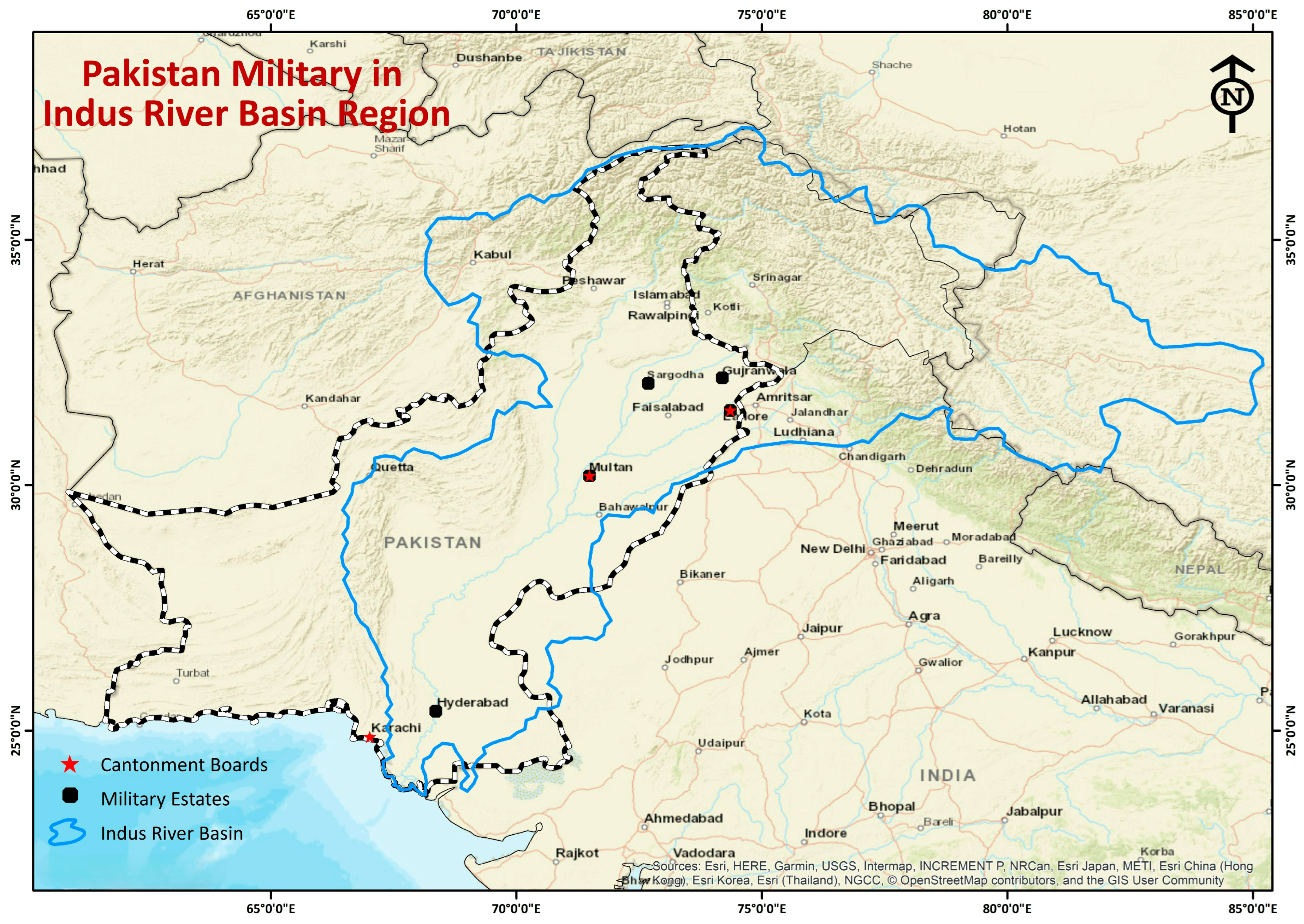
The militarization of resources in the eastern region of Pakistan has been a complex and contentious issue that has far-reaching implications for the socio-economic and political landscape of the region. Pakistan’s history has been marked by its dependence on the Indus River system, a critical water source for the country. The Indus Basin region, the eastern region of Pakistan, shares a large border with India, which has long been a source of geopolitical tension. The historical animosity between India and Pakistan, coupled with territorial disputes, has led to a significant military presence in the region (
Figure 4). The ongoing strategic competition has fueled the militarization of resources as both nations strive to assert their dominance and secure strategic advantages. The militarization, therefore, is not solely an internal matter but is intricately linked to the broader geopolitical dynamics of South Asia.
Securing water infrastructure is paramount to ensuring water security, and the military plays a pivotal role in safeguarding critical installations. Dams, barrages, and other water-related facilities are potential targets for both internal and external threats. The military’s involvement in the protection of these assets is essential for maintaining the integrity of the water supply chain. The Pakistan military has a significant presence in the form of Military Headquarters, Military Lands & Cantonments (ML&C) and military estate (ME) in its eastern region. In Pakistan, ML&C has jurisdiction over six regional directorates, namely Peshawar, Rawalpindi, Lahore, Multan, Karachi and Quetta. Through regional directorates, it manages 11 MEs circles and 44 Cantonment Boards (CBs) all over Pakistan (
Ministry of Defence, n.d.). Among the eleven MEs, five (Hyderabad, Multan, Sargodha, Lahore, Gujranwala) are situated within the Indus Basin region. Moreover, CBs are statutory local bodies and perform several functions, such as the maintenance of green belts and civic amenities. Cantonment boards are autonomous bodies and generate their funds. For the FY 2021-22, water charges have a larger share. Within the cohort of 44 CBs, three (Karachi, Multan, Lahore) are located in the Indus Basin region (
Ministry of Defence, n.d.). The role of the Pakistan military in ensuring water security is multifaceted and indispensable. The military plays a pivotal role in safeguarding Pakistan’s water resources and infrastructure.
Moreover, the creation of riverine police forces in Pakistan, especially in the Indus Basin region, is also a major type of militarization of waterways. These police forces are tasked with maintaining law and order on inland waterways. For instance, the Punjab riverine police have been created in Pakistan (See
Table 2). Additional Inspector General (AIG) Punjab, Sultan Ahmad Chaudhry, said that the riverine check posts of Punjab Police play a crucial role in combating terrorists, miscreants, and criminals, and relief & rescue activities (
Punjab Police, Government of Pakistan, 2024). Several of the latest surveillance gadgets were provided to the Attock police to patrol the Indus River (
Punjab Police, Government of Pakistan, 2013). In 2017, Punjab Police IG Mushtaq Ahmad Sukhera had ordered the completion of recruitment for riverine posts (
Punjab Police, Government of Pakistan, 2017). Moreover, the chairman of the District Council Sukkur, Syed Kamail Hyder Shah, had also inaugurated 13 police check posts in the riverine area on the embankment of the River Indus (
The Nation, 2024).
However, this may be all show, no substance. These posts can inadvertently become significant threats to the neighboring country in transboundary river conflicts. Integrating water security into the military’s broader responsibilities reflects the interconnected nature of national security and sustainable development. As Pakistan continues to face evolving water challenges, the military’s proactive and adaptive approach will remain crucial in securing a sustainable and resilient water future for the nation. Consequently, it becomes evident that Pakistan is currently experiencing a trajectory of militarization, within the context of safeguarding the inland water resources, extending not only within its eastern domain but also manifesting in contested regions within this geographical sphere.
4.3. Assessing the Consequences of Waterways’ Militarization
The militarization of inland waterways can have far-reaching consequences, affecting geopolitical stability, economic activities, environmental sustainability, and social well-being. One of the most significant risks is the rise in geopolitical tensions and conflicts, particularly in regions where major rivers, canals, or lakes are shared by multiple nations. Military control over strategic waterways can exacerbate regional rivalries, as countries may use access to these vital routes as a means of coercion or leverage against their adversaries. This can lead to confrontations, blockades, or even direct military engagements, especially in disputed areas. The strategic importance of waterways in geopolitical contexts has been a longstanding factor in shaping the destinies of nations. In recent years, the eastern region of Pakistan has witnessed a notable shift in focus towards the militarization of its waterways. This phenomenon, driven by a complex interplay of geopolitical, economic, and security considerations, has far-reaching consequences that demand careful analysis. The immediate consequences of waterways’ militarization in the eastern region of Pakistan are manifold. It exacerbates existing tensions between India and Pakistan, potentially escalating into conflicts that could have severe humanitarian implications. The militarization of waterways increases the likelihood of skirmishes and conflicts over disputed territories, posing a threat to regional stability.
Moreover, external dynamics also play a pivotal role in this evolving landscape. China’s involvement in the Indus Basin region has gained prominence in recent years, with the construction of dams on the Indus River by China and its economic investments in Pakistan’s water infrastructure. For instance, “the Memorandum of Understanding (MoU) for the Diamer-Bhasha dam had been signed between the Chinese state-run firm China Power and the Pakistan army’s commercial wing Frontier Works Organization and is expected to be completed by 2028” (
Sehgal, 2020). Pakistan and China’s increasing military presence in Gilgit-Baltistan through large-scale infrastructure projects, particularly the construction of the Diamer Bhasha Dam, reflects their strategic efforts to consolidate control over the region and counter India’s influence. China perceives Gilgit-Baltistan as legally part of India and seeks to assert its territorial claim by supporting Pakistan in the dam’s construction. However, this project poses significant ecological risks, including seismic instability and the displacement of local communities. The Diamer Basha Dam Project presents two major ecological risks: seismic instability and the displacement of local communities. The project area is located in a high seismic zone within the Karakoram Mountain range, where past geological surveys have confirmed the presence of active fault lines. The 2005 earthquake, which occurred 150 km south of the dam site, underscores the region’s vulnerability to seismic activity (
Gilgit-Baltistan Environmental Protection Agency, 2010). There are concerns that the weight of the dam, excavation activities, and reservoir filling could potentially trigger landslides and rockslides. Such consequences threaten not only biodiversity but also agriculture and drinking water supplies for local populations. Any change in the flow of the water hampers the neighboring countries. Moreover, the second significant risk is the displacement of local communities due to reservoir impoundment. Approximately 31 villages, with a population of around 29,000 people, will be submerged, leading to the destruction of over 3100 traditional stone and mud houses. The affected communities, primarily belonging to the Sheen, Yashkun, and Soniwal tribes, face forced resettlement, with many preferring cash compensation over relocation (
Gilgit-Baltistan Environmental Protection Agency, 2010). The displacement will result in the loss of agricultural land, livelihoods, and cultural heritage. Some communities have opposed the relocation, forming an Anti-Dam Committee in Chilas to voice their concerns (
Gilgit-Baltistan Environmental Protection Agency, 2010). While the project aims to mitigate these risks through engineering safety measures and social compensation plans, concerns persist regarding the long-term stability of the dam and the effectiveness of resettlement efforts. Continuous monitoring, seismic safety assessments, and community engagement will be essential to addressing these challenges effectively.
Furthermore, China is upgrading the Skardu Air Base and expanding road networks, which could facilitate the movement of Chinese military forces in the region (
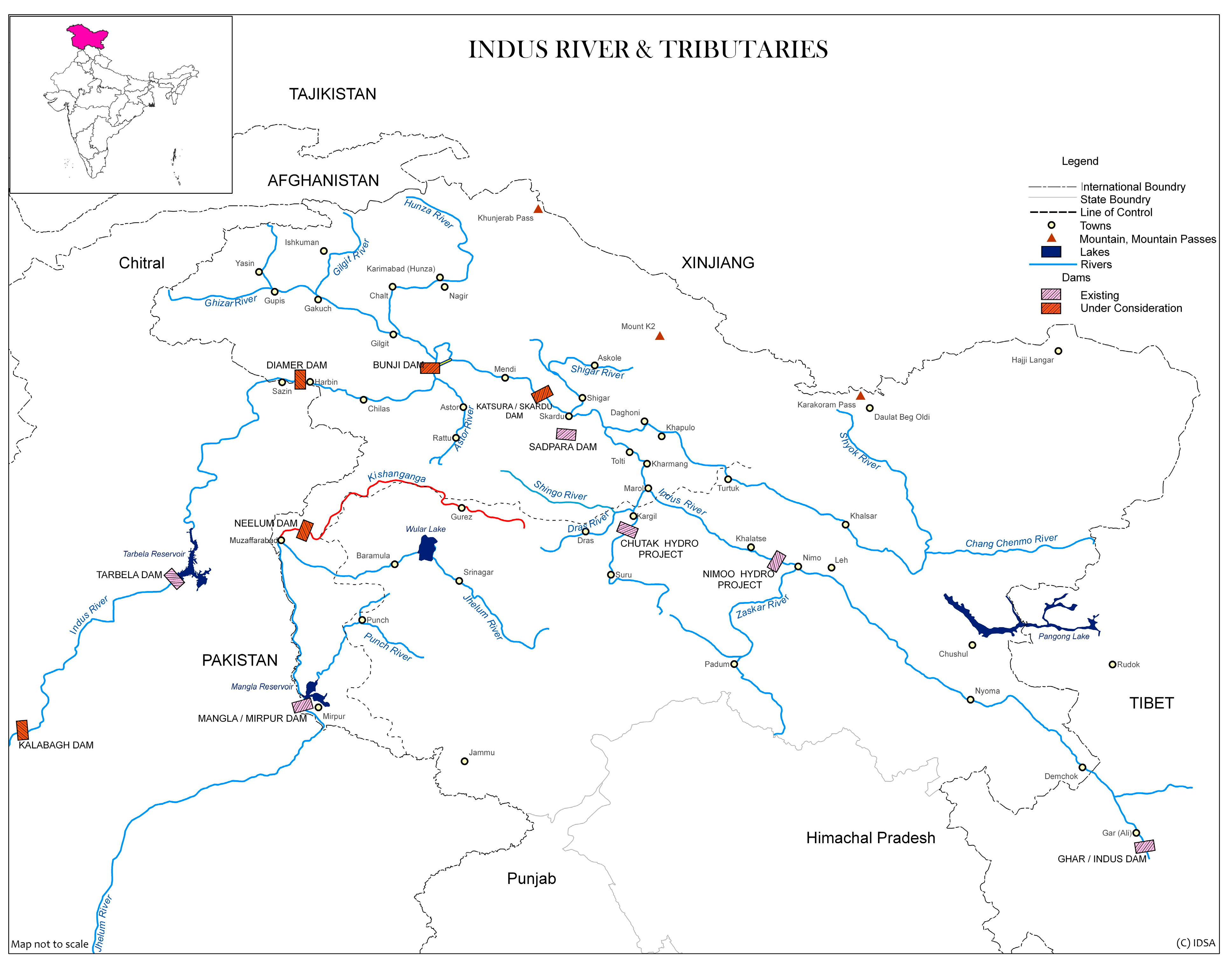
ANI, 2020). Pakistan has also planned the Skardu Dam project, located on the Indus River (
Water and Power Development Authority [WAPDA], n.d.; see
Figure 2). The project was identified for water storage during an inventory and ranking study of major hydropower projects conducted under a grant from the Canadian International Development Agency (CIDA) in 1984 (
Water and Power Development Authority [WAPDA], n.d.). Skardu, the capital of Baltistan or Little Tibet, “houses the military command and control hub for protection of the critical Pakistan-China road link, and maintenance of status quo in Gultari, Ladakh and Siachen sectors” (
Sridhar, 2005). Consequently, China’s involvement in the air base, along with Pakistan’s dam project—a potential militarization of the Skardu dam—raises concerns and may be perceived as a potential threat to India’s national security. The presence of armed forces along rivers and lakes may increase the likelihood of these areas becoming hotspots for conflicts, insurgencies, or piracy. Ultimately, while controlling inland waterways may offer short-term strategic advantages to certain nations, the broader implications often include instability, economic disruptions, and environmental harm in neighboring countries like India.
The evolving collaboration between Pakistan and China on water security has direct security implications for India. The construction of dams in POJK adds a new dimension to the already complex India–Pakistan conflict. India has raised objections to Chinese involvement in projects in disputed territories, asserting that it violates its sovereignty and territorial integrity. The heightened strategic significance of water resources in the region exacerbates existing tensions between India and Pakistan. Water scarcity, amplified by climate change, further intensifies competition for shared water resources. As a result, India faces the challenge of managing its water security concerns within the context of a complex geopolitical environment.
The social and humanitarian impact is equally concerning. Communities residing along militarized waterways may face forced displacement, restricted access to essential resources, and heightened security risks due to the potential for armed conflicts or violent activities. For instance, since 2014, more than 21,000 people have been internally displaced in Pakistan as a result of military operations in the former Federally Administered Tribal Areas (FATA) (
Internal Displacement Monitoring Centre [IDMC], n.d.). Based on this instance, it can be inferred that any conflict or violence in the eastern region of Pakistan, the internationally disputed region and the Indus Basin region may lead to more militarization, ultimately resulting in forced displacement and severe social and humanitarian consequences for the affected communities.
Moreover, militarization raises significant legal and diplomatic challenges, as it can violate international water agreements and create disputes over sovereignty and usage rights. This legal uncertainty can further strain diplomatic relations between neighboring nations, complicating efforts to maintain regional stability. The IWT is one of the best examples among us. Pakistan tends to politicize river water issues, and there has been an increase in statements portraying Pakistan as a disadvantaged lower riparian state. In a 2009 article in the Washington Post, “President Asif Ali Zardari stated that the water crisis in Pakistan is linked to relations with India and that resolving it could prevent an environmental disaster in South Asia” (
Khan, 1959). However, failure to do so could fuel extremist and terrorist sentiments. Similarly, Sardar Aseff Ali, a former foreign minister, “warned in 2010 that if India continues to deny Pakistan its fair share of water, it could lead to war between the two countries” (
Sinha, 2010). This sentiment was echoed by Shujaat Hussain, the Pakistan Muslim League-Quaid (PML-Q) chief and former premier, who warned in 2008 that “the water crisis could become more serious than terrorism and could result in war” (
Sinha, 2010). This mistrust could lead to the militarization of the Indus Basin region, which ultimately hampers both India and Pakistan in this contemporary water insecurity era.
Furthermore, the activities of riverine police can escalate tensions between neighboring countries. One major issue arises when riverine police overstep jurisdictional boundaries, patrolling or entering contested areas of the river claimed by another nation. Such actions are frequently perceived as violations of sovereignty, leading to diplomatic disputes or even military confrontations. Furthermore, when these police units are heavily armed or operate with military-style tactics, they contribute to the militarization of waterways that might otherwise be venues for peaceful resource sharing or commerce. This aggressive presence can transform minor disputes over environmental concerns into larger conflicts.
In some cases, riverine police serve broader nationalist or governmental agendas, enforcing domestic laws beyond internationally recognized borders as a way to assert territorial claims. This is particularly dangerous in contested regions, as it reinforces grievances and provokes defensive measures from the neighboring state. Environmental concerns complicate matters, as riverine police may either be accused of facilitating environmentally harmful activities—such as illegal dumping or unregulated dam operations—or of selectively enforcing regulations in ways that benefit their nation to the detriment of others.
Ultimately, the presence and actions of riverine police on transboundary rivers can act as triggers for larger geopolitical disputes. Even isolated incidents, such as the use of force during patrols, can spark wider diplomatic crises or military escalations. This has been observed in areas like the India–Bangladesh border along the Teesta River, where patrol disputes occasionally flare, or in regions like the Nile River between Sudan and Egypt, where water rights tensions make any security activity particularly sensitive. The management of riverine police forces, therefore, requires careful bilateral coordination to prevent minor confrontations from spiraling into full-blown conflicts over shared water resources and national sovereignty.
To prevent these negative outcomes, efforts should focus on promoting cooperation, ensuring adherence to EP principles, and preserving inland waterways as shared resources rather than militarized zones of contention.
4.4. Environmental Peacebuilding: An Answer to the Militarization
The militarization of waterways in the eastern region of Pakistan has emerged as a critical concern with far-reaching implications for regional stability and security. Historically rooted tensions, geopolitical considerations, and economic interests have contributed to the militarization of the Indus waters, creating a volatile environment that jeopardizes peace and stability in the eastern region of Pakistan.
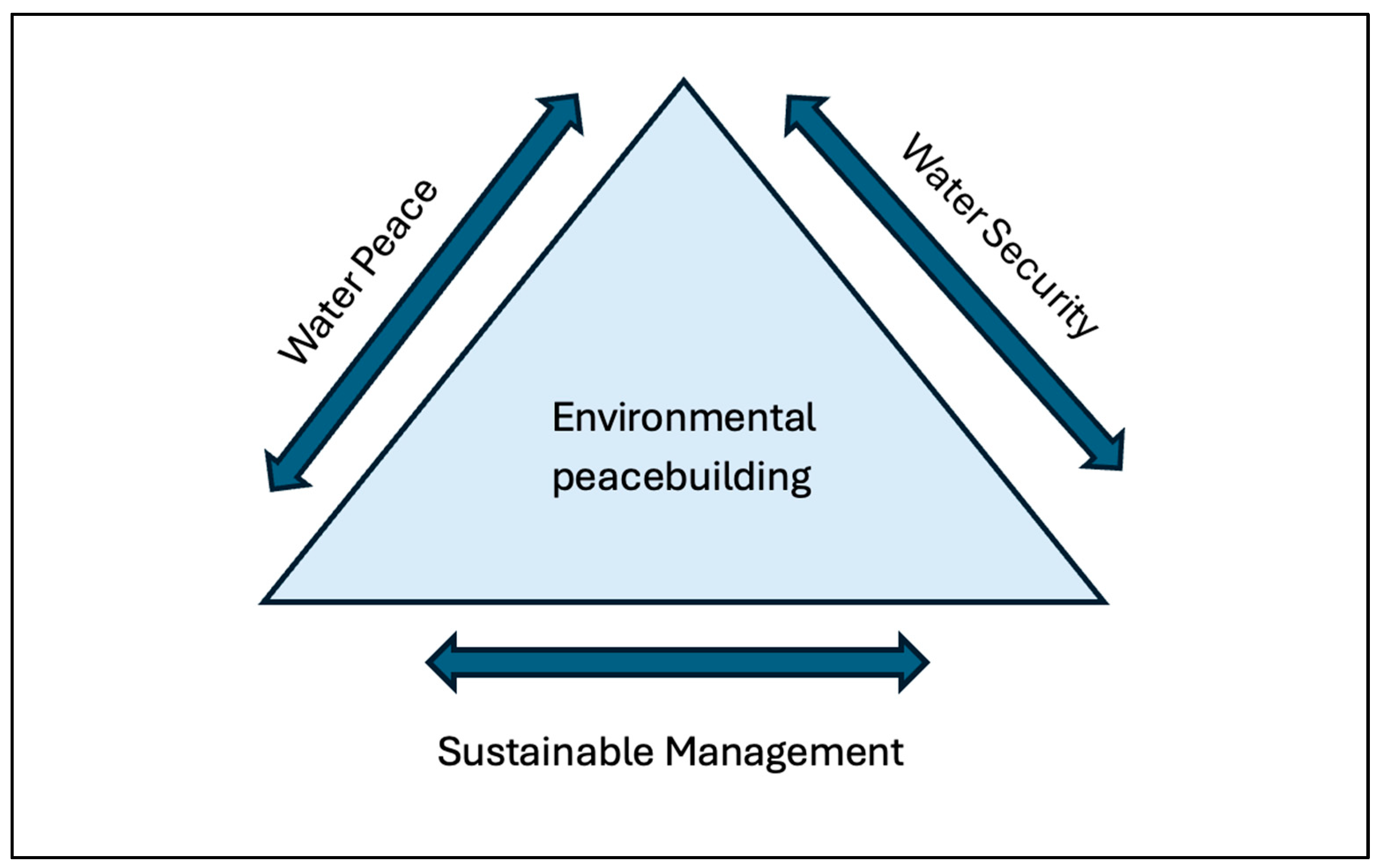
Resolving this issue of militarization necessitates a holistic EP approach that addresses its root causes and mitigates the risks associated with it. Environmental collaboration is very important for building long-lasting peace because it connects positive efforts that change relationships, improve governance systems, and ensure that everyone has fair access to natural resources. There are a number of interconnected processes that show how this kind of cooperation can lead to lasting peace.
First, environmental issues, which are often called “low politics” or non-traditional security issues, go beyond political borders and are usually less sensitive than territorial or ideological disputes, which makes them good places for countries to get involved (
Ide et al., 2021;
Hardt & Scheffran, 2019;
Dresse et al., 2019). These common worries lead to talks and negotiations, which help build trust, understanding, and respect towards each other (
Dresse et al., 2019).
Second, working together to solve common environmental problems often leads to the formation of formal or informal groups, like water user associations (
Ide, 2019). These groups help people talk to each other and give them a way to settle disagreements about environmental issues in a structured way (
Ide, 2019). For instance, in the context of India and Nepal hydro cooperation, groups like ‘Kosi Victims Society’ and the ‘Kosi High Dam Struggle Committee (KHDSC)’ have been formed to advocate for the rights of people affected by the Kosi project (
Mahla, 2025a). These frameworks help keep relationships stable and lower the chance of violent conflict by making rules, making things more predictable, and setting shared norms (
Dresse et al., 2019).
Third, making sure that everyone has fair access to and use of natural resources is one of the main causes of conflict. In this context, countries need to work together to manage common-pool resources well and keep the power balance among stakeholders (
Dresse et al., 2019). This kind of cooperation changes violent or unequal social structures into peaceful and cooperative ones. This helps countries grow and reach the bigger goals of sustainable peacebuilding.
How well environmental cooperation works depends a lot on the situation, such as low levels of political hostility, stability in domestic politics, and feelings of fairness and reciprocity in cooperation (
Ide, 2019). In the context of India and Pakistan, diplomatic efforts should be intensified to foster open communication channels between the nations involved. Confidence-building measures, such as collaborative environmental initiatives, can contribute to creating a conducive atmosphere for dialogue. In addition, international mediation and conflict resolution mechanisms, like the IWT, should be explored to facilitate peaceful negotiations. International mediation remains a critical avenue for resolving water disputes in South Asia. Institutions such as the United Nations and the World Bank, which historically facilitated the IWT, can provide a platform for renegotiating water-sharing agreements that account for contemporary challenges. Confidence-building measures, including joint water monitoring programs, data-sharing mechanisms, and cooperative infrastructure projects, can enhance transparency and trust between India and Pakistan. For instance, the Mekong River Commission’s riparian states run a basin-wide network to keep an eye on the amount and quality of water. The “Procedure for Data and Information Exchange and Sharing” makes it possible for the Lower Mekong to share the data that comes from this process. This helps with sustainable development in the area (
Mekong River Commission, n.d.). Such initiatives can help de-escalate tensions and reframe water security as a catalyst for regional environmental cooperation rather than a source of conflict.