Article

Photo-Fenton Reaction Catalyzed by Natural Iron Ore from a City of Bandjéli in Northwestern Togo for the Elimination of Paracetamol in Aqueous Media


by
Messan Justin Kessouagni
1,2,
Moursalou Koriko
1,
Koffi Fiaty
2,*,
Catherine Charcosset
2 and
Gado Tchangbedji
1
1
Laboratoire Gestion Traitement et Valorisation des Déchets (GTVD), Université de Lomé, Lomé 01 BP 1515, Togo
2
Université Claude Bernard Lyon 1, Laboratoire d’Automatique, de Génie des Procédés et de Génie Pharmaceutiques (LAGEPP) UMR CNRS 5007, 43 Boulevard du 11 Novembre 1918, F-69622 Villeurbanne Cedex, France
*
Author to whom correspondence should be addressed.
Purification 2026, 2(1), 3; https://doi.org/10.3390/purification2010003
Submission received: 14 December 2025 / Revised: 31 January 2026 / Accepted: 9 February 2026 / Published: 14 February 2026

Abstract

Paracetamol (PAR) was selected as an emerging micropollutant model to evaluate the effectiveness of the photo-Fenton process using natural Bandjéli ore (BO) as a heterogeneous source of iron. An aliquot of 1 mL of the activated product was introduced into 200 mL of an aqueous solution of paracetamol at a defined concentration. The tests were conducted in a double-jacketed glass photoreactor (0.2 L), continuously stirred and equipped with two UVA PL-L lamps (36 W, λ = 365 nm), with the temperature maintained at 20 °C and the pH around 2.4. The photo-Fenton process was applied with different initial paracetamol concentrations (10–50 mg/L), different H 2 O 2 / P A R initial molar ratios (10:1 and 5:1), and different ferric ion concentrations (2.84–4.73 mg/L). Under these conditions, complete disappearance of the parent compound (paracetamol) was achieved in less than 3 h for iron contents below 5 mg/L, in compliance with the discharge standards applicable in France and Togo. Inhibition tests with propan-2-ol highlighted the predominant role of hydroxyl radicals and the secondary involvement of superoxide radicals in the subsequent stages. Taken together, these results demonstrate that Bandjéli iron ore is an effective, sustainable, and economically advantageous alternative to commercial iron salts for implementing the photo-Fenton process in the decontamination of water polluted by organic micropollutants.

1. Introduction

The growing presence of emerging organic micropollutants, such as paracetamol (PAR), in wastewater is a major global concern due to their harmful effects on the environment and human health [1,2,3]. Their high solubility, combined with their resistance to biodegradation, makes them difficult to remove using conventional treatment processes [4,5]. Among these substances, paracetamol is frequently detected in hospital and domestic effluents, with concentrations reaching several tens of micrograms per liter [6]. Due to its solubility and persistence during conventional biological treatments, it remains present in treated water. Its toxic effects on aquatic ecosystems, coupled with the risk of forming by-products that are sometimes more reactive and bioaccumulative, justify the development of advanced treatment technologies aimed at its total mineralization [2,7]. In this context, advanced oxidation processes (AOPs), particularly the photo-Fenton process, have become the focus of intense research [8]. This process relies on the generation of hydroxyl radicals [9], powerful oxidizing agents produced through the synergistic reaction between iron, hydrogen peroxide ( H 2 O 2 ), and UV-A or visible light irradiation. Thanks to this synergy, the photo-Fenton process is particularly effective in degrading recalcitrant compounds [10,11]. However, the use of conventional iron salts raises several questions regarding costs, sludge production, and environmental impact [12]. Indeed, the iron used in these processes generally originates from industrial salts, which leads to high costs and the formation of undesirable ferric sludge. Recently, numerous studies have highlighted the advantages of replacing industrial iron with natural, mineral, or waste-derived resources in order to overcome these limitations [13,14]. Despite the growing interest in natural iron ores as heterogeneous photo-Fenton catalysts, several important gaps remain in the current literature [15]. Most reported studies have focused on widely available and mineralogically well-characterized iron phases such as goethite, magnetite, or hematite materials, often originating from Asia, American or Europe [15]. In contrast, iron ores from sub-Saharan Africa—despite their abundance and mineralogical diversity—have received very limited attention, and their catalytic behavior remains largely unexplored [16]. Moreover, few studies have specifically addressed the degradation of pharmaceutical micropollutants such as paracetamol under environmentally relevant conditions, including realistic aqueous matrices and moderate iron dosages. In this context, the Bandjéli iron ore from northwestern Togo represents an original and underexplored material, characterized by a high hematite content (≈93% F e 2 O 3 ) [17] associated with a siliceous gangue, which clearly distinguishes it from the goethite- or siderite-rich ores and recycled mining wastes commonly reported. Its low concentrations of toxic trace metals further support its suitability for sustainable photo-Fenton applications, with a potentially more controlled Fe2+/Fe3+ release behavior.
Furthermore, although numerous studies have reported effective degradation of paracetamol using the photo-Fenton process, a critical comparison reveals significant variations in operating conditions, particularly with regard to iron concentration, solution pH, and reported degradation efficiencies. Many systems rely on relatively high doses of iron, which may limit their practical applicability. These aspects are rarely addressed in relation to regulatory constraints. It is therefore essential to incorporate regulatory thresholds into the rationale for advanced oxidation processes in order to better assess their environmental relevance. In this context, the present study aims to evaluate the potential of natural Bandjéli ore (BO) as an iron source for the photo-Fenton process applied to the degradation of paracetamol, selected as a model pollutant. The effects of various operating parameters such as the initial pollutant concentration, the H 2 O 2 / P A R molar ratio, and the ferric ion content were systematically investigated. In addition, hydroxyl radical ( H O and H O 2 ) inhibition tests were performed to gain deeper insight into the mechanisms involved. This study therefore aims to propose a sustainable, effective, and economically accessible method for the decontamination of water polluted by pharmaceutical residues and other persistent organic micropollutants.

2. Materials and Methods

2.1. Chemicals

Isopropyl alcohol ( C 3 H 8 O , 99.8%, Sigma Aldrich, Saint-Quentin-Fallavier, France), sulfuric acid ( H 2 S O 4 95–97%, Merck, Saint-Quentin-Fallavier, France), hydrogen peroxide ( H 2 O 2 , 30% w/w in H 2 O , Sigma Aldrich), and acetaminophen ( C 8 H 9 N O 2 , 98%, Alfa Aesar, Illkirch, France) were used without further treatment.

2.2. Preparation and Sampling of Aqueous Solutions Containing Paracetamol

The paracetamol solutions were prepared from commercial paracetamol powder (purity = 98%). For each experimental campaign, 1 L stock solution at 500 mg/L of PAR was obtained by dissolving 510.2 mg of commercial paracetamol powder in ultrapure water, after which the solution was stored at 4 °C in the dark.
Before each use of the stock solution for preparing the experimental solutions, a UV–Visible scan between 200 nm and 400 nm was performed to verify that the absorption maximum of the stock solution was located at 243 nm. For each target concentration (10, 20, 30, and 50 mg/L), an appropriate volume of the stock solution was transferred into a volumetric flask and diluted to 250 mL with ultrapure water to obtain the desired initial concentration.
A total of 200 mL of each working solution was introduced into the reactor (Verre Equipements, Collonges-au-Mont-d’Or, France), while the remaining 50 mL were used to prepare UV–visible spectrophotometric calibration standards in a 10 mL volumetric flask with ultrapure water. For each nominal concentration, six standards were used to construct the calibration curve.
During the experiments, 5 mL aliquots of the reaction mixture were withdrawn every 30 min, immediately filtered through a 0.22 µm cellulose acetate syringe filter, and analysed without delay.

2.3. Iron Ore Sampling and Preparations

Bandjéli is known for its ancient bloomery furnaces and its historical role as one of the most important ironworking centers in West Africa. It is located approximately 435 km from Lomé, the capital city. The Bandjéli iron ore deposit contains an estimated 500 million metric tons of ore located 10–30 m below the surface. A one-week sampling campaign was conducted at the Bandjéli processing site to collect raw ore. A systematic sampling strategy was applied, with sub-samples taken at regular intervals across all storage areas to ensure spatial representativeness. Composite samples were prepared by combining sub-samples from key locations, providing an unbiased estimate of the site’s average mineralogical and chemical composition. After collection, the raw material was then crushed, sieved to a particle size of ≤50 µm with an AS 400-Retsch vibrating sieve, thoroughly washed with ultrapure water, filtered, then dried at 45 °C for 24 h and stored in polypropylene containers at room temperature until analysis. Following this preparation, it underwent several physicochemical analyses, including elemental composition determined by X-ray fluorescence (XRF using S2 Puma spectrometer, Khalsruhe, Germany), morphology and microtexture examined by scanning electron microscopy coupled with energy-dispersive X-ray spectroscopy (SEM-EDX,) using Zeiss Merlin Compact VP scanning electron microscope (Oberkochen, Germany), crystal structure identified by X-ray diffraction (XRD) using a Bruker D8 Advance diffractometer (Khalsruhe, Germany).

2.4. Experimental Set-Up and Procedure

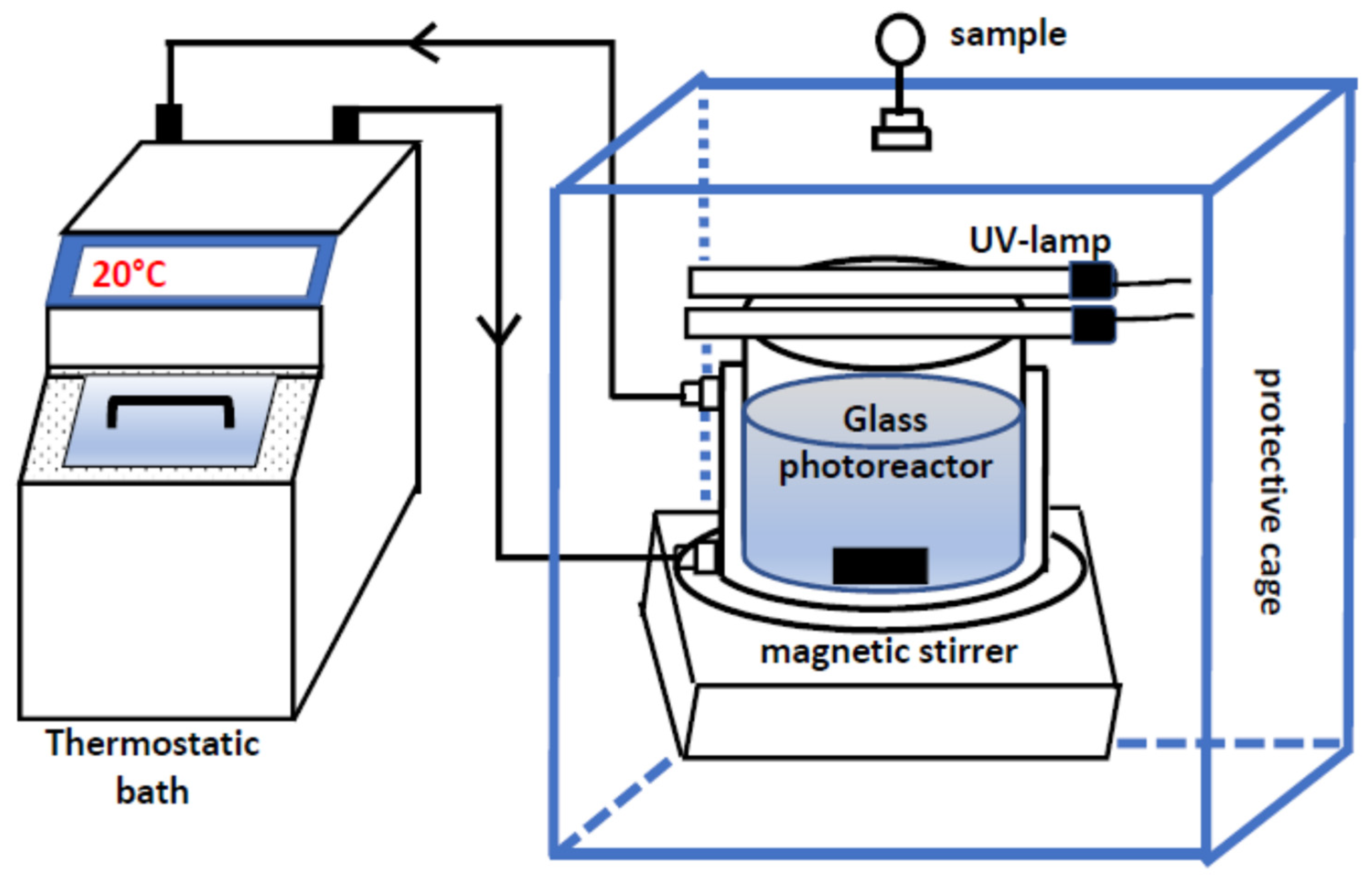
A 3 mg sample of Bandjéli ore was introduced into 4 mL of sulfuric acid ( H 2 S O 4 , 6.1%) and activated by microwave treatment at 200 °C for 2 h. Microwave activation was selected as a rapid and efficient pretreatment method to enhance iron availability from ore while avoiding aggressive chemical digestion [18]. Unlike conventional acid leaching using nitric acid or aqua regia, microwave activation promotes complete mineral breakdown and iron release, leading to an iron extraction yield higher than 95% without generating residual nitrates or incomplete dissolution [19]. The localized and volumetric heating induced by microwave irradiation weakens the mineral lattice and increases surface reactivity, thereby facilitating subsequent iron solubilization with a minimal amount of dilute sulfuric acid [19]. After activation, 1 mL of the resulting mixture was added to 200 mL of an aqueous paracetamol solution, at a defined concentration, contained in a glass photoreactor equipped with two UVA PL-L lamps (2 × 36 W, λ = 365 nm) (Philips, Suresnes, France) positioned above it. The reactor was kept under continuous agitation and connected to a thermostatic bath to maintain a constant reaction temperature of 20 °C. It was protected by a cardboard screen covered with aluminum foil to optimize UVA light reflection (Figure 1).
The addition of 1 mL of prepared catalyst resulted in a pH of approximately 2.4 and a ferric ion concentration of 2.84 mg/L The working pH of approximately 2.4 was not externally adjusted but resulted naturally from the addition of 1 mL of the catalytic solution obtained after microwave treatment to the paracetamol solution. This experimental choice was deliberately adopted in order to preserve the intrinsic chemical conditions generated by the catalyst and to avoid artificial pH correction that could mask its actual behavior in the photo-Fenton process. According to the literature, the optimal pH range for photo-Fenton reactions generally lies between 2 and 3 [20], as higher pH values promote ferric ion precipitation, leading to the formation of secondary sludge and parasitic scavenging of hydroxyl radicals, ultimately decreasing degradation efficiency [21]. From an application perspective, although acidic operating conditions may appear as a limitation, several adaptation strategies have been reported for real-scale implementation, including the use of iron–organic complexes (e.g., oxalate or citrate ligands), which enable photo-Fenton systems to operate at near-neutral pH prior to hydrogen peroxide addition while limiting acidic effluent discharge after treatment [21]. These approaches highlight the relevance of the present results as a proof-of-concept for the use of natural iron-based catalysts in advanced oxidation processes. Unless otherwise specified, the H 2 O 2 / P A R molar ratio was set at 10:1; a reduced ratio of 5:1 was used only to evaluate the effect of H 2 O 2 concentration. The H 2 O 2 / P A R molar ration of 10 was selected for the photo-Fenton process, corresponding to half of the theoretical stoichiometric coefficient required for the complete mineralization of paracetamol ( C 8 H 9 N O 2 ), as described by the balance equation proposed by Audino et al. [6]:
C 8 H 9 N O 2 + 21   H 2 O 2 8   C O 2 + 25   H 2 O + H + + N O 3
This methodological choice is based on their experimental results, showing that H 2 O 2 / P A R ratios close to 10.5 allow rapid and nearly complete degradation of paracetamol while optimizing H 2 O 2 consumption [6]. Indeed, systematic studies have shown that using a ratio corresponding to half the theoretical stoichiometry maximizes the process performance in terms of reaction kinetics and degree of mineralization, with total organic carbon reductions of up to 68.5%. Investigating higher ratios (21 or 42) results in a decrease in specific H 2 O 2 / T O C efficiency [6].
As direct photolysis showed no degradation of paracetamol under these conditions, the photo-Fenton process was initiated by switching on the UVA lamps, immediately followed by the addition of H 2 O 2 . Samples of 5 mL were taken using a syringe at the initial time and then every 30 min up to 3 h of irradiation for analysis. Before this procedure, control tests were carried out in darkness and without a catalyst. The residual paracetamol concentration was determined by UV–Visible spectrophotometry at 243 nm. The effect of ferric ion concentration was examined using the same protocol, increasing the mass of activated ore to 4 mg and 5 mg, corresponding to a total iron contents of 3.78 mg/L and 4.73 mg/L, respectively. These values are below the limits set by the European Directive of 24 August 2017 [22], and the Togolese Ministerial Decree No. 010/MER/MS/MERF [23], which establish the national permissible limit of 5 mg/L for total iron in industrial effluents. It should be noted that UV–Vis quantification at 243 nm may potentially be affected by the presence of reaction intermediates such as hydroquinone or quinones formed during the oxidation process [24]. To minimize this limitation, full UV–Vis spectra were systematically recorded in the 200–400 nm range during the experiments in order to verify that the characteristic absorption peak of paracetamol at 243 nm decreased consistently over time [25]. In the studied system, paracetamol was the only compound exhibiting a distinct absorption maximum at 243 nm, and no significant overlapping peaks were detected in this region. However, as the present study was not focused on the identification or monitoring of transformation by-products, no specific analysis of intermediates was performed. Consequently, the reported UV–Vis measurements primarily reflect the disappearance of paracetamol, and potential interference from intermediates cannot be completely excluded.

2.5. Radical Inhibition Tests

In order to elucidate the reaction mechanisms involved, tests were conducted in the presence of a selective hydroxyl radical scavenger, isopropanol (propan-2-ol), introduced at a molar ratio of 10:1 relative to the H 2 O 2 concentration. These experiments were carried out according to the protocol described in Section 2.3, with isopropanol added immediately before the introduction of H 2 O 2 . Isopropanol was employed solely as a selective hydroxyl radical ( H O ) scavenger in order to qualitatively assess the contribution of H O species to paracetamol degradation in the studied photo-Fenton system [26]. No control experiment involving isopropanol alone was performed, as the objective was not to evaluate UV photolysis or hydrogen peroxide oxidation independently, but rather to compare reaction systems operating under a fixed H 2 O 2 concentration [27]. In the absence of hydrogen peroxide and iron species, UV irradiation does not lead to a relevant photo-Fenton process, since H O generation intrinsically depends on H 2 O 2 activation. Consequently, the isopropanol-assisted experiment was considered sufficient to highlight the involvement of H O radicals in the degradation pathway.
In addition, although the possible contribution of H O 2 / O 2 radical species was not experimentally distinguished in this study, their involvement was inferred based on well-established photo-Fenton mechanisms and on the experimental conditions applied (UV irradiation, presence of H 2 O 2 and F e 2 + / F e 3 + redox cycling). This interpretation is therefore indicative and does not aim at a detailed elucidation of the reaction mechanism. The present work focuses primarily on evaluating the overall efficiency of the natural iron ore as a photo-Fenton catalyst for paracetamol removal, while a more in-depth investigation of the specific roles of the different reactive oxygen species and mineralization pathways will be addressed in future work.

3. Results

3.1. Characterization of the Ore

X-ray fluorescence (XRF) analysis of the washed Bandjéli ore indicates that it consists predominantly of more than 93% hematite F e 2 O 3 (Table 1). This corresponds to an overall iron content of more than 95% when expressed in terms of elemental composition (Table 2). The minor phases identified are silica (4.19%) and alumina (1.45%), while undesirable elements such as Cr, Mg, Ti, Mn, and Sr are detected only in trace amounts [17]. The high proportion of hematite known for its structural stability and ability to gradually release ferric ions in acidic environments makes the ore particularly suitable for use as a catalyst in the photo-Fenton process [28].
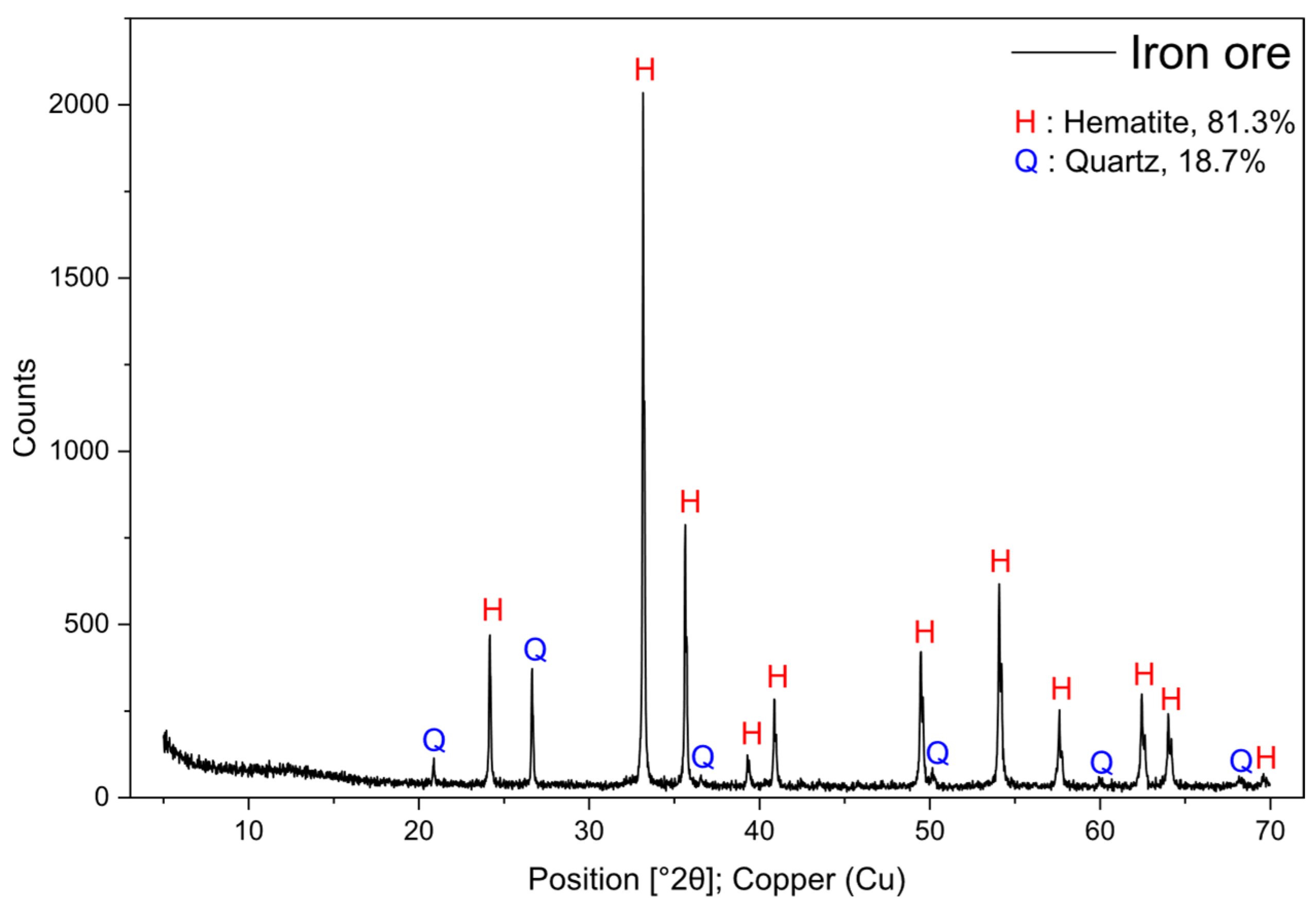
The X-ray diffraction patterns of the raw Bandjéli iron ore sample, shown in Figure 2, exhibit a majority of sharp and well-defined diffraction peaks, attributed to hematite ( α F e 2 O 3 , 81.3%) and quartz ( S i O 2 , 18.7%). These phases were identified by comparison with the Powder Diffraction Files (PDF-2) from the International Centre for Diffraction Data (ICDD) and the Crystallographic Open Database (COD). The presence of these characteristic peaks, with neither diffuse halos nor broad features typical of disordered phases, confirms the highly crystalline nature of the material, dominated by the hexagonal rhombohedral structure of hematite and the hexagonal structure of quartz. Such high crystallinity is consistent with oxidized natural minerals commonly found in ferruginous deposits.
Additional spot analyses performed at different locations within the sample reveal F e 2 O 3 contents ranging from 52% to 96%, S i O 2 from 1% to 46%, and A l 2 O 3 from 2% to 4%. These results are consistent with those obtained by XRF and XRD, confirming that the Bandjéli iron ore is highly enriched in hematite. Although the XRF, XRD and SEM–EDX analyses consistently indicate that F e 2 O 3 is the dominant component of the studied ore, slight quantitative discrepancies in the F e 2 O 3 contents were observed between these techniques. These differences arise from the intrinsic principles and limitations associated with each method. XRF provides a bulk and fully quantitative chemical composition and is therefore considered the most representative technique for determining elemental concentrations in heterogeneous mineral materials. In contrast, XRD allows a semi-quantitative estimation of crystalline phases based on diffraction peak intensities, which are influenced by factors such as crystallinity, preferred orientation, crystallite size and the presence of amorphous phases. SEM–EDX, on the other hand, offers a localized surface analysis over a limited interaction volume and may not reflect the overall composition of the material. Consequently, the observed variations in F e 2 O 3 percentages are consistent with the analytical scope of each technique and highlight their complementarity rather than any inconsistency in the characterization results. Further details on these characterizations can be found in the paper of Kessouagni et al. [17].
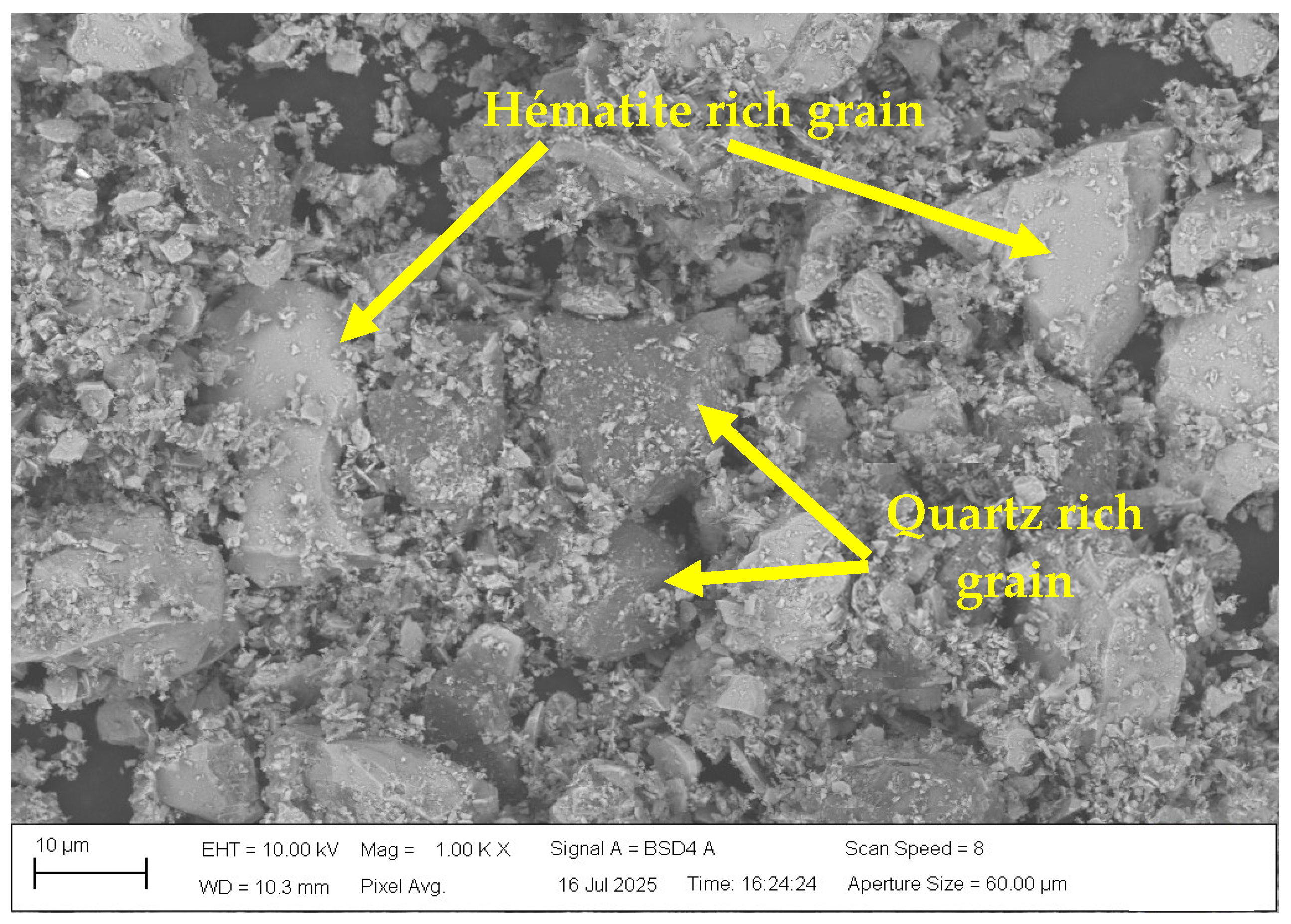
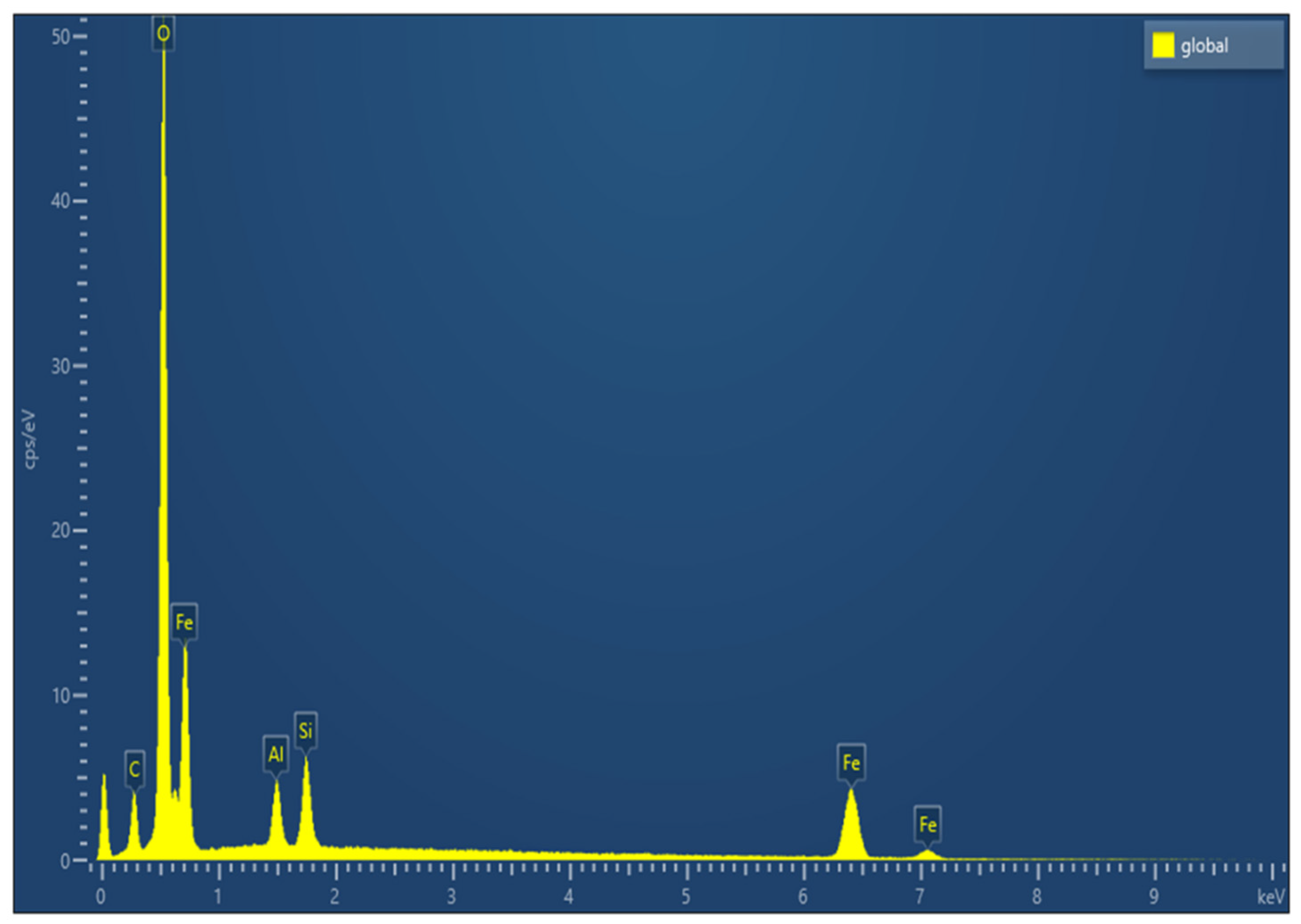
The SEM–EDX observations further confirm the presence of hematite, identifiable by its bright morphology, and quartz, recognizable by its darker appearance (Figure 3). Bulk chemical quantification (Figure 4) shows that the sample contains 82% F e 2 O 3 , 11% S i O 2 , and 7% A l 2 O 3 .

3.2. Degradation of Paracetamol

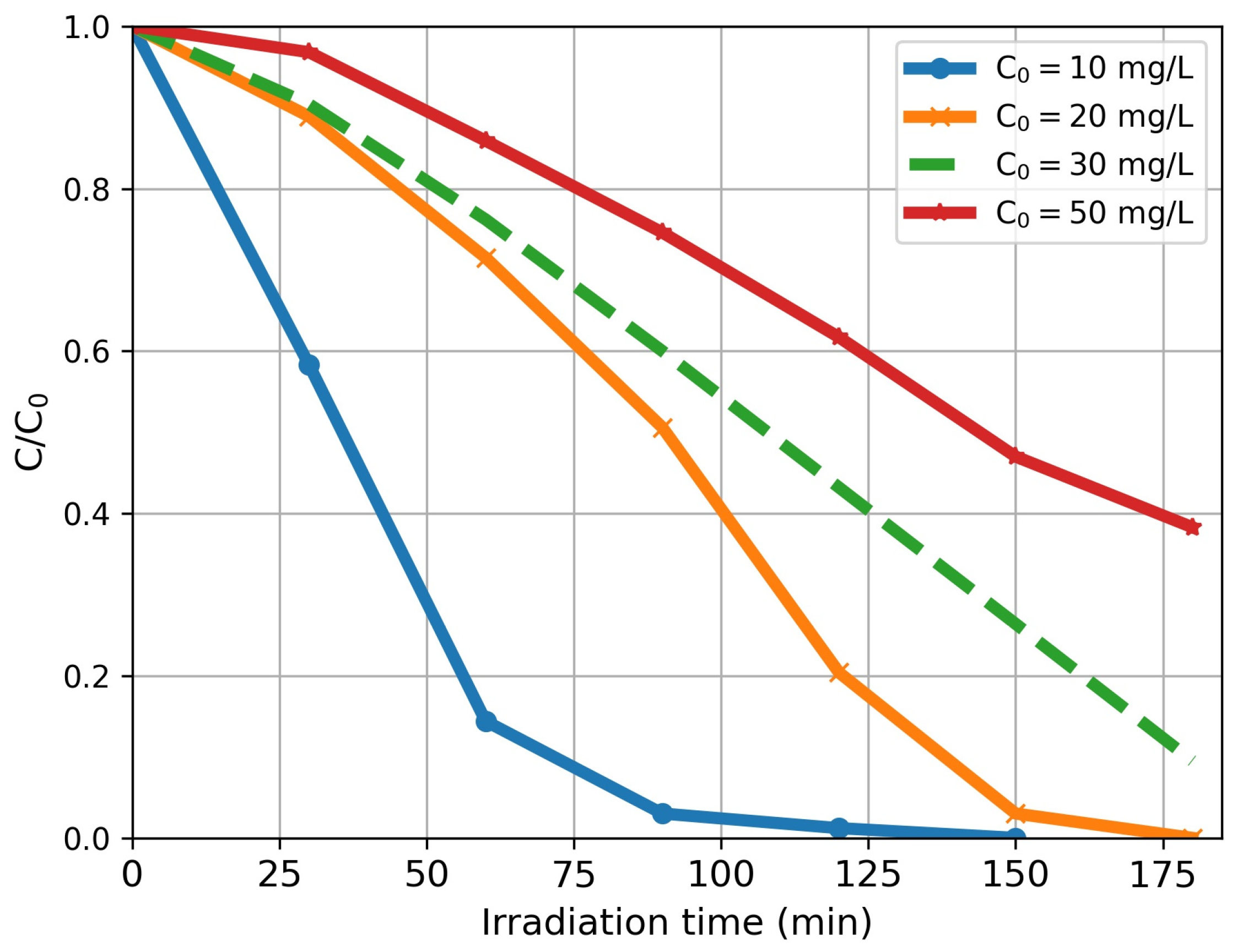
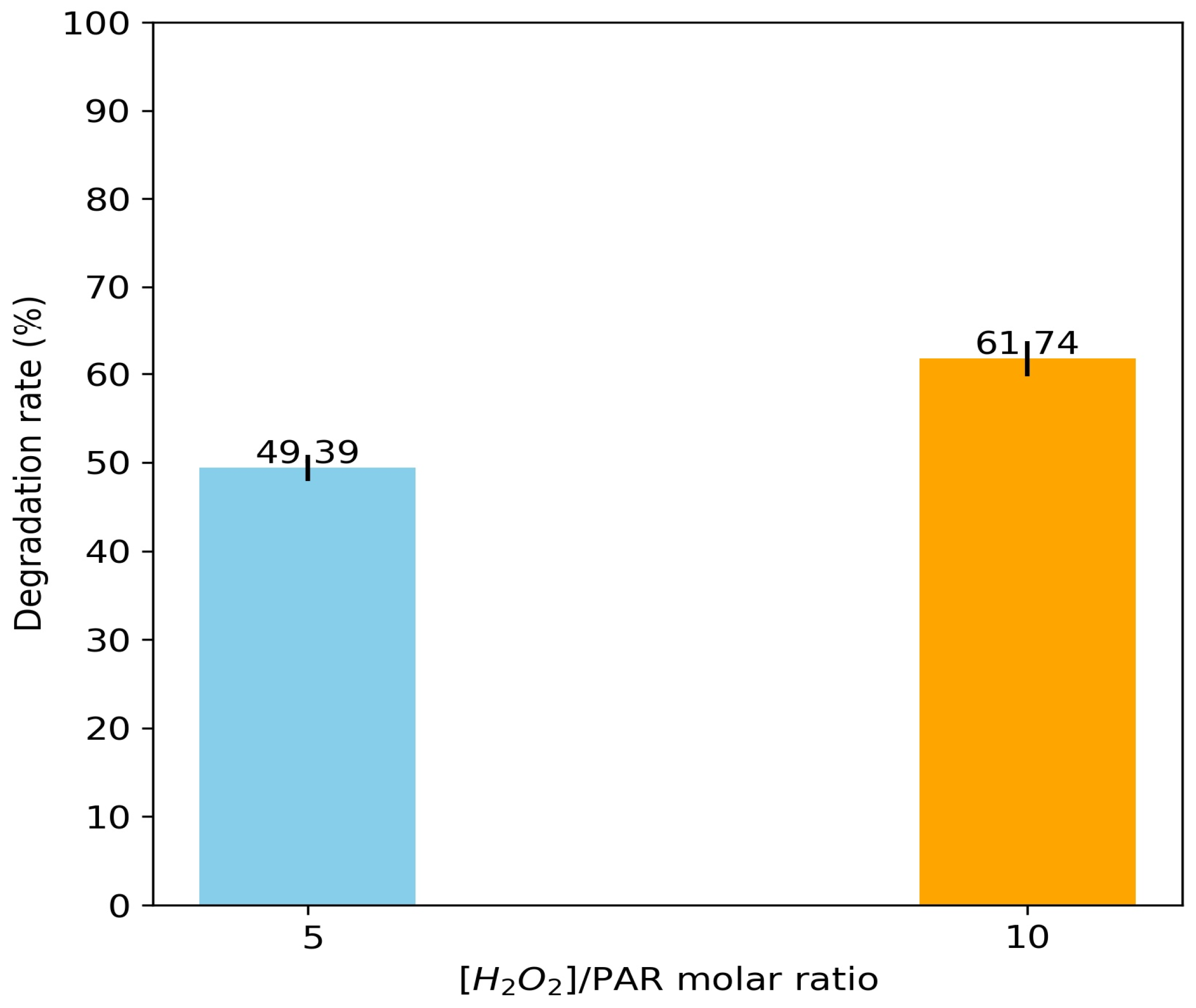
Preliminary blank experiments were performed without UVA irradiation and in complete darkness to assess the degradation of paracetamol either in presence of Bandjéli ore or in the presence of H 2 O 2 in order to ensure that the results obtained during the photo-Fenton treatment were consistent and not attributable to hydrolysis and/or photolysis. Only very low paracetamol degradation was observed, thus highlighting the crucial importance of the synergy of the components of the photo-Fenton process in achieving optimal efficiency. The effects of initial paracetamol (PAR) concentration on its degradation under UVA irradiation at wavelength of 365 nm, with an H 2 O 2 / P A R molar ratio set at 10 and a ferric ion concentration of 2.84 mg/L were investigated. With the exception of the kinetic study, the other experiments were repeated three times, and the values presented correspond to the obtained averages. The results depicted in Figure 5 show complete elimination of paracetamol for initial concentrations up to 20 mg/L in less than 3 h. For a lower initial concentration of 10 mg/L, total degradation was achieved within 150 min. However, at high PAR concentrations of 30 mg/L and 50 mg/L, under the same other operating conditions, the degradation rate was 90.48% and 61.74% respectively after 3 h, revealing the limitations of the process at high pollutant loads. To overcome this limitation, various parameters were adjusted to optimize degradation at 50 mg/L of paracetamol. In this regard, it is important to examine the effect of the initial H 2 O 2 , concentrations on the PAR degradation given due to its role in the production of hydroxyl radicals ( O H ) via heterogeneous photo-Fenton reactions. Lowering the H 2 O 2 / P A R molar ratio from 10 to 5, i.e., reducing the initial H 2 O 2 concentration from 160.2 mg/L to 80.1 mg/L while maintaining the ferric ion concentration at 2.48 mg/L and constant light intensity, resulted in a marked decrease in the PAR degradation efficiency from 61.74% to 49.39% as shown in Figure 6 This observation is consistent with studies indicating that an adequate oxidant dose is essential to maximize hydroxyl radical’s generation while avoiding competitive scavenging. The enhancement in degradation rate at higher oxidant doses can be attributed to the increased production of hydroxyl radicals through the activation of additional H 2 O 2 by catalyst.
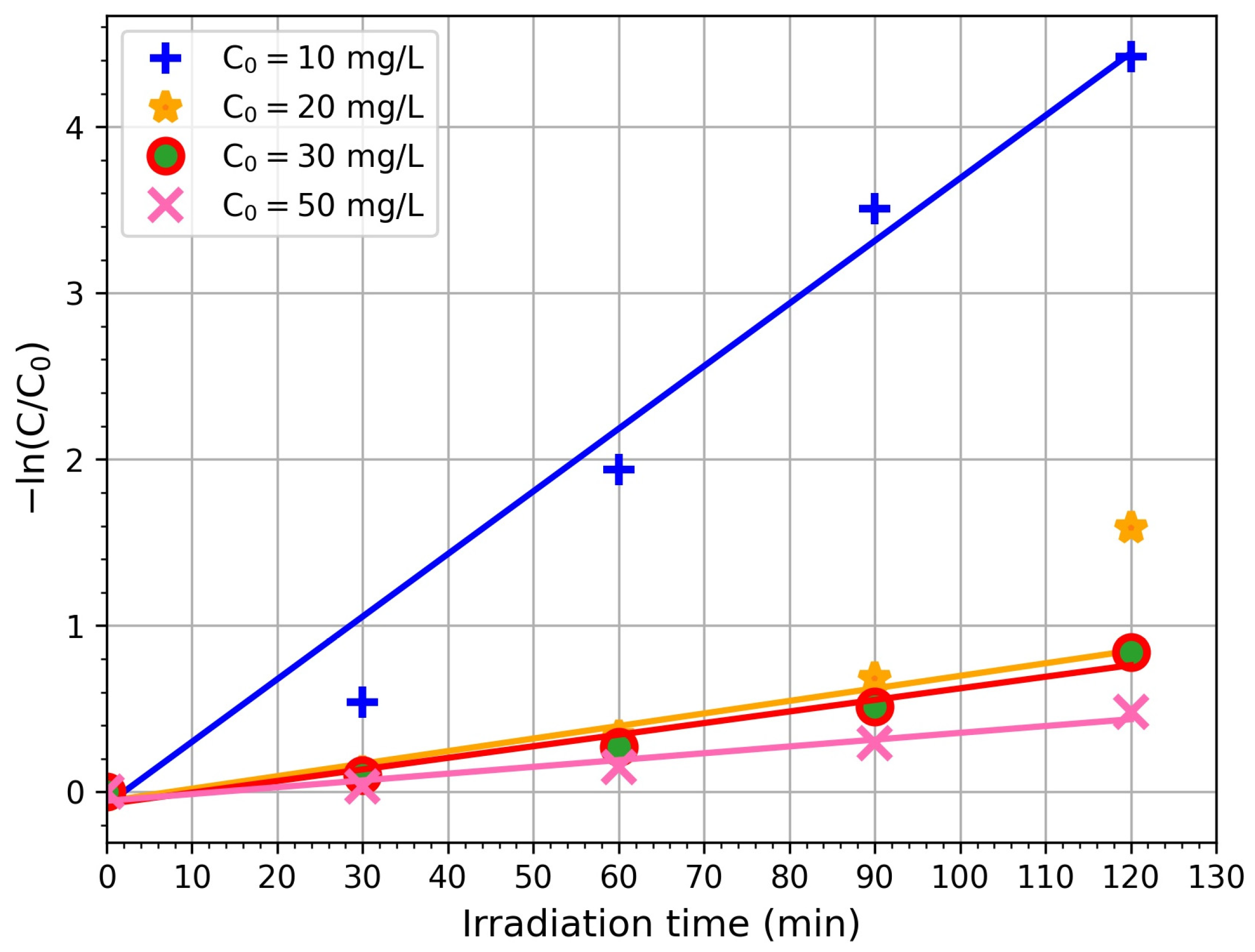
The kinetic analysis presented in this work is intentionally limited to a descriptive evaluation of paracetamol degradation profiles under the investigated experimental conditions. The main objective of the study was to demonstrate the feasibility and effectiveness of a natural iron ore as an alternative iron source in a photo-Fenton system, rather than to perform an exhaustive kinetic modeling. Consequently, the evolution of paracetamol concentration with irradiation time was primarily used to compare degradation trends and catalytic performance among the different systems. Although the determination rate constants and detailed kinetic modeling would provide deeper mechanistic insight, such analyses require strict control of reaction intermediates, oxidant consumption, and mineralization degree, which were beyond the scope of the present work. However, a preliminary analysis of the PAR degradation trend curves indicates a pseudo-first-order kinetic behavior, as shown in Figure 7, with apparent rate constants varying as a function of the paracetamol concentration. This evolution can be described by the following relationship:
l n C C 0 = k a p p t
From the l n ( C / C 0 ) versus time plot constructed according to Equation (2) (Figure 6) the apparent reaction rate constants k a p p were derived by linear regression for the four experimental series. The results obtained are shown in Table 3. Examination of this table shows a decrease in k a p p as the PAR concentration increases. The catalytic activity is, at least, five times faster at 10 mg/L than at 20 mg/L. Beyond this latter concentration, the rate constant varies only slightly. At this stage of the study, it remains premature to draw conclusions regarding the influence of the various parameters that may affect the reaction rate. A comprehensive kinetic investigation, including rate constant estimation, kinetic modeling, by-product identification, and mineralization assessment, is required and will be considered in future work.
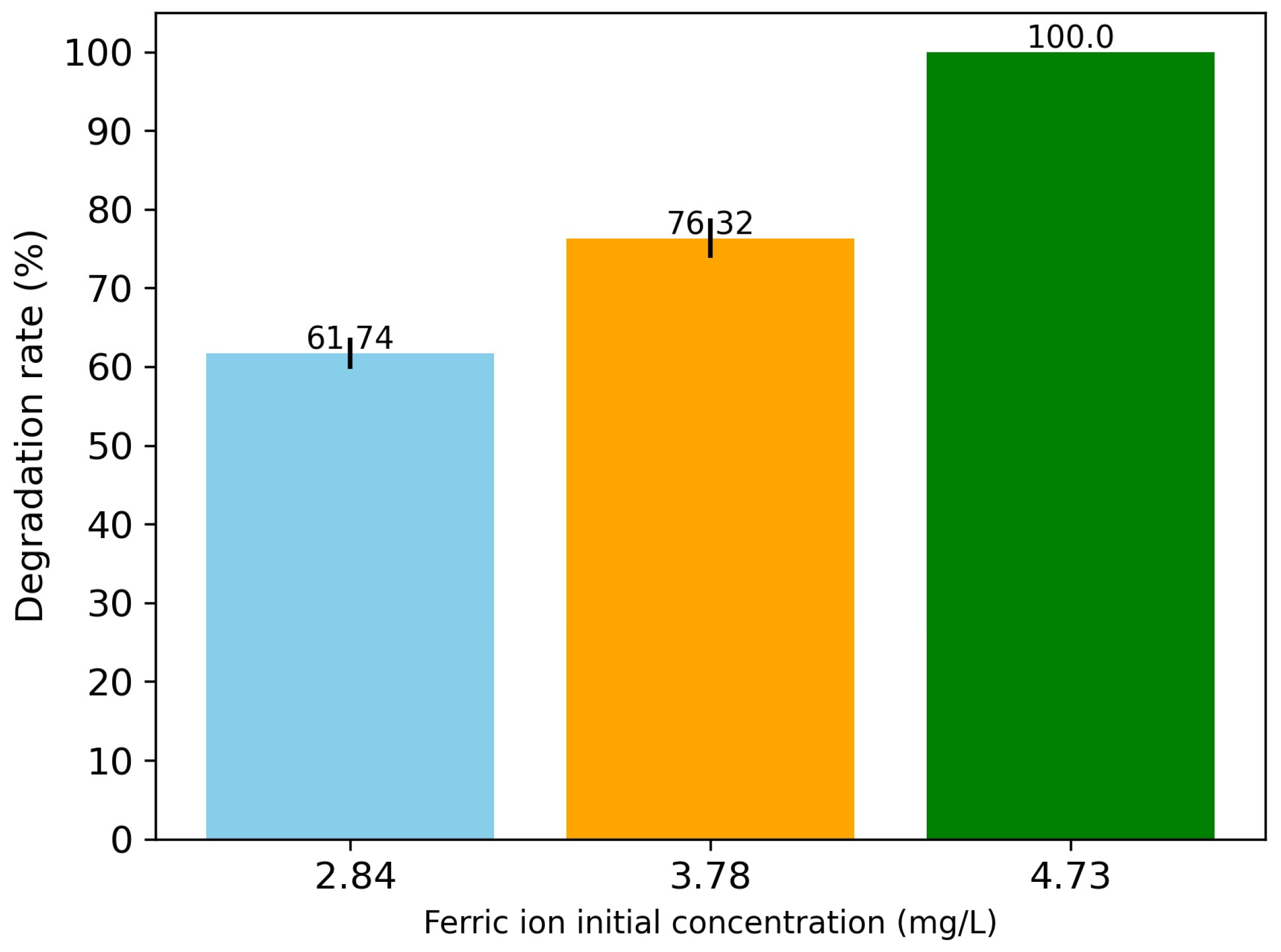
Furthermore, the gradual increase in ferric ion concentration to 3.78 and then 4.73 mg/L as shown in Figure 8, led to a notable improvement in PAR degradation performance, achieving total degradation of paracetamol at 4.73 mg/L of ferric ions. This observation corroborates findings in the literature. Audino et al. [6] report that iron concentrations close to regulatory limits (up to 5 mg/L) promote complete elimination of paracetamol, even at high initial concentrations (40–50 mg/L) [6]. These results confirm that simultaneous optimization of the H 2 O 2 / P A R ratio and ferric ion content is essential to ensure maximum efficiency of the photo-Fenton process, particularly under high pollutant loads.
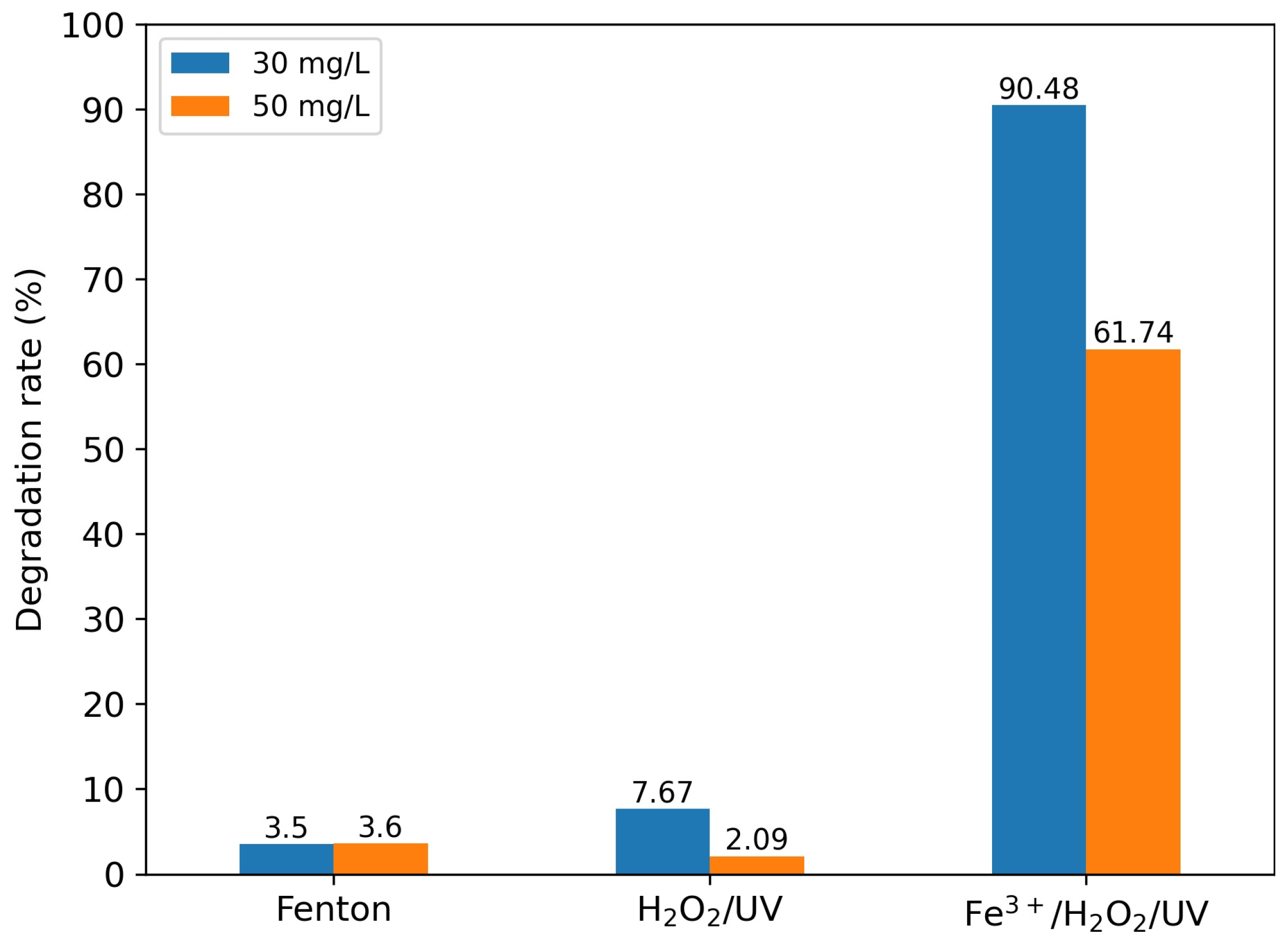
The results obtained are consistent with those published in the literature on paracetamol degradation [6], highlighting the need to control these parameters to meet performance requirements and comply with discharge standards. Finally, a comparison performed at initial paracetamol concentrations of 30 mg/L and 50 mg/L between the conventional Fenton system ( P A R / H 2 O 2 / B O ), the H 2 O 2 / P A R pair, and the B O / H 2 O 2 / U V system under our experimental photo-Fenton conditions (Figure 9) reveals that the latter is the most effective, thus demonstrating the superior efficiency of the photo-Fenton process under these conditions [6,29,30].
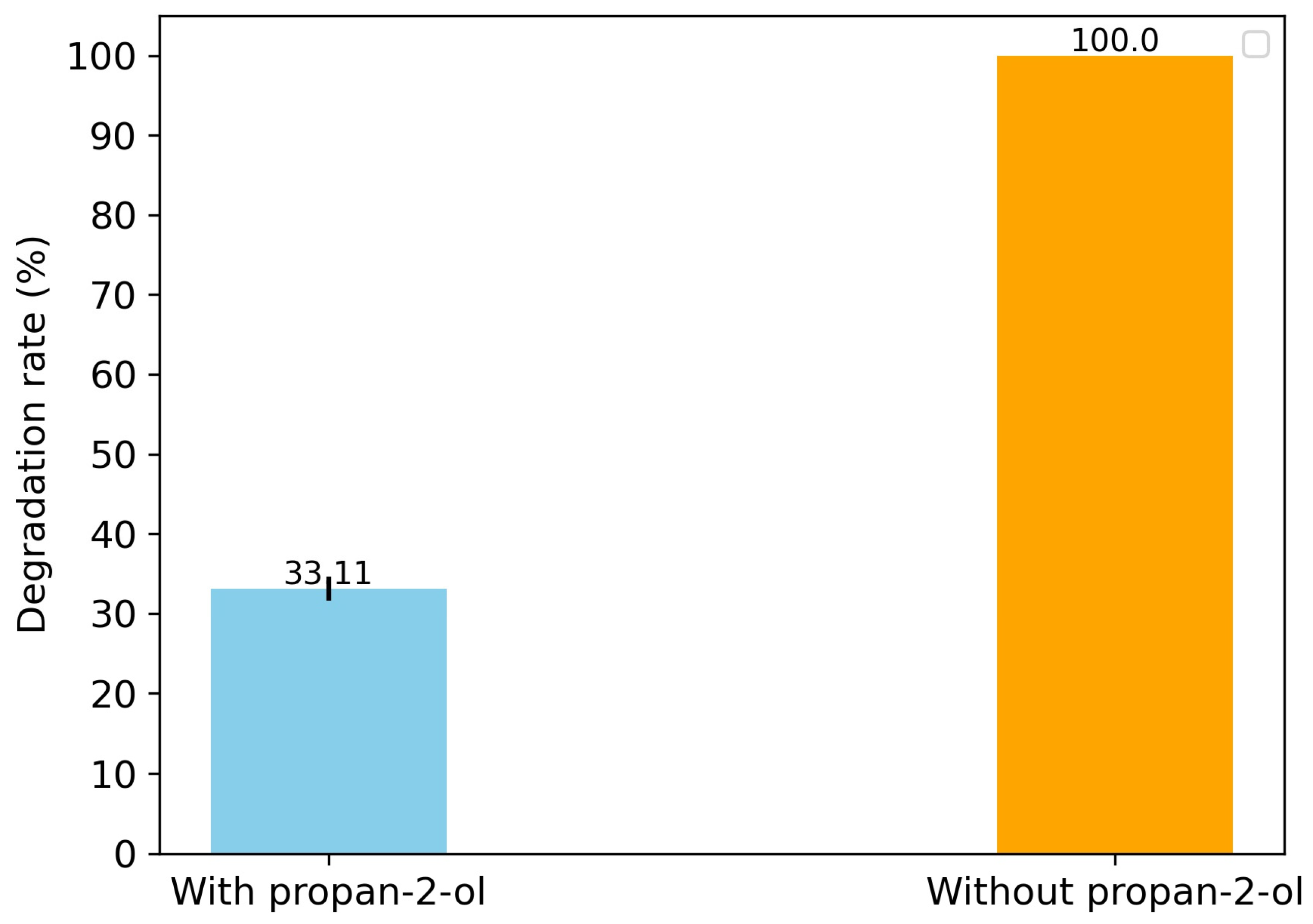
A simplified mechanism for paracetamol degradation via Fenton and photo-Fenton reactions, as proposed by Audino et al. [6] and Giménez et al. [31] and adapted to our study, is summarized in Table 4, where P i is considered the generic intermediate compound arising from the interaction of hydroxyl radicals ( H O ) with PAR. This mechanism highlights the important role of the hydroxyl radicals ( H O ) in the process. To confirm the contribution of hydroxyl radicals ( H O ) species during paracetamol degradation, experiments were performed in the presence of propan-2-ol, used as a selective hydroxyl radical scavenger [32]. Results shown in Figure 10 indicate that the degradation rate of paracetamol ( P A R 0 = 50   m g / L ) decreased from 100% to only 33% under our optimal operating conditions.
This marked inhibition confirms the predominant role of hydroxyl radicals ( H O ) as the main oxidizing species in the photo-Fenton process. Furthermore, the observed decrease in performance in the presence of propan-2-ol also highlights a secondary contribution of superoxide radicals ( H O 2 ) [9] during the subsequent stages of degradation. These observations are consistent with the mechanisms classically described for the photo-Fenton process, in which the synergistic interaction between ferrous/ferric ions H 2 O 2 , and light irradiation leads to the successive generation of hydroxyl radicals and secondary oxidizing species.
The reaction mechanism proposed in this work is based on the classical photo-Fenton pathways extensively reported in the literature and was intentionally adopted as a conceptual framework to illustrate the dominant role of hydroxyl radicals ( H O ) in paracetamol degradation. The objective was not to establish a catalyst-specific mechanistic scheme for the Bandjéli iron ore, but rather to provide a qualitative interpretation of the observed degradation trends under photo-Fenton conditions. Accordingly, the formation of intermediate products (Pi) was not experimentally monitored and is inferred from well-documented paracetamol oxidation pathways described for homogeneous and heterogeneous photo-Fenton systems. The inclusion of these intermediates serves solely to support a general understanding of the oxidation sequence leading ultimately to mineralization. A more detailed investigation of the reaction mechanism, including by-product identification and mineralization degree assessment, is currently underway and will enable deeper insight into potential specificities associated with the Bandjéli iron ore in future dedicated studies.
The environmental and sustainability aspects discussed in this study are intended to provide a qualitative and forward-looking perspective rather than conclusions supported by a full life cycle assessment or catalyst reuse evaluation. The photo-Fenton system investigated operates under homogeneous conditions following iron dissolution, which inherently limits direct recovery and reuse of ferric species without additional separation steps that could increase process complexity. The sustainability-related considerations highlighted in this work are therefore mainly associated with the use of an abundant natural iron ore as an alternative to commercial iron salts, the deliberate limitation of iron concentration to remain within environmentally acceptable thresholds, and the avoidance of auxiliary reagents such as nitric acid, which could otherwise contribute to nitrate accumulation in treated waters. These elements suggest potential environmental advantages but should be interpreted as indicative trends rather than quantified metrics. A comprehensive environmental assessment, including catalyst reuse strategies and/or a life cycle analysis, is identified as a necessary direction for future investigations.
To place the performance of the investigated natural iron ore within the context of existing photo-Fenton systems, a comparative analysis with representative catalysts reported in the literature is provided in Table 5. The comparison considers key operational parameters, including initial pollutant concentration, catalyst dosage, hydrogen peroxide concentration, pH range, irradiation time, and removal efficiency. Despite its non-optimized and naturally occurring nature, the iron ore exhibits degradation performances that are comparable to those of several synthetic or modified iron-based catalysts, often requiring more complex preparation routes or higher chemical inputs. This qualitative–quantitative comparison highlights the ability of the natural ore to efficiently promote paracetamol degradation under photo-Fenton conditions, while offering advantages in terms of availability, simplicity, and potential cost reduction. These results support the relevance of natural iron-containing materials as promising candidates for sustainable and scalable advanced oxidation processes

4. Conclusions

This study highlights the strong potential of the photo-Fenton process using natural Bandjéli ore as an iron catalyst for the degradation of paracetamol in contaminated water. The results obtained showing complete elimination under optimal conditions (a ferric ion concentration of 4.73 mg/L and an H 2 O 2 / P A R   m o l a r   r a t i o   10 ) for initial concentrations up to 50 mg/L demonstrate that controlling the operating parameters, particularly the ferric ion content and the H 2 O 2 / P A R ratio, makes it possible to achieve high efficiency while maintaining residual iron levels that comply with environmental standards. Beyond its technical performance, this approach relies on an abundant local resource, reducing treatment costs, industrial reagent consumption, and sludge production, while limiting the environmental footprint. These results pave the way for the direct integration of iron-rich minerals into advanced oxidation processes for the sustainable removal of organic micropollutants. The primary objective of this work was to demonstrate the viable substitution of commercial iron salts with this abundant natural Bandjéli iron ore, offering a cost-effective and eco-friendly alternative for photo-Fenton applications in resource-constrained regions like Togo. This study demonstrates the feasibility of using the natural Bandjéli iron ore as an alternative iron source for the photo-Fenton degradation of paracetamol in aqueous solution. The results show that, despite its non-synthetic and non-optimized nature, the ore is able to promote efficient pollutant degradation under UV irradiation, highlighting its potential as a low-cost and readily available material for advanced oxidation processes. The work primarily aimed at assessing process feasibility rather than exhaustive kinetic or mechanistic elucidation, and the observed degradation trends were interpreted within the framework of the classical photo-Fenton mechanism dominated by hydroxyl radical (•OH) generation, as widely reported in the literature. Intermediate products were therefore considered only at a qualitative level, based on established paracetamol oxidation pathways, without experimental identification. This methodological choice constitutes a limitation of the present study but also clearly defines its scope as a proof-of-concept. From a practical perspective, the use of a natural iron ore, the intentional limitation of iron concentration, and the avoidance of nitrate-generating reagents suggest potential environmental and economic advantages, although these aspects remain qualitative in the absence of catalyst reuse studies or a life cycle assessment. Further studies focusing on the identification and monitoring of paracetamol oxidation by-products by mass spectrometry or chromatography, as well as on the determination of the degree of mineralization through total organic carbon (TOC) analysis, will be carried out.

Author Contributions

Conceptualization, M.J.K., M.K. and K.F.; methodology, M.J.K. and C.C.; software, M.J.K. and K.F.; validation, M.J.K., M.K., C.C., K.F. and G.T.; formal analysis, M.J.K., M.K., C.C. and K.F.; investigation, M.J.K., M.K., C.C., and K.F.; resources, K.F. and C.C.; data curation, M.J.K., K.F. and C.C.; writing—original draft preparation, M.J.K. and K.F.; writing—review and editing, M.J.K., M.K., C.C., K.F. and G.T.; visualization, M.J.K. and K.F.; supervision, M.K., K.F. and C.C.; project administration, M.K. and G.T.; funding acquisition, M.J.K., M.K. and G.T.; All authors have read and agreed to the published version of the manuscript.

Funding

This research was funded by the French Embassy in Togo through the France Excellence scholarship awarded by its Cooperation and Cultural Action Department (SCAC) grant number [152470U]. The APC was funded by MDPI AG with the following discount code [42064079e2ca2606].

Data Availability Statement

Data are available upon request.

Acknowledgments

The authors would like to thank all the technical staff of the Laboratory of Automation, Process Engineering and Pharmaceutical Engineering (LAGEPP, Université Claude Bernard Lyon1, France), the Analytical Chemistry Laboratory at CPE Lyon (France), and the Waste Management, Treatment and Recovery Laboratory (GTVD) from University of Lomé in Togo, M. Ruben Vera from the Henri Longchamp Diffractometry Centre at Claude Bernard University Lyon-1 for the XRD analyses, M. Xavier Jaurand from the Microstructures Technology Center, and Claude Bernard University Lyon 1, for the SEM-EDX analyses.

Conflicts of Interest

The authors declare that they have no conflicts of interest regarding the publication of this paper.

References

  1. Rivera-Utrilla, J.; Sánchez-Polo, M.; Ferro-García, M.Á.; Prados-Joya, G.; Ocampo-Pérez, R. Pharmaceuticals as emerging contaminants and their removal from water. A review. Chemosphere 2013, 93, 1268–1287. [Google Scholar] [CrossRef]
  2. Aus Der Beek, T.; Weber, F.-A.; Bergmann, A.; Hickmann, S.; Ebert, I.; Hein, A.; Küster, A. Pharmaceuticals in the environment—Global occurrences and perspectives. Environ. Toxicol. Chem. 2015, 35, 823–835. [Google Scholar] [CrossRef] [PubMed]
  3. Houtman, C.J. Emerging contaminants in surface waters and their relevance for the production of drinking water in Europe. J. Integr. Environ. Sci. 2010, 7, 271–295. [Google Scholar] [CrossRef]
  4. Luo, Y.; Guo, W.; Ngo, H.H.; Nghiem, L.D.; Hai, F.I.; Zhang, J.; Liang, S.; Wang, X.C. A review on the occurrence of micropollutants in the aquatic environment and their fate and removal during wastewater treatment. Sci. Total Environ. 2014, 473–474, 619–641. [Google Scholar] [CrossRef]
  5. Liang, L.; Ji, L.; Ma, Z.; Ren, Y.; Zhou, S.; Long, X.; Cao, C. Application of Photo-Fenton- Membrane Technology in Wastewater Treatment: A Review. Membranes 2023, 13, 369. [Google Scholar] [CrossRef]
  6. Audino, F.; Conte, L.O.; Schenone, A.V.; Pérez-Moya, M.; Graells, M.; Alfano, O.M. A kinetic study for the Fenton and photo-Fenton paracetamol degradation in an annular photoreactor. Environ. Sci. Pollut. Res. 2019, 26, 4312–4323. [Google Scholar] [CrossRef] [PubMed]
  7. Hinojosa Guerra, M.M.; Oller Alberola, I.; Malato Rodriguez, S.; Agüera López, A.; Acevedo Merino, A.; Quiroga Alonso, J.M. Oxidation mechanisms of amoxicillin and paracetamol in the photo-Fenton solar process. Water Res. 2019, 156, 232–240. [Google Scholar] [CrossRef]
  8. Hassan, M.E.; Chen, Y.; Liu, G.; Zhu, D.; Cai, J. Heterogeneous photo-Fenton degradation of methyl orange by Fe2O3/TiO2 nanoparticles under visible light. J. Water Process Eng. 2016, 12, 52–57. [Google Scholar] [CrossRef]
  9. Xiao, J.; Guo, S.; Wang, D.; An, Q. Fenton-Like Reaction: Recent Advances and New Trends. Chem. Eur. J. 2024, 30, e202304337. [Google Scholar] [CrossRef]
  10. Pignatello, J.J.; Oliveros, E.; MacKay, A. Advanced Oxidation Processes for Organic Contaminant Destruction Based on the Fenton Reaction and Related Chemistry. Crit. Rev. Environ. Sci. Technol. 2006, 36, 1–84. [Google Scholar] [CrossRef]
  11. Brillas, E.; Martínez-Huitle, C.A. Decontamination of wastewaters containing synthetic organic dyes by electrochemical methods. An updated review. Appl. Catal. B Environ. 2015, 166–167, 603–643. [Google Scholar] [CrossRef]
  12. Neamtu, M.; Yediler, A.; Siminiceanu, I.; Kettrup, A. Oxidation of commercial reactive azo dye aqueous solutions by the photo-Fenton and Fenton-like processes. J. Photochem. Photobiol. A—Chem. 2003, 161, 87–93. [Google Scholar] [CrossRef]
  13. Clausi, M.; Savino, S.; Cangialosi, F.; Eramo, G.; Fornaro, A.; Quatraro, L.; Pinto, D.; D’ACcolti, L. Polluta nts abatement in aqueous solutions with geopolymer catalysts: A photo fenton case. Chemosphere 2023, 344, 140333. [Google Scholar] [CrossRef] [PubMed]
  14. Kim, S.L.; Yang, H.; Lee, S.; Cho, S.-K.; Lee, C.-G.; Azat, S.; Lee, J. Mining waste as heterogeneous catalysts. Green. Chem. 2025, 27, 8691–8709. [Google Scholar] [CrossRef]
  15. Alv, I.F.B.; Baltazar, M.D.P.G.; Tenório, J.A.S. Study of Hematite Ore as a Source of Iron for the Degradation of Ether Amines Contained in Mining Wastewaters by the Fenton Reaction. In Proceedings of the 7th International Conference of Recent Trends in Environmental Science and Engineering (RTESE’23), Ottawa, ON, Canada, 4–6 June 2023. [Google Scholar] [CrossRef]
  16. Thomas, N.; Dionysiou, D.D.; Pillai, S.C. Heterogeneous Fenton catalysts: A review of recent advances. J. Hazard. Mater. 2021, 404, 124082. [Google Scholar] [CrossRef]
  17. Kessouagni, M.J.; Koriko, M.; Fiaty, K.; Charcosset, C.; Jaurand, X.; Brioude, A.; Tchangbedji, G. Mineralogical Physico-Chemical Characterization of Raw Iron Ore from Bandjéli in Bassar Prefecture in Northern Togo. J. Mater. Sci. Chem. Eng. 2025, 13, 85–97. [Google Scholar] [CrossRef]
  18. Chen, J.; Li, X.; Gao, L.; Guo, S.; He, F. Microwave Treatment of Minerals and Ores: Heating Behaviors, Applications, and Future Directions. Minerals 2024, 14, 219. [Google Scholar] [CrossRef]
  19. Agusu, L.; Arsyad, W.O.S.; Sudiana, I.N.; Alimin, A.; Firihu, M.Z.; Ahmad, L.O.; Darusman, L.M.; Muhammad, A.J.; Mitsudo, S.; Asano, T.; et al. Effect of microwave roasting in the leaching of the transition metals Ni, Fe, and Co from the low-grade nickel laterite. J. Phys. Conf. Ser. 2025, 2980, 012021. [Google Scholar] [CrossRef]
  20. Pereira, J.H.O.S.; Queirós, D.B.; Reis, A.C.; Nunes, O.C.; Borges, M.T.; Boaventura, R.A.R.; Vilar, V.J.P. Process enhancement at near neutral pH of a homogeneous photo-Fenton reaction using ferricarboxylate complexes: Application to oxytetracycline degradation. Chem. Eng. J. 2014, 253, 217–228. [Google Scholar] [CrossRef]
  21. Ye, Z.; Sirés, I.; Zhang, H.; Huang, Y.-H. Mineralization of pentachlorophenol by ferrioxalate-assisted solar photo-Fenton process at mild pH. Chemosphere 2019, 217, 475–482. [Google Scholar] [CrossRef]
  22. Decree of 24/08/17 Amending, in a Series of Ministerial Decrees, the Provisions Relating to the Discharge of Hazardous Substances into Water from Facilities Classified for Environmental Protection|AIDA n.d. Available online: https://aida.ineris.fr/reglementation/arrete-240817-modifiant-serie-darretes-ministeriels-dispositions-relatives-rejets (accessed on 8 August 2025).
  23. Bastien Schnell (Coordinator), Report No. 113972/F of 12/04/2022. Togolese Republic: Environmental and Social Impact Assessment of the Adetikope Industrial Platform (PIA) Project. Anteagroup, Antony, France, Chapter 3 Wastewater Management, Section 3.1 Applicable Standards; pp. 15–24. Available online: https://share.google/61Hn9KTCBeQMkrxAf (accessed on 8 February 2026). (In French)
  24. Safitri, V.Y.; Santoni, A.; Wellia, D.V.; Khoiriah, K.; Safni, S. Degradation of Paracetamol by Photolysis Using C-N-codoped TiO2. Molekul 2017, 12, 189. [Google Scholar] [CrossRef]
  25. Mondal, E. A Study of Analytical Method Development and Validation for Quantitative Analysis of Paracetamol by using UV Spectroscopy. Int. J. Res. Appl. Sci. Eng. Technol. 2025, 13, 1828–1834. [Google Scholar] [CrossRef]
  26. Gracien, E.B.; Jérémie, M.L.; Joseph, L.K.-K.; Omer, M.M.; Antoine, M.K.; Hercule, K.M.; Gerard, M.N. Role of hydroxyl radical scavenger agents in preparing silver nanoparticles under γ-irradiation. SN Appl. Sci. 2019, 1, 961. [Google Scholar] [CrossRef]
  27. Neyens, E.; Baeyens, J. A review of classic Fenton’s peroxidation as an advanced oxidation technique. J. Hazard. Mater. 2003, 98, 33–50. [Google Scholar] [CrossRef] [PubMed]
  28. Araujo, F.V.F.; Yokoyama, L.; Teixeira, L.A.C.; Campos, J.C. Heterogeneous Fenton process using the mineral hematite for the discoloration of a reactive dye solution. Braz. J. Chem. Eng. 2011, 28, 605–616. [Google Scholar] [CrossRef]
  29. Reina, A.C.; Santos-Juanes, L.; Garcia Sanchez, J.L.; Casas Lopès, J.L.; Maldonado Rubio, M.I.; Li Puma, G.; Sanchez Pérez, J.A. Modelling the photo-Fenton oxidation of the pharmaceutical paracetamol in water including the effect of photon absorption (VRPA). Appl. Catal. B Environ. 2015, 166–167, 295–301. [Google Scholar] [CrossRef]
  30. Hurtado, L.; Avilés, O.; Brewer, S.; Donkor, K.K.; Romero, R.; Gómez-Espinosa, R.M.; Alvarado, O.; Natividad, R. Al/Cu-PILC as a Photo-Fenton Catalyst: Paracetamol Mineralization. ACS Omega 2022, 7, 23821–23832. [Google Scholar] [CrossRef]
  31. Giménez, B.N.; Conte, L.O.; Audino, F.; Schenone, A.V.; Graellsb, M.; Alfano, O.M.; Pérez-Moya, M. Kinetic model of photo-Fenton degradation of paracetamol in an annular reactor: Main reaction intermediates and cytotoxicity studies. Catal. Today 2023, 413–415, 113958. [Google Scholar] [CrossRef]
  32. Li, P.; Zhuang, X.; Xu, J.; Ruan, L.; Jiang, Y.; Lin, J.; Zhang, X. Enhanced Photo-Fenton Activity of SnO2/α-Fe2O3 Composites Prepared by a Two-Step Solvothermal Method. Materials 2022, 15, 1743. [Google Scholar] [CrossRef] [PubMed]
  33. Parra-Enciso, C.; Avila, B.S.; Rubio-Clemente, A.; Peñuela, G.A. Degradation of diclofenac through ultrasonic-based advanced oxidation processes at low frequency. J. Environ. Chem. Eng. 2022, 10, 108296. [Google Scholar] [CrossRef]
  34. Gonzaga, I.M.D.; Almeida, C.V.S.; Mascaro, L.H. A Critical Review of Photo-Based Advanced Oxidation Processes to Pharmaceutical Degradation. Catalysts 2023, 13, 221. [Google Scholar] [CrossRef]
  35. Mondal, S.K.; Saha, A.K.; Sinha, A. Removal of ciprofloxacin using modified advanced oxidation processes: Kinetics, pathways and process optimization. J. Clean. Prod. 2018, 171, 1203–1214. [Google Scholar] [CrossRef]
  36. Wang, T.; Jin, X.; Chen, Z.; Megharaj, M.; Naidu, R. Green synthesis of Fe nanoparticles using eucalyptus leaf extracts for treatment of eutrophic wastewater. Sci. Total Environ. 2014, 466–467, 210–213. [Google Scholar] [CrossRef] [PubMed]
  37. Wen, D.; Wu, Z.; Tang, Y.; Li, M.; Qiang, Z. Accelerated degradation of sulfamethazine in water by VUV/UV photo-Fenton process: Impact of sulfamethazine concentration on reaction mechanism. J. Hazard. Mater. 2018, 344, 1181–1187. [Google Scholar] [CrossRef] [PubMed]
  38. Lu, J.; Ji, Y.; Chovelon, J.-M.; Lu, J. Fluoroquinolone antibiotics sensitized photodegradation of isoproturon. Water Res. 2021, 198, 117136. [Google Scholar] [CrossRef] [PubMed]
Figure 1. Experimental set-up.
Purification 02 00003 g001
Figure 2. XRD spectrum of Bandjéli crude iron ore.
Purification 02 00003 g002
Figure 3. SEM images of Bandjéli raw iron ore for particle size fractions 10 µm, topography with secondary electrons and the Z contrast with backscattered electrons.
Purification 02 00003 g003
Figure 4. EDX quantitative analyses of Bandjéli crude iron ore, global spectrum of the hole area.
Purification 02 00003 g004
Figure 5. Kinetics of paracetamol degradation by photo-Fenton (365 nm, 3 h, pH ≈ 2.4, 20 °C, [Fe3+] = 2.84 mg/L, [H2O2]/PAR = 10) at different initial concentrations C 0 of paracetamol.
Purification 02 00003 g005
Figure 6. Impact of the [H2O2]/PAR ratio on the degradation of paracetamol (50 mg/L)—365 nm, 3 h, pH ≈ 2.4, 20 °C, [Fe3+] = 2.84 mg/L.
Purification 02 00003 g006
Figure 7. Estimation of apparent kinetic constant.
Purification 02 00003 g007
Figure 8. Impact of ferric ion initial concentration on the degradation of paracetamol (50 mg/L)—365 nm, 3 h, pH ≈ 2.4, 20 °C.
Purification 02 00003 g008
Figure 9. Comparison of Fenton, H2O2/UV, and photo-Fenton for the degradation of two initial concentrations of paracetamol 30 mg/L and 50 mg/L—365 nm, 3 h, pH ≈ 2.4, 20 °C, [Fe3+] = 2.84 mg/L, [H2O2]/PAR = 10.
Purification 02 00003 g009
Figure 10. Degradation rate of 50 mg/L PAR in a PAR-Fe3+]-H2O2-UV mixture (50–4.73 mg/L) in the presence and absence of propan-2-ol (with [propan-2-ol]0 = 453.6 mg/L) to ensure propan-2-ol/H2O2 molar rate of 10).
Purification 02 00003 g010
Table 1. Chemical composition of the raw iron ore in oxide form by XRF [17].
Oxide F e 2 O 3 S i O 2 A l 2 O 3 M g O S O 3 T i O 2 M n O P 2 O 5 C r O 3 V 2 O 5 S r O
W (%)93.454.191.450.300.290.100.050.060.020.020.01
Table 2. Chemical composition of the raw iron ore in elements form by XRF [17].
ElementFeSiAlMgSTiClMnPCrVSrRb
W (%)95.842.540.980.200.150.080.070.060.040.020.010.010.01
Table 3. Apparent rate constants estimated from the kinetic analysis.
k a p p m i n 1 C 0 = P A R 0 m g / L H 2 O 2 0 m g / L
0.0376 ± 0.0110 1022.5
7.538 ± 5.180 × 10 3 2045
( 6.962 ± 2.712 ) × 10 3 3067.5
4.087 ± 1.769 × 10 3 50112.5
Table 4. Simplified reaction scheme of PAR photo-Fenton degradation based on [6,30] works.
Reactions Steps
1   F e 3 + + H 2 O + h ν F e 2 + + H O + H +
2   F e 2 + + H 2 O 2 F e 3 + + H O + O H
3   F e 3 + + H 2 O 2 F e 2 + + H + + H O 2
4   H 2 O 2 + H O H O 2 + H 2 O
5   P A R + H O P i
Table 5. Comparison of some photo-Fenton degradation in the literature and our work.
Pharmaceutical CompoundProcessSource of IronExperimental ConditionsResultsRef.
PAR Photo-FentonBandjéli iron ore from northwestern TogoUVA PL-L lamps (2 × 36 W, λ = 365 nm)
P A R = 10
50   m g / L
pH = 2.4; F e 21 = 2.84 4.73   m g / L
t = 3 h,
m o l a r   r a t i o
H 2 O 2 / P A R = 10
Complete degradation in less than 3 h (150 min for 10 mg/L). However, for higher concentrations of 30 and 50 mg/L, under the same operating conditions, the degradation rates after 3 h are 90.48% and 61.74%, respectively.This work
PARFenton and photo-Fenton F e S O 4 . 7 H 2 O P A R = 40   m g / L
pH = 2.8 Actinic BL TL-DK 36 W/10 1SL lamp (UVA-UVB)
H 2 O 2 = 94.5 , 189
a n d   378   m g / L
F e 21 = 5 , 7.5   a n d
10   m g / L
t =15 min
Experimental results highlighted that PAR is no more detected by HPLC analysis within a minimum reaction time of 2.5 and a maximum reaction time of 15.0 min. In addition, a maximum conversion of total organic carbon (TOC) of 68.5% was observed after 75 min of reaction in case of using UV radiation and the highest concentrations of the Fenton reagents.[6]
DCFPhoto-Fenton F e S O 4 . 7 H 2 O pH = 3; t = 90 min;
F e 21 = 0.2   m g / L
H 2 O 2 = 1   m g / L   D C F = 1   m g / L
94.4% DCF and 17% TOC removal[33]
CAFFenton, Photo-Fenton, U V / H 2 O 2 and U V / F e 3 + F e S O 4 . 7 H 2 O pH = 5.8; t = 120 min;
H 2 O 2 = 0.5   m g / L   C A F = 20   m g / L
Lamp 125 and 250 W
99% CAF removal[34]
CIPUV, H 2 O 2 , U V / H 2 O 2 modified Fenton and modified
Photo-Fenton
The dried nZVI powderpH = 7
C I F = 10   m g / L
H 2 O 2 = 100   m m o l / L
n Z V I = 5   m m o l / L
Only 4% of TOC removal for UV radiation TOC removal % increased from 10.47% for only H 2 O 2 to 35.41% for U V / H 2 O 2 . n Z V I / H 2 O 2 removed 100% of CIP in 30 min and 60% of the initial TOC.[35]
NORUV, U V / H 2 O 2 ,
U V / F e 2 + / H 2 O 2
VUV, U V / F e 2 + , V U V / H 2 O 2 , V U V / F e 2 + / H 2 O 2
F e S O 4 . 7 H 2 O pH = 7
N O R = 450   μ m o l / L   F e 2 + = 90   μ m o l / L
H 2 O 2 = 3   m m o l / L
VUV/Fe2+/H2O2 process removed 100% of NOR after 4 min, and high mineralization (63.3% at 8 min) and achieved rapid removal of NOR in real waters at neutral pH.[36]
SMTPhoto-Fenton F e C l 3 . 6 H 2 O pH = 4
S M T = 1.8 × 10 2
m m o l / L
H 2 O 2 = 0.74
m m o l / L
F e 3 + = 0.25
m m o l / L
The mineralization of SMT were significantly enhanced in the VUV/UV photo-Fenton process as compared to the UV and UV photo-Fenton processes after 60 min of treatment, achieving ~60% of TOC removal.[37]
AMXFenton process, Photo-Fenton, Solar Photo-Fenton,
Sono-Fenton, and Sono-Photo-Fenton
F e S O 4 . 7 H 2 O pH = 3
A M X = 10   m g / L
F e S O 4 = 3.0   m g / L
H 2 O 2 = 375   m g / L
Ultrasound = 40 kHz, Light source = UV tubes 365 nm
Under the optimized conditions, Fenton’s process was able to remove 100% of AMX within 12 min of reaction time. Coupling the Fenton process with UV-light illumination, solar light illumination and UV light–ultrasound treatment allowed complete antibiotic removal in 3.5, 9 and 6 min, respectively.[38]
AMXSolar Photo-Fenton F e 3 + = 3   m g / L
H 2 O 2 = 2.75   m g / L
A M X = 1   m g / L
A total of 94 and 66% of AMX was removed after 60 and 210 min of treatment in
simulated and real wastewater, respectively. In addition, the percentage of TOC removal for AMX was 19.5% in simulated wastewater. In the study carried out with real effluent, the removal rate was 6.5%.
[35]
Abbreviations: AMX: amoxilin; SMT: sulfamethazine; DCF: diclofenac; PAR: paracetamol; CAP: chloramphenicol; CAF: caffeine; CIP: ciprofloxacin; NOR: norfloxacin.
Disclaimer/Publisher’s Note: The statements, opinions and data contained in all publications are solely those of the individual author(s) and contributor(s) and not of MDPI and/or the editor(s). MDPI and/or the editor(s) disclaim responsibility for any injury to people or property resulting from any ideas, methods, instructions or products referred to in the content.