Review

Innovations in Multidimensional Force Sensors for Accurate Tactile Perception and Embodied Intelligence

by
Jiyuan Chen
,
Meili Xia
,
Pinzhen Chen
,
Binbin Cai
,
Huasong Chen
,
Xinkai Xie
,
Jun Wu
* and
Qiongfeng Shi
*
Interdisciplinary Research Center, School of Electronic Science and Engineering, Southeast University, Nanjing 211189, China
*
Authors to whom correspondence should be addressed.
These authors contributed equally to this work.
AI Sens. 2025, 1(2), 7; https://doi.org/10.3390/aisens1020007
Submission received: 15 August 2025 / Revised: 24 September 2025 / Accepted: 25 September 2025 / Published: 29 September 2025

Abstract

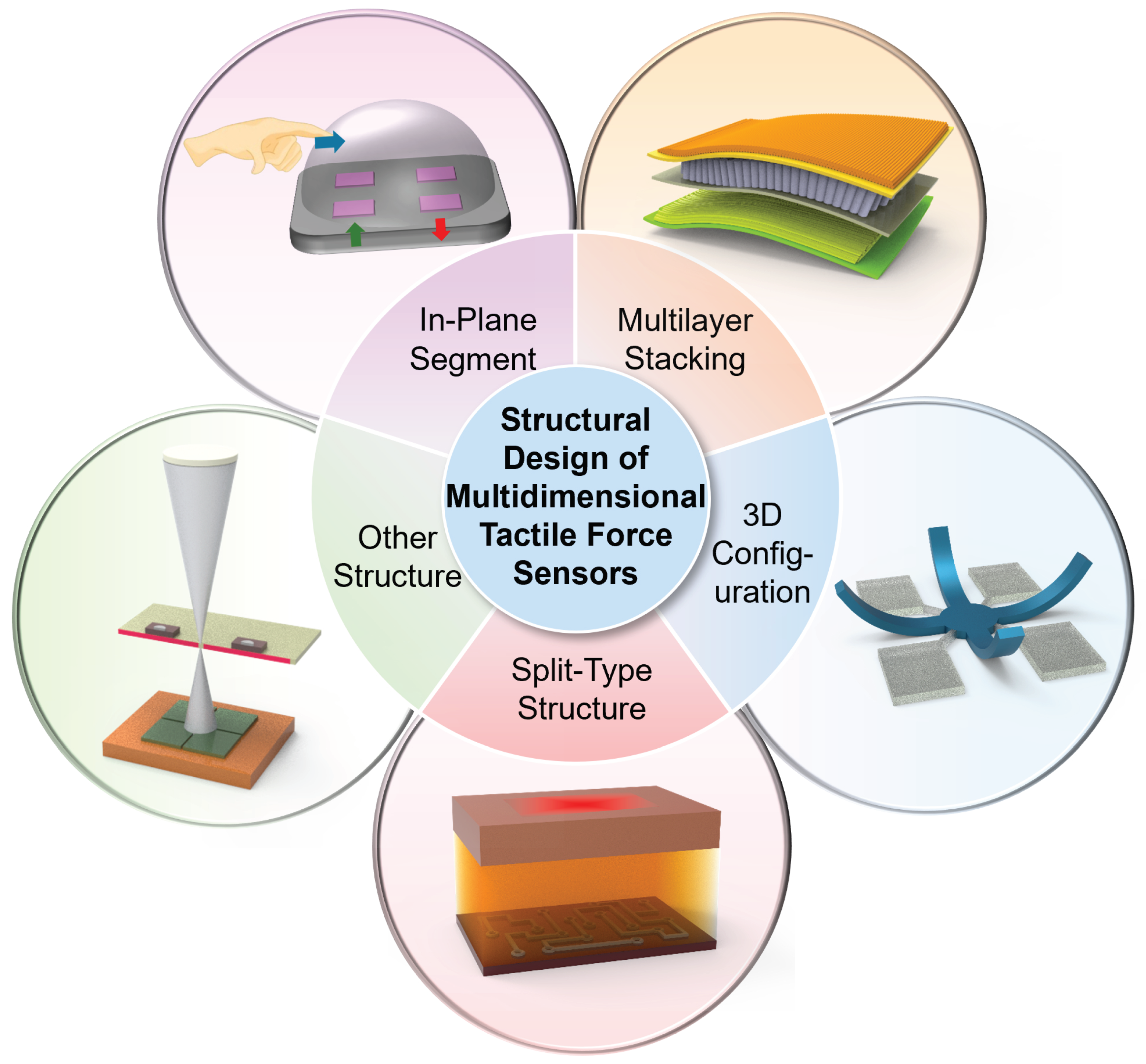
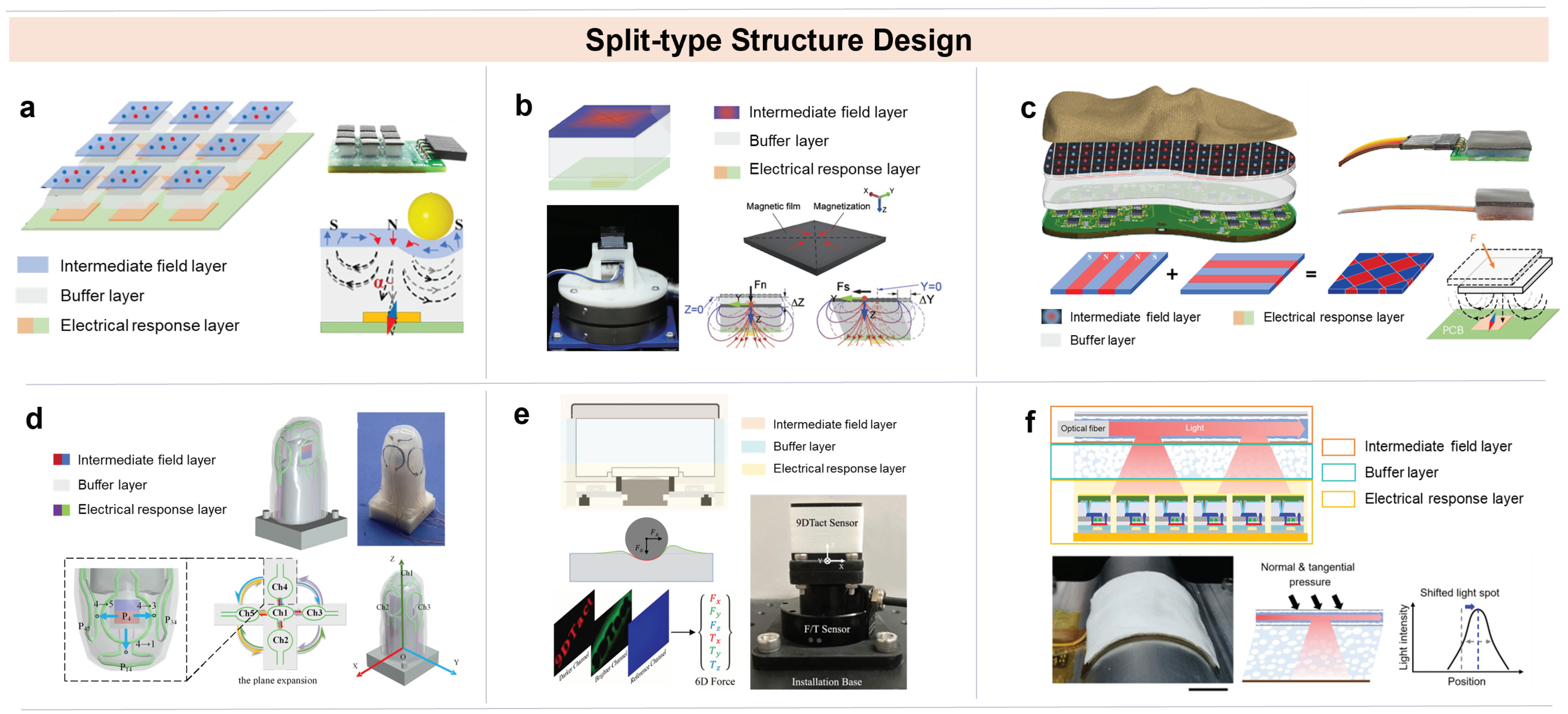
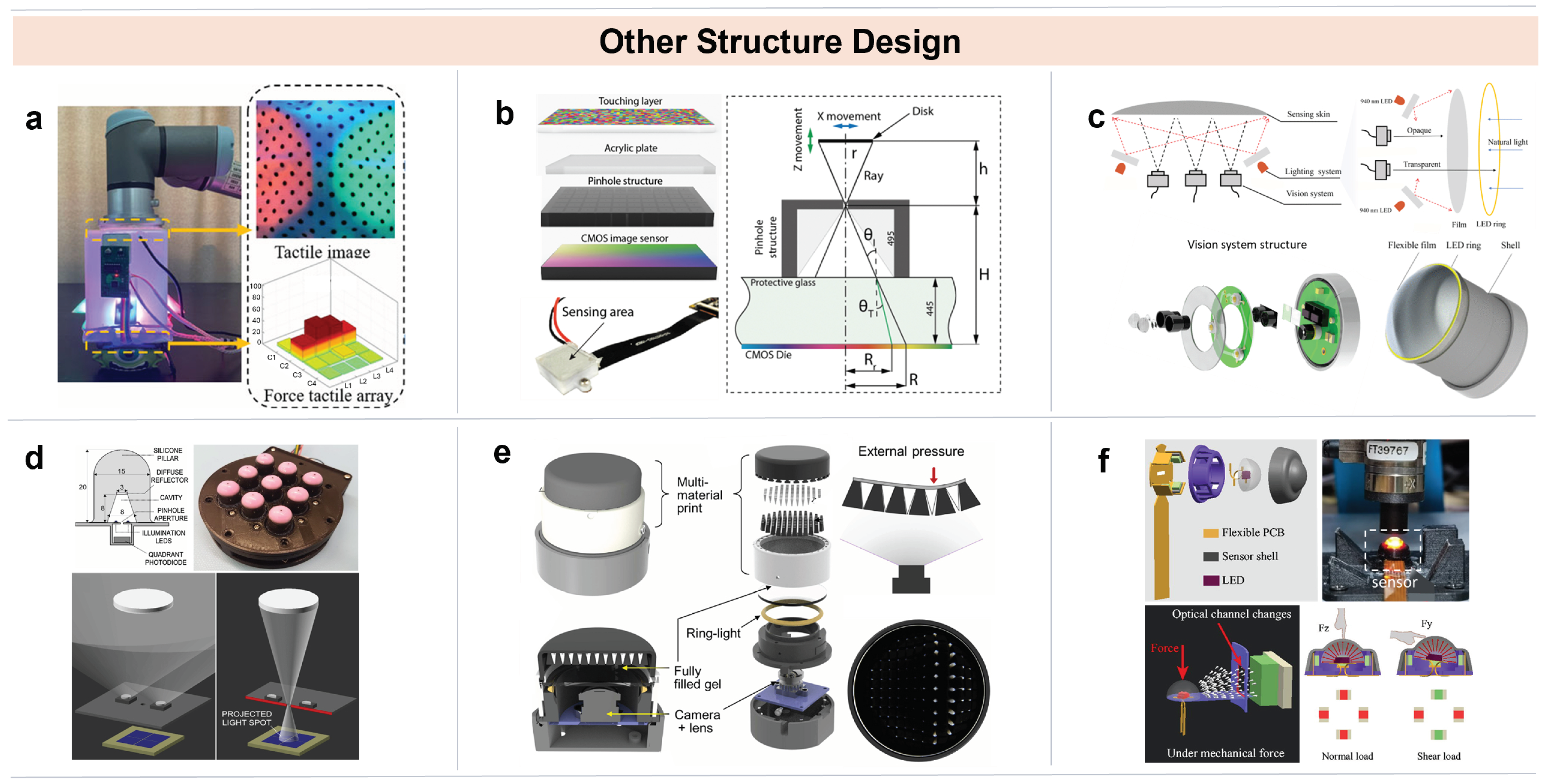
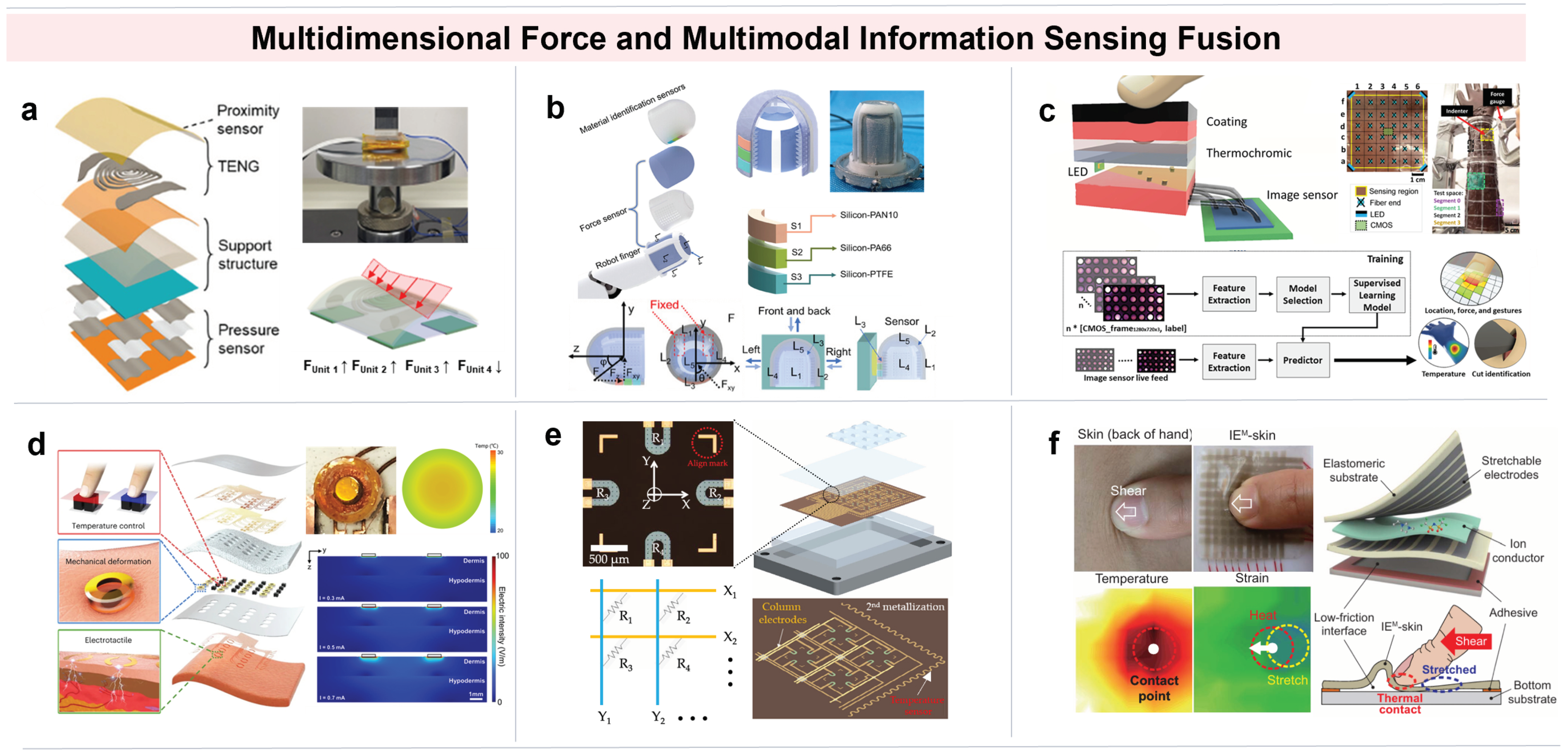
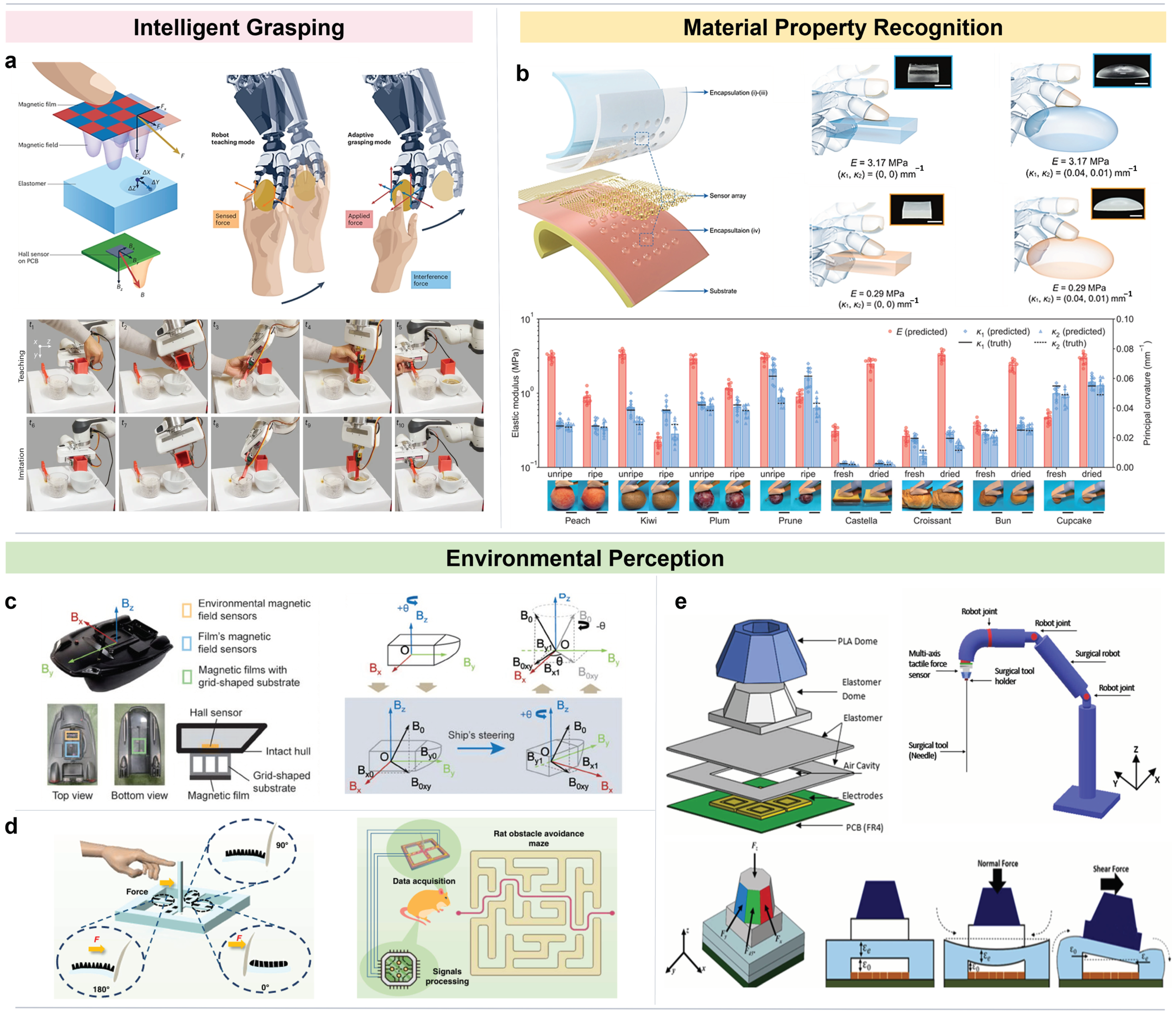
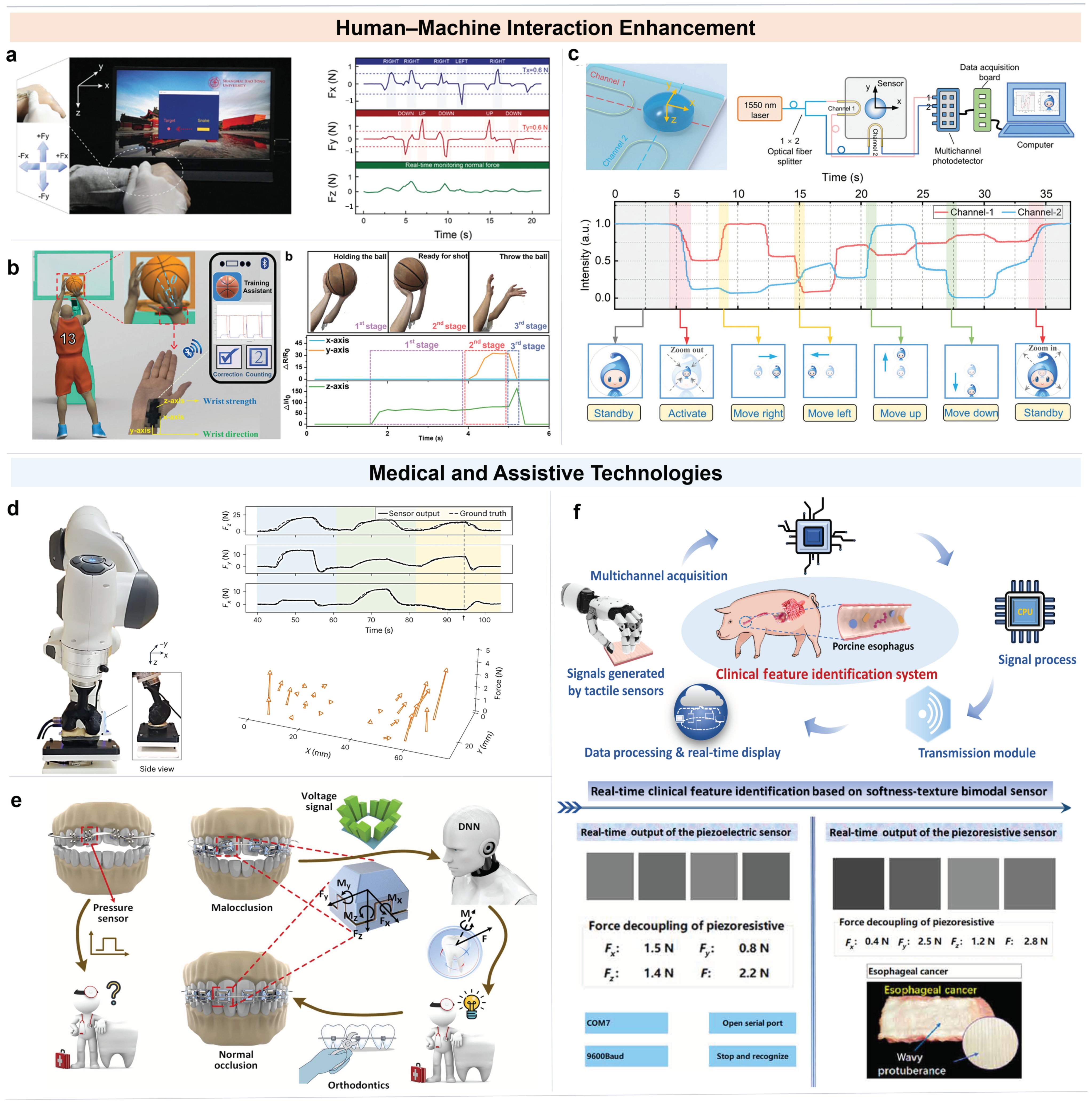
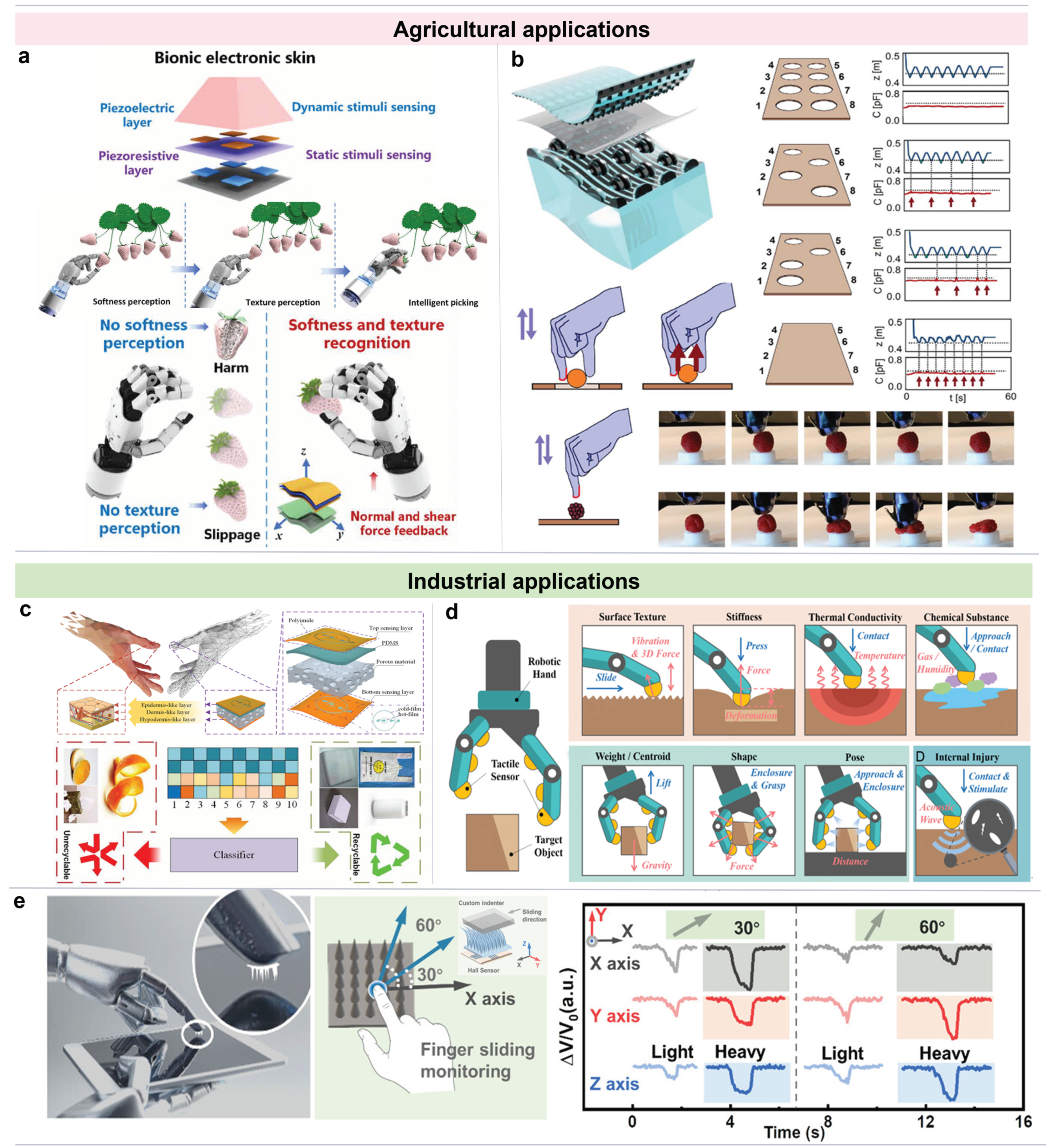
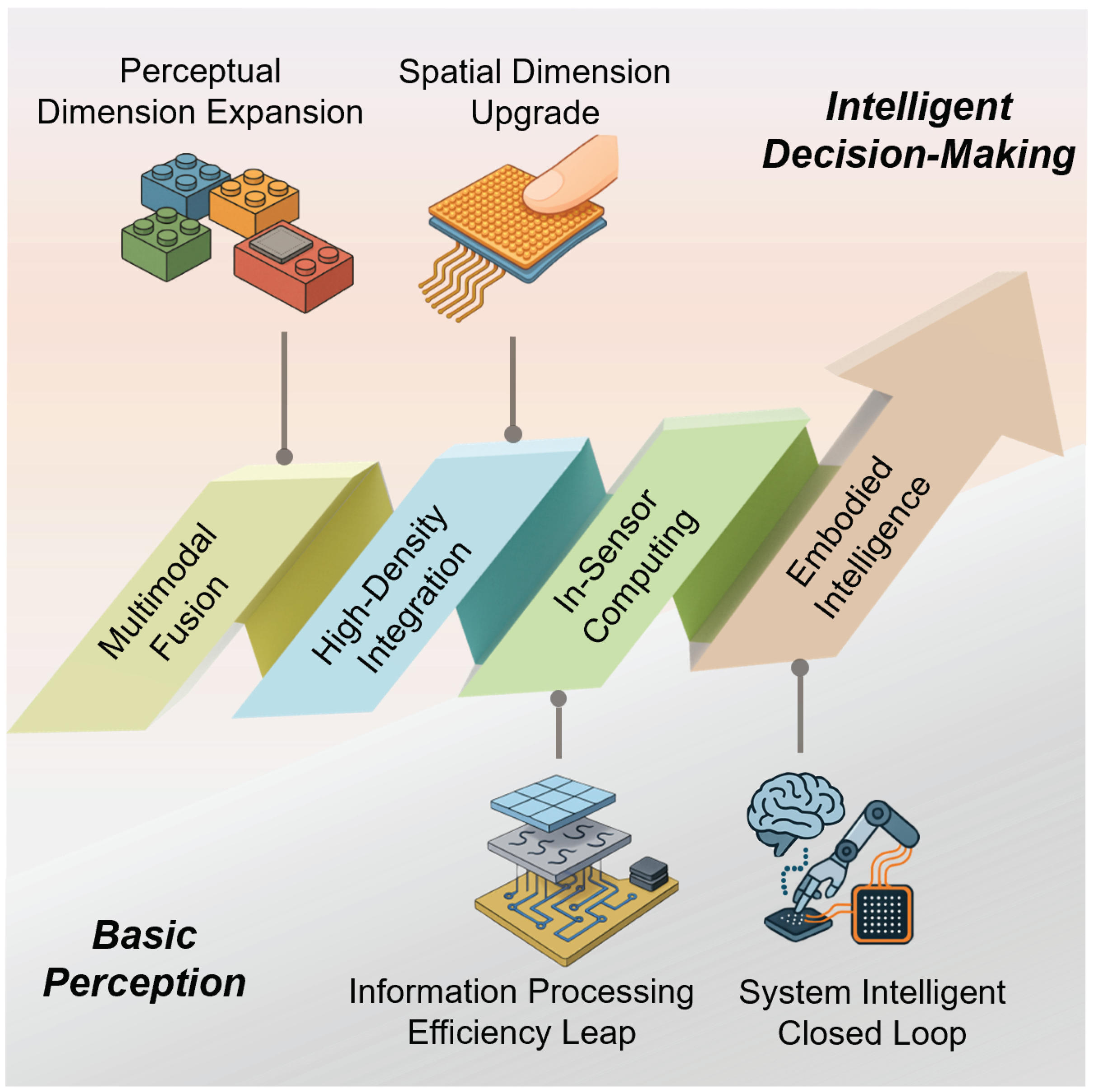
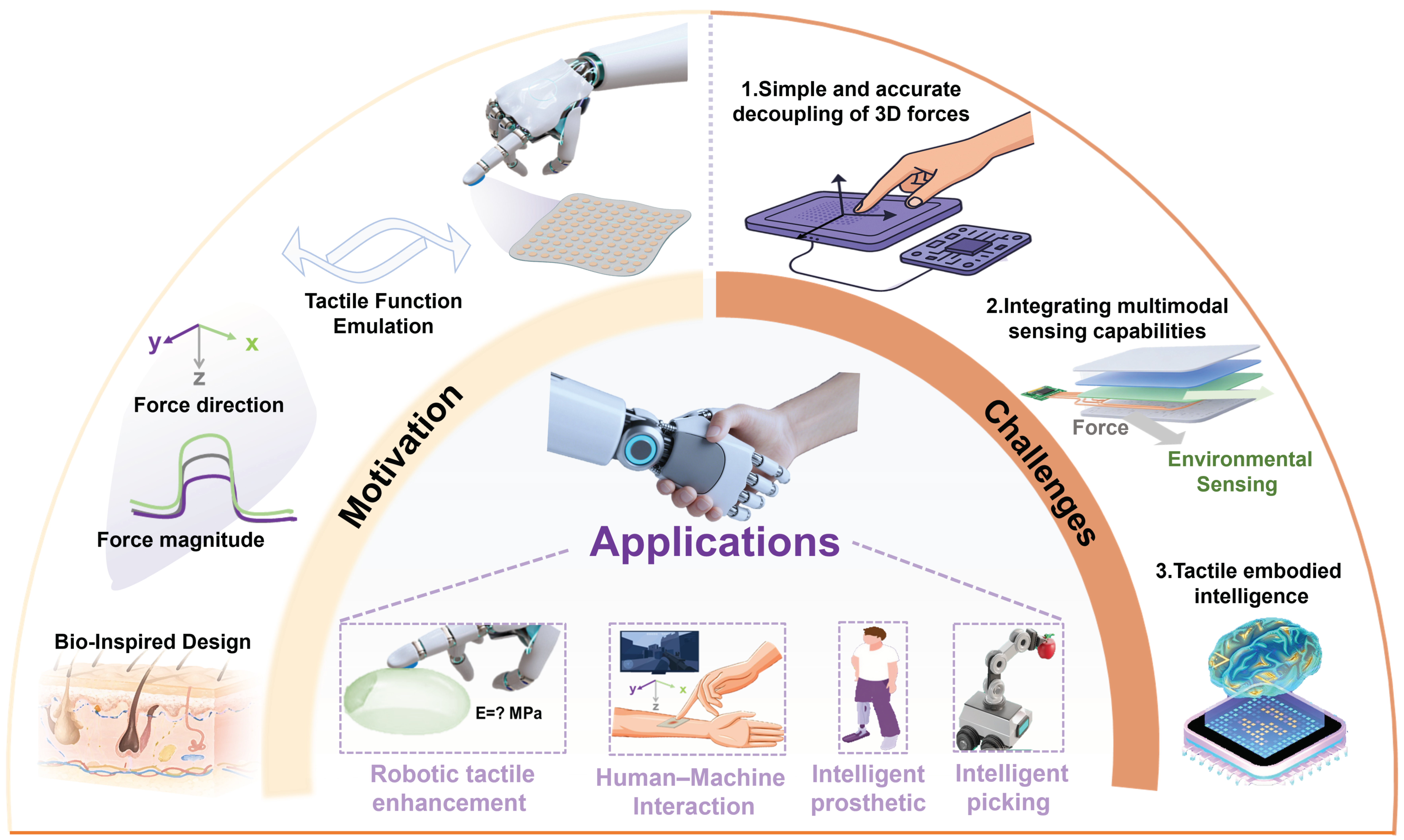
Multidimensional force sensors are key devices capable of simultaneously perceiving and analyzing force in multiple directions (normally triaxial forces). They are designed to provide intelligent systems with skin-like precision in environmental interaction, offering high sensitivity, spatial resolution, decoupling capability, and environmental adaptability. However, the inherent complexity of tactile information coupling, combined with stringent demands for miniaturization, robustness, and low cost in practical applications, makes high-performance and reliable multidimensional sensing and decoupling a major challenge. This drives ongoing innovation in sensor structural design and sensing mechanisms. Various structural strategies have demonstrated significant advantages in improving sensor performance, simplifying decoupling algorithms, and enhancing adaptability—attributes that are essential in scenarios requiring fine physical interactions. From this perspective, this article reviews recent advances in multidimensional force sensing technology, with a focus on the operating principles and performance characteristics of sensors with different structural designs. It also highlights emerging trends toward multimodal sensing and the growing integration with system architectures and artificial intelligence, which together enable higher-level intelligence. These developments support a wide range of applications, including intelligent robotic manipulation, natural human–computer interaction, wearable health monitoring, and precision automation in agriculture and industry. Finally, the article discusses remaining challenges and future opportunities in the development of multidimensional force sensors.
Keywords: multidimensional force sensor; tactile sensor; structural design; multimodality; embodied intelligence multidimensional force sensor; tactile sensor; structural design; multimodality; embodied intelligence