1. Introduction
Recent developments in the Fourth Industrial Revolution have positioned Artificial Intelligence (AI) as the primary catalyst for transformation across the global creative economy [
1,
2,
3]. Across the various sub-disciplines of design, from Product and Industrial Design to User Experience (UX) and Communication Design, it is clear that AI is no longer a mere tool but a core component of design, from ideation to conception and distribution [
4,
5,
6]. However, as design processes become increasingly machine-oriented, the academic community faces a critical question: is this technological leap moving us closer to, or further from, the targets set by the United Nations Sustainable Development Goals (SDGs) [
7]? This study examines the dichotomic nature of AI in the design field [
5,
6] through the lens of other authors’ published studies. On one hand, AI offers unprecedented opportunities for sustainability through the optimisation of resource lifecycles, the development of circular material flows, and the reduction in waste in manufacturing [
8,
9,
10].
On the other hand, the environmental impact of AI is a well-known yet almost taboo subject, avoided by many [
11,
12,
13,
14]. Authors Molek-Kozakowska and Radziej stated: “In our case study on AI representations in top science communication outlets, Nature, New Scientist, and Scientific American, we established that only 5.2% of AI-related articles refer to environmental and energy issues related to the technology” ([
11], p. 54). This paradox has led to divergent hypotheses in the current literature. Some scholars position AI as a green saviour capable of solving complex systemic crises. In contrast, others already point to the harms and dangers posed by overconsumption and blind trust in AI [
15,
16,
17].
Some of the most recent research focuses on AI-driven design and sustainable development as interconnected themes. Meanwhile, bibliometric analyses reveal that AI and sustainability research have increased significantly, with a focus on energy efficiency and renewable energy applications [
18]. Research on Sustainability encompasses three major themes: Responsible AI for Sustainable Development, Green AI for Energy Optimisation, and Big Data-Driven Computational Advances [
19]. The systematic review article by Verdecchia et al. [
20] examines the emerging area of Green AI, which focuses on the environmental implications of artificial intelligence. It notes trends, including heightened interest in the field since 2020, strategies to enhance model sustainability, and collaboration between academia and industry. The findings indicate that this area has developed sufficiently to support broader integration into research and industrial practices. Moreover, AI-driven sustainable habitat design is a niche area that uses machine learning algorithms, generative design models, and IoT sensors to optimise resource consumption and enhance climate resilience [
21]. Other research themes include social sustainability, health applications, energy-efficiency technologies, smart cities, and urban planning [
22]. Nevertheless, the literature exhibits a positivity bias toward AI’s benefits while acknowledging implementation challenges, including algorithmic bias, data governance needs, and the environmental impacts of AI development itself [
18,
22]. There is a noticeable gap in comprehensive mapping that considers the intersection of AI, Design, and Sustainability [
18,
23,
24].
Therefore, the primary purpose of this research is to provide a comprehensive bibliometric mapping of this intersection using the Scopus and Web of Science (WoS) databases. By analysing four distinct datasets (two from WoS and two from Scopus), this study quantifies the volume of research, tracks the field’s evolution over a 25-year timeframe, and identifies the dominant trends in studies at the crossing of AI, Design, and Sustainability. This approach allows us to map the intellectual structure of this triadic field and to address a clear gap in the literature: the absence of a comprehensive comparative analysis assessing the degree to which sustainability has been formally integrated into AI-driven design research. Based on the retrieval structure (comparing “AI” + “Design” + “Sustainability” vs. “AI” + “Design”), the core focus of this study is to quantify and analyse the sustainable dimension in AI-driven design research.
Additionally, this study aims to answer the following question: To what extent has sustainability been integrated into the global research landscape of AI-driven design, and what are the dominant thematic clusters and research gaps that define this triadic intersection? (RQ1). Furthermore, the data collection will enable a more comprehensive review of the last 25 years of publications at the intersection of AI, Design, and Sustainability. It will highlight key indicators of its evolution over time.
2. Literature Review
In recent years, rapid technological advances have brought Artificial Intelligence (AI) to the forefront of innovation across sectors, fundamentally changing how we approach problems and design solutions. In this article, we understand AI, following the definition provided in the White Paper on Artificial Intelligence issued by the European Commission [
25], which considers that “AI is a collection of technologies that combine data, algorithms, and computing power. Advances in computing and the increasing availability of data are therefore key drivers of the current upsurge of AI” ([
25], p. 2). By adopting this framework, we aim to highlight how these elements converge to shape the practical applications and implications of AI across contexts.
On the other hand, it is essential to remember that, as some authors consider, “as a descriptor, artificial intelligence (AI) is polysemous and problematic (…) making it difficult to discern exactly what AI is supposed to represent in the world” ([
26], p. 673). In this context, it is essential to recognise that, although the concept of Artificial Intelligence (AI) dates back to McCarthy’s work in 1956, the recent surge in interest is primarily attributable to the emergence of Generative Artificial Intelligence. Since the public launch of ChatGPT by OpenAI in November 2022, Generative AI has gained significant recognition. It can be defined as “a sub-field of machine learning that involves generating new data or content based on a given set of input data. This can include generating text, images, code, and other types of data. Typically, genAI uses deep learning algorithms to learn patterns and features from a given dataset, then generates new data based on those patterns and features” ([
27,
28], p. 74). This innovation has transformed the landscape of AI by enabling the creation of rich and diverse content, further driving public and academic interest in the field.
AI is therefore an umbrella term encompassing a diverse array of technologies that enable computer systems to perform tasks typically requiring human intelligence. Various definitions of AI also highlight key concepts such as automation, algorithms, deep learning, and neural networks, which represent different facets of intelligent behaviour. AI systems can process, interpret, identify, classify, and detect patterns in complex or large datasets, operating in ways that closely resemble human cognitive functions. By mimicking intelligent operations, AI enhances decision-making and problem-solving across numerous applications and industries [
11].
Alongside the rapid evolution of technology, the concept of sustainability has become a vital framework for guiding development that addresses current needs while ensuring the well-being of future generations. This emphasis on sustainability is significant, given the substantial energy and water consumption required to power and cool the server units in data centres where algorithms are trained and on-demand processing tasks are executed. As demand for data processing and storage continues to grow, it is crucial to consider the environmental impact of these operations and adopt practices that promote energy efficiency and responsible resource management [
29]. Environmental impact assessment assesses the direct and indirect effects of human activities and technological implementations on ecological systems, underscoring the importance of balancing development with nature’s resilience [
29]. Additionally, the rise of AI prompts a critical examination of ethical AI, a concept that emphasises the need for responsible usage of artificial intelligence systems that respect human rights, promote fairness, and mitigate bias, ensuring that technological progress contributes positively to society and the environment [
29].
On the other hand, when we talk about sustainability, we must also consider that, according to van Wynsberghe [
30], “Sustainable AI” encompasses the technology behind artificial intelligence, such as hardware and training methods, as well as its application to promote sustainability and address related challenges [
12]. The concept includes two perspectives: “AI for Sustainability” (AI4S) and “Sustainability of AI” (SoAI). AI4S focuses on the positive environmental impacts of AI applications, regardless of the challenges or potential negative consequences of their implementation [
30]. Meanwhile, the research by Natarajan et al. [
31] explores current research directions at the intersection of AI and sustainability. This article utilises the concept of affordance theory to identify the opportunities available within the domain of sustainable AI. Rolnick et al. [
32] offer an overview of how AI can support sustainable goals.
In contrast, SoAI assesses the environmental impact of artificial intelligence across its entire lifecycle, encompassing both design and operational phases [
30]. The implementation of AI requires resource-intensive hardware, raising substantial financial and environmental concerns, as noted by Strubell et al. [
33]. These challenges highlight the need to integrate sustainable practices into AI development [
12].
On the flipside of the sustainability coin, AI is fundamentally transforming the design industry by enhancing creativity, improving efficiency, and expanding creative possibilities across various design domains. By automating repetitive tasks, generating design variations, and providing data-driven insights into consumer preferences, AI empowers designers to create more personalised solutions [
6]. This technology acts as a collaborative tool that augments human creativity rather than replacing designers. As a result, the designer’s role is evolving into “sense-making”, in which they infuse meaning and context into AI-generated outputs [
5].
Research has identified four key paradigms for applying AI in graphic design: automation and generation, assisted design and image processing, creative design processes, and visual attention modelling [
34]. These paradigms significantly influence design workflows by eliminating tedious tasks, improving user-centricity, and stimulating creativity through enhanced decision-making, prototyping, and ideation [
35]. Despite these advancements, there are integration challenges, including ethical concerns about authorship, the potential for bias to be perpetuated, and the need to maintain a human touch in design [
5,
6].
The impact of AI extends beyond graphic design; it has revolutionised various design disciplines, such as architecture and industrial design, by automating processes such as virtual simulation, shape optimisation, and product personalisation [
36,
37]. Generative AI tools, such as ChatGPT and DALL-E, have further enhanced creativity and decision-making across diverse fields, including product, fashion, and UX design [
38]. The benefits of these technologies include improved efficiency, reduced costs, and the creation of innovative products, all while enabling the transformation of sketches into detailed renders and facilitating real-time 3D model generation [
36,
38]. Nonetheless, challenges persist, including transparency issues with algorithmic decision-making, potential workforce displacement, and concerns about maintaining control over AI-driven processes [
37].
Given these complexities, research underscores the need for responsible, ethical AI implementation that harnesses its advantages without adversely affecting people or the environment [
37]. Recent bibliometric studies have demonstrated significant growth in research at the intersection of AI and sustainability. Since 2019, this field has expanded rapidly, moving from narrow applications such as water management to broader environmental concerns and advanced analytical tools, including deep learning and blockchain [
39,
40]. Importantly, the field has experienced substantial growth since 2020, with most studies focusing on assessing the environmental footprint of AI models, optimising hyperparameters for greater sustainability, and benchmarking models [
41].
The leading contributions to this research are primarily from India, China, and the United States [
42], with key themes focusing on energy efficiency, smart grids, and renewable energy applications [
43].
However, critical research gaps remain, including overreliance on machine learning, insufficient attention to human responses to climate mitigation strategies, inadequate performance measurement, and limited consideration of AI’s own environmental costs [
44,
45]. According to Molek-Kozakowska and Radziej [
11], this reduced attention may reflect agenda-cutting [
45] or discursive silencing [
46]. The lack of reporting on the environmental impact of AI can likely be attributed to the overshadowing presence of other significant controversies related to AI technologies. These include their complex effects on the economy, transportation, healthcare, and working conditions, as well as issues of societal bias and cultural appropriation. These findings highlight the need for balanced approaches that maximise the sustainability benefits of AI while minimising its negative environmental impacts.
The intersection of AI and sustainability further reveals notable limitations in current scholarship. Although AI has significant potential for addressing sustainability challenges, many studies suffer from critical shortcomings. Bracarense et al. [
43] identified eight major issues, including overreliance on machine learning, lack of performance metrics, inadequate attention to cybersecurity risks, and failure to consider the negative environmental impacts of AI technologies. Similarly, Nishant et al. [
47] highlighted challenges such as overreliance on historical data, uncertainty about human behavioural responses to AI interventions, and difficulties in measuring their effectiveness. In the specific context of design, Lee [
48] found that while AI can enhance social sustainability in product design, current approaches often lack the diversity needed to address its various aspects. Furthermore, Schoormann et al. [
24] noted that despite AI’s potential to promote sustainable development, there remains a limited holistic understanding that integrates information systems, AI, and sustainability perspectives, indicating significant blind spots in existing research approaches. Addressing these gaps is essential for leveraging the full potential of AI in design and sustainability, ensuring that the benefits of these technologies contribute positively to society and the environment.
3. Materials and Methods
Over the last ten years, there has been a significant rise in scientific articles on bibliometric analysis [
49], highlighting the growing importance of understanding and evaluating the structure and dynamics of academic knowledge. These analyses deliver essential metrics on publications, helping to achieve a comprehensive understanding of a research area, especially as the scope of academic output continues to grow [
50]. Currently, bibliometric analyses use statistical and mathematical methods, often presented as visual diagrams or maps, to assess scholarly literature. These analyses provide objective data on research hotspots, collaborations among authors, institutions, and countries, the spread of knowledge, and the connections between various research fields and subfields [
50].
Moreover, bibliometric reviews highlight trends in specific research areas by offering insights into how academic knowledge develops over time. These reviews assist researchers, institutions, and policymakers in making informed decisions by pinpointing emerging topics, identifying gaps in the literature, and illustrating changing practices [
49]. It was precisely with this objective, that of identifying gaps in the literature, that in this article, we opted to use a bibliometric review, the only one that would allow us to answer the question that guided the article: To what extent has sustainability been integrated into the global research landscape of AI-driven design, and what are the dominant thematic clusters and research gaps that define this triadic intersection? (RQ1)
Furthermore, Donthu et al. [
51] and Passas [
52] explain that bibliometric analysis can be categorised into two primary approaches: (1) performance analysis and (2) science mapping. The current study focuses on the second approach, which involves assessing the “intellectual interactions and structural connections among research constituents” ([
51], p. 288). According to the authors, “the techniques for science mapping include citation analysis, co-citation analysis, bibliographic coupling, co-word analysis, and co-authorship analysis” ([
51], p. 288). In the case of this article, the strategy was to perform a “co-word analysis to show relationships on topics” ([
52], p. 1020), a technique “that examines the actual content of the publication itself. The words in a co-word analysis are often derived from “author keywords,” and in its absence, notable words can also be extracted from “article titles,” “abstracts,” and “full texts” for the analysis” ([
51], p. 289).
3.1. Database Selection and Search Parameters
This section presents the systematic approach and bibliometric protocols employed to map the intersection of Artificial Intelligence, Design, and Sustainability. Two major academic databases were selected for this study: Web of Science (WoS) Core Collection and Scopus. These databases are widely recognised as the most comprehensive and rigorously indexed sources in the Social Sciences, Engineering, and Environmental fields [
49,
50,
51,
52]. WoS offers extensive citation tracking and strong coverage of high-impact journals, whereas Scopus provides a broader disciplinary scope, particularly in Design and Applied Sciences. The combined use of these databases enables robust comparative analysis, reducing single-database bias and improving the reproducibility of bibliometric mapping. Employing both databases aligns with established best practices for bibliometric studies [
50,
51]. For transparency and reproducibility, the full search strings, inclusion criteria, and data cleaning procedures are described in
Section 3.2.
3.2. Search Strategy and Data Acquisition
To ensure comprehensive coverage of the peer-reviewed landscape, two primary academic databases were searched: Web of Science (WoS) Core Collection and Scopus. These databases were selected for their rigorous indexing standards and extensive coverage of design, engineering, and environmental sciences. The complete query strings used for both databases are provided below to ensure reproducibility. For the primary “AI + Design + Sustainability” dataset, the search string combined one term from each of three concept clusters: (1) AI terms: “artificial intelligence,” “machine learning,” “deep learning,” or “generative AI”; (2) Design terms: any of the 21 design-related keywords listed in
Table 1, such as “graphic design,” “product design,” or “UX design”; and (3) Sustainability terms: “sustainability,” “sustainable development,” or “environmental impact.” For the “AI + Design” baseline dataset, only concept clusters (1) and (2) were included. All search terms were required to appear in the title, abstract, or keywords of each article. Only peer-reviewed journal articles published between 1 January 2000 and 30 September 2025 were included. Conference papers, book chapters, editorials, and grey literature were excluded. The 21 design keywords were selected based on established design discipline taxonomies to ensure comprehensive coverage of the field, including Communication, Product, Digital, Environmental, and Fashion Design. Duplicate records were removed by matching DOIs and titles. Articles with publication dates outside the 2000–2025 window were excluded during manual metadata screening.
Table 1 presents the resulting dataset sizes at each stage of the retrieval and cleaning process.
The data retrieval was conducted on 3 October 2025. To capture the field’s evolution while ensuring data stability, a date filter was applied to include publications from 1 January 2000 to 30 September 2025. The document type was strictly limited to “Articles” to focus the analysis on original, peer-reviewed research findings. It is essential to note that the search terms were required to appear in the article’s title, abstract, or keywords. Authors argue that “the abstract, the title, and the keywords are sufficient to conduct a substantially thorough evaluation of a manuscript” ([
53], p. 23075).
To better visualise the bibliometric queries and data description, the search characteristics are shown in
Table 1.
3.3. Data Integration and Cleaning
Following the retrieval, the datasets were exported to Microsoft Excel. The integration process followed three phases:
1. DDBB 1 and DDBB 3 were merged to form the core “SustAInability” dataset. DDBB 2 and DDBB 4 were merged to form the “AI-Design” baseline. Columns containing information irrelevant to the search (e.g., page start, page end, page count) were deleted, and categories with different names in WoS and Scopus were either merged or deleted if the information was not relevant to the study.
2. Using the software’s filters, duplicate entries appearing in both WoS and Scopus were identified and removed based on matching DOIs and titles, which led to the exclusion of 1148 articles and the identification of 137 that appeared indexed in both databases and were classified as such.
3. Metadata were manually screened to exclude papers with incorrect publication dates (outside the 2000–2025 range), which led to the exclusion of 15 articles indexed in WOS and 125 in SCOPUS. The exclusion threshold in this step was determined strictly by the publication date field in the database metadata. Articles with a publication year outside the January 2000 to September 2025 window were excluded. No subjective or score-based criteria were applied at this stage; all decisions relied exclusively on the objectively verifiable date field.
After the data cleaning phase, the following were obtained:
12 in Database 1 (WoS/Design [21 Keywords1] + Sustainability + AI);
457 in Database 2 (WoS/Design [21 Keywords1] + AI);
44 in Database 3 (Scopus/Design [21 Keywords1] + Sustainability + AI);
448 in Database 4 (Scopus/Design [21 Keywords1] + AI).
These figures must be considered alongside the total number of articles indexed across both databases. The search identified 27 articles containing the term “Sustainability” and an additional 108 that did not. Following a rigorous cleaning and cross-referencing process to identify overlapping articles, the final sample consisted of 1096 distinct articles.
4. Results and Discussion
This comprehensive analysis quantifies the integration of sustainability into the global research landscape of AI-driven design, based on 1096 scientific publications from 2000 to 2025.
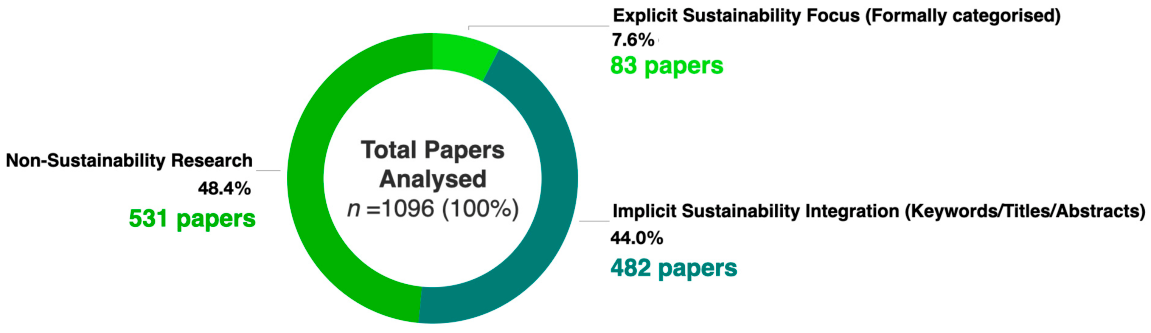
Figure 1 summarises the paper categories, the number of papers identified, and the corresponding percentages for each category.
A significant covert integration is present in the research. While only 7.6% (83 papers) are explicitly categorised as sustainability-focused, 44.0% (482 papers) actually incorporate sustainability themes implicitly through keywords, titles, and abstracts. This creates a significant gap where researchers engage with sustainability concepts without formal recognition.
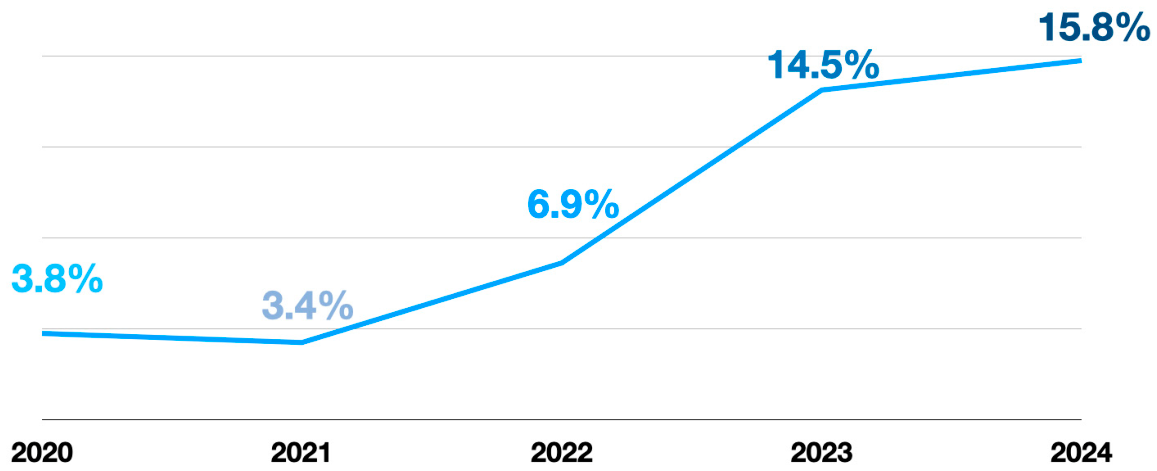
On the other hand, recognition of sustainability is accelerating rapidly, as shown in
Figure 2.
Between 2020 and 2024, data reveal that explicit sustainability recognition grew fourfold, rising from 3.8% to 15.8%. Sustainability-focused research is currently outpacing general research growth by 2.7 times, with a Compound Annual Growth Rate (CAGR) of approximately 42%. Furthermore, this research ecosystem is dominated by specific technical clusters, though their sustainability focus varies. For instance, AI & Machine Learning are themes present in 87% of all papers, with a 43.4% sustainability integration rate. Social & Human-Centred Research shows strong alignment with sustainability at 49.4%. Energy Systems boasts the highest sustainability integration (74.6%), yet it remains severely underrepresented, accounting for only 6.5% of the total research output.
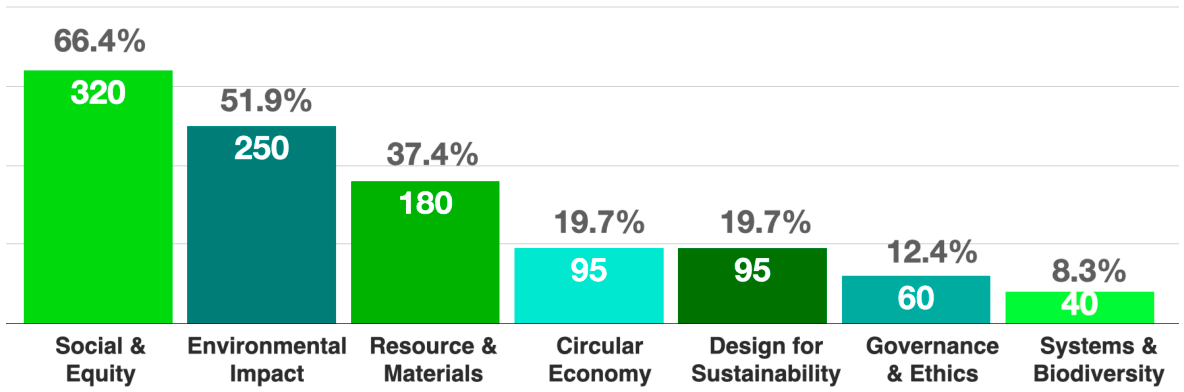
Regarding the dimensions of sustainability focus, we compiled the results in
Figure 3 to reveal the imbalance across these dimensions (see
Figure 3).
Figure 3 shows that research is heavily weighted towards the Social & Equity (66.4%) and Environmental Impact (51.9%) dimensions. Conversely, Systems & Biodiversity (8.3%) and Governance & Ethics (12.4%) are critically neglected. On the other hand, our results also reveal significant gaps between thematic clusters and sustainability integration, which can reveal interesting trends in thematic dominance versus sustainability integration in papers (see
Table 2).
Table 2 reveals two dominant clusters (>80%):
AI and Machine Learning, with 953 papers, has a massive presence in research outputs, but its sustainability integration (43.4%) suggests ample opportunity to deepen environmental/social impact assessment.
Design Domains, with 890 papers, also present moderate sustainability integration (42.1%), indicating the need for ecological design frameworks and greater consideration of sustainable values in AI and Design research.
Moreover, the table shows moderate clusters (between 20% and 50%), where Social & Human-Centred Research (241 papers) has the second-highest sustainability integration score (49.4%), suggesting strong alignment with equity and human-centred design. Manufacturing and Production (126 papers) has the third-highest sustainability integration (51.6%), and Urban & Built Environment (54 papers), with a 51.9% integration, is the second-highest in the table but is severely underrepresented among other clusters (only 4.9% of total research).
Finally, the lower percentages represented specialised or niche clusters (<10%) are Energy Systems (71 papers), with the highest sustainability integration (74.6%) but underrepresented in absolute terms; Fashion & Textiles (75 papers), with moderate representation and a 41.3% sustainability integration, reflecting growing circular fashion concerns in an underrepresented cluster; and Optimisation Methods (104 papers), with 44.2% sustainability integration, primarily focused on algorithm efficiency rather than outcome sustainability.
In sum,
Table 2 shows that high-sustainability-integration clusters (Energy, Manufacturing, and Urban Environments) are significantly underrepresented in the overall research landscape, representing critical gaps for possible research. In contrast, Design Domains, although well represented, can certainly improve their integration with sustainability.
In terms of citation comparison between sustainability and non-sustainability research, sustainability-integrated research maintains high academic standards. We included these specific results in
Table 3.
Results show no citation penalty for focusing on sustainability; these papers average 9.66 citations, nearly identical to the 9.95 average for non-sustainability papers. Sustainability-integrated research shows citation metrics comparable to non-sustainability research. This mixed signal suggests that a sustainability focus does not reduce research impact or visibility, which could discourage researchers from integrating sustainability into their studies.
In terms of geographic research quality, research leadership is concentrated in China (17.6%) and the USA (10.7%), with European research appearing more fragmented. The analysis identified Complete Integration Voids (zero papers) in two vital areas:
Additionally, intersections between Environmental Science and Engineering or Design represent significant gaps, accounting for less than 1% of the total research.
Finally, we highlight some key findings of the research, starting with a paradox in sustainable research: a substantial portion (44%) of research implicitly engages with sustainability, yet most of this work (36.4%) lacks explicit labelling, leading to a significant categorisation blind spot, an issue also suggested by authors [
24]. Meanwhile, as indicated by the work of Molek-Kozakowska & Radziej [
11], the high rate of implicit integration (44%) may suggest that researchers are doing the work but are participating in a form of discursive silencing or avoiding the taboo of explicit environmental labelling.
However, bibliometric analysis is limited to identifying labelling and keyword patterns, rather than revealing researchers’ intentions or the substantive depth of sustainability engagement within individual papers. The interpretation of discursive silencing remains a plausible hypothesis consistent with the data, but it is not a demonstrated fact. The explicit focus on sustainability is growing at a rate four times that of general AI design research. The integration of sustainability does not reduce research impact, as citation metrics remain comparable to traditional technical research. Furthermore, data indicated a critical disconnect between research volume and the urgency of sustainability.
Whilst high-impact sectors like Energy Systems and Urban Environments are the most integrated with sustainability, they are also the least represented in total paper volume. While immediate technical optimisations (such as efficiency) are well covered, ethical governance and holistic systems thinking remain marginalised. Also argued by van Wynsberghe [
30], we find that the low volume in Energy Systems (6.5%) indicates a failure to address the SoAI perspective and the resource-intensive nature of AI hardware and training, even though the field is highly aware of AI4S. According to Molek-Kozakowska and Radziej [
11], this reduced attention may reflect agenda-cutting [
45] or discursive silencing [
46]. The lack of reporting on the environmental impact of AI can likely be attributed to the overshadowing presence of other significant controversies, such as economic effects, healthcare, and societal bias.
Consequently, these concerns and ongoing speculation about AI’s potential to become sentient have drawn attention away from the environmental consequences of AI development [
11].
In essence, the field is at a crossroads where sustainability is already a functional part of the research but requires intentional framing and strategic investment to bridge critical gaps in environmental science and systemic ethics.
A total of 1096 articles were analysed, encompassing content in 9 unique languages (see
Table 4).
Among these, English is the predominant language, accounting for 94.07% of the dataset, indicating a significant emphasis on English-language publications in the analysis.
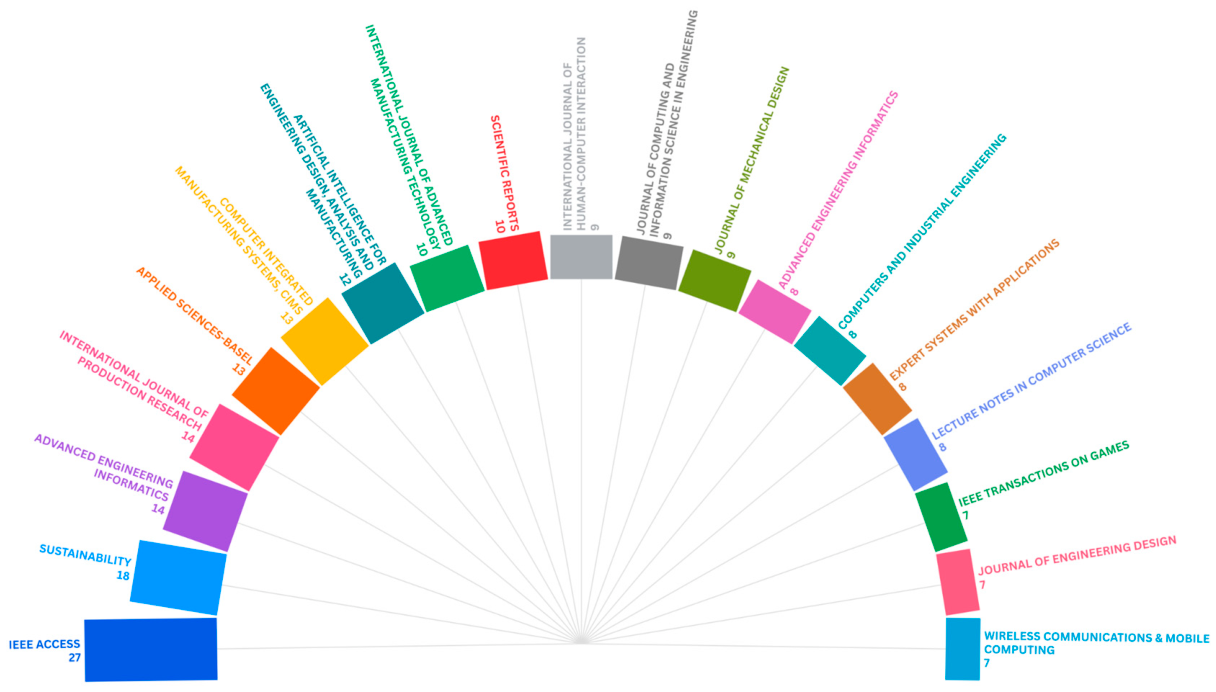
Moreover, the analysis of publication output reveals a significant concentration among a limited number of academic journals, indicating a clear preference for specific venues within the field (see
Figure 4).
IEEE Access emerges as the foremost source, with a substantial 27 articles, underscoring its prominence in disseminating research on artificial intelligence and design. The journal Sustainability has published 18 articles, reflecting a growing interest in integrating sustainability principles across various design and engineering practices. Notably, Advanced Engineering Informatics and the International Journal of Production Research each contribute 14 articles, highlighting their roles in bridging the gap between engineering informatics and practical production methodologies. Additionally, both Applied Sciences-Basel and Jisuanji Jicheng Zhizao Xitong/Computer Integrated Manufacturing Systems (CIMS) publish 13 articles each, reinforcing their impact on advancing knowledge in integrated manufacturing and computational systems. Overall, this distribution suggests that the literature is anchored in a diverse set of engineering and informatics journals, alongside sustainability-focused publications, rather than being dominated by a single specialised source. This wide variety enhances the interdisciplinary nature of the research landscape, facilitating cross-domain idea exchange.
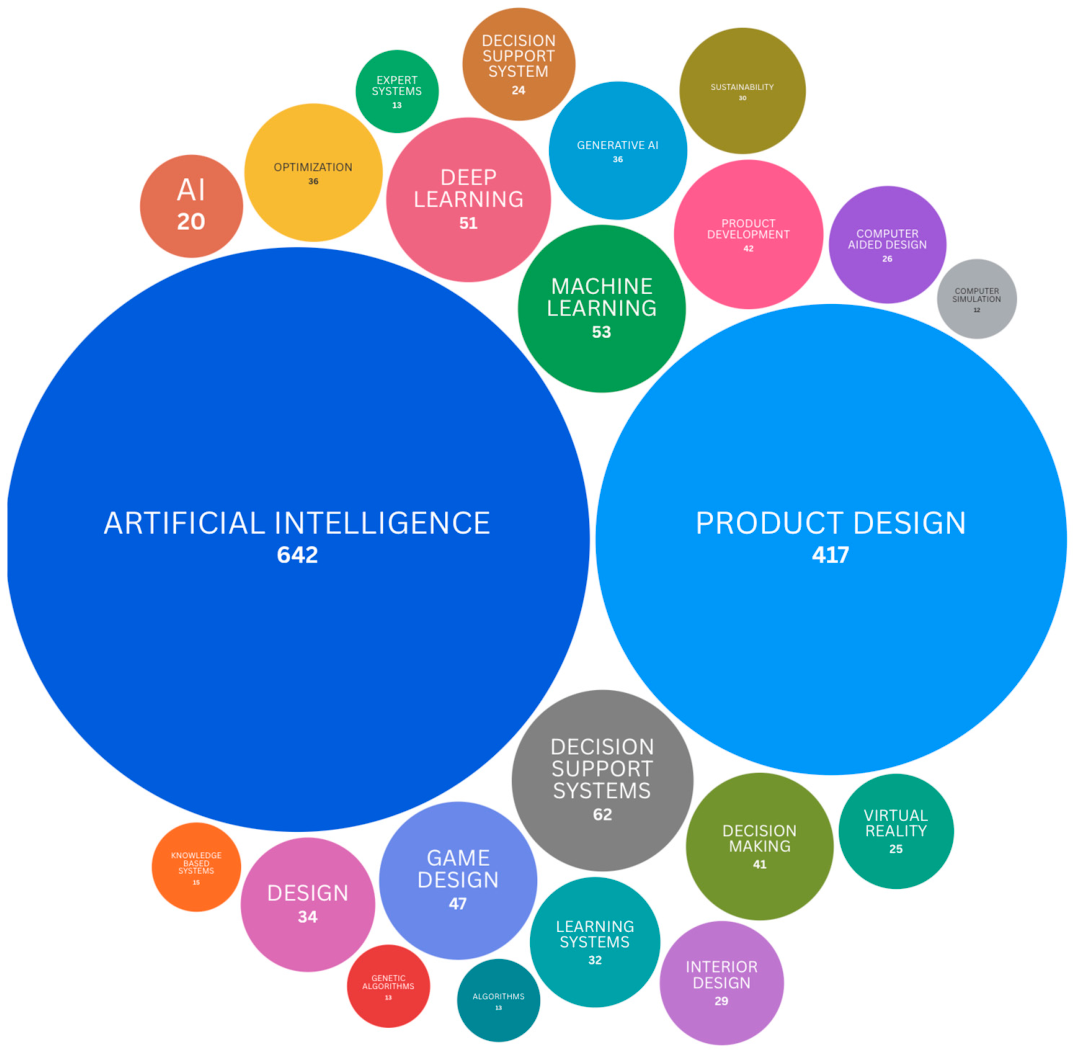
Figure 5 shows an analysis of keyword trends that reveals a significant shift in research focus over time, moving from generic terms related to artificial intelligence, design, and engineering in earlier years to more specific phrases associated with data-driven approaches, machine learning, and sustainability in later years.
Core keywords such as “artificial intelligence,” “product design,” “decision support systems,” and “decision making” have consistently anchored the field throughout the decades. Their enduring presence indicates that the integration of AI into design and decision-making processes has established a robust foundation rather than a passing trend, with these terms remaining highly relevant since the early 2000s. In the early 2000s, the dominant keywords highlight a classical approach characterised by terms like “computer-aided design,” “knowledge-based systems,” and “product development.” This period was notably focused on rule-based AI and enhancing traditional design tools. In contrast, more recent years have witnessed a transformative shift towards emphasising machine learning, data-centric methodologies, and sustainability. Key terms related to sustainability, such as “sustainable development,” alongside vocabulary linked to Industry 4.0 concepts like “smart manufacturing” and the “Internet of Things,” have gained prominence since the 2010s. This progression highlights a transition in AI’s role from merely improving design tools to enabling the creation of more sustainable, intelligent, and interconnected systems, reflecting a broader awareness of environmental concerns in the design process.
5. Conclusions
This study provides a comprehensive mapping of the intersection among Artificial Intelligence (AI), Design, and Sustainability, revealing a rapidly evolving yet structurally imbalanced field. In response to the primary research question (RQ1), we found that the integration of sustainability into AI-driven design remains limited: only 7.6% of research is explicitly categorised as sustainability-focused, while 44.0% incorporates these themes implicitly in titles, abstracts, and keywords. Thematic clusters are dominated by AI and Machine Learning (87%) and Design Domains (81.2%), but these areas demonstrate only moderate integration of sustainability-related topics. Sectors with the highest sustainability relevance, such as Energy Systems (74.6% sustainability integration) and Urban Environments (51.9% integration), are significantly underrepresented, comprising less than 10% of the research landscape. Nevertheless, the field is accelerating, with explicit sustainability recognition increasing fourfold between 2020 and 2024. Our findings also indicate that researchers focusing on sustainable outcomes receive similar citation rates compared to those who do not.
These findings have concrete implications for various communities. Design schools, especially those offering programmes in graphic, product, UX, and fashion design, should revise AI-related curricula to emphasise the environmental and social costs of AI tools, including the carbon footprint of image-generation models and the governance of training datasets. Industry leaders in manufacturing and fast-moving consumer goods (FMCG) sectors, where our data indicate the highest sustainability integration potential (51.6%), should move beyond isolated efficiency improvements and incorporate circular material flows and lifecycle assessments into AI-driven product development workflows. In fashion and textile design, which currently exhibits among the lowest sustainability-integration rates (41.3%) despite strong circular economy pressures, industry leaders could require AI lifecycle audits as a prerequisite for new product launches. More broadly, our data reveal a paradox: high implicit sustainability engagement (44%) contrasts with low explicit labelling (7.6%), resulting in a categorisation blind spot. Researchers across design disciplines are substantively engaging with sustainability without formally identifying it as such. Addressing this issue requires changes in both researcher practices and journal indexing conventions to ensure systematic recognition of sustainability-relevant AI-design work. The near-absence of Environmental Science intersections with AI and Computer Science, identified as Complete Integration Voids in this study, highlights the urgent need for operationalisable cross-disciplinary ecological design frameworks, such as standardised carbon accounting protocols for generative design tools or multi-criteria decision frameworks that balance social equity with algorithmic performance.
Although this bibliometric analysis utilises two of the most rigorous academic databases (Scopus and Web of Science), it is subject to several limitations. The study may be affected by database bias, as it excludes grey literature, non-indexed journals, and conference proceedings not formally categorised as articles. Additionally, the query language and parameters, limited to 21 specific design-related keywords and a 25-year timeframe (2000–2025), may have omitted emerging niche terminology or relevant research published in languages other than English that were not captured by the metadata search. It is important to note that bibliometric data can identify patterns of publication and labelling but cannot directly assess the depth or quality of sustainability integration within individual papers. The implicit sustainability category (44%) reflects keyword and abstract content rather than a comprehensive evaluation of research substance. To address the integration gaps identified in this study, future research should move beyond narrow technical applications, pursue multidisciplinary topics in sustainability, AI, and Design, and address the gaps in the literature revealed by the data.
Finally, the authors strongly encourage further bibliometric studies using the same databases and queries to compare other variables and metrics, as well as to deepen the studies in specific design disciplines.