Article

Water Scarcity and Slow-Onset Ecological Disasters: A Global Bibliometric Review

by
Emmanuel Olabisi Orebiyi
1,*,
Oluponmile Olonilua
2,
John Ogbeleakhu Aliu
3 and
Bumseok Chun
4
1
Community Education Section, British Red Cross, Hull HU3 1XS, UK
2
Department of Political Science and Public Administration, Texas Southern University, Houston, TX 77004, USA
3
Engineering Education Transformations Institute, University of Georgia, Athens, GA 30602, USA
4
Urban Planning and Environmental Policy, Texas Southern University, Houston, TX 77004, USA
*
Author to whom correspondence should be addressed.
Metrics 2026, 3(2), 10; https://doi.org/10.3390/metrics3020010
Submission received: 3 April 2026 / Revised: 24 May 2026 / Accepted: 5 June 2026 / Published: 12 June 2026

Abstract

Water scarcity is increasingly recognized as a slow-onset ecological crisis with major environmental, socio-economic and governance effects, yet systematic assessments of how research on this topic has evolved remain limited. This study addresses this gap through a bibliometric and thematic analysis of water-scarcity publications from 2000 to 2025, using VOSviewer (version 1.6.20), Biblioshiny™ (Bibliometrix version 4.3.1) and RStudio (version 2024.12.1 + 563) to map research trends, conceptual clusters and leading contributing countries, institutions and authors. The analysis shows that water scarcity research is organized around four dominant themes: adaptive water management and climate resilience, plant physiological responses to drought and water stress, ecosystem resilience and biodiversity under water scarcity, and water-limited agriculture and food security. Early scholarship focused heavily on biophysical processes such as drought tolerance and hydraulic conductivity, while recent studies increasingly incorporate socio-ecological, governance and policy dimensions, reflecting a shift toward holistic, solution-oriented approaches. Overall, the study provides a comprehensive overview of the evolution and global distribution of water scarcity research, highlighting the importance of integrating biophysical knowledge with human-centered strategies to support evidence-based decision-making, strengthen inclusive water governance, and enhance socio-ecological resilience in the face of a changing climate.

1. Introduction

Water is a fundamental resource underpinning human survival, economic activity and ecosystem functioning. It also serves as a critical input across agriculture, industry, energy and domestic needs. Despite its centrality, global water availability is increasingly under pressure due to rapid population growth, urbanization, industrial expansion and climate variability [1,2]. According to the WHO/UNICEF Joint Monitoring Programme [3], over 2.2 billion people still lack access to safely managed drinking water, while approximately 4 billion people experience severe water scarcity for at least one month annually [4]. The problem is projected to intensify, with estimates suggesting that half of the world’s population could face water scarcity by 2025 [5], and up to 700 million people may be displaced due to water stress by 2030, particularly in Africa [6]. These figures highlight that water scarcity is not merely a local or seasonal challenge, but a global phenomenon with direct consequences for health, livelihoods and economic stability. The depletion of freshwater sources, combined with deteriorating water quality and unsustainable extraction practices, exacerbates its availability to meet competing needs for domestic, agricultural and industrial uses, particularly in transboundary basins [4]. Vulnerable populations, especially in low- and middle-income countries, are disproportionately affected due to limited access to infrastructure and governance mechanisms that can mitigate risk [7]. Thus, understanding water scarcity is imperative not only as an environmental concern but also as a multi-dimensional socio-economic challenge, laying the groundwork for a more integrative scientific inquiry into the evolution of research on this issue over time.
Beyond immediate human needs, water scarcity constitutes a slow-onset ecological disaster, progressively destabilizing ecosystems and threatening biodiversity [8,9]. Aquatic and riparian habitats are particularly sensitive to changes in flow regimes, water quality and seasonal variability, with consequences that cascade across trophic levels [10]. Wetlands, rivers and groundwater-dependent ecosystems experience habitat degradation, reduced productivity and diminished capacity to provide essential ecosystem services, including flood regulation, nutrient cycling and water purification [11]. Recent climate data underscore this intensification: 2023 was the driest year for global rivers in more than three decades, reducing freshwater availability for both human and ecological uses [12]. Glacier and ice-melt acceleration in mountainous regions further threaten reliable water supplies, placing up to two billion people at risk of long-term shortages [5]. Also, ecological disruption is closely intertwined with human well-being, as diminished freshwater flow can exacerbate crop failure, livestock mortality and food insecurity, particularly in semi-arid and drought-prone regions [10,13]. Consequently, water scarcity operates as a slow-onset hazard, with impacts that accumulate over time and gradually erode socio-ecological resilience and governance capacities. Recognizing this temporal dimension is essential for framing water scarcity research not as a series of episodic crises but as a systemic challenge requiring integrated monitoring, adaptive management and policy-oriented interventions.
The human implications of water scarcity extend far beyond resource depletion, encompassing socio-economic instability, public health risks and geopolitical tensions. One in three children (nearly 739 million) globally live in areas experiencing high or very high water scarcity, and projections indicate that about 600 million children may still face extremely high water stress by 2040 in some regions [5]. Also, limited water access adversely affects educational outcomes, nutritional status and overall child development. Rural communities reliant on rain-fed agriculture and surface water are particularly vulnerable, as around 72% of global freshwater withdrawals serve agricultural purposes, linking water scarcity directly to food security [4]. In urban contexts, rapid population growth, informal settlements and aging infrastructure amplify pressures on municipal water supplies, necessitating governance interventions that integrate technological, regulatory and community-based approaches [9]. Moreover, transboundary water disputes increasingly pose political risks, as nations and regions compete for shared resources, highlighting the intersection of ecological scarcity with geopolitical and security concerns [2]. Collectively, these socio-economic dimensions underscore the need for research that bridges biophysical understanding with policy-relevant frameworks, integrating water resource management, resilience planning and human adaptation strategies.
Despite the growing recognition of water scarcity as both an ecological and socio-economic challenge, there remains limited systematic understanding of how the scientific literature has conceptualized this issue over time, particularly in relation to its characterization as a slow-onset disaster. Existing studies often emphasize biophysical impacts or governance responses in isolation [9,10,14], limiting understanding of how environmental, institutional and social dimensions interact to shape water scarcity outcomes across regions and scales. As water scarcity is increasingly recognized as a systemic hazard intensified by climate change, population growth and uneven resource governance, an integrated assessment of the research landscape has become necessary to clarify how different scholarly perspectives converge, evolve and inform resilience-oriented responses. This study addresses this gap by examining the framing of water scarcity between 2000 and 2025, identifying dominant themes, mapping leading contributors and analyzing the development of disaster- and resilience-related concepts. It offers an integrative bibliometric perspective that captures the trajectory of scholarly discourse and informs future research and policy frameworks for addressing water scarcity as a systemic hazard. The findings are relevant for scholars contextualizing research trajectories, policymakers designing evidence-based water management strategies, and practitioners implementing resilience and adaptation measures. By systematically mapping conceptual evolution and highlighting intersections between ecological, socio-economic and governance dimensions, the study identifies both strengths and gaps in the knowledge base. Insights generated can guide integrative strategies that align scientific discourse with governance needs, particularly in transboundary water management and climate adaptation, while underscoring the importance of resilience-oriented interventions that address cumulative impacts rather than episodic crises.

2. Research Methodology

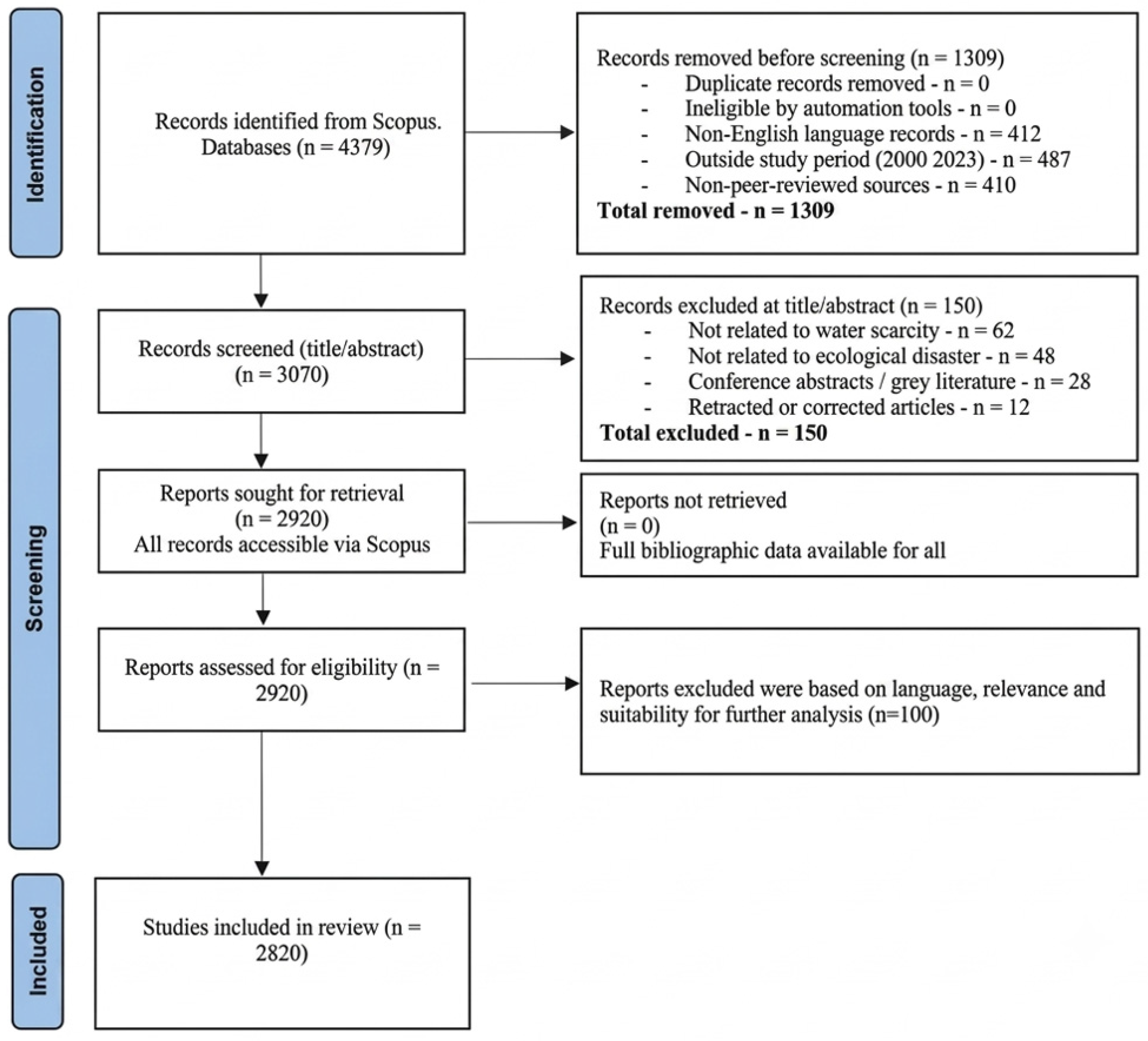
The primary objective of this study is to examine the global scientific literature framing water scarcity as a slow-onset ecological disaster from 2000 to 2025. A bibliometric approach was employed to systematically map the evolution of research output, identify dominant conceptual themes, and explore collaboration patterns within this domain. To ensure rigor, transparency and reproducibility, the review was conducted and reported in accordance with the PRISMA 2020 guidelines [15]. A PRISMA flow diagram illustrating the study selection process is provided in Figure 1. The review protocol was not registered. The analysis began with a comprehensive search of the Scopus database, selected for its extensive multidisciplinary coverage and reliable bibliometric indicators [16]. Scopus was selected as the primary database for this study because of its extensive multidisciplinary coverage, strong indexing standards, and compatibility with bibliometric analysis tools such as VOSviewer and CiteSpace. The database provides broad coverage of peer-reviewed literature across environmental science, sustainability, disaster studies, and water-resource research, making it suitable for mapping scholarly trends in water scarcity and slow-onset ecological disasters. However, the use of a single database may limit the inclusion of some regional journals, non-English publications, policy documents, and Global South literature that are not comprehensively indexed within Scopus.
To capture studies specifically addressing water scarcity within the context of slow-onset ecological disasters, the following search string was applied to the title, abstract, and keywords fields: TITLE-ABS-KEY((“water scarcity” OR “water shortage” OR “water stress”) AND (“slow-onset disaster” OR “ecological disaster” OR “resilience” OR “vulnerability” OR “ecosystem collapse”)). The search strategy was intentionally designed to balance specificity and comprehensiveness, which is essential in bibliometric and scientometric studies aimed at capturing the interdisciplinary nature of water scarcity research. Terms such as “resilience” and “vulnerability” were deliberately included because they are widely recognized conceptual frameworks within studies of slow-onset ecological disasters, climate adaptation, environmental risk and socio-ecological systems. Restricting the search exclusively to narrowly defined hazard-specific terms could unintentionally exclude relevant studies that examine the impacts of water scarcity through resilience, adaptation, and vulnerability perspectives without explicitly using terms such as “slow-onset hazard” or “hydrological drought” in their titles, abstracts, or keywords. Furthermore, the inclusion of multiple interconnected ecological and disaster-related terms, including “slow-onset disaster,” “ecological disaster,” and “ecosystem collapse,” was intended to ensure thematic alignment with the study objectives while minimizing the omission of the relevant interdisciplinary literature. This approach is consistent with established bibliometric practices, where broader conceptual terms are often employed to capture the evolving and multidisciplinary vocabulary used across environmental and disaster research domains. To further ensure relevance, the retrieved records were screened based on their thematic alignment with water scarcity and ecological disaster contexts during the data cleaning and eligibility assessment stages. Using TITLE-ABS-KEY ensured that only publications explicitly linking water scarcity with disaster, resilience, or ecological risk were retrieved, providing a focused dataset for bibliometric analysis. The search and screening process resulted in 4379 records identified from Scopus. After applying eligibility filters, including document type (journal articles), publication stage (final publication), language (English), accessibility (digital), and publication year (2010–2025), a total of 2820 studies were included in the final analysis. The detailed flow of study selection is presented in Figure 1.
Following retrieval, all records were systematically screened against predefined inclusion criteria based on relevance, language, publication type, and temporal coverage. Only peer-reviewed journal articles and conference papers published in English between 2000 and 2025 were included. To ensure disciplinary relevance, the dataset was further categorized by subject area, revealing that the majority of publications were indexed in Environmental Science, Agricultural and Biological Sciences, Social Sciences and Earth and Planetary Sciences. This distribution highlights the multidisciplinary nature of research on water scarcity and slow-onset ecological disasters, spanning environmental, ecological, agricultural and socio-economic perspectives and providing a robust foundation for subsequent bibliometric and thematic analyses. The study was guided by the following key bibliometric questions:
(1)
How has the scientific literature framing water scarcity as a slow-onset ecological disaster evolved between 2000 and 2025?
(2)
What are the dominant conceptual themes in this literature?
(3)
Which academic disciplines, countries, institutions and authors contribute most to this research field?
(4)
How have disaster- and resilience-related concepts developed over time within water scarcity studies?
The inclusion criteria ensured that selected studies explicitly addressed water scarcity in the context of ecological or slow-onset disasters. Also, studies included had to report original research or empirical findings rather than purely theoretical discussions. Records not meeting these standards—including editorials, notes, reviews, or non-English publications—were excluded. The PRISMA screening and selection process, including identification, screening and final inclusion of 2820 documents, is summarized in Figure 1.
The metadata of the selected 2820 documents were exported from Scopus in comma-separated values (CSV) format to serve as the foundation for the bibliometric analyses. The study examined trends in annual publications, contributions by countries and institutions, prolific authors, subject area distributions and highly cited documents to map the evolution of research on water scarcity within the context of slow-onset ecological disasters. Network visualization and mapping of conceptual structures were performed using VOSviewer [17], chosen for its ability to generate clear and informative co-authorship, co-citation and keyword co-occurrence networks. For more detailed bibliometric and statistical analyses, including citation patterns, thematic evolution, and disciplinary contributions, the study employed Biblioshiny™ within the R environment [18,19]. Additionally, R Studio was utilized for advanced analyses such as text mining of titles, abstracts and keywords to identify dominant themes, emerging research directions and evolving resilience- and disaster-related concepts.

3. Results and Discussion

3.1. Annual Publication Trends

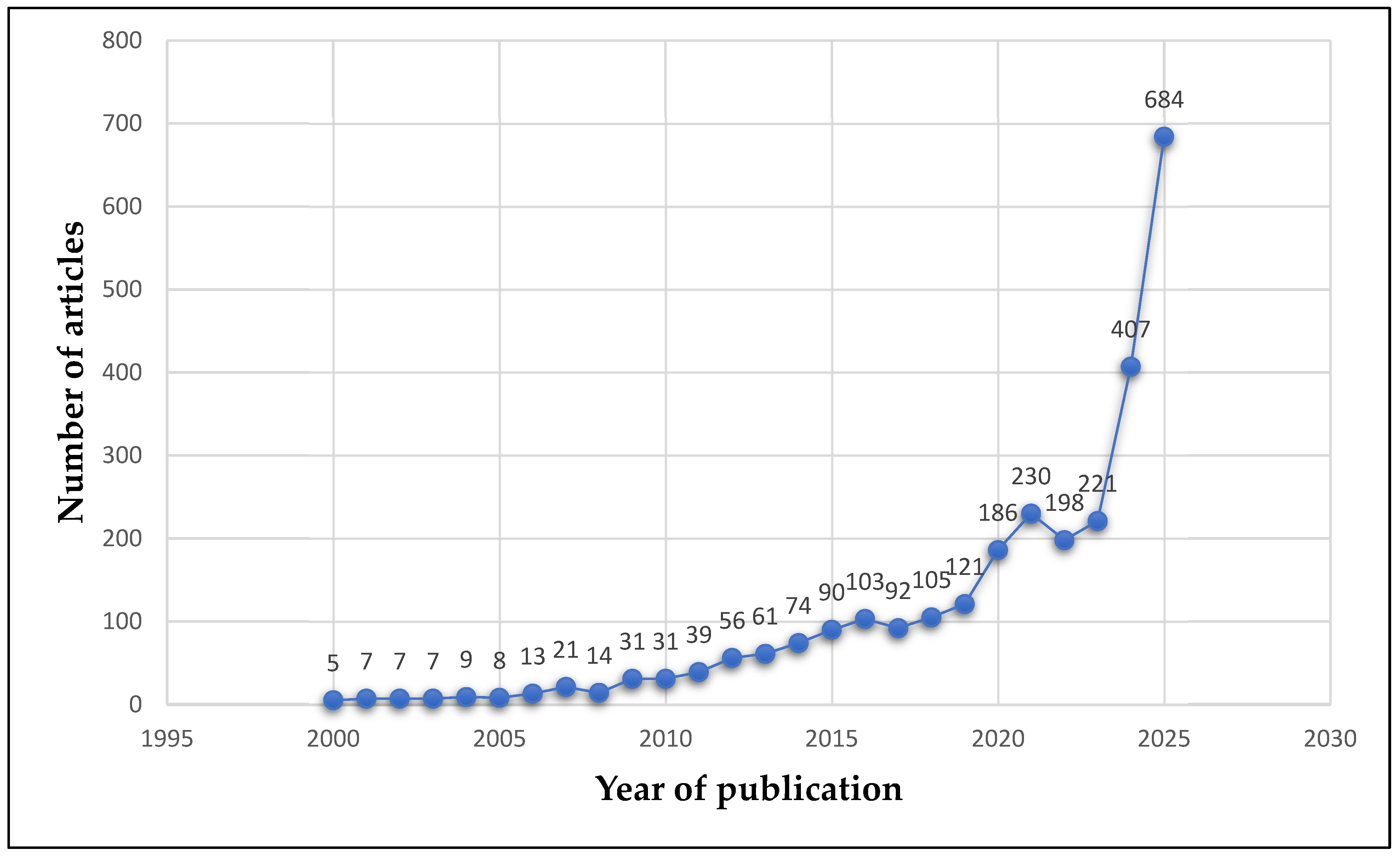
Figure 2 shows the annual distribution of publications on water scarcity as a slow-onset ecological disaster from 2000 to 2025. The analysis reveals a steady increase in research output over the 25-year period. Between 2000 and 2010, annual publications were relatively low, averaging fewer than 50 documents, reflecting the early stage of the field. From 2011 onward, the number of publications grew consistently, surpassing 100 per year. The most notable expansion occurred between 2020 and 2025, rising from 186 documents in 2020 to 684 in 2025, indicating intensified scholarly attention to the ecological, social and resilience-related aspects of water scarcity. This upward trajectory underscores the rising prominence of water scarcity as a slow-onset ecological disaster within global research agendas, spanning environmental, agricultural and socio-economic domains.

3.2. Documents per Country

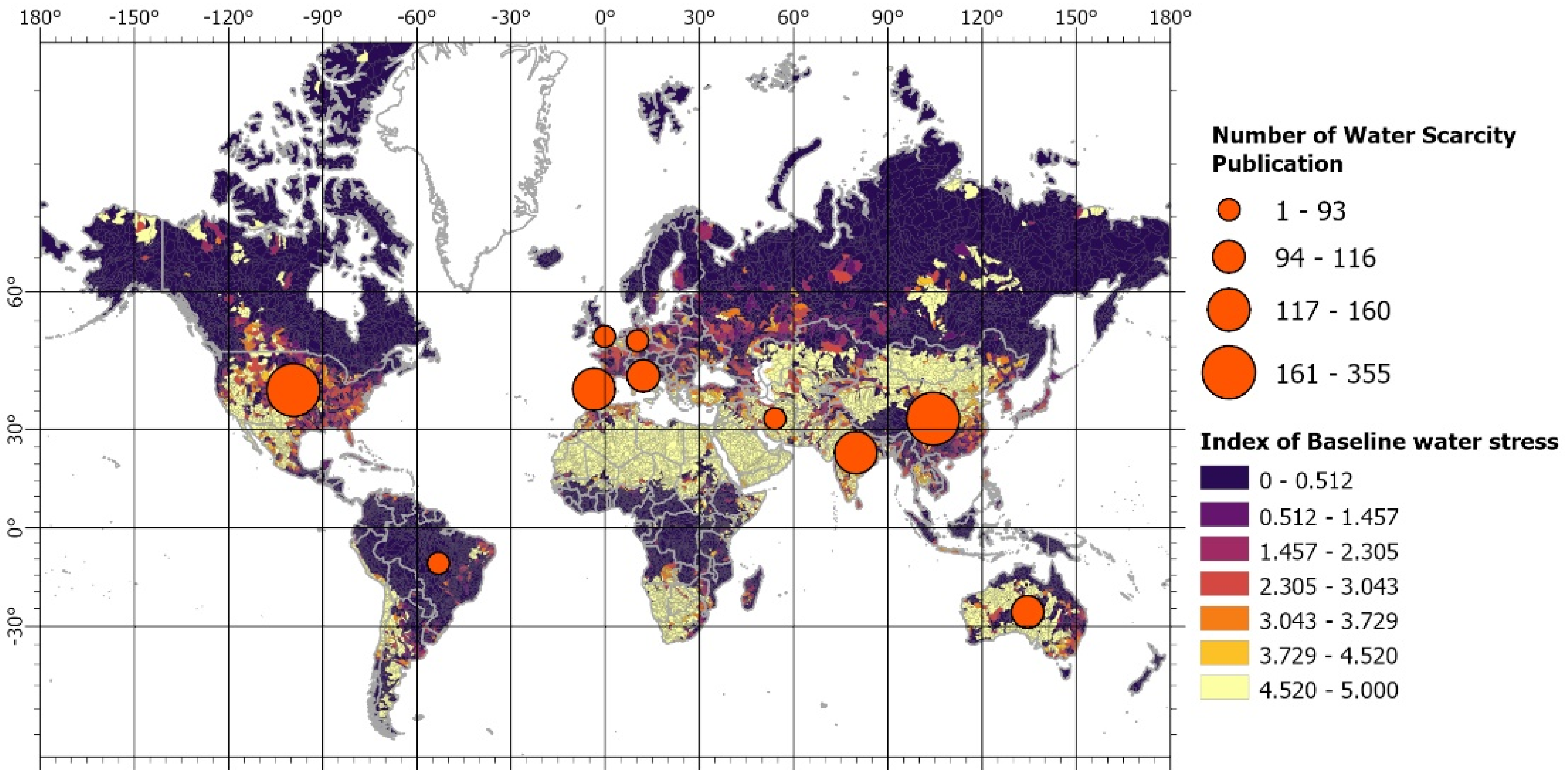
Table 1 summarizes the distribution of publications on water scarcity as a slow-onset ecological disaster across different countries. Among the 2820 documents included, China (355 publications) and the USA (330 publications) emerged as the most prolific contributors. To assess patterns of collaboration, publications were classified into single-country publications (SCP) and multiple-country publications (MCP). The MCP ratio provides insight into the degree of international cooperation within this research domain. Germany (0.544), the United Kingdom (0.512) and Australia (0.420) exhibit the strongest engagement in international partnerships, indicating active cross-border collaboration. Overall, approximately 25–30% of publications involve international co-authorship, reflecting a growing trend toward collaborative research addressing water scarcity as a global ecological concern. Beyond publication counts, the citation impact underscores the influence of individual countries. Germany (mean 58.2 citations per article), the UK (52.6) and Iran (50.9) demonstrate high scholarly recognition, even with smaller publication outputs compared to China and the USA. China’s leadership in document count, coupled with substantial total citations (6353), highlights its central role in shaping the discourse on water scarcity, potentially driven by policy emphasis on environmental sustainability and water resource management. Similarly, the USA, Australia and Spain make notable contributions both in productivity and citation impact, reinforcing their influence on global research trends. These findings emphasize that while China and the USA dominate in volume, European countries and select non-Western nations contribute disproportionately to high-impact research, showcasing both national initiatives and international collaboration in addressing water scarcity as a slow-onset ecological disaster.
Figure 3 illustrates the spatial patterns of scholarly publications related to water scarcity on the distribution of baseline water stress worldwide. Regions such as the Middle East, North Africa, South Asia, northern China, and the southwestern United States clearly face significant pressure on available water resources, reflecting a serious state of water resource burden. However, the spatial distribution of academic research publications does not correspond to the severity of water stress. While the United States, China, and several European countries demonstrate high research productivity, many regions in Africa and the Middle East that experience severe water scarcity remain comparatively underrepresented in the scholarly literature. Although international collaboration networks have expanded across the field, these partnerships are still largely concentrated among institutionally strong and high-income countries, limiting the research visibility and participation of many water-vulnerable regions. This disparity highlights a persistent imbalance between regions most affected by water scarcity and those with greater research capacity, underscoring the need for more inclusive international collaboration and increased research investment targeting vulnerable areas.
The underrepresentation of African and parts of Middle Eastern scholarship within the bibliometric landscape is particularly noteworthy given that many countries in these regions experience severe water stress, recurrent drought conditions, fragile water infrastructure, and high climate vulnerability. This disparity may reflect broader structural inequalities in global research systems, including limited research funding, reduced access to international publishing networks, weaker institutional research capacity, and lower representation in high-impact indexed journals. In many water-stressed regions, immediate resource and governance challenges may also prioritize operational responses over academic publication output. Consequently, regions that are among the most vulnerable to water scarcity may remain comparatively less visible within the global scientific literature.

3.3. Contributions of Authors

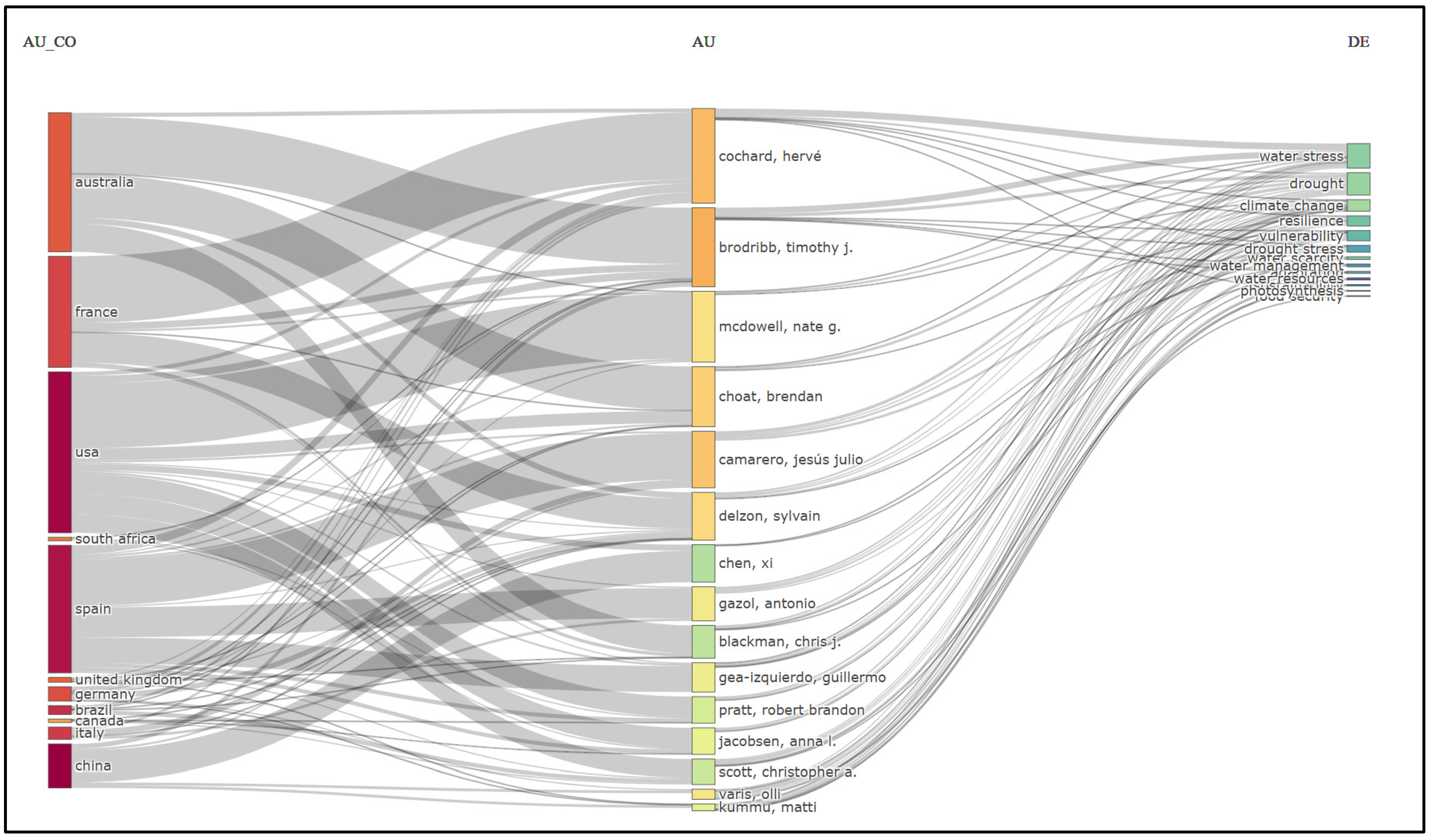
Figure 4 presents a three-field plot illustrating the interconnections among countries, authors and key research terms, providing a comprehensive view of individual contributions and their thematic focus. Among the most prolific authors, Cochard H leads with 23 publications, accumulating 198 citations and an h-index of 6, reflecting both productivity and local impact within the field. Other prominent contributors include Brodribb TJ (21 publications, h-index = 7, TC = 312), Choat B (12 publications, h-index = 6, TC = 275), Camarero JJ (9 publications, h-index = 5, TC = 148) and Delzon S (9 publications, h-index = 6, TC = 221). These authors have significantly advanced understanding of climate-induced water stress, with research emphasizing drought, water scarcity, resilience, vulnerability, photosynthesis, water management and food security. The three-field plot further highlights strong contributions from countries such as Australia, France, the USA, Spain, and the UK, indicating both geographic diversity and thematic specialization in this research domain. The analysis underscores how individual researchers shape the evolution of the field, with high-impact publications contributing to knowledge on ecological resilience, risk mitigation, and sustainable water management.

3.4. Publications per Source

Table 2 shows the journals contributing most to knowledge dissemination and impact. Among the top sources, Water (Switzerland) leads with 80 publications and 1001 citations, followed closely by Sustainability (Switzerland) with 76 publications and 1151 citations. High-impact journals such as Science of the Total Environment (75 publications, 2463 citations) and Environmental Research Letters (38 publications, 2473 citations) demonstrate strong citation influence despite a slightly lower publication count, indicating their central role in advancing high-quality research in this field. The h-index and m-index values further reflect the influence and consistent productivity of these journals. For example, Science of the Total Environment has the highest h-index (30) and m-index (2.143), indicating both sustained publication output and long-term citation impact. Collectively, these sources serve as key outlets for disseminating research on ecological risk, water management and resilience in the context of water scarcity.

3.5. Institutional Contributions to Water Scarcity Research

Table 3 presents the most productive institutional affiliations. The results indicate a strong concentration of scholarly output within leading research universities and specialized water and environmental science institutions. The University of California system emerges as the most prolific affiliation, reflecting sustained interdisciplinary research capacity across climate science, hydrology and environmental management. Chinese institutions—including the University of Chinese Academy of Sciences, Northwest A&F University, Beijing Normal University and Hohai University—feature prominently, underscoring China’s growing institutional investment in water resources, climate adaptation and environmental sustainability research. European and Global South institutions, such as Universidad Politécnica de Madrid, Université de Montpellier and Universidade de São Paulo, also contribute substantially, highlighting the geographically diverse and internationally distributed nature of water scarcity scholarship.

3.6. Publications with the Highest Citations

Building on established evidence that citation indicators provide a robust measure of scholarly influence, this study employed a scientific mapping approach to identify the most impactful publications. Citation analysis of the retrieved dataset indicates that a substantial number of documents have received scholarly attention, reflecting the maturity and relevance of the field. Table 4 presents the most highly cited publications, focusing on documents that have accumulated at least 400 total citations, thereby highlighting foundational and high-impact studies that have significantly shaped academic discourse. Among the top-cited works, [20] emerges as the most influential publication, with 1012 total citations and a strong annual citation rate, underscoring its central role in advancing global understanding of mountains as critical water sources and long-term water security systems. Closely following is research by [21], whose analysis of environmental homeostasis in estuarine systems has been widely referenced for its contribution to detecting anthropogenic stress within naturally constrained ecosystems. Several highly cited studies focus on plant physiological responses and hydraulic failure under water stress [22,23]. These works have been instrumental in elucidating vulnerability thresholds, recovery mechanisms, and resilience in vegetation exposed to prolonged drought conditions, as reflected in their high normalized citation scores. Research addressing drought impacts, preparedness and mitigation strategies also features prominently. Other influential contributions emphasize the complex and cascading nature of drought as a slow-onset disaster, reinforcing the integration of disaster risk reduction concepts into water scarcity research [24,25]. Ecosystem-scale analyses further highlight how prolonged water deficits affect forest dynamics, species interactions and thresholds of ecological collapse [26,27,28].

3.7. Visualization of Research Focus Areas

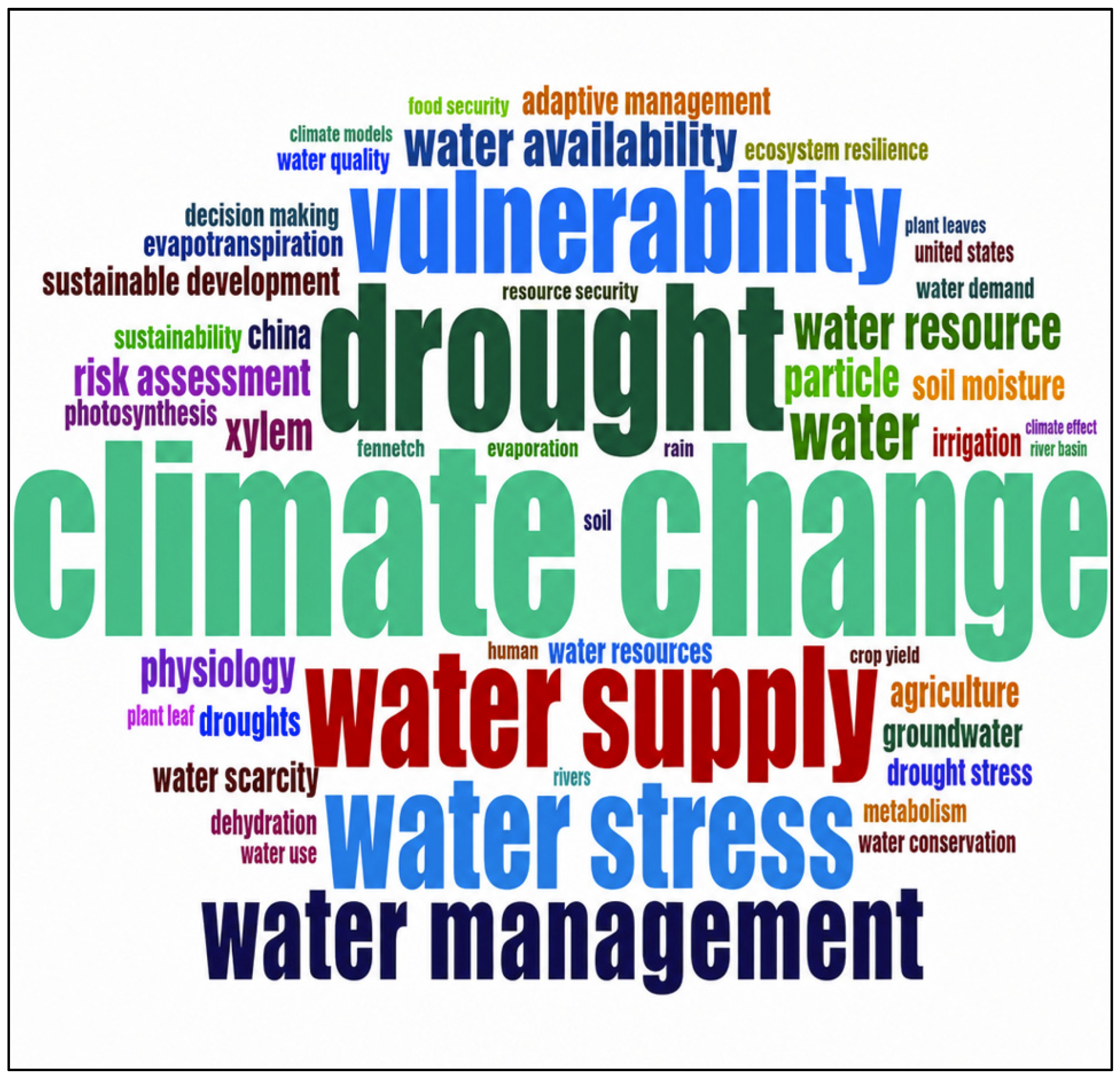
A word cloud analysis in Figure 5 shows that research on water scarcity as a slow-onset ecological disaster is organized around a set of interrelated thematic priorities shaped by climate drivers, hydrological stress and vulnerability-focused perspectives. The visualization identifies climate change as the most frequently occurring term (1081 occurrences), indicating its strong visibility and recurring association within the literature on long-term water scarcity and ecological degradation. However, this frequency reflects prominence in scholarly discourse rather than an absolute measure of conceptual importance, as word occurrence does not necessarily capture the depth or influence of specific themes within the field. Drought follows closely (814 occurrences), reinforcing its significance as a defining characteristic of slow-onset disaster processes. High-frequency terms such as water supply (646), water stress (617) and water availability (275) indicate sustained scholarly attention to limitations affecting water systems across environmental, agricultural and socio-economic contexts. In parallel, risk- and response-oriented concepts are strongly represented. Vulnerability (626) reflects a growing emphasis on exposure, sensitivity and adaptive capacity, while water management (578) and water resources (279) point to governance and policy-driven approaches aimed at addressing long-term water-related risks. The presence of broader terms such as water (374) further illustrates the interdisciplinary nature of the literature.
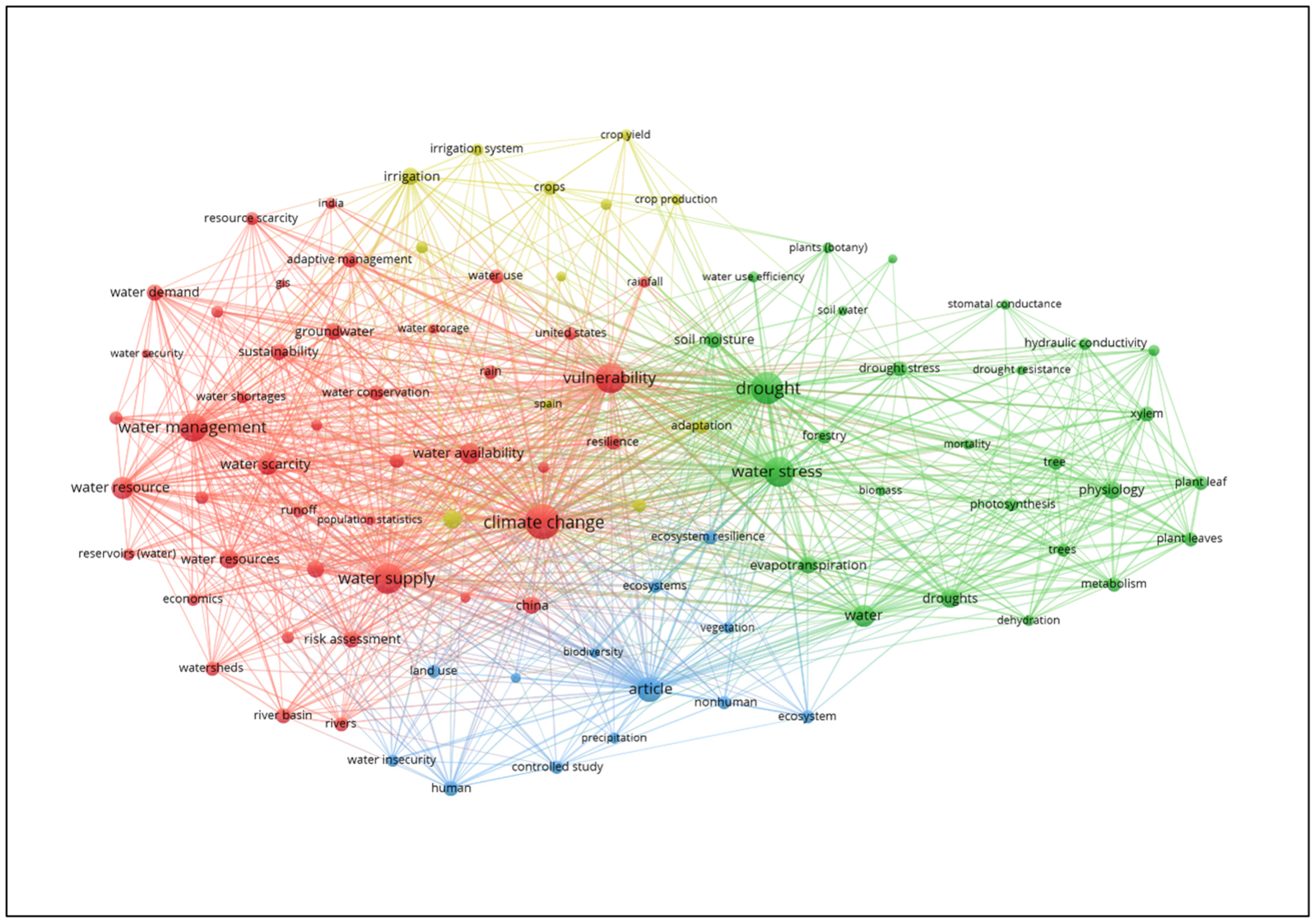
VOSviewer was used to analyze keyword co-occurrence [17]. From the 2820 retrieved documents, a total of 94 keywords were extracted from author and journal indexing. VOSviewer facilitated the organization of this dataset into coherent clusters using a defined co-occurrence threshold. While there is no universally fixed rule for selecting a minimum threshold [30], researchers recommend choosing a value that balances the clarity of the visualization map with the inclusion of the most significant conceptual connections [31]. Using a higher threshold reduces visual clutter and emphasizes well-established links, focusing the analysis on terms that represent the core research focus. For this study, a minimum co-occurrence threshold of 60 was applied. This threshold was selected to capture the most influential keywords in the literature, ensuring that the cluster reflects strong conceptual relevance and avoids marginal or weak associations. Applying this threshold produced 94 keywords grouped into four major clusters, with 3898 links and a Total Link Strength (TLS) of 51,347, as shown in Figure 6.
Cluster 1 is represented by the red nodes on the visualization map and comprises 42 keywords that collectively reflect a central thematic focus in the literature. Climate change is the most central keyword (LS = 5324), highlighting its dominant role in shaping water availability, hydrological variability, and environmental stress. This is followed by water management (LS = 4442), vulnerability (LS = 4058), water supply (LS = 3904) and water scarcity (LS = 1856), illustrating the interconnected nature of environmental drivers, governance mechanisms, and socio-ecological resilience in addressing prolonged water deficits. The prominence of these terms is consistent with previous bibliometric analyses emphasizing climate variability and adaptive management as central themes in global water research [14,32]. Additional keywords, including climate models, hydrological modeling, rainfall, runoff, river basin, rivers, reservoirs, groundwater, groundwater resources, water availability, sustainability, economics, population statistics, resource scarcity, sustainable development, water quality, water storage, water use, watersheds, and country-specific terms such as China, India, and United States, further demonstrate a multidisciplinary focus. These terms reflect the integration of environmental, hydrological, socio-economic, and policy dimensions, which is characteristic of water scarcity research in the context of slow-onset ecological disasters [2,33]. Research in this cluster commonly applies hydrological and climate modeling, scenario analyses, and risk assessment to inform water allocation, resource planning, and resilience strategies under conditions of prolonged water stress [20,25]. The frequent co-occurrence of adaptive management, resilience and risk assessment underscores a scholarly focus on enhancing both ecological and socio-economic capacities to cope with water scarcity and climate-driven stressors. This aligns with global trends highlighting integrated water resource management, vulnerability assessment and policy-driven interventions to sustain water security in regions affected by slow-onset hydrological changes [34]. Based on the conceptual coherence and prominence of these keywords, this cluster is thematically labeled “Adaptive Water Management and Climate Resilience.”. This cluster captures the literature’s emphasis on understanding and mitigating climate impacts on water systems, while promoting adaptive, sustainable and policy-informed strategies for managing water scarcity and associated socio-ecological risks.
Cluster 2 is represented by the green nodes on the visualization map and comprises 27 keywords, reflecting a concentrated focus on plant physiological processes and responses under water-limited conditions. Central terms include water stress (LS = 4049), drought (LS = 1620), drought stress (LS = 1000), drought resistance (LS = 484) and evapotranspiration (LS = 1349), indicating that the cluster primarily addresses the mechanisms by which plants respond to prolonged water deficits. These terms highlight research emphasis on understanding plant-level adaptations and vulnerabilities in response to environmental stress, consistent with prior studies on vegetation resilience under climate-induced water scarcity [22,23]. Additional keywords within this cluster—such as biomass, cavitation, dehydration, hydraulic conductivity, stomatal conductance, photosynthesis, physiology, metabolism, plant leaf, plant leaves, plants (botany), tree, trees, soil moisture, soil water, growth rate, mortality and xylem—reflect a detailed focus on the structural, physiological and functional traits of plants that determine their ability to survive, maintain growth, and adapt to water-limited environments. The inclusion of forestry and water use efficiency underscores the applied relevance of this research in ecosystem management, crop productivity and forestry practices [26,35]. Research in this cluster often employs experimental, field and modeling approaches to investigate how plants respond to varying levels of water availability, including drought-induced cavitation, hydraulic failure, and changes in stomatal behavior [36]. Studies also frequently measure parameters such as photosynthetic rates, leaf water potential, xylem conductivity and biomass allocation to understand species-specific vulnerabilities and adaptive capacity [22,28]. These findings are critical for predicting ecosystem responses to prolonged dry periods and for developing strategies to enhance plant resilience under climate variability. Based on the conceptual coherence and the prominence of the keywords, this cluster is thematically labeled “Plant Physiological Adaptations to Drought and Water Stress.”. This theme captures the literature’s focus on elucidating plant-level mechanisms that underpin drought resistance, survival and productivity under water-limited conditions, thereby linking physiological insights to broader ecological and water management challenges [22].
Cluster 3 is represented by the blue nodes on the visualization map and comprises 13 keywords, highlighting research that addresses ecosystem dynamics, biodiversity and environmental impacts under conditions of water scarcity. Central terms in this cluster include ecosystem (LS = 738), ecosystem resilience (LS = 911), biodiversity (LS = 464) and water insecurity (LS = 691), indicating that the scholarly focus is on how ecological communities and their functional integrity respond to prolonged water deficits. These terms reflect an emphasis on understanding both the structural and functional aspects of ecosystems, consistent with prior studies exploring ecological vulnerability and adaptive capacity under climate-induced water stress [8]. Other notable keywords, including article, controlled study, environmental impact, human, nonhuman, land use, precipitation, and vegetation, illustrate a balance of methodological approaches and system-level considerations. For example, terms such as controlled study and article suggest experimental and empirical research designs, while human and nonhuman emphasize the coupled nature of social–ecological systems. The inclusion of land use and precipitation highlights environmental drivers affecting biodiversity, vegetation patterns, and overall ecosystem stability under water-limited conditions [37]. Research in this cluster typically examines how ecosystem composition, biodiversity and vegetation dynamics respond to water scarcity, precipitation variability, and anthropogenic land-use changes [38]. Studies also frequently explore metrics of resilience, adaptive capacity and ecological thresholds to understand how ecosystems maintain functionality under stress [25]. These insights are critical for informing conservation strategies, ecosystem management and policy interventions aimed at mitigating the impacts of water insecurity on both human and nonhuman communities. Based on the conceptual coherence and prominence of these keywords, this cluster is thematically labeled “Ecosystem Resilience and Biodiversity under Water Scarcity.”. This theme captures the literature’s emphasis on ecological responses, adaptive capacity and biodiversity-related concerns associated with slow-onset water stress, with several studies also linking environmental change to broader human–environment interactions relevant to sustainable resource management.
Cluster 4 is represented by the yellow nodes on the visualization map and comprises 12 keywords. This signals research that focuses on agricultural practices, crop production and food security in regions affected by water scarcity. Central keywords in this cluster include agriculture (LS = 1471), crop yield (LS = 570), irrigation (LS = 1272), adaptation (LS = 854) and food security (LS = 865), indicating that the literature emphasizes strategies for sustaining agricultural productivity under conditions of water limitation. These terms highlight the intersection of climate effects, water management and adaptive agricultural practices, which is a major concern in semi-arid and water-stressed regions [25,39]. Other keywords in the cluster, including climate effect, crop production, crops, cultivation, irrigation system, semiarid region and Spain, provide both contextual and geographic specificity. For example, the presence of semiarid region and Spain reflects the focus on Mediterranean and similar climates where water scarcity poses significant challenges for crop cultivation and resource planning [40,41]. The inclusion of terms such as irrigation system and crop production emphasizes the applied dimension of research, highlighting technological, agronomic and policy interventions designed to optimize water use efficiency and maintain food security under constrained water conditions [1]. Research in this cluster often explores how adaptive agricultural practices, including optimized irrigation, drought-tolerant crops and climate-informed cultivation strategies, can mitigate the negative impacts of prolonged water deficits on yield and food security [13]. Studies also frequently integrate hydrological, climatic and socio-economic analyses to inform decision-making and policy, ensuring that farming systems remain productive and resilient under changing environmental conditions [10]. Based on the conceptual coherence and prominence of these keywords, this cluster is thematically labeled “Adaptive Agriculture and Food Security under Water Stress.”. This theme captures the literature’s focus on enhancing agricultural resilience, sustaining crop yields and securing food production in water-scarce and semi-arid regions, linking climate adaptation strategies with practical resource management.

3.8. Thematic Trajectories and Future Research Priorities

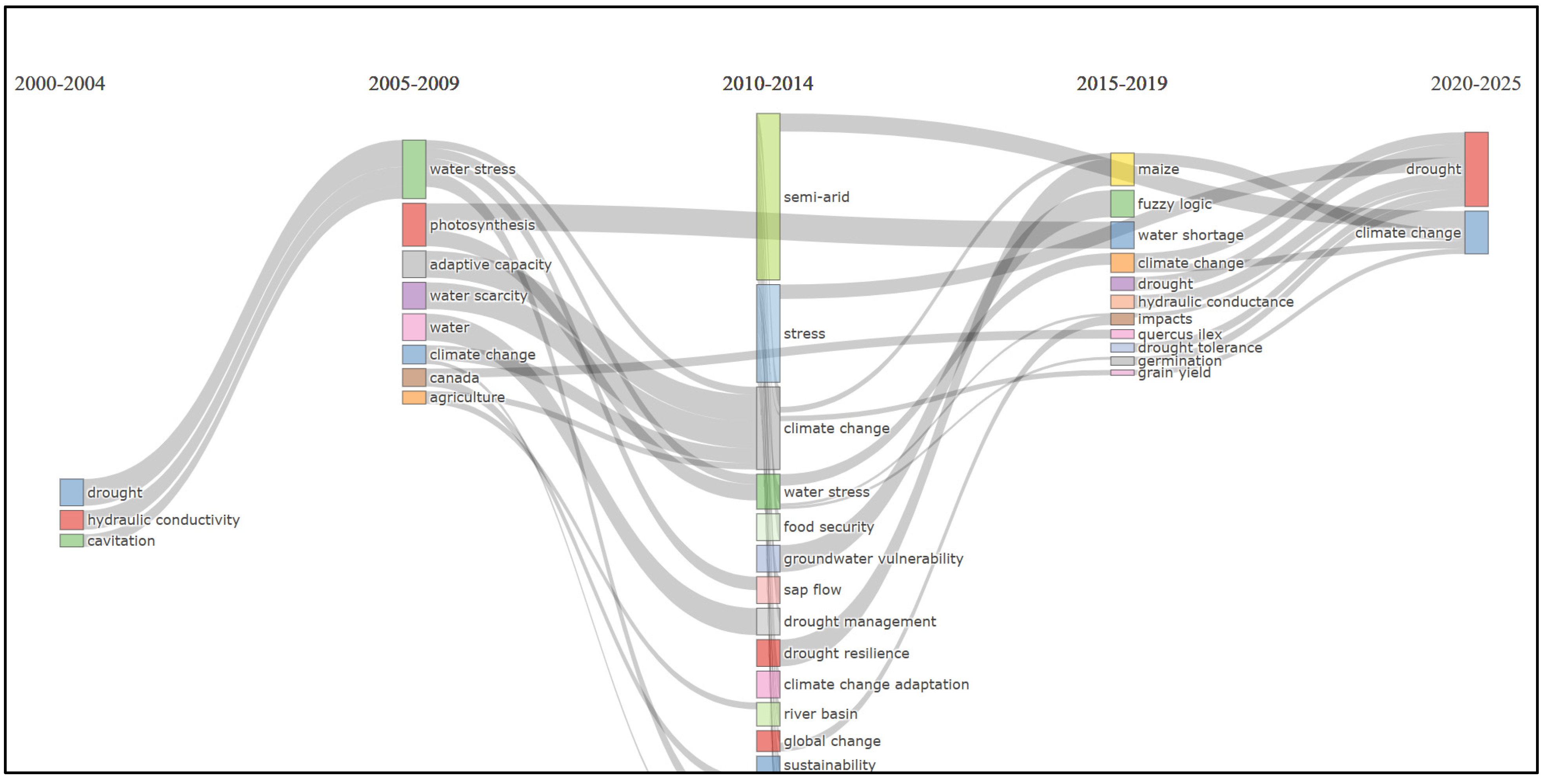
Figure 7 illustrates the longitudinal evolution of dominant research themes, revealing a clear intellectual shift from narrowly focused biophysical investigations toward increasingly integrated, resilience-oriented frameworks. This progression reflects the broader maturation of water scarcity scholarship, as the phenomenon has come to be conceptualized not merely as a hydrological constraint but as a slow-onset ecological disaster characterized by intertwined environmental, social and governance dimensions. Comparable patterns of thematic consolidation and convergence have been reported in bibliometric analyses of climate change adaptation, resilience and sustainability research, indicating a common trajectory across related environmental domains [14,32].
During the early phase of the literature (2000–2004), research was largely foundational, with emphasis placed on core hydrological and plant physiological processes such as drought response, cavitation and hydraulic conductivity. This period was instrumental in establishing mechanistic insights into plant–water relations and system thresholds under moisture stress—knowledge that continues to underpin contemporary drought science [22,23]. Research at this stage was predominantly disciplinary in nature, prioritizing biological and physical processes with limited engagement with broader socio-ecological implications. Between 2005 and 2009, scholarly attention began to shift toward impact assessment and adaptive responses. The emergence of themes such as water stress, adaptive capacity and early climate change signals reflects growing recognition of environmental variability and long-term stressors affecting both natural and managed systems. This transition aligns with global efforts to reconceptualize drought not simply as a climatic anomaly but as a systemic risk requiring anticipatory management, preparedness, and policy intervention [24,26]. Importantly, this period marked the initial integration of plant physiology, agricultural productivity and climate variability within a more holistic analytical lens.
The period from 2010 to 2014 represents a phase of conceptual consolidation and thematic streamlining. Climate change emerged as a dominant organizing construct, synthesizing earlier insights related to water stress, vulnerability and sustainability into more cohesive analytical frameworks. Concurrent emphasis on semi-arid environments and food security highlights an expanding focus on coupled human–natural systems and the socio-economic consequences of water scarcity [25,29]. This evolution mirrors broader shifts toward integrated water resource management and multi-scalar vulnerability assessment within environmental research [20,38]. From 2015 to 2019, the literature diversified markedly, reflecting a maturing field characterized by increasing methodological sophistication and thematic breadth. Research expanded into crop-specific impacts, yield sensitivity, advanced modeling approaches and refined physiological thresholds associated with drought tolerance and hydraulic failure. This diversification signals a movement away from generalized assessments toward solution-oriented, context-specific investigations, particularly within agricultural and forest ecosystems [35,41]. Similar patterns of diversification have been observed in other environmental research domains as fields evolve in response to policy relevance and management needs [30,31].
In the most recent period (2020–2025), thematic convergence becomes increasingly evident, with drought and climate change emerging as the most stable and influential research themes. Drought has crystallized into a standalone focal area, drawing upon decades of research on hydraulic traits, water stress, and ecosystem resilience. At the same time, climate change continues to provide the overarching contextual framework shaping long-term water availability and risk trajectories [24,27]. This convergence underscores the growing urgency of addressing water scarcity as a persistent, systemic challenge rather than a transient environmental shock [2,33]. The observed thematic evolution points to several priority directions for future research. First, although climate change and drought dominate current discourse, there is substantial scope to integrate advanced spatial and analytical tools—including remote sensing, GIS, and spatio-temporal modeling—to enhance predictive capacity, monitoring, and early warning systems [1,39]. Second, emerging attention to urban water security and groundwater governance suggests a need to extend research beyond traditionally agricultural and botanical contexts toward integrated urban–environmental systems, particularly in water-stressed regions of the Global South [9,34]. In addition, future studies may benefit from incorporating spatially explicit approaches, such as GIS and remote sensing, to improve the monitoring and assessment of water stress patterns across vulnerable regions and support more context-sensitive analysis. Finally, the continued prominence of adaptation and vulnerability highlights the importance of translating scientific insights into inclusive, climate-informed governance strategies that strengthen resilience to slow-onset stressors across ecological and socio-economic systems [10,40].
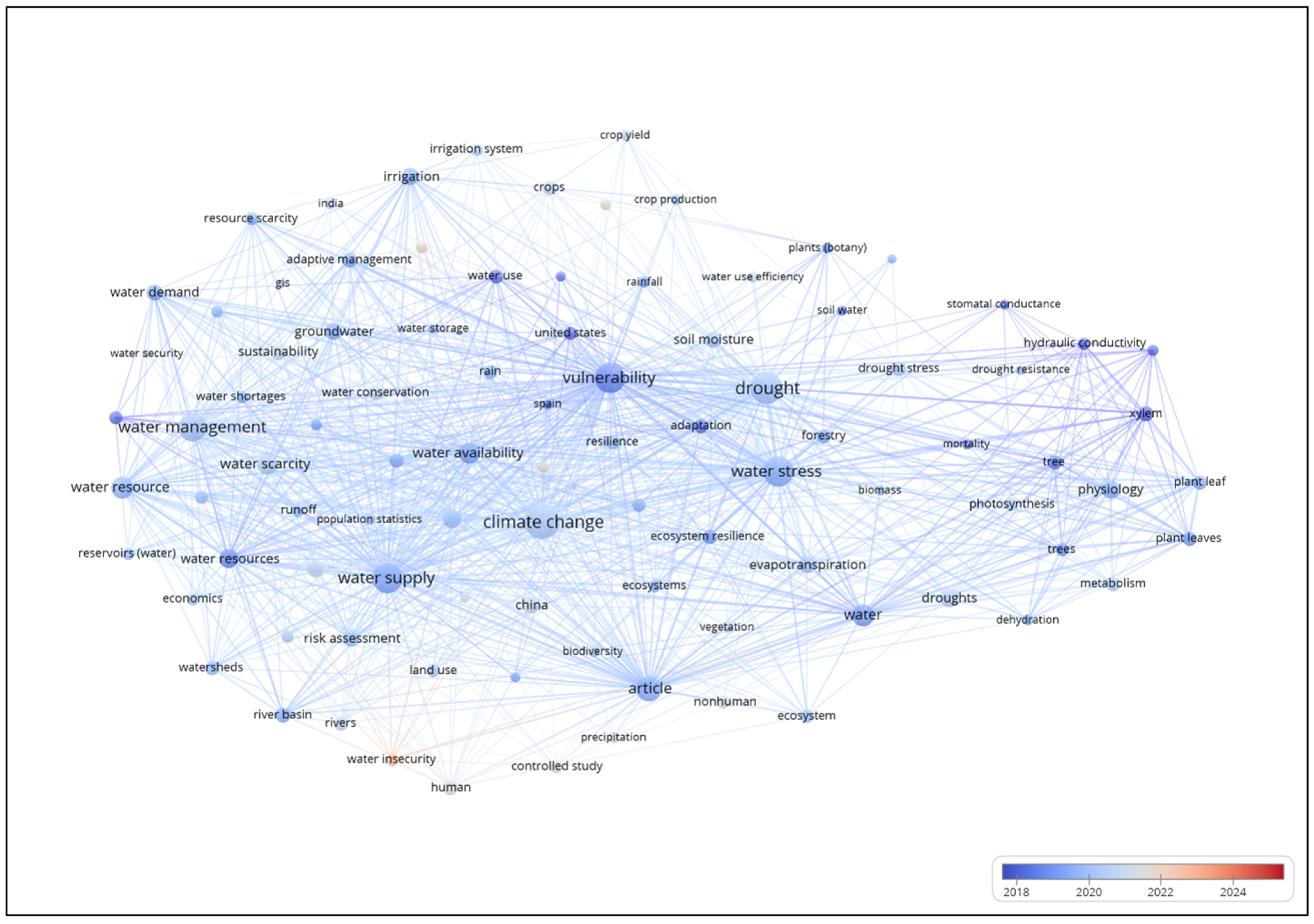
Figure 8 complements these findings through an overlay visualization of co-occurring keywords, offering additional insight into the temporal dynamics of water scarcity research by distinguishing between established and emerging areas of scholarly attention. In this visualization, color gradients represent the average publication year of keywords, with blue nodes indicating earlier, well-established themes and yellow-to-red nodes highlighting more recent and evolving topics [42]. The predominance of blue nodes confirms that the intellectual foundations of water scarcity research are both robust and well developed. Core hubs—such as climate change, water stress, water supply, drought and vulnerability—appear as large, deeply blue nodes, reflecting their sustained influence across multiple decades. These themes function as integrative anchors, linking biophysical processes, ecosystem dynamics and resource management concerns [32,33]. In contrast, the emergence of yellow and red nodes—although fewer and more peripheral—signals a meaningful recent shift in research emphasis. Notably, keywords such as water insecurity and human factors are concentrated in the most recent time window (2020–2025), indicating growing attention to the societal dimensions of water scarcity. This shift reflects an expanding recognition of water scarcity as both an ecological and social crisis, particularly in rapidly urbanizing and climate-vulnerable regions [2,9]. The relatively weak connectivity of these nodes highlights a critical research gap: while the biophysical drivers of water scarcity are well understood, their translation into human-centered outcomes—such as water insecurity, public health implications, equity considerations and lived experiences—remains insufficiently explored.
Overall, the overlay visualization reinforces the thematic consolidation observed in Figure 6, with climate change and drought remaining dominant, stable pillars of the field. At the same time, the appearance of explicitly human-related terms, including “water insecurity,” suggests an emerging but still fragmented shift toward integrating societal and vulnerability dimensions into water scarcity research, although these themes are not yet strongly interconnected within the broader knowledge structure. Rather than displacing established themes, these emerging areas build upon decades of prior work, extending the field toward more integrated socio-ecological and governance-oriented frameworks [34,39]. From a future research perspective, the growing visibility of these themes signals substantial potential for interdisciplinary integration, aligning with calls to link hydrological science, ecosystem resilience, and inclusive policy design in addressing slow-onset water crises [10,40].

4. Conclusions

Water scarcity is increasingly recognized as a slow-onset ecological disaster, characterized by complex interactions among environmental, social, and governance systems. Understanding the evolution of research on this issue is critical for informing policy, management, and scientific inquiry. To address this, the present study conducted a bibliometric and thematic analysis of 2820 documents published between 2000 and 2025. Two major observations emerge from the analysis. First, contributions from African authors and institutions are notably scarce, highlighting a significant geographic gap in the literature. Second, human-centered and policy-oriented themes, including urban water governance, equity and community resilience, remain underexplored. Future studies should therefore prioritize research in underrepresented regions, particularly Africa, while expanding focus on governance, institutional, and vulnerability-related dimensions to achieve a more globally inclusive understanding of water scarcity as a slow-onset ecological disaster. Importantly, while African regions appear comparatively underrepresented in the publication output, this observation is based on relative bibliometric patterns rather than a precise quantitative regional disparity metric within the present analysis; therefore, it should be interpreted as an indicative research imbalance highlighted by the mapping results rather than a statistically validated regional comparison. Nevertheless, the study’s findings reveal several key conclusions:
(1)
Research on water scarcity has grown steadily over the past 25 years, with significant increases in publications from 2020 onward. China, the USA, and European countries have emerged as leading contributors, reflecting both national research priorities and international collaboration in addressing global water challenges. The underrepresentation of African and parts of Middle Eastern scholarship within the bibliometric landscape is noteworthy given that many countries in these regions experience severe water stress, recurrent drought conditions, fragile water infrastructure, and high climate vulnerability. These disparities have important implications for disaster governance and transboundary water management. Limited representation of vulnerable regions within the scientific literature may reduce the visibility of context-specific adaptation challenges, governance constraints, and indigenous or community-based water management strategies.
(2)
The literature is structured around four central thematic clusters: (i) adaptive water management and climate resilience, (ii) plant physiological adaptations to drought and water stress, (iii) ecosystem resilience and biodiversity under water scarcity, and (iv) adaptive agriculture and food security under water stress. These themes collectively highlight the multidisciplinary nature of water scarcity research, spanning environmental science, ecology, agriculture, hydrology and socio-economic analysis.
(3)
Early research (2000–2004) focused on foundational biophysical processes, including drought response, hydraulic conductivity and plant–water relations. Over time, studies progressively integrated socio-ecological dimensions, vulnerability and resilience frameworks. By 2020–2025, climate change and drought emerged as stable, central themes, while human-centered concepts such as water insecurity and urban water governance have begun to gain attention, signaling a shift toward integrating societal impacts into ecological studies.
(4)
Analysis of overlay keyword visualizations and co-occurrence networks highlights opportunities for future research. Underexplored areas include urban water security, groundwater governance, human adaptation, equity and policy-focused resilience interventions. Integrating remote sensing, GIS, and spatio-temporal modeling can enhance predictive capacity and inform early warning systems for water-stressed regions, particularly in the Global South.
(5)
The study identifies the countries, institutions and authors that have most influenced this field. Leading institutions such as the University of California, University of Chinese Academy of Sciences and Beijing Normal University play key roles in advancing knowledge, while authors such as Cochard H, Brodribb TJ, and Viviroli et al. have shaped research directions through high-impact publications on plant physiology, drought, and water resource management.
Despite the contributions of this study, several limitations should be acknowledged. The dataset was compiled in December 2025 and includes only publications indexed in Scopus and predominantly published in English, which may omit relevant studies available in other languages, regional journals, policy documents, grey literature, and publications indexed in other databases. Consequently, some perspectives from the Global South and localized water-governance contexts may be underrepresented. In addition, more recent publications not yet indexed at the time of data collection may not have been captured. Therefore, the findings should be interpreted as reflective of the Scopus-indexed, English-dominant scholarly landscape rather than fully comprehensive or globally exhaustive coverage of water scarcity research. Furthermore, reliance on a single database may influence the thematic, disciplinary, and geographic patterns observed in the analysis. Future research should therefore aim to integrate multiple databases, non-English literature, and updated datasets to improve global representation, ensure broader coverage, and provide a more inclusive understanding of water scarcity research across diverse geographic, disciplinary, and policy contexts.

Author Contributions

Conceptualization, E.O.O. and O.O.; methodology, E.O.O. and J.O.A.; software, J.O.A., validation, E.O.O., O.O., J.O.A. and B.C.; formal analysis, J.O.A.; resources, O.O.; J.O.A. and B.C.; data curation, J.O.A.; writing—original draft preparation, E.O.O.; writing—review and editing, O.O., J.O.A. and B.C.; visualization, J.O.A.; supervision, O.O. and B.C. All authors have read and agreed to the published version of the manuscript.

Funding

This research did not receive any specific grant from funding agencies in the public, commercial, or not-for-profit sectors.

Institutional Review Board Statement

Not applicable.

Informed Consent Statement

Not applicable.

Data Availability Statement

Due to licensing and copyright restrictions, the raw dataset cannot be redistributed. However, full transparency is ensured through detailed reporting of the search strategy, inclusion criteria, data extraction procedures, and analytical parameters (including VOSviewer, Biblioshiny, and R settings), enabling reproducibility using the same Scopus query under institutional access.

Acknowledgments

During the preparation of this study, the author(s) used VOSviewer, Biblioshiny™ and R Studio to map research trends, conceptual clusters and leading contributing countries, institutions and authors. The authors have reviewed and edited the output and take full responsibility for the content of this publication. During the preparation of this manuscript, we used AI-assisted tools to help support certain technical and language-editing tasks, including assistance in refining textual clarity and producing preliminary versions of bibliometric visualizations such as word clouds and Sankey diagrams. All methodological decisions, data processing, visualization design choices, interpretation of results, and development of conclusions were carried out by the authors. While AI tools were used as supportive instruments, the authors recognize that visualization outputs and design choices inherently involve human interpretation and parameter selection; therefore, these outputs were fully reviewed, adjusted, and validated by the authors to ensure methodological consistency and analytical appropriateness. The AI tools did not generate original scientific interpretations or determine analytical direction. Responsibility for the accuracy, validity, and integrity of all results rests solely with the authors.

Conflicts of Interest

The authors declare that they have no known competing financial interests or personal relationships that could have appeared to influence the work reported in this paper.

References

  1. Xu, Z.; Chen, X.; Wu, S.R.; Gong, M.; Du, Y.; Wang, J.; Li, Y.; Liu, J. Spatial-temporal assessment of water footprint, water scarcity and crop water productivity in a major crop production region. J. Clean. Prod. 2019, 224, 375–383. [Google Scholar] [CrossRef]
  2. Barbier, E.B.; Burgess, J.C. Economics of Water Scarcity and Efficiency. Sustainability 2024, 16, 8550. [Google Scholar] [CrossRef]
  3. World Health Organization (WHO); United Nations Children’s Fund (UNICEF). Progress on Household Drinking Water, Sanitation and Hygiene 2000–2020: Five Years into the SDGs; WHO: Geneva, Switzerland; UNICEF: New York, NY, USA, 2021. [Google Scholar]
  4. UN-Water. Water Scarcity Facts and Figures; UN-Water: Geneva, Switzerland, 2024; Available online: https://www.unwater.org/water-facts/water-scarcity (accessed on 19 December 2025).
  5. UNESCO; UN-Water. United Nations World Water Development Report 2025: Water for Prosperity and Peace; United Nations Educational: Paris, France; Scientific and Cultural Organization (UNESCO): Paris, France, 2025; Available online: https://www.unwater.org/publications/un-world-water-development-report-2025 (accessed on 19 December 2025).
  6. Down to Earth. Africa Faces Water Stress Crisis: 700 Million to be Displaced by 2030 Due to Global Warming; Down to Earth: Singapore, 2024; Available online: https://www.downtoearth.org.in/water/state-of-africas-environment-water-stress-caused-by-global-warming-to-displace-700-million-africans-by-2030 (accessed on 19 December 2025).
  7. UNICEF. Water Scarcity Worldwide; UNICEF: London, UK, 2023; Available online: https://www.unicef.org.uk/what-we-do/water-and-sanitation/water-scarcity-worldwide/ (accessed on 19 December 2025).
  8. Kaplan, A.; Khan, M.N.; Hayat, K.; Iqbal, M.; Ali, B.; Wahab, S.; Wahid, N.; Kanwal. Coupling environmental factors and climate change: Impacts on plants and vegetation growth patterns in ecologically sensitive regions. In Environment, Climate, Plant and Vegetation Growth; Springer Nature: Cham, Switzerland, 2024; pp. 307–358. [Google Scholar] [CrossRef]
  9. Abera, L.E.; Jumani, S.; van Rees, C.B.; Krishnaswamy, J.; Seigerman, C.K.; Nelson, D.R.; Hallemeier, J.; Mulatu, D.W.; Arora, R.; Viscardo Sesma, M.P.; et al. Integrating Nature-based Solutions for urban water security in global south. PLoS Water 2025, 4, e0000372. [Google Scholar] [CrossRef]
  10. Sithole, M.Z.; Morepje, M.T.; Mokoena, T.I. Unpacking Water Scarcity Adaptation Strategies for Sustainable Food Production Systems in Sub-Saharan Africa. Sustainability 2025, 17, 10627. [Google Scholar] [CrossRef]
  11. Shukla, J.; Dhyani, S.; Pujari, P.; Verma, P. Groundwater-Dependent Vegetation to Address the Loss of Ecosystems Dependent on Groundwater Resources. In Forest Dynamics and Conservation: Science, Innovations and Policies; Springer Nature: Singapore, 2022; pp. 263–278. [Google Scholar] [CrossRef]
  12. World Meteorological Organization. State of Global Water Resources 2023; WMO: Geneva, Switzerland, 2024; Available online: https://wmo.int/news/media-centre/wmo-report-highlights-growing-shortfalls-and-stress-global-water-resources (accessed on 19 December 2025).
  13. Balasubramanya, S.; Brozović, N.; Fishman, R.; Lele, S.; Wang, J. Managing irrigation under increasing water scarcity. Agric. Econ. 2022, 53, 976–984. [Google Scholar] [CrossRef]
  14. Putra, B.; Gopar, R.A.; Surachman, M.; Darmawan, I.W.A.; Fanindi, A.; Sawen, D.; Dianita, R.; Praptiwi, I.I.; Sawo, K.; Hambakodu, M.; et al. A systematic review of bibliometric analyses: Climate change impacts on resilience, adaptation, and sustainability of pastures. Theor. Appl. Climatol. 2025, 156, 167. [Google Scholar] [CrossRef]
  15. Page, M.J.; McKenzie, J.E.; Bossuyt, P.M.; Boutron, I.; Hoffmann, T.C.; Mulrow, C.D.; Shamseer, L.; Tetzlaff, J.M.; Akl, E.A.; Brennan, S.E.; et al. The PRISMA 2020 statement: An updated guideline for reporting systematic reviews. BMJ 2021, 372, n71. [Google Scholar] [CrossRef]
  16. Aliu, J.; Aigbavboa, C. Reviewing the roles of extracurricular activities in developing employability skills: A bibliometric review. Int. J. Constr. Manag. 2023, 23, 1623–1632. [Google Scholar] [CrossRef]
  17. Van Eck, N.J.; Waltman, L. Citation-based clustering of publications using CitNetExplorer and VOSviewer. Scientometrics 2017, 111, 1053–1070. [Google Scholar] [CrossRef]
  18. Aria, M.; Cuccurullo, C. bibliometrix: An R-tool for comprehensive science mapping analysis. J. Informetr. 2017, 11, 959–975. [Google Scholar]
  19. R Core Team. “R: The R Project for Statistical Computing [WWW Document].” R-410 Window. 2022. Available online: https://www.r-project.org/index.html (accessed on 28 January 2022).
  20. Viviroli, D.; Dürr, H.H.; Messerli, B.; Meybeck, M.; Weingartner, R. Mountains of the world, water towers for humanity: Typology, mapping, and global significance. Water Resour. Res. 2007, 43. [Google Scholar] [CrossRef]
  21. Elliott, M.; Quintino, V. The estuarine quality paradox, environmental homeostasis and the difficulty of detecting anthropogenic stress in naturally stressed areas. Mar. Pollut. Bull. 2007, 54, 640–645. [Google Scholar] [CrossRef]
  22. Brodribb, T.J.; Cochard, H. Hydraulic failure defines the recovery and point of death in water-stressed conifers. Plant Physiol. 2009, 149, 575–584. [Google Scholar] [CrossRef]
  23. Maherali, H.; Pockman, W.T.; Jackson, R.B. Adaptive variation in the vulnerability of woody plants to xylem cavitation. Ecology 2004, 85, 2184–2199. [Google Scholar] [CrossRef]
  24. Wilhite, D.A.; Svoboda, M.D.; Hayes, M.J. Understanding the complex impacts of drought: A key to enhancing drought mitigation and preparedness. Water Resour. Manag. 2007, 21, 763–774. [Google Scholar] [CrossRef]
  25. Rockström, J.; Falkenmark, M.; Karlberg, L.; Hoff, H.; Rost, S.; Gerten, D. Future water availability for global food production: The potential of green water for increasing resilience to global change. Water Resour. Res. 2009, 45, W00A12. [Google Scholar] [CrossRef]
  26. Granier, A.; Reichstein, M.; Bréda, N.; Janssens, I.A.; Falge, E.; Ciais, P.; Grünwald, T.; Aubinet, M.; Berbigier, P.; Bernhofer, C.; et al. Evidence for soil water control on carbon and water dynamics in European forests during the extremely dry year: 2003. Agric. For. Meteorol. 2007, 143, 123–145. [Google Scholar] [CrossRef]
  27. Pretzsch, H.; Schütze, G.; Uhl, E. Resistance of European tree species to drought stress in mixed versus pure forests: Evidence of stress release by inter-specific facilitation. Plant Biol. 2013, 15, 483–495. [Google Scholar] [CrossRef]
  28. Urli, M.; Porté, A.J.; Cochard, H.; Guengant, Y.; Burlett, R.; Delzon, S. Xylem embolism threshold for catastrophic hydraulic failure in angiosperm trees. Tree Physiol. 2013, 33, 672–683. [Google Scholar] [CrossRef]
  29. Döll, P. Vulnerability to the impact of climate change on renewable groundwater resources: A global-scale assessment. Environ. Res. Lett. 2009, 4, 035006. [Google Scholar] [CrossRef]
  30. Aghimien, D.O.; Aigbavboa, C.O.; Oke, A.E.; Thwala, W.D. Mapping out research focus for robotics and automation research in construction-related studies: A bibliometric approach. J. Eng. Des. Technol. 2020, 18, 1063–1079. [Google Scholar] [CrossRef]
  31. Darko, A.; Chan, A.P.C.; Adabre, M.A.; Edwards, D.J.; Hosseini, M.R.; Ametwa, E.E. Artificial intelligence in the AEC industry: Scientometric analysis and visualization of research activities. Autom. Constr. 2020, 112, 103081. [Google Scholar] [CrossRef]
  32. Einecker, R.; Kirby, A. Climate change: A bibliometric study of adaptation, mitigation and resilience. Sustainability 2020, 12, 6935. [Google Scholar] [CrossRef]
  33. Hussain, Z.; Wang, Z.; Yang, H.; Arfan, M.; Wang, W.; Faisal, M.; Azam, M.I.; Usman, M. Evolution and Trends of Water Scarcity Indicators: Unveiling Gaps, Challenges, and Collaborative Opportunities. Water Conserv. Sci. Eng. 2024, 9, 8. [Google Scholar] [CrossRef]
  34. Alamgir, M.; Hashim, M.; Uddin, M.N.; Mahmud, M.R.; Islam, A.R.M.T.; Shahid, S. Enhancing water governance and water resources management in Bangladesh. Int. J. River Basin Manag. 2025, 23, 609–625. [Google Scholar] [CrossRef]
  35. Choat, B.; Jansen, S.; Brodribb, T.J.; Cochard, H.; Delzon, S.; Bhaskar, R.; Bucci, S.J.; Feild, T.S.; Gleason, S.M.; Hacke, U.G.; et al. Global convergence in the vulnerability of forests to drought. Nature 2012, 491, 752–755. [Google Scholar] [CrossRef] [PubMed]
  36. Soothar, R.K.; Singha, A.; Soomro, S.A.; Chachar, A.U.D.; Kalhoro, F.; Rahaman, M.A. Effect of different soil moisture regimes on plant growth and water use efficiency of Sunflower: Experimental study and modeling. Bull. Natl. Res. Cent. 2021, 45, 121. [Google Scholar] [CrossRef]
  37. De Boeck, H.J.; Bloor, J.M.; Kreyling, J.; Ransijn, J.C.; Nijs, I.; Jentsch, A.; Zeiter, M. Patterns and drivers of biodiversity–stability relationships under climate extremes. J. Ecol. 2018, 106, 890–902. [Google Scholar] [CrossRef]
  38. Cushman, S.A.; McGarigal, K. Metrics and models for quantifying ecological resilience at landscape scales. Front. Ecol. Evol. 2019, 7, 440. [Google Scholar] [CrossRef]
  39. Srivastav, A.L.; Dhyani, R.; Ranjan, M.; Madhav, S.; Sillanpää, M. Climate-resilient strategies for sustainable management of water resources and agriculture. Environ. Sci. Pollut. Res. 2021, 28, 41576–41595. [Google Scholar] [CrossRef]
  40. Morote, Á.F.; Olcina, J.; Hernández, M. The use of non-conventional water resources as a means of adaptation to drought and climate change in semi-arid regions: South-Eastern Spain. Water 2019, 11, 93. [Google Scholar] [CrossRef]
  41. Fernández García, I.; Lecina, S.; Ruiz-Sánchez, M.C.; Vera, J.; Conejero, W.; Conesa, M.R.; Domínguez, A.; Pardo, J.J.; Léllis, B.C.; Montesinos, P. Trends and challenges in irrigation scheduling in the semi-arid area of Spain. Water 2020, 12, 785. [Google Scholar] [CrossRef]
  42. Aliu, J.O.; Omoregie Aghimien, D.; Emmanuel Oke, A.; Ebekozien, A.; Aigbavboa, C. Gamification as a Catalyst for Effective Construction Management Education. Int. J. Hum. Comput. Interact. 2025, 42, 2035–2056. [Google Scholar] [CrossRef]
Figure 1. PRISMA flow diagram of study identification, screening, eligibility and inclusion for the bibliometric review of water scarcity as a slow-onset ecological disaster.
Metrics 03 00010 g001
Figure 2. Annual number of publications on water scarcity as a slow-onset ecological disaster (2000–2025).
Metrics 03 00010 g002
Figure 3. Spatial patterns of scholarly publications related to water scarcity on the distribution of baseline water stress.
Metrics 03 00010 g003
Figure 4. Three-field plot of countries, authors and key research terms in water scarcity research.
Metrics 03 00010 g004
Figure 5. Word cloud illustrating the most frequently occurring keywords in water scarcity research (2000–2025).
Metrics 03 00010 g005
Figure 6. Keyword co-occurrence network in studies on water scarcity. Keyword co-occurrence network illustrating four major thematic clusters derived from the bibliometric analysis (threshold applied: 94 keywords, 3898 links, Total Link Strength = 51,347). Red nodes represent Cluster 1—Adaptive Water Management and Climate Resilience; green nodes represent Cluster 2—Plant Physiological Adaptations to Drought and Water Stress; blue nodes represent Cluster 3—Ecosystem Resilience and Biodiversity under Water Scarcity; and yellow nodes represent Cluster 4—Adaptive Agriculture and Food Security under Water Stress.
Metrics 03 00010 g006
Figure 7. Longitudinal thematic evolution of key terms in water scarcity research (2000–2025).
Metrics 03 00010 g007
Figure 8. Overlay visualization of co-occurring keywords in water scarcity research, highlighting established (blue) and emerging (yellow–red) themes (2000–2025).
Metrics 03 00010 g008
Table 1. Distribution of water scarcity publications by country (2000–2025).
CountrynSCPMCPMCP RatioTCMean Article Citations
China3552221330.375635317.90
USA3302201100.33313,51541.00
India160124360.225202012.60
Spain15894640.405476530.20
Italy11678380.328212418.30
Australia10058420.420459345.90
Brazil9368250.269170839.70
Iran9265270.293371650.90
United Kingdom8441430.512441552.60
Germany7936430.544459958.20
Note: n = number of publications; SCP = single country of publication; MCP = multiple countries publication; TC = total citation.
Table 2. Number of publications and citation impact by source/journal.
SourcesnTCh-Indexm-Index
Water (Switzerland)801001191.357
Sustainability (Switzerland)761151161.333
Science of the Total Environment752463302.143
Agricultural Water Management601144171.133
Journal of Environmental Management52702141.273
Frontiers in Plant Science48980161.600
Water Resources Management461845190.950
Plant, Cell and Environment412044251.250
Journal of Hydrology401497211.050
Environmental Research Letters382473231.353
Note: TC = total citation; h-index = Hirsch index; m-index = normalized h-index.
Table 3. Most relevant institutional affiliations in water scarcity research (2000–2025).
RankAffiliationArticles
1University of California120
2University of Chinese Academy of Sciences105
3Northwest A&F University93
4Beijing Normal University83
5University of Tasmania80
6Wuhan University66
7Universidad Politécnica de Madrid64
8Universidade de São Paulo63
9Université de Montpellier62
10Hohai University61
Table 4. Most highly cited publications on water scarcity as a slow-onset ecological disaster.
DocumentTitleSourceTCTC per YearNormalized TC
[20]Mountains of the world, water towers for humanity: Typology, mapping, and global significanceWater Resources Research101253.264.95
[21]The estuarine quality paradox, environmental homeostasis and the difficulty of detecting anthropogenic stress in naturally stressed areas.Marine Pollution Bulletin78441.263.84
[22]Hydraulic failure defines the recovery and point of death in water-stressed conifersPlant Physiology67439.657.10
[23]Adaptive variation in the vulnerability of woody plants to xylem cavitationEcology63128.684.15
[24]Understanding the complex impacts of drought: A key to enhancing drought mitigation and preparednessWater Resources Management61932.583.03
[25]Future water availability for global food production: The potential of green water for increasing resilience to global changeWater Resources Management56933.475.99
[26]Evidence for soil water control on carbon and water dynamics in European forests during the extremely dry yearAgricultural and Forest Meteorology54028.422.64
[27]Resistance of European tree species to drought stress in mixed versus pure forests: evidence of stress release by inter-specific facilitationPlant Biology53841.387.25
[28]Xylem embolism threshold for catastrophic hydraulic failure in angiosperm treesTree Physiology45034.626.06
[29]Vulnerability to the impact of climate change on renewable groundwater resources: a global-scale assessmentEnvironmental Research Letters42024.714.42
Disclaimer/Publisher’s Note: The statements, opinions and data contained in all publications are solely those of the individual author(s) and contributor(s) and not of MDPI and/or the editor(s). MDPI and/or the editor(s) disclaim responsibility for any injury to people or property resulting from any ideas, methods, instructions or products referred to in the content.