1. Introduction
Land serves as an essential natural asset, holding significant economic, social, and biophysical importance [
1]. Although often used interchangeably, ‘land use’ and ‘land cover’ carry distinct meanings. Land cover refers to the physical features of the Earth’s surface, encompassing vegetation, water, soil, and other natural elements. Conversely, land use denotes the specific human activities and purposes applied to these physical features like urbanization, infrastructure development, agriculture, etc. [
1,
2]. Land use land cover (LULC) change refers to the inter-conversion of different land use types and arises from complex interactions between humans and the physical environment [
3]. Globally, LULC is continuously changing, particularly accelerated by rapid economic development [
4]. This change is a foremost ecological concern of global consequence due to its substantial effects on biogeochemical cycles, climate, and biodiversity [
5,
6]. While changes in land use often result in economic benefits for humans, they simultaneously jeopardize the stability of the natural environment [
7]. The majority of these changes occur without careful planning and manifest as environmental degradation, water scarcity, and swift urbanization [
6,
8]. Indeed, changes in land use not only modify the spatial extent and dimensions of various LULC classes but also trigger a cascade of events that can lead to the degradation of multiple ecosystems [
8,
9]. Such changes can heighten susceptibility to landslides and flooding, while also creating conditions conducive to the transmission of infectious diseases. Moreover, these alterations may lead to increased sedimentation, accelerated soil degradation, disturbances in hydrological regimes, and substantial declines in biodiversity at both local and global scales [
10]. LULC changes in mountainous regions have far-reaching implications due to their fragile ecosystems, variable climate, and complex terrain, making them highly sensitive to environmental changes. The Himalayan region, in particular, has witnessed significant LULC changes in recent decades, resulting in land becoming less productive or entirely unproductive. This trend poses a considerable challenge to the region’s sustainable development [
11]. Hence, a comprehensive understanding of processes and implications of LULC change is fundamental for advancing sustainable land management, mitigating environmental risks, and promoting balanced interactions between human systems and the natural environment [
12].
Traditional ground verification and the remote sensing (RS) technique are the methods available to detect LULC changes. However, the ground verification method is time consuming, manpower intensive and it is difficult to collect data from areas which have rugged topography and are inaccessible like most of the areas in the Indian Himalayas [
13]. On the other hand, RS-based techniquesare the most efficient means to overcome these shortcomings as they can provide data relating to the spatial as well as temporal pattern of LULC over a large geographical area in an ordinary and reliable manner. Recent advancements in space technology have led to significant improvements in the quality and accessibility of remotely sensed data. Nowadays, RS and geographic information systems (GIS) have become indispensable tools for acquiring accurate and timely spatial data of LULC [
13,
14]. RS imagery from various earth observation satellites such as the Landsat series of the United States serves as a rich data source for extracting, analyzing, and simulating LULC changes over time [
15,
16]. Meanwhile, GIS provide a versatile platform for the acquisition, storage, visualization, and analysis of digital data crucial for detecting changes [
17]. Consequently, the fusion of RS methods with GIS technology has become a standard practice for delineating and characterizing diverse land use patterns across varying time frames, significantly facilitating the mapping and classification of LULC in a study area [
18,
19].
Beyond mapping and monitoring, land use change models have increasingly evolved into valuable decision-support instruments, enabling the quantification and analysis of landscape transformations, projection of future trends based on historical trajectories, and validation of simulated scenarios against observed patterns. Such modelling approaches also provide a scientific basis for formulating sustainable development strategies [
20].
Among these approaches, the CA-Markov model combining cellular automata (CA) with the Markov chain has been widely applied for robust assessment and prediction of LULC dynamics [
21,
22]. By integrating remote sensing datasets within a GIS environment, the model generates spatially explicit and geographically consistent outputs suitable for detailed LULC investigations [
23]. The Markov chain component estimates transition probabilities based on prior land cover states, while the CA module allocates these transitions spatially according to neighborhood configuration and proximity rules [
24]. Owing to this complementary structure, the CA-Markov framework has been successfully implemented in numerous regional studies to simulate future LULC scenarios [
24,
25,
26,
27].
Given the persistent anthropogenic pressures on land systems and the strong interdependence between ecosystem processes and human activities, intensified LULC dynamics are anticipated in the coming decades [
28,
29]. Consequently, evaluating future LULC scenarios is essential for informed planning, sustainable resource management, and the design of appropriate mitigation and adaptation strategies [
30].
Various studies in different parts of the world have focused on elucidating the consequences of LULC alterations, such as their profound impacts on resource productivity, climate dynamics [
31], soil integrity [
32], biodiversity conservation [
33], ecosystem services [
34,
35,
36] and even public health concerns [
37]. Concurrently, there has been a concerted effort to identify the drivers propelling LULC changes [
36,
38]. However, before elucidating the consequences of LULC changes, conducting a quantitative analysis of the processes and trends associated with LULC transitions is prerequisite for acquiring a deeper understanding of LULC dynamics. Such analyses serve as a foundational step in aiding policymakers in delineating targeted improvement objectives for specific regions and implementing appropriate strategies. In this regard, LULC mapping and temporal assessments function as indispensable tools for sustainable development, while ensuring alignment with broader sustainability initiatives and fostering harmonized progress across multiple sectors [
1,
39].
Over time, numerous studies have been conducted in the Himalayan region, particularly in the Kashmir Himalaya, to assess and map LULC changes [
8,
40,
41,
42,
43,
44,
45,
46,
47,
48,
49]. However, despite these efforts, the Pir Panjal region in the western Himalayas, specifically Rajouri district in the Indian union territory (UT) of Jammu and Kashmir (J&K), has remained relatively unexplored in terms of comprehensive LULC analysis considering topographical aspects. This region faces various ecological challenges including deforestation, forest fires, land degradation, soil erosion, grazing pressure, and agricultural expansion, etc.
Therefore, to address this research gap, this study aims:
- (i)
To evaluate and map the patterns of LULC changes over a period of 30 years from 1990 to 2020 in Rajouri district, J&K, India.
- (ii)
To predict LULC changes for the next three decades, up to 2050.
- (iii)
To analyze deforestation and afforestation patterns based on LULC analysis within the district.
The present study provides updated and reliable LULC datasets that improve understanding of long-term land use dynamics in District Rajouri. These datasets can support sustainable land management initiatives such as forest conservation, afforestation programs, watershed management in hilly terrains, and regulation of urban expansion. By identifying areas of forest decline, built-up expansion, and agricultural transformation, the study offers spatially explicit information that can assist planners and policymakers in prioritizing conservation efforts, mitigating land degradation, and supporting climate change adaptation strategies in the northwestern Himalayan region.
4. Discussion
LULC transitions play a pivotal role in shaping global environmental trends, as they influence processes such as groundwater recharge, evapotranspiration, and the occurrence of natural hazards [
78]. Assessing these changes is crucial for understanding the dynamic interactions between anthropogenic activities and natural systems [
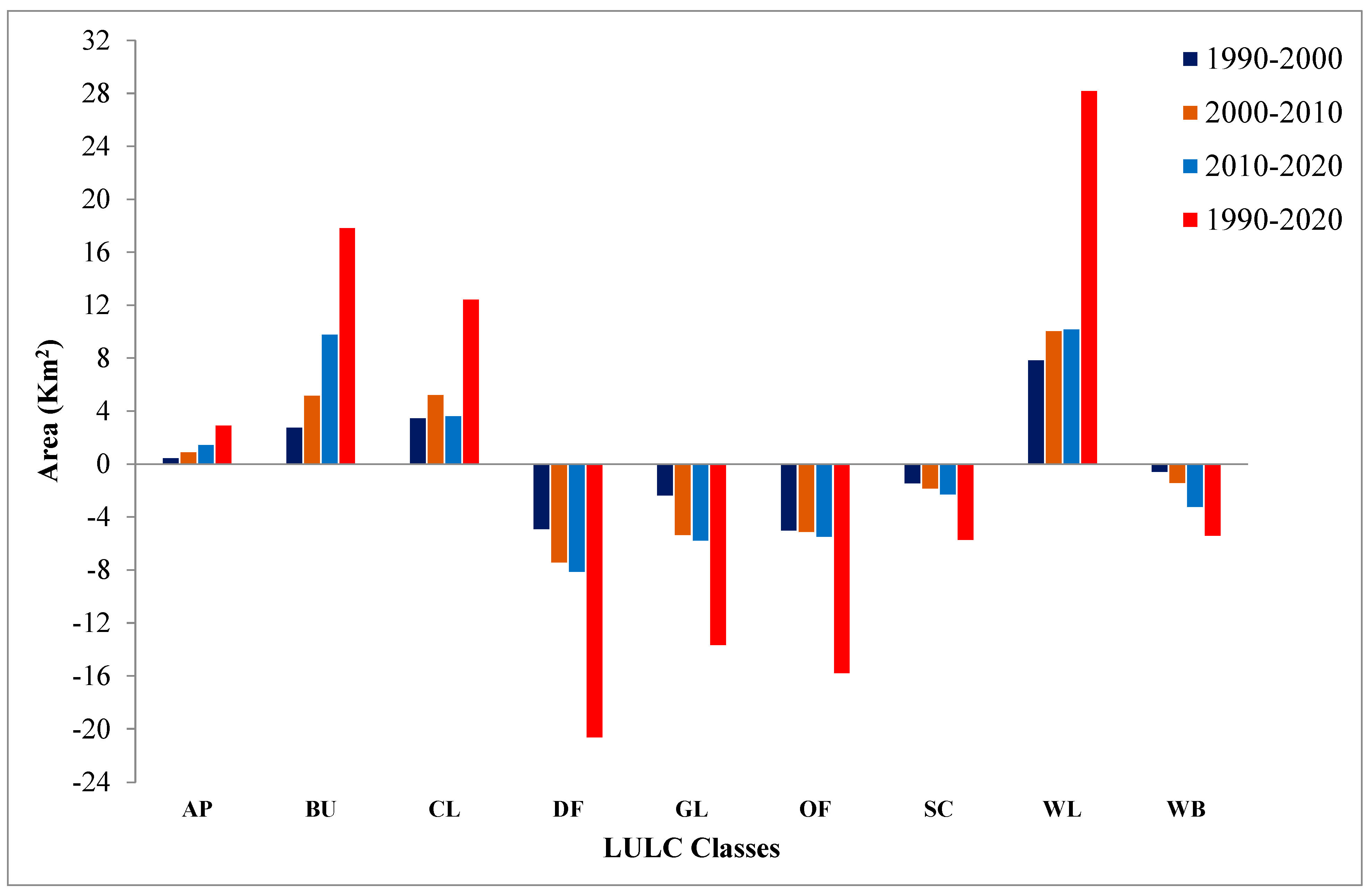
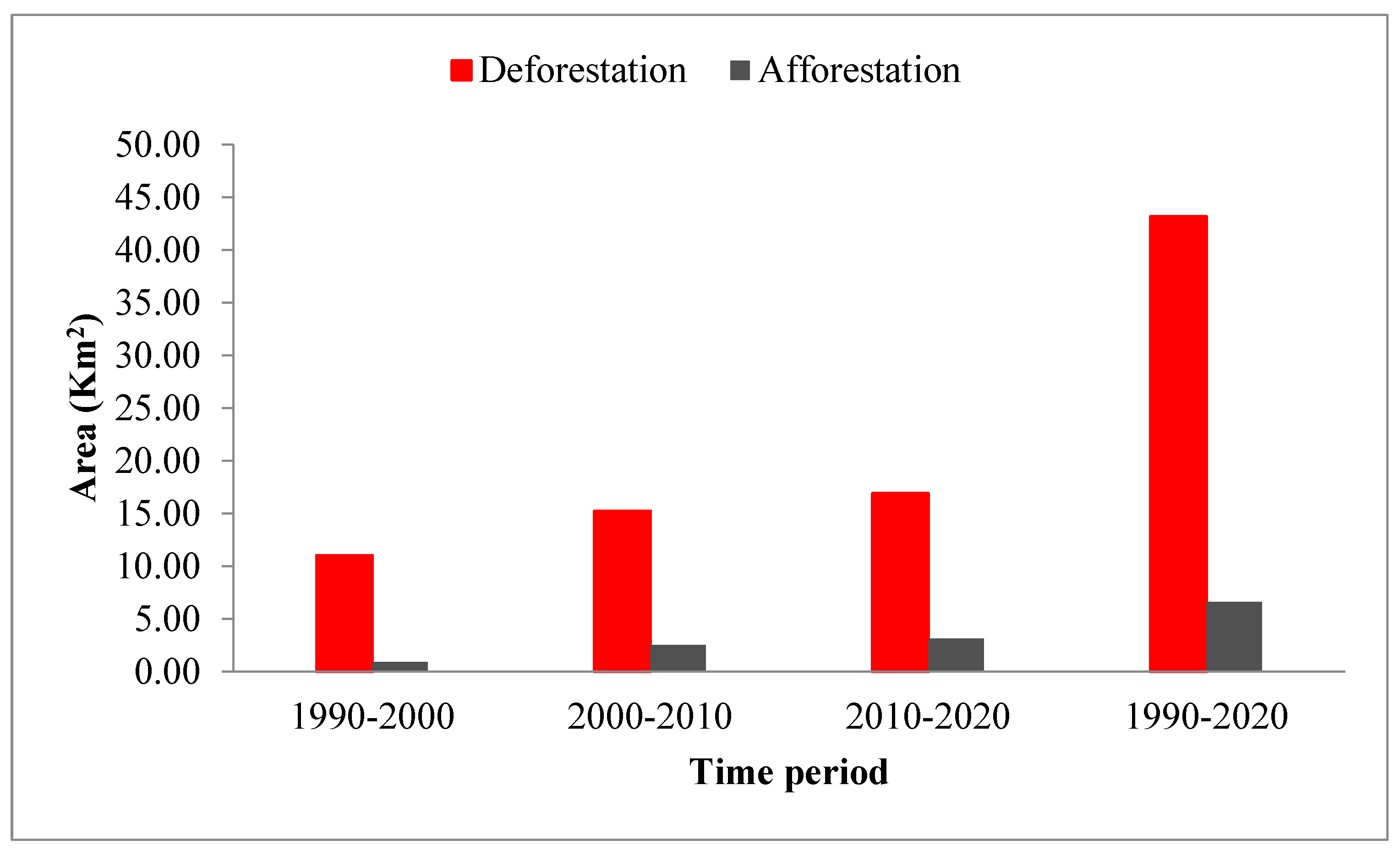
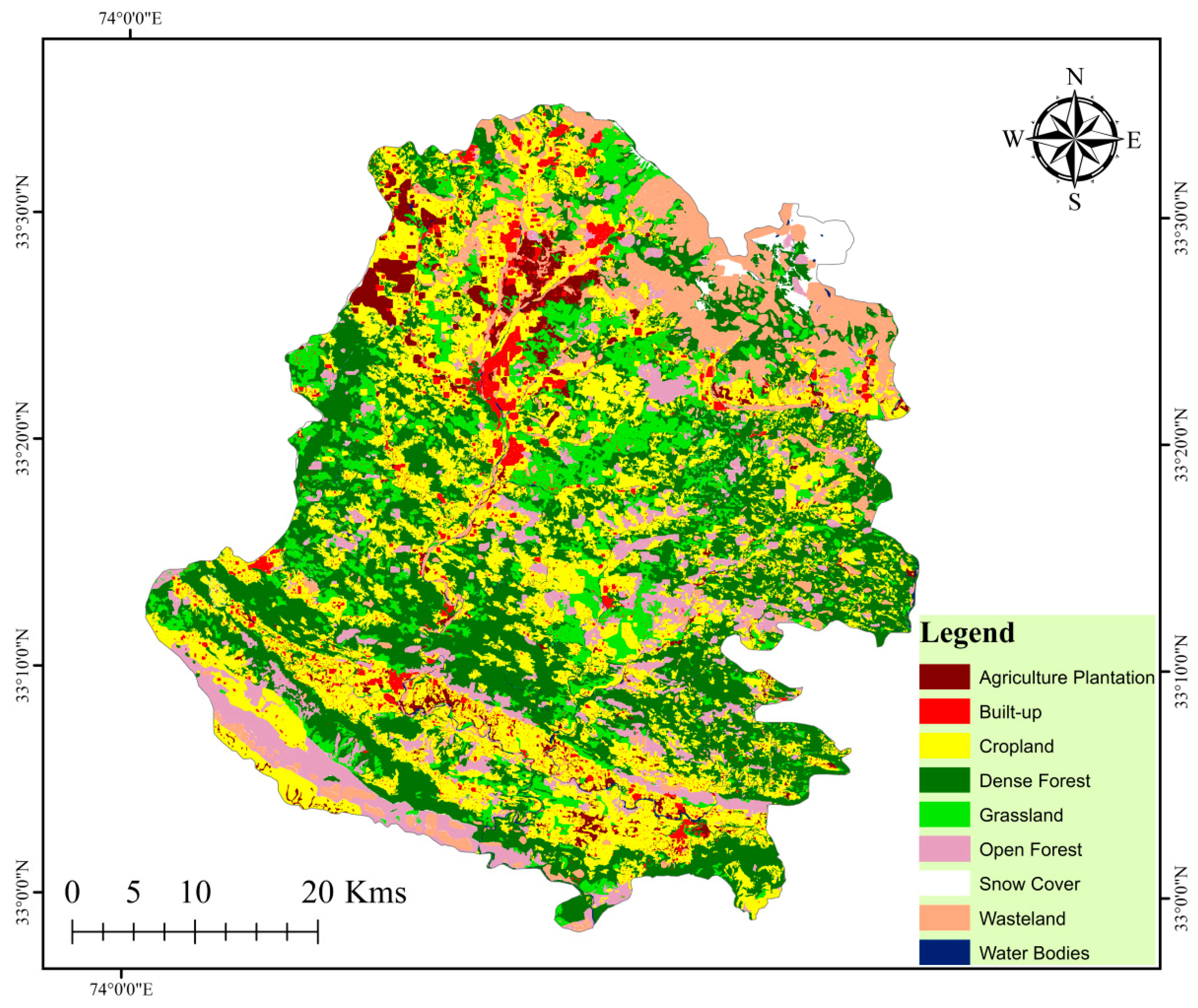
79].The present study conducted in district Rajouri of J&K, India revealed substantial changes in the LULC classes over a span of 30 years from 1990 to 2020. This period witnessed both losses and gains among various LULC classes, indicating a dynamic transformation in the landscape. During this period, forest cover and grasslands of the district have been significantly reduced to other land use types indicating a disturbing situation with adverse implications for the local climate and ecosystem services of the region [
80,
81]. The expansion of cropland, settlements and urbanization has significantly contributed to this decline. Globally, cropland expansion has been seen as a major factor for the deforestation [
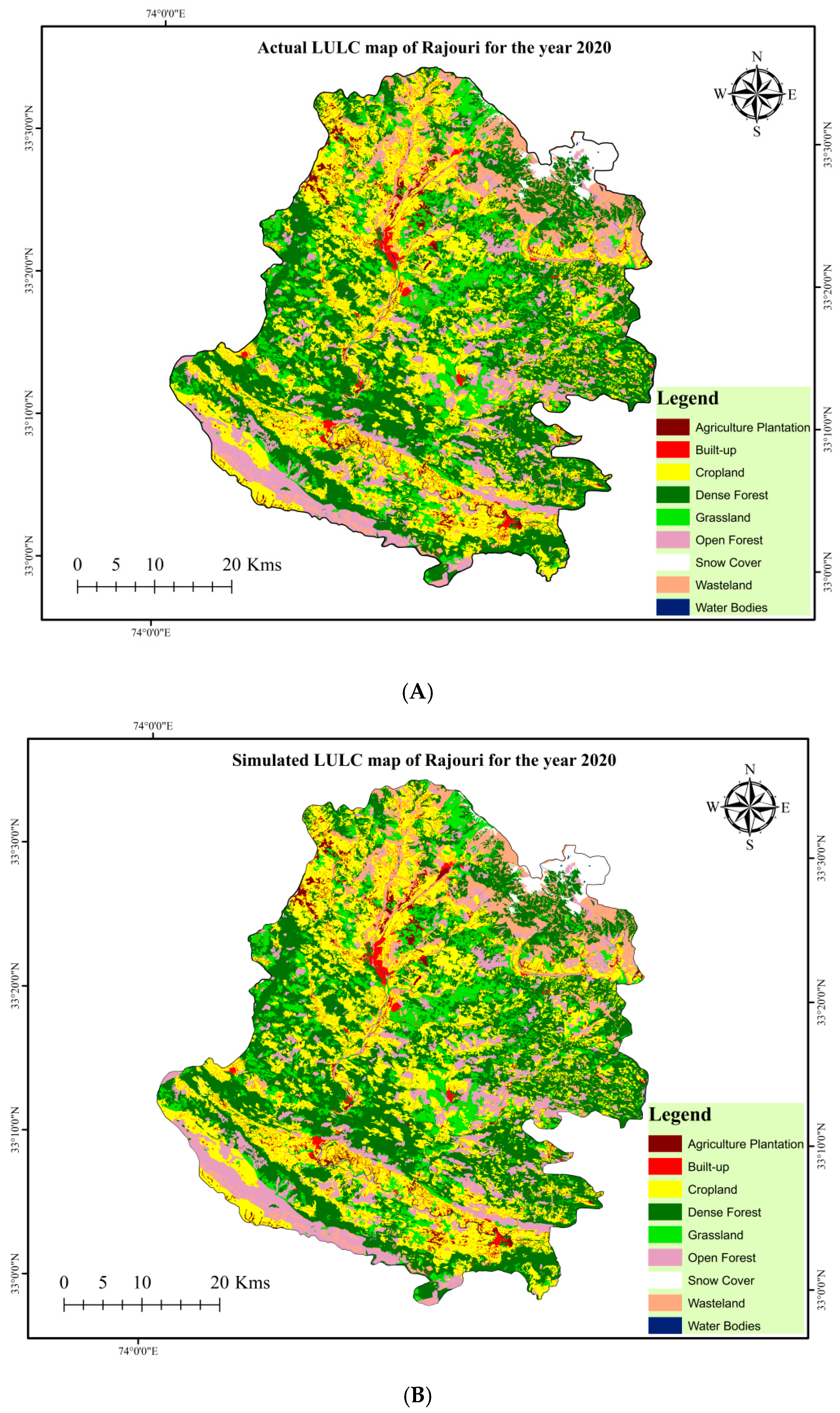
1]. Built-up area has substantially increased at the expense of grasslands, cropland, forests, and water bodies. Furthermore, the future projection using the CA Markov model indicates that this trend of LULC change is likely to continue, with built-up areas projected to increase further at a fast rate to 101.7 Km
2 by 2050, accompanied by declines in forests, grasslands, and water bodies.
The concurrent decline in snow cover and shrinkage of water bodies in Rajouri represents another critical concern with far-reaching consequences for regional water security. The reduction of snowpacks, largely driven by rising temperatures in recent decades [
45,
79], diminishes the natural reservoirs of freshwater essential for agriculture, industry, and domestic use. This decline, coupled with the drying of water bodies, reduces overall water storage capacity and intensifies the expansion of barren lands. As formerly productive areas become parched and infertile, land degradation accelerates, heightening vulnerability to desertification. In higher altitudes, expansion of barren land also intensifies soil erosion and mass movement processes [
82], further undermining ecological stability.
Studies conducted in the Kashmir Himalayas and other developing countries [
43,
44,
55,
83,
84] have shown a substantial rise in built-up areas over the past two decades, with projections indicating further expansion in the coming years. In western Himalayan region, Singh et al. [
85] reported a 184% surge in urbanization between 1975 and 2015, along with major increases in barren land (+30%) and sharp declines in forests (−11%), water bodies (−8%), scrubland (−6%), and glaciers/snow (−20%). Their projections for 2055 indicated further urban expansion (+63%) and additional forest loss (−9%), highlighting the escalating anthropogenic pressure on natural ecosystems. Saleem et al. [
86] reported similar trajectories in Jammu district, where agricultural land (+6.71%), barren land (+6.45%), and settlements (+4.12%) expanded between 1990 and 2020, while vegetation declined significantly (−16.57%). In the Tawi catchment, Jasrotia et al. [
87] employed a CA-Markov and SWAT modelling framework to assess past and future land cover changes and their hydrological implications. They reported that between 2000 and 2020, rangeland (−0.01%) and forest land (−0.88%) decreased, while agricultural (+0.88%) and urban land (+0.21%) expanded. Their future projections for 2050 and 2080 indicate further losses in forest land (−6.77% and −8.51%), rangeland (−0.30% and −0.41%), and perennial snow/ice cover (−1.05% and −1.24%), with simultaneous increases in agricultural land (+2.10% and +3.68%) and urban land (+5.47% and +5.88%). Likewise, Bashir et al. [
45], documented similar trends in Baramulla district of J&K, north-western Himalaya, where urban expansion during 2000–2020 was accompanied by declines in snow cover, forest cover, agricultural land, and water bodies. Using CA-Markov modelling, they projected continued urban expansion by 2030, driven primarily by economic compulsions, climate variability, and population growth. Furthermore, Bhat et al. [
88] documented significant LULC transitions in Hirpora Wildlife Sanctuary, Western Himalayas, where snow cover (−33.76%) and dense forests (−6.80%) showed major losses, while barren/rocky areas (+11.43%) and built-up land (+0.35%) expanded between 1992 and 2021.
Nevertheless, the swift urbanization in the hilly regions of Rajouri district has a notable impact on vegetation cover, leading to potential environmental degradation. Urban expansion is largely driven by rural–urban migration, employment opportunities, rising living standards, natural growth, and urban redefinition [
78].The consequences of diminishing forests and grasslands, and increased bare soil are manifold, encompassing compromised environmental quality, heightened risks to ecological biodiversity and wildlife, as well as escalating pollution levels and deteriorating air quality [
69]. Urban development, often correlated with population growth and the proliferation of personal and public transportation, is anticipated to lead to rise in environmental pollutants in the future. As urban areas expand, the destruction and degradation of natural purifiers such as plants and soil may occur, intensifying environmental hazards and posing significant threats to the people [
89]. Therefore, policymakers and planners must take into account the projected spatial extent and distribution patterns of LULC categories concerning their adverse effects, particularly focusing on housing characteristics, urban sprawl, infrastructure and utilities and vegetation cover [
69]. By considering these factors, they can develop effective strategies to mitigate the negative impacts of urban development and ensure sustainable growth while safeguarding the environment and enhancing the quality of life for residents.
In recent years, several interlinked factors have acted as major drivers of LULC change in the region. Among them, rapid population growth, urban expansion, climate variability, economic pressures, and unplanned development have been identified as the most significant influences [
8,
44]. The continuous increase in human population has intensified the pressure on natural resources worldwide [
83]. In combination with urbanization and economic development, this demographic growth has heightened the demand for food, energy, and water, thereby exerting considerable stress on the environment [
90]. Climate change adds another dimension to these challenges, affecting the Earth’s systems in multiple ways [
91]. In the Kashmir Himalayas, a clear warming trend has been documented, with annual increases of 0.05 °C and 0.01 °C in mean maximum and minimum temperatures, respectively, accompanied by a decline of around 4.22 mm in precipitation per year between 1980 and 2016 [
79,
92]. These shifts in climate have contributed to glacier retreat in the Himalayas, leading to a decline in snow cover and significant implications for water resources and hydrological processes [
93]. In addition to climatic and demographic pressures, institutional and policy-related factors also shape LULC dynamics. In many developing countries, urbanization trajectories are largely determined by government-led policies and interventions, making governance a decisive force in the spatial structure and land use patterns of communities [
94]. In the UT of J&K, the absence of a comprehensive land use policy has enabled land to be used according to immediate needs without proper regulation. Although such practices may generate short-term economic benefits, they pose serious risks for the long-term sustainability of land resources, particularly soil health and productivity [
8].
The drivers of land use changes, often human-induced, are inherently complex. Understanding their intricacies involves examining how they influence various policies governing land use management [
95,
96]. Thus, it is imperative for policymakers to develop comprehensive land use policies that account for the complexities of these drivers and promote sustainable land management practices to ensure the long-term well-being of the region and its inhabitants. Evidence suggests that sound policy frameworks yield the most favorable ecological and socioeconomic outcomes at the regional level [
97]. Approaches such as community-based management and conservation have proven effective in ensuring sustainable monitoring and fostering social responsibility [
98]. Importantly, the formulation of effective land use policies should be informed by bottom-up approaches, where insights from ground-level studies guide decision-making and resource allocation. Such an approach can foster more sustainable and equitable utilization of available resources [
97].
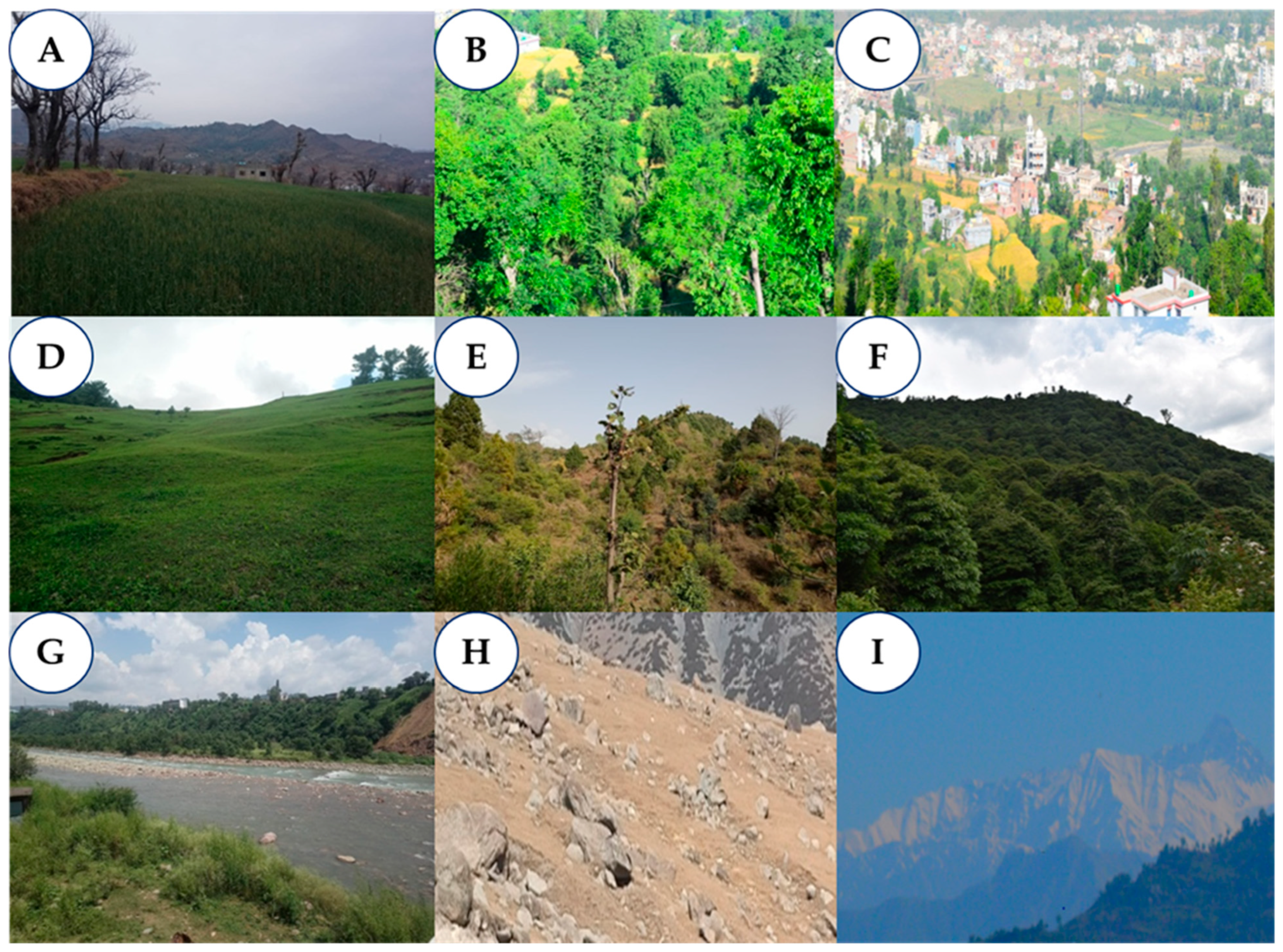
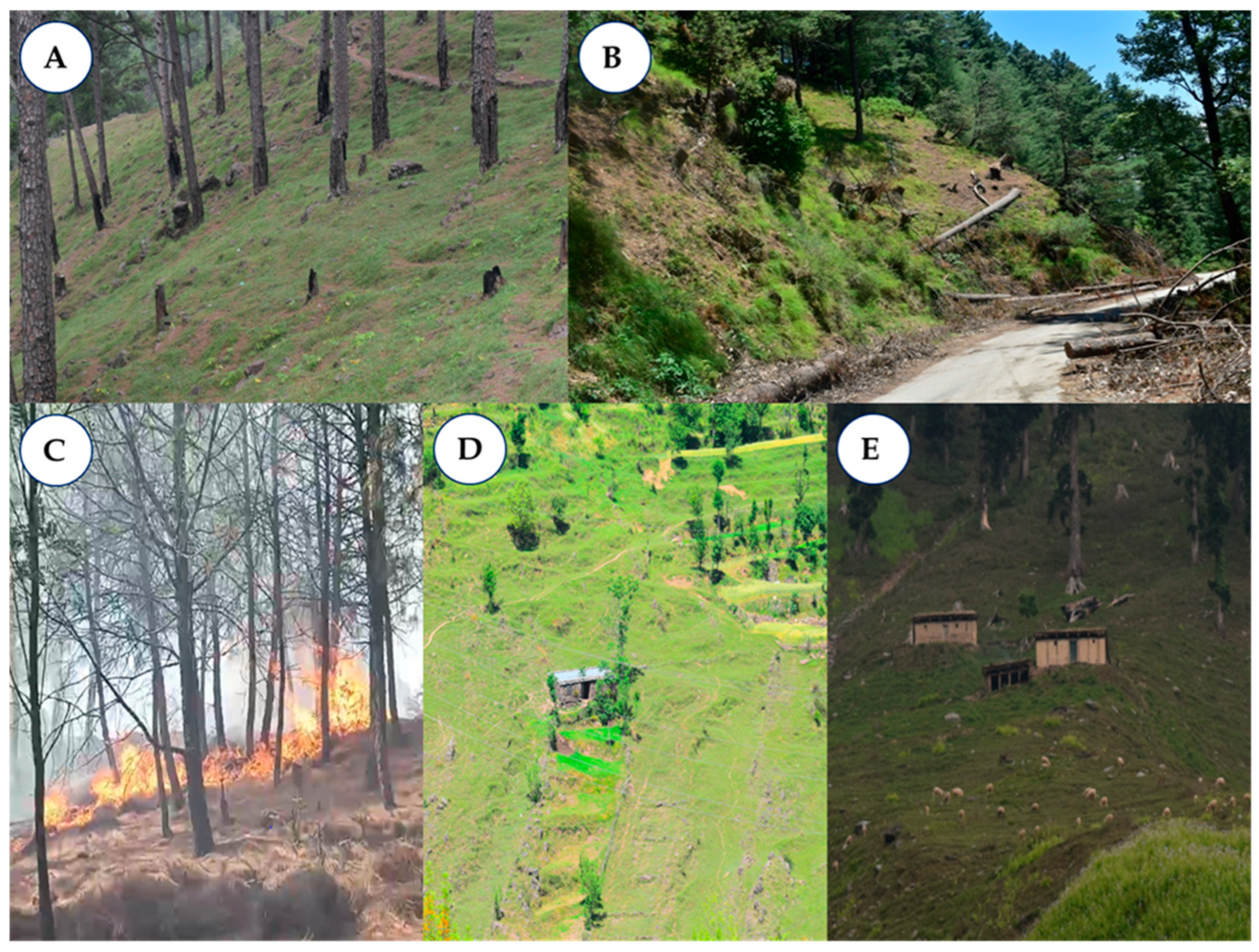
Alongside policy considerations, the demand for land-based resources and direct human interventions such as deforestation for agriculture, rapid urban expansion, road construction, logging for fuelwood and timber, forest fires, and overgrazing (
Figure 10) remain the most visible forces shaping LULC change. These drivers, however, are not uniform; they vary across space and time, producing spatially and temporally heterogeneous patterns of land transformation [
44,
99,
100]. Therefore, a spatially explicit and temporally informed understanding of LULC change is essential for evaluating anthropogenic pressures on the natural environment [
6]. The observed decline in forest cover and expansion of built-up areas in Rajouri highlight the need for sustainable land management (SLM) interventions. Practices such as agroforestry, reforestation, and habitat restoration may help mitigate further ecological degradation and enhance ecosystem resilience in the northwestern Himalayas [
101]. These measures could contribute to maintaining soil stability, conserving water resources, and supporting long-term ecological sustainability.
In the present study, the integration of remote sensing and GIS techniques has facilitated a comprehensive and quantitative assessment of LULC change patterns in the Rajouri district. For future research, the use of higher-resolution satellite imagery, coupled with the incorporation of additional ancillary datasets, such as detailed socio-economic, demographic, and climatic information, could significantly enhance the depth and accuracy of analyses. This would enable a more nuanced understanding of the complex processes driving observed land changes, including intra-urban variations and land cover dynamics in hilly and heterogeneous terrains. Such an approach would not only improve the spatial and temporal resolution of LULC studies but also provide critical understanding for planning sustainable land management strategies and addressing environmental challenges in mountainous regions.
5. Conclusions
The current study analyzed the spatio-temporal trends of LULC change in Rajouri district utilizing satellite imagery. The findings indicate marked transformations in various land use systems since 1990. Over this period, forests, grasslands, water bodies, and snow cover have declined, while built-up areas, croplands, agricultural plantations, and wastelands have expanded. The massive land transformation is largely driven by anthropogenic actions and has been mostly adverse in nature, giving rise to multiple environmental issues in the study area. The loss of forests not only threatens biodiversity but also compromises vital ecosystem services such as carbon sequestration, soil retention, and water regulation. Additionally, the encroachment upon forested areas increases the risk of habitat fragmentation and wildlife displacement, further imperiling the region’s ecological balance. Equally troubling is the diminishing extent of grasslands, which play a crucial role in supporting the socio-economic livelihoods of local communities. With many residents dependent on animal husbandry for their sustenance, the decline in grasslands poses a direct threat to their economic well-being and way of life. Moreover, the degradation of grasslands can intensify soil erosion, reduce water infiltration rates, and compromise the resilience of ecosystems to climate variability. The continued loss of water bodies, retreat of snow cover and the expansion of barren lands could have dire consequences for the region’s ecosystems, biodiversity, and socio-economic fabric. Hence, it is crucial to adopt sustainable forest management practices, initiate reforestation projects, and restore degraded grasslands. Furthermore, community-based conservation efforts, coupled with robust policies and regulations, are indispensable for promoting the coexistence of human activities and natural ecosystems.