Review

The Role of Unmethylated 5′-C-Phosphate-G-3′ (CpG) Motifs in Mitochondrial and Bacterial DNA in the Pathogenesis of Alzheimer’s Disease


by
Adedayo Emmanuel Ogunware
1,*,
Odufuwa Ebenezer Abiodun
2,
Abdullahi Tunde Aborode
3,
Muneer Yaqub
4,
Isreal Ayobami Onifade
5 and
George Perry
1
1
Department of Neuroscience, Developmental and Regenerative Biology, University of Texas at San Antonio, San Antonio, TX 78249, USA
2
Department of Biology, Minot State University, Minot, ND 58707, USA
3
Department of Chemistry, Mississippi State University, Starkville, MS 58707, USA
4
Department of Biological Sciences, The University of Texas at Dallas, Richardson, TX 75080, USA
5
Department of Biological Sciences, University at Albany, Albany, NY 12222, USA
*
Author to whom correspondence should be addressed.
J. Dement. Alzheimer's Dis. 2026, 3(1), 9; https://doi.org/10.3390/jdad3010009
Submission received: 8 January 2025 / Revised: 6 December 2025 / Accepted: 13 January 2026 / Published: 14 February 2026

Abstract

Alzheimer’s disease (AD) is a leading form of dementia, marked by complex neuropathological features such as amyloid-β (Aβ) plaques and tau tangles. Recent research highlights the significant role of unmethylated cytosine–phosphate–guanine (CpG) motifs, short DNA sequences where a cytosine nucleotide is directly followed by a guanine nucleotide, linked by a phosphate group, in the disease’s development. CpG motifs, predominantly found in bacterial and mitochondrial DNA, can provoke immune responses when they appear in unexpected contexts. This review explores the intricate relationship between unmethylated CpG DNA and AD pathogenesis, investigating the mechanisms by which bacterial DNA enters the brain, activates immune pathways, and contributes to the progression of Alzheimer’s disease. Understanding these processes may offer new avenues for research and therapeutic intervention in AD.

1. Introduction

Alzheimer’s disease (AD) is not only the most prevalent form of dementia but also serves as a testament to the complexity of human neuropathology. AD has become a significant global health challenge, accounting for 60–70% of dementia cases [1]. Individuals afflicted with AD experience progressive cognitive decline, which manifests in memory loss, impaired decision-making, and eventually a severe loss of independence in daily life. The hallmarks of AD pathology are amyloid-β (Aβ) plaques—extracellular accumulations of misfolded proteins—and intracellular tau tangles [2,3], both of which compromise neural integrity and function [4]. For decades, the primary research focus in AD has been on understanding these molecules and their roles in disease progression.
Despite significant progress in unraveling the roles of Aβ and tau, many aspects of AD’s underlying mechanisms remain elusive. Given the disease’s complexity and its growing global impact, there is an urgent need to explore additional contributors to the disease. Recent research in epigenetics has highlighted the significance of unmethylated cytosine–phosphate–guanine (CpG) DNA, a molecule garnering increasing attention [5,6,7]. CpG DNA is predominantly found in bacterial and mitochondrial genomes [8].
CpG dinucleotides, defined by a cytosine followed by a guanine in the DNA sequence, play a crucial role in epigenetic regulation [9,10]. In eukaryotic cells, methylation at CpG sites is often associated with gene silencing, underscoring its regulatory importance [11,12,13]. However, bacterial and mitochondrial DNA contains an abundance of unmethylated CpG motifs [14]. This lack of methylation is more than a simple chemical difference—it carries significant biological implications, particularly when unmethylated CpG sequences appear in unexpected contexts.
While AD research has traditionally focused on Aβ and tau, the role of unmethylated CpG DNA is now emerging as a critical factor in both extracellular and intracellular signaling pathways. In the extracellular space, CpG-rich DNA fragments trigger strong cellular responses through pattern recognition receptors, particularly Toll-like receptor 9 (TLR9) [15]. TLR9, a multifunctional receptor expressed in various brain cell types, including neurons, microglia, and astrocytes, serves as a molecular sensor for foreign DNA in endosomal compartments [16]. TLR9 activation and its downstream signaling may spark an inflammatory cascade, potentially accelerating neurodegeneration in AD [17,18].
Intracellularly, the cGAS-STING (cyclic GMP-AMP synthase-stimulator of interferon genes) pathway plays a crucial role in sensing cytosolic DNA, including mitochondrial DNA released during cellular [19]. This pathway complements the TLR9-mediated response, providing a comprehensive surveillance system for both extracellular and intracellular DNA. The cGAS-STING pathway activation leads to the production of type I interferons and other pro-inflammatory cytokines, contributing to the neuroinflammatory milieu characteristic of AD [20]. The interplay between these extracellular and intracellular sensing mechanisms highlights the complex role of unmethylated CpG DNA in AD pathogenesis and underscores the need for a more nuanced understanding of these signaling pathways in the context of neurodegeneration.
This review aims to elucidate the complex relationship between unmethylated CpG DNA and AD pathogenesis, focusing on three key areas. First, we explore the mechanisms by which CpG DNA is released and reaches the neuronal and glial compartments. Second, we examine the immunological events that are triggered by these DNA sequences. Finally, we assess the potential impact of the resulting inflammatory response on AD progression. Through this comprehensive exploration, we aim to provide a deeper understanding of the role of unmethylated CpG DNA in the broader context of AD pathology.

2. Bacterial DNA Intrusion into the Brain’s Extracellular Space: Pathways and Mechanisms

The brain, a highly complex organ, is safeguarded against foreign substances by a combination of protective barriers and specialized immune responses. However, recent research has revealed that bacterial DNA, which can influence neuroinflammatory pathways, can bypass these defenses and enter the brain’s extracellular environment. Understanding the mechanisms behind this infiltration is critical, especially given its potential implications for neurodegenerative diseases like AD.
Bacterial DNA can infiltrate the brain through multiple routes, with the most direct involving bacterial invasion. Additionally, compromised structural defenses, such as a weakened blood–brain barrier (BBB), offer further opportunities for bacterial DNA to gain access. This section will explore the various mechanisms and pathways through which bacterial DNA infiltrates the brain, enhancing our understanding of its role in neurodegenerative disorders.
BBB serves as a primary entry point, where specialized processes such as transcytosis may facilitate its passage. Additionally, the choroid plexus, which contains fenestrated capillaries, can act as a gateway for bacterial DNA infiltration [21]. Circumventricular organs (CVOs), regions where the BBB is less restrictive, provide an alternative route for bacterial DNA entry. These areas, including the area postrema and median eminence, lack the tight junctions typically found in the BBB, allowing for a more permeable exchange between the bloodstream and brain tissue [22]. While CVOs offer a direct route for bacterial DNA entry, BBB relies on cellular mechanisms involving active transport through endothelial cells. This process may be facilitated by specific receptors or transporters located on the luminal surface of BBB endothelial cells [23]. In contrast, the increased permeability of CVOs allows bacterial DNA to passively diffuse into the brain. The relative significance of these pathways in bacterial DNA entry related to AD remains an active area of research with some studies suggest that BBB dysfunction in AD may enhance the role of the BBB-associated transport mechanism in facilitating bacterial DNA infiltration [24,25,26].
There has been an ongoing debate about the presence of bacterial DNA in the brains of AD patients. However, compelling evidence indicates that bacterial DNA is not merely confined to the vasculature but is also present within the soma of brain cells. Advanced techniques beyond traditional immunofluorescence have provided stronger support for this claim. For example, [27] used highly specific antibodies and DNA probes to detect Porphyromonas gingivalis within the neurons of AD patients, confirming the presence of this oral pathogen in the brain parenchyma [27]. Similarly, Readhead et al. (2018) applied next-generation sequencing techniques to identify elevated bacterial populations in AD brain tissue, implementing rigorous controls to rule out vascular contamination [28]. Additionally, Miklossy (2016) demonstrated the use of in situ hybridization techniques to visualize bacterial DNA within specific brain cells, offering spatial context that differentiates parenchymal presence from vascular localization [29]. These findings collectively provide strong evidence supporting the presence of bacterial DNA within the soma of brain cells in AD patients, overcoming the limitations of earlier studies that may have been confounded by vascular signals.
Systemic bacterial infections can breach the BBB, a highly selective barrier that separates circulating blood from the brain’s extracellular fluid. The BBB plays a crucial role in maintaining brain homeostasis by preventing harmful substances from entering. However, when the BBB is compromised as often observed in AD, bacterial DNA can cross into the brain parenchyma. Numerous studies have underscored the role of systemic infections in enabling bacterial DNA to penetrate the brain. For instance, one study demonstrated that peripheral infection with Escherichia coli induced BBB disruption, allowing bacterial DNA to enter the brain in a mouse model of AD [30].
Similarly, Chlamydia pneumoniae DNA has been detected in the cerebrospinal fluid and brain tissue of AD patients, suggesting that respiratory infections could facilitate the spread of bacterial DNA to the brain [31]. Infections originating in the oral and gut microbiota also contribute to bacterial DNA reaching the brain. The oral cavity hosts a diverse microbial community, and certain periodontal pathogens have been linked to an increased risk of AD [32]. Chronic periodontitis, characterized by bacterial colonization and inflammation, is associated with systemic inflammation and an elevated risk of cognitive decline [33]. A recent study by [27] demonstrated that Porphyromonas gingivalis, a common periodontal pathogen, can invade the brain in mice and induce AD-like pathology [27,34]. This evidence suggests that oral bacteria and their DNA may have direct access to the brain, potentially contributing to AD’s pathogenesis.
In addition to direct bacterial invasion, systemic infections can release inflammatory molecules that compromise BBB integrity, further facilitating the entry of bacterial DNA into the brain. Inflammatory mediators like cytokines and chemokines can disrupt tight junction proteins, increasing BBB permeability [35]. A study by [36] demonstrated that systemic administration of lipopolysaccharide (LPS), a component of the outer membrane of Gram-negative bacteria, induced BBB dysfunction and allowed circulating bacterial DNA to enter the brain [36,37].
The presence of bacterial DNA in the brain’s extracellular space raises intriguing questions about its interaction with neurons, astrocytes, and microglia. Research has shown that bacterial DNA can activate toll-like receptors (TLRs) expressed by glial cells, triggering inflammatory responses and potentially exacerbating neuroinflammation in AD [38]. Glial activation, a hallmark of AD pathology, is associated with the production of pro-inflammatory cytokines, oxidative stress, and neuronal damage [39].

Mitochondrial DNA Intrusion into the Brain Extracellular Space: Pathways and Mechanisms

The release and presence of mitochondrial DNA (mtDNA) in the brain’s extracellular space have significant implications for the pathogenesis of AD. Mitochondria, which function as the cell’s energy producers, contain their own DNA, and under certain conditions, this mtDNA can be released into the extracellular environment. One key pathway through which mtDNA becomes exposed is via neuronal damage and cell death—both hallmark features of AD. Neuronal damage, driven by factors such as oxidative stress, amyloid-β plaque accumulation, and tau protein pathology, leads to the release of intracellular contents, including mtDNA, into the extracellular space [40]. Studies have consistently shown elevated levels of mtDNA in the cerebrospinal fluid and brain tissue of AD patients compared to healthy individuals, underscoring its release in AD pathology [41,42].
In addition to passive release through cell death, mtDNA can be actively secreted by cells in response to stress or damage. In AD, the brain’s pathological environment is marked by elevated cellular stress and compromised mitochondrial function. Oxidative stress, which is a prominent feature of AD, can disrupt mitochondrial integrity and prompt the release of mtDNA [43,44]. Impaired bioenergetics and abnormalities in mitochondrial dynamics, such as defective fusion and fission processes, also contribute to mtDNA release [45]. Once released, mtDNA can enter the extracellular space, where it may interact with neighboring cells, potentially exacerbating AD pathology.
Chronic neuroinflammation, another key aspect of AD, further contributes to the presence of mtDNA in the brain [38]. Neuroinflammation is predominantly orchestrated by glial cells rather than neurons themselves, involving a complex cascade of events with bidirectional glial-neuron communication [46]. Specifically, microglia and astrocytes serve as the primary mediators of the brain’s innate immune response [47]. When mtDNA is released into the extracellular space, it acts as a damage-associated molecular pattern (DAMP) that is recognized by pattern recognition receptors (PRRs) on glial cells, particularly TLR9 on microglia and the cytosolic cGAS-STING pathway in both microglia and astrocytes [48]. This recognition triggers microglial activation, transforming them from a surveilling state to a reactive phenotype characterized by morphological changes, proliferation, and production of pro-inflammatory cytokines such as IL-1β, TNF-α, and IL-6 [46]. Activated microglia subsequently induce a reactive phenotype in astrocytes, known as A1 astrocytes, which lose many of their normal neuronal support functions and actively contribute to neuronal damage [49]. This glial activation cycle creates a self-perpetuating inflammatory environment that can exacerbate mtDNA release through various mechanisms, including microglial release of mitochondrial extracellular traps containing mtDNA as part of their immune defense mechanism [50]. Additionally, reactive microglia and astrocytes produce reactive oxygen species that can further damage neuronal mitochondria, leading to additional mtDNA release [51]. This glial-mediated neuroinflammatory cascade creates a positive feedback loop that drives progressive neurodegeneration in AD.
Mitochondrial dysfunction, a defining feature of AD, also plays a pivotal role in increasing mtDNA release. Mitochondrial impairments in AD include decreased respiration, disrupted calcium homeostasis, and faulty quality control mechanisms, all of which can lead to the rupture of mitochondrial membranes and subsequent mtDNA release into the extracellular space [51,52]. Moreover, dysfunctional mitochondria can generate mitochondria-derived extracellular vesicles, which are secreted into the extracellular environment and may carry mtDNA to nearby cells, including neurons, astrocytes, and microglia [53]. This intercellular transfer of mtDNA could contribute to the amplification of neuroinflammatory processes and neuronal damage in AD.
Thus, mtDNA reaches the brain’s extracellular space through multiple pathways: neuronal damage and cell death, active secretion in response to cellular stress, neuroinflammation, and mitochondrial dysfunction. Once in the extracellular environment, mtDNA interacts with surrounding cells, influencing AD pathology.

3. Immune Recognition and Response to Bacterial DNA and Mitochondrial DNA

The innate immune system, a critical line of defense against infections and damage, is central to research on neurodegenerative disorders such as AD [54]. This system relies on PRRs to detect pathogenic or endogenous threats. Notably, bacterial and mitochondrial DNA have been shown to activate these receptors, triggering inflammatory responses that may play a role in AD progression [55]. The following sections will explore the molecular mechanisms behind this interaction and its potential impact on AD pathogenesis.
PRRs in the innate immune system identify two main types of molecular patterns: Pathogen-Associated Molecular Patterns (PAMPs) and DAMPs [56]. When these patterns are detected, an inflammatory response is initiated. Bacterial DNA, characterized by unmethylated CpG motifs, is a classic PAMP [57]. Conversely, mtDNA acts as a DAMP when found outside the mitochondria [58].
The immune response to CpG DNA in the brain involves distinct contributions from resident and peripherally derived immune cells. Microglia, the brain’s resident macrophages, serve as the primary responders to CpG DNA, expressing high levels of TLR9 and mounting rapid inflammatory responses characterized by cytokine production and phagocytic activity [59]. These cells originate from yolk sac progenitors during early development and maintain themselves through self-renewal. In contrast, peripherally derived immune cells, including monocytes, T cells, and dendritic cells, typically have limited access to the healthy brain but can infiltrate during BBB dysfunction, which commonly occurs in Alzheimer’s disease [60]. These infiltrating cells express distinct TLR9 levels and respond differently to CpG DNA compared to resident microglia. For instance, infiltrating monocyte-derived macrophages often exhibit more pronounced pro-inflammatory responses to CpG DNA than resident microglia [61]. This differential response contributes to the complex inflammatory milieu in AD brains, where both resident and infiltrating immune cells respond to elevated levels of bacterial and mtDNA.
A distinguishing feature of bacterial and mtDNA is the presence of unmethylated CpG motifs, which are notably rare in vertebrate DNA, where they are typically heavily methylated. This methylation process is essential for gene regulation and genome stability in eukaryotes [62].
Among PRRs, TLR9 is particularly adept at recognizing these differences. Located within the endolysosomal compartments of immune cells, including microglia, astrocytes, B cells, plasmacytoid dendritic cells, and some myeloid cell subsets, TLR9 detects pathogens that enter cells through endocytosis or phagocytosis, or are released into the cytoplasm following cellular damage [63]. In the central nervous system, TLR9 expression varies across cell types, significantly influencing immune responses to CpG DNA. Microglia, the brain’s primary resident immune cells, exhibit the highest levels of TLR9 and respond strongly to CpG DNA stimulation [64]. Astrocytes also express functional TLR9, although at a relatively lower levels compared to microglia [65]. Earlier studies have demonstrated minimal TLR9 expression in neurons; however, recent findings have revealed that specific neu-ronal subpopulations, particularly in the hippocampus and cerebral cortex, do express functional TLR9 [16]. Oligodendrocytes on the other hand expresses TLR9 at very low levels, rendering them less responsive to direct CpG DNA stimulation [66].
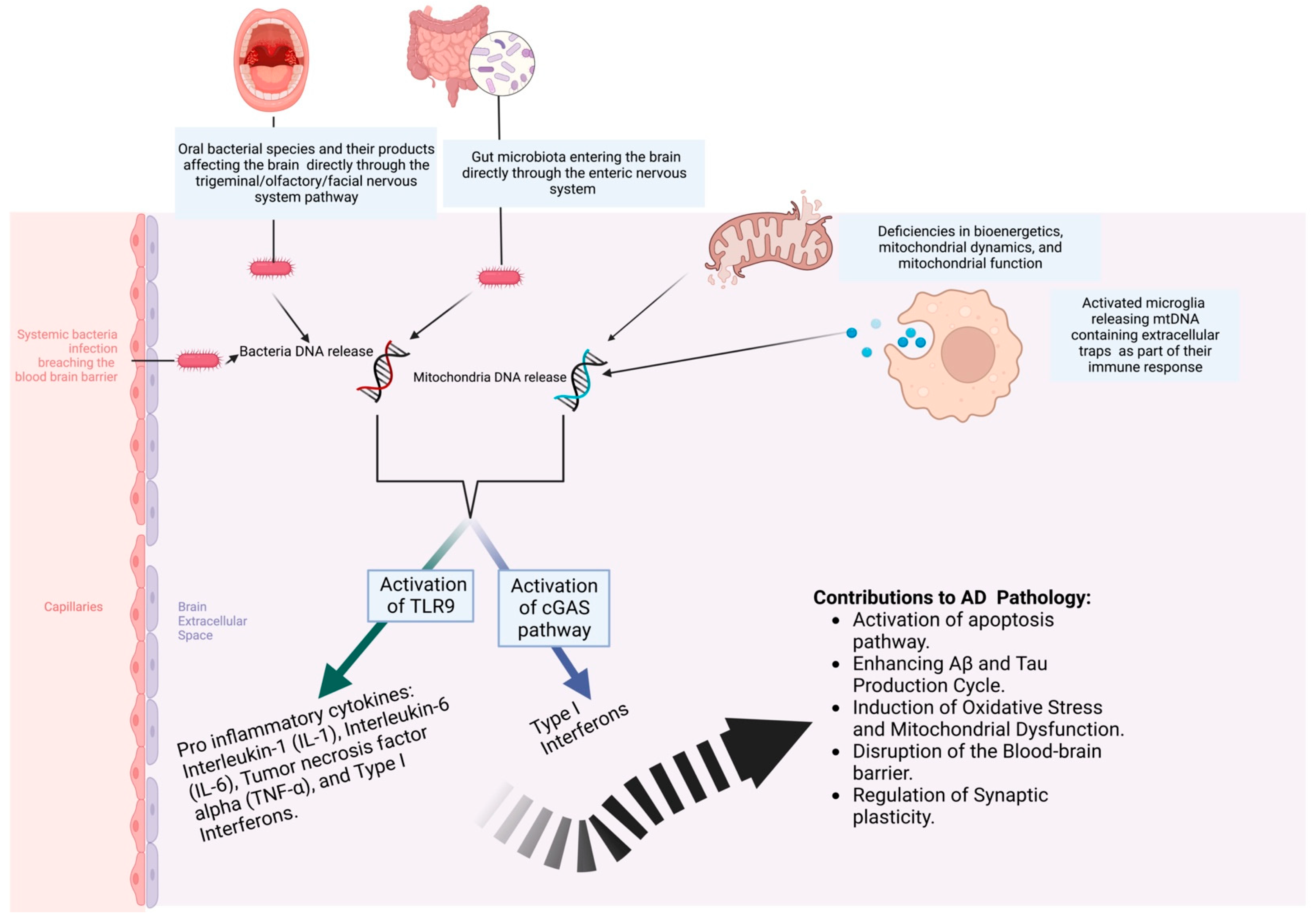
Upon encountering unmethylated CpG motifs, TLR9 undergoes a conformational change that enables it to interact with the adapter protein myeloid differentiation primary response 88 (MyD88). This interaction triggers a cascade of intracellular signaling involving molecules such as members of the interleukin-1 receptor-associated kinase (IRAK) family and tumor necrosis factor receptor-associated factor 6 (TRAF6), as shown in Figure 1. This cascade activates the IκB kinase complex, leading to the phosphorylation, ubiquitination, and proteasomal degradation of IκB, thus liberating the transcription factor Nuclear Factor Kappa-B (NF-κB) [67]. NF-κB then translocates to the nucleus, where it binds to specific DNA sequences to promote the transcription of genes encoding pro-inflammatory cytokines like interleukin-1 (IL-1), interleukin-6 (IL-6), tumor necrosis factor alpha (TNF-α), and Type I interferons.
It is important to note that TLR9 activation by CpG DNA triggers both canonical and non-canonical NF-κB signaling pathways, each with distinct kinetics and cellular outcomes. The canonical pathway, activated rapidly following CpG DNA recognition, involves IκB kinase (IKK) complex-mediated phosphorylation and degradation of IκBα, resulting in nuclear translocation of predominantly p65/p50 heterodimers [68]. This pathway drives the immediate expression of pro-inflammatory cytokines and chemokines, including IL-1β, TNF-α, and IL-6. In contrast, the non-canonical NF-κB pathway operates with delayed kinetics and involves the processing of p100 to p52, facilitating the nuclear translocation of RelB/p52 heterodimers [69].
These cytokines are secreted into the extracellular environment, amplifying the inflammatory response [70,71]. Additionally, TLR9 signaling can activate other transcription factors, such as activator protein 1 (AP-1) and interferon regulatory factors (IRFs), further contributing to the production of inflammatory mediators and Type I interferons [72]. While TLR9-mediated recognition of bacterial and mitochondrial DNA is a sophisticated defense mechanism, dysregulation can lead to excessive inflammation and contribute to chronic inflammatory diseases and neurodegenerative disorders like AD.
Beyond TLR9, other PRRs also play roles in detecting bacterial and mtDNA. For example, the cytoplasmic DNA sensor cyclic GMP-AMP synthase (cGAS) is crucial in this process [73]. Upon binding to mtDNA or bacterial DNA, cGAS catalyzes the production of cyclic GMP-AMP (cGAMP), a secondary messenger that activates the downstream protein stimulator of interferon genes (STING). This activation leads to the phosphorylation and activation of the transcription factor Interferon Regulatory Factor 3 (IRF3), which translocates to the nucleus to promote Type I interferon gene transcription [74].
This enhanced production of pro-inflammatory cytokines results in a heightened inflammatory state, often referred to as a pro-inflammatory environment. Such intensified inflammation is particularly concerning in the context of neurodegenerative diseases, including AD [75].
This diagram illustrates the pathway through which bacterial DNA and mtDNA infiltrate the brain’s extracellular space and incite pro-inflammatory signaling processes, ultimately contributing to AD pathology. The diagram is divided into several sections, each representing a stage of this intricate process: DNA entry: The first section of the diagram depicts bacterial DNA and mtDNA entering the brain’s extracellular space. Several pathways can facilitate this entry, such as neuronal damage, cellular apoptosis, or active cell secretion. DNA Detection: The second part of the diagram shows these DNA molecules being detected by the endosomal TLR9 and the cytosolic cGAS-STING pathway. Inflammatory Response: Upon detection of these DNA fragments, TLR9 and cGAS-STING trigger an inflammatory response. This process is depicted in the next section of the diagram, where pro-inflammatory cytokines, such as IL-6 and TNF-α, are produced. Contribution to AD: The last section of the diagram links these processes to the pathogenesis of AD. It shows how chronic inflammation, initiated by the persistent presence of bacterial DNA and mtDNA, contributes to the key features of AD pathology.
AD is primarily marked by chronic inflammation and sustained neuronal damage. The pro-inflammatory environment, formed due to the increase in pro-inflammatory cytokines, plays a vital role in these disease-related characteristics [76]. Given their damaging effects and widespread influence, the role of these cytokines in the various manifestations seen in AD is highly significant. Therefore, our objective is to investigate this issue more deeply, detailing the varied ways in which pro-inflammatory cytokines, stimulated by bacteria and mitochondrial DNA, contribute to the onset and progression of AD. Through this, we aim to shed light on the intricate role of inflammation in this debilitating disease and emphasize the potential for therapeutic interventions that focus on these inflammatory pathways as shown in Figure 1.

4. Possible Downstream Effect of the Resulting Pro-Inflammatory Cytokines

4.1. Activation of the Apoptosis Pathway

The first phase of apoptosis, a regulated form of cell death, in AD involves a complex series of molecular events. This process begins when bacterial DNA or mtDNA binds to TLR9, inducing a structural change that enables the recruitment of the adaptor protein MyD88. The recruitment of MyD88 sets off a cascade of molecular activations that ultimately lead to apoptosis.
Once MyD88 is integrated into the signaling complex, it assembles with members of the IL-1 receptor-associated kinase (IRAK) family and the TNF receptor-associated factor 6 (TRAF6). This complex activates transforming growth factor β-activated kinase 1 (TAK1), which then phosphorylates and activates the IKK complex. The activation of IKK results in the degradation of IκB proteins, allowing the NF-κB to translocate into the nucleus [77]. In the nucleus, NF-κB drives the transcription of genes that promote apoptosis, including those encoding death receptors like Fas and TNFR1. The expression of these receptors on the cell surface enables their interaction with specific ligands, leading to the recruitment of the Fas-associated death domain protein (FADD). Notably, MyD88 can also recruit FADD independently, providing an alternative route for initiating apoptosis [78].
FADD, upon recruitment, interacts with procaspase-8 to form the death-inducing signaling complex (DISC). This complex facilitates the autocatalytic activation of procaspase-8 to its active form, caspase-8, which is a central initiator of the extrinsic apoptosis pathway. Activated caspase-8 then cleaves and activates effector caspases, such as caspase-3 [77,78]. Caspase-3, in turn, cleaves various cellular substrates, triggering the morphological and biochemical changes typical of apoptosis, such as DNA fragmentation, phosphatidylserine exposure, and the formation of apoptotic bodies [79,80]. These apoptotic bodies are subsequently engulfed by neighboring cells or professional phagocytes [81]. Despite significant advancements in understanding this pathway, the precise molecular mechanisms by which bacterial and mtDNA induce apoptosis remain to be fully elucidated.

4.2. Enhancing Aβ and Tau Production Cycle

AD is characterized by a persistent cycle of Aβ production and inflammation, primarily driven by pro-inflammatory cytokines such as IL-1 and tumor necrosis factor-alpha TNF-α. This cycle initiates with the overactivation of key components involved in Aβ plaque formation: the Amyloid β Protein Precursor (AΒPP-) and β-secretase (BACE1).
Under normal conditions, AΒPP-, a prevalent transmembrane protein, is cleaved sequentially by α-secretase and γ-secretase, producing harmless peptides. In AD, however, AΒPP- is preferentially processed by BACE1 and γ-secretase, resulting in the generation of Aβ peptides that aggregate to form the characteristic extracellular Aβ plaques associated with the disease. These plaques significantly impact neighboring neurons [82].
Evidence suggests that pro-inflammatory cytokines enhance AΒPP- production by increasing the transcription of the AΒPP- gene. Studies have demonstrated that IL-1β and IL-1 can amplify AΒPP- mRNA expression in neuronal and endothelial cells [83,84]. Similarly, IL-1 exposure has been shown to raise AΒPP- transcript levels in human umbilical vein endothelial cells [85,86]. Other neuroinflammatory cytokines, including IL-1, TNF-α, and IFN-γ, also play a role in modulating AΒPP- production [85,87,88,89,90].
Pro-inflammatory cytokines also influence Aβ production by affecting BACE1 expression, an enzyme critical for the amyloidogenic cleavage of AΒPP-. Increased NF-κB signaling has been linked to upregulation of BACE1 [91,92,93].
Beyond Aβ plaque formation, pro-inflammatory cytokines significantly impact tau protein hyperphosphorylation and the formation of neurofibrillary tangles (NFTs). Tau proteins, essential for neuronal axonal transport, become abnormally hyperphosphorylated in AD, leading to NFT formation and disruption of neuronal transport mechanisms. Cytokines such as IL-1β and TNF-α contribute to tau pathology by activating kinases like cyclin-dependent kinase 5 (CDK5) and p38 mitogen-activated protein kinase (MAPK), which directly phosphorylate tau [94,95,96,97].
While the inflammatory response triggered by misfolded proteins such as Aβ and tau is well-established, CpG DNA and mtDNA also play a crucial role in initiating and propagating this process. Both CpG DNA and mtDNA are capable of activating TLR9, which results in the elevated production of proinflammatory cytokines like IL-1β and TNF-α [98,99]. These cytokines disrupt cellular homeostasis by increasing oxidative stress and impairing protein degradation pathways, ultimately leading to the accumulation and aggregation of misfolded proteins [100]. Furthermore, TLR9 activation can directly influence kinase activity involved in tau phosphorylation, contributing to enhanced tau hyperphosphorylation and tangle formation. Similarly, mtDNA has been shown to play a comparable role in sustaining this inflammatory cycle [101,102]. Additionally, activated microglia and astrocytes responding to CpG DNA and mtDNA release reactive oxygen species (ROS) and nitric oxide (NO), which intensifies oxidative damage and encourages protein modifications that exacerbate misfolding [103]. Notably, nitration of tyrosine residues on Aβ and tau enhances their aggregation tendency and toxicity. Prolonged TLR9 activation can also impair autophagy, a vital cellular process responsible for clearing misfolded proteins, further accelerating the buildup of Aβ plaques and tau tangles [104]. In summary, pro-inflammatory cytokines not only drive the production of Aβ but also exacerbate tau pathology, highlighting the complex interplay between inflammation and neurodegenerative processes in AD, as depicted in Figure 1. Also, CpG DNA and mtDNA contribute to the inflammatory cascade inducing and leading up to protein misfolding.

4.3. Induction of Oxidative Stress and Mitochondrial Dysfunction

Pro-inflammatory cytokines, powerful regulators of the immune response, have been increasingly linked to the progression of neurodegenerative diseases due to their role in exacerbating oxidative stress and mitochondrial dysfunction—two critical mechanisms driving neuronal death [105].
Oxidative stress arises from an imbalance between the production and accumulation of ROS and the cell’s ability to detoxify these reactive molecules effectively [106]. Pro-inflammatory cytokines such as IL-1β, IL-6, and TNF-α have been shown to significantly elevate ROS levels within cells. ROS are highly reactive molecules that can damage essential cellular components, including DNA, proteins, and lipids, eventually leading to cell death through necrosis or apoptosis [107].
Additionally, pro-inflammatory cytokines can induce the upregulation of inducible nitric oxide synthase (iNOS), which catalyzes the production of NO. NO is a free radical that reacts with superoxide radical anion to form peroxynitrite, a highly reactive and cytotoxic molecule [108,109].
Other than direct inflammatory responses, neurochemical dysregulation plays a crucial role in linking CpG DNA exposure to oxidative stress in AD pathogenesis. Inflammatory cytokines released following TLR9 activation can trigger excessive glutamate release, resulting in NMDA receptor overstimulation and subsequent calcium influx into neurons [110]. This calcium overload disrupts mitochondrial membrane potential, leading to increased ROS production while concurrently impairing ATP synthesis [51,111]. In microglial cells, this neurochemical imbalance further engenders the oxidative response, as activated microglia increase glutamate receptor expression, heightening their sensitivity to excitotoxic conditions [112]. Additionally, dopaminergic dysregulation contributes to oxidative stress via dopamine auto-oxidation, which produces toxic quinones and hydrogen peroxide, posing a significant threat to regions with dense dopaminergic innervation [113,114]. This intricate interplay between neurochemical imbalances and oxidative stress establishes a self-perpetuating cycle that accelerates mitochondrial dysfunction in both neurons and glial cells, thereby worsening the pathological environment in AD.
Also, as a key factor in neuronal death, Mitochondrial dysfunction, is closely linked to the activity of pro-inflammatory cytokines. Mitochondria, as the primary sites of cellular respiration and ATP production, are vital for cell survival. However, they also play a critical role in the initiation of apoptosis, or programmed cell death [115]. Pro-inflammatory cytokines such as TNF-α can disrupt mitochondrial function by affecting mitochondrial membrane potential and inhibiting essential enzymes in the respiratory chain, which are crucial for ATP production [116,117].
Moreover, these cytokines can induce the release of pro-apoptotic factors, including cytochrome c, from the mitochondria into the cytosol. This release triggers a cascade of events leading to the activation of caspases, the enzymes responsible for executing apoptosis [118,119]. Consequently, the ability of pro-inflammatory cytokines to induce oxidative stress and mitochondrial dysfunction underpins their detrimental impact on neuronal survival. Gaining a deeper understanding of these processes could pave the way for novel therapeutic strategies in neurodegenerative diseases.
Astrocytes, the most abundant glial cells in the brain, play a crucial homeostatic role in buffering neurochemical fluctuations, a function that becomes compromised in AD. These cells express specialized transporters, including glutamate transporters EAAT1 and EAAT2, which rapidly clear excess glutamate from the synaptic cleft, preventing excitotoxicity and associated oxidative stress [120]. Additionally, astrocytes maintain potassium homeostasis through inward-rectifying potassium channels thereby limiting neuronal hyperexcitability that would otherwise exacerbate oxidative damage [121]. In the presence of CpG DNA and subsequent neuroinflammation, these astrocytic buffering mechanisms become dysregulated, with reduced expression of glutamate transporters and impaired potassium buffering capacity [122,123]. Furthermore, reactive astrocytes shift from their homeostatic functions toward pro-inflammatory phenotypes, further compromising their buffering capacity and contributing to sustained oxidative stress [124]. The impairment of astrocytic regulation of neurochemical balance represents a critical factor in the perpetuation of oxidative damage and mitochondrial dysfunction observed in AD, highlighting the non-neuronal contributions to disease progression.

4.4. Disruption of the Blood–Brain Barrier

BBB is a highly selective, semipermeable barrier that separates circulating blood from the brain and the extracellular fluid in the central nervous system (CNS). This barrier is crucial for maintaining CNS homeostasis by preventing the entry of potentially harmful substances, including pathogens and peripheral immune cells, into the brain, while allowing the exchange of essential nutrients and metabolic products [125].
Pro-inflammatory cytokines, such as IL-1β, IL-6, and TNF-α, are known to compromise the integrity of the BBB under pathological conditions [126]. They disrupt the BBB through several interconnected mechanisms, affecting its cellular components—endothelial cells, astrocytes, and pericytes—as well as the tight junctions that bind these cells together and regulate permeability [127,128].
Pro-inflammatory cytokines can induce morphological and functional changes in endothelial cells, increasing BBB permeability. TNF-α and IL-1β have been shown to alter the organization of junctional complexes in brain-like endothelial cells (BLECs), affecting tight junction proteins like ZO-1, tricellulin, occludin, claudin-3, and claudin-5, as well as adherens junction proteins such as VE-cadherin [129]. Additionally, TNF-α promotes the expression of cell adhesion molecules such as intercellular adhesion molecule-1 (ICAM-1) and vascular cell adhesion molecule-1 (VCAM-1), which facilitate the adhesion and transmigration of peripheral immune cells across the BBB [130,131].
IL-1β, on the other hand, stimulates the production of matrix metalloproteinases (MMPs), particularly MMP-9, in endothelial cells. MMPs degrade the extracellular matrix and tight junction proteins, further disrupting the BBB [132,133]. IL-1β also induces the production of ROS and NO, which contribute to oxidative stress and the breakdown of the BBB [134,135].
The disruption of BBB integrity by pro-inflammatory cytokines has significant implications for neuroinflammation and neuronal damage, especially in the context of AD. Breakdown of the BBB facilitates the entry of peripheral immune cells, such as T cells and monocytes, into the brain. These immune cells release additional pro-inflammatory cytokines and cytotoxic molecules, exacerbating neuroinflammation [136]. Additionally, the compromised BBB allows potentially neurotoxic substances, such as Aβ peptides, to enter the brain. These substances, along with increased neuroinflammation, contribute to neuronal damage and death, which are key features of AD [129,137].

4.5. Regulation of Synaptic Plasticity

Synaptic plasticity, the ability of synapses—junctions between neurons—to strengthen or weaken in response to changes in activity, is fundamental to learning and memory. Impairments in this plasticity are a hallmark of many neurological disorders, including AD [138]. Pro-inflammatory cytokines, such as TNF-α, IL-1β, and IL-6, have been implicated in modulating synaptic strength and plasticity [139]. Specifically, these cytokines impact long-term potentiation (LTP) and long-term depression (LTD), which represent the cellular mechanisms of synaptic strengthening and weakening, respectively [140].
TNF-α plays a crucial role in regulating synaptic plasticity under both physiological and pathological conditions. It modulates synaptic strength by influencing the surface expression of AMPA receptors, which are essential for fast excitatory synaptic transmission in the central nervous system [141,142]. However, excessive TNF-α production, as observed in neuroinflammatory conditions, can lead to detrimental effects, including excessive synaptic scaling and dysfunction [143]. Elevated TNF-α levels have been associated with inhibition of LTP and promotion of LTD, further impairing synaptic plasticity [144].
IL-1β also adversely affects synaptic plasticity. High levels of IL-1β can suppress LTP in critical brain regions, such as the hippocampus, which is central to learning and memory [145]. This cytokine enhances NMDA receptor-mediated excitotoxicity, contributing to neuronal damage and loss, and further disrupting synaptic function [146]. Similarly, IL-6 can impair synaptic plasticity by reducing dendritic spine density and affecting LTP in the hippocampus, leading to deficits in learning and memory [147,148,149,150].
Pro-inflammatory cytokines also influence neurotransmitter release and reuptake, alter neurotransmitter receptor expression and function, and modulate intracellular signaling pathways that regulate synaptic strength [139,151]. They affect the expression of genes related to synaptic plasticity, including those encoding neuronal growth factors, synaptic proteins, and enzymes involved in neurotransmitter metabolism [152]. Cytokines can also interact with other molecules involved in synaptic plasticity. For instance, IL-1β interacts with the endocannabinoid system, which is crucial for modulating synaptic transmission [153,154]. TNF-α can impact the function of brain-derived neurotrophic factor (BDNF), a key regulator of synaptic plasticity and neuronal survival [154].
The impairment of synaptic plasticity by pro-inflammatory cytokines has significant implications for AD. Since learning and memory processes, heavily reliant on synaptic plasticity, are severely affected in AD, understanding how cytokines contribute to this impairment could offer insights into the disease’s pathogenesis and reveal potential therapeutic targets for preserving synaptic function and mitigating cognitive decline in AD.

5. Conclusions and Recommendations

In summary, this review has examined a wealth of information highlighting the potential role of CpG-rich mitochondrial and bacterial DNA in the pathogenesis of AD. Our investigation has revealed a deeper understanding of the intricate interactions between mitochondrial breakdown, bacterial invasion, and the resultant inflammatory responses. This exploration has broadened our perspective on neurodegenerative events, illustrating the critical functions of CpG-rich DNA in normal cellular activities and its potential consequences when disrupted, particularly in the context of AD.
Recent research underscores a growing consensus on the significant interaction between CpG-rich DNA and AD. The innate immune system’s recognition of these DNA types can trigger an enhanced immune response, potentially disrupting the balance of Aβ, a hallmark of AD pathology. Despite these advancements, our understanding of this complex relationship remains incomplete, highlighting the need for further investigation.
Future studies should focus on elucidating the specific molecular mechanisms by which CpG-rich DNA is recognized and how this recognition leads to inflammatory responses in AD. Such research could pave the way for developing novel therapeutic strategies. Additionally, it is essential to thoroughly explore the therapeutic implications of these findings, particularly the potential of CpG-rich DNA as biomarkers for early diagnosis and monitoring of AD progression.
Given the increasing importance of the TLR9 and cGAS-STING pathways in AD, investigating these pathways as therapeutic targets could offer promising avenues for treatment. Modulators or inhibitors of these pathways may help to manage the inflammatory response associated with AD.
Moreover, the gut–brain axis and microbiome should not be overlooked, as bacterial DNA may provide critical insights into AD etiology. Understanding microbiome abnormalities in AD could facilitate the development of probiotic-based therapies.
In conclusion, the exploration of CpG-rich DNA in relation to AD presents a promising area for further research. Addressing this knowledge gap has the potential to advance diagnostic and therapeutic approaches, offering renewed hope for patients and their families as we continue to confront the challenges of AD.

Author Contributions

All authors conceptualized, wrote portions and reviewed this paper. A.E.O. and G.P. were responsible for revision. All authors have read and agreed to the published version of the manuscript.

Funding

This research received no external funding.

Institutional Review Board Statement

Not applicable.

Informed Consent Statement

Not applicable.

Data Availability Statement

No new data were created.

Acknowledgments

We thank Morgan McCrea for exceptional scientific editing.

Conflicts of Interest

The authors declare no conflicts of interest.

References

  1. Livingston, G.; Sommerlad, A.; Orgeta, V.; Costafreda, S.G.; Huntley, J.; Ames, D.; Ballard, C.; Banerjee, S.; Burns, A.; Cohen-Mansfield, J.; et al. Dementia prevention, intervention, and care. Lancet 2017, 390, 2673–2734. [Google Scholar] [CrossRef]
  2. Iqbal, K.; Alonso, A.d.C.; Chen, S.; Chohan, M.O.; El-Akkad, E.; Gong, C.-X.; Khatoon, S.; Li, B.; Liu, F.; Rahman, A.; et al. Tau pathology in Alzheimer disease and other tauopathies. Biochim. Biophys. Acta Mol. Basis Dis. 2005, 1739, 198–210. [Google Scholar]
  3. Selkoe, D.J.; Hardy, J. The amyloid hypothesis of Alzheimer’s disease at 25 years. EMBO Mol. Med. 2016, 8, 595–608. [Google Scholar] [CrossRef] [PubMed]
  4. Huang, Z.; Wong, L.-W.; Su, Y.; Huang, X.; Wang, N.; Chen, H.; Yi, C. Blood-brain barrier integrity in the pathogenesis of Alzheimer’s disease. Front. Neuroendocrinol. 2020, 59, 100857. [Google Scholar] [CrossRef]
  5. Jimenez-Useche, I.; Shim, D.; Yu, J.; Yuan, C. Unmethylated and methylated CpG dinucleotides distinctively regulate the physical properties of DNA. Biopolymers 2014, 101, 517–524. [Google Scholar] [PubMed]
  6. Mastroeni, D.; Grover, A.; Delvaux, E.; Whiteside, C.; Coleman, P.D.; Rogers, J. Epigenetic changes in Alzheimer’s disease: Decrements in DNA methylation. Neurobiol. Aging 2010, 31, 2025–2037. [Google Scholar] [CrossRef] [PubMed]
  7. Sung, H.Y.; Choi, E.N.; Ahn Jo, S.; Oh, S.; Ahn, J.-H. Amyloid protein-mediated differential DNA methylation status regulates gene expression in Alzheimer’s disease model cell line. Biochem. Biophys. Res. Commun. 2011, 414, 700–705. [Google Scholar]
  8. He, J.; Lu, Y.; Xia, H.; Liang, Y.; Wang, X.; Bao, W.; Yun, S.; Ye, Y.; Zheng, C.; Liu, Z.; et al. Circulating Mitochondrial DAMPs Are Not Effective Inducers of Proteinuria and Kidney Injury in Rodents. PLoS ONE 2015, 10, e0124469. [Google Scholar] [CrossRef]
  9. Jaenisch, R.; Bird, A. Epigenetic regulation of gene expression: How the genome integrates intrinsic and environmental signals. Nat. Genet. 2003, 33, 245–254. [Google Scholar] [CrossRef]
  10. Jang, H.S.; Shin, W.J.; Lee, J.E.; Do, J.T. CpG and Non-CpG Methylation in Epigenetic Gene Regulation and Brain Function. Genes 2017, 8, 148. [Google Scholar] [CrossRef]
  11. Bird, A. DNA methylation patterns and epigenetic memory. Genes Dev. 2002, 16, 6–21. [Google Scholar] [CrossRef]
  12. Jones, P.A. Functions of DNA methylation: Islands, start sites, gene bodies and beyond. Nat. Rev. Genet. 2012, 13, 484–492. [Google Scholar] [CrossRef]
  13. Liu, Y.; Chen, C.; Wang, X.; Sun, Y.; Zhang, J.; Chen, J.; Shi, Y. An Epigenetic Role of Mitochondria in Cancer. Cells 2022, 11, 2518. [Google Scholar] [CrossRef]
  14. Bellizzi, D.; D’Aquila, P.; Scafone, T.; Giordano, M.; Riso, V.; Riccio, A.; Passarino, G. The Control Region of Mitochondrial DNA Shows an Unusual CpG and Non-CpG Methylation Pattern. DNA Res. 2013, 20, 537–547. [Google Scholar] [PubMed]
  15. Hastings, J.F.; Skhinas, J.N.; Fey, D.; Croucher, D.R.; Cox, T.R. The extracellular matrix as a key regulator of intracellular signalling networks. Br. J. Pharmacol. 2019, 176, 82–92. [Google Scholar] [CrossRef] [PubMed]
  16. Shintani, Y.; Kapoor, A.; Kaneko, M.; Smolenski, R.T.; D’Acquisto, F.; Coppen, S.R.; Harada-Shoji, N.; Lee, H.J.; Thiemermann, C.; Takashima, S.; et al. TLR9 mediates cellular protection by modulating energy metabolism in cardiomyocytes and neurons. Proc. Natl. Acad. Sci. USA 2013, 110, 5109–5114. [Google Scholar] [CrossRef]
  17. Benbenishty, A.; Gadrich, M.; Cottarelli, A.; Lubart, A.; Kain, D.; Amer, M.; Shaashua, L.; Glasner, A.; Erez, N.; Agalliu, D.; et al. Prophylactic TLR9 stimulation reduces brain metastasis through microglia activation. PLoS Biol. 2019, 17, e2006859. [Google Scholar] [CrossRef]
  18. Chen, Q.; Sun, L.; Chen, Z.J. Regulation and function of the cGAS–STING pathway of cytosolic DNA sensing. Nat. Immunol. 2016, 17, 1142–1149. [Google Scholar] [CrossRef]
  19. Pan, J.; Fei, C.-J.; Hu, Y.; Wu, X.-Y.; Nie, L.; Chen, J. Current understanding of the cGAS-STING signaling pathway: Structure, regulatory mechanisms, and related diseases. Zool. Res. 2023, 44, 183–218. [Google Scholar] [CrossRef] [PubMed]
  20. Govindarajulu, M.; Ramesh, S.; Beasley, M.; Lynn, G.; Wallace, C.; Labeau, S.; Pathak, S.; Nadar, R.; Moore, T.; Dhanasekaran, M. Role of cGAS–Sting Signaling in Alzheimer’s Disease. Int. J. Mol. Sci. 2023, 24, 8151. [Google Scholar] [CrossRef]
  21. Arabi, T.Z.; Alabdulqader, A.A.; Sabbah, B.N.; Ouban, A. Brain-inhabiting bacteria and neurodegenerative diseases: The “brain microbiome” theory. Front. Aging Neurosci. 2023, 15, 1240945. [Google Scholar] [CrossRef] [PubMed]
  22. Bentivoglio, M.; Kristensson, K.; Rottenberg, M.E. Circumventricular Organs and Parasite Neurotropism: Neglected Gates to the Brain? Front. Immunol. 2018, 9, 2877. [Google Scholar] [CrossRef] [PubMed]
  23. Tetz, G.; Pinho, M.; Pritzkow, S.; Mendez, N.; Soto, C.; Tetz, V. Bacterial DNA promotes Tau aggregation. Sci. Rep. 2020, 10, 2369. [Google Scholar] [CrossRef]
  24. Giacconi, R.; D’Aquila, P.; Balietti, M.; Giuli, C.; Malavolta, M.; Piacenza, F.; Costarelli, L.; Postacchini, D.; Passarino, G.; Bellizzi, D.; et al. Bacterial DNAemia in Alzheimer’s Disease and Mild Cognitive Impairment: Association with Cognitive Decline, Plasma BDNF Levels, and Inflammatory Response. Int. J. Mol. Sci. 2023, 24, 78. [Google Scholar] [CrossRef]
  25. Lund, H.; Hunt, M.A.; Kurtović, Z.; Sandor, K.; Kägy, P.B.; Fereydouni, N.; Julien, A.; Göritz, C.; Vazquez-Liebanas, E.; Andaloussi Mäe, M.; et al. CD163+ macrophages monitor enhanced permeability at the blood–dorsal root ganglion barrier. J. Exp. Med. 2023, 221, 20230675. [Google Scholar] [CrossRef] [PubMed]
  26. Miyata, S. Glial functions in the blood-brain communication at the circumventricular organs. Front. Neurosci. 2022, 16, 991779. [Google Scholar] [CrossRef]
  27. Dominy, S.S.; Lynch, C.; Ermini, F.; Benedyk, M.; Marczyk, A.; Konradi, A.; Nguyen, M.; Haditsch, U.; Raha, D.; Griffin, C.; et al. Porphyromonas gingivalis in Alzheimer’s disease brains: Evidence for disease causation and treatment with small-molecule inhibitors. Sci. Adv. 2019, 5, eaau3333. [Google Scholar] [CrossRef]
  28. Readhead, B.; Haure-Mirande, J.-V.; Funk, C.C.; Richards, M.A.; Shannon, P.; Haroutunian, V.; Sano, M.; Liang, W.S.; Beckmann, N.D.; Price, N.D.; et al. Multiscale Analysis of Independent Alzheimer’s Cohorts Finds Disruption of Molecular, Genetic, and Clinical Networks by Human Herpesvirus. Neuron 2018, 99, 64–82.e67. [Google Scholar] [CrossRef]
  29. Miklossy, J. Bacterial Amyloid and DNA are Important Constituents of Senile Plaques: Further Evidence of the Spirochetal and Biofilm Nature of Senile Plaques. J. Alzheimer’s Dis. 2016, 53, 1459–1473. [Google Scholar] [CrossRef]
  30. Zhou, Y.; Song, W.M.; Andhey, P.S.; Swain, A.; Levy, T.; Miller, K.R.; Poliani, P.L.; Cominelli, M.; Grover, S.; Gilfillan, S.; et al. Human and mouse single-nucleus transcriptomics reveal TREM2-dependent and TREM2-independent cellular responses in Alzheimer’s disease. Nat. Med. 2020, 26, 131–142. [Google Scholar] [CrossRef]
  31. Balin, B.J.; Gérard, H.C.; Arking, E.J.; Appelt, D.M.; Branigan, P.J.; Abrams, J.T.; Whittum-Hudson, J.A.; Hudson, A.P. Identification and localization of Chlamydia pneumoniae in the Alzheimer’s brain. Med. Microbiol. Immunol. 1998, 187, 23–42. [Google Scholar] [CrossRef]
  32. Singhrao, S.K.; Harding, A.; Poole, S.; Kesavalu, L.; Crean, S. Porphyromonas gingivalis Periodontal Infection and Its Putative Links with Alzheimer’s Disease. Mediat. Inflamm. 2015, 2015, 137357. [Google Scholar] [CrossRef]
  33. Ishida, N.; Ishihara, Y.; Ishida, K.; Tada, H.; Funaki-Kato, Y.; Hagiwara, M.; Ferdous, T.; Abdullah, M.; Mitani, A.; Michikawa, M.; et al. Periodontitis induced by bacterial infection exacerbates features of Alzheimer’s disease in transgenic mice. npj Aging Mech. Dis. 2017, 3, 15. [Google Scholar] [CrossRef]
  34. Dufailu, O.A.; Yaqub, M.O.; Owusu-Kwarteng, J.; Addy, F. Prevalence and characteristics of Listeria species from selected African countries. Trop. Dis. Travel Med. Vaccines 2021, 7, 26. [Google Scholar] [CrossRef]
  35. Sweeney, M.D.; Sagare, A.P.; Zlokovic, B.V. Blood–brain barrier breakdown in Alzheimer disease and other neurodegenerative disorders. Nat. Rev. Neurol. 2018, 14, 133–150. [Google Scholar] [CrossRef]
  36. Banks, W.A.; Gray, A.M.; Erickson, M.A.; Salameh, T.S.; Damodarasamy, M.; Sheibani, N.; Meabon, J.S.; Wing, E.E.; Morofuji, Y.; Cook, D.G.; et al. Lipopolysaccharide-induced blood-brain barrier disruption: Roles of cyclooxygenase, oxidative stress, neuroinflammation, and elements of the neurovascular unit. J. Neuroinflamm. 2015, 12, 223. [Google Scholar] [CrossRef] [PubMed]
  37. Aborode, A.T.; Olamilekan Adesola, R.; Idris, I.; Adio, W.S.; Scott, G.Y.; Chakoma, M.; Oluwaseun, A.A.; Onifade, I.A.; Adeoye, A.F.; Aluko, B.A.; et al. Troponin C gene mutations on cardiac muscle cell and skeletal Regulation: A comprehensive review. Gene 2024, 927, 148651. [Google Scholar] [CrossRef]
  38. Chen, H.; Yoshioka, H.; Kim, G.S.; Jung, J.E.; Okami, N.; Sakata, H.; Maier, C.M.; Narasimhan, P.; Goeders, C.E.; Chan, P.H. Oxidative Stress in Ischemic Brain Damage: Mechanisms of Cell Death and Potential Molecular Targets for Neuroprotection. Antioxid. Redox Signal. 2011, 14, 1505–1517. [Google Scholar] [CrossRef]
  39. Heneka, M.T.; Carson, M.J.; Khoury, J.E.; Landreth, G.E.; Brosseron, F.; Feinstein, D.L.; Jacobs, A.H.; Wyss-Coray, T.; Vitorica, J.; Ransohoff, R.M.; et al. Neuroinflammation in Alzheimer’s disease. Lancet Neurol. 2015, 14, 388–405. [Google Scholar] [CrossRef] [PubMed]
  40. Cenini, G.; Rüb, C.; Bruderek, M.; Voos, W. Amyloid β-peptides interfere with mitochondrial preprotein import competence by a coaggregation process. Mol. Biol. Cell 2016, 27, 3257–3272. [Google Scholar] [CrossRef] [PubMed]
  41. Podlesniy, P.; Figueiro-Silva, J.; Llado, A.; Antonell, A.; Sanchez-Valle, R.; Alcolea, D.; Lleo, A.; Molinuevo, J.L.; Serra, N.; Trullas, R. Low cerebrospinal fluid concentration of mitochondrial DNA in preclinical Alzheimer disease. Ann. Neurol. 2013, 74, 655–668. [Google Scholar] [CrossRef]
  42. Rhein, V.; Song, X.; Wiesner, A.; Ittner, L.M.; Baysang, G.; Meier, F.; Ozmen, L.; Bluethmann, H.; Dröse, S.; Brandt, U.; et al. Amyloid-β and tau synergistically impair the oxidative phosphorylation system in triple transgenic Alzheimer’s disease mice. Proc. Natl. Acad. Sci. USA 2009, 106, 20057–20062. [Google Scholar] [CrossRef]
  43. Hroudová, J.; Singh, N.; Fišar, Z. Mitochondrial Dysfunctions in Neurodegenerative Diseases: Relevance to Alzheimer’s Disease. BioMed Res. Int. 2014, 2014, 175062. [Google Scholar] [CrossRef] [PubMed]
  44. Wu, Y.; Chen, M.; Jiang, J. Mitochondrial dysfunction in neurodegenerative diseases and drug targets via apoptotic signaling. Mitochondrion 2019, 49, 35–45. [Google Scholar] [CrossRef] [PubMed]
  45. Bordt, E.A.; Clerc, P.; Roelofs, B.A.; Saladino, A.J.; Tretter, L.; Adam-Vizi, V.; Cherok, E.; Khalil, A.; Yadava, N.; Ge, S.X.; et al. The Putative Drp1 Inhibitor mdivi-1 Is a Reversible Mitochondrial Complex I Inhibitor that Modulates Reactive Oxygen Species. Dev. Cell 2017, 40, 583–594.e586. [Google Scholar] [CrossRef]
  46. Hansen, D.V.; Hanson, J.E.; Sheng, M. Microglia in Alzheimer’s disease. J. Cell Biol. 2017, 217, 459–472. [Google Scholar] [CrossRef]
  47. Dionisio-Santos, D.A.; Olschowka, J.A.; O’Banion, M.K. Exploiting microglial and peripheral immune cell crosstalk to treat Alzheimer’s disease. J. Neuroinflamm. 2019, 16, 74. [Google Scholar] [CrossRef]
  48. West, A.P.; Shadel, G.S. Mitochondrial DNA in innate immune responses and inflammatory pathology. Nat. Rev. Immunol. 2017, 17, 363–375. [Google Scholar] [CrossRef]
  49. Liddelow, S.A.; Guttenplan, K.A.; Clarke, L.E.; Bennett, F.C.; Bohlen, C.J.; Schirmer, L.; Bennett, M.L.; Münch, A.E.; Chung, W.-S.; Peterson, T.C.; et al. Neurotoxic reactive astrocytes are induced by activated microglia. Nature 2017, 541, 481–487. [Google Scholar] [CrossRef] [PubMed]
  50. Zhong, Z.; Liang, S.; Sanchez-Lopez, E.; He, F.; Shalapour, S.; Lin, X.-j.; Wong, J.; Ding, S.; Seki, E.; Schnabl, B.; et al. New mitochondrial DNA synthesis enables NLRP3 inflammasome activation. Nature 2018, 560, 198–203. [Google Scholar] [CrossRef]
  51. Cenini, G.; Voos, W. Mitochondria as Potential Targets in Alzheimer Disease Therapy: An Update. Front. Pharmacol. 2019, 10, 902. [Google Scholar] [CrossRef]
  52. Kazachkova, N.; Ramos, A.; Santos, C.; Lima, M. Mitochondrial DNA damage patterns and aging: Revising the evidences for humans and mice. Aging Dis. 2013, 4, 337–350. [Google Scholar] [CrossRef]
  53. Hayakawa, K.; Esposito, E.; Wang, X.; Terasaki, Y.; Liu, Y.; Xing, C.; Ji, X.; Lo, E.H. Transfer of mitochondria from astrocytes to neurons after stroke. Nature 2016, 535, 551–555. [Google Scholar] [CrossRef]
  54. Bowirrat, A. Immunosenescence and Aging: Neuroinflammation Is a Prominent Feature of Alzheimer’s Disease and Is a Likely Contributor to Neurodegenerative Disease Pathogenesis. J. Pers. Med. 2022, 12, 1817. [Google Scholar] [CrossRef]
  55. Ennerfelt, H.E.; Lukens, J.R. The role of innate immunity in Alzheimer’s disease. Immunol. Rev. 2020, 297, 225–246. [Google Scholar] [CrossRef] [PubMed]
  56. Tanaka, K.; Heil, M. Damage-Associated Molecular Patterns (DAMPs) in Plant Innate Immunity: Applying the Danger Model and Evolutionary Perspectives. Annu. Rev. Phytopathol. 2021, 59, 53–75. [Google Scholar] [CrossRef]
  57. Barrera, M.-J.; Aguilera, S.; Castro, I.; Carvajal, P.; Jara, D.; Molina, C.; González, S.; González, M.-J. Dysfunctional mitochondria as critical players in the inflammation of autoimmune diseases: Potential role in Sjögren’s syndrome. Autoimmun. Rev. 2021, 20, 102867. [Google Scholar] [CrossRef] [PubMed]
  58. Mathew, A.; Lindsley, T.A.; Sheridan, A.; Bhoiwala, D.L.; Hushmendy, S.F.; Yager, E.J.; Ruggiero, E.A.; Crawford, D.R. Degraded Mitochondrial DNA is a Newly Identified Subtype of the Damage Associated Molecular Pattern (DAMP) Family and Possible Trigger of Neurodegeneration. J. Alzheimers Dis. 2012, 30, 617–627. [Google Scholar] [CrossRef]
  59. Hickman, S.E.; Kingery, N.D.; Ohsumi, T.K.; Borowsky, M.L.; Wang, L.-c.; Means, T.K.; El Khoury, J. The microglial sensome revealed by direct RNA sequencing. Nat. Neurosci. 2013, 16, 1896–1905. [Google Scholar] [CrossRef] [PubMed]
  60. Gate, D.; Saligrama, N.; Leventhal, O.; Yang, A.C.; Unger, M.S.; Middeldorp, J.; Chen, K.; Lehallier, B.; Channappa, D.; De Los Santos, M.B.; et al. Clonally expanded CD8 T cells patrol the cerebrospinal fluid in Alzheimer’s disease. Nature 2020, 577, 399–404. [Google Scholar] [CrossRef]
  61. Durafourt, B.A.; Moore, C.S.; Zammit, D.A.; Johnson, T.A.; Zaguia, F.; Guiot, M.-C.; Bar-Or, A.; Antel, J.P. Comparison of polarization properties of human adult microglia and blood-derived macrophages. Glia 2012, 60, 717–727. [Google Scholar] [CrossRef]
  62. Casulleras, M.; Flores-Costa, R.; Duran-Güell, M.; Alcaraz-Quiles, J.; Sanz, S.; Titos, E.; López-Vicario, C.; Fernández, J.; Horrillo, R.; Costa, M.; et al. Albumin internalizes and inhibits endosomal TLR signaling in leukocytes from patients with decompensated cirrhosis. Sci. Transl. Med. 2020, 12, eaax5135. [Google Scholar] [CrossRef] [PubMed]
  63. Lester, S.N.; Li, K. Toll-Like Receptors in Antiviral Innate Immunity. J. Mol. Biol. 2014, 426, 1246–1264. [Google Scholar] [CrossRef]
  64. Scholtzova, H.; Chianchiano, P.; Pan, J.; Sun, Y.; Goñi, F.; Mehta, P.D.; Wisniewski, T. Amyloid β and Tau Alzheimer’s disease related pathology is reduced by Toll-like receptor 9 stimulation. Acta Neuropathol. Commun. 2014, 2, 101. [Google Scholar] [CrossRef]
  65. Butchi, N.B.; Du, M.; Peterson, K.E. Interactions between TLR7 and TLR9 agonists and receptors regulate innate immune responses by astrocytes and microglia. Glia 2010, 58, 650–664. [Google Scholar] [CrossRef] [PubMed]
  66. Sloane, J.A.; Batt, C.; Ma, Y.; Harris, Z.M.; Trapp, B.; Vartanian, T. Hyaluronan blocks oligodendrocyte progenitor maturation and remyelination through TLR2. Proc. Natl. Acad. Sci. USA 2010, 107, 11555–11560. [Google Scholar] [CrossRef]
  67. Wang, Y.; Chen-Mayfield, T.-J.; Li, Z.; Younis, M.H.; Cai, W.; Hu, Q. Harnessing DNA for Immunotherapy: Cancer, Infectious Diseases, and Beyond. Adv. Funct. Mater. 2022, 32, 2112273. [Google Scholar] [CrossRef] [PubMed]
  68. Mitchell, S.; Vargas, J.; Hoffmann, A. Signaling via the NFκB system. WIREs Syst. Biol. Med. 2016, 8, 227–241. [Google Scholar] [CrossRef]
  69. Sun, S.-C. The non-canonical NF-κB pathway in immunity and inflammation. Nat. Rev. Immunol. 2017, 17, 545–558. [Google Scholar]
  70. Doyle, S.L.; O’Neill, L.A.J. Toll-like receptors: From the discovery of NFκB to new insights into transcriptional regulations in innate immunity. Biochem. Pharmacol. 2006, 72, 1102–1113. [Google Scholar] [CrossRef]
  71. Rahman, I.; MacNee, W. Role of transcription factors in inflammatory lung diseases. Thorax 1998, 53, 601–612. [Google Scholar] [CrossRef]
  72. Kawai, T.; Akira, S. TLR signaling. Cell Death Differ. 2006, 13, 816–825. [Google Scholar] [CrossRef]
  73. Visitchanakun, P.; Kaewduangduen, W.; Chareonsappakit, A.; Susantitaphong, P.; Pisitkun, P.; Ritprajak, P.; Townamchai, N.; Leelahavanichkul, A. Interference on Cytosolic DNA Activation Attenuates Sepsis Severity: Experiments on Cyclic GMP–AMP Synthase (cGAS) Deficient Mice. Int. J. Mol. Sci. 2021, 22, 11450. [Google Scholar] [CrossRef]
  74. Zhang, X.; Bai, X.-C.; Chen, Z.J. Structures and Mechanisms in the cGAS-STING Innate Immunity Pathway. Immunity 2020, 53, 43–53. [Google Scholar] [CrossRef]
  75. Sankowski, R.; Mader, S.; Valdés-Ferrer, S.I. Systemic Inflammation and the Brain: Novel Roles of Genetic, Molecular, and Environmental Cues as Drivers of Neurodegeneration. Front. Cell. Neurosci. 2015, 9, 28. [Google Scholar] [CrossRef]
  76. Miao, J.; Ma, H.; Yang, Y.; Liao, Y.; Lin, C.; Zheng, J.; Yu, M.; Lan, J. Microglia in Alzheimer’s disease: Pathogenesis, mechanisms, and therapeutic potentials. Front. Aging Neurosci. 2023, 15, 1201982. [Google Scholar] [CrossRef] [PubMed]
  77. Pourrajab, F.; Yazdi, M.B.; Zarch, M.B.; Zarch, M.B.; Hekmatimoghaddam, S. Cross talk of the first-line defense TLRs with PI3K/Akt pathway, in preconditioning therapeutic approach. Mol. Cell. Ther. 2015, 3, 4. [Google Scholar] [CrossRef] [PubMed]
  78. Chi, H.; Li, C.; Zhao, F.S.; Zhang, L.; Ng, T.B.; Jin, G.; Sha, O. Anti-tumor Activity of Toll-Like Receptor 7 Agonists. Front. Pharmacol. 2017, 8, 304. [Google Scholar] [CrossRef]
  79. Barman, J.; Kumar, R.; Saha, G.; Tiwari, K.; Dubey, V.K. Apoptosis: Mediator Molecules, Interplay with Other Cell Death Processes and Therapeutic Potentials. Curr. Pharm. Biotechnol. 2018, 19, 644–663. [Google Scholar] [CrossRef] [PubMed]
  80. Cryns, V.; Yuan, J. Proteases to die for. Genes Dev. 1998, 12, 1551–1570. [Google Scholar] [CrossRef]
  81. Arandjelovic, S.; Ravichandran, K.S. Phagocytosis of apoptotic cells in homeostasis. Nat. Immunol. 2015, 16, 907–917. [Google Scholar] [CrossRef] [PubMed]
  82. Chen, G.-f.; Xu, T.-h.; Yan, Y.; Zhou, Y.-r.; Jiang, Y.; Melcher, K.; Xu, H.E. Amyloid beta: Structure, biology and structure-based therapeutic development. Acta Pharmacol. Sin. 2017, 38, 1205–1235. [Google Scholar] [CrossRef] [PubMed]
  83. Forloni, G.; Demicheli, F.; Giorgi, S.; Bendotti, C.; Angeretti, N. Expression of amyloid precursor protein mRNAs in endothelial, neuronal and glial cells: Modulation by interleukin-1. Mo. Brain. Res. 1992, 16, 128–134. [Google Scholar] [CrossRef]
  84. He, Y.; Ruganzu, J.B.; Zheng, Q.; Wu, X.; Jin, H.; Peng, X.; Ding, B.; Lin, C.; Ji, S.; Ma, Y.; et al. Silencing of LRP1 Exacerbates Inflammatory Response Via TLR4/NF-κB/MAPKs Signaling Pathways in APP/PS1 Transgenic Mice. Mol. Neurobiol. 2020, 57, 3727–3743. [Google Scholar]
  85. Goldgaber, D.; Harris, H.W.; Hla, T.; Maciag, T.; Donnelly, R.J.; Jacobsen, J.S.; Vitek, M.P.; Gajdusek, D.C. Interleukin 1 regulates synthesis of amyloid beta-protein precursor mRNA in human endothelial cells. Proc. Natl. Acad. Sci. USA 1989, 86, 7606–7610. [Google Scholar] [CrossRef]
  86. Abdelhamid, M.; Zhou, C.; Ohno, K.; Kuhara, T.; Taslima, F.; Abdullah, M.; Jung, C.G.; Michikawa, M. Probiotic Bifidobacterium breve Prevents Memory Impairment Through the Reduction of Both Amyloid-β Production and Microglia Activation in APP Knock-In Mouse. J. Alzheimers Dis. 2022, 85, 1555–1571. [Google Scholar] [CrossRef] [PubMed]
  87. Lee, J.W.; Lee, Y.K.; Yuk, D.Y.; Choi, D.Y.; Ban, S.B.; Oh, K.W.; Hong, J.T. Neuro-inflammation induced by lipopolysaccharide causes cognitive impairment through enhancement of beta-amyloid generation. J. Neuroinflamm. 2008, 5, 37. [Google Scholar] [CrossRef]
  88. Slack, B.E.; Ma, L.K.; Seah, C.C. Constitutive shedding of the amyloid precursor protein ectodomain is up-regulated by tumour necrosis factor-α converting enzyme. Biochem. J. 2001, 357, 787–794. [Google Scholar] [CrossRef]
  89. Sutinen, E.M.; Pirttilä, T.; Anderson, G.; Salminen, A.; Ojala, J.O. Pro-inflammatory interleukin-18 increases Alzheimer’s disease-associated amyloid-β production in human neuron-like cells. J. Neuroinflamm. 2012, 9, 199. [Google Scholar] [CrossRef]
  90. Soria Lopez, J.A.; González, H.M.; Léger, G.C. Alzheimer’s disease. Handb. Clin. Neurol. 2019, 167, 231–255. [Google Scholar]
  91. Chen, C.-H.; Zhou, W.; Liu, S.; Deng, Y.; Cai, F.; Tone, M.; Tone, Y.; Tong, Y.; Song, W. Increased NF-κB signalling up-regulates BACE1 expression and its therapeutic potential in Alzheimer’s disease. Int. J. Neuropsychopharmacol. 2012, 15, 77–90. [Google Scholar]
  92. He, P.; Zhong, Z.; Lindholm, K.; Berning, L.; Lee, W.; Lemere, C.; Staufenbiel, M.; Li, R.; Shen, Y. Deletion of tumor necrosis factor death receptor inhibits amyloid β generation and prevents learning and memory deficits in Alzheimer’s mice. J. Cell Biol. 2007, 178, 829–841. [Google Scholar] [PubMed]
  93. Vasantharekha, R.; Priyanka, H.P.; Nair, R.S.; Hima, L.; Pratap, U.P.; Srinivasan, A.V.; ThyagaRajan, S. Alterations in Immune Responses Are Associated with Dysfunctional Intracellular Signaling in Peripheral Blood Mononuclear Cells of Men and Women with Mild Cognitive Impairment and Alzheimer’s disease. Mol. Neurobiol. 2024, 61, 2964–2977. [Google Scholar]
  94. Bhaskar, K.; Konerth, M.; Kokiko-Cochran, O.N.; Cardona, A.; Ransohoff, R.M.; Lamb, B.T. Regulation of Tau Pathology by the Microglial Fractalkine Receptor. Neuron 2010, 68, 19–31. [Google Scholar] [CrossRef]
  95. Gorlovoy, P.; Larionov, S.; Pham, T.T.H.; Neumann, H. Accumulation of tau induced in neurites by microglial proinflammatory mediators. FASEB J. 2009, 23, 2502–2513. [Google Scholar] [CrossRef]
  96. Kitazawa, M.; Oddo, S.; Yamasaki, T.R.; Green, K.N.; LaFerla, F.M. Lipopolysaccharide-Induced Inflammation Exacerbates Tau Pathology by a Cyclin-Dependent Kinase 5-Mediated Pathway in a Transgenic Model of Alzheimer’s Disease. J. Neurosci. 2005, 25, 8843–8853. [Google Scholar] [CrossRef]
  97. Maphis, N.; Xu, G.; Kokiko-Cochran, O.N.; Jiang, S.; Cardona, A.; Ransohoff, R.M.; Lamb, B.T.; Bhaskar, K. Reactive microglia drive tau pathology and contribute to the spreading of pathological tau in the brain. Brain 2015, 138, 1738–1755. [Google Scholar] [CrossRef]
  98. Cacace, R.; Zhou, L.; Hendrickx Van de Craen, E.; Buist, A.; Hoogmartens, J.; Sieben, A.; Cras, P.; Vandenberghe, R.; De Deyn, P.P.; Oehlrich, D.; et al. Mutated Toll-like receptor 9 increases Alzheimer’s disease risk by compromising innate immunity protection. Mol. Psychiatry 2023, 28, 5380–5389. [Google Scholar]
  99. Lin, M.-m.; Liu, N.; Qin, Z.-h.; Wang, Y. Mitochondrial-derived damage-associated molecular patterns amplify neuroinflammation in neurodegenerative diseases. Acta Pharmacol. Sin. 2022, 43, 2439–2447. [Google Scholar] [PubMed]
  100. Sharma, C.; Kim, S.R. Linking Oxidative Stress and Proteinopathy in Alzheimer’s Disease. Antioxidants 2021, 10, 1231. [Google Scholar] [CrossRef] [PubMed]
  101. Galizzi, G.; Di Carlo, M. Mitochondrial DNA and Inflammation in Alzheimer’s Disease. Curr. Issues Mol. Biol. 2023, 45, 8586–8606. [Google Scholar] [CrossRef]
  102. Qin, Y.; Liu, Y.; Hao, W.; Decker, Y.; Tomic, I.; Menger, M.D.; Liu, C.; Fassbender, K. Stimulation of TLR4 Attenuates Alzheimer’s Disease–Related Symptoms and Pathology in Tau-Transgenic Mice. J. Immunol. 2016, 197, 3281–3292. [Google Scholar] [CrossRef] [PubMed]
  103. Zhao, Y.; Liu, B.; Xu, L.; Yu, S.; Fu, J.; Wang, J.; Yan, X.; Su, J. ROS-Induced mtDNA Release: The Emerging Messenger for Communication between Neurons and Innate Immune Cells during Neurodegenerative Disorder Progression. Antioxidants 2021, 10, 1917. [Google Scholar]
  104. Eshraghi, M.; Adlimoghaddam, A.; Mahmoodzadeh, A.; Sharifzad, F.; Yasavoli-Sharahi, H.; Lorzadeh, S.; Albensi, B.C.; Ghavami, S. Alzheimer’s Disease Pathogenesis: Role of Autophagy and Mitophagy Focusing in Microglia. Int. J. Mol. Sci. 2021, 22, 3330. [Google Scholar] [CrossRef]
  105. Simpson, D.S.A.; Oliver, P.L. ROS Generation in Microglia: Understanding Oxidative Stress and Inflammation in Neurodegenerative Disease. Antioxidants 2020, 9, 743. [Google Scholar] [CrossRef] [PubMed]
  106. Sies, H.; Belousov, V.V.; Chandel, N.S.; Davies, M.J.; Jones, D.P.; Mann, G.E.; Murphy, M.P.; Yamamoto, M.; Winterbourn, C. Defining roles of specific reactive oxygen species (ROS) in cell biology and physiology. Nat. Rev. Mol. Cell Biol. 2022, 23, 499–515. [Google Scholar] [CrossRef] [PubMed]
  107. Lin, W.; Shen, P.; Song, Y.; Huang, Y.; Tu, S. Reactive Oxygen Species in Autoimmune Cells: Function, Differentiation, and Metabolism. Front. Immunol. 2021, 12, 635021. [Google Scholar] [CrossRef]
  108. Aprioku, J.S. Pharmacology of free radicals and the impact of reactive oxygen species on the testis. J. Reprod. Infertil. 2013, 14, 158–172. [Google Scholar]
  109. Aborode, A.T.; Pustake, M.; Awuah, W.A.; Alwerdani, M.; Shah, P.; Yarlagadda, R.; Ahmad, S.; Silva Correia, I.F.; Chandra, A.; Nansubuga, E.P.; et al. Targeting Oxidative Stress Mechanisms to Treat Alzheimer’s and Parkinson’s Disease: A Critical Review. Oxid. Med. Cell. Longev. 2022, 2022, 7934442. [Google Scholar]
  110. Lewerenz, J.; Maher, P. Chronic Glutamate Toxicity in Neurodegenerative Diseases—What is the Evidence? Front. Neurosci. 2015, 9, 469. [Google Scholar]
  111. Rueda, C.B.; Traba, J.; Amigo, I.; Llorente-Folch, I.; González-Sánchez, P.; Pardo, B.; Esteban, J.A.; del Arco, A.; Satrústegui, J. Mitochondrial ATP-Mg/Pi Carrier SCaMC-3/Slc25a23 Counteracts PARP-1-Dependent Fall in Mitochondrial ATP Caused by Excitotoxic Insults in Neurons. J. Neurosci. 2015, 35, 3566–3581. [Google Scholar]
  112. Liu, H.; Leak, R.K.; Hu, X. Neurotransmitter receptors on microglia. Stroke Vasc. Neurol. 2016, 1, 52–58. [Google Scholar] [CrossRef]
  113. Chakrabarti, S.; Bisaglia, M. Oxidative Stress and Neuroinflammation in Parkinson’s Disease: The Role of Dopamine Oxidation Products. Antioxidants 2023, 12, 955. [Google Scholar] [CrossRef]
  114. Umek, N.; Geršak, B.; Vintar, N.; Šoštarič, M.; Mavri, J. Dopamine Autoxidation Is Controlled by Acidic pH. Front. Mol. Neurosci. 2018, 11, 467. [Google Scholar] [CrossRef]
  115. Makinde, E.; Ma, L.; Mellick, G.D.; Feng, Y. Mitochondrial Modulators: The Defender. Biomolecules 2023, 13, 226. [Google Scholar] [CrossRef]
  116. Han, G.-T.; Cai, W.-S.; Zhang, Y.-B.; Zhou, S.-Q.; He, B.; Li, H.-H. Protective Effect of Pyrroloquinoline Quinone on TNF-α-induced Mitochondrial Injury in Chondrocytes. Curr. Med. Sci. 2021, 41, 100–107. [Google Scholar] [CrossRef]
  117. Kastl, L.; Sauer, S.W.; Ruppert, T.; Beissbarth, T.; Becker, M.S.; Süss, D.; Krammer, P.H.; Gülow, K. TNF-α mediates mitochondrial uncoupling and enhances ROS-dependent cell migration via NF-κB activation in liver cells. FEBS Lett. 2014, 588, 175–183. [Google Scholar]
  118. Bock, F.J.; Tait, S.W.G. Mitochondria as multifaceted regulators of cell death. Nat. Rev. Mol. Cell Biol. 2020, 21, 85–100. [Google Scholar] [CrossRef]
  119. Zhang, Z.; Ding, Y.; Dai, X.; Wang, J.; Li, Y. Epigallocatechin-3-gallate protects pro-inflammatory cytokine induced injuries in insulin-producing cells through the mitochondrial pathway. Eur. J. Pharmacol. 2011, 670, 311–316. [Google Scholar] [CrossRef]
  120. Schousboe, A.; Scafidi, S.; Bak, L.K.; Waagepetersen, H.S.; McKenna, M.C. Glutamate Metabolism in the Brain Focusing on Astrocytes. In Glutamate and ATP at the Interface of Metabolism and Signaling in the Brain; Parpura, V., Schousboe, A., Verkhratsky, A., Eds.; Springer International Publishing: Cham, Switzerland, 2014; pp. 13–30. [Google Scholar]
  121. Verkhratsky, A.; Nedergaard, M. Physiology of Astroglia. Physiol. Rev. 2018, 98, 239–389. [Google Scholar] [CrossRef]
  122. Bylicky, M.A.; Mueller, G.P.; Day, R.M. Mechanisms of Endogenous Neuroprotective Effects of Astrocytes in Brain Injury. Oxid. Med. Cell. Longev. 2018, 2018, 6501031. [Google Scholar] [CrossRef]
  123. Zhao, Y.; Huang, Y.; Cao, Y.; Yang, J. Astrocyte-Mediated Neuroinflammation in Neurological Conditions. Biomolecules 2024, 14, 1204. [Google Scholar] [CrossRef]
  124. Liddelow, S.A.; Barres, B.A. Reactive Astrocytes: Production, Function, and Therapeutic Potential. Immunity 2017, 46, 957–967. [Google Scholar] [CrossRef]
  125. Alahmari, A. Blood-Brain Barrier Overview: Structural and Functional Correlation. Neural Plast. 2021, 2021, 6564585. [Google Scholar] [CrossRef]
  126. Yamanaka, G.; Suzuki, S.; Morishita, N.; Takeshita, M.; Kanou, K.; Takamatsu, T.; Suzuki, S.; Morichi, S.; Watanabe, Y.; Ishida, Y.; et al. Role of Neuroinflammation and Blood-Brain Barrier Permutability on Migraine. Int. J. Mol. Sci. 2021, 22, 8929. [Google Scholar] [CrossRef]
  127. Patabendige, A.; Singh, A.; Jenkins, S.; Sen, J.; Chen, R. Astrocyte Activation in Neurovascular Damage and Repair Following Ischaemic Stroke. Int. J. Mol. Sci. 2021, 22, 4280. [Google Scholar] [CrossRef]
  128. Sharma, C.; Woo, H.; Kim, S.R. Addressing Blood–Brain Barrier Impairment in Alzheimer’s Disease. Biomedicines 2022, 10, 742. [Google Scholar] [CrossRef]
  129. Versele, R.; Sevin, E.; Gosselet, F.; Fenart, L.; Candela, P. TNF-α and IL-1β Modulate Blood-Brain Barrier Permeability and Decrease Amyloid-β Peptide Efflux in a Human Blood-Brain Barrier Model. Int. J. Mol. Sci. 2022, 23, 10235. [Google Scholar] [CrossRef]
  130. Majewska, E.; Paleolog, E.; Baj, Z.; Kralisz, U.; Feldmann, M.; Tchórzewski, H. Role of Tyrosine Kinase Enzymes in TNF-α and IL-1 Induced Expression of ICAM-1 and VCAM-1 on Human Umbilical Vein Endothelial Cells. Scand. J. Immunol. 1997, 45, 385–392. [Google Scholar] [CrossRef]
  131. Pickett, J.R.; Wu, Y.; Zacchi, L.F.; Ta, H.T. Targeting endothelial vascular cell adhesion molecule-1 in atherosclerosis: Drug discovery and development of vascular cell adhesion molecule-1-directed novel therapeutics. Cardiovasc. Res. 2023, 119, 2278–2293. [Google Scholar] [CrossRef]
  132. Mountain, D.J.H.; Singh, M.; Menon, B.; Singh, K. Interleukin-1β increases expression and activity of matrix metalloproteinase-2 in cardiac microvascular endothelial cells: Role of PKCα/β1 and MAPKs. Am. J. Physiol.-Cell Physiol. 2007, 292, C867–C875. [Google Scholar] [CrossRef]
  133. Tseng, H.-C.; Lee, I.T.; Lin, C.-C.; Chi, P.-L.; Cheng, S.-E.; Shih, R.-H.; Hsiao, L.-D.; Yang, C.-M. IL-1β Promotes Corneal Epithelial Cell Migration by Increasing MMP-9 Expression through NF-κB- and AP-1-Dependent Pathways. PLoS ONE 2013, 8, e57955. [Google Scholar] [CrossRef]
  134. Muneer, P.M.A.; Chandra, N.; Haorah, J. Interactions of Oxidative Stress and Neurovascular Inflammation in the Pathogenesis of Traumatic Brain Injury. Mol. Neurobiol. 2015, 51, 966–979. [Google Scholar] [CrossRef]
  135. Yang, C.-M.; Hsieh, H.-L.; Yu, P.-H.; Lin, C.-C.; Liu, S.-W. IL-1β Induces MMP-9-Dependent Brain Astrocytic Migration via Transactivation of PDGF Receptor/NADPH Oxidase 2-Derived Reactive Oxygen Species Signals. Mol. Neurobiol. 2015, 52, 303–317. [Google Scholar] [CrossRef]
  136. Huang, X.; Hussain, B.; Chang, J. Peripheral inflammation and blood–brain barrier disruption: Effects and mechanisms. CNS Neurosci. Ther. 2021, 27, 36–47. [Google Scholar] [CrossRef]
  137. Crean, S.; Pritchard, A.B.; Alder, J.E. Do Oral Bacteria pose a danger to the integrity of the Blood Brain Barrier? Malays. J. Oral Maxillofac. Surg. 2018, 16, 1–8. [Google Scholar]
  138. Lepeta, K.; Lourenco, M.V.; Schweitzer, B.C.; Martino Adami, P.V.; Banerjee, P.; Catuara-Solarz, S.; de La Fuente Revenga, M.; Guillem, A.M.; Haidar, M.; Ijomone, O.M.; et al. Synaptopathies: Synaptic dysfunction in neurological disorders—A review from students to students. J. Neurochem. 2016, 138, 785–805. [Google Scholar] [CrossRef]
  139. Khairova, R.A.; Machado-Vieira, R.; Du, J.; Manji, H.K. A potential role for pro-inflammatory cytokines in regulating synaptic plasticity in major depressive disorder. Int. J. Neuropsychopharmacol. 2009, 12, 561–578. [Google Scholar] [CrossRef]
  140. Stellwagen, D.; Malenka, R.C. Synaptic scaling mediated by glial TNF-α. Nature 2006, 440, 1054–1059. [Google Scholar] [CrossRef]
  141. Heir, R.; Stellwagen, D. TNF-Mediated Homeostatic Synaptic Plasticity: From in vitro to in vivo Models. Front. Cell Neurosci. 2020, 14, 565841. [Google Scholar] [CrossRef]
  142. Shepherd, J.D.; Huganir, R.L. The Cell Biology of Synaptic Plasticity: AMPA Receptor Trafficking. Annu. Rev. Cell Dev. Biol. 2007, 23, 613–643. [Google Scholar] [CrossRef]
  143. Cavanagh, C.; Colby-Milley, J.; Farso, M.; Krantic, S.; Quirion, R. Early Molecular and Synaptic Dysfunctions In the Prodromal Stages of Alzheimer‘s Disease: Focus on Tnf-α and Il-1β. Future Neurol. 2011, 6, 757–769. [Google Scholar] [CrossRef]
  144. Pickering, M.; Cumiskey, D.; O’Connor, J.J. Actions of TNF-α on glutamatergic synaptic transmission in the central nervous system. Exp. Physiol. 2005, 90, 663–670. [Google Scholar] [CrossRef]
  145. Prieto, G.A.; Tong, L.; Smith, E.D.; Cotman, C.W. TNFα and IL-1β but not IL-18 Suppresses Hippocampal Long-Term Potentiation Directly at the Synapse. Neurochem. Res. 2019, 44, 49–60. [Google Scholar] [CrossRef]
  146. Vezzani, A.; Viviani, B. Neuromodulatory properties of inflammatory cytokines and their impact on neuronal excitability. Neuropharmacology 2015, 96, 70–82. [Google Scholar] [CrossRef]
  147. Eyre, H.; Baune, B.T. Neuroplastic changes in depression: A role for the immune system. Psychoneuroendocrinology 2012, 37, 1397–1416. [Google Scholar] [CrossRef]
  148. Marsland, A.L.; Gianaros, P.J.; Abramowitch, S.M.; Manuck, S.B.; Hariri, A.R. Interleukin-6 Covaries Inversely with Hippocampal Grey Matter Volume in Middle-Aged Adults. Biol. Psychiatry 2008, 64, 484–490. [Google Scholar] [CrossRef]
  149. Stampanoni Bassi, M.; Iezzi, E.; Mori, F.; Simonelli, I.; Gilio, L.; Buttari, F.; Sica, F.; De Paolis, N.; Mandolesi, G.; Musella, A.; et al. Interleukin-6 Disrupts Synaptic Plasticity and Impairs Tissue Damage Compensation in Multiple Sclerosis. Neurorehabil. Neural Repair 2019, 33, 825–835. [Google Scholar] [CrossRef]
  150. Tsagkaris, C.; Bilal, M.; Aktar, I.; Aboufandi, Y.; Tas, A.; Aborode, A.T.; Suvvari, T.K.; Ahmad, S.; Shkodina, A.; Phadke, R.; et al. Cytokine Storm and Neuropathological Alterations in Patients with Neurological Manifestations of COVID-19. Curr. Alzheimer Res. 2022, 19, 641–657. [Google Scholar] [CrossRef]
  151. Fries, G.R.; Saldana, V.A.; Finnstein, J.; Rein, T. Molecular pathways of major depressive disorder converge on the synapse. Mol. Psychiatry 2023, 28, 284–297. [Google Scholar] [CrossRef]
  152. Magistretti, P.J. Neuron–glia metabolic coupling and plasticity. J. Exp. Biol. 2006, 209, 2304–2311. [Google Scholar] [CrossRef] [PubMed]
  153. Patel, R.R.; Khom, S.; Steinman, M.Q.; Varodayan, F.P.; Kiosses, W.B.; Hedges, D.M.; Vlkolinsky, R.; Nadav, T.; Polis, I.; Bajo, M.; et al. IL-1β expression is increased and regulates GABA transmission following chronic ethanol in mouse central amygdala. Brain Behav. Immun. 2019, 75, 208–219. [Google Scholar] [CrossRef] [PubMed]
  154. Rossi, S.; Motta, C.; Musella, A.; Centonze, D. The interplay between inflammatory cytokines and the endocannabinoid system in the regulation of synaptic transmission. Neuropharmacology 2015, 96, 105–112. [Google Scholar] [CrossRef] [PubMed]
Figure 1. Impact of Bacterial and Mitochondrial DNA (mtDNA) on Neuroinflammation and Alzheimer’s Disease (AD) Pathogenesis.
Jdad 03 00009 g001
Disclaimer/Publisher’s Note: The statements, opinions and data contained in all publications are solely those of the individual author(s) and contributor(s) and not of MDPI and/or the editor(s). MDPI and/or the editor(s) disclaim responsibility for any injury to people or property resulting from any ideas, methods, instructions or products referred to in the content.