


Abstract
Background/Objectives: People with advanced dementia experience difficulties in navigating, while wayfinding is essential for a level of autonomy. A properly designed building has the strength to facilitate this target group in wayfinding. While understanding their wayfinding needs and experiences, and the spatial characteristics (both facilitating and confusing) during the wayfinding process is crucial, this knowledge is still limited. This study mapped challenges that people with advanced dementia encounter on a route to an irregular destination in their familiar nursing home environment, specifically addressing confusing spatial characteristics. Methods: An observational study design with a mixed-method approach was applied. First, a navigation task was conducted to identify places of confusion on the way to the destination (n = 15 participants in four nursing homes). Affective states were captured by observations combined with biometric measurements. Second, both manual and space syntax floorplan analysis techniques were used to identify the spatial characteristics of potentially stressful spaces in nursing homes. Results: Nine participants reached the destination. The most observed wayfinding behaviors were looking at various things and stops on the route, and they were often accompanied by verbal navigational cues. Furthermore, most participants experienced some signs of stress or concentration. In total, eighteen confusing places in the nursing homes were identified. Conclusions: Regarding spatial characteristics supporting or hindering wayfinding skills for people with advanced dementia in nursing homes, this study confirmed some of the findings in the existing research (e.g., minimizing shifting directions for supporting wayfinding), contradicted the existing research (e.g., confusion arose at places with high visibility values), and added new findings (e.g., significantly widening corridors may be confusing). This study revealed that high-visibility areas and squares on the route confuse people with advanced dementia while wayfinding.
1. Introduction
Autonomy is vital for quality-of-life, and this is no different for people with advanced dementia [1]. Important for autonomy is being able to find your way around in your home environment (i.e., wayfinding), which continuously takes place during the day [2]. At the same time, the main characteristic of people with (advanced) dementia is that they must cope with a decline in their wayfinding competencies due to their health condition [3,4]. Wayfinding comprises three interrelated cognitive steps, according to the spatial problem-solving wayfinding theory of Passini: processing environmental information; plan development, including making decisions; and executing the plan [5]. The cognitive decline characteristic of dementia affects all kinds of higher-order cognitive processes, causing difficulties in, for example: selecting and interpreting relevant information as part of processing environmental information [6,7], making cognitive maps as part of plan development [8,9], making decisions [10], and allocentric navigation as a wayfinding strategy [9,11]. Wayfinding skills degenerate over time for people with dementia, which automatically implies that at a certain point they can no longer live independently at home and a move to a nursing home is unavoidable.
This does not completely solve the problem, since also in nursing homes, people with advanced dementia have difficulties with finding their way and getting lost. In general, Dutch nursing homes are composed of multiple group homes for people with advanced dementia in which care is provided. However, not all (Dutch) nursing homes excel in supporting wayfinding processes [12,13], or no attention has been paid to this in the design process, for example, due to a lack of knowledge or financial or organizational aspects. Therefore, these buildings can contribute to feelings of being lost and stress instead of facilitating wayfinding, resulting in a reduced quality-of-life [14]. Affective states (e.g., stress) cause disruptions in cognitive wayfinding skills, for example, in interpreting environmental information [15], making decisions [16], and accuracy and sense of direction [17]. Altogether, dementia itself impairs navigation skills, and the negative emotions associated with feeling lost and stressed make wayfinding even more difficult.
1.1. Designing Nursing Homes
According to the docility hypothesis, however, a nursing home designed according to the needs of the people with advanced dementia could provide support in precisely those aspects that people with advanced dementia have difficulty with while wayfinding [18]. The environmental docility hypothesis presumes that people with specific needs (due to, e.g., changing cognitive abilities) are more dependent on the built environment and that the built environment should be designed in such a way that it meets the specific needs of the target group. In the case of wayfinding, empirical evidence (e.g., [19]) shows that the built environment can partly compensate for declining wayfinding skills. To achieve this, it is essential to understand how nursing homes can be designed to meet the needs of their users. Insight into users’ needs and experiences is vital for human-centered and empathic design [20], making research with the target group indispensable [7,21].
There is some empirical evidence on facilitating architecture supporting wayfinding. In general, it is often stated that three spatial characteristics have an influence on the wayfinding process: visual accessibility, architectural differentiation, and layout complexity [22,23]. Research on wayfinding has also specifically focused on people with advanced dementia living in nursing homes. To facilitate wayfinding for people with advanced dementia in nursing homes, several design principles deserve attention. The environment should be legible, with a clear composition, zoning, and layout [24]. Changes in direction should be minimized, and the living room should be positioned at a prominent location [24]. It is important to locate all key functions on the same floor, as elevator use may cause disorientation [25]. Decision points should be simple and intuitive [24,25,26], and there should be visual access to main destinations [24,25]. Additionally, clear endpoints and wide corridors should be provided to enhance orientation and maintain an overview [24,27]. However, the recent state-of-the-art review by Van Buuren and colleagues [28] demonstrates that little research has been conducted on wayfinding among people with advanced dementia in their familiar nursing home environments. Existing studies are often small-scale, experimental, somewhat outdated, and provide insufficient knowledge to inform the design of nursing homes that effectively support wayfinding.
1.2. Cognition, Behavior, Affective State, and Spatial Environment: An Interplay in Wayfinding
As pointed out earlier, cognition, behavior, and affective states in a spatial environment play a role in mapping wayfinding experiences. The core is in the combination of these three phenomena in the spatial environment. Focusing on being disoriented and confused, people show behaviors such as pausing, nervously looking around, talking faster, and asking questions about their position in space. Being stressed shows itself in a raised heart rate and clammy hands [29].
A better understanding of these phenomena provides an opportunity to identify the needs and experiences of people with advanced dementia regarding wayfinding in nursing homes. Such knowledge could inform the (re)design of environments that better meet their needs, potentially enhancing their perceived quality-of-life. However, this requires empirical evidence, which is currently still limited, on the relationship between wayfinding behaviors of people with advanced dementia in familiar nursing home settings, their affective state, and the interaction with the spatial environment. Therefore, the aim of this study is to map the challenges that people with advanced dementia in nursing homes encounter when they have to reach an irregular destination. Specifically, we will focus on the spatial environments in which confused behavior and stressful affective states are exhibited to identify the generic spatial characteristics in these spaces that are confusing in this wayfinding process.
2. Materials and Methods
2.1. Study Overview
Mixed-method research in an observational study design was conducted to identify the spatial characteristics causing confusion and stress for people with advanced dementia in nursing home corridors. First, to identify confusing spaces, a navigation task with fifteen people with advanced dementia (n = 15) was conducted in four nursing homes. This identification was based upon wayfinding behavior and affective states of the participants. In total, eighteen places were identified. Second, to determine the spatial characteristics causing confusion and potential stress, these eighteen places were analyzed via floorplan analysis techniques (e.g., space syntax) and visual content analysis.
2.2. Navigation Task
A navigation task was conducted to identify locations in nursing home corridors where confusing or stressful wayfinding behavior and related affective states of older adults with advanced stages of dementia during wayfinding were observed.
Participants were asked to navigate—in the researcher’s company—from point A to point B in their nursing home (in four different nursing homes), within the same floor. This was a rather unfamiliar route in a familiar building for the participants, since it was an irregular destination and was not part of their daily routine. This unfamiliar route approach implied that they needed a different set of wayfinding strategies. For example, they had to make decisions on various spots along the route. The route started after a conversation with the researcher and sometimes a shared walk to point A (for example: a shared living room, a place in the bedroom corridor). Point B was a potentially remarkable place within the nursing home: the grocery shop, activity room, red door, and the bus stop. The routes were developed beforehand and had a similar degree of difficulty regarding the decision moments (e.g., two to four decision moments per route) and passed a space with the highest visible value of the corridor structure. The researcher showed a picture of the destination to the participants and mentioned the name of the destination.
The navigation task ended in three feasible options: (1) the participant reached and recognized the destination, (2) the participant reached the destination but did not recognize it, or (3) the participant was unable to reach the destination at all. When the participant and the researcher arrived at the destination, but the participant did not seem to recognize it, the researcher pointed out clear visible similarities between the picture and the real-life situation. If the participant still did not recognize the destination, the researcher accompanied the participant back to the collective living room. In case the participant did not reach the destination, but passed it multiple times (e.g., two or three times), the researcher stopped the navigation task and accompanied the participant back to the collective living room. If the destination was reached and recognized, the researcher walked with the resident to the collective living room.
2.2.1. Data Collection and Analysis
The navigation task was recorded on video from two types of viewpoint: from the perspective of the participants (i.e., walking along the route), and at three to four decision moments on the route (depending on the building). The footage was transcribed and coded on (1) visible (wayfinding) behaviors including their location specifications, and (2) observable affective states (i.e., body language, facial expression, tone of voice) including their location specifications.
The observed behaviors were coded according to nine wayfinding behaviors (see Table 1, based upon, e.g., [5,10,30]). The observed affective states were coded using three scales: the MEDLO scales for emotion and agitation [31] and the OERS for emotion [32]. The behaviors and observable affective states were plotted on annotated floorplans. Floorplans were created per participant and per nursing home. Common patterns were discovered in wayfinding behaviors and observable affective states.
Table 1.
Wayfinding behaviors.
To study the affective states of people with advanced dementia, multiple measures are necessary, since neutral facial expressions can have varied physiological values for this target group [33]. Therefore, we examined the coherence between the observable affective states and the physiological data [34]. Two types of sensors were used to collect this physiological data: a KANA chest-worn sensor (Kana Experience Center, Leeuwarden, The Netherlands) and an Empatica E4 wristband sensor (Empatica Ing., Cambridge MA, USA). The KANA sensor measured heart rate (HR) and heart rate variability (HRV) continuously; the Empatica E4 sensor measured pulse rate (PR), skin temperature (ST), and skin conductance level (SCL) per minute. PRV values were calculated using the PR values of the Empatica E4.
The physiological data was analyzed by combining the univariate and multivariate approaches [35]. First, we interpreted the combination of HR/PR and HRV/PRV; thereafter, specifications using ST and SCL were interpreted. While these values could indicate a variety of affective states (e.g., stress, anxiety, happiness, excitement, relaxation), we focused on two affective states: stress and relaxation in this article. Furthermore, we incorporated ‘movement’, since the participants were indeed moving during the navigation task, and ‘concentration’ as well, since attention is relevant in various wayfinding processes.
A physiological value can be high or low relative to the person themselves; we interpreted difference scores compared to the baseline. The baseline ‘sets the standard in which the information of interest is compared’ [36]. Two types of baselines were used: the vanilla baseline (resting with a small task; often ‘eating and drinking’) and a baseline in which people were walking. The baselines were based upon 10 min of measurement (consistent with the studies of [37,38,39]). These baselines were prepared during two days of observation per nursing home, observing general behavioral and affective states.
Table 2 shows the interpretation of the trends of the physiological values. It is important to note that multiple things happen on each route. However, the time was too short for participants to recover to their baseline.
Table 2.
Interpretation of physiological data (based on [40,41,42,43,44,45,46,47,48,49,50,51,52,53]).
2.2.2. Sample
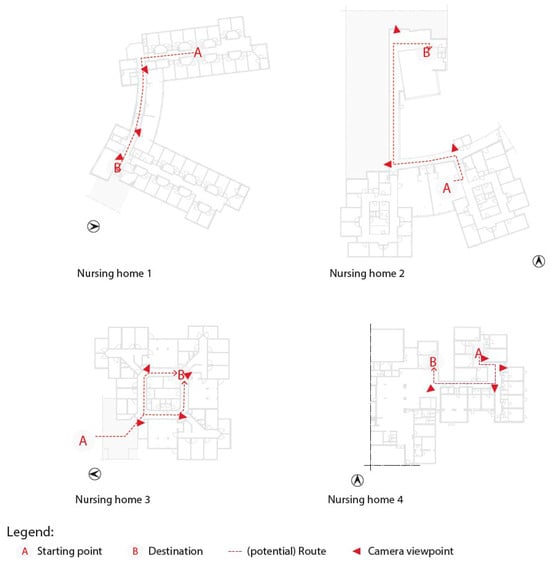
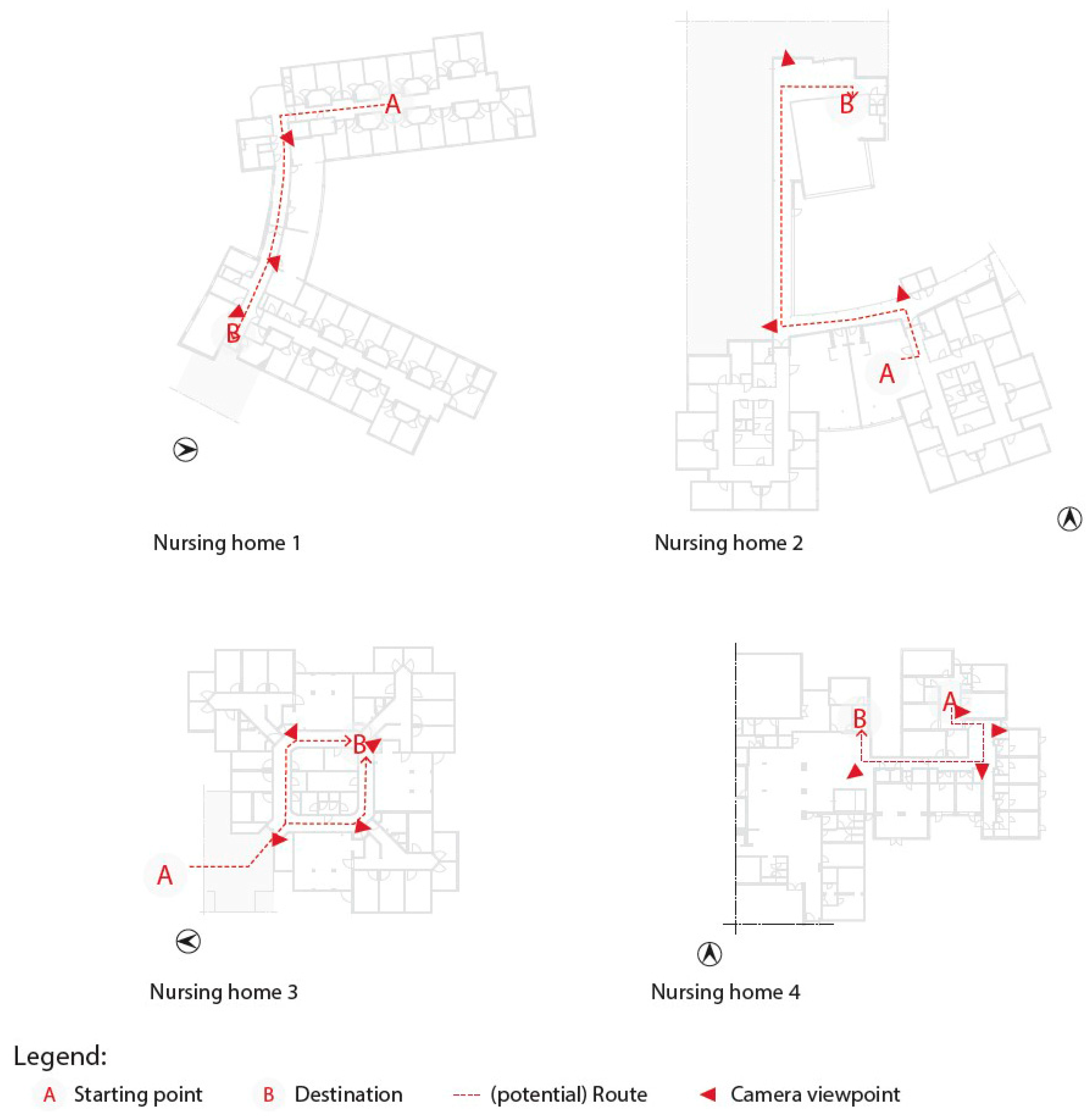
The navigation task was conducted in four nursing homes in the Netherlands, referred to as NH1, NH2, NH3, and NH4, selected with a convenience sampling approach. Figure 1 shows the floorplans of the four nursing homes, including the starting and destination point. In three of the four nursing homes, there was only one possible route to arrive at the destination. In the fourth nursing home, two similar routes—surrounding a continuous loop corridor—were possibilities for arriving.
Figure 1.
Floorplans of nursing homes, including starting and destination point and camera viewpoints.
In each nursing home, the care staff recruited participants for the study based on the following inclusion criteria: ability to move independently (i.e., movement without any aids, with a walking stick, using a walker, using a wheelchair allowing propelling by foot), diagnosed with dementia (i.e., Alzheimer’s Disease, vascular dementia), and living on the same floor to allow navigation within the same floor. In total, twenty participants were recruited (four to six participants per nursing home) and informed consent was provided by the informal carer. However, on the spot, five participants were excluded from the navigation task, due to personal reasons (2x) (e.g., sleeping during tasks), or due to poor on-site communication with the participant (3x) (e.g., no response at all to the researcher after approaching the participant). This resulted in n = 15 participants conducting the navigation task spread over four nursing homes (referred to as NH1.A; nursing home 1, participant A). In Table 3, an overview is provided of the participant characteristics. The health profile includes the type of dementia (based on information from caregivers), mobility and sensory data, and details of any heart medication (in relation to the interpretation of the physiological data). For the personality profile, information is provided concerning whether someone is a frequent walker or not, since this might influence the heart rate of the participant conducting the navigation task, which is important to interpret the correct deviation compared to the baseline. The two final columns provide the information which the sensors collected during the navigation task.
Table 3.
Overview of participant characteristics concerning the type of dementia, specifications about mobility, sensory aids, medication, and movement behavior (if not applicable: n.a.); data collected by each sensor type during the navigation task.
2.3. Spatial Analysis
Floorplan analysis techniques (e.g., manual and space syntax) and visual content analysis [54] were used to identify the spatial characteristics of potentially confusing and stressful spaces in nursing homes.
2.3.1. Data Collection and Analysis
Both two-dimensional and three-dimensional materials of the nursing homes were used to study the spatial characteristics. Two-dimensional floorplans were examined to objectively analyze the composition of the building, whereas pictures at eye-level (and field visits) of the identified spaces as three-dimensional materials were studied to analyze what the participants with dementia encountered on their route. The second is important because (1) we experience buildings by moving step-by-step through them [55,56,57] and (2) people with dementia use the egocentric reference frame instead of the allocentric reference frame to navigate, implying that they rely on what they literally perceive when moving through a building (e.g., [9]).
The floorplans of the four nursing homes were manually analyzed based on the functions of the building. Furthermore, a visibility graph analysis (VGA) as a space syntax technique was conducted to identify the most and least visible spaces in the corridors (software depthmapX 0.30 Tasos Varoudis, grid of 200, global measures ‘n’) [58].
The visual content analysis consists of four steps: (1) selection of images, (2) setting up the codebook, (3) coding (including reliability testing), and (4) analysis using various techniques [55]. Pictures were taken at an eye-level perspective of the places where the participants exhibited confused and stressed behavior during the navigation task. The pictures were used as a proxy of the spaces, representing the space. Field visits to these spaces were conducted to supplement the information about these spaces. The deductively set up codebook was based on the following variables focusing on wayfinding and movement through buildings (based on [28,55,59,60,61]): composition, geometry, dimensions, openings, lighting, surface properties, objects, and signage (see Table 4). For reliability reasons, 100% of the pictures were independently coded by two researchers in a two-step approach. First, five spaces were coded and discussed by the two researchers. Small adjustments were made to the specifications of the codebook (e.g., the definition of a dead-end corridor) and an assessment category was added (i.e., ‘unable to assess this code based upon the picture’; used for, e.g., allowed accessibility of the space). In the case of the latter, the coding of the researcher who undertook the field visit and the navigation task was preferred. Thereafter, the two researchers coded the remaining thirteen pictures and discussed the findings. Additionally, the researchers mentioned the level of firmness of the coding, so they could reach a joint decision during the discussion. The matrix of the coding was qualitatively analyzed using descriptive analysis combined with the findings of the floorplan analysis. Lastly, the findings were compared to the literature.
Table 4.
Codebook.
2.3.2. Sample
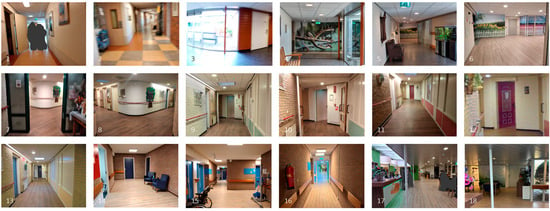
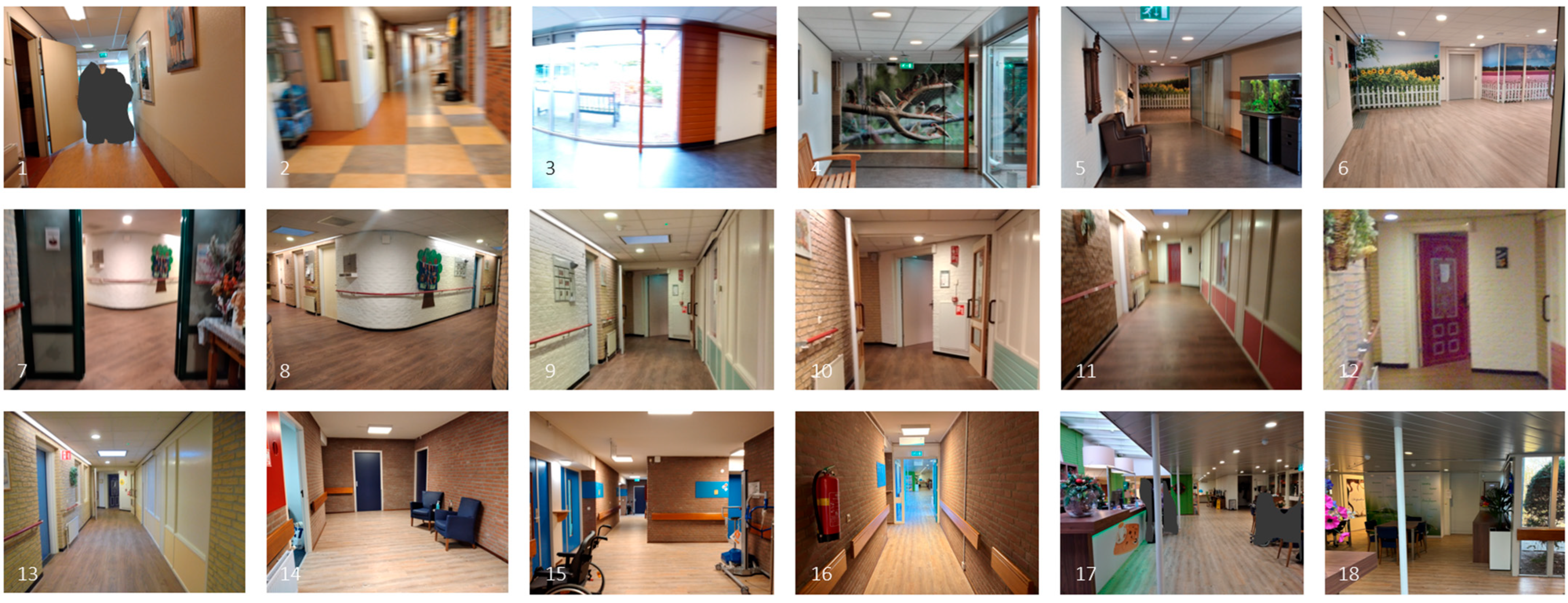
Based on the navigation task, eighteen places divided over the four nursing homes were identified as potentially confusing and/or stressful spaces. Figure 2 shows images at an eye-level perspective of the identified places.
Figure 2.
Pictures of the eighteen identified confusing and/or stressful places.
2.4. Research Ethics
The study set up was approved by the Ethical Review Board of Eindhoven University of Technology (ERB2022ID68a) on 22 December 2022. Thereafter, the care organizations involved approved the study and reached out to the informal caregivers. The informal caregivers provided written consent for their loved ones. Most importantly, on the measurement days, participants were able to decide on the spot whether to participate or not. For example, one participant refused to wear the KANA sensor on the second day of measurements and another participant refused to wear the Empatica E4 sensor on the first day. The decisions of the participants were leading in these cases. However, the researchers were present at each location for two days, which made it possible to conduct the navigation task with these two participants, including sensor data collection.
3. Results
3.1. Navigation Task
3.1.1. Wayfinding Behavior
Nine out of fifteen participants reached the destination. Three of them and one participant who reached the goal made a wayfinding error (e.g., turning in the wrong direction).
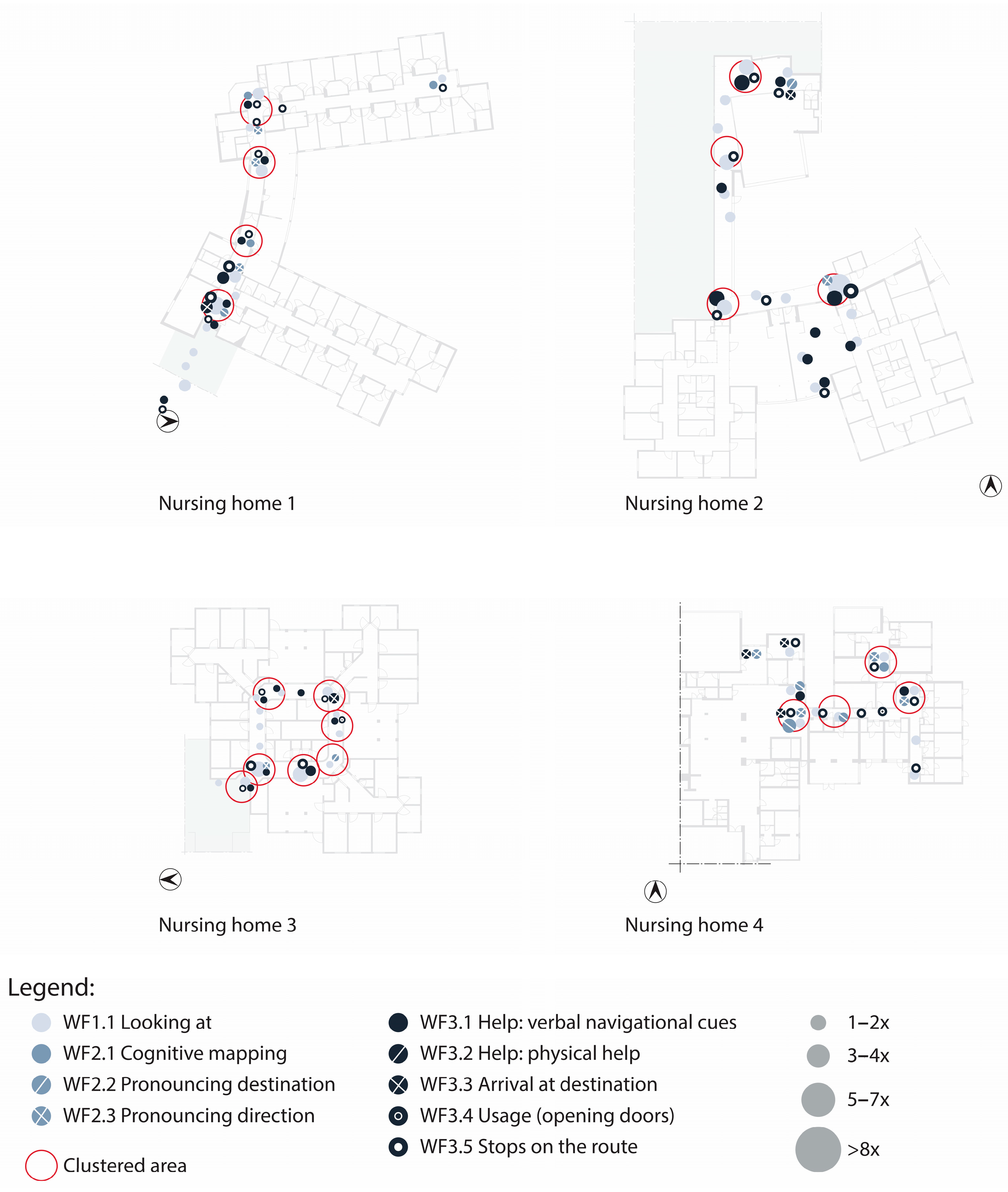
The most observed wayfinding behaviors in the four nursing homes together were looking at various things (WF1.1) and stops on the route (WF3.5), often accompanied by verbal navigational cues (WF3.1) (Figure 3). Zooming in on the behavior ‘looking at’, participants investigated corridors, open doors, windows (both to the outside and ‘interior windows’), and sometimes to signage. Familiar places along the route seemed to be recognized by some participants in NH3 and NH4. In both cases, the route went across their living rooms.
Figure 3.
Observed wayfinding behaviors; the red circle indicates clusters of behaviors.
Verbal navigational cues were mostly given by the researcher repeating the destination, or giving potential hints on the destination (e.g., the red door near living room ‘Red’; the sunflowers at the activity space; the bus stop near the living room or kitchen). This happened often at spots where participants seemed distracted due to making a decision at a decision moment, other people (i.e., fellow resident, care professional), opening of a window or door, or due to potential distractions in the interior (e.g., aquarium, birds, stuffed animals).
Participants paused their search to look at spatial information, at decision moments, and after distractions.
3.1.2. Affective State
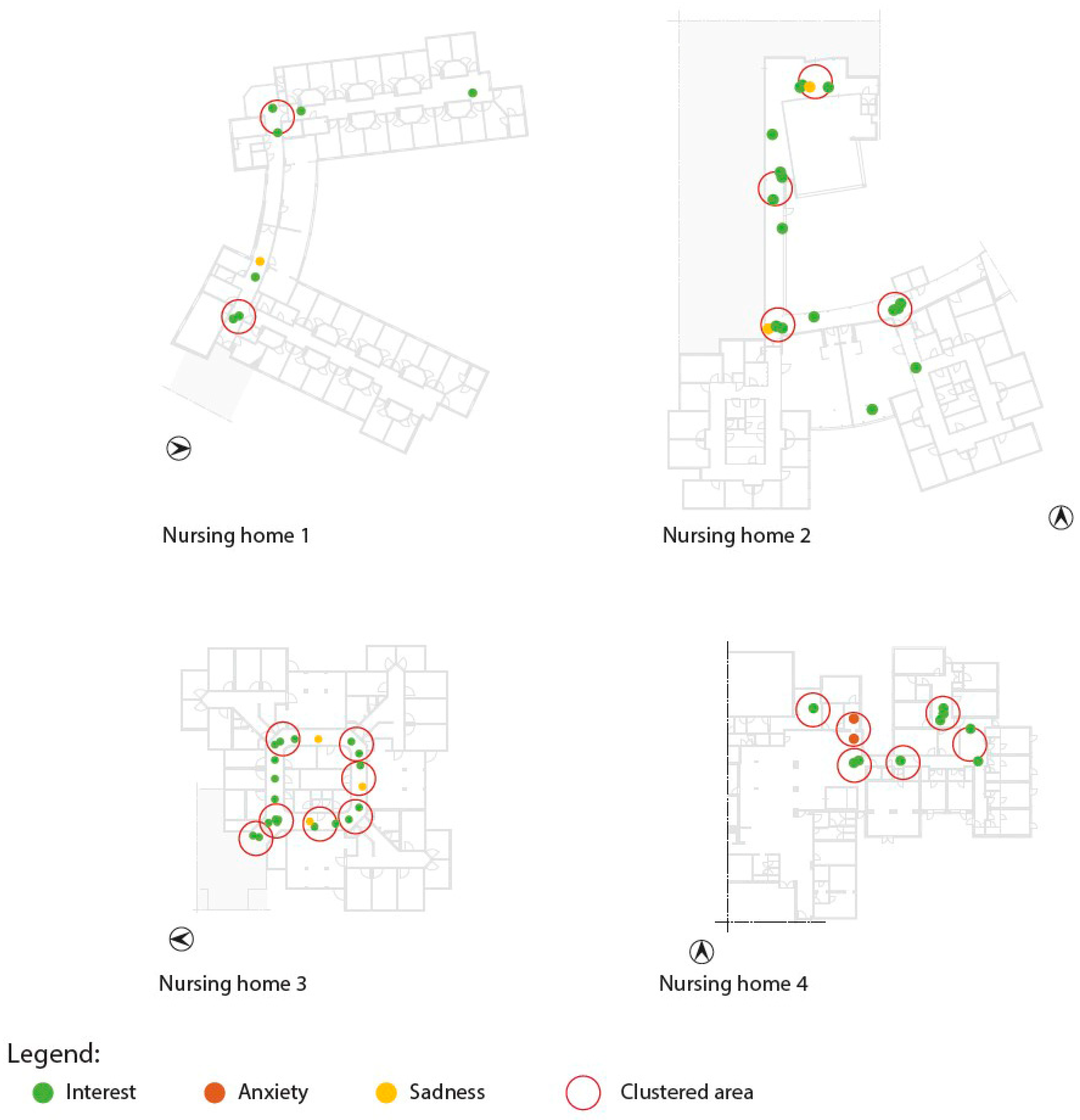
Observable affective states. No agitation (MEDLO scale) was measured during the navigation tasks. In addition, most often, a neutral facial expression (MEDLO scale) was observed. The most-observed emotion following the OERS was interest (53x), followed by contentment (33x), pleasure (16x), sadness (6x), and anxiety/fear (2x). No anger was observed. See Figure 4.
Figure 4.
Observed emotions on the OERS: interest, sadness, anxiety; the red circle indicates clusters of emotions.
Zooming into the locations of these affective states, ‘interest’ was often observed at decision moments. However, in NH2, ‘interest’ was also observed at a place where lots of decoration was exposed. Furthermore, in NH3, ‘interest’ was observed over the entire route. ‘Sadness’ might be related in one case to not knowing the direction (NH2) and in two cases to not recognizing the destination (NH1, NH2). In NH2, this sad affective state was observed at decision moments. ‘Anxiety’ might be related in one case to not recognizing the destination (NH4).
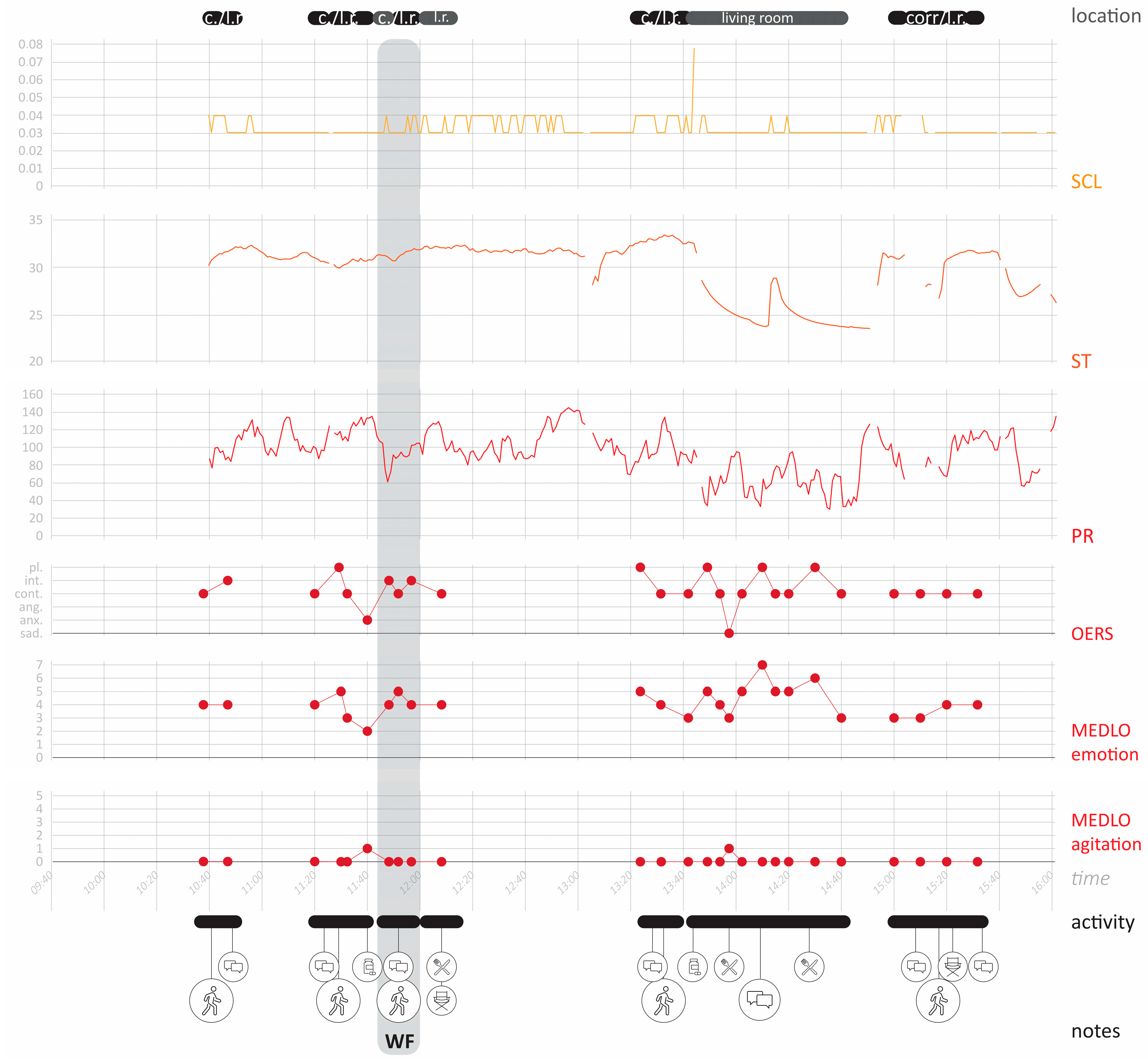
Physiological affective states. While the navigation task was conducted with fifteen participants, physiological data of sufficient quality could only be collected from ten participants. For each of these participants, a graphical and calculated baseline were developed. Figure 5 shows an example of a graphical baseline. During the day, this participant conducted multiple activities (e.g., walking, chatting, eating, and drinking). Observations of visible emotional responses were recorded. As can been seen in the figure, these varied from mainly neutral to occasional signs of pleasure. Furthermore, the PR, ST, and SCL measures are linked to the timeline of activities over the day.
Figure 5.
Graphical baseline development of participant NH4.A, day 1 (about the location; corridor is abbreviated to c., living room is abbreviated to l.r.).
This information was used to identify trends in data during the navigation task. Table 5 shows the trends of the physiological values of HR, HRV, PR, PRV, ST, and SCL. Based on these trends, the data were interpreted in terms of stress, relaxation, or concentration. It turned out that one participant did not show any signs of stress during the navigation task, six participants showed some signs of concentration in combination with a relaxed state, two participants exhibited signs of stress and/or concentration, and one participant had signs of stress or fatigue.
Table 5.
Trends in physiological data during navigation tasks and interpretation (if not applicable: n.a.).
Participant NH2.B physiologically showed signs of stress, and signs of sadness were observed. This participant was unsure how to proceed with his search at a decision moment. Participant NH3.A experienced no stress according to the physiological data but showed some signs of sadness during the navigation task.
3.1.3. Identification of Places of Confusion
In total, fifteen navigation tasks were conducted. A total of 60% of the participants reached and recognized the destination; 26% of the participants made wayfinding errors (i.e., took the wrong direction, walked along the destination without recognizing it). The most observed wayfinding behaviors were looking at various things, stops on the route, and receiving verbal navigational cues, which indicate signs of confusion. While neutral facial expressions were observed often, physiological data revealed signs of concentration.
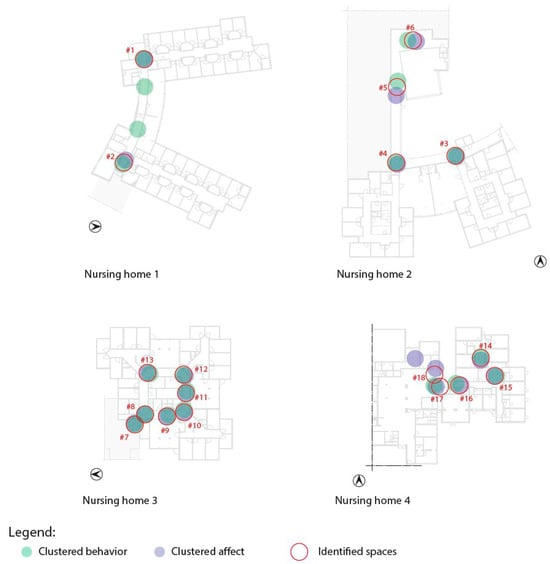
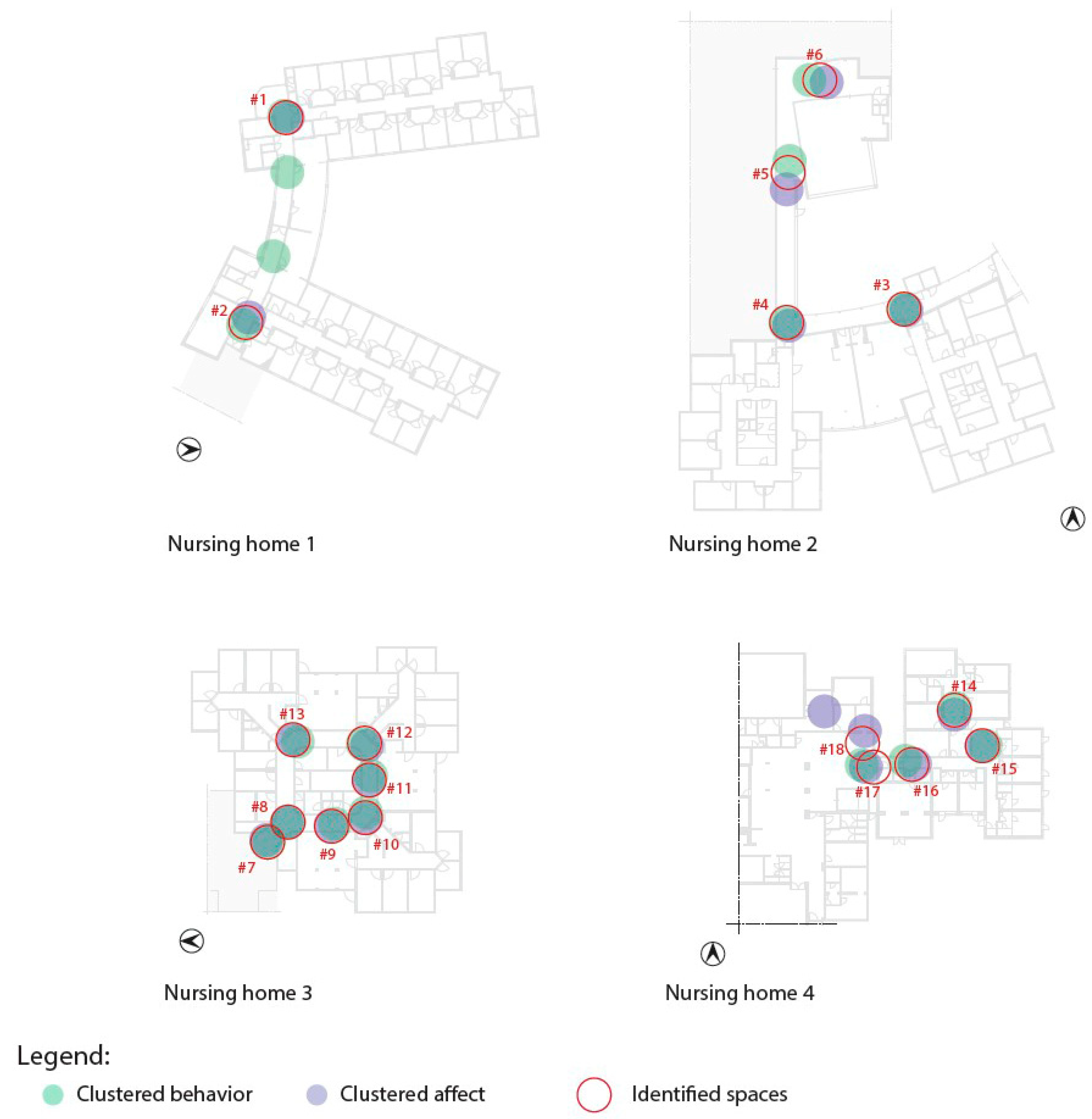
In Figure 6 the clustered locations of the wayfinding behaviors ‘looking at/stops on the route/verbal navigational cue’ (red circles) and the observed affective states ‘interest/sadness/anxiety’ (blue circles) are plotted on the floorplans. In most cases, these wayfinding behaviors and affective states overlap. However, in NH1, two additional red circles are visible. In total, eighteen locations are identified in which confused wayfinding behavior and affective states were observed. In the following section, these locations are deeply analyzed.
Figure 6.
Identified spaces, based on clustered spaces with confused behaviors and clustered spaces with observed emotions of ‘interest’/’sadness’/’anxiety’. The numbers correspond to the identified places with picture in Figure 2.
3.2. Spatial Analysis
3.2.1. Studying the Floorplans
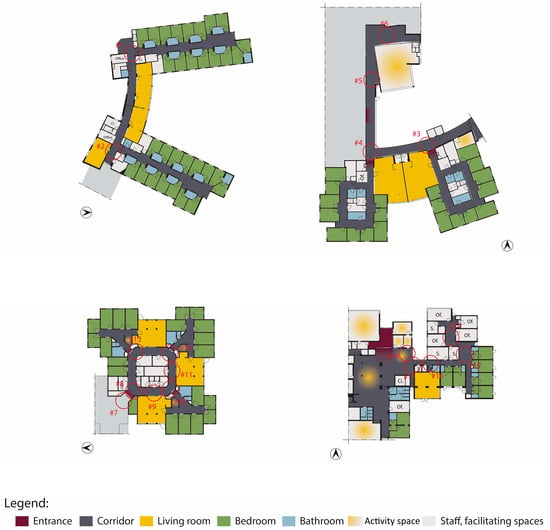
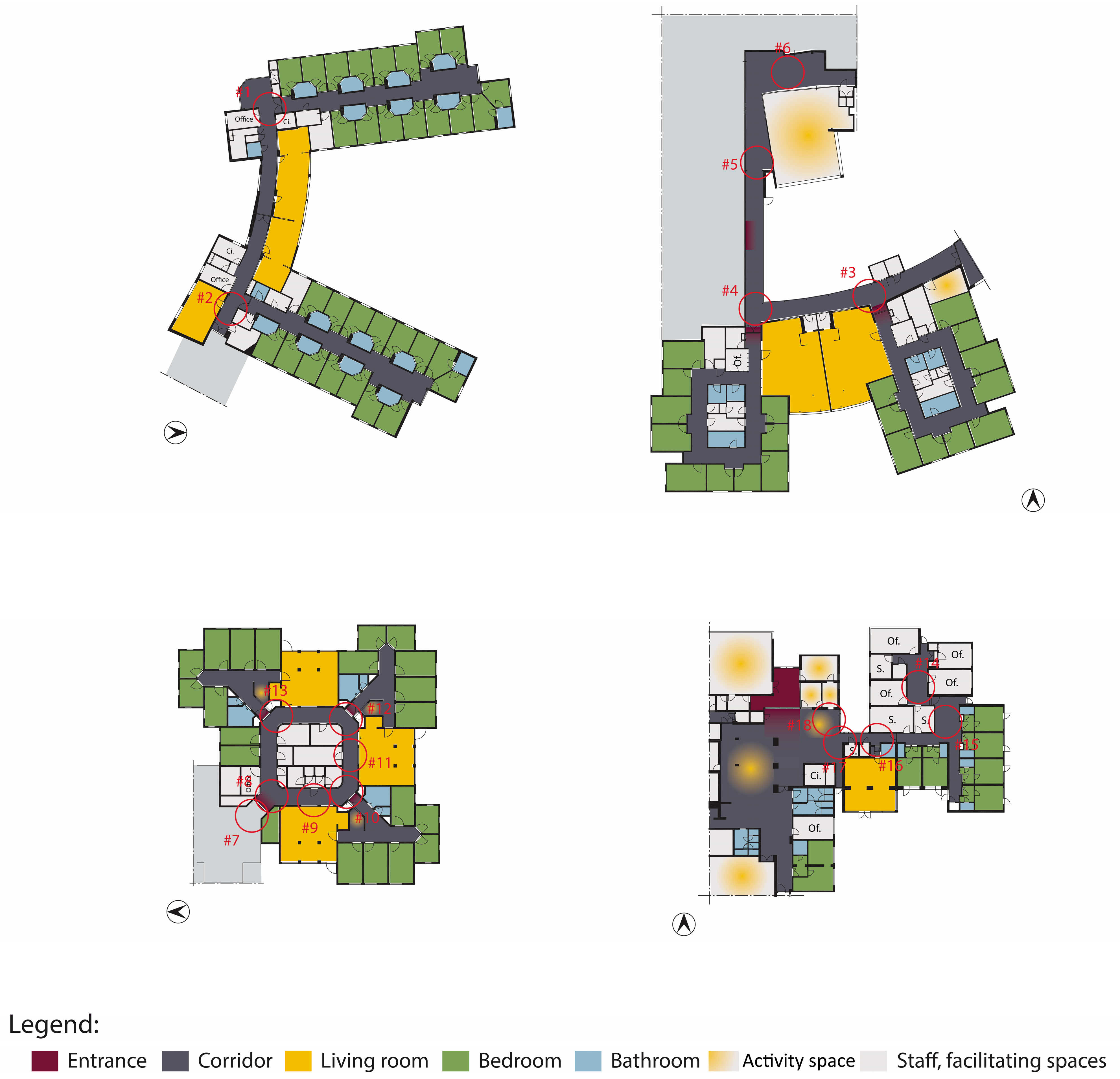
All nursing homes house the same basic functions: an entrance area, corridor, shared living room, private bedrooms, bathrooms, storage spaces, and care offices. Furthermore, all of the nursing homes have activity spaces, except for NH4. Figure 7 shows the analysis of the functions. It turns out that the identified spaces are often surrounded by storage spaces, care offices, living room/activity spaces, and/or entrance areas.
Figure 7.
Floorplan analysis displaying functions of the four nursing homes. The numbers correspond to the identified places with picture in Figure 2.
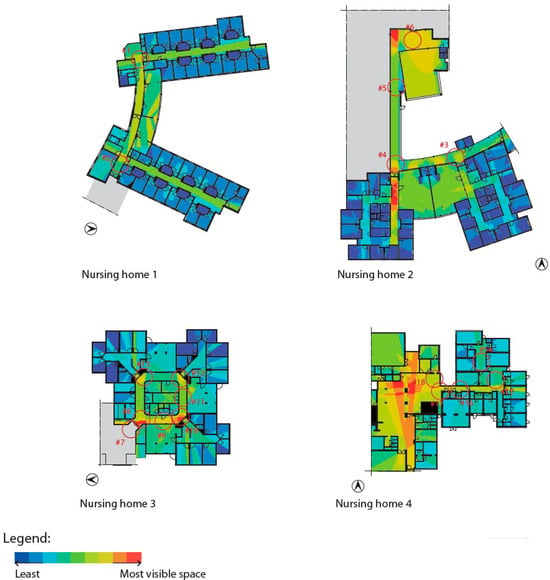
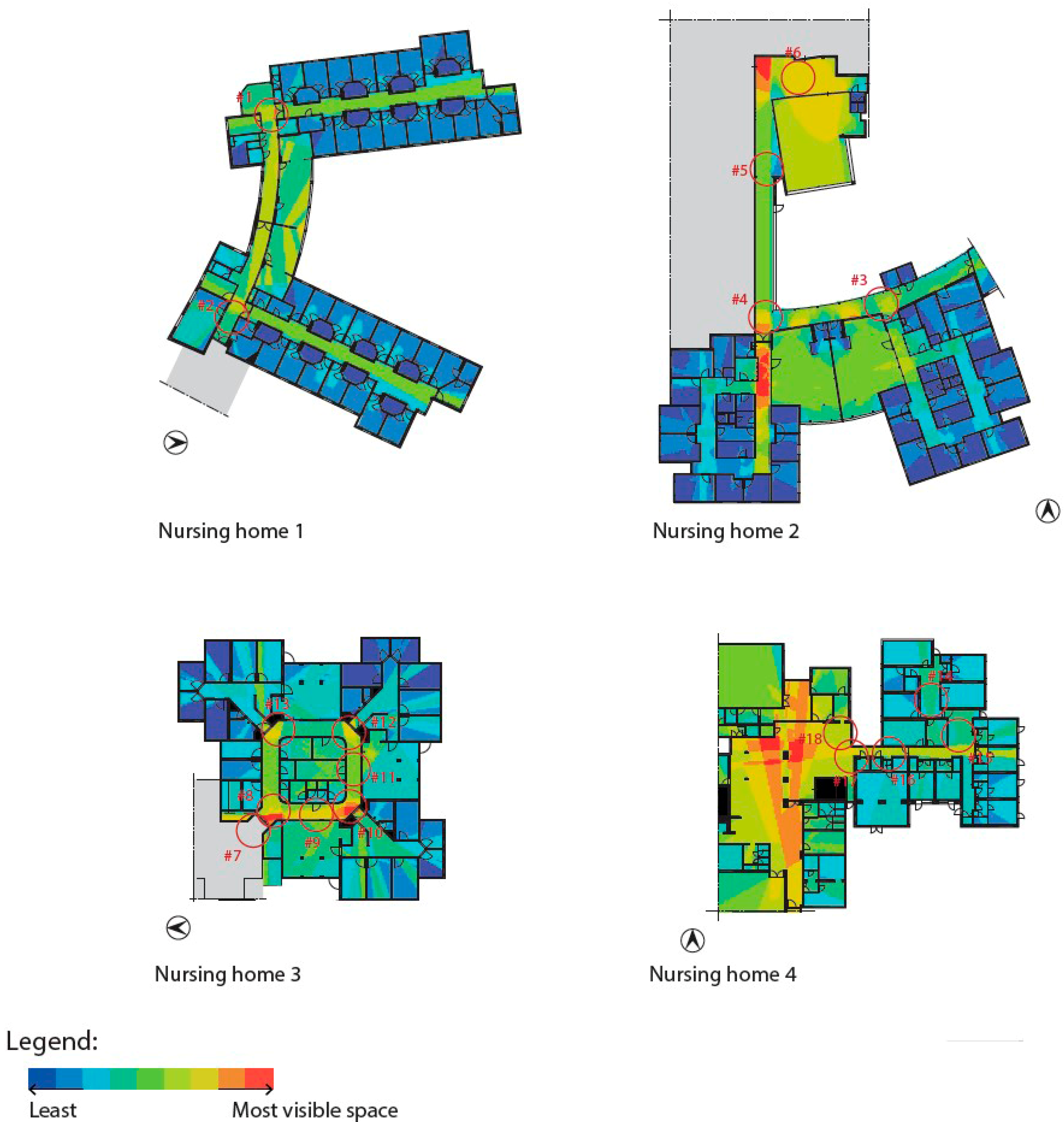
The VGA revealed the most- and least-visible spaces in the nursing homes (Figure 8). It turned out that the identified spaces have rather high visibility values.
Figure 8.
Visibility graph analysis of the four nursing homes. The numbers correspond to the identified places with picture in Figure 2.
3.2.2. Analyzing the Spaces from an Eye-Level Perspective
Some characteristics were present in almost all eighteen spaces (e.g., facing a wall, similar shapes of walls next to you, ceiling lighting), whereas other characteristics were rarely present (e.g., windows, floor patterns, wall lighting).
Regarding composition, 44% of the places curve/turn and 50% of people must decide to continue the route. In 89% of the places, one encounters a wall; either a dead-end corridor (6%), or a T-junction (83%). Often, this is a blind wall, sometimes accompanied by some decorative elements. In 61% of the places, one encounters a space, often the entrance to a bedroom corridor, storage space, an office, or a store; 44% of the places are surrounded by inaccessible spaces.
Considering the geometry and dimensions, 33% of the places have a widening area. In 89% of the places, the shape of the walls on both sides is similar. In only one space (6%), use of niches has been applied.
Considering openings, in 72% of the places a door is positioned in front of you, and in 61% of the places a door is situated left or right from the wayfinder. Doors towards both sides offer access to the living room, storage space, office, or a bedroom. In 28% of the places, a window in the façade provides a view towards the outside and provides daylight penetration. Furthermore, in 28% of the places, a skylight allowing natural daylight in the corridor is situated. In 72% of the places, an ‘interior window’ is positioned, allowing views towards a living room, office, bedroom, or corridor.
Regarding surface properties, in two places (11%) floor patterns were applied. In 33% of the places wall murals are present on the wall. One third of these wall murals are used to hide an exit door, while in the other two thirds they are used as decoration; 44% of the places have some color on the walls. Lastly, in 83% of the places, multiple wall-finishing materials are applied.
Concerning lighting, all of the spaces (100%) have ceiling lighting and nowhere are wall-mounted lighting features used.
Concerning objects, in 44% of the places furniture was positioned and in 61% of the places decorative elements were identified (e.g., paintings, flowers). In 61% of the places visible attributes of fire-safety tools were identified. In one space (6%), care-related items were stored.
Regarding signage, 56% of places had identification signage, 11% had directional signage, and in one place informational signage and in one place regulatory signage was applied.
4. Discussion
In order to map the challenges people with advanced dementia encounter while navigating towards an irregular destination in a familiar environment and identify the spatial characteristics causing confusion and potential stress, a navigation task with fifteen participants was conducted, spread over four nursing homes, followed by the analysis of the spaces in which these participants showed confused behavior. First, we discuss the results of the navigation task. Thereafter, the identified spatial characteristics causing confusion will be discussed.
4.1. Wayfinding Behavior and Related Affective State
Nine of the fifteen participants reached the destination. The most-observed wayfinding behaviors were looking at various things and pausing, often accompanied by a verbal navigational cue. Being unable to recognize the destination upon arrival—both on the picture and in reality—probably caused the observed negative affective responses of three of the participants (e.g., sadness, anxiety). Being unable to find their way probably caused the negative affective responses observed at decision moments for one participant. Few signs of stress were physiologically measured. Participant NH4.A exhibited physiological signs of stress or fatigue. However, combined with the observed affective state of anxiety, she might have been stressed because she did not recognize the destination. Participant NH3.A showed some signs of sadness during the navigation task. Perhaps she was sad about the story she was telling during the search. However, while neutral facial expressions were observed often, physiological data revealed frequent signs of concentration. This implies that it took energy and mental capacity to find their way. We also observed this in the observations using the OERS, mainly by the affective state ‘interest’. The absence of a stress response can be caused by multiple reasons. For example, it may not have been a stressful task due to the discrepancy between being on your own versus being accompanied, or the participants may have experienced this navigation task as a nice moment to chat with someone.
The physiological measurements and observed affective states aligned quite well. However, as mentioned in the research of Hammink et al. [33], neutral facial expressions could convey a variety of physiological responses. This was also the case in our study. Observed emotions such as ‘interest’ showed physiological measures of ‘concentration’. Unfortunately, it was impossible during the measurement days to pinpoint the specific locations of the physiological measurements. Meanwhile, KANA upgraded their software at the beginning of 2025, providing the option to pinpoint moments during data gathering. However, the Empatica sensor measures per minute (although it has the advantage of taking the multiple physiological measures necessary for nuanced interpretation), and wayfinding in buildings goes quicker than a certain space per minute. Future research should take this into consideration.
Confused and stressful wayfinding behaviors and the related affective responses aligned well in the spatial settings of the four nursing homes. A limitation of this study is the rather small sample size of fifteen participants spread over four buildings. This decision was made based on practical reasons to gather more participants for the study in total. Future research could enlarge the sample size of participants, to gain more certainty in identifying places, while future research could also study more buildings to obtain more certainty about spatial characteristics.
4.2. Identification of Spatial Characteristics Causing Confusion
In this section, the findings regarding the eighteen identified places were compared with evidence-based design guidelines for facilitating people with dementia while wayfinding in nursing homes [28] and other relevant articles, especially those on high visibility values and VGA.
Our findings confirm those in the research that advise minimizing the number of shifting directions and decision moments on the route [24], minimizing the number of doors on the route [26], and the usage of walls that are distinctive in shape [24,25,26] to minimize confusion. Furthermore, our findings add to research on the orienting effects of windows in facades, which is suggested by experts [62] and in other types of environment [63].
Unfortunately, our findings can still give no more clarification on the question of whether floor patterns are confusing or facilitating, which is still a debate in the literature. While Passini et al. [25] suggested avoiding them based on a study involving people with advanced dementia in their inpatient living environment, Pollock and Fuggle [64] suggested encouraging them in a similar study. The use of floor patterns is encouraged by experts in the study of Alam and Kim [65]. Furthermore, our findings can give no more clarification on the benefits of color use in wayfinding, which is another debate in the literature. Passini and colleagues [25], in empirical studies with people with advanced dementia in their living environment, mentioned no benefits of color use, while studies with people in the early stages of dementia [66] and with experts [67] suggested that color use is beneficial.
Our findings contradict current findings in the literature regarding high-visibility areas. While research with cognitively healthy people associated high-visibility areas with better wayfinding performance (e.g., [68,69]), our findings suggest the opposite for our target group: confusion arose at rather high-visibility areas in the nursing homes. Furthermore, our findings contradict gray literature promoting interior windows to allow better wayfinding performance [70]. While interior windows could enhance visibility between different spaces, our findings suggest that confused wayfinding behavior was observed near places with interior windows.
A new finding is that in places where the corridor widened significantly—resulting in a kind of square—confusion might arise. Instead of an organizing place within the composition of the spaces, this might feel like a place to stay without being designed and furnished as a place to stay.
Future research is necessary to confirm the findings of high-visibility areas causing confusion for people with advanced dementia, the usage of interior windows for wayfinding purposes, and the effects of the widening of corridors in relation to wayfinding. Furthermore, while shape can be a distinguishing factor, the use of materials could be beneficial as well. However, our findings showed that confusion arose at places with multiple wall-finishing materials. Future research could dive into the orienting or disorienting impact of multiple wall finishes in relation to distinctiveness. Also, future research could consider the type and allowed accessibility of spaces surrounding crossroads and spaces with a turn. While research suggests using wall murals to hide exit doors [71], future research could examine the role of decorative wall murals in confusing or facilitating wayfinding for people with advanced dementia in nursing homes. Furthermore, a question arises in what way and to what extent furniture and decorative elements are indeed landmarks facilitating wayfinding. Lastly, while research suggests ‘the lighter, the better’ [26], future research could examine the role of wall-mounted lighting compared to ceiling lighting.
4.3. Methodological Considerations
In this section, we take a closer look at methodological considerations regarding the sample of nursing homes, the sample of participants, the data collection, and the route taken.
This study was undertaken in four nursing homes. The nursing homes were selected based on convenience sampling (e.g., already in contact with) since it is difficult to get access to nursing homes and conduct research with this vulnerable target group due to ethical considerations and constraints. These specific nursing homes were built decades ago. Future research could dive into the architecture of newly designed nursing homes to identify the same and other spatial characteristics that might confuse or facilitate people with advanced dementia in wayfinding.
Furthermore, considering the sample of the nursing homes, one of them has a continuous loop corridor. The desired destination was on the direct opposite side of the entrance of the ward, which provided two opportunities to reach this destination: left or right. However, both sides were identical in building structure. However, some small differences can be found: subtle color differences on the lower part of the wall (e.g., light green vs. light yellow), decorative elements (e.g., a painted tree on the wall and a painting in a picture frame), and on one side an interior window which was not situated on the other side. In our study, we observed that the participants preferred the route which led them first to their own living room. Furthermore, two of the four participants walked across the entire continuous loop corridor, which made it possible to see the whole corridor and potentially confusing places. Therefore, it was possible to collect more data about both of the comparable route options.
In our study, fifteen people with advanced dementia participated in the navigation task. This is a limited number, which might impact the representativity of the findings. However, recruiting this target group for scientific research is difficult. For this study, it was important to select participants who were still able to move independently and who lived in the same residential ward. This is because our aim was to identify the spatial characteristics which confused people with dementia in their living environment. However, the trend in current Dutch nursing homes is the concept of small-scale living, which already implies a smaller number of people per ward. Furthermore, there is another difficulty, as both the professional caregiver and the informal caregiver must provide informed consent for the participation of their loved one, and on the day itself, contact with the participant should be possible and the participant themselves needs to agree upon participation. Furthermore, it should be noted that the target group ‘people with advanced dementia’ is truly diverse, with varied cognitive and physical health. Therefore, simply increasing the sample size is not necessarily linked to improving the reliability of the results, since it can also create more error variance.
In our study, we provided some information about the medical and health status of the participants (e.g., type of dementia and use of heart medication). This information was necessary as background information and was not used as a parameter. In future research, this type of information might be interesting to study in relation to wayfinding strategies.
The combination of methods applied in this study—a navigation task with observed and physiologically measured affective states and floorplan analysis techniques, combined with visual content analysis—provided a deeper understanding of the environment and the experiences of people with advanced dementia while wayfinding. While we are unsure what participants looked at while wayfinding in the nursing homes, we examined what they encountered during the navigation task. This combination of methods provided the opportunity to link the place with the behavior. Future research could ask participants—if still possible—to verbalize their thoughts during the navigation task. However, this will become more difficult for people with advanced dementia due to their health condition.
The participants searched for an irregular location in a familiar environment (i.e., unfamiliar route) because one uses different wayfinding strategies; participants should be more focused on the physical environment they directly perceive and not count on their (impaired) memory. Based on this strategy, we identified places of confusion. Future research could examine these potential confusing spaces on familiar routes as well.
5. Conclusions
Composition wise, signs of confusion arose at places with high visibility values, a change in direction, a decision moment, when encountering a blind wall or an inaccessible space, and places surrounded by functions such as storage rooms, living rooms, and bedrooms. Square-type spaces (a widening corridor) and walls with no distinctive shapes create confusion of the architectural geometry and dimensions. Furthermore, multiple visible doors, interior windows, and a lack of windows to the outside might cause confusion on openings and lighting features in architecture. Lastly, decorative elements such as surface properties and objects might enhance confusion. It may be the case that decorative elements and interior windows might distract people with advanced dementia while wayfinding in nursing homes, causing confusion. Understanding people with advanced dementia’s experiences and behavior during wayfinding in the architectural setting of their inpatient living environment can inform more suitable design solutions to facilitate wayfinding in future buildings.
Author Contributions
Conceptualization, L.P.G.v.B., D.D., M.M.; methodology, L.P.G.v.B., D.D., M.M.; validation, L.P.G.v.B., D.D., M.M.; formal analysis, L.P.G.v.B., D.D.; investigation, L.P.G.v.B.; resources, L.P.G.v.B., D.D., MM; data curation, L.P.G.v.B.; writing—original draft preparation, L.P.G.v.B.; writing—review and editing, L.P.G.v.B., D.D., M.M.; visualization, L.P.G.v.B.; supervision, D.D., M.M.; project administration, M.M. All authors have read and agreed to the published version of the manuscript.
Funding
The research received no external funding.
Institutional Review Board Statement
The study set up was approved by the Ethical Review Board of Eindhoven University of Technology (ERB2022ID68a) on 22 December 2022.
Informed Consent Statement
The involved care organizations approved the study and reached out to the informal caregivers. The informal caregivers provided written consent for their loved ones. Most importantly, on the measurement days, participants were able to make a decision on the spot of whether to participate or not. For example, one participant refused to wear the KANA sensor on the second day of measurements and another participant refused to wear the Empatica E4 sensor on the first day. The decisions of the participants were leading in these cases.
Data Availability Statement
The data presented in this study are available on request from the corresponding author due to privacy or ethical restrictions.
Acknowledgments
We would like to express our gratitude to the participants with dementia, their loved ones, and carers of the participating care organizations Oktober, ZONL, and Treant. Furthermore, we would like to thank KANA for the use of their sensors.
Conflicts of Interest
The authors declare no conflicts of interest.
Abbreviations
The following abbreviations are used in this manuscript:
| HR | Heart rate |
| HRV | Heart rate variability |
| NH | Nursing home |
| PR | Pulse rate |
| PRV | Pulse rate variation |
| ST | Skin temperature |
| SCL | Skin conductance level |
References
- Andersen, C.K.; Wittrup-Jensen, K.U.; Lolk, A.; Andersen, K.; Kragh-Sørensen, P. Ability to perform activities of daily living is the main factor affecting quality of life in patients with dementia. Health Qual. Life Outcomes 2004, 2, 52. [Google Scholar] [CrossRef] [Scilit]
- Marquardt, G. Wayfinding for people with dementia: A review of the role of architectural design. HERD Health Environ. Res. Des. J. 2011, 4, 75–90. [Google Scholar] [CrossRef] [Scilit] [PubMed]
- Pai, M.C.; Jacobs, W.J. Topographical disorientation in community-residing patients with Alzheimer’s disease. Int. J. Geriatr. Psychiatry 2004, 19, 250–255. [Google Scholar] [CrossRef] [Scilit] [PubMed]
- Reisberg, B.; Ferris, S.H.; de Leon, M.J.; Crook, T. The Global Deterioration Scale for assessment of primary degenerative dementia. Am. J. Psychiatry 1982, 139, 1136–1139. [Google Scholar] [CrossRef] [Scilit]
- Passini, R. Wayfinding in Architecture; Van Nostrand Reinhold Company Inc.: New York, NY, USA, 1984. [Google Scholar]
- Davis, R.; Sikorskii, A. Eye tracking analysis of visual cues during wayfinding in early stage Alzheimer’s disease. Dement. Geriatr. Cogn. Disord. 2020, 49, 91–97. [Google Scholar] [CrossRef] [Scilit]
- Kuliga, S.; Berwig, M.; Roes, M. Wayfinding in people with Alzheimer’s disease: Perspective taking and architectural cognition—A vision paper on future dementia care research opportunities. Sustainability 2021, 13, 1084. [Google Scholar] [CrossRef] [Scilit]
- Miniaci, M.C.; De Leonibus, E. Missing the egocentric spatial reference: A blank on the map. F1000Research 2018, 7, 168. [Google Scholar] [CrossRef] [Scilit]
- Serino, S.; Cipresso, P.; Morganti, F.; Riva, G. The role of egocentric and allocentric abilities in Alzheimer’s disease: A systematic review. Ageing Res. Rev. 2014, 16, 32–44. [Google Scholar] [CrossRef] [Scilit]
- Rainville, C.; Passini, R.; Marchand, N. A multiple case study of wayfinding in dementia of the Alzheimer type: Decision making. Aging Neuropsychol. Cogn. 2001, 8, 54–71. [Google Scholar] [CrossRef] [Scilit]
- Wiener, J.M.; Pazzaglia, F. Ageing-and dementia-friendly design: Theory and evidence from cognitive psychology, neuropsychology and environmental psychology can contribute to design guidelines that minimise spatial disorientation. Cogn. Process. 2021, 22, 715–730. [Google Scholar] [CrossRef] [Scilit] [PubMed]
- Davis, R.; Weisbeck, C. Creating a supportive environment using cues for wayfinding in dementia. J. Gerontol. Nurs. 2016, 42, 36–44. [Google Scholar] [CrossRef] [Scilit] [PubMed]
- van Buuren, L.P.; Mohammadi, M. Dementia-friendly design: A Set of design criteria and design typologies supporting wayfinding. HERD Health Environ. Res. Des. J. 2022, 15, 150–172. [Google Scholar] [CrossRef] [Scilit]
- Delgrange, R.; Burkhardt, J.M.; Gyselinck, V. Difficulties and Problem-Solving Strategies in Wayfinding Among Adults with Cognitive Disabilities: A Look at the Bigger Picture. Front. Hum. Neurosci. 2020, 14, 46. [Google Scholar] [CrossRef] [Scilit]
- Ruotolo, F.; Claessen, M.H.G.; van der Ham, I.J.M. Putting emotions in routes: The influence of emotionally laden landmarks on spatial memory. Psychol. Res. 2019, 83, 1083–1095. [Google Scholar] [CrossRef] [Scilit]
- Damasio, A.R. The somatic marker hypothesis and the possible functions of the prefrontal cortex. Philos. Trans. R. Soc. Lond. Ser. B Biol. Sci. 1996, 351, 1413–1420. [Google Scholar] [CrossRef] [Scilit] [PubMed]
- Gartner, G. Putting Emotions in Maps–The Wayfinding Example; New Zealand Cartographic Society: Wellington, New Zealand, 2012; pp. 61–65. Available online: http://carto.geogr.msu.ru/cmc/publications/papers/papers_taurewa_12/papers/mcw2012_sec3_ch08_p061-065_gartner.pdf (accessed on 1 November 2025).
- Lawton, M.P.; Simon, B. The ecology of social relationships in housing for the elderly. Gerontologist 1968, 8, 108–115. [Google Scholar] [CrossRef] [Scilit]
- Carbone, E.; Miola, L.; Borella, E.; Pazzaglia, F. Dementia-friendly design. In Creating Empowering Environments for People with Dementia; Taylor & Francis: New York, NY, USA, 2024; p. 195. [Google Scholar]
- Mohammadi, M. Empathische Woonomgeving. Eindhoven. 2017. Available online: https://pure.tue.nl/ws/files/70373109/Rede_Mohammadi_LR_2017_30_juni.pdf (accessed on 1 November 2025).
- O’Malley, M.; Innes, A.; Wiener, J.M. (Dis) orientation and design preferences within an unfamiliar care environment: A content analysis of older adults’ qualitative reports after route learning. Environ. Behav. 2022, 54, 116–142. [Google Scholar] [CrossRef] [Scilit]
- Weisman, G.D. Improving way-finding and architectural legibility in housing for the elderly. In Housing the Aged: Design Directives and Policy Considerations; Elsevier: New York, NY, USA, 1987. [Google Scholar]
- Gärling, T.; Böök, A.; Lindberg, E. Spatial orientation and wayfinding in the designed environment: A conceptual analysis and some suggestions for postoccupancy evaluation. J. Archit. Plan. Res. 1986, 3, 55–64. [Google Scholar]
- Marquardt, G.; Schmieg, P. Dementia-friendly architecture: Environments that facilitate wayfinding in nursing homes. Am. J. Alzheimer’s Dis. Other Dement. 2009, 24, 333–340. [Google Scholar] [CrossRef] [Scilit]
- Passini, R.; Pigot, H.; Rainville, C.; Tétreault, M.H. Wayfinding in a nursing home for advanced dementia of the Alzheimer’s type. Environ. Behav. 2000, 32, 684–710. [Google Scholar] [CrossRef] [Scilit]
- Netten, A. The effect of design of residential homes in creating dependency among confused elderly residents: A study of elderly demented residents and their ability to find their way around homes for the elderly. Int. J. Geriatr. Psychiatry 1989, 4, 143–153. [Google Scholar] [CrossRef] [Scilit]
- Elmståhl, S.; Annerstedt, L.; Åhlund, O. How should a group living unit for demented elderly be designed to decrease psychiatric symptoms? Alzheimer Dis. Assoc. Disord. 1997, 11, 47–52. [Google Scholar] [CrossRef] [Scilit] [PubMed]
- Van Buuren, L.P.G.; Derks, D.A.J.A.; Mohammadi, M. Wayfinding in the nursing home corridor: Facilitating architecture for people with dementia. In Book of Proceedings: Innovating Health & Daily Life Through Living Labs, Proceedings of the Health & Wellbeing Living Lab Symposium & Smart Healthy Environments World Conference, Istanbul, Türkiy, 13–14 May 2025; Mohammadi, M., Konstantinidis, E., Terneusen, A., van Loon, M., Petsani, D., van Lieshout, T., Eds.; Zenodo: Geneva, Switzerland, 2025; pp. 350–374. [Google Scholar]
- Fink, G. (Ed.) Stress: Concepts, Cognition, Emotion, and Behavior: Handbook of Stress Series, Volume 1; Academic Press: Cambridge, MA, USA, 2016; Volume 1. [Google Scholar]
- Mustikawati, T.; Yatmo, Y.A.; Atmodiwirjo, P. Tours and Maps Operations as Movement Mechanism in Indoor Wayfinding. Int. J. Technol. 2021, 12, 887–896. [Google Scholar] [CrossRef] [Scilit]
- de Boer, B.; Beerens, H.C.; Zwakhalen, S.M.G.; Tan, F.E.S.; Hamers, J.P.H.; Verbeek, H. Daily lives of residents with dementia in nursing homes: Development of the Maastricht electronic daily life observation tool. Int. Psychogeriatr. 2016, 28, 1333–1343. [Google Scholar] [CrossRef] [Scilit]
- Lawton, M.P.; Van Haitsma, K.; Klapper, J. Observed affect in nursing home residents with Alzheimer’s disease. J. Gerontol. Ser. B Psychol. Sci. Soc. Sci. 1996, 51, P3–P14. [Google Scholar] [CrossRef] [Scilit]
- Hammink, J.H.W.; van Buuren, L.P.; Moor, J.A.; Derks, D.A.J.A.; Mohammadi, M. Evolving dementia care: An explorative study on the lived experience of older adults living with dementia in nursing homes using observational and biometric sensor data. Dementia 2024, 24, 456–479. [Google Scholar] [CrossRef] [Scilit]
- Cacioppo, J.T.; Tassinary, L.G.; Berntson, G. (Eds.) Handbook of Psychophysiology, 4th ed.; Cambridge University Press: Cambridge, UK, 2016. [Google Scholar] [CrossRef] [Scilit]
- Huberty, C.J.; Morris, J.D. Multivariate analysis versus multiple univariate analyses. Psychol. Bull. 1989, 105, 302–308. [Google Scholar] [CrossRef]
- Fishel, S.R.; Muth, E.R.; Hoover, A.W. Establishing appropriate physiological baseline procedures for real-time physiological measurement. J. Cogn. Eng. Decis. Mak. 2007, 1, 286–308. [Google Scholar] [CrossRef] [Scilit]
- Diamond, L.M.; Otter-Henderson, K.D. Physiological measures. In Handbook of Research Methods in Personality Psychology; The Guilford Press: New York, NY, USA, 2007; pp. 370–388. [Google Scholar]
- Prinzel, L.J., III; Freeman, F.G.; Scerbo, M.W.; Mikulka, P.J.; Pope, A.T. Effects of a psychophysiological system for adaptive automation on performance, workload, and the event-related potential P300 component. Hum. Factors 2003, 45, 601–614. [Google Scholar] [CrossRef] [Scilit]
- Freeman, F.G.; Mikulka, P.J.; Scerbo, M.W.; Scott, L. An evaluation of an adaptive automation system using a cognitive vigilance task. Biol. Psychol. 2004, 67, 283–297. [Google Scholar] [CrossRef] [Scilit]
- Andreassi, J.L. Psychophysiology: Human Behavior and Physiological Response; Psychology Press: London, UK, 2010. [Google Scholar]
- Benedict, C.; Scheller, J.; Rose-John, S.; Born, J. Thermal responses in emotion and cognition. J. Psychosom. Res. 2012, 72, 115–119. [Google Scholar]
- Castaldo, R.; Melillo, P.; Bracale, U.; Caserta, M.; Triassi, M.; Pecchia, L. Acute mental stress assessment via short term HRV analysis in healthy adults: A systematic review with meta-analysis. Biomed. Signal Process. Control 2015, 18, 370–377. [Google Scholar] [CrossRef] [Scilit]
- Critchley, H.D.; Eccles, J.; Garfinkel, S.N. Autonomic correlates of emotions. Brain Res. Rev. 2004, 44, 155–175. [Google Scholar]
- Forte, G.; Favieri, F.; Casagrande, M. Heart rate variability and cognitive function: A systematic review. Front. Neurosci. 2019, 13, 710. [Google Scholar] [CrossRef] [Scilit] [PubMed]
- Jiao, Y.; Wang, X.; Liu, C.; Du, G.; Zhao, L.; Dong, H.; Zhao, S.; Liu, Y. Feasibility study for detection of mental stress and depression using pulse rate variability metrics via various durations. Biomed. Signal Process. Control 2023, 79, 104145. [Google Scholar] [CrossRef] [Scilit]
- Kim, H.-G.; Cheon, E.-J.; Bai, D.-S.; Lee, Y.H.; Koo, B.-H. Stress and heart rate variability: A meta-analysis and review of the literature. Psychiatry Investig. 2018, 15, 235–245. [Google Scholar] [CrossRef] [Scilit]
- Kreibig, S.D. Autonomic nervous system activity in emotion: A review. Biol. Psychol. 2010, 84, 394–421. [Google Scholar] [CrossRef] [Scilit]
- Lima, R.; de Noronha Osório, D.F.; Gamboa, H. Heart Rate Variability and Electrodermal Activity in Mental Stress Aloud: Predicting the Outcome. In Biosignals; Science and Technology Publications: Setúbal, Portugal, 2019; pp. 42–51. [Google Scholar]
- Mo, Z.; Sam, E. Using biometric data to detect the emotional state of social media user as a first step towards early anxiety detection and intervention. J. Stud. Acad. Res. 2021, 2. Available online: https://jsar.fsha.org/index.php/jsar/article/view/16/11 (accessed on 1 November 2025).
- Nakanishi, R.; Hoshikawa, Y.; Ohta, S.; Saitoh, T. Emotional arousal and skin temperature responses. Int. J. Psychophysiol. 2013, 88, 234–240. [Google Scholar] [CrossRef] [Scilit]
- Or, C.K.; Duffy, V.G. Development of a facial skin temperature-based methodology for non-intrusive mental workload measurement. Occup. Ergon. 2007, 7, 83–94. [Google Scholar] [CrossRef] [Scilit]
- Setz, C.; Arnrich, B.; Schumm, J.; La Marca, R.; Tröster, G.; Ehlert, U. Discriminating stress from cognitive load using a wearable EDA device. Int. J. Psychophysiol. 2010, 78, 10–17. [Google Scholar] [CrossRef] [Scilit]
- Shaffer, F.; Ginsberg, J.P. An overview of heart rate variability metrics and norms. Front. Public Health 2017, 5, 258. [Google Scholar] [CrossRef] [Scilit] [PubMed]
- Rose, G. Visual Methodology: An Introduction to the Interpretation of Visual Materials; Sage: Thousand Oaks, CA, USA, 2001. [Google Scholar]
- Ching, F. Architecture: Form, Space, and Order, 3rd ed.; John Wiley & Sons, Inc.: Hoboken, NJ, USA, 2007. [Google Scholar]
- Hölscher, C.; Meilinger, T.; Vrachliotis, G.; Brösamle, M.; Knauff, M. Finding the way inside: Linking architectural design analysis and cognitive processes. In Proceedings of the International Conference on Spatial Cognition, Frauenchiemsee, Germany, 11–13 October 2004; Springer: Berlin/Heidelberg, Germany, 2004; pp. 1–23. [Google Scholar]
- Gibson, J.J. The Ecological Approach to Visual Perception; Houghton Mifflin: Boston, MA, USA, 1979. [Google Scholar]
- Turner, A.; Doxa, M.; O’sullivan, D.; Penn, A. From isovists to visibility graphs: A methodology for the analysis of architectural space. Environ. Plan. B Plan. Des. 2001, 28, 103–121. [Google Scholar] [CrossRef] [Scilit]
- Hoogdalem, H.V.; van der Voordt, T.J.M.; van Wegen, H.B.R. Comparative floorplan-analysis as a means to develop design guidelines. J. Environ. Psychol. 1985, 5, 153–179. [Google Scholar] [CrossRef] [Scilit]
- Legge, G.E. Prentice medal lecture 2013: Visual accessibility: A challenge for low-vision research. Optom. Vis. Sci. 2014, 91, 696–706. [Google Scholar] [CrossRef] [Scilit] [PubMed]
- Chen, M.S.; Ko, Y.T.; Hsieh, W.C. Exploring the planning and configuration of the hospital wayfinding system by space syntax: A case study of Cheng Ching Hospital, Chung Kang Branch in Taiwan. ISPRS Int. J. Geo-Inf. 2021, 10, 570. [Google Scholar] [CrossRef] [Scilit]
- Zeisel, J.; Silverstein, N.M.; Hyde, J.; Levkoff, S.; Lawton, M.P.; Holmes, W. Environmental correlates to behavioral health outcomes in Alzheimer’s special care units. Gerontologist 2003, 43, 697–711. [Google Scholar] [CrossRef] [Scilit]
- Tuaycharoen, N. Lighting to enhance wayfinding for Thai elderly adults in nursing homes. J. Daylighting 2020, 7, 25–36. [Google Scholar] [CrossRef] [Scilit]
- Pollock, A.; Fuggle, L. Designing for dementia: Creating a therapeutic environment. Nurs. Resid. Care 2013, 15, 438–442. [Google Scholar] [CrossRef] [Scilit]
- Alam, S.; Kim, D. Navigating the Maze: Caregivers Perception on Design Elements to Improve Wayfinding for Older Adults with Dementia in Long-Term Care Facilities. HERD Health Environ. Res. Des. J. 2023, 16, 132–145. [Google Scholar] [CrossRef] [Scilit]
- Gibson, M.C.; MacLean, J.; Borrie, M.; Geiger, J. Orientation behaviors in residents relocated to a redesigned dementia care unit. Am. J. Alzheimer’s Dis. Other Dement. 2004, 19, 45–49. [Google Scholar] [CrossRef] [Scilit]
- Lawton, M.P.; Fulcomer, M.; Kleban, M.H. Architecture for the mentally impaired elderly. Environ. Behav. 1984, 16, 730–757. [Google Scholar] [CrossRef] [Scilit]
- Kuliga, S.F.; Nelligan, B.; Dalton, R.C.; Marchette, S.; Shelton, A.L.; Carlson, L.; Hölscher, C. Exploring individual differences and building complexity in wayfinding: The case of the Seattle central library. Environ. Behav. 2019, 51, 622–665. [Google Scholar] [CrossRef] [Scilit]
- Li, R.; Klippel, A. Wayfinding in libraries: Can problems be predicted? J. Map Geogr. Libr. 2012, 8, 21–38. [Google Scholar] [CrossRef] [Scilit]
- Woonzorg Nederland; KAW en Alzeimer Nederland. Toolkit Dementievriendelijk Woongebouw. Een Vriendelijke Omgeving Voor Mensen Gericht op Dementie Benaderd Vanuit de Ontwikkelaar, Beheerder en Huurder; Woonzorg Nederland: Amstelveen, The Netherlands, 2024; Available online: https://media.umbraco.io/woonzorg-nederland/3sjll4ko/toolkit-dementievriendelijk-woongebouw-15juli2024_versie-1-1.pdf (accessed on 1 November 2025).
- Kincaid, C.; Peacock, J.R. The effect of a wall mural on decreasing four types of door-testing behaviors. J. Appl. Gerontol. 2003, 22, 76–88. [Google Scholar] [CrossRef] [Scilit]

Disclaimer/Publisher’s Note: The statements, opinions and data contained in all publications are solely those of the individual author(s) and contributor(s) and not of MDPI and/or the editor(s). MDPI and/or the editor(s) disclaim responsibility for any injury to people or property resulting from any ideas, methods, instructions or products referred to in the content. |
© 2026 by the authors. Licensee MDPI, Basel, Switzerland. This article is an open access article distributed under the terms and conditions of the Creative Commons Attribution (CC BY) license.