Article

Bienvivance Approach, Emotional Capital and Capacitating Pedagogy: Inner Resource Development for Outer Transformations


by
Bénédicte Gendron
Faculty of Education & Sciences, University of Montpellier Paul-Valéry, 34000 Montpellier, France
Psychol. Int. 2026, 8(1), 13; https://doi.org/10.3390/psycholint8010013
Submission received: 21 October 2025 / Revised: 6 February 2026 / Accepted: 10 February 2026 / Published: 13 February 2026

Abstract

The present article explores how the development of inner resources can serve as a decisive lever to initiate and sustain individual, organizational, and societal transformations. (1) We first examine the concept of emotional capital, understood as the ability to mobilize emotional competencies defined by models of emotional intelligence, a capital that boosts other forms of capital and enables transformation. (2) We then link this to a capacitating approach, grounded in the work of Sen, which focuses on valuing and expanding human potential. (3) We will introduce the paradigm of bienvivance as an economic and social perspective that ensures a better way of co-vivance, a bienvivance economy; a societal model which proposes to reorient our systems toward a collective dynamic of vitality and meaning, shared living, sustainability, and regeneration. Taken together, these three dimensions pave the way for transformations that connect inner growth with outer change, across educational, organizational, and societal practices. In this article, (4) we will illustrate such a bienvivance approach focused on capacitating pedagogy and emotional capital development via collaborative learning and co-construction of competencies’ student portfolio exercises, as an intrinsic part of development of learners’ lifelong competencies and a lever of potentials’ unlocking, and recognition’s decolonization.

1. Introduction

1.1. Reimagining Education in Crisis: The Bienvivance Paradigm and Emotional Capital for Inclusive Futures

Addressing the pressing educational challenges faced by contemporary societies requires a foundational development of inner resources as a decisive lever to enable transformative outer change. These challenges include macro-social and systemic crises, such as ecological degradation, social fragmentation, and democratic erosion, that demand a profound shift in mindsets and development models beyond purely techno-economic solutions (Jackson, 2017). Concurrently, educational transformation grapples with tensions between models focused predominantly on cognitive performance and competition and the urgent need to cultivate holistic education that integrates vitality, meaning, collaboration, and social responsibility to foster equitable and empowering learning environments (Noddings, 2005; Biesta, 2010; UNESCO, 2015). Furthermore, there is an acute need for pedagogical paradigms that explicitly connect capacitation, inclusivity, decolonization of knowledge, and the prevention of human potential wastage, aiming to fundamentally transform existing modes of thinking and existing for “flow/rishing” (Gendron, 2025).
In response to these challenges, education must be imaginatively reconfigured to equip learners with diverse capabilities necessary for navigating complex contemporary realities. Traditional emphases on the acquisition of cognitive skills and credentials prove insufficient; instead, education must holistically cultivate inner resources such as emotional capital, capacitating pedagogy, ethical reflexivity, critical agency, and relational wisdom to sustain resilience, foster collaborative action amid uncertainty and nurture creativity (Darling-Hammond et al., 2019). The bienvivance paradigm, mobilizing the capabilities approach alongside emotional capital development, advances this transformative educational agenda by emphasizing not only participatory rights, empowerment, but also capacitation and agency within educational processes, particularly for children and youth (Hart & Brando, 2018).
This article offers an empirically grounded and conceptual contribution to this urgent question. It articulates how emotional capital, capacitating pedagogy, and the innovative paradigm of bienvivance collectively provide a potent educational and human development framework fostering individual and collective flourishing. The bienvivance paradigm emphasizes holistic development for inclusive excellence in higher education, oriented specifically toward capabilities’ conversion into effective and recognized competencies through collaborative and participatory pedagogies in higher education.
Precisely, the present article explores how the development of inner resources can serve as a decisive lever for initiating and sustaining transformations at individual, organizational, and societal levels. Central to this exploration is the concept of emotional capital, defined as the capacity to mobilize emotional competencies, which are widely articulated in models of emotional intelligence (Cherniss & Goleman, 2001). Emotional capital is recognized not only for its intrinsic value but also for its catalytic role in enhancing other forms of capital, social, intellectual, and cultural, and enabling meaningful transformative processes (Gendron, 2002, 2004).
Building on this economic and grounding our approach in Sen’s (1999) capabilities framework, the article highlights Gendron’s (2016) concept of ‘capacitating pedagogy’, which emphasizes valuing, expanding and converting human potential into competencies through capacitation as a pathway to empowerment, agency, and the power and competence to act. This pedagogical orientation seeks to dismantle barriers to development and foster conditions conducive to lifelong learning and adaptive change. In addition, we propose the paradigm of bienvivance as a novel economic and social lens that advocates for a better way of co-vivance1, a bienvivance economy. This societal model reorients systems toward collective vitality, shared meaning, sustainability, and regenerative practices. Together, these three dimensions, emotional capital, capacitating pedagogy, and bienvivance, chart a transformative path linking inner development with outward change across educational, organizational, and societal domains. To illustrate this synthesis, the article presents a bienvivance approach centered on capacitating pedagogy through collaborative learning and the co-construction of student competency portfolios. This approach not only cultivates lifelong learners’ competencies but also unlocks potential and fosters recognition that challenges dominant colonial paradigms (Freire, 1970; Nussbaum, 2011).

1.2. Emotional Capital and Adaptive Agency

The economic concept of emotional capital of Gendron (2002, 2004) is precisely defined as follows: “Emotional capital is the set of resources (emotional competencies) that is inherent to the person, useful for personal, professional and organizational development, and participates to social cohesion and has personal, economic and social returns”. This concept complements and extends Gary Becker’s traditional economic notion of human capital by including personal and social emotional competencies essential for individual and collective effectiveness, which Becker’s original conceptualization did not account for. This set of emotional competencies possessed by individuals drives personal, professional, and organizational development while fostering social cohesion, yielding measurable economic returns at individual, organizational, and societal levels. These competencies derive from established psychological models of emotional intelligence (Cherniss & Goleman, 2001; Bar-On, 1997; Mayer et al., 2004), introduced in economics models and reframed through an economic lens as productive and impactful resources with quantifiable and qualitative returns.
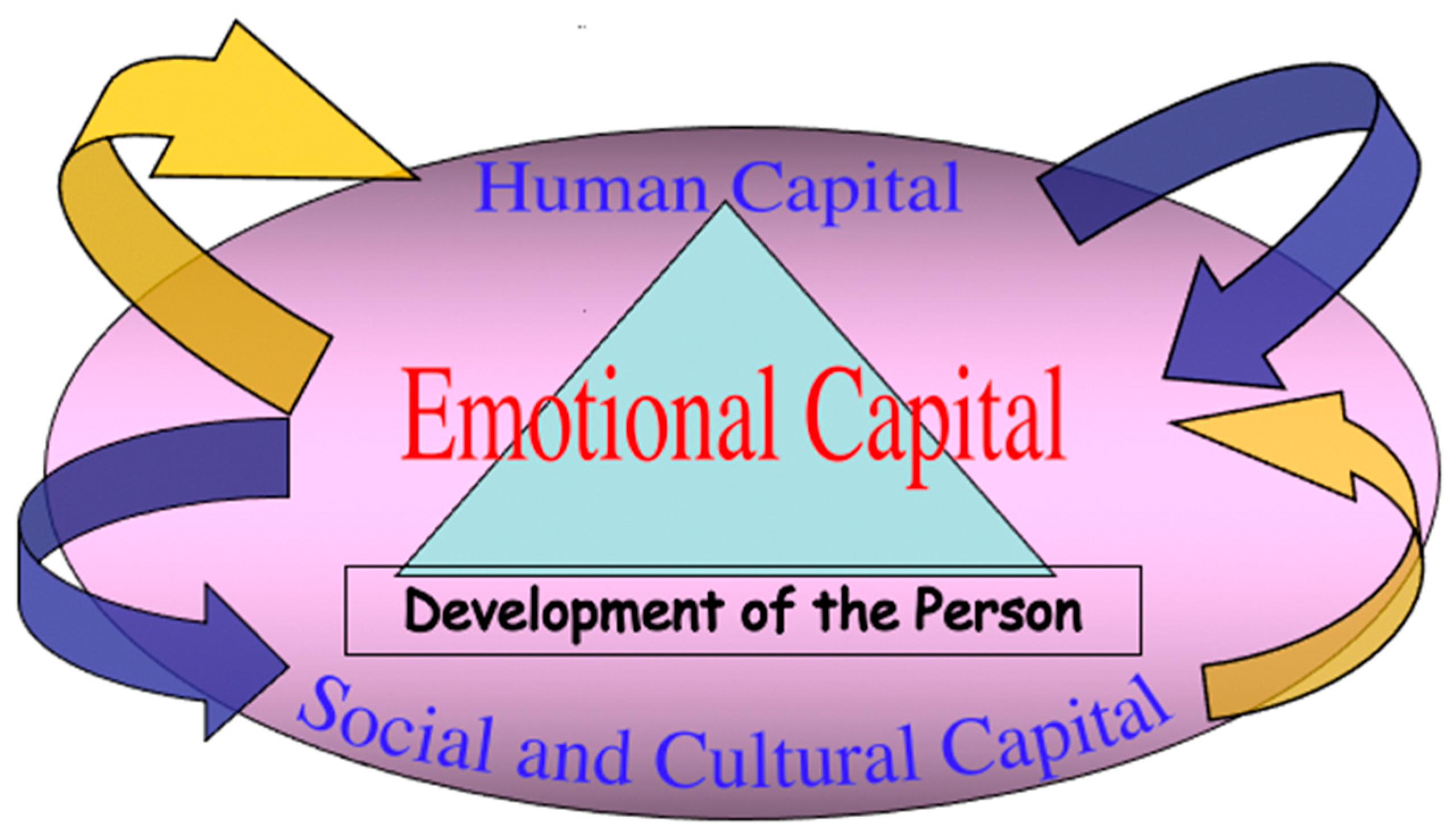
Emotional capital is recognized not only for its intrinsic value but also for its catalytic role in enhancing other forms of capital, social, intellectual, and cultural and enabling meaningful transformative processes (Gendron, 2004). Emotional capital functions as a strategic booster of human, social, and cultural capital (Figure 1). It amplifies overall capital formation, enhancing human potential, strengthening social bonds, and enriching cultural dynamics, positioning it as a critical lever for sustainable socio-economic performance and inclusive excellence.
This capital enables actors to navigate complex social terrains with resilience and efficacy, facilitating academic success, occupational vitality, and social integration. Emotional capital extends beyond individual affect to comprise relational dynamics critical in educational environments, where teachers and learners collectively orchestrate emotional labor that potentiates trust, engagement, and learning communities (Gendron, 2008b; Ghyasi & Gurbuz, 2023; Ungar, 2013, Salzburg Global, 2016, 2018). Furthermore, emotional capital’s role is increasingly recognized within capability and pedagogic rights frameworks advocating learner autonomy and reflection, notably in student-designed curricula that nurture agency (Murray, 2024). The cumulative development of emotional capital positions the affective domain as pivotal in transforming cognitive inputs into meaningful empowerment and community solidarity, serving as an indispensable resource amid contemporary global crises and toward bienvivance.

1.3. Bienvivance: An Economics Paradigm of Lifestyle for Flourishing

The bienvivance concept and paradigm conceptualized by Gendron (2016), an economist and neuropsychologist whose interdisciplinary scholarship articulated this concept to encapsulate vitality, ethical living, and relational flourishing within among others educational and organizational contexts, blends notions of flourishing, vitality, and alignment with core values.
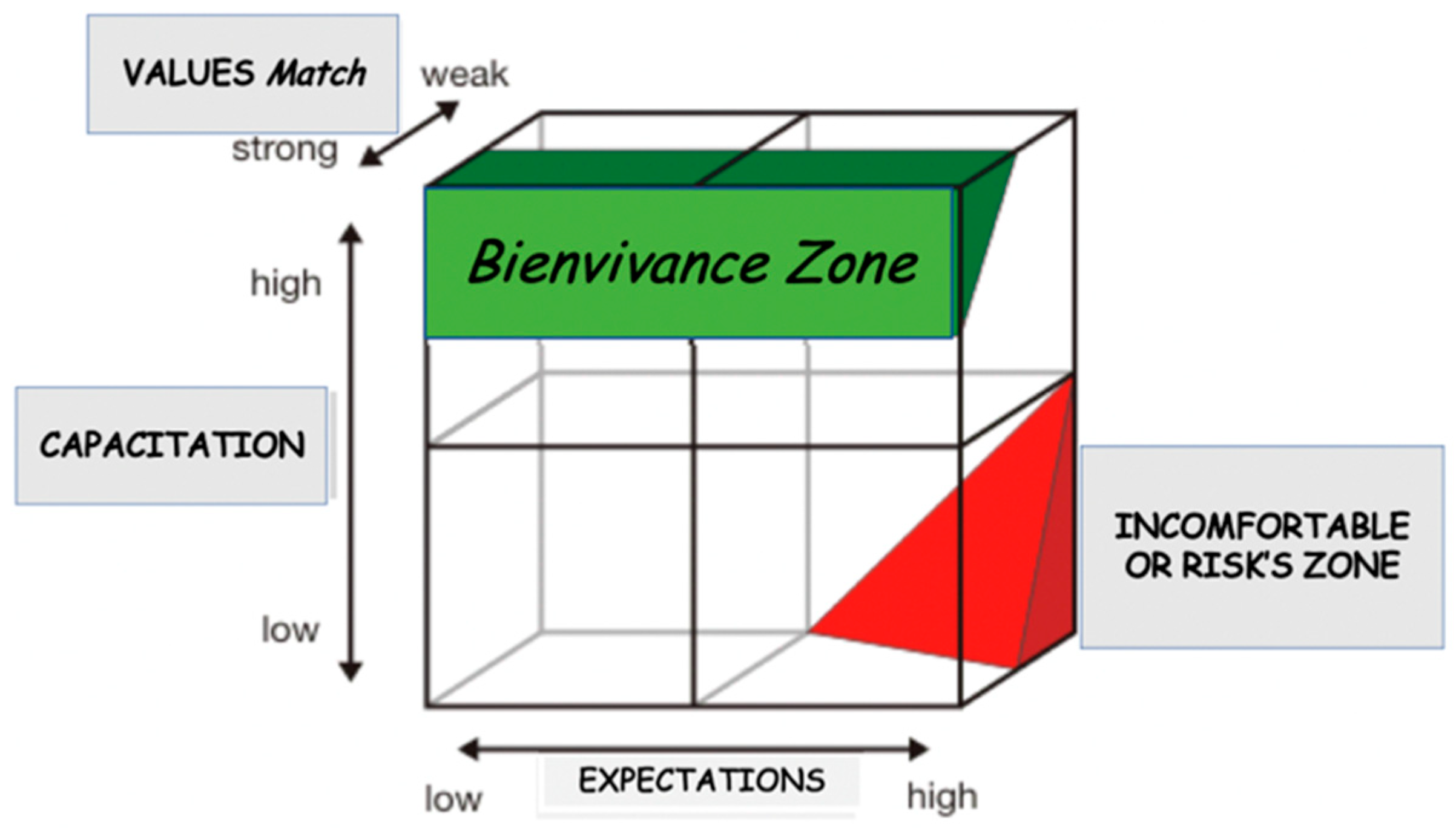
The bienvivance model (Gendron, 2016) (Figure 2) extends beyond conventional quality-of-life approaches, which are primarily centered on individual life indicators, by incorporating the dynamics of values, agency, and systemic expectations that shape the vitality of living entities. It provides a systemic and life-centered analytical lens for understanding vitality, sustainability, and risk across multiple levels of living systems. It is structured around three interrelated dimensions. First, it considers the values that animate, nourish, and sustain the vitality of the entity, emphasizing the degree of alignment between expressed and lived values. Second, it integrates the entity’s capacity for action through capacitation that we define as the process through which inner resources—latent human potentials and capabilities—are developed and converted into effective competencies, thereby operationalizing and enabling a latitude of effective power and competence to act. Third, it accounts for the expectations placed upon the entity within a given sphere, personal, organizational, or societal. The dynamic interaction among values such as alignment, capacitation, and expectations delineates zones of experience, including a bienvivance zone characterized by high or effective capacitation and strong values alignment, and a risk zone emerging where expectations exceed capacitation and/or where values alignment is weak.
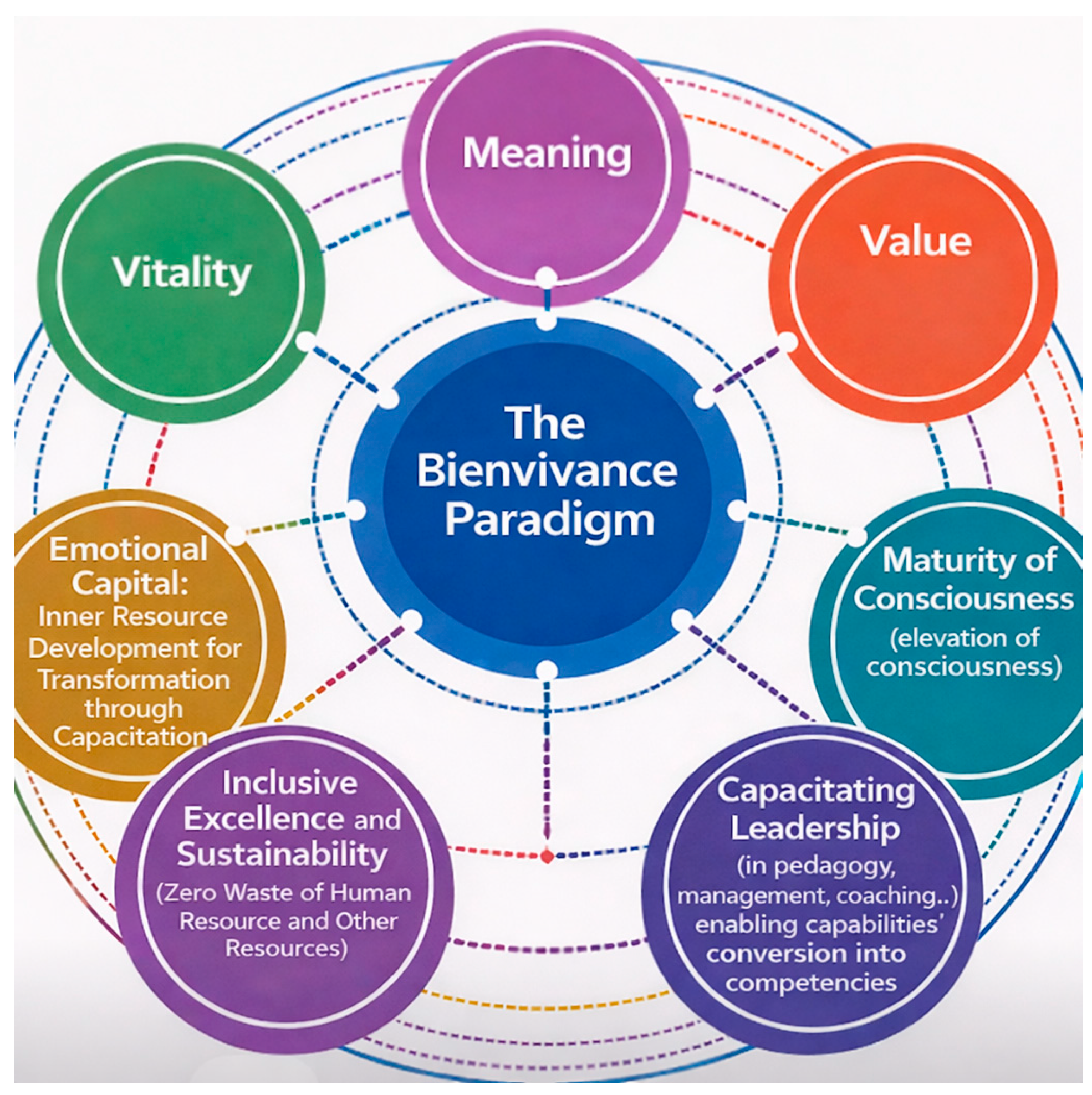
Grounded in the bienvivance paradigm and its seven key interdependent elements (Gendron, 2025) (Figure 3), namely vitality, meaning, value, emotional capital as inner resource development for transformative action, inclusive excellence and sustainability (aiming at zero waste of human and non-human resources), maturity of consciousness, and capacitating leadership (supporting the conversion of capabilities into competencies), the model advances a life-centered, systemic, and multi-level psychological framework. Within this perspective, the alignment between animating values, capacitation, and contextual expectations co-determines sustainable zones of flourishing as well as zones of strain and psychosocial risk.
Bienvivance (Gendron, 2016, 2025) is defined as “a state of mind and an art of living and existing, that refers to the capacity of entities of various kinds (individual, organization, society, nation…) to live, flourish, and grow, aligned with (his, her, its…) core values, in harmony with the living worlds, to evolve with vitality and meaning, even in adverse contexts (misery, illness, disability, handicap, scarcity, oppression, lockdown…), through inner resources development for outer changes and transformation. It involves the development and mobilization of emotional capital, as a catalytic capital that strengthens and activates other forms of capital (human, social and cultural capital), through a capacitating leadership style (that of teachers, executives, managers, policymakers… in their pedagogy, management, mentoring, or political action), enabling the unlocking and transformation of potentials, i.e., capabilities into competencies, potentialities into creativity: Moving toward Zero Waste of Human Resource and other Resources.”
The bienvivance paradigm traces intellectual heritage through eudaimonia (Ryan & Deci, 2001; Keyes, 2002), a medical neurophenomenology approach of vivencia of Pr. Caycedo (1964) emphasizing balance and interconnectedness. The bienvivance paradigm transcends reductionist hedonistic definitions of well-being, advocating for active, mindful participation in one’s ecological and social milieu. It foregrounds relationality and ethical commitment, embedding pedagogical praxis within sustainability-oriented worldviews (Di Fabio & Peiro, 2018). It highlights the interconnectedness of living systems, individuals, communities, ecosystems, proposing a holistic framework for inclusive excellence predicated on flourishing in coexistence.
This paradigm resonates with participatory rights and capabilities approaches to children and people’s well-being and agency in education (Hart & Brando, 2018), situating learning as a dynamic relational process promoting sustainable, ethical futures and questions the pedagogy style: toward capacitating pedagogy.

1.4. Capacitating Pedagogy and Capability Conversion

Within the bienvivance model, the emergence of a novel leadership style in pedagogy of teaching referred to as capacitating leadership, is paramount for enabling individual sustainable transformation. While transactional leadership is primarily performance-driven and focused on “doing things right” and transformational leadership seeks to “do the right things” by inspiring shared vision, intrinsic motivation, and innovation among followers, in contrast, “capacitating leadership”, grounded in the capability approach (Sen, 1999; Nussbaum, 2011) embodies a unique dynamic characterized by “doing what should be done to unlock, valorize and expand potentials”. This capacitating pedagogy approach operationalizes education and training as a transformative process enabling learners to convert latent capabilities into explicit competencies, thereby capacitating entities and valorizing their inner resources (Gendron, 2015).
Engaged in participative, enabling, and relational practices that nurture emotional capital, promote self-awareness, and cultivate collective agency, they orchestrate environments conducive to co-learning, reflective practice, and ethical engagement, facilitating deeper levels of consciousness and systemic transformation. Such pedagogy supports the epistemic expansion necessary for participatory decision-making and justice, as observed in empirical studies on capability lists and participatory research processes (Velasco & Boni, 2020). Capacitating teachers emphasizes through inner resource development not only the achievement of external goals but the holistic flourishing and sustained vitality of individuals as collectives.

1.5. Inner Development and Shifting Consciousness: Toward Inclusive Excellence

Capacitating leadership is central to the paradigm’s vision as it actively fosters not only empowerment but capacitation, activation of inner resources, and sustainable excellence through mindful, relational, and supportive practices (Gendron, 2015). This involves dialogic, reflective, and participatory pedagogical invitations that encourage learners to critically interrogate dominant narratives, confront disorienting dilemmas, and recompose identities (Mezirow, 2000; Walker, 2006). Empirical evidence, including this study’s peer-facilitated narrative portfolio practice, underscores the capacity of such pedagogy to enact decolonizing recognition, expanding learners’ repertoires of valued capabilities and fostering inclusive excellence that acknowledges diversity as an asset rather than deficit (Nardi & Gendron, 2018; Gendron et al., 2025). These processes further reinforce inclusivity (Dugas et al., 2025) and learners’ authentic agency in education. It necessitates the development of consciousness (Figure 4) beyond ego-centric autonomy towards a relational and interdependent ontology.
Responding to global challenges requires an educational shift from egoic autonomy toward interdependence and relational wisdom, embodiment of which emerges through the bienvivance framework and Inner Development Goals (Wilber, 2000; Ankrah et al., 2023). The bienvivance paradigm articulates this ontological evolution as central to inner development competencies, being, thinking, relating, collaborating, and acting, that are indispensable for systemic transformation. As we will see in the discussion, the integration of these dimensions within a regenerative and capacitating pedagogy can nurture emergent capacities critical for capacitating leadership, collective flourishing and sustainable futures: toward inclusive excellence.

2. Materials and Methods

2.1. Research Design, Participants and Data Collection

This research examines how emotional capital and capacitating pedagogy, operationalized through collaborative portfolio exercises, foster inner resource development for transformative change and inclusive excellence. The qualitative methodology draws on principles set forth in Gendron (2023), combining narrative inquiry, reflexive practice, and inductive thematic analysis to ensure a robust exploration of participant experiences. The intervention centered around peer-facilitated narrative portfolio exercises designed to reveal tacit and unacknowledged competencies through reciprocal biography narration and co-construction.
The data for this research were drawn from student academic works while developing competency portfolios using self-confrontation techniques. The participants signed a consent form on the use of their academic work for research purpose.
The empirical and collected work analyzed in this article was led from 2020 to 2024 within a vocational master’s degree in the south of France. The data coming from students’ academic works have not been created originally for a research purpose; nevertheless, the richness of the students’ works inspired the decision to analyze and reinterpret them within this article. As a result, as students’ work is anonymized, so the data do not identify gender, age, socio-economic background… of the students’ work collected. Thus, if some information about the groups is known globally, individual information is not available. Also, the university did not agree to share the students’ works publicly. Thus, the data are not available due to those legal restrictions and supporting data are not available.
This program targeted future leaders, human resources professionals, educational leaders, and guidance counselors. A total of 82 students (aged 23–54, encompassing diverse gender and life histories) participated over several cohorts in peer-facilitated biographical narrations. In this exercise, one student narrated their life story and competencies while their peer documented, reformulated, and constructed a portfolio of skills. The process was completed with reflexive analyses where students responded to questions such as: what happens during this exercise of mutual narration? What do I learn about myself? How do I discover new competencies through the eyes of my peer? The sample was intentionally inclusive: professional backgrounds, prior educational attainments, and migration histories varied, contributing to a broad range of perspectives as recommended by the inclusive excellence literature.
The core pedagogical instrument was a peer-facilitated competencies portfolio exercise, described in detail by Gendron (2023). The exercise was conducted 1–2 h per week, over at least one month per dyad, with continued reflection encouraged beyond the initial period. The process began with the formation of dyads, wherein students were systematically paired to ensure complementary backgrounds; within each dyad, participants alternated the roles of narrator and peer-facilitator. Each student engaged in the biographical narration of their personal and professional journey, giving particular attention to significant turning points, encountered challenges, achievements, and the emotional dimensions associated with learning experiences. The peer-facilitator then actively collaborated in the construction of a portfolio, identifying and making explicit the competencies demonstrated throughout the narrative, and thereby illuminating tacit or previously unarticulated strengths. Following this, all participants produced a written reflexive report, critically interrogating the narration process and documenting their discovery of skills, emotional reactions, insights gained from their peer’s perspective, and any changes in self-perception that occurred.
Data sources included written portfolios, reflexive reports, and recorded peer dialogs and verbatim. Thematic analysis was conducted following Braun and Clarke’s (2006) methodology to inductively identify transformative themes of recognition, emotional capital expansion, and bienvivance emerging within dialogic educational spaces.
Following the semiopragmatic method of Bourrel and Oude Engberink (2017), the verbatim analysis is based on the approach of Pierce (1993), the father of semiotics and the originator of abductive reasoning. The procedures for verbatim analysis are summarized in the following three steps: describing and analyzing the text by identifying classes of elementary signs; organizing the empirical data into categories of meaning according to the logic of sign-relations; and producing an overall meaning from the category-argument. This method introduces a formal moment into the analysis by allowing a logical ordering of empirical categories, thereby limiting the risk of interpretation bias related to the investigator. It helps clarify the obscurities surrounding the interpretive moment and the underlying reasoning, a recurrent critique of qualitative approaches.
In this case study, the data collected based on academic students’ works limits the generalizability of the findings to a broader population. Also, the availability-based selection introduces bias and potentially limits the representativeness of the findings as it is about academic homework, and the desirability bias can interfere. Precisely, this analysis based on students’ works where the data have not been constructed originally for research explains the absence of control groups which cannot establish causal relationships. Nevertheless, despite those limitations, those case studies offer valuable insights into complex phenomena, providing rich qualitative data and outcomes that can complement traditional quantitative approaches, which is what we will see in the discussion.

2.2. Analytical Procedures

With respect to data analysis, the study implemented a comprehensive, inductive thematic content analysis aligned with the procedure outlined by Gendron (2023). Initially, a close reading of portfolios and reflexive reports was undertaken in order to identify patterns relating to mechanisms of recognition, emotional shifts, and the construction of self-descriptions. Subsequently, codes established in the initial phase were aggregated and synthesized into higher-order thematic constructs, including such categories as decolonizing recognition, peer resonance, emotional capital expansion, and bienvivance. Finally, an integrative synthesis and narrative construction were performed to present overarching themes that encapsulated the transformed self-understanding and competencies of participants. The robustness of the analytical process was further enhanced via researcher reflexivity, the use of multiple coders, and feedback sessions with participants regarding the emergent thematic findings. The study acknowledges limitations, which include potential social desirability bias, variability in writing proficiency, and the contextual specificity inherent to the French higher education landscape.
The data for this research were drawn from student academic homework while developing competency portfolios using self-confrontation techniques. The participants signed a consent form in the use of their academic work for research purposes. Around twenty works were selected through a saturation process, identifying the threshold at which no new information emerged. These paired projects, focused on guidance and interpersonal relationships and including reflective components, were integrated into a qualitative research framework. The analysis centered on the educational nature of guidance (Parayre et al., 2017) and its emancipatory potential as expressed in the various documents.
Precisely, the qualitative data were analyzed within a comprehensive, inductive thematic framework, involving the construction of categories derived from the data. The analysis included transcription of the students’ narratives found in learning journals, logs, and academic writings. Through multiple readings of the corpus, meaning units were identified, leading to coding, categorization, and classification to explore thematic associations. Transcripts, anonymized to ensure confidentiality, were coded and reorganized into a limited set of categories revealing major themes. This comprehensive qualitative study aimed to examine how communication and language affect learning and personal development within professional guidance contexts. Grounded theory methodology (Paillé & Mucchielli, 2012) was employed through continual and comparative analysis to understand communication dynamics in collaborative pairs and groups, exploring their developmental outcomes. An iterative analytical approach allowed progressive meaning construction and theorization. The research investigates how dialogic processes, relying on collaboration between interviewer and participant, contribute to the evolution of individual growth and emancipation through collaborative work, relationships, while questioning conventional modes of knowledge production and their recognition on professional activity and communication.

3. Results

3.1. Decolonizing Recognition and Transformative Learning

Peer-facilitated narration and portfolio construction exercises illustrate the illumination and validation of previously unrecognized competencies among participants, as reported in the analyzed reflexive reports and portfolios. For instance, participants reflected: “I had never considered that the actions I take daily could be recognized as genuine competencies,” while another noted, “Until this exercise, I had never named these competencies myself.” These narrative exchanges suggest disruptions to internalized deficit discourses, potentially enabling participants to author identities marked by resilience and competence previously unrecognized in formal frameworks. The dialogic witnessing invoked moments of epistemic agency, reframing challenges as growth opportunities and manifesting key phases of outer changes that relate to the transformative learning process (Kegan, 2000). Transformative learning theory, pioneered by Mezirow (1991, 2000), and his model are fundamental to adult education and professional learning, underscoring the importance of reflection, dialog, and narrative in achieving deep change.
Mezirow’s model describes how adults change their “Frames of reference” through critical reflection, dialog, and perspective transformation. It follows typically several phases; the “Disorienting dilemma” phase which is an experience that challenges existing assumptions; “Self-examination of feelings and beliefs” where the learner reflects deeply on their emotions and personal beliefs to understand how these influence their perspectives and reactions; in the “Critical assessment of assumptions” phase, the learner questions and critically analyzes their underlying assumptions and habitual ways of thinking; the phase of “Recognition of shared experience” where the learner realizes that their struggles and opportunities for transformation are not unique, but are also experienced by others; then, the learner investigates and considers alternative ways of being, relating, and acting in the world, the phase of “Exploration of new roles and actions”; the “Planning and attempting new behaviors” is the phase where the learner will develop a plan to try out new behaviors consistent with their re-examined beliefs and actively engages in these new actions; and in the final phase “Reintegration with new perspective”, the learner incorporates their transformed perspectives and behaviors into everyday life, living in accordance with their “transformed” frame of reference, their new worldview. Gendron (2019) suggests this process enables the conversion of learners’ capabilities into competencies

3.2. Emotional Capital Development and Group Cohesion

The portfolio exercises illustrate expansion in individual and collective emotional capital, as reported by students in the peer-facilitated portfolios, corroborating the positive-emotional and resilience-building effects described in the literature. Participants described increased self-confidence, capacity for emotional regulation, and greater ability to identify emotions associated with academic and professional interactions. The experience of being seen and recognized by others as resilient, empathic, or resourceful catalyzed a sense of community and relational trust within the group, an illustration of emotional capital as a socio-economic phenomenon (Gendron, 2023). This recognition not only reinforced motivation for mutual support and peer engagement but also facilitated the adoption of growth-oriented perspectives toward challenges as transformation for outer changes. Adult learners navigating career transitions or migratory contexts described the process as “restorative,” with one noting: “I regained hope in my capacity for growth and discovered vitality in my story, even when I believed everything was lost.” Collectively, such experiences grounded the living practice of bienvivance: the cultivation of vitality, direction, and meaning within the group, independent of external validation. These experiences suggest the potential for a collective emotional capital reservoir marked by enhanced affect regulation, mutual empathy, and motivational solidarity. Diverse lived experiences acted as catalysts for innovation and adaptive capacity, with emotional capital bridging educational opportunities and realized transformative agency per the capability approach (Sen, 1999). Also, diversity of background emerged as an asset for collaborative learning, challenging established hierarchies of value and enabling inclusive excellence through the operationalization of a zero-waste approach to human resource development.

3.3. From the Portfolio Exercise as a Micro-Pedagogical Intervention to the Economic Model of Bienvivance

Peer-facilitated portfolio exercises, as a micro-pedagogical intervention, offer concrete illustrations of practices enabling learners to engage in reflective and collaborative processes of meaning-making that develop both personal and collective competencies beyond the recognition of those already established. Carole’s words illustrate this moment of awareness through listening to her partner’s story: she realized that she too could free herself from limiting beliefs and change. “For me, having worked in the same position for nearly 20 years, I became aware, through attentive listening to her journey, that change is possible, that I must undo my blockages, and step out of the comfort zone offered by the civil service.” This suggests potential pathways toward mutual recognition (Re-Co-Naissance; Gendron, 2021, 2023), with micro-level dynamics in the analyzed works proposing implications for broader bienvivance economy aspirations, emphasizing vitality and sustainability. As quoted by Alain, “Through her work, Florence highlighted aspects of my personality that I had not perceived myself: she spoke of a strong desire for fairness, a need for accuracy, and a drive to create meaning. This enables me to connect—to reconnect—with my own values and to continue my journey of transformation.” Indeed, professional evolution often represents a pivotal element between one’s past and future within the individual’s life trajectory. Many of the adults in the training program were engaged in processes of professional reconversion or personal reflection on their practices in preparation for forthcoming change. Moreover, depending on whether this professional evolution or transformation appeared as a project, a crisis, a deliberate choice, or an external event, each person was differently engaged as an “actor” in their own development.
This power to act (Clot, 2008) is the source of the development of the actor-subject’s room for maneuver towards a power of “authorizing oneself” to go beyond the frame, or to change the frame, to step out of the frame, out of the box or at least, to quit one’s comfort zone. The stance of capacitating leadership (the peer-leader here) goes further, by expanding the range of possible actions of the person they accompany, thereby operationalizing both the ‘power to act’ and the ‘right to act” (empowerment) through capacitation, which converts capabilities into ‘competence to act’. Here, interaction indeed allows not only to act on the Other but to act “for” and “with the Other.” This “Other” also becomes a subject who, in turn, will bring about a change in the Other within mutual enrichment where each one emerges grown or at least “changed”. For instance, Pascale becomes aware through her peer Nathalie’s journey of certain of her own competencies that were restrained or self-censored: “Nathalie has a professional background different from mine as well as many distinct skills, which led me to question myself about the possible capacities to develop for my professional future (…). This competence of creativity (…) I questioned myself on this because I did not necessarily see myself as creative, and only by confronting all these experiences did I realize that I had the capacities but that I did not dare to express my ideas, perhaps out of fear of judgment.”
This educational relationship can be apprehended as a “third object” from the perspective of mediation accompanying a transformation process. It is this “thirdness” at play in the co-construction of the competencies’ portfolio; a thirdness in the Peircean sense that we address in the conclusion through the analysis of the relationship in all its states and forms of communication. As a capacitating pedagogical approach, it contributes to the decolonization of recognition and emancipation, as addressed by Vanessa: “In the kindness of this exercise, an emancipatory feeling arises in me both in supporting my peer and in the work I read from her about me.”
This micro-level exercise offers a potential bridge to broader socio-economic aspirations toward a “bienvivance” economy, an integrative model emphasizing vitality, meaning, and sustainability through awareness of one’s purpose in the world and one’s contributive value to it. By developing the learner’s emotional capital through this pedagogical approach, these portfolios highlight proposed implications for adapting to complex systems, positioning learners’ potential agents of change in the spirit of Gandhi’s maxim “Be the change you want to see in the world,” with proposed implication for concrete systemic impacts that warrant further investigation.
In connection with global work on the IDGs, the scientific literature highlights the importance of these micro-macro connections in educational and organizational transformation. According to Emirbayer (1997), establishing links between micro-interactions and macro-structures which requires understanding the reciprocal co-evolution between agency and social structures. Likewise, drawing on capability theories (Sen, 1999; Nussbaum, 2011), which emphasize that individual freedoms and functioning are the foundations of sustainable social arrangements, the portfolio exercise allows for the conversion of capabilities into competencies. In this perspective, the portfolio becomes a tool for inclusive excellence, valorizing invisible, unrecognized, or unnamed competencies within traditional frameworks by making them visible and naming them. Through improved self-knowledge via co-construction of the competency portfolio, this process contributes to the emancipation from limiting beliefs and mitigates the insidious colonization of knowledge and its recognition.
Specifically, the reflective, dialogic, and collaborative dimensions of the portfolio not only reinforce individual development but also catalyze sustainable trajectories at organizational and economic levels. This process supports a regenerative economy (Raworth, 2017) where vitality and human meaning combine to generate lasting social and economic well-being. As a pedagogical practice embodied in portfolio work, it can serve as a crucial lever for operationalizing inclusive excellence in systemic efforts toward a flourishing, just, and sustainable society where all human resources can be made visible and valued.
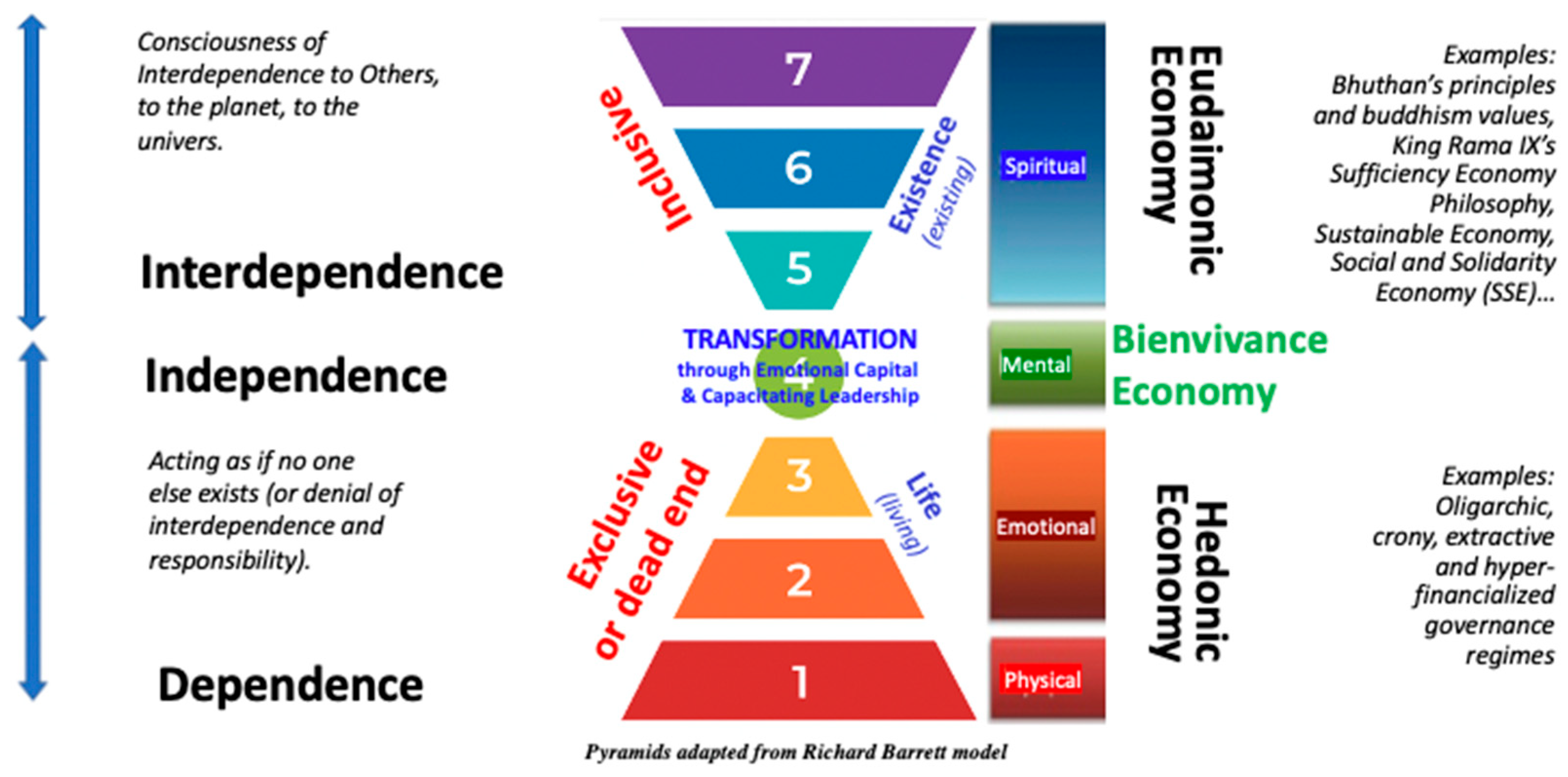
Indeed, the co-construction of competency portfolios is a powerful lever for decolonizing knowledge recognition, fostering emancipation, and enabling both individual and collective transformation, notably through the development of emotional capital as conceptualized in the hourglass model of the bienvivance economy. By allowing learners to value diverse competencies, formal, informal, emotional, relational, the co-constructed portfolio promotes critical reflection on dominant paradigms of assessment and certification, opening the way for plural and contextualized recognition of knowledge (de Sousa Santos, 2018). This process addresses issues in educational decolonization, where emancipation resides not solely in the acquisition of “canonized” knowledge but in the learner’s capacity to position themselves as active subjects, to develop their emotional capital, and to achieve greater self-knowledge that enables self-confidence and the regulation of fair and caring interactions (Salovey & Mayer, 1990). In this way, portfolio co-construction becomes a tool for emancipation and transformation, supporting the transition to a bienvivance economy where recognition of knowledge and well-being are rooted in emotional capital and expanded consciousness. In a cyclical dynamic of the hourglass model of Bienvivance Economy and Elevation of Consciousness (Figure 4), the learner advances from independence (constructing their identity and unique competences) to interdependence (mutual recognition and collaboration); what is concretely embodied in portfolio practices which mobilize moments for reflective pause, dialog, and future-oriented action, resonating with the principles of regenerative and inclusive education (Freire, 1970; Barrett, 2017; Salzburg Global, 2018, CASEL, 2020).

3.4. The Transition from Ego-Centric Autonomy to Relational Interdependence

Co-construction of portfolios in the student works illustrates processes consistent with the ontological evolution proposed by bienvivance, suggesting shifts by leveraging emotional capital and reflective practice to guide entities, here the learners, from individualistic autonomy toward transformational and inclusive interdependence. Through the adaptation of the Barrett taxonomy, the superior levels of the hourglass graph of Bienvivance Economy and Elevation of Consciousness (Figure 4) signify not just advanced competencies, but heightened states of relational consciousness, ethical responsibility, and participation in the regeneration of social and ecological systems, mirroring the ultimate goals of the Bienvivance Economy. Precisely, when interpreted through the adaptation of Barrett taxonomy, the portfolio exercise indicates potential for not only a pedagogical innovative tool but also for suggesting a concrete pathway for ontological transformation, from ego-centric autonomy to relational interdependence. In this framework, the act of collaboratively constructing a portfolio is itself a practice that instigates movement along the hourglass’s vertical axis. Initially, learners begin with a focus on individual autonomy (lower levels 1–4): they recognize and articulate their personal competencies, achievements, and growth, often within a context defined by independent agency and self-reliance. This stage corresponds to the “Independence” and even “Exclusive Living” parts of the hourglass, reflecting the values of hedonic or utilitarian economies and emphasizing personal mastery or survival. However, the transitional “neck” of the hourglass, where transformation might occur through emotional capital development or expansion and capacitating leadership, marks a shift that the portfolio process can catalyze. By making visible not just technical skills but socio-emotional competencies, and by encouraging dialogue, reflection, and peer validation, the portfolio exercise indicate potential for heightened relational consciousness (Levels 5–7) by proposing avenues toward relational interdependence. This is ontological: they begin to understand themselves not as isolated selves but as co-constructors of meaning and value with others. They actively develop capacities for empathy, openness, and inclusion, acknowledging the role and existence of “the other” in their own evolving trajectory. Levels 5, 6, and 7 in the hourglass bienvivance economy model signify this ascension beyond ego-centricity; at Level 5 (“Existence”), the learner attains a secure sense of self in relation to others. Competency recognition shifts from being solely self-defined to co-defined through relational feedback, fostering a sense of belonging and shared purpose. Here, portfolios may serve as dialogical spaces for mutual recognition and emancipation from limiting beliefs, fears and self and social barriers, with proposed implications for systemic stewardship, discovering that if they did not choose their life, now they can decide about their existence. At Level 6 (“Spiritual”/Mental), the learner embraces values such as wisdom, compassion, and synthesis. Portfolios now reflect not just competencies, but the learner’s capacity for creative collaboration, ethical thinking, and systemic vision. The learner sees themselves within larger, interconnected systems, a move toward eudaimonic flourishing. At Level 7 (“Inclusive”/Transcendent), the peak signifies full relational interdependence, where individual achievement is intrinsically linked to collective well-being and planetary stewardship. The ontology here is one of interconnected existence; portfolios may serve as living archive of personal and collective transformation, with potential to operationalize inclusive excellence and regenerative practice.

4. Discussion

4.1. Capacitating Pedagogy as Emancipatory Praxis and Decolonizing Recognition

Capacitating pedagogy in these peer-facilitated portfolios suggests an emancipatory praxis countering deficit frames, as illustrated by student reflections on reclaimed narrative authority and colonial legacies ingrained within educational institutions. By centering dialogic recognition, it enables learners to reclaim their identities, expertise, and narrative authority beyond marginalizing discourses (Freire, 1970; Smith, 1999). This pedagogical approach dismantles internalized exclusion and epistemic violence via co-constructed knowledge, fostering critical consciousness essential for transformative agency. It harmonizes with contemporary critical pedagogy and postcolonial educational thought, situating inclusive excellence not as remedial adjustment but as fundamental social justice practice embedded in collaboration and respect.

4.2. Bienvivance and Emotional Capital: Foundations for Sustainable Human Resource

Bienvivance, as reflected in the portfolios, offers a potential framework for sustainable development via emotional capital, suggesting pathways from inner flourishing to social contribution (Ryan & Deci, 2001). The bienvivance paradigm, integrating eudaimonic well-being and positive psychology (Seligman, 2011), alongside socio-spatial relationality (Gruenewald, 2003), emerges as a dynamic conceptual framework underpinning sustainable human resource development. Emotional capital, expanded through learning communities’ affective interaction and mutual recognition, functions as a socio-emotional reservoir nurturing resilience, motivation, and solidarity necessary to address systemic socio-political challenges (Ungar, 2012; Ryff & Singer, 2008). In uniting vitality, ethics, and connection, bienvivance provides an operative model bridging inner flourishing with outward capacities for social contribution, redefining educational success as holistic and contextually situated.

4.3. Inclusive Excellence and Capacitating Leadership for Systemic Transformation

Inclusive excellence in the student works highlights potential as a relational process valorizing diverse strengths, with proposed implications for systemic sustainability through capacitating leadership. Inclusive excellence is reframed as a relational, processual phenomenon emerging at micro-social pedagogical levels through trust-building, solidarity, and recognition and valorization of difference as collective strength and an asset, not a deficit (Gendron et al., 2025). European vocational education frameworks and global policy discourses (European Commission, 2018) substantiate the integration of social-emotional competencies central to both inclusivity and quality. Pedagogic rights, autonomy, and reflection are critical elements, as recently explored in student-led course design and participatory decision-making (Murray, 2024; Velasco & Boni, 2020). Thus, capacitating leadership, distinguished from transactional and transformational styles, manifests as a reflective and generative force mobilizing latent capabilities into explicit competencies, fostering enduring systemic change and promoting systemic sustainability (Gendron, 2015). Such leadership and education nurture emotionally intelligent communities, enabling adaptive and ethical responses needed amid complex global challenges.

5. Conclusions

The co-construction of portfolios in a process of guidance, through the back-and-forth dialog and exchange between the facilitator and the narrated self, illustrates doubt and resonance as vectors for self-representation shifts, as evidenced in the analyzed works, creating resonance with the Other’s journey for mutual enrichment. This process of mutual knowledge and recognition suggests potential for Re-Co-Naissance (Gendron, 2021), with triadic “thirdness” (Peirce) proposing avenues toward decolonizing recognition. In semiotic approach, Peirce conceptualizes doubt as an experience that disrupts the peaceful confidence one holds in a belief (Bourrel & Oude Engberink, 2017). Such doubt leads the narrator to shift or modify their self-representation through the facilitator’s interpretation, which the narrator may adopt or reject. This displacement calls for explicit narrative reflection and reflects a constitutive property of meaningful communication: the perpetual gap between production and recognition drives sociocultural change (Véron, 1991). It marks a transition from a biographical vegetative state, where experiences remain inexpressible (Dizerbo, 2014), to a stage where social interactions provide a “resonance space” or interpretive framework, enabling integration of experience into one’s biography.
From an interactional perspective, this displacement involves Peirce’s concept of “thirdness,” constituting a triadic interaction between narrator, facilitator, and mediated meaning. This triadic nature reveals the nonlinear and complex circulation of meaning inherent in narrative exchanges. Peirce’s three universal categories, firstness (the raw felt experience), secondness (the empirical fact), and thirdness (interpretative laws and intellectual mediation), are key to understanding this process (Bourrel & Oude Engberink, 2017). In this study, the facilitator interprets the narration and shapes the experience into the language of “competencies,” which are cultural-symbolic forms allowing symbolic identification, a prerequisite to identity formation.
In this capacitating pedagogical relationship, discrepancies arise from the plural incompleteness of information between narrator and recipient in this narrativized, phenomenological encounter (Vial & Caparros-Mencacci, 2007). The narrator’s conscious temporal experience is nonlinear and constantly evolving during narration, explaining why sometimes facilitators attribute competencies the narrator does not recognize. The facilitator’s delicate position involves hermeneutically interpreting life stories without reifying them for empirical uses beyond intersubjective sharing (Vion-Dury, 2012). Here, the dialogic encounter among peer students is framed by benevolence and accuracy, reflecting a leadership pedagogy that enables others to reveal and realize their potential (Gendron, 2022). This trusting environment encourages open disclosure and learning. The posture of capacitating leadership supports the transformative experiences of doubt, discrepancy, and belief rupture enabling a “Re-Co-Naisance.” Narrative language acts as a decolonizing force of recognition, challenging power relations through co-constructed knowledge and mutual recognition. It restores balanced power dynamics where previously unrecognized or misrecognized individuals may become key contributors in creating open spaces that nurture the growth of recognition capital for unrealized potentials. Recognizing the “Other as Other” in the Levinasian sense initiates and realizes a mutual emancipatory act towards an economy of bienvivance.
Moreover, this study situates the collaborative portfolio exercise within the framework of emotional capital and capacitating pedagogy, emphasizing their role in fostering the development of inner resources. The cultivation of emotional competencies through this pedagogical approach not only supports individual transformation but also operationalizes a pathway toward inclusive excellence. This concept of inclusive excellence involves the recognition and valorization of each individual’s best capabilities, enabling them to contribute their unique strengths without waste of human potential. By focusing on the co-construction of emotional and cognitive competencies, the portfolio becomes a tool that actualizes latent capacities, thereby facilitating both personal growth and the collective enhancement of diverse talents within the professional context. This dynamic aligns with the ethos of capacitating leadership that seeks to reveal and amplify potential, converting inner resources into tangible, outward transformations that advance inclusive excellence.
To end, the challenges facing contemporary education amid global crises demand a paradigm shift placing inner resource development and capability expansion and conversion into competencies at the heart of pedagogical innovation and regenerative education. Emotional capital and capacitating pedagogy in these portfolios indicate proposed implications for bienvivance and inclusive excellence suggesting potential pathways to regenerative education amid global challenges. Embedding these elements within higher education can actualize education’s emancipatory promise and contribute to sustainable, equitable, and pluralistic futures.

Funding

This research received no external funding.

Institutional Review Board Statement

The study was conducted in accordance with the Declaration of Helsinki, and the ethical approval was waived for this study. In accordance with French Public Health Code (Article L.1121-1, Law n° 2012-300, 5 March 2012—Loi Jardé), this study falls outside the scope of research requiring ethics review. No personal data collection or intervention on participants was involved.

Informed Consent Statement

Informed consent was obtained from all participants involved in the study. All students voluntarily agreed to provide access to their reflective assignments for research purposes.

Data Availability Statement

Data are not publicly available due to institutional and legal restrictions. The participating university did not consent to the public release of student works data; therefore, supporting datasets cannot be shared.

Acknowledgments

The author expresses sincere appreciation to the students whose reflective academic work contributed to this study. Their consent made this research possible.

Conflicts of Interest

The author declares no conflicts of interest. The study is grounded in the bienvivance framework, a paradigm and conceptual model developed by the author in 2016 and subsequently applied within educational research and practice. This framework has been academically validated through a doctoral investigation in philosophy and neuropsychology. The research design and data collection were conducted independently under the coordination of the project lead.

Note

1
Co-vivance is the descriptive state of interspecies coexistence without normative judgment. It is distinguished from ‘living together’ and convivance, generally limited to human harmony. It forms the factual foundation bienvivance, the eudaimonic aspiration ‘for the better’ (Gendron, 2016), which emerges through human-led consciousness elevation toward interconnected flourishing across all living systems (biological species, human organizations, ecosystems).

References

  1. Ankrah, D., Bristow, J., Hires, D., & Henriksson, J. A. (2023). Inner development goals: From inner growth to outer change. Field actions science reports. Journal of Field Actions, 25, 82–87. [Google Scholar]
  2. Bar-On, R. (1997). Bar-on Emotional Quotient inventory (EQ-i): Technical manual. Multi-Health Systems. [Google Scholar]
  3. Barrett, R. (2017). The values-driven organization: Cultural health and employee well-being as a pathway to sustainable performance. Taylor & Francis. [Google Scholar]
  4. Biesta, G. J. J. (2010). Good education in an age of measurement: Ethics, politics, democracy (1st ed.). Routledge. [Google Scholar]
  5. Bourrel, G., & Oude Engberink, A. (2017). En quoi, une théorie sémio-pragmatique à partir des théories de Peirce peut-elle renouveler la recherche en sciences humaines et sociales ? Cahiers de Recherche Sociologique, 62, 177–201. [Google Scholar]
  6. Braun, V., & Clarke, V. (2006). Using thematic analysis in psychology. Qualitative Research in Psychology, 3(2), 77–101. [Google Scholar] [CrossRef]
  7. Caycedo, A. (1964). Sophrology and psychosomatic medicine. American Journal of Clinical Hypnosis, 7(2), 103–106. [Google Scholar] [CrossRef]
  8. Cherniss, C., & Goleman, D. (Eds.). (2001). The emotionally intelligent workplace: How to select for, measure, and improve emotional intelligence in individuals, groups, and organizations. Jossey-Bass. [Google Scholar]
  9. Clot, Y. (2008). Travail et pouvoir d’agir. Presses Universitaires de France. [Google Scholar]
  10. Collaborative for Academic, Social, and Emotional Learning (CASEL). (2020). CASEL’s SEL framework: What are the core competence areas and where are they promoted? Collaborative for Academic, Social, and Emotional Learning (CASEL). [Google Scholar]
  11. Darling-Hammond, L., Flook, L., Cook-Harvey, C., Barron, B., & Osher, D. (2019). Implications for educational practice of the science of learning and development. Applied Developmental Science, 24(2), 97–140. [Google Scholar] [CrossRef]
  12. de Sousa Santos, B. (2018). The end of the cognitive empire: The coming of age of epistemologies of the South. Duke University Press. [Google Scholar]
  13. Di Fabio, A.-M., & Peiro, J.-M. (2018). Human capital sustainability leadership to promote sustainable development and healthy organizations: A new scale. Sustainability, 10, 2413. [Google Scholar] [CrossRef]
  14. Dizerbo, A. (2014). Apprendre à exister: Enjeux et modalités d’une éducation narrative. Le sujet dans la cité, 5(2), 161–171. [Google Scholar] [CrossRef]
  15. Dugas, E., Gendron, B., & Nardi, P. (2025, March 26). From inclusion to inclusiveness and inclusivity: Towards inclusive excellence, IDGs & WERA IRN “Bienvivance & inclusive excellence, inner development for outer changes and transformation from school to work”. Webinar. Available online: https://weraonline.org/event/irn-webinar-from-inclusion-to-inclusiveness-and-inclusivity-towards-inclusive-excellence/ (accessed on 9 February 2026).
  16. Emirbayer, M. (1997). Manifesto for a relational sociology. American Journal of Sociology, 103(2), 281–317. [Google Scholar] [CrossRef]
  17. European Commission. (2018). Strengthening social and emotional education as a core curricular area across the EU—A review of the international evidence—Analytical report. Publications Office. [Google Scholar]
  18. Freire, P. (1970). Pedagogy of the oppressed. Continuum Books. [Google Scholar]
  19. Gendron, B. (2002). Qualification and lifelong learning for all: For less disparities and a better equity a research contribution with an enlarged evaluative approach [Habilitation of Research Supervision thesis, Paris School of Economics, University of Paris I]. [Google Scholar]
  20. Gendron, B. (2004). Why emotional capital matters in education and in labour? Toward an optimal use of human capital and knowledge management. In Les cahiers de la maison des sciences economiques (Série Rouge, r04113). Université Panthéon-Sorbonne. [Google Scholar]
  21. Gendron, B. (2008a, July 17–19). Why emotional capital© is a crucial capital in organizations and human resources management? Poster at Sixth International Conference on Emotions and Organizational Life, EMONET Emotions Network VI, INSEAD, Fontainebleau, France. [Google Scholar]
  22. Gendron, B. (2008b, September 10). Emotional capital and emotional work: Emotional competencies as teacher professional competencies to teach for learning. 11th European Conference on Educational Research ECER, Network VETNET, Göteborg, Sueden. [Google Scholar]
  23. Gendron, B. (2015). Mindful management & capital émotionnel: L’humain au cœur d’une performance et d’une économie bienveillantes. De Boeck. [Google Scholar]
  24. Gendron, B. (2016). Management des risques psychosociaux dans le secteur du soin et de l’éducation [Doctoral dissertation, University Montpellier Paul-Valéry]. [Google Scholar]
  25. Gendron, B. (2019, August 7). Emotional capital training, education for a better world: Realizing equity and social justice worldwide. Word Educational Research Association Conference, Tokyo, Japan. [Google Scholar]
  26. Gendron, B. (2021, March 31). Le langage narratif comme médiateur et décolonisateur de la reconnaissance des savoirs et des potentiels, une piste exploratoire pour l’inclusion des migrants, une approche par le «Capital émotionnel», la «Bienvivance » et le «Leadership Capacitant»: Vers une Re-Co-Naissance. Symposium International LIRDEF-FDE, University Montpellier Paul-Valéry & University of Ottawa, Montpellier, France. [Google Scholar]
  27. Gendron, B. (2022). Excellence inclusive et enseignant au leadership “capacitant”: Propos réflexifs pour une bienvivance à l’école sur l’évolution des compétences en prévision du futur. La Recherche en Éducation, (25), 40–59. [Google Scholar]
  28. Gendron, B. (2023). La relation à autrui dans les métiers de l’accompagnement à la Re-Co-Naissance: Une pédagogie capacitante de la relation de communication dans l’apprentissage transformationnel. Phronesis, (HS1), 92–104. [Google Scholar]
  29. Gendron, B. (2025, October 26–30). Bienvivance and inclusive excellence to decolonize education: The emancipatory power of capacitating pedagogy and emotional capital, for inner resource development to outer changes and transformation. WERA Focal Meeting, Joao Pessoa, Brazil. [Google Scholar]
  30. Gendron, B., Nardi, P., & Nettles, M. (2025). Inclusive excellence and bienvivance from school to work: Annual report. WERA-IRN-IE-B-STW. [Google Scholar]
  31. Ghyasi, M., & Gurbuz, N. (2023). Emotional labor and emotional capital: An interpretive phenomenological analysis of teachers of English. PLoS ONE, 18(4), e0283981. [Google Scholar] [CrossRef]
  32. Gruenewald, D. A. (2003). The best of both worlds: A critical pedagogy of place. Educational Researcher, 32(4), 3–12. [Google Scholar] [CrossRef]
  33. Hart, C. S., & Brando, N. (2018). A capability approach to children’s well-being, agency and participatory rights in education. European Journal of Education, 53(3), 293–309. [Google Scholar] [CrossRef]
  34. Jackson, T. (2017). Chapter 23: Beyond consumer capitalism: Foundations for a sustainable prosperity. In P. A. Victor, & B. Dolter (Eds.), Handbook on growth and sustainability (pp. 522–544). Edward Elgar Publishing. [Google Scholar]
  35. Kegan, R. (2000). What ‘form’ transforms?: A constructive-developmental approach to transformative learning. In J. Mezirow (Ed.), Learning as transformation: Critical perspectives on a theory in progress (pp. 35–70). Jossey-Bass. [Google Scholar]
  36. Keyes, C. L. M. (2002). The mental health continuum: From languishing to flourishing in life. Journal of Health and Social Behavior, 43(2), 207–222. [Google Scholar] [CrossRef] [PubMed]
  37. Mayer, J. D., Salovey, P., & Caruso, D. R. (2004). Emotional intelligence: Theory, findings, and implications. Psychological Inquiry, 15(3), 197–215. [Google Scholar] [CrossRef]
  38. Mezirow, J. (1991). Transformative dimensions of adult learning. Jossey-Bass. [Google Scholar]
  39. Mezirow, J. (2000). Learning as transformation: Critical perspectives on a theory in progress. Jossey-Bass. [Google Scholar]
  40. Murray, R. (2024). The capability approach, pedagogic rights and course design: Developing autonomy and reflection through student-led, individually created courses. Journal of Human Development & Capabilities, 25(1), 131–150. [Google Scholar]
  41. Nardi, P., & Gendron, B. (2018, October 24–27). Inclusive excellence in VET. EfVET Conference Proceedings, Como, Italy. [Google Scholar]
  42. Noddings, N. (2005). The challenge to care in schools. Teachers College Press. [Google Scholar]
  43. Nussbaum, M. C. (2011). Creating capabilities: The human development approach. Harvard University Press. [Google Scholar]
  44. Paillé, P., & Mucchielli, A. (2012). L’analyse qualitative en sciences humaines et sociales. Armand Colin. [Google Scholar]
  45. Parayre, S., Guiet-Silvain, J., & Numa-Bocage, L. (2017). Formation, éducation, santé: Enjeux, évolutions et apports de la recherche. In Éducation, sante, societes (Vol. 3, No. 2). Éditions des Archives Contemporaines. [Google Scholar]
  46. Pierce, C. S. (1993). Sur une méthode de recherche de catégories et sur une nouvelle liste des catégories. In D. G. Deledalle, M. Balat, & J. Deledalle-Rhodes (Eds.), À la recherche d’une méthode (pp. 3–18). Presses Universitaires de Perpignan. [Google Scholar]
  47. Raworth, K. (2017). Doughnut economics: Seven ways to think like a 21st-century economist. Random House Business Books. [Google Scholar]
  48. Ryan, R. M., & Deci, E. L. (2001). On happiness and human potentials: A review of research on hedonic and eudaimonic well-being. Annual Review of Psychology, 52, 141–166. [Google Scholar] [CrossRef]
  49. Ryff, C. D., & Singer, B. (2008). Know thyself and become what you are: A eudaimonic approach to psychological well-being. Journal of Happiness Studies, 9(1), 13–39. [Google Scholar] [CrossRef]
  50. Salovey, P., & Mayer, J. D. (1990). Emotional intelligence. Imagination, Cognition and Personality, 9(3), 185–211. [Google Scholar] [CrossRef]
  51. Salzburg Global. (2016). Getting smart: Measuring and evaluating social and emotional skills, report, session 566, December 4–9. Salzburg Global Seminar. Available online: https://www.salzburgglobal.org/fileadmin/user_upload/Documents/2010-2019/2016/Session_566/SalzburgGlobal_Report_566__lo-res_.pdf (accessed on 9 February 2026).
  52. Salzburg Global. (2018). The salzburg statement for social and emotional learning. Available online: https://www.salzburgglobal.org/fileadmin/user_upload/contentimages/topics/education/education-for-tomorrows-world/SalzburgGlobal_Statement_SEL_01.pdf (accessed on 9 February 2026).
  53. Seligman, M. E. P. (2011). Flourish: A visionary new understanding of happiness and well-being. Free Press. [Google Scholar]
  54. Sen, A. (1999). Development as freedom. Oxford University Press. [Google Scholar]
  55. Smith, L. T. (1999). Decolonizing methodologies: Research and Indigenous peoples. University of Otago Press. [Google Scholar]
  56. UNESCO. (2015). Education 2030: Towards inclusive and equitable quality education and lifelong learning for all. UNESCO. [Google Scholar]
  57. Ungar, M. (2012). Social ecologies and capacity. In M. Ungar (Ed.), The social ecology of resilience (pp. 13–31). Springer. [Google Scholar]
  58. Ungar, M. (2013). Resilience, trauma, context, and culture. Trauma, Violence & Abuse, 14(3), 255–266. [Google Scholar]
  59. Velasco, D., & Boni, A. (2020). Expanding epistemic capability in participatory decision-making processes: The Universidad de Ibagué capabilities list. In M. Walker, & A. Boni (Eds.), Participatory research, capabilities and epistemic justice (pp. 27–57). Palgrave Macmillan. [Google Scholar]
  60. Véron, E. (1991). Pour en finir avec la «communication». Réseaux, 46–47, 119–126. [Google Scholar] [CrossRef]
  61. Vial, M., & Caparros-Mencacci, N. (2007). Distinguer l’accompagnement professionnel. In L’accompagnement professionnel: Méthode à l’usage des praticiens exerçant une fonction éducative (pp. 19–71). De Boeck Supérieur. [Google Scholar]
  62. Vion-Dury, J. (2012). La thérapeutique au cœur de la relation. Pour une phénoménologie du soin. Revue de Gériatrie, 37, 273–278. [Google Scholar]
  63. Walker, M. (2006). Towards a capability-based theory of social justice for education policy-making. Journal of Education Policy, 21(2), 163–185. [Google Scholar] [CrossRef]
  64. Wilber, K. (2000). Integral psychology: Consciousness, spirit, psychology, therapy. Shambhala Publications. [Google Scholar]
Figure 1. Emotional Capital: A Booster Capital of the Human, Social and Cultural Capital (Gendron, 2004, 2008a).
Psycholint 08 00013 g001
Figure 2. Bienvivance model (Gendron, 2016).
Psycholint 08 00013 g002
Figure 3. The seven key elements of the bienvivance paradigm (Gendron, 2025).
Psycholint 08 00013 g003
Figure 4. Bienvivance Economy’s Hourglass: Emotional Capital and Elevation of Consciousness (Gendron, 2019): Inner Resource Development for Outer Transformation.
Psycholint 08 00013 g004
Disclaimer/Publisher’s Note: The statements, opinions and data contained in all publications are solely those of the individual author(s) and contributor(s) and not of MDPI and/or the editor(s). MDPI and/or the editor(s) disclaim responsibility for any injury to people or property resulting from any ideas, methods, instructions or products referred to in the content.