Review

Aerobiology of Respiratory Infectious Viruses: Recent Paradoxes, Mechanistic Insights, and Future Perspectives


1
Department of Botany, Prasannadeb Women’s College, Jalpaiguri 735101, West Bengal, India
2
Department of Biostatistics, Epidemiology and Environmental Health Sciences, Jiann-Ping Hsu College of Public Health, Georgia Southern University, Statesboro, GA 30460, USA
*
Authors to whom correspondence should be addressed.
Aerobiology 2025, 3(3), 7; https://doi.org/10.3390/aerobiology3030007
Submission received: 20 July 2025 / Revised: 16 August 2025 / Accepted: 19 August 2025 / Published: 25 August 2025

Abstract

Since the emergence of SARS-CoV-2, the interplay of human behavior, environmental factors, viral evolution, and public health interventions has resulted in unexpected changes in the timing, intensity, and geography of respiratory virus outbreaks. For example, respiratory syncytial viruses (RSV) exhibited a surge during atypical summer months in several countries. Influenza, on the other hand, nearly vanished in the early years of the pandemic, but returned with unusual strength and altered seasonal patterns. Concurrently, new variants of concern in coronaviruses have demonstrated increased airborne transmissibility, greater resilience to environmental conditions, and the ability to evade both natural and vaccine-induced immunity. In this review article, we have synthesized the current understanding of the aerobiology of respiratory infectious viruses, with a particular emphasis on the paradoxical trends observed in recent years. We examined various aspects, including viral morphology and environmental survivability, shifts in seasonality, the drivers of mutation and resistance, and the impact of environmental and climatic factors. Key issues we explored include viral morphology adaptation in response to airborne selective pressures and climate variability influence on the ecology of airborne viruses. Lastly, we investigated future risks and proposed an interdisciplinary framework for monitoring and mitigating airborne viral threats in an ever-changing world.

1. Introduction

Respiratory infectious viruses such as influenza viruses, respiratory syncytial virus (RSV), coronaviruses, and adenoviruses have long been recognized for their capacity to spread through aerosols and respiratory droplets [1,2]. These pathogens are capable of infecting individuals at distances far beyond the traditional droplet range, especially in poorly ventilated indoor environments, posing significant public health challenges [3]. Aerobiology, the study of biological particles suspended in the air, plays a crucial role in understanding the transmission routes, persistence, and dispersion of these viruses in diverse atmospheric conditions [4].
Traditionally, respiratory viruses exhibit predictable seasonal patterns, particularly in temperate regions. Influenza and RSV tend to peak during colder months, when low humidity and greater indoor congregation increase airborne transmission efficiency [5]. Several mechanistic explanations have been proposed, such as increased virus stability at low temperatures, host mucosal changes, and decreased ultraviolet radiation [6]. These seasonal dynamics have informed vaccination schedules, hospital preparedness, and public health interventions.
However, the COVID-19 pandemic disrupted these longstanding patterns, introducing a wave of paradoxical observations in global virus circulation [7]. For example, RSV resurged in summer in Australia and the United States in 2021 after nearly disappearing in 2020, defying decades of winter-dominant behavior [8]. Influenza incidence plummeted during the first two years of the pandemic due to masking, travel restrictions, and widespread lockdowns [9], but then rebounded atypically, with intense outbreaks in non-traditional months [10]. These shifts hint at complex interactions between human behavior, public health policies, and virus ecology.
The emergence of SARS-CoV-2 variants of concern (VOCs)—such as Alpha, Delta, and Omicron—has highlighted how viral mutations can enhance airborne transmissibility, surface stability, and immune evasion [11,12]. These evolutionary adaptations have not only led to successive global waves of infection but also underscored the limitations of existing vaccines and the urgency for pan-variant vaccine strategies [13]. Research has shown that these variants can remain aerosolized for extended durations and travel via turbulent airflow, significantly increasing exposure risks in shared spaces [14].
These phenomena have raised critical questions for virologists, epidemiologists, and climate scientists alike. Are recent viral behaviors driven by morphological adaptations, such as changes in spike protein configuration or capsid durability [15]? How do environmental changes, such as rising global temperatures, urbanization, and air pollution, alter the aerobiological landscape [16,17]? Furthermore, how accurate and timely are our aerosol surveillance tools, especially in tracking asymptomatic transmission and environmental persistence [18]?
There is also increasing evidence that climate change and air quality deterioration influence respiratory virus transmission and evolution. For instance, particulate matter (PM2.5), Nitrogen dioxide, Carbon monoxide and ozone pollution can impair mucosal immunity, potentially increasing host susceptibility to airborne viruses [19]. Meanwhile, warmer winters may extend the transmission windows of seasonal viruses or introduce new ecological niches for virus reservoirs [20]. These effects are not uniform across the globe and may disproportionately affect low- and middle-income countries with less access to adaptive healthcare infrastructure [21].
This review synthesizes the current understanding of the aerobiology of respiratory infectious viruses, with a special focus on the paradoxical patterns that have emerged during and after the COVID-19 pandemic. We explore the interplay of morphology, aerosol dynamics, seasonality, viral evolution, and climatic factors, with emphasis on their public health implications. Finally, we propose a transdisciplinary surveillance model that integrates molecular biology, meteorology, epidemiology, and aerosol physics to better anticipate and mitigate airborne viral threats in an increasingly unpredictable world.

2. Viromorphology and Airborne Transmission Dynamics

The airborne transmission of respiratory viruses is influenced by complex interactions between structural viromorphology, environmental conditions, and host-related factors. Traditional understanding emphasized physical attributes—size, shape, envelope presence, and genome type—as determinants of aerodynamic behavior, aerosol stability, and respiratory infectivity. While these properties still hold value, recent observations challenge their predictive power. For example, enveloped viruses are generally believed to be more sensitive to environmental stress; however, SARS-CoV-2 defies this notion by maintaining high aerosol stability (>3 h), comparable to or exceeding that of non-enveloped viruses like adenovirus, which remains viable for days on surfaces [22]. Larger viruses such as RSV (150–200 nm) also exhibit unexpected aerosol persistence under favorable conditions [23].
Respiratory viruses such as influenza A, SARS-CoV-2, respiratory syncytial virus (RSV), rhinovirus, and adenovirus exhibit diverse morphologies and genome types. Influenza A (80–120 nm, pleomorphic, enveloped, −ssRNA) and SARS-CoV-2 (~100 nm, spherical, enveloped, +ssRNA) both show moderate to high aerosol stability. RSV’s filamentous structure may contribute to its aerodynamic behavior during exhalation, yet its stability remains variable. In contrast, smaller non-enveloped viruses like rhinovirus (~30 nm, icosahedral, +ssRNA) are less stable in air, suggesting that smaller size does not necessarily equate to greater transmissibility [23]. Table 1 below shows the morphological profiles of key respiratory viruses and their aerosol stability.
Bioaerosol dynamics further complicate viral survival. Viruses expelled during breathing, talking, coughing, or sneezing become embedded within droplets or aerosolized particles. Their viability in air depends on desiccation resistance, electrostatic interactions, and coalescence with host-derived materials. Notably, classical models predicted rapid decay of enveloped viruses in intermediate humidity, yet both SARS-CoV-2 and Influenza A remain stable under such conditions, defying expectations [22,24].
Certain morphological features may enhance aerosolization and infectivity. For example, spike glycoproteins in coronaviruses aid in mucosal retention and facilitate host cell entry post-inhalation. Filamentous forms of RSV and some influenza strains may improve aerodynamic transport, although smaller viruses like rhinoviruses often exhibit poor airborne infectivity, reinforcing that morphology alone does not determine transmission potential [23].
Measurement of viral stability remains a technical challenge. Reliance on RNA detection may overestimate true infectivity, as it does not distinguish viable from inactivated particles. Environmental sampling is also influenced by airflow conditions and detection biases. Recent advancements, such as real-time particle counters and enhanced viability assays, offer improved accuracy in discerning infectious particles from inert fragments [24].
Collectively, these findings underscore that viral morphology, while important, is insufficient alone to determine aerosol transmission potential. A multifactorial approach—considering viromorphology, environmental context, host fluids, and transmission mechanisms—is essential for accurate risk assessment. Emerging questions persist: How does mucus composition or respiratory tract origin affect aerosol generation? Can viruses adapt morphologically to optimize airborne survival? And how representative are laboratory aerosol studies of real-world scenarios?

3. Seasonal Variation in Airborne Respiratory Viruses: Classical Models and Recent Paradoxes

The transmission dynamics of airborne respiratory viruses have long followed established seasonal patterns, particularly in temperate regions where incidence typically peaks during the colder winter months. This seasonality was traditionally explained by a convergence of environmental and behavioral factors. According to the “cold-dry hypothesis,” low absolute humidity enhances the stability and airborne viability of viruses, while cold temperatures increase viral survival in mucosal droplets. In tandem, human behavioral shifts during winter—such as spending more time indoors in poorly ventilated spaces—further amplify transmission opportunities. This framework reliably accounted for wintertime outbreaks of influenza, respiratory syncytial virus (RSV), and rhinoviruses, with RSV often peaking earlier than influenza in the respiratory virus season [25,26].
However, recent observations—particularly following the global disruptions caused by the COVID-19 pandemic—have revealed paradoxical deviations from these long-standing epidemiological norms. In several countries, significant outbreaks of RSV, influenza, and enteroviruses have emerged during atypical seasons such as spring and summer. For instance, an unprecedented surge in RSV cases occurred in the United States during the summer of 2021, completely defying its expected winter peak [27]. These off-season anomalies, which are presented below in Table 2, highlight that traditional models may no longer be sufficient to explain or predict respiratory virus transmission patterns.
This shift can be partially attributed to the widespread implementation and subsequent withdrawal of non-pharmaceutical interventions (NPIs) during the COVID-19 pandemic. Measures such as mandatory masking, school closures, and social distancing effectively suppressed the circulation of many common respiratory viruses during 2020 and early 2021 [9]. As these interventions were relaxed, suppressed viruses re-emerged with greater intensity—a phenomenon described as the “rebound effect.” This rebound has not only involved unusual timing but also increased severity and hospitalization rates, potentially due to waning population immunity.
The situation in tropical and subtropical climates adds another layer of complexity. Unlike temperate zones, these regions have always exhibited less predictable seasonality in respiratory virus outbreaks. For instance, virus circulation in equatorial areas often aligns with the rainy season or occurs in multiple annual peaks. In these contexts, influenza and RSV may show patterns that diverge significantly from the cold-dry model [5]. Moreover, SARS-CoV-2 demonstrated robust and sustained transmission across all climatic zones—regardless of temperature or humidity—suggesting that many respiratory viruses may be less environmentally constrained than previously thought.
Several interrelated hypotheses have emerged to explain these recent disruptions. One prominent explanation is the immune debt hypothesis, which argues that reduced exposure to respiratory pathogens during extended lockdowns and school closures diminished population-level immunity. As a result, communities—particularly children—faced more intense and earlier outbreaks upon re-exposure to common viruses [30]. Another theory involves viral interference, in which the dominance of SARS-CoV-2 during the pandemic may have suppressed the activity of other respiratory viruses. This may occur through mechanisms such as interferon-mediated cross-immunity or ecological competition among viruses infecting the same host populations [28].
In addition to behavioral and immunological factors, climate change is increasingly being recognized as a significant modifier of viral ecology. Global warming, altered precipitation cycles, and increased air pollution can influence aerosol formation, virus survival, and transmission efficiency. As climatic conditions become more erratic—especially in ecotonal regions where dry and wet seasons converge—traditional seasonality boundaries may continue to blur. For instance, warming winters may expand the transmission windows for cold-favoring viruses, while changes in rainfall patterns can affect humidity-dependent aerosol dynamics [29].
The breakdown of predictable seasonality has important implications for public health preparedness. Historically, surveillance systems and vaccination programs have operated under assumptions of seasonal regularity—for example, targeting influenza vaccination campaigns before winter. If seasonal peaks become more variable or asynchronous, these interventions may lose efficacy or arrive too late. Health systems must now anticipate out-of-season surges that could overwhelm resources unexpectedly. As such, future surveillance must evolve beyond fixed seasonal models to incorporate real-time environmental data, behavioral mobility trends, and inter-pathogen interactions.
Modern modeling systems should be capable of integrating multiple dynamic inputs—ranging from atmospheric conditions to population immunity—to predict respiratory virus risks with greater precision. Cross-disciplinary research spanning climatology, virology, epidemiology, and behavioral science will be essential to understanding and anticipating these evolving threats.
Key questions that warrant further investigation include: How do regional climate variables affect virus survival and host susceptibility? Can predictive models be refined to integrate behavioral data and immune history? And, are certain respiratory viruses evolving under selective pressures to escape classical seasonality constraints, becoming endemic with irregular or continuous transmission potential?

4. Drivers of Altered Seasonality and Transmission in Respiratory Viruses

The shifting epidemiology of airborne respiratory viruses—characterized by unexpected off-season outbreaks, altered geographic spread, and inconsistent transmission intensities—reflects a complex interplay of virological, immunological, behavioral, and ecological factors. The COVID-19 pandemic acted as a large-scale natural experiment, disrupting traditional pathogen dynamics and exposing previously underappreciated influences on viral seasonality.
A prominent explanatory framework is the immunity debt hypothesis, which suggests that extensive pandemic-related public health interventions (e.g., masking, lockdowns, and school closures) significantly curtailed regular exposure to common respiratory pathogens. This lack of exposure impaired the natural immune stimulation that typically occurs through repeated infections or asymptomatic exposures. The result was a population with reduced collective immunity, particularly among children who missed early-life exposure windows. As restrictions lifted, these immunologically naïve populations experienced intense and often unseasonal outbreaks of diseases like RSV and influenza [30,31]. Furthermore, pregnant women who avoided infections during the pandemic may have transferred lower levels of maternal antibodies to infants, compounding infant vulnerability to post-pandemic surges [27].
Beyond adaptive immunity, innate immune responses such as interferon signaling play a pivotal role in shaping viral ecology. Viral interference, wherein infection with one virus suppresses the replication or transmission of another via nonspecific immune activation, was evident during SARS-CoV-2’s dominance. The overwhelming global circulation of SARS-CoV-2 likely interfered with the co-circulation of other seasonal viruses, such as influenza and RSV, during 2020–2021. As SARS-CoV-2 prevalence declined or plateaued, ecological niches reopened, allowing other viruses to reemerge and exploit immunologically vulnerable hosts [28,32].
Viral evolution further complicates transmission dynamics. RNA viruses, due to their error-prone replication mechanisms, mutate rapidly. Selective pressures—such as widespread antiviral use, vaccine-induced immunity, and host adaptation—can drive phenotypic shifts. For instance, variants of SARS-CoV-2, particularly Omicron and its sublineages, have demonstrated enhanced transmission in warmer, humid environments, breaking earlier seasonal expectations [33,34]. Mutations affecting spike protein structure, fusogenicity, or receptor binding have altered tissue tropism and environmental resilience. Influenza viruses also undergo antigenic drift (gradual accumulation of mutations) and antigenic shift (reassortment between different viral strains), both of which can introduce novel variants capable of spreading outside historical seasonal boundaries [35].
Changes in human behavior during and after the pandemic also played a pivotal role. International travel—previously a major driver of influenza strain migration between hemispheres—plummeted in 2020, leading to geographical containment of strains and a collapse of regular global viral oscillations. As travel resumed in 2021–2022, this facilitated rapid seeding of susceptible populations, potentially with altered strain compositions [36,37]. Public transportation systems—especially airplanes, buses, and trains—play a crucial role in the global and regional spread of respiratory viruses due to their high-density occupancy, prolonged exposure times, and extensive geographic connectivity [38]. The enclosed cabins of these vehicles heighten the risk of airborne transmission, which increases with passenger proximity and travel duration and is further exacerbated when ventilation systems are inadequate or turned off, as evidenced by historical outbreaks on aircraft and buses [39,40,41]. Modern airplanes address some of these risks through the use of HEPA filtration and high air exchange rates; however, concerns regarding near-field exposure and ventilation gaps during ground operations persist [41]. The ventilation quality in buses and trains can vary, but several strategies—such as maximizing outdoor air intake, opening windows, adjusting HVAC settings, utilizing portable HEPA units, and implementing UV germicidal irradiation (UVGI)—can significantly reduce aerosolized virus concentrations [42]. Airports, bus terminals, and train stations are high-risk environments that can trigger and amplify outbreaks, which underscores the need for layered infection-control strategies. These should include continuous ventilation during boarding and deplaning, enhanced air filtration in crowded areas, optimized passenger flow, spaced queuing, and mask usage during viral surges. While surface cleaning is important, interventions focused on airborne transmission—such as ventilation, filtration, UVGI, masking, and managing occupancy and exposure time—are more effective. By consistently integrating these measures across various transportation modes and transit hubs, the overall risk of transmission can be significantly minimized without hindering mobility [43]. Additionally, modified school calendars, fluctuating attendance policies, and varying levels of public compliance with NPIs created asynchronous exposure patterns within and across regions [44].
Environmental and climatic factors are now recognized as critical modifiers of viral transmission. Climate change is altering baseline humidity and temperature levels, which in turn affect aerosol formation, virus viability, and human behavior (e.g., time spent indoors). Increasing wildfire activity, urban pollution, and fine particulate matter (PM2.5) concentrations can impair mucosal immunity and increase the burden of airborne vectors for virus-laden droplets [29,45,46]. These environmental insults may not only facilitate transmission but also exacerbate disease severity.
Another underexplored area is the built environment, which has undergone significant changes in response to airborne transmission risks. New ventilation protocols, adoption of HEPA filtration, and architectural modifications (e.g., open-plan spaces, fewer shared indoor zones) were implemented to reduce transmission. While these improvements offer broad protection, their benefits depend on consistent implementation. Disparities in ventilation quality—particularly in low-resource settings, schools, or crowded public transportation—could create microenvironments where airborne viruses persist and thrive [47].
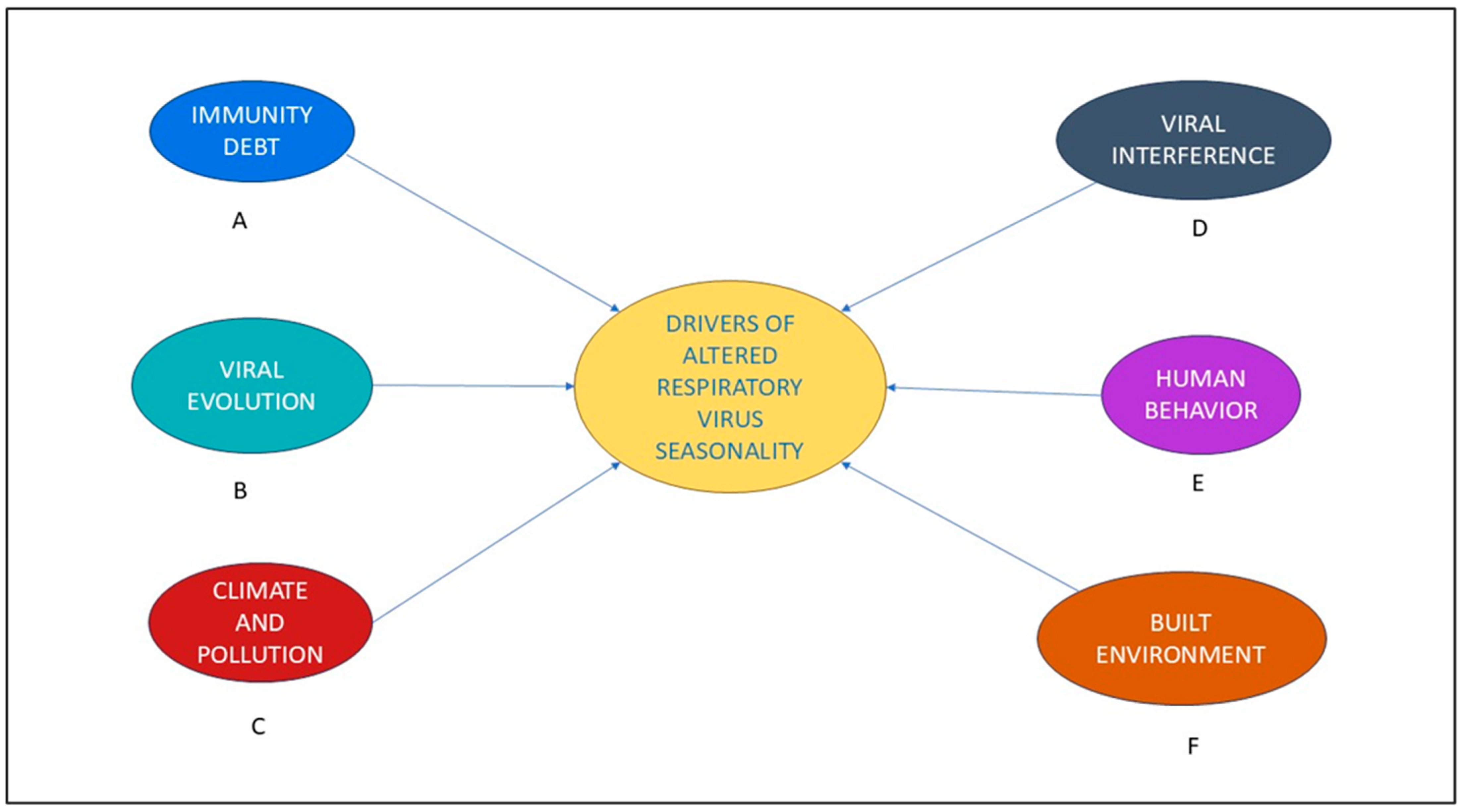
Ultimately, the seasonality and transmission of respiratory viruses are no longer governed by simple climatic models. Instead, they reflect a dynamic system influenced by immunological landscape shifts, viral adaptation, changing human behavior, evolving infrastructure, and planetary-scale environmental change. These interwoven variables, which have been shown in Figure 1, underscore the need for a multidisciplinary approach to forecasting and mitigating respiratory epidemics.
Key questions for future research include how co-circulating respiratory viruses interact within a post-pandemic ecological network, the extent to which observed shifts in seasonality are driven by viral adaptation versus external factors, and the potential long-term developmental and immune effects in children who have reduced early-life exposure to endemic respiratory pathogens.

5. Therapeutic Challenges and Resistance in Airborne Respiratory Viruses

The treatment of airborne respiratory viruses—such as influenza, respiratory syncytial virus (RSV), and SARS-CoV-2—has advanced significantly with the development of antivirals, monoclonal antibodies, and immunomodulators. However, the adaptability of these viruses, especially RNA viruses, poses formidable barriers to long-term therapeutic efficacy. Due to the lack of proofreading during replication, RNA viruses exist as quasispecies—genetically diverse populations within a single host—that can rapidly develop resistance mutations under selective pressure [50].
For influenza, resistance to neuraminidase inhibitors like oseltamivir has become a documented challenge. The emergence of the H275Y mutation in the neuraminidase gene, for example, significantly reduced oseltamivir efficacy during past influenza seasons [48]. Similarly, resistance to M2 ion channel blockers (amantadine and rimantadine) became widespread by the mid-2000s, rendering them largely obsolete for clinical use [51].
SARS-CoV-2 has posed even greater challenges. Initial monoclonal antibody therapies such as bamlanivimab and casirivimab/imdevimab were effective against early strains but quickly lost potency against Omicron subvariants due to mutations in the spike protein’s receptor-binding domain (RBD) [52]. As a result, many such therapies have been revoked from clinical use. Although Paxlovid (nirmatrelvir/ritonavir) remains a preferred oral antiviral for COVID-19, emerging mutations in the main protease (Mpro) threaten to reduce its long-term efficacy [53]. Similar concerns surround remdesivir and molnupiravir, particularly when used for extended periods in immunocompromised hosts where intra-host evolution may occur [54].
Paradoxically, the explosion of treatment and vaccine innovations has not led to proportional control over respiratory virus transmission or severity. Widespread vaccine rollout and antiviral deployment increased selective pressure, accelerating the evolution of immune-evasive and drug-resistant variants [55]. Inappropriate or premature antiviral use could further exacerbate resistance—mirroring the crisis seen with antibiotics [56].
Mutations that escape neutralizing antibodies—whether acquired via vaccination, prior infection, or therapy—undermine immune protection. Notable SARS-CoV-2 mutations such as E484K and N501Y significantly reduce antibody binding to the RBD [57]. Consequently, many monoclonal antibody products were retired as their targets became obsolete. In the case of influenza, antigenic drift regularly leads to mismatch between vaccine strains and circulating viruses, explaining fluctuating vaccine effectiveness ranging from 10% to 60% annually [58].
Researchers are increasingly exploring host-targeted therapies and broad-spectrum antivirals to overcome these problems. Host-directed drugs aim to disrupt viral replication indirectly by targeting host machinery, minimizing direct pressure on viral genomes. Examples include endosomal acidification inhibitors and JAK inhibitors [59]. Broad-spectrum antivirals such as favipiravir, remdesivir, and molnupiravir exhibit activity across multiple RNA viruses, though their efficacy and safety profiles vary [60]. Immunomodulators like corticosteroids and IL-6 inhibitors (e.g., tocilizumab) have proven useful in managing severe COVID-19 inflammation [61,62].
However, these approaches come with trade-offs, including toxicity, high cost, and logistical complexity. Ensuring global equitable access, especially in low-income regions, remains a persistent challenge [63].
Moving forward, sustainable antiviral strategies must integrate: (a) Real-time viral genomic surveillance, (b) Stewardship of antiviral use, (c) Investment in pan-viral therapeutics targeting conserved viral regions, and (d) Forecasting of evolutionary trajectories using AI and structural biology. Additionally, ethical questions must be addressed: how rapidly should new drugs be deployed when resistance could emerge? How do we balance urgency against the long-term risk of undermining drug effectiveness?

6. Impact of Climate Change on the Aerobiology of Respiratory Infectious Viruses

The global climate system is undergoing profound changes that are reshaping the ecological niches of many infectious agents, including airborne respiratory viruses. Rising global temperatures, altered precipitation regimes, changing humidity patterns, deteriorating air quality, and the increasing frequency of extreme weather events are collectively influencing the survival, transmission, and geographic spread of respiratory viruses such as influenza, respiratory syncytial virus (RSV), metapneumovirus, and various coronaviruses including SARS-CoV-2. These alterations are disrupting traditional models of seasonality, enabling novel transmission patterns, and exacerbating public health vulnerabilities, especially in urban, low-income, and climate-sensitive regions.
Climate change is increasingly shaping the transmission dynamics, environmental persistence, and spatial-temporal patterns of airborne respiratory viruses. While the link between climate variability and vector-borne or waterborne diseases is well-established, the relationship between climate drivers and respiratory viruses transmitted via aerosols remains an evolving field of inquiry. Recent interdisciplinary research integrating meteorology, virology, aerosol science, and public health has highlighted that alterations in global temperature, humidity, extreme weather events, and air quality are not only modifying the stability and dispersal of viruses like influenza, RSV, and SARS-CoV-2, but also reshaping seasonality and population-level vulnerability [29,64].
Traditionally, high temperatures and relative humidity were believed to reduce aerosol transmission of enveloped viruses by promoting droplet evaporation and degrading viral lipid membranes. However, empirical data from the COVID-19 pandemic showed sustained and even enhanced transmission of SARS-CoV-2 in warm, humid regions, including parts of South Asia, Brazil, and the southern United States [64,65]. This challenges linear models and suggests that certain viruses may possess adaptive stability mechanisms or benefit from human behavioral patterns that counteract environmental decay. Moreover, intermediate humidity levels between 40–60% have been associated with increased viral infectivity and prolonged aerosol viability, likely due to stabilization of droplet size and virus-surface interactions [24,66]. Temperature and relative humidity are among the most influential abiotic factors that affect the viability and infectivity of airborne viruses. Enveloped viruses tend to survive longer and remain more infectious in cold and dry conditions. Experimental studies and epidemiological modeling have demonstrated that viruses such as influenza and RSV show heightened stability and aerosol persistence at temperatures between 18–23 °C and relative humidity levels of 20–50%, conditions commonly found in winter climates of temperate regions [5,67]. These conditions reduce aerosol desiccation and preserve the lipid envelopes of viruses, thereby facilitating extended airborne transmission. For instance, influenza virus transmission efficiency in ferrets has been shown to be significantly enhanced in environments with low humidity and cold temperatures [26]. In addition, climate change is undermining the stability of respiratory viruses by modifying baseline seasonal conditions. Winters are becoming shorter and milder in many parts of the world, reducing the length of the traditional “flu season” in some areas while simultaneously enabling year-round circulation in others. Moreover, unexpected heatwaves and humid spells during typical viral transmission periods may create novel microclimatic conditions that disrupt traditional transmission cycles. Air-conditioned indoor environments, especially in hospitals, schools, malls, and offices, can serve as artificial climate refuges for viruses, supporting their transmission even in unfavorable outdoor conditions [66]. Paradoxically, this means that global warming may simultaneously suppress virus activity in some cold-weather regions while promoting outbreaks in highland tropics or artificially cooled environments.
Climate-induced changes in aerosol physics—such as rising wind turbulence, altered boundary layer thickness, and shifting atmospheric pressure—have implications for viral aerosol travel distance, stratification, and environmental dilution. For instance, storms and strong thermal currents may aid in lifting viral particles into higher altitudes, allowing wider dispersion and exposure [47]. Some studies indicate that SARS-CoV-2 RNA can persist in aerosols for over 3 h under certain indoor climate conditions, which are themselves influenced by outdoor weather patterns [3,22]. Simultaneously, wildfires, droughts, and dust storms—all exacerbated by climate change—can generate fine particulate matter (PM2.5 and PM10) that act as viral carriers, increasing both airborne residence time and host susceptibility [68,69].
Air pollution, especially from fossil fuel combustion and biomass burning, compounds these risks. Pollutants such as nitrogen dioxide (NO2), sulfur dioxide (SO2), and ground-level ozone are known to damage respiratory epithelial cells and impair mucociliary clearance, creating conditions conducive to viral invasion and exacerbating disease severity [49,70]. Epidemiological studies from Northern Italy and parts of China have revealed strong correlations between high air pollution levels and COVID-19 incidence and mortality, suggesting a potential synergistic effect of air quality and viral spread [71]. The role of air pollution, particularly fine particulate matter (PM2.5), nitrogen dioxide (NO2), and ozone (O3), adds another layer of complexity. Airborne viral particles can adsorb onto the surfaces of these pollutants, extending their suspension time in the atmosphere and enhancing their inhalation depth into the human respiratory tract [68]. PM2.5-bound viruses may persist for longer durations and exhibit altered aerodynamic properties, increasing their infectivity. In addition, chronic exposure to pollutants impairs the host’s respiratory epithelial integrity, suppresses local immune defenses, and promotes inflammation, thereby increasing the risk of infection and disease severity [70]. Studies from China, Italy, and the United States during the COVID-19 pandemic have consistently found strong correlations between poor air quality and elevated case fatality rates [71,72,73]. The presence of pollutants in the atmosphere may also catalyze oxidative stress responses in the airway epithelium, creating a more permissive environment for viral entry and replication [74].
Urbanization—particularly in developing regions—amplifies climate-linked risks through the urban heat island effect, reduced ventilation, overcrowding, and poor green infrastructure. Elevated urban temperatures and decreased vegetative cover alter local microclimates, allowing respiratory viruses to maintain infectivity outside of typical winter seasons [49]. Additionally, indoor air conditioning and poor ventilation, common in hot climates, can facilitate virus recirculation and reduce fresh air exchange [75]. As climate change accelerates, expanding urban sprawls into ecologically sensitive zones also increases contact between humans and wildlife, raising the risk of zoonotic spillovers—a concern underscored by recent findings on SARS-like viruses in bat populations adapting to new habitats due to deforestation and warming trends [29,76].
One of the most concerning outcomes of climate change is the disruption of established seasonal patterns in respiratory virus transmission. In temperate zones, viruses like influenza and RSV traditionally peak during winter months. However, surveillance data post-2020 have shown a breakdown in these patterns, with off-season resurgences, prolonged epidemics, and even biannual peaks in regions such as temperate and tropical climates [5,77]. This unpredictability complicates vaccine timing, healthcare preparedness, and early-warning systems that rely on seasonal modeling.
Climate change is also amplifying extreme weather events, such as wildfires, floods, hurricanes, and heatwaves—all of which have indirect but significant impacts on respiratory virus transmission. Wildfires release dense plumes of smoke containing hazardous particles that impair lung function and exacerbate respiratory symptoms. Several studies have indicated that exposure to wildfire smoke is associated with increased respiratory morbidity and may increase vulnerability to viral infections, particularly in individuals with preexisting pulmonary conditions [78]. Furthermore, climate-induced flooding and displacement events often lead to crowded living conditions in temporary shelters, reduced access to sanitation, and disruptions in routine healthcare services, all of which are conducive to the spread of respiratory pathogens [79]. The compounded exposure to poor air quality, population displacement, and weakened public health infrastructure represents a multi-layered threat during and after extreme climate events.
Public health infrastructure must evolve to accommodate climate-aware surveillance and prediction tools. Integrating meteorological data, satellite-based air quality indices, and virological monitoring could enable more accurate real-time mapping of transmission risks. Urban planning should prioritize ventilation, green spaces, and cooling strategies that also reduce virus transmission potential [80]. Additionally, global health policy must address climate-epidemiological feedback loops that may drive future pandemics unless mitigated through interdisciplinary planning [81].
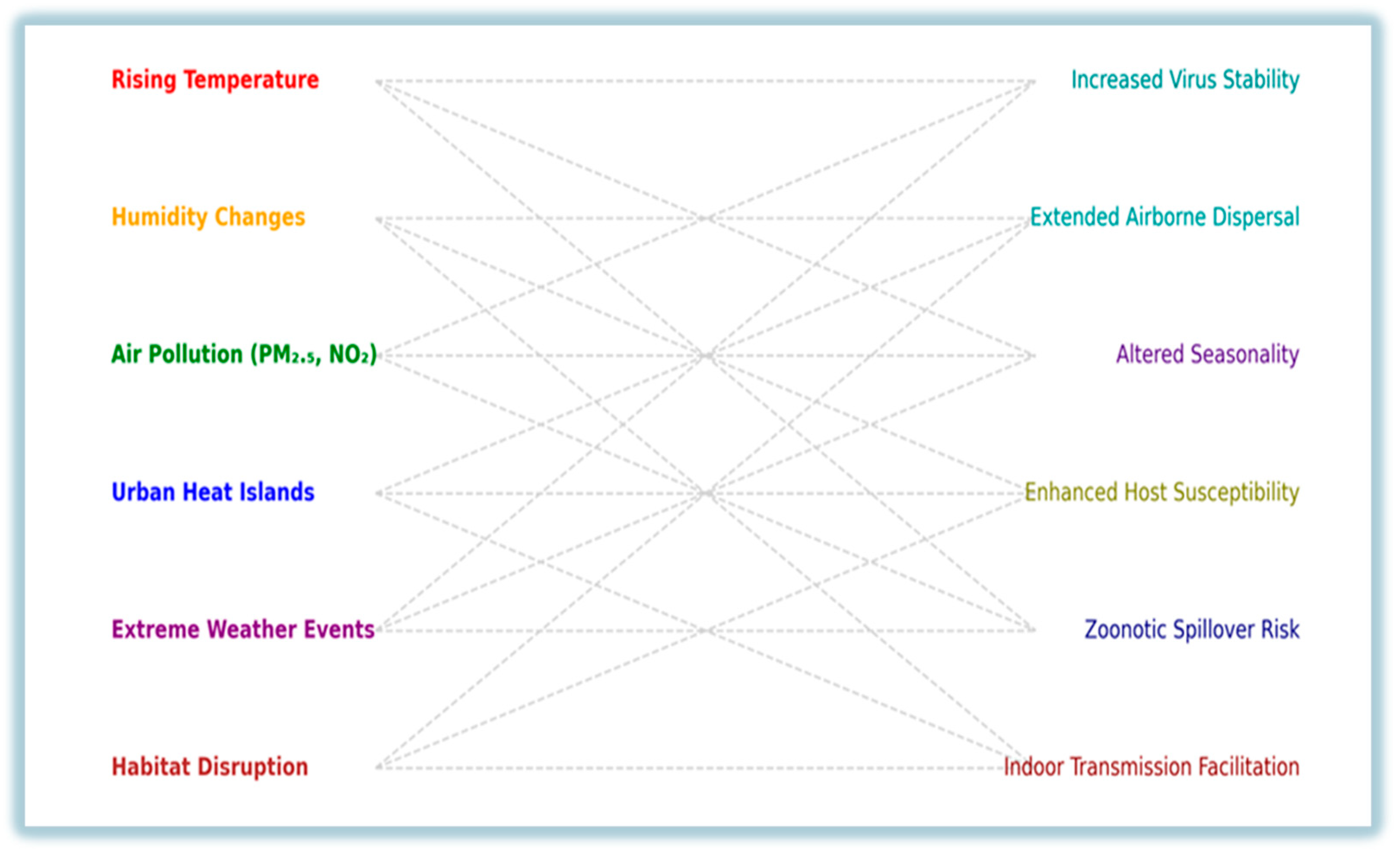
In conclusion, climate change is not a distant concern for airborne viruses—it is a present, dynamic force that modulates every facet of viral ecology, from molecular stability to population-level outbreaks. The above-discussed climatic factors that can influence the aerobiology of respiratory viruses, along with their interrelationships, are illustrated in detail within a comprehensive chart in Figure 2. This chart not only outlines the individual climatic influences but also shows how these factors interact with each other. Additionally, Figure 2 visually represents conceptual pathways and potential mechanisms of influence through arrows, highlighting the complex interplay between environmental conditions and the behavior of respiratory viruses in the atmosphere. This framework aims to enhance our understanding of how climate can impact the transmission dynamics of these viruses.
One of the most important shifts observed in recent years is the geographic and temporal expansion of viral transmission zones. Previously, respiratory viruses were tightly bound to specific seasons and climate zones. However, warming trends are facilitating their movement into new regions. Tropical and subtropical areas that historically experienced sporadic outbreaks are now seeing sustained or even biannual viral peaks [82]. RSV, which was once largely seasonal in North America and Europe, is now appearing in unexpected months, even overlapping with influenza or SARS-CoV-2 surges, complicating differential diagnosis and vaccination planning [78]. Metapneumovirus and parainfluenza viruses are showing similar patterns. This expansion necessitates a reevaluation of vaccine deployment strategies, with an increasing need for flexible, real-time immunization approaches rather than fixed seasonal campaigns [83].
To effectively respond to these challenges, public health systems must integrate climate-informed epidemiological models that incorporate environmental parameters—such as temperature fluctuations, humidity levels, and pollution indices—into viral forecasting tools. Enhanced aerobiological surveillance using air sampling technologies, genomic sequencing of airborne particles, and satellite-based pollution tracking can help identify hotspots and inform preemptive interventions. Equally important are built environment interventions: improving indoor air quality through HEPA filtration, natural ventilation, and air exchange systems can significantly reduce airborne transmission in shared spaces [84,85]. Urban planning should prioritize green infrastructure, heat mitigation strategies, and climate-resilient healthcare facilities to prepare for future respiratory virus threats.
Ultimately, the ecology of airborne respiratory viruses is no longer governed solely by biology and seasonality—it is increasingly dictated by the intersecting forces of climate, pollution, urbanization, and human behavior. As such, a transdisciplinary approach involving climatologists, virologists, public health experts, and urban planners is essential to build resilient systems capable of anticipating and mitigating the growing threat posed by climate-sensitive respiratory pathogens.
We believe future research should urgently address threshold tipping points of temperature and humidity for different respiratory viruses, the mechanistic links between pollutants and viral pathogenesis, and the development of adaptive forecasting models that incorporate real-time climate data for respiratory virus management.

7. Predictive Outlook and Future Directions

The growing complexity and unpredictability in the aerobiology of respiratory infectious viruses signal a profound transformation in global public health dynamics. The convergence of climate change, rapid urbanization, ecological disruption, increased mobility, and pathogen evolution is ushering in an era where traditional assumptions about respiratory virus seasonality, transmissibility, and containment are no longer sufficient. To effectively address the challenges posed by airborne viruses in this evolving context, future planning must rely on integrative, evidence-based forecasting and adaptive response frameworks.
Multiple future trajectories can be envisioned depending on how societies leverage technology, policy, and behavioral change. In an optimistic scenario, there is the emergence of comprehensive biosurveillance ecosystems that integrate genomics, meteorological data, mobility tracking, wastewater analysis, and environmental biosensors. These systems could provide near real-time detection of virus-laden aerosols in urban environments, supported by AI-driven risk prediction platforms that flag potential outbreaks before clinical cases emerge [86,87]. Innovations in biosensing technologies—such as wearable virus detectors, mobile air quality analyzers, and drone-mounted aerosol samplers—could enhance both personal and community-level exposure awareness [88]. Additionally, breakthroughs in vaccine development may yield broad-spectrum or pan-respiratory vaccines capable of neutralizing multiple strains of influenza, coronavirus, and RSV through conserved antigen targeting or mRNA platforms [89].
In a more moderate or intermediate scenario, the evolution of respiratory viruses continues at a manageable pace, characterized by seasonal drift, periodic emergence of variants, and moderate levels of resistance to current therapeutics. In this context, vaccines and antivirals remain effective but require regular reformulation. Surveillance systems become more agile, adapting to shifting epidemiological landscapes and enabling localized, targeted containment responses. Improvements in indoor air quality—through advanced HVAC retrofitting, ultraviolet germicidal irradiation (UVGI), and increased natural ventilation—help reduce transmission in high-risk settings such as schools, transit hubs, and healthcare facilities [90]. Public health systems invest in data infrastructure and community engagement, leading to more equitable access to diagnostics and preventive tools.
A pessimistic scenario may unfold if global coordination falters in the face of converging crises: climate destabilization accelerates urban density, weakens infrastructure, and amplifies health inequities. Airborne viruses may evolve to exhibit enhanced aerosol transmissibility, longer environmental persistence, and increased immune escape. Emerging zoonotic viruses from intensively farmed animals, disturbed ecosystems, or thawing permafrost may spill over into human populations with pandemic potential [91]. Surveillance gaps, politicized health responses, and inequitable access to vaccines and therapies may leave entire regions vulnerable to pandemic waves of overlapping respiratory epidemics. In such a scenario, health systems could face year-round strain, with seasonal recovery periods replaced by continuous emergency response.
To proactively navigate toward the more hopeful outcomes, a suite of emerging research priorities and tools must be adopted and scaled. Predictive modeling is being transformed by artificial intelligence, which enables dynamic integration of complex variables including viral genome sequences, population immunity levels, climate anomalies, human mobility, and even social media sentiment [92]. Agent-based models simulating human interactions and aerosol dispersion in indoor spaces—such as offices, classrooms, or markets—help refine risk assessments and inform architectural design interventions [93]. These tools also support resource allocation decisions, optimizing vaccine deployment or identifying zones requiring mobile health clinics during an outbreak.
Environmental engineering interventions will be pivotal in creating safer indoor environments. Technologies such as HEPA filtration, CO2 monitoring for ventilation assessment, and antimicrobial surface coatings can reduce airborne and fomite-based viral transmission. Smart buildings equipped with automated air exchange and real-time pathogen monitoring could become the norm in future public infrastructure [94]. Retrofitting existing buildings, especially in high-density urban centers and low-income housing, should be a public health priority to reduce environmental health disparities.
At a systems level, the One Health approach is central to early detection and containment of airborne pathogens. Recognizing the interconnectedness of human, animal, and environmental health, this approach promotes coordinated surveillance across wildlife, livestock, and human populations. Integrated databases linking veterinary, ecological, and clinical records can improve outbreak prediction models and support risk-based land-use planning to prevent zoonotic spillovers [95]. For instance, deforestation-driven habitat fragmentation has been linked to increased bat-human contact, a major factor in the emergence of coronaviruses [96]. Furthermore, international partnerships, such as the Global Virome Project and PREZODE, are aiming to catalog and monitor high-risk viruses before they reach epidemic thresholds.
Policy and governance frameworks must evolve in parallel. Flexibility in vaccine licensing and procurement can facilitate rapid responses to shifting viral genotypes. Public health authorities should institutionalize indoor air safety metrics (e.g., minimum ventilation standards, building CO2 limits) alongside traditional water and food safety standards [97]. Pandemic preparedness should include not only medical countermeasures but also robust public education campaigns, urban design innovations, and emergency social protection systems. Global cooperation is essential to ensure equitable distribution of technologies, particularly in low- and middle-income countries facing the brunt of climate-linked health threats.
In this post-predictability era, the aerobiology of respiratory viruses will be increasingly governed by systems-level feedbacks involving climate, human behavior, socioeconomic factors, and biological evolution. Future research should prioritize three foundational questions: (1) Can we develop predictive systems that integrate real-time climate, virological, and behavioral data at a global scale? (2) What strategies can ensure equitable access to vaccines, diagnostics, and safe infrastructure across socioeconomic divides? (3) Will the future of respiratory virus defense be driven more by environmental engineering than by pharmaceuticals alone?

8. Conclusions

The aerobiology of respiratory infectious viruses has entered a new and paradoxical era. Once governed by relatively stable rules of seasonality, geography, and evolutionary predictability, these pathogens are now exhibiting unexpected behaviors that challenge existing models. Traditional winter peaks have been replaced by off-season surges; expected declines have given way to continuous transmission; and pharmaceutical control has, in some cases, accelerated viral adaptation.
This review has highlighted how the morphology and aerosol dynamics of respiratory viruses shape their airborne potential—and how environmental factors such as humidity, temperature, and pollution modulate this risk. We have explored how viral evolution and population immunity shifts have disrupted seasonality, with recent examples of respiratory syncytial virus and influenza re-emerging in atypical seasons or locations. Climate change has further added complexity, altering environmental suitability for transmission and expanding viral territories. Meanwhile, gaps in detection and surveillance technologies limit our ability to monitor these changes in real time, hindering rapid response.
Together, these findings point to the need for a revised framework for understanding and managing respiratory viruses—one that integrates virology, aerosol physics, environmental science, behavioral epidemiology, and climate dynamics. Future public health strategies must be climate-aware, mutation-adaptive, and surveillance-integrated, emphasizing prevention, preparedness, and flexibility over reactive control.
Paradoxically, the better we understand viruses, the more complex their behavior seems. Yet this complexity also offers opportunity—opportunity for innovation, interdisciplinary collaboration, and the development of truly resilient systems. The future of airborne virus control lies not in returning to the predictability of the past, but in embracing and managing the dynamic, ecological reality of the present.

Author Contributions

Both authors have equally contributed to the conceptualization and writing the manuscript. All authors have read and agreed to the published version of the manuscript.

Funding

This research received no external funding.

Acknowledgments

The authors have used AI-based tools such as ChatGPT5 and Grammarly for MS Office to gather information, create tables and figures, and edit the content of this review article. They are grateful for these innovative AI technologies, which assisted them in preparing this work. The authors have thoroughly reviewed and edited the output and take full responsibility for the content of this publication.

Conflicts of Interest

The authors declare no conflicts of interest.

References

  1. Tellier, R.; Li, Y.; Cowling, B.J.; Tang, J.W. Recognition of aerosol transmission of infectious agents: A commentary. BMC Infect. Dis. 2019, 19, 101. [Google Scholar] [CrossRef] [PubMed]
  2. Morawska, L.; Cao, J. Airborne transmission of SARS-CoV-2: The world should face the reality. Environ. Int. 2020, 139, 105730. [Google Scholar] [CrossRef] [PubMed]
  3. Liu, Y.; Ning, Z.; Chen, Y.; Guo, M.; Liu, Y.; Gali, N.K.; Lan, K. Aerodynamic analysis of SARS-CoV-2 in two Wuhan hospitals. Nature 2020, 582, 557–560. [Google Scholar] [CrossRef]
  4. Després, V.R.; Huffman, J.A.; Burrows, S.M.; Hoose, C.; Safatov, A.S.; Buryak, G.; Pöschl, U. Primary biological aerosol particles in the atmosphere: A review. Tellus B Chem. Phys. Meteorol. 2012, 64, 15598. [Google Scholar] [CrossRef]
  5. Tamerius, J.D.; Shaman, J.; Alonso, W.J.; Bloom-Feshbach, K.; Uejio, C.K.; Comrie, A.; Viboud, C. Environmental predictors of seasonal influenza epidemics across temperate and tropical climates. PLoS Pathog. 2013, 9, e1003194. [Google Scholar] [CrossRef]
  6. Lowen, A.C.; Steel, J. Roles of humidity and temperature in shaping influenza seasonality. J. Virol. 2014, 88, 7692–7695. [Google Scholar] [CrossRef]
  7. Chen, Z.; Tsui, J.L.H.; Cai, J.; Su, S.; Viboud, C.; du Plessis, L.; Lemey, P.; Kraemer, M.U.G.; Yu, H. Disruption of seasonal influenza circulation and evolution during the 2009 H1N1 and COVID-19 pandemics in Southeastern Asia. Nat. Commun. 2025, 16, 475. [Google Scholar] [CrossRef]
  8. Olsen, S.J.; Winn, A.K.; Budd, A.P.; Prill, M.M.; Steel, J.; Midgley, C.M.; Fry, A.M. Changes in influenza and other respiratory virus activity during the COVID-19 pandemic—United States, 2020–2021. MMWR Morb. Mortal. Wkly. Rep. 2021, 70, 1013–1019. [Google Scholar] [CrossRef]
  9. Han, S.; Zhang, T.; Lyu, Y.; Lai, S.; Dai, P.; Zheng, J.; Yang, W.; Zhou, X.H.; Feng, L. Influenza’s Plummeting During the COVID-19 Pandemic: The Roles of Mask-Wearing, Mobility Change, and SARS-CoV-2 Interference. Engineering 2023, 21, 195–202. [Google Scholar] [CrossRef]
  10. Takeuchi, H.; Kawashima, R. Disappearance and Re-Emergence of Influenza during the COVID-19 Pandemic: Association with Infection Control Measures. Viruses 2023, 15, 223. [Google Scholar] [CrossRef]
  11. Chen, R.E.; Zhang, X.; Case, J.B.; Winkler, E.S.; Liu, Y.; VanBlargan, L.A.; Diamond, M.S. Resistance of SARS-CoV-2 variants to neutralization by monoclonal and serum-derived polyclonal antibodies. Nat. Med. 2021, 27, 717–726. [Google Scholar] [CrossRef]
  12. Chaudhari, A.M.; Joshi, M.; Kumar, D.; Patel, A.; Lokhande, K.B.; Krishnan, A.; Hanack, K.; Filipek, S.; Liepmann, D.; Renugopalakrishnan, V.; et al. Evaluation of immune evasion in SARS-CoV-2 Delta and Omicron variants. Comput. Struct. Biotechnol. J. 2022, 20, 4501–4516. [Google Scholar] [CrossRef] [PubMed]
  13. Wang, Q.; Guo, Y.; Iketani, S.; Nair, M.S.; Li, Z.; Mohri, H.; Wang, M.; Yu, J.; Bowen, A.D.; Chang, J.Y.; et al. Antibody evasion by SARS-CoV-2 Omicron subvariants BA.2.12.1, BA.4 and BA.5. Nature 2022, 608, 603–608. [Google Scholar] [CrossRef]
  14. Tang, J.W.; Bahnfleth, W.P.; Bluyssen, P.M.; Buonanno, G.; Jimenez, J.L.; Kurnitski, J.; Li, Y.; Miller, S.; Sekhar, C.; Morawska, L.; et al. Dismantling myths on the airborne transmission of severe acute respiratory syndrome coronavirus-2 (SARS-CoV-2). J. Hosp. Infect. 2021, 110, 89–96. [Google Scholar] [CrossRef] [PubMed]
  15. Eguia, R.T.; Crawford, K.H.D.; Stevens-Ayers, T.; Kelnhofer-Millevolte, L.; Greninger, A.L.; Englund, J.A.; Boeckh, M.J.; Bloom, J.D. A human coronavirus evolves antigenically to escape antibody immunity. PLoS Pathog. 2021, 17, e1009453. [Google Scholar] [CrossRef]
  16. Pica, N.; Bouvier, N.M. Environmental factors affecting the transmission of respiratory viruses. Curr. Opin. Virol. 2012, 2, 90–95. [Google Scholar] [CrossRef]
  17. Wu, X.; Nethery, R.C.; Sabath, B.M.; Braun, D.; Dominici, F. Exposure to air pollution and COVID-19 mortality in the United States: A nationwide cross-sectional study. medRxiv 2020. [Google Scholar] [CrossRef] [PubMed]
  18. Olsen Martinez, A.; Dietz, L.G.; Parhizkar, H.; Kaya, D.; Northcutt, D.; Horve, P.F.; Stenson, J.; Harry, M.; Mickle, D.; Jaaf, S.; et al. Air, surface, and wastewater surveillance of SARS-CoV-2; a multimodal evaluation of COVID-19 detection in a built environment. J. Expo. Sci. Environ. Epidemiol. 2025, 35, 672–682. [Google Scholar] [CrossRef]
  19. Comunian, S.; Dongo, D.; Milani, C.; Palestini, P. Air pollution and COVID-19: The role of particulate matter in the spread and increase of COVID-19’s morbidity and mortality. Int. J. Environ. Res. Public Health 2020, 17, 4487. [Google Scholar] [CrossRef]
  20. Neumann, G.; Kawaoka, Y. Seasonality of influenza and other respiratory viruses. EMBO Mol. Med. 2022, 14, e15352. [Google Scholar] [CrossRef]
  21. Acharya, K.P.; Ghimire, T.R.; Subramanya, S.H. Access to and equitable distribution of COVID-19 vaccine in low-income countries. npj Vaccines 2020, 6, 54. [Google Scholar] [CrossRef]
  22. van Doremalen, N.; Bushmaker, T.; Morris, D.H.; Holbrook, M.G.; Gamble, A.; Williamson, B.N.; Tamin, A.; Harcourt, J.L.; Thornburg, N.J.; Gerber, S.I.; et al. Aerosol and Surface Stability of SARS-CoV-2 as Compared with SARS-CoV-1. N. Engl. J. Med. 2020, 382, 1564–1567. [Google Scholar] [CrossRef]
  23. Harper, G.J. Airborne micro-organisms: Survival tests with four viruses. J. Hyg. 1961, 59, 479–486. [Google Scholar] [CrossRef] [PubMed]
  24. Kormuth, K.A.; Lin, K.; Prussin, A.J.; Vejerano, E.P.; Tiwari, A.J.; Cox, S.S.; Marr, L.C. Influenza virus infectivity is retained in aerosols and droplets independent of relative humidity. J. Infect. Dis. 2018, 218, 739–747. [Google Scholar] [CrossRef]
  25. Shaman, J.; Kohn, M. Absolute humidity modulates influenza survival, transmission, and seasonality. Proc. Natl. Acad. Sci. USA 2009, 106, 3243–3248. [Google Scholar] [CrossRef] [PubMed]
  26. Lowen, A.C.; Mubareka, S.; Steel, J.; Palese, P. Influenza virus transmission is dependent on relative humidity and temperature. PLoS Pathog. 2007, 3, e151. [Google Scholar] [CrossRef]
  27. Agha, R.; Avner, J.R. Delayed seasonal RSV surge observed during the COVID-19 pandemic. Pediatrics 2021, 148, e2021052089. [Google Scholar] [CrossRef] [PubMed]
  28. Carlson, C.J.; Albery, G.F.; Merow, C.; Trisos, C.H.; Zipfel, C.M.; Eskew, E.A.; Olival, K.J.; Ross, N.; Bansal, S. Climate change increases cross-species viral transmission risk. Nature 2022, 607, 555–562. [Google Scholar] [CrossRef]
  29. Nickbakhsh, S.; Ho, A.; Marques, D.F.P.; McMenamin, J.; Gunson, R.N.; Murcia, P.R. Virus–virus interactions impact the population dynamics of influenza and the common cold. Proc. Natl. Acad. Sci. USA 2019, 116, 27142–27150. [Google Scholar] [CrossRef]
  30. Cohen, R.; Pettoello-Mantovani, M.; Somekh, E.; Levy, C. European Pediatric Societies Call for an Implementation of Regular Vaccination Programs to Contrast the Immunity Debt Associated to Coronavirus Disease-2019 Pandemic in Children. J. Pediatr. 2022, 242, 260–261.e3. [Google Scholar] [CrossRef]
  31. Billard, M.N.; Bont, L.J. Quantifying the RSV immunity debt following COVID-19: A public health matter. Lancet. Infect. Dis. 2023, 23, 3–5. [Google Scholar] [CrossRef]
  32. Piret, J.; Boivin, G. Viral interference between respiratory viruses. Emerg. Infect. Dis. 2022, 28, 273–281. [Google Scholar] [CrossRef]
  33. Meng, B.; Abdullahi, A.; Ferreira, I.A.T.M.; Goonawardane, N.; Saito, A.; Kimura, I.; Gupta, R.K. Altered TMPRSS2 usage by SARS-CoV-2 Omicron impacts infectivity and fusogenicity. Nature 2022, 603, 706–714. [Google Scholar] [CrossRef]
  34. Warger, J.; Gaudieri, S. On the Evolutionary Trajectory of SARS-CoV-2: Host Immunity as a Driver of Adaptation in RNA Viruses. Viruses 2022, 15, 70. [Google Scholar] [CrossRef] [PubMed]
  35. Webster, R.G.; Bean, W.J.; Gorman, O.T.; Chambers, T.M.; Kawaoka, Y. Evolution and ecology of influenza A viruses. Microbiol. Rev. 1992, 56, 152–179. [Google Scholar] [CrossRef]
  36. Chen, Z.; Tsui, J.L.; Gutierrez, B.; Busch Moreno, S.; du Plessis, L.; Deng, X.; Cai, J.; Bajaj, S.; Suchard, M.A.; Pybus, O.G.; et al. COVID-19 pandemic interventions reshaped the global dispersal of seasonal influenza viruses. Science 2024, 386, eadq3003. [Google Scholar] [CrossRef] [PubMed]
  37. Paget, J.; Spreeuwenberg, P.; Charu, V.; Taylor, R.J.; Iuliano, A.D.; Bresee, J.; Simonsen, L.; Viboud, C.; for the Global Seasonal Influenza-associated Mortality Collaborator Network and GLaMOR Collaborating Teams*. Global mortality associated with seasonal influenza epidemics: New burden estimates and predictors from the GLaMOR Project. J. Glob. Health 2019, 9, 020421. [Google Scholar] [CrossRef] [PubMed]
  38. Tapiador, L.; Gomez, J.; Vassallo, J.M. Exploring the relationship between public transport use and COVID-19 infection: A survey data analysis in Madrid Region. Sustain. Cities Soc. 2024, 104, 105279. [Google Scholar] [CrossRef]
  39. Moser, M.R.; Bender, T.R.; Margolis, H.S.; Noble, G.R.; Kendal, A.P.; Ritter, D.G. An outbreak of influenza aboard a commercial airliner. Am. J. Epidemiol. 1979, 110, 1–6. [Google Scholar] [CrossRef]
  40. Olsen, S.J.; Chang, H.L.; Cheung, T.Y.; Tang, A.F.; Fisk, T.L.; Ooi, S.P.; Kuo, H.W.; Jiang, D.D.; Chen, K.T.; Lando, J.; et al. Transmission of the severe acute respiratory syndrome on aircraft. N. Engl. J. Med. 2003, 349, 2416–2422. [Google Scholar] [CrossRef]
  41. Wang, F.; You, R.; Zhang, T.; Chen, Q. Recent progress on studies of airborne infectious disease transmission, air quality, and thermal comfort in the airliner cabin air environment. Indoor Air 2022, 32, e13032. [Google Scholar] [CrossRef]
  42. Zheng, W.; Hu, J.; Wang, Z.; Li, J.; Fu, Z.; Li, H.; Jurasz, J.; Chou, S.; Yan, J. COVID-19 impact on operation and energy consumption of Heating, ventilation and Air-Conditioning (HVAC) systems. Adv. Appl. Energy 2021, 3, 100040. [Google Scholar] [CrossRef]
  43. Ogundiran, J.O.; Nyembwe, J.K.B.; Ogundiran, J.; Ribeiro, A.S.N.; Da Silva, M.G. A systematic review of indoor environmental quality in passenger transport vehicles of tropical and subtropical regions. Atmosphere 2025, 16, 140. [Google Scholar] [CrossRef]
  44. Haug, N.; Geyrhofer, L.; Londei, A.; Dervic, E.; Desvars-Larrive, A.; Loreto, V.; Pinior, B.; Thurner, S.; Klimek, P. Ranking the effectiveness of worldwide COVID-19 government interventions. Nat. Hum. Behav. 2020, 4, 1303–1312. [Google Scholar] [CrossRef] [PubMed]
  45. Nobili, C.; Riccò, M.; Piglia, G.; Manzoni, P. Impact of climate change and air pollution on bronchiolitis: A narrative review bridging environmental and clinical insights. Pathogens 2025, 14, 690. [Google Scholar] [CrossRef]
  46. He, Y.; Liu, W.J.; Jia, N.; Richardson, S.; Huang, C. Viral respiratory infections in a rapidly changing climate: The need to prepare for the next pandemic. eBioMedicine 2023, 93, 104593. [Google Scholar] [CrossRef]
  47. Pampati, S.; Rasberry, C.N.; McConnell, L.; Timpe, Z.; Lee, S.; Spencer, P.; Moore, S.; Mead, K.R.; Murray, C.C.; Deng, X.; et al. Ventilation Improvement Strategies Among K-12 Public Schools—The National School COVID-19 Prevention Study, United States, February 14 March 27, 2022. MMWR Morb. Mortal. Wkly. Rep. 2022, 71, 770–775. [Google Scholar] [CrossRef]
  48. Krishna, S.; Jayaram, A.; Shetty, U.; Varamballi, P.; Mukhopadhyay, C.; Jagadesh, A. Detection of H275Y oseltamivir resistance gene mutation among Influenza A(H1N1)pdm09 patients by allelic discrimination real-time RT-PCR. J. Med. Virol. 2023, 95, e28764. [Google Scholar] [CrossRef]
  49. Ciencewicki, J.; Jaspers, I. Air pollution and respiratory viral infection. Inhal. Toxicol. 2007, 19, 1135–1146. [Google Scholar] [CrossRef] [PubMed]
  50. Gonzales, M. Viral Quasispecies and Antiviral Resistance: Implications for Therapy. J. Antivir. Antiretrovir. 2024, 16, 334. [Google Scholar]
  51. Bright, R.A.; Medina, M.J.; Xu, X.; Perez-Oronoz, G.; Wallis, T.R.; Davis, X.M.; Klimov, A.I. Incidence of adamantane resistance among influenza A (H3N2) viruses. Lancet 2005, 366, 1175–1181. [Google Scholar] [CrossRef] [PubMed]
  52. Planas, D.; Saunders, N.; Maes, P.; Guivel-Benhassine, F.; Planchais, C.; Buchrieser, J.; Bolland, W.H.; Porrot, F.; Staropoli, I.; Lemoine, F.; et al. Considerable escape of SARS-CoV-2 Omicron to antibody neutralization. Nature 2022, 602, 671–675. [Google Scholar] [CrossRef]
  53. Moghadasi, S.A.; Heilmann, E.; Khalil, A.M.; Nnabuife, C.; Kearns, F.L.; Ye, C.; Moraes, S.N.; Costacurta, F.; Esler, M.A.; Aihara, H.; et al. Transmissible SARS-CoV-2 variants with resistance to clinical protease inhibitors. bioRxiv 2022. [Google Scholar] [CrossRef]
  54. Fountain-Jones, N.M.; Vanhaeften, R.; Williamson, J.; Maskell, J.; Chua, I.J.; Charleston, M.; Cooley, L. Effect of molnupiravir on SARS-CoV-2 evolution in immunocompromised patients: A retrospective observational study. Lancet Microbe 2024, 5, e452–e458. [Google Scholar] [CrossRef] [PubMed]
  55. Duerr, R.; Dimartino, D.; Marier, C.; Zappile, P.; Wang, G.; François, F.; Ortigoza, M.B.; Iturrate, E.; Samanovic, M.I.; Mulligan, M.J.; et al. Selective adaptation of SARS-CoV-2 Omicron under booster vaccine pressure: A multicentre observational study. eBioMedicine 2023, 97, 104843. [Google Scholar] [CrossRef]
  56. Batool, S.; Chokkakula, S.; Jeong, J.H.; Baek, Y.H.; Song, M.S. SARS-CoV-2 drug resistance and therapeutic approaches. Heliyon 2025, 11, e41980. [Google Scholar] [CrossRef] [PubMed]
  57. Greaney, A.J.; Starr, T.N.; Barnes, C.O.; Weisblum, Y.; Schmidt, F.; Caskey, M.; Bloom, J.D. Mapping mutations to the SARS-CoV-2 RBD that escape binding by different classes of antibodies. Nat. Commun. 2021, 12, 4196. [Google Scholar] [CrossRef]
  58. Belongia, E.A.; Simpson, M.D.; King, J.P.; Sundaram, M.E.; Kelley, N.S.; Osterholm, M.T.; McLean, H.Q. Variable influenza vaccine effectiveness by subtype: A systematic review and meta-analysis of test-negative design studies. Lancet Infect. Dis. 2016, 16, 942–951. [Google Scholar] [CrossRef]
  59. Martin, D.E.; Tripp, R.A. Host-directed antiviral therapeutics and the NIAID research agenda: An underexplored frontier. Front. Virol. 2024, 4, 1458112. [Google Scholar] [CrossRef]
  60. Ashour, N.A.; Abo Elmaaty, A.; Sarhan, A.A.; Elkaeed, E.B.; Moussa, A.M.; Erfan, I.A.; Al-Karmalawy, A.A. A Systematic Review of the Global Intervention for SARS-CoV-2 Combating: From Drugs Repurposing to Molnupiravir Approval. Drug Des. Dev. Ther. 2022, 16, 685–715. [Google Scholar] [CrossRef]
  61. Li, H.; Yan, B.; Gao, R.; Ren, J.; Yang, J. Effectiveness of corticosteroids to treat severe COVID-19: A systematic review and meta-analysis of prospective studies. Int. Immunopharmacol. 2021, 100, 108121. [Google Scholar] [CrossRef] [PubMed]
  62. Nasonov, E.; Samsonov, M. The role of Interleukin 6 inhibitors in therapy of severe COVID-19. Biomed. Pharmacother. Biomed. Pharmacother. 2020, 131, 110698. [Google Scholar] [CrossRef]
  63. Usher, A.D. The global COVID-19 treatment divide. Lancet 2022, 399, 779–782. [Google Scholar] [CrossRef]
  64. Sajadi, M.M.; Habibzadeh, P.; Vintzileos, A.; Shokouhi, S.; Miralles-Wilhelm, F.; Amoroso, A. Temperature, humidity, and latitude analysis to predict potential spread and seasonality for COVID-19. JAMA Netw. Open 2020, 3, e2011834. [Google Scholar] [CrossRef]
  65. Mecenas, P.; Bastos, R.T.D.R.M.; Vallinoto, A.C.R.; Normando, D. Effects of temperature and humidity on the spread of COVID-19: A systematic review. PLoS ONE 2020, 15, e0238339. [Google Scholar] [CrossRef]
  66. Božič, A.; Kanduč, M. Relative humidity in droplet and airborne transmission of disease. J. Biol. Phys. 2021, 47, 1–29. [Google Scholar] [CrossRef]
  67. Fears, A.C.; Klimstra, W.B.; Duprex, P.; Hartman, A.; Weaver, S.C.; Plante, K.S.; Mirchandani, D.; Plante, J.A.; Aguilar, P.V.; Fernández, D.; et al. Persistence of severe acute respiratory syndrome coronavirus 2 in aerosol suspensions. Emerg. Infect. Dis. 2020, 26, 2168–2171. [Google Scholar] [CrossRef]
  68. Domingo, J.L.; Marquès, M.; Rovira, J.; Nadal, M. The role of airborne particles in the spread of COVID-19: Evidence from environmental and epidemiological studies. Environ. Res. 2020, 188, 109861. [Google Scholar] [CrossRef] [PubMed]
  69. Feng, C.; Li, J.; Sun, W.; Zhang, Y.; Wang, Q.; Zhu, Y. Impact of ambient fine particulate matter (PM2.5) exposure on the risk of influenza-like-illness: A systematic review and meta-analysis. Environ. Pollut. 2016, 221, 530–538. [Google Scholar] [CrossRef]
  70. Schraufnagel, D.E.; Balmes, J.R.; Cowl, C.T.; De Matteis, S.; Jung, S.; Mortimer, K.; Perez-Padilla, R.; Rice, M.B.; Riojas-Rodriguez, H.; Sood, A.; et al. Air pollution and noncommunicable diseases. CHEST J. 2018, 155, 409–416. [Google Scholar] [CrossRef]
  71. Conticini, E.; Frediani, B.; Caro, D. Can atmospheric pollution be considered a co-factor in extremely high level of SARS-CoV-2 lethality in Northern Italy? Environ. Pollut. 2020, 261, 114465. [Google Scholar] [CrossRef] [PubMed]
  72. Hou, C.K.; Qin, Y.F.; Wang, G.; Liu, Q.L.; Yang, X.Y.; Wang, H. Impact of a long-term air pollution exposure on the case fatality rate of COVID-19 patients-A multicity study. J. Med. Virol. 2021, 93, 2938–2946. [Google Scholar] [CrossRef]
  73. Wu, X.; Nethery, R.C.; Sabath, M.B.; Braun, D.; Dominici, F. Air pollution and COVID-19 mortality in the United States: Strengths and limitations of an ecological regression analysis. Sci. Adv. 2020, 6, eabd4049. [Google Scholar] [CrossRef]
  74. Bonato, M.; Gallo, E.; Turrin, M.; Bazzan, E.; Baraldi, F.; Saetta, M.; Gregori, D.; Papi, A.; Contoli, M.; Baraldo, S. Air Pollution Exposure Impairs Airway Epithelium IFN-β Expression in Pre-School Children. Front. Immunol. 2021, 12, 731968. [Google Scholar] [CrossRef]
  75. Morawska, L.; Tang, J.W.; Bahnfleth, W.; Bluyssen, P.M.; Boerstra, A.; Buonanno, G.; Cao, J.; Dancer, S.; Floto, A.; Franchimon, F.; et al. How can airborne transmission of COVID-19 indoors be minimised? Environ. Int. 2020, 142, 105832. [Google Scholar] [CrossRef]
  76. Warmuth, V.M.; Metzler, D.; Zamora-Gutierrez, V. Human disturbance increases coronavirus prevalence in bats. Sci. Adv. 2023, 9, eadd0688. [Google Scholar] [CrossRef]
  77. Wang, W.; Luo, X.; Ren, Z.; Fu, X.; Chen, Y.; Wang, W.; Bao, Y.; Zheng, Y.; Cao, K.; Chen, J. Impact of COVID-19 pandemic measures on hospitalizations and epidemiological patterns of twelve respiratory pathogens in children with acute respiratory infections in southern China. BMC Infect. Dis. 2025, 25, 103. [Google Scholar] [CrossRef]
  78. Reid, C.E.; Brauer, M.; Johnston, F.H.; Jerrett, M.; Balmes, J.R.; Elliott, C.T. Critical review of health impacts of wildfire smoke exposure. Environ. Health Perspect. 2016, 124, 1334–1343. [Google Scholar] [CrossRef]
  79. Conzatti, A.; Kershaw, T.; Copping, A.; David, C. A review of the impact of shelter design on the health of displaced populations. Int. J. Humanit. Action 2022, 7, 18. [Google Scholar] [CrossRef] [PubMed]
  80. United Nations Human Settlements Programme (UN-Habitat). World Cities Report 2020: The Value of Sustainable Urbanization; UN-Habitat: Nairobi, Kenya, 2020. [Google Scholar]
  81. Romanello, M.; McGushin, A.; Di Napoli, C.; Drummond, P.; Hughes, N.; Jamart, L.; Costello, A. The 2021 report of the Lancet Countdown on health and climate change: Code red for a healthy future. Lancet 2021, 398, 1619–1662. [Google Scholar] [CrossRef] [PubMed]
  82. Saha, S.; Chadha, M.; Shu, Y.; Group of Asian Researchers on Influenza (GARI). Divergent seasonal patterns of influenza types A and B across latitude gradient in Tropical Asia. Influenza Other Respir. Viruses 2016, 10, 176–184. [Google Scholar] [CrossRef]
  83. Russell, C.J.; Simões, E.A.F.; Hurwitz, J.L. Vaccines for the Paramyxoviruses and Pneumoviruses: Successes, Candidates, and Hurdles. Viral Immunol. 2018, 31, 133–141. [Google Scholar] [CrossRef]
  84. Bobrovska, S.; Newcomer, E.; Gottlieb, M.; McSorley, V.E.; Kittner, A.; Hayden, M.K.; Green, S.; Barbian, H.J. Hospital air sampling enables surveillance of respiratory virus infections and genomes. Sci. Total Environ. 2025, 977, 179346. [Google Scholar] [CrossRef]
  85. Raymenants, J.; Geenen, C.; Budts, L.; Thibaut, J.; Thijssen, M.; De Mulder, H.; Gorissen, S.; Craessaerts, B.; Laenen, L.; Beuselinck, K.; et al. Indoor air surveillance and factors associated with respiratory pathogen detection in community settings in Belgium. Nat. Commun. 2023, 14, 1332. [Google Scholar] [CrossRef]
  86. Allen, J.; Marr, L.C. Recognizing and controlling airborne transmission of SARS-CoV-2 in indoor environments. Indoor Air 2020, 30, 557–558. [Google Scholar] [CrossRef] [PubMed]
  87. Cuadros, D.F.; Chen, X.; Li, J.; Omori, R.; Musuka, G. Advancing Public Health Surveillance: Integrating Modeling and GIS in the Wastewater-Based Epidemiology of Viruses, a Narrative Review. Pathogens 2024, 13, 685. [Google Scholar] [CrossRef] [PubMed]
  88. Wang, B.; Yang, D.; Chang, Z.; Zhang, R.; Dai, J.; Fang, Y. Wearable bioelectronic masks for wireless detection of respiratory infectious diseases by gaseous media. Matter 2022, 5, 4347–4362. [Google Scholar] [CrossRef]
  89. Wang, Y.; Wei, X.; Liu, Y.; Li, S.; Pan, W.; Dai, J.; Yang, Z. Towards broad-spectrum protection: The development and challenges of combined respiratory virus vaccines. Front. Cell. Infect. Microbiol. 2024, 14, 1412478. [Google Scholar] [CrossRef]
  90. Mark-Carew, M.; Kang, G.; Pampati, S.; Mead, K.R.; Martin, S.B.; Barrios, L.C., Jr. Ventilation Improvements Among K-12 Public School Districts—United States, August-December 2022. MMWR Morb. Mortal. Wkly. Rep. 2023, 72, 372–376. [Google Scholar] [CrossRef]
  91. Sipari, S.; Khalil, H.; Magnusson, M.; Evander, M.; Hörnfeldt, B.; Ecke, F. Climate change accelerates winter transmission of a zoonotic pathogen. AMBIO J. Environ. Soc. 2022, 51, 508–517. [Google Scholar] [CrossRef] [PubMed]
  92. Zhao, A.P.; Li, S.; Cao, Z.; Hu, P.J.; Wang, J.; Xiang, Y.; Xie, D.; Lu, X. AI for science: Predicting infectious diseases. J. Saf. Sci. Resil. 2024, 5, 130–146. [Google Scholar] [CrossRef]
  93. Martinez, I.; Bruse, J.L.; Florez-Tapia, A.M.; Viles, E.; Olaizola, I.G. ArchABM: An agent-based simulator of human interaction with the built environment. CO2 and viral load analysis for indoor air quality. Build. Environ. 2022, 207, 108495. [Google Scholar] [CrossRef] [PubMed]
  94. Megahed, N.A.; Ghoneim, E.M. Indoor Air Quality: Rethinking rules of building design strategies in post-pandemic architecture. Environnemental Res. 2021, 193, 110471. [Google Scholar] [CrossRef]
  95. Daszak, P.; Olival, K.J.; Li, H. A strategy to prevent future epidemics similar to the 2019-nCoV outbreak. Biosaf. Health 2020, 2, 6–8. [Google Scholar] [CrossRef]
  96. Plowright, R.K.; Reaser, J.K.; Locke, H.; Woodley, S.J.; Patz, J.A.; Becker, D.J.; Oppler, G.; Hudson, P.J.; Tabor, G.M. Land use-induced spillover: A call to action to safeguard environmental, animal, and human health. Lancet Planet. Health 2021, 5, e237–e245. [Google Scholar] [CrossRef] [PubMed]
  97. World Health Organization. Roadmap to Improve and Ensure Good Indoor Ventilation in the Context of COVID-19; WHO: Geneva, Switzerland, 2021; License: CC BY-NC-SA 3.0 IGO. [Google Scholar]
Figure 1. Drivers of altered respiratory virus seasonality. A: Exposure causes an increase in susceptibility that, in turn, causes off-season outbreaks [27]; B: Mutations enhance stability that facilitates Immunity escape (Omicron, Influenza shift) [11,12,48]; C: Heat and pollution impact virus viability and host defense [49]; D: SARS-CoV-2 dominance suppresses other viruses [28]; E: Travel, school, gatherings changed spread patterns [36]; F: Ventilation helps, but inconsistencies cause localized outbreaks [39,40].
Aerobiology 03 00007 g001
Figure 2. Conceptual pathways showing the impact of climate change variables (left) on aerobiological dynamics and transmission features of respiratory infectious viruses (right). Arrows represent potential mechanisms of influence and interaction.
Aerobiology 03 00007 g002
Table 1. Morphological profiles of key respiratory viruses and their aerosol stability.
VirusSize (nm)ShapeEnvelopeGenome TypeAerosol
Stability
Sensitivity to Humidity
Influenza A80–120Spherical/
Pleomorphic
Yes−ssRNAModerate to High (hours)Higher stability at low to
intermediate RH [24]
SARS-CoV-2~100SphericalYes+ssRNAHigh (≥3 h)Surprisingly stable at
intermediate RH [22]
RSV150–200FilamentousYes−ssRNAModerate
(variable)
Moderate sensitivity;
condition-dependent [23]
Rhinovirus~30IcosahedralNo+ssRNALowHighly sensitive; unstable in aerosols [23]
Adenovirus90–100IcosahedralNodsDNAVery High (days on
surfaces)
Very stable across
humidity levels [23]
Table 2. A summary table showing the seasonal changes in airborne respiratory viruses.
Seasonal
Pattern
Virus/Group
Affected
Observed ChangePossible ExplanationReferences
Classical
Winter Peak
Influenza, RSV, RhinovirusConsistent winter surges in temperate zonesCold-dry hypothesis: low
humidity, low temp, indoor crowding
[25,26]
Off-Season OutbreaksRSV, Influenza,
Enteroviruses
Spring/Summer
outbreaks post-COVID-19
Post-NPI immunity gap, viral rebound[9,27]
Suppressed CirculationAll common
respiratory viruses
Near disappearance in 2020–2021NPIs: masking, school
closures, distancing
[9]
Tropical
Irregularity
Influenza, RSVBiannual/rainy
season peaks
Humidity and rainfall
cycles dominate
[5]
Climate
Influence
Multiple
respiratory viruses
Altered seasonality and unpredictabilityRising temperatures,
pollution, changing
humidity
[28]
Viral
Interference
Non-SARS-CoV-2 virusesSuppression during SARS-CoV-2 wavesCompetition and
interferon-mediated
exclusion
[29]
Disclaimer/Publisher’s Note: The statements, opinions and data contained in all publications are solely those of the individual author(s) and contributor(s) and not of MDPI and/or the editor(s). MDPI and/or the editor(s) disclaim responsibility for any injury to people or property resulting from any ideas, methods, instructions or products referred to in the content.