1. Introduction
Over time, gender has been shown to be one of the factors related to an individual’s social status and the opportunities available to them during their lifetime, including educational opportunities [
1]. This inequality also extends to the quality of education an individual receives in higher education [
1].
The increasing importance of STEM (Science, Technology, Engineering, and Mathematics) skills in the context of rapid technological change and the Fourth Industrial Revolution has intensified the need to expand participation in these fields [
2]. STEM competencies are strongly associated with employability [
1,
3,
4], economic growth [
5], and innovation, while labor markets continue to report shortages of qualified professionals [
6,
7]. Consequently, policymakers and educational institutions have emphasized the need to increase the number of STEM graduates [
8,
9].
Despite these efforts, gender disparities persist [
9,
10,
11]. Women remain underrepresented in several STEM disciplines [
2,
3,
5,
6,
12,
13,
14,
15,
16,
17,
18,
19,
20,
21,
22], particularly in engineering [
3,
7,
9,
13,
22,
23,
24], informatics [
9], and physical sciences [
7,
21,
22,
24]. Although some studies indicate that the gender gap has narrowed over time [
1,
13,
16,
20,
25,
26], participation remains uneven across fields and levels of study [
23].
Importantly, existing research suggests that gender differences in academic performance do not explain this gender imbalance. Studies examining academic outcomes in STEM fields have generally found no significant differences between male and female students in terms of grades or achievement [
27]. Even when differences are observed, they are small, sometimes in favor of men [
22,
24,
28], and sometimes in favor of women [
9,
29,
30]. This indicates that the underrepresentation of women is more likely related to differences in participation rather than ability.
Despite extensive international research on gender disparities in STEM, relatively few studies have provided detailed institution-level analyses based on administrative graduate data. Drawing on administrative graduate data from a public Greek university, this study addresses this gap by examining gender distribution, academic performance, and study duration in three STEM departments at a Greek university, with the aim of determining whether patterns documented in the international literature are also observed in this context.
The university’s academic framework rejects any kind of discrimination and embraces values such as truth-seeking, dignity, integrity, justice, freedom, respect, equality, anti-discrimination, and transcendence [
30,
31].
This study contributes to this body of research by providing institution-level evidence from a Greek university. Specifically, it examines gender representation, academic performance, and study duration across three STEM departments at the University of Peloponnese. The aim of this study was to determine whether patterns documented in the international literature are also observed in this context. The objective of the present study is to address the following research questions:
RQ1. What is the distribution of male and female graduates across the three departments, overall and by department?
RQ2. Are there differences in degree grades between male and female graduates overall and across the departments?
RQ3. Are there differences in the duration of study (number of semesters) between male and female graduates overall and across departments?
The nature of this research is exploratory; therefore, no causal inferences are made. Within the specific institutional context examined, the phenomenon of women’s underrepresentation in the analyzed departments was also observed. Therefore, the findings can be used to inform institutional policies. This issue is examined through the lens of two components: the interventions that can be implemented on secondary school students and the actions that the University Foundation itself can undertake. The proposed solutions have the potential to further narrow this gender gap.
2. Theoretical Contributions
This study aimed to examine whether the patterns of women’s underrepresentation documented in the international literature are also observed at the University of the Peloponnese. To achieve this objective, data from three STEM departments of the university were collected and analyzed. This institution-specific case study provides empirical evidence consistent with the patterns previously documented in the international literature. However, institution-level empirical evidence remains limited in the Greek higher education context. The present study addresses this gap with institution-specific descriptive evidence.
The findings align with the argument that underrepresentation is not attributable to ability differences—given male and female students’ comparable performance—but rather to social and structural barriers. This aligns with gender socialization theories and expectancy-value frameworks, which highlight how stereotypes and differential encouragement shape educational trajectories. Moreover, this study adds to the theories of horizontal segregation in higher education by providing evidence from the Greek context, which has been underexplored in global STEM gender gap research.
3. Bibliographical Review
3.1. Factors Contributing to the Underrepresentation of Women
The underrepresentation of women in STEM fields has been widely documented in different countries and educational systems. This phenomenon is observed at both the level of enrollment [
2,
3,
5,
6,
8,
12,
13,
14,
15,
16,
17,
18,
19,
20,
21,
22] and graduation [
32].
A central question in the literature is whether differences in academic performance contribute to this imbalance. However, empirical evidence consistently indicates that male and female students perform similarly in STEM fields. As has already been noted, the effect of gender on academic performance, where it exists, is small. These findings suggest that the underrepresentation of women in STEM cannot be explained by differences in ability.
Instead, the literature highlights a range of personal, social, and institutional factors influencing educational choices. These factors can be broadly categorized into personal and environmental dimensions [
33]. Personal factors include motivation [
11,
17,
33], self-efficacy [
5,
17,
30,
33,
34,
35], self-perception [
2,
6,
8,
14,
17,
24,
33,
35,
36], and career aspirations [
5]. Environmental factors encompass stereotypes [
2,
3,
4,
6,
7,
9,
11,
12,
14,
16,
17,
19,
21,
22,
23,
24,
27,
32,
33,
35,
36,
37,
38,
39], cultural expectations [
9,
12,
14,
22,
35,
39,
40], family influence [
4,
6,
8,
9,
11,
14,
17,
24,
33,
37,
40], and institutional practices [
33].
Stereotypes play an important role in shaping educational trajectories. Gender stereotypes—defined as generalized beliefs about the abilities and roles of men and women—are often formed during early childhood and persist into adolescence [
39]. These perceptions may discourage girls from pursuing STEM-related fields, especially when these disciplines are associated with masculinity.
Another important factor is the sense of belonging in STEM environments. Research suggests that women in male-dominated fields may experience lower levels of belonging [
35], which can affect both engagement and persistence. The lack of female role models [
4,
7,
8,
12,
14,
23,
30,
33,
36,
39] and the limited representation of women in teaching positions [
10] may further exacerbate this issue.
It is important to note that this study did not empirically examine these factors. Rather, they are presented to contextualize the findings within the broader international literature and provide a general interpretive framework for the observed patterns.
3.2. Results of Relevant International Research
International evidence consistently demonstrates the underrepresentation of women in STEM fields across a wide range of countries and disciplines. As shown in
Table 1, participation rates vary significantly, with particularly low representation in the engineering and information technology fields.
In several countries, including those in sub-Saharan Africa [
12] and European countries such as France, Spain, and Austria [
6], women remain underrepresented in STEM programmes. Although there is evidence that the gender gap has narrowed over time in certain contexts [
22,
30,
33,
39], men continue to outnumber women in most STEM disciplines [
33]. These findings highlight the persistence of gender disparities despite broader efforts to promote educational equality.
This study contributes to this body of literature by providing institution-level evidence from the Greek higher education context, where such analyses remain relatively limited.
4. Materials and Methods
This study aims to examine whether there is an underrepresentation of women and to evaluate possible differences between gender and degree level and gender and semesters of study. The data utilized in this study are secondary data and pertain to three STEM-oriented departments of the University of the Peloponnese in Greece, namely, the Departments of (a) Informatics and Telecommunications, (b) Digital Systems, and (c) Electrical and Computer Engineering. The minimum passing grade in Greek Universities is five, while the maximum is ten, and correspondingly, degree grades fall in the same interval. Moreover, the minimum study period stipulated by the Departments of Information Technology and Telecommunications and Digital Systems is eight semesters, whereas that for the Department of Electrical and Computer Engineering is ten semesters.
The dataset encompasses 1245 graduates from all three departments who obtained a degree and were enrolled in the departments between September 2002 and September 2022. Owing to the relatively small number of graduates in the Department of Electrical and Computer Engineering (N = 22), findings related to this department should be interpreted with caution and are presented primarily for descriptive purposes. The variables employed in this study included gender, the department in which the participants were enrolled, the year of enrollment, the time to obtain the degree (measured in semesters), and the degree grade. The discrepancy in sample size across analyses is due to one missing value in the degree grade variable; therefore, grade analysis included N = 1244. The retrieved data did not include personal data or any other information that could contribute to the identification of the individuals to whom they referred. Gender information was obtained from university administrative records, where students self-identified as male or female during their registration. In the present study, the term gender was used to refer to this recorded variable.
Data were analyzed using the IBM SPSS 29.0 Statistics software. Descriptive statistics (means, standard deviations, and frequencies) were calculated for all variables, including gender, department, year of enrollment, degree grade, and number of semesters until graduation. Mean comparison tables were constructed to examine differences in degree grades by gender and department. Cross-tabulations were used to examine the distribution of gender across departments and years of enrollment and the overall gender distribution in the sample. Chi-square tests of independence were conducted to assess associations between gender and department, and between gender and year of enrollment, as these variables are categorical. Finally, a two-way analysis of variance (ANOVA) was performed to examine the effects of gender and department, as well as their interaction, on degree grades, which were continuous variables.
5. Results
5.1. Issue of Underrepresentation of Women
To address the central research question—whether women are underrepresented in the three STEM departments—a two-stage analysis was performed. First, the overall gender distribution was examined for the full sample and then analyzed by the year of enrollment. Second, the gender distribution was examined within each department, both overall and by year.
Data analysis (
Table S1; Tables S1–S11 are included in the
Supplementary Materials) revealed a marked disparity in gender distribution across all departments, with a significantly higher proportion of male graduates compared to their female counterparts. To elaborate further, the proportion of female graduates within the Department of Informatics and Telecommunications is 21.2%, the Department of Digital Systems 26%, and the Department of Electrical and Computer Engineering 13.6%.
A chi-square test was conducted to examine the association between gender and department (
Table S2). The results indicated no statistically significant association (χ
2 = 4.506, df = 2,
p = 0.105), suggesting that the distribution of male and female graduates did not differ significantly across departments.
The proportion of female graduates over time ranges from 0% to 30.8% (
Table S3). A modest increase is observed after 2007, with higher percentages recorded in 2007, 2011, and 2013.
Department-level analyses provide further insights. In the Department of Informatics and Telecommunications (
Table S4), female participation ranged from 15% to 30.8%, with the highest values observed in 2007 and 2014, and no female graduates were recorded in 2002. The chi-square test (
Table S5) indicates no statistically significant variation across years (χ
2 = 15.107, df = 18,
p = 0.655), suggesting that the department has remained consistently male-dominated.
In the Department of Digital Systems (
Table S6), female participation fluctuated across years, with higher values in 2005 (60%), 2009 (38.5%), and 2011 (46.7%) and lower values in 2017 (13.5%), 2019 (11.1%), and 2021 (0%). However, the chi-square test (
Table S7) shows no statistically significant differences across years (χ
2 = 20.383, df = 16,
p = 0.203), indicating that these fluctuations do not reflect a systematic change in gender representation.
In the Department of Electrical and Computer Engineering (
Table S8), the proportion of female graduates varied widely (6.3–100%). However, these values should be interpreted with caution because of the small sample size (N = 22) and limited time span (2019–2022). The chi-square test indicated a statistically significant association (χ
2 = 8.379, df = 3,
p = 0.039), although this result was likely influenced by the small sample size.
5.2. Academic Performance (Degree Grades)
Table 2 presents the mean degree grades for male and female students across all departments. The results show that the average grade for male students (M = 6.72, SD = 0.63) was very similar to that of female students (M = 6.68, SD = 0.57). An independent samples
t-test indicated that this difference was not statistically significant (t(1241) = 0.824,
p = 0.410).
Department-level results (
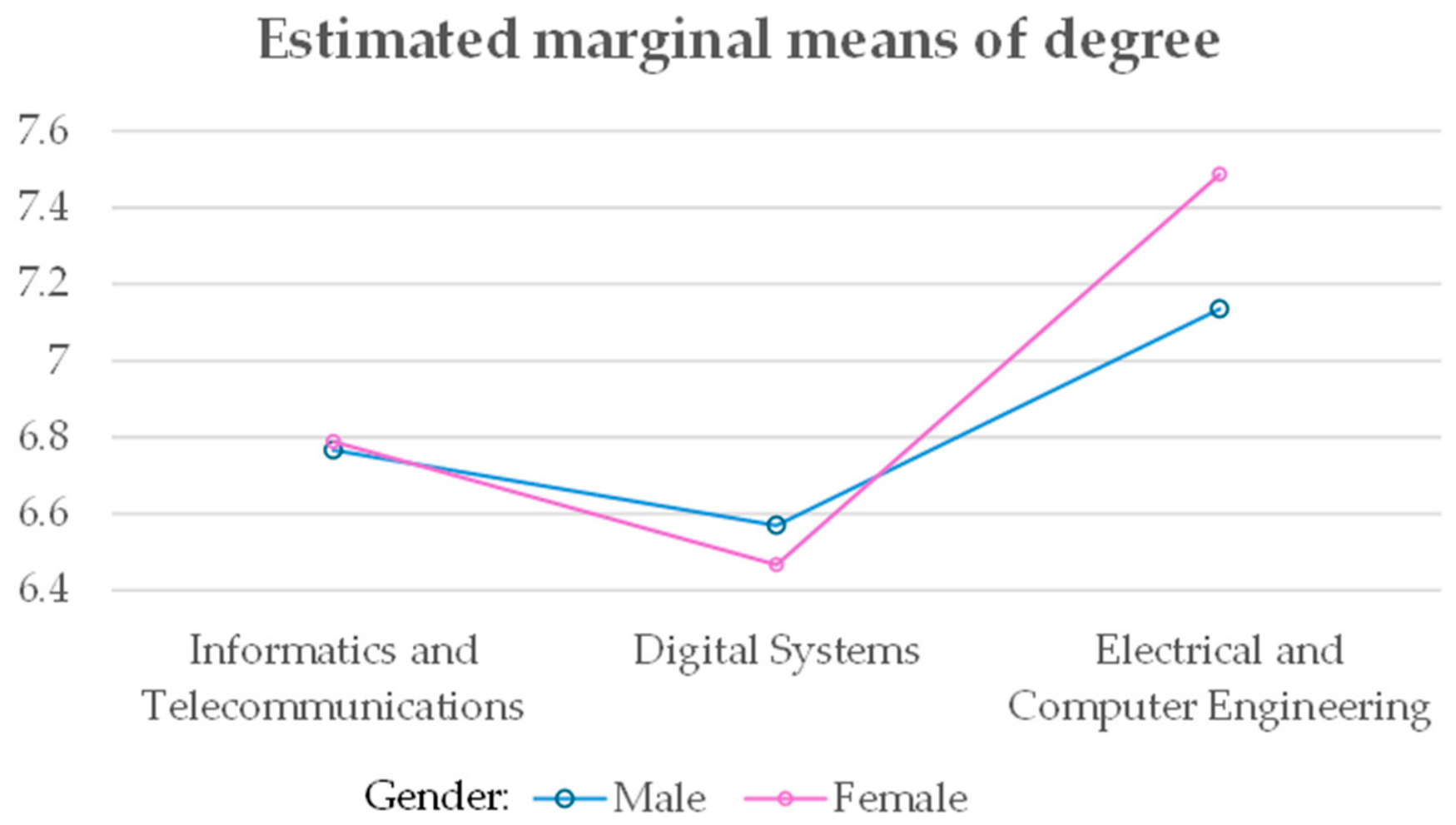
Table 3) indicate some variation in average grades, with higher values observed in the Department of Electrical and Computer Engineering (M = 7.18, SD = 0.71), followed by Informatics and Telecommunications (M = 6.77, SD = 0.55) and Digital Systems (M = 6.54, SD = 0.69). However, comparisons involving the Department of Electrical and Computer Engineering should be interpreted with caution because of the small sample size (N = 22) (
Figure 1).
A more detailed breakdown by gender and department is presented in
Table 4. In the Department of Informatics and Telecommunications, the mean grades for male (M = 6.77, 95% CI: 6.72–6.81) and female students (M = 6.79, 95% CI: 6.70–6.88) were nearly identical. In the Department of Digital Systems, female students have slightly lower mean grades (M = 6.47) compared to male students (M = 6.57), although the confidence intervals overlap. In the Department of Electrical and Computer Engineering, higher mean values were observed for both genders, with wider confidence intervals reflecting the small sample size.
A two-way analysis of variance (ANOVA) was conducted to examine the effects of gender and department on degree grades. The results indicated no statistically significant main effect of gender (F(1, 1239) = 0.496,
p = 0.481) and no statistically significant interaction effect between gender and department (F(2, 1239) = 1.542,
p = 0.214). However, a statistically significant main effect of the department was observed (F(2,1239) = 23.184,
p < 0.001) (
Table S10).
Overall, both descriptive and inferential analyses indicated that academic performance did not differ significantly between male and female students.
5.3. Duration of Studies
Table 5 presents the mean duration of study duration by gender for the overall sample. Male students exhibited a slightly longer average duration (M = 14.47 semesters, SD = 5.25) than female students (M = 13.91 semesters, SD = 5.23). An independent sample
t-test was conducted to examine whether this difference was statistically significant. The results indicated no statistically significant difference in study duration between male and female students (t(1243) = 1.576,
p = 0.115) (
Table S11).
The differences in study duration across departments are presented in
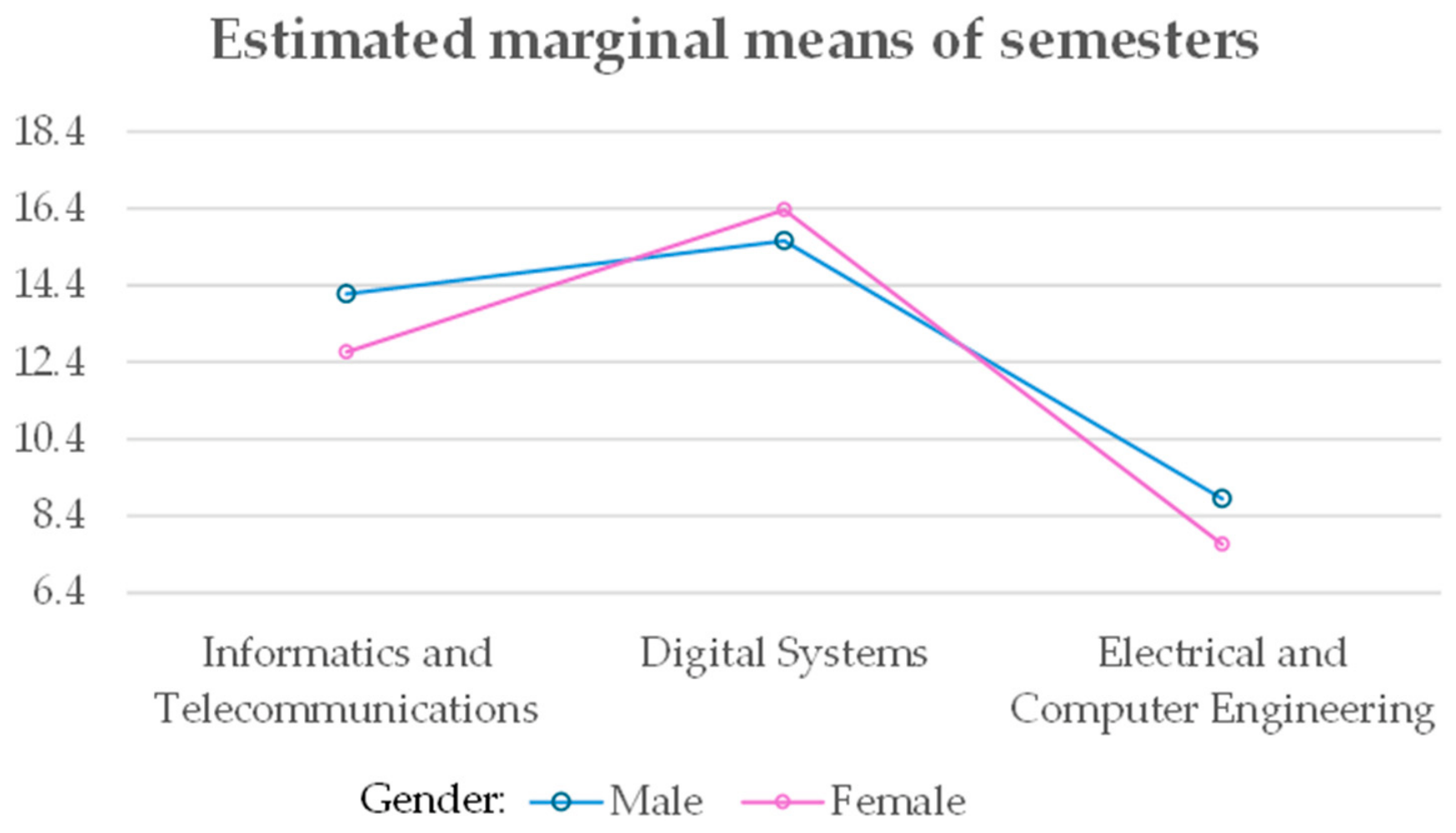
Table 6 and should be interpreted in relation to the program structure. The Department of Digital Systems has the highest average duration (M = 15.77 semesters), followed by Informatics and Telecommunications (M = 13.86 semesters), while Electrical and Computer Engineering has a lower average (M = 8.68 semesters); however, this should be interpreted cautiously because of the limited observation period and small sample size in this department.
Table 7 and
Figure 2 present the study duration by gender across departments. In the Department of Informatics and Telecommunications, female students complete their studies in slightly fewer semesters than male students. In contrast, in the Department of Digital Systems, male students showed marginally shorter study durations than female students. No clear pattern can be identified for the Department of Electrical and Computer Engineering owing to the small sample size.
Overall, although some variation was observed across departments and genders, the findings did not indicate a consistent or statistically significant gender-related pattern in the study duration.
6. Discussion
This study examined gender representation, academic performance, and study duration across three STEM departments at the University of the Peloponnese. The findings indicate a clear and persistent underrepresentation of women across all departments (
Tables S1–S4). Simultaneously, no statistically significant differences were observed between male and female students in terms of degree grades (
Table 2,
Table 3 and
Table 4) or study duration (
Table 5,
Table 6 and
Table 7).
The similarity in academic performance is reflected in both the descriptive statistics and inferential analysis. Mean degree grades are similar across genders, and the ANOVA results do not indicate any statistically significant differences. Similarly, the analysis of study duration does not reveal any statistically significant differences in completion times between male and female students across departments.
These findings are consistent with previous research, suggesting that gender disparities in STEM participation are not explained by differences in academic performance [
24,
26]. The results indicate that women who enroll in STEM programs perform at levels comparable to their male peers.
The absence of performance differences is relevant for interpreting the observed gender imbalance. This suggests that the lower representation of women is unlikely to be associated with differences in ability or academic achievement. Instead, the findings are consistent with explanations in the literature that emphasize the role of structural, social, and cultural factors in shaping participation patterns [
2,
4,
5,
6,
7,
8,
11,
12,
13,
14,
15,
18,
19,
21,
23,
24,
25,
26,
30,
32,
35,
36,
37,
39].
Although the present study does not directly examine these factors, the findings can be interpreted in light of prior research highlighting the influence of gender stereotypes, social expectations, and the limited representation of female role models in STEM fields [
5,
6,
8,
12,
13,
14,
19,
36,
37]. In addition, prior studies have associated lower levels of perceived belonging in male-dominated environments with reduced participation and persistence among female students [
5,
6,
15,
21,
24,
30,
34,
35,
37,
39].
An important implication of these findings is related to the timing of interventions. Given that academic performance does not appear to be a limiting factor in this dataset, efforts to reduce gender disparities may benefit from focusing on earlier stages of the educational pathway, where attitudes and career aspirations are formed [
14,
16]. This interpretation is consistent with the evidence presented in
Table 5,
Table 6 and
Table 7, which indicates that once enrolled, female students progress through their studies at a rate comparable to that of male students.
At the institutional level, the results suggest the importance of creating inclusive academic environments that support participation and retention. While causal relationships cannot be established in this study, the consistency of the findings across analyses may indicate that targeted institutional strategies could contribute to reducing gender disparities.
Overall, the results are consistent with the view that gender inequalities in STEM are not rooted in differences in academic ability but rather in unequal participation patterns shaped by broader social and institutional dynamics. Addressing this imbalance may therefore require a shift in focus from performance-based explanations to strategies that promote access, inclusion, and sustained engagement.
7. Limitations
Although this study provides valuable insights into gender disparities in STEM departments at the University of the Peloponnese, several limitations should be acknowledged. First, the analysis relied solely on administrative data from a single university. While this offers detailed, institution-specific insights, it limits the generalizability of the findings to other Greek universities or international contexts. Second, the dataset includes only students who successfully graduated; therefore, potential gender differences in dropout rates or delayed graduation among non-completers could not be assessed in this study. Third, although the study spans a twenty-year period, the number of graduates in some departments—particularly Electrical and Computer Engineering—was relatively small, which may limit the statistical power of the analysis. Fourth, the study relies exclusively on quantitative data; thus, it cannot capture nuanced personal, cultural, or institutional experiences that influence women’s participation in STEM fields. Finally, the study does not examine external factors such as labor market conditions, socio-economic background, secondary school preparation, or family dynamics, all of which may significantly influence the gender gap.
8. Practical and Institutional Recommendations
Several practical steps can be implemented to reduce the gender gap in STEM fields, some of which are listed in
Table 8. First, schools should expand access to extracurricular STEM activities [
7,
17,
23], robotics clubs, coding workshops, and inquiry-based science programs, particularly targeting girls [
33] and/or accommodating more STEM activities into their curricula. Teachers should adopt gender-inclusive instructional practices, such as equal turn-taking, stereotype-free examples, and collaborative problem-solving methods. Second, universities should develop mentoring networks connecting female students with female faculty members and industry professionals. Teachers should adopt gender-neutral instructional practices [
13], such as equal turn-taking, stereotype-free examples, and collaborative problem-solving methods. Second, universities should develop mentoring networks [
11,
14,
17,
20] that connect female students with female faculty members and industry professionals. Third, communication campaigns showcasing successful female role models in STEM can counter the perception that these careers are male-dominated [
19,
20,
21,
36,
39]. Fourth, institutions should conduct regular workplace culture and practice evaluations to identify gender-based barriers, such as implicit bias or unequal opportunities for participation in research activities. Finally, counseling services should provide guidance tailored to female students considering STEM careers [
13] addressing issues such as career planning, self-efficacy, and combating stereotype threat [
20].
In order to further address gender disparities before they become deeply rooted, efforts must begin well before students reach university. One important step is to incorporate STEM projects into everyday classroom practice so that scientific thinking becomes a familiar part of learning for all students [
23]. Creating environments in which girls participate fully in hands-on experiments also helps normalize their engagement in scientific inquiry [
33]. Using gender-neutral language and instructional materials further reduces the reinforcement of stereotypes within the classroom [
13].
Schools can strengthen these efforts by ensuring that counselors receive training in recognizing and countering gender-based assumptions, allowing them to guide students more equitably [
21]. Equal access to activities such as robotics [
33], coding, and science competitions [
7] is similarly essential, as it provides girls with opportunities to develop confidence and skills in areas traditionally viewed as male-dominated. Parental awareness also plays a significant role, and informing families about how gender biases operate can help create supportive expectations at home [
32,
35].
Building connections between schools and STEM professionals—particularly women—offers students concrete examples of diverse career paths and can expand their sense of what is possible. Through such early interventions, schools can help shape positive self-concepts and foster future career aspirations in STEM among all students.
Finally, the University of the Peloponnese, along with similar institutions, can enhance support for women in STEM by adopting a range of targeted measures. One approach involves establishing mentorship and peer-support groups designed specifically for women, helping them build networks and access guidance throughout their studies [
5]. Increasing the visibility of female researchers—through public lectures, seminars, and departmental open days—can provide students with relatable role models and counter prevailing stereotypes [
20].
Institutions can also strengthen engagement by offering early research opportunities to female undergraduates, giving them direct experience in scientific work and fostering confidence in their abilities. Collaboration with local high schools plays an important role as well, as such partnerships can introduce girls to STEM fields at an earlier stage and encourage interest before university entry.
A commitment to equity can further be supported by regularly monitoring gender disparities, publishing transparent data each year, and integrating gender equity principles into institutional strategic planning. Together, these initiatives contribute to a more inclusive academic culture and can significantly improve the retention of female students in STEM programs.
9. Policy and Teaching Implications
The findings of this study highlight meaningful policy implications for national and institutional stakeholders. At the national level, policies addressing gender inequality in STEM must extend beyond access and incorporate measures that support participation, retention, and progression. Integrating gender-sensitive pedagogies into teacher education programs and mandating continuous professional development on equity can help dismantle long-standing biases within the educational system. Furthermore, national curricula should embed STEM exposure from early childhood onward, ensuring that girls gain hands-on experience with scientific and technological concepts well before career aspirations are formed. At the institutional level, higher education policies should require systematic monitoring of gender participation in STEM departments and encourage targeted actions when disparities persist.
The results further emphasize the need for educators to cultivate gender-sensitive learning environments. Teachers should receive training to identify and mitigate gender bias, including subtle forms such as differential feedback or lower expectations for female students in STEM. Instructional materials should include a balanced representation of male and female scientists and engineers. Classroom practices that encourage inquiry, teamwork, and problem-solving have been shown to benefit all learners but may be particularly impactful for girls, who often express heightened concerns about belonging in STEM contexts. Furthermore, assessment practices should reward creativity, persistence, and reasoning rather than rote memorization, as these criteria align more closely with inclusive approaches to STEM education.
10. Future Research Directions
Building on the present findings, several directions for future research are recommended. First, future studies should incorporate qualitative methods, such as interviews or focus groups, to explore the lived experiences of female STEM students, including their motivations, challenges, and interactions with faculty and peers. Second, expanding the scope to include multiple universities across Greece or in other countries would allow for comparative analyses and strengthen the generalizability of the findings. Third, research should examine students who dropped out or transferred to other programs to identify factors that discourage persistence in STEM, particularly among women. Longitudinal designs that follow students from secondary school through university and into early careers may reveal critical transition points that contribute to gendered disparities in STEM pathways. Fourth, future studies could investigate the impact of specific interventions, such as mentoring programs, scholarships, or outreach initiatives, to evaluate their effectiveness in increasing women’s participation and success in STEM programs. Finally, studies linking educational data with labor market outcomes would help clarify how academic experiences translate into employment trajectories for women in STEM fields. Such research directions may contribute to a more comprehensive understanding of the mechanisms underlying gendered inequality and support the development of evidence-based policies aimed at reducing the STEM gender gap.
11. Conclusions
The present descriptive, institution-specific study was conducted with the aim of capturing the gender distribution of students in three STEM departments at the University of the Peloponnese. The primary objective of the study is to address the limited empirical data in the context of Greek higher education.
The findings indicated that women are underrepresented in all three departments, a finding that is consistent with the literature on the subject. Furthermore, the performance of graduates was examined based on two criteria: degree grade and length of study in semesters. The findings indicated that there was no statistically significant difference in academic performance between the two genders. These results suggest that the comparatively low number of women enrolled in these three STEM departments is not associated with lower academic performance. These findings are consistent with the view that the underrepresentation of women in STEM departments is unlikely to be explained by differences in academic ability between genders.
The nature of the research is descriptive; consequently, it does not permit further causal interpretations. Nevertheless, it can serve as a basis for future empirical research examining social, cultural, and educational factors that may contribute to the underrepresentation of women in STEM fields.
Future research could build on this empirical study by analyzing data from a greater number of universities. It is further recommended that the evolution of the phenomenon of underrepresentation be examined in order to deepen the understanding of the mechanisms related to women’s decisions to participate in higher education programs in STEM fields.
The proposals outlined in the manuscript are of an interpretative nature and serve a supportive function. It should be emphasized that these proposals do not imply a causal relationship with the empirical data of the study.





 ,
,