Systematic Review

Characteristics of International Graduate STEM Students in the United States and the Supports and Barriers They Experience: A Systematic Literature Review


by
Ana-Maria Topliceanu
1,*,
Margaret R. Blanchard
2 and
Karen Marie Collier
1
1
Department of Teaching and Leading, College of Education and Human Development, Augusta University, Augusta, GA 30912, USA
2
Department of STEM Education, College of Education, North Carolina State University, Raleigh, NC 27695, USA
*
Author to whom correspondence should be addressed.
Trends High. Educ. 2026, 5(2), 42; https://doi.org/10.3390/higheredu5020042

Submission received: 5 January 2026 / Revised: 26 April 2026 / Accepted: 8 May 2026 / Published: 14 May 2026
(This article belongs to the Special Issue The Graduate School Experience: Influential Factors for Success)

Abstract

International graduate students studying Science, Technology, Engineering, and Mathematics (STEM) in the United States (U.S.) diversify universities and contribute to research and innovation. They are critical to the U.S. STEM pipeline, workforce and economy; therefore, it is important to understand their experiences. This systematic literature review investigated international graduate STEM students’ characteristics and the supports and barriers they experience while studying in the U.S., following PRISMA guidelines. Thirty-nine peer-reviewed articles were systematically selected from 552 articles for inclusion in this review. Ecological systems theory situated the study within the broader system of graduate education. Findings revealed great diversity, such as country of origin and cultural identity, gender, STEM fields, and prior experiences. Students expressed differences in their reasons to pursue U.S. education and their post-graduation intentions to remain in the U.S. or leave. Support came from institutions, faculty members/academic advisors, and peers. Reported barriers included unfamiliarity with norms and institutional resources, limited English proficiency and writing skills, issues with advisor and being a teaching assistant, underrepresentation, and family responsibilities. Themes were placed within the levels of the ecological framework; most were in the macrosystem, reflecting the strong influence of society, institutions, culture, and norms on students’ experiences.

1. Introduction

Science, Technology, Engineering, and Mathematics (STEM) performance represents an indicator of a country’s competitiveness in the world, its advancements in innovation and technology, and an elevated quality of living for its citizens [1]. There is a persistent shortage of high-skilled STEM workers in the United States (U.S.) [1]. Relative to 2021 levels, employment in U.S. STEM jobs is expected to grow by 10.8% by 2031 [2], while the supply of U.S. citizens remains insufficient to meet this growing demand [1]. In 2019, approximately 23% of all STEM employees were foreign-born [1], and at the doctoral level, 45% of the science and engineering workforce consisted of foreign-born professionals [3].
Foreign-born individuals are important to the STEM workforce, but they are also essential in higher education institutions. The U.S. draws significantly on individuals born outside the country to populate its graduate STEM programs [4], as they contribute financially to the educational revenue of the academic institutions and to the cities where they live [5]. The U.S. has been a major destination for international students [3]. The number of international students in the U.S. increased over the last two decades, from almost 550,000 in 2000 to more than 1,050,000 in 2023 [6], with almost half of them in STEM fields [7]. The top five U.S. institutions hosting the highest numbers of international graduate students in 2025 were New York University, Northeastern University in Boston, Columbia University, Arizona State University, and University of Southern California [8].
The fastest growth in the number of international STEM students was at graduate levels. In 2017, 54% of master’s degrees and 44% of doctorate degrees in STEM disciplines were awarded to international students in the U.S. [7]. Between 2000 and 2021, the two most common countries of origin for international doctoral STEM students were China and India, and the most popular field for both was engineering [9,10]. Approximately 35% of the U.S. science and engineering doctoral degrees were earned by Chinese students and 40% by Indian students since 2000 [11]. In 2022, most master’s science and engineering students were from India (113,000) and most doctoral science and engineering students (37,000) were from China [10].
Some STEM fields are more appealing to international graduate students than others. There is a majority of international graduate students in mathematics and computer science (59.3%) and engineering (50.3%) graduate programs [12]. The most sought-after doctoral degrees (almost 60% international) are in computer science and engineering, while the least desired STEM field is the health and biological sciences, with international students below one third of the total student population [9].
Han and Appelbaum reported that the majority of STEM doctoral degrees from U.S. universities go to international students, who are more likely to complete the degree compared to domestic students [13]. Eighty-six percent of the doctorate degrees in science and engineering were awarded to international students between 2011 and 2015 [14]. The reasons international graduate students come to study in the U.S. are important to consider. Based on a survey that included 787 international graduate students, Han and Appelbaum concluded that over 80% of international graduate students reported a superior quality of education in the U.S. and over 70% listed career prospects as more promising than their domestic country [13]. Han and Appelbaum found that 63.1% of international graduate students reported cultural challenges, 58.9% social, 47.6% financial challenges, and 22.2% racial.
A large percentage of these international graduate students remain in the U.S. to work after they graduate. Granovskiy and Wilson found that 72% of the international doctorate recipients were still in the U.S. one decade after the completion of their degree [7]. Whether an international STEM graduate student chooses to remain in the U.S. or not after the completion of their studies depends on the reasons why they choose to come in the first place; the ones who chose career opportunities as the main reason to come are the ones who are more likely to stay [13]. Students from China, India, and Iran have the highest rates of intention to remain (greater than 85%), while individuals from richer nations or world regions, such as European Union members or Canada, have lower rates (75%) of intention to remain [9].

1.1. Theoretical Framework

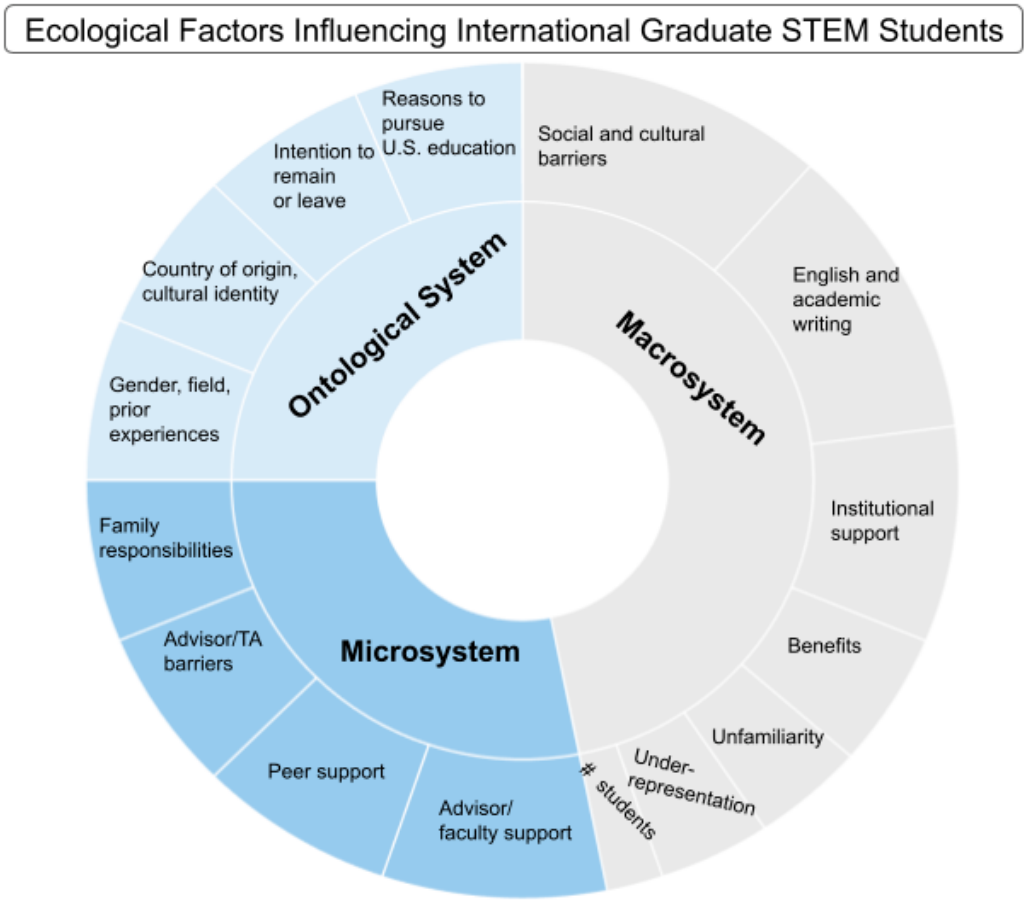
An ecological systems perspective was first introduced by Bronfenbrenner [15] and has been applied to a broad range of social phenomena (e.g., leadership [16]; work-family facilitation [17]). Chandler et al. [18] applied a three-level model to graduate mentoring within the broader system of graduate education, building from an extensive literature review from 2002–2010. A recent study by Topliceanu [19] used the ecological systems model to better understand factors that influence the mentoring of international and domestic graduate students and their advisors. Building on these studies, this research situated what is known about international STEM graduate students’ characteristics and supports and barriers within the ecological systems model [18]. The system is arranged in three nested ovals featuring personal factors (i.e., personal characteristics) in the innermost oval, relational factors (e.g., support for mentee) in the middle oval, and systemic factors (e.g., culture, societal norms) in the outer oval. The inner oval is the ontological system, which includes such factors as demographics, race, gender, nationality, and stage in the program. The middle oval is the microsystem, which includes relational aspects between individuals, such as the mentor, mentee, and peers. The outer oval is the macrosystem, which includes the broader societal norms, culture and power dynamics that influence mentoring. These systems levels will be used to situate what is known about the nature of international graduate STEM students within the broader system of graduate education.

1.2. Study Rationale

This systematic literature review (SLR) was designed to examine the research regarding the characteristics of international graduate students studying STEM in the U.S and the supports and barriers they experience. An exploration of the literature is necessary for several reasons: (1) a large percentage of graduate STEM students in the U.S. are international, (2) the largest percentage of graduate degrees in STEM are awarded to international students in the U.S., (3) there is increasing need for STEM workers in the U.S., and (4) there is a lack of systematic reviews focused on international graduate STEM students. By reviewing publications from 2013–2025 on international graduate STEM students, this review had the objective to identify international graduate STEM students’ characteristics and their experienced supports and barriers while studying in the U.S.

1.3. Research Questions

In this SLR of international graduate STEM students in the U.S., the following research questions are addressed:
(1)
What are the characteristics of these international graduate STEM students?
(2)
What supports and barriers do international graduate students experience while studying STEM in the U.S.?

2. Methods

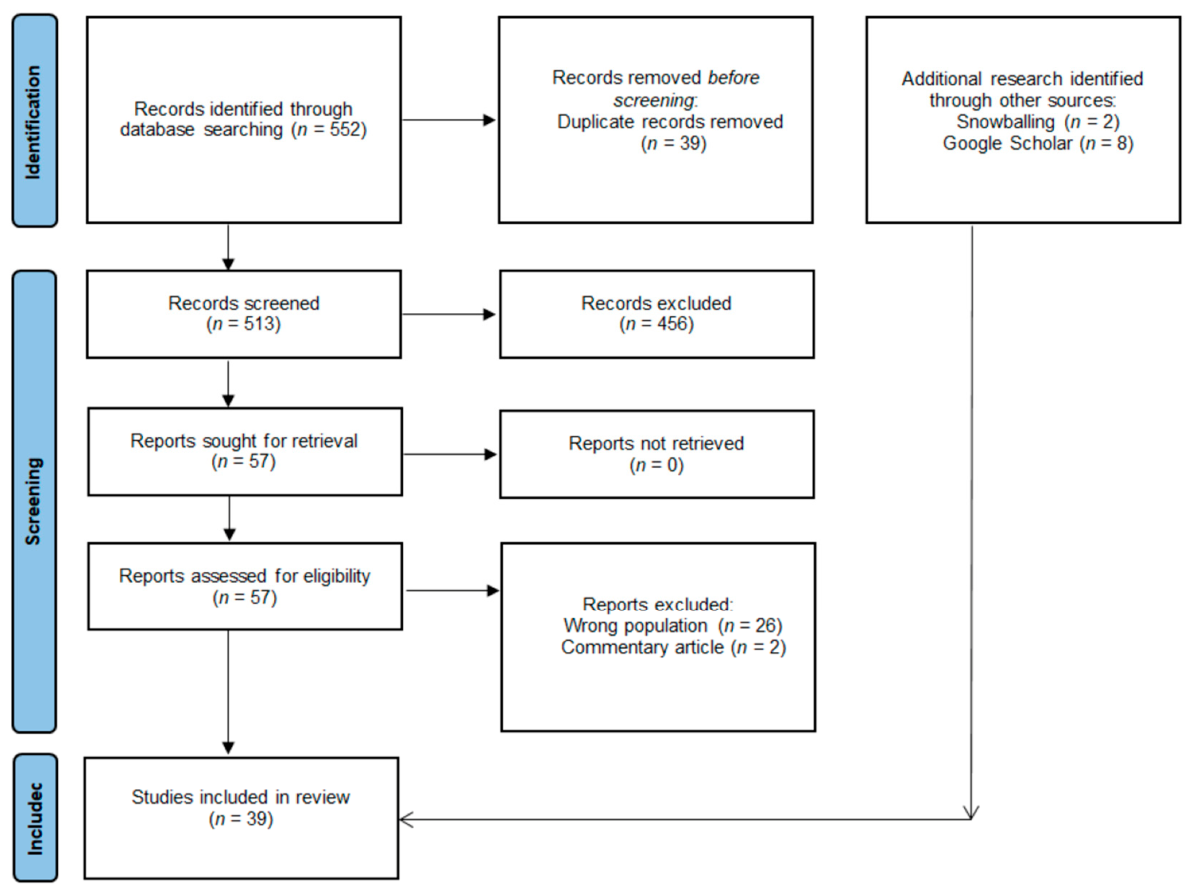
The Preferred Reporting Items for Systematic Reviews and Meta-Analyses (PRISMA) guidelines [20] (See Supplementary Materials) were followed in this SLR. Figure 1 outlines the article selection process, abstract and full-text screening, and the criteria for exclusion and inclusion. The purpose of this study was to identify international graduate STEM students’ characteristics and experienced supports and barriers while studying in the U.S. in the period from 2013 to 2025.

2.1. Information Sources

The initial search was done with the following search engines: EBSCO’s Academic Search Complete, ProQuest Central, ERIC, and Web of Science. Academic Search Complete database was chosen as it provides access to full-text articles from more than 9000 journals covering multiple disciplines [21]. ProQuest Central was chosen as it is the largest aggregated database that covers more than 160 subject areas [21]. ERIC was chosen as it is the primary and the largest database in education [21]. Web of Science was chosen because it offers multidisciplinary coverage, provides access to over 10,000 journals, and includes topics in sciences and social sciences [21]. The date of the last search across Academic Search Complete, ProQuest Central, ERIC, and Web of Science databases was 4 March 2026.

2.2. Search Strategy

The following search string was applied to all databases: (STEM OR science OR physics OR chemistry or biology OR technology OR engineering OR mathematics) AND (“graduate students” OR “graduate student”) AND (“United States” OR USA) AND (international OR foreign). Filters were used to include only peer-reviewed articles written in English between 2013 and 2025 and published in scholarly journals. The initial search yielded 245 studies from EBSCO’s Academic Source Complete, 115 from ProQuest Central, 165 from ERIC, and 27 from Web of Science.

2.3. Eligibility Criteria and Selection Process

The inclusion criteria included: (1) articles that focused on international graduate students studying STEM in the U.S., (2) articles that were published between 2013 and 2025 in peer-reviewed journals, and (3) articles that were published in English. Of the articles yielded from the initial Academic Source Complete (n = 245), ProQuest Central (n = 115), ERIC (n = 165), and Web of Science (n = 27) database searches, thirty-nine duplicates were removed (eight from EBSCO’s Academic Source Complete, three from ProQuest Central, twenty-four from ERIC, and four from Web of Science), resulting in 513 articles subject for abstract screening. The study’s selection process was documented using a PRISMA flow diagram to ensure transparency. The first round of screening involved evaluating abstracts to determine their relevance to the research questions. To assess the risk of bias in the included studies, multiple researchers conducted the screening process. The first and third author conducted the screening of the Web of Science database. There was 100% agreement between the two researchers regarding the screening process. The first and second author conducted the screening for the ERIC database. There was 97% agreement between the two researchers regarding the screening process. The first author screened the other two databases (Academic Source Complete and ProQuest Central). Four hundred and fifty-six articles were excluded because they were not focused on international graduate STEM students studying in the U.S. The exclusion criteria included: (1) articles that did not focus on international students, (2) articles that did not include master’s and doctoral students, (3) articles that did not include STEM programs, (4) articles that did not include U.S. higher education institutions, and (5) articles that were not published in peer-reviewed journals. In the second round of screening, 57 full-text articles were assessed. After full-text reading, twenty-eight articles were excluded. Twenty-six articles included the wrong participant population and two were commentary articles. For example, the research article titled “Acculturative stress and leisure among Chinese international graduate students” was rejected because it included both STEM and non-STEM (e.g., humanities) participants, making it difficult to determine which findings were described by STEM versus non-STEM graduate students [22]. Another rejected article titled “Mental anguish and mistreatment pervade marine science” was rejected for including participants from undergraduate students to post-doctoral researchers from all over the world [23]. Two additional articles [24,25] were added through snowballing sampling strategy, by examining the reference list of a few relevant articles to find earlier studies that the articles cited. Google Scholar was used as a supplementary database to search. Approximately 19,000 results were found when the search term (STEM OR science OR physics OR chemistry or biology OR technology OR engineering OR mathematics) AND (“graduate students” OR “graduate student”) AND (“United States” OR USA) AND (international OR foreign) was used. Given the large number of results and the fact that Google Scholar displays the results by relevance, only the first 100 results (first 10 pages) were screened for inclusion. Eight additional studies were identified through the Google Scholar search (accessed on 14 March 2026). Out of the 39 articles included, three were conference proceedings. Scherer and Saldanha recommend including conference abstracts when information on a topic is not abundant [26]. Since the number of the studies identified through the initial search, snowballing sampling strategy, and using Google Scholar was not high, the three conference proceedings [27,28,29] were included in the systematic literature review. The review was not registered.

2.4. Data Analyses and Risk of Bias

To analyze the articles, a thematic synthesis was used. A thematic synthesis includes three stages: coding of text, development of descriptive themes, and generation of analytical themes [30]. First, for each of the 39 articles included in this SLR, the year of publication, location of the higher institution in the U.S., STEM discipline, type of college or university, and methodology of study were noted. Then, the articles underwent thematic analysis to understand the international graduate STEM students’ characteristics and the supports and barriers they experienced while studying in the U.S. The findings, discussions, and implications of each article were coded by the first author. Emerging codes were recognized, descriptive themes were developed, and analytical themes were constructed. For example, several descriptive themes, ‘number of students,’ ‘countries of origin and cultural identity,’ ‘gender and STEM fields,’ ‘benefits to U.S./institutions,’ ‘reasons to pursue an education in the U.S.,’ and ‘intention of whether to remain in the U.S. after graduation or leave’ were grouped together under the analytical theme ‘characteristics.’ The following descriptive themes: ‘institutional support,’ ‘faculty member/advisor support,’ and ‘peer support’ were grouped together under the analytical theme ‘support.’ Three articles were purposefully selected by the first author for inter-rater reliability [31] that represented the majority of categories. The third author coded this subset of three articles independently using the list of themes developed by the first author. The inter-rater reliability score was calculated (81%). Miles and Huberman recommend 80% to 95% agreement on the codes [31]. All disagreements were resolved through discussion until 100% agreement was reached [32]. Due to the high level of agreement, the first author continued coding data independently. See Table 1 for descriptive codes and constructed analytical themes of international graduate STEM students’ characteristics and the experienced supports and barriers while studying in the U.S.

3. Results

3.1. Characteristics of Included Studies

In this SLR, 16 studies (41%) were quantitative and 20 (51.3%) were qualitative. Three studies (7.7%) included mixed methods research, and one (2.6%) was an analytical review article. Twenty studies (51.3%) included participants from public universities, four studies (10.3%) from public and private institutions, and fifteen studies (38.5%) were conducted with participants from unspecified types. One-third of the studies included only engineering participants. Another third of the studies included participants from a variety of specified STEM fields, including: biology, chemistry, mathematics, physical sciences, engineering. For the rest of the studies, participants were described generically as being in STEM fields. For approximately half of the studies, the year of data collection was not specified.
In Table 2, details about the 39 studies are included. These included the year of publication, study methods, location in the U.S. of the higher institution where the study was conducted, STEM discipline, type of university, and year of data collection. The most common years of publication was 2015 (n = 6, 15.4%). It was followed by 2014, 2018, 2019, and 2021 (for all n = 4; 10.3%). The year 2015 was the most common year probably due to the increasing universities’ recruiting efforts of bringing international students to study in the U.S. that followed the 2008 financial crisis. In the next sections, findings for each of the research questions will be presented.

3.2. Research Question 1: Characteristics of International Graduate STEM Students

The first research question explored the characteristics of international graduate students studying STEM in the U.S. A total of 23 articles (59%) discussed their characteristics. The themes included: number of students; countries of origin and cultural identity; gender, STEM fields, and prior experience; benefits to U.S./institution; reasons to pursue education in the U.S. and expectations of the program; and intention of whether to remain in the U.S. after graduation or leave. Analysis of the articles selected for this SLR revealed a group that was extremely diverse. Miner commented, “The term STEM often remains an undifferentiated category, especially at the graduate level” [34] (p. 661). Miner asserted that this was not an accurate depiction of the wide range of STEM fields. This SLR revealed that this was also the case for international graduate STEM students; they did not form a homogeneous group.

3.2.1. Number of Students

The number of international graduate students studying STEM in the U.S. was discussed in five studies (12.8%). The number of international students in the U.S. has increased since the mid-1950’s [36]. In 2012–2013, approximately 37% of the total number of international students were in STEM disciplines, while 17% were in social sciences and humanities [36]. Not all STEM fields, however, have similar ratios of international to domestic students. Miner conducted a quantitative research study involving 674 international and 1293 domestic graduate STEM students attending the top 10 U.S. universities, ranked by the number of international graduate students enrolled [34]. The author found an overrepresentation of international graduate students, compared to domestic students in STEM fields, such as computer science and engineering, but an underrepresentation in fields such as the life and physical sciences [34]. Overall, about one third of all post graduates in science and engineering are born abroad [36].
With an increasing number of international students, there is ongoing debate about whether they may be taking the place of domestic students in science and engineering graduate programs. Hegarty conducted a literature review examining the impact, contributions, and importance of international students to U.S. higher education institutions [33]. The author argued that the international students “quite often enroll in programs that are under-enrolled by domestic students and therefore are the lifeline of existence for many programs” [33] (p. 231). Hegarty also noted that “international students are no longer a complimentary addition to university programs but rather a stable and growing presence in classrooms” [33] (p. 224). In 2013, the three U.S. universities with the highest number of international students were University of Southern California with 9329 international students enrolled, Purdue University with 8863, and University of Illinois with 8320. At Purdue University, approximately 50% to 60% of the international students were enrolled in graduate programs and most were studying in engineering, life sciences, or management [33]. In a similar vein, conducting a forecasting analysis for 2011–2025, Sanfilippo et al. found that maintaining the enrollment of international students in science and engineering would be most favorable for the university and scientific outcomes [35]. They projected that cutting the number of international graduate students in half might increase by 10% the number of domestic students, but at the expense of reduced tuition revenue, fewer patent submissions, and slimmer scientific novelties [35].

3.2.2. Countries of Origin and Cultural Identity

Six studies (15.4%) discussed international graduate STEM students’ countries of origin and cultural identities. Han et al. conducted a mixed methods study that included an analysis of national education data, a survey of 166 international graduate STEM students from 32 countries, and interviews [36]. The authors found that Asia was the most common continent of origin, accounting for 64% of the total international student population. Europe ranked second with 11%, followed by the Middle East with 7.5%, Latin America with 8.4%, North America with 3.6%, Africa with 4.6%, and Oceania with 0.75%. Han et al. further noted that China and India were the two largest within Asia, followed by South Korea, Taiwan, Iran, and Turkey [36]. Similar trends were reported by Hegarty; in 2013, the top four countries of origin for international students were China, India, South Korea, and Saudi Arabia [33].
International graduate STEM students’ experiences were shaped by their cultural identity. In a qualitative study of 21 Asian female graduate students, Lim et al. found that almost all participants described a male-dominated culture in their home countries characterized by “hierarchy and rigid gender roles” [39] (p. 654). Participants also noted that being recognized for their “accomplishments did not come naturally” [39] (p. 654), which affected how they adapted to the new U.S. culture. Similarly, in a qualitative study of three male Chinese graduate students serving as teaching assistants in biology courses, Jiang reported that the participants viewed shyness and a reluctance to start conversations as Chinese cultural virtues. Jiang found that the participants had to adapt to a culture that “values initiation and communication” [38] (p. 18).
Specific geographical regions also influence the characteristics of international graduate STEM students. In their quantitative study, Zhu and Cox [40] investigated the epistemological development profiles of 147 Chinese doctoral engineering students studying at five Midwestern U.S. universities. The researchers found cognitive differences among participants that were “related to additional complicated factors associated with the regions in which they were born and grew up” (p. 355). This finding could be explained by the fact that different Chinese regions might have different socio-economic levels and educational opportunities.

3.2.3. Gender, STEM Fields, and Prior Experience

Gender, STEM fields, and prior experience were discussed in seven studies (18%). The gender representation of international graduate students in STEM fields is not evenly distributed. Miner analyzed survey responses from 1967 domestic and international graduate students from 75 countries (including U.S.) enrolled in physical sciences, mathematics, engineering, and computer sciences [34]. He found that, although there was a gender gap in engineering enrollment among domestic graduate students, this gap was not present among international students, whose male and female representation was more balanced [34]. Miner also noted that in computer science, the number of international male participants was more than triple that of the domestic male students. Additionally, compared to international men, international women were more likely to be enrolled in life sciences disciplines than in the physical sciences [34].
Park et al. interviewed and observed 27 East Asian doctoral STEM students and found that their prior work experience ranged from none to substantial [44]. Students with substantial prior work experience encountered a smoother transition into their graduate programs and had a better understanding of how to navigate their programs. They also tended to hold higher expectations of their U.S. graduate program compared to students with no prior work experience. Asif et al. [45] interviewed ten South Asian natural sciences and twelve domestic students who were in their first six months in their doctoral program to understand what factors affected their transition into graduate school. One factor that influenced the international students’ transition was deficient prior research experience in their home country. Limited resources, equipment, and funds and a general “far from optimal” state of education in students’ region of origin impacted their experience in the doctoral program [45] (p. 5).

3.2.4. Benefits to U.S./Institutions

Five studies (12.8%) discussed the benefits of having international graduate students studying STEM in the U.S. International graduate STEM students are extremely important to research development and innovation in the U.S. [33]. They bring valuable knowledge and skills to U.S. institutions [46] and serve as an important workforce for U.S. multinational businesses. They also contribute to the linguistic and cultural diversity of their institutions [42].
Although international graduate STEM students are not evenly distributed across the U.S., they contribute significantly to the financial well-being of academic institutions, as most of them pay full tuition [33]. Each year, Hegarty found that international graduate students contribute approximately $22 billion to the U.S. economy, constituting an important reservoir of financial gain, surpassing the economic impacts of multiple industries, including gaming, weight loss, and domestic music and movie industries. Furthermore, he asserted that the cities where these international students live, the local economies and “almost every other industry in the U.S. benefits from their presence” [33] (p. 227) as international students buy food, clothing, and textbooks, as well as travel. After returning to their home countries, these individuals continue to serve as “a great source of goodwill for the United States. Many go on to very influential positions in their home country and the goodwill built up from their years in the United States could prove very beneficial for the U.S. both economically and politically” [33] (p. 231).

3.2.5. Reasons to Pursue an Education in the U.S. and Expectations of Their Programs

Nine studies (23%) discussed international graduate students’ reasons to pursue an education in the U.S. and their expectations of their STEM programs. There was variation in the reasons international graduate STEM students choose to pursue an education in the U.S. In general, the most important motivating factors included: the high global ranking of U.S. universities [36,47], the superior quality of programs in education, better job opportunities, professional networks, and mentorship compared to their native country [36,48], as well as an inherent interest in academic research [50].
Social and personal considerations also play a role. In their qualitative study of ten male and five female South Indian students attending a Midwestern research university, Yakabovski et al. found that pursuing graduate engineering degrees in the U.S. was viewed as a privilege that enhanced both female and male “students’ marriage options including love marriages, arranged one, and dowry” [51] (p. 45). Obtaining a U.S. higher education degree improved the students’ and their families’ social positions within their Indian communities. For some participants, U.S. engineering graduate degrees were perceived as part of the dowry system: female students pursued U.S. degrees to pay less dowry while males pursued them to receive more dowry. Yakabovski et al. also reported that some participants saw studying in the U.S. as a way to delay marriage [51]. Similar findings were reported by Xu [41] who conducted a qualitative study with three Chinese and three Indian doctoral STEM students to determine the influences of family, society, and culture on the participants’ reasons to pursue an education in the U.S., their experiences while studying in the U.S., and intentions to remain or leave the U.S. after graduation. The social status of Indian families was perceived higher due to pursuing higher education in the U.S., while in China there is “a common social perception…that U.S. education is for elite” (p. 9). All Indian participants expressed that there is a societal emphasis on becoming engineers or medical doctors in India and their academic choices were shaped by these expectations and their families. However, when examining a broader group of international graduate students coming from 32 countries, Han et al. found that professional reasons (e.g., job opportunities, quality of professional networks, and relationship with advisors) outweighed social and personal reasons (e.g., opportunity to live in the U.S.) [36].
Graham et al. compared the motivating factors for domestic and international engineering students pursuing a master’s degree in the U.S. [28]. Surveying 59 international and 106 domestic graduate students, they found that domestic students perceived the reputation of the university and the completion time as the factors that weighed the most, whereas international graduate students placed the variety of courses they can take and their rigor as primary motivators to pursue their education in the U.S. [28]. Another important motivation factor for international students was the opportunity to build career networks and work in the U.S. [28,47].
The expectations the graduate students hold about their STEM programs differ by country of origin, shaping their perceptions of their experiences in the U.S. Analyzing survey responses from 339 international and 351 domestic doctoral engineering students, Crede and Borrego found that students from the Middle East were the most satisfied with their graduate programs, followed by Indian students [24]. Students from other regions of the world, including the U.S., reported that their experiences in the program fell below their expectations. Doctoral engineering students from the Middle East and India felt that their work was valued by their advisors and research groups, whereas Chinese students “experienced the lowest levels of project ownership and lower levels of perceived value to the group” [24] (p. 1612). Mismatched expectations and inaccurate information about the U.S. STEM doctoral programs were identified as challenges for Chinese students [50].
International graduate students often pause their careers when they choose to study in the U.S. [28]. Graham et al. also found that international graduate students apply to a greater number of master’s programs than domestic students and consequently are accepted in a greater number of graduate schools. Enrollment in a master’s degree serves different purposes for domestic and international students. Ruthotto et al. conducted a quantitative study involving 849 international and domestic participants [49]. The authors used data from a 2017 survey of the first group of students enrolled in the computer science online master’s program at the Georgia Institute of Technology. Whereas the domestic students viewed the master’s degree as a means to obtain a job promotion, international graduate students were less likely to seek promotion as a post-school goal and were more likely to pursue a doctoral degree in the U.S. after completing the master’s program [49].

3.2.6. Intention of Whether to Remain in the U.S. After Graduation or Leave

International graduate STEM students’ intentions of whether to remain in the U.S. after graduation or leave were discussed in five studies (12.8%). In their quantitative study of 752 international graduate STEM students at ten U.S. universities, Gesing and Glass reported that the decision to stay in the U.S after completing the graduate program was determined by political, economic, and social factors [48]. The students’ native country’s gross national income per capita seemed to differentially influence the reasons behind the decision to stay or leave. Students from high-income countries were more likely to stay for better career options. Gesing and Glass also found that Chinese students were more likely to remain even when facing cultural challenges, while Indian students were more likely to remain because of better career options and stronger relationships with colleagues and faculty members [48]. In their quantitative study of 75 science and engineering international doctoral students, Ugwu and Adamuti-Trache found that female students were more likely to leave the U.S. after graduation compared to males. Also, engineering students were more likely to leave compared to science students [53].
The decision of whether to remain in the U.S. after the completion of the program or return to one’s home country has significant implications for all parties involved. It affects the home country because it reverses the brain drain, by bringing back home the highly skilled individuals who chose to study in the U.S.; it affects the student, as future job opportunities in the home country might be different from those available in the U.S.; and it affects the U.S. by retaining highly trained STEM talent [36]. Many home countries have launched programs aimed at attracting STEM graduates back home to work as researchers, scientists, and STEM professionals. Han et al. listed and described such programs across numerous countries and regions, including Africa, Argentina, Brazil, Chile, China, Europe, Germany, Israel, Italy, Moldova, Portugal, Russia, South Korea, Spain, Sweden, Thailand, and Turkey [36].
Career plans after graduation appear to be an important factor in whether international graduate STEM students choose to remain in the U.S. after graduation. Han et al. reported that international students who did not envision careers in research or academia, but instead sought work in industry or nongovernmental organizations, had 90% probability of remaining in the U.S. after graduation [36]. Similarly, Choe and Borrego’s quantitative study of 249 engineering graduate students found that international engineering graduate students expressed strong interest across all employment sectors, industry, research and academic positions, and government [52]. This was in contrast to domestic students who showed high interest in industry, low interest in academia, and moderate interest in government jobs. This openness to many career pathways may be explained by seeking options that would extend their legal status after degree completion [52].

3.3. Research Question 2: Support Provided and Barriers Experienced

Research question 2 examined the support provided to international graduate STEM students and the barriers they experienced while studying in the U.S. A total of 22 articles (56.4%) discussed these types of support. Support was provided by institutions, advisors/faculty members, as well as peers.

3.3.1. Support

Institutional Support
Institutional support was discussed in a total of eight studies (20.5%). Ozturgut conducted a qualitative study involving 53 university administrators who worked with international students or international academic programs to identify best practices for recruiting and retaining international students in U.S. higher education programs [25]. The author argued that U.S. institutions spent more time and effort recruiting international students than domestic ones. Although institutions focus on providing social and cultural support to international graduate students (e.g., orientation sessions, cultural sharing programs, outings and activities, pairing domestic and international students), they invest less effort in personal, academic, and English language support. Furthermore, Ozturgut noted that U.S. institutions devote significant time, effort, and financial resources to retaining the international students they recruit, especially as global competition for these students increases [25]. However, the author argued that successful recruitment and retention of international students requires a more personalized approach to address the individual cultural differences.
Yu et al. investigated how international graduate STEM students perceived the support provided by their university libraries, at a public university that ranked fifth among U.S. institutions in international student enrollment [55]. They found that international graduate STEM students placed less value on the role of libraries in storing and having available resources needed for research and graduate classes, and helping with the development of research competencies. The authors recommended that graduate programs include specific training embedded in the graduate coursework to help the international students with their research skills.
International graduate STEM students commonly work as teaching assistants. Although serving as a teaching assistant provides opportunities to gain career and teaching experience, international graduate STEM students frequently need support to develop the necessary knowledge and teaching skills [38]. To better support those students, Jiang recommends that teaching assistants’ training should be focused on content knowledge, language proficiency, and pedagogical skills. Pairing domestic and international teaching assistants may also help improve international students’ communication skills [38]. Similarly, in a mixed methods study involving 50 international graduate STEM students working as laboratory assistants, recitation leaders, or course instructors, Cotos and Chung found that the language demands faced by international teaching assistants vary depending on whether the instructional setting is instructor-centered or student-centered [54]. The authors suggested that training programs for international teaching assistants should focus on incorporating language functions, such as instructing, evaluating, and describing functions, rather than emphasizing discipline-specific content of the STEM [54].
Alves et al. studied a summer pilot program designed to help international graduate students pass the Test of English as a Foreign Language (TOEFL) exam [27]. To study in the U.S., international students are required to take the TOEFL, which measures English language proficiency for individuals whose first language is not English. The participants were 50 Mexican engineering prospective graduate students who planned to apply to Texas A&M University. The program provided intensive language training and was considered successful not only for improving TOEFL scores, but also for increasing the retention of Mexican students in U.S. graduate programs.
Studying abroad affects not only international students, but also their families. To support students and their families during their studies and after graduation, “family-friendly policies, such as spousal hiring plans” [51] (p. 59) are needed. Providing employment opportunities for students’ spouses may increase the retention rates of STEM graduates in the U.S. and support the participation of women in engineering [51].
Faculty Member/Advisor Support
Faculty members’ and advisors’ support was discussed in twelve studies (30.8%). Faculty members and advisors play a critical role in helping international students successfully navigate graduate school [56]. Faculty members contribute significantly to students’ sense of belonging, which is important for a positive graduate experience and successful degree completion. Antonio and Baek examined how twelve international male electrical engineering doctoral students constructed their sense of belonging [56]. They found that faculty members were the primary evaluators of students’ academic performance and were instrumental in ensuring a seamless academic and professional progression through the electrical engineering doctoral program. Older students reported having a stronger relationship with their advisors. In addition to guiding them into the engineering fields, the advisors helped build students’ confidence. Academic success carried the most weight in shaping international male doctoral students’ sense of belonging in electrical engineering, while social connections with peers were secondary in importance [56].
In their qualitative study of 21 first year international doctoral students, Marijanovic et al. found that those in STEM fields interacted more frequently with their advisors and had more conversations about future careers compared to humanities and social sciences programs [58]. The higher frequency of advisor interaction among international graduate STEM students was attributed to program configuration that relies heavily on laboratory and group work. Faculty members also are the individuals who graduate students meet most often on campus and to whom they direct most of their questions [25]. Given the interest of international STEM graduates in careers in academia, government, or industry, particularly the opportunities for individuals with engineering doctorates in industry jobs (one-third of graduates are hired), students need support from advisors not only in academic knowledge but also in planning for careers in industry and government [52].
Cantwell et al. conducted a qualitative study of 44 international science and engineering graduate students from Asia, Europe, and North and South America studying at two large public U.S. universities [46]. The authors found that the student-advisor relationship was the most important factor in molding students’ experiences. Advisors made the international graduate students feel they were knowledge co-contributors to research and esteemed collaborators. They also were supportive of graduate students’ educational and post-educational goals. Advisors provided opportunities for international graduate students to gain teaching experience by inviting them as guest-speakers in their classes, advised them on how to write their research for publication and conference presentations, and offered flexible work hours to help students meet personal responsibilities.
Faculty members are an important source of knowledge regarding academic honesty. Leonard et al. conducted a mixed methods study of 222 international and 425 domestic graduate STEM students at a public university [57]. They found that international students reported receiving more information from their professors about academic honesty than did domestic students. The nationality of faculty members was found to matter for female students. Lim et al. reported that female Asian graduate students perceived greater willingness to collaborate, and additional support and advice from “immigrant or transnational faculty members” [39] (p. 657). However, none of the participants in Lim et al.’s study described a faculty member as a role model, perhaps due to an underrepresentation of international female STEM faculty members [39].
Academic writing is a critical component of graduate education and international graduate students must be able to write high-quality academic papers. Zerbe and Berdanier conducted a quantitative study on the writing attitudes of graduate engineering students and found no statistical differences between international and domestic students in terms of procrastination when faced with writing tasks [29]. Therefore, the authors suggested that faculty members and advisors ought to develop and provide strategies to help all students overcome procrastination when writing. They also recommended examining each international graduate student’s prior writing experience so that faculty members and mentors can differentiate writing instruction to meet the particular needs of individual students.
Peer Support
Peer support was discussed in a total of ten studies (25.6%). In their qualitative study of 27 East Asian doctoral students, Park et al. found that the social relationships with peers, students from other years or subprograms, and other individuals in the field were crucial to support their development as graduate STEM students [44]. The authors also reported that the development of Asian STEM graduate students’ professional identity was determined by their prior work experiences, their level of knowledge in their field, English language proficiency, and socialization with faculty members and family members. To better support this development, Park et al. argued that close attention should be paid not only to the acquisition of disciplinary skills, but also to the “sociocultural context in which they find themselves” [44] (p. 152).
In a qualitative study of 49 international female engineering graduate students, Dutta found that active networking with peers, both within and outside of graduate school, helped participants overcome feelings of low confidence and low self-efficacy in the engineering classroom and within the field [43]. The participants reported that networking with peers was a strategy they used to gain expertise in the engineering field, “make friends, and be a part of the engineering culture” [43] (p. 337), and ultimately persist in their programs. The researchers observed that communication was the way the participants chose to alleviate the challenges created by their gender, nationality, and engineering field representation.
In a qualitative study of three STEM graduate students from Asia and South America, Moglen found that networks with co-nationals were easier to join than English-oriented networks [60]. These networks provided both social and academic support to participants. Communities of peers that speak the same language were particularly valued, especially by new international students. However, not every single international student was able to find a community of peers who spoke the same language. Participating in English as a Second Language classes provided opportunities for these students to connect with other peers and helped alleviate feelings of loneliness, which was particularly important for those living alone [60].
Myers and Myers [59] conducted a quantitative study with more than 350 international master’s STEM students from 12 U.S. universities to find the relationship between peers’ and instructors’ (faculty, mentors, advisors, and staff) support and students’ academic progress. The researchers found that peer support was a positively significant factor in international master’s students’ academic progress. One point on a Likert-scale increase in peer support increased master’s students’ chances of moving to the next academic milestone by 16% [59].

3.3.2. Barriers

This SLR identified a wide variety of barriers encountered by international graduate STEM students. It is possible that studies focused on international students who are not in STEM fields may have uncovered some of the same sorts of barriers. However, those students are beyond the scope of this study. Therefore, this section will present challenges experienced by international graduate STEM students in thirty-one studies (79.5%) found in the SLR. All of these barriers share a common denominator: they influence the probability of completing a graduate STEM degree in the U.S. Crede & Borrego argued that the international students who felt they had to compete for meeting times with faculty, funds, and research materials were more likely to drop out of their graduate STEM program [24]. Similarly, Zhou found that limited academic research support received from the advisor led to dissatisfaction among Chinese doctoral students in a range of STEM majors [50]. The barriers identified in this SLR include social and cultural barriers, unfamiliarity with norms, rules, and institutional resources, English and academic writing skills, barriers associated with one’s academic advisor and being a teaching assistant, underrepresentation in STEM fields, and family responsibilities.
Social and Cultural Barriers
Social and cultural barriers were discussed in fourteen studies (36%). To be admitted in the U.S. and remain for the duration of their studies, international graduate STEM students need visas. Obtaining the visa is an arduous undertaking that “ensures that only the determined student succeeds in attending university in the U.S.” [33] (p. 226). If STEM graduates choose to remain in the U.S. after completing their program, they also need a visa. Obtaining a visa can be a barrier because U.S. immigration policy limits the number of visas issued each year, visas are granted for a limited number of years, and the employee must work for the business that sponsors the visa [33,36]. These visa challenges, when combined with other factors (e.g., politics and COVID-19 policies) increase the negative impact on the wellbeing of international graduate STEM students and their desire to move to a country that is more immigrant friendly [61]. In their qualitative study of 22 computer science, math, physics, chemistry, and biology international graduate students from two predominantly white U.S. institutions, Rodriguez et al. found that the participants described negative experiences associated with the Trump administration’s immigration policies and attitude toward immigrants, including being insulted by others [61]. The visa restrictions made the process of adapting to the U.S. harder, as they were not able to secure “internships, fellowships, or other types of funding available to domestic students” (p. 204). The COVID-19 pandemic exacerbated participants’ worries and uncertainty, as they were not sure how the next semester would look for them.
In a qualitative study of three graduate students from Saudi Arabia who were studying engineering at a university in New England, Alzayani reported that the participants expressed feelings of homesickness, lack of physical activity and weight gain, challenging and stressful school, different dietary availability, and freezing temperatures [62]. The participants, who completed their undergraduate studies outside the U.S., reported that the engineering curriculum was challenging, requiring them to work additional hours on research projects and programming compared to domestic students. In a study of students from 32 countries in engineering, life, and physical sciences fields, Han et al. found that 62% of the international master’s and doctoral students reported cultural barriers [36]. The same study reported that international graduate STEM students faced many challenges, including social (51%), financial (40%), academic (35%), and racial (10%). Similar challenges were reported by Hegarty [33], including cultural differences in food and customs, financial difficulties, feeling insignificant, and losing social status. Challenges often overlap and may be disguised. For example, many perceptions of inadequate English skills stem from cultural differences. Jiang reported that Chinese students are culturally taught to show modesty and shyness, and it is not common for them to make eye contact when talking or initiating conversations [38]. Jiang suggested that the reasons why the Chinese graduate STEM students working as biology teaching assistants may be perceived by their students and the parents of students they teach as not being able to speak English in a fluent manner could come from cultural differences, as manifested through their shyness and modesty.
Unfamiliarity with Norms, Rules, and Institutional Resources
Unfamiliarity with U.S. norms and rules, another barrier faced by international students, was discussed in four studies (10.3%). Although graduate students in non-STEM fields may face these barriers, in this study there were differences found in the SLR that are unique to STEM. Specifically, in STEM programs, the unfamiliarity with norms, rules, and institutional resources may extend to research-related norms and expectations, including research productivity and outcomes, ethical-decision making, academic integrity, and laboratory practices and expectations. Each of these can directly affect students’ research and academic performance.
Unfamiliarity with institutional resources is another barrier in international graduate students’ journey while studying in the U.S. In a quantitative study of 284 international STEM graduate students and 1104 non-international STEM graduate students, Yu et al. found that the international STEM participants were unfamiliar with the libraries in the U.S., possibly due to differences in the roles of libraries in their native country [55]. In a study of six Chinese doctoral students in a wide range of STEM fields, Zhou reported that some participants chose the U.S. to study because it “has the most advanced scientific research and technology in the world” or held “an overly broad and optimistic expectation of doctoral education in the U.S.” [50] (p. 183); this became later a reason for discontent in the program: participants reported dissatisfaction with the expectations for research productivity and number of publications. Despite their limited awareness of doctoral program expectations, coupled with academic and mental struggles and social isolation, the participants found motivation to persist in the program. Zhou noted that this motivation was driven by their passion for and interest in research, as well as the “high-utility value of a U.S. trained PhD and high social cost of quitting” [50] (p. 186).
Leonard et al. [57] studied 647 international and domestic graduate students in STEM disciplines attending the University of Florida. They examined students’ perceptions of misconduct and integrity, such as incorporating other students’ research or lab data. International STEM students had a harsher view on dishonest practices, such as using some other colleagues’ laboratory data or submitting the same paper, compared to domestic students. They cautioned faculty members not to assume that international students have received prior training in these areas [57]. The authors recommended that professors emphasize the criteria of academic integrity in coursework and research, as well as provide formalized training at the beginning of graduate STEM programs. They noted that “departments also have an opportunity to encourage advanced level graduate students to incorporate aspects of academic integrity into everyday lab activities” [57] (p. 1603).
One study focused heavily on ethics and was published in a science and engineering journal, but included approximately 20% of non-STEM graduate students [63]. Steele et al. found that, compared to the domestic students, international students from all content areas were prone to different biases and used differently compensatory strategies (e.g., when making ethical decisions, they considered mainly the impacts and concerns about research and scientific outcomes). Notably, the authors did not delineate the perceptions of the STEM and non-STEM international students, so it is possible that their views on ethics were similar, regardless of their field. The international students reported discussing ethical issues with colleagues, families, and friends more frequently than domestic students [63]. Students were also more likely to adhere to professional norms and less likely to make unreasonable compromises compared to domestic students. However, international graduate students tended to oversimplify the process of making ethical decisions in research, one possible reason being their “unfamiliarity with U.S. rules and norms” [63] (p. 1236). The researchers suggested that ethics training designed with the experiences of the international students in mind would strengthen their ability to reach complex ethical research decisions. Research ethics training, which is reading intensive and based on case studies, ought to be “palatable to international students” [63] (p. 1235). The authors found that the ethics training improved international students’ information and data management as well as professional practices.
English and Academic Writing Skills
Thirteen studies (33.3%) discussed international graduate STEM students’ English and academic writing skills. Proficiency of English skills is a common barrier faced by graduate STEM students from many countries; however, there is linguistic diversity among them [42], shaped by their prior social and academic experiences [60]. In STEM programs, these language barriers may be intensified by the need for precision in technical vocabulary and to navigate discipline-specific academic language in instructional settings [38,42]. In a qualitative study of seven international doctoral engineering students who worked as teaching assistants, Agrawal and McNair found variation in students’ linguistic abilities due to their backgrounds and prior teaching experiences [42]. However, students’ knowledge of engineering content, which is heavily focused on science and math concepts and procedures, helped alleviate some language challenges. The authors also noted that international teaching assistants were discouraged from using their multilingual abilities when explaining engineering content to their students, as using a language other than English was considered unprofessional in the academic setting.
Academic writing is an essential skill in graduate school, needed to complete the degree, write technical documents, and meet publishing requirements specific to their STEM programs [29]. In general, regardless of citizenship status, engineering graduate students are often unprepared for the writing tasks they encounter, especially in doctoral programs [29]. Alves et al. found that Mexican engineering graduate students initially struggled to pass the TOEFL exam, but participation in an intensive summer program helped all 50 students improve their scores [27]. However, the TOEFL does not measure writing ability. International graduate STEM students face challenges in reading and writing academic work in a language other than their mother language [27]. Zerbe and Berdanier found that international graduate engineering students reported lower self-efficacy regarding their writing skills compared to domestic students [29]. International students likely encounter higher difficulty due to the fact that they have to use technical scientific vocabulary in a foreign language [29]. Alpaslan and Yalvac [64] conducted a qualitative study with six science and engineering Turkish and Chinese graduate students who were conditionally accepted at one U.S. university because they did not pass the TOEFL exam. The researchers found that the participants’ English skills led to feelings of anxiety, depression, isolation, poor communication with peers, and embarrassment. Also, they were uncertain about their future, as not achieving the required TOEFL score would mean that they would have to return back home to their country [64].
Barriers Associated with Academic Advisor and Being Teaching Assistants
Barriers associated with academic advisor and being teaching assistants were discussed in 7 studies (18%). For the past three decades, many international graduate STEM students have worked as teaching and research assistants in their departments, especially in science and technology programs which often rely heavily on their contributions [46]. Lim et al. reported that 21 Asian female international graduate STEM students who worked as teaching assistants reported feelings of frustration, anxiety, depression, helplessness, and also self-blame [39]. After their English language skills improved and language was no longer a barrier, participants attributed their lack of authority in front of students to a combination of factors, including race, gender, and international status. To overcome the challenges associated with their lack of authority, shyness, and international status, the Asian female teaching assistants adopted a strategy “of being nice” [39] (p. 660) with undergraduate students who were disrespectful. Similarly, Arshavskaya [65] found that six international computer science and chemistry students working as teaching assistants reported classroom management challenges, including students being rude and arguing about grades, not cleaning the space after a lab, not paying attention and taking notes in class, or being unprepared academically for the level of the class [65]. Despite these challenges, the teaching assistants found that the U.S. classroom atmosphere was more relaxed than in their home country, and the U.S. professors were more accessible and friendlier, and their teaching was more interactive.
In their study of the academic experiences of international graduate science and engineering students working as research assistants, Cantwell et al. found that some of the participants reported feeling like employees and “cheap labor” [46] (p. 1491). They felt dependent on their academic advisors financially and legally, in terms of immigration policies and employment. Despite long working hours and descriptions of feelings of exploitation by their advisors, international graduate students, “for most part, did not challenge their conditions or advisors’ expectations” [46] (p. 1493) as their U.S. legal status was dependent on the funding provided through their advisors’ grants.
Similarly, Zhou found that half of the interviewed Chinese doctoral STEM student participants expressed dissatisfaction with their academic advisor [50]. These students reported receiving limited research support from their advisor, and consequently, they did not have tangible results. They also described a lack of interaction, feedback, and career advice in academia. Unmatched research interests between advisors and students contributed to dissatisfaction, as advisors’ work was based on collaboration with industry partners, leading the students to replicate other people’s work rather than engage in intellectually stimulating and challenging new ideas [50].
Underrepresentation in STEM Fields
Underrepresentation in STEM fields was discussed in three studies (7.7%). Dutta conducted a qualitative study with 49 international female engineering master’s and doctoral students from South and East Asia, the Middle East, and Africa; the study found that participants felt on the outer edges of their doctoral program and experienced tensions due to their identities that were “shaped by gender, engineering discipline, and nationality” [43] (p. 340). For example, one participant felt that “being from another country…[and] studying in a discipline [engineering] that is not traditionally viewed by others as something that girls normally do” [43] (p. 335) put her in a unique position in a male-dominated environment. Another female participant, who was featured in her advisor’s report, felt that her “minority identity could potentially serve as a checklist for her professor seeking resources from established structures (such as funding agencies)” [43] (p. 334), instead of being a recognition of her work and contribution in the engineering field. These students communicated with peers and friends to help them persist in the field. Additionally, working “twice as hard as males to gain credibility” [43] (p. 339) was perceived as a strategy to position themselves as successful professionals.
Collier and Blanchard [66] conducted a qualitative study with 38 underrepresented domestic and international graduate STEM and non-STEM students attending a large, public, research-intensive Southeastern university. International graduate STEM students described a low sense of belonging and a lack of access and opportunity in their fields. For example, one international STEM student reported that, despite spending most of his time in the research lab, he was not able to create a peer group, which intensified his feelings of isolation. The low sense of belonging was also exacerbated by a lack of in-person courses during COVID-19 pandemic, inability to travel home when other students visited family, and not having a driving license.
Not all researchers reported barriers related to the gender of female international graduate STEM students. In a study of 21 female international graduate engineering students from Asia, Lim et al. found that female participants did not perceive gender as a barrier and experienced a status in the program similar to their male colleagues [39]. More so, the female participants at the beginning of the doctoral program perceived advantages compared to the male students. For instance, they “could gain extra support since the program wanted to increase women’s enrollment and retention” [39] (p. 658). However, this “female advantage” in graduate engineering fields [39] (p. 658) led to the questioning and discounting of some participants and their male colleagues’ conviction in their merits and competency. Lim et al. found that the female graduate students experienced the most struggles in the undergraduate courses they taught. “They experienced not only implicit microaggressions, but also explicit disrespect, and even blatantly rude behaviors by noncompliant undergraduate students” [39] (p. 659).
Family Responsibilities
Family responsibilities were discussed in two studies (5.1%). Park et al. reported that the international graduate STEM students participating in their study described physical and emotional challenges associated with balancing family responsibilities and academic expectations in graduate school [44]. Some participants felt they had little time to prepare for their teaching assistant duties, collaborate on research projects, or socialize with peers because of their small children. Managing and balancing STEM specific responsibilities (e.g., time intensive lab experiments, productivity related to funding preparing for research meetings), school work, and family responsibilities led to important physical and emotional struggles, including hospitalization due to overwork and stress. The international graduate students felt worried and afraid of not making adequate progress as a researcher and not being good parents. Park et al. found that for the participants who had “family obligations, these obligations seem[ed] to hinder students’ professional development” [44] (p. 151).
In their qualitative study of Indian and Chinese doctoral STEM students, Xu [41] reported that while family involvement and expectations in shaping the participants’ academic choices were strong, the families became less involved after they started their doctoral studies in the U.S. As the parents’ academic involvement diminished, the family focused on the well-being, physical and emotional support of the international graduate STEM students. The participants expressed that their plans after graduation were influenced by their role in the family. For example, a Chinese participant expressed her parents’ desire for her to return home at the completion of her studies because of the one-child decades long policy in China and the East Asian culture expectation of children’s duty of taking care of their parents.

4. Discussion

This SLR aimed to examine the existing literature from 2013–2025 on international graduate students’ characteristics, as well as the supports they received and the barriers they experienced while studying STEM in the U.S. Approximately half a million international students were studying in STEM disciplines in the U.S. in 2023 [6]. While international students gain valuable training, the U.S. also benefits from their presence. These benefits include monetary gains through educational revenue [33] and broader economic contributions [5,25,48], advances in research and development [33], and enhanced cultural networks and diversity [42,60]. Despite these trends and advantages, this SLR revealed that research on international graduate STEM students’ characteristics, supports, and barriers remains limited. Only 29 studies published between 2013 and 2025 were identified in Academic Search Complete, ProQuest Central, Web of Science, and ERIC databases, while an additional 10 articles were identified through a snowballing sampling strategy and Google Scholar, bringing the total to 39 studies.
One-third of the studies included in the SLR drew participants from a range of clearly identified STEM fields, including biology, chemistry, mathematics, physical sciences, and engineering. Another third focused exclusively on participants from engineering fields. In the remaining third, participants were described more generally as belonging to STEM fields without specifying particular disciplines.

4.1. Characteristics of International Graduate STEM Students

Unlike non-STEM graduate programs which enroll a majority of domestic students, STEM graduate programs in the U.S. enroll a majority of international students in several fields, including mathematics and computer science and engineering [67]. The findings of this SLR highlight the heterogeneity of international graduate STEM students, challenging their treatment as a homogeneous group [34]. Differences in country of origin, cultural values, gender, STEM discipline, and reasons for studying in the U.S. shape students’ experiences. For instance, there are more male students in STEM graduate programs and fewer females [34]. Some of the cultural characteristics described in this SLR, related to Chinese students who were shy and modest, may have led to undergraduate students’ low perceptions of their English skills [38]. In a qualitative paper by Topliceanu and Blanchard [68], one of the graduate professors wondered if her male doctoral student from a Muslim country resisted her suggestions and feedback due to her being a female. A 2015 study documented that students from China and India had the largest proportion of international STEM enrollments [36]. Yet, studies suggest that motivations and experiences of international students vary across national contexts, including differences in social, cultural, and academic goals [50,51]. This was found to be similar to 12 non-STEM graduate students in Hyun’s qualitative study, which found that the participants came to study in the U.S. for academic reasons [69].

4.2. Supports and Barriers

4.2.1. Supports

This SLR found three types of support provided to international graduate STEM students: institutional support, support from faculty members and advisors, and support from peers. Institutions are an important source of support, particularly because international students often encounter unfamiliar norms and rules. This aligns with the findings of Topliceanu et al. [70], who reported that international graduate STEM students who engaged in virtual high school outreach expressed the need for support from the research team to plan their classroom visits. Faculty members and advisors are crucial sources of information and guidance. This SLR revealed that support from faculty members/advisors (n = 12) was reported more frequently than support from peers (n = 10) and institutional support (n = 8). These findings are in line with Collier and Blanchard [66] who found in their qualitative study of graduate students that mentor and peer support were valued by graduate students.
The structure of STEM laboratory work provides some supports that are different for non-STEM international graduate students. A mixed-methods study by Zou and Fu [71] directly compared the experiences of 10 STEM and 10 non-STEM international graduate students to analyze their educational, social, and career goals. The researchers reported “fundamental disparities between STEM and non-STEM students [71] (p. 170). Regarding career goals and outcomes, those graduating from STEM programs had better average employment rate (85%) within one year after they graduated compared to non-STEM graduates (65%). Zou and Fu [71] attributed the better career outcomes of STEM graduates to the extended optional practical training as well as an increasing need for highly skilled professionals in the STEM workforce. In addition, STEM programs encouraged cooperation in the lab, while non-STEM students faced barriers in forming peer relationships. Another notable difference found between international STEM and non-STEM international students is that “STEM advisors prioritized technical skill development, whereas non-STEM advisors provided more holistic support”, such as addressing emotional needs [71]. As a result, the authors recommend that institutions should address stress in STEM disciplines by providing special classes that are focused on well-being and on writing grants and publications to “ease the pressure to calls for fast academic output” [71] (p. 178) that are specific to STEM fields. Taken together, these findings suggest that some aspects of international graduate STEM students’ support is inherent to their labs, that they differ in some important ways from non-STEM international graduate students, and that faculty support is the most critical source of support.

4.2.2. Barriers

Some barriers found in this SLR for international STEM graduate students, such as English proficiency, academic writing skills, and unfamiliarity with norms, rules, and institutional procedures are not unique to international graduate STEM students (e.g., [66,72]. For example, Russell et al. [72] reported that both STEM and non-STEM international students expressed challenges with oral language skills and academic vocabulary present in their courses, despite the fact that they obtained satisfactory scores on their TOEFL or other standardized English language tests. Collier and Blanchard [66] reported that both international and domestic non-STEM students (e.g., humanities, education) experienced challenges with family responsibilities during their graduate programs. Although these challenges are shared, Zou and Fu [71] reported that the language barriers are a greater focus for the non-STEM graduate students, due to other pressures faced by STEM students. One of the most discussed barriers in this SLR was English proficiency and academic writing skills (e.g., [27,38)]). Oftentimes, international graduate STEM students serve as teaching assistants in their STEM departments [25], yet they face criticism from the undergraduate students they teach and their parents regarding their communication skills [38]. These findings resonate with the recommendations of Topliceanu et al. [70] that graduate schools need to incorporate formalized training to support international graduate STEM students’ development of English proficiency and communication skills, particularly around the technical and scientific terms that are prevalent in STEM fields. In STEM programs, work happens often in a lab or in large cooperative research groups, there are fast-paced advancements, heavier reliance on principal investigators or on sponsoring agencies for funding, and “dissertations frequently serve the interests of faculty members’ grant-funded research” [73] (p. 1008). In contrast to many humanities and social science programs where academic progress may be more individually paced, STEM students often face stricter deadlines due to lab productivity, grant funding, and collaborative research outputs, and fast-paced, competitive fields. The STEM students felt the pressure to publish research quickly, because the “industry is changing extremely fast” [71] (p. 174). The authors argue that in STEM labs there is an “immense stress on students….[and] productivity and competition often take precedence over personal and emotional support” [71] (p. 175). In STEM programs there are unique contextual challenges [74]. The researchers found that international teaching assistants teaching science and mathematics courses expressed challenges associated with the differences between the scientific and mathematical jargon in their home country and in the U.S., the use of formulaic symbols, and the names of chemical elements [74]. Also, the participants reported differences in the approaches and methods of teaching scientific or mathematical content, or the variety of tools or technologies used [74]. Overall, these findings suggest that there are special challenges for international STEM graduate students related to the fast, high pressure pace of research labs. English proficiency, unfamiliarity with rules, norms, and institutional procedures as well as academic writing skills are experienced by all international students. However, those in STEM areas have to deal with a huge vocabulary of technical and scientific terminology that is unique to those fields.

4.2.3. Summary

STEM graduate programs in the U.S. attract more international students than domestic students, and the majority of STEM doctoral degrees are awarded to international students [13]. International graduate STEM students are heterogeneous in terms of country of origin, past educational experiences, and cultural identity [13,38,39].The majority of international graduate STEM students report better academic programs and learning experiences in the U.S. than in their home countries [13]. International STEM students are supported due to frequent interactions with advisors and time with their lab groups, and have strong job outlooks, compared to non-STEM graduate students [58,71]. Despite these overall positive experiences, there remains a need to address the social and cultural barriers that international graduate students face when studying in the U.S. One way to address these needs is through a more personalized approach to supporting these students. Institutions, programs, and departments need to plan to ensure that international graduate students have access to a support network, such as older international and domestic students in the same program, postdoctoral researchers, faculty members, and mentors.

4.3. Themes Placed Within the Ecological Systems Theory

This SLR’s themes were placed within the ecological systems theory to provide an understanding of international graduate STEM students’ characteristics, supports and barriers within the context of graduate STEM education in the U.S. (Figure 2).
Most of the identified themes were placed within the macrosystem [18]; these included the number of students, benefits provided by students, unfamiliarity with norms, rules, and institutional resources, institutional support, English and academic writing skills, underrepresentation in STEM fields, and social and cultural barriers. These macrosystems themes reflect factors in society, institutions, cultures, and norms that affect international graduate STEM students’ experiences.
The least prevalent ecological levels were the ontological system and the microsystem [18]. The themes included in the ontological system reflect individual characteristics of international graduate students. These included: gender, STEM fields, prior experiences, country of origin and cultural identity, reasons to pursue education in the U.S., and expectations, and intention to remain in the U.S. or leave. The themes placed within the microsystem reflect relational aspects between the international graduate student and other individuals. These themes were advisor and faculty mentor support, peers and friends support, family responsibilities, and barriers associated with their academic advisor and being a TA. Taken together, these findings suggest that to improve the experiences of international graduate students who are studying STEM in the U.S., more steps should be taken to address aspects from the macrosystem, which includes broader societal forms, culture, and power dynamics [18].

4.4. Limitations

This study sought published studies from five databases (i.e., Academic Search Complete, ProQuest Central, ERIC, Web of Science, and Google Scholar) from 2013 through 2025. It is possible that including additional databases over a longer period of time may have led to more studies being analyzed, which may provide additional findings about international graduate STEM students’ characteristics and supports and barriers they experienced. It is possible that different researchers may have identified themes in slightly different ways and used a different framework to understand those findings.

4.5. Authors’ Positionality

The first author was an international graduate student with a background in STEM. Her positionality along with an understanding of the large number of international graduate students at her university highlighted the need to understand the supports and barriers experienced by this student population.

5. Recommendations and Conclusions

The findings of this SLR lead to a number of recommendations, drawn from the location of themes within the ecological systems framework.
Recommendations related to Macrosystem Level Themes:
  • Counteract the linguistic and cultural challenges the international graduate students face by designing formalized English language training and developing socialization opportunities and/or encouraging more participation for existing programs.
  • Clarify program expectations and requirements by providing clear and detailed descriptions to prospective international students.
  • Reduce barriers and support post-graduation workforce integration by working with policy makers to simplify visa policies and work authorization procedures.
Recommendations related to Microsystem Level Themes:
  • Better support the development of graduate students and their integration in the U.S. culture and institution by providing professional development for faculty advisors.
  • Connect international graduate students with students who are more advanced in the program by establishing or enhancing the reach of peer mentoring programs.
Recommendations related to Ontological System Level Themes:
  • Enhance language and cultural awareness of U.S. norms by offering and requiring workshops focused on building research skills, teaching strategies and pedagogy, grant writing, publishing manuscripts, and academic and non-academic career counseling.

5.1. Recommendations for Future Research

This study leads to a number of recommendations for future research. The majority of the international students in this study were from China and India. It would be valuable to broaden the sample of participants from more countries and a broader range of STEM fields to identify whether shared cultural, linguistic, and educational backgrounds produce patterns in students’ experiences, values, and skills. The majority of the participants in this study were from engineering fields, so recruiting participants from a wider range of STEM programs could assist in finding out if there are discipline specific challenges and successes of international students. This could lead to informed effective support practices. More studies focusing only on specific populations of international graduate STEM students (e.g., male and female, first generation international students) are needed to understand why they choose to pursue graduate STEM studies in the U.S. and what characteristics contribute to their successful navigation of graduate programs. Such research is especially important for improving retention among underrepresented groups in STEM. Research could incorporate the ecological systems framework to build off of the findings of this study and enhance what we know about international graduate students, overall.

5.2. Conclusions

Designing effective support for international graduate STEM students to overcome the experienced barriers must be designed with careful consideration; a one size fits all approach is insufficient for addressing the prominent diversity within this population. It is hoped that the findings of this SLR may help STEM departments, graduate schools, researchers, and policy makers to better serve the needs of international graduate STEM students, as most of the supports and barriers identified in this SLR are part of the broader macrosystem. Future research should include multi-level and longitudinal approaches to analyze how macrosystem factors interact with microsystem and ontological system factors to influence international graduate STEM students’ experiences, attrition, and career trajectories. With a growing body of international graduate students in the U.S., a holistic approach of recruiting, providing continuous support, and retaining a talented and highly skilled pool of graduates will strengthen both STEM graduate programs and the broader STEM workforce.

Supplementary Materials

The following supporting information can be downloaded at: https://www.mdpi.com/article/10.3390/higheredu5020042/s1, PRISMA 2020 Checklist [20].

Author Contributions

Conceptualization, A.-M.T. and M.R.B.; methodology, A.-M.T. and M.R.B.; formal analysis, A.-M.T., M.R.B. and K.M.C.; writing—original draft preparation, A.-M.T.; writing—review and editing, A.-M.T., M.R.B. and K.M.C.; supervision, M.R.B. All authors have read and agreed to the published version of the manuscript.

Funding

This research received no external funding.

Institutional Review Board Statement

Not applicable.

Informed Consent Statement

Not applicable.

Data Availability Statement

No new data were created or analyzed in this study. Data sharing is not applicable to this article.

Conflicts of Interest

The authors declare no conflicts of interest.

References

  1. American Immigration Council. Foreign-Born STEM Workers in the United States; American Immigration Council: Washington, DC, USA, 2022. [Google Scholar]
  2. Krutsch, E.; Roderick, V. STEM Day: Explore Growing Careers. U.S. Department of Labor Blog, 4 November 2022.
  3. National Science Board. International STEM Talent Is Crucial for a Robust U.S. Economy; National Science Foundation: Alexandria, VA, USA, 2022. [Google Scholar]
  4. Vardi, M.Y. Where Have All the Domestic Graduate Students Gone? Commun. ACM 2020, 63, 9. [Google Scholar] [CrossRef] [PubMed]
  5. Ruiz, N. The Geography of Foreign Students in U.S. Higher Education: Origins and Destinations; Global Cities Initiative: Washington, DC, USA, 2014. [Google Scholar]
  6. Institute of International Education. United States Hosts over 1 Million International Students, Fastest Enrollment Growth Rate in More than 40 Years. Available online: https://www.prnewswire.com/news-releases/united-states-hosts-over-1-million-international-students-fastest-enrollment-growth-rate-in-more-than-40-years-301985229.html (accessed on 11 March 2026).
  7. Granovskiy, B.; Wilson, J. Foreign STEM Students in the United States; Congressional Research Service: Washington, DC, USA, 2019. [Google Scholar]
  8. Institute of International Education. International Students. Available online: https://opendoorsdata.org/data/international-students/leading-institutions/ (accessed on 11 March 2026).
  9. Zwetsloot, R.; Feldgoise, J.; Dunham, J. Trends in U.S. Intention-to-Stay Rates of International Ph.D. Graduates across Nationality and STEM Fields; Center for Security and Emerging Technology: Washington, DC, USA, 2020. [Google Scholar]
  10. National Science Board; National Science Foundation Higher Education in Science and Engineering. Science and Engineering Indicators 2024; National Science Foundation: Alexandria, VA, USA, 2023. [Google Scholar]
  11. National Science Board; National Science Foundation Higher Education in Science and Engineering. Science and Engineering Indicators 2020; National Science Foundation: Alexandria, VA, USA, 2019. [Google Scholar]
  12. McKenzie, B.; Zhou, E.; Regio, A. Graduate Enrollment and Degrees: 2012 to 2022; Council of Graduate School: Washington, DC, USA, 2023. [Google Scholar]
  13. Han, X.; Appelbaum, R. Will They Stay or Will They Go? Ewing Marion Kauffman Foundation: Kansas City, MO, USA, 2016. [Google Scholar]
  14. National Science Foundation. 2015 Doctorate Recipients from U.S. Universities; National Science Foundation: Alexandria, VA, USA, 2017. [Google Scholar]
  15. Bronfenbrenner, U. Ecological Systems Theory. Ann. Child Dev. 1989, 6, 187–249. [Google Scholar]
  16. Allen, K.; Stelzner, S.; Wielkiewicz, R. The Ecology of Leadership: Adapting to the Challenges of a Changing World. J. Leadersh. Organ. Stud. 1999, 5, 62–82. [Google Scholar] [CrossRef]
  17. Wayne, J.; Grzywacz, J.; Carlson, D.; Kacmar, M. Work–Family Facilitation: A Theoretical Explanation and Model of Primary Antecedents and Consequences. Hum. Resour. Manag. Rev. 2007, 17, 63–76. [Google Scholar] [CrossRef]
  18. Chandler, D.; Kram, K.; Yip, J. An Ecological Systems Perspective on Mentoring at Work: A Review and Future Prospects. Acad. Manag. Ann. 2011, 5, 519–570. [Google Scholar] [CrossRef]
  19. Topliceanu, A.-M. Mentoring Experiences of Graduate STEM Students. Doctoral Dissertation, North Carolina State University, Raleigh, NC, USA, 2025. Available online: https://www.lib.ncsu.edu/resolver/1840.20/45407 (accessed on 11 March 2026).
  20. Page, M.; McKenzie, J.; Bossuyt, P.; Boutron, I.; Hoffman, T.; Mulrow, C.; Shamseer, L.; Tetzlaff, J.; Akl, E.; Brennan, S.; et al. The PRISMA 2020 Statement: An Updated Guideline for Reporting Systematic Reviews. BMJ 2021, 372, n71. [Google Scholar] [CrossRef]
  21. NC State University Libraries Databases. Available online: https://www.lib.ncsu.edu/databases (accessed on 1 May 2023).
  22. Zhou, Y.; Zhang, H.; Stodolska, M. Acculturative Stress and Leisure among Chinese International Graduate Students. Leis. Sci. 2017, 40, 557–577. [Google Scholar] [CrossRef]
  23. Gewin, V. Mental Anguish and Mistreatment Are Rampant in Marine Science. Nature 2022, 610, 410. [Google Scholar] [CrossRef]
  24. Crede, E.; Borrego, M. Understanding Retention in US Graduate Programs by Student Nationality. Stud. High. Educ. 2014, 39, 1599–1616. [Google Scholar] [CrossRef]
  25. Ozturgut, O. Best Practices in Recruiting and Retaining International Students in the U.S. Curr. Issues Educ. 2013, 16. Available online: https://cie.asu.edu/ojs/index.php/cieatasu/article/view/1213 (accessed on 11 March 2026).
  26. Scherer, R.; Saldanha, I. How Should Systematic Reviewers Handle Conference Abstracts? A View from the Trenches. Syst. Rev. 2019, 8, 264. [Google Scholar] [CrossRef]
  27. Alves, M.; Alexander, M.; Camara-Poot, V.; Ortega, M. Increasing the Number of Sponsored Mexican Graduate Students in Engineering. In Proceedings of the 2015 ASEE International Forum, Hong Kong, China, 30–31 May 2015; pp. 1–16. [Google Scholar]
  28. Graham, R.; Sheff, P.; Torres-Alfaro, E. Comparing U.S. and International Students’ Motivations for Selecting a Master’s in Engineering Management (MEM) Program. In Proceedings of the 2018 ASEE Annual Conference & Exposition, Salt Lake, UT, USA, 24–27 June 2018; pp. 1–13. [Google Scholar]
  29. Zerbe, E.; Berdanier, C. Quantitative Comparison between Writing Attitudes of U.S. Domestic and International Engineering Graduate Students. In Proceedings of the 2019 ASEE Annual Conference & Exposition, Tampa, FL, USA, 16–19 June 2019; pp. 17962–17970. [Google Scholar]
  30. Thomas, J.; Harden, A. Methods for the Thematic Synthesis of Qualitative Research in Systematic Reviews. BMC Med. Res. Methodol. 2008, 8, 45. [Google Scholar] [CrossRef] [PubMed]
  31. Miles, M.; Huberman, M. Qualitative Data Analysis: An Expanded Sourcebook, 2nd ed.; Sage Publications, Inc.: Washington, DC, USA, 1994. [Google Scholar]
  32. Patton, M. Qualitative Research & Evaluation Methods: Integrating Theory and Practice, 4th ed.; Sage Publications, Inc.: Washington, DC, USA, 2015. [Google Scholar]
  33. Hegarty, N. Where We Are Now—The Presence and Importance of International Students to Universities in the United States. J. Int. Stud. 2014, 4, 223–235. [Google Scholar] [CrossRef]
  34. Miner, M.A. Unpacking the Monolith: Intersecting Gender and Citizenship Status in STEM Graduate Education. Int. J. Sociol. Soc. Policy 2019, 39, 661–679. [Google Scholar] [CrossRef]
  35. Sanfilippo, A.; Dowling, C.; Abbar, S. Do International Students Displace US Students in the Pursuit of Higher Degrees in Science and Engineering? A Forecasting Analysis. High. Educ. Policy 2016, 29, 335–354. [Google Scholar] [CrossRef]
  36. Han, X.; Stocking, G.; Gebbie, M.A.; Appelbaum, R.P. Will They Stay or Will They Go? International Graduate Students and Their Decisions to Stay or Leave the U.S. upon Graduation. PLoS ONE 2015, 10, e0118183. [Google Scholar] [CrossRef]
  37. Bahnson, M.; Berdanier, C. Current Trends in Attrition Considerations of Graduate Engineering Students in the United States. Int. J. Eng. Educ. 2023, 39, 14–29. [Google Scholar]
  38. Jiang, X. Chinese Biology Teaching Assistants’ Perception of Their English Proficiency: An Exploratory Case Study. Qual. Rep. 2014, 19, 1–24. [Google Scholar] [CrossRef]
  39. Lim, J.H.; Wang, Y.; Wu, T.; Li, Z.; Sun, T. Walking on Gender Tightrope with Multiple Marginalities. J. Int. Stud. 2021, 11, 647–665. [Google Scholar] [CrossRef]
  40. Zhu, J.; Cox, M. Epistemological Development Profiles of Chinese Engineering Doctoral Students in U.S. Institutions: An Application of Perry’s Theory. J. Eng. Educ. 2015, 104, 345–362. [Google Scholar] [CrossRef]
  41. Xu, X. Exploring the Interrelation of Family, Society, and Cultural Influence on International Chinese and Indian STEM Doctoral Students in the U.S. J. Int. Stud. 2025, 15, 1–26. [Google Scholar] [CrossRef]
  42. Agrawal, A.; Mc Nair, L. An Intersectional Analysis of the English-Competency Experiences of International Teaching Assistants. J. Int. Stud. 2021, 11, 950–969. [Google Scholar] [CrossRef]
  43. Dutta, D. Sustaining the Pipeline: Experiences of International Female Engineers in U.S. Graduate Programs. J. Eng. Educ. 2015, 104, 326–344. [Google Scholar] [CrossRef]
  44. Park, J.J.; Chuang, Y.C.; Hald, E.S. Identifying Key Influencers of Professional Identity Development of Asian International STEM Graduate Students in the United States. Asia Pac. Educ. Res. 2018, 27, 145–154. [Google Scholar] [CrossRef]
  45. Asif, M.; Jain, C.; Dolan, E. Understanding the Unique Factors Affecting South Asian International (SAI) Student Transitions into PhD Programs in the US: An Interpretative Phenomenological Analysis. Sage Open 2024, 14, 21582440241245258. [Google Scholar] [CrossRef]
  46. Cantwell, B.; Lee, J.; Mlambo, Y. International Graduate Student Labor as Mergers and Acquisitions. J. Int. Stud. 2018, 8, 1483–1498. [Google Scholar] [CrossRef]
  47. Furukawa, T.; Shirakawa, N.; Okuwada, K. An Empirical Study of Graduate Student Mobility Underpinning Research Universities. High. Educ. 2013, 66, 17–37. [Google Scholar] [CrossRef]
  48. Gesing, P.; Glass, C. STEM Student Mobility Intentions Post-Graduation and the Role of Reverse Push-Pull Factors. Int. J. Educ. Dev. 2019, 65, 227–236. [Google Scholar] [CrossRef]
  49. Ruthotto, I.; Kreth, Q.; Melkers, J. Entering or Advancing in the IT Labor Market: The Role of an Online Graduate Degree in Computer Science. Internet High. Educ. 2021, 51, 100820. [Google Scholar] [CrossRef]
  50. Zhou, J. Persistence Motivations of Chinese Doctoral Students in Science, Technology, Engineering, and Math. J. Divers. High. Educ. 2014, 7, 177–193. [Google Scholar] [CrossRef]
  51. Yakaboski, T.; Sheridan, R.S.; Dade, K. U.S. Engineering Degrees for Improving South Indian Graduate Students’ Marriage and Dowry Options. J. Stud. Int. Educ. 2014, 18, 45–63. [Google Scholar] [CrossRef]
  52. Choe, N.H.; Borrego, M. Master’s and Doctoral Engineering Students’ Interest in Industry, Academia, and Government Careers. J. Eng. Educ. 2020, 109, 325–346. [Google Scholar] [CrossRef]
  53. Ugwu, D.; Adamuti-Trache, M. Post-Graduation Plans of International Science and Engineering Doctoral Students Attending U.S. Universities. J. Int. Stud. 2017, 7, 1–21. [Google Scholar] [CrossRef]
  54. Cotos, E.; Chung, Y.-R. Functional Language in Curriculum Genres: Implications for Testing International Teaching Assistants. J. Engl. Acad. Purp. 2019, 41, 100766. [Google Scholar] [CrossRef]
  55. Yu, J.-C.; Trei, K.J.; Carlstone, J. International STEM Graduate Students: Reaching a Deeper Understanding. Perform. Meas. Metr. 2018, 19, 153–165. [Google Scholar] [CrossRef]
  56. Antonio, A.; Baek, C. Beyond Survey Measures: Exploring International Male Graduate Students’ Sense of Belonging in Electrical Engineering. Stud. Grad. Postdr. Educ. 2021, 13, 132–150. [Google Scholar] [CrossRef]
  57. Leonard, M.; Schwieder, D.; Buhler, A.; Bennett, D.; Royster, M. Perceptions of Plagiarism by STEM Graduate Students: A Case Study. Sci. Eng. Ethics 2015, 21, 1587–1608. [Google Scholar] [CrossRef] [PubMed]
  58. Marijanovic, N.; Lee, J.; Teague, T.; Means, S. Advising Experiences of First Year International Doctoral Students. J. Int. Stud. 2021, 11, 417–435. [Google Scholar] [CrossRef]
  59. Myers, C.; Myers, S. The Academic Progress of International Graduate Students in STEM Master’s Programs in the U.S. Int. J. Educ. Math. Sci. Technol. 2025, 13, 1347–1367. [Google Scholar] [CrossRef]
  60. Moglen, D. International Graduate Students: Social Networks and Language Use. J. Int. Stud. 2017, 7, 22–37. [Google Scholar] [CrossRef]
  61. Rodriguez, M.; Roman, B.; Mohamed, M.; Barthelemy, R. Social and Cultural Barriers Reported by STEM International Graduate Students of Color. J. Int. Stud. 2024, 14, 276–302. [Google Scholar] [CrossRef]
  62. Alzayani, S. Experience of Lifestyle Changes among Middle Eastern Graduate Students in the United States. Eur. J. Educ. Sci. 2015, 2, 37–85. [Google Scholar] [CrossRef]
  63. Steele, L.M.; Johnson, J.F.; Watts, L.L.; Macdougall, A.E.; Mumford, M.D.; Connelly, S.; Lee Williams, T.H. A Comparison of the Effects of Ethics Training on International and US Students. Sci. Eng. Ethics 2016, 22, 1217–1244. [Google Scholar] [CrossRef]
  64. Alpaslan, M.; Yalvac, B. Exploring the Anxiety State of the Science Majoring International Graduate Students with Conditional Acceptance in the United States. Int. J. Res. Educ. Sci. 2017, 3, 614–623. [Google Scholar] [CrossRef]
  65. Arshavskaya, E. International Teaching Assistants’ Experiences in the U.S. Classrooms: Implications for Practice. J. Scholarsh. Teach. Learn. 2015, 15, 56–69. [Google Scholar] [CrossRef]
  66. Collier, K.; Blanchard, M. Historically Underrepresented Graduate Students’ Experiences at a US Majority Serving Institution: A Narrative Analysis. Int. J. Dr. Stud. 2024, 19, 1–38. [Google Scholar] [CrossRef]
  67. National Center for Science and Engineering Statistics; National Science Foundation. Doctorate Recipients from U.S. Universities: 2020; National Science Foundation: Alexandria, VA, USA, 2021. [Google Scholar]
  68. Topliceanu, A.-M.; Blanchard, M. Graduate STEM Mentoring in the United States: A Qualitative Study of Domestic and International Mentor-Mentee Perspectives. Int. J. Dr. Stud. 2026, in press. [Google Scholar]
  69. Hyun, S.H. International Graduate Students in American Higher Education: Exploring Academic and Non-Academic Experiences of International Graduate Students in Non-STEM Fields. Int. J. Educ. Res. 2019, 96, 56–62. [Google Scholar] [CrossRef]
  70. Topliceanu, A.-M.; McCance, K.; Blanchard, M.; Sollinger, J. Graduate STEM Students as Role Models for High School Students. Front. Educ. 2025, 10, 1547938. [Google Scholar] [CrossRef]
  71. Zou, Y.; Fu, S. Navigating Academic Acculturation among International Students: Peer Network, Advising, and Field-Specific Challenges in STEM and Non-STEM Fields. J. Int. Stud. 2025, 15, 161–184. [Google Scholar] [CrossRef]
  72. Russell, B.; Barron, C.; Kim, H. A Mixed-Method Investigation into International University Students’ Experience with Academic Language Demands. Front. Educ. 2022, 7, 934692. [Google Scholar] [CrossRef]
  73. Posselt, J. Normalizing Struggle: Dimensions of Faculty Support for Doctoral Students and Implications for Persistence and Well-Being. J. High. Educ. 2018, 89, 988–1013. [Google Scholar] [CrossRef]
  74. Avsar Erumit, B.; Akerson, V.; Buck, G. Multiculturalism in Higher Education: Experiences of International Teaching Assistants and Their Students in Science and Math Classrooms. Cult. Stud. Sci. Educ. 2020, 16, 251–278. [Google Scholar] [CrossRef]
Figure 1. Preferred Reporting Items for Systematic Reviews and Meta-Analyses (PRISMA) diagram of the selection process.
Higheredu 05 00042 g001
Figure 2. Ecological Factors Influencing Graduate STEM Students.
Higheredu 05 00042 g002
Table 1. Summary of International Graduate STEM Students’ Characteristics, Supports, and Barriers.
CategoryThemesArticle Reference
Characteristics
(n = 23)
Number of students (n = 5)[33,34,35,36,37]
Countries of origin and cultural identity (n = 6)[33,36,38,39,40,41]
Gender, STEM fields, and prior experience (n = 7)[34,38,40,42,43,44,45]
Benefits to U.S./institutions (n = 5)[33,35,36,42,46]
Reasons to pursue education in the U.S. and expectations of the program (n = 9)[24,28,36,41,47,48,49,50,51]
Intention of whether to remain in the U.S. after graduation or leave (n = 5)[36,41,48,52,53]
Supports
(n = 22)
Institutional support (n = 8)[25,27,33,38,44,51,54,55]
Faculty member/advisor support (n = 12)[24,25,29,36,39,44,46,52,56,57,58,59]
Peer support (n = 10)[33,38,39,41,43,44,45,56,59,60]
Barriers
(n = 31)
Social and cultural barriers (n = 14)[25,27,33,36,38,39,44,45,51,53,56,60,61,62]
Unfamiliarity with norms, rules, and institutional resources (n = 4)[50,55,57,63]
English and academic writing skills (n = 13)[27,29,33,38,39,42,44,45,53,56,60,63,64]
Barriers associated with academic advisor and being teaching assistant (n = 7)[24,39,46,50,52,65,66]
Underrepresentation in STEM fields (n = 3)[39,43,66]
Family responsibilities (n = 2)[41,44]
Table 2. Descriptive Overview of the 39 Articles.
Authors & YearMethodsLocation in the U.S.Discipline in STEMCollege/University
Type
Year
[42]QualitativeMid-AtlanticEngineeringPublicN/A
[27]QuantitativeTexas A & M University EngineeringPublic2014
[56]QualitativeOakdale UniversityEngineeringPublicN/A
[46]QualitativeMidwest and Southwest Science and engineeringPublicN/A
[52]QuantitativeSouthwestEngineeringPublic2018
[54]Mixed methodsMidwest Engineering biology, chemistry, physics, computer science, mathematics, and statistics.PublicN/A
[24]QuantitativeEast, West, and MidwestEngineeringPublic and private 2010
[43]QualitativeMidwestEngineeringN/AN/A
[47]QuantitativeMultiple U.S. and international locationsEngineering Public and private1997–2009
[48]QuantitativeMultiple U.S. locationsSTEM graduate programsPublic2016
[28]QuantitativeMultiple U.S. locationsEngineering managementPublic and privateN/A
[36]Mixed methodsUniversity of California Santa BarbaraEngineering, life and physical sciences Public2013–2014
[33]Analytical reviewN/AN/AN/AN/A
[38]QualitativeSouthBiologyPublicN/A
[57]Mixed methodsUniversity of FloridaN/APublicN/A
[39]QualitativeN/AMathematics, engineering, informaticsPublicN/A
[58]QualitativeSoutheast N/APublic2018
[34]QuantitativeMultiple U.S. locationsLife sciences,
physical sciences,
engineering,
mathematics,
computer sciences
Public 2015
[60]QualitativeUniversity of California, DavisEngineering, veterinary medicine, plant sciencesPublicN/A
[25]QualitativeTop U.S. institutions with highest # of international students in 2010N/AN/AN/A
[44]QualitativeN/AEngineering, chemistry One large research U.S. institution2014–2016
[49]QuantitativeGeorgia Institute of TechnologyComputer sciencePublic2017
[35]QuantitativeMultiple U.S. locationsScience and engineeringPublic and private1972–2010
[63]QuantitativeSouthwestEngineering, physical sciences, biological and health sciencesPublicN/A
[29]QuantitativeU.S., Japan and Norway universitiesEngineeringN/AN/A
[50]QualitativeNortheast Computer science, engineering, chemistry, mathematicsPublic2009–2010
[51]QualitativeMidwestEngineeringN/AN/A
[55]QuantitativeUniversity of Illinois at Urbana-ChampaignN/APublic2016
[37]Quantitative50 U.S. universitiesEngineeringN/A2021
[59]Quantitative12 U.S. universitiesAll STEMN/A2015
[61]Qualitative2 Mountain West universitiesComputer science, math, physics, chemistry, biologyN/A2022
[53]QuantitativeTexasScience, engineeringPublic2013–2014
[65]QualitativeSouthwestComputer science, engineeringN/A2013
[64]QualitativeSouthernScience, engineeringN/A2012
[62]QualitativeNew EnglandEngineeringN/AN/A
[40]Quantitative5 Midwestern universitiesEngineeringN/A2012
[66]QualitativeSoutheastSTEMPublic2023
[45]Qualitative5 universities from different regionsNatural sciencesN/AN/A
[41]QualitativeN/ABiology, engineeringN/AN/A
Disclaimer/Publisher’s Note: The statements, opinions and data contained in all publications are solely those of the individual author(s) and contributor(s) and not of MDPI and/or the editor(s). MDPI and/or the editor(s) disclaim responsibility for any injury to people or property resulting from any ideas, methods, instructions or products referred to in the content.