
Article

Pre-Service Teachers’ Visual Narratives of Teaching Practice Experiences: Insights from a Rural University

Department of Professional & Curriculum Studies, School of Education, University of Venda, Thohoyandou 0950, South Africa
Trends High. Educ. 2026, 5(1), 29; https://doi.org/10.3390/higheredu5010029
Submission received: 11 January 2026 / Revised: 19 February 2026 / Accepted: 28 February 2026 / Published: 13 March 2026

Abstract

Current efforts to improve the quality of initial teacher education and effective preparation for the teaching profession require an in-depth understanding of teachers’ lived experiences during their teaching practice. This qualitative study examined the reflective narratives and collages of pre-service teachers’ (PST) teaching practice experiences. The use of collaging provided PSTs with a mosaic experience, a creative process through which they selected, arranged, and connected visual elements to represent the complexity, emotions, and meanings embedded in their teaching practice journeys. Framed within the paradigm of practitioner inquiry, the study aimed to intentionally stimulate reflection, a sine qua non for professional learning. Ten out of 163 PSTs volunteered to participate in this study. The reflections were analysed thematically, while the collages were analysed using the created-image data analysis (CIDA) analytic tool. The findings reveal five key dimensions of teaching practice central to pre-service teachers’ lived experiences of teaching. These include awareness of the emotional nature of teaching, the significance of support, developing meaningful relationships, navigating complex classroom realities, forming a professional identity, and the influence of contextual challenges. However, these dimensions do not fully capture the multifaceted nature of learning to teach, offering only partial insights into the deep, context-specific aspects of teaching. Nonetheless, these insights are, however, crucial to the ongoing refinement of initial teacher education programmes in our department. There is a need for teacher educators to design learning activities that intentionally foster reflective, context-conscious skills, recognising that teaching is inherently situated within specific social and educational contexts.

1. Introduction

Teaching practice (TP) is a critical component of teacher education, designed to provide pre-service teachers (PSTs) with work-integrated learning opportunities essential for developing practical teaching skills [1,2]. It serves as a pivotal rite of passage for aspiring educators, marking the transition from theoretical coursework to the real-world application of teaching. This phase sets the foundation for learning from, in and with practice, enabling PSTs to engage in reflective, experiential learning while navigating the complexities of the classroom environment. For students pursuing the Bachelor of Education (B.Ed.) and the Postgraduate Certificate in Education (PGCE), TP is typically 24 and 12 weeks, respectively, and is held during the third quarter of the school calendar. During this period, students are required to undertake professional learning on the various roles and responsibilities of qualified teachers under the supervision of mentor teachers. Such tutelage, referred to as professional socialisation, is a process in which would-be teachers appropriate and internalise the norms, attitudes, and values of the teaching profession, elements that later underpin their personal philosophy of teaching [3]. As enunciated in the Minimum Requirements for Teacher Education Qualifications [MRTEQ] [4], teaching practice provides PSTs with the opportunity to engage in practical learning and develop professional knowledge of teaching through the application of teacher education knowledge in authentic contexts. The purpose is to develop professional identities, competencies, and experience necessary for the real world of teaching [5]. PSTs should continually reflect on their own beliefs and practices, as well as those of the people they are working with [6]. Reflection has been recognised as an essential element of teachers’ professional growth and development [7,8,9]. Professional learning is cultivated through critical reflection on the complex and challenging situations that arise in practice. Schön [10] suggests that in teacher preparation courses, teacher educators should engage PSTs in tasks to help them explore their learning.
Several studies have investigated PSTs’ experiences during TP [1,11,12,13,14]. These studies have primarily used structured interviews and reflective journals to help PSTs reflect on their TP experiences. However, structured interviews can sometimes lead PSTs down a predetermined path, while reflective journals may not fully capture the nuances of their experiences. There is a need to explore new and creative ways to help pre-service teachers (PSTs) reflect intentionally on their practice and express their teaching experiences, rather than relying solely on written or verbal accounts. Few studies have examined PSTs’ reflections on teaching practice through visual narratives. The aim of this study, therefore, is to support PSTs in engaging in deeper, more intentional reflection on their teaching practice by using visual methods that capture their cognitive, social, and emotional experiences [15]. Researchers [16,17] concur that engaging with arts-based approaches helps break through habitual ways of seeing, thinking, and acting. They open the knowledge process to the subjective qualities of lived experiences, allowing for alternative ways of thinking and knowing about the world and us [18]. Teacher educators and their students require opportunities to create new ways of understanding and being that depend on uncertainty, diversity, and collaborative learning [19]. This is especially important because much of the education discourse is based on certainty, uniformity, and individualism, with knowledge predetermined by the teacher educator [19].

1.1. Literature Review

Collage Making: An Innovative Arts-Based Approach to Assessment

Teaching is an individual, situated practice with a richness of experience that has always been expressed more through words than images. Pre-service teachers come to realise this complexity most vividly during their teaching practice, and many reflect on it with greater clarity once the experience has ended. Their reflections echo the pattern that teachers’ work is idiosyncratic, personal, contextual and situation-dependent, a mosaic of experiences that can easily be lost when conveyed solely through language. The challenge that teacher education faces is to seek assessment methods that capture the multidimensional nature of teaching, enabling PSTs to represent their experiences in more creative, aesthetic, and authentic ways, an intricate interplay of actions, behaviours, feelings, and skills. No single form of assessment can fully capture this complexity. There is a need for a variety of assessment approaches that are inclusive, responsive to diverse learning styles, and able to accommodate the different needs of PSTs [20,21,22,23]. This is crucial to widening participation, despite the fact that assessment is regarded by students from diverse backgrounds as a significant challenge in higher education [24]. As advised by Ewing and Gibson [25], teaching creatively will go a long way in promoting inclusion, a rather elusive and rhetorical goal in higher education, particularly in relation to improving the representation of historically and economically marginalised equity groups [23]. In South Africa, a significant proportion of the student population in historically disadvantaged institutions (HDIs) originates from low socio-economic backgrounds, particularly in rural contexts, and represents a wide range of ethnic and cultural backgrounds. Many of these students are English language learners (ELLs) who continue to struggle to articulate their ideas in English, the primary medium of instruction in higher education [26]. An increasing number of scholars have highlighted that English often functions as a gatekeeping mechanism for academic and professional success, as it is frequently positioned as a ‘natural and neutral language of academic excellence’ [27]. This positioning obscures the structural inequalities faced by multilingual students and continues to risk marginalising African students whose linguistic resources fall outside dominant academic norms. To promote the academic success of these special student groups, specific changes to assessment practices should be implemented to enhance equity rather than remain fixated on linguistic or purely textual forms of demonstrating understanding. The continual privileging of text as the sole legitimate mode of expressing knowledge reflects not only a pedagogical preference but also a deeply embedded epistemological hierarchy. In many higher education contexts, particularly in postcolonial societies such as South Africa, written academic English is positioned as the dominant, and often unquestioned, carrier of legitimate knowledge. This dominance negates the multiple intelligences and multimodal capacities that students bring into university spaces, while simultaneously marginalising indigenous, oral, embodied, and visual ways of knowing. Knowledge decolonisation demands a transformation of the modes through which knowledge is expressed, validated, and assessed.
The use of collage aligns with knowledge decolonisation, especially in HDIs. I argue that while English is represented as the only linguistic possibility for denoting and exercising modernity, within the logics of academic practice [28], it is fairly safe to say that thoughts cannot be expressed solely through text. The use of images or emojis on social media confirms that. Hence, scholars such as Mignolo [29] call for epistemic disobedience in favour of epistemic pluralism, recognising that knowledge is not singular, universal, or confined to text-based representations. Visual elements captured local realities, cultural narratives, and lived experiences often marginalised in formal curricula, while textual reflections deepened understanding of these meanings. This supports the claim that collage can decolonise knowledge construction, as it empowers pre-service teachers to foreground local, embodied, and culturally situated ways of knowing alongside conventional academic discourse.
Inclusive assessment refers to assessment practices that provide multiple and equitable ways for students, regardless of their context, abilities, or learning needs, to demonstrate their knowledge, skills, and understanding [30]. It acknowledges the diversity of learners and aims to remove barriers that might hinder some students from fully participating in the assessment process. The goal of inclusive assessment is to equalize learning outcomes for all students. Thus, it is responsive to students’ individual learning styles, backgrounds, and contexts. Responsive assessment acknowledges that students bring diverse experiences, knowledge levels, and strengths into the classroom, and therefore requires methods of assessment that go beyond traditional formats [20].
Traditionally, we have used text-based assessments, such as written reflections, lesson plans, and reports, to assess PSTs during teaching practice. However, this approach can be restrictive for PSTs, many of whom are English language learners (ELLs) and may struggle to articulate their understanding effectively through text alone. To ensure inclusive and responsive assessment, we need to incorporate a variety of methods that support different forms of expression.
In the realm of education, a promising and emerging arts-based approach that is gaining stature is collage-making [31,32,33,34]. Collage is a French verb ‘collar’ which means ‘to glue’. It is the creative process of using various images or materials and adhering them to a surface to depict phenomena [33]. The outcome is undetermined, and the juxtaposition of different images leads to non-hierarchical, holistic, and non-linear ways of understanding [31]. A collage combines different images into an unfolding assemblage with an intricate outcome whose meaning may be more open to interpretation. It encompasses a wide variety of analogue and digital methods of creation. The purpose of collage is to convey emotions, experience, or an idea in a creative or sometimes humorous way. The use of images as a means of communication is not new to humanity; since prehistoric times, people have relied on visual representations to capture and express aspects of their lives [35]. For example, the Khoisan/San people left rock paintings in an area where they once lived that depicted their social and cultural life. With the increase in social media, people often use images to communicate their emotions, feelings, and experiences. Thus, the practice of communicating with images in teacher education presents powerful opportunities for reflection, expression, and meaning-making.
This practice has been used as a tool to teach English as Second Language (ESL) students, enhance teachers’ comprehension of literacies, explore the experience of struggling as a teacher, and explore the understanding of self-care in identity and the lived experiences of teaching in a primary school class [31,32,33,36,37]. We have not encountered research examining the use of collage as a formal assessment activity, nor have we found studies exploring PSTs’ experiences during teaching practice through this medium. The absence of such research is surprising, given that visual imagery is often associated with younger demographics, making it particularly relevant to educational contexts [35]. Images constitute a dominant mode of communication in contemporary society, one to which students are continually exposed and in which they actively participate. This suggests that they possess an inherent familiarity with visual media and the potential fluency to express ideas through this form. In this study, pre-service teachers will be required to describe their teaching practice experiences using collage. Traditionally, such formal assessments have been conducted through written reflections. Existing research on PSTs’ experiences of teaching practice has predominantly employed qualitative approaches such as interviews and focus group discussions. However, we have not encountered studies that explore these teaching experiences through the use of collage as a reflective and analytical tool. These antecedent experiences serve as a springboard into the teaching profession; therefore, it is critical that PSTs engage deeply with their experiences to construct meaning, develop professional identities, and cultivate reflective capacities that will inform their future classroom practices. These experiences, when integrated into ITE, enhance the professional development of future teachers and help prepare them for the unique opportunities and demands of rural settings [2]. To support PSTs in reflecting intentionally and not being limited by linguistic proficiency/capital, arts-based reflection has been recommended [36]. The research question that this study seeks to answer is:
How do pre-service teachers construct their experiences of teaching practice in a rural school?

1.2. Theoretical Underpinning

This study is primarily framed within the theoretical tenets of constructivism, which emphasise the active role of individuals in constructing their knowledge of the world through experience [38]. The underlying assumption is that an individual’s lived experience constitutes their construction of reality within a particular social and cultural context. According to constructivist theory, individuals actively construct their meaning of reality based on their unique experiences, perceptions, and interpretations. In the context of this study, the assemblage of pictures serves as an attempt to represent reality or the lived experience of teaching as subjectively constructed by participants. Although PSTs may share similar teaching practice experiences, their interpretations of these experiences may differ significantly. This diversity of interpretation is central to understanding how individuals perceive reality and the meanings they attach to it. Thus, constructivism acknowledges that reality can be interpreted in multiple valid ways. Individuals may perceive and interpret information differently based on their prior experiences, cultural backgrounds, and cognitive structures. Building on this, identity theory helps us understand how pre-service teachers negotiate their professional and personal identities as they engage with new learning experiences, such as creating collages. Central to identity theory is the idea that identity is constituted through the categorisation of the self as an occupant of a particular role, alongside the internalisation of the meanings and expectations associated with that role and its enactment [39]. These internalised meanings and expectations form identity standards that guide behaviour, shaping how individuals interpret experiences, respond to contextual demands, and regulate their actions in ways that align with their perceived roles [40].
Emotional labour theory provides insight into the affective work involved in navigating classroom interactions and mentoring relationships, highlighting the emotional dimensions of professional learning. Emotions constitute a central dimension of teachers’ professional development and overall career satisfaction [41]. The formation, negotiation, and transformation of teachers’ identities and their evolving self-understanding are deeply intertwined with their emotional experiences [42]. Similarly, mentoring models inform our understanding of guided support and scaffolding in teacher development. Finally, decolonisation perspectives are incorporated to critically examine how traditional hierarchies of knowledge are challenged through creative and reflective practices, such as collage-making. Together, these lenses form an integrated theoretical framework that guides both data collection and analysis.

2. Materials and Methods

This study is conducted as a practitioner enquiry, defined as the systematic, intentional study by teacher educators of their own professional practices [43,44]. As such, it is a form of professional development that refines teaching practices by problematizing how we implement assessments in our work as teacher educators, generate and interpret data, take action, and publicise our learning [45]. It is a truism that new teacher educators face the dual challenge of developing effective pedagogies for teaching future teachers while also becoming productive researchers and scholars [46,47]. There is often an underlying assumption that experienced teachers will naturally excel as teacher educators upon entering higher education; however, this transition requires a distinct set of skills and knowledge, something I have come to realise in my current role. At the time of this study, I have been teaching Methodology for Natural Sciences for three years. This course introduces postgraduate certificate in education students to teaching theories and practices, culminating in a 12-week teaching practicum. At the conclusion of the practicum, students are required to present a portfolio of evidence (POE) documenting their teaching practice experiences. A key component of the POE is the demonstration of reflective skills, where students critically analyse their teaching practices, identify strengths and areas for improvement, and connect theory to their practical experiences. This reflective process should be supported as it is essential for fostering continuous professional growth and a deeper understanding of effective teaching strategies. Thus, it is important that PSTs should be taught how to reflect deeply and critically in transformative ways that engender sustainable learning practices [48].

2.1. Positionality and Reflexivity

In practitioner enquiry, the researcher’s positionality must be made explicit, as the researcher is simultaneously an insider to the practice context and an investigator of that practice. Thus, positionality influences all aspects of the research process, including data collection and analysis [49]. The study was conducted within a module taught by the researcher, in which pre-service teachers were invited to construct collages to express and reflect on their emerging professional identities. This insider position provided a deep contextual understanding of the pedagogical intentions behind the activity, yet it also introduced complexities related to authority, interpretation, and relational dynamics. As a lecturer, the researcher occupies an evaluative role within the institutional hierarchy, which may shape how students engage with learning tasks and how openly they articulate personal or professional tensions. The visual and symbolic nature of collage-making can evoke emotional and identity-laden narratives. Therefore, it was important to acknowledge how the researcher’s presence, feedback, and facilitation could influence both the content of the collages and the subsequent reflective discussions. Participants may have consciously or unconsciously aligned their representations with what they perceived to be valued within the module or by the lecturer.
Reflexive engagement was thus integral to the study. The researcher continuously examined how their own beliefs about decolonised pedagogy, multimodality, and teacher identity formation shaped the framing of the activity and the interpretation of artefacts. For example, there was careful attention to avoid over-reading symbolic elements in the collages or imposing theoretical meanings that participants did not articulate. Interpretations were grounded in participants’ own explanations of their visual choices, thereby privileging their voice in meaning-making. To mitigate power imbalances, several measures were implemented: participation in the research component was voluntary; collages were assessed for pedagogical engagement rather than personal disclosure; reflective explanations were anonymised during analysis; and students were explicitly informed that research participation would not influence academic grading. Dialogic spaces were created where participants could explain, clarify, or contest interpretations of their work, reinforcing their agency within the research process.

2.2. Participants

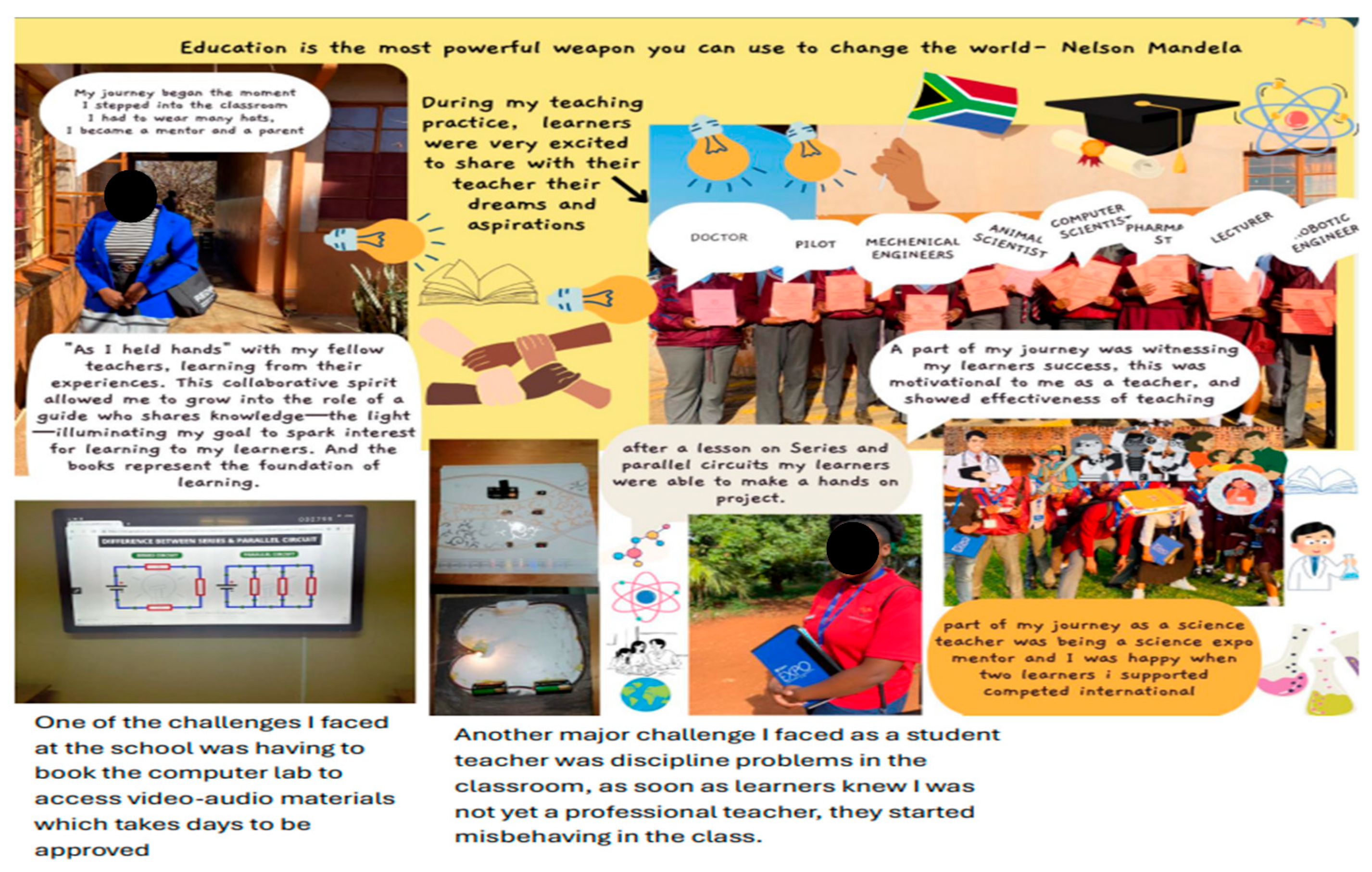
Participants in this study included ten (10) pre-service teachers who volunteered and granted permission for their work to be published. A WhatsApp message was sent to all 160 students enrolled in the Natural Science Methodology module, inviting them to participate in the study. The message outlined the aims of the research and assured potential participants that their identities would remain anonymous. Each student created a collage in response to the prompt: How did I experience teaching practice? The instructions guided students to select various visuals, such as photographs, drawings, symbols, and other imagery, that represented their experiences, emotions, and learning during their teaching practice. They were asked to arrange these elements thoughtfully to tell a coherent story that captures the progression of their teaching journey from start to finish. In addition to the visuals, students incorporated text elements, including captions, quotes, and brief descriptions, to provide context and enrich the narrative of their collage (see Figure 1). Finally, each student composed a reflective summary that explained the key themes and elements depicted in their collage, connecting these insights to their overall teaching practice experience.

2.3. Data Analysis

Data analysis occurred in five iterative stages, integrating visual collage data using created-image data analysis (CIDA) [50] with participants’ written reflections using thematic analysis [51].
Stage 1: Familiarisation
All collages were reviewed alongside their accompanying written reflection to gain an overall sense of participants’ intended meanings. Initial analytic memos were recorded in a reflexive journal to document early impressions and potential biases linked to my lecturer–researcher role.
Stage 2: Visual Coding
Each collage was examined systematically by identifying key visual elements (images, symbols, spatial arrangement, colour use, text fragments). These elements were coded descriptively. Attention was given not only to the presence of images but also to their juxtaposition and composition, consistent with CIDA principles.
Stage 3: Textual Coding
Written reflections were analysed using an inductive thematic approach. Open coding generated preliminary codes. These were clustered into broader candidate themes: professional identity formation, emotional labour, and mentoring experiences.
Stage 4: Cross-Modal Integration
Visual codes and textual codes were compared through a constant-comparative process. For example, a collage featuring a happy or sad face (coded visually as emotional) was triangulated with textual references to “I was happy to see my learners enjoying my instructional approach.” Convergences strengthened thematic claims, while divergences prompted re-examination of interpretations and participant intent.
Stage 5: Theme Refinement and Validation
Integrated themes were refined by revisiting original collages and texts to ensure alignment between visual symbolism and written narrative. Reflexive notes were consulted to interrogate potential over-interpretation. Final themes were defined and supported with both visual excerpts (descriptive accounts of collage elements) and textual quotations to ensure analytic transparency and credibility.
Thus, by following these steps, the researcher assumed that nothing in the representations, including the choice of pictures, colour, text, or the arrangement of images, was merely decorative or random, but rather meaningful and not accidental. However, this is not to undermine the decorative aspect of the collage, as its aesthetic qualities also reflect the creator’s creativity, artistic expression, and personal touch. The collage’s outlook can, in itself, communicate emotion and engagement, enriching interpretive depth and providing insight into how PSTs choose to express their experiences through both meaning and design. Thus, each element was deliberately chosen and placed to convey specific ideas, emotions, and interpretations that contributed to the overall teaching practice experience. In this way, the collage reveals how agency shapes outlook, as PSTs actively construct and communicate their professional understandings through design. Adopting this perspective enabled the researcher to recognise that even aspects that might initially appear unrelated to teaching practice could, in fact, be highly relevant to understanding PSTs’ experiences, reflections, and professional growth. For example, the inclusion of a flag in Mbofho’s collage may symbolize her South African identity, belonging or the sociocultural context in which the teaching practice took place. Such an image can communicate a sense of place, community, or national pride, highlighting how PSTs draw on their personal and cultural backgrounds to make sense of their teaching experiences.
Following the initial thematic analysis, the researcher engaged in peer debriefing by sharing the emergent codes and themes with a colleague experienced in qualitative research. This collaborative review served as a form of investigator triangulation, enabling a comparison of interpretations. My colleague independently reviewed selected data excerpts and provided feedback on the coherence and credibility of the themes. This process helped to refine theme definitions, confirm analytical consistency, and enhance the overall trustworthiness of the findings.

2.4. Ethical Considerations

All participants whose data were used in this study provided informed consent for the publication of their work and photographs. To ensure confidentiality and protect participants’ identities, pseudonyms have been used throughout the report.

3. Results

The analysis of the collages revealed the following themes: emotional journey, navigating classroom realities, support and relationships, professional identity formation, contextual challenges, reflection, and meaning-making.

3.1. Emotional Journey

The representations created by students, such as emotive facial expressions and emojis, suggested that the teaching practice was not merely a cognitive or technical activity but an inherently emotional experience. These visual elements reflected a range of affective responses, including excitement, anxiety, joy, frustration, and fulfilment, indicating that students perceive teaching as a profession deeply intertwined with emotional labour and relational dynamics. Thus, for students like TF, this mix of emotions made the teaching practice a rollercoaster experience. As for Fontanini, she was ‘worried if I was going to be good at dealing with the kids, if I’ll get along with my mentor and what the work environment was going to be like’.
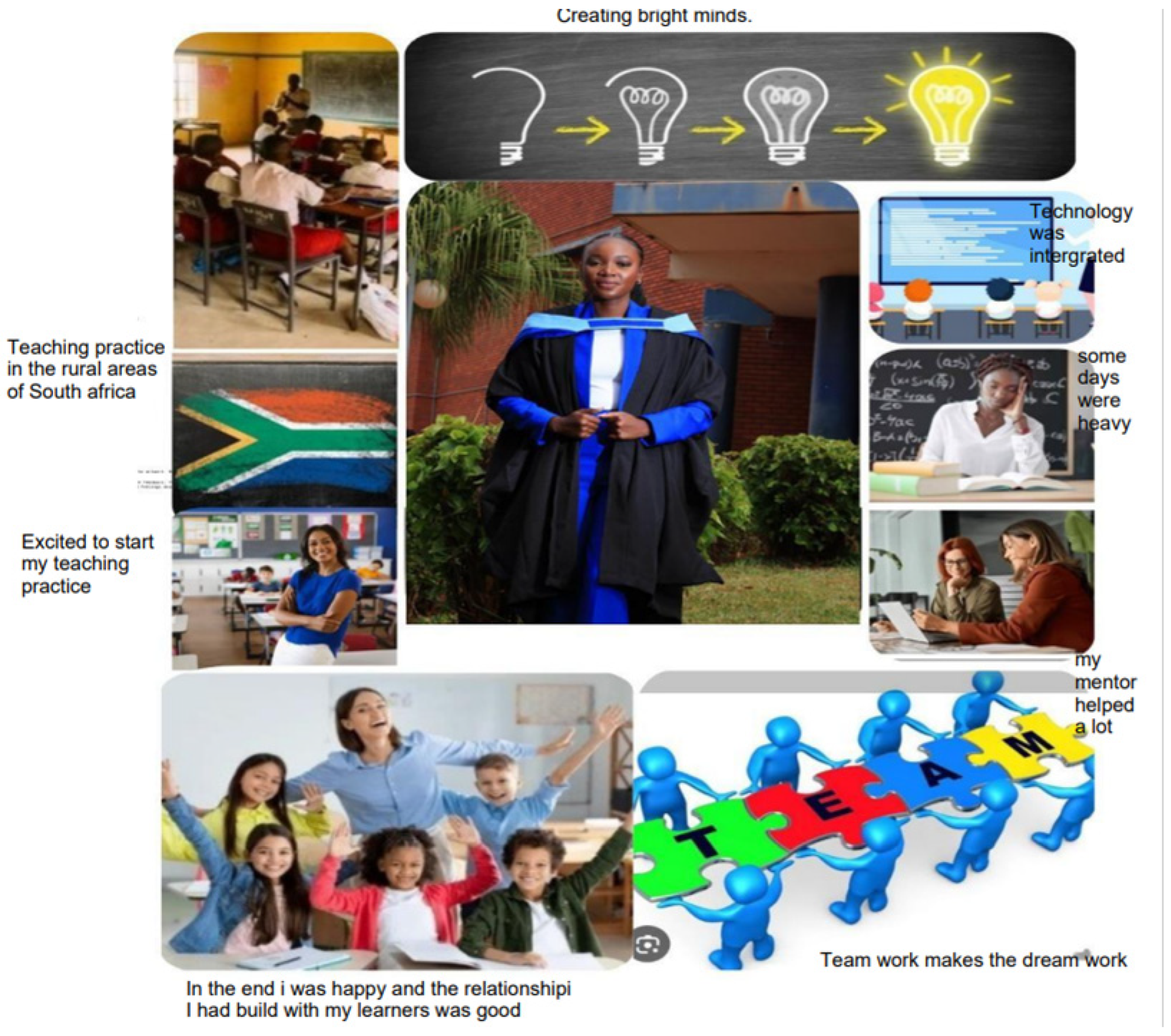
For Pheto (Figure 2) and Mpho, the first day of teaching was was characterised by a mixture of excitement and anticipation, juxtaposed with feelings of anxiety. They approached the classroom with enthusiasm, eager to apply what they had learned during their teacher education training. In contrast, Collet and Tracy experienced frustration after their first lesson did not go as planned; their teaching strategies fell flat, and learner engagement was low, leaving them feeling disheartened. The images selected effectively depicted their frustration. For Mbofho and Thendo, however, the joy of seeing their efforts bear fruit, when learners grasped difficult concepts and actively participated, was deeply rewarding and reaffirmed their commitment to teaching.
Meanwhile, Mbofho (Figure 1) found classroom management particularly challenging. Dealing with disciplinary issues proved stressful and annoying, overshadowing their initial excitement and prompting them to question their readiness for the profession. This was also echoed by Delaysha, who confessed, The first 2 weeks of my practice, most learners in my class were misbehaving and did not listen when I reprimanded. When I got to the staffroom, I was really sad and asked myself whether I could survive as a teacher in this environment.
Building healthy relationships with learners was an emotionally significant experience that many student teachers deeply valued. This reaffirms the thought that teaching is all about building meaningful relationships with learners. These relationships are the foundation for meaningful learning. As they navigated their teaching practicum, they began to realise that meaningful connections with learners went beyond delivering content; it involved showing empathy, earning trust, and creating a safe, inclusive environment where learners felt seen and heard. These relationships often served as a source of motivation for student teachers, helping them better understand learners’ needs, adapt their teaching approaches, and foster a sense of belonging in the classroom. The emotional bonds formed not only enhanced the learning experience but also contributed to the student teachers’ own professional and personal growth.

3.2. Navigating Classroom Realities

Representations such as learners seated in an orderly manner, actively participating in lessons and engaging in various activities, alongside depictions of bored or disengaged learners, circuit boards, textbooks, smartboards, clocks, certificates, classroom furniture, and either busy or calm learning environments, vividly captured the diverse realities encountered during teaching practice. These visual portrayals reflected not only the physical settings but also the instructional dynamics of the classroom. They revealed what student teachers observed, valued, or struggled with, leaving a lasting impression and shaping their evolving identities as teachers while deepening their understanding of the complexities of the teaching and learning environment. For Mbofho (Figure 1), the books depicted represent the foundation of knowledge I strove to build in my classroom. However, for Collet, she affirms, my relationship with the learners also started off rocky. They were not very engaged, and I was worried I wouldn’t connect with them. But slowly, things began to change.

3.3. Support and Relationships

To represent their teaching practice, student teachers created a range of symbolic representations, including images of figures holding hands, family photographs, and depictions of mentor figures, to demonstrate the multifaceted support systems that sustained them. These visual artefacts highlighted how deeply they valued emotional, pedagogical, and social scaffolding provided by both familial and collegial relationships. For many, these relationships were not only sources of guidance but also viewed as the foundation of their professional development and success in the classroom.
The image presented by Collet, which depicted people holding hands, symbolised the collaborative spirit she experienced during her practicum. The image, featuring people holding hands, represents the collaborative spirit I embraced with my fellow teachers, she explained. This collaboration allowed me to learn from their experiences and grow into a more effective guide for my learners. This reflection highlights how collegial relationships facilitated professional learning and adaptation to the real-world demands of teaching.
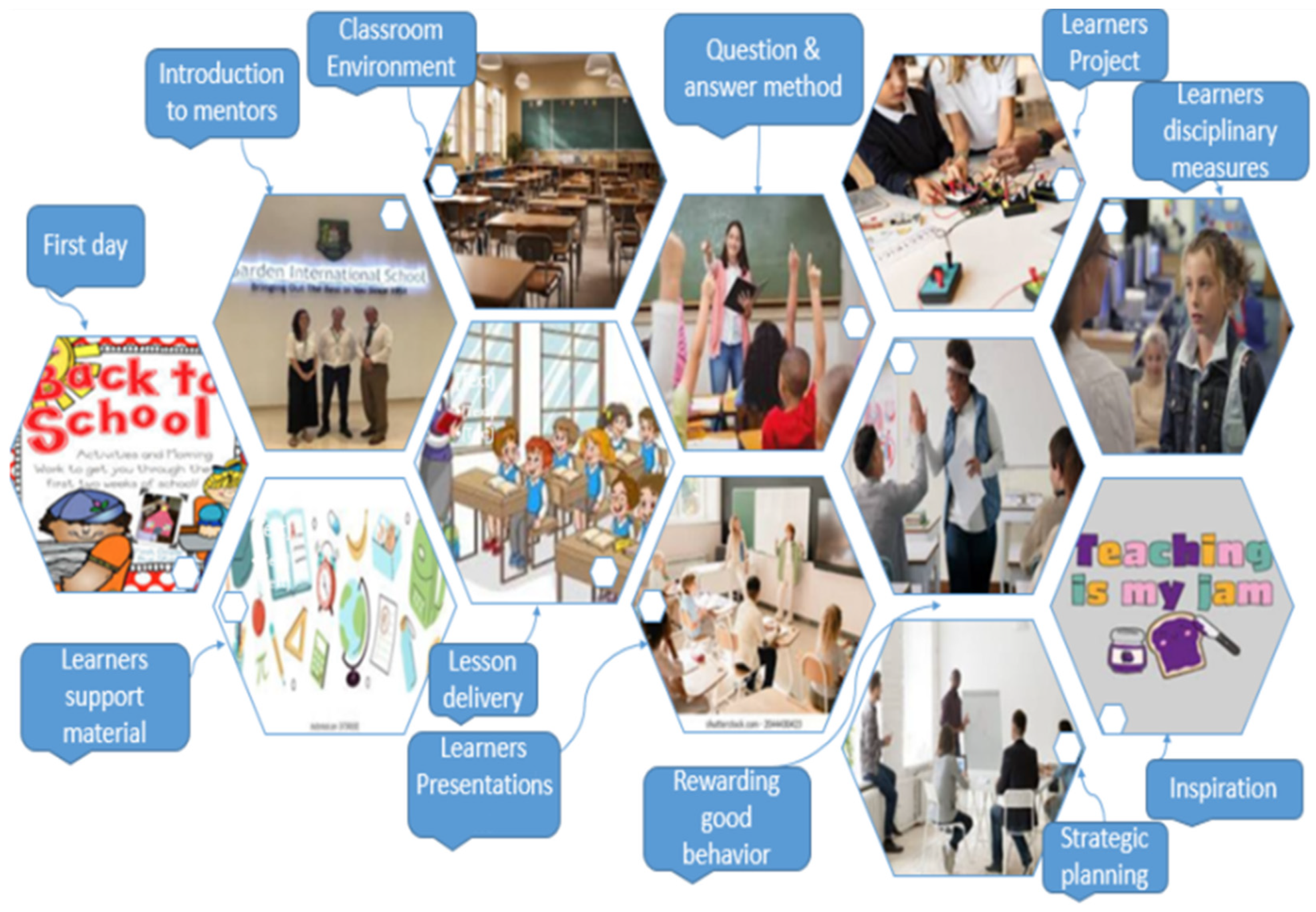
The importance of relational support was also evident in the testimonies of several other student teachers. Bongani, for instance, candidly shared the emotional toll of classroom life: Dealing with learners can be tough. There were moments of mental breakdown and frustration. I had to develop resilience, seek advice from my mentor, and continually reflect on my lessons until I began to show improvement. His account reveals how support structures were critical in helping him navigate the emotional labour of teaching. Phindulo (Figure 3) echoed similar sentiments, underscoring the motivational role played by his mentor teacher. The help and support from my mentor. He helped me overcome my fears and challenges, and I came to realise how essential teamwork is in the teaching process. Through mentorship, Phindulo built confidence, confronted his uncertainties, and grew personally and professionally.
Thendo’s experience further illustrates the transformative potential of mentoring. She wrote, working with my mentor, who has been teaching for over 20 years, has been invaluable. He taught me not only about classroom management and curriculum delivery, but also about purpose, why I am here, and that I should never let anyone diminish my journey, even if I started it later than others. Her narrative captures how mentorship extended beyond technical guidance, offering affirmations of identity, purpose, and dignity.
These accounts highlight the crucial role that relational networks, whether through mentorship, peer collaboration, or familial support, play in shaping the identity, resilience, and professional development of student teachers. Such relationships foster a sense of belonging within the teaching profession, helping student teachers see themselves not as isolated individuals but as part of a broader community committed to education. The symbolic representations created by these student teachers reveal the deep emotional and pedagogical significance of human connection in their journey toward becoming teachers.

3.4. Professional Identity Formation

An interesting and recurring theme in the students’ symbolic representations was the depiction of arrows, growing plants, lighted bulbs and teacher desks, visual metaphors that powerfully conveyed their evolving sense of professional identity during teaching practice. These images, supported by statements/words like it all seems impossible until it is done, teaching is my jam, wisdom speaks through you and grows, reflected the journey from uncertainty to confidence, from hesitancy to possibility, from novice to expert, and from observer to collaborant (Collaborant is a compound word created from collaborator and participant, seeking to convey the idea that pre-service teachers not only use teacher education knowledge in practice but also seek to contribute to the development of teacher education knowledge during practice) in the education process.
Many student teachers used the image of a path to reflect on their journey toward acquiring the identity of qualified teachers. These paths symbolised both the challenges and the learning experiences they encountered along the way. For instance, Mpho presented her collage with a long arrow highlighting the key events from her experience, where each event, be it lesson planning, learner discipline, or time management, became a turning point for self-discovery and skill development as a Natural Sciences teacher. As for Collet, she wrote that “as a science expo mentor, I had the privilege of supporting two learners who competed internationally. This experience not only highlighted their potential but also reinforced my role as a facilitator of discovery and innovation. Witnessing their growth has profoundly impacted my perspective on teaching, emphasising the importance of mentorship and encouragement in nurturing young scientists”. The references to mentor and facilitator underscore the student teachers’ understanding of the shifting roles of teacher identity, from being recipients of knowledge to active agents shaping others’ learning experiences. Ndivhu affirmed that “teaching practice transformed me into a more empathetic, creative and confident educator.
Similarly, students used the images of a growing plant and a lit bulb as powerful metaphors for professional identity. These representations encapsulate the view that teacher identity is not instant but developmental and illuminating. Thus, according to Tracy, the trees signify the growth and development of both learners and me. This resonated with Zanele, who wrote that a symbol of a growing plant represents my personal growth and development, nurtured by the guidance and support of my mentor. As for Collet, the symbol of light in my collage signifies my goal to ignite curiosity and a passion for learning among my learners, reminding me of my commitment to creating engaging lessons that spark interest and encourage exploration. Pheto (Figure 2) represented the light bulb as herself, helping learners develop bright minds.
The teacher’s desk and blackboard emerged as another symbolic element common in all the collages presented by student teachers, representing their transition into the teaching role. Initially viewed as an intimidating symbol of authority and responsibility, it evolved into a space of learner empowerment and transformation. Zanele wrote that the blank whiteboard symbolises the beginning of my teaching practice, where I had to start from scratch. As for Tracy, it was a journey, from nervous beginnings to the discovery of learners’ potential. The clean chalkboard symbolises the blank slate, reflecting a fresh start and anticipation I felt as I stood before the learners for the first time. My feelings of nervousness and excitement came through here.
These symbolic representations and accompanying reflections reveal that professional identity formation is an ongoing, dynamic process shaped by experience, reflection, and relational engagement among the student teacher, mentor teacher, and learners. Through metaphorical imagery and narrative accounts, student teachers expressed how teaching practice enabled them to move beyond textbook knowledge, developing a personal sense of purpose, agency, and commitment. Their evolving identities were informed not only by what they did in the classroom, but also by how they felt, how they were supported, and how they made sense of their experiences.
In this sense, the journey to becoming a teacher is deeply personal and contextually situated. It involves negotiating tensions, affirming one’s values, learning from mistakes, and embracing the complexity of teaching as both a profession and a vocation. This perspective is shared by Bongani, who concludes that I’ve grown as an individual, and I’m proud of myself. I went out there, and I made an impact on someone’s life. I couldn’t be more grateful for the opportunity, and well, the long walk to pedagogy is not over, it’s just starting.

3.5. Contextual Challenges

The teaching practice experience presented challenges for the pre-service teachers, and these difficulties varied depending on the school context in which they were placed. Many student teachers used images of learners and teachers to represent the obstacles they encountered. However, some did not specify the exact challenges they faced, merely stating that they had experienced difficulties. A few students did not include any images to represent these struggles, while others incorporated inspirational quotes or scriptures that, they said, gave them the strength to persevere. For example, Thendo shared that her collage featured quotes and scriptures that kept her motivated during tough moments. These served as constant reminders to maintain a positive outlook. The challenges reported ranged widely, from teaching abstract concepts that learners found difficult to understand, to concepts that appeared to contradict indigenous knowledge systems, and from facing excessive teaching loads and learner indiscipline to the unavailability of teaching and learning materials.
Tracy used images of tired, confused, or disengaged learners, some appearing sleepy, while others raised their hands to ask questions, to illustrate these struggles. She explained that these images represented moments when learners struggled to grasp new concepts. An image of someone deep in thought symbolized her own resolve to find alternative methods of instruction. She noted that these challenges prompted her to reflect deeply, leading to greater patience and adaptability in her teaching. Collet noted that senior teachers assigned her a significant amount of work. She admitted it was tough, and I struggled to keep up at first, highlighting the overwhelming workload she faced. For Mbofho, one of the major challenges was the lengthy process of securing reservations for the computer lab where visual-audio lessons were conducted. She reported that it often took several days, or even weeks, to get approval to use the facilities. Classroom discipline was another concern; she shared that her mentor advised her to set clear rules to maintain good behaviour. Zanele experienced similar issues. In the first two weeks of my practice, most learners in my class were misbehaving and didn’t listen when I reprimanded them, she said. The emotional toll of this experience was evident when she added, When I got to the staffroom, I was really sad and asked myself if I could survive as a teacher in this environment.

4. Discussion

The study sought to answer the research question: How do pre-service teachers construct their experiences of teaching practice in a rural school? By analysing the students’ collages and their short reflections, we constructed a rich picture of their teaching practice experiences, employing innovative visual methods to convey both cognitive insights and emotional responses. The choice of pictures, colour, and image arrangement conveyed a memorable professional learning experience, juxtaposed with tensions, contradictions, joys, and anxieties that characterised their engagement with the realities of teaching in rural contexts. While only one collage attempted to represent the experience in a linear, sequential manner, the majority presented conflated assemblages that neither followed nor described an established pattern, symbolising the complexity, uncertainty, and fluidity inherent in teaching. To further personalise and ingratiate themselves with the experience, most pre-service teachers included photographs of themselves in their collages, signalling a deeply personal and embodied engagement with the process of becoming a teacher. Collectively, the collages offered a picturesque yet multifaceted portrayal of teaching practice.
The collages depicted a personal aesthetic knowledge that revealed the art of teaching. That teaching is quintessentially emotional [52,53,54] was a theme shared by PSTs. A suite of positive and negative emotions was reported, not directly caused by the teacher or the environment, but emerging from ongoing interactions between the pre-service teachers and their surroundings, which shifted over time and across different situations [55]. Thus, the emotions were neither private nor universal but were linked to lived experiences and inseparable from actions and relations [56]. The emotions were linked to anxiety, feelings of failure in executing a successful lesson and/or possible success in a certain endeavour, and disciplinary challenges caused by learners. The experiences shared by the pre-service teachers in this study align with those documented in the existing literature, with the primary distinction lying in the mode of expression. In this case, the use of visual forms not only captured their experiences but also highlighted their creative and interpretive abilities. The collage process enabled students to move beyond descriptive recall toward symbolic reconstruction, where images, metaphors, and spatial arrangements conveyed layered understandings of teaching. This finding suggests that collage functions as more than a reflective exercise; it becomes a pedagogical space in which epistemic pluralism can emerge. Therefore, rather than treating decolonisation as merely a substitution of content, the incorporation of alternative representational practices expands epistemic access for students who may otherwise struggle to articulate complex ideas through text alone. By legitimising visual, symbolic, and multimodal forms of expression, such approaches recognise multiple intelligences that students bring to the learning space. In doing so, they challenge narrow conceptions of academic competence and create more inclusive conditions for knowledge production and participation in higher education.
The idea of navigating classroom realities is a construct that captures the process by which PSTs acclimatise to the classroom setting, gradually becoming acquainted with the ever-changing and complex dynamics of teaching, learner behaviour, institutional expectations, and the practical application of pedagogical theories. This is important because understanding and adapting to the workplace, its expectations, structure, and relationships, can be complex, challenging, and time-consuming [57]. The process can be daunting for PSTs; as a result, some expressed considerable anxiety about how to approach it. For example, Tondani wrote in her reflection, starting to teach was a bit overwhelming, at first, I was scared and wouldn’t move around the classroom. The sentiment was echoed by Thembi, who wrote on my first day of teaching practice, I was really nervous but excited at the same time for this new chapter of my life. By providing them with opportunities to experience teaching in real settings, teaching practice empowers PSTs to develop professional identities that prepare them to teach later after they have qualified. As they navigate classroom realities, the experience can be viewed as the building blocks of professional socialisation [58]. As a result, PSTs are provided with authentic and realistic opportunities to develop professional competence and confidence.
Without mentor teacher support and the opportunity to build meaningful relationships, PSTs may struggle to navigate their teaching practice and thrive. PSTs described the support they received from mentor teachers, including guidance on maintaining discipline, effective teaching strategies, and assistance with entering learner marks using the school’s Management Information System (MIS). Mentor teachers have been recognised as playing a pivotal role in socialising PSTs into the teaching profession [59,60]. In their model of holistic mentoring, Ambrosetti et al. [59] identify three interrelated dimensions that are critical to the success of teaching practice experiences: relational, developmental, and contextual factors. The relational dimension, which focuses on the quality of the interpersonal connection between the mentor and the PST, emphasizing trust, mutual respect, open communication, and emotional support, was reflected in most collages as the driving force. The developmental dimension related to the professional growth of the PST, including the provision of constructive feedback, modelling of effective teaching practices, and opportunities for reflective practice, was valued. It can be established that the developmental dimension resulted from a strong relational dimension. Lastly, the contextual dimension, which highlights the importance of the broader school environment, including institutional culture, policies, and the level of support available within the teaching context, was missing from the reflections of the PSTs.
Teacher identity formation is a powerful concept in educational research [61,62,63,64]. A teacher’s identity is key to understanding their professional life, including their teaching quality, motivation, commitment, resilience, and career choices. [65,66]. Thus, according to researchers, teacher identity is the lens through which we view what teachers choose to do, why, and how they do so [67,68]. In this study, PSTs adopted a range of professional identities. Some identified themselves as teachers, while others described their roles as shifting between educator, facilitator, mentor, and student teacher. Interestingly, none of the PSTs identified themselves by the subject they were teaching, suggesting a stronger orientation toward their evolving professional roles rather than subject-specific identities. Thus, a teacher’s identity is shaped by the interaction between personal factors and the surrounding context [62]. It is not fixed but continuously changes and develops as teachers interpret and reinterpret their social experiences over time.
The challenges reported by the PSTs appear to be both systemic and institutional. Issues related to learner discipline have been consistently highlighted and are well-documented as endemic to the South African education system, affecting even experienced teachers [1,69,70,71]. However, the issue of PSTs being overloaded with work was reported in only some schools. This suggests that while certain challenges are widespread and structural, others are context-specific and reflect variations in how individual schools approach the mentoring and utilisation of student teachers. Images humorously depicted the lack of motivation to learn, while in other collages, the lack of motivation was written about in the reflective entries. This challenge has also been cited in other research [1]. However, the narratives of the PSTs lack an articulation of the specific ways they navigated and managed this challenge across their diverse teaching contexts. Understanding these responses can provide valuable insights into the strategies PSTs use to foster learner engagement and sustain motivation across different classroom environments.

5. Conclusions

This study sought to answer the research question: How do pre-service teachers construct their experiences of teaching practice in a rural school? The findings reveal that teaching practice is a multifaceted experience encompassing personal and interpersonal dimensions. It engages pre-service teachers affectively, cognitively, and socially, highlighting the complex interplay between emotion, thought, and relationships in the learning-to-teach process. The findings further suggest that teaching practice demands significant emotional investment, sustained through supportive relationships, as pre-service teachers navigate classroom realities shaped by contextual challenges. Collectively, these experiences contribute to the ongoing development of teacher identity.
I conclude that collaging is a valuable practice in teacher education, as it enables pre-service teachers to explore the interplay between themselves, their personal experiences, and professional practice. Collaging demonstrates aesthetic knowledge as it involves the deliberate selection, arrangement, and integration of visual elements to create a mosaic that conveys meaning beyond mere literal representation. Due to the limitations of our pre-service teachers’ English language proficiency, this approach becomes a mode of thinking through visuals, where meaning emerges from the interplay of materials, cultural references, and personal interpretation. Thus, it challenges the dominance of linguistic expression as the sole means of articulating personal narratives. Thus, it decolonises the process of knowledge construction by validating the subjective and embodied dimensions of lived experience. In doing so, it opens up space for alternative ways of thinking, knowing and understanding the world and us, beyond traditional, text-based epistemologies. Explicating PSTs’ lived experiences and the ways they voice/express specific experiences, while attempting to link theory with practice, reveals the value of their professional learning experience. The analysis of students’ collages and reflections revealed a valued lived experience of the real-life, dynamic nature of teaching and its multifaceted activities. These representations illuminated how PSTs made sense of their teaching experiences as embodied, situated, and subjective. The arrangement of images suggests that teaching is not a linear or predictable process, but a complex, multi-relational, and interactional engagement in which the key identifiable features are emotions, cognition, complexity, and uncertainty. In this regard, the modern world of individual job roles resembles ‘intertwined spaghetti strands’, with patterns that are ultimately indeterminable. This resonates with the phenomenological emphasis on understanding how individuals experience and interpret the world around them, highlighting the richness and complexity of becoming a teacher. The teaching practicum experience served as a watershed moment for PSTs, enabling them to engage deeply with the emotional, relational, and practical dimensions of teaching. The experience underscored the significance of supportive mentorship and meaningful relationships in shaping their development. As they navigated the realities of the classroom, PSTs not only developed their pedagogical skills but also began to construct their professional identities. Despite numerous challenges, these experiences collectively contributed to a richer, nuanced understanding of what it means to teach in diverse educational contexts. The practicum thus stands out as a vital component in preparing pre-service teachers for the demands and responsibilities of the profession.

Funding

This research received no external funding.

Institutional Review Board Statement

The study was conducted in accordance with the Declaration of Helsinki, and approved by the Ethics Committee of University of Johannesburg SEM (protocol code 1-2024-089 and date of approval 10 May 2024).

Informed Consent Statement

Informed consent was obtained from all subjects involved in the study.

Data Availability Statement

The data that supports the findings of this study are available on request from the corresponding author.

Conflicts of Interest

The author declares no conflicts of interest.

References

  1. Boateng, S.; Tatira, B. Voices from the field: Pre-service teachers’ first time experiences of teaching physical sciences during school-based experience. Int. J. Learn. Teach. Educ. Res. 2023, 22, 59–77. [Google Scholar] [CrossRef]
  2. Harris, M.; Rhodes, D.; Gray, C.; Vernon, L. Beyond the city limits: Perceptions of pre-service teachers undertaking professional experience in regional, rural and remote schools: M. Harris et al. Aust. Educ. Res. 2025, 52, 2229–2253. [Google Scholar] [CrossRef]
  3. Lawson, H.A. Future research on physical education teacher education professors. J. Teach. Phys. Educ. 1991, 10, 229–248. [Google Scholar] [CrossRef]
  4. Department of Higher Education and Training. Minimum Requirements for Teacher Education Qualifications; Department of Higher Education and Training: Pretoria, South Africa, 2011.
  5. Toker Gökçe, A. Core values in education from the perspective of future educators. SAGE Open 2021, 11, 21582440211014485. [Google Scholar] [CrossRef]
  6. Marttinen, R.; Daum, D.N.; Banville, D.; Fredrick, R.N. Pre-service teachers learning through service-learning in a low SES school. Phys. Educ. Sport Pedagog. 2020, 25, 1–15. [Google Scholar] [CrossRef]
  7. Loughran, J. Pedagogical reasoning: The foundation of the professional knowledge of teaching. Teach. Teach. 2019, 25, 523–535. [Google Scholar] [CrossRef]
  8. Pelliccione, L.; Raison, G. Promoting the scholarship of teaching through reflective e-portfolios in teacher education. J. Educ. Teach. 2009, 35, 271–281. [Google Scholar] [CrossRef]
  9. Zeichner, K.M.; Liston, D.P. Reflective Teaching: An Introduction; Routledge: London, UK, 2013. [Google Scholar]
  10. Schön, D. Reflection-in-action. In Health, Welfare and Practice: Reflections on Roles and Relationships; The Policy Press: Bristol, UK, 1993; pp. 16–20. [Google Scholar]
  11. Al-Hassan, O.; Al-Barakat, A.; Al-Hassan, Y. Pre-service teachers’ reflections during field experience. J. Educ. Teach. 2012, 38, 419–434. [Google Scholar] [CrossRef]
  12. Heeralal, P.J.; Bayaga, A. Pre-service teachers’ experiences of teaching practice: Case of South African University. J. Soc. Sci. 2011, 28, 99–105. [Google Scholar] [CrossRef]
  13. Laker, A.; Laker, J.C.; Lea, S. Sources of support for pre-service teachers during school experience. Mentor. Tutoring Partnersh. Learn. 2008, 16, 125–140. [Google Scholar] [CrossRef]
  14. Rauduvaitė, A.; Lasauskienė, J.; Barkauskaitė, M. Experience in teaching practice of pre-service teachers: Analysis of written reflections. Procedia-Soc. Behav. Sci. 2015, 191, 1048–1053. [Google Scholar] [CrossRef]
  15. Burge, A.; Godinho, M.G.; Knottenbelt, M.; Loads, D. ‘… But we are academics!’ A reflection on using arts-based research activities with university colleagues. Teach. High. Educ. 2016, 21, 730–737. [Google Scholar] [CrossRef]
  16. Greene, M. Releasing the Imagination: Essays on Education, the Arts, and Social Change; John Wiley & Sons: Hoboken, NJ, USA, 2000. [Google Scholar]
  17. Leavy, P. Method Meets Art: Arts-Based Research Practice; Guilford Press: New York, NY, USA, 2020. [Google Scholar]
  18. McDermott, M. Collaging pre-service teacher identity. Teach. Educ. Q. 2002, 29, 53–68. [Google Scholar]
  19. Whitelaw, J. Collage Praxis: What Collage Can Teach Us about Teaching and Knowledge Generation. J. Lang. Lit. Educ. 2021, 17, n1. [Google Scholar]
  20. Harrison, C. Postmodern principles for responsive reading assessment. J. Res. Read. 2004, 27, 163–173. [Google Scholar] [CrossRef]
  21. Morris, C.; Milton, E.; Goldstone, R. Case study: Suggesting choice: Inclusive assessment processes. High. Educ. Pedagog. 2019, 4, 435–447. [Google Scholar] [CrossRef]
  22. Nieminen, J.H. Assessment for Inclusion: Rethinking inclusive assessment in higher education. Teach. High. Educ. 2024, 29, 841–859. [Google Scholar] [CrossRef]
  23. Tai, J.; Ajjawi, R.; Umarova, A. How do students experience inclusive assessment? A critical review of contemporary literature. Int. J. Incl. Educ. 2024, 28, 1936–1953. [Google Scholar] [CrossRef]
  24. Grimes, S.; Southgate, E.; Scevak, J.; Buchanan, R. Learning impacts reported by students living with learning challenges/disability. Stud. High. Educ. 2021, 46, 1146–1158. [Google Scholar] [CrossRef]
  25. Ewing, R.; Gibson, R. Creative teaching or teaching creatively? Using creative arts strategies in preservice teacher education. Waikato J. Educ. 2016, 13, 161–180. [Google Scholar] [CrossRef]
  26. Lewin, T.; Mawoyo, M. Student Access and Success: Issues and Interventions in South African Universities; Inyathelo: Cape Town, South Africa, 2014. [Google Scholar]
  27. Piller, I.; Cho, J. Neoliberalism as language policy. Lang. Soc. 2013, 42, 23–44. [Google Scholar] [CrossRef]
  28. R’boul, H. Epistemological plurality in intercultural communication knowledge. J. Multicult. Discourses 2022, 17, 173–188. [Google Scholar] [CrossRef]
  29. Mignolo, W.D. The Politics of Decolonial Investigations; Duke University Press: Durham, NC, USA, 2021. [Google Scholar]
  30. Hockings, C. Inclusive Learning and Teaching in Higher Education: A Synthesis of Research; Higher Education Academy: York, UK, 2010. [Google Scholar]
  31. Culshaw, S. The unspoken power of collage? Using an innovative arts-based research method to explore the experience of struggling as a teacher. Lond. Rev. Educ. 2019, 17, 268–283. [Google Scholar] [CrossRef]
  32. Mkhize-Mthembu, N. Collage-making as a way to refine my teaching practices and my relationship to learners’ learning in my classroom. Stud. Teach. Educ. 2023, 19, 204–224. [Google Scholar] [CrossRef]
  33. Rice, M.; Dallacqua, A. Collage making as a visual inquiry process for supporting practicing teachers’ understandings about literacies. In Pushing Boundaries and Crossing Borders: Self-Study as a Means for Researching Pedagogy; Sense Publishers: Utrecht, The Netherlands, 2018; pp. 187–194. [Google Scholar]
  34. Vėžienė, M. Collage Making as a Teaching Tool for Esl Students. In INTED2024 Proceedings; International Association of Technology, Education and Development: Valencia, Spain, 2024. [Google Scholar]
  35. Tidy, H.; Irving-Walton, J.; Currie, G.; Nichols-Drew, L.; Page, H. What do you meme?–Meme-Making as a research method. Teach. High. Educ. 2024, 29, 1897–1913. [Google Scholar] [CrossRef]
  36. McKay, L. Supporting intentional reflection through collage to explore self-care in identity work during initial teacher education. Teach. Teach. Educ. 2019, 86, 102920. [Google Scholar] [CrossRef]
  37. Prasad, G. Collage as a pedagogical practice to support teacher candidate reflection. Learn. Landsc. 2021, 14, 329–345. [Google Scholar] [CrossRef]
  38. Hiller, J. Epistemological Foundations of Objectivist and Interpretivist Research; Barcelona Publishers: Dallas, TX, USA, 2016. [Google Scholar]
  39. Hogg, M.A.; Terry, D.J.; White, K.M. A tale of two theories: A critical comparison of identity theory with social identity theory. Soc. Psychol. Q. 1995, 58, 255–269. [Google Scholar] [CrossRef]
  40. Burke, P.J. Identity processes and social stress. Am. Sociol. Rev. 1991, 56, 836–849. [Google Scholar] [CrossRef]
  41. Lyndon, S.; Rawat, P.S.; Pawar, D. Is emotional labour a positive experience for teachers? A qualitative study. Int. J. Educ. Manag. 2021, 35, 532–548. [Google Scholar] [CrossRef]
  42. Yin, H.-b.; Lee, J.C.K.; Zhang, Z.-h.; Jin, Y.-l. Exploring the relationship among teachers’ emotional intelligence, emotional labor strategies and teaching satisfaction. Teach. Teach. Educ. 2013, 35, 137–145. [Google Scholar] [CrossRef]
  43. Cochran-Smith, M.; Lytle, S.L. Inquiry as Stance: Practitioner Research for the Next Generation; Teachers College Press: New York, NY, USA, 2015. [Google Scholar]
  44. Jacobs, J.; Yendol-Hoppey, D.; Dana, N.F. Preparing the next generation of teacher educators: The role of practitioner inquiry. Action Teach. Educ. 2015, 37, 373–396. [Google Scholar] [CrossRef]
  45. Dana, N.F.; Yendol-Hoppey, D. The Reflective Educator’s Guide to Classroom Research: Learning to Teach and Teaching to Learn Through Practitioner Inquiry; Corwin Press: Thousand Oaks, CA, USA, 2009. [Google Scholar]
  46. Buttler, T. Disrupting my teaching practices: A teacher educator living as a contradiction. Stud. Teach. Educ. 2020, 16, 222–239. [Google Scholar] [CrossRef]
  47. Murray, J.; Male, T. Becoming a teacher educator: Evidence from the field. Teach. Teach. Educ. 2005, 21, 125–142. [Google Scholar] [CrossRef]
  48. Ryan, M. The pedagogical balancing act: Teaching reflection in higher education. Teach. High. Educ. 2013, 18, 144–155. [Google Scholar] [CrossRef]
  49. Yip, S.Y. Positionality and reflexivity: Negotiating insider-outsider positions within and across cultures. Int. J. Res. Method Educ. 2024, 47, 222–232. [Google Scholar] [CrossRef]
  50. Baart, A.; Roos, V. An analytical tool for visual data analysis: Application to the Mmogo-method®. Int. J. Qual. Methods 2022, 21, 16094069221135962. [Google Scholar] [CrossRef]
  51. Braun, V.; Clarke, V. Using thematic analysis in psychology. Qual. Res. Psychol. 2006, 3, 77–101. [Google Scholar] [CrossRef]
  52. Chen, Z.; Sun, Y.; Jia, Z. A study of student-teachers’ emotional experiences and their development of professional identities. Front. Psychol. 2022, 12, 810146. [Google Scholar] [CrossRef] [PubMed]
  53. Crawford, K.M. Developing the Whole Teacher: A Phenomenological Case Study of Student Teachers’ Emotional Experiences in One Teacher Education Program. Doctoral Dissertation, Georgia Southern University, Statesboro, GA, USA, 2016. [Google Scholar]
  54. Timoštšuk, I.; Kikas, E.; Normak, M. Student teachers’ emotional teaching experiences in relation to different teaching methods. Educ. Stud. 2016, 42, 269–286. [Google Scholar] [CrossRef]
  55. Lazarus, R.S. Progress on a cognitive-motivational-relational theory of emotion. Am. Psychol. 1991, 46, 819. [Google Scholar] [CrossRef]
  56. Boler, M. A pedagogy of discomfort: Witnessing and the politics of anger and fear. In Feeling Power: Emotions and Education; Psychology Press: London, UK, 1999; pp. 175–203. [Google Scholar]
  57. Bennett, D.; Reid, A.; Rowley, J. Student musicians’ experiences of reflexivity during internships: Personal narratives and complex modalities. Int. J. Music Educ. 2017, 35, 460–475. [Google Scholar] [CrossRef]
  58. Souza Sd Iza, D.F.V.; Silva, M.F.G.d. Learning of teaching in the professional socialization in Physical Education. Mot. Rev. De Educ. Física 2017, 23, e111638. [Google Scholar]
  59. Ambrosetti, A.; Knight, B.A.; Dekkers, J. Maximizing the potential of mentoring: A framework for pre-service teacher education. Mentor. Tutoring: Partnersh. Learn. 2014, 22, 224–239. [Google Scholar] [CrossRef]
  60. Izadinia, M. A closer look at the role of mentor teachers in shaping preservice teachers’ professional identity. Teach. Teach. Educ. 2015, 52, 1–10. [Google Scholar] [CrossRef]
  61. Hong, J.; Cross Francis, D.; Schutz, P.A. Reconceptualizing teacher identity development. Educ. Psychol. 2024, 59, 159–176. [Google Scholar] [CrossRef]
  62. Hong, J.; Greene, B.; Lowery, J. Multiple dimensions of teacher identity development from pre-service to early years of teaching: A longitudinal study. J. Educ. Teach. 2017, 43, 84–98. [Google Scholar] [CrossRef]
  63. Nguyen, H.T.M.; Yang, H. Learning to become a teacher in Australia: A study of pre-service teachers’ identity development. Aust. Educ. Res. 2018, 45, 625–645. [Google Scholar] [CrossRef]
  64. Zhao, H.; Zhang, X. The influence of field teaching practice on pre-service teachers’ professional identity: A mixed methods study. Front. Psychol. 2017, 8, 1264. [Google Scholar] [CrossRef]
  65. Day, C.; Kington, A.; Stobart, G.; Sammons, P. The personal and professional selves of teachers: Stable and unstable identities. Br. Educ. Res. J. 2006, 32, 601–616. [Google Scholar] [CrossRef]
  66. Van den Berg, R. Teachers’ meanings regarding educational practice. Rev. Educ. Res. 2002, 72, 577–625. [Google Scholar] [CrossRef]
  67. Noonan, J. An affinity for learning: Teacher identity and powerful professional development. J. Teach. Educ. 2019, 70, 526–537. [Google Scholar] [CrossRef]
  68. Schutz, P.A.; Hong, J.; Francis, D.C. Teachers’ Goals, Beliefs, Emotions, and Identity Development: Investigating Complexities in the Profession; Routledge: London, UK, 2020. [Google Scholar]
  69. Mashau, T.; Mutshaeni, H.; Kone, L. Learner Discipline: Finding Lawful Alternatives to Corporal Punishment (Learner Discipline). Int. J. Educ. Sci. 2015, 11, 285–290. [Google Scholar] [PubMed]
  70. Obadire, O.T.; Sinthumule, D.A. Learner discipline in the post-corporal punishment era: What an experience! S. Afr. J. Educ. 2021, 41, 1–8. [Google Scholar] [CrossRef]
  71. Segalo, L.; Rambuda, A.M. South African public school teachers’ views on right to discipline learners. S. Afr. J. Educ. 2018, 38, 1–7. [Google Scholar]
Figure 1. Mbofho’s Collage.
Higheredu 05 00029 g001
Figure 2. Pheto’s Collage.
Higheredu 05 00029 g002
Figure 3. Phindulo’s Collage.
Higheredu 05 00029 g003
Disclaimer/Publisher’s Note: The statements, opinions and data contained in all publications are solely those of the individual author(s) and contributor(s) and not of MDPI and/or the editor(s). MDPI and/or the editor(s) disclaim responsibility for any injury to people or property resulting from any ideas, methods, instructions or products referred to in the content.