
Article

Artificial Intelligence and Training in Values in Higher Education: An Inter-University Study Between Spain and Ireland

by
José Antonio Ortí Martínez
* and
Esther Puerto Martínez
*
Faculty of Education, Universidad Católica de Murcia, 30107 Murcia, Spain
*
Authors to whom correspondence should be addressed.
Trends High. Educ. 2026, 5(1), 21; https://doi.org/10.3390/higheredu5010021
Submission received: 4 November 2025 / Revised: 29 January 2026 / Accepted: 17 February 2026 / Published: 20 February 2026

Abstract

This study examines the role of artificial intelligence (AI) as a mediating tool in values training, based on university students’ reflections on their own values and those represented in literary characters. The research, developed at the Catholic University of Murcia (Spain) and University Collegue Cork (Ireland) integrated the humanistic approach of literature with the pedagogical potential of AI. An exploratory–descriptive mixed-methods design was applied with 126 students of Education and Philology. The instruments included the Hall–Tonna questionnaire, a 12-item Likert scale, and open-ended questions, analyzed using descriptive statistics, mean comparison, and thematic content analysis. The results reflect a preference for values such as justice, perseverance, and empathy, with cultural differences: in Spain, solidarity and community spirit stood out; and in Ireland, integrity and individual responsibility stood out. A total of 78% positively rated AI mediation for its capacity to stimulate critical reflection and ethical debate, although risks linked to technological dependence and cultural bias were noted. It is concluded that the synergy between literature and AI enhances ethical and civic education, provided it is implemented from an ethical and humanizing perspective.

1. Introduction

Artificial intelligence (AI) is generating profound changes in the way knowledge is constructed and how both reality and communication mechanisms are interpreted. In an environment marked by the predominance of algorithmic systems, the concept of truth is altered, as are the processes through which it is validated, used, and gains legitimacy in various contexts. Warns that, in a future scenario where AI is widespread, the plausible—that which appears to be true—could gain greater relevance than objective truth [1,2,3]. Despite this scenario, the relationship between learning and truth remains a fundamental pillar. Learning is not just about incorporating new knowledge or skills, but also about approaching a more precise representation of reality. Therefore, education must facilitate the development of competencies such as critical thinking, holistic vision, and the capacity for autonomous reasoning [4,5,6,7,8]. These skills allow students to objectively evaluate information and make grounded decisions. Within this framework, a relevant question arises: can AI become a tool that enhances this learning and promotes ethical, values-based decision-making?
Various studies point to the need for professionals working with AI to develop not only technical competencies—such as digital literacy in AI and effective prompt engineering—but also a critical capacity to assess the reliability and relevance of intelligent systems [9,10]. Furthermore, recent research highlights that motivation and a sense of belonging in training are key to a meaningful integration of AI in the teaching practice [11,12,13]. Added to this is a frequent disconnection between technological solutions, often driven by commercial logic, and the complex reality of classrooms, where emotional, social, and cultural dimensions converge, escaping the technical focus of many applications. In this context, it is increasingly urgent to provide university students with experiences to become critical mediators between human learning and technology, requiring both technical skills and a solid ethical and reflective foundation.
Far from rejecting the contribution that artificial intelligence can make to the educational process, it is about recognizing its limits, particularly those automatisms that tend to depersonalize teaching and contextualized educational responses. At the same time, the goal is to justly and critically evaluate the contributions this technology can offer in the face of complex educational situations.
To make the Spain–Ireland comparison conceptually robust, an explicit cultural framework is needed because values are not prioritized or justified in isolation but are shaped by socially shared norms, moral socialization patterns, and expectations regarding the role of the individual versus the group. In cross-cultural research, the individualism–collectivism dimension is commonly used to describe the extent to which people primarily define themselves as “I” (autonomy, individual responsibility) or as “we” (interdependence, obligations toward the in-group), which directly affects how ethical dilemmas are interpreted and how collective deliberation is valued [11,12,13].
From this perspective, the differences observed in our study can be interpreted as plausible cultural patterns: in relatively more interdependence-oriented contexts, students may place greater emphasis on relational and community-based values (e.g., solidarity and community spirit), whereas in relatively more autonomy-oriented contexts, values related to personal integrity and individual responsibility may become more salient. This framework also helps explain why AI may be perceived as more “useful” for values education when it is seen as a tool for organizing arguments, facilitating consensus, and supporting shared deliberation, as opposed to contexts where moral agency is framed primarily as an individual endeavor, and, therefore, technological mediation in axiological decisions is approached with greater caution.
In addition, using generative AI introduces a further cultural layer: models can embed cultural biases originating from training data and implicit assumptions, so AI “mediation” should be discussed not only as cognitive support but also as potentially non-neutral cultural mediation. Accordingly, the comparative section should explicitly address (a) how each context constructs trust in the tool (epistemic authority) and (b) how the legitimacy of an AI-generated “values report” is negotiated when contrasted with students’ own intuition and with teachers/peers.
Given the evident increase in the use of generative AI tools in higher education and a clear interest by the academic community in this topic, reflected in the exponential increase in published studies [14,15,16], it is considered fundamental to provide training in the critical use of AI and to cultivate an ethical and responsible perspective that allows recognizing its limitations and its moral implications in university educational practice. These tools offer valuable opportunities for the training of professional judgment, the confrontation of real dilemmas, and collective reflection on the role of university students as conscious mediators between knowledge, values, and people’s needs.
In this sense, university education, as [17,18,19] point out, must transcend technical literacy to incorporate spaces for critical analysis and ethical deliberation regarding the implementation of artificial intelligence in the professional context. Teaching mediated by digital resources cannot be limited to instruction on the use of tools or the design of effective prompts. The problematization of the automatisms that can be generated by these technologies and the implicit biases in their models becomes essential. The implementation of AI in the educational field should not be considered a panacea that replaces the educator’s inherent responsibility to contextualize, humanize, and make informed decisions that are sensitive to the cultural, social, and emotional diversity of the classroom. Therefore, integrating AI into initial training also represents an opportunity to model reflective practices that teach students to question sources of knowledge and anticipate ethical implications. In the same way, a more inclusive, critical, and common-good-oriented pedagogy would be promoted [20,21,22].
Values are defined as ideals and desires, but also as special behaviors and words that give meaning to life, which are reflected in the priorities that are chosen and on which one acts consistently and repeatedly [23,24]. Every time a person reflects on their worldview, new value priorities emerge, and these new priorities fuel the will and desire to develop new skills. New skills change behaviors and enable actions with the purpose of adopting consistent patterns of behavior. Adult development is characterized by a constant growth of skills, so that, little by little, the individual’s capacity for influence grows through their actions. Values determine the behavior, lifestyle, and personality of individuals [25,26,27].
At a legislative level (LOMLOE), it is argued that education should not be reduced to mere academic content but must be oriented towards forming responsible, conscious, and critical citizens. In this sense, teachers are called upon to model everyday values—respect, solidarity, and autonomy—both in their classroom practices and in their public commitment, and to act with integrity in the face of errors and omissions that may arise in family, institutional, or political spheres. Deepening the ethical role of the teacher, it must be emphasized that values are learned more through lived experience and example than by imposition, involving the educational community in a cultural and moral project that transcends subjects. Authors like Savater (2024) place teachers at the epicenter of an ethical commitment to contemporary social challenges, indicating that “ethics cannot be taught thematically, but must be exemplified in the daily life of the center” [28].

Objectives

While generative AI is expanding rapidly in higher education, evidence remains limited regarding its contribution to ethics- and values-oriented learning when it is embedded in humanistic practices such as literary interpretation; for this reason, cross-country comparisons are warranted, since cultural patterns may shape both students’ value hierarchies and their trust in technological mediation, which in turn influences how differences in outcomes should be interpreted and how transferable any pedagogical proposal may be. Against this background, the present study aims to analyze, from an intercultural perspective (Spain–Ireland), the potential of generative artificial intelligence as a mediating tool to foster ethical reflection and values education in university students by integrating literary reading with values clarification through the Hall–Tonna model; specifically, it seeks to identify the priority values students project onto meaningful literary characters—distinguishing between goal (meta) and means values—using the Hall–Tonna questionnaire, to examine students’ perceptions of the usefulness and limitations of generative AI for (a) ethical reflection and (b) values education by considering both pedagogical affordances (e.g., argument organization and interpretive contrast) and risks highlighted in prior research (e.g., technological dependence and cultural bias), to compare findings across both university contexts in order to explore the extent to which culture may modulate (a) value prioritization and (b) acceptance of AI as a mediator in ethical deliberation processes, and to integrate quantitative and qualitative evidence so as to derive pedagogical implications for designing humanizing literature-and-AI learning experiences grounded in teacher mediation and explicit ethical criteria.

2. Materials and Methods

An exploratory–descriptive mixed-methods design was adopted, with the aim of combining the interpretive richness of qualitative data with the representativeness of quantitative results. The mixed approach allowed for the triangulation of information and offered a comprehensive view of the role of AI in values education in the university context.
Quantitative analysis. Data were organized and cleaned in Google Sheets, where descriptive statistics (frequencies, means, and standard deviations) were computed for the total scale and for both dimensions (D1 and D2). To compare contexts (Spain vs. Ireland), independent-samples Student’s t-tests were conducted using a 0.05 significance level; calculations were implemented through Google Sheets functions and checked for consistency (e.g., range checks, missing values, and coding accuracy).
Qualitative analysis. Open-ended responses were exported to Google Sheets and analyzed through thematic/content analysis using an iterative procedure aligned with Braun and Clarke’s phases (data familiarization, initial coding, searching for themes, reviewing themes, defining/naming themes, and producing the analytic narrative). Coding was conducted by a single researcher; rather than reporting inter-coder reliability, analytic rigor was supported through (a) a progressively refined codebook (operational definitions, inclusion/exclusion criteria, and examples), (b) an audit trail maintained in Google Sheets documenting analytic decisions and code/theme revisions, and (c) reflexive notes on the researcher’s assumptions and positioning during interpretation.
All qualitative management was conducted in Google Sheets, using separate tabs for: (1) meaning-unit segmentation, (2) code assignment, (3) clustering codes into themes/subthemes, and (4) linking representative excerpts to each theme. Triangulation followed a convergent mixed-methods logic: quantitative results (Hall–Tonna and the 12-item Likert scale) and qualitative results (open-ended questions and inputs from the group discussion when applicable) were analyzed separately and then integrated through merging. During integration, a Google Sheets matrix aligned—by analytic dimension (e.g., “AI helps organize values,” “technological dependence,” “cultural bias”)—(a) relevant item means/percentages, (b) Spain–Ireland differences, and (c) qualitative themes supported by excerpts, identifying patterns of confirmation, expansion, or discordance. This triangulation informed inferences by treating findings as stronger when supported across quantitative trends and qualitative accounts, while explicitly discussing discrepant cases.

2.1. Participants

The sample consisted of N = 126 university students recruited through convenience sampling from undergraduate courses at Catholic University of Murcia (Spain) and University Collegue Cork (Ireland) during the second semester of the 2024–2025 academic year. Participants were enrolled in Education- and Philology-related degree programs and completed the activity as part of a course-based learning experience. The sample was distributed as follows: Spain, n = 68 (53.9%); and Ireland, n = 58 (46.1%). The mean age was 21.7 years (range 19–25). Regarding gender, 71 participants identified as women (56.3%), 52 as men (41.3%), and 3 as another gender or preferred not to answer (2.4%). Participation was voluntary; all respondents provided informed consent, and data were anonymized and handled in accordance with GDPR requirements.

2.2. Instruments

Three data collection instruments were used. First, an adapted version of the Hall–Tonna Values Questionnaire was employed to support the axiological analysis of literary characters, enabling the identification of the priority values students attributed to their selected character and distinguishing between goal (meta) values (ends) and means values (strategies). Second, a Likert-type questionnaire consisting of 12 items on a 5-point scale (1 = strongly disagree; 5 = strongly agree) was administered to assess students’ perceptions of the usefulness of AI as a mediating tool for (a) ethical reflection and (b) values education. Third, two open-ended questions were included to collect qualitative evidence on (a) perceived advantages and (b) perceived limitations, risks, or precautions associated with using AI for values education.

2.3. Procedure

The study was conducted during the second semester of the 2024–2025 academic year and carried out in four successive phases:
  • Selection of literary characters: each student chose a character of their preference from a significant literary work, considering the personal resonance of the values they projected.
  • Application of the Hall–Tonna questionnaire: students completed the values map of the Hall–Tonna model to identify and categorize both their own personal values and those they attributed to the selected characters.
  • Interaction with AI: Subsequently, ChatGPT (GPT-4) was used to recreate the literary character, analyze the selected narrative texts from that character’s works, and generate values reports. These reports were contrasted by the students with the previous results of the Hall–Tonna questionnaire, encouraging a comparative and critical exercise.
  • Reflection and data collection: After interacting with the AI, students answered the Likert-type questionnaire and the open-ended questions. Finally, they participated in a group discussion session, aimed at sharing ethical dilemmas, analyzing convergences and divergences between the different instruments, and developing critical reflections on the role of technology in values education.
  • Finally, a group discussion was conducted as a pedagogical activity aimed at sharing ethical dilemmas and contrasting interpretations; it was not audio-recorded or transcribed and therefore was not included as part of the qualitative dataset, but rather served as a formative closure of the learning experience.
  • Triangulation was conducted only between (a) quantitative results (Hall–Tonna and the 12-item Likert scale) and (b) open-ended responses, integrated through a convergence matrix in Google Sheets to identify confirmation, expansion, or discordance between numerical patterns and students’ arguments.

2.4. Data Analysis

Quantitative data were processed using descriptive statistics (frequencies, means, and standard deviations), supplemented with mean comparisons between Spain and Ireland (Student’s t-test).
Qualitative data from the open-ended questions were subjected to thematic content analysis, identifying emerging categories related to opportunities, dilemmas, and critical perceptions.
The triangulation of results allowed for strengthening internal validity and extracting comparative conclusions between both university contexts.

3. Results

3.1. Analysis by Gender with Hall–Tonna Categories (Meta and Means Values)

Women:
  • Most chosen meta values: Equality/liberation and service/vocation stand out, followed by truth/wisdom and being oneself. Construction/new order and personal/professional development also emerge. This profile places its aspirations in Phase III–IV (initiative/interdependence), with a clear prosocial bias (justice, service) and mature self-realization (being oneself).
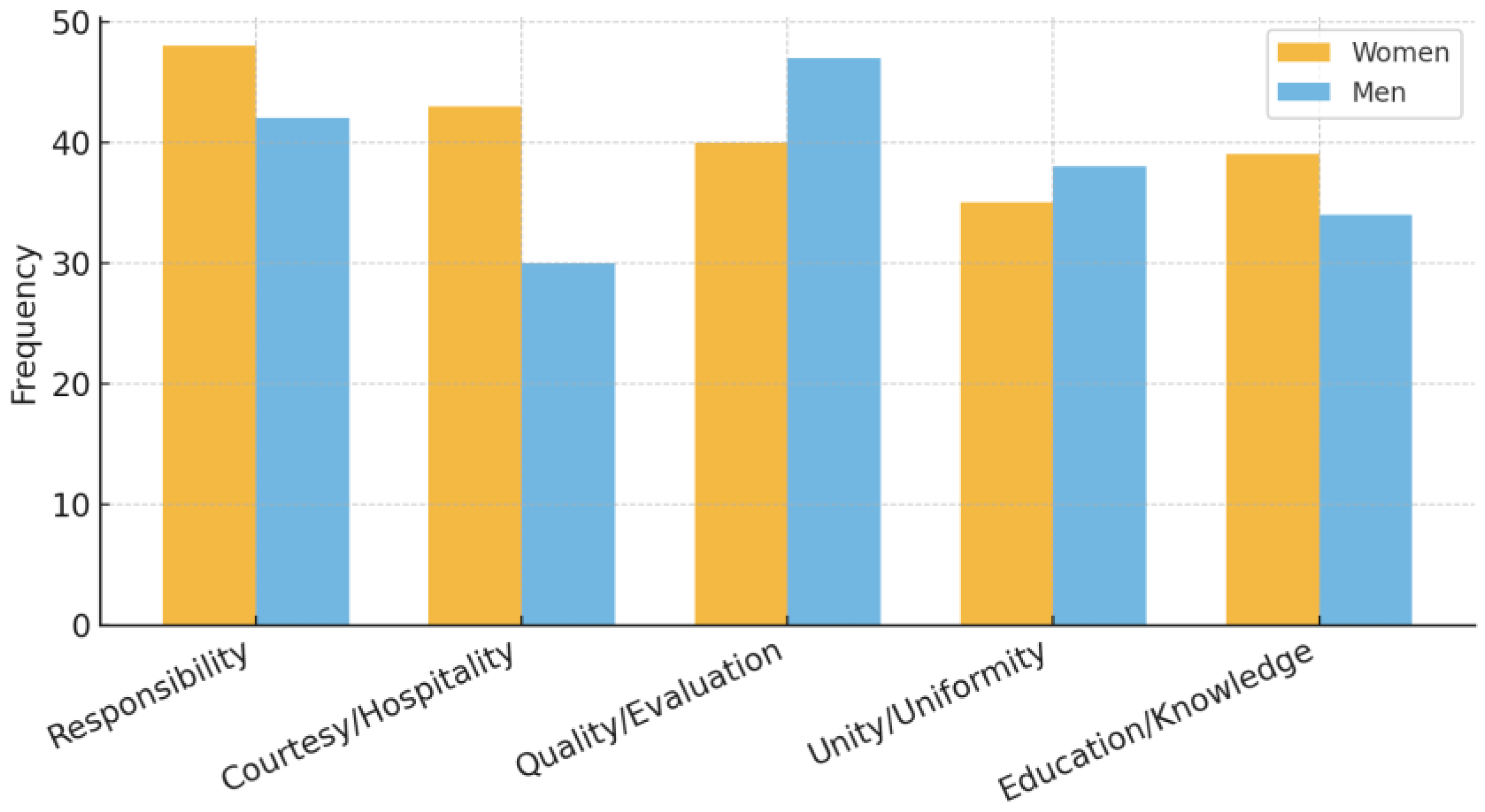
  • Most chosen means values: Responsibility and courtesy/hospitality stand out, along with unity/uniformity, quality/evaluation, education/knowledge, efficacy/planning, and discernment. This set indicates action strategies located in Phase II–III (belonging/procedural), oriented towards relational care and the quality of academic work.
Meta aspirations of interdependence (equality, service) are supported by means of belonging/organization (responsibility, courtesy, and unity). The creative meta–means gap suggests a growth itinerary from the normative (Phase II) to the transformative (Phase IV).
Men:
  • Most chosen meta values: Being oneself and equality/liberation appear strongly, and, in subgroups, Self-esteem and personal/professional development; Security and Physical Delight (specific cases), along with Art/Beauty, Faith/Risk/Vision, and Fantasy/Imagination also emerge. The pattern combines goals of individuation/authenticity (Phase III–IV) with anchors in security/self-affirmation (Phase I–II) in part of the male sample.
  • Most chosen means values: Quality/evaluation, unity/uniformity, and responsibility stand out, along with courtesy/hospitality, education/knowledge, productivity, efficacy/planning, and perseverance/patience; corporation/management and health/well-being appear in a subgroup. These are typical means of belonging/organization (Phase II) and initiative (Phase III) with some institutional/managerial emphasis. There is a strong focus on authenticity (being oneself) and structured excellence (quality, productivity), with a transition from needs of security/self-affirmation to goals of self-realization and equity. See Figure 1.
Convergences and Divergences by Sex, See Figure 2.
  • Convergences: In goals, both groups prioritize equality/liberation and being oneself; in means, they share responsibility, unity/uniformity, quality/evaluation, education/knowledge, and courtesy/hospitality. This indicates a common ethical horizon (equity and authenticity) supported by similar academic and relational procedures.
  • Divergences: Women: greater prosocial emphasis on service/vocation and truth/wisdom, with relational (courtesy, unity) and evaluative (quality, education) means being particularly salient. Men: greater weight on being oneself, self-esteem (in subgroups), and means of quality/productivity/management; security and corporation/management appear in certain sample units. Axiological Implication: Women seem to follow an itinerary towards interdependence with a strong orientation towards the common good; men show a route of responsible individuation that seeks to sustain authenticity with quality structures.

3.2. Integration with AI Perception (Likert-Type Questionnaire)

The 12-item scale showed an overall positive evaluation of AI mediation in the proposed learning experience (overall mean x = 3.98, SD = 0.65). For interpretability, two a priori dimensions were computed: D1 (Ethical Reflection) using items 1–6 and D2 (Values Education) using items 7–12; each dimension score was calculated as the arithmetic mean of the items within that set. Because the study was exploratory–descriptive, this grouping was conceptually driven by the study’s aims and item content; future work should empirically test the latent structure (e.g., factor analysis) in larger samples. See Table 1.
Dimension 1 (Ethical Reflection) obtained a slightly higher score, suggesting that students value AI’s capacity to initiate and structure critical discussion (contrast and organization function) more than its direct contribution to the adoption or explication of personal values. See Table 2:
These results corroborate the mentions in the qualitative analysis, where AI’s function in structuring evidence, evaluating quality, and contrasting perspectives is highlighted, as will be seen later.
Items with the lowest score (highest disagreement/neutrality): The items with the lowest means are associated with the direct influence of AI on personal decision-making or emotional/ethical experience. This suggests that students maintain a clear awareness that AI is a supportive instrument, but not a substitute for moral autonomy or deep reflection. These data confirm the reservations expressed in the open-ended questions, particularly in relation to the risk of technological dependence and the need for teacher tutoring, indicating that students value the resource but reject the substitution of human judgment and moral autonomy. See Table 3.
These data confirm the reservations expressed in the open-ended questions, particularly concerning the risk of technological dependence and the need for faculty mediation/mentorship, indicating that students value the resource but reject the substitution of human judgment and moral autonomy.
Regarding the inter-university comparison (Spain vs. Ireland), the analysis of mean comparisons (Student’s t-test) between the contexts of the Catholic University of Murcia (Spain) and University Collegue Cork (Ireland) revealed statistically significant differences in the perception of AI’s utility, especially in the Values Education Dimension (D2) (p < 0.05).
Spanish students showed a significantly more positive perception regarding the utility of AI for values education (D2). This result can be linked to the cultural preference for collective values in Spain (solidarity and community sense), where AI may be viewed as an effective tool for organizing and discussing prosocial action and service (goal values most chosen by women), thereby translating values into concrete actions.
Conversely, Irish students, who showed a greater priority for integrity and individual responsibility, may have expressed greater caution, perceiving the tool as having a lower capacity to influence individual ethical autonomy and development—pillars of their axiological structure. See Table 4.

3.3. Open-Ended Questions

The content analysis of the open-ended responses allowed for the identification of not only general perceptions about the suitability of AI for values education but also nuances linked to gender and prevailing axiological styles:
  • Conditions for suitability: Students indicated that AI is suitable to the extent that it transparently communicates its processes and offers comprehensible reports that can be discussed in the classroom. In particular, women valued the possibility that the tool could help translate prosocial values—such as justice and service—into concrete actions of solidarity, facilitating the connection between literature and daily life. For men, suitability was linked to AI’s potential to align their aspirations for authenticity with standards of quality and professional responsibility, which is consistent with their most selected means values (quality/evaluation, productivity).
  • Demands on the educational context: Both women and men agreed on the necessity for AI use to be accompanied by faculty mentorship, which allows for the integration of the tool’s results into a process of collective and critical deliberation. They called for explicit ethical criteria in implementation, which prevent AI from reducing the interpretive experience to pre-established categories and guarantee a margin for creative autonomy.
  • Perceived risks: Concern about algorithmic opacity frequently emerged, understood as the difficulty in knowing how AI arrives at specific conclusions about the values present in the texts. The risk of technological dependence was also mentioned, especially by students who acknowledged having trusted the AI’s interpretation more than their own initial judgment.
Illustrative examples (representative textual responses): One female student noted: “It helped me name values I intuited, but without the subsequent discussion with the class, it would have just been an automatic list.” A male student commented: “The AI showed me clear categories, but I need someone to help me discuss them; otherwise, I feel like I lose my own interpretation.” Another participant expressed: “The tool is fine, but it cannot decide what is important to me; I have to do that myself, with the professor and my peers.”
Drawing on the open-ended questions, students described AI primarily as a support tool to organize ideas, make implicit values more explicit, and contrast interpretations, especially when the output functioned as a starting point to return to the text and justify ethical readings with narrative evidence. Consistent with this, qualitative accounts tend to position AI’s usefulness in structuring deliberation rather than replacing moral judgment, aligning with the lowest-rated survey items that implied AI could substitute for ethical reflection with teachers or peers. Responses also emphasize that the pedagogical value of the experience depends on implementation conditions (teacher mediation, peer discussion, and explicit use criteria) and point to risks related to technological dependence, opacity, and potential bias (including cultural bias) in value attributions. Table 5 synthesizes the four main themes identified through thematic/content analysis, together with their operational definitions and representative examples.

4. Discussion and Conclusions

The results obtained reveal how the Hall–Tonna model provides a rich reading of the axiological itineraries of university students. The identification of goal values (or meta values) such as equality/liberation and being oneself, versus means values (or instrumental values) such as responsibility, courtesy/hospitality, quality/evaluation, or unity/uniformity, confirms the existence of a constructive gap between higher-order aspirations and more immediate instrumental strategies. This gap has already been described in previous studies as a driver for students’ personal and moral growth. Far from being a contradiction, it constitutes the necessary tension for advancing toward higher developmental stages—in this case, towards interdependence, characterized by the pursuit of the common good [20,21,22,23]
Gender differences introduce significant nuances. Women displayed a prosocial orientation, with a special emphasis on goal values like service/vocation and truth/wisdom. This points to an ethical sensitivity centered on justice, care, and cooperation. This trend aligns with the findings of Savater (2024) [28], who emphasizes the relevance of daily ethical commitment as the foundation of values education, as well as with research highlighting the centrality of socioemotional competencies in university education. Men, for their part, tended to prioritize authenticity and self-affirmation (being oneself, self-esteem), along with means linked to quality and productivity [24,25]. This pattern, although seemingly more instrumental, can be interpreted as an effort to integrate personal responsibility with standards of academic excellence, consistent with the need to educate professionals capable of upholding ethical criteria in high-demand contexts. From a higher-education perspective, these patterns suggest that AI-mediated ethics tasks should provide multiple legitimate entry points into deliberation—community-oriented and care-based frames alongside responsibility-, integrity-, and excellence-oriented frames—while requiring evidence-based justification in all cases to avoid essentialist interpretations and support inclusive participation [26,27,29].
In relation to the perception of AI use, the results of the Likert questionnaire confirm a mostly positive evaluation (x = 3.98), where more than two-thirds of the students acknowledged that AI favored information organization and the confrontation of values. The items with the highest agreement (x ≥ 4.21), focusing on the organization, classification, and critical contrasting of literary characters’ values, reaffirm AI as an objective and structuring mediator for textual and ethical analysis. These data are consistent with recent studies that underscore the potential of AI to facilitate critical analysis processes and structure reflection in university settings. For higher education, this pattern supports framing generative AI as a tool for thinking and argumentation rather than an answer engine, particularly when embedded in interpretive, evidence-based humanistic work [30,31,32,33].
Nevertheless, the reservations expressed regarding technological dependence are evident in the items with the lowest scores, especially the low acceptance that AI could replace ethical reflection by the teacher/group (x = 2.25) or confidence in its report over personal intuition (x = 2.68). These results warn of the risks of depersonalization and loss of moral autonomy, which is congruent with students’ caution in rejecting the replacement of human judgment by technology. The study successfully integrates the humanistic approach of literature with the pedagogical potential of AI, as developed at the Faculty of Education, Universidad Católica de Murcia (UCAM). This methodology leverages AI tools to enhance literature education while preserving its core humanistic values. The approach was tested through practical applications in teacher training programs [34].
Regarding the cultural and pedagogical implications of AI perception, the comparative means analysis revealed a statistically significant difference in the Values Education Dimension (D2), with a more positive perception by Spanish students (x = 4.15) compared to Irish students (x = 3.67). This divergence is key, as the Ethical Reflection Dimension (D1) showed no significant differences. This disparity suggests that the utility of AI for the application and adoption of values is strongly mediated by the axiological cultural context. While in Spain, prosocial values such as solidarity and community sense are emphasized (highlighted in the female profile), and AI may have been perceived as a useful instrument for structuring reflection toward collective action. Conversely, the greater prioritization of integrity and individual responsibility in Ireland seems to have generated greater resistance to perceiving AI as an effective means to influence the sphere of personal ethical autonomy. Beyond describing cross-country differences, the higher-education implication is that AI-mediated values pedagogy is not culturally neutral: the same instructional design may be interpreted differently depending on students’ cultural frames regarding community, autonomy, and the legitimacy of technological mediation in ethical domains [35,36,37].
The qualitative analysis of the open-ended questions adds a key dimension: students do not reject AI as a resource, but they do emphasize that its suitability depends on certain conditions. Among these are teacher mediation, algorithm transparency, and the existence of critical deliberation spaces. These perceptions reinforce the idea that AI, by itself, cannot guarantee value formation processes, but requires integration within a humanizing pedagogical framework. The goal is to promote learning that not only develops technical skills but also fosters ethical autonomy and critical thinking. Taken together with the survey findings, the qualitative patterns suggest that students value AI most when it scaffolds the organization and contrast of arguments, while resisting framings that position the tool as a substitute for dialog, interpretation, or moral agency [35,36,37].
The combination of literature, AI, and Hall–Tonna has demonstrated its potential as an innovative training itinerary. Literature offers narratives that mobilize aspirational values; the Hall–Tonna questionnaire allows for the explicit articulation of personal axiological positions; and AI provides structure and contrast for analysis. This triad constitutes a powerful strategy for driving students in the transition from instrumental to transformative values [36]. To understand adult development as a constant process of reorganizing value priorities and expanding the capacity for influence. For higher education, this translates into actionable course design principles: require evidence-based interpretation, make value frameworks explicit, and treat AI outputs as objects of critique rather than authoritative conclusions.
The results confirm that AI, far from replacing the teaching role, can become a complementary mediator that facilitates the clarification of values, provided that its implementation is framed within a reflective, transparent, and contextualized process. The observed cultural difference between Spain and Ireland, together with the gender divergences, invites further exploration of the intercultural and identity dimensions of technology-mediated values education, reinforcing the university’s role as a space for ethical construction and critical citizenship. More broadly, this line of work can inform internationalization in higher education by offering a structured way to surface and discuss cultural assumptions about values and about epistemic authority (AI, teacher, peers, and textual evidence) [36]. In cross-institution collaborations, shared literature-and-AI tasks may support mutual understanding of international student cohorts, strengthen partnerships across countries, and contribute to a more global perspective on AI in education—one that acknowledges both opportunities for structured reflection and students’ insistence on preserving human deliberation as the ethical core of learning [37,38,39,40,41,42,43].
The present study points to clear directions for future research. First, further work should test the measurement structure of the perception scale more rigorously (e.g., exploratory/confirmatory factor analyses and reliability evidence) to strengthen claims about D1/D2 dimensionality. Second, longitudinal studies could examine whether this type of experience produces sustained changes in the quality of ethical argumentation, awareness of bias, and perceived moral autonomy beyond the immediate activity. Third, experimental or quasi-experimental designs could compare conditions with and without AI, or with different levels of teacher mediation, to disentangle the role of the tool from the role of pedagogy. Fourth, broader intercultural research—including additional countries or international student subgroups within a single institution—would allow more robust cultural interpretations and more actionable guidance for internationalized classrooms. Taken together, these avenues would deepen the contribution of this work to higher education by clarifying not only whether AI can support values-oriented learning, but under what conditions it does so without undermining the human dimensions students explicitly seek to protect.

Author Contributions

Conceptualization, J.A.O.M. and E.P.M.; methodology, J.A.O.M.; software, J.A.O.M.; validation, J.A.O.M. and E.P.M.; formal analysis, J.A.O.M.; investigation, J.A.O.M.; resources, J.A.O.M.; data curation, J.A.O.M.; writing—original draft preparation, J.A.O.M.; writing—review and editing, J.A.O.M. and E.P.M.; visualization, J.A.O.M.; supervision, J.A.O.M.; project administration, J.A.O.M.; funding acquisition, E.P.M. All authors have read and agreed to the published version of the manuscript.

Funding

This research received no external funding.

Institutional Review Board Statement

In compliance with Regulation (EU) 2016/679 of the European Parliament and of the Council of 27 April 2016 and Organic Law 3/2018 of 5 December on the Protection of Personal Data and Guarantee of Digital Rights, we hereby inform you that the information collected here has been obtained ethically. The Ethics Committee of Universidad Catolica San Antonio with the purpose of research and teaching in the areas of social sciences, law, business, and communication, authorized the carrying out of this research. Code: CE012502. 31 January 2025. The study was conducted in accordance with the Declaration of Helsinki.

Informed Consent Statement

Informed consent was obtained from all study participants. Students were informed that their identifying information would be kept confidential and that their survey responses would not be seen by course instructors until after grades were posted. Furthermore, the survey was designed to ensure that student responses were anonymous.

Data Availability Statement

Individual student data cannot be shared to protect student respondents.

Conflicts of Interest

The authors declare no conflicts of interest.

References

  1. Aparicio, W. La inteligencia artificial y su incidencia en la educación: Transformando el aprendizaje para el siglo XXI. Rev. Int. Pedagog. Innov. Educ. 2023, 3, 217–230. [Google Scholar] [CrossRef]
  2. Burgueño, J. Implications of Artificial Intelligence in Education. The Educator as Ethical Leader. J. Interdiscip. Educ. Theory Pract. 2024, 6, 142–152. [Google Scholar] [CrossRef]
  3. Sapci, A.H.; Sapci, H.A. Artificial intelligence education and tools for medical and health informatics students: Systematic review. JMIR Med. Educ. 2020, 6, e19285. [Google Scholar] [CrossRef]
  4. Charow, R.; Jeyakumar, T.; Younus, S.; Dolatabadi, E.; Salhia, M.; Al-Mouaswas, D.; Wiljer, D. Artificial intelligence education programs for health care professionals: Scoping review. JMIR Med. Educ. 2021, 7, e31043. [Google Scholar] [CrossRef] [PubMed]
  5. Yang, W. Artificial Intelligence education for young children: Why, what, and how in curriculum design and implementation. Comput. Educ. Artif. Intell. 2022, 3, 100061. [Google Scholar] [CrossRef]
  6. Wong, G.K.; Ma, X.; Dillenbourg, P.; Huan, J. Broadening artificial intelligence education in K-12: Where to start? ACM Inroads 2020, 11, 20–29. [Google Scholar] [CrossRef]
  7. Yue, M.; Jong, M.S.Y.; Dai, Y. Pedagogical design of K-12 artificial intelligence education: A systematic review. Sustainability 2022, 14, 15620. [Google Scholar] [CrossRef]
  8. Ayuso del Puerto, D.; Gutiérrez Esteban, P. La inteligencia artificial como recurso educativo durante la formación inicial del profesorado. RIED-Rev. Iberoam. Educ. Distancia 2022, 25, 347–362. [Google Scholar] [CrossRef]
  9. Heredia Arias, G.J.; Chicaiza Machay, S.T.; Erraez Solano, L.M.; Cuenca Ullaguari, J.D. Revisión sistemática sobre el papel de la inteligencia artificial en la educación contemporánea. Relig. Rev. Cienc. Soc. Humanid. 2025, 10, e2501319. [Google Scholar] [CrossRef]
  10. Falconi Ayón, P.M.; Benítez Romero, F.X.; Maliza Cruz, W.I. Transformación digital en la educación superior: El papel emergente de la inteligencia artificial. Technol. Rain J. 2025, 4, 76–81. [Google Scholar] [CrossRef]
  11. Quinde, C.; Torres, M.; Rodríguez, S. Motivación y sentido de pertenencia en la integración de la inteligencia artificial en la docencia universitaria. Innov. Educ. 2025, 35, 98–117. [Google Scholar]
  12. Clavijo-Cáceres, J.L.; Hurtado-Guevara, R.F.; Casanova-Villalba, C.I.; Estefano-Almeida, M.A. El impacto de la inteligencia artificial en decisiones administrativas basado en revisión de literatura científica. Multidiscip. Collab. J. 2024, 2, 39–51. [Google Scholar] [CrossRef]
  13. Kulkov, I. The role of artificial intelligence in business transformation: A case of pharmaceutical companies. Technol. Soc. 2021, 66, 101629. [Google Scholar] [CrossRef]
  14. Bozkurt, A.; Xiao, J.; Lambert, S.; Pazurek, A.; Crompton, H.; Koseoglu, S.; Farrow, R.; Bond, M.; Nerantzi, C.; Honeychurch, S.; et al. Speculative futures on ChatGPT and generative artificial intelligence (AI): A collective reflection from the educational land-scape. Asian J. Distance Educ. 2023, 18, 53–130. [Google Scholar]
  15. Nagaraj, B.K.; Kalaivani, A.; Begum, R.S.; Akila, S.; Sachdev, H.K.; Kumar, N.S. The emerging role of artificial intelligence in STEM higher education: A critical review. Int. Res. J. Multidiscip. Technovation 2023, 5, 1–19. [Google Scholar] [CrossRef]
  16. Tossell, C.C.; Tenhundfeld, N.L.; Momen, A.; Cooley, K.; Visser, E.J. Student perceptions of ChatGPT use in a college essay assignment: Implications for learning, grading, and trust in artificial intelligence. IEEE Trans. Learn. Technol. 2024, 17, 1069–1081. [Google Scholar] [CrossRef]
  17. Jin, Y.; Yan, L.; Echeverria, V.; Gašević, D.; Martinez-Madlonado, R. Generative AI in higher education: A global perspective of institutional adoption polices and guidelines. Comput. Educ. Artif. Intell. 2025, 8, 100348. [Google Scholar] [CrossRef]
  18. Chen, L.; Chen, P.; Lin, Z. Artificial intelligence in education: A review. IEEE Access 2020, 8, 75264–75278. [Google Scholar] [CrossRef]
  19. Luo, Q.Z.; Hsiao-Chin, L.Y. The Influence of AI-Powered Adaptive Learning Platforms on Student Performance in Chinese Classrooms. J. Educ. 2023, 6, 1–12. [Google Scholar] [CrossRef]
  20. Shahzad, M.F.; Xu, S.; Lim, W.M.; Yang, X.; Khan, Q.R. Artificial intelligence and social media on academic performance and mental well-being: Student perceptions of positive impact in the age of smart learning. Heliyon 2024, 10, e29523. [Google Scholar] [CrossRef]
  21. Akintayo, O.T.; Eden, C.A.; Ayeni, O.O.; Onyebuchi, N.C. Integrating AI with emotional and social learning in primary education: Developing a holistic adaptive learning ecosystem. Comput. Sci. IT Res. J. 2024, 5, 1076–1089. [Google Scholar] [CrossRef]
  22. Demartini, C.G.; Sciascia, L.; Bosso, A.; Manuri, F. Artificial Intelligence Bringing Improvements to Adaptive Learning in Education: A Case Study. Sustainability 2024, 16, 1347. [Google Scholar] [CrossRef]
  23. Korres Alonso, M.; López, R.; Fernández, P. Valores y desarrollo adulto: Implicaciones para la educación superior. Educ. XXI 2025, 28, 129–148. [Google Scholar]
  24. Merino-Campos, C. The impact of artificial intelligence on personalized learning in higher education: A systematic review. Trends High. Educ. 2025, 4, 17. [Google Scholar] [CrossRef]
  25. Parra-Sánchez, J.S. Potencialidades de la inteligencia artificial en educación superior: Un enfoque desde la personalización. Rev. Tecnol. Educ. Docentes 2024, 14, 45–58. [Google Scholar] [CrossRef]
  26. Prada, L. Teachers Are Using AI to Grade Papers—While Banning Students from It. 2025. Available online: https://www.vice.com/en/article/teachers-are-using-ai-to-grade-papers-while-banning-students-from-it/ (accessed on 4 November 2025).
  27. Bunes, M. El desarrollo de valores en la educación universitaria: Un análisis desde el modelo Hall-Tonna. Rev. Esp. Pedagog. 2012, 70, 567–583. [Google Scholar]
  28. Savater, F. El Valor de Educar; Editorial Ariel: Barcelona, Spain, 2024. [Google Scholar]
  29. Cachero, C.; Tomás, D.; Pujol, F.A. Gender bias in self-perception of AI knowledge, impact, and support among higher education students: An observational study. ACM Trans. Comput. Educ. 2025, 25, 1–26. [Google Scholar] [CrossRef]
  30. Casanovas, P. La verdad, la verosimilitud y la inteligencia artificial: Implicaciones éticas y educativas. Cuad. Educ. Tecnol. 2023, 19, 11–28. [Google Scholar]
  31. Ocampo-Eyzaguirre, D.; Carreón-Muñóz, E. Humanismos emergentes: Reconfiguración de los valores humanos en la era de la inteligencia artificial. Caso de America Latina. Portal Cienc. 2025, 6, 138–153. [Google Scholar]
  32. Groten, S.; Adams, C.; Kowalchuk, J. AI, Reconciliation, and Settler Teachers’ Mediated Morality. Int. Rev. Inf. Ethics 2024, 34, 1–9. [Google Scholar] [CrossRef]
  33. Lin, C.-C.; Huang, A.Y.Q.; Lu, O.H.T. Artificial intelligence in intelligent tutoring systems toward sustainable education: A systematic review. Smart Learn. Environ. 2023, 10, 41. [Google Scholar] [CrossRef]
  34. Akyuz, Y. Effects of intelligent tutoring systems (ITS) on personalized learning (PL). Creat. Educ. 2020, 11, 953–978. [Google Scholar] [CrossRef]
  35. Pimienta, S.X.; Mosquera, M.L. Consideraciones curriculares, tecnológicas y pedagógicas para la transición educativa con inteligencia artificial. Medicina 2022, 43, 240–248. [Google Scholar] [CrossRef]
  36. Rutner, S.M.; Scott, R.A. Use of artificial intelligence to grade student discussion boards: An exploratory study. Inf. Syst. Educ. 2022, 20, 4–18. [Google Scholar]
  37. Savater, F. Ética y Compromiso Docente en el Siglo XXI; Ariel: Barcelona, Spain, 2024. [Google Scholar]
  38. Xie, J.; Correia, A. The effects of instructor participation in asynchronous online discussions on student performance: A systematic review. Br. J. Educ. Technol. 2023, 55, 71–89. [Google Scholar] [CrossRef]
  39. Chan, C.K.Y.; Hu, W. Students’ voices on generative AI: Perceptions, benefits, and challenges in higher education. Int. J. Educ. Technol. High. Educ. 2023, 20, 43. [Google Scholar] [CrossRef]
  40. Cotton, D.R.E.; Cotton, P.A.; Shipway, J.R. Chatting and cheating: Ensuring academic integrity in the era of ChatGPT. Innov. Educ. Teach. Int. 2024, 61, 228–239. [Google Scholar] [CrossRef]
  41. Dwivedi, Y.K.; Kshetri, N.; Hughes, L.; Slade, E.L.; Jeyaraj, A.; Kar, A.K.; Baabdullah, A.m.; Koohang, A.; Raghavan, V.; Ahuja, M.; et al. So what if ChatGPT wrote it? Multidisciplinary perspectives on opportunities, challenges and implications of generative conversational AI for research, practice and policy. Int. J. Inf. Manag. 2023, 71, 102–122. [Google Scholar] [CrossRef]
  42. Moorhouse, B.L.; Yeo, M.A.; Wan, Y. Generative AI tools and assessment: Guidelines of the world’s top-ranking universities. Comput. Educ. Open 2023, 5, 100–151. [Google Scholar] [CrossRef]
  43. Fetters, M.D.; Curry, L.A.; Creswell, J.W. Achieving integration in mixed methods designs—Principles and practices. Health Serv. Res. 2013, 48, 213–215. [Google Scholar] [CrossRef]
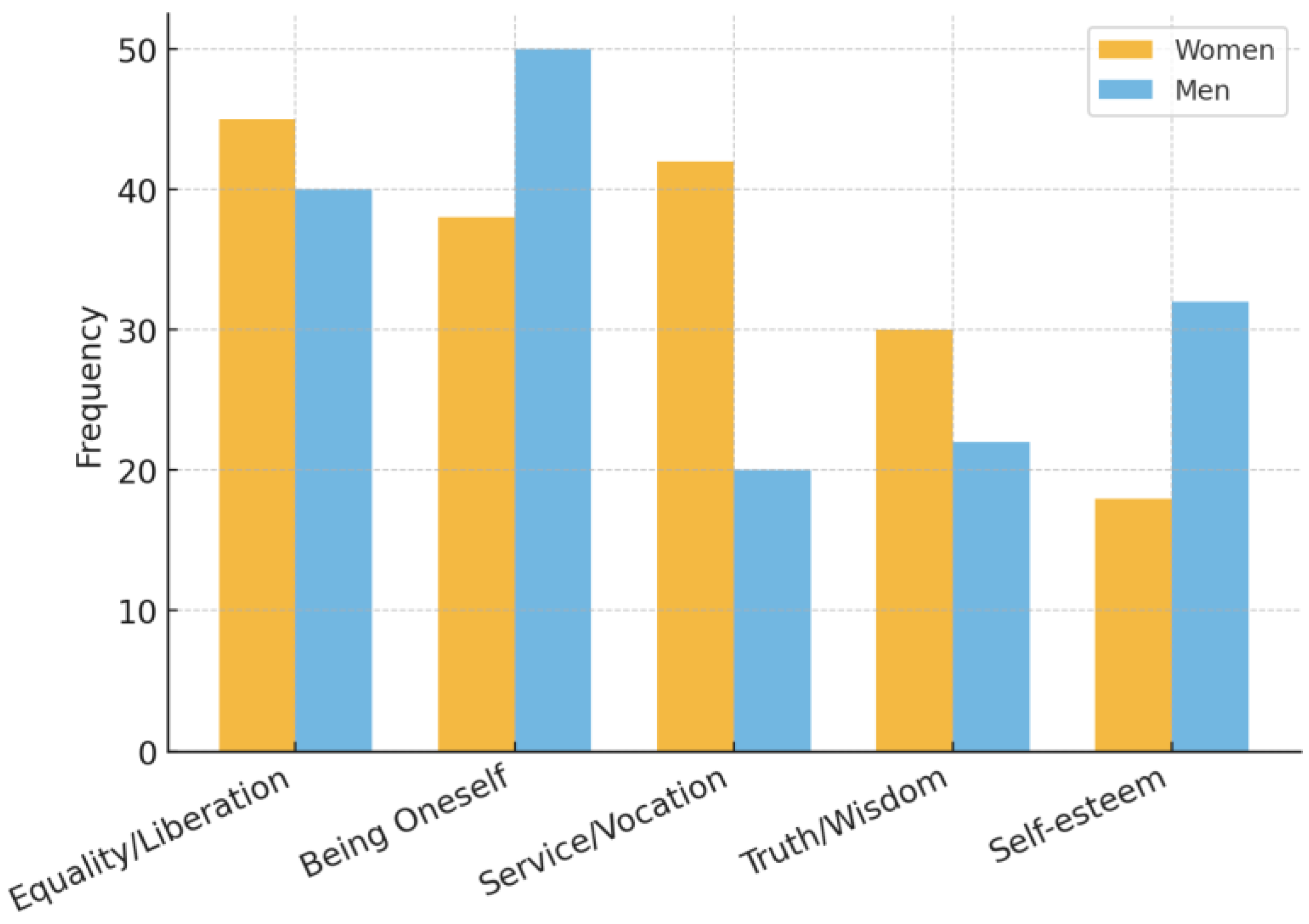
Figure 1. Comparison of the most selected meta values by men and women.
Higheredu 05 00021 g001
Figure 2. Comparison of the most selected means values by men and women.
Higheredu 05 00021 g002
Table 1. Descriptive Statistics for Likert Scale Dimensions (Overall).
DimensionMean (x)Standard Deviation (SD)
Ethical Reflection (D1)4.050.68
Values Education (D2)3.910.71
Global Mean of the Scale3.980.65
Table 2. Items with the highest valuation.
PositionItemMean (x)SDPercentage of Agreement (4 or 5)
1 AI helped me organize and classify the values present in the literary character.4.320.6085.7
2Interaction with AI stimulated my critical thinking by contrasting my initial interpretation.4.210.6482.5
3The AI facilitates the identification of biases or ethical inconsistencies in the narrative4.080.7079.4
4The digital tool contributed to ethical debate in the classroom.4.020.7577.0
Table 3. Items with the lowest valuation.
PositionItemMean (x)SDPercentage of Agreement (4 or 5)
12 AI can replace the ethical reflection I do with my teacher or my classmates.2.251.2560.3
11I would trust the AI’s values report more than my own initial intuition.2.680.9844.4
10Using AI reduces the risk of cultural bias in values analysis.3.150.9025.4
9AI helped me adopt new values in my personal life.3.400.8018.2
Table 4. Inter-university comparison.
DimensionSpainIrelandDifferencep-ValueSignificance
Ethical Reflection (D1)4.084.01+0.07412Not Sign.
Values Education (D2)4.153.67+0.0481Significant
Global Mean of the Scale4.153.82+0.309Significant
Table 5. Emergent themes from open-ended responses on AI use in values education.
Main ThemeOperational DescriptionEvidence
(1) Conditions for AI appropriatenessAI is viewed as appropriate when it helps organize, clarify, and label values in the selected character and when outputs allow students to return to the text to justify interpretations.AI is described as a support for structuring ideas and making values explicit, provided the output is understandable and open to classroom discussion.
(2) Teacher mediation and deliberationMeaningful educational use is linked to teacher mediation and peer exchange to contextualize outputs, contrast interpretations, and preserve students’ interpretive autonomy.Human dialog is framed as what gives ethical depth and prevents AI reports from being treated as final answers.
(3) Risks: opacity, dependence, and cultural biasRisks are noted when AI is treated as an authority: opaque reasoning, technological dependence, and bias in value attributions (including cultural bias).Concerns include outsourcing moral judgment and the cultural reliability of automated interpretations, motivating calls for explicit boundaries and criteria.
(4) AI as a trigger for metacognition and ethical self-awareness AI is interpreted as a “mirror” that makes discrepancies between students’ initial readings and alternative outputs visible, fostering metacognition (awareness of one’s own axiological reasoning).Se reporta que el contraste entre la lectura personal y la salida de la IA impulsa a revisar argumentos, detectar supuestos propios y afinar la justificación de valores a partir de evidencias narrativas.
Disclaimer/Publisher’s Note: The statements, opinions and data contained in all publications are solely those of the individual author(s) and contributor(s) and not of MDPI and/or the editor(s). MDPI and/or the editor(s) disclaim responsibility for any injury to people or property resulting from any ideas, methods, instructions or products referred to in the content.