Article

Knowledge Transmission Platforms for Rural Development: A Conceptual Framework and an Applied Case Study from Spain


by
José Luis del Campo-Villares
1,* and
Antonio Blanco González
2
1
Campus de Vegazana, University of León (ULE), 24071 León, Spain
2
Department Computer, Multimedia and Telecomunication, Universitat Oberta de Catalunya (UOC), 08018 Barcelona, Spain
*
Author to whom correspondence should be addressed.
Platforms 2026, 4(2), 7; https://doi.org/10.3390/platforms4020007
Submission received: 5 February 2026 / Revised: 24 March 2026 / Accepted: 31 March 2026 / Published: 7 April 2026

Abstract

Rural territories continue to face persistent structural challenges related to depopulation, limited economic diversification, and unequal access to specialized knowledge. Although scientific research and applied expertise are widely recognized as critical resources for addressing these challenges, their effective transmission to local actors remains fragmented. In recent years, digital platforms have emerged as potential mechanisms to bridge this gap; however, their role within rural development frameworks remains conceptually underdeveloped. This paper proposes a conceptual framework for knowledge transmission platforms oriented towards rural development, integrating scientific research, applied analysis, and structured dissemination within a unified operational architecture. Drawing on a structured review of the literature on rural development, knowledge transfer, and digital platforms, the framework identifies key functional dimensions and design principles that shape platform-based knowledge intermediation. The framework is illustrated through a qualitative case study of CreandoTuProvincia, a Spanish platform focused on territorial analysis and rural knowledge transmission. The findings highlight the relevance of hybrid platforms that combine scientific rigour, accessibility, and territorial embeddedness, offering a scalable model for strengthening evidence-informed rural development strategies. By conceptualizing platforms as structured knowledge intermediaries, this study contributes to the emerging literature on knowledge-based rural development and provides practical insights for policymakers, researchers, and platform designers.

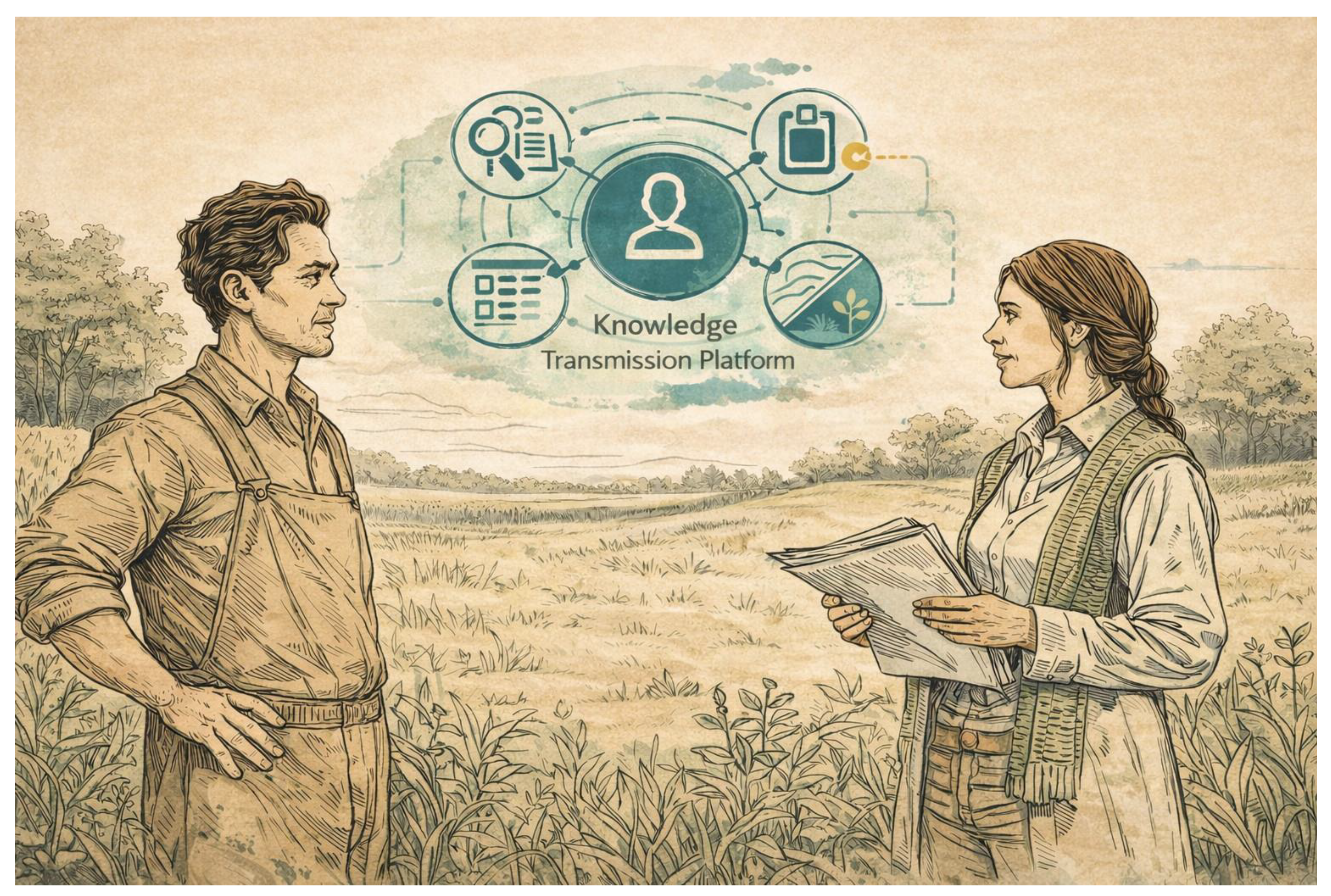
Graphical Abstract

1. Introduction

Rural territories have faced, for several decades, a persistent combination of structural challenges related to depopulation, demographic ageing, limited economic diversification, and inequalities in access to services, infrastructures, and opportunities. These processes, widely documented in the international literature, not only undermine the economic viability of large rural areas but also compromise their social cohesion, innovative capacity, and long-term sustainability [1,2,3,4]. In addition to these long-recognized challenges, a less visible yet increasingly critical dimension has gained prominence: the difficulty experienced by territorial actors in accessing, interpreting, and effectively using relevant scientific and technical knowledge within local decision-making processes.
In parallel with the intensification of these challenges, the production of knowledge on rural development, sustainability, territorial innovation, and multilevel governance has expanded significantly. Academic research, institutional reports, and strategic frameworks promoted by national and international organizations have substantially enriched the understanding of the factors shaping rural trajectories, incorporating place-based approaches, systemic perspectives, and comparative regional analyses [5,6,7]. However, this growing body of knowledge has not systematically translated into corresponding improvements in public policies or territorial intervention strategies. A broad strand of the literature highlights that the gap between research and practice is not merely cognitive but also organizational, institutional, and operational, reflecting differences in language, timeframes, incentives, and capacities among the actors involved [8,9].
This disconnect between knowledge production and effective use is particularly pronounced in rural contexts. Unlike urban or metropolitan environments, many rural territories face structural constraints in terms of technical resources, administrative capacity, and access to specialized knowledge networks [10]. Under such conditions, the abundance of information and evidence does not, in itself, ensure its integration into decision-making processes. On the contrary, fragmented sources, dispersed diagnoses, and the absence of mechanisms for synthesis and translation tend to generate information overload and hinder the identification of strategic priorities [11,12,13].
In response to these limitations, approaches grounded in evidence-informed policymaking and in science–policy–practice interfaces have emphasized the need for intermediary structures capable of facilitating the circulation, interpretation, and contextualization of knowledge between scientific communities, public decision-makers, and territorial actors [13,14]. Such structures do not merely disseminate information; rather, they perform active functions of organization, synthesis, validation, and adaptation of knowledge to specific territorial contexts and to audiences with varying levels of expertise. The literature on knowledge intermediation consistently shows that, in the absence of these mechanisms, evidence tends to remain underutilized, particularly in settings where analytical and strategic planning resources are scarce [15,16,17].
Within this context, digital platforms have progressively emerged as infrastructures with the potential to assume a significant role as knowledge intermediaries. Beyond their application in commercial or market-oriented environments, platforms can be understood as socio-technical systems that integrate content, user communities, governance rules, and validation processes, thereby shaping structured spaces for interaction and knowledge accumulation [18,19]. From this perspective, a platform is not merely a technological artefact but rather an organizational structure that conditions how knowledge is produced, organized, legitimized, and ultimately used.
Despite the extensive literature on digital platforms, platform ecosystems, and the governance of digital infrastructures, their specific application to rural development—and, in particular, to the structured transmission of territorially relevant knowledge—remains insufficiently conceptualized [20,21]. Most platform-related studies focus on market dynamics, business innovation, or economic intermediation, devoting comparatively limited attention to platforms oriented towards public, territorial, or policy-related objectives [22,23]. When rural contexts are addressed, the emphasis typically falls on innovation processes, entrepreneurship, or digitalization, without developing analytical frameworks capable of explaining how knowledge is systematically organized and transmitted at the territorial scale [24,25,26,27,28].
This conceptual gap is particularly consequential for rural development. Territorial policies and projects require rigorous, comparable, and context-sensitive diagnoses, as well as interpretative frameworks that support priority setting, policy evaluation, and impact anticipation. In the absence of platforms explicitly designed to fulfil this function, analytical efforts tend to be fragmented, partial diagnoses are repeatedly produced, and existing evidence is insufficiently reused. As a result, knowledge generated on rural territories often remains dispersed and weakly integrated into medium- and long-term planning and evaluation processes [29,30].
This article addresses this gap through a twofold contribution. First, it proposes a conceptual framework for knowledge transmission platforms oriented towards rural development, integrating insights from the literature on territorial development, knowledge transfer and intermediation, and the governance of digital platforms. The objective is not to assess impacts or establish causal relationships but to conceptualize a specific type of socio-technical infrastructure and to define its functional dimensions and design principles. Second, the paper draws on an applied case study—the CreandoTuProvincia platform and its founding programme España Verde 2025—to illustrate and conceptually validate the proposed framework in a real rural context. The case is used for analytical illustration rather than for performance evaluation, causal inference, or statistical generalisation.
To guide the analysis, the study addresses the following research questions:
  • RQ1. What functional dimensions define a digital platform oriented towards structured knowledge transmission in rural development?
  • RQ2. How can these dimensions be operationalised and identified in an applied territorial platform case?
The case study is not intended to validate the framework in causal or performance terms, but to illustrate its analytical applicability.
The article makes three specific contributions. First, it conceptualizes knowledge transmission platforms as a differentiated socio-technical infrastructure for rural development, integrating literature on knowledge intermediation, territorial approaches, and platform governance. Second, it proposes a functional framework structured around five analytical dimensions and four design principles, formulated to support the comparative analysis of territorial initiatives. Third, it demonstrates the analytical utility of the framework through an applied case study, conceived as an illustrative and concept-validating exercise rather than as an evaluation of outcomes or effectiveness.
The remainder of the article is structured as follows. Section 2 reviews the relevant literature on knowledge-based rural development, science–practice intermediation, and digital platforms in territorial contexts. Section 3 presents the proposed conceptual framework, defining its functional dimensions and design principles and synthesizing the model through a conceptual figure. Section 4 outlines the methodological approach. Section 5 develops the case study, examining the alignment of the España Verde 2025 programme with the proposed framework. Finally, Section 6 and Section 7 discuss the theoretical and practical implications of the model and present the conclusions and directions for future research.

2. Literature Review

2.1. Rural Development and Knowledge-Based Approaches

Contemporary rural development literature has progressively evolved from sectoral and compensatory approaches—primarily focused on physical infrastructure and financial transfers—towards integrated territorial perspectives in which knowledge, innovation, and local capacities play a central role [5]. This conceptual shift reflects empirical evidence showing that homogeneous and decontextualized policies tend to generate limited outcomes in territories characterized by high levels of social, economic, environmental, and institutional heterogeneity [12].
Place-based approaches have emphasised the need to design interventions tailored to the specific characteristics of each territory, recognizing that rural development does not depend exclusively on material resources but also on intangible assets such as human capital, social capital, institutional capacities, and collective learning capabilities [6]. Within this framework, knowledge is conceived as a strategic resource that enables the understanding of complex territorial dynamics, the identification of comparative advantages, the anticipation of risks, and the orientation of public and private decisions in a more informed manner.
A substantial body of research has shown that the quality of rural policies is closely linked to the availability of rigorous, comparable, and territorially contextualized diagnoses. Such diagnoses allow policymakers to move beyond approaches based on isolated indicators or fragmented interpretations of territorial realities, fostering a more systemic understanding of development processes [11]. However, the mere existence of information and analytical outputs does not ensure their effective integration into decision-making, particularly when research results remain disconnected from operational frameworks and from the actual capacities of local actors.
From an institutional perspective, the emphasis on knowledge as a driver of rural development has been reflected in the explicit incorporation of innovation, training, and knowledge transfer into public strategies and policies. In the European context, these orientations have been consolidated through initiatives that recognize the role of knowledge and innovation systems and the need to strengthen interactions between research, public administrations, and territorial actors [7,31,32]. Nevertheless, the literature also indicates that these approaches often encounter implementation difficulties stemming from institutional fragmentation, multi-level governance complexities, and limited absorptive capacity in many rural territories.
As a result, although knowledge-based rural development constitutes a widely accepted conceptual framework, a significant gap persists between its underlying principles and their effective materialization in territorial policies and practices. While the literature consistently acknowledges the centrality of knowledge, it pays comparatively less attention to the organizational devices and intermediary infrastructures that enable knowledge to be structured, translated, and rendered operationally usable in specific rural contexts. This leaves an underdeveloped analytical space regarding the mechanisms of systematic knowledge transmission.

2.2. Knowledge Transfer and Science–Policy–Practice Interfaces

Knowledge transfer has traditionally been conceptualized as a linear process through which scientific research outputs are transmitted from knowledge producers to public decision-makers or end users. However, accumulated empirical evidence challenges this simplified view and highlights the complex, interactive, and context-dependent nature of knowledge use in real-world settings [8].
The literature on science–policy–practice interfaces stresses that barriers to the uptake of knowledge in decision-making extend beyond information deficits. Differences in language and conceptual frameworks, mismatches between research time horizons and political cycles, divergent institutional incentives, and organizational capacity constraints all significantly shape the use of evidence [9,13]. In rural contexts, these barriers are often exacerbated by limited technical resources, administrative fragmentation, and high turnover among actors involved in territorial governance.
In response to these challenges, the concept of knowledge intermediation has gained prominence, referring to the set of practices, roles, and structures aimed at facilitating the circulation, translation, and contextualization of knowledge between producers and users. Organizations acting as intermediaries do not merely disseminate information; rather, they perform functions of synthesis, validation, contextual adaptation, and trust-building among actors [16,17].
These functions are critical for reducing the distance between research and action, particularly when knowledge must be mobilized by audiences with heterogeneous levels of expertise and responsibility.
In the field of public policy, these approaches are closely linked to the concept of evidence-informed policymaking, which emphasises the systematic and critical use of multiple sources of evidence—including scientific research, statistical data, evaluations, and contextual information—to enhance the quality of decision-making [14]. This perspective recognizes that evidence does not automatically determine policy choices but can contribute to more robust decision processes when appropriate structures for knowledge intermediation and translation are in place [33].
At the same time, the literature cautions that knowledge intermediation is not a neutral process. Decisions regarding which knowledge is selected, how it is framed, and to which audiences it is directed are mediated by institutional settings, values, and power relations. Consequently, the organizational form and governance principles of intermediary structures are central to ensuring the credibility, legitimacy, and usefulness of transmitted knowledge [34,35].
Despite the richness of these contributions, research on knowledge intermediation has focused predominantly on actors, processes, and roles, devoting less attention to the organizational and digital infrastructures that sustain these functions over time—particularly in rural territorial contexts. This limited emphasis constrains the conceptualization of structured knowledge transmission platforms as socio-technical systems endowed with specific rules, criteria, and dynamics. Recent studies have further highlighted the political and organizational dimensions of intermediation, showing how knowledge brokering practices shape which evidence ultimately reaches decision agendas [36,37].

2.3. Digital Platforms, Governance, and Knowledge Transmission in Territorial Contexts

In parallel, research on digital platforms has expanded significantly over recent decades. From an organizational perspective, platforms are understood as socio-technical systems that combine digital infrastructures, user communities, and governance mechanisms to facilitate recurrent interactions among multiple actors [18]. Although much of this literature focuses on commercial and market-oriented platforms, several of its insights are directly relevant to platforms oriented towards public or territorial objectives [38].
Theoretical contributions on platform governance emphasise the importance of clearly defined participation rules, quality criteria, control mechanisms, and coordination processes among heterogeneous actors. From this standpoint, a platform is not merely a technological support, but an organizational structure that conditions how knowledge is produced, validated, and used [19]. Governance thus plays a central role in ensuring coherence, credibility, and long-term sustainability [39].
From an organizational perspective, this view aligns with recent analyses that conceptualize platforms as complex governance arrangements structuring incentives, roles, and relationships among diverse actors [40,41,42,43,44].
In territorial contexts, these contributions intersect with the literature on open innovation, knowledge ecosystems, and collective learning. In rural settings, approaches such as agricultural knowledge and innovation systems and territorial experimentation spaces have highlighted the need to articulate actor networks, information flows, and co-creation mechanisms to foster innovation and sustainable development [45]. However, these approaches tend to prioritize innovation and experimentation processes, devoting less attention to the specific function of systematizing and transmitting knowledge in a structured, cumulative, and reusable manner at the territorial scale. Smart village initiatives have demonstrated the potential of digital infrastructures to connect actors and information flows in rural territories, often without an explicit systematization of the knowledge transmission function [46].
This conceptual gap is particularly salient for rural development, where fragmented initiatives, dispersed information, and limited continuity hinder the accumulation of learning and inter-territorial transfer. Although platform literature offers valuable analytical tools to examine governance, architecture, and coordination, it is rarely applied explicitly to platforms oriented towards the structured transmission of territorially relevant knowledge. This limits its explanatory power in rural development contexts.
In sum, the literature review reveals an underexplored analytical space at the intersection of rural development, knowledge transfer, and digital platforms. This gap justifies the need for a specific conceptual framework capable of analyzing and designing knowledge transmission platforms for rural development as differentiated socio-technical infrastructures, moving beyond fragmented approaches and providing coherent analytical criteria for both research and practice.

3. Conceptual Framework: Knowledge Transmission Platforms for Rural Development

3.1. Defining Knowledge Transmission Platforms

Building on the literature review, this study proposes an operational definition of a knowledge transmission platform oriented towards rural development as a socio-technical infrastructure designed to organize, curate, translate, and disseminate scientific and applied knowledge in a structured manner, with the objective of facilitating its effective use in decision-making, public policy design, and territorial action in rural contexts, through explicit mechanisms of governance, traceability, and orientation towards applicability.
This definition incorporates three core elements that distinguish knowledge transmission platforms from other informational or communicative devices commonly employed in rural contexts.
First, it explicitly recognizes the socio-technical nature of platforms. Platforms are not conceived merely as digital supports or content repositories, but as organizational systems that articulate technical infrastructures, operating rules, editorial criteria, and relationships among actors. From this perspective, the platform constitutes an institutional architecture that shapes how knowledge is produced, selected, validated, and presented.
Second, the definition explicitly incorporates the function of knowledge intermediation. The platform operates as a space of translation and synthesis in which scientific evidence, territorial data, and analytical frameworks are reorganized to become intelligible, relevant, and usable for non-academic audiences, without compromising conceptual rigor. This function goes beyond approaches focused on the mere dissemination of information and positions the platform as an active actor in the circulation of knowledge.
Third, the definition establishes a purposive orientation towards the effective use of knowledge, aligned with the principles of evidence-informed policymaking and place-based approaches. The platform is conceived as a device designed to support informed decision-making and deliberative processes at the territorial level, without assuming a deterministic relationship between knowledge and action.
From this perspective, the value of a knowledge transmission platform does not lie in the volume of content produced, but in its capacity to reduce informational fragmentation, facilitate the accumulation of learning, and promote the reuse of knowledge across different territorial contexts, while respecting their institutional and socio-economic specificities.
The proposed concept of knowledge transmission platforms should be distinguished from related constructs such as knowledge brokers, living labs, smart village initiatives, and territorial observatories. While these approaches share an interest in facilitating knowledge circulation and supporting territorial development, they typically focus on specific functions such as mediation roles, co-creation processes, innovation ecosystems, or data monitoring. In contrast, knowledge transmission platforms, as conceptualized in this study, are defined by their capacity to systematically organize, structure, and translate knowledge into analytically coherent and reusable outputs, oriented towards supporting decision-making processes at the territorial level.

3.2. Functional Dimensions of the Proposed Framework

The conceptual framework is structured around five interrelated functional dimensions that enable the analysis and design of knowledge transmission platforms oriented towards rural development. These dimensions should not be understood as isolated compartments, but as components of an integrated system whose combined functioning determines the platform’s intermediary capacity.
The identification of these five dimensions results from an iterative process of analytical synthesis based on the reviewed literature. In particular, it integrates recurring contributions concerning (i) knowledge quality and use in public policy, (ii) intermediation and translation between science and practice, (iii) the governance of socio-technical platforms, and (iv) the territorial specificities of rural development. Taken together, these dimensions capture both epistemic aspects—related to the production, validation, and translation of knowledge—and organizational and territorial aspects—related to governance, coherence, and contextual applicability—while maintaining a clear and operational analytical distinction.
  • D1. Knowledge Rigour and Traceability
This dimension refers to the quality, reliability, and verifiability of the knowledge transmitted by the platform. It includes the systematic use of validated sources, explicit reference to official data and scientific literature, methodological transparency, and the possibility of tracing the origin and evolution of content over time. Rigour is not limited to compliance with formal academic standards, but also encompasses analytical coherence and internal consistency across the body of publications, avoiding methodological or interpretative contradictions.
  • D2. Translation and Accessibility
Effective knowledge transmission requires translation processes that adapt evidence to audiences with different levels of expertise. This dimension encompasses the platform’s capacity to synthesize complex information, employ clear language without sacrificing conceptual precision, and provide narrative structures that facilitate understanding and use by non-academic actors. Accessibility is conceived here as an active process of intermediation rather than as a reductive simplification of content.
  • D3. Orientation towards Territorial Applicability
Beyond dissemination, the platform must explicitly connect knowledge with territorial action. This dimension refers to the presence of interpretations, conclusions, and analytical frameworks that enable evidence to be linked to concrete decisions, policies, or interventions. Orientation towards applicability does not imply normative prescription or direct project design, but rather the provision of analytical elements that support deliberation and informed decision-making in specific rural contexts.
  • D4. Governance and Organizational Coherence
The credibility and sustainability of a platform depend on its governance structure. This dimension includes the existence of explicit editorial criteria, operating rules, clearly defined responsibilities, and mechanisms for review and continuous improvement. Governance functions as a guarantee of methodological consistency, analytical independence, and continuity over time, reinforcing users’ trust in both the transmitted knowledge and the platform as an organized system.
  • D5. Territorial Focus and Analytical Scalability
This dimension recognizes the centrality of territorial context in rural development processes. The platform must clearly define its territorial unit of analysis, enable comparisons across territories, and facilitate the adaptation of knowledge to different spatial scales. Scalability is not understood as the mechanical replication of content, but as the capacity to transfer the analytical framework to other contexts through informed adjustments that respect the institutional, socio-economic, and cultural specificities of each territory.

3.3. Design Principles of the Framework

Based on the identified functional dimensions, four design principles are derived to guide the construction, evaluation, and evolution of knowledge transmission platforms oriented towards rural development. These principles do not constitute normative rules, but rather analytical criteria for assessing the internal coherence and intermediary capacity of a platform.
First, the principle of structure over volume establishes that methodological and editorial coherence is more relevant than the quantity of content produced. A platform with a lower volume of outputs but a clear and consistent structure provides greater analytical value than a large but disorganized repository.
Second, the principle of traceability as an asset highlights transparency in sources, methods, and analytical processes as a central element of legitimacy and trust. Traceability enables users to assess the robustness of the transmitted knowledge and facilitates its reuse in other territorial contexts.
Third, the principle of controlled hybridization recognizes the need to integrate scientific and non-academic knowledge through differentiated layers, avoiding both the dilution of rigour and the exclusion of non-specialist audiences. This hybridization broadens the platform’s reach without compromising analytical quality.
Finally, the principle of explicit governance underscores that rules, processes, and organizational structures are inseparable from the platform’s value. Governance is not considered an ancillary element, but a constitutive component of the platform’s capacity to act as a credible, coherent, and sustainable knowledge intermediary over time.
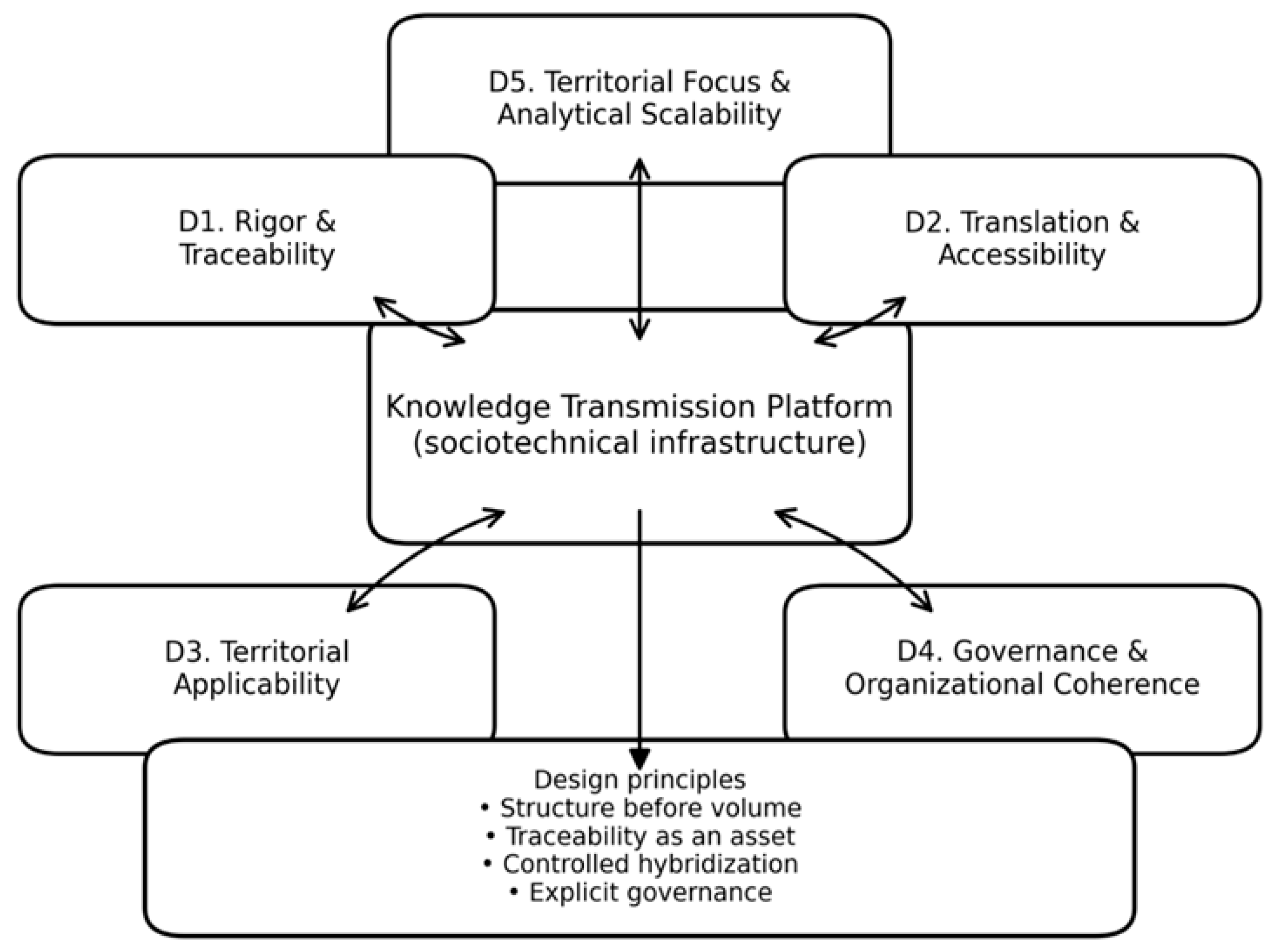
Figure 1 synthesises the integration of the five functional dimensions (D1–D5) and the design principles that structure the functioning of a knowledge transmission platform in rural contexts. It illustrates their relationships and interdependencies, highlighting the platform as a socio-technical infrastructure that articulates knowledge rigour, translation, territorial applicability, governance coherence, and analytical scalability in a coordinated and integrated manner.

4. Materials and Methods

This study adopts a qualitative, conceptual research approach, complemented by an illustrative and concept-validating case study, in line with its primary objective of proposing and examining an analytical framework for knowledge transmission platforms oriented towards rural development. The methodological design is grounded in established practices within conceptual research in applied social sciences and platform studies, where the emphasis lies on theoretical construction, analytical coherence, and interpretive usefulness, rather than on impact measurement or the testing of causal hypotheses.
The choice of this approach is driven by the nature of the object of study. Knowledge transmission platforms are conceived here as complex socio-technical infrastructures in which organizational, editorial, territorial, and governance dimensions converge. Such objects are not adequately addressed through quantitative, experimental, or performance-indicator-based designs when the aim is to conceptualize functions, dimensions, and design principles. In this sense, a qualitative approach enables the integration of diverse theoretical contributions and the examination of their internal coherence through an empirical case aligned with the proposed framework.
The methodological design is structured around three interrelated components: (i) a structured literature review, (ii) the construction and analytical operationalisation of the conceptual framework, and (iii) the analysis of an applied case study. The analysis is organised to address RQ1 through the derivation of the framework’s dimensions and RQ2 through their analytical application to the selected case.

4.1. Structured Literature Review

The literature review was conducted through a structured search process combining academic and institutional sources. The main databases consulted were Web of Science and Scopus, complemented by targeted searches in Google Scholar and by the inclusion of strategic reports from international organisations (e.g., OECD, European Commission) relevant to rural development and policy design.
The search covered the period 2010–2025, with particular emphasis on recent contributions (post-2020) in the fields of digital platforms, platform governance, and knowledge intermediation. Earlier works were included when they constitute foundational references in rural development theory or knowledge transfer.
Keywords included combinations of: “rural development”, “territorial development”, “place-based approach”, “knowledge transfer”, “knowledge intermediation”, “knowledge brokers”, “science–policy interface”, “evidence-informed policymaking”, “digital platforms”, “platform governance”, and “platform ecosystems”.
The review was organised around three analytical axes: (i) rural development and knowledge-based territorial approaches, (ii) knowledge transfer and science–policy–practice interfaces, and (iii) digital platforms and the governance of socio-technical systems. Inclusion criteria were based on (i) conceptual relevance to knowledge transmission or platform governance, (ii) applicability to territorial or rural contexts, and (iii) analytical contribution to understanding knowledge systems.
The objective of the review was not to exhaustively map the literature, but to identify recurrent concepts, functional elements, and analytical patterns capable of informing the construction of a coherent conceptual framework. For this reason, the selection of sources prioritised analytical relevance over volume, in line with established practices in conceptual research. The review included an approximate corpus of several dozen key academic and institutional contributions selected through the described screening process.
Table 1 summarises the main elements of the structured literature review, including databases, search strategy, selection criteria, and corpus definition.

4.2. Construction and Analytical Operationalisation of the Conceptual Framework

The conceptual framework was developed through an iterative analytical synthesis process combining inductive and deductive reasoning. First, key functional elements associated with knowledge transmission were identified through thematic reading of the selected literature. Second, recurring patterns and conceptual clusters were extracted, including dimensions related to knowledge validation, translation processes, territorial applicability, and governance structures. Third, these elements were grouped into higher-order categories through conceptual aggregation. Finally, five analytically distinct but interrelated dimensions were defined, together with a set of design principles.
The framework is conceived as an interpretive analytical tool rather than as a measurement instrument. It does not aim to establish causal relationships or to produce quantitative indicators, but to enable the structured description, comparison, and analysis of knowledge transmission platforms across different territorial contexts.
To enhance its analytical usability and to address potential concerns regarding subjectivity, each dimension was operationalised through a set of observable qualitative criteria. These criteria do not constitute a scoring system but provide a structured basis for identifying how each dimension materialises in empirical cases. This operationalisation facilitates transparency, comparability, and replicability in qualitative analyses of platform-based knowledge systems.
Table 2 presents the analytical operationalisation of the framework, specifying for each dimension its conceptual definition and associated observable criteria.

4.3. Case Study Design and Analytical Application

The case study is conceived as illustrative and concept-validating at the analytical level, without claims of statistical generalisation, performance evaluation, or causal inference. The CreandoTuProvincia platform and its founding programme España Verde 2025 were selected due to their explicit orientation towards structured knowledge transmission, their integration of research and dissemination functions, and their relevance within a rural territorial context.
The unit of analysis is the platform understood as a knowledge transmission system, rather than individual publications, authorship, or isolated outputs. The analysis draws on publicly available information regarding the platform’s structure, editorial strategy, methodological approach, territorial scope, and stated objectives.
The empirical basis of the analysis consists of the systematic review of 25 analytical publications produced within the España Verde 2025 programme, covering the period from June to December 2025.
All analysed materials follow a common methodological structure, including territorial diagnosis, use of official data sources, integration of scientific literature, and formulation of analytically grounded conclusions. The analysis focuses on identifying recurrent structural patterns, methodological consistency, and alignment with the dimensions defined in the conceptual framework.
The selection of a single case is consistent with conceptual research aimed at examining the analytical applicability of a framework. The objective is not to generalise results but to illustrate how the proposed dimensions can be identified and interpreted in a real-world platform. This approach allows for the assessment of internal coherence between the conceptual model and its empirical manifestation.
The analytical application of the framework is structured through the use of observable criteria associated with each dimension (Table 2), which are applied systematically to the case. This enables a qualitative assessment of the extent to which the platform reflects the functional logic of a knowledge transmission system, while avoiding normative judgements or performance-based evaluation.

5. Results: Case Study—CreandoTuProvincia

5.1. Case Delimitation and Unit of Analysis

The case study focuses on the CreandoTuProvincia platform and, more specifically, on its founding programme España Verde 2025, conceived as a structured knowledge transmission initiative oriented towards rural development. The unit of analysis is the platform understood as a knowledge intermediation system, rather than individual publications, authorship, or specific outcomes derived from each output.
España Verde 2025 is articulated as a planned editorial programme composed of 25 high-level analytical studies, developed over a defined annual time horizon. The studies systematically address the main structural challenges, emerging dynamics, and opportunities of rural areas across four autonomous communities in northern Spain: Galicia, Asturias, Cantabria, and the Basque Country. This explicit territorial delimitation enables the programme to be analysed as a coherent whole, characterized by a shared internal logic and a clearly defined territorial orientation.
From the perspective of the proposed framework, the relevance of the case does not lie in its specific results but in the fact that it represents a platform designed from its inception with an explicit vocation for territorial diagnosis, knowledge structuring, and analytical support for decision-making, without affiliation to commercial objectives or the direct implementation of projects. This orientation facilitates its analysis as a knowledge transmission infrastructure, beyond its public visibility or the episodic dissemination of content.
Table 3 presents the analytical application of the conceptual framework to the selected case, explicitly linking each dimension to observable criteria and corresponding empirical evidence, based on the criteria defined in Table 2.

5.2. Common Methodological Structure and Analytical Coherence

The studies comprising the España Verde 2025 programme share a common methodological structure inspired by the scientific article format, albeit adapted to a dissemination-oriented approach towards non-exclusively academic audiences. Systematically, the contents are organized around a contextualization of the territorial challenge under analysis, a conceptual framework supported by official data, scientific literature, and institutional reports, an applied territorial analysis focused on the España Verde area, and a set of interpretative conclusions oriented towards applicability.
This structural homogeneity constitutes one of the programme’s central features and allows it to be analysed as a coherent analytical unit, notwithstanding the thematic diversity of individual studies. In line with the criteria associated with the dimension of knowledge rigour and traceability (Table 2), this structural homogeneity reflects the presence of consistent methodological organization, explicit use of verifiable sources, and internal analytical coherence across the set of publications.
Prior editorial planning, including the advance definition of themes, territorial focus, and analytical structure, further strengthens this coherence. The programme is not conceived as an ex post aggregation of independent contents but as a structured sequence of interrelated analyses, a feature that is particularly relevant for platforms oriented towards the progressive accumulation of territorial knowledge.

5.3. Thematic Coverage and a Systemic Approach to Rural Development

The España Verde 2025 programme displays broad thematic coverage, encompassing areas such as environmental sustainability, circular economy, energy transition, participatory governance, social innovation, financing, digitalization, sustainable tourism, mobility, cultural heritage, education and training, biodiversity, and rural repopulation. This diversity reflects a systemic approach to rural development, in which different domains are analyzed as interdependent components of a single territorial system.
Rather than constituting a collection of disconnected topics, the programme articulates these areas within a shared territorial analytical framework, enabling the identification of structural patterns, recurring tensions, and cross-cutting opportunities. According to the criteria defined for the dimension of territorial focus and analytical scalability (Table 2), this approach demonstrates the integration of multi-thematic analysis within a coherent territorial framework and its potential transferability to other rural contexts through context-sensitive adaptation.
The emphasis on a clearly delimited territorial unit further reinforces the programme’s capacity to generate contextualized knowledge, avoiding abstract generalizations and supporting analytical reuse by territorial actors and public decision-makers.

5.4. Knowledge Translation and Analytical Accessibility

One of the distinguishing features of the case study is the attention devoted to knowledge translation processes. The programme’s contents are formulated with the explicit aim of being intelligible to non-academic audiences, without relinquishing analytical rigour or reference to verifiable sources. This balance is reflected in the use of clear language, the explicit explanation of technical concepts, and the orderly structuring of arguments.
Based on the observable criteria associated with the dimension of translation and accessibility (Table 2), this characteristic reflects the platform’s capacity to structure and communicate complex knowledge in a clear, accessible, and analytically consistent manner. The platform does not merely disseminate existing information but reorganizes and synthesizes evidence in ways that enable its use by actors with varying levels of expertise, including public administrations, local development entities, and informed general audiences.
This translation function is particularly relevant in rural contexts, where limitations in technical capacities and resources hinder direct access to specialized academic literature. In this sense, the programme can be interpreted as an intermediary device between knowledge production and its potential use in territorial processes.

5.5. Orientation Towards Territorial Applicability

Although the España Verde 2025 programme is not conceived as a tool for project implementation or funding acquisition, the studies systematically incorporate interpretative elements oriented towards territorial applicability. These include the identification of key challenges, discussion of implications for public policy, and the formulation of analytical orientations that may inform territorial action.
This orientation does not imply normative prescription or the design of specific interventions, but rather the provision of interpretative frameworks that support deliberation and informed decision-making. In accordance with the criteria associated with the dimension of territorial applicability (Table 2), this characteristic reflects the capacity to connect analytical content with territorial decision-making processes without relying on prescriptive or intervention-based approaches.

5.6. Editorial Governance and Organizational Design of the Platform

From an organizational standpoint, the España Verde 2025 programme is embedded within a platform that explicitly defines its lines of work, editorial approach, and knowledge transfer vocation. The existence of prior planning, clear thematic criteria, and a shared methodological structure reinforces the organizational coherence of the programme as a whole.
According to the criteria defined for the dimension of governance and internal coherence (Table 2), this configuration reflects the existence of structured editorial rules, methodological continuity, and alignment between objectives, content, and analytical approach. The platform thus operates as a knowledge intermediation device that extends beyond the aggregation of individual publications, contributing to the construction of a coherent and cumulative territorial narrative.

5.7. Alignment of the Case with the Conceptual Framework

The analytical application of the framework, as synthesised in Table 3, indicates a substantive alignment between the design of the España Verde 2025 programme and the dimensions of the proposed model. Taken together, the case illustrates how a knowledge transmission platform can structure contents according to criteria of rigour and traceability, translate complex information for diverse audiences, orient analysis towards territorial applicability, sustain coherence through defined editorial governance, and articulate a clear territorial focus with potential for analytical transfer.
This alignment does not constitute an empirical validation of the framework in causal terms, nor an evaluation of the programme’s performance. The case study is used exclusively to illustrate the analytical utility of the model, demonstrating how its dimensions may materialize within a real knowledge transmission platform in rural contexts, without attributing normative effects or measurable outcomes.

6. Discussion

6.1. Contributions of the Framework to the Analysis of Rural Development

The primary contribution of this study lies in the formalisation of a conceptual framework that enables an integrated analysis of the role of platforms in knowledge transmission oriented towards rural development, in line with earlier work highlighting the importance of intermediary functions in policy-relevant knowledge systems [47]. In contrast to approaches that treat knowledge transfer as an ancillary, fragmented, or predominantly linear process, the proposed model positions knowledge intermediation as a structural component of territorial decision-making systems.
From a rural development perspective, the framework contributes to the operationalisation of place-based approaches by providing analytical criteria that allow for the structuring of comparable territorial diagnoses without losing contextual specificity. The identification of functional dimensions such as knowledge rigour and traceability, accessible translation, and orientation towards territorial applicability directly addresses deficits widely noted in the literature: the fragmentation of available evidence, the difficulty of integrating it coherently, and the limited capacity to transform it into usable inputs for actors with diverse capabilities, interests, and temporal horizons. In this respect, the framework corroborates previous findings on the challenges of evidence use in complex policy environments [48].
The added value of the framework does not stem from the introduction of entirely new concepts, but from the coherent integration of contributions from different fields—rural development, knowledge transfer, and platform research—into a single analytical model. This integration makes it possible to move beyond partial perspectives that address these domains in isolation and provides a conceptual basis for analyzing platforms as knowledge infrastructures explicitly oriented towards improving the quality of territorial decision-making, beyond their technological or communicative dimensions.

6.2. Discussion of the Case Study in Light of the Framework

The analysis of the España Verde 2025 programme offers a concrete illustration of how the framework’s dimensions can materialize within a real knowledge transmission platform in a rural context. The case demonstrates that it is possible to articulate a high-level analytical initiative with a homogeneous methodological structure oriented towards both territorial diagnosis and knowledge transmission, without relying on strictly academic formats or normative prescriptions.
The observed alignment between the programme’s design and the five dimensions of the framework reinforces the model’s analytical utility as a tool for describing and examining knowledge platforms in rural settings, in line with insights from previous studies [49]. In particular, the combination of editorial planning, methodological coherence, and explicit territorial delimitation suggests that knowledge transmission platforms can play a relevant role as intermediary infrastructures between research, public policy, and territorial action, especially in territories characterized by limited technical resources and analytical capacities.
At the same time, the case highlights that knowledge intermediation does not depend exclusively on the intrinsic quality of contents, but on the existence of a stable organizational structure capable of ensuring continuity, coherence, and traceability, as emphasized in earlier research [50]. This observation is consistent with the literature on science–policy–practice interfaces, which underscores that the credibility and use of knowledge are shaped not only by its conceptual robustness, but also by the processes through which it is organized, validated, and presented.

6.3. Limits of the Approach and Critical Considerations

Despite the contributions outlined above, the analysis also reveals a number of limitations inherent both to the proposed framework and to the case study employed. First, knowledge translation necessarily involves processes of selection, synthesis, and prioritization, which may exclude certain perspectives or relevant debates, as previously discussed by [51]. Although such processes are intrinsic to knowledge intermediation, they entail a potential risk of bias that must be managed through explicit editorial criteria and continuous review mechanisms, a limitation already noted in earlier methodological discussions [52].
Second, the absence of systematic metrics of use, adoption, and impact constrains the ability to empirically assess the actual effects of knowledge transmission platforms on territorial decisions and outcomes. The proposed framework deliberately focuses on functional and organizational dimensions and does not incorporate performance indicators, which constitutes a methodological limitation but also a coherent analytical choice given the study’s objective [53].
Moreover, the use of a single case study, while appropriate for conceptual validation, limits the possibility of testing the framework across different institutional, territorial, or cultural contexts. This limitation does not invalidate the proposed model, but it does underscore the need to extend its application to additional cases in order to explore its robustness, adaptability, and comparative potential [54].
In addition, the selection of the case is not independent from the conceptual framework, as the platform was chosen due to its alignment with the analytical dimensions proposed in this study. This introduces a potential risk of circularity, insofar as the empirical application may reinforce the internal coherence of the model. To mitigate this limitation, the case is explicitly treated as an illustrative application rather than as a confirmatory test, and the findings are interpreted in analytical rather than evaluative terms.

6.4. Implications for the Design and Evaluation of Knowledge Platforms

From an applied perspective, the proposed framework offers relevant implications for the design and evaluation of knowledge transmission platforms oriented towards rural development, in line with earlier anticipations in the literature [48]. First, it suggests that the effectiveness of such platforms depends less on the volume of content produced than on the existence of clear governance structures, explicit quality criteria, and systematic knowledge translation mechanisms adapted to different audiences.
Second, the model highlights the importance of explicitly defining the territorial unit of analysis and the target audience of the platform, thereby avoiding overly generic approaches that hinder knowledge reuse and its integration into decision-making processes, as already suggested in foundational work on knowledge management [55]. Clarity regarding these elements constitutes a prerequisite for platforms to function as knowledge infrastructures rather than as mere dissemination channels.
Finally, the framework provides an analytical basis for the future development of qualitative and quantitative indicators associated with each functional dimension. The operationalisation of these dimensions would make it possible to advance towards more systematic evaluations of platform performance, opening a research agenda aimed at assessing their effective contribution to the quality of territorial governance.

7. Conclusions

This study addressed two research questions. First, it examined what functional dimensions define a digital platform oriented towards structured knowledge transmission in rural development. The results show that such platforms can be conceptualized through a set of interrelated dimensions—knowledge rigour and traceability, translation and accessibility, orientation towards territorial applicability, organizational governance, and territorial focus with analytical scalability—that provide a structured understanding of how these platforms can operate as intermediary infrastructures between knowledge production, decision-making, and territorial action.
Second, the study analysed how these dimensions can be operationalised and identified in an applied territorial platform case. The case study demonstrates that the proposed framework can be applied as a qualitative analytical tool, enabling the structured identification of key features of a knowledge transmission system without relying on quantitative indicators or performance-based evaluation. The main contribution of the study lies in shifting the analytical focus from the mere availability of information towards the organization, intermediation, and effective use of knowledge in rural contexts. In contrast to approaches that conceptualize knowledge transfer as a linear, ancillary, or implicit process, the proposed framework positions knowledge transmission as a structural component of territorial governance and planning systems, particularly relevant in environments characterized by limited technical capacity, institutional fragmentation, and high administrative complexity.
The analysis of the case study—the CreandoTuProvincia platform and its founding programme España Verde 2025—has illustrated the analytical utility of the framework in a real rural context. Without claims of statistical generalization or performance evaluation, the case demonstrates that a platform designed with prior editorial planning, methodological coherence, and explicit territorial delimitation can operationally materialize the model’s dimensions, facilitating the translation of complex evidence and its reuse in deliberative processes and informed decision-making.
The findings suggest that the value of knowledge transmission platforms does not depend solely on the individual quality of contents, but on the existence of an organizational structure capable of ensuring continuity, coherence, and traceability over time. In this regard, editorial governance and the explicit definition of operating principles emerge as key elements for reinforcing the credibility, legitimacy, and analytical usefulness of these platforms as organized territorial knowledge systems.
Nevertheless, the study presents clear limitations that delimit its scope and open avenues for future research. In particular, further work is needed to operationalise the framework through the development of indicators that enable the empirical assessment of platform use, adoption, and impact in rural contexts. In addition, applying the model to other cases and territories would allow for an exploration of its robustness, adaptability, and comparative potential across different institutional and cultural settings.
Overall, the proposed framework provides a solid analytical basis for future research on knowledge platforms and rural development, as well as a conceptual tool for the design of initiatives aimed at improving the quality of territorial decision-making through more structured, coherent, and context-sensitive knowledge transmission.

Author Contributions

Conceptualization, J.L.d.C.-V. and A.B.G.; methodology, A.B.G.; software, A.B.G.; validation, A.B.G.; formal analysis, J.L.d.C.-V.; investigation, J.L.d.C.-V.; resources, J.L.d.C.-V.; data curation, J.L.d.C.-V. and A.B.G.; writing—original draft preparation, A.B.G.; writing—review and editing, J.L.d.C.-V.; visualization, J.L.d.C.-V. and A.B.G.; supervision, J.L.d.C.-V. and A.B.G.; project administration, J.L.d.C.-V. and A.B.G. All authors have read and agreed to the published version of the manuscript.

Funding

This research received no external funding.

Institutional Review Board Statement

Not applicable.

Informed Consent Statement

Not applicable.

Data Availability Statement

No new datasets were created or analyzed in this study. The analysis relies exclusively on publicly available secondary sources and institutional documentation cited throughout the manuscript. All materials supporting the findings are accessible through the publicly available sources and DOI-linked publications listed in the References Section. 1 Publicly available secondary sources: ESPON. State of the European Territory: ESPON Contribution to the Debate on Cohesion Policy Post-2020; ESPON EGTC: Luxembourg (2019). https://archive.espon.eu/sites/default/files/attachments/8091%20ESP%20Report_SoET_7_web_mod%20colophon_0.pdf (accessed on 12 November 2025). European Commission. Une vision à long terme pour les zones rurales de l’Union européenne—Pour des zones rurales plus fortes, connectées, résilientes et prospères d’ici 2040 (2021) https://oeil.europarl.europa.eu/oeil/fr/procedure-file?reference=2021/2254(INI) (accessed on 12 November 2025). OECD. Principles on Rural Policy; OECD Publishing: Paris, France (2019). https://www.oecd.org/en/topics/sub-issues/rural-service-delivery/oecd-principles-on-rural-policy.html (accessed on 12 November 2025). European Commission. Territorial Cohesion: Policy and Practice; Directorate-General for Regional and Urban Policy: Brussels, Belgium, (2020). https://ec.europa.eu/regional_policy/policy/what/territorial-cohesion_en (accessed on 12 November 2025). 2 DOIs of all data-relevant publications: OECD. A New Rural Development Paradigm for the 21st Century: A Toolkit for Developing Countries, Development Centre Studies. OECD Publishing (2016) Paris. http://dx.doi.org/10.1787/9789264252271-en. European Commission. Ninth Report on Economic, Social and Territorial Cohesion; Luxembourg: Publications Office of the European Union (2024) https://doi.org/10.2760/466949. OECD. Reinforcing Rural Resilience, OECD Rural Studies. OECD Publishing, Paris (2025), https://doi.org/10.1787/7cd485e3-en.

Acknowledgments

AI tools [Chatgpt, GPT-5] were used only for language editing/translation assistance under full author control; no AI-generated scientific content, analysis, or interpretation. The authors have reviewed and edited the output and take full responsibility for the content of this publication.

Conflicts of Interest

The authors declare no conflicts of interest.

References

  1. OECD. A New Rural Development Paradigm for the 21st Century: A Toolkit for Developing Countries, Development Centre Studies; OECD Publishing: Paris, France, 2016. [Google Scholar] [CrossRef]
  2. ESPON. State of the European Territory: ESPON Contribution to the Debate on Cohesion Policy Post-2020; ESPON EGTC: Luxembourg, 2019; Available online: https://archive.espon.eu/sites/default/files/attachments/8091%20ESP%20Report_SoET_7_web_mod%20colophon_0.pdf (accessed on 6 January 2026).
  3. European Commission. Une Vision à Long Terme Pour les Zones Rurales de l’Union Européenne—Pour des Zones Rurales Plus Fortes, Connectées, Résilientes et Prospères d’ici 2040. 2021. Available online: https://oeil.europarl.europa.eu/oeil/fr/procedure-file?reference=2021/2254(INI) (accessed on 6 January 2026).
  4. Silva, J.M.N.; Zhaoyang, L.; de Faria, A.L.L.; Rodríguez, S.E. Socioeconomic and Demographic Changes in Rural Development in the State of Minas Gerais—Brazil—A Case Study in Two Traditional Rural Quilombola Communities in the Municipality of Rio Espera. Sustainability 2025, 17, 10373. [Google Scholar] [CrossRef]
  5. Barca, F.; McCann, P.; Rodríguez-Pose, A. The case for regional development intervention: Place-based versus place-neutral approaches. J. Reg. Sci. 2012, 52, 134–152. [Google Scholar] [CrossRef]
  6. OECD. Principles on Rural Policy; OECD Publishing: Paris, France, 2019; Available online: https://www.oecd.org/en/topics/sub-issues/rural-service-delivery/oecd-principles-on-rural-policy.html (accessed on 6 January 2026).
  7. European Commission. Territorial Cohesion: Policy and Practice; Directorate-General for Regional and Urban Policy: Brussels, Belgium, 2020; Available online: https://ec.europa.eu/regional_policy/policy/what/territorial-cohesion_en (accessed on 6 January 2026).
  8. Nutley, S.M.; Walter, I.; Davies, H.T.O. Using Evidence: How Research Can Inform Public Services; Policy Press: Bristol, UK, 2007; ISBN 978-1861346643. [Google Scholar]
  9. Cairney, P. The Politics of Evidence-Based Policymaking; Palgrave Macmillan: London, UK, 2016. [Google Scholar] [CrossRef]
  10. Tan, L.; Cui, Q.; Chen, L.; Wang, L. An Exploratory Study on Spatial Governance Toward Urban–Rural Integration: Theoretical Analysis with Case Demonstration. Land 2024, 13, 2035. [Google Scholar] [CrossRef]
  11. Davoudi, S.; Shaw, K.; Haider, L.; Quinlan, A.E.; Peterson, G.D.; Wilkinson, C.; Fünfgeld, H.; McEvoy, D.; Porter, L.; Davoudi, S. Resilience, uncertainty and adaptive planning. Plan. Theory Pract. 2012, 13, 299–333. [Google Scholar] [CrossRef]
  12. Shucksmith, M. Re-imagining the rural: From rural idyll to Good Countryside. J. Rural Stud. 2018, 59, 163–172. [Google Scholar] [CrossRef]
  13. Head, B.W. Toward more “evidence-informed” policy making? Public Adm. Rev. 2016, 76, 472–484. [Google Scholar] [CrossRef]
  14. Oliver, K.; Kothari, A.; Mays, N. The dark side of coproduction: Do the costs outweigh the benefits for health research? Health Res. Policy Syst. 2019, 17, 33. [Google Scholar] [CrossRef] [PubMed]
  15. Bogatinoska, B.; Lansu, A.; Dekker, S.C.; Hugé, J.; Stoorvogel, J. Knowledge exchange between practitioners for the purpose of co-creating nature-based solutions. Ecosyst. People 2024, 20, 2415305. [Google Scholar] [CrossRef]
  16. Meyer, M. The rise of the knowledge broker. Sci. Commun. 2010, 32, 118–127. [Google Scholar] [CrossRef]
  17. Ward, V.; Smith, S.; House, A.; Hamer, S. Exploring knowledge exchange: A useful framework for practice and policy. Soc. Sci. Med. 2012, 7, 297–304. [Google Scholar] [CrossRef]
  18. Gawer, A. Bridging differing perspectives on technological platforms: Toward an integrative framework. Res. Policy 2014, 43, 1239–1249. [Google Scholar] [CrossRef]
  19. Van Dijck, J.; Poell, T.; De Waal, M. The Platform Society: Public Values in a Connective World; Oxford University Press: Oxford, UK, 2018. [Google Scholar] [CrossRef]
  20. Ducman, A.; Teodorescu, C.; Lequeux-Dincă, A.-I. Administrative Digital Accessibility as an Opportunity for Rural Development—Case Study: The Peri-Urban Area of Bucharest. Economies 2025, 13, 335. [Google Scholar] [CrossRef]
  21. Schmidt, R.; Alt, R.; Zimmermann, A. Towards a Theory of Multilevel Platform Ecosystems. In ICIS 2025 Proceedings; ICIS: Maastricht, The Netherlands, 2025; Volume 16, Available online: https://aisel.aisnet.org/icis2025/sharing_econ/sharing_econ/16 (accessed on 15 March 2026).
  22. Plantin, J.-C.; Lagoze, C.; Edwards, P.N.; Sandvig, C. Infrastructure studies meet platform studies in the age of Google and Facebook. New Media Soc. 2016, 20, 293–310. [Google Scholar] [CrossRef]
  23. Schmidt, P.G.; Díaz-Puente, J.M.; Bettoni, M. How rurality influences interactive innovation processes: Lessons learnt from 15 case studies in 12 countries. Eur. Plan. Stud. 2022, 30, 2595–2617. [Google Scholar] [CrossRef]
  24. Castro-Arce, K.; Vanclay, F. Transformative Social Innovation for Sustainable Rural Development: An Analytical Framework to Assist Community-Based Initiatives. J. Rural Stud. 2020, 74, 45–54. [Google Scholar] [CrossRef]
  25. Christmann, G.B. Introduction: Struggling with Innovations. Social Innovations and Conflicts in Urban Development and Planning. Eur. Plan. Stud. 2020, 28, 423–433. [Google Scholar] [CrossRef]
  26. Fahmi, F.Z.; Arifianto, A. Digitalization and Social Innovation in Rural Areas: A Case Study from Indonesia. Sociología Rural 2022, 87, 339–369. [Google Scholar] [CrossRef]
  27. Helberger, N.; Pierson, J.; Poell, T. Governing online platforms: From contested to cooperative responsibility. Georget. Law Technol. Rev. 2018, 2, 523–545. [Google Scholar] [CrossRef]
  28. Levesque, V.R.; Bett, K.P.; Johnson, E.S. The role of municipal digital services in advancing rural resilience. Gov. Inf. Q. 2024, 41, 101883. [Google Scholar] [CrossRef]
  29. European Commission. Ninth Report on Economic, Social and Territorial Cohesion; Publications Office of the European Union: Luxembourg, 2024. [Google Scholar] [CrossRef]
  30. OECD. Reinforcing Rural Resilience, OECD Rural Studies; OECD Publishing: Paris, France, 2025. [Google Scholar] [CrossRef]
  31. Febiri, F.; Gariba, M.I.; Hub, M.; Provaznikova, R. The synergy between human factors, public digitalization and public administration in the European context. J. Open Innov. Technol. Mark. Complex. 2024, 10, 100424. [Google Scholar] [CrossRef]
  32. Rodriguez-Hevia, L.F.; Navio-Marco, J.; Ruiz-Gomez, L.M. Citizens’ involvement in e-government in the European union: The rising importance of the digital skills. Sustainability 2020, 12, 6807. [Google Scholar] [CrossRef]
  33. Boaz, A.; Oliver, K. Transforming evidence for policy and practice: Creating space for new conversations. Palgrave Commun. 2019, 5, 31. [Google Scholar] [CrossRef]
  34. Pielke, R.A. The Honest Broker: Making Sense of Science in Policy and Politics; Cambridge University Press: Cambridge, UK, 2007. [Google Scholar] [CrossRef]
  35. Yaghmaei, E.; Poel, I.V.D. (Eds.) Assessment of Responsible Innovation: Methods and Practices, 1st ed.; Routledge: London, UK, 2020. [Google Scholar] [CrossRef]
  36. Bandola-Gill, J. Knowledge brokering repertoires: Academic practices at science-policy interfaces as an epistemological bricolage. Minerva 2023, 61, 71–92. [Google Scholar] [CrossRef]
  37. MacKillop, E.; Quarmby, S.; Downe, J. Does Knowledge Brokering Facilitate Evidence-Based Policy? A Review of Existing Knowledge and an Agenda for Future Research. Policy Politics 2020, 48, 335–353. [Google Scholar] [CrossRef]
  38. Cennamo, C. Competing in digital markets: A platform-based perspective. Acad. Manag. Perspect. 2021, 35, 265–291. [Google Scholar] [CrossRef]
  39. Morte-Nadal, T.; Esteban-Navarro, M. Digital Competences for Improving Digital Inclusion in E-Government Services: A Mixed-Methods Systematic Review Protocol. Int. J. Qual. Methods 2022, 21, 16094069211070935. [Google Scholar] [CrossRef]
  40. Brunswicker, S.; Schecter, A. Coherence or flexibility? The paradox of change for developers’ digital innovation trajectory on open platforms. Res. Policy 2019, 48, 103771. [Google Scholar] [CrossRef]
  41. Chen, L.; Pereira, I.; Schneider, S. Platform governance: An organizational perspective. J. Manag. 2021, 48, 147–184. [Google Scholar] [CrossRef]
  42. Giotis, G.; Papadionysiou, E. The Role of Managerial and Technological Innovations in the Tourism Industry: A Review of the Empirical Literature. Sustainability 2022, 14, 5182. [Google Scholar] [CrossRef]
  43. Hanafizadeh, P.; Mehrasa, S. Governance system design model in platform ecosystems by a socio-technical systems theory. Digit. Policy Regul. Gov. 2025, ahead-of-print. [Google Scholar] [CrossRef]
  44. Lybaert, C.; Debruyne, L.; Kyndt, E.; Marchand, F. Development and validation of an instrument to measure the vision of European agricultural advisors towards innovation. J. Agric. Educ. Ext. 2024, 30, 775–796. [Google Scholar] [CrossRef]
  45. Knickel, K.; Brunori, G.; Rand, S.; Proost, J. Towards a better conceptual framework for innovation processes in agriculture and rural development: From linear models to systemic approaches. J. Agric. Educ. Ext. 2009, 15, 131–146. [Google Scholar] [CrossRef]
  46. Zavratnik, V.; Superina, A.; Stojmenova Duh, E. Living Labs for Rural Areas: Contextualization of Living Lab Frameworks, Concepts and Practices. Sustainability 2019, 11, 3797. [Google Scholar] [CrossRef]
  47. Best, A.; Holmes, B. Systems thinking, knowledge and action: Towards better models and methods. Evid. Policy 2010, 6, 145–159. [Google Scholar] [CrossRef]
  48. Cvitanovic, C.; McDonald, J.; Hobday, A.J. From science to action: Principles for undertaking environmental research that enables knowledge exchange and evidence-based decision-making. J. Environ. Manag. 2016, 183, 864–874. [Google Scholar] [CrossRef]
  49. Bornbaum, C.C.; Kornas, K.; Peirson, L.; Rosella, L.C. Exploring the function and effectiveness of knowledge brokers as facilitators of knowledge translation in health-related settings: A systematic review and thematic analysis. Implement. Sci. 2015, 10, 162. [Google Scholar] [CrossRef] [PubMed]
  50. Fazey, I.; Bunse, L.; Msika, J.; Pinke, M.; Preedy, K.; Evely, A.C.; Lambert, E.; Hastings, E.; Morris, S.; Reed, M.S. Evaluating knowledge exchange in interdisciplinary and multi-stakeholder research. Glob. Environ. Change 2014, 25, 204–220. [Google Scholar] [CrossRef]
  51. Pahl-Wostl, C. A conceptual framework for analysing adaptive capacity and multi-level learning processes in resource governance regimes. Glob. Environ. Change 2009, 19, 354–365. [Google Scholar] [CrossRef]
  52. Bryman, A. Social Research Methods; Oxford University Press: Oxford, UK, 2016. [Google Scholar]
  53. Meerstra-de Haan, E.; Haartsen, T.; Meier, S.; Strijker, D. An Initiators’ Perspective on the Continuity of Citizens’ Initiatives in Rural Areas. Rural Sociol. 2020, 85, 213–234. [Google Scholar] [CrossRef]
  54. Liu, J.; Li, F. Rural revitalization driven by digital infrastructure: Mechanisms and empirical verification. J. Digit. Econ. 2024, 3, 103–116. [Google Scholar] [CrossRef]
  55. Alavi, C.; Leidner, N. Knowledge management and knowledge management systems: Conceptual foundations and research issues. MIS Q. 2001, 25, 107–136. [Google Scholar] [CrossRef]
Figure 1. Conceptual framework of knowledge transmission platforms for rural development.
Platforms 04 00007 g001
Table 1. Structured literature review design.
ElementDescription
Databases consultedWeb of Science, Scopus, Google Scholar, and institutional sources (OECD, European Commission)
Time frameMain focus: 2010–2025, complemented by earlier foundational contributions
Keywords“rural development”, “knowledge transfer”, “knowledge intermediation”, “digital platforms”, “platform governance”, “evidence-informed policymaking”, among others
Analytical axes(i) Rural development and knowledge-based approaches; (ii) Knowledge transfer and science–policy–practice interfaces; (iii) Digital platforms and governance
Inclusion criteriaConceptual relevance, applicability to rural and territorial contexts, contribution to knowledge transmission or platform analysis
Screening logicSelection based on analytical relevance and conceptual contribution rather than exhaustive coverage
Corpus sizeSeveral dozen key academic and institutional sources
Table 2. Analytical operationalisation of the conceptual framework for knowledge transmission platforms.
DimensionAnalytical DefinitionObservable Qualitative CriteriaIllustrative Empirical Evidence
D1. Knowledge rigour and traceabilityCapacity of the platform to ensure that knowledge is based on verifiable sources, methodological transparency, and internal analytical consistency(i) Explicit reference to data sources (e.g., official statistics, academic literature); (ii) presence of methodological explanations; (iii) consistency between data, analysis, and conclusions; (iv) traceability of argumentsUse of official datasets (e.g., Eurostat, INE), cited sources, structured analytical reports, and transparent methodological sections
D2. Translation and accessibilityAbility to transform complex or technical knowledge into structured, understandable, and usable content for non-specialist audiences(i) Use of clear and structured language; (ii) synthesis of complex information; (iii) explanation of technical concepts; (iv) coherent narrative organisation; (v) accessibility of formatsStructured articles, explanatory texts, synthesis of reports, and dissemination formats adapted to broader audiences
D3. Territorial applicabilityDegree to which knowledge is adapted to specific territorial contexts and supports decision-making processes(i) Contextualisation of analysis to specific territories; (ii) linkage between data and territorial realities; (iii) relevance for policy or planning; (iv) consideration of local constraints and opportunitiesPlace-based analyses, territorial diagnostics, application of data to rural contexts, and alignment with regional development challenges
D4. Governance and internal coherenceAlignment between the platform’s content, objectives, structure, and continuity over time as a knowledge system(i) Coherence between thematic areas and objectives; (ii) consistency in publication strategy; (iii) integration between research, analysis, and dissemination; (iv) continuity of content linesStable editorial strategy, structured thematic organisation, and sustained production aligned with defined objectives
D5. Territorial focus and scalabilityCapacity of the platform to operate across different territorial scales while maintaining analytical coherence and transferability(i) Combination of local and broader territorial perspectives; (ii) potential for replication in other contexts; (iii) adaptability of analytical approach; (iv) coherence across scalesIntegration of local case studies with regional or national analysis and methodological transferability to other territories
Table 3. Analytical application of the conceptual framework to the CreandoTuProvincia platform.
DimensionObservable CriterionEmpirical Evidence in the CaseAnalytical Interpretation
D1. Knowledge rigour and traceabilityUse of verifiable sources and methodological transparencyArticles include references to official datasets (e.g., INE, Eurostat), structured analytical content, and explicit methodological explanations in research-oriented publicationsThe platform ensures traceability and analytical consistency, supporting its role as a reliable knowledge transmission system
D2. Translation and accessibilityCapacity to translate complex knowledge into structured and accessible contentUse of explanatory narratives, synthesis of complex information, structured articles, and accessible language adapted to non-specialist audiencesThe platform performs an effective translation function, reducing the gap between expert knowledge and practical understanding
D3. Territorial applicabilityContextualisation of knowledge to specific territorial realitiesContent focused on rural territories, place-based analyses, and adaptation of data to specific regional contextsThe platform demonstrates strong territorial anchoring, ensuring that knowledge is directly applicable to local development processes
D4. Governance and internal coherenceAlignment between content, objectives, and platform structure over timeCoherent thematic organisation, continuity of publication lines, and integration of research, analysis, and dissemination activitiesThe platform operates as a structured knowledge system, rather than as fragmented content production, reinforcing its internal coherence
D5. Territorial focus and scalabilityAbility to operate across scales while maintaining analytical coherenceCombination of local case studies with broader territorial perspectives and methodological approaches applicable to other rural contextsThe platform shows potential for scalability and transferability, maintaining coherence across different territorial levels
Disclaimer/Publisher’s Note: The statements, opinions and data contained in all publications are solely those of the individual author(s) and contributor(s) and not of MDPI and/or the editor(s). MDPI and/or the editor(s) disclaim responsibility for any injury to people or property resulting from any ideas, methods, instructions or products referred to in the content.