Article

Development of the Vehicular Emission Inventory of Criteria Air Pollutants for Sustainable Air Quality Management in Thulamela Municipality, South Africa


by
Ibironke T. Enitan
1,*,
Stuart J. Piketh
2 and
Joshua N. Edokpayi
1
1
Department of Geography and Environmental Sciences, University of Venda, Thohoyandou 0950, South Africa
2
Unit for Environmental Sciences and Management, Northwest University, Potchefstroom 2520, South Africa
*
Author to whom correspondence should be addressed.
Submission received: 5 November 2025 / Revised: 24 February 2026 / Accepted: 2 March 2026 / Published: 10 March 2026

Abstract

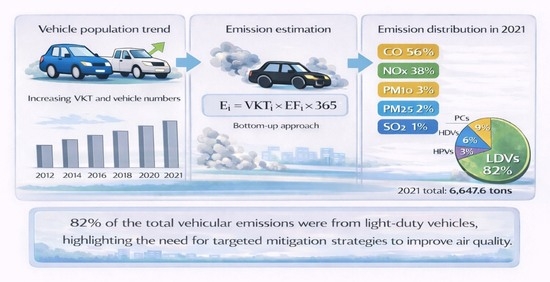
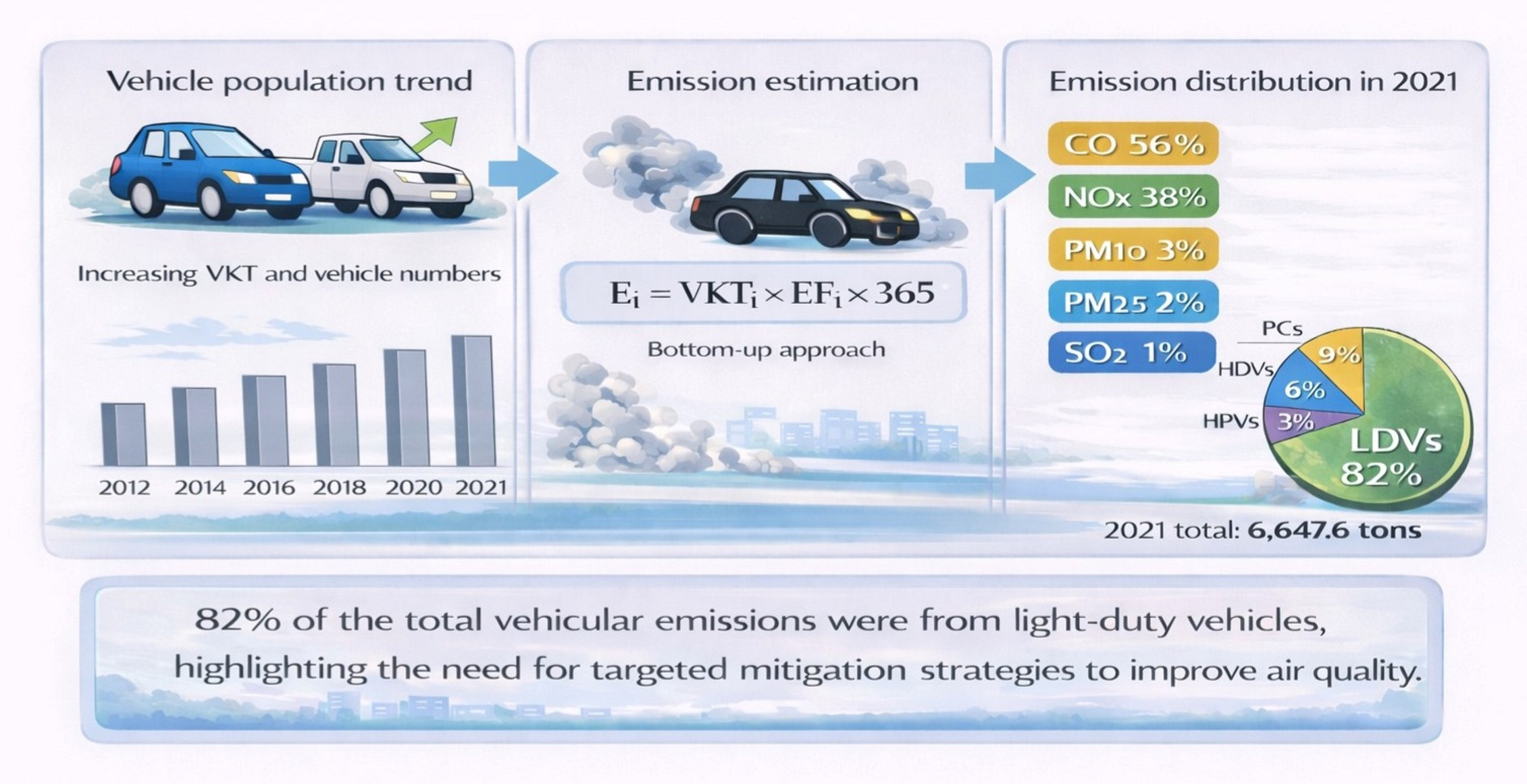
Vehicular emissions are a significant anthropogenic source of air pollutants in South Africa, driven by urbanisation and industrialisation. Thulamela Municipality in Limpopo Province faces increasing air quality challenges associated with rising vehicle kilometres travelled (VKT) and population growth. A reliable baseline emission inventory is therefore required to inform effective air quality management. This study quantified emissions and developed a vehicular emission inventory (VEI) for Thulamela Municipality using a bottom-up approach for the period 2012–2021. VKT was estimated using odometer readings obtained through a questionnaire-based seven-day vehicle survey, together with registered vehicle population data from the National Traffic Information System (NaTIS). Results indicate that VKT increased over the study period, with light-duty vehicles (LDVs) contributing the most, followed by passenger cars (PCs), heavy-duty vehicles (HDVs), and heavy-passenger vehicles (HPVs). Cumulative emissions of CO, NOx, PM10, PM2.5, and SO2 over the 10 years were 32,781.1, 22,326.0, 1367.8, 1291.7, and 547.2 tons, respectively, with growth rates ranging from 39% to 41%. In 2021, total vehicular emissions reached 6647.6 tons, dominated by CO (56%) and NOx (38%), with PM10 (3%), PM2.5 (2%), and SO2 (1%). LDVs contributed 82% of total emissions, followed by PCs (9%), HDVs (6%), and HPVs (3%). A positive correlation between vehicle numbers and Gross Domestic Product (GDP) further suggests that economic growth is associated with higher emissions. These findings show that vehicular emissions are a key contributor to air pollution in the area and highlight the need for targeted mitigation strategies to improve air quality and protect public health.

Graphical Abstract

1. Introduction

Air pollution is an alarming environmental issue worldwide, with numerous studies demonstrating its deterioration driven by emissions from various anthropogenic activities [1,2]. Vehicle emissions are among the most significant sources of gaseous and particulate pollutants, categorised as primary and secondary pollutants. The primary pollutants are emitted directly into the atmosphere and include gaseous species such as carbon dioxide (CO2), carbon monoxide (CO), nitrogen oxides (NOx), sulphur dioxide (SO2), and volatile organic compounds (VOCs), as well as particulate matter (PM10 and PM2.5). Vehicular VOCs include aromatic compounds such as benzene, toluene, ethylbenzene, and xylene (BTEX), which play a key role in atmospheric chemical processes. Secondary pollutants are formed in the atmosphere through photochemical, hydrolytic and oxidative reactions involving primary emissions and include nitrogen dioxide (NO2), photochemical oxidants such as ozone (O3), sulphuric and nitric acids, sulphates, nitrates, and secondary organic aerosols (SOAs), which contribute significantly to fine particulate matter (PM2.5) [3,4,5,6]. Additionally, urbanisation and industrialisation in many regions have led to increased vehicle activities, resulting in higher energy consumption, elevated emissions of traffic-related pollutants, and adverse impacts on public health and the environment [3,4,5,6,7,8,9,10]. Likewise, some previous studies [11,12,13] have highlighted the severe impacts of air pollution on public health, including respiratory problems, heart disease, and premature deaths.
Vehicular emissions remain a threat to environmental health, and this threat is expected to increase as vehicle ownership increases worldwide. Globally, over 600 million people have been exposed to hazardous levels of traffic-generated pollutants, leading to the deterioration of environmental quality in cities of both developed and developing countries [14]. Poor environmental quality has been reported and linked to negative effects on air quality and plant growth in numerous cities [4,8]. It has been noted that local factors, such as the rapid increase in vehicle numbers [15,16], emission rates, topography, and weather conditions, along with long-distance transport of pollutants [17,18,19] significantly influence air quality in a region, with implications that extend to broader areas.
South Africa, like many other nations, faces significant challenges regarding vehicle emissions. The rising number of vehicles in South Africa has contributed substantially to high emissions of pollutants [20,21,22]. The Organization of Motor Vehicle Manufacturers (OICA) reports that the total number of South African vehicles in 2015 was 9.6 million units [23], making it the largest fleet on the continent and accounting for 21.4% of all vehicles. Likewise, the Department of Energy statistics in 2010 revealed that on-road vehicles were responsible for 91.2% of transport emissions [24,25]. Specific regions of the country, such as Cape Town, Durban, and Johannesburg, have identified vehicle emissions as contributors to air pollution, including brown haze and elevated levels of greenhouse gases and criteria pollutants [21,26,27,28,29]. As a result, there is an urgent need to reduce vehicle emissions in South Africa to mitigate their environmental impact. Emission inventories are crucial for pollution control, enabling decision-makers to identify sources, assess impacts, and develop effective strategies to safeguard public health and improve air quality [30].
In South Africa, several studies [22,31,32] have focused on vehicle emissions inventories (VEIs), particularly on greenhouse gas (GHG) emissions. Other studies have investigated criteria pollutant emissions from vehicles in the Vaal Triangle Airshed Priority Area (VTAPA), but these do not apply to the Thulamela municipality because of the heterogeneity of air composition arising from differences in local emission sources and activity patterns [24,33,34]. Despite significant efforts to improve air quality and reduce emissions in South Africa, pollution from vehicular activities remains a significant environmental challenge. At present, comprehensive research on the criteria pollutant emissions at the municipal scale in the Thulamela municipality, Limpopo Province, remains limited. Notably, a study by Edlund et al. [35] found that PM2.5 concentrations in Thohoyandou exceeded the annual threshold of 20 µg/m3 and 5 µg/m3 for South Africa’s national ambient air quality standards (NAAQS) and the World Health Organization (WHO), respectively. Additionally, the WHO’s daily limits were frequently exceeded [35,36]. These findings underscore the need for localised emission quantification and assessment that can directly inform and support effective air quality management at the municipal level. To address this gap, the present study develops the first documented decade-long bottom-up vehicle emission inventory for a municipality in Limpopo Province, using locally derived vehicle population data and odometer-based vehicle kilometres travelled (VKT). Therefore, this study estimates VKT and quantifies emissions of criteria pollutants (SO2, NOx, CO, PM2.5, and PM10) in the Thulamela municipality, South Africa, for the period 2012–2021.

2. Materials and Methods

2.1. Study Area

The study was conducted in the Thulamela municipality, Vhembe District, Limpopo Province, South Africa (Figure 1). Thulamela Local Municipality is located between longitudes 22°45′24.24″ S and latitudes 30°35′53.36″ E, in the eastern part of the Vhembe district, with an approximate area of about 5835 km2. The Thulamela municipality accounts for 47.7% of the Vhembe district’s population, with a total population of 618,462. In Thulamela, the Venda and Tsonga tribes have the largest population [37]. Rural and urban land use is mixed in this area, with most residents living in rural areas and relying on agriculture for income. Although Thohoyandou is primarily a residential town, it is also one of the most densely populated cities in Thulamela and has many commercial and industrial establishments.

2.2. Data Collection

Data for this study were obtained from the relevant literature, questionnaire surveys, and field observations. A questionnaire survey was conducted to collect vehicular activity data, including odometer readings, vehicle characteristics, and activity within the Thulamela LM. These datasets provided valuable information on fleet composition and usage patterns in the area to estimate VKT. In the study area, 100 questionnaires were distributed at selected locations based on vehicle activity and drivers’ availability. Drivers were provided with logbooks to record their daily odometer readings over a 7-day period. Of the distributed questionnaires, 75 were obtained in the following proportions: 4, 20, 20, and 31 for heavy-duty vehicles (HDVs), light-duty vehicles (LDVs), passenger cars (PCs), and heavy passenger vehicles (HPVs), as reported by Enitan et al. [38]. The requested variables included odometer readings at the start and end of each day of service, daily kilometres travelled, vehicle registration and service dates, vehicle model, and the current date.

2.3. Emission Estimate

Emissions of criteria pollutants, namely SO2, NOx, CO, PM2.5, and PM10, in the study area were quantified, and an inventory was developed using a bottom-up approach based on the Vehicle-Based Method—Vehicle Kilometres travelled (VBM-VKT), which utilises an odometer-based method. This approach integrates vehicle population (VP) by vehicle type, average VKT, and pollutant-specific emission factors (EF) to estimate emissions.
Vehicle emissions were estimated using Equation (1) [30,38,39,40].
E i = V K T j × E F i , j × 365
where
E i represent the total annual emission of pollutant i (ton/year); for all vehicles j, i is an index of each pollutant type,
V K T j denotes the daily kilometres travelled per vehicle type j, and
E F i , j denotes the emission factors of pollutant i, per vehicle type j.

2.3.1. Activity Data

  • Vehicle population (VP)
Secondary data for the vehicle population (VP) from 2012 to 2018 were sourced from the National Traffic Information System [41]. Due to the lack of data between 2019 and 2021, VP data for this period were extrapolated using a trend-based method. The trend function was applied to the 7 years of available data from 2012 to 2018 to accurately predict future values based on observed patterns and changes. Vehicles were classified into four categories, as shown in Table 1 (PCs, HPVs, LDVs, and HDVs), whereas motorcycles were excluded because of their insignificant contribution to the study area.
  • Vehicle kilometres travelled (VKT) Estimation
Vehicle kilometres travelled (VKT) is a significant tool for estimating vehicular emissions [42,43]. For this study, VKT was calculated for vehicles using registered vehicle data, odometer readings, and kilometres travelled per day [44,45,46,47].
The average kilometre travelled (AKT) per day was calculated using Equation (2), and the AKT obtained was used to calculate the daily VKT for each vehicle type using Equation (3) [48,49].
A K T j ( k m ) = D j T o t a l   s a m p l e s
V K T j k m = A K T j × V e h j
where
A K T j : average distance travelled per vehicle type j,  V K T j : daily kilometres travelled per vehicle type j,  V e h j : number of registered vehicles per category j, and  D j : total kilometres travelled recorded for vehicle type j.

2.3.2. Emission Factors (EFs)

EFs specify the amount of pollutant released into the environment per unit of a specific activity and are typically expressed as mass per unit of activity. The EFs for SO2, NOx, CO, PM2.5, and PM10, as reported by Ramirez et al. [50] and Zhao et al. [51] for different vehicle types and presented in Table 2, were used in this study. These emission factors were chosen because they are more current, comprehensive, relevant, and applicable to our study’s requirements, thereby ensuring the accuracy and reliability of our emission inventory.

2.3.3. Statistical Analysis

Pearson correlation analysis was used to assess the strength and direction of the linear relationship between annual vehicular emission estimates (SO2, NOx, CO, PM2.5, and PM10) and Gross Domestic Product (GDP) over the study period. The correlation coefficient (r) was used to quantify the association between economic growth and vehicular emissions.

2.4. Ethical Clearance

The study was approved by the University of Venda’s ethics committee (certificate number: SES/19/ERM/20/0511) and complied with the University’s Code of Ethics. In addition, the participants were assured that their identities would remain confidential and anonymous throughout the data collection process, and they voluntarily agreed to participate.

2.5. Quality Assurance and Control (QA/QC)

Activity data, such as vehicle kilometres travelled (VKT), are often based on estimates or measurements that require careful documentation and validation. The questionnaire survey was used to estimate vehicle activity characteristics, such as VKT, while official vehicle registration data served as the primary source for vehicle population and fleet composition in the area. Emission factors used to calculate emissions from these activities were derived from peer-reviewed literature and have been widely applied in previous vehicular emission inventory studies. Given the absence of locally measured emission factor datasets disaggregated by vehicle type for Thulamela Municipality, these literature-based emission factors were considered the most appropriate and representative data sources for the study area. The accuracy and completeness of the inventory data were examined by comparing them with other similar studies. Additionally, the calculations and assumptions used to estimate emissions were also rechecked to ensure they were reasonable and appropriate. This verification process strengthens the reliability of the emission inventories.

3. Results and Discussion

3.1. Vehicle Population (VP)

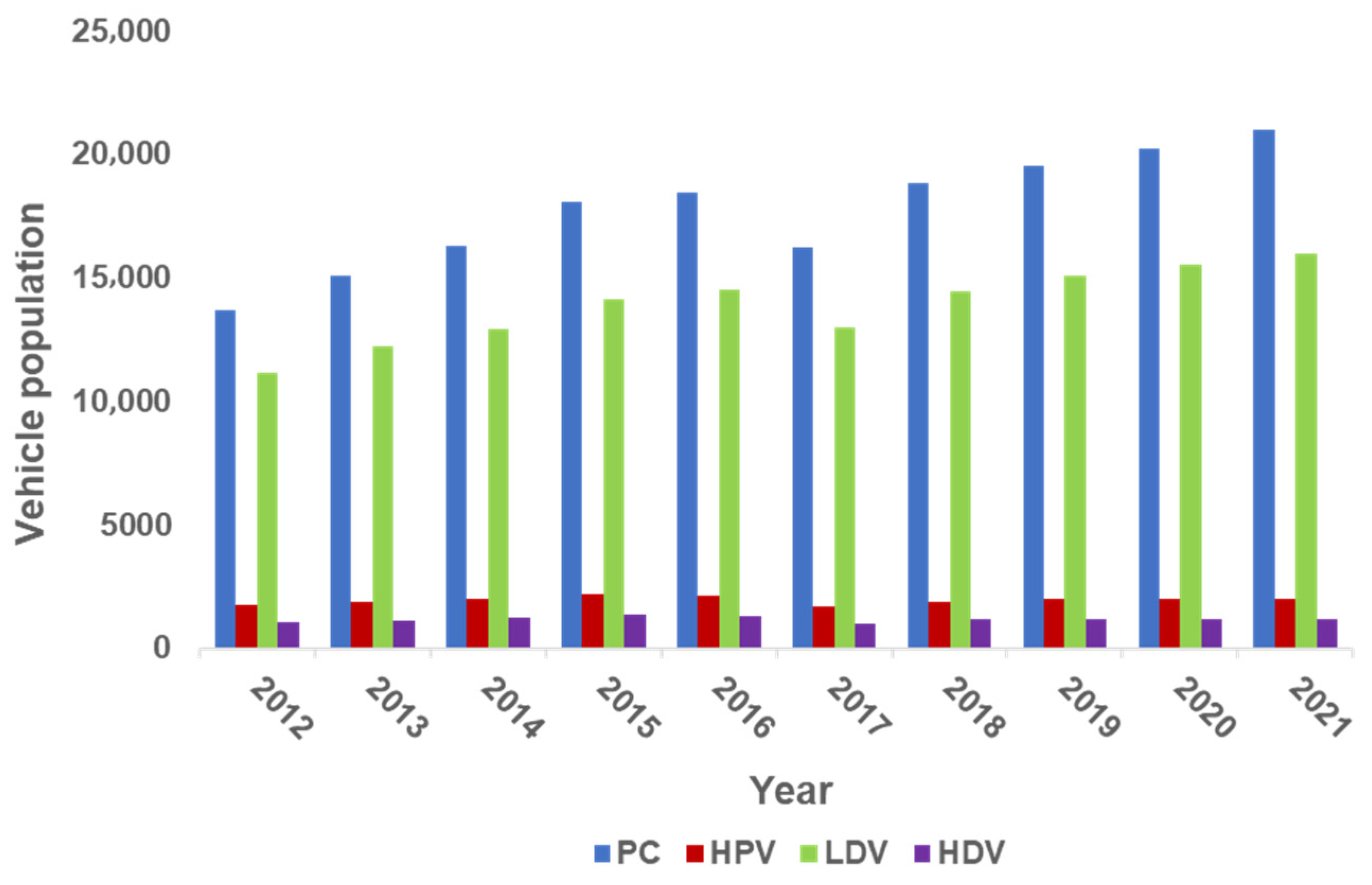
Vehicle population trends and the proportional distribution across the four vehicle categories (HDV, LDV, HPV and PC) were examined for the period 2012 to 2021 within Thulamela LM. Figure 2 illustrates these trends, showing passenger cars as the dominant vehicle type and the largest population compared to others. This trend may be driven by increased vehicle ownership, greater affordability, and population and economic growth. This is consistent with earlier research by Progiou and Ziomas [52], Song and Hao [9], Lv et al. [53], who also reported a significant population of passenger cars in similar areas. This consistency in findings supports the notion that passenger cars remain the most common type of vehicle in the Thulamela municipality. The total fleet over the study period was 27,699, 30,315, 32,520, 35,803, 36,421, 31,970, 36,421, 37,790, 38,981, and 40,173 for all vehicle types, respectively [41], corresponding to an estimated Compound Annual Growth Rate (CAGR) of approximately 4.2%. Increases in vehicular population growth rates are associated with higher emissions and a potential rise in ambient air pollution levels [54]. The vehicle population estimates presented in Figure 2 are subject to uncertainty arising from variations in vehicle registration records, changes in fleet composition over time, and the extrapolation of vehicle population data for years with limited availability. Consequently, the results should be interpreted as indicative of temporal trends in vehicle population growth rather than as exact counts.

3.2. Vehicle Age

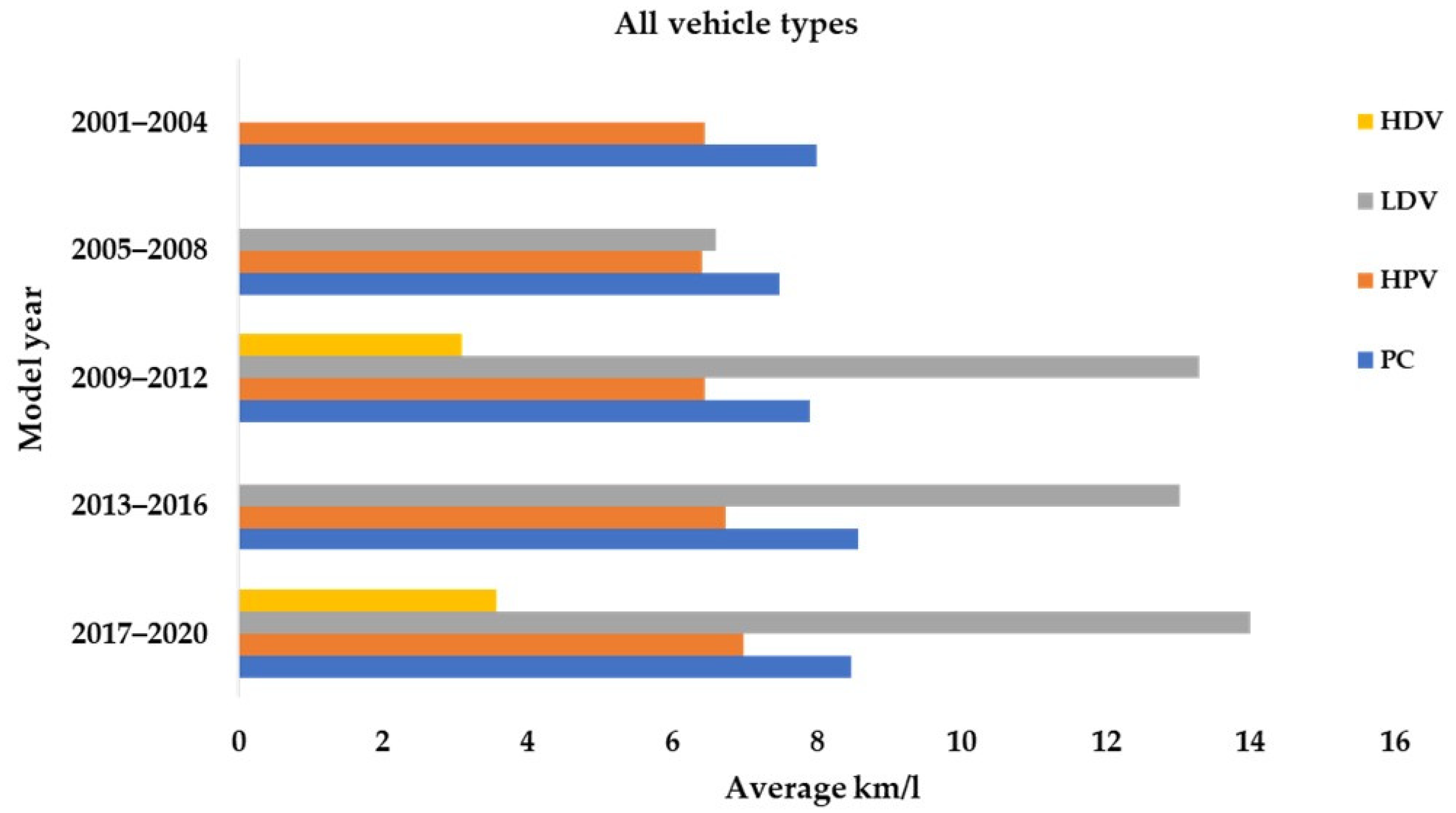
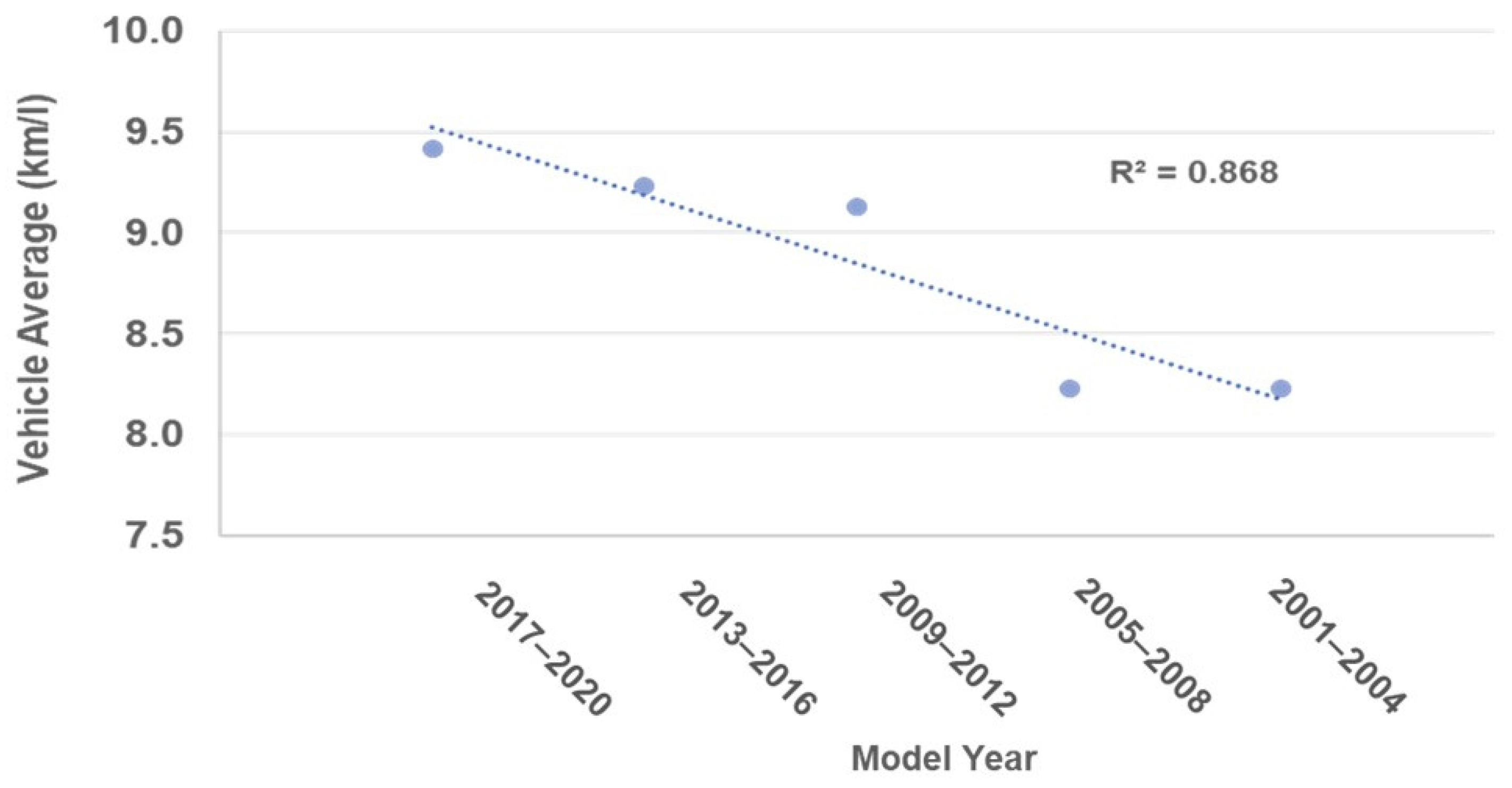
Vehicle age significantly affects fuel efficiency, VKT, and emissions. Figure 3 shows the variation in average fuel consumption per vehicle type (km/l) with vehicle age. PCs within the Thulamela municipality show a clear decline in VKT per litre as they age from the 2005 to 2016 model, except for a slight increase between 2001 and 2004. Interestingly, this PC trend aligns with Huo et al. [43] who reported that vehicle fuel efficiency km/l decreases with vehicle age. For HPVs, LDVs, and HDVs, the analysis of typical vehicle kilometres travelled per litre shows a clear declining trend with age. This pattern is consistent with earlier research by Limanond et al. [55]. The analysis of the sampled HDVs focused on the periods 2009–2012 and 2017–2020, excluding vehicles from 2001–2008 and from 2013–2016. In 2017–2020, an average of 3.57 km/l was observed, compared with 3.08 km/L in 2009–2012, reflecting the impact of vehicle age on fuel efficiency (Figure 3). The observed variations in averages may be influenced by differences in vehicle usage, maintenance condition, and driving patterns within each age group. LDVs generally operate under steadier, longer-distance travel conditions with higher VKT, whereas HPVs are more commonly used in congested semi-urban and urban environments characterised by frequent stop–start driving.
Research shows that as vehicles age, their fuel efficiency decreases, leading to fewer kilometres travelled per litre (km/l) and potentially higher emissions [56]. Thus, a positive correlation was found between vehicle age and distance travelled, with newer models having higher VKT than older ones [55,56,57,58]. Factors such as wear and tear, lack of maintenance, and outdated technology could contribute to this decline. To improve fuel efficiency and reduce the carbon footprint, Thulamela municipality vehicle owners should consider regular servicing and upgrading to newer models. Linear regressions between the average distance travelled per litre and vehicle age were conducted for all vehicle types from 2001 to 2020 (Figure 4). The results show a strong association between average distance travelled per litre and vehicle age, with a regression coefficient exceeding 0.87, indicating that vehicle kilometres travelled per litre generally decrease with vehicle age. Figure 4 illustrates the overall relationship between vehicle age and average fuel efficiency. The fitted linear regression captures the general decline in fuel efficiency with increasing vehicle age. Although some adjacent model-year groups (e.g., 2001–2004 and 2005–2008) have similar average values, the regression reflects the broader trend across the full vehicle-age range rather than statistically significant differences between individual age categories. Variability in vehicle usage, maintenance condition, and driving patterns within each model-year group may contribute to overlapping mean values; therefore, the results are interpreted as indicative of overall trends rather than discrete group-level differences.

3.3. Vehicle Kilometres Travelled (VKT)

Mean daily VKT showed clear variation across vehicle categories from 2012 to 2021. The values for PCs, HPVs, LDVs, and HDVs rose from 7.21 × 10⁵ km, 2.93 × 10⁵ km, 2.54 × 10⁶ km, and 2.30 × 10⁵ km in 2012 to 1.11 × 10⁶ km, 3.30 × 10⁵ km, 3.64 × 10⁶ km, and 2.57 × 10⁵ km in 2021, respectively. The vehicle population followed the order PC > LDV > HPV > HDV, whereas the estimated VKT trend showed a different pattern: LDVs, then PCs, HPVs, and HDVs. Although PCs have the largest population, LDVs exhibit the highest estimated VKT, indicating higher average travel intensity across vehicle types (Table 3). The LDV results align with findings reported by Singh et al. [59]. Furthermore, the dominance of PCs is consistent with earlier studies [52,60], which link rising GDP to increased private vehicle ownership, largely driven by improved affordability in the study area [60,61,62]. Similarly, higher VKT estimates for LDVs likely reflect their functional role within the municipality, particularly their use in agricultural activities, local freight movement, and service-related operations associated with the growth of small and medium enterprises (SMEs). Temporal patterns indicate a general increase in travel distances for PCs and LDVs over the study period, likely driven by rising vehicle ownership, growing mobility demand, vehicle affordability, and economic growth. In contrast, HPVs and HDVs exhibited more irregular patterns, with phases of increase, decline, and subsequent recovery. Therefore, the VKT fluctuations may be attributed to operational factors, including load characteristics, road infrastructure conditions, regulatory requirements, and shifts in the vehicle population following post-2016 municipality boundary adjustments.

3.4. Temporal Trends in Vehicular Emissions and Economic Activity

3.4.1. Annual Emission Trend by All Vehicles for Different Pollutants from 2012 to 2021

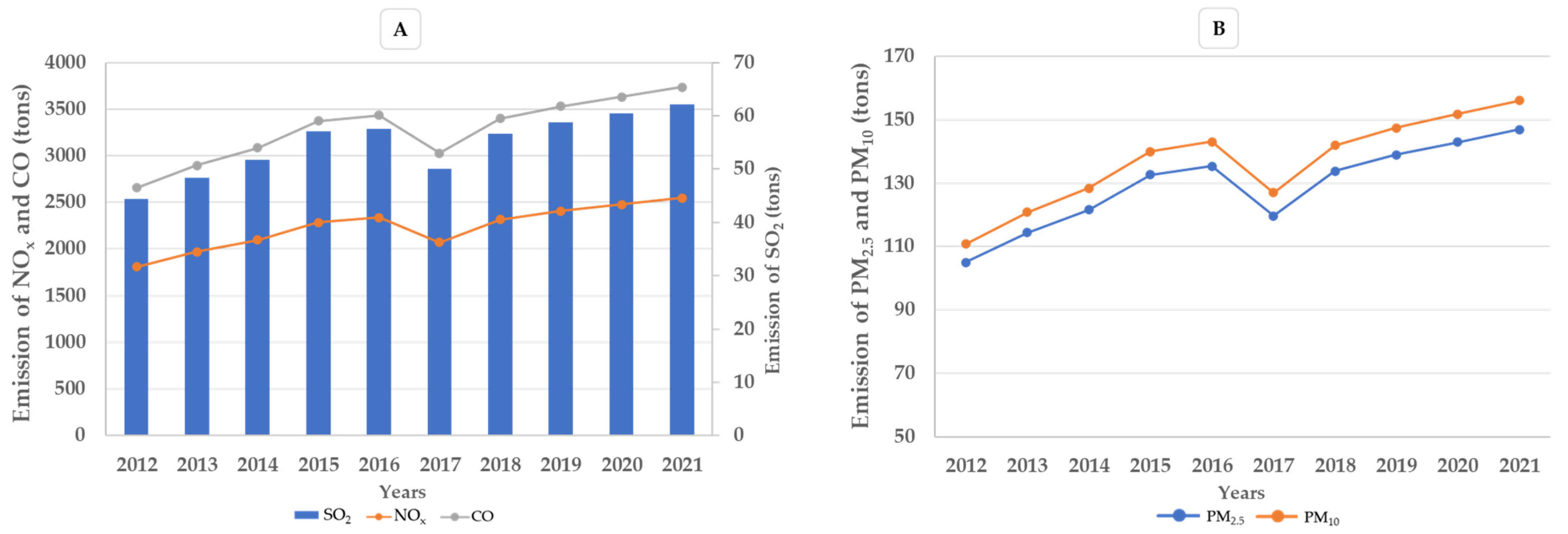
Annual emissions of SO2, NOx, CO, PM2.5, and PM10 were quantified, and an inventory of emissions from the entire vehicle fleet was developed for 2012–2021. The estimate was derived by integrating VP, VKT, and pollutant-specific emission factors. This study presents the first documented municipality-scale vehicular emission inventory for Thulamela Municipality, covering these criteria pollutants (SO2, NOx, CO, PM2.5, and PM10) over a 10-year period. Over the study period, the total emissions from the entire vehicle fleet were 547.16 tons of SO2, 22,326.02 tons of NOx, and 32,781.12 tons of CO (Figure 5A). Estimated particulate emissions were 1291.76 tons for PM2.5 and 1367.82 tons for PM10, respectively (Figure 5B). Notably, CO is the chief pollutant across all vehicle types, with LDVs as the highest emitters. Emissions of each pollutant increased, but in 2017, there was a slight decrease due to a decline in the vehicle population, which aligns with previous research by Enitan et al. [38]. Moreover, the observed reduction in vehicle emissions following an initial increase can be linked to a decline in the vehicle population, potentially influenced by post-2016 municipal boundary changes. These changes incorporated Malamulele into the Collins Chabane Local Municipality, resulting in governance shifts and a population decline in Thulamela Local Municipality, alongside other factors such as administrative changes, population shifts, and economic dynamics [63,64,65].
CO exhibited the highest emission trend among all pollutants across vehicle categories, and this was consistent with earlier studies [59,60]. Estimated emissions of all pollutants generally increased between 2012 and 2021 (Figure 5). By 2021, CO accounted for the largest share of total emissions at 56%, followed by NOx (38%), PM10 (3%), PM2.5 (2%), and SO2 (1%), with growth rates of approximately 39.66%, 40.73%, 40.57%, 39.87%, and 40.84% for SO2, NOx, CO, PM2.5, and PM10 respectively. Overall, LDVs, PCs, and HDVs were the major contributors to aggregate emissions throughout the study period, with little contribution from HPVs. LDVs and PCs are significant sources of SO2 and CO due to their large population. Moreover, LDVs and HDVs contributed most to NOx, PM2.5, and PM10 due to their high emission factors. This pattern aligns with prior findings reporting higher NOx emissions from HDVs than from PCs [60,66]. Emission contributions to the atmosphere exhibited temporal variability, reflecting fluctuations in vehicle population, activity levels, and the emission factors applied within the study area.

3.4.2. Trend Analysis of Total Emissions by Each Vehicle Category

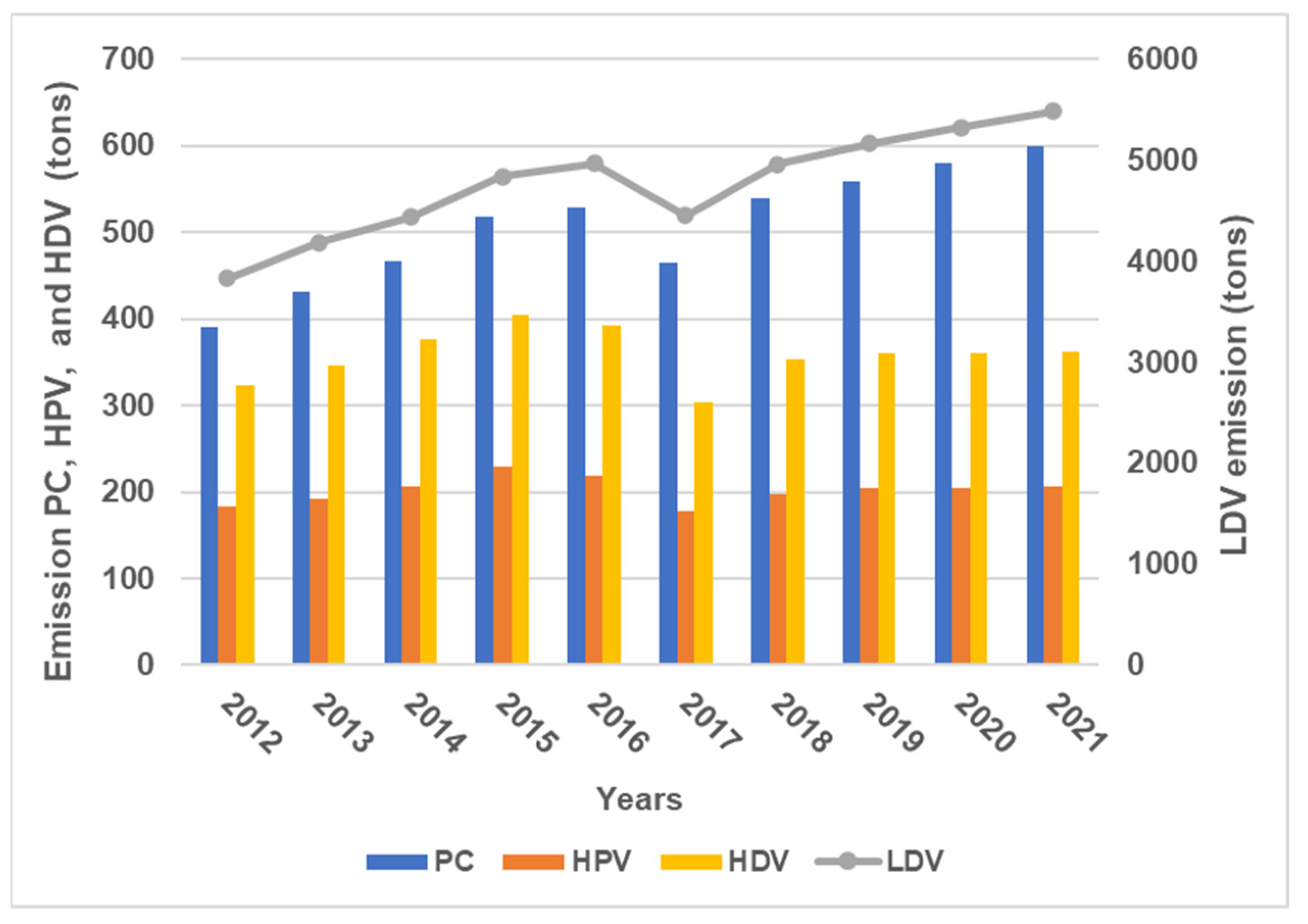
The relative contributions of each vehicle category to total emissions of SO2, NOx, CO, PM2.5, and PM10 over the study period are shown in Figure 6. Year-to-year emission variations primarily reflect differences in vehicle classifications, changes in vehicle population (VP), and kilometres travelled. LDVs are the leading contributors to total emissions across vehicle categories. Their total emissions increased from 3830.13 tons in 2012 to 5479.74 tons in 2021, highlighting the influence of travel activity and fleet size. PCs are the second-largest contributor, with combined emissions of the five pollutants rising from 390.93 tons in 2012 to 600.02 tons in 2021. For HPVs and HDVs, annual emissions of SO2, NOx, CO, PM2.5, and PM10 were lower. HPV emissions ranged from 183.28 to 206.24 tons per year, while HDV emissions varied from 323.20 to 361.65 tons per year. The highest contributions from both categories were observed in 2015, followed by a decline in 2017 and a recovery in 2018. These fluctuations are consistent with previously discussed VKT patterns and may also reflect the effects of post-2016 municipal boundary changes.

3.4.3. Contribution of Each Vehicle Category to the Emissions of SO2, NOx, CO, PM2.5, and PM10 from 2012 to 2021

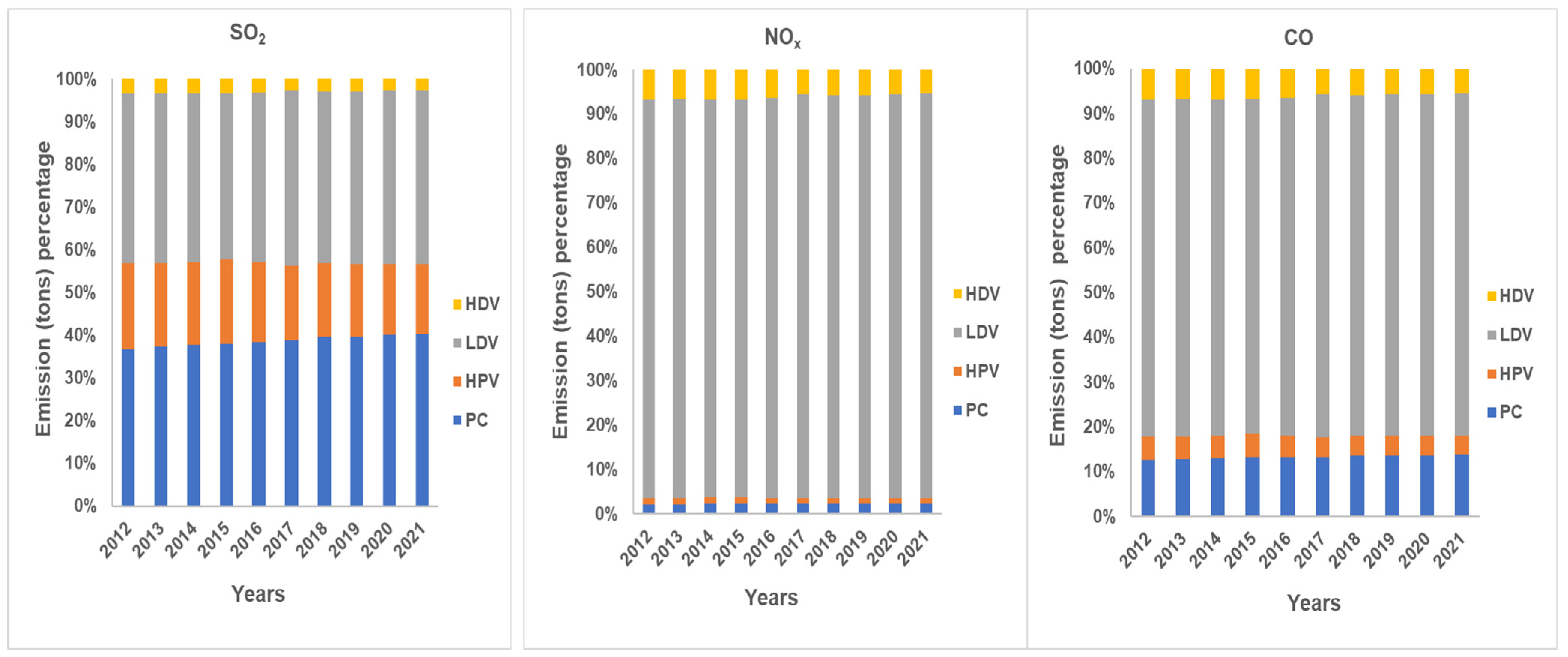
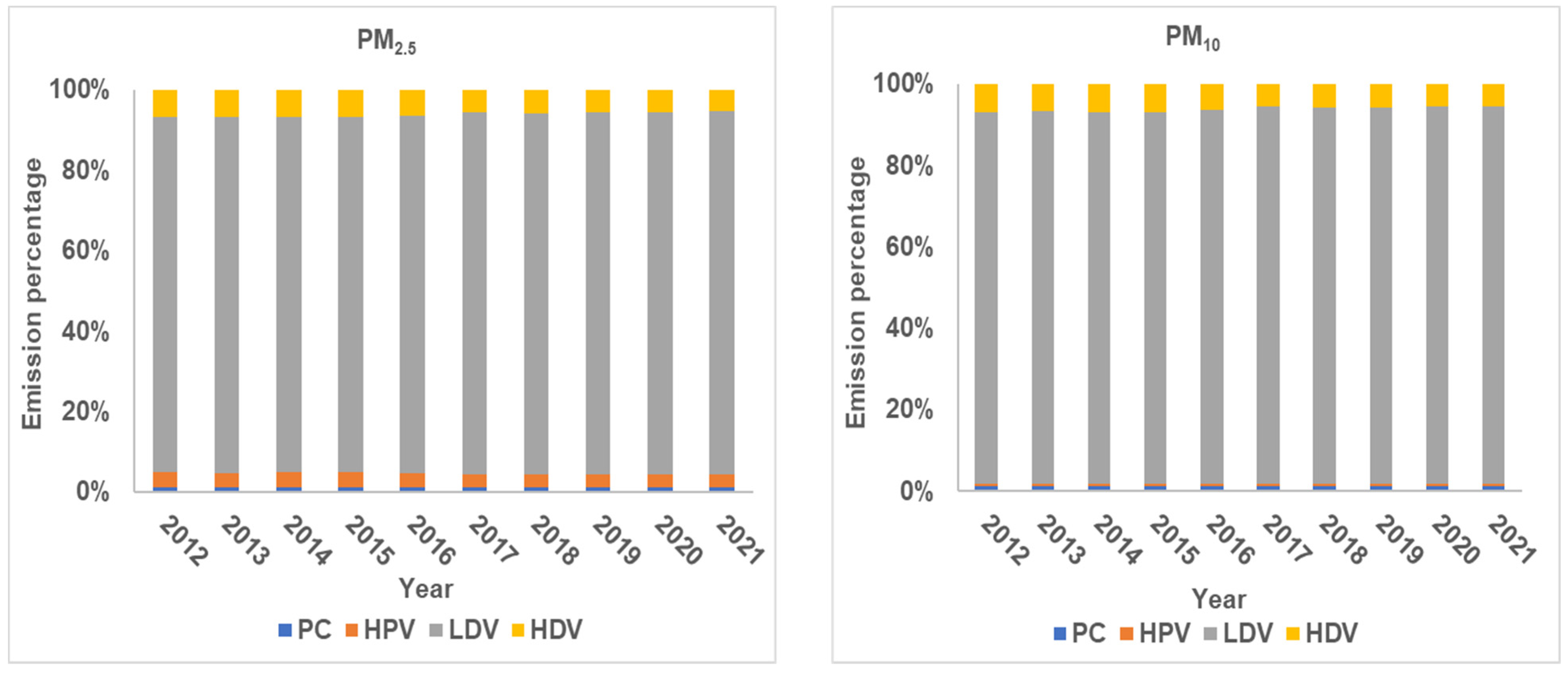
Figure 7 and Figure 8 illustrate the contribution of each vehicle type to emissions of each pollutant. Vehicle contributions varied across pollutants due to differences in VP, VKT, and pollutant-specific emission factors. SO2 is primarily a fuel-related pollutant that can increase significantly with growth in the vehicle population (VP), especially in diesel-powered vehicles. According to Figure 7, LDVs and PCs are the main contributors to SO2 emissions, accounting for about 17.63 and 16.32 tons, respectively, in 2012, and 25.23 and 25.05 tons, respectively, in 2021. This pattern largely reflects the continuous growth of their populations, which is contrary to the findings of Lv et al. [53], while HPVs and HDVs accounted for about 8.99 to 10.11 and 1.51 to 1.69 tons, respectively, over the 10-year period. Contrary to SO2, the main contributors to NOx emissions during the study period were LDVs and HDVs, with values ranging from 1621.33 to 2319.63 and from 122.65 to 137.24 tons, respectively (Figure 7). The NOx emissions for HDVs align with those reported by Lang et al. [8] and Lv et al. [53], indicating agreement with previous studies. The average NOx emissions for the study period were 2016.42, 135.86, 50.96, and 29.37 for LDVs, HDVs, PCs, and HPVs, respectively. Studies show that prolonged exposure to atmospheric nitrogen oxides (NOx) can reduce lung function and increase susceptibility to respiratory infections, ranging from mild colds to severe conditions such as pneumonia. Additionally, individuals with pre-existing respiratory conditions such as asthma and Chronic obstructive pulmonary disease (COPD) are particularly vulnerable to worsened symptoms. These adverse effects may also extend to animals and contribute to declining air quality and overall ecosystem health [1,67,68,69].
According to the findings, LDVs have been identified as the most significant contributors to CO vehicle emissions, ranging from 1997.20 to 2857.38 tons, with an average of 2483.87 tons for the study period. Following LDVs, PCs were the second-largest contributors to CO emissions, consistent with earlier findings [8,53]. In addition, as the economy developed, more people began using PCs, and their contribution to total CO emissions in the study area showed an upward trend. Furthermore, PCs, HDVs, and HPVs recorded average emissions of 432.65, 204.02, and 157.57 tons, respectively, during the study period. In general, all vehicle categories collectively emitted an average of 3278.11 tons of CO into the atmosphere during the study period. During the research period in Thulamela Municipality, LDVs and HDVs were identified as the predominant sources of PM2.5 and PM10 emissions. Figure 8 illustrates the substantial contribution of LDVs (92.81 to 132.78 tons) and HDVs (7.14 to 7.98 tons) to PM2.5 vehicle emissions. Similarly, PM10 emissions indicated LDVs as the primary source, with levels ranging from 101.16 to 144.73 tons, followed by HDVs at 7.72 to 8.64 tons. These findings are consistent with prior research, which reported comparable patterns in PM2.5 and PM10 emissions from vehicles [70]. This observation highlights the importance of vehicle movement in determining particulate matter levels, particularly in urban environments.
Furthermore, our research identified some influencing variables impacting LDV and HDV emissions. These variables include emission factors, vehicle population, and VKT in the study area, as they demonstrate temporal change and affect emission levels. This observation concurs with the research findings of Lv et al. [53], which identified LDVs as the primary source of emissions, while HDV emissions were reduced. In addition, Liu et al. [16] reported that both LDVs and HDVs contributed to PM10 emissions, with HDVs accounting for a higher percentage (34.33%) than LDVs (27.77%). These results highlight the importance of both vehicle types in contributing to PM10 pollution. Overall, these findings add to our understanding of PM2.5 and PM10 emissions and the factors that influence them, confirming the need for specific measures to reduce vehicle-related pollution in Thulamela and similar municipalities.

3.5. Current Situation of Vehicle Emissions in 2021

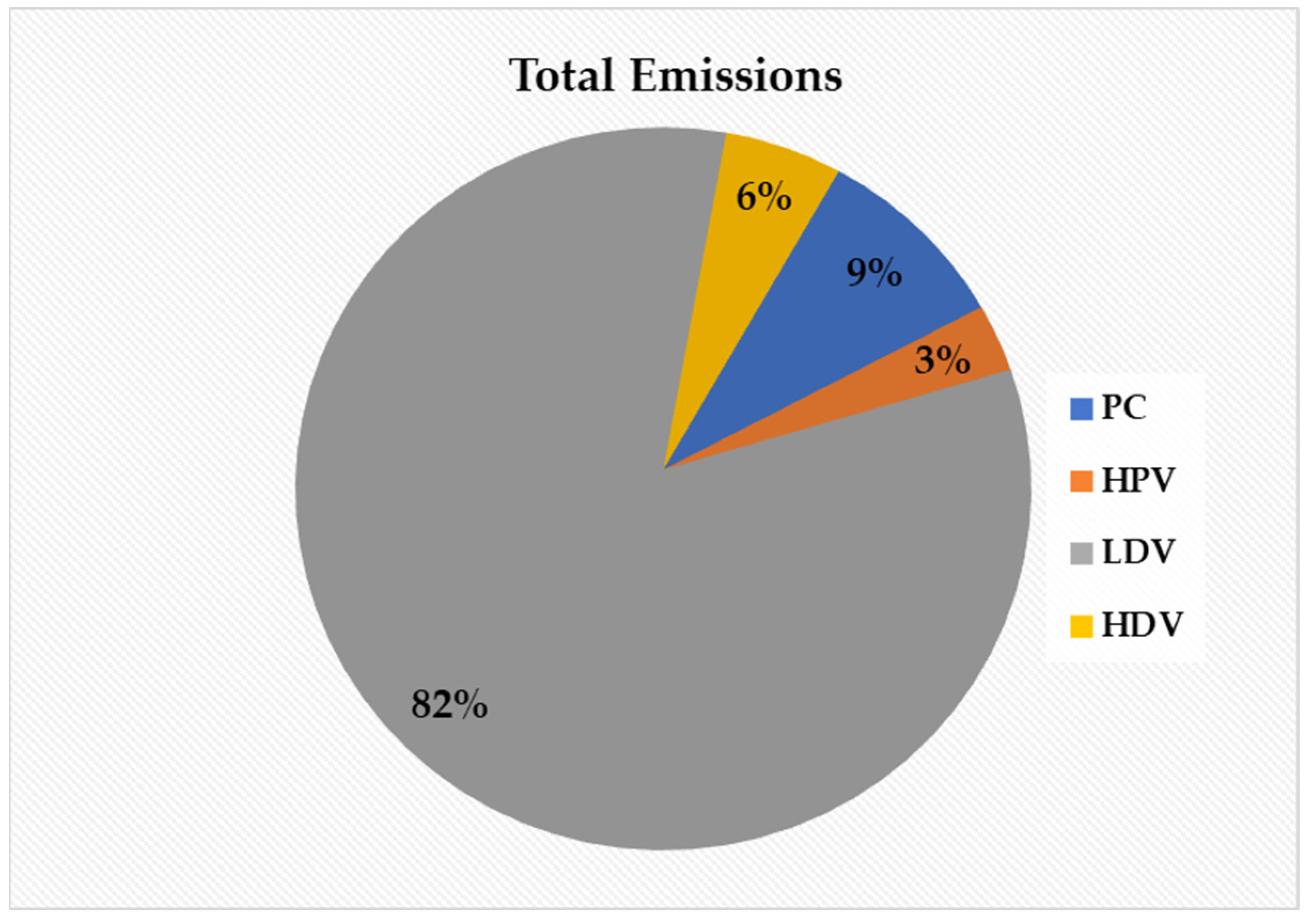
The annual total vehicle emissions of CO, NOx, PM10, PM2.5, and SO2 for 2021 from different vehicle types are approximately 3735.44, 2547.05, 156.11, 146.95, and 62.08 tons, respectively, as shown in Table 4. In addition, the table shows the contribution of each vehicle category and indicates that vehicles mainly emit CO, NOx, PM10 and PM2.5. PM10 and NOx are mainly associated with LDVs, HDVs, and PCs, with a contribution of 92.71 and 91.07% for LDVs, 5.54 and 5.39% for HDVs (in line with previous research [53]), and 1.21 and 2.36% for PCs, respectively. CO emissions are mainly contributed by LDVs and PCs, while LDVs and HDVs contribute more to PM2.5 emissions. In 2021, LDVs contributed the largest share of pollutants (82%), followed by PCs (9%), HDVs (6%), and HPVs (3%) (Figure 9). This indicates that LDVs contribute significantly to the five estimated criteria pollutants in the area, despite having a lower population than PCs, and this contribution is directly related to the estimated VKT in the area.
The baseline emission inventory developed for this study was compared with other South African vehicle emissions inventories to assess its suitability for further study (Table 5). This comparison revealed significant similarities and differences, generally aligning with prior South African studies [20,21,24], though with varying magnitudes. Notably, emissions of SO2, NOx, CO, and PM10 in this study are lower than those in the Scorgie et al. [20] and Thambiran and Diab [21] inventories but more closely align with the second-generation Air Quality Management Plans (AQMPs) of the VTAPA, by DEA [24]. These differences likely occurred from variations in vehicle population (VP), activities, VKT, EFs, technological advancements, emission regulatory standards, and emission control measures over time. Overall, the inventory developed in this research effectively captures criteria air pollutants emissions in Thulamela LM, providing a strong foundation for exploring potential co-benefits associated with the current vehicle fleet, VKT, and activities in this area.
Vehicles significantly contribute to air pollution in the area, and effective mitigation strategies, such as phytoremediation, are crucial. Eco-friendly plants with high APTI levels and API values can contribute to the development of green ecomanagement [71]. Targeted mitigation strategies, such as improving fuel efficiency, implementing emission standards, and promoting alternative fuels and advanced vehicle technologies, are essential for reducing emissions and improving air quality. Integrating these measures and harnessing the benefits of phytoremediation can foster a sustainable balance in the long-term interaction between population and pollution, promoting improved environmental health and sustainable eco-management [72,73,74].

3.6. The Correlation Between SO2, NOx, CO, PM2.5 and PM10 Vehicle Emissions and Gross Domestic Product (GDP) from 2012 to 2021

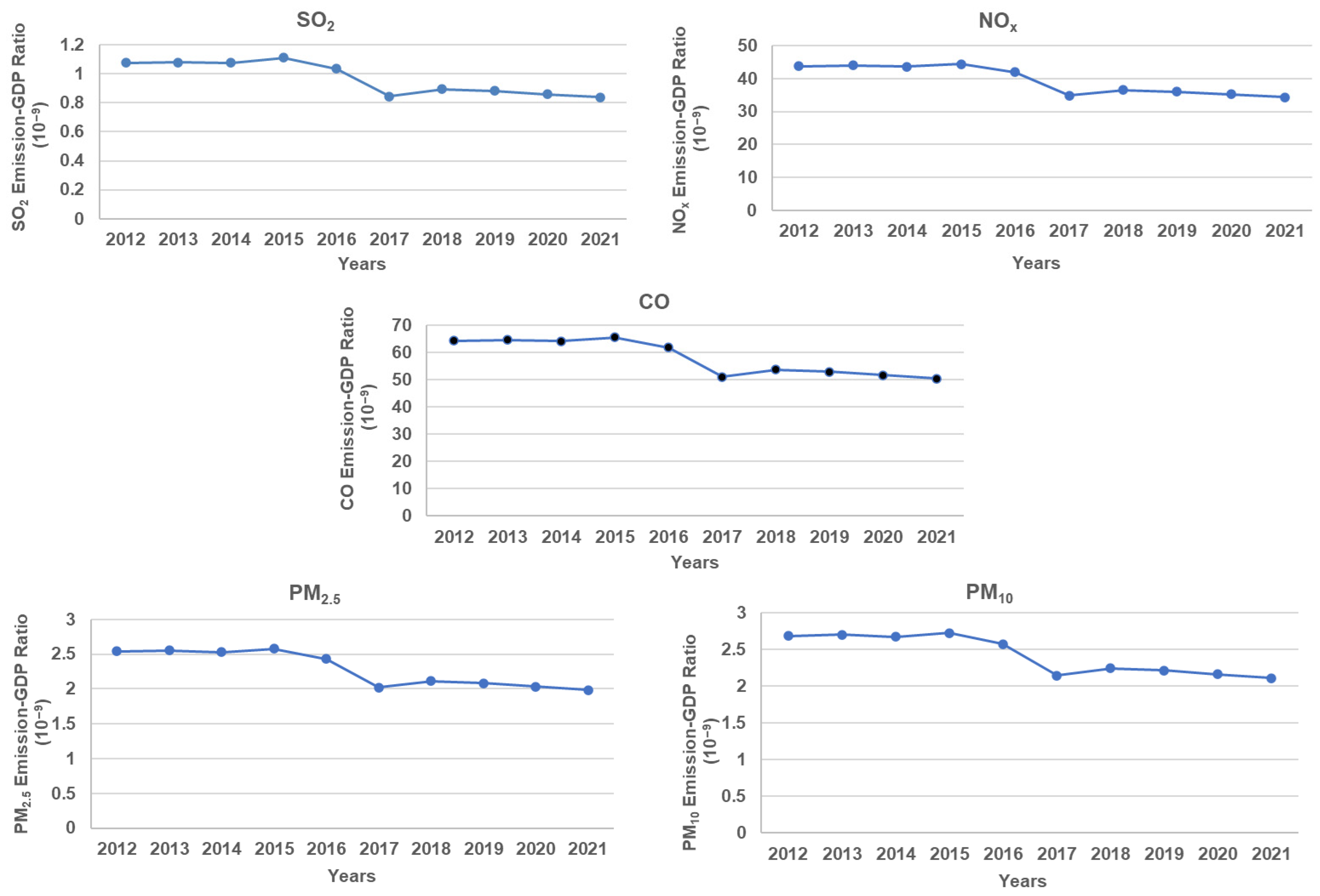
The Compound Annual Growth Rate (CAGR) of 6.69% over the period 2012–2021 in the Thulamela municipality had driven an increase in the vehicle population, which in turn increased emissions. Furthermore, the ratios of SO2, NOx, CO, PM2.5, and PM10 emissions to GDP decreased steadily during the study period, as shown in Figure 10. This trend indicates that pollutant emission intensity relative to economic output changed over time, reflecting variations in vehicle numbers, fleet composition, and economic activity associated with urbanisation and industrialisation in the study area. In addition, Compound Annual Growth Rates (CAGRs) of 3.78%, 3.87%, 3.86%, 3.80%, and 3.88% were observed for SO2, NOx, CO, PM2.5, and PM10 emissions, respectively. To examine the statistical relationship between vehicular emissions and economic growth, Pearson correlation analysis was applied to annual emission estimates and GDP data from 2012 to 2021. Pearson’s correlation coefficient (r) quantified the strength and direction of linear associations between GDP and emissions of SO2, NOx, CO, PM2.5, and PM10. Table 6 shows a strong positive correlation between GDP and vehicular emissions, with most correlation coefficients exceeding 0.85, indicating a strong linear relationship over time. These results suggest that increases in GDP, economic activity, and vehicle numbers are closely associated with higher vehicular emissions, although correlation does not imply causation. Economic growth improves mobility and development; however, it is also associated with increased emissions of pollutants, which pose potential risks to public health and environmental sustainability.

4. Conclusions

This study provides a comprehensive assessment of the influence of vehicular emissions on air quality within Thulamela Municipality. The development of a detailed vehicle emission inventory using a bottom-up approach, spanning 2012 to 2021, represents one of the first long-term municipal-scale evaluations reported in the literature for the study area. The findings quantify emissions of key criteria pollutants and highlight the relative contributions of vehicle categories within the developed vehicular emission inventory. Overall, LDVs, PCs, and HDVs were identified as the principal contributors to SO2, NOx, CO, PM2.5, and PM10 emissions.
Moreover, this research has unveiled intriguing insights into the relationship between vehicle age, fuel efficiency (as measured by distance travelled per litre), and the steady increase in emissions over the years, revealing the complex interplay between vehicle population growth and economic factors. The compound annual growth rate (CAGR) of pollutants from 2012 to 2021 was calculated, indicating a positive relationship between vehicle population and GDP, thereby demonstrating a direct relationship between vehicle emissions and the economy.
These findings underscore the urgency of addressing vehicular emissions as a severe threat to human health and the environment. It is essential to implement mitigation strategies to reduce pollutant levels and improve air quality in Thulamela municipality to effectively combat this issue. Furthermore, future research should build on the vehicular emission inventory developed in this study by integrating extended ambient air quality monitoring datasets and dispersion modelling approaches, such as AERMOD, to strengthen the linkage between emission estimates and observed pollutant concentrations at the municipal scale, subject to improved data availability and compliance with established standards. Additional work exploring the contributions of other anthropogenic pollution sources would further support comprehensive air quality management. In pursuing cleaner air and a healthier environment, the lessons learned from this study must serve as a call to action for policymakers, researchers, and the community. Through collaborative efforts and informed decision-making, we can work towards a future where cleaner air ensures the well-being of humans and the environment.

Author Contributions

Conceptualisation, I.T.E., S.J.P. and J.N.E.; data collection, analysis, and visualisation, I.T.E.; formal analysis, I.T.E. and S.J.P.; resources, S.J.P. and J.N.E.; writing—original draft preparation, I.T.E.; writing—review and editing, I.T.E., S.J.P. and J.N.E.; supervision, S.J.P. and J.N.E.; funding acquisition, S.J.P. and J.N.E. All authors have read and agreed to the published version of the manuscript.

Funding

This research was supported by the National Research Foundation (NRF) through the NRF Postdoctoral Fellowship Award (grant number PSTD240502217020); the Eskom Power Plant Engineering Institute (ESKOM, grant number E349); and the Research and Publications Committee (RPC) of the University of Venda (project number SES/19/ERM/11).

Institutional Review Board Statement

The study was approved by the Research and Ethics Committee of the University of Venda (certificate number SES/19/ERM/20/0511, approved on 6 November 2019).

Informed Consent Statement

Verbal informed consent was obtained from all participants prior to participation. The study involved a minimal-risk, anonymous questionnaire survey, with no collection of personal identifiers or sensitive data. Participation was voluntary, and participants were informed of their right to decline or withdraw at any time without consequence. This consent approach was reviewed and approved by the ethics committee at the Department of Environmental Sciences, University of Venda.

Data Availability Statement

All data supporting the findings of this study are presented in the manuscript, in tables and figures. Further inquiries can be directed to the corresponding author. Vehicle population data were obtained from the National Traffic Information System (NaTIS), South Africa’s official vehicle registration database, available at https://www.natis.gov.za/ (accessed on 17 March 2021).

Use of Artificial Intelligence

Grammarly was used to assist with processes such as grammar correction and language editing during manuscript preparation.

Acknowledgments

The authors sincerely thank all drivers who contributed to this study by providing odometer readings.

Conflicts of Interest

The authors declare no conflicts of interest.

References

  1. Almetwally, A.A.; Bin-Jumah, M.; Allam, A.A. Ambient air pollution and its influence on human health and welfare: An overview. Environ. Sci. Pollut. Res. 2020, 27, 24815–24830. [Google Scholar] [CrossRef]
  2. Kumar, N.; Rafi, S.; Prasad, G.; Tahir, M. Assessing the trend and status of air quality in NCT Delhi. Int. J. Environ. Sci. 2021, 10, 84–94. [Google Scholar]
  3. Phalen, R.F.; Phalen, R.N. Introduction to Air Pollution Science: A Public Health Perspective; Jones & Bartlett Learning LLC: Burlington, MA, USA, 2011. [Google Scholar]
  4. Sharma, N.; Agarwal, A.K.; Eastwood, G.T.; Singh, A.P. Introduction to air pollution and its control. In Air Pollution and Control; Springer: Singapore, 2018; pp. 3–7. [Google Scholar]
  5. Mohd Shafie, S.H.; Mahmud, M. Urban air pollutant from motor vehicle emissions in Kuala Lumpur, Malaysia. Aerosol Air Qual. Res. 2020, 20, 2793–2804. [Google Scholar] [CrossRef]
  6. Dutta, A.; Jinsart, W. Gaseous and particulate matter emissions from road transport: The case of Kolkata, India. Environ. Clim. Technol. 2021, 25, 717–735. [Google Scholar] [CrossRef]
  7. Krzyzanowski, M.; Kuna-Dibbert, B.; Schneider, J. Health Effects of Transport-Related Air Pollution; WHO Regional Office Europe: Copenhagen, Denmark, 2005.
  8. Lang, J.; Cheng, S.; Zhou, Y.; Zhang, Y.; Wang, G. Air pollutant emissions from on-road vehicles in China, 1999–2011. Sci. Total Environ. 2014, 496, 1–10. [Google Scholar] [CrossRef]
  9. Song, X.; Hao, Y. Vehicular Emission Inventory and Reduction Scenario Analysis in the Yangtze River Delta, China. Int. J. Environ. Res. Public Health 2019, 16, 4790. [Google Scholar] [CrossRef]
  10. Reche, C.; Tobias, A.; Viana, M. Vehicular traffic in urban areas: Health burden and influence of sustainable urban planning and mobility. Atmosphere 2022, 13, 598. [Google Scholar] [CrossRef]
  11. Koenig, J.Q. Health Effects of Ambient Air Pollution: How Safe Is the Air We Breathe? Springer Science & Business Media: Boston, MA, USA; Kluwer Academic Publishers: Alphen aan den Rijn, The Netherlands, 2000. [Google Scholar]
  12. Lelieveld, J.; Evans, J.S.; Fnais, M.; Giannadaki, D.; Pozzer, A. The contribution of outdoor air pollution sources to premature mortality on a global scale. Nature 2015, 525, 367–371. [Google Scholar] [CrossRef] [PubMed]
  13. Lelieveld, J.; Pozzer, A.; Poschl, U.; Fnais, M.; Haines, A.; Münzel, T. Loss of life expectancy from air pollution compared to other risk factors: A worldwide perspective. Cardiovasc. Res. 2020, 116, 1910–1917. [Google Scholar] [CrossRef] [PubMed]
  14. Cacciola, R.R.; Sarva, M.; Polosa, R. Adverse respiratory effects and allergic susceptibility in relation to particulate air pollution: Flirting with disaster. Allergy 2002, 57, 281–286. [Google Scholar] [CrossRef] [PubMed]
  15. Sun, S.; Zhao, G.; Wang, T.; Jin, J.; Wang, P.; Lin, Y.; Li, H.; Ying, Q.; Mao, H. Past and future trends of vehicle emissions in Tianjin, China, from 2000 to 2030. Atmos Environ. 2019, 209, 182–191. [Google Scholar] [CrossRef]
  16. Liu, G.; Sun, S.; Zou, C.; Wang, B.; Wu, L.; Mao, H. Air pollutant emissions from on-road vehicles and their control in Inner Mongolia, China. Energy 2022, 238, 121724. [Google Scholar] [CrossRef]
  17. Piketh, S.J.; Swap, R.J.; Maenhaut, W.; Annegarn, H.J.; Formenti, P. Chemical evidence of long-range atmospheric transport over southern Africa. J. Geophys. Res. Atmos. 2002, 107, ACH-7–ACH-13. [Google Scholar] [CrossRef]
  18. Freiman, M.T.; Piketh, S.J. Air transport into and out of the industrial Highveld region of South Africa. J. Appl. Meteorol. 2003, 42, 994–1002. [Google Scholar] [CrossRef]
  19. Wang, K. Long-range transport of the April 2001 dust clouds over the subtropical East Asia and the North Pacific and its impacts on ground-level air pollution: A Lagrangian simulation. J. Geophys. Res. Atmos. 2007, 112. [Google Scholar] [CrossRef]
  20. Scorgie, Y.; Burger, L.W.; Annegarn, H.J. Socio-Economic Impact of Air Pollution Reduction Measures–Task 2: Establishment of Source Inventories, and Task 3: Identification and Prioritisation of Technology Options; Airshed Planning Professionals Pty Ltd. on Behalf of NEDLAC Under the Fund for Research into Industrial Growth and Equity (FRIDGE): Midrand, South Africa, 2003; p. 25. [Google Scholar]
  21. Thambiran, T.; Diab, R.D. Air pollution and climate change co-benefit opportunities in the road transportation sector in Durban, South Africa. Atmos. Environ. 2011, 45, 2683–2689. [Google Scholar] [CrossRef]
  22. Tongwane, M.; Piketh, S.; Stevens, L.; Ramotubei, T. Greenhouse gas emissions from road transport in South Africa and Lesotho between 2000 and 2009. Transp. Res. Part D Transp. Environ. 2015, 37, 1–13. [Google Scholar] [CrossRef]
  23. International Organization of Motor Vehicle Manufacturers (OICA). World Vehicles in Use, All Vehicles. 2016. Available online: https://www.oica.net/wp-content/uploads/Total_in-use-All-Vehicles.pdf (accessed on 16 June 2021).
  24. DEA Department of Environmental Affairs. The Second-Generation Vaal Triangle Airshed Priority Area Air Quality Management Plan: Draft Baseline Assessment Report. 2018. Available online: https://saaqis.environment.gov.za/pagesfiles/vtapa%20second%20generation%20aqmp_draft%20baseline%20assessment%20report_public%20comment.pdf (accessed on 14 October 2019).
  25. Odiyo, J.O.; Bikam, P.B.; Chakwizira, J. Green Economy in the Transport Sector: A Case Study of Limpopo Province, South Africa; Springer Nature, 2022. [Google Scholar] [CrossRef]
  26. Chiloane, K.E. Volatile Organic Compounds (VOC’s) Analysis from Cape Town Haze ll Study. Master’s Thesis, University of the Witwatersrand, Johannesburg, South Africa, 2005. [Google Scholar]
  27. Chiloane, K.E.; Beukes, J.P.; Van Zyl, P.G.; Maritz, P.; Vakkari, V.; Josipovic, M.; Venter, A.D.; Jaars, K.; Tiitta, P.; Kulmala, M.; et al. Spatial, temporal and source contribution assessments of black carbon over the northern interior of South Africa. Atmos. Chem. Phys. 2017, 17, 6177–6196. [Google Scholar] [CrossRef]
  28. Tongwane, M. Transport Sector Greenhouse Gas Inventory for South Africa for the Base Year 2009. Master’s Thesis, University of the Witwatersrand, Johannesburg, South Africa, 2013. [Google Scholar]
  29. Jagarnath, M.; Thambiran, T. Greenhouse gas emissions profiles of neighbourhoods in Durban, South Africa—An initial investigation. Environ. Urban. 2018, 30, 191–214. [Google Scholar] [CrossRef]
  30. EEA. EMEP/EEA Air Pollutant Emission Inventory Guidebook; Publications Office of the European Union: Luxembourg, 2019.
  31. Posada, F. South Africa’s New Passenger Vehicle CO2 Emission Standards; International Council on Clean Transportation: Washington, DC, USA, 2018. [Google Scholar]
  32. Oladunni, O.J.; Mpofu, K.; Olanrewaju, O.A. Greenhouse gas emissions and its driving forces in the transport sector of South Africa. Energy Rep. 2022, 8, 2052–2061. [Google Scholar] [CrossRef]
  33. Scorgie, Y. Urban Air Quality Management and Planning in South Africa; University of Johannesburg: Johannesburg, South Africa, 2012. [Google Scholar]
  34. Naidoo, M.; Naidoo, S.; Garland, R.M. Development of a Model-Ready Emissions Inventory for a Coastal City in South Africa. 2019. Available online: https://www.geiacenter.org/sites/default/files/site/community/geia-conferences/2019/geia_posters_2019/Naido%20poster.pdf (accessed on 22 April 2021).
  35. Edlund, K.K.; Killman, F.; Molnar, P.; Boman, J.; Stockfelt, L.; Wichmann, J. Health risk assessment of PM2.5 and PM2.5-bound trace elements in Thohoyandou, South Africa. Int. J. Environ. Res. Public Health 2021, 18, 1359. [Google Scholar] [CrossRef]
  36. Novela, R.J.; Gitari, W.M.; Chikoore, H.; Molnar, P.; Mudzielwana, R.; Wichmann, J. Chemical characterization of fine particulate matter, source apportionment and long-range transport clusters in Thohoyandou, South Africa. Clean Air J. 2020, 30, 1–12. [Google Scholar] [CrossRef]
  37. Stats SA: Statistics South Africa. Census 2011. 2011. Available online: http://www.statssa.gov.za/?page_id=3955 (accessed on 10 March 2019).
  38. Enitan, I.T.; Odiyo, J.O.; Piketh, S.J.; Edokpayi, J.N. Vehicle Emission Inventory for Thulamela Municipality, Limpopo province, South Africa. In Proceedings of the 2021 Annual Conference of the National Association for Clean Air (NACA), Virtual Conference, South Africa, 6–8 October 2021; pp. 31–36. [Google Scholar]
  39. Gurjar, B.R.; Van Aardenne, J.A.; Lelieveld, J.; Mohan, M. Emission estimates and trends (1990–2000) for megacity Delhi and implications. Atmos Environ. 2004, 38, 5663–5681. [Google Scholar]
  40. Ntziachristos, L.; Samaras, Z. EMEP/EEA—Air Pollutant Emission Inventory Guidebook 2016—Update Jul. 2018; European Environment Agency (EEA): Copenhagen, Denmark, 2018. Available online: https://www.eea.europa.eu/en/analysis/publications/emep-eea-guidebook-2016/part-b-sectoral-guidance-chapters/1-energy/1-a-combustion/1-a-3-b-i (accessed on 2 November 2021).
  41. National Traffic Information System (NaTIS). 2020. Available online: https://www.natis.gov.za/ (accessed on 17 March 2021).
  42. Limanond, T.; Pongthanaisawan, J.; Watthanaklang, D.; Sangphong, O. An Analysis of Vehicle Kilometers of Travel of Major Cities in Thailand; Asian Transportation Research Society: Bangkok, Thailand, 2010. [Google Scholar]
  43. Huo, H.; Zhang, Q.; He, K.; Yao, Z.; Wang, M. Vehicle-use intensity in China: Current status and future trend. Energy Policy 2012, 43, 6–16. [Google Scholar] [CrossRef]
  44. Kumapley, R.K.; Fricker, J.D. Review of methods for estimating vehicle miles traveled. Transp. Res. Rec. 1996, 1551, 59–66. [Google Scholar] [CrossRef]
  45. Hossain, A.; Gargett, D. Road vehicle-kilometres travelled estimated from state/territory fuel sales. In Proceedings of the Australasian Transport Research Forum 2011 Proceedings, Adelaide, Australia, 28–30 September 2011; pp. 28–30. [Google Scholar]
  46. Fukuda, A.; Satiennam, T.; Ito, H.; Imura, D.; Kedsadayurat, S. Study on estimation of VKT and fuel consumption in Khon Kaen City, Thailand. J. East. Asia Soc. Transp. Stud. 2013, 10, 113–130. [Google Scholar]
  47. Jung, S.; Kim, J.; Kim, J.; Hong, D.; Park, D. An estimation of vehicle kilometer traveled and on-road emissions using the traffic volume and travel speed on road links in Incheon City. J. Environ. Sci. 2017, 54, 90–100. [Google Scholar] [CrossRef]
  48. de Azevedo, C.L.; Cardoso, J.L. Estimation of Annual Traffic Volumes—A Model for Portugal. In Proceedings of the ECTRI–FEHRL–FERSI Young Researchers Seminar, Torino, Italy, 3–5 June 2009; pp. 1–15. [Google Scholar]
  49. Shabadin, A.; Johari, N.M.; Jamil, H.M. Car annual vehicle kilometer travelled estimated from car manufacturer data—An improved method. Pertanika 2014, 25, 171–180. [Google Scholar]
  50. Ramirez, J.; Pachon, J.E.; Casas, O.M.; Gonzalez, S.F. A new database of on-road vehicle emission factors for Colombia: A case study of Bogota. CTF-Cienc. Tecnol. Futuro 2019, 9, 73–82. [Google Scholar]
  51. Zhao, D.; Chen, H.; Shao, H.; Sun, X. Vehicle Emission Factors for Particulate and Gaseous Pollutants in an Urban Tunnel in Xi’an, China. J. Chem. 2018, 2018, 8964852. [Google Scholar] [CrossRef]
  52. Progiou, A.G.; Ziomas, I.C. Road traffic emissions impact on air quality of the Greater Athens Area based on a 20 year emissions inventory. Sci. Total Environ. 2011, 410–411, 1–7. [Google Scholar] [CrossRef]
  53. Lv, W.; Hu, Y.; Li, E.; Liu, H.; Pan, H.; Ji, S.; Hayat, T.; Alsaedi, A.; Ahmad, B. Evaluation of vehicle emission in Yunnan province from 2003 to 2015. J. Clean. Prod. 2019, 207, 814–825. [Google Scholar] [CrossRef]
  54. Kumar, A.; Tripathi, S. Study of vehicular pollution and its mitigation measures. In Proceedings of the 3rd KIIT International Symposium on Advances in Automotive Technology, KIIT University, Bhubaneswar, Odisha, India, December 2014; Available online: https://www.researchgate.net/publication/272828957_Study_of_Vehicular_Pollution_and_its_Mitigation_Measures (accessed on 4 November 2025).
  55. Limanond, T.; Pongthanaisawan, J.; Watthanaklang, D.; Sangphong, O. An Analysis of Vehicle Kilometers of Travel of Major Cities in Thailand; ATRANS Final Report 2009; Asian Transportation Research Society: Bangkok, Thailand, 2009. [Google Scholar]
  56. Kenworthy, J.R.; Laube, F.B. Automobile dependence in cities: An international comparison of urban transport and land use patterns with implications for sustainability. Environ. Impact Assess. Rev. 1996, 16, 279–308. [Google Scholar] [CrossRef]
  57. Stead, D. Relationships between transport emissions and travel patterns in Britain. Transp. Policy 1999, 6, 247–258. [Google Scholar] [CrossRef]
  58. Munyon, V.V.; Bowen, W.M.; Holcombe, J. Vehicle fuel economy and vehicle miles traveled: An empirical investigation of Jevon’s Paradox. Energy Res. Soc. Sci. 2018, 38, 19–27. [Google Scholar] [CrossRef]
  59. Singh, R.; Sharma, C.; Agrawal, M. Emission inventory of trace gases from road transport in India. Transp. Res. Part D Transp. Environ. 2017, 52, 64–72. [Google Scholar] [CrossRef]
  60. Cai, H.; Xie, S.D. Estimation of vehicular emission inventories in China from 1980 to 2005. Atmos. Environ. 2007, 41, 8963–8979. [Google Scholar] [CrossRef]
  61. Lu, H.; Ma, H.; Sun, Z.; Wang, J. Analysis and prediction on vehicle ownership based on an improved Stochastic Gompertz diffusion Process. J. Adv. Transp. 2017, 2017, 4013875. [Google Scholar] [CrossRef]
  62. Vhembe District Municipality 2019/20 IDP REVIEW. Available online: https://www.vhembe.gov.za/wpfd_file/vhembe-district-municipality-idp-2019-l-2020-review/ (accessed on 13 October 2020).
  63. Nemaxwi, T.P. The Impact of Change Management on Service Delivery at Thulamela Local Municipality. Master’s Thesis, University of Johannesburg, Johannesburg, South Africa, 2019. [Google Scholar]
  64. Thiba, M.C. Evaluating the Criteria for Allocation of Development Projects in the Context of Spatial Development Frameworks in Thulamela Local Municipality. Master’s Thesis, University of Venda, Thohoyandou, South Africa, 2019. [Google Scholar]
  65. Netswera, M.M. Implications of municipal boundary determination on social integration of diverse communities in South Africa. Afr. J. Gov. Dev. 2023, 12, 43–61. [Google Scholar]
  66. Cai, H.; Xie, S. Temporal and spatial variation in recent vehicular emission inventories in China based on dynamic emission factors. J. Air Waste Manag. Assoc. 2013, 63, 310–326. [Google Scholar] [CrossRef] [PubMed]
  67. Darcın, M. How air pollution affects subjective well-being. In Well-Being and Quality of Life: Medical Perspective; IntechOpen: London, UK, 2017; Volume 211. [Google Scholar]
  68. Hajirasouliha, F.; Zabiegaj, D. Effect of Environmental Emissions on the Respiratory System: Secrets and Consequences. In Environmental Emissions; IntechOpen: London, UK, 2020; Volume 3. [Google Scholar] [CrossRef]
  69. Ko, U.W.; Kyung, S.Y. Adverse Effects of Air Pollution on Pulmonary Diseases. Tuberc. Respir. Dis. 2022, 85, 313–319. [Google Scholar] [CrossRef] [PubMed]
  70. Sahu, S.K.; Beig, G.; Parkhi, N.S. Emissions inventory of anthropogenic PM2.5 and PM10 in Delhi during Commonwealth Games 2010. Atmos. Environ. 2011, 45, 6180–6190. [Google Scholar] [CrossRef]
  71. Enitan, I.T.; Durowoju, O.S.; Edokpayi, J.N.; Odiyo, J.O. A review of air pollution mitigation approach using air pollution tolerance index (APTI) and anticipated performance index (API). Atmosphere 2022, 13, 374. [Google Scholar] [CrossRef]
  72. Enitan, I.T.; Edokpayi, J.N.; Odiyo, J.O.; Enitan, A.M. Reduction of Vehicular Pollutants Using Phytoremediation Method: A Review. In Proceedings of the First International Conference in Sustainable Management of Natural Resources (ICSMNR), Polokwane, South Africa, 15–17 October 2018; p. 247. [Google Scholar]
  73. Lee, B.X.Y.; Hadibarata, T.; Yuniarto, A. Phytoremediation mechanisms in air pollution control: A Review. Water Air Soil Pollut. 2020, 231, 437. [Google Scholar] [CrossRef]
  74. Guo, K.; Yan, L.; He, Y.; Li, H.; Lam, S.S.; Peng, W.; Sonne, C. Phytoremediation as a potential technique for vehicle hazardous pollutants around highways. Environ. Pollut. 2023, 322, 121130. [Google Scholar] [CrossRef]
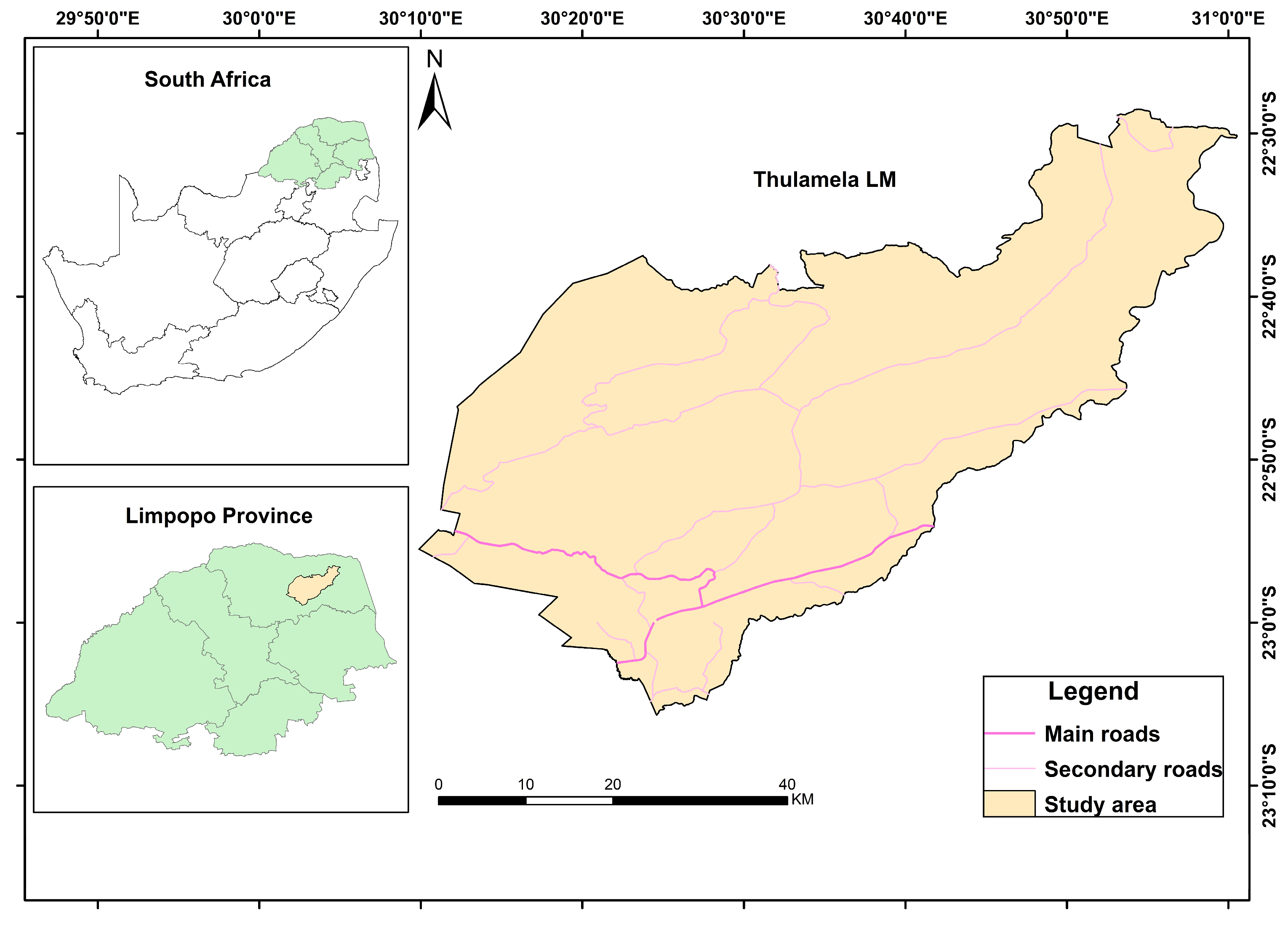
Figure 1. Study area map of Thulamela Municipality.
Air 04 00007 g001
Figure 2. Number of Vehicles by Category in Thulamela Municipality, from 2012 to 2021 (Source: [41]). Estimates are subject to uncertainty due to registration data, fleet composition changes, and data extrapolation; results indicate trends rather than exact counts.
Air 04 00007 g002
Figure 3. Variation in average fuel efficiency (km/l) as a function of vehicle age and vehicle type. Average values reflect variability in vehicle usage, maintenance condition, and driving patterns within each age group.
Air 04 00007 g003
Figure 4. Linear regressions between average distance travelled and vehicle age.
Air 04 00007 g004
Figure 5. Total (A) gaseous emissions and (B) particulate matter emissions estimated for all vehicles from 2012 to 2021. Separate visual styles were used due to significant differences in emission magnitudes among vehicle types.
Air 04 00007 g005
Figure 6. Total emission trend by each vehicle type in the study area.
Air 04 00007 g006
Figure 7. Contribution of vehicle type to emissions of SO2, NOx, and CO from 2012 to 2021.
Air 04 00007 g007
Figure 8. Contribution of each vehicle type to PM2.5 and PM10 emissions from 2012 to 2021.
Air 04 00007 g008
Figure 9. Source contributions to 2021 total emissions by vehicle types for the study area.
Air 04 00007 g009
Figure 10. Trend ratio of SO2, NOx, CO, PM2.5, and PM10 emissions to GDP during the study period (2012–2021).
Air 04 00007 g010
Table 1. Classification of vehicle types in the study area.
Vehicle TypeClassificationIllustration
Private carsPassenger Cars (PCs)Air 04 00007 i001
Taxis or Quantum, BusesHeavy passenger vehicles (HPVs)Air 04 00007 i002
BakkiesLight-duty vehicles (LDVs)Air 04 00007 i003
TrucksHeavy-duty vehicles (HDVs)Air 04 00007 i004
Table 2. Emission factors (g/km) used in this study have been derived from the literature for SO2, NOX, CO, PM2.5, and PM10.
Vehicle TypePollutants (g/km)
SO2 (a)NOX (a)CO (a)PM2.5PM10 (a)
Passenger cars (PCs)0.0620.1491.2650.004 (b)0.005
Heavy passenger vehicles (HPVs)0.0840.2491.3360.038 (b)0.006
Light-duty vehicles (LDVs)0.0191.7472.1520.100 (a)0.109
Heavy-duty vehicles (HDVs)0.0181.4612.1940.085 (a)0.092
Sources: (a: [50]; b: [51]).
Table 3. Mean VKT by different vehicle types in the study area.
Average Daily VKT (105 km)
YearPCHPVLDVHDV
20127.212.9325.432.30
20137.963.0727.782.46
20148.623.2929.462.67
20159.553.6832.122.88
20169.763.5132.992.79
20178.572.8429.562.15
20189.953.1532.922.52
201910.313.2734.262.56
202010.693.2835.322.57
202111.073.3036.382.57
Table 4. Emissions (tons/year) of each vehicle type for 2021 and the percentage contribution of each vehicle category to the total emissions.
Vehicle TypesSO2NOxCOPM2.5PM10
PC25.0560.20511.121.622.02
%40.352.3613.681.101.29
HPV10.1129.98160.854.580.72
%16.291.184.313.110.46
LDV25.232319.632857.38132.78144.73
%40.6491.0776.4990.3692.71
HDV1.69137.24206.097.988.64
%2.725.395.525.435.54
Total62.082547.053735.44146.95156.11
Table 5. Comparison of the 2021 Vehicle Emission Inventory (tons/year) compiled for this study with other inventories in South Africa.
Pollutant[20][21][24]This Study
SO2 192125162.08
NOx62,45672,46582992547.05
CO161,791222,66296353735.44
PM1022862496245156.11
Table 6. Pearson correlation coefficients (r) showing the relationship between vehicular emissions (SO2, NOx, CO, PM2.5, and PM10) and Gross Domestic Product (GDP) for the period 2012–2021.
VariablesGDP (R Billions)SO2NOxCOPM2.5PM10
GDP (R Billions)1
SO20.851
NOx0.890.991
CO0.880.991.001
PM2.5 0.880.991.001.001
PM100.890.991.001.001.001
Disclaimer/Publisher’s Note: The statements, opinions and data contained in all publications are solely those of the individual author(s) and contributor(s) and not of MDPI and/or the editor(s). MDPI and/or the editor(s) disclaim responsibility for any injury to people or property resulting from any ideas, methods, instructions or products referred to in the content.