
Article

Urban Air Pollution and Cardiovascular Health: A Study of PM2.5 and CVD Morbidity in a Metropolitan City, Karachi (Pakistan)

by
Omosehin D. Moyebi
1,2,*,
Azhar Siddique
3,
Mirza M. Hussain
1,4,
David O. Carpenter
5 and
Haider A. Khwaja
1,4,*
1
Department of Environmental Health Sciences, College of Integrated Health Sciences, University at Albany, 1 University Place, Rensselaer, NY 12114, USA
2
Nursing Program, School of Science, Navajo Technical University, Crownpoint, NM 87313, USA
3
Qatar Environment and Energy Institute, Hamad Bin Khalifa University, Doha 34110, Qatar
4
Biggs Laboratory, Wadsworth Center, New York State Department of Health, Empire State Plaza, Albany, NY 12237, USA
5
Institute for Health and the Environment, University at Albany, 5 University Place, Rensselaer, NY 12114, USA
*
Authors to whom correspondence should be addressed.
Submission received: 29 December 2025 / Revised: 17 February 2026 / Accepted: 26 February 2026 / Published: 28 February 2026
(This article belongs to the Special Issue Air Pollution Exposure and Its Impact on Human Health)

Highlights

  • Megacity Karachi, Pakistan, recorded severely elevated air pollution levels that were unhealthy for public health.
  • PM2.5 exposure was significantly correlated with cardiovascular diseases (CVD).
  • Risk of PM2.5 exposure is stronger among males and people aged 40 and older.
  • PM2.5 and CVD exposure–response curve for HAs and ER visits is positive with a non-linear relationship.
  • More research from South Asia with poor air quality is needed.

Abstract

Ambient air pollution, particularly fine particulate matter (PM2.5), poses significant health risks, especially concerning cardiovascular diseases (CVDs). This study assesses the association between PM2.5 exposure and CVD hospital admissions (HAs) and emergency room (ER) visits in Karachi, Pakistan. Daily PM2.5 samples were collected from four Karachi sites (Makro, Karachi University, Keamari, and Malir) between October 2009 and June 2011. CVD morbidity data, including HAs and ER visits, were gathered from major hospitals. A single-pollutant model was employed to evaluate associations between PM2.5 levels and CVD outcomes, adjusting for meteorological variables and other potential confounders. PM2.5 concentrations and CVD morbidity were significantly associated across all sites Stratification by age and gender revealed stronger associations among males and individuals aged 40 and above. Exposure to elevated levels of PM2.5 in Karachi was significantly associated with increased CVD HAs and ER visits, with the highest association found between PM2.5 exposure and arrhythmias. The study underscores the need for effective air quality management policies and interventions to reduce PM2.5 levels. Karachi’s high PM2.5 levels demand urgent attention from regulatory agencies and public health professionals to implement interventions that mitigate air pollution and protect vulnerable populations.

1. Introduction

Atmospheric particulate matter (PM) is a complex mixture of particles (solid and liquid droplets). PM is chemically composed of inorganic and organic compounds such as organic carbon (OC), metals, elemental carbon (EC), black carbon (BC), volatile organic compounds (VOCs), and polycyclic aromatic hydrocarbons (PAHs) suspended in the air [1,2,3]. PM can be characterized by size fractions, which include coarse particles (PM10), fine particles (PM2.5), and ultrafine particles (UFP). An essential determining factor of particle deposition in the respiratory airways, the source of the matter, and chemical composition is the particle size [4]. The degree of harmful effects of particulate air pollution depends on its size (diameter), amount, and composition. PM2.5 is of great concern and an important urban atmospheric pollutant that has attracted enormous attention because of its adverse health effects on the population and damaging impacts on the natural environment [5,6,7,8]. The complexity of particulate matter makes the health effects more severe, with a broad spectrum of diseases, daily morbidity, and mortality. Exposure to particulates aggravates health issues and results in more hospital admissions (HAs) and emergency room visits (ER), especially in children, pregnant women, and the elderly [9,10,11].
Extensive research has documented the relationship between particulate air pollution and health effects, particularly cardiovascular and respiratory diseases [12,13,14,15,16,17]. The mechanisms by which particulate exposure impacts human health include generating reactive oxygen species, systemic oxidative stress, cardiac autonomic response, and atherosclerosis and thrombosis due to inflammatory responses [4,18]. Cardiovascular diseases (CVDs) linked to particulates include ischemic heart disease, myocardial infarction, cerebrovascular and peripheral vascular diseases, high blood pressure, cardiac failure, stroke, and arrhythmias. Pulmonary diseases include decreased lung function, bronchitis, asthma, pneumonia, chronic obstructive pulmonary disease (COPD), and lung cancer [19,20,21].
Studies indicate that even short-term exposure to PM2.5 significantly increases HA and ER visits for cardiovascular and respiratory effects [22,23]. Increased daily HAs from particulate exposure are positively associated with respiratory diseases among children aged five years and younger [24]. Epidemiological studies have shown that PM2.5 exposure adversely affects the cardiopulmonary systems, contributes to cancer development, and may lead to premature death [7,13,14,22,25,26,27]. There is strong evidence that ambient air pollution increases ER visits and HAs and is associated with cardiopulmonary, neurologic, and circulatory diseases [28]. Data shows a strong link between air pollution exposure and CVDs, including ischemic heart disease and stroke [29]. Pope et al. [30] found an association between acute ischemic heart disease and short-term exposure to ambient PM2.5. Other reported health effects of PM2.5 exposure include mental disorders, perinatal disorders, endothelial dysfunction [31], and increased risk of Parkinson’s disease, dementia, and Alzheimer’s disease [32]. Pope et al. [33] found elevated levels of circulating inflammatory markers due to PM2.5 exposure. Ain and Qamar [34] identified a link between prenatal air pollution exposure and later-life cardiovascular events.
The impact of air pollution is significant in developing countries, mainly in urban centers. PM2.5-related premature deaths in South and Southeast Asia were estimated at 1,447,000 annually, with increases from 1,179,400 to 1,724,900 between 1999 and 2014. Ischemic heart disease and stroke accounted for 35% and 39% of these deaths, respectively [35]. In China, it is estimated that 350,000 to 500,000 premature deaths are recorded annually due to ambient air pollution [36], and air pollution causes 14.3% of total deaths in Isfahan, Iran [7]. Anjum et al. [37] reported that air pollution costs the world about 8 billion dollars daily, equivalent to 7% of China’s 2015 GDP. Ambient air pollution in developed countries also significantly impacts public health [22]. Poor infrastructure, intensive energy consumption, and increased rural-urban migration exacerbate poor air quality effects in developing countries [38,39,40]. Given the scientific evidence, the cardiovascular health of Karachi residents is at risk due to PM2.5 exposure. Therefore, this study assesses the association between daily PM2.5 exposure and CVD morbidity.

2. Materials and Methods

2.1. Sampling Sites and PM2.5 Sample Collection

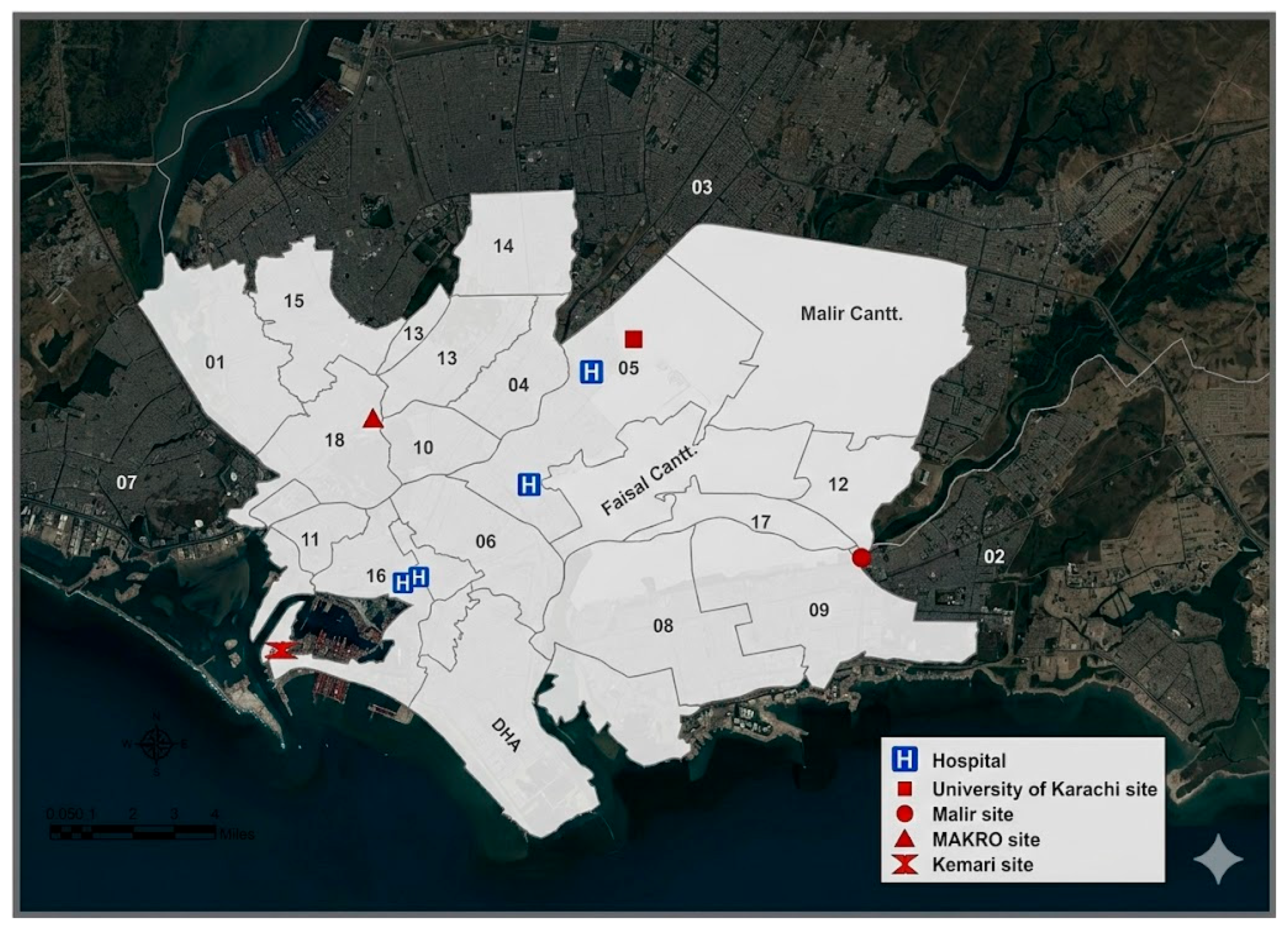
Daily PM2.5 samples were collected using a low-volume air sampler at four fixed sites/towns of Karachi over four seasons from October 2009 to June 2011. Karachi is a megacity with a population of more than 24 million in Pakistan, with 18 towns (Figure 1). It is the most populated, industrialized, affluent, and urbanized city in Pakistan, situated in the Southeast area of Pakistan on the Arabian Sea (Lat. 24°51′ N; Long. 67°02′ E) [22,41]. The sampling sites were chosen considering resources, representation of residential, commercial, and industrial demographics, safety, security, accessibility, and power arrangements due to frequent power disruptions in Karachi. From October 2009 to August 2010, sampling was conducted at Karachi University (KU) (commercial/residential) and Makro (industrial/residential). From November 2010 to June 2011, sampling was conducted at Keamari and Malir. Keamari, a commercial/seaport area, is predominantly inhabited by residents of low socioeconomic status, with fishing as the primary occupation, while Malir is a residential area with no substantial industrial activity.
The low-volume PM2.5 sampler comprised a housing, an uninterruptible power supply (UPS) backup, a steady power supply source, a 5.27 cm inner diameter rubber stopper, gooseneck, a 47 mm filter holder, a mass flow meter, an air volume totalizer, a data logger, a pump with a flow controller, an aluminum cyclone separator (Model URG-2000-30 EH; URG Corporation, Chapel Hill, NC, USA) with a cut-size of 2.5 μm, and an elapsed time indicator. The flow rate during operation was 16.67 ± 0.84 L/min, optimal for sampling the PM2.5 size range [10,22,41].
Pre-weighed 47 mm 2.0 μm polytetrafluoroethylene (PTFE) membrane filters (Whatman Inc., Florham Park, NJ, USA) with polypropylene support rings were used. Filters were conditioned under controlled relative humidity (20–30%) and temperature (20–23 °C) to mitigate contamination. Filters were checked for defects (pinholes, loose material, non-uniformity, discoloration) before and after sampling. A microbalance (ATI CAHN, Model C-44, Mettler Toledo Inc., Hightstown, NJ, USA) weighed the filters. Filters were passed through a magnetic field (BF2 Duo-stat Positioner/static-master, Model 2U500 NRD, LLC, Grand Island, NY, USA) 5–10 times to remove the electrostatic force. PM2.5 mass concentration was determined by the difference in filter weight before and after sampling, and concentration was calculated by incorporating the total sampled air volume.
For each sampling day, the sample filter was retrieved from the sampler, placed in a labeled clean polypropylene analyslide Petri dish, and refrigerated at 4 °C. The Petri dishes containing PM2.5 filters were then shipped to the Wadsworth Center, Laboratory of Inorganic and Nuclear Chemistry, New York State Department of Health (NYSDOH), NY, USA, for analysis. The filters were analyzed for PM2.5 mass concentrations.
Detailed PM2.5 sample collection and data acquisition, as well as the quality assurance (QA) and quality control (/QC), followed the methods described in [10,22,41,42,43]. Before shipment to the field, PM2.5 filters were inspected, conditioned for 24 h in a controlled environment, pre-weighed, and then shipped. After sampling, filters were re-inspected, conditioned, and post-weighed. Field blank filters were used as QC measures to monitor contamination. The laboratory maintained strict humidity and temperature controls to minimize contamination. The QA/QC was maintained throughout, following the standard operating procedure (SOP) for the sampling and weighing of PM2.5. PM2.5 samplers were positioned to ensure free airflow, with inlets set at 3–5 m above ground and 2–10 m from roadways to capture representative pollutant concentrations.

2.2. CVD Data Collection and Statistical Analysis

Hospital data (emergency room (ER) visits and hospital admissions (HAs)) were collected from the major hospitals in Karachi in each season during the study period between October 2009 and June 2011. Daily morbidity data of patients admitted to the hospital or visiting the ER for cardiovascular diseases (CVDs) were collected from Aga Khan University Hospital (AKUH), National Institute of Cardiovascular Diseases (NICVD), and Karachi Institute of Heart Diseases (KIHD). CVD data include patients visiting the hospital/ER for arrhythmias, hypertension (HTN), ischemic heart disease (IHD), myocardial infarction (MI), congestive heart failure (CHF), cardiomyopathy, conduction disorder, valve diseases, pulmonary artery hypertension, acute pericarditis/pericardial disease, and pericardial effusion. NICVD and KIHD are both public hospitals, while AKUH is privately owned. NICVD is one of the largest cardiac hospitals in the world and the largest in Pakistan, and the services are provided at no cost to the patients. Daily morbidity data due to CVDs and covariates were retrieved from the hospital information management system at the AKUH, while data collection at the NICVD and KIHD was carried out by trained data collectors and duty doctors. The data collectors are trained team physicians who follow the protocol developed to collect patients’ hospital data. A trained physician team reviewed and coded the collected hospital data according to the International Classification of Diseases, Ninth Revision (ICD-9 codes) for CVDs. Patient’s demographic information (age and gender), HAs and ER visits dates, primary diagnosis, and town of residence codes were collected from the hospital’s medical records. No prior medical history of patients was collected before hospital visits or after. The Institutional Review Board (IRB) approvals were obtained from the University at Albany, New York State Department of Health, and the Ethical Review Committees of the three tertiary hospitals that participated in this study (AKUH, NICVD, and KIHD).
A time-series analysis was performed to estimate the relative risks (RRs) associated with short-term exposure to daily air pollution and morbidity due to CVDs in Karachi. The risk in this study was estimated relative to the concentrations of daily PM2.5 measured at each site. Daily changes in air pollution concentration concerning CVD have been generally studied by time-series analysis, especially when examining the acute effects of ambient air pollution over a short period [10,44]. A generalized linear model (GLM) with negative binomial regression in SAS 9.4 estimated daily counts of ER visits, HAs, and PM2.5 concentrations. Model fit was assessed using deviance and Pearson’s chi-square. Over-dispersion informed the model choice. Single-lag effects (lags 0–5) were evaluated. The model was adjusted for meteorological parameters (daily average temperature, relative humidity, and wind speed), day of the week, and public holidays. Meteorological data for each day of PM2.5 sampling were obtained from the Weather Underground through the Karachi Airport weather station “http://www.wunderground.com/history/ (accessed on 18 March 2019)”. Time-series analysis was stratified by town codes, where patients were assigned PM2.5 levels measured at the site adjacent to their town of residence, age, gender, and season.
PM2.5 exposure was assigned based on patient residential town codes and the corresponding active monitoring site during each sampling year. During the second year of data collection, PM2.5 concentrations measured at the Makro and KU sites were assigned to participants residing in town codes 01, 06, 07, 10, 11, 13, 15, 16, and 18 (Figure 1). During the third year, PM2.5 concentrations measured at the Keamari and Malir sites were assigned to participants residing in town codes 02, 05, 08, 09, 12, and 17. For the age groups, three categories were selected: <40, 40–60, and >60 years of age. Stratified analysis by town codes, age, gender, and season estimated RRs at 95% confidence intervals with p-value < 0.05 for total CVD and subtypes (arrhythmias, CHF, HTN, IHD, and MI). ER visits and HAs data were combined due to inadequate sample size for statistical analysis. High correlations between different covariates observed from bivariate analyses led to modeling health effects associated with exposure to individual air pollutants separately in single-pollutant and single-lag models to avoid collinearity errors. A single-pollutant time-series model with a single-lag structure was specified as follows [10]:
ln(Yt) = β0 + β1 (Lag x Pi) + β2 (Day of the week) + β3 (Temperature) + β4 (Relative humidity) + β5 (Public holidays)
where
Yt = number of CVD cases on day “t”, β0 = intercept, Lag x = lag time, i.e., (lag 0–lag 5), Pi = PM2.5

3. Results

3.1. PM2.5 Concentration Levels

Table 1 summarizes the average seasonal and annual concentrations of PM2.5 at the Makro, KU, Keamari, and Malir sites. PM2.5 concentrations were high at Keamari with an annual average concentration of 140 ± 179 µg/m3 and daily concentrations ranging from 6.31 to 1723 µg/m3, followed by Makro with a 114 ± 115 µg/m3 annual average concentration and daily concentrations ranging from 8.40 to 1206 µg/m3. The annual PM2.5 average concentrations at the KU and Malir sites were 71.7 ± 56.4 µg/m3 and 95.0 ± 40.9 µg/m3, respectively. The concentrations ranged from 22.0 to 475 µg/m3 (KU) and 6.49 to 224 µg/m3 (Malir).

3.2. Distribution of CVD Data by HAs and ER Visits

The CVD counts with demographic information of the patients from AKUH, NICVD, and KIHD at the Makro and KU sites during the second year are presented in Table 2. A total of 43,424 hospital cases (HAs and ER visits) for heart-related ailments were recorded in towns near Makro (19,427 (44.7%)) and KU (23,997 (55.3%)). CVD cases were 16,333 (84.1%) in the ER visits and 3094 (15.9%) for the HAs at the Makro site, while 20,935 (87.2%) visited the ER, and 3062 (12.8%) cases were recorded for the HAs at the KU site. The proportions of males were slightly higher than females in the HAs, while a higher percentage of females were observed in the ER visits at both the Makro and KU sites. The highest proportion of the CVD cases were reported in the age category 40 to 60, which accounted for more than 56% of the HA and ER cases at the Makro and KU sites. CVD categories show a similar proportion in the breakdown of cases at the Makro and KU sites. High proportions of cases were reported for HTN and IHD in the ER visits and HAs.
The distributions of CVD counts with demographic information of the patients from AKUH, NICVD, and KIHD in the third year of the study at the Keamari and Malir sites are summarized in Table 3. A total of 28,101 people visited the hospital (HAs and ER visits) for heart-related diseases. The total CVD cases recorded at Keamari were 9744 (34.7%), while 18,357 (65.3%) cases were reported at the Malir site. At the Keamari site, 8052 (82.6%) and 1692 (17.4%) CVD cases were recorded in the ER visits and HAs, while 15,172 (82.6%) visited the ER and 3185 (17.4%) cases were reported for the HAs at the Malir site. Among males, CVD cases were higher than those of female patients in the HAs, while a slightly higher percentage was observed in females in the ER visits at both the Keamari and Malir sites. CVD cases were reportedly high in the age category 40 to 60, which accounted for about 60% of the cases of HAs and ER visits at the Keamari and Malir sites. The CVD categories show a similar percentage in the breakdown of cases at the Keamari and Malir sites, with IHD and HTN having the highest number of cases.

3.3. Relative Risk (RR) Estimates of CVD Morbidity Associated with PM2.5

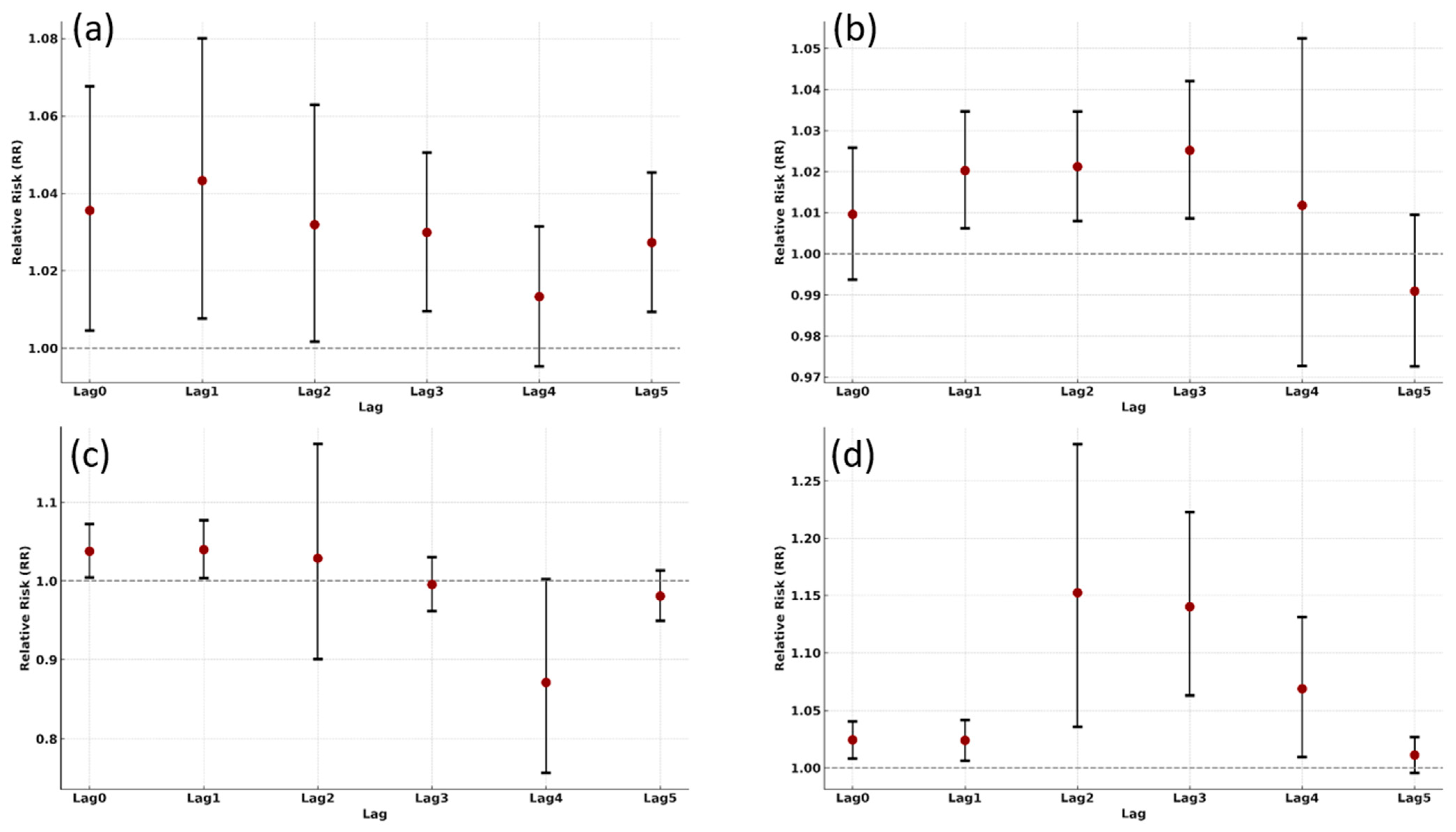
The RR of association between total CVD and PM2.5 at the Makro and KU sites by lag days at 95% CI in a single-pollutant model is presented in Figure 2a,b. An increased risk of total CVD association was statistically significant with daily levels of PM2.5 at lag 0, 1, 2, 3, and 5 with RR = 1.0356 (1.0046–1.0677), RR = 1.0433 (1.0077–1.0801), RR = 1.0319 (1.0017–1.0629), RR = 1.0299 (1.0096–1.0506), and RR = 1.0273 (1.0094–1.0454), respectively at the Makro site. At the KU site, PM2.5 exposure was significantly associated with total CVD at lag 1, 2, and 3 with RR = 1.0203 (1.0062–1.0347), RR = 1.0212 (1.0080–1.0346), and RR = 1.0252 (1.0086–1.0421), respectively. Table S1 depicts the RR estimates of the association between PM2.5 and different CVD diagnoses. PM2.5 exposure was significantly associated with IHD at lag 0, 1, 2, 5, and lag 0, 1, and 3 at the Makro and KU sites, respectively. MI and arrhythmias at the KU site were positively associated with PM2.5 at lags 3 and 5, and lag 1, 2, 3, and 5, respectively. PM2.5 also exhibited a significant increased risk of association with CHF at lags 0 and 5, and with arrhythmias at lags 2 and 5 at the Makro site. The largest RR of association was found between PM2.5 and arrhythmias at lag 2 at the KU site (RR = 1.1314, 1.0825–1.1826).
Figure 2c,d depicts the RR of association between total CVD and PM2.5 by lag days at 95% CI in a single-pollutant model at the Keamari and Malir sites. Stronger positive associations were observed at the Malir than the Keamari site. The increased risk of total CVD association was statistically significant with daily levels of PM2.5 at lags 0 and 1, with RR = 1.0377 (1.0043–1.0722) and RR = 1.0395 (1.0077–1.0801), respectively, at the Keamari site. At the Malir site, PM2.5 exposure was significantly associated with total CVD at lag 0, 1, 2, 3, and 4 with RR = 1.0244 (1.0083–1.0407), RR = 1.0240 (1.0064–1.0420), RR = 1.1525 (1.0357–1.2824), RR = 1.1402 (1.0629–1.2231), and RR = 1.0687 (1.0095–1.1313), respectively. The largest RR of association between PM2.5 and total CVD was found at lag 2 (RR = 1.1525, 1.0357–1.2824) at the Malir site.
The RR estimates of the association between PM2.5 and different CVD diagnoses are shown in Table S2. PM2.5 exposure was significantly associated with IHD at lag 0, 1, and 2 at the Malir site, while MI and CHF were observed to be significantly associated with PM2.5 at lag 0, 1, 2, 3, and 4, and at lags 0 and 1, respectively. PM2.5 also exhibited a significantly increased risk of association with arrhythmias at lags 3 and 4, with the largest increase in RR = 1.2295 (1.0795, 1.4008) at the Malir site. Exposure to PM2.5 and HTN was statistically significant at lag 0, 1, and 2 at the Malir site; however, the associations were negative, i.e., decreased risk of association. No statistically significant association was observed between PM2.5 and CVD subtypes at the Keamari site, except for an inverse but significant association between PM2.5 and arrhythmias at lag 1.

3.4. Stratified RR of Association with Total CVD and Subtypes by Gender

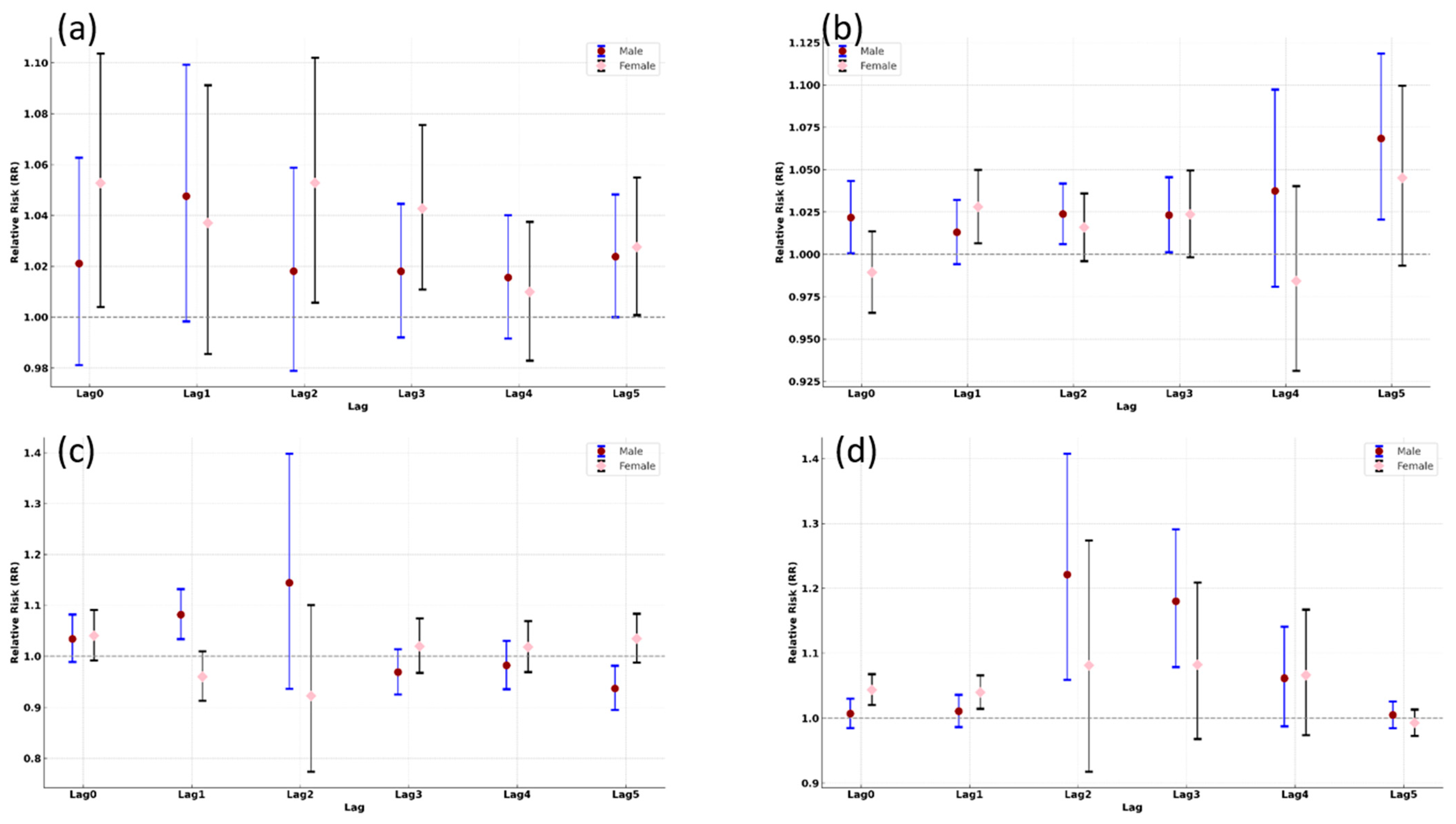
The adjusted RR of association between total CVD and PM2.5 for gender stratification at the Makro and KU sites is given in Figure 3a,b. An increased significant risk of association between total CVD and PM2.5 at the Makro site was observed among males at lag 0, 2, 3, and 5, while it was only statistically significant among females at lag 5. Statistically significant associations between PM2.5 and CVD subtypes (Table S3) were stronger among males than females, except in IHD, where there were positive but non-significant associations among males at the Makro site. At the KU site, PM2.5 association with total CVD was greater in females at lag 0, 2, 3, and 5 than in males, with a significant association only at lag 1 (RR = 1.0280, 1.0066–1.0499). The relationship between PM2.5 and CVD subtypes was stronger among males, especially in MI (lags 3 and 5) and arrhythmias at lags 1, 2, and 5, than in females. Arrhythmias exhibited the highest risk estimates with PM2.5 among males at the Makro site (RR = 1.5009, 1.2150–1.8541).
Adjusted RR of association by gender between total CVD and PM2.5 at the Keamari and Malir sites is presented in Figure 3c,d. The risk of association between total CVD and PM2.5 was statistically significant among females at lag 1 at the Keamari site. At the Malir site, PM2.5 exposure was statistically significant with total CVD among females at lags 2 and 3 and males at lags 0 and 1. For total CVD, the maximum estimated RR was observed among females (RR = 1.2211, 1.0593–1.4077) at lag 2 at the Malir site. Statistically significant associations between PM2.5 and CVD subtypes were found to be more robust among males and females at Malir than at the Keamari site (Table S4). Among females at the Keamari site, PM2.5 was statistically associated with HTN (lag 1), MI (lag 2), and CHF (lag 4), while statistically significant associations were observed with HTN at lag 3 and IHD at lag 5 among males. At the Malir site, PM2.5 association with IHD was statistically significant at lag 1, 2, 3, and 4 among females and at lag 0, 1, and 2 among males. PM2.5 exposure was statistically correlated with MI (lag 1) and CHF (lags 0 and 1) among females, while it was significantly associated with MI (lag 2), CHF (lag 1), and arrhythmias at lag 3 among males. The largest RR of association was found among females between PM2.5 and MI at lag 2 (RR = 1.4126, 1.0652–1.8735) at the Keamari site.

3.5. Stratified RR of Association with Total CVD and Subtypes by Age

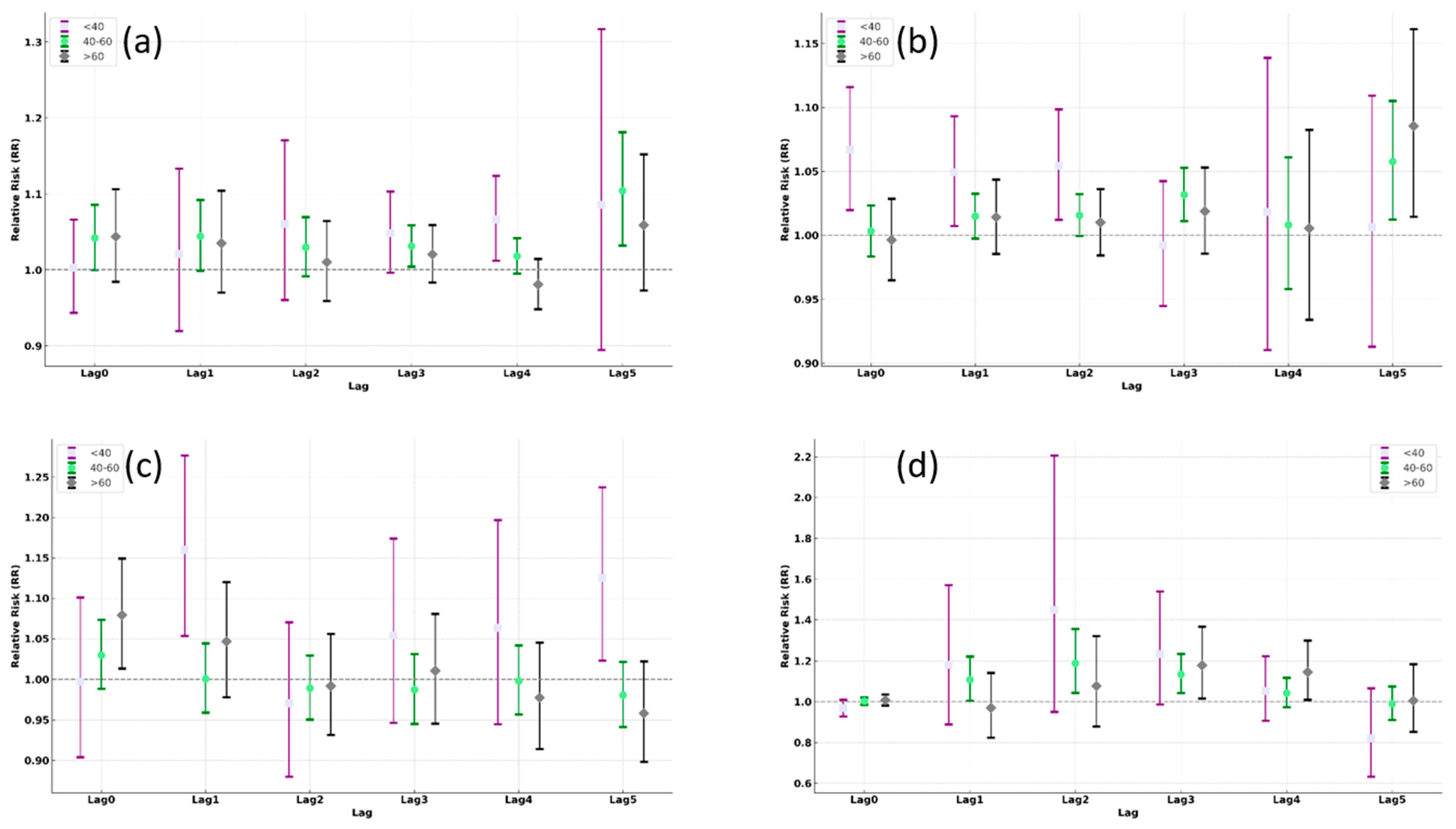
In the age-stratified analysis, total CVD is shown in Figure 4a, and subtypes are given in Table S5. PM2.5 associations with CVDs were stronger in the age group 40–60 at the Makro site. For the age group <40, a statistically significant association was observed between PM2.5 and total CVD at lag 4 (RR = 1.0663, 1.0119–1.1236) (Figure 4a). PM2.5 was statistically correlated with HTN at lags 3 and 4, CHF at 4, and arrhythmias at 2. Among the age group 40–60, increased risk of total CVD with PM2.5 was statistically significant at lags 3 and 5 with RR = 1.0311 (1.0041–1.0587) and RR = 1.1040 (1.0319–1.1812), respectively. Strong statistically significant associations between PM2.5 and IHD were similar to the same pattern of relationship observed without controlling for age, which were observed at lag 0, 1, 4, and 5. PM2.5 was also statistically associated with HTN and MI at lags 3 and 4, and 1 and 5, respectively. Among the elderly (>60), PM2.5 exposure was statistically associated with CHF on the same day of exposure, while the association with HTN was statistically significant but inversely correlated. The greatest effect was shown in the age group < 40 between arrhythmias and PM2.5 at lag 2 (RR = 1.1987, 1.0429–1.3779).
At the KU site, the age-adjusted RR of associations between PM2.5 and CVDs are presented in Figure 4b and Table S6. Among the age group < 40, a statistically significant association was observed between total CVD and PM2.5 at lag 0, 1, and 2. PM2.5 was statistically associated with HTN and IHD at lags 0 and 1, and arrhythmias at lag 1, 2, and 3. The highest mean estimate observed at both sites was found between PM2.5 and arrhythmias in the <40 age group at lag 2 (RR = 3.0662, 1.9289–4.8743) at the KU site. Among the age group 40–60, the risk of total CVD with PM2.5 was statistically significant at lags 3 and 5 with RR = 1.0318 (1.0111–1.0529) and RR = 1.0577 (1.0124–1.1052), respectively. HTN, IHD, and MI were significantly associated with exposure to PM2.5 at lag 1, 3, and 4, lag 1, 2, and 3, and lag 3 and 4, respectively. CHF and arrhythmias were observed to be associated with PM2.5 at lag 2 and lag 5, respectively. Among >60 age group, PM2.5 exposure was statistically associated with total CVD at lag 5 and MI at lags 3 and 5, while statistically significant associations with arrhythmias were both positive (lags 0 and 5) and negative (lags 3 and 4). The largest RR of association was found between PM2.5 and arrhythmias at lag 5 (RR = 1.3154, 1.1539–1.4996) at the KU site.
In the age-stratified analysis depicted in Figure 4c and Table S7, PM2.5 associations with CVDs were stronger in the age groups < 40 and >60 at the Keamari site. In the age group < 40, a statistically significant association was observed between PM2.5 and total CVD at lag 1 (RR = 1.1597, 1.0536–1.2765) and lag 5 (RR = 1.1252, 1.0232–1.2373). PM2.5 was statistically correlated with HTN at lag 1, MI at lag 3, and CHF at lags 1 and 4. Among the age group 40–60, the increased risk of association between CHF and PM2.5 was statistically significant at lag 5. Among the elderly (>60), a statistically significant association with total CVD due to PM2.5 exposure was observed at lag 0 (RR = 1.0792, 1.0134–1.1492). Strong statistically significant associations between PM2.5 and IHD at lags 0, 1, and 4 were found. PM2.5 was also observed to be statistically associated with MI at lag 1. The estimated RR of association with PM2.5 in the age group <40 for CHF (RR = 1.4395, 1.0663–1.9433) at lag 4 was the largest.
At the Malir site, the age-adjusted RR of association between PM2.5 exposure and CVD is presented in Figure 4d and Table S8. Among the age group < 40, PM2.5 showed statistically significant but inverse associations with HTN (lag 0, 3, 4, and 5) and MI (lag 0, 1, 3, 4, and 5). Among the age group 40–60, the risk of total CVD with PM2.5 was significant at lag 1, 2, and 3 with RR = 1.1080 (1.0050–1.2216), RR = 1.1887 (1.0433–1.3545), and RR = 1.1344 (1.0426–1.2344), respectively. The maximum RR increase was found at lag 2 among the age group 40–60. IHD was significantly associated with exposure to PM2.5 at lag 2, 3, and 5, while HTN was observed to show inverse associations with PM2.5 at lag 0, 1, 2, and 5. Among the >60 age group, PM2.5 exposure was statistically associated with total CVD at lags 3 and 4 (RR = 1.1780, 1.0157–1.3663 and RR = 1.1447, 1.0092–1.2983), while it exhibited positively significant associations with MI at lag 1, 2, and 3.

3.6. Seasonal RR Estimates of Association with CVD

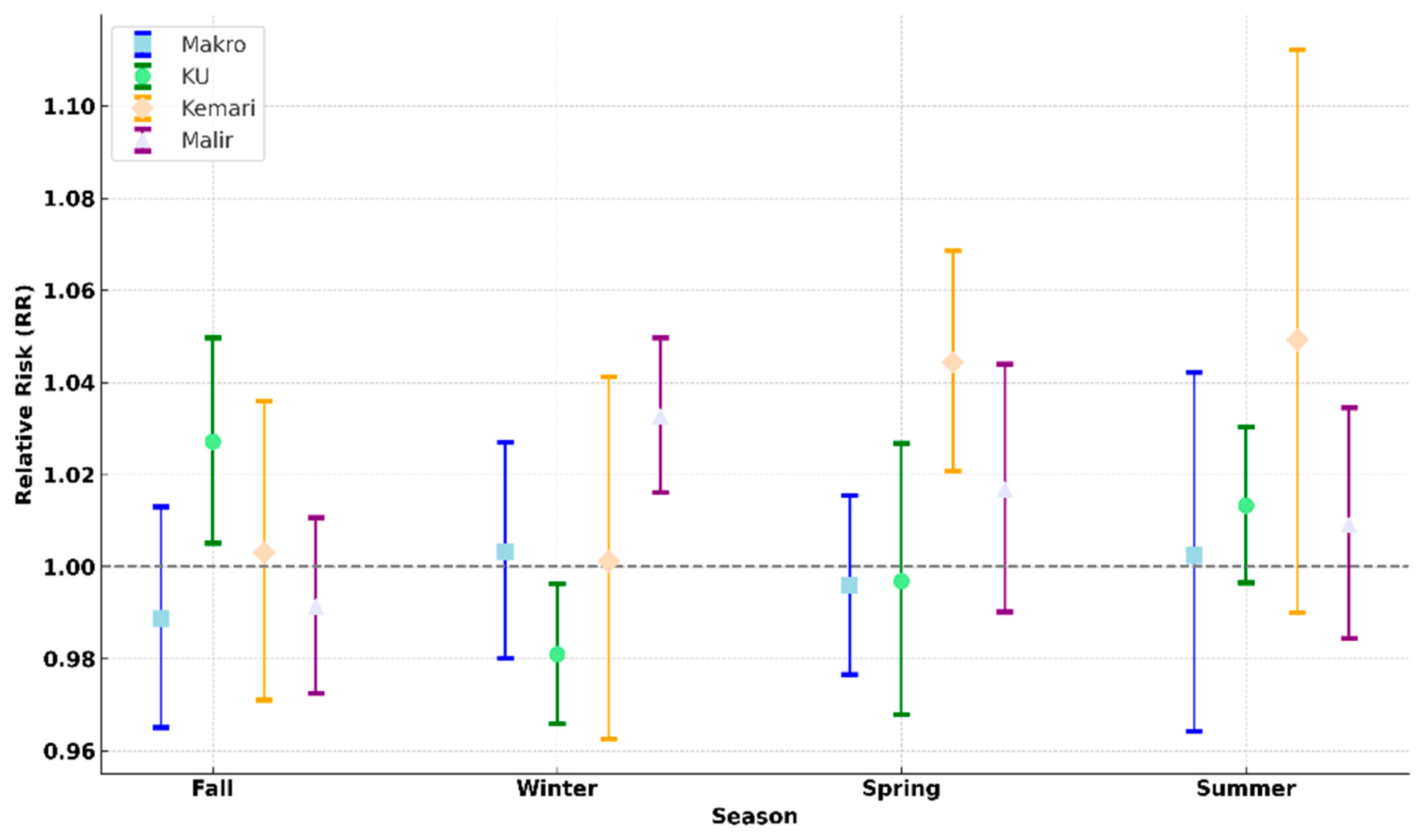
Seasonal effects of PM2.5 exposure at the Makro and KU sites are presented in Figure 5 (total CVD) and Table S9 (subtype CVD). Exposure to PM2.5 was significantly correlated with CHF in the spring and summer, while HTN and arrhythmias were statistically significant but inversely associated with PM2.5 in winter and spring at the Makro site. The seasonal comparison indicates that the highest RR of association was observed between PM2.5 and CHF (RR = 1.2023, 1.1151–1.2963) in the summer. At the KU site, PM2.5 was observed to be significantly associated with total CVD in the fall, HTN in the summer, IHD in the fall and spring, and arrhythmias in the spring. The maximum risk of association was found in the spring between arrhythmias and PM2.5 (RR = 1.1484, 1.0469–1.2599). Statistically significant but negative associations were observed between PM2.5 and total CVD, HTN, and CHF in the winter and MI in the spring.
Seasonal effects of PM2.5 exposure at the Keamari and Malir sites were significantly correlated with total CVD, HTN, IHD, and MI in the spring, while HTN and arrhythmias were statistically significant but inversely associated with PM2.5 in fall and winter at the Keamari site. At the Malir site, PM2.5 was observed to be statistically associated with total CVD and CHF in the winter and IHD in the spring.

3.7. Exposure–Response Relationship Curve

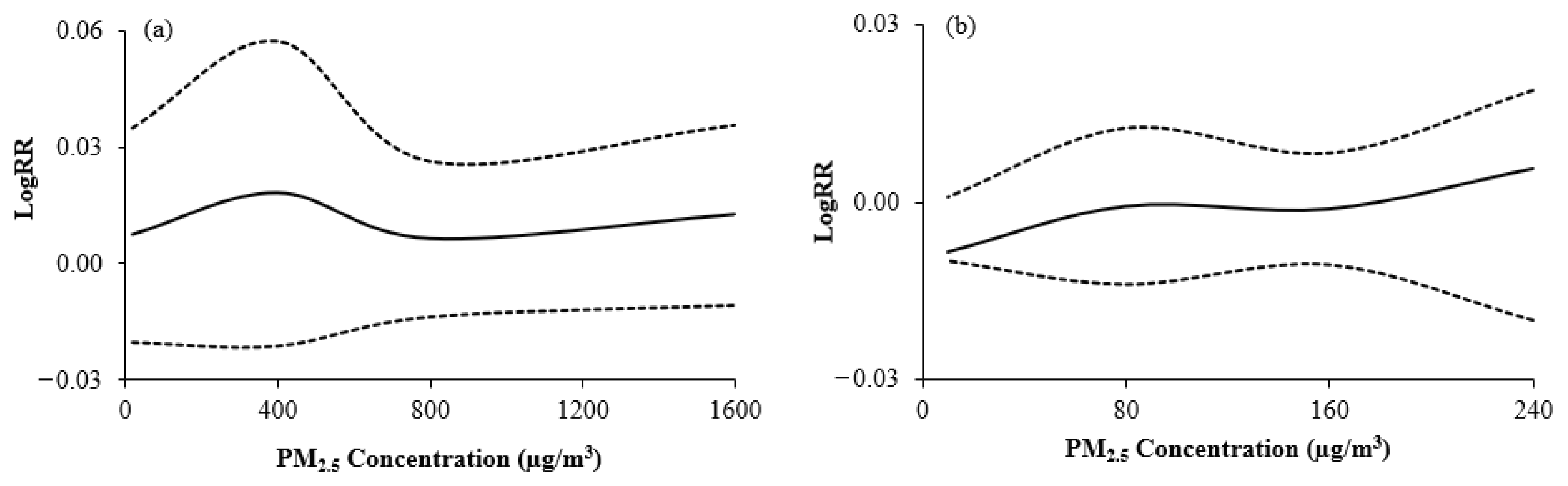
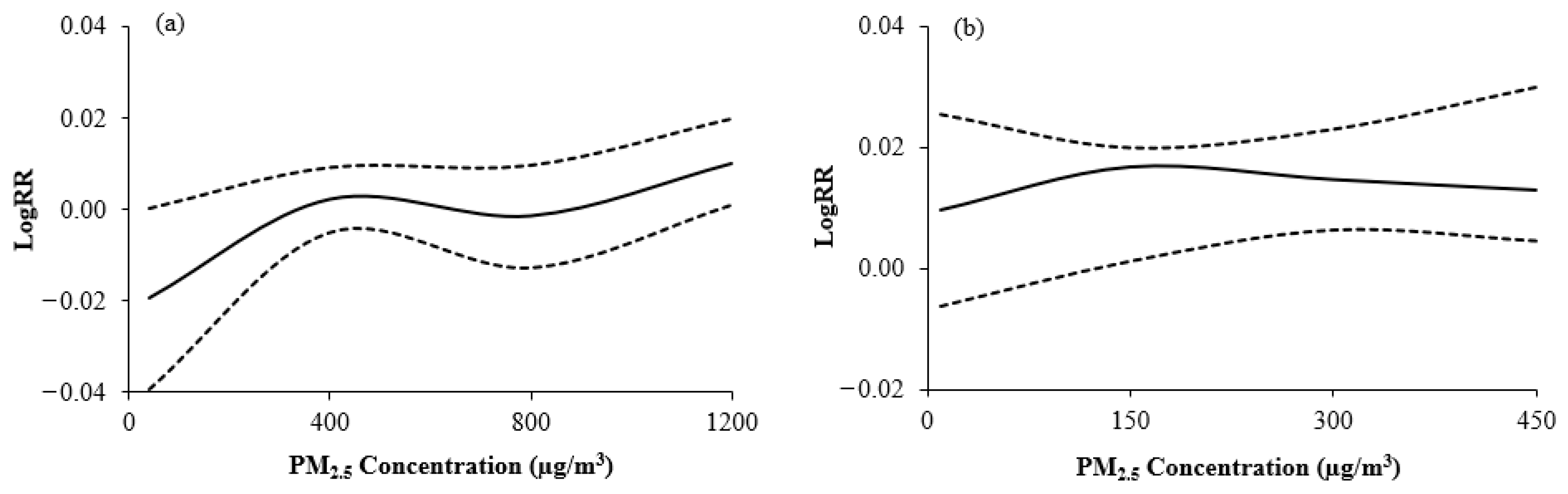
Figure 6 shows the exposure–response curves for daily levels of PM2.5 association with morbidity due to CVD at the Makro and KU sites. Daily concentrations of PM2.5 were observed to exhibit a non-linear relationship with CVD at both sites. The curve showed that with the increasing concentrations of PM2.5, the effect on CVD HAs and ER visits increased. The RR estimates of CVD association with PM2.5 at lag 1 at the Makro site and lag 3 at the KU site indicate that exposure to elevated concentrations of PM2.5 increases the risk of morbidity due to CVD.
Figure 7 displays the exposure–response curves for daily levels of PM2.5 association with morbidity due to CVD at the Keamari and Malir sites. The daily concentration of PM2.5 was observed to exhibit a positive monotonic relationship with CVD at the Keamari and Malir sites. RR estimates of CVD association with PM2.5 at the Keamari site displayed an increased effect and then plateaued, while at the Malir site, the effect increased with an increasing PM2.5 concentration. These curves clearly show that an increase in daily levels of PM2.5 increases the rate of HAs or ER visits due to CVD.

4. Discussion

The results derived from the single-pollutant model during the two-year study period at the Makro, KU, Keamari, and Malir sites show that PM2.5 was significantly associated with HAs and ER visits for CVD, and these findings were consistent with findings from previous studies [22,41]. In the second year at the Makro and KU sites, the association between CVDs and PM2.5 was very robust, with a similar magnitude at the two sites. However, the association was stronger at the Malir site than at the Keamari site in the CVD subtypes during the third year of the study. The results of this study were as expected, considering the strikingly high concentrations of PM2.5 in Karachi, Pakistan, during the sampled period. The findings of this study are supported by the overwhelming weight of evidence on the significant associations between PM2.5 and morbidity due to CVDs [19,32,45,46,47,48,49,50,51,52].
Khwaja et al. [22] reported a positive association between PM2.5 and CVDs in Karachi, with the strongest associations observed when PM2.5 concentrations ranged from 151 to 200 µg/m3 at the Korangi (RR = 1.613, 95% CI = 1.274–2.043) and Tibet Center (RR = 2.036, 95% CI = 1.424–2.911) sites. A study in Wuhan, China, with high daily PM2.5 concentrations, found a significant correlation at lag 0, observing that cardiovascular hospital admissions increased by 0.87% (95% CI: 0.05–1.7%) for every 10 µg/m3 increase in PM2.5 [53]. This percentage is lower than the 15.3% increase observed in our study without additional PM2.5 concentration increases. Du et al. [50] reviewed the risk of air pollution-induced CVD morbidity and mortality, reporting an increased relative risk of cardiovascular mortality by 0.4% to 1.0% due to short-term PM2.5 exposure. Associations were found between black smoke, atmospheric gases, and myocardial infarction in hospital-based studies and between ambient PM and ventricular arrhythmias. Studies have demonstrated that short-term exposure to a 10 µg/m3 increase in PM2.5 is associated with 2.1%, 2.5%, and 0.89% relative increases in hospitalizations for heart failure, myocardial infarction (MI), and atrial fibrillation [32]. Despite the relatively low air pollutant concentrations in developed countries, studies report strong estimated relative risks (RRs) associated with PM2.5 exposure and total cardiovascular hospital admissions [52,54].
A time-series study in China examined the association between mortality due to CVD, ischemic heart disease (IHD), and cerebrovascular disease in areas with daily PM2.5 concentrations ranging from 7.1 to 137.1 µg/m3, observing significant effects on mortality due to CVD and IHD [55]. These PM2.5 concentrations are similar to the daily average observed in this study at the Malir site, but lower than levels at the Makro, Keamari, and KU sites. Excess risk of CVD mortality was observed at lag 5 and lag 02 (moving average), and excess risk of IHD mortality at lag 2 and lag 02 with a 10 µg/m3 increase in PM2.5 concentration. An et al. [52] reviewed outdoor PM exposure’s short- and long-term effects on CVD development and potential mechanisms. Short-term associations were reported with a 10 µg/m3 rise in PM2.5, showing a 0.27%, 0.39%, and 0.30% increase in mortality due to CVD, hypertension (HTN), and congestive heart disease, respectively, in a multicity study in China. The review also found associations between a 10 µg/m3 increase in 2-day average PM2.5 concentrations and increased admissions for CVDs (1.89%), MI (2.25%), and CHF (1.85%) in 26 U.S. cities.
Sabeti et al. [4] reported positive associations between PM2.5 exposure and diastolic blood pressure at lags 3 and 5, and systolic blood pressure at lag 1, 4, and 5 in Iran, a city with similar geographical characteristics to Pakistan. PM2.5 exposure was also associated with high diastolic and systolic blood pressure in a study in Taiwan [56]. In contrast, Shahi et al. [57] found no significant association between PM2.5 exposure and cardiovascular admissions in Tehran, Iran. A study on the Western Coast of Saudi Arabia also did not find statistically significant associations between CVD and PM2.5 exposure across all subcategories and lag days (lag 0–6) [58].
The associations vary by sex and age subgroups, and the difference between age subgroups for the PM2.5 effects was statistically significant. The results reveal that the association appeared to be slightly stronger in males than in females at the Makro site. At the Keamari site, gender stratification mirrored the effect observed in the combined analysis, with similar outcomes in both females and males, while a strong association was found among females and males at the Malir site. Among the age group, PM2.5 exposure was strongly associated with CVDs in those aged 40 and above, except at the KU and Keamari sites, where similar significant associations were observed in age groups < 40 and 40–60, and <40 and >60, respectively. PM2.5 exposure tends to exhibit variations in the seasonal effects, in which positive associations with CVDs were observed in warm and cool months, possibly due to the differences in sampling period and location. The different chemical constituents in the different climates and exposure patterns may explain the difference in results. Another factor is the higher ambient air pollution levels during the winter season. The higher association in the cooler months is consistent with other studies, e.g., the Tianjin study [59], and contrary to the Shanghai study [60].
The outcome of this study on age, gender, and seasonal trends is supported by other studies conducted in Jeddah, Saudi Arabia [27], Ahvaz, Iran [61,62], and Taipei [63]. This study is comparable to the findings of a time-series study between PM2.5 and cardiopulmonary morbidity conducted in Jeddah, Saudi Arabia, which found a relatively higher risk of CVD morbidity in the age group > 40 and among females and males [27]. Inconsistent results were found in the differences in gender and seasonal effects of PMs, with some studies reporting a greater significant association in males and cold season [53], while other studies record an insignificant but stronger effect in females and warm season [64,65]. Significant PM effects on IHD were greater among individuals aged 41–65 and males in Shanghai, China [51], consistent with this study. Hayes et al. [66] observed a 16% increase in IHD mortality among men and women aged 50–71 with a 10 µg/m3 increase in PM2.5 concentration in the U.S. [67]. Additionally, time-series studies in the U.S. found associations between increased cardiovascular hospitalizations and daily PM2.5 changes among those aged ≥65 [49,68]. These studies align with our findings, indicating increased CVD risk across all age groups exposed to poor ambient air quality in Karachi.
Exposure–response relationship curves for PM2.5 and total CVD showed positive, monotonic, and non-linear relationships with HAs and ER visits due to CVD. The current daily PM2.5 per the WHO air quality standard (15 µg/m3) and Pakistan’s standard (35 µg/m3) are insufficient to protect public health in Karachi. Policymakers need to formulate and implement interventions to control air pollution. The shape of the exposure–response relationship in this study aligns with other studies exploring concentration–response curves [53,69,70]. Another study observed an S-shaped curve relationship between PM2.5 and hypertension [71]. Concentration–response curves often vary based on air pollution mixtures and climatic conditions, emphasizing the need to reduce air pollution levels in developing countries for public health protection.

5. Strengths and Limitations

The strengths of this study include detailed and consistent data collection across multiple sites and rigorous quality assurance and quality control (QA/QC) procedures. Although time-series studies provide valuable information, they have limitations. In this study, exposure misclassification potentially occurred because ambient PM2.5 concentrations were measured at fixed-site monitors and used as a proxy for population-level exposure. Risk estimates may differ from true individual exposures due to spatial variability in pollution sources, temporal variation with health outcomes, and the inability to differentiate repeated hospital admissions. However, limitations, such as potential confounding factors like meteorological variables and socioeconomic status, were not fully accounted for. Additionally, individual-level risk factors and lifestyle variables such as smoking status, socioeconomic status, occupation, diet, education, and physical activity were not collected. The absence of these variables may result in residual confounding. Despite these limitations, the study primarily examined short-term associations between ambient PM2.5 exposure and cardiovascular outcomes, for which acute effects are less likely to be strongly influenced by stable individual characteristics. The lack of personal exposure data further limits the ability to assess individual risk accurately.

6. Conclusions

The findings of this study clearly indicate that exposure to ambient air pollution is significantly associated with cardiovascular disease (CVD), hospital admissions (HAs), and emergency room (ER) visits, regardless of age and gender. The study shows an increased risk of morbidity due to CVD among the people of Karachi, highlighting the potential for extremely high levels of PM2.5 to impair health even in healthy individuals. The highest RR between PM2.5 exposure and total CVD was observed at lag 2 at the Malir site (RR = 1.1525, 95% CI = 1.0357–1.2824). PM2.5 exposure was also strongly associated with multiple CVD subtypes, including HTN, IHD, MI, CHF, and arrhythmias. A delayed effect was evident for arrhythmias, with significantly elevated risk at lags 3 and 4 and the greatest increase reported at the Malir site (RR = 1.2295, 95% CI: 1.0795–1.4008).
The high levels of PM2.5 observed in Karachi pose a significant public health risk, particularly for vulnerable populations such as children, the elderly, and individuals with pre-existing health conditions. These findings underscore the urgent need for effective air quality management policies and interventions to reduce PM2.5 levels and protect public health. Regulatory agencies and public health professionals in Pakistan, including federal and provincial Environmental Protection Agencies, must work collaboratively to develop and enforce interventions that mitigate the effects of air pollution by limiting the sources and concentration levels of PM2.5 and its constituents. Findings from this study can inform improvements in national and provincial emission inventories, particularly for key contributors such as traffic emissions, industrial activity, and brick kilns. These data may also support the evaluation of feasible emission control strategies within Pakistan’s regulatory and resource constraints and guide evidence-based air quality management policies aimed at reducing population-level health risks.
Future studies should explore the long-term effects of PM2.5 exposure on cardiovascular health using more comprehensive epidemiological study designs, such as case-crossover studies, which are cost-effective and capable of capturing more than just the event or hospitalization date. To better identify at-risk populations, these studies should include detailed individual-level data, such as prior medical history, comorbidities, and lifestyle factors. Expanding exposure measurements to include personal monitoring and monitoring stations will provide a more accurate assessment of individual exposure and health outcomes. Long-term studies will allow a larger portion of the population to be included, giving more weight to the findings and avoiding the cautious generalization of the outcomes. This approach will help determine the causal relationship and progression of cardiovascular or other diseases resulting from exposure to poor air quality.

Supplementary Materials

The following supporting information can be downloaded at: https://www.mdpi.com/article/10.3390/air4010005/s1, Table S1. Relative risk estimates by lag days (0–5) for daily CVD (subtypes) from both HA and ER visits associated with daily concentration of PM2.5 during the study period; Table S2. Relative risk estimates by lag days (0–5) for daily CVD (total and subtypes) from both HA and ER visits associated with daily concentration of PM2.5 during the study period; Table S3. Adjusted relative risk of association by lag days (0–5) between daily CVD and daily levels of PM2.5 by gender during the study period: (a) Makro and (b) KU sites; Table S4. Adjusted relative risk of association by lag days (0–5) between daily CVD and daily levels of PM2.5 by gender during the study period: (a) Keamari and (b) Malir sites; Table S5. Adjusted relative risk of association by lag days (0–5) between daily CVD and daily levels of PM2.5 by age group at the Makro site; Table S6. Adjusted relative risk of association by lag days (0–5) between daily CVD and daily levels of PM2.5 by age group at the KU site; Table S7. Adjusted relative risk of association by lag days (0–5) between daily CVD and daily levels of PM2.5 by age group at the Keamari site; Table S8. Adjusted relative risk of association by lag days (0–5) between daily CVD and daily levels of PM2.5 by age group at the Malir site; Table S9. Seasonal relative risk estimates of daily CVD associated with PM2.5 at the Makro, KU, Keamari, and Malir sites.

Author Contributions

H.A.K.: Conceptualization, Project administration, Methodology, Writing—review and editing. O.D.M.: Data curation, Software, Formal analysis, Writing—original draft preparation, Writing—review and editing. A.S.: Sampling. M.M.H.: Methodology. D.O.C.: Project administration. All authors have read and agreed to the published version of the manuscript.

Funding

This work was funded by the Pakistan-US Science and Technology Cooperative Program (administered by the National Academy of Sciences, USA, and the Higher Education Commission, Pakistan) under grant # PGA-7251-07-010.

Institutional Review Board Statement

Not applicable.

Informed Consent Statement

Not applicable.

Data Availability Statement

The original contributions presented in this study are included in the article. Further inquiries can be directed to the corresponding author.

Acknowledgments

The authors would like to thank Wadsworth Center, New York State Department of Health, University at Albany, Higher Education Commission, Pakistan, University of Karachi, Aga Khan University Hospital, and National Institute of Cardiovascular Diseases in Karachi, as well as the physicians who collected and provided the health data used in this study. We owe a debt of gratitude to Kelly Robbins, Vincent Dutkiewicz, Amber Sinclair, Aneeta Khoso, Jahan Zeb, and Kamran Khan, as well as Naseem Pervez Ali, who assisted in all aspects of this work. We extend our thanks to Kim McClive-Reed for editing the manuscript.

Conflicts of Interest

The authors declare that they have no known competing financial interests or personal relationships that could have appeared to influence the work reported in this paper.

References

  1. Kelly, F.J.; Fussell, J.C. Size, source and chemical composition as determinants of toxicity attributable to ambient particulate matter. Atmos. Environ. 2012, 60, 504–526. [Google Scholar] [CrossRef]
  2. Pan, S.; Qiu, Y.; Li, M.; Yang, Z.; Liang, D. Recent developments in the determination of PM2.5 chemical composition. Bull. Environ. Contam. Toxicol. 2022, 108, 819–823. [Google Scholar] [CrossRef]
  3. Cheng, B.; Alapaty, K.; Arunachalam, S. Spatiotemporal trends in PM2.5 chemical composition in the conterminous US during 2006–2020. Atmos. Environ. 2024, 316, 120188. [Google Scholar] [CrossRef]
  4. Sabeti, Z.; Ansarin, K.; Seyedrezazadeh, E.; Jafarabadi, M.A.; Zafari, V.; Dastgiri, S.; Shakerkhatibi, M.; Gholampour, A.; Khamnian, Z.; Sepehri, M.; et al. Acute responses of airway oxidative stress, inflammation, and hemodynamic markers to ambient PM2.5 and their trace metal contents among healthy adolescences: A panel study in highly polluted versus low polluted regions. Environ. Pollut. 2021, 288, 117797. [Google Scholar] [CrossRef]
  5. Ahmad, M.; Cheng, S.; Yu, Q.; Qin, W.; Zhang, Y.; Chen, J. Chemical and source characterization of PM2.5 in summertime in severely polluted Lahore, Pakistan. Atmos. Res. 2020, 234, 104715. [Google Scholar] [CrossRef]
  6. Guan, Y.; Xiao, Y.; Wang, Y.; Zhang, N.; Chu, C. Assessing the health impacts attributable to PM2.5 and ozone pollution in 338 Chinese cities from 2015 to 2020. Environ. Poll. 2021, 287, 117623. [Google Scholar] [CrossRef]
  7. Soleimani, M.; Akbari, N.; Saffari, B.; Haghshenas, H. Health effect assessment of PM2.5 pollution due to vehicular traffic (case study: Isfahan). J. Transp. Health 2022, 24, 101329. [Google Scholar] [CrossRef]
  8. Sukuman, T.; Ueda, K.; Sujaritpong, S.; Praekunatham, H.; Punnasiri, K.; Wimuktayon, T.; Prapaspongsa, T. Health impacts from PM2.5 exposure using environmental epidemiology and health risk assessment: A Review. Appl. Environ. Res. 2023, 45. [Google Scholar] [CrossRef]
  9. Bi, J.; D’Souza, R.R.; Rich, D.Q.; Hopke, P.K.; Russell, A.G.; Liu, Y.; Chang, H.H.; Ebelt, S. Temporal changes in short-term associations between cardiorespiratory emergency department visits and PM2.5 in Los Angeles, 2005 to 2016. Environ. Res. 2020, 190, 109967. [Google Scholar] [CrossRef] [PubMed]
  10. Moyebi, O.D. Megacity: A Reservoir of Toxic Environmental Contaminants and Health Disease Burden. Ph.D. Thesis, University at Albany, Albany, NY, USA, 2022. [Google Scholar]
  11. Wang, M.; Han, Y.; Wang, C.J.; Xue, T.; Gu, H.Q.; Yang, K.X.; Liu, H.Y.; Cao, M.; Meng, X.; Jiang, Y.; et al. Short-term effect of PM2.5 on stroke in susceptible populations: A case-crossover study. Int. J. Stroke 2023, 18, 312–321. [Google Scholar] [CrossRef]
  12. WHO (World Health Organization), Regional Office for Europe. Review of Evidence on Health Aspects of Air Pollution—REVIHAAP Project. Technical Report. 2013. Available online: https://iris.who.int/handle/10665/341712 (accessed on 7 April 2022).
  13. Casquero, J.A.; Lyamani, H.; Titos, G. Impact of primary NO2 emissions at different urban sites exceeding the European NO2 standard limit. Sci. Total Environ. 2018, 646, 1117–1125. [Google Scholar] [CrossRef]
  14. Squizzato, S.; Masiol, M.; Rich, D.Q.; Hopke, P.K. PM2.5 and gaseous pollutants in New York State during 2005–2016: Spatial variability, temporal trends, and economic influences. Atmos. Environ. 2018, 183, 209–224. [Google Scholar] [CrossRef]
  15. Bhatnagar, A. Cardiovascular effects of particulate air pollution. Ann. Rev. Med. 2022, 73, 393–406. [Google Scholar] [CrossRef]
  16. Shahriyari, H.A.; Nikmanesh, Y.; Jalali, S.; Tahery, N.; Zhiani Fard, A.; Hatamzadeh, N.; Mohammadi, M.J. Air pollution and human health risks: Mechanisms and clinical manifestations of cardiovascular and respiratory diseases. Toxin Rev. 2022, 41, 606–617. [Google Scholar] [CrossRef]
  17. Mohammadi, M.J.; Fouladi Dehaghi, B.; Mansourimoghadam, S.; Sharhani, A.; Amini, P.; Ghanbari, S. Cardiovascular disease, mortality and exposure to particulate matter (PM): A systematic review and meta-analysis. Rev. Environ. Health 2024, 39, 141–149. [Google Scholar] [CrossRef] [PubMed]
  18. Zanobetti, A.; Baccarelli, A.; Schwartz, J. Gene-air pollution interaction and cardiovascular disease: A review. Prog. Cardiovasc. Dis. 2011, 53, 344–352. [Google Scholar] [CrossRef]
  19. Lee, B.J.; Kim, B.; Lee, K. Air pollution exposure and cardiovascular disease. Toxicol. Res. 2014, 30, 71–75. [Google Scholar] [CrossRef]
  20. Phosri, A.; Ueda, K.; Phung, V.; Tawatsupa, B.; Honda, A.; Takanoa, H. Effects of ambient air pollution on daily hospital admissions for respiratory and cardiovascular diseases in Bangkok, Thailand. Sci. Total Environ. 2018, 651, 1144–1163. [Google Scholar] [CrossRef] [PubMed]
  21. Rajak, R.; Chattopadhyay, A. Short and long term exposure to ambient air pollution and impact on health in India: A systematic review. Int. J. Environ. Health Res. 2020, 30, 593–617. [Google Scholar] [CrossRef]
  22. Khwaja, H.A.; Fatmi, Z.; Malashock, D.; Aminov, Z.; Siddique, A.; Carpenter, D.O. Effect of air pollution on daily morbidity in Karachi, Pakistan. J. Local Glob. Health Sci. 2012, 3, 2–13. [Google Scholar] [CrossRef]
  23. Tomášková, H.; Tomášek, I.; Šlachtová, H.; Polaufová, P.; Šplíchalová, A.; Michalík, J.; Feltl, D.; Lux, J.; Marsová, M. PM10 air pollution and acute hospital admissions for cardiovascular and respiratory causes in Ostrava. Cent. Eur. J. Public Health 2016, 24, S33–S39. [Google Scholar] [CrossRef]
  24. Luong, L.; Phung, D.; Sly, P.; Morawska, L.; Thai, P. The association between particulate air pollution and respiratory admissions among young children in Hanoi, Vietnam. Sci. Total Environ. 2016, 578, 249–255. [Google Scholar] [CrossRef] [PubMed]
  25. Pope, C.A., 3rd; Dockery, D.W. Air pollution and life expectancy in China and beyond. Proc. Natl. Acad. Sci. USA 2013, 110, 12861–12862. [Google Scholar] [CrossRef] [PubMed]
  26. Raza, A.; Qamer, M.F.; Afsheen, S.; Adnan, M.; Naeem, S.; Atiq, M. Particulate matter aassociated lung function decline in brick kiln workers of Jalalpur Jattan, Pakistan. Pak. J. Zool. 2014, 46, 237–243. [Google Scholar]
  27. Nayebare, S.R.; Aburizaiza, O.S.; Siddique, A.; Carpenter, D.O.; Pope, C.A., 3rd; Hussain, M.M.; Zeb, J.; Aburiziza, A.J.; Khwaja, H.A. Fine particles exposure and cardiopulmonary morbidity in Jeddah: A time-series analysis. Sci. Total Environ. 2019, 647, 1314–1322. [Google Scholar] [CrossRef]
  28. Guo, H.; Wang, Y.; Zhang, H. Characterization of criteria air pollutants in Beijing during 2014–2015. Environ. Res. 2017, 154, 334–344. [Google Scholar] [CrossRef] [PubMed]
  29. WHO (World Health Organization). 7 Million Premature Deaths Annually Linked to Air Pollution. 2014. Available online: https://www.who.int/news/item/25-03-2014-7-million-premature-deaths-annually-linked-to-air-pollution (accessed on 5 June 2021).
  30. Pope, C.A., 3rd; Muhlestein, J.B.; May, H.T.; Renlund, D.G.; Anderson, J.L.; Horne, B.D. Ischemic heart disease events triggered by short-term exposure to fine particulate air pollution. Circulation 2006, 114, 2443–2448. [Google Scholar] [CrossRef]
  31. Rahman, M.M.; Alam, K.; Velayutham, E. Is industrial pollution detrimental to public health? Evidence from the world’s most industrialised countries. BMC Public Health 2021, 21, 1175. [Google Scholar] [CrossRef]
  32. Al-Kindi, S.G.; Brook, R.D.; Biswal, S.; Rajagopalan, S. Environmental determinants of cardiovascular disease: Lessons learned from air pollution. Nat. Rev. Cardiol. 2020, 17, 656–672. [Google Scholar] [CrossRef]
  33. Pope, C.A., 3rd; Bhatnagar, A.; McCracken, J.P.; Abplanalp, W.; Conklin, D.J.; O’Toole, T. Exposure to fine particulate air pollution is associated with endothelial injury and ssystemic inflammation. Circ. Res. 2016, 119, 1204–1214. [Google Scholar] [CrossRef]
  34. Ain, N.U.; Qamar, S. Particulate matter-induced cardiovascular dysfunction: A mechanistic insight. Cardiovasc. Toxicol. 2021, 21, 505–516. [Google Scholar] [CrossRef]
  35. Shi, Y.; Zhao, A.; Matsunaga, T.; Yamaguchi, Y.; Zang, S.; Li, Z.; Yu, T.; Gu, X. Underlying causes of PM2.5-induced premature mortality and potential health benefits of air pollution control in South and Southeast Asia from 1999 to 2014. Environ. Int. 2018, 121, 814–823. [Google Scholar] [CrossRef] [PubMed]
  36. Zhang, H.; Wang, Y.; Hu, J.; Ying, Q.; Hu, X.M. Relationships between meteorological parameters and criteria air pollutants in three megacities in China. Environ. Res. 2015, 140, 242–254. [Google Scholar] [CrossRef]
  37. Anjum, M.S.; Ali, S.M.; Imad-Ud-Din, M.; Subhani, M.A.; Anwar, M.N.; Nizami, A.S.; Ashraf, U.; Khokhar, M.F. An emerged challenge of air pollution and ever-increasing particulate matter in Pakistan; A critical review. J. Hazard. Mater. 2021, 402, 123943. [Google Scholar] [CrossRef]
  38. Cheng, Z.; Luo, L.; Wang, S.; Wang, Y.; Sharma, S.; Shimadera, H.; Wang, X.; Bressi, M.; de Miranda, R.M.; Jiang, J.; et al. Status and characteristics of ambient PM2.5 pollution in global megacities. Environ. Int. 2016, 89, 212–221. [Google Scholar] [CrossRef]
  39. Kumar, P.; Druckman, A.; Gallagher, J.; Gatersleben, B.; Allison, S.; Eisenman, T.S.; Hoang, U.; Hama, S.; Tiwari, A.; Sharma, A.; et al. The nexus between air pollution, green infrastructure and human health. Environ. Int. 2019, 133, 105181. [Google Scholar] [CrossRef]
  40. Ma, T.; Duan, F.; He, K.; Qin, Y.; Tong, D.; Geng, G.; Liu, X.; Li, H.; Yang, S.; Ye, S.; et al. Air pollution characteristics and their relationship with emissions and meteorology in the Yangtze River Delta region during 2014–2016. J. Environ. Sci. 2019, 83, 8–20. [Google Scholar] [CrossRef] [PubMed]
  41. Lurie, K.; Nayebare, S.R.; Fatmi, Z.; Carpenter, D.O.; Siddique, A.; Malashock, D.; Khan, K.; Zeb, J.; Hussain, M.M.; Khatib, F.; et al. PM2.5 in a megacity of Asia (Karachi): Source apportionment and health effects. Atmos. Environ. 2019, 202, 223–233. [Google Scholar] [CrossRef]
  42. Moyebi, O.D.; Fatmi, Z.; Carpenter, D.O.; Santoso, M.; Siddique, A.; Khan, K.; Zeb, J.; Hussain, M.M.; Khwaja, H.A. Fine particulate matter and its chemical constituents’ levels: Troubling environmental and human health situation in Karachi, Pakistan. Sci. Total Environ. 2023, 868, 161474. [Google Scholar] [CrossRef]
  43. Malashock, D.; Khwaja, H.A.; Fatmi, Z.; Siddique, A.; Lu, Y.; Lin, S.; Carpenter, D. Short-term association between black carbon exposure and cardiovascular diseases in Pakistan’s largest megacity. Atmosphere 2018, 9, 420. [Google Scholar] [CrossRef]
  44. Brook, R.D.; Franklin, B.; Cascio, W.; Hong, Y.; Howard, G.; Lipsett, M.; Luepker, R.; Mittleman, M.; Samet, J.; Smith, S.C.; et al. Air pollution and cardiovascular disease: A statement for healthcare professionals from the Expert Panel on Population and Prevention Science of the American Heart Association. Circulation 2004, 109, 2655–2671. [Google Scholar] [CrossRef]
  45. Ito, K.; De Leon, S.F.; Lippmann, M. Associations between ozone and daily mortality: Ananalysis and meta-analysis. Epidemiology 2005, 16, 446–457. [Google Scholar] [CrossRef] [PubMed]
  46. Dominici, F.; Peng, R.D.; Bell, M.L.; Pham, L.; McDermott, A.; Zeger, S.L.; Samet, J.M. Fine particulate air pollution and hospital admission for cardiovascular and respiratory diseases. JAMA 2006, 295, 1127–1134. [Google Scholar] [CrossRef]
  47. Haley, V.B.; Talbot, T.O.; Felton, H.D. Surveillance of the short-term impact of fine particle air pollution on cardiovascular disease hospitalizations in New York State. Environ. Health 2009, 8, 42. [Google Scholar] [CrossRef]
  48. Brook, R.D.; Rajagopalan, S.; Pope, C.A., 3rd; Brook, J.R.; Bhatnagar, A.; Diez-Roux, A.V.; Holguin, F.; Hong, Y.; Luepker, R.V.; Mittleman, M.A.; et al. Particulate matter air pollution and cardiovascular disease: An update to the scientific statement from the American Heart Association. Circulation 2010, 121, 2331–2378. [Google Scholar] [CrossRef]
  49. Bell, M.L.; Ebisu, K.; Leaderer, B.P.; Gent, J.F.; Lee, H.J.; Koutrakis, P.; Wang, Y.; Dominici, F.; Peng, R.D. Associations of PM2.5 constituents and sources with hospital admissions: Analysis of four counties in Connecticut and Massachusetts (USA) for persons ≥ 65 years of age. Environ. Health Perspect. 2014, 122, 138–144. [Google Scholar] [CrossRef] [PubMed]
  50. Du, Y.; Xu, X.; Chu, M.; Guo, Y.; Wang, J. Air particulate matter and cardiovascular disease: The epidemiological, biomedical and clinical evidence. J. Thorac. Dis. 2016, 8, E8–E19. [Google Scholar] [CrossRef] [PubMed]
  51. Xu, A.; Mu, Z.; Jiang, B.; Wang, W.; Yu, H.; Zhang, L.; Li, J. Acute effects of particulate air pollution on ischemic heart disease hospitalizations in Shanghai, China. Int. J. Environ. Res. Public Health 2017, 14, 168. [Google Scholar] [CrossRef]
  52. An, Z.; Jin, Y.; Li, J.; Li, W.; Wu, W. Impact of particulate air pollution on cardiovascular health. Curr. Allergy Asthma Rep. 2018, 18, 15. [Google Scholar] [CrossRef]
  53. Wang, X.; Wang, W.; Jiao, S.; Yuan, J.; Hu, C.; Wang, L. The effects of air pollution on daily cardiovascular diseases hospital admissions in Wuhan from 2013 to 2015. Atmos. Environ. 2018, 182, 307–312. [Google Scholar] [CrossRef]
  54. Kim, S.Y.; Peel, J.L.; Hannigan, M.P.; Dutton, S.J.; Sheppard, L.; Clark, M.L.; Vedal, S. The temporal lag structure of short-term associations of fine particulate matter chemical constituents and cardiovascular and respiratory hospitalizations. Environ. Health Perspect. 2012, 120, 1094–1099. [Google Scholar] [CrossRef] [PubMed]
  55. Cai, J.; Yu, S.; Pei, Y.; Peng, C.; Liao, Y.; Liu, N.; Ji, J.; Cheng, J. Association between airborne fine particulate matter and residents’ cardiovascular diseases, ischemic heart disease and cerebral vascular disease mortality in areas with lighter air pollution in China. Int. J. Environ. Res. Public Health 2018, 15, 1918. [Google Scholar] [CrossRef]
  56. Su, T.C.; Chen, S.Y.; Chan, C.C. Progress of ambient air pollution and cardiovascular disease research in Asia. Prog. Cardiovasc. Dis. 2011, 53, 369–378. [Google Scholar] [CrossRef]
  57. Shahi, A.M.; Omraninava, A.; Goli, M.; Soheilarezoomand, H.R.; Mirzaei, N. The effects of air pollution on cardiovascular and respiratory causes of emergency admission. Emergency 2014, 2, 107–114. [Google Scholar]
  58. Nayebare, S.R.; Aburizaiza, O.S.; Siddique, A.; Carpenter, D.O.; Zeb, J.; Aburizaiza, A.J.; Pantea, C.; Hussain, M.M.; Khwaja, H.A. Association of fine particulate air pollution with cardiopulmonary morbidity in Western Coast of Saudi Arabia. Saudi Med. J. 2017, 38, 905–912. [Google Scholar] [CrossRef]
  59. Tong, L.; Li, K.; Zhou, Q. Season, sex and age as modifiers in the association of psychosis morbidity with air pollutants: A rising problem in a Chinese metropolis. Sci. Total Environ. 2016, 541, 928–933. [Google Scholar] [CrossRef]
  60. Chen, C.; Liu, C.; Chen, R.; Wang, W.; Li, W.; Kan, H.; Fu, C. Ambient air pollution and daily hospital admissions for mental disorders in Shanghai, China. Sci. Total Environ. 2018, 613–614, 324–330. [Google Scholar] [CrossRef]
  61. Raji, H.; Riahi, A.; Borsi, S.H.; Masoumi, K.; Khanjani, N.; AhmadiAngali, K.; Goudarzi, G.; Dastoorpoor, M. Acute effects of air pollution on hospital admissions for asthma, COPD, and bronchiectasis in Ahvaz, Iran. Int. J. Chronic Obstr. Pulm. Dis. 2020, 15, 501–514. [Google Scholar] [CrossRef] [PubMed]
  62. Moghtaderi, M.; Zarei, M.; Farjadian, S.; Shamsizadeh, S. Prediction of the impact of air pollution on rates of hospitalization for asthma in Shiraz based on air pollution indices in 2007–2012. Open J. Air Pollut. 2016, 5, 37–43. [Google Scholar] [CrossRef][Green Version]
  63. Cheng, M.H.; Chen, C.C.; Chiu, H.F.; Yang, C.Y. Fine particulate air pollution andhospital admissions for asthma: A case-crossover study in Taipei. J. Toxicol. Environ. Health Part A 2014, 77, 1075–1083. [Google Scholar] [CrossRef]
  64. Lin, H.; Liu, T.; Xiao, J.; Zeng, W.; Li, X.; Guo, L.; Zhang, Y.; Xu, Y.; Tao, J.; Xian, H.; et al. Mortality burden of ambient fine particulate air pollution in six Chinese cities: Results from the Pearl River Delta study. Environ. Int. 2016, 96, 91–97. [Google Scholar] [CrossRef]
  65. Lin, H.; Tao, J.; Du, Y.; Liu, T.; Qian, Z.; Tian, L.; Di, Q.; Rutherford, S.; Guo, L.; Zeng, W.; et al. Particle size and chemical constituents of ambient particulate pollution associated with cardiovascular mortality in Guangzhou, China. Environ. Pollut. 2016, 208, 758–766. [Google Scholar] [CrossRef]
  66. Hayes, R.B.; Lim, C.; Zhang, Y.; Cromar, K.; Shao, Y.; Reynolds, H.R.; Silverman, D.T.; Jones, R.R.; Park, Y.; Jerrett, M.; et al. PM2.5 air pollution and cause-specific cardiovascular disease mortality. Int. J. Epidemiol. 2020, 49, 25–35. [Google Scholar] [CrossRef]
  67. Peng, R.D.; Bell, M.L.; Geyh, A.S.; McDermott, A.; Zeger, S.L.; Samet, J.M.; Dominici, F. Emergency admissions for cardiovascular and respiratory diseases and the chemical composition of fine particle air pollution. Environ. Health Perspect. 2009, 117, 957–963. [Google Scholar] [CrossRef]
  68. Powell, H.; Krall, J.R.; Wang, Y.; Bell, M.L.; Peng, R.D. Ambient coarse particulate matter and hospital admissions in the Medicare cohort air pollution study, 1999–2010. Environ. Health Perspect. 2015, 123, 1152–1158. [Google Scholar] [CrossRef]
  69. Maji, S.; Ahmed, S.; Siddiqui, W.A.; Ghosh, S. Short-term effects of criteria air pollutants on daily mortality in Delhi, India. Atmos. Environ. 2017, 150, 210–219. [Google Scholar] [CrossRef]
  70. Song, J.; Zheng, L.; Lu, M.; Gui, L.; Xu, D.; Wu, W.; Liu, Y. Acute effects of ambient particulate matter pollution on hospital admissions for mental and behavioral disorders: A time-series study in Shijiazhuang, China. Sci. Total Environ. 2018, 636, 205–211. [Google Scholar] [CrossRef] [PubMed]
  71. Song, J.; Lu, M.; Lu, J.; Chao, L.; An, Z.; Liu, Y.; Xu, D.; Wu, W. Acute effect of ambient air pollution on hospitalization in patients with hypertension: A time-series study in Shijiazhuang, China. Ecotoxicol. Environ. Saf. 2019, 170, 286–292. [Google Scholar] [CrossRef] [PubMed]
Figure 1. Karachi map showing the sampling sites and hospitals during the study period. Town names: 01—Baldia, 02—Bin Qasim, 03—Gadap, 04—Gulberg, 05—Gulshan (KU), 06—Jamshed, 07—Keamari, 08—Korangi, 09—Landhi, 10—Liaquatabad, 11—Lyari, 12—Malir, 13—North Nazimabad, 14—New Karachi, 15—Orangi, 16—Saddar (Tibet Center), 17—Shah Faisal, and 18—Sindh Industrial and Trading Estate, and 6 cantonments.
Air 04 00005 g001
Figure 2. Relative risk estimates by lag days (0–5) for daily combined all CVDs from both HA and ER visits associated with daily concentration of PM2.5 between October 2009–August 2010 at the (a) Makro, (b) KU, (c) Keamari, and (d) Malir sites.
Air 04 00005 g002
Figure 3. Adjusted relative risk of association by lag days (0–5) between daily combined all CVDs and daily levels of PM2.5 by gender during the study period at the (a) Makro, (b) KU, (c) Keamari, and (d) Malir sites.
Air 04 00005 g003
Figure 4. Adjusted relative risk of association by lag days (0–5) between daily combined all CVDs and daily levels of PM2.5 by age group at the (a) Makro, (b) KU, (c) Keamari, and (d) Malir sites.
Air 04 00005 g004
Figure 5. Seasonal relative risk estimates of daily combined all CVDs associated with PM2.5 at the Makro, KU, Keamari, and Malir sites.
Air 04 00005 g005
Figure 6. Exposure–response relationship curves between daily concentration of PM2.5 and morbidity due to CVD: (a) Makro and (b) KU sites. The solid line depicts the log-transformed RR estimates while the dotted lines represent 95% confidence intervals. Risk estimates with the greatest effects of association on total CVD were selected at lag 1 at the Makro and lag 3 at the KU site. The X-axis is the PM2.5 concentrations (µg/m3) and the Y-axis is the log-RR of total CVD.
Air 04 00005 g006
Figure 7. Exposure–response relationship curves between daily concentration of PM2.5 and morbidity due to CVD: (a) Keamari and (b) Malir sites. The solid line depicts the log-transformed RR estimates while the dotted lines represent 95% confidence intervals. Risk estimates with the highest RR increase associated with total CVD were selected at lag 1 at the Keamari and lag 2 at the Malir site. The X-axis is the PM2.5 concentrations (µg/m3) and the Y-axis is the log-RR of total CVD.
Air 04 00005 g007
Table 1. Average seasonal and annual concentrations of PM2.5 at the sampled sites during the study period.
PM2.5 (µg/m3)
NMean ± SDMin.Max.
MakroOctober–November 200944134 ± 72.736.3395
February–March 201045136 ± 90.48.40435
April–June 20104575.2 ± 45.535.8309
July–August 201045113 ± 18751.01206
Annual179114 ± 1158.401206
KUOctober–November 20094592.0 ± 48.746.2326
February–March 20104381.8 ± 31.524.7159
April–June 20104473.2 ± 87.424.0475
July–August 20104540.3 ± 15.922.0115
Annual17771.7 ± 56.422.0475
KeamariOctober–November 201047184 ± 1116.31598
February–March 201145168 ± 26032.71723
April–June 20114469.9 ± 46.531.6321
July–August 201145135 ± 20237.51262
Annual181140 ± 1796.311723
MalirOctober–November 201046131 ± 39.810.4244
February–March 20114596.9 ± 30.040.0164
April–June 20114373.6 ± 37.66.49165
July–August 20114476.6 ± 27.929.0146
Annual17895.0 ± 40.96.49244
More than 99% of daily PM2.5 concentrations across all sites and sampling periods exceeded the WHO guideline of 25 µg/m3, based on the total number of 177 and 178 days, respectively.
Table 2. Summary of daily counts of CVD and demographics of the patients at the Makro and KU sites during the study period.
DemographicMakro (n = 19,427)KU (n = 23,997)
HA (%)ER (%)HA (%)ER (%)
n = 3094 (15.9)n = 16,333 (84.1)n = 3062 (12.8)n = 20,935 (87.2)
Gender
Female1249 (40.4)8437 (51.7)1247 (40.7)11,157 (53.3)
Male1845 (59.6)7896 (48.3)1815 (59.3)9778 (46.7)
Age Group
<40555 (18.0)2460 (15.1)582 (19.0)3104 (14.8)
40–601786 (57.7)9581 (58.6)1743 (56.9)12,543 (59.9)
>60753 (24.3)4292 (26.3)737 (24.1)5288 (25.3)
CVD Categories
Arrhythmias193 (6.24)151 (0.92)186 (6.07)165 (0.79)
Congestive heart failure224 (7.24)955 (5.85)216 (7.05)1132 (5.41)
Hypertension565 (18.3)3490 (21.4)508 (16.6)5582 (26.7)
Ischemic heart disease635 (20.5)3889 (23.8)794 (25.9)4921 (23.5)
Myocardial infarction328 (10.6)1604 (9.82)334 (10.9)1880 (8.98)
Multiple CVD complaints98 (3.17)3662 (22.4)103 (3.36)4156 (19.9)
Other1051 (34.0)2582 (15.8)921 (30.1)3099 (14.8)
Hospitals
AKUH67 (2.17)3003 (18.4)113 (3.69)3606 (17.2)
NICVD2758 (89.1)8095 (49.6)2629 (85.9)7615 (36.4)
KIHD269 (8.69)5235 (32.0)320 (10.5)9714 (46.4)
Other: Cardiomyopathy, conduction disorder, valve disease, pulmonary artery hypertension, acute pericarditis/pericardial disease, and pericardial effusion. KU (Karachi University).
Table 3. Summary of daily counts of CVD and demographics of the residents at Keamari and Malir sites during the study period.
DemographicKeamari (n = 9744)Malir (n = 18,357)
HA (%)ER (%)HA (%)ER (%)
n = 1692 (17.4)n = 8052 (82.6)n = 3185 (17.4)n = 15,172 (82.6)
Gender
Female665 (39.3)4293 (53.3)1203 (37.8)7657 (50.5)
Male1027 (60.7)3759 (46.7)1982 (62.2)7515 (49.5)
Age Group
<40188 (11.1)1004 (12.5)423 (13.3)2069 (13.6)
40–601079 (63.8)5110 (63.4)1950 (61.2)9026 (59.5)
>60425 (25.1)1938 (24.1)812 (25.5)4077 (26.9)
CVD Categories
Arrhythmias124 (7.33)61 (0.76)209 (6.56)155 (1.02)
Congestive heart failure117 (6.91)369 (4.58)250 (7.85)589 (3.88)
Hypertension294 (17.4)2290 (28.4)546 (17.1)5057 (33.3)
Ischemic heart disease349 (20.6)1365 (17.0)627 (19.7)2571 (17.0)
Myocardial infarction221 (13.1)658 (8.17)465 (14.6)987 (6.51)
Multiple CVD complaints77 (4.55)2214 (27.5)148 (4.65)3546 (23.4)
Other510 (30.1)1095 (13.6)940 (29.5)2267 (14.9)
Hospitals
AKUH29 (1.71)1278 (15.9)140 (4.40)4656 (30.7)
NICVD1661 (98.2)2897 (36.0)3041 (95.5)4026 (26.5)
KIHD2 (0.12)3877 (48.1)4 (0.13)6490 (42.8)
Other: Cardiomyopathy, conduction disorder, valve disease, pulmonary artery hypertension, acute pericarditis/pericardial disease, and pericardial effusion.
Disclaimer/Publisher’s Note: The statements, opinions and data contained in all publications are solely those of the individual author(s) and contributor(s) and not of MDPI and/or the editor(s). MDPI and/or the editor(s) disclaim responsibility for any injury to people or property resulting from any ideas, methods, instructions or products referred to in the content.