Article

Germination and Initial Development of Pennisetum glaucum in Response to Saline and Thermal Stress


by
Cleber Pereira Alves
1,*,
Baltazar Cirino Junior
1,
Ana Karlla Penna Rocha
1,
Joyce Naiara Da Silva
2,
Domingos Sávio Marques de Menezes Vieira
1,
Danielle da Silva Eugênio
1,
Cintya Mikaelly Pereira Gaia Souza
3,
Maurício Luiz De Mello Vieira Leite
1,
Monalisa Alves Diniz Da Silva
1 and
Thieres George Freire da Silva
1
1
Academic Unit of Serra Talhada, Federal Rural University of Pernambuco, Gregorio Ferraz Nogueira Avenu, S/N, José Tomé de Souza Ramos, Serra Talhada 56909-535, PE, Brazil
2
Postgraduate Program in Agronomy, Federal University of Paraíba, University Campus II, Areia 58397-000, PB, Brazil
3
Department of Agronomic and Forestry Sciences, Federal Rural University of the Semi-Arid, Av. Francisco Mota, 572—Costa e Silva, Mossoro 59625-900, RN, Brazil
*
Author to whom correspondence should be addressed.
Grasses 2026, 5(1), 13; https://doi.org/10.3390/grasses5010013
Submission received: 11 November 2025 / Revised: 10 February 2026 / Accepted: 2 March 2026 / Published: 9 March 2026

Abstract

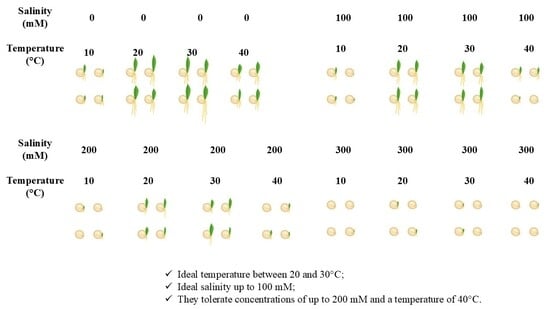
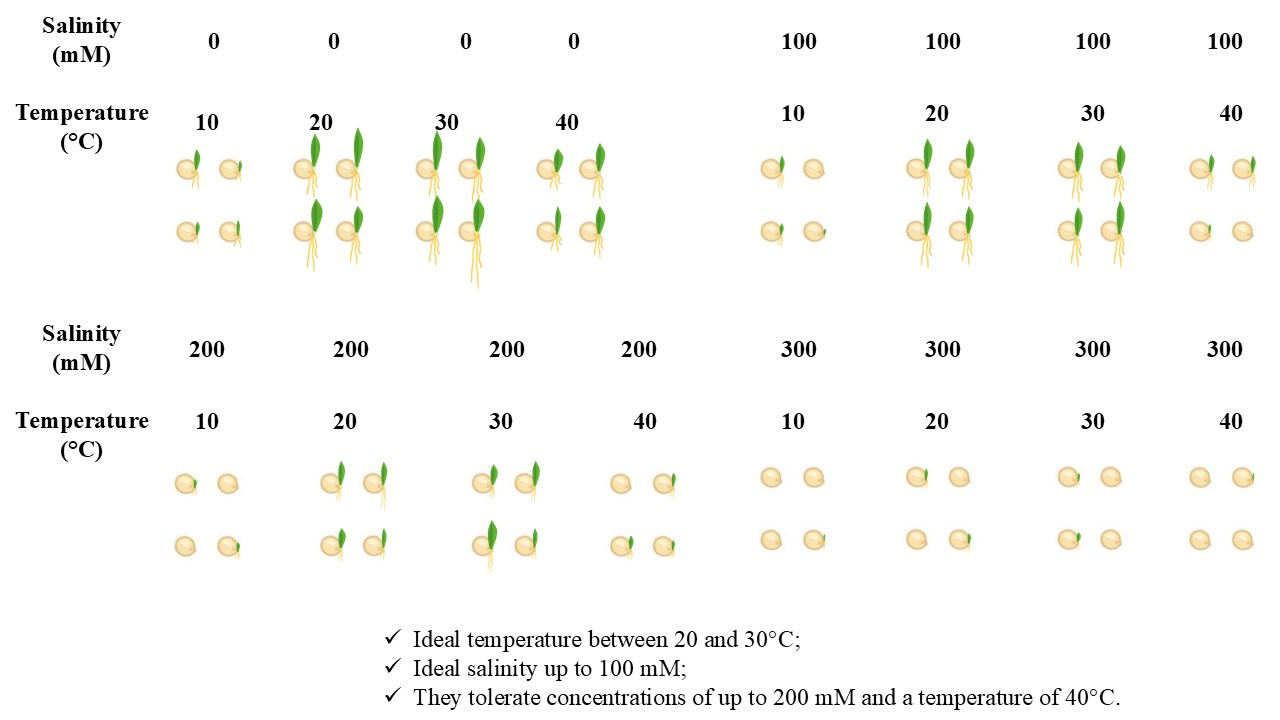
When subjected to a combination of abiotic stresses in the field, such as saline and thermal stress, plants can suffer devastating effects on their development. Regarding millet, little is known about the effects of temperature and salinity on its germination and initial development. Therefore, the objective of this study was to evaluate the germination responses and initial development of millet seedlings subjected to thermal and saline stresses. The experiment was conducted in a completely randomized design with 16 treatments in a 4 × 4 factorial scheme, four salinity levels (0.0—control, 100, 200, and 300 mM) and four temperatures (10, 20, 30, and 40 °C). The germination percentage, average germination time, germination speed index, shoot length, and primary root length of seedlings were evaluated. The different salinity concentrations and temperatures significantly influenced all the variables studied, gradually reducing with increasing salinity and decreasing temperature, with optimal ranges at higher temperatures and lower salinity levels. It is concluded that the ideal conditions for germination and initial development of millet are as follows: a temperature between 20 and 30 °C and the absence of salinity. They tolerate concentrations of up to 200 mM and temperatures of 40 °C. On the other hand, high salinity and low temperature can delay and/or inhibit germination.

Graphical Abstract

1. Introduction

One of the environmental challenges to be overcome is the production of food amid climate change. The global warming, main driving force of environmental changes, provides changes in the patterns of rainfall and evapotranspiration worldwide, making agricultural production systems more vulnerable to these environmental disturbances [1]. Arid and semi-arid regions are the most affected, being more subject to the impacts of climate change [2]. From this perspective, climate change contributes to changes in climate indices, with an increase in temperature and a reduction in good-quality water, promoting stress in agricultural crops.
Among the stresses that most influence plants, thermal and saline stress can be mentioned, since they directly affect several aspects that interfere with plant growth and development and, consequently, in the production of biomass [2,3]. Under these circumstances, studies and research related to crop responses to environmental adversities, mainly related to germination and initial development, are growing, seeking the adoption of adapted and/or tolerant species to stress conditions.
Excess salts in the substrate impair the germination process, mainly by restricting water uptake by seeds due to a decrease in the osmotic potential of the medium [4]. In addition, salt stress causes the accumulation of reactive oxygen species, which can damage cell membranes and reduce germination, as well as generate ionic and osmotic effects [5]. These conditions alter the biochemical and physiological functions of plants, highlighting the need to study germination responses in species adapted or tolerant to saline conditions.
Another important factor in plant germination and development is temperature, affecting different physiological processes, including photosynthesis, respiration, and hormone levels [6]. According to [4], thermal stress during the germination process can be analyzed from changes in the percentage, speed, and uniformity of germination, since the temperature affects water absorption and the fundamental biochemical reactions for germination.
Moreover, temperature affects all stages of early crop development. The occurrence of thermal stress can lead to alterations in the activity of enzymes essential for seedling development, such as lipase, alanine aminotransferase, aspartate aminotransferase, and ribonuclease, in addition to significantly reducing protein synthesis [7,8,9]. These alterations can compromise seedling establishment and overall crop success.
In environments with high temperatures and salinity levels, it is necessary to use adapted species. In this scenario, millet (Pennisetum glaucum) stands out, as it is an agricultural species highly adapted to semiarid environments, with tolerance to water and thermal stress [10]. In addition to presenting reasonable agronomic performance, even submitted to average salinity levels [11].
Millet is a crop belonging to the Poaceae family, which has a C4 metabolism and a well-developed root system, which allows it to better adapt to the semiarid climate [12]. In addition, it has high biomass production and satisfactory nutritional quality for forage production. Because it has an extensive root system, millet can extract water from deeper layers of the soil, allowing it to survive in environments susceptible to periods of drought, in addition to allowing greater tolerance to saline environments [12]. Furthermore, the crop has low nutritional demand and tolerance to high temperatures [13].
When subjected to a combination of abiotic stresses in the field, such as salinity and heat stress, plants can suffer devastating effects on their development [14]. On the other hand, several studies indicate that many species have the ability to tolerate salinity within a specific temperature range. When this range is exceeded, the physiological processes involved in germination and early seedling development are significantly altered, reducing both the percentage and uniformity of seedling emergence [15,16].
Little is known about the combined effects of temperature and salinity on the germination and early development of millet. With this, the objective was to evaluate the germinative responses and the initial development of millet seedlings submitted to thermal and saline stresses.

2. Materials and Methods

2.1. Location of the Study

The experiment was conducted at the Laboratory of the Graduate Program in Plant Production at the Federal Rural University of Pernambuco (UFRPE), Serra Talhada Academic Unit, located in the municipality of Serra Talhada, Pernambuco State, Brazil (7°59′ S, 38°15′ W; altitude of 431 m). The seeds used were pearl millet (Pennisetum glaucum), cultivar IPA Bulk 1 BF, which, according to [17], is tolerant to salinity. According to a previous germination test, the seeds showed a viability of 98%.
In the simulation of salt and thermal stress, 16 treatments were evaluated, distributed following a randomized design in a 4 × 4 factorial scheme, four salinity levels (0.0 (control); 100, 200, and 300 mM) and four temperatures (10, 20, 30, and 40 °C). To obtain saline solutions, sodium chloride (NaCl) was used. Germination and vigor tests were performed to evaluate the effect of the different treatments described below.

2.2. Germination

For each treatment, 200 seeds were used, divided into four replications of 50 seeds. Sowing was carried out in gerboxes on two sheets of blotting paper, previously moistened with different salt concentrations, in the ratio of 2.5 dry weight of the blotting paper, with the exception of the zero level, which corresponded to the control treatment using only distilled water. These were placed in a B.O.D. (Biological Oxygen Demand) germination chamber at temperatures of 10, 20, 30, and 40 °C, with a 12 h photo period, for seven days. The temperature inside the chamber remained homogeneous, with a maximum variation of ±1 °C, and calibration was performed using a digital thermometer. Germinated seeds were considered to be those that had a primary root of 1 mm in length [18].

Germination Speed Index

It was calculated using the sum of daily counts of the number of germinated seeds, divided by the number of days between sowing and germination, according to the equation of [17] GSI = (G1/N1) + (G2/N2) + (Gn/Nn), where GSI = germination speed index; G1, G2, …, Gn = number of germinated seeds computed in the first count, the second count and the last count, and N1, N2, …, Nn = number of days from sowing to the first, second and last count.

2.3. Mean Germination Time

The seeds that were incubated under the conditions prior to the germination test were evaluated daily from the third to the seventh day after sowing. The results were expressed in days, using the following equation: t = (∑niti)/(∑ni), where t = average germination time; ni = number of germinated seeds per day, and ti = incubation time (days), according to [13].

2.4. Length of Shoot and Primary Root of Seedlings

After the seedling germination period, seven days, both the length of the root system and the aerial part were measured. The roots and shoots of the normal seedlings of each repetition were separated in the collection region and measured with the aid of a ruler graduated in centimeters, with the results expressed in centimeters (cm).

2.5. Statistical Analysis

The data were subjected to normality and homoscedasticity tests. Given that the assumptions were met, the data were submitted to analysis of variance. In the case of significant interaction between the two factors, the data were analyzed on the response surface, and the means were submitted to regression analysis. All statistical analysis was performed in the SAS software version 9.1 via the PROC GLM package.

3. Results

3.1. The Germination Percentage Is Affected by the Interactive Effect of Salinity and Temperature

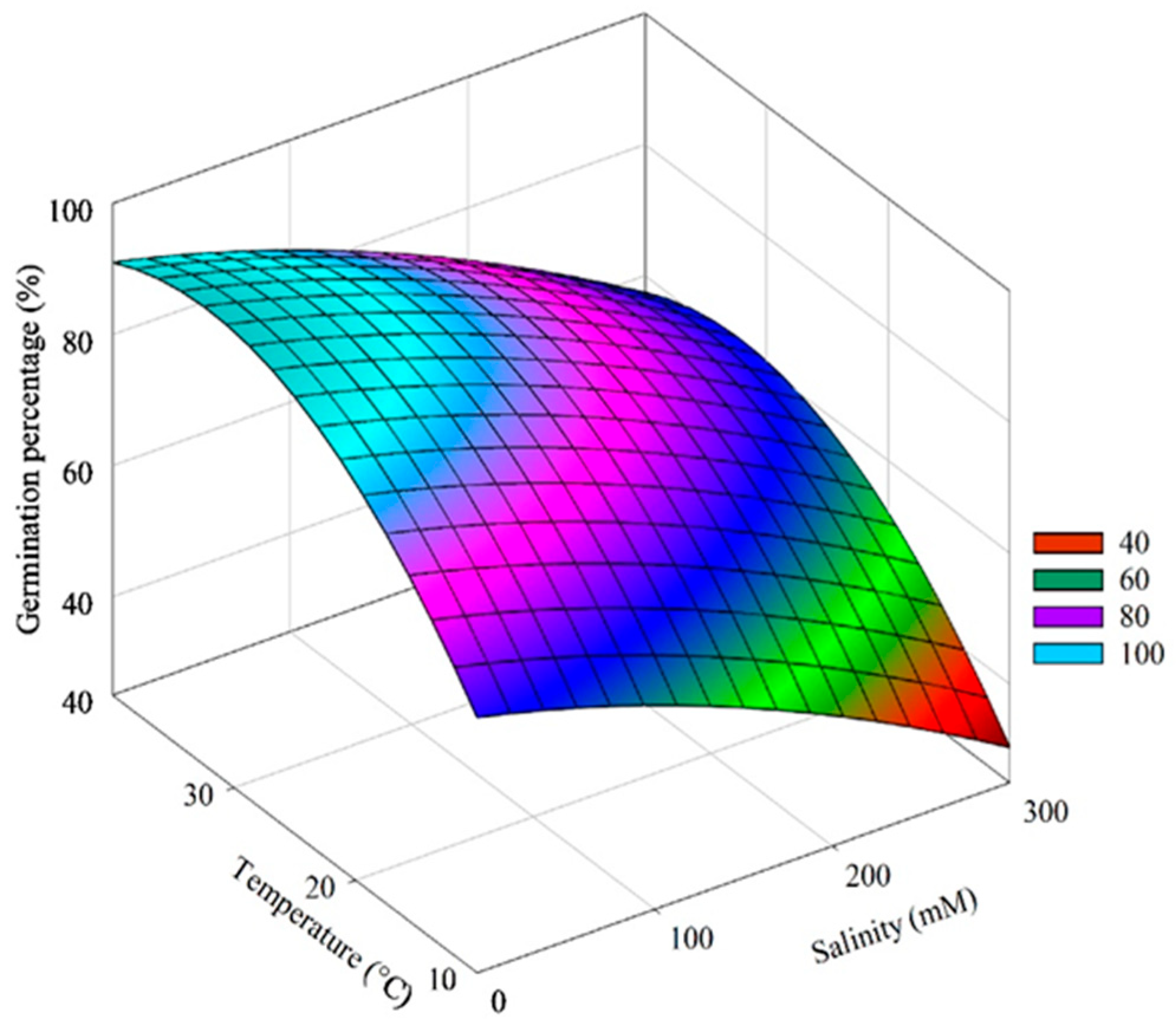
In the evaluation of the germination percentage of millet seeds, the adjusted model is expressed by the following equation:
G   =   29.67     0.061 SAL   +   4.06 TEM     0.0002 SAL 2     0.063 TEM 2
The different salt concentrations and temperatures influence the germination of millet seeds, with significant interaction between the two factors (p-value < 0.01), indicating that both salinity and temperature were key factors in the germination rate of the seeds. With the increase in temperature in the non-saline treatment, germination showed an increase until reaching the temperature of 30 °C, with a decrease when the temperature was 40 °C. Under high concentrations of salinity and low temperature, the germination rate of seeds was low (20.5%), whereas when the temperature increased, even at high salinities, the germination rate was above 60%; that is, the germination rate of millet seeds showed a gradual reduction with an increase in salinity and a reduction in temperature (Figure 1).

3.2. Under Low Temperatures, the Germination Rate Is Limited by Salinity

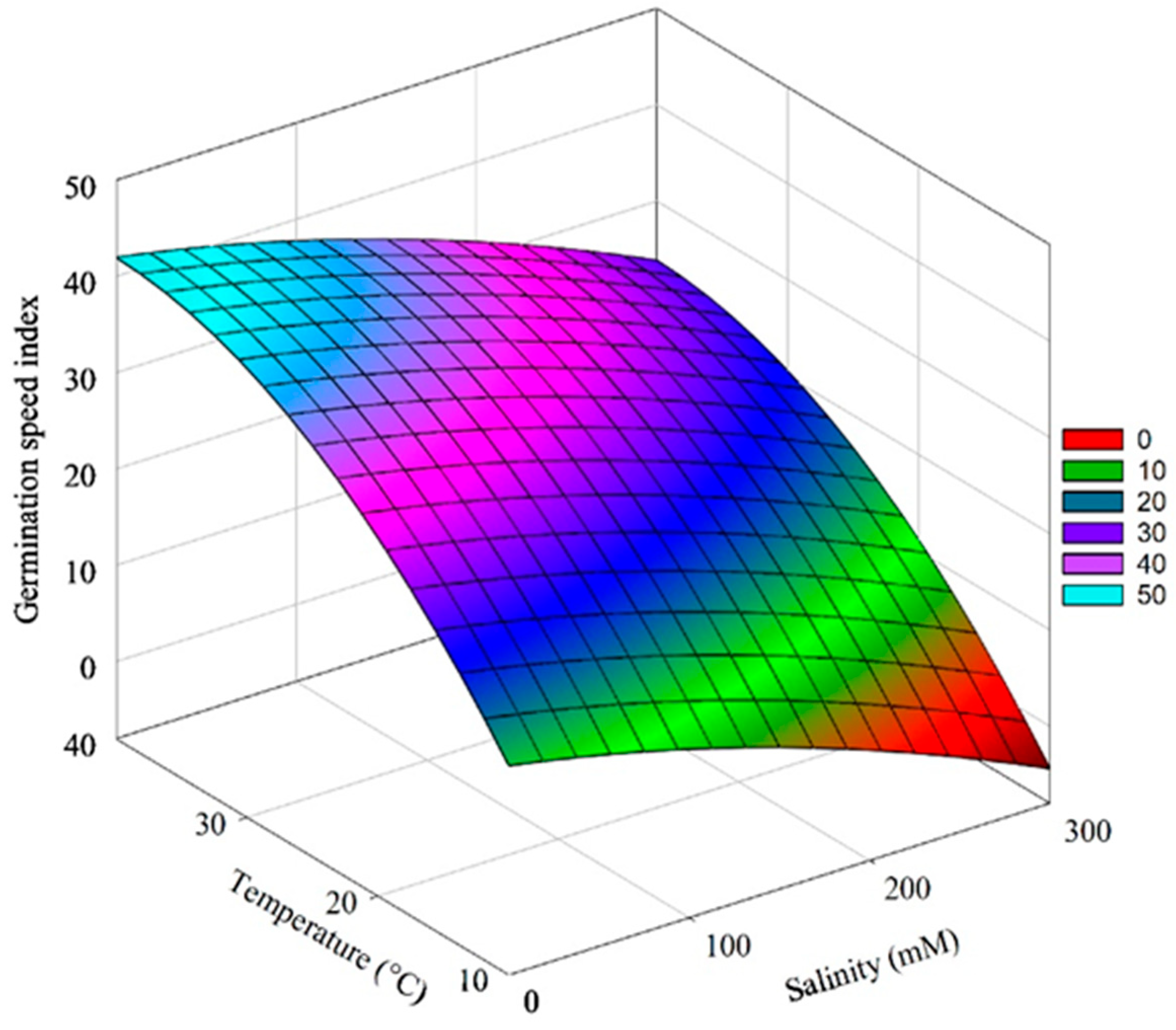
The adjusted model for the germination speed index (GSI) was defined by the following equation:
GSI   =   7.88     0.033 SAL   +   2.46 TEM     0.00009 SAL 2     0.030 TEM 2
Temperature and salinity significantly influenced the germination speed index of millet seeds, with a significant interaction (p-value < 0.01) between the two factors. The results presented in Figure 2 demonstrate that, under high salinity (300 mM) and low temperature, the germination speed index (GSI) was lower (1.94) than the other treatments, while under high temperatures (30 and 40 °C) and in the absence of salinity, the GSI presented higher values (40 and 39.83, respectively). Thus, it can be seen that the increase in salinity and the reduction in temperature promote a decrease in the GSI, demonstrating the direct influence of temperature and salinity on the speed of the germination process of millet seeds; the lower the speed index, the lower the number of seeds germinated per day.

3.3. Germination Is Slowed by Increased Salinity and Reduced Temperature in Isolation

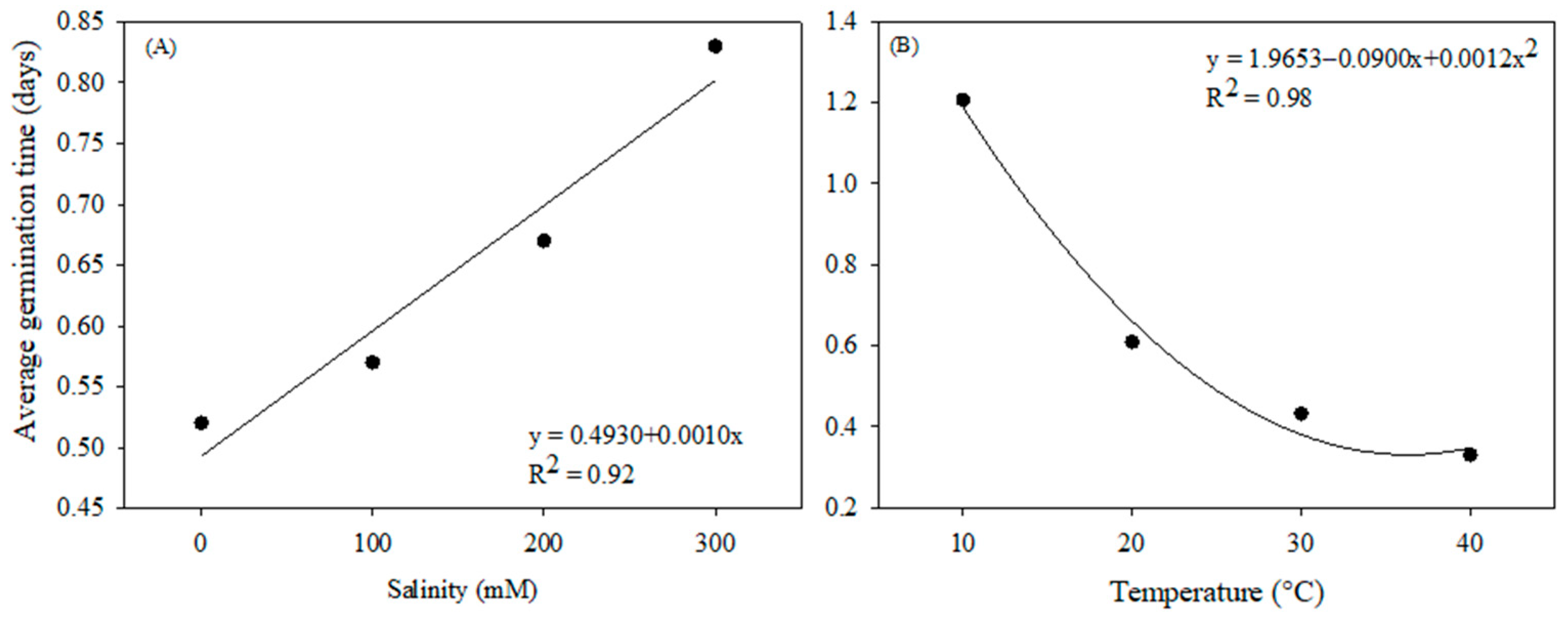
The results presented in Figure 3 show that temperature and salinity significantly affected (p-value < 0.01) the average germination time; however, no significant effect was observed for the interaction between the two factors (p-value > 0.05). For salinity (Figure 3A), it was observed that there was a positive linear behavior, with a coefficient of determination equal to 0.92, demonstrating that the increase in salinity causes a delay in the germination process, requiring a longer time to germinate.
For temperature (Figure 3B), quadratic behavior is observed, with a coefficient of determination equal to 0.98. As the temperature increases, it becomes noticeable that the Mean germination time presents a gradual reduction; seeds subjected to low temperatures have their germination process delayed, while higher temperatures will accelerate the germination process, that is, the higher the temperature, the shorter the time required for the seeds to germinate.

3.4. Under Low Salinity and Moderate Temperature, the Aerial Part of the Seedling Is Maximized

The fitted curve in relation to the length of the aerial part of the seedlings is expressed by the following equation:
LAP   =   8.51 exp ( 0.5 SAL     20.90 118.58 2 + TEM     35.52 9.01 2
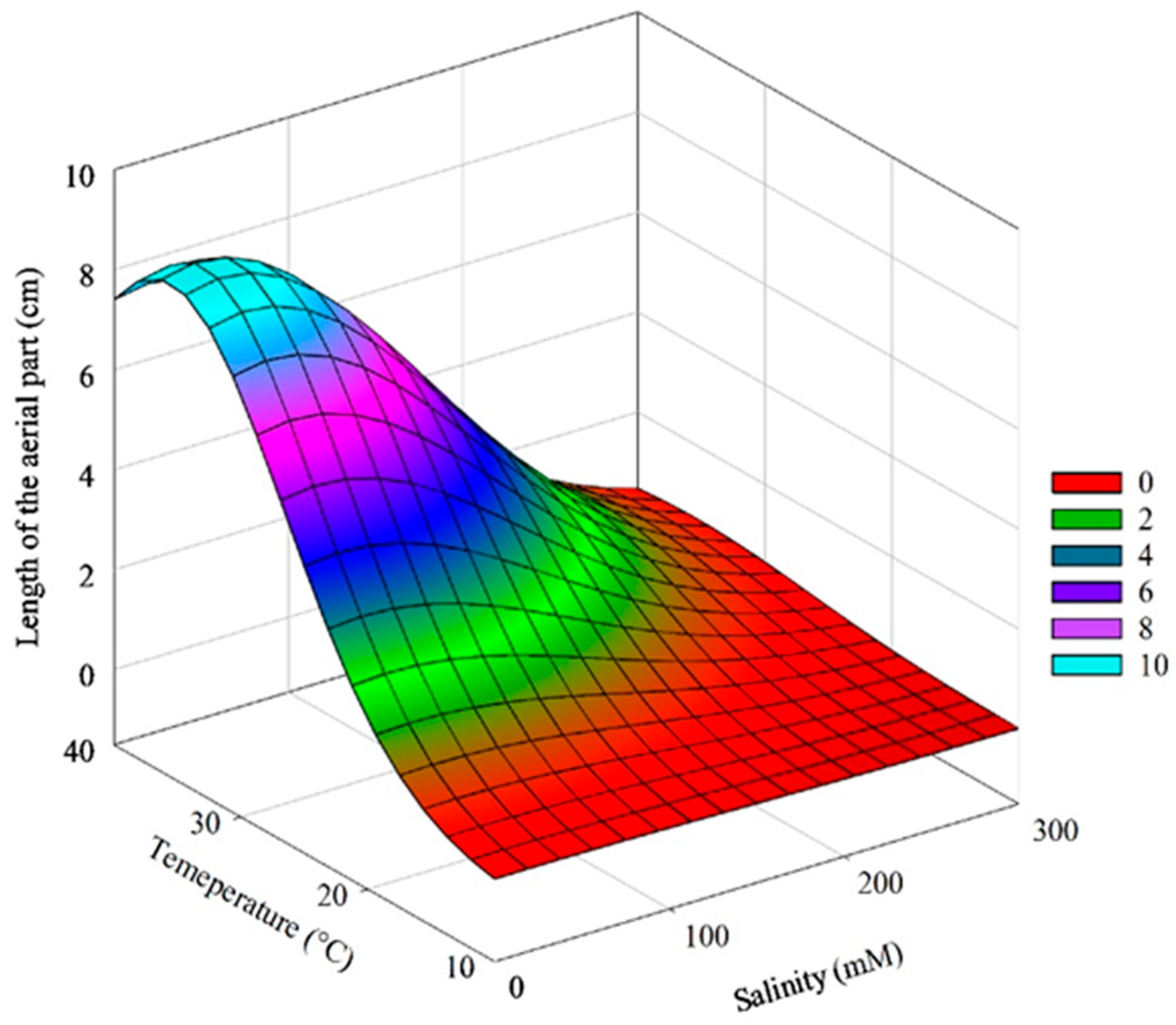
The length of the aerial part was affected by salinity (p-value < 0.01), temperature (p-value < 0.01), and the interaction of the two factors (p-value < 0.01). The lowest values of length of the aerial part were observed when the highest salinity (300 mM) was constant, with average values equal to 0.05; 0.0 and 0.0 cm for the first three temperatures (10; 20 and 30 °C, respectively), with an increase in the maximum temperature (40 °C), with an average value equal to 0.48 cm (Figure 4). In the absence of salinity (0 mM), the lowest values were found when the seeds were submitted to low temperature, rising gradually with increasing temperature, with a peak temperature of 30 °C (7.73 cm), demonstrating the direct influence of salinity and temperature on the characteristics of the aerial part length of millet seedlings.

3.5. Under High Temperature, Root Growth Is Favored, Even Under Saline Conditions

For the variable length of the millet root system, the adjusted model is expressed by the following equation:
RSL   =   11.79 exp ( 0.5 SAL     23.79 150.36 2 + TEM     32.66 11.69 2
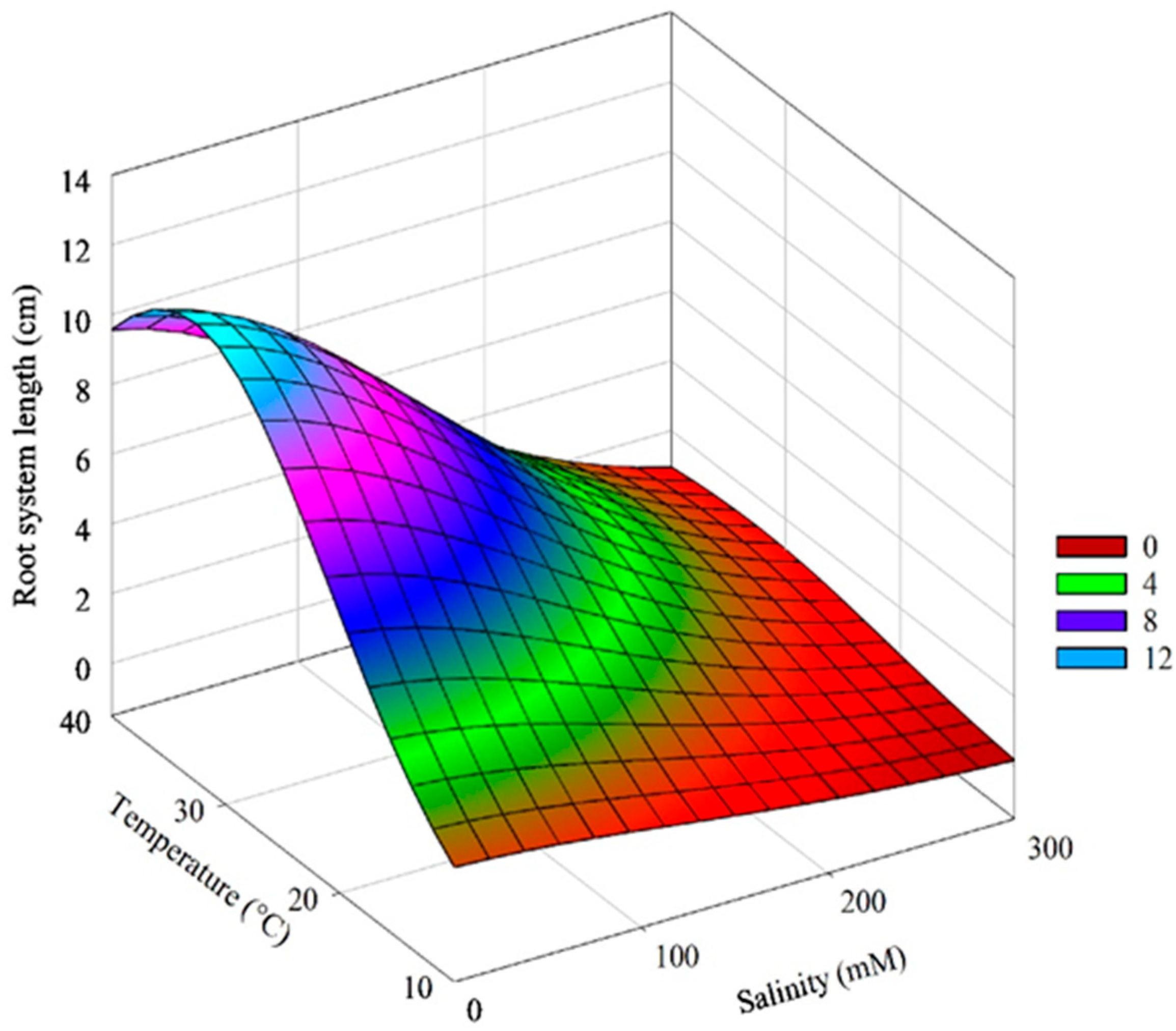
For the length of the root system, the results were similar to the lengths of the aerial part, with significant effect for temperature (p-value < 0.01), salinity (p-value < 0.01), and for the interaction of both factors (p-value < 0.01). For the highest salt concentration (300 mM), it is observed that the lowest temperatures (10, 20, and 30 °C) provided the lowest values of root length (0.10. 0.32, and 0.10 cm, respectively), when compared to a higher temperature (40 °C) at the same concentration of salinity, with an average value equal to 1.70 cm. In the absence of salinity, it appears that there is a gradual increase with increasing temperature, with a peak temperature of 30 °C (11.88 cm) (Figure 5). Within this context, it is observed that higher temperatures are more favorable for the increase in the root system, even in the presence of saline conditions.

4. Discussion

4.1. The Increase in Salinity Reduces Millet Germination; However, the Germination Response Varies According to Temperature

Temperature acts as an additive factor, where higher temperatures favor a higher percentage of germination [12]. In contrast, low temperatures lead to less germination [16], as observed in this experiment, since this process is delayed. Most tropical species have optimal germination temperatures between 20 and 30 °C [16]; as millet originates from the African continent (the Sahara Desert), characterized by a desert climate, it tends to tolerate higher temperatures.
In this sense, recent studies corroborate the findings in the present research, indicating that temperatures close to the physiological optimum increase enzymatic activity, membrane fluidity and the mobilization of reserves during the imbibition process, leading to partial compensation of the osmotic limitations imposed by salinity [19], making it possible to explain the higher germination percentages observed in this study when the seeds were subjected to high temperatures, even at high salinity levels.
Temperatures above what is tolerable by the crop contribute to a reduction in germination, as observed. According to [4], the temperature has a stimulating effect on germination, but when exceeding a certain limit, the temperature’s stimulating effect becomes an inhibitory effect, reducing the percentage of germination, which can lead to total nullity in germination. This response may be associated with protein denaturation due to supra-optimal temperatures, which promotes enzymatic instability and excessive production of reactive oxygen species (ROS), compromising cellular homeostasis and harming germination processes [20].
It is considered that for the germination process, there are three critical points of temperature: optimal, minimum, and maximum. The temperature at which germination occurs more quickly and in a higher percentage is considered optimal [4]; in turn, at minimum and maximum temperatures, there is no more germination. When the temperature moves from the optimum to the maximum, a higher speed of the germination process is observed in the beginning; however, with the increase in the temperature, the denaturation of the proteins occurs, culminating in the reduction in the germination percentage [14]. In turn, when the temperature moves away from the optimum towards the minimum, the germination process becomes slower, due to the lower speed of absorption of water and the process of digesting the reserves.
Thus, temperatures above or below the optimum provide changes in seed metabolism that promote changes in the germination process, such as changes in the permeability of cell membranes, protein denaturation, changes in enzymes, a decrease in the amount of free amino acids, and changes in the speed of metabolic reactions [3].
Another factor of high importance in seed germination is associated with substrate salinity, since it becomes a major impediment to germination when at high levels, as they induce the deficiency of some important elements for the germination process, such as calcium and potassium, causing protein disorganization and loss of cell turgidity [21].
Ref. [15] stated that large concentrations of salts in the substrate reduce water potential, decreasing the water absorption capacity of the seeds, and consequently reducing the germination capacity. Even in small quantities, salt compromises germination, leading the seed to a state of dormancy, causing a decrease in the germination rate and failure in the stand [22].
Higher temperatures close to the physiological optimum for millet appear to reduce the negative effect of salinity on germination, suggesting that the plant exhibits greater resistance to salt stress under these conditions (Figure 1 and Figure 2, and 3B). Similar results were observed by [16] in soybean, where suboptimal temperatures accentuated the effects of salt stress.
The results represent important findings in light of the possibility of temperature increases resulting from climate change. However, the data obtained in the study were generated under constant temperature conditions, which do not reflect what occurs during climate change events [15].

4.2. Low Temperatures Intensify the Deleterious Effect of Salinity on Millet Germination

According to [23], the presence of some ions in excess can reduce seedling development but also interfere with water entering the seed; in this way, it reduces germination and the speed with which it occurs. The reduction in germination speed is associated with the presence of salts, which present some toxicity, with damage to the membrane walls, in addition to promoting an increase in osmotic potential and consequently reducing water absorption [24].
Another important aspect is the irreversible effect that salt can have on the seed, causing a state of dormancy/quiescence or even cell death [25]. The reduction in germination speed was not so severe due to the fact that millet has a small seed, with small seeds being able to tolerate the saline effect more, thus demanding lower water potentials [18]. In this way, millet seeds require less water absorption, which increases pressure and cell division, even in less favorable conditions [26]. The effect of salinity can be exacerbated at lower temperatures (Figure 2); millet’s tolerance to salinity is reduced when it is exposed to low temperatures [25]. In a study carried out with the corn culture observed that the temperatures for optimal germination were between 25 and 35 °C, and under a lower temperature, 16 °C, associated with high saline levels, the reduction in germination speed is attributed to possible dormancy. It should be noted that lower temperatures delay the absorption of water, enzymatic digestion, the mobilization of reserve tissue to the growth points of the embryonic axis, and metabolic assimilation, reflecting on the delay of the germination process [4].

4.3. Salinity and Temperature Affect Germination Through Distinct Physiological Pathways

According to [23], reduced temperatures can increase the time for seed germination and sometimes can even cause seed dormancy.
The increase in salinity delayed the days needed for the germination process, a fact that may be linked to the increase in osmotic potential, which, by making it harder for water to enter the seed, makes germination slower [25].
Higher concentrations of NaCl can increase the osmotic potential and cause phytotoxicity, generally associated with excess Na+ and Cl ions, in addition to affecting the balance between the production and scavenging of reactive oxygen species (ROS) [26]. The accumulation of ROS can cause damage to essential cellular molecules, such as lipids, proteins, and nucleic acids, resulting in the inhibition of seed germination [27].
Analyzing the absence of interaction between the studied factors (i.e., salinity and temperature) and average germination time indicates that these factors act through distinct physiological pathways, intensifying the importance of using independent management strategies aimed at mitigating the effects of saline and thermal stress.

4.4. The Aboveground Biomass Production of Millet Seedlings Reaches Maximum Values at Moderate Temperatures, Although This Response Is Modulated by Salinity Levels

Salinity can act in two different ways in reducing the growth of the aerial part of a plant; the first is by increasing the osmotic pressure in the cell, which occurs quickly. And the second, slower way, is the accumulation of Na+ in the aerial part, mainly in the leaves, preventing cell expansion [28].
According to [29], when some plant tissue is subjected to higher salt concentrations, the hydrolysis of macromolecules tends to be reduced, resulting in a decrease in water absorption and causing changes in the translocation of seed reserves to the embryonic axis.
When the influence of temperature on the length of the area is observed, it is noticeable that the highest values are present when the crop is submitted to its optimum temperature (20 to 30 °C), since the crop is a tropical grass.
The results may be related to the effect of temperature variation on seed germination, since such variation can stimulate the production of elevated levels of abscisic acid (ABA) [30]. Under high-temperature conditions, salinity can negatively affect germination by altering the seed imbibition process and reducing the development of the shoot of seedlings [31].

4.5. The Increase in Temperature Stimulates Root Development in Millet Seedlings

The increase in salinity, coupled with a reduction in temperature, promotes a reduction in the length of the root system. This result is associated with the effect of salt on the seed, and the presence of salt in the solution promotes a drop in the osmotic potential, thus causing water stress, resulting in less vigor and reduced seedling development, a process that can be aggravated in plants that do not show tolerance to salinity, where a high presence of ions can affect the permeability of seed cell membranes, causing lower germination rates and often even death [32].
According to [33], salt reduces embryonic growth and development during seed germination, which antagonizes some biochemical processes that are directly linked to the initial development of the root system and the aerial part.
The highest values for the length of the root system were found at temperatures around 30 °C, possibly due to the fact that millet is a tropical grass, so its initial development is favored at temperatures around 20 to 30 °C, on the other hand when associating the temperatures with the salinity values, it is noticed that the seedling is able to develop in moderately saline conditions and with high temperatures, corroborating the findings of [34]. Thus, it is noted that the millet has a sensitivity to temperatures below 20 °C.

5. Conclusions

This study aimed to identify the influence of temperature and salinity on the germination and initial development of millet. It was found that ideal conditions for millet germination and initial development are temperatures of 20 to 30 °C and the absence of salinity, although millet seeds maintain germination and form normal seedlings at salinity levels up to 100 mM, tolerating concentrations up to 200 mM and a temperature of 40 °C. Additionally, high salinity and low temperature delay and/or inhibit millet germination.
Further research is recommended to understand the dynamics of millet growth and development after its initial process is subjected to thermal and saline stress, as well as the use of modeling in current and future climate scenarios.

Author Contributions

C.P.A.: Data acquisition, analysis and interpretation of data, and writing of the article. B.C.J.: Data acquisition, analysis, and interpretation of data, and writing of the article. A.K.P.R.: Data acquisition, analysis, and interpretation of data, and writing of the article. J.N.D.S.: Data acquisition, analysis and interpretation of data, and writing of the article. D.S.M.d.M.V.: Data acquisition, analysis and interpretation of data, and writing of the article. D.d.S.E.: Data acquisition, analysis, and interpretation of data, and writing of the article. C.M.P.G.S.: Data acquisition, analysis and interpretation of data, and writing of the article. M.L.D.M.V.L.: Data acquisition, analysis, and interpretation of data, and writing of the article. M.A.D.D.S.: Data acquisition, analysis, and interpretation of data, and writing of the article. T.G.F.d.S.: Data acquisition, analysis and interpretation of data, and writing of the article. All authors have read and agreed to the published version of the manuscript.

Funding

This study was financed in part by the Coordenação de Aperfeiçoamento de Pessoal de Nível Superior—Brasil (CAPES).

Data Availability Statement

The data are available in the article.

Acknowledgments

We would like to thank the Federal Rural University of Pernambuco and CAPES for their financial support.

Conflicts of Interest

The authors declare no conflicts of interest.

References

  1. Pravalie, R.; Pitica, A.; Rosca, B.; Sfica, L.; Bandoc, G.; Tiscovschi, A.; Patriche, C. Spatio-temporal changes of the climatic water balance in Romania as a response to precipitation and reference evapotranspiration trends during 1961–2013. Catena 2019, 172, 295–312. [Google Scholar] [CrossRef]
  2. Mathur, S.; Sharma, M.P.; Jajoo, A. Improved photosynthetic efficacy of maize (Zea mays) plants with arbuscular mycorrhizal fungi (AMF) under high temperature stress. J. Photochem. Photobiol. B Biol. 2018, 180, 149–154. [Google Scholar] [CrossRef]
  3. Hessini, K.; Issaoui, K.; Ferchichi, S.; Saif, T.; Abdelly, C.; Siddique, K.H.M.; Cruz, C. Interactive effects of salinity and nitrogen forms on plant growth, photosynthesis and osmotic adjustment in maize. Plant Physiol. Biochem. 2019, 139, 171–178. [Google Scholar] [CrossRef]
  4. Marcos Filho, J. Fisiologia de Sementes de Plantas Cultivadas, 2nd ed.; FEALQ: Piracicaba, Brazil, 2015; p. 660. [Google Scholar]
  5. Secrafi, M.; Bakhshandeh, E.; Boughalleb, F.; Abdellaoui, R. Exploring temperature and salinity effects on seed germination in North African pastoral grasses: A halo-thermal modeling approach in the context of climate change. Environ. Exp. Bot. 2024, 222, 105765. [Google Scholar] [CrossRef]
  6. Khaeim, H.; Kende, Z.; Jolánkai, M.; Kovács, G.P.; Gyuricza, C.; Tarnawa, Á. Impact of temperature and water on seed germination and seedling growth of maize (Zea mays L.). Agronomy 2022, 12, 397. [Google Scholar] [CrossRef]
  7. Ostadian Bidgoly, R.; Balouchi, H.; Soltani, E. Effect of temperature and water potential on seed germination of Carthamus tinctorius L.: Cardinal temperatures quantification and modeling using hydrothermal time. Ind. Crops Prod. 2018, 113, 121–127. [Google Scholar] [CrossRef]
  8. Gong, M.; Chen, B.O.; Li, Z.G.; Guo, L.H. Heat shock-induced cross-adaptation to thermal, cold, water and salt stress in maize seedlings and involvement of H2O2. J. Plant Physiol. 2001, 158, 1125–1130. [Google Scholar] [CrossRef]
  9. Ullah, A.; Ahmad, A.; Khaliq, T.; Akhtar, J. Recognizing production options for pearl millet in Pakistan under changing climate scenarios. J. Integr. Agric. 2017, 16, 762–773. [Google Scholar] [CrossRef]
  10. Costa, F.H.; Sousa, G.G.D.; Lima, J.M.D.P.; Almeida, M.D.S.; Sousa, H.C.; Gomes, S.P.; Azevedo, B.M.D. Frequencies of irrigation in millet crop under salt stress. Rev. Bras. De Eng. Agrícola E Ambient. 2024, 28, e272197. [Google Scholar] [CrossRef]
  11. Devi, P.B.; Vijayabharathi, R.; Sathyabama, S.; Malleshi, N.G.; Priyadarisini, V.B. Health benefits of finger millet (Eleusine coracana L.) polyphenols and dietary fiber: A review. J. Food Sci. Technol. 2014, 51, 1021–1040. [Google Scholar] [CrossRef]
  12. Dias-martins, A.M.; Pessanha, K.L.; Pacheco, S.; Rodrigues, J.A.S.; Carvalho, C.W.P. Potential use of pearl millet (Pennisetum glaucum (L.) R. Br.) in Brazil: Food security, processing, health benefits and nutritional products. Food Res. Int. 2018, 109, 175–186. [Google Scholar] [CrossRef] [PubMed]
  13. Taiz, L.; Zeiger, E.; Møller, I.M.; Murphy, A. Fisiologia e Desenvolvimento Vegetal, 6th ed.; Artmed: Porto Alegre, Brazil, 2017. [Google Scholar]
  14. Al-Shoaibi, A.A. Combined effects of salinity and temperature on germination, growth, and gas exchange in two cultivars of Sorghum bicolor. J. Taibah Univ. Sci. 2020, 14, 812–822. [Google Scholar] [CrossRef]
  15. Nikolić, N.; Ghirardelli, A.; Schiavon, M.; Masin, R. Effects of the salinity-temperature interaction on seed germination and early seedling development: A comparative study of crop and weed species. BMC Plant Biol. 2023, 23, 446. [Google Scholar] [CrossRef]
  16. Ministério da Agricultura e Pecuária. Teste de germinação. In Regras Para Análise de Sementes (RAS); MAPA: Brasília, Brasil, 2025. [Google Scholar]
  17. Lucena, L.R.R.; Simões, V.J.L.P.; Bezerra, C.W.F.; Izidro, J.L.P.S.; Souza, M.S.; Leite, M.L.d.M.V. Germination rate of Pennisetum glaucum seedling in function of saline stress, growth and biomass of aerial part and root. Braz. J. Biom. 2019, 37, 481–492. [Google Scholar] [CrossRef]
  18. Labouriau, L.G. A Germinação das Sementes; Secretaria Geral da Organização dos Estados Americanos: Washington, DC, USA, 1983; p. 174. [Google Scholar]
  19. Stefania, M.; Rossi, L.; Silva, J.A.; Petruzzelli, L. Interactive effects of salinity and temperature on seed germination and early seedling growth. BMC Plant Biol. 2023, 23, 465. [Google Scholar]
  20. Ellouzi, H.; Zorrig, W.; Amraoui, S.; Oueslati, S.; Abdelly, C.; Rabhi, M.; Siddique, K.H.M.; Hessini, K. Seed priming with salicylic acid alleviates salt stress toxicity by suppressing ROS accumulation and improving antioxidant defense systems in barley. Antioxidants 2023, 12, 1779. [Google Scholar] [CrossRef]
  21. Liu, Y.; Zhang, S.; De Boeck, H.J.; Hou, F. Effects of temperature and salinity on seed germination of three common grass species. Front. Plant Sci. 2021, 12, 731433. [Google Scholar] [CrossRef] [PubMed]
  22. Betoni, R.; Scalon, S.P.Q.; Mussury, R.M. Salinidade e temperatura na germinação e vigor de sementes de mutambo (Guazuma Ulmifolia Lam.) (Sterculiaceae). Rev. Árvore 2011, 35, 605–616. [Google Scholar] [CrossRef]
  23. Matthees, H.L.; Thom, M.D.; Gesch, L.; Forcella, F. Salinity tolerance of germinating alternative oilseeds. Ind. Crops Prod. 2018, 113, 358–367. [Google Scholar] [CrossRef]
  24. Malik, J.A.; AlQarawi, A.A.; AlZain, M.N.; Dar, B.A.; Habib, M.M.; Ibrahim, S.N.S. Effect of salinity and temperature on the seed germination and seedling growth of desert forage grass Lasiurus scindicus Henr. Sustainability 2022, 14, 8387. [Google Scholar] [CrossRef]
  25. Ibrahim, E.A. Seed priming to alleviate salinity stress in germinating seeds. J. Plant Physiol. 2016, 192, 38–46. [Google Scholar] [CrossRef]
  26. Abu-Ria, M.E.; Elghareeb, E.M.; Shukry, W.M.; Abo-Hamed, S.A.; Ibraheem, F. Mitigation of drought stress in maize and sorghum by humic acid: Differential growth and physiological responses. BMC Plant Biol. 2024, 24, 514. [Google Scholar] [CrossRef] [PubMed]
  27. Saberali, S.F.; Moradi, M. Effect of salinity on germination and seedling growth of Trigonella foenum-graecum, Dracocephalum moldavica, Satureja hortensis and Anethum graveolens. J. Saudi Soc. Agric. Sci. 2019, 18, 316–323. [Google Scholar] [CrossRef]
  28. Kazemi, K.; Eskandari, H. Effects of salinity stress on germination and early seedling growth of rice (Oryza sativa) cultivars in Iran. Afr. J. Biotechnol. 2011, 10, 17789–17792. [Google Scholar] [CrossRef]
  29. Sbrussi, C.A.G.; Zucareli, C. Germinação de sementes de milho com diferentes níveis de vigor em resposta à diferentes temperaturas. Semin. Ciências Agrárias 2014, 35, 215–226. [Google Scholar] [CrossRef][Green Version]
  30. Cui, X.; Wang, B.; Chen, Z.; Guo, J.; Zhang, T.; Zhang, W.; Shi, L. Comprehensive physiological, transcriptomic, and metabolomic analysis of the key metabolic pathways in millet seedling adaptation to drought stress. Physiol. Plant. 2023, 175, e14122. [Google Scholar] [CrossRef] [PubMed]
  31. Chang, J.; Cheong, B.E.; Natera, S.; Roessner, U. Morphological and metabolic responses to salt stress of rice (Oryza sativa L.) cultivars which differ in salinity tolerance. Plant Physiol. Biochem. 2019, 144, 427–435. [Google Scholar] [CrossRef]
  32. Kasana, R.A.; Iqbal, M.; Ali, Q.; Saeed, F.; Rizwan, M.; Perveen, R.; Yong, J.W.H. Synergistic effects of glutathione and zinc seed priming in alleviating salt stress on maize seed germination, metabolite levels, seedling vigor, and nutrient acquisition. Plant Stress 2025, 15, 100767. [Google Scholar] [CrossRef]
  33. Cavalcante, J.A.; Reolon, F.; Moraes, C.L.; Ternus, R.M.; Silva, R.N.O.; Martins, A.B.N.; Moraes, D.M. Potencial fisiológico de sementes de duas cultivares de arroz em resposta ao estresse salino. Rev. Bras. De Ciências Agrárias 2019, 42, 184–193. [Google Scholar]
  34. Guma, I.R.; Padrón-Mederos, M.A.; Santos-Guerra, A.; Reyes-Betancort, J.A. Effect of temperature and salinity on germination of Salsola vermiculata L. (Chenopodiaceae) from Canary Islands. J. Arid. Environ. 2010, 74, 708–711. [Google Scholar] [CrossRef]
Figure 1. Germination percentage (%) of millet seeds, submitted to different salt concentrations and temperatures.
Grasses 05 00013 g001
Figure 2. Germination speed index in millet seeds, submitted to different salt concentrations and temperatures.
Grasses 05 00013 g002
Figure 3. Mean germination time (days) of millet seeds, submitted to different salt concentrations (A) and temperatures (B).
Grasses 05 00013 g003
Figure 4. Length of the aerial part of millet seedlings, submitted to different concentrations of saline and temperatures.
Grasses 05 00013 g004
Figure 5. Length of the initial root system of millet seedlings, submitted to different salt concentrations and temperatures.
Grasses 05 00013 g005
Disclaimer/Publisher’s Note: The statements, opinions and data contained in all publications are solely those of the individual author(s) and contributor(s) and not of MDPI and/or the editor(s). MDPI and/or the editor(s) disclaim responsibility for any injury to people or property resulting from any ideas, methods, instructions or products referred to in the content.