Article

Evaluation of Soccer Use Performance of Tall Fescue as a Permanent Stand Turfgrass for Soccer Fields in Mediterranean Climates


Department of Agriculture, Food and Environment, University of Pisa, Via del Borghetto 80, 56124 Pisa, Italy
*
Author to whom correspondence should be addressed.
Grasses 2025, 4(4), 41; https://doi.org/10.3390/grasses4040041
Submission received: 26 June 2025 / Revised: 4 September 2025 / Accepted: 24 September 2025 / Published: 10 October 2025
(This article belongs to the Special Issue Advances in Sustainable Turfgrass Management)

Abstract

High-quality playing surfaces enhance player experience and safety while serving as an appealing setting for spectators. Natural turfgrass provides optimal conditions at the beginning of the playing season but faces challenges under increasing field usage. Turfgrasses with high wear tolerance and quick recovery capacity are crucial for maintaining surface quality under intensive wear. Bermudagrass is the most used species in warm climates but needs winter overseeding in the transition zone. In Mediterranean climates, tall fescue (Schedonorus arundinaceus (Schreb.) Dumort, formerly Festuca arundinacea) has emerged as a promising species due to its tolerance to heat, drought, and salinity, alongside traits like deep rooting, shade adaptation, and wear resistance. The trial was conducted at the CeRTES experimental station in Rottaia, Pisa, Italy. Twenty-seven tall fescue cultivars and three cultivars of perennial ryegrass (Lolium perenne L.) were hand-seeded on 3 November 2022, at a rate of 43 g m−2. The experimental design consisted of plots measuring 4.5 m2 arranged in a randomized complete block design with three replications. The objective of the study is to evaluate the performance of twenty-seven cultivars of tall fescue with the aim of using the species in soccer fields with a permanent stand approach, with no need to manage spring and fall transitions. The field study encompasses determinations referring to the establishment stage, the maintenance at low cutting height stage (20 mm) and the subsequent stage of soccer use under different seasonal conditions (autumn, winter, and spring). Results showed that certain fescue cultivars, notably ‘Essential’, ‘Eyecandy’, and ‘FAG3/19-20208B’, exhibited quick establishment and adaptation to low cutting height (20 mm), and performed similarly to the reference ryegrasses ‘Gianna’ and ‘Mercitwo’ in terms of wear tolerance and recovery capacity across the three seasons. Moreover, most of the tested tall fescue cultivars performed well at a 20 mm mowing height, maintaining satisfactory quality and density. Among these, ‘Eyecandy’ and ‘Foxhound’ displayed finer leaf textures, comparable to those of the reference ryegrass.

1. Introduction

Good playing surfaces ensure player enjoyment and safety while providing a pleasant background for spectators. Natural turfgrass surfaces offer good playing conditions at the beginning of the playing season.
However, as the demand for and use of sports fields increases, there is a growing need for turfgrasses to have high wear tolerance and quick recovery under intensive wear [1]. Generally, wear damage on aboveground plant parts results from the crushing, tearing, and shearing actions of foot and vehicular wear on the leaves, stems, and crowns [2,3,4,5,6,7].
Generally, within temperate climate zones, the most used turfgrass species in football fields has always been Kentucky bluegrass (KB, Poa pratensis L.) and perennial ryegrass (Lolium perenne L.) [8]. In Italy, the above-mentioned cool-season species have always been commonly used for sports turfs but their water requirements are demanding [9]. Later on, a study from Miele et al., 2000 [10] demonstrated that bermudagrass (Cynodon dactylon var. dactylon × C. transvaalensis) was suitable for football field construction in Mediterranean areas. However, winter dormancy is the most important drawback of this species, and, in order to obtain evergreen turfs, overseeding with cool-season turfgrasses is required [9]. Ryegrass (Lolium spp.) species are the most popular for overseeding purposes [11,12]. However, there are some differences in management and turf quality even when using different cultivars of the same species [13]. Overseeding success depends on factors such as selecting cool-season turfgrass cultivars compatible with existing turfgrasses, adequate seedbed preparation, optimum timing, suitable seeding rate, post-planting maintenance, and proper handling of the spring transition [14,15]. The ideal overseeding would be a rapid establishment, high-quality turfgrass, and a smooth transition back to the warm-season turfgrass species [16]. In the context of Mediterranean climatic conditions and constrained management budgets, tall fescue (Festuca arundinacea Schreb.) may emerge as a promising species for sustaining playing surfaces with a permanent stand approach, with no need to manage spring and fall transitions. Among cool-season grasses tall fescue has proved to be well adapted to Mediterranean climates, nevertheless it is not yet commonly used for soccer pitches in Italy [17]. Tall fescue is a bunch-type species without stolons, but can produce short rhizomes [18] and is considered to be the most tolerant cool-season grass to high temperature, drought, and salinity [19]. However, its use in sport turf is not popular yet due to its reduced tolerance to low mowing height [20], and little is known about its behavior in relation to playing quality and maintenance requirements [17]. However, when referring to low mowing heights, a study from Grossi et al., 2003 [21] demonstrated that tall fescue, if maintained at low mowing height, can provide a dense and fine textured turf suitable for soccer fields. Tall fescue should be used more extensively in sport turfs such as soccer fields or golf course fairways in order to fully exploit the numerous advantages offered by this species [21]. The objective of the study is to evaluate the performance of twenty-seven cultivars of tall fescue at close cutting height (20 mm) used as a permanent stand in soccer fields. Furthermore, the field study aims at evaluating the performance of all the tested cultivars under simulated soccer use. Particularly, the field study encompasses the following three stages: establishment, maintenance at soccer cutting height, and soccer use under different seasonal conditions (autumn, winter, and spring). Three cultivars of perennial ryegrass were included as reference species for comparison.

2. Materials and Methods

The trial was carried out at the CeRTES (Centre for Research on Turfgrass for Environment and Sports) experimental station in Rottaia (43°40′ N 10°19′ E, 1 m asl), San Piero a Grado, Pisa, Italy from November 2022 to May 2024 on a silt loam soil (31% sand, 52% silt, 17% clay, 21 g kg−1 organic matter, pH = 7.7). Before sowing, soil rototilling was performed to ensure an adequate preparation. Subsequently, on 3 November 2022 twenty-seven different cultivars of tall fescue and three cultivars of perennial ryegrass (two Diploid types and one Tetraploid) were hand-seeded at a seed rate of 43 g m−2. After seeding, plots were covered with a geotextile fabric (30 g m−2 specific weight) for three weeks to improve seed germination. Frequent light irrigations were applied to encourage germination and establishment. A randomized complete block design with three replications was adopted with the elementary plot measuring 4.5 m2 (3 × 1.5 m). Fertilization at seeding was 72 kg ha−1 of N, 184 kg ha−1 of P2O5 from diammonium phosphate ((NH4)2HPO4) and monthly application of 40 kg ha−1 of N, 10 kg ha−1 of P2O5, and 20 kg ha−1 of K2O (EUROCHEM, Cesano Maderno, MB, Italy, Nitrophoska super, NPK 20-5-10 + 3 MgO + 12.5 SO3). Fungicides, herbicides, and insecticides were not applied to the plots. The first mowing was performed three weeks after seeding with an autonomous mower, Epos 550 (Husqvarna, Stockholm, Sweden) (Figure 1), set to work at 30 mm mowing height with no clipping removal, 65 cm s−1 ground speed, systematic trajectories, and adopting a daily mowing frequency. Monthly mean, maximum, and minimum air temperatures and the monthly rainfall of the study period (November 2022–May 2024) are reported in Table 1.
Tall fescue is not typically recommended for sport use, mainly because it requires from 18 to 24 months to reach full maturity [22]. However, in this trial, the maturity of the twenty-seven tall fescue cultivars was considered complete after 10 months from seeding so as to simulate early use of the sport surface. During the establishment stage, from 3 November 2022 to 30 May 2023, the establishment rate was assessed monthly as ground cover was visually assessed and reported as the percentage of ground covered by the seeded species. The remaining portion of the ground cover consisted of weeds. Ground cover was considered complete when at least one of the cultivars reached 90% cover.
From 1 June 2023 to 31 August 2023 mowing was performed with the same autonomous mower (Husqvarna EPOS 550) modified for close mowing with actual mowing height being gradually brought to 20 mm.
At the end of the maintenance at soccer cutting height stage (31 August) the following parameters were evaluated:
(a)
turf color, rated on a scale of 1 = light green–9 = dark green. A rating of 6 was considered to be acceptable performance [23].
(b)
turf quality, rated on a scale of 1 = poorest–9 = best. A rating of 6 was considered to be acceptable performance [23].
(c)
ground cover, visually assessed and reported as the percentage of ground covered by the seeded species.
(d)
actual mowing height measurements were measured with a rising disk apparatus (0.750 kg m−2 density) (average across 3 replications).
(e)
turf biometrics, namely, shoot density (shoot cm−2), leaf density (leaf cm−2), and leaf width (mm) were determined on one 50 cm2 core sample per plot.
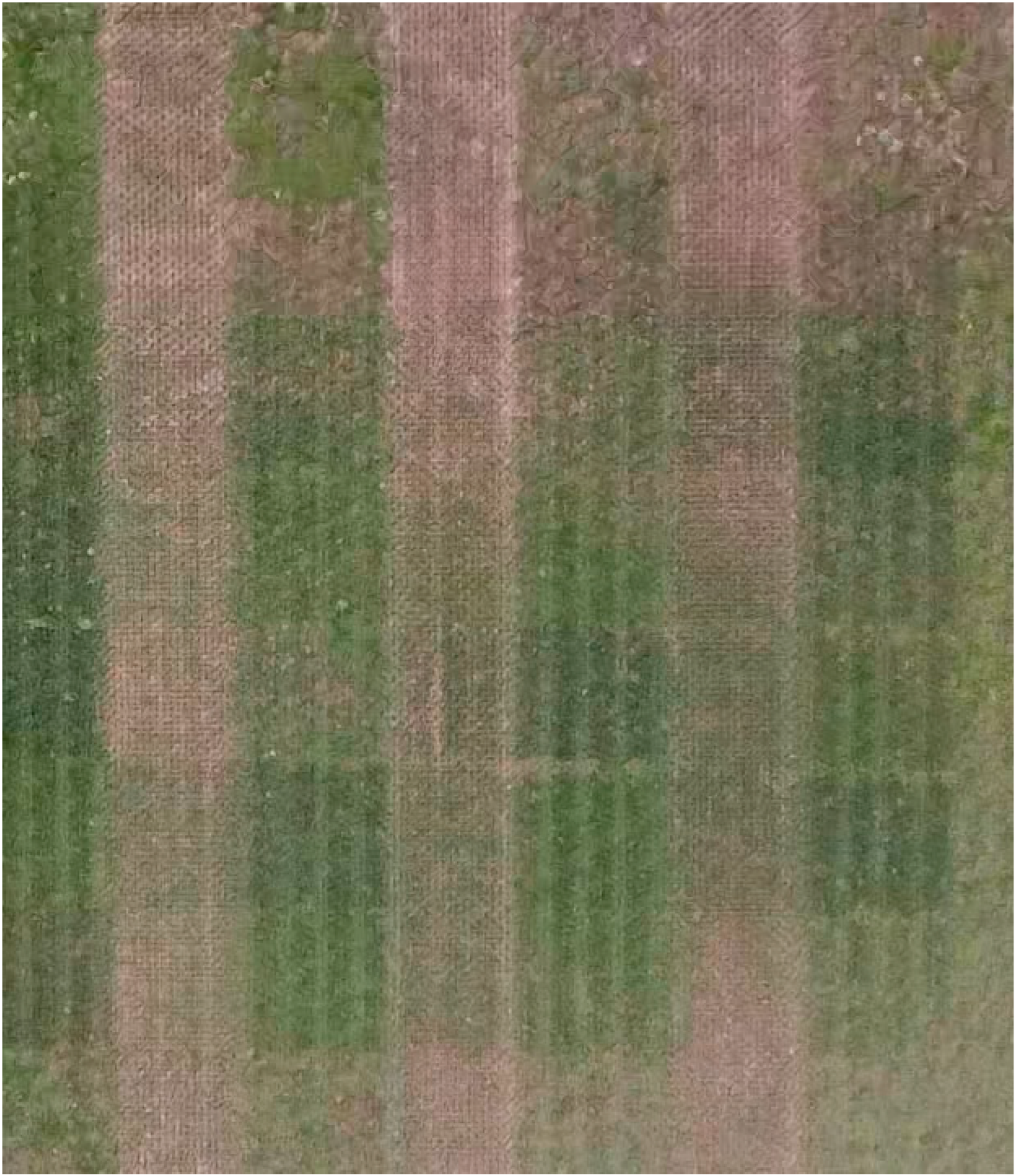
From 26 September 2023 the simulated soccer use stage started, and wear treatments were applied to test all the cultivars under different seasonal conditions. A Brinkman wear simulator [24] was used to perform wear on plots. Specifically, the equipment is a tractor-pulled machine consisting of two studded rollers and a smooth roller. The two studded rollers simulate the penetration and shearing action exerted by the cleats of athletic footwear on the ground-surface interface. The smooth roller is designated to perform compaction action. Two passes with this simulator are roughly equivalent to turf damage from one soccer game [25]. Wear simulation was performed over three seasons, Autumn 2023, Winter 2023–2024, and Spring 2024, to obtain data referring to the entire soccer championship season. Throughout the simulated soccer use stage, mowing was performed using the same lightweight autonomous mower used in the previous stages with a daily mowing frequency maintaining an actual mowing height of 20 mm. Wear simulation was performed for all the tested cultivars on subplots measuring 2.25 m2 (1.5 × 1.5) (Figure 2). Starting from 26 September 2023, autumn wear simulation started, and four weeks of wear treatments were scheduled. Wear simulation consisted of 10 passes per week with a total of 40 passes. The two weeks following wear application were designated as a recovery period. The same wear treatments and recovery periods were performed for the following two seasons, Winter 2024 and Spring 2024. Specifically, winter wear treatments started on 8 January, and the recovery period ended on 19 February, while spring wear treatments started on 25 March, and the recovery period ended on 6 May. At the end of each recovery period, in order to obtain a uniform soil moisture content, a heavy irrigation was performed three days before assessments [17]. To evaluate the wear tolerance and recovery capacity of the tested cultivars, ground cover, visually assessed and expressed as the percentage of ground covered by the seeded species, was assessed twice: shortly after wear treatments (GC post-wear) and at the end of each recovery period (GC post-recovery). Moreover, the following parameters were assessed at the end of each recovery period to evaluate the performance of the tested cultivars in terms of overall quality and playability:
(a)
turf quality, rated on a scale of 1 = poorest–9 = best, with a rating of 6 = acceptable [23].
(b)
traction, determined with a studded disk apparatus (similar to that described by Canaway and Bell, 1986) [26] and reported in N/m.
(c)
hardness, determined with a Clegg soil impact tester with a 0.5 kg hammer. Data are reported in CIV, (Clegg Impact Value; 1 CIV = 10 G; G = 9.81 m s−2).
Additionally, to evaluate seasonal variations, turf color was assessed on non-worn subplots on 7 November 2023, 19 February, and 6 May 2024. At each assessment date ground cover of sub-plots was considered complete (equal to or higher than 90%). To monitor soil moisture content consistency within the experimental area, volumetric water content (%) was determined with a TDR (Time Domain Reflectometry) FiedScout 350 (Spectrum Technologies Inc., Aurora, IL, USA) at traction and hardness determinations. The average recorded volumetric moisture content of the experimental area was 44% in autumn, 48% in winter, and 31% in spring.
Statistical analysis was performed with R, Version 2024.12.0+467 (Copyright (C) 2022 by Posit Software, PBC, Boston, MA, USA) and additional packages including nlme for fitting mixed models and predictmeans for Fisher’s protected least significance difference test at p = 0.05. For the establishment stage and maintenance at soccer cutting height stage a one-way ANOVA was performed testing the effect of thirty cool-season cultivars on the following parameters: establishment rate, turf visual quality, color and ground cover, shoot density, leaf density, and leaf width. For the simulated soccer use stage, one-way ANOVA was performed separately for each season (autumn, winter, and spring) testing the effect of thirty cool-season cultivars on the following parameters: GC post-wear, GC post-recovery, turf visual quality and color, traction, and hardness. LSD values are reported in the tables.

3. Results

The results of ANOVA showed that all measured parameters analyzed within the establishment and maintenance at low cutting height stages were affected by the cultivar (Table 2). Similarly, regarding measured parameters analyzed within the simulated soccer use stage, the results of ANOVA showed that all measured parameters were affected by the cultivar in autumn. During winter, GC post-wear and post-recovery, turf visual color, and traction were affected by the cultivar, while no significant differences were detected for turf visual quality and hardness. In spring, no significant differences were observed for GC post-recovery and turf visual quality, while the parameters of GC post-wear, turf visual color, traction, and hardness were affected by the cultivar (Table 3). Results are reported in the following three sections: establishment, maintenance at low cutting height and simulated soccer use.

3.1. Establishment

On 30 May 2023, establishment was considered complete, as most of the tested cultivars achieved an establishment rate equal to or greater than 90% (Table 4). Among tall fescue cultivars, ‘FAG3/15-2129C’ (83%), ‘FAG3/16-5028C’ (82%), ‘FAG3/19-20208B’ (84%), ‘FAG3/19-20212B’ (83%), ‘FAG3/19-20201B’ (84%), ‘FAG3/13-20095C’ (85%), ‘FAG3/19-20204B’ (79%), ‘FAG3/15-20132C’ (84%), and ‘DLFPS-321/3705’ (82%) had a significantly lower ground cover. The remaining portion of the ground cover consisted of weeds, with ‘FAG3/19-20204B reaching the lowest value of 79% at the same date.

3.2. Maintenance at Low Cutting Height

As of 31 August 2023, the actual average height measured on the turfgrass was 19.7 mm, consistent with the autonomous mower’s set mowing height of 20 mm. Six of the tall fescue cultivars tested in the trial (‘Tower’, ‘Armani’, ‘Finelawn’, ‘FAG 3/19-20201B’, ‘FAG 3/13-20095C’, and ‘FAG 3/15-20132C’) exhibited a significantly lower ground cover percentage than the total coverage (Table 5). On the contrary, ground cover of the remaining cultivars was not affected by mowing at 20 mm. Similarly, turfgrass quality does not appear to be significantly affected by mowing at 20 mm. The three reference ryegrass cultivars showed the highest values, and values observed for the fescue cultivars did not differ significantly, except for the cultivar ‘Tower’, which recorded a quality of 5.9, significantly lower than that of the reference ryegrasses
At a mowing height of 20 mm, two of the reference ryegrass cultivars (‘Gianna’ and ‘Mercitwo’) exhibited the highest shoot density (5.0 and 4.3 shoots cm−2) (Table 6). The ryegrass cultivar ‘Fabian’ showed a significantly lower shoot density within the ryegrasses (3.0 shoots cm−2). Among fescue cultivars, the highest shoot density was observed for ‘DLFPS-321/3705’ (5.3 shoots cm−2). The shoot densities of the following cultivars were not significantly different compared to that of the densest ryegrass: ‘FAG3/19-20208B’ (4.6 shoots cm−2) and ‘FAG3/19-20212B’ (4.4 shoots cm−2).
Among the reference ryegrass cultivars, ‘Gianna’ showed the highest leaf density (16.5 leaves/cm−2). ‘Mercitwo’ and ‘Fabian’ had significantly lower values, averaging 13.3 (leaves/cm−2). Among fescue cultivars, ‘Bullseye’ (13.8 leaves/cm−2), ‘Rebounder’ (13.0 leaves/cm−2), ‘FAG3/19-20208B’ (14.0 leaves/cm−2), ‘FAG3/19-20212B’ (12.0 leaves/cm−2), ‘FAG3/19-20201B’ (12.4 leaves/cm−2), and ‘FAG3/15-20132C’ (12.8 leaves/cm−2) exhibited leaf densities comparable to those of ‘Mercitwo’ and ‘Fabian’. The cultivar ‘Tower’ recorded the lowest leaf density (5.4 leaves/cm−2).
No significant differences in leaf texture were found among the reference ryegrass cultivars, which had an average leaf width of 1.6 mm. The fescue cultivars ‘Azorro’, ‘Eyecandy’ and ‘Foxhound’ exhibited a leaf texture similar to that of the reference ryegrasses (1.9, 1.7 and 1.8 mm, respectively), while the remaining fescue cultivars displayed significantly coarser leaf textures, with an average leaf width of 2.3 mm.

3.3. Simulated Soccer Use

In autumn, among the ryegrass cultivars, ‘Mercitwo’ exhibited the highest wear resistance, with 77% ground cover (Table 7) remaining after the wear treatments, while the post-wear ground cover of the other two ryegrasses did not significantly differ from that of the less wear-resistant cultivars in the trial. Among fescue cultivars, ‘Essential’ and ‘Eyecandy’ maintained a GC post-wear comparable to that of ‘Mercitwo’ (68% post-wear). Two weeks after the end of wear treatments, most of the tested fescue cultivars, along with the ryegrass cultivar ‘Mercitwo’, showed good recovery of ground cover, with an average of 91%. In the same period, the fescue cultivar ‘FAG3/17-20192C’ only reached partial ground cover (68%), ranking as the cultivar with the lowest recovery capacity.
In winter the diploid ryegrass cultivars ‘Gianna’ (78%) and ‘Mercitwo’ (77%) showed the highest post-wear ground cover, which distinguishes them significantly from most of the fescue cultivars. These two cultivars are not significantly different from each other. Among fescue cultivars, ‘Essential’ (73%) and ‘FAG3/19-20208B’ (73%) also demonstrated high post-wear ground cover and are comparable to the best-performing ryegrasses. Several tall fescue cultivars, particularly ‘Starlett’ (38%), ‘Foxhound’ (42%), and ‘Grande II’ (42%), demonstrated low wear tolerance, with significantly lower post-wear coverage than the high-performing ryegrasses and certain high-performing tall fescues. Diploid ryegrass cultivars ‘Gianna’ (83%) and ‘Mercitwo’ (82%) showed the highest recovery performance, while among the tall fescue cultivars, the highest recovery capacity was recorded for ‘FAG3/19-20208B’ (85%).
In spring, the ryegrass cultivars ‘Gianna’ (83%) and ‘Mercitwo’ (80%) performed well in terms of wear tolerance (GC post-wear). The tetraploid ‘Fabian’ showed good results as well, with a GC post-wear value of 83%. Tall fescue cultivars such as ‘Essential’ (77%), ‘Rhizing Moon’ (70%), and ‘Armani’ (67%), showed a good wear tolerance as well. The tall fescue cultivars ‘Starlett’ (55%), ‘Finelawn’ (55%), and ‘FAG3/15-2129C’ (55%) exhibited the lowest wear tolerance. No significant differences were observed among all of the tested cultivars during spring in terms of recovery capacity, scoring an average value of 78%.
In autumn, following the two-week recovery period, ‘Mercitwo’ remained a reference cultivar among the ryegrasses for its high quality (6.8) (Table 8). The fescue cultivars ‘Essential’ (7.2), ‘Eyecandy’ (6.8), ‘Azzoro’ (6.8), ‘Rhizing Moon’ (6.7), ‘Granditte’ (6.5), ‘Bullseye’ (6.5), ‘FAG3/19-20204B’ (6.3), ‘Rebounder’ (6.2), ‘DLFPS-321/3705’ (6.2), and ‘Tomcat 1’ (6.2) exhibited quality comparable to ‘Mercitwo’ and significantly higher than those of ‘Gianna’ and ‘Fabian’ (4.7 and 4.5, respectively).
The Diploid ryegrass ‘Gianna’ and the Tetraploid ‘Fabian’ (4.7 and 4.5, respectively) showed some of the lowest turf qualities, while among the tall fescue cultivars, the lowest values (4.3) were recorded for ‘FAG3/15-2129C’ and ‘FAG3/19-20212B’. No significant differences were observed among all tested cultivars both in winter and spring seasons, recording average values of 5.7 and 6.7 (winter and spring, respectively).
In autumn, following the two-week recovery period, the traction of all tall fescue cultivars did not statistically differ from that of the three reference ryegrasses, recording a mean value of 27.9 N m−1, except for ‘Eyecandy’ and ‘FAG3/16-5028C’ (25.0 and 25.3 N m−1, respectively). In winter, for most of the tall fescue cultivars, no significant differences were observed compared to the three reference ryegrasses. ‘FAG3/13-20095C’ showed the lowest value (36 N/m) which differs significantly from all three ryegrasses cultivars ‘Gianna’, ‘Mercitwo’, and ‘Fabian’ (44.3, 43.0, and 40.6 N m−1, respectively). In spring, several tall fescue cultivars, namely ‘Armani’ (59.0 N m−1), ‘Eyecandy’ (59.0 N m−1), ‘FAG3/19-20212B’ (59.6 N m−1), ‘FAG3/13-20095C’ (59.6 N m−1), ‘FAG3/19-20204B’ (60.0 N m−1), and ‘DLFPS-321/3705’ (60.3 N m−1) did not significantly differ from the reference ryegrass ‘Gianna’ (64.6 N m−1) which reported the highest value (Table 9).
In autumn, following the two-week recovery period, the surface hardness of all fescue cultivars did not statistically differ from the three reference ryegrasses (Table 10), except for ‘Bullseyes’ and ‘Tomcat 1’ which recorded the lowest values of surface hardness (5.9 and 5.8 CIV, respectively). No significant differences were observed among all tested cultivars in the winter season, with average values of 5.4 CIV. In spring, among the reference ryegrass cultivars, the Diploid ryegrass ‘Mercitwo’ (17.0 CIV) scored a significantly higher value compared to ‘Gianna’ (13.8 CIV). However, for most of the tall fescue cultivars tested in this trial, surface hardness did not statistically differ from that of the reference ryegrass ‘Gianna’. The tall fescue cultivar ‘Essential’ recorded the lowest value among all tested cultivars (12.8 CIV).
Concerning color evaluated on untreated subplots, during the maintenance at low cutting height stage (31 August) the three ryegrasses ‘Gianna’, ‘Mercitwo’, and ‘Fabian’ did not statistically differ from each other (8.2, 8.0, and 8.5, respectively) (Table 11). Several tall fescue cultivars exhibited statistically comparable color when referring to ‘Fabian’, which scored the highest value (8.5) among the ryegrass cultivars. During the assessment on 7 November all tall fescue cultivars, except for ‘Tower’ and ‘Armani’, did not statistically differ from the reference ryegrass ‘Fabian’, which recorded 7.1. During the assessment on 19 February several tall fescue cultivars performed significantly better than all three reference ryegrass cultivars, with ‘FAG3/15-20132C’ recording the highest value (8.3) followed by ‘Eyecandy’, ‘Foxhund’, and ‘DLFPS-321/3705’ (8.1). During the assessment on May 6th, ‘Eyecandy’ (7.5), ‘Foxhound’, ‘Rhizing Moon’, ‘FAG3/17-20192C’, and ‘DLFPS-321/3705’ (7.3) performed significantly better than all three reference ryegrass cultivars. As for the year average, significant differences were observed among the three reference ryegrass cultivars. Specifically, the Tetraploid ryegrass ‘Fabian’ showed a statistically better year average color compared to ‘Gianna’ and ‘Mercitwo’. Most of the fescue cultivars did not statistically differ from ‘Fabian’, with ‘Eyecandy’ showing the highest value (7.7) followed by ‘Foxhound’, ‘Rhizing Moon’, and ‘DLFPS-321/3705’ (7.5).

4. Discussion and Conclusions

The results of the field study show that after a seven-month establishment period, most of the tall fescue cultivars included in the trial reached complete establishment (equal to or higher than 90%). However, a group of cultivars did exhibit a lower establishment rate. These exceptions may be attributed to the interaction of genetic, environmental, and management factors.
During the maintenance at low cutting height stage, the ground cover of most of the tall fescue cultivars tested in this trial was consistently comparable to that recorded for the reference ryegrasses. This result suggests that the tall fescue cultivars tested in the trial were able to perform well when mown at 20 mm cutting height. Moreover, differently from what was observed by Schiavon et al., 2021 [27], when mowing at 20 mm mowing height, turf quality of most of the tall fescue cultivars tested in this trial did not statistically differ from that observed for the reference ryegrasses. This suggests the new cultivar genotypes evaluated in this trial may be suitable for sports turf applications in terms of quality.
Furthermore, some fescue cultivars (‘FAG3/19-20208B’ and ‘FAG3/19-20212B’) matched the shoot and leaf density per unit area of the reference ryegrasses ‘Mercitwo’ and ‘Fabian’. Generally, the leaf texture of the tall fescue cultivars was coarser compared to that recorded for the reference ryegrasses, except for ‘Eyecandy’ and ‘Foxhound’, which exhibited finer textures. Similar results have been observed by Grossi et al., 2016 [28], in a scenario involving the adoption of a lightweight autonomous mower operating with a daily mowing frequency. Regarding turf quality during the simulated soccer use stage following the two-week recovery period, results suggest that several tall fescue cultivars exhibited satisfactory quality and were statistically comparable to the reference ryegrass ‘Mercitwo’ for all three seasons of observation.
Particularly, ‘Essential’ recorded the highest quality value among all the tested cultivars in the trial. In summary, regarding playability performances in terms of traction and hardness, all the cultivars tested in this trial appear to be suitable for sports use according to UEFA technical quality standards [29]. Since both traction and hardness are affected by soil type, it is important to underline that no topdressing was applied throughout the entire trial period. Consequently, playability performance results were most likely influenced by the specific soil type used in this study, which does not represent the standard soil used in professional soccer fields [29].
Results obtained on untreated subplots to monitor the seasonal variation in color over the year suggest that during summer and autumn, several tall fescue cultivars performed similarly to the three reference ryegrasses. On the contrary, during winter and spring several tall fescue cultivars (‘FAG3/15-20132C’, ‘Eyecandy’, ‘Foxhund’, ‘DLFPS-321/3705’, ‘Rhizing Moon’, and ‘FAG3/17-20192C’) outperformed the reference ryegrasses, demonstrating enhanced color. The overall annual color average results indicate that most of the tall fescue cultivars provided color ratings similar to the high-performing ryegrass ‘Fabian’, highlighting their suitability for maintaining high values of color across multiple seasons.
In conclusion, taking into account the limitations of this site-specific and single-year study, this research indicates that some tall fescue cultivars, notably ‘Essential’, ‘Eyecandy’, and ‘FAG3/19-20208B’, may be suitable for soccer use with a permanent stand approach, exhibiting quick establishment and adaptation to low cutting height (20 mm), and performing similarly to the best reference ryegrasses ‘Gianna’ and ‘Mercitwo’ in terms of wear tolerance and recovery capacity across seasons.
Most of the tall fescue cultivars tested in the trial performed well when mown at 20 mm cutting height, maintaining good overall quality and density. Moreover, among the tall fescue cultivars tested in this trial, ‘Eyecandy’ and ‘Foxhound’ exhibited finer textures comparable to those recorded for the reference ryegrasses. Playability tests do not provide any concern about using tall fescue when compared with the more popular ryegrass grown in the same soil.
It is important to emphasize that the results obtained in this study were likely influenced by the mowing management adopted in the trial. The use of a lightweight autonomous mower with a daily mowing frequency, as highlighted by previous studies from Grossi et al., 2016 [28] and Pirchio et al., 2018 [30] has been shown to positively affect various turfgrass characteristics, including leaf texture, leaf and shoot density, and overall quality. As demonstrated by other studies from Lulli et al., 2012 [31] and Głąb et al., 2015 [32] such morphological traits of the turf can subsequentially enhance turfgrass performance in terms of wear resistance and recovery capacity. From this point of view, the adoption of a lightweight autonomous mower with a daily mowing frequency may play a key role in the future mowing management of sport surfaces.

Author Contributions

Conceptualization, M.V. and S.M.; methodology, M.V. and S.M.; software, M.F.; validation, M.F. and S.M.; formal analysis, G.S.; investigation, S.D., N.C. and T.F.; resources, S.D., N.C., T.F. and M.F.; data curation, G.S.; writing—original draft preparation, G.S. and S.M.; writing—review and editing, G.S., S.M. and M.V.; visualization, G.S.; supervision, S.M. and M.V.; project administration, M.V. and S.M.; funding acquisition, M.V. and M.F. All authors have read and agreed to the published version of the manuscript.

Funding

This research received no external funding.

Data Availability Statement

The original contributions presented in the study are included in the article, further inquiries can be directed to the corresponding author.

Conflicts of Interest

The authors declare no conflicts of interest.

References

  1. Hoffman, L.; Ebdon, J.S.; Dest, W.M.; DaCosta, M. Effects of nitrogen and potassium on wear mechanisms in perennial ryegrass: I. wear tolerance and recovery. Crop Sci. 2010, 50, 357–366. [Google Scholar] [CrossRef]
  2. Beard, J.B. Turfgrass: Science and Culture; Prentice-Hall: Englewood Cliffs, NJ, USA, 1973. [Google Scholar]
  3. Shearman, R.C.; Beard, J.B. Turfgrass wear mechanisms: I. Wear tolerance of seven turfgrasses species and quantitative meth- ods for determining turfgrass wear injury. Agron. J. 1975, 67, 208–211. [Google Scholar] [CrossRef]
  4. Shearman, R.C.; Beard, J.B. Turfgrass wear tolerance mechanisms. II. Effects of cell wall constituents on turfgrass wear tolerance. Agron. J. 1975, 67, 211–215. [Google Scholar] [CrossRef]
  5. Shearman, R.C. Improving sports turf wear tolerance. In Proceedings of the 58th Annual Michigan Turfgrass Conference, East Lansing, MI, USA, 18–20 January 1988; Volume 17, pp. 153–155. [Google Scholar]
  6. Carrow, R.N.; Petrovic, A.M. Effects of wear on turfgrass. In Turfgrass Agronomy Monograph 32; Waddington, D.V., Carrow, R.N., Shearman, R.C., Eds.; ASA, CSSA and SSSA: Madison, WI, USA, 1992; pp. 285–330. [Google Scholar]
  7. Trenholm, L.E.; Carrow, R.N.; Duncan, R.R. Mechanisms of wear tolerance in seashore paspalum and bermudagrass. Crop Sci. 2000, 40, 1350–1357. [Google Scholar] [CrossRef]
  8. Aamlid, T.S.; Nesheim, L.; Pettersen, T.; Enger, F.; Vesterbukt, P. Poa pratensis or Lolium perenne for Establishment and overseeding of Scandinavian football (soccer) pitches. Acta Agric. Scand. Sect. B-Soil Plant Sci. 2012, 62 (Suppl. S1), 32–43. [Google Scholar]
  9. Volterrani, M.; Magni, S. Species and growing media for sports turfs in Mediterranean area. In I International Conference on Turfgrass Management and Science for Sports Fields 661; ISHS: Leuven, Belgium, 2003; pp. 359–364. [Google Scholar]
  10. Miele, S.; Volterrani, M.; Grossi, N. Warm-season turfgrasses: Results of a five-year study in Tuscany. Agric. Mediterr. 2000, 130, 196–202. [Google Scholar]
  11. Turgeon, A.J. Turfgrass Management, 9th ed.; Pearson Education Inc.: Upper Saddle River, NJ, USA, 2011. [Google Scholar]
  12. Fontanier, C.; Steinke, K. Performance of Annual and Perennial Ryegrass Mixtures for Winter Overseeding into Three Warm-Season Turfgrass Species. Int. Turfgrass Soc. Res. J. 2017, 13, 305–311. [Google Scholar] [CrossRef]
  13. Christians, N.E.; Patton, A.J.; Law, Q.D. Fundamentals of Turfgrass Management; John Wiley and Sons: Hoboken, NJ, USA, 2016. [Google Scholar]
  14. Kopec, D.; Umeda, K. Overseeding Winter Grasses into Bermudagrass Turf; The University of Arizona: Tucson, AZ, USA, 2015. [Google Scholar]
  15. McCarty, L. Golf Turf Management; CRC Press: Boca Raton, FL, USA, 2018. [Google Scholar]
  16. Mazur, A.R.; Rice, J.S. Impact of overseeding bermudagrass with various amounts of perennial ryegrass for winter putting turf. HortScience 1999, 34, 864–866. [Google Scholar] [CrossRef]
  17. Magni, S.; Volterrani, M.; Miele, S. Soccer pitches performances as affected by construction method, sand type and turfgrass mixture. In I International Conference on Turfgrass Management and Science for Sports Fields 661; ISHS: Leuven, Belgium, 2003; pp. 281–285. [Google Scholar]
  18. Jernstedt, J.A.; Bouton, J.H. Anatomy, Morphology, and Growth of Tall Fescue Rhizomes 1. Crop Sci. 1985, 25, 539–542. [Google Scholar] [CrossRef]
  19. Huang, B.; Gao, H. Root physiological characteristics associated with drought resistance in tall fescue cultivars. Crop Sci. 2000, 40, 196–203. [Google Scholar] [CrossRef]
  20. Moore, R.W.; Christians, N.E. Tall Fescue Management Study; Iowa State University: Aimes, IA, USA, 1989. [Google Scholar]
  21. Grossi, N.; Volterrani, M.; Magni, S.; Miele, S. Tall fescue turf quality and soccer playing characteristics as affected by mowing height. In I International Conference on Turfgrass Management and Science for Sports Fields 661; ISHS: Leuven, Belgium, 2003; pp. 319–322. [Google Scholar]
  22. Reicher, Z.; Hardebeck, G.; Throssell, C. Building and Maintaining Soccer Fields in Indiana; Purdue University Turfgrass Science Program, Production Code AY-31; Purdue University: West Lafayette, IN, USA, 1999. [Google Scholar]
  23. Morris, K.N.; Shearman, R.C. NTEP Turfgrass Evaluation Guidelines; NTEP Turfgrass Evaluation Workshop: Beltsville, MD, USA, 1998; pp. 1–5. [Google Scholar]
  24. Cockerham, S.T.; Brinkman, D.J. A simulator for cleated-shoe sports traffic on turfgrass research plots. Calif. Turfgrass Cult. 1989, 39, 9–10. [Google Scholar]
  25. Pornaro, C.; Barolo, E.; Rimi, F.; Macolino, S.; Richardson, M. Performance of various cool-season turfgrasses as influenced by Simulated wear in northeastern Italy. Eur. J. Hortic. Sci 2016, 81, 27–36. [Google Scholar] [CrossRef]
  26. Canaway, P.; Bell, M.J. An apparatus for measuring traction and friction on natural and artificial playing surfaces. J. Sports Turf Res. Inst 1986, 62, 211–214. [Google Scholar]
  27. Schiavon, M.; Macolino, S.; Pornaro, C. Response of twenty tall fescue (Schedonorus arundinaceus (Schreb.) Dumort.) cultivars to low mowing height. Agronomy 2021, 11, 943. [Google Scholar] [CrossRef]
  28. Grossi, N.; Fontanelli, M.; Garramone, E.; Peruzzi, A.; Raffaelli, M.; Pirchio, M.; Martelloni, L.; Frasconi, C.; Caturegli, L.; Gaetani, M.; et al. Can robotic mowing improve the quality of the lawn? In Book of Abstracts of the 5th European Turfgrass Society Conference; ETS-European Turfgrass Society: Pisa, Italy, 2016; pp. 109–110. [Google Scholar]
  29. Available online: https://documents.uefa.com/home (accessed on 11 March 2025).
  30. Pirchio, M.; Fontanelli, M.; Frasconi, C.; Martelloni, L.; Raffaelli, M.; Peruzzi, A.; Gaetani, M.; Magni, S.; Caturegli, L.; Volterrani, M.; et al. Autonomous mower vs. rotary mower: Effects on turf quality and weed control in tall fescue lawn. Agronomy 2018, 8, 15. [Google Scholar] [CrossRef]
  31. Lulli, F.; Volterrani, M.; Grossi, N.; Armeni, R.; Stefanini, S.; Guglielminetti, L. Physiological and morphological factors influencing wear resistance and recovery in C3 and C4 turfgrass species. Funct. Plant Biol. 2012, 39, 214–221. [Google Scholar] [CrossRef]
  32. Głąb, T.; Szewczyk, W.; Dubas, E.; Kowalik, K.; Jezierski, T. Anatomical and morphological factors affecting wear tolerance of turfgrass. Sci. Hortic. 2015, 185, 1–13. [Google Scholar] [CrossRef]
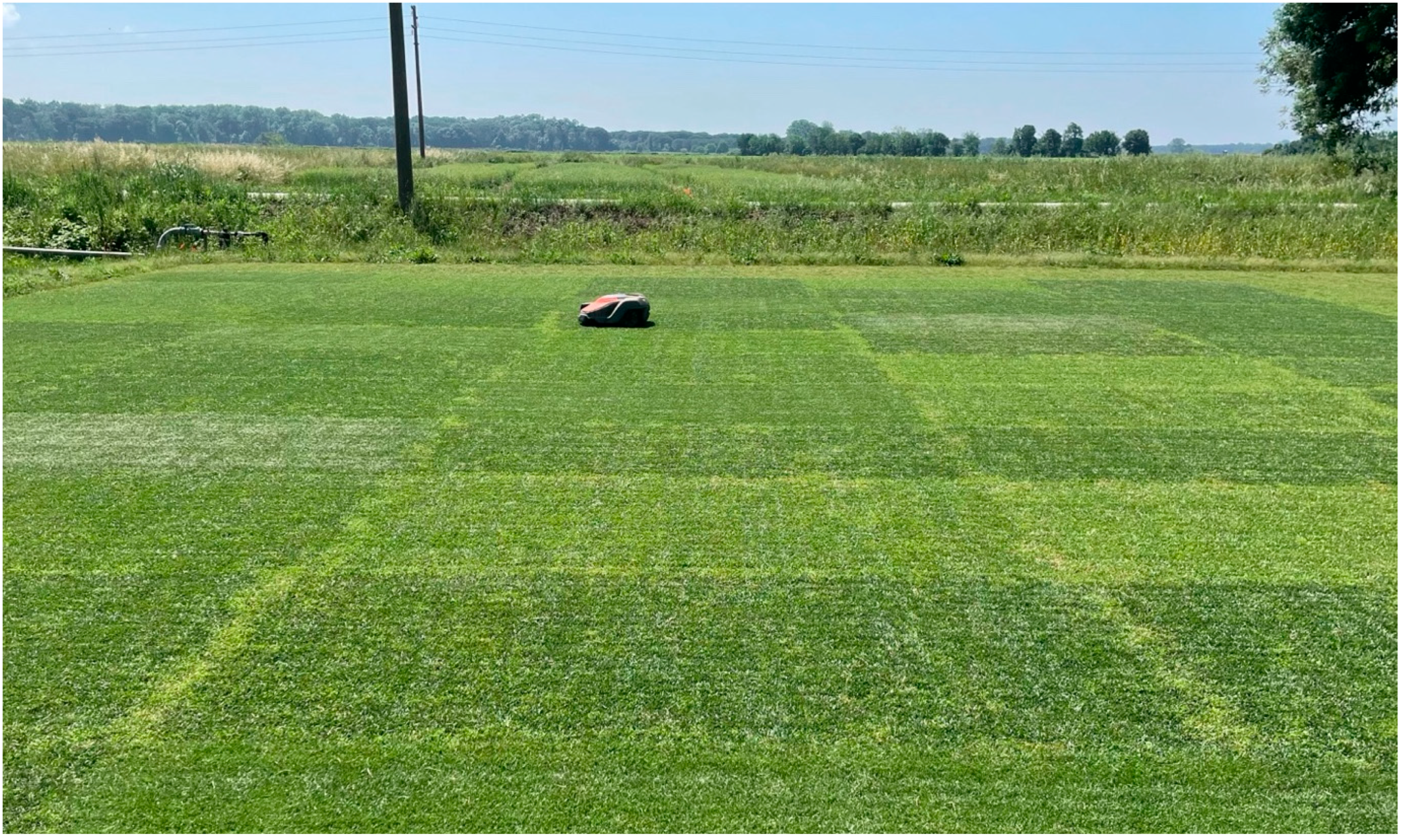
Figure 1. Autonomous mower Epos 550 managing the experimental area.
Grasses 04 00041 g001
Figure 2. Drone view of a portion of the experimental area during wear simulation, September 2023.
Grasses 04 00041 g002
Table 1. Monthly mean, minimum, and maximum air temperatures and monthly precipitations during the study period (November 2022–May 2024).
202220232024
Air Temperature (°C)Precipitations (mm)Air Temperature (°C)Precipitations (mm)Air Temperature (°C)Precipitations (mm)
Min.Max. Min.Max. Min.Max.
January---5.912.5116.85.913.157.6
February---5.013.428.77.715.3150.0
March---8.216.755.79.016.6117.6
April---9.318.930.410.220.0109.0
May---14.123.285.714.422.8106.9
June---18.727.6170.5---
July---21.630.99.4---
August---20.530.9109.7---
September---17.727.819.8---
October---16.123.6175.3---
November9.617.0156.69.516.5170.4---
December8.713.9125.56.613.057.1---
Table 2. Results of ANOVA testing of the effect of the cultivar on the measured parameters within the establishment and maintenance at low cutting height stages (from November 2022 to August 2023).
Measured ParametersSource of Variation
Cultivar
Establishment rate*
Turf quality**
Turf color**
Ground cover*
Shoot density*
Leaf density*
Leaf width**
* significant at the 0.05 probability level. ** significant at the 0.01 probability level.
Table 3. Results of ANOVA testing of the effect of the cultivar on the measured parameters within the simulated soccer use stage (from September 2023 to May 2024).
Measured ParametersSource of Variation
Cultivar
AutumnWinterSpring
GC post-wear******
GC post-recovery****ns
Turf quality**nsns
Turf color*********
Traction*****
Hardness*ns*
ns, not significant at the 0.05 probability level. * significant at the 0.05 probability level. ** significant at the 0.01 probability level. *** significant at the 0.001 probability level.
Table 4. Establishment rate assessed by ground cover and reported as percentage of ground covered by the seeded species. Assessment reported in table refers to 30 May 2023.
SpeciesCultivarEstablishment Rate (%)
Perennial ryegrass 2nGianna100
Perennial ryegrass 2nMercitwo98
Perennial ryegrass 4nFabian100
Tall fescue (forage)Tower97
Tall fescueArmani99
Tall fescueVerstol99
Tall fescueTomcat 198
Tall fescueFinelawn97
Tall fescueAtbara96
Tall fescueBullseye96
Tall fescueStarlett94
Tall fescueEssential93
Tall fescueGrande II93
Tall fescueRhizing Moon93
Tall fescueAzzoro92
Tall fescueFoxhound92
Tall fescueFayette91
Tall fescueGranditte91
Tall fescueEyecandy90
Tall fescueRebounder90
Tall fescueFAG3/17-20192C89
Tall fescueFAG3/13-20095C85
Tall fescueFAG3/19-20208B84
Tall fescueFAG3/19-20201B84
Tall fescueFAG3/15-20132C84
Tall fescueFAG3/15-2129C83
Tall fescueFAG3/19-20212B83
Tall fescueFAG3/16-5028C82
Tall fescueDLFPS-321/370582
Tall fescueFAG3/19-20204B79
LSD 0.05 11
Means are significantly different at the 0.05 level of probability as determined by Fisher’s protected LSD.
Table 5. Ground cover visually assessed and reported as the percentage of ground covered by the seeded species and turf visual quality rated on a scale of 1 = poorest–9 = best, with a rating of 6 = acceptable. The remaining portion of the ground cover consisted of weeds. Assessments reported in the table refer to the end of the maintenance at low cutting height stage (31 August 2023).
SpeciesCultivarGround Cover
(%)
Turf Quality
(1–9)
Perennial ryegrass 2nGianna1008.0
Perennial ryegrass 2nMercitwo1008.0
Perennial ryegrass 4nFabian958.3
Tall fescue (forage)Tower885.9
Tall fescueArmani887.1
Tall fescueAtbara907.9
Tall fescueAzzoro927.2
Tall fescueBullseye977.5
Tall fescueEssential907.5
Tall fescueEyecandy927.6
Tall fescueFayette937.6
Tall fescueFinelawn877.3
Tall fescueFoxhound927.6
Tall fescueGrande II927.5
Tall fescueGranditte936.9
Tall fescueRebounder937.1
Tall fescueRhizing Moon907.2
Tall fescueStarlett927.4
Tall fescueTomcat 1957.7
Tall fescueVerstol977.7
Tall fescueFAG3/15-2129C937.5
Tall fescueFAG3/16-5028C957.0
Tall fescueFAG3/17-20192C977.0
Tall fescueFAG3/19-20208B977.2
Tall fescueFAG3/19-20212B927.5
Tall fescueFAG3/19-20201B887.8
Tall fescueFAG3/13-20095C877.5
Tall fescueFAG3/19-20204B937.0
Tall fescueFAG3/15-20132C827.0
Tall fescueDLFPS-321/3705987.2
LSD 0.05 111.5
Means are significantly different at the 0.05 level of probability as determined by Fisher’s protected LSD.
Table 6. Shoot density (n°/cm2), leaf density (n°/cm2), and leaf width (mm). Determinations reported in the table refer to the end of the maintenance at low cutting height stage (31 August 2023).
SpeciesCultivarShoot Density
(n°/cm2)
Leaf Density (n°/cm2)Leaf Width
(mm)
Perennial ryegrass 2nGianna5.016.51.5
Perennial ryegrass 2nMercitwo4.313.11.5
Perennial ryegrass 4nFabian3.013.51.7
Tall fescue (forage)Tower1.55.42.5
Tall fescueArmani3.211.22.3
Tall fescueAtbara2.89.72.2
Tall fescueAzzoro3.611.41.9
Tall fescueBullseye3.113.82.1
Tall fescueEssential3.810.42.3
Tall fescueEyecandy3.49.61.7
Tall fescueFayette2.89.32.1
Tall fescueFinelawn1.96.12.7
Tall fescueFoxhound3.211.31.8
Tall fescueGrande II2.78.22.4
Tall fescueGranditte3.39.82.5
Tall fescueRebounder3.713.02.1
Tall fescueRhizing Moon3.310.62.5
Tall fescueStarlett2.49.92.1
Tall fescueTomcat 13.110.02.8
Tall fescueVerstol3.09.82.0
Tall fescueFAG3/15-2129C3.89.92.2
Tall fescueFAG3/16-5028C3.910.02.5
Tall fescueFAG3/17-20192C2.97.42.1
Tall fescueFAG3/19-20208B4.614.02.1
Tall fescueFAG3/19-20212B4.412.02.0
Tall fescueFAG3/19-20201B3.912.42.1
Tall fescueFAG3/13-20095C3.110.62.2
Tall fescueFAG3/19-20204B3.710.02.0
Tall fescueFAG3/15-20132C4.012.82.3
Tall fescueDLFPS-321/37055.310.12.5
LSD 0.05 0.91.60.3
Means are significantly different at the 0.05 level of probability as determined by Fisher’s protected LSD.
Table 7. Ground cover visually assessed and reported as the percentage of ground covered by the seeded species. Assessments reported in table refer to GC post-wear and post-recovery during autumn, winter, and spring (26 September–7 November 2023, 8 January–19 February 2024, and 25 March–6 May 2024, respectively).
SpeciesCultivarGround Cover (%)
Post WearPost RecoveryPost WearPost RecoveryPost WearPost Recovery
AutumnWinterSpring
Perennial ryegrass 2nGianna387878838390
Perennial ryegrass 2nMercitwo778877828085
Perennial ryegrass 4nFabian337765708392
Tall fescue (forage)Tower518347606080
Tall fescueArmani508852636782
Tall fescueAtbara579052606880
Tall fescueAzzoro609353626780
Tall fescueBullseye539552685878
Tall fescueEssential689373807788
Tall fescueEyecandy689048555873
Tall fescueFayette579052606075
Tall fescueFinelawn508848555567
Tall fescueFoxhound539342535372
Tall fescueGrande II529042526073
Tall fescueGranditte629558656778
Tall fescueRebounder639350586077
Tall fescueRhizing Moon629553627085
Tall fescueStarlett508838485573
Tall fescueTomcat 1579257656280
Tall fescueVerstol639252586777
Tall fescueFAG3/15-2129C307558675570
Tall fescueFAG3/16-5028C459058675875
Tall fescueFAG3/17-20192C436847554772
Tall fescueFAG3/19-20208B478873856585
Tall fescueFAG3/19-20212B377557635777
Tall fescueFAG3/19-20201B378352625575
Tall fescueFAG3/13-20095C428762725878
Tall fescueFAG3/19-20204B539558676075
Tall fescueFAG3/15-20132C639265726075
Tall fescueDLFPS-321/3705579255656080
LSD 0.05 11.013.018.817.916.5ns
Means are significantly different at the 0.05 level of probability as determined by Fisher’s protected LSD.
Table 8. Turf visual quality rated on a scale of 1 = poorest–9 = best, with a rating of 6 = acceptable. Assessments reported in the table refer to the end of each recovery period (autumn, 7 November 2023, winter, 8 January 2024, and spring, 6 May 2024).
SpeciesCultivarTurf Quality (1–9)
Post Recovery
AutumnWinterSpring
Perennial ryegrass 2nGianna4.76.87.5
Perennial ryegrass 2nMercitwo6.86.17.6
Perennial ryegrass 4nFabian4.56.57.3
Tall fescue (forage)Tower5.25.16.1
Tall fescueArmani6.05.36.6
Tall fescueAtbara5.85.36.5
Tall fescueAzzoro6.85.86.6
Tall fescueBullseye6.56.16.6
Tall fescueEssential7.26.67.6
Tall fescueEyecandy6.85.86.8
Tall fescueFayette6.05.56.3
Tall fescueFinelawn5.55.16.1
Tall fescueFoxhound5.85.85.8
Tall fescueGrande II5.35.16.3
Tall fescueGranditte6.56.36.8
Tall fescueRebounder6.25.86.6
Tall fescueRhizing Moon6.75.87.5
Tall fescueStarlett5.75.15.8
Tall fescueTomcat 16.25.86.5
Tall fescueVerstol6.05.56.3
Tall fescueFAG3/15-2129C4.35.66.5
Tall fescueFAG3/16-5028C5.35.67.1
Tall fescueFAG3/17-20192C4.55.06.3
Tall fescueFAG3/19-20208B5.06.57.5
Tall fescueFAG3/19-20212B4.35.16.8
Tall fescueFAG3/19-20201B5.35.36.8
Tall fescueFAG3/13-20095C4.85.37.1
Tall fescueFAG3/19-20204B6.35.67.0
Tall fescueFAG3/15-20132C5.55.86.8
Tall fescueDLFPS-321/37056.25.87.0
LSD 0.05 1.7nsns
Means are significantly different at the 0.05 level of probability as determined by Fisher’s protected LSD.
Table 9. Traction determinations carried out with a studded disk apparatus and reported in N/m. Determinations reported in the table refer to the end of each recovery period (autumn, 7 November 2023, winter, 8 January 2024, and spring, 6 May 2024).
SpeciesCultivarTraction (N m−1)
Post Recovery
AutumnWinterSpring
Perennial ryegrass 2nGianna28.744.364.6
Perennial ryegrass 2nMercitwo28.743.062.6
Perennial ryegrass 4nFabian26.340.663.0
Tall fescue (forage)Tower27.743.054.3
Tall fescueArmani26.742.359.0
Tall fescueAtbara27.040.652.0
Tall fescueAzzoro27.743.053.3
Tall fescueBullseye27.741.056.0
Tall fescueEssential28.041.056.6
Tall fescueEyecandy25.041.659.0
Tall fescueFayette26.041.057.0
Tall fescueFinelawn28.339.055.0
Tall fescueFoxhound30.740.051.0
Tall fescueGrande II29.741.356.3
Tall fescueGranditte27.042.654.3
Tall fescueRebounder28.042.058.0
Tall fescueRhizing Moon27.342.349.6
Tall fescueStarlett29.042.051.0
Tall fescueTomcat 126.740.055.3
Tall fescueVerstol28.741.354.0
Tall fescueFAG3/15-2129C28.337.656.6
Tall fescueFAG3/16-5028C25.338.658.3
Tall fescueFAG3/17-20192C25.738.057.6
Tall fescueFAG3/19-20208B26.338.056.3
Tall fescueFAG3/19-20212B27.741.359.6
Tall fescueFAG3/19-20201B26.339.356.6
Tall fescueFAG3/13-20095C28.036.059.6
Tall fescueFAG3/19-20204B26.338.360.0
Tall fescueFAG3/15-20132C27.338.057.3
Tall fescueDLFPS-321/370526.639.360.3
LSD 0.05 3.34.05.8
Means are significantly different at the 0.05 level of probability as determined by Fisher’s protected LSD.
Table 10. Hardness determinations carried out with a Clegg soil impact tester with a 0.5 kg hammer. Data are reported in CIV, (Clegg Impact Value; 1 CIV = 10 G). Determinations reported in the table refer to the end of each recovery period (autumn, 7 November 2023, winter, 8 January 2024, and spring, 6 May 2024).
SpeciesCultivarHardness (CIV)
Post Recovery
AutumnWinterSpring
Perennial ryegrass 2nGianna7.15.913.8
Perennial ryegrass 2nMercitwo7.16.617.0
Perennial ryegrass 4nFabian7.04.914.9
Tall fescue (forage)Tower6.95.615.6
Tall fescueArmani6.15.413.1
Tall fescueAtbara6.64.813.5
Tall fescueAzzoro6.35.314.9
Tall fescueBullseye5.95.013.6
Tall fescueEssential6.34.912.8
Tall fescueEyecandy6.45.014.8
Tall fescueFayette6.85.714.1
Tall fescueFinelawn6.15.316.7
Tall fescueFoxhound6.95.213.7
Tall fescueGrande II7.05.713.8
Tall fescueGranditte7.14.514.1
Tall fescueRebounder6.64.814.3
Tall fescueRhizing Moon6.74.614.8
Tall fescueStarlett6.95.914.8
Tall fescueTomcat 15.85.013.2
Tall fescueVerstol6.95.613.8
Tall fescueFAG3/15-2129C7.65.518.2
Tall fescueFAG3/16-5028C6.55.714.2
Tall fescueFAG3/17-20192C7.35.814.6
Tall fescueFAG3/19-20208B6.75.315.0
Tall fescueFAG3/19-20212B7.26.318.0
Tall fescueFAG3/19-20201B6.25.515.0
Tall fescueFAG3/13-20095C6.75.316.7
Tall fescueFAG3/19-20204B6.05.714.2
Tall fescueFAG3/15-20132C6.95.414.0
Tall fescueDLFPS-321/37056.65.214.2
LSD 0.05 1.0ns2.8
Means are significantly different at the 0.05 level of probability as determined by Fisher’s protected LSD.
Table 11. Turf visual color rated on a scale of 1 = light green–9 = dark green, with a rating of 6 = acceptable. Assessments reported in the table refer to the maintenance at low cutting height stage (31 August 2023) and simulated soccer use stage (7 November 2023, 8 January 2024, and 6 May 2024) on untreated subplots.
SpeciesCultivarColor (1–9)
20232024
31 August7 November19 February6 MayYear Avg
Perennial ryegrass 2nGianna8.25.86.06.06.5
Perennial ryegrass 2nMercitwo8.06.35.86.16.5
Perennial ryegrass 4nFabian8.57.16.56.67.2
Tall fescue (forage)Tower6.05.85.54.65.5
Tall fescueEyecandy6.76.36.65.17.7
Tall fescueDLFPS-321/37057.26.57.16.37.5
Tall fescueFoxhound6.87.06.35.87.5
Tall fescueRhizing Moon7.57.17.57.07.5
Tall fescueFAG3/15-20132C7.57.57.87.07.4
Tall fescueEssential7.77.58.17.57.4
Tall fescueFAG3/17-20192C7.57.17.66.87.3
Tall fescueRebounder6.26.16.04.67.3
Tall fescueFAG3/19-20201B7.37.48.17.37.2
Tall fescueBullseye7.27.07.06.57.2
Tall fescueFayette7.27.17.36.37.2
Tall fescueFAG3/19-20204B7.57.37.57.07.0
Tall fescueGranditte7.57.37.87.37.0
Tall fescueFAG3/16-5028C6.87.37.06.36.9
Tall fescueFAG3/19-20212B7.27.36.85.86.9
Tall fescueGrande II7.56.67.06.36.9
Tall fescueStarlett6.57.07.36.36.8
Tall fescueVerstol6.87.07.66.16.8
Tall fescueFAG3/15-2129C7.07.37.67.36.7
Tall fescueFAG3/19-20208B6.57.07.16.36.7
Tall fescueAtbara6.77.17.36.66.7
Tall fescueTomcat 16.77.37.87.06.7
Tall fescueAzzoro6.26.86.85.86.5
Tall fescueFAG3/13-20095C6.87.37.86.36.4
Tall fescueArmani7.37.38.36.86.2
Tall fescueFinelawn7.57.38.17.35.7
LSD 0.05 1.10.60.70.80.5
Means are significantly different at the 0.05 level of probability as determined by Fisher’s protected LSD.
Disclaimer/Publisher’s Note: The statements, opinions and data contained in all publications are solely those of the individual author(s) and contributor(s) and not of MDPI and/or the editor(s). MDPI and/or the editor(s) disclaim responsibility for any injury to people or property resulting from any ideas, methods, instructions or products referred to in the content.