Article

Epithelial Cell Adhesion Molecule Accurately Identifies Pulmonary Carcinoma Metastases in Lymph Nodes


1
Department of Thoracic Surgery, Hospital of the University of Pennsylvania, Philadelphia, PA 19104, USA
2
Department of Radiology, Hospital of the University of Pennsylvania, Philadelphia, PA 19104, USA
3
Department of Engineering and Computer Engineering, University of Illinois at Urbana-Champaign, 306 N Wright St, Urbana, IL 61801, USA
4
Department of Pathology and Laboratory Medicine, Hospital of the University of Pennsylvania, Philadelphia, PA 19104, USA
*
Author to whom correspondence should be addressed.
Lymphatics 2026, 4(2), 27; https://doi.org/10.3390/lymphatics4020027
Submission received: 9 December 2025 / Revised: 19 March 2026 / Accepted: 9 May 2026 / Published: 20 May 2026

Abstract

Purpose: Lymph node (LN) excision is critical in oncologic surgery to provide important therapeutic and diagnostic information. LN evaluation helps in staging cancers, predicting prognosis and improving survival. The ultimate wish of a surgical oncologist would be to localize and dissect all pathologically positive LNs while avoiding the morbidity of removing true negative LNs. The goal of our study was to identify a reliable marker for clinical prediction of LNs with cancer cells from non-small cell lung cancer (NSCLC) versus LNs without. We identified epithelial cell adhesion molecule (EpCAM), a membrane protein normally expressed in epithelial tissues, including in lung. Patients and Methods: We used human specimens immunostained with anti-EpCAM monoclonal antibody. Results: EpCAM was expressed in NSCLC metastasis to LNs, as shown in 74 positive LNs from patients with resected primary NSCLC. Among pathologically negative LNs, regardless of PET avidity, EpCAM was absent; whereas among pathologically positive LNs, all PET uptake groups exhibited high EpCAM positivity. Together, these biomarkers had a 100% accuracy. There was no difference in expression between hilar and mediastinal LNs, nor between primary tumor histology. Conclusions: EpCAM may be useful for the surgical oncologist for preoperative or intraoperative detection of positive LNs from NSCLC.

1. Introduction

Lymph node (LN) excision is critical in oncologic surgery to provide important therapeutic and diagnostic information. LN evaluation helps in staging cancers, predicting prognosis and improving survival [1,2,3]. The process of harvesting LNs during a cancer surgery varies for different cancer types, such as lung, breast, gastric, colon, and thyroid.
For example, in non-small cell lung cancer (NSCLC) surgery, some surgeons perform a lobe-specific approach to LN dissection, resecting only the LNs contiguous to the resected lung lobe; however, using this method, 6% of patients can have missed LNs that harbor cancer cells (“positive” LNs) because they exist in non-contiguous regions [4]. Missing positive LNs results in inaccurate staging, failure to offer adjuvant treatment, and decreased survival rates. The most recent guidelines, according to the European Society of Thoracic Surgeons (ESTS), advise performing a systematic LN dissection, including at least three mediastinal LN stations, requiring the excision of stations 7 (subcarinal area), 10 (hilar LNs) and 11 (interlobular LNs) [5,6]. These differences in practice highlight a major challenge for surgical oncologists to intraoperatively identify LNs that harbor cancer cells.
The ultimate wish of a surgical oncologist would be to localize and dissect all positive LNs while avoiding the morbidity of removing true negative LNs. However, this is not possible because positive and negative LNs have similar color, shape, hardness and consistency. The current protocol is a non-specific aggressive dissection of all LN stations to reduce false negatives, but this increases the morbidity to the patient because of damage to lymphatic channels, nerves, and blood vessels.
The goal of our study was to identify a reliable marker to denote a negative versus a positive LN. After a broad screen of many biomarkers to distinguish negative versus positive LNs, we identified Epithelial Cell Adhesion Molecule (EpCAM, CD326), based on its relative sensitivity and specificity to other biomarkers. EpCAM is a type I transmembrane glycoprotein that contributes to cell adhesion, signaling, migration, proliferation, and maintenance of organ morphology [7,8,9]. It is normally expressed in epithelial tissues, including the lung, stomach, pancreas, kidney, small intestine, and others throughout the body. It has been proposed as a tumor-associated antigen due to its high level of expression in rapidly growing epithelial tumors. In tumors, its functions include activation of cell proliferation, promoting oncogenesis via cell-cell signaling, resistance to apoptosis, regulation of epithelial–mesenchymal transition (EMT) and metastasis, and formation of exosomes [10]. Specifically in EMT and metastasis, EpCAM induces a cancer stem cell-like phenotype, regulating cell plasticity and motility, which promotes EMT and metastasis.
Although EpCAM is a well-accepted marker for lung cancer [11,12], to our knowledge, it has not been characterized in the context of normal LNs in the thorax or pulmonary metastases to LNs. We hypothesized that EpCAM would be a reasonable biomarker for accurately identifying LNs harboring metastatic lung cancer cells and differentiating them from LNs without metastatic lung cancer cells. In this study, we aim to characterize the expression of EpCAM in positive LNs compared to negative LNs in patients with NSCLC.

2. Results

2.1. Human Lymph Nodes Positive for Pulmonary Metastases Express EpCAM

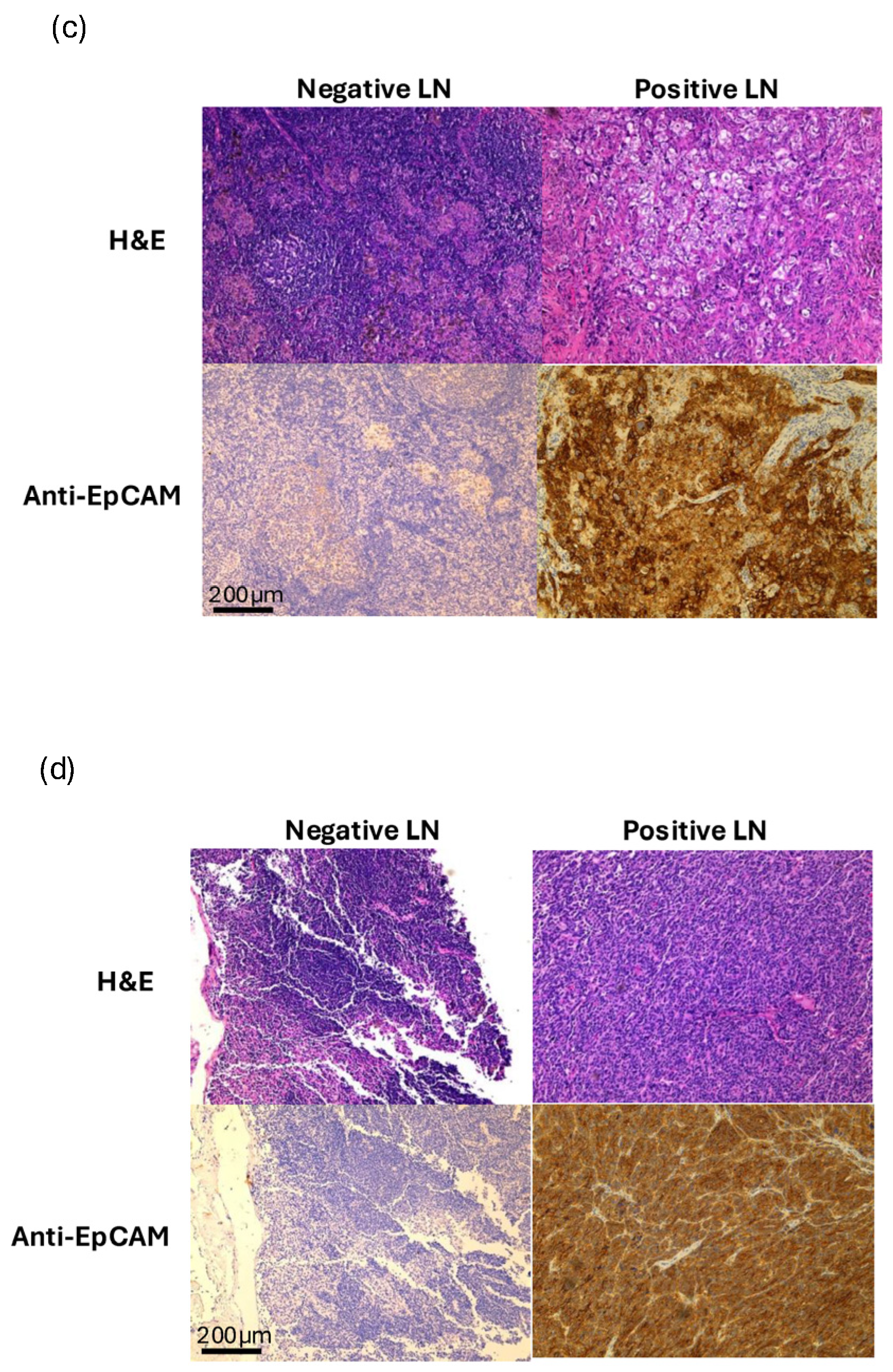
Based on encouraging preclinical data, we aimed to confirm our findings in human samples with resectable non-small cell lung cancer (NSCLC). We identified a set of 81 patients who underwent primary pulmonary resection for lung cancer. Table 1 describes characteristics of the included patients. Patients had a mean age of 57.9 ± 11.4 years, and all patients had pathologic N1 or N2 stage disease on postoperative pathologic assessment. In the 81 patients, we obtained a total of 112 LNs that harbored cancer cells and 210 normal lymph nodes (LNs) without cancer cells. Each sample underwent anti-epithelial cell adhesion molecule (EpCAM) monoclonal antibody (mAb) immunohistochemistry (IHC) and was reviewed by a board-certified lung pathologist. Of the 112 LNs that harbored cancer cells, 100% showed chromogen staining to some degree, which was indicative of EpCAM expression in areas of tumor deposits. As shown in Figure 1, the areas of EpCAM expression in the positive LNs were consistent with areas of cancer cells in the LN. On the other hand, among the 210 LNs that did not have cancer cells, 100% were EpCAM-negative.

2.2. Quantification of EpCAM Staining in Pulmonary Metastases

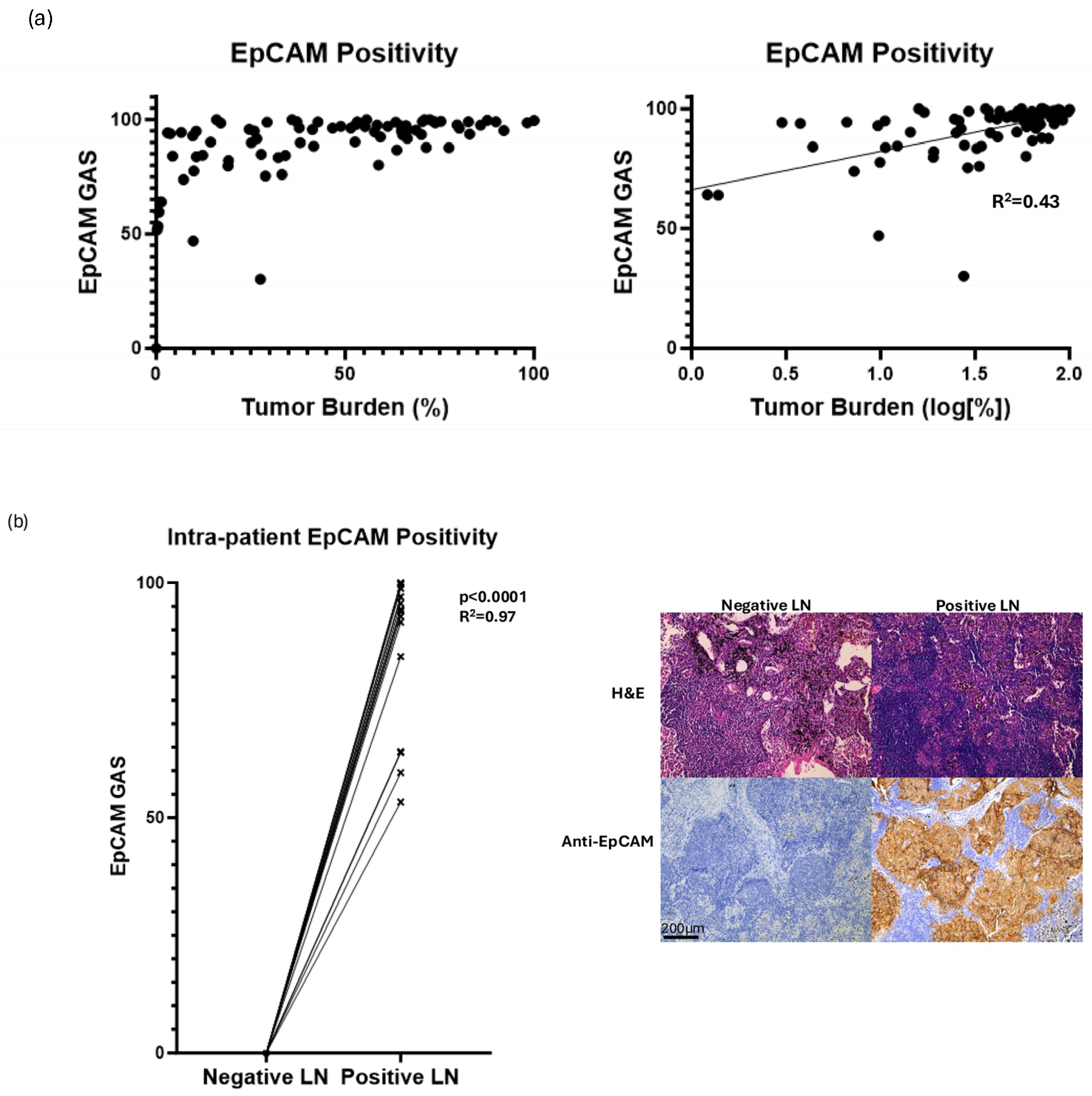
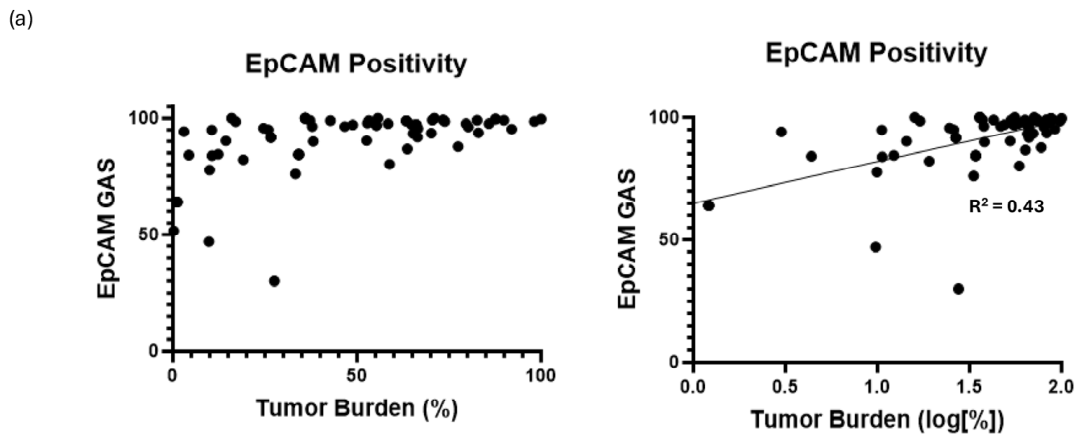
Next, our goal was to quantify the EpCAM IHC expression in positive versus negative LNs. Of the 112 positive LN specimens, the mean EpCAM Global Average Score (GAS), representing overall EpCAM positivity, was 89.65% (IQR 86.66–92.64). EpCAM GAS increased moderately with expanding tumor burden in the LN (R2 = 0.43, p < 0.0001) (Figure 2a). Spatial heterogeneity was markedly present in the EpCAM staining of the positive LN specimens. On histopathologic review of the specimens, EpCAM positivity was confirmed to correlate with areas of tumor deposits within the LNs. Of the negative LNs, all had EpCAM GAS of 0.0. When negative LNs were compared with the positive LNs from the same patient, there was a significant difference in EpCAM GAS (p < 0.0001), indicating an intra-patient difference between positive and negative LNs (Figure 2b).

2.3. EpCAM Detects More Lymph Node Metastases than PET Avidity

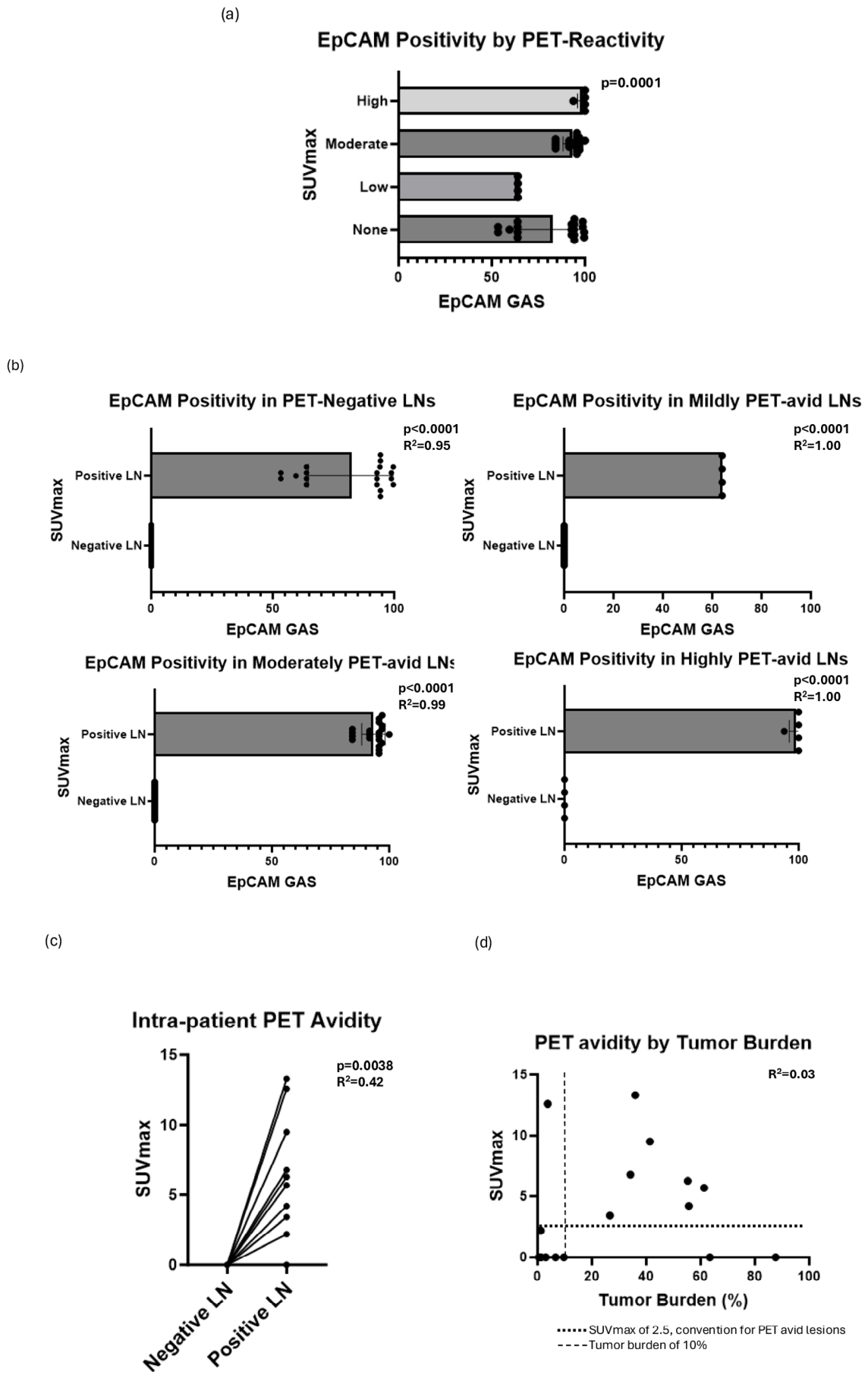
The most common functional radiographic test prior to surgery is a positron emission tomography (PET) scan, which is a routine part of LN staging prior to initiation of treatment or surgery. Our goal was to determine if a PET scan would correlate with EpCAM expression in LNs. PET avidity was analyzed to determine its correlation with EpCAM expression in pathologically positive and negative LNs among PET-negative, PET-reactive, and PET-positive LNs. Among pathologically negative LNs, EpCAM GAS was 0.0 for all LNs, regardless of PET avidity. Among pathologically positive LNs, there was a significant difference in EpCAM GAS between the standardized uptake value (SUVmax) groups (no uptake, low uptake, moderate uptake, high uptake) (p < 0.0001); however, all groups, including the PET negative group, showed high EpCAM positivity, consistent with pathologic results (Figure 3a). Within each SUVmax group, there was a significant difference between pathologically negative and pathologically positive LNs (p < 0.0001, p < 0.0001, p < 0.0001, p < 0.0001) (Figure 3b).
Next, we sought to compare the PET avidity of positive and negative LNs from LNs within the same patient. There was a significant difference between the SUVmax of the positive LNs and negative LNs of the same patient (p = 0.0038), suggesting a significant intrapatient difference in SUVmax between positive and negative LNs (Figure 3c). Despite this, EpCAM GAS was shown to correlate more strongly than PET avidity (EpCAM GAS R2 = 0.97; SUVmax R2 = 0.42).
Finally, SUVmax was evaluated as a function of the percentage of tumor burden of the LNs. Unlike EpCAM GAS, SUVmax was not linearly correlated with the percentage of tumor burden (R2 = 0.03, p = 0.1559). However, above a tumor burden of 10%, the pathologically positive LNs were all PET-avid with SUVmax over 5 (Figure 3d). In conclusion, we found that positive LNs needed to have a critical mass of cancer cells before they became PET-avid. This contrasts with the EpCAM IHC, which detected positive cancer cells at tumor burdens less than 1%. Therefore, EpCAM staining is clearly more sensitive for metastatic cancer than PET imaging.

2.4. EpCAM Is Present in Hilar and Mediastinal Lymph Node Metastases

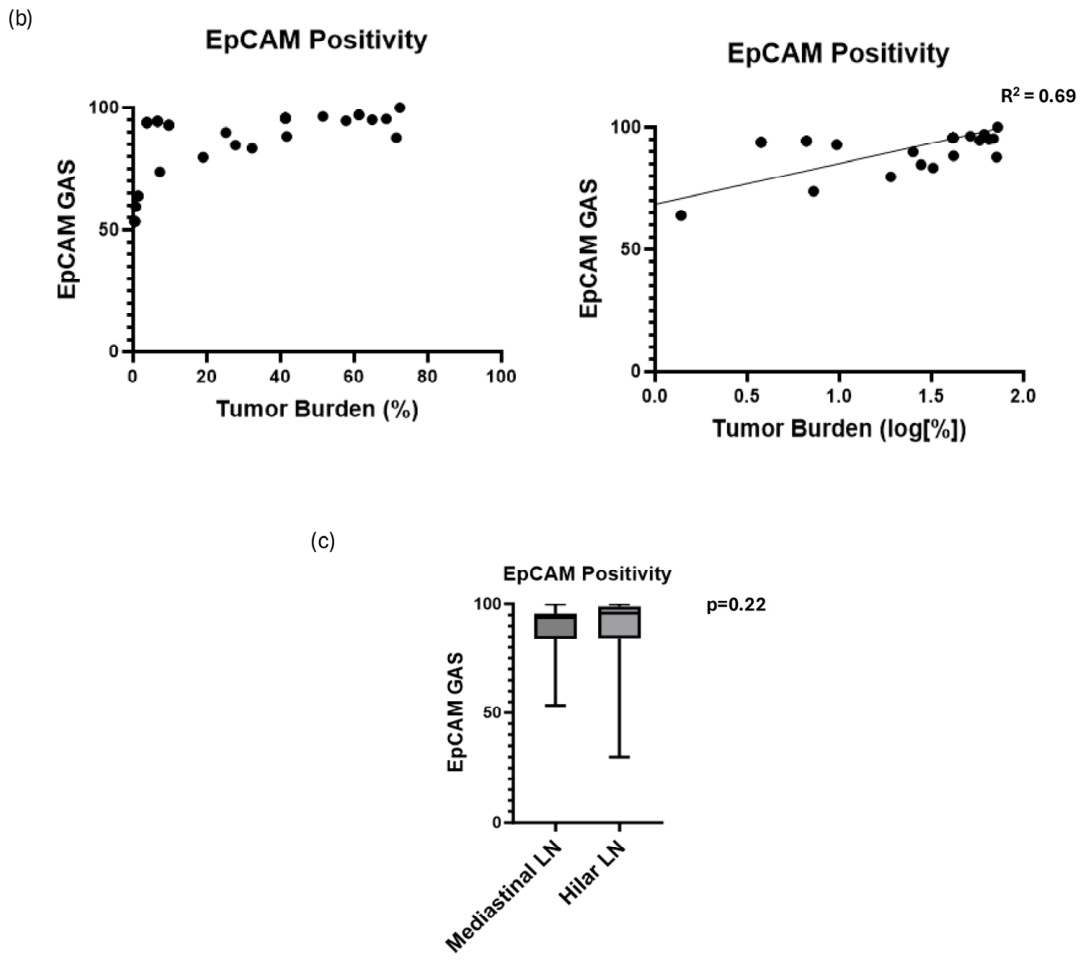
Our next goal was to determine if there was any difference in EpCAM expression in positive LNs that may be spatially close to or distant from the primary pulmonary malignancy. We used hilar LNs as a surrogate for a “close” LN because they were anatomically within the same lobe as the cancer. Then, we used mediastinal LNs as a surrogate for “distant” LNs because they were no longer invested with the pleural lining of the lung organ. Notably, there was no significant difference in the tumor burden between hilar and mediastinal nodes. Of 70 hilar LNs, EpCAM GAS increased with increasing the percentage of tumor burden (R2 = 0.43, p < 0.0001) (Figure 4a). Similarly, of 49 mediastinal LNs, EpCAM GAS increased with increasing the percentage of tumor burden (R2 = 0.69, p < 0.0001) (Figure 4b). When EpCAM GAS was compared between hilar and mediastinal LNs, there was no difference in EpCAM positivity by LN location (p = 0.22) (Figure 4c).

2.5. EpCAM Is Expressed in Lymph Node Metastases from Different Histologic Types

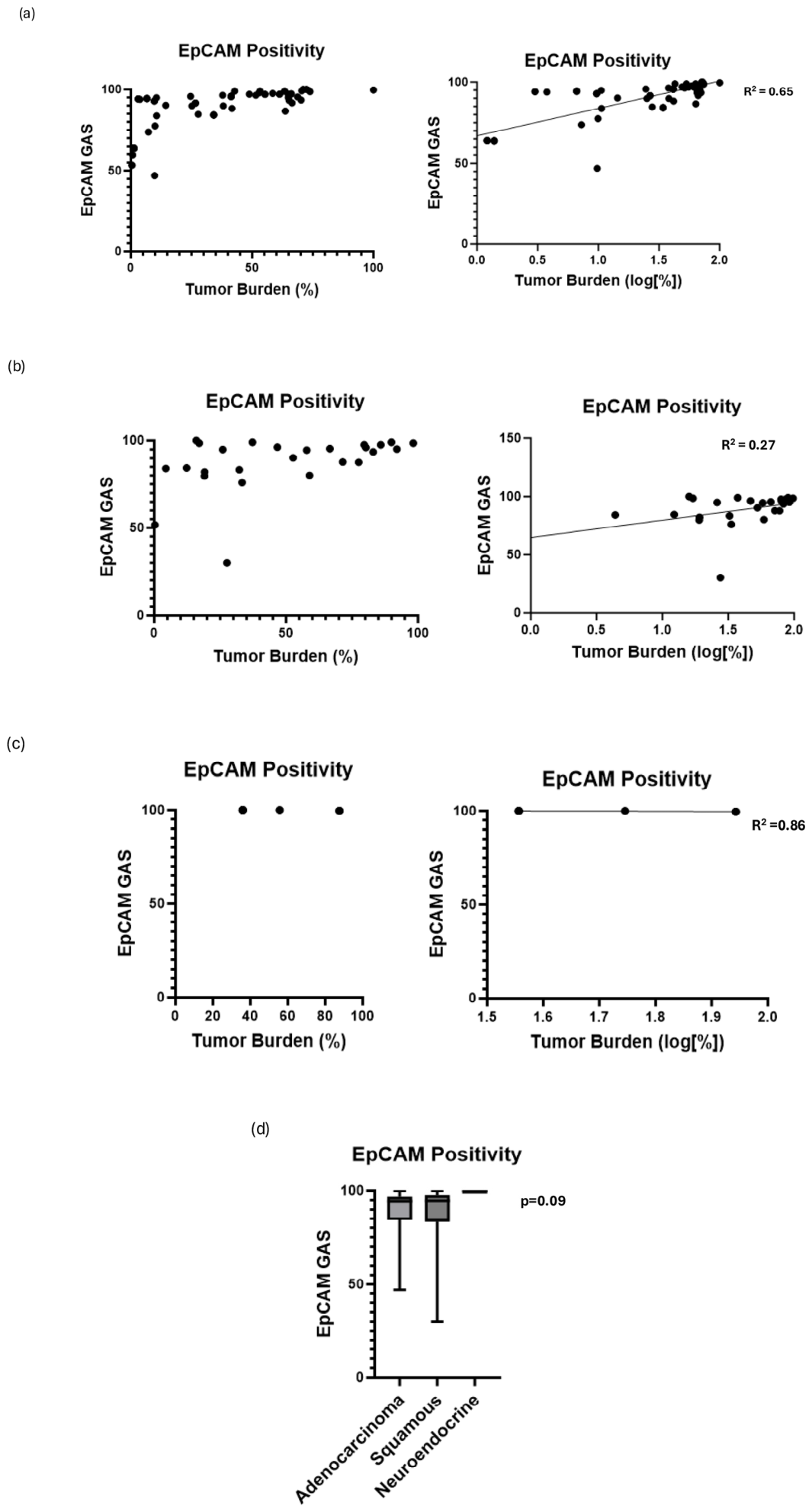
We then hypothesized that EpCAM expression may only correlate with particular histological subtypes of lung cancer. Thus, primary tumor histology was analyzed to determine correlation with EpCAM expression of positive LNs, including primary adenocarcinoma tumors (n = 75), primary squamous tumors (n = 27), and primary neuroendocrine tumors (n = 7). All groups demonstrated increasing EpCAM GAS with increasing percentage of tumor burden (primary adenocarcinoma, R2 = 0.65, p < 0.0001 (Figure 5a); primary squamous tumor, R2 = 0.27, p = 0.0064 (Figure 5b); primary neuroendocrine tumor, R2 = 0.86, p = 0027 (Figure 5c). When compared to each other, there was no difference in EpCAM positivity between primary tumor histology (p = 0.09) (Figure 5d).

3. Discussion

In this study, we discovered epithelial cell adhesion molecule (EpCAM) expression is a highly accurate tissue biomarker for positive lymph nodes (LNs) in patients with non-small cell lung cancer (NSCLC). EpCAM Global Average Score (GAS) was high in positive LNs from NSCLC and was zero in negative LNs. EpCAM was positive in all positive LNs, and was positive even when the tumor burden was less than one percent, indicating that EpCAM is a reliable and accurate marker of pulmonary metastases to LNs.
Among pathologically negative LNs, regardless of positron emission tomography (PET) avidity, EpCAM was absent; whereas among pathologically positive LNs, all standardized uptake value (SUVmax) groups, including the PET negative group, showed high EpCAM positivity. Currently, PET scans are heavily relied upon for preoperative LN staging; however, PET sensitivity and accuracy are limited by spatial resolution [13,14]. Additionally, positive LNs are not always PET-avid due to their small size, and for small lesions, the sensitivity and specificity of PET imaging are decreased [15,16,17,18,19]. When combined with computed tomography (CT), PET/CT has increased sensitivity and accuracy in detecting positive LNs [1,2,3]. Despite this, the reported sensitivity, specificity, and accuracy of PET/CT for LN staging remain low [13]. These results indicate that EpCAM may be more sensitive and specific for identifying pulmonary metastases in LNs and may be more useful than PET imaging in a preoperative or intraoperative setting; however, more studies are warranted to further investigate this in vivo.
We found no difference in EpCAM positivity in hilar LNs compared to mediastinal LNs. Since EpCAM is upregulated in cancer cells preceding the epithelial–mesenchymal transition and metastasis, it is not unexpected that both hilar and mediastinal LNs would have cancer cells and therefore high EpCAM positivity. Additionally, we found no difference in EpCAM positivity in positive LNs from different primary tumor histologies, although observationally, there was significant spatial heterogeneity (sheets of cells compared to scattered collections) in the distribution of EpCAM in cancer cells in the LN. These differences were not significant in terms of expression levels and were related to the histological subtype (adenocarcinoma vs. neuroendocrine vs. squamous), as the expression in the LN mimicked that of the primary tumor.
Thoracic surgeons continue to face the challenges of occult N2 disease and skip metastases. Recent conflicting data on the prognosis of skip N2 disease highlights the need for more systematic and complete LN dissections to ensure patients receive full adjuvant therapy when needed [5,6,19,20]. Currently, cancer surgeons rely on visual and tactile cues to identify irregular nodules, and frozen section is used to confirm pathologic diagnosis; however, this may be time-consuming and variable in its accuracy. These methods are helpful for the primary tumors, though they do not provide the same utility for LN dissection. Frozen section for LNs is not always representative of the cancer spread to that area due to skip metastases, in which the cancer goes to a farther lymph node, skipping over a close lymph node, and visual and tactile cues will not detect microscopic nodal metastases.
These findings complement previous characterization of EpCAM expression in LN metastasis from urothelial cancer, which also showed distinctive expression in positive LNs and absent expression in negative LNs [21]. In their study, van der Fels et al. evaluated EpCAM expression in LN metastases from urothelial cancer of the bladder. As an epithelial cell tumor, urothelial cells and urothelial cancer have EpCAM expression, and the authors reported 95% sensitivity and 100% specificity of EpCAM expression in positive LNs as detected by IHC. Additionally, EpCAM expression has been studied for the detection of occult subclinical nodal disease in patients with pathologically negative papillary thyroid cancer, and the authors found 12.5% of patients had positive EpCAM expression in LNs detected by IHC, despite negative histopathological review [22]. This is consistent with the results of our study in which EpCAM detected NSCLC metastases even when undetected by preoperative PET scan. In conclusion, EpCAM is a promising marker of epithelial cancer micrometastases to LNs at subclinical levels. Harnessing this information, utilizing EpCAM for targeted intraoperative imaging to stage positive LNs that would have otherwise been undetected would allow for proper treatment and fewer cancer recurrences secondary to missed nodal metastases.
To our knowledge, this study is the largest database of human NSCLC LN samples to date, and with this robust cohort, we were able to evaluate the relationships between patient and histopathologic variables and EpCAM expression in positive LNs. Although the results with EpCAM are promising, limitations are acknowledged. Given the retrospective nature of the study and the use of formalin-fixed paraffin-embedded tissues, the absolute abundance of the target cannot be quantified by IHC and could not be confirmed with the tissue available. Despite this, we used a reliable mAb and achieved consistent results across a large sample size, so we believe our results to be acceptable. Additionally, we believe the results to be reproducible, given the standardized methodology using antibody-based immunohistochemistry (IHC) and quantification based on the standardized Ki-67 quantification method.

4. Materials and Methods

4.1. Assessing EpCAM Expression in Human NSCLC by Immunohistochemistry

Tissue specimens were obtained from 112 lymph nodes (LNs) with pulmonary metastases from 81 patients who underwent non-small cell lung cancer (NSCLC) surgeries at the Hospital of the University of Pennsylvania from 2016 to 2023. An a priori power analysis indicated that a total sample size of 224 samples would be sufficient to detect an effect size of Cohen’s d = 0.20 with 80% power at a significance level of α = 0.05 using a two-tailed paired t-test. Patients were included if they underwent pulmonary resection for NSCLC and had positive LNs on standard postoperative pathological assessment by hematoxylin and eosin staining. Patients were excluded if they had a primary tumor histology other than NSCLC or did not have positive LNs on postoperative pathologic assessment. All patients were operated on at the Department of Thoracic Surgery, Hospital of the University of Pennsylvania, and had given written informed consent; the study was conducted in accordance with and approved by the university institutional review board (protocol number 813004, approval date 6 September 2023).
Samples were prepared and immunostained for epithelial cell adhesion molecule (EpCAM) using anti-EpCAM monoclonal antibody (mAb) (Cell Signaling Technology, Danvers, MA, USA; catalog number 2929; 1:100 dilution) applied to formalin-fixed, paraffin-embedded 5-micron-thick sections. The sections underwent a process of deparaffinization, rehydration, and washes in xylene, graded alcohols, and distilled water. The sections were placed in a 10 mM citrate buffer at pH 6, followed by a subsequent microwave antigen retrieval procedure. The antigen–antibody reaction was visualized using the avidin–biotin–peroxidase complex and diaminobenzidine as the chromogen. The slides were counterstained with hematoxylin.

4.2. Immunohistochemistry Scoring

The technical adequacy of staining was validated by using normal colon as a known positive control and normal thymus (thymocytes only) as a known negative control. Images were captured using a high-resolution imaging microscope (Leica DM2500, Leica Microsystems, Deerfield, IL, USA). A board-certified pulmonary pathologist manually scored specimens using a modified scoring system based on the established scoring system for Ki-67 and other described methods [23,24]. Using ImageJ (version 1.54r), the proportion of the area containing tumor cells compared to the overall area of the LN was calculated to obtain the percentage of cancer cells among all cells in the LN, or the percentage of tumor burden [25]. Next, four regions of interest (ROI) were evaluated in each specimen in areas of high tumor burden on H&E, as confirmed by a lung pathologist. In each ROI, the proportion of EpCAM-stained tumor cells among the total counterstained cell population was analyzed. Counting was performed in a typewriter pattern for consistency, as in other described methods [4]. Staining was scored “positive” only if it was localized to the cellular membrane. The proportions of each ROI were averaged to obtain the Global Average Score (GAS), representing overall EpCAM positivity of the specimen. The images were reviewed independently and blindly, without knowledge of the staining results of others.

4.3. Chart Review and Subgroup Analyses

Under an approved University of Pennsylvania IRB-approved protocol, a chart review was performed using the electronic medical record. For patients with LNs harboring pulmonary metastases from NSCLC, information was collected, including relevant patient and tumor characteristics.
Subsets of the positive and negative LN populations were analyzed to determine if EpCAM positivity correlated with clinical characteristics. Positron emission tomography (PET) avidity was analyzed to determine correlation with EpCAM expression in pathologically positive and negative LNs. SUVmax data were extracted from preoperative PET scans. SUVmax values were binned into four groups for analysis: no uptake, low uptake (0–2.5), moderate uptake (2.5–10), and high uptake (>10). EpCAM positivity was analyzed for pathologically negative and positive LNs and compared for PET-negative, PET-reactive, and PET-positive LNs.
The anatomic location of positive LNs was analyzed to determine correlation with EpCAM expression. LNs were stratified by hilar location and mediastinal location. Primary tumor histology was also analyzed to determine the correlation between EpCAM expression in positive LNs.

4.4. Statistical Analysis

Data analysis was stratified by LNs harboring pulmonary metastases compared to LNs without metastases. Patient and tumor characteristics were summarized using descriptive statistics or proportions. Between-group analyses of tumor characteristics were performed using an unpaired t-test or ANOVA as appropriate. Simple linear regression was used to assess the correlation between continuous variables, with logarithmic transformation of data used to linearize relationships.

5. Conclusions

In summary, EpCAM is expressed in NSCLC metastasis to LNs, as shown in 74 positive LNs from patients with resected primary NSCLC. Among pathologically negative LNs, regardless of PET avidity, EpCAM was absent, whereas among pathologically positive LNs, all SUVmax groups exhibited high EpCAM positivity. There was no difference in expression between hilar and mediastinal LNs, nor between primary tumor histology. These results indicate that EpCAM may be useful to the surgical oncologist for intraoperative detection of positive LNs in epithelial cancers, including NSCLC, and this warrants further investigation in in vivo studies.

Author Contributions

K.A.M., K.A.O. and S.S. designed the study, performed data acquisition, data analysis, and data interpretation, as well as drafting and finalizing the manuscript. P.Z. oversaw the pathological process and revised the manuscript. R.K., M.B., L.C., K.G., J.H., J.M., E.J.D. and V.G., supported data collection and analysis and manuscript revision. All authors have read and agreed to the published version of the manuscript.

Funding

SS and KM received funding from NIH P01 CA254859. KW received funding from T32 grant CA251063-05.

Institutional Review Board Statement

The study was conducted in accordance with the Declaration of Helsinki, and approved by the Institutional Review Board University of Pennsylvania (protocol number 813004, approval date 23 December 2010).” for studies involving humans.

Informed Consent Statement

Informed consent was obtained from all subjects involved in the study.

Data Availability Statement

The authors confirm that the data supporting the findings of this study are available within the article. Additional raw data were generated at the University of Pennsylvania. Data supporting the findings of this study are available from the corresponding author, S.S., upon request.

Conflicts of Interest

The authors declare no competing interests.

References

  1. Morton, D.L.; Hoon, D.S.; Cochran, A.J.; Turner, R.R.; Essner, R.; Takeuchi, H.; Wanek, L.A.; Glass, E.; Foshag, L.J.; Hsueh, E.C.; et al. Lymphatic Mapping and Sentinel Lymphadenectomy for Early-Stage Melanoma: Therapeutic Utility and Implications of Nodal Microanatomy and Molecular Staging for Improving the Accuracy of Detection of Nodal Micrometastases. Ann. Surg. 2003, 238, 538–550. [Google Scholar] [CrossRef]
  2. Swanson, R.S.; Compton, C.C.; Stewart, A.K.; Bland, K.I. The Prognosis of T3N0 Colon Cancer Is Dependent on the Number of Lymph Nodes Examined. Ann. Surg. Oncol. 2003, 10, 65–71. [Google Scholar] [CrossRef]
  3. Wong, S.L.; Balch, C.M.; Hurley, P.; Agarwala, S.S.; Akhurst, T.J.; Cochran, A.; Cormier, J.N.; Gorman, M.; Kim, T.Y.; McMasters, K.M.; et al. Sentinel Lymph Node Biopsy for Melanoma: American Society of Clinical Oncology and Society of Surgical Oncology Joint Clinical Practice Guideline. J. Clin. Oncol. 2012, 30, 2912–2918. [Google Scholar] [CrossRef] [PubMed]
  4. Aokage, K.; Yoshida, J.; Ishii, G.; Hishida, T.; Nishimura, M.; Nagai, K. Subcarinal lymph node in upper lobe non-small cell lung cancer patients: Is selective lymph node dissection valid? Lung Cancer Amst. Neth. 2010, 70, 163–167. [Google Scholar] [CrossRef]
  5. Lardinois, D.; Deleyn, P.; Vanschil, P.; Porta, R.; Waller, D.; Passlick, B.; Zielinski, M.; Junker, K.; Rendina, E.; Ris, H. ESTS guidelines for intraoperative lymph node staging in non-small cell lung cancer. Eur. J. Cardio-Thorac. Surg. Off. J. Eur. Assoc. Cardio-Thorac. Surg. 2006, 30, 787–792. [Google Scholar] [CrossRef]
  6. Allen, M.S.; E Darling, G.; Pechet, T.T.V.; Mitchell, J.D.; E Herndon, J.; Landreneau, R.J.; I Inculet, R.; Jones, D.R.; Meyers, B.F.; Harpole, D.H.; et al. Morbidity and Mortality of Major Pulmonary Resections in Patients With Early-Stage Lung Cancer: Initial Results of the Randomized, Prospective ACOSOG Z0030 Trial. Ann. Thorac. Surg. 2006, 81, 1013–1020. [Google Scholar] [CrossRef]
  7. Huang, L.; Yang, Y.; Yang, F.; Liu, S.; Zhu, Z.; Lei, Z.; Guo, J. Functions of EpCAM in physiological processes and diseases (Review). Int. J. Mol. Med. 2018, 42, 1771–1785. [Google Scholar] [CrossRef]
  8. Ma, X.; Kang, X.; He, L.; Zhou, J.; Zhou, J.; Sturm, M.B.; Beer, D.G.; Kuick, R.D.; Nancarrow, D.J.; Appelman, H.D.; et al. Identification of Tumor Specific Peptide as EpCAM Ligand and Its Potential Diagnostic and Therapeutic Clinical Application. Mol. Pharm. 2019, 16, 2199–2213. [Google Scholar] [CrossRef] [PubMed]
  9. Winter, M.J.; Nagtegaal, I.D.; Van Krieken, J.H.J.M.; Litvinov, S.V. The Epithelial Cell Adhesion Molecule (Ep-CAM) as a Morphoregulatory Molecule Is a Tool in Surgical Pathology. Am. J. Pathol. 2003, 163, 2139–2148. [Google Scholar] [CrossRef]
  10. Spizzo, G.; Fong, D.; Wurm, M.; Ensinger, C.; Obrist, P.; Hofer, C.; Mazzoleni, G.; Gastl, G.; Went, P. EpCAM expression in primary tumour tissues and metastases: An immunohistochemical analysis. J. Clin. Pathol. 2011, 64, 415–420. [Google Scholar] [CrossRef]
  11. Kim, Y.; Kim, H.S.; Cui, Z.Y.; Lee, H.-S.; Ahn, J.S.; Park, C.K.; Park, K.; Ahn, M.-J. Clinicopathological implications of EpCAM expression in adenocarcinoma of the lung. Anticancer Res. 2009, 29, 1817–1822. [Google Scholar]
  12. Süer, H.; Erus, S.; Cesur, E.E.; Yavuz, Ö.; Ağcaoğlu, O.; Bulutay, P.; Önder, T.T.; Tanju, S.; Dilege, Ş. Combination of CEACAM5, EpCAM and CK19 gene expressions in mediastinal lymph node micrometastasis is a prognostic factor for non-small cell lung cancer. J. Cardiothorac. Surg. 2023, 18, 189. [Google Scholar] [CrossRef] [PubMed]
  13. Damirov, F.; Büsing, K.; Yavuz, G.; Hatz, R.; Manapov, F.; Michels, J.; Hohenberger, P.; Roessner, E. Preoperative Hilar and Mediastinal Lymph Node Staging in Patients with Suspected or Diagnosed Lung Cancer: Accuracy of 18F-FDG-PET/CT:A Retrospective Cohort Study of 138 Patients. Diagnostics 2023, 13, 403. [Google Scholar] [CrossRef]
  14. Divisi, D.; Di Tommaso, S.; Di Leonardo, G.; Brianzoni, E.; De Vico, A.; Crisci, R. 18-Fluorine Fluorodeoxyglucose Positron Emission Tomography with Computerized Tomography Versus Computerized Tomography Alone for the Management of Solitary Lung Nodules with Diameters Inferior to 1.5 cm. Thorac. Cardiovasc. Surg. 2010, 58, 422–426. [Google Scholar] [CrossRef]
  15. Nomori, H.; Watanabe, K.; Ohtsuka, T.; Naruke, T.; Suemasu, K.; Uno, K. The size of metastatic foci and lymph nodes yielding false-negative and false-positive lymph node staging with positron emission tomography in patients with lung cancer. J. Thorac. Cardiovasc. Surg. 2004, 127, 1087–1092. [Google Scholar] [CrossRef] [PubMed]
  16. Hegde, P.; Molina, J.C.; Thivierge-Southidara, M.; Jain, R.V.; Gowda, A.; Ferraro, P.; Liberman, M. Combined Endosonographic Mediastinal Lymph Node Staging in Positron Emission Tomography and Computed Tomography Node-Negative Non-Small-Cell Lung Cancer in High-Risk Patients. Semin. Thorac. Cardiovasc. Surg. 2020, 32, 162–168. [Google Scholar] [CrossRef]
  17. Ugurlu, E.; Metin, M.; Cetin, N.; Kilicarslan, E.; Degirmencioglu, S.; Sengoz, T.; Akbudak, I.H.; Dogu, G.G.; Aydogmus, U. Evaluation of hypermetabolic mediastinal-hilar lymph nodes determined by PET/CT with EBUS-TBNA and calculation of SUVmax cutoff values in differentiation of malignancy. Medicine 2023, 102, e34928. [Google Scholar] [CrossRef]
  18. Hockmann, J.; Hautzel, H.; Darwiche, K.; Eberhard, W.; Stuschke, M.; Aigner, C.; Herrmann, K.; Plönes, T. Accuracy of nodal staging by 18F-FDG-PET/CT in limited disease small-cell lung cancer. Asian Cardiovasc. Thorac. Ann. 2023, 31, 506–511. [Google Scholar] [CrossRef]
  19. Taylor, M.; Soliman, N.; Paoletti, E.; King, M.; Crosbie, P.A.; Granato, F. Impact of skip mediastinal lymph node metastasis on outcomes after resection for primary lung cancer. Lung Cancer Amst. Neth. 2023, 184, 107341. [Google Scholar] [CrossRef]
  20. Wang, X.; Guo, H.; Hu, Q.; Ying, Y.; Chen, B. The Impact of Skip vs. Non-Skip N2 Lymph Node Metastasis on the Prognosis of Non-Small-Cell Lung Cancer: A Systematic Review and Meta-Analysis. Front. Surg. 2021, 8, 749156. [Google Scholar] [CrossRef]
  21. Van Der Fels, C.; Rosati, S.; De Jong, I. EpCAM Expression in Lymph Node Metastases of Urothelial Cell Carcinoma of the Bladder: A Pilot Study. Int. J. Mol. Sci. 2017, 18, 1802. [Google Scholar] [CrossRef] [PubMed]
  22. Rehders, A.; Anlauf, M.; Adamowsky, I.; Ghadimi, M.H.; Klein, S.; Antke, C.; Cupisti, K.; Stoecklein, N.H.; Knoefel, W.T. Is Minimal Residual Lymph Node Disease in Papillary Thyroid Cancer of Prognostic Impact? An Analysis of The Epithelial Cell Adhesion Molecule EpCAM in Lymph Nodes of 40 pN0 Patients. Pathol. Oncol. Res. 2014, 20, 185–190. [Google Scholar] [CrossRef]
  23. Ramazanoglu, M.; Lutz, R.; Rusche, P.; Trabzon, L.; Kose, G.T.; Prechtl, C.; Schlegel, K.A. Bone response to biomimetic implants delivering BMP-2 and VEGF: An immunohistochemical study. J. Cranio-Maxillofac. Surg. 2013, 41, 826–835. [Google Scholar] [CrossRef] [PubMed]
  24. Nielsen, T.O.; Leung, S.C.Y.; Rimm, D.L.; Dodson, A.; Acs, B.; Badve, S.; Denkert, C.; Ellis, M.J.; Fineberg, S.; Flowers, M.; et al. Assessment of Ki67 in Breast Cancer: Updated Recommendations From the International Ki67 in Breast Cancer Working Group. JNCI J. Natl. Cancer Inst. 2021, 113, 808–819. [Google Scholar] [CrossRef] [PubMed]
  25. Schneider, C.A.; Rasband, W.S.; Eliceiri, K.W. NIH Image to ImageJ: 25 years of image analysis. Nat. Methods 2012, 9, 671–675. [Google Scholar] [CrossRef]
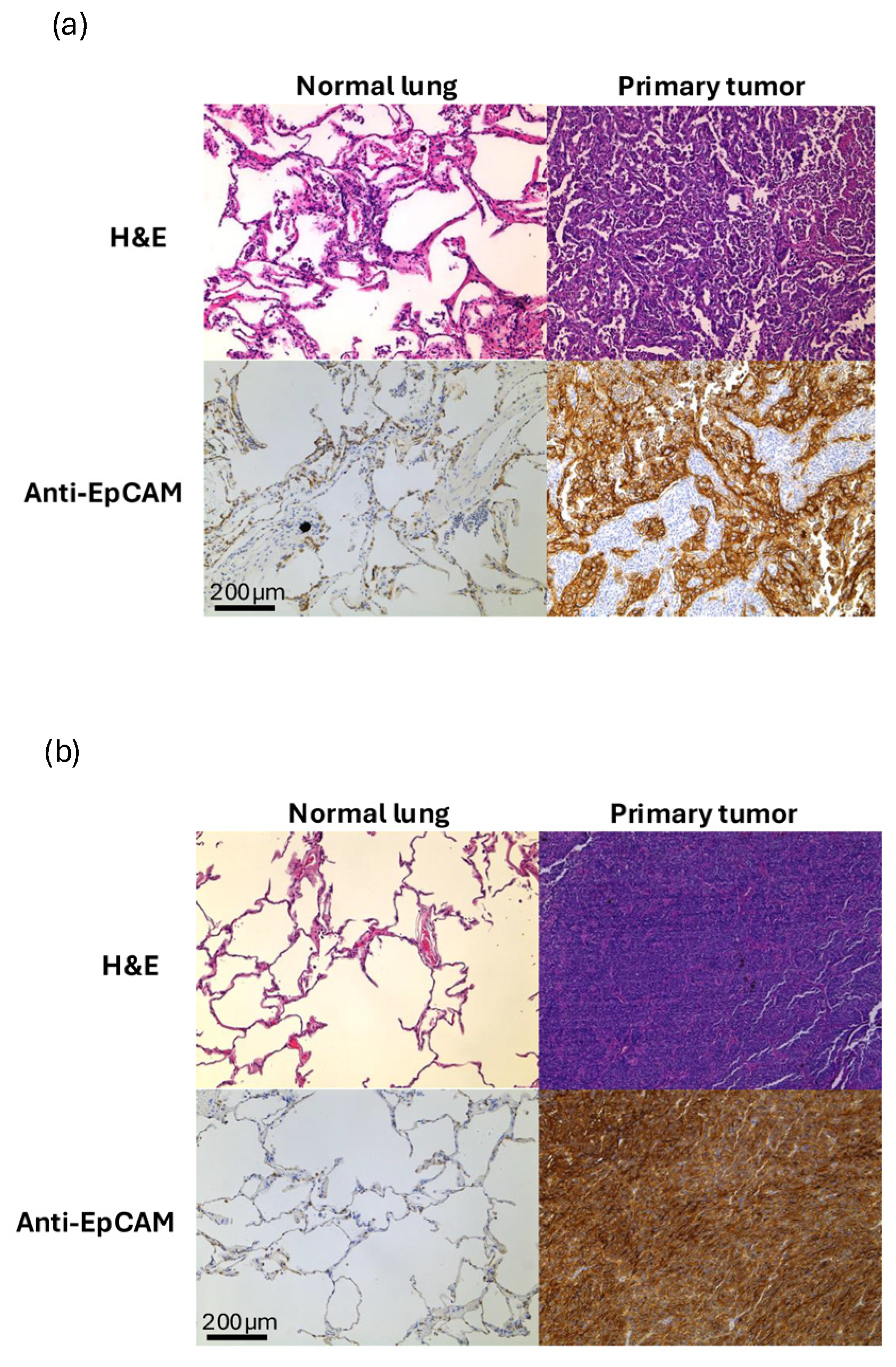
Figure 1. Similar to lung tumor compared to normal lung, positive lymph nodes (LNs) overexpress epithelial cell adhesion molecule (EpCAM), consistent with areas of pulmonary metastases, and negative LNs exhibit no EpCAM: (a) Representative adenocarcinoma compared to normal lung. (b) Representative neuroendocrine tumor compared to normal lung. (c) Representative LNs from adenocarcinoma primary. (d) Representative LNs from neuroendocrine primary.
Lymphatics 04 00027 g001aLymphatics 04 00027 g001b
Figure 2. Lymph node (LN) specimens were immunostained for epithelial cell adhesion molecule (EpCAM), an epithelial marker and known marker of lung cancer. EpCAM staining was scored by manually counting the proportion of EpCAM-stained tumor cells among the total counterstained population in four regions of interest, which were averaged to obtain the Global Average Score (GAS), representing overall EpCAM positivity of the specimen. (a) EpCAM is positive in positive LNs with any amount of cancer cells. (b) Within one patient there is a significant difference in EpCAM positivity in negative LNs and positive LNs (p < 0.0001).
Lymphatics 04 00027 g002
Figure 3. PET avidity was analyzed for correlation with epithelial cell adhesion molecule (EpCAM) expression in pathologically positive and negative lymph nodes (LNs), using SUV groups of no uptake, low uptake (0–2.5), moderate uptake (2.5–10), and high uptake (>10). Of note, among pathologically negative LNs, EpCAM Global Average Score (GAS) was 0.0 for all LNs, regardless of PET avidity. (a) EpCAM is positive in positive LNs regardless of PET activity (p = 0.0001). (b) EpCAM is positive in positive LNs regardless of PET activity, and is absent in negative LNs even when reactive on PET scan (PET negative, p < 0.0001; mildly PET-avid, p < 0.0001; moderately PET-avid, p < 0.0001; highly PET-avid, p < 0.0001). (c) Within one patient there is a significant difference in SUVmax in negative LNs and positive LNs (p = 0.0038); however, the correlation is weak (R2 = 0.42). (d) Positive LNs are PET-avid when LNs have a tumor burden over 10%.
Lymphatics 04 00027 g003
Figure 4. Anatomic location of lymph nodes (LNs) was analyzed to determine correlation with epithelial cell adhesion molecule (EpCAM) expression, with hilar LNs used as a surrogate for “close” LNs due to location within the same lobe as the cancer, and mediastinal LNs used as a surrogate for “distant” LNs due to location outside of the pleural lining of the lung organ. (a) Pathologically positive LNs in a hilar location expressed EpCAM at any amount of cancer cells, and increased with increasing tumor burden (n = 70, R2 = 0.43). (b) Pathologically positive LNs in a mediastinal location expressed EpCAM at any amount of cancer cells, and increased with increasing tumor burden (n = 49, R2 = 0.69). (c) There is no difference in the presence of EpCAM in positive hilar LNs compared to positive mediastinal LNs (p = 0.22).
Lymphatics 04 00027 g004aLymphatics 04 00027 g004b
Figure 5. Primary tumor histology was evaluated to determine correlation with epithelial cell adhesion molecule (EpCAM) expression of positive lymph nodes (LNs). (a) Pathologically positive LNs from primary adenocarcinomas expressed EpCAM in any amount of cancer cells, and increased with increasing tumor burden (n = 75, R2 = 0.65). (b) Pathologically positive LNs from primary squamous cancers expressed EpCAM at any amount of cancer cells, and increased with increasing tumor burden (n = 27, R2 = 0.27). (c) Pathologically positive LNs from primary neuroendocrine cancers expressed EpCAM at any amount of cancer cells, and increased with increasing tumor burden (n = 7, R2 = 0.86). (d) There is no difference in the presence of EpCAM in histologic subtypes of NSCLC (p = 0.09).
Lymphatics 04 00027 g005
Table 1. Patient characteristics.
VariablesN (%)
Age57.9 ± 11.4
Sex
Male55 (67.9)
Female26 (32.1)
Location
Hilar61 (75.3)
Mediastinal20 (24.7)
Histology
Adenocarcinoma51 (63.0)
Squamous27 (33.3)
Neuroendocrine3 (3.7)
Pathologic N Stage
N00 (0)
N161 (75.3)
N220 (24.7)
N30 (0)
Disclaimer/Publisher’s Note: The statements, opinions and data contained in all publications are solely those of the individual author(s) and contributor(s) and not of MDPI and/or the editor(s). MDPI and/or the editor(s) disclaim responsibility for any injury to people or property resulting from any ideas, methods, instructions or products referred to in the content.