
Case Report

Lymphomatoid Granulomatosis and Tuberculosis, Coincidence or Cohabitation—A Case Report

1
Department of Internal Medicine and Clinical Immunology, Centre Hospitalier Universitaire d’Angers, 49933 Angers, Cedex 9, France
2
Department of Pathology, Centre Hospitalier Universitaire d’Angers, 49933 Angers, Cedex 9, France
3
Department of Hematology, Centre Hospitalier Universitaire d’Angers, 49933 Angers, Cedex 9, France
4
Department of Hematology, Centre Hospitalier du Mans, 72037 Le Mans, France
*
Author to whom correspondence should be addressed.
Lymphatics 2025, 3(3), 28; https://doi.org/10.3390/lymphatics3030028
Submission received: 7 July 2025 / Revised: 6 September 2025 / Accepted: 8 September 2025 / Published: 15 September 2025
(This article belongs to the Special Issue Indolent Lymphomas and Lymphoreticular Proliferative Diseases)

Abstract

Background: Lymphomatoid granulomatosis (LYG) is a rare and atypical EBV-induced B-cell lymphoproliferative disorder. Clinical manifestations are mainly respiratory, with nodular infiltrates, varying in number and size, being responsible for respiratory distress. Cutaneous, hepatic, or neurological involvement is also possible. Although pathogenesis is not clearly elucidated, quantitative or qualitative cellular immunodepression is thought to be a main factor. Here, we report a case of concomitant LYG and pulmonary tuberculosis. Case presentation: An 80-year-old female patient presented to the emergency unit for steadily increasing dyspnea, with workup revealing bilateral pulmonary nodules and mediastinal lymph node enlargement on chest imaging. Empiric antibiotic therapy was initially started with amoxicillin-clavulanate, which was later combined with azithromycin following respiratory deterioration. A CT-guided lung biopsy showed grade 2 LYG. Treatment with corticosteroids and weekly rituximab was initiated, leading to rapid improvement of respiratory symptoms. After the second dose of rituximab, sputum cultures that were initially collected were found to be positive for Mycobacterium tuberculosis. Rituximab was suspended, and antituberculous treatment was initiated. Rituximab was restarted once tuberculosis was controlled. Follow-up imaging later showed adequate control of both tuberculosis and LYG, with at least a partial remission of the latter. Conclusions: Our case highlights the importance of a complete diagnostic workup when a diagnosis of LYG is made, to avoid missing a concomitant pulmonary disease, such as tuberculosis, even when definite pathologic and clinical features of the former are present.

1. Introduction

Lymphomatoid granulomatosis (LYG) is a rare Epstein–Barr virus (EBV) induced B-cell lymphoproliferative disease. It is distinguished from other B-cell lymphoproliferative disorders by its unique pathogenesis and histopathologic characteristics [1]. As for many other EBV-induced B-cell lymphoproliferative disorders, immune deficiency seems to be a prerequisite for disease occurrence, and it has been hypothesized that quantitative and/or qualitative CD8-positive T-cell defects in particular are at the basis of disease pathogenesis [1,2]. Contrary to what its name suggests, LYG is not a granulomatous disease and is rather characterized by angiocentric and angiodestructive infiltrates mainly consisting of lymphocytes, plasma cells, and histiocytes. The majority of the lymphocytes in the infiltrate are CD3 and CD4 positive. Atypical EBV-positive large B cells can be detected and are usually clonal. The number and density of these cells define the grade of the disease, whereby the more aggressive grade 3 LYG has more than 50 per high-power field (hpf) of such cells [3]. LYG usually occurs between the ages of 40 and 60, with a male-to-female ratio of 2:1. Presentation is almost exclusively extranodal, with respiratory involvement in almost all cases (100%), other sites of involvement include the central nervous system (38%), liver (19%), skin (17%), and kidneys (15%) [3]. Pulmonary computed tomography (CT) scans show nodular masses with or without central necrosis and cavitation. [1,4] LYG bears significant clinical and radiographic resemblance to other pulmonary diseases, including pulmonary tuberculosis, which is caused by the acid-fast bacillus Mycobacterium tuberculosis. Tuberculosis causes caseating granulomas consisting of a conglomerate of immune cells (i.e., macrophages, lymphocytes, etc.) [5]. On classical radiographs, tuberculosis granulomas appear as patchy consolidation or nodular opacities, with or without cavitation. Mediastinal lymph node involvement is common in pulmonary tuberculosis [6].
To date, there is no consensus on the ideal treatment for LYG owing to the rarity of the disease. Management primarily depends on the grade of the disease, with observation and conservative therapies including corticosteroids, interferon-α, and single-agent rituximab being used in patients with low-grade (i.e., grade 1 and 2) LYG. Immunochemotherapy is reserved for patients with grade 3 LYG, with the relatively more intensive regimen dose-adjusted etoposide, prednisone, vincristine, cyclophosphamide, doxorubicin, and rituximab (DA-EPOCH-R) yielding an overall response rate of 76% and a complete response (CR) rate of 47% in a phase II trial [7]. Similarly, rituximab, cyclophosphamide, doxorubicin, vincristine, and prednisone (R-CHOP) or similar less intensive regimens resulted in response in about a third of patients in a small case series [4].
Here, we report a rare case of LYG coinciding with pulmonary tuberculosis.

2. Case Presentation

Our patient was an 80-year-old female with a history of type 2 diabetes, arterial hypertension, and rhizomelic pseudo-polyarthritis, who initially presented to the emergency department for a few-week history of steadily increasing dyspnea. There was no history of weight loss, fevers, chills, or night sweats. On physical examination, there were no signs of respiratory distress, with an oxygen saturation of 93% on 2 L/min of oxygen by nasal canula. Pulmonary auscultation was significant for bilateral diffuse coarse inspiratory crackles. The rest of her vital signs and physical exam were unremarkable. There was no history of travel to regions endemic for tuberculosis.
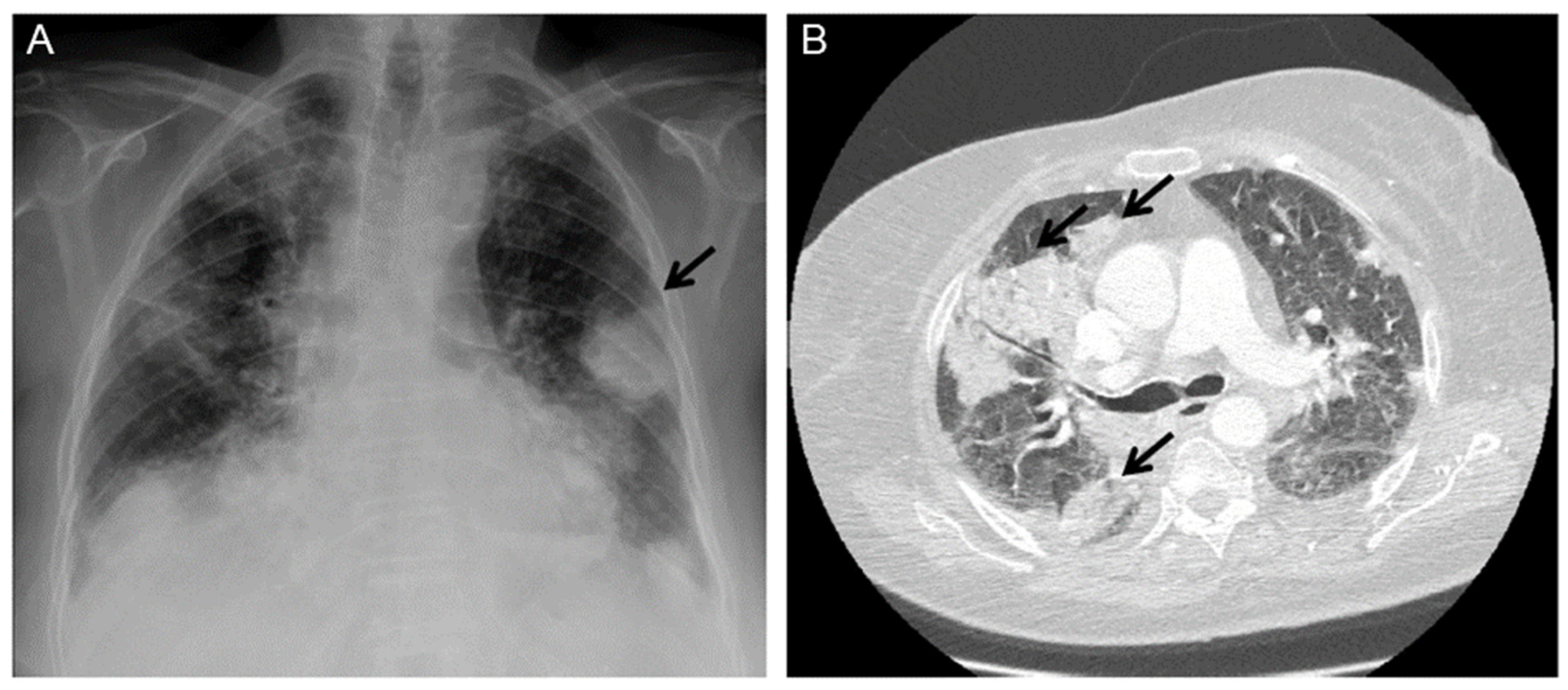
Initial laboratory results showed a hemoglobin of 13.9 g/dL, a white blood count of 8210/mm3, and a platelet count of 383,000/ mm3. The basic chemistry panel was within normal limits, and C-reactive protein (CRP) was elevated at 16 mg/L. A chest radiograph showed multiple bilateral nodular opacities (Figure 1A), and a thoracic CT scan showed several irregular pulmonary opacities as well as mediastinal and hilar lymphadenopathies, with a maximal diameter of 19 mm (Figure 1B).
Empiric amoxicillin and clavulanic acid were initially started for suspected pneumonia. However, there was no improvement after 5 days of therapy, requiring the addition of azithromycin, which was later discontinued for treatment failure. A PCR for Pneumocystis jirovecii performed on bronchoalveolar lavage was positive, and treatment with trimethoprim-sulfamethoxazole was initiated, without any improvement in hypoxia.
Finally, a CT-guided biopsy of the pulmonary opacities was performed, and unfortunately, the procedure was complicated by a gas embolism, resulting in cardiac arrest. The patient was successfully resuscitated and transferred to the intensive care unit for hyperbaric therapy. An MRI of the brain obtained after this incident showed a T1 hyperintense non-enhancing lesion in the occipital cortex that was consistent with an ischemic stroke.
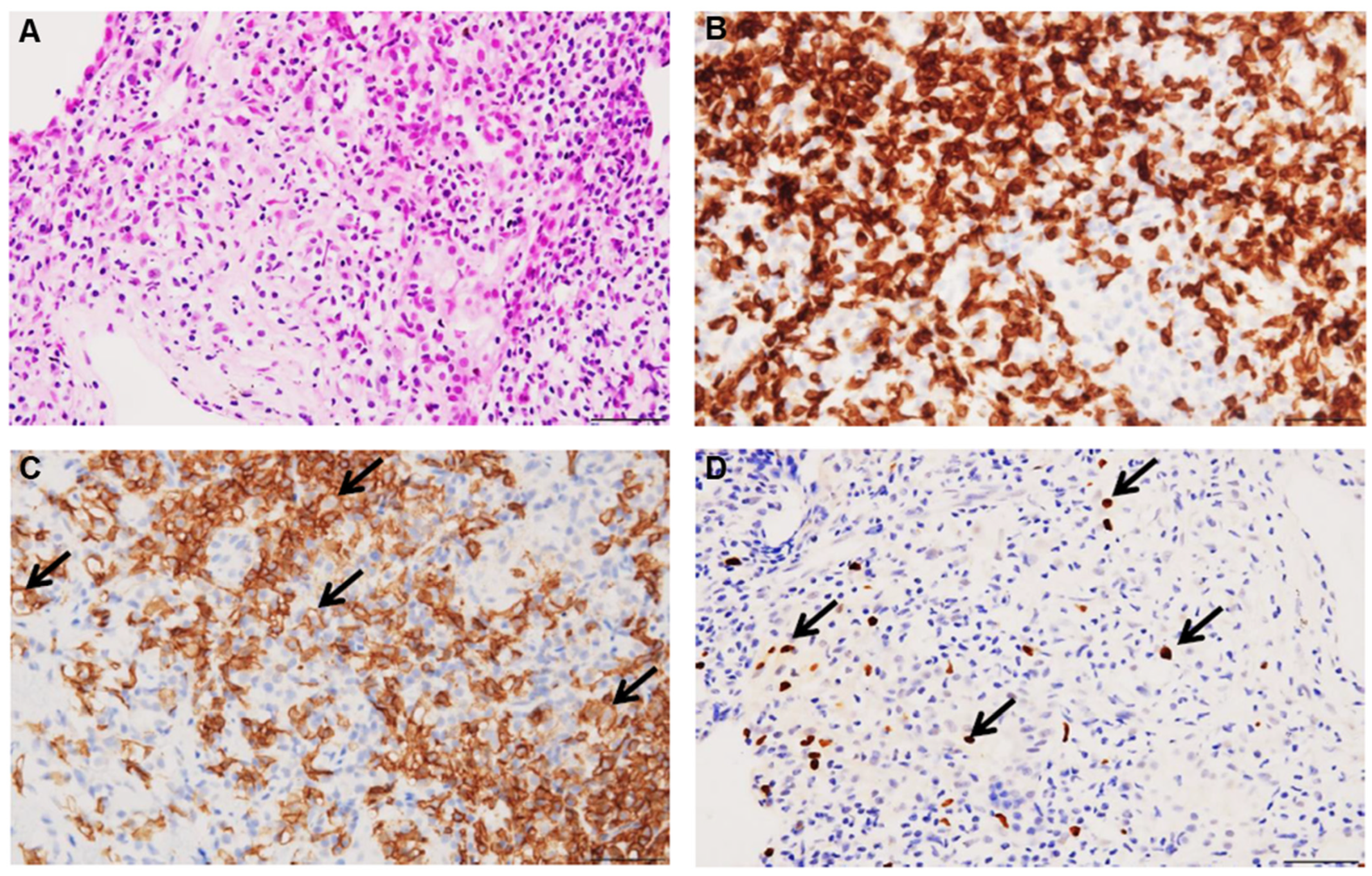
Histologic examination of the lung biopsy showed a polymorphous infiltrate consisting of lymphocytes, histiocytes, plasma cells, and rare scattered inconspicuous medium to large atypical cells that harbored immunoblast-like features. The atypical cells were positive for the B-cell markers CD20 and CD79a on immunohistochemistry and for EBV by in situ hybridization (around 20 cells per hpf). The background was made of numerous CD3 and CD8-positive T cells. No necrosis, angioinvasion, or angiodestruction was seen. These findings were consistent with grade 2 lymphomatoid granulomatosis (according to the classification by Song et al. [3]) (Figure 2), although higher-grade LYG could not be ruled out, given the inherent sampling limitations of a CT-guided biopsy.
Treatment was initiated shortly after diagnosis, consisting of 4 weekly doses of the anti-CD20 monoclonal antibody rituximab (375 mg/m2 per dose) and IV methylprednisolone (1 mg/kg). The patient’s hypoxia improved within the first few days of therapy, and oxygen supplementation was discontinued thereafter. Rituximab was withheld after the second dose when sputum cultures collected at the time of admission were found to be positive for Mycobacterium tuberculosis. Antituberculosis treatment consisting of rifampicin, isoniazid, ethambutol, and pyrazinamide was initiated, and the sputum acid-fast bacilli smear was negative after 3 weeks of treatment. Rituximab was restarted after 4 weeks of antituberculous therapy, and the patient received the two final doses of the treatment without any further complications. In addition, pulmonary tuberculosis remained well controlled after reintroduction of rituximab, and acid-fast smears performed later remained negative. It is notable that a T-cell count performed 3 months after rituximab showed an abnormally low CD4 to CD8 count of 0.47, while serologic testing for human immunodeficiency virus was negative.
A follow-up CT scan performed at 6 months showed a partial response with a regression of the pulmonary lesions, and the patient’s respiratory status remained stable until her last follow-up, at 8 months post-treatment.

3. Discussion

To our knowledge, the occurrence of LYG in conjunction with tuberculosis has only been described once in the literature [8]. In a case report by Ha et al., an 87-year-old male patient with a history of pulmonary tuberculosis presented with multifocal lung consolidation and nodular lesions, with a biopsy revealing grade 3 lymphomatoid granulomatosis. Sputum samples were positive for Mycobacterium tuberculosis 36 days after hospital admission, shortly after LYG was diagnosed. Lymphomatoid granulomatosis treatment was delayed in order to treat the infection. The patient expired within a few weeks, and death was attributed to the progression of lymphomatoid granulomatosis [8].
Although there is no known pathophysiologic correlation between LYG and active pulmonary tuberculosis, the presence of a T-lymphocyte defect likely made for a fertile ground for the occurrence of both diseases in our patient. Notably, immunosenescence occurring with advanced age, which is hypothesized to be related to T-lymphocyte dysfunction, among other mechanisms, has been correlated to both an increased risk of tuberculosis and to lymphomagenesis [9,10,11,12]. Indeed, in our patient, this defect was illustrated by the significantly decreased CD4 to CD8 ratio, pointing towards the existence of an immune defect rather than a mere coincidence of two rare diseases. Further investigations, including functional and quantitative analysis of T-lymphocyte subsets, would offer more information in our care; however, these assays were not performed due to a lack of availability. Compromised immunity in our patient was also evidenced by the detection of opportunistic infection by Pneumocystis jirovecii on admission. Type 2 diabetes mellitus had probably contributed to this patient’s immune dysfunction. The so-called rarity of co-occurrence of lymphomatoid granulomatosis and tuberculosis may be more related to the rarity of the former, as immune dysfunction is a commonality in the pathogenesis of both conditions.
Furthermore, simple empirical evidence indicates that in the rare situation where pulmonary lymphomatoid granulomatosis and tuberculosis appear in conjunction, neither treatment should be delayed for concerns of rituximab-induced immunodepression. Evidence originating from studies conducted in the context of autoimmune diseases, suggest that, the risk of tuberculosis reactivation is relatively low as compared to anti-TNF agents, 12 vs. 65 cases of tuberculosis per 100,000 patient years according to Rutherford et al. [13], clinical data estimating this risk when rituximab is used for the treatment of lymphoid malignancies is still lacking [13,14,15,16]. Our experience is in keeping with previously published reports on the safety of rituximab in the presence of active tuberculosis and anti-tuberculous treatment [16].
Finally, this case report highlights the importance of a complete diagnostic workup in a rare but plausible situation. Lymph-node involvement in lymphomatoid granulomatosis should always be questioned, as it is seldom seen in the disease. In addition, pathologic confirmation for LYG should not eliminate the need for a comprehensive workup to eliminate other differential diagnoses with management-changing potential.

Author Contributions

N.G. retrieved data, realized bibliography, analyzed data, wrote, reviewed, and submitted the article. S.B. performed histological examination and provided pathological documentation. M.S., J.P., A.C. and M.H.-B. reviewed and provided corrections and guidance. F.S. retrieved and analyzed data, wrote, and reviewed the article. All authors have read and agreed to the published version of the manuscript.

Funding

This research received no external funding.

Institutional Review Board Statement

The institutional review board of the Centre Hospitalier Univeritaire d’Angers waived the requirement for ethical approval for this single-case report in accordance with the institutional policy. The study was conducted in accordance with the Declaration of Helsinki.

Informed Consent Statement

Informed consent was obtained from all subjects involved in the study.

Data Availability Statement

Data sharing is not available for this article as no datasets were generated or analyzed during the current study.

Acknowledgments

We thank our patient and her family for their consent to publish this case report. We also thank the nursing team who took care of the patient during her hospital stay.

Conflicts of Interest

The authors declare no relevant conflicts of interest.

Abbreviations

EBVEpstein–Barr virus
LYGLymphomatoid Granulomatosis

References

  1. Melani, C.; Jaffe, E.S.; Wilson, W.H. Pathobiology and treatment of lymphomatoid granulomatosis, a rare EBV-driven disorder. Blood 2020, 135, 1344–1352. [Google Scholar] [CrossRef] [PubMed]
  2. Wilson, W.; Kingma, D.; Raffeld, M.; Wittes, R.; Jaffe, E. Association of lymphomatoid granulomatosis with Epstein-Barr viral infection of B lymphocytes and response to interferon-alpha 2b. Blood 1996, 87, 4531–4537. [Google Scholar] [CrossRef] [PubMed]
  3. Song, J.Y.; Pittaluga, S.; Dunleavy, K.; Grant, N.; White, T.; Jiang, L.; Davies-Hill, T.; Raffeld, M.; Wilson, W.H.; Jaffe, E.S. Lymphomatoid Granulomatosis—A Single Institute Experience: Pathologic Findings and Clinical Correlations. Am. J. Surg. Pathol. 2015, 39, 141–156. [Google Scholar] [CrossRef] [PubMed]
  4. Chavez, J.C.; Sandoval-Sus, J.; Horna, P.; Dalia, S.; Bello, C.; Chevernick, P.; Sotomayor, E.M.; Sokol, L.; Shah, B. Lymphomatoid Granulomatosis: A Single Institution Experience and Review of the Literature. Clin. Lymphoma Myeloma Leuk. 2016, 16, S170–S174. [Google Scholar] [CrossRef] [PubMed]
  5. Lin, P.L.; Flynn, J.L. CD8 T cells and Mycobacterium tuberculosis infection. Semin Immunopathol. 2015, 37, 239–249. [Google Scholar] [CrossRef] [PubMed]
  6. Jeong, Y.J.; Lee, K.S. Pulmonary Tuberculosis: Up-to-Date Imaging and Management. Am. J. Roentgenol. 2008, 191, 834–844. [Google Scholar] [CrossRef] [PubMed]
  7. Melani, C.; Dowdell, K.; Pittaluga, S.; Dunleavy, K.; Roschewski, M.; Song, J.Y.; Calattini, S.; Kawada, J.I.; Price, D.A.; Chattopadhyay, P.K.; et al. Interferon alfa-2b in patients with low-grade lymphomatoid granulomatosis and chemotherapy with DA-EPOCH-R in patients with high-grade lymphomatoid granulomatosis: An open-label, single-centre, phase 2 trial. Lancet Haematol. 2023, 10, e346–e358. [Google Scholar] [CrossRef] [PubMed]
  8. Ha, Y.W.; Kim, C.H.; Park, Y.; Sohn, J.W.; Kim, M.J.; Yoon, Y.K. Rare case of pulmonary lymphomatoid granulomatosis in conjunction with tuberculosis: A case report. Medicine 2017, 96, e8323. [Google Scholar] [CrossRef] [PubMed]
  9. Bektas, A.; Schurman, S.H.; Sen, R.; Ferrucci, L. Human T cell immunosenescence and inflammation in aging. J. Leukoc. Biol. 2017, 102, 977–988. [Google Scholar] [CrossRef] [PubMed]
  10. Mancuso, S.; Carlisi, M.; Santoro, M.; Napolitano, M.; Raso, S.; Siragusa, S. Immunosenescence and lymphomagenesis. Immun. Ageing 2018, 15, 22. [Google Scholar] [CrossRef] [PubMed]
  11. Teo, A.K.J.; Morishita, F.; Islam, T.; Viney, K.; Ong, C.W.M.; Kato, S.; Kim, H.; Liu, Y.; Oh, K.H.; Yoshiyama, T.; et al. Tuberculosis in older adults: Challenges and best practices in the Western Pacific Region. Lancet Reg. Health West Pac. 2023, 36, 100770. [Google Scholar] [CrossRef] [PubMed]
  12. Olmo-Fontánez, A.M.; Turner, J. Tuberculosis in an Aging World. Pathogens 2022, 11, 1101. [Google Scholar] [CrossRef] [PubMed]
  13. Rutherford, A.I.; Patarata, E.; Subesinghe, S.; Hyrich, K.L.; Galloway, J.B. Opportunistic infections in rheumatoid arthritis patients exposed to biologic therapy: Results from the British Society for Rheumatology Biologics Register for Rheumatoid Arthritis. Rheumatology 2018, 57, 997–1001. [Google Scholar] [CrossRef] [PubMed]
  14. Cantini, F.; Goletti, D. Biologics and Tuberculosis Risk: The Rise and Fall of an Old Disease and Its New Resurgence. J. Rheumatol. Suppl. 2014, 91, 1–3. [Google Scholar] [CrossRef] [PubMed]
  15. Gottenberg, J.E.; Ravaud, P.; Bardin, T.; Cacoub, P.; Cantagrel, A.; Combe, B.; Dougados, M.; Flipo, R.M.; Godeau, B.; Guillevin, L.; et al. Risk factors for severe infections in patients with rheumatoid arthritis treated with rituximab in the autoimmunity and rituximab registry. Arthritis Rheum. 2010, 62, 2625–2632. [Google Scholar] [CrossRef] [PubMed]
  16. Vikse, J.; Jonsdottir, K.; Kvaløy, J.T.; Wildhagen, K.; Omdal, R. Tolerability and safety of long-term rituximab treatment in systemic inflammatory and autoimmune diseases. Rheumatol. Int. 2019, 39, 1083–1090. [Google Scholar] [CrossRef] [PubMed]
Figure 1. Radiographic findings. Plain chest radiograph (A) and chest computed tomography (CT) (B) showing multiple bilateral nodular opacities (arrows).
Lymphatics 03 00028 g001
Figure 2. Pathologic examination of the lung biopsy showed grade 2 lymphomatoid granulomatosis. (A) Hematein ploxin and saffron staining (×400) showing lung parenchyma infiltrated by numerous and polymorphic inflammatory cells consisting of lymphocytes, histiocytes, plasma cells, and scattered inconspicuous atypical cells; (B) CD3 immunostaining shows an abundant T-cell infiltrate. (×400); (C) CD20 immunostaining shows a slight B cell infiltrate and a few scattered larger B cells (arrow). (×400); (D) Epstein–Barr virus (EBV)-encoded RNA in situ hybridization highlights scattered cells positive for EBV (arrow). (×400).
Lymphatics 03 00028 g002
Disclaimer/Publisher’s Note: The statements, opinions and data contained in all publications are solely those of the individual author(s) and contributor(s) and not of MDPI and/or the editor(s). MDPI and/or the editor(s) disclaim responsibility for any injury to people or property resulting from any ideas, methods, instructions or products referred to in the content.