1. Background
Horticultural farming has emerged as a critical component in agricultural transformation in Tanzania, contributing significantly to household incomes, food security, and employment opportunities, particularly in the Southern Highlands regions of Iringa and Njombe [
1,
2]. Smallholder farmers (with a farm size < 5 acres, household labor, and ≥1 years pesticide experience) dominate this sector, cultivating a diverse range of vegetables and fruits for local consumption and regional markets [
3]. However, alongside the rapid expansion of horticulture, pesticide use has become increasingly prevalent as farmers strive to control pests and diseases, and to meet market quality standards [
4,
5].
Globally, pesticide use remains a double-edged sword, as while it enhances agricultural productivity, it also poses significant risks to human health and the environment when mismanaged [
6]. In Sub-Saharan Africa, and Tanzania in particular, pesticide handling practices among smallholders are often characterized by limited knowledge, improper storage, the inadequate use of protective equipment, and weak regulatory enforcement [
4,
7]. This situation is exacerbated by the limited access to agricultural extension services and the over-reliance on agro-input sellers as the primary sources of pesticide information [
4,
8].
The socio-environmental dynamics of pesticide use extend beyond individual farmer practices to include institutional-, economic-, and community-level factors. For example, pesticide supply chains in Tanzania involve multiple actors, such as agro-dealers, local retailers, extension officers, and regulatory bodies, whose interactions influence farmers’ knowledge, attitudes, and behaviors regarding safe pesticide use [
9,
10]. Studies have shown that agro-dealers often lack sufficient training and may prioritize sales over safe use advisories, further entrenching hazardous practices [
8,
11]. Meanwhile, local communities face cumulative risks, such as the environmental contamination of soil and water as well as the bioaccumulation of pesticide residues in crops and food chains [
10,
12].
The Southern Highlands, particularly Iringa and Njombe, are renowned horticultural hubs in Tanzania, producing a large share of vegetables, like tomatoes, cabbages, and onions, for urban centers and export [
2]. However, evidence specific to the patterns and socio-environmental dimensions of pesticide use in these regions remains limited. Prior studies often focus on the perceptions of pesticides and their use mostly in the northern regions and in large-scale plantations, leaving out the socio-ecological factors shaping pesticide practices among smallholder horticulturalists who constitute the backbone of Tanzania’s fresh produce markets [
3,
4]. Thus, little is known about how socio-ecological factors shape pesticide practices among Tanzania’s horticultural farmers.
Addressing this gap is critical for informing policies and interventions aimed at promoting sustainable pest management, safeguarding public health, and protecting agro-ecosystems. Understanding the everyday practices of pesticide use, the influence of agro-input sellers, and the broader socio-environmental context is essential for designing context-appropriate education, regulation, and support systems [
5,
7].
Therefore, this study explores the patterns, practices, and socio-environmental dynamics of pesticide use among smallholder farmers and agro-input sellers in Iringa and Njombe via the use of the social ecological model (SEM), which captures the multi-level influences (individual to policy) shaping pesticide-related behaviors within horticultural systems. Thus, the study aims to generate context-specific insights, and contribute to ongoing discussions on sustainable horticulture, integrated pest management (IPM), and rural livelihood resilience in Tanzania’s Southern Highlands.
2. Materials and Methods
2.1. The Study Area
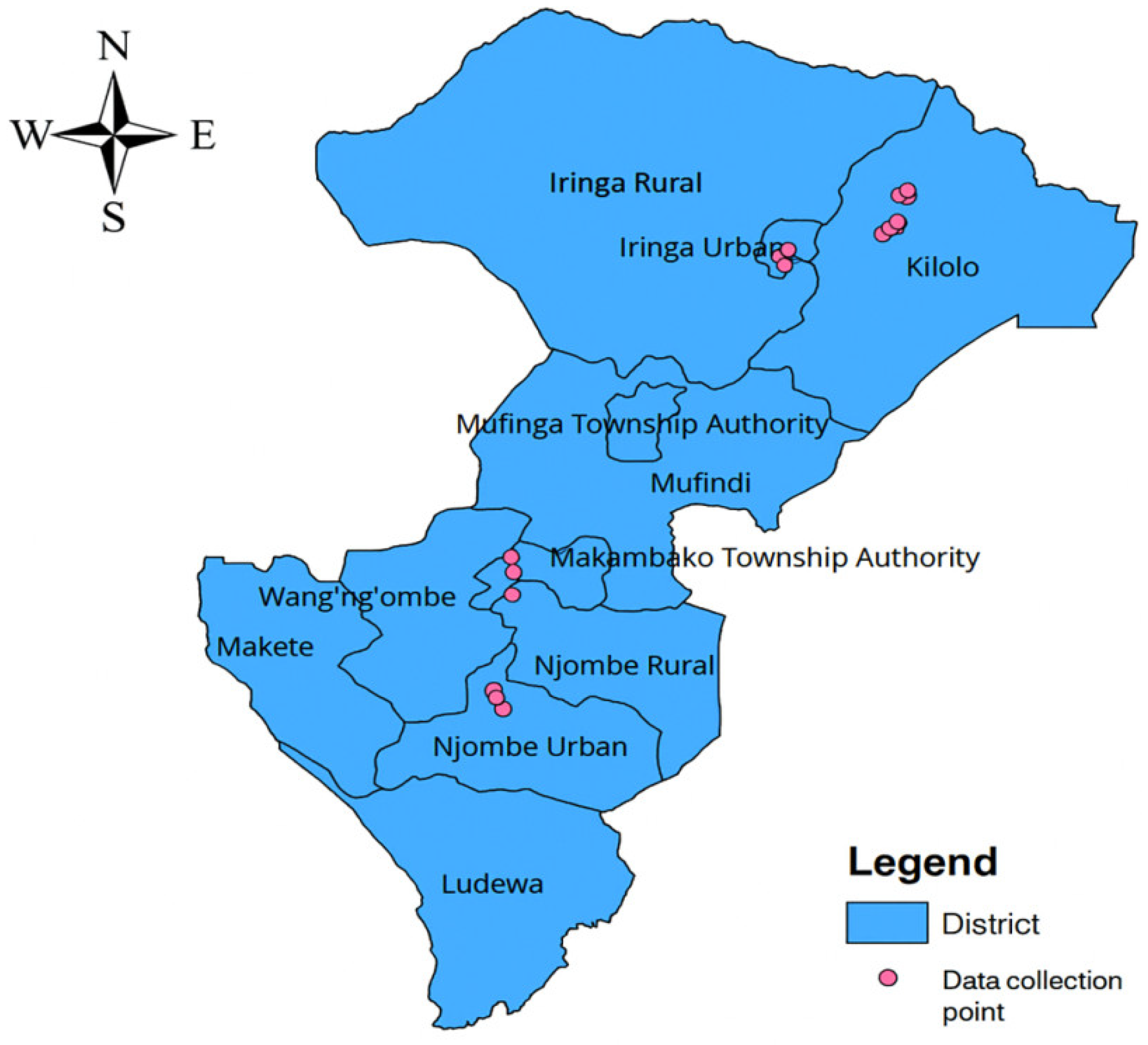
The study was conducted in selected horticultural farming communities and major agro-input market centers within the Iringa and Njombe regions, Southern Highlands, Tanzania. These areas were purposively chosen due to their intensive horticultural activities and high dependence on pesticides. The Iringa area is characterized by a bimodal pattern, with short rains between October and December and long rains from March to May. In contrast, Njombe has higher and more reliable levels of rainfall. The soils in Iringa are mainly loamy to sandy loam, and Njombe has red lateritic soils that are well-drained and fertile but slightly more acidic, with pH values of 5.0–6.0, particularly in the highland areas. Overall, pest and disease pressure is moderate but tends to increase during the dry season when irrigation is applied. In Njombe, pest pressure is generally higher due to the cooler and more humid conditions (
Figure 1 below).
2.2. Study Design
This study employed a qualitative phenomenological design, guided by the socio-ecological model (SEM), to explore the patterns, practices, and socio-environmental dynamics of pesticide use within the horticultural value chain [
13]. The phenomenological approach facilitated an in-depth understanding of the lived experiences of smallholder farmers and agro-input sellers, while the SEM provided a multi-level lens to examine how individual, interpersonal, community, institutional, and policy factors interact to shape pesticide-related behaviors.
2.3. Theoretical Framework
This study was underpinned by the socio-ecological model (SEM), which offers a comprehensive lens for understanding how individual behaviors are shaped by multiple, interacting levels of influence. This model recognizes that human actions, such as patterns and practices of pesticide use, do not occur in isolation but are the result of dynamic interactions across personal, social, community, institutional, and policy environments. By applying the SEM, this study was able to explore pesticide use as a multifaceted phenomenon embedded within broader socio-cultural and environmental contexts.
2.4. Conceptual Framework
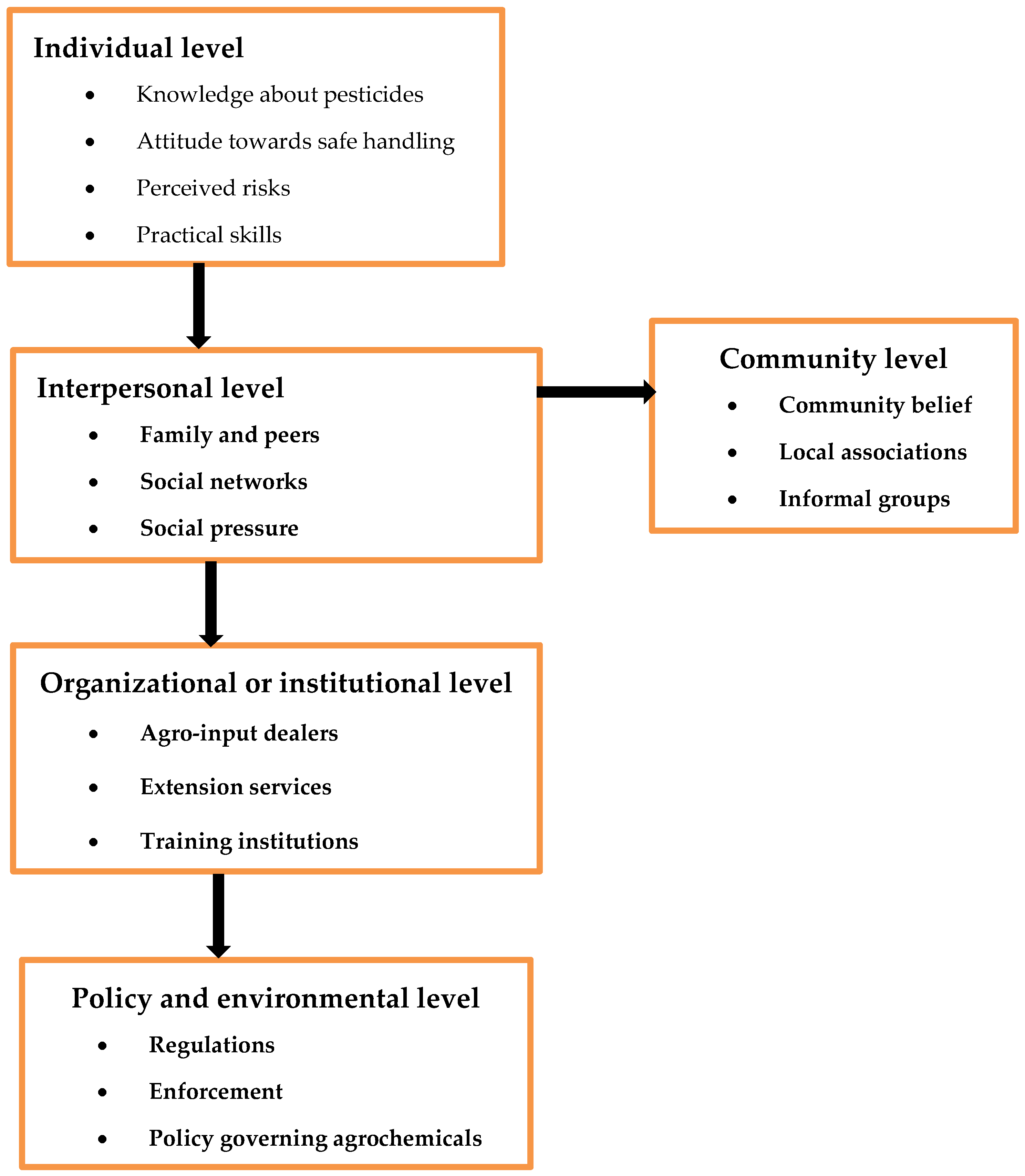
At the individual level, the framework highlights the personal characteristics that shape behavior. This includes farmers’ and agro-input sellers’ knowledge about pesticides, their attitudes toward safe handling, the perceived risks associated with pesticide exposure, and the practical skills they possess to manage and apply these chemicals effectively. The interpersonal level focuses on the influence of family, peers, and immediate social networks. For example, fellow farmers, relatives, and community opinion leaders can strongly shape norms and informal rules about when, how, and why pesticides are used. Social pressure and shared beliefs often dictate whether protective measures are adopted or neglected. At the community level, broader social structures and cultural dynamics come into play. Community beliefs, local associations, and informal groups often influence collective attitudes toward pesticide practices. Additionally, the level of community organization, access to local information networks, and the presence of community-based education initiatives all play crucial roles in shaping behavior.
The organizational or institutional level examines the role of formal systems, such as agro-input dealers, agricultural extension services, and training institutions. Agro-input sellers are often the first point of contact for farmers seeking advice on pesticide choices and application techniques. Similarly, government or NGO extension officers, agricultural cooperatives, and training workshops can provide critical support and knowledge transfer, influencing how pesticides are selected, mixed, applied, and stored. Finally, the policy and environmental level encompasses the broader regulatory and ecological contexts in which pesticide use occurs. This includes national and local regulations, enforcement mechanisms, and policies governing the sale and use of agrochemicals.
By grounding the study in the socio-ecological model, the research was able to capture the complexity and interconnectedness of the factors that influence pesticide use. This multi-level perspective provides a more nuanced understanding of the challenges in, and opportunities for, promoting safer, more sustainable pesticide practices among smallholder farmers and agro-input dealers in the horticultural value chain in Iringa and Njombe, in Tanzania’s Southern Highlands (
Figure 2).
2.5. Study Population
The study population included smallholder horticultural farmers as primary participants. Agro-input dealers, agricultural extension officers and community leaders (for triangulation and institutional perspectives), and local regulatory officials were also interviewed as key informants to provide broader perspectives on pesticide supply, advice, and governance.
2.6. Sampling Procedure
A purposive sampling strategy was used to select participants who could provide rich, relevant insights. Local agricultural officers helped to identify farmers with diverse pesticide use experiences. Agro-input sellers were recruited from licensed agro-shops in major horticultural market hubs. The final sample size was determined via thematic saturation, when no new information emerged from additional interviews.
2.7. Sample Size
In SEM, unlike other methods, sample size cannot be determined through calculation. Recruitment and analysis proceeded iteratively, with interviews conducted and coded in parallel. Sampling continued until thematic saturation was achieved. The final sample size was therefore determined by analytic sufficiency rather than by statistical power, and the regional distribution reflects participant availability and the need to capture variation across the two settings. Consequently, 23 respondents were recruited purposively from two regions, Iringa (
n = 9) and Njombe (
n = 14). Thus, the selected sample size was sufficient to capture a comprehensive understanding of the study objectives while maintaining representation across key stakeholder groups (
Table 1).
2.8. Sample Size and Participant Selection
A purposive sampling strategy was employed to select participants who could provide rich, relevant information on pesticide use. The study included 12 farmers from smallholder horticultural farms in the selected regions, chosen to represent a diversity of crops, farm sizes, and experience levels. In addition, 11 key informants, including agro-dealers, agricultural extension officers, and local authority representatives, were selected, based on their roles in pesticide distribution, regulation, and advisory services. Participants were approached through community leaders and local agricultural offices, and the inclusion criteria ensured that all participants had direct involvement in pesticide-related activities.
2.9. Data Collection
Data were collected between October 2024 and March 2025, using a combination of in-depth phenomenological interviews, key informant interviews, and field observations.
In-depth interviews using semi-structured, open-ended questions were conducted with individual farmers to capture their lived experiences, beliefs, perceptions, and daily practices related to pesticide use. An interview guide, developed based on the socio-ecological model (SEM) framework, ensured that the questions addressed multiple levels of influence and covered the main categories, themes, and subthemes related to pesticide patterns, practices, and socio-environmental impacts. Key informant interviews, which mainly included additional interviews, were conducted with agro-dealers, extension officers, and local authority representatives to gain insights into pesticide distribution, the advice provided to farmers, and the existing regulatory frameworks.
Field observations were carried out to document the real-life practices related to pesticide purchasing, storage, handling, mixing, application, and disposal. All interviews and discussions were conducted in Kiswahili, audio-recorded with participants’ consent, and supplemented by detailed field notes (Annex 1 ).
2.10. Data Management and Analysis
All audio recordings were transcribed verbatim and, where necessary, translated into English to ensure accuracy and consistency. The transcripts were then imported into NVivo software Version 12 [
14], which facilitated the systematic coding, organization, and management of the qualitative data, using inductive thematic analysis. The analysis was guided by Colaizzi’s phenomenological approach [
15], which involved several rigorous steps: the repeated reading of the transcripts for familiarization, the extraction of significant statements related to the phenomenon under study, and the formulation of meanings from these statements.
These meanings were then clustered into coherent themes and subthemes that captured the essence of the participants’ lived experiences. Predefined categories, namely, Patterns, Practices, and Socio-Environmental Dynamics, provided an initial framework for coding, while NVivo enabled flexible coding to accommodate for emerging subthemes and nuanced insights. Themes and subthemes were further organized according to the levels of the socio-ecological model (individual, interpersonal, community, institutional, and policy/environmental) to illuminate the multi-layered dynamics influencing pesticide use. Patterns, variations, and interconnections across themes were examined to build a deeper understanding of the topic. To ensure credibility and trustworthiness, findings were returned to participants for member checking, and triangulation across different data sources and participant categories was employed to strengthen the depth and validity of the analysis.
2.11. Trustworthiness
Rigor was ensured through several strategies that strengthened the trustworthiness of the study. Credibility was achieved by triangulating the data sources, conducting member checks with participants to validate the findings, and engaging with the study context over an extended period. Dependability was supported through the maintenance of a clear audit trail that documented the processes of coding and thematic development. Confirmability was enhanced through peer debriefing and ongoing reflexive practices to minimize researcher bias. Finally, transferability was addressed through providing detailed, rich descriptions of the research context and participants, allowing others to judge the applicability of the findings to similar settings.
2.12. Ethical Considerations
Ethical approval for this study was obtained from the Joint Catholic University of Health and Allied Sciences and the Bugando Medical Centre Research Ethics and Review Committee (CREC/866/2024), which serves as the Institutional Review Board (IRB) for CUHAS and BMC Bugando. Written informed consent was secured from all participants prior to data collection. Confidentiality and anonymity were strictly upheld throughout the study, and participants were clearly informed of their right to withdraw at any stage without any repercussions.
3. Results and Discussion
3.1. Social Demographic Characteristics
The study involved a total of 23 participants drawn from the Iringa and Njombe regions. The gender distribution was nearly balanced, with 52.1% male and 47.8% female respondents. The mean age of participants was 33 years (95% CI: 29.3–37.3) with a standard deviation of 1.9, indicating a relatively young adult population. In terms of education, over half (52.17%) had completed primary school, 26.09% had reached secondary level education, 8.7% had a college education, while 13.04% had no formal education. The average number of children per respondent was 2.4 (95% CI: 2.03–2.84; SD: 0.2), with most having two (34.78%) or three children (34.78%), while 17.39% had one child and 13.04% had four children (
Table 2).
3.2. Pesticide Use Patterns, Practices, and Socio-Environmental Dynamics
Using NVivo 12 (QSR International) [
14], three main categories were derived:
Patterns,
Practices, and
Socio-Environmental Dynamics. Each category yielded specific themes and subthemes, presented in
Table 3. Thematic analysis was conducted using an inductive–deductive coding approach. Initially, transcripts from farmers, agro-dealers, and regulatory officers were read several times to familiarize researchers with the data (
Supplementary Materials S1 and S2). During the first-cycle inductive coding, meaningful segments of text were labeled using open codes that captured participants’ own words or ideas, such as
“we mix two chemicals to save time”,
“I only wear gloves when the smell is strong”. In the second-cycle coding, the inductive codes were grouped and refined into higher-level categories and subthemes, which were then aligned with constructs of the socio-ecological model (SEM). The SEM provided an organizing framework to interpret pesticide-related behaviors at multiple levels, that of the individual (knowledge, attitudes, and practices), interpersonal (peer influence and family support), and community/institutional (regulatory and environmental contexts) levels. For example, one farmer stated,
“When the insects don’t die after spraying, I add more pesticide or mix two brands for better results.” This segment was first coded inductively as
“mixing multiple formulations” and
“increased dosage due to perceived ineffectiveness”.These initial codes were then organized deductively under the SEM-informed theme, “Patterns of Pesticide Use → Mixing Practices”, representing an individual-level behavioral adaptation influenced by perceived pesticide efficacy.
3.2.1. Patterns of Pesticide Use in the Horticultural Value Chain
Pesticide Patterns
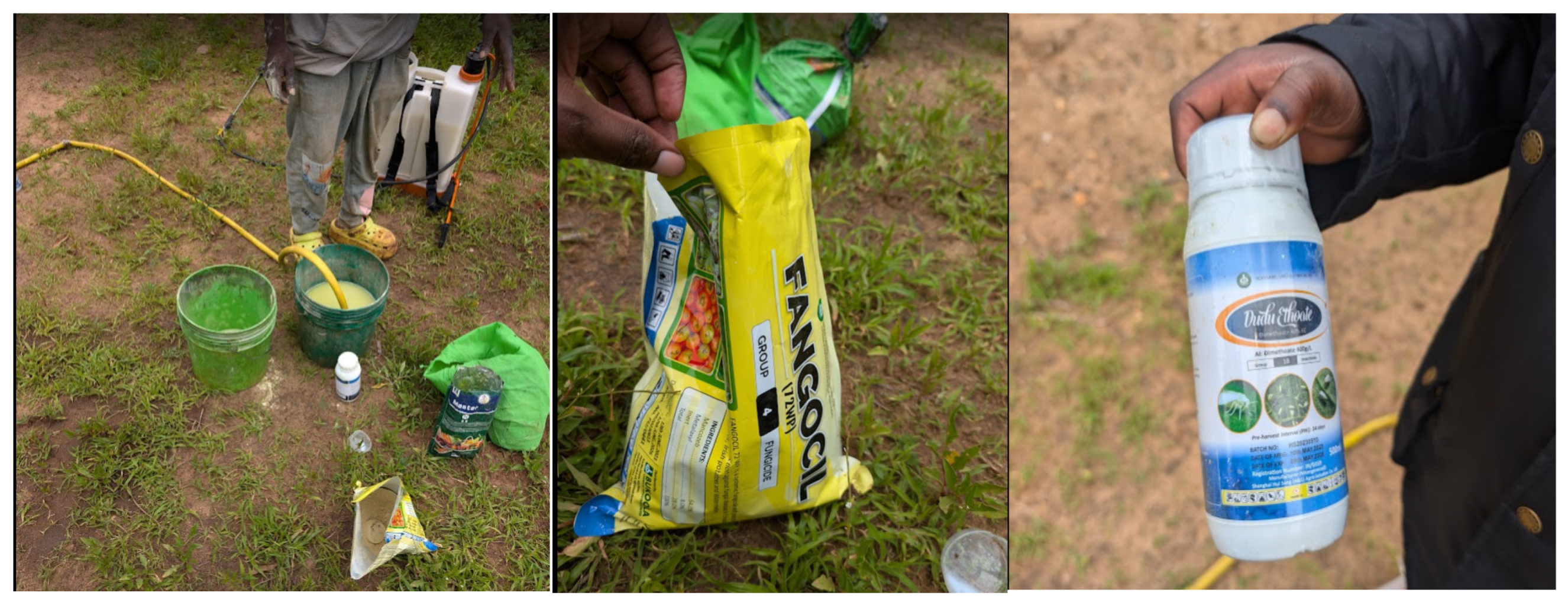
The findings reveal that horticultural smallholders across Iringa and Njombe commonly use a variety of pesticides, primarily insecticides with a mixed formulation and occasionally with fertilizers as supplementary inputs, (
Figure 3). Farmers frequently combine multiple pesticide types in response to perceived inefficacy, high costs, or to achieve cross-crop effectiveness. For instance, one farmer stated,
“In most of my activity at the farm, I do use Ninja, Snowcron, Agripro, Lamba, lalaforce, Dudumetrin, Belt 720 W, and Snow Tiger as insecticide and for fungal I do use Mancozeb, Sulfur, Blue copper, and Bajuta.”.
(KII–Farmer, Kilolo DC 3)
“Commonly I do use are Confidor, Admire, Coragen, Karate, Warrior, Deltamethrin, Ridomil Gold, Amistar Top, Copper Hydroxide, Streptomycin Sulfate, Copper Oxychloride, Abamectin, Paraquat, Glyphosate.”.
(KII–Farmer, Njombe TC 2)
“Most of the fertilizers used are manure, CAN, Urea, and others, but for many farmers, the use of accustomed fertilizers is more common compared to newer fertilizers in the market, unless they receive proper education. Therefore, chemical fertilizers are important to me as I do mix them with pesticides to improve the crop protection”.
(KII–Farmer, Lyasa, Kilolo 2)
Utilization of Pesticides by Farmers
The utilization of pesticides to curb horticultural and spices diseases is prevalent. Changes in climate patterns, especially the rainy and cold weather, has been said to contribute to insecticides and diseases, like FusariumWilt and Blight, that increase the cases of pesticides use by smallholder horticultural growers. The utilization is coupled with the availability of pesticides in the horticulture value chain that also promotes formal and informal interaction among the agriculture extension officers, agrochemical sellers, and small horticultural growers. As a result, while the products themselves are well recognized, their mode of use is influenced by economic considerations, crop-specific practices, and a tendency to reproduce what they see as successful interventions. Nonetheless, the cross-cropping nature of pesticide use was largely portrayed as affirmed by the government authority.
“Currently Dudu Cypher is an insecticide used because it is now the rain season where insects attack maize at great scale.”.
(KII-Agro-Seller-8, Iringa)
“For instance, the Carbendazim is used to cure and prevention of crops from fusarium wilt. The Emamectin benzoate is concerned with killing insects called “fall armyworms (kanitangaze)”, which are common crop disease at this area.”.
(KII–Agro-Seller-6, Njombe)
“Regarding pesticides…we are extensively using them because of excessive cold, which is different from other regions like Songea. We experience rainfall in the form of hail, making crops prone to diseases like wilt and blight across tomatoes, potatoes, and maize.”.
(KII-Farmer-4, Njombe)
“There are also pesticides we call fungicide; these are used to suppress several forms of fungal diseases in potatoes, avocado and tomatoes, so acting as a standard cure in the international market.”.
(KII–Agricultural Officer-1, Njombe)
The study also highlights farmers’ strong reliance on familiar brands, with consistent demand for well-known products despite emerging, newer pesticides. Many respondents expressed skepticism about the quality and cost of new brands, reinforcing continued dependence on trusted formulations:
“There are a lot of pesticides, so availability is not a challenge. The main challenge here is the effectiveness.”.
(KII–Farmer, Njombe TC)
3.2.2. Pesticide’s Market Trends and Availability
Common Pesticides Demanded by Farmers
The demand of certain pesticides over others by horticultural growers occurs particularly in tomato production compared to other crops. Key informants, the sellers of agro-chemicals, reported that farmers prefer pesticides with a strong smell and poisons they are familiar with and/or have prior experience in using. The growing discourse from farmers, on the other hand, indicates most of the newer pesticides are expensive; some of them are not genuine, less viscous, and ineffective when spray labor is deemed necessary. Consequently, horticultural behaviors, such as mixing pesticides and depending on previously used formulations, persist, leading to inefficient practices that indicate limited access to or awareness of new, safer technologies.
“It is called Karate 2.5 EC and some may come and say give me Cynerclone, profenacose…these are the most sold. And these profenacose are the most demanded pesticides when the crops are attacked extensively by insects and diseases.”.
(KII–Agro-Seller-9)
“There is a pesticide called Cyber, another is SnowTiger, the DuduFernap…but all these have the same poison. So, these are the most used and without them, you are not able to grow tomatoes.”.
(KII-Agro-Seller-2)
“Some pesticides are labeled as suitable for separating crops like maize, potatoes, and beans. However, in practice, I grow maize and beans together on the same farm. When I read that the pesticide could selectively target maize and beans, I felt confident to use it for that purpose. But after spraying, I found that either the maize or the beans were destroyed only one crop survived. This was a major challenge I faced two years ago.”.
(KII-Farmer-2)
Emerging New Pesticides
With the emergence of new pesticide products in the market, their actual usefulness appears complex and unevenly understood, creating a significant gap in knowledge and practice among agricultural officers, agrochemical sellers, and smallholder horticultural growers. According to participants, the increasing competition among companies marketing new pesticide products has led to concerns about declining product quality and eroded trust between farmers and agrochemical sellers. As a result, farmers often view these newer pesticides with skepticism, questioning their true effectiveness: “New pesticides are constantly entering the market. For example, companies have introduced improved formulas such as Haraka 80 WP, and Link Super 76 WP, which are more effective than older versions.” (KII–Agro-Seller, Iringa MC)
“There a lot of pesticides so availability is not a challenge. The main challenge here is the effectiveness of the new products and the cost are too higher”.
(KII–Farmer, Njombe TC)
“You go today in the shop and they tell you the pesticide is 20,000 TZs per kilogram, later in few days you find price adjustments like 23,000 TZs, and, thus, you are forced to buy a pesticide on the basis of need but not the quality of pesticide.”.
(KII–Farmer-6)
“Sometimes the labels for these newer pesticides are very attractive but when you come to use the pesticide you find something very different as they are not effective”.
(KII–Farmer-2)
Most-Sold Pesticides in the Market
The ideas presented of the most-sold pesticides in the market reinforce the popularity of certain products and underscore how sales data align with perceived efficacy. Farmers and sellers both mention a set of brands that remain the most sold, underscoring the market’s reliance on familiar product lines. Common brands used by both farmers and sellers are “Kanitangaze and Kanikomeshe”. These illustrate that marketable products are linked to brand names, furthering the reputation of farmers firsthand, while recognizing shared success stories within the value chain (field obsevation).
“So Amicom, Profecom…these are mostly used for insecticide control. But also, there this called Kanitangaze, it is mostly used because it has no smell. It is much used in tomatoes and maize insecticides control.”.
(KII–Agro-Seller-2)
“The most used are Roundup, Paraquat”.
(KII–Authority-2)
Pricing and Availability
Whilst availability is not a major challenge in the pesticide value chain, the affordability continues to pose a significant challenge resulting in compromised choices by farmers who opt for low-quality products due to the expense of better ones. Prior studies are also congruent with the idea of the fluctuation of price and uneven quality of products [
5]; meanwhile, the general reflection from participants denotes that the economic burden of farmers remains high due to pricing practices and the lack of transparent information on the market.
“I don’t know the real price from the industry, if we knew it then it was very simple to know if we are exploited or not.”.
(KII–Farmer-7)
“The main challenge here is the effectiveness of the products and the cost are too higher…There a lot of pesticides so availability is not a challenge.”.
(KII–Farmer, Njombe TC)
3.2.3. Pesticide Knowledge and Practice Dynamics
General Agro-Dealers’ Knowledge of Pesticides
KII portrayed that knowledge parameters on the part of sellers extend from quality assurance procedures to obsolete management to shape farmers’ practices. A good number of farmers seek advice from sellers during dispensing, but a few farmers obtained technical awareness from government officials and entrepreneurship agencies. Therefore, this cements that these agencies should be a reliable source of technical information.
“I have trained them a lot …For instance, one farmer asked me one day just to test if know…can I mix pesticide A and B? I said no and he laughed saying that I wanted to test if you know. He went on saying there was a day he tried to mix the pesticides in the 5 liters gallon and what followed is all the pesticide melted!!”
(KII–Agro-Seller-2)
“I receive advice from quality assurance authorities. The procedure is like after expiry, you just go in the bush and dig a hole and bury by burning the plastics there underground to spoil them.”
(KII–Agro-Seller-9)
“Yes, you cannot sell without training. There is a course we normally obtain from TPHPA; you learn and, thereafter, get awarded with a certificate that you stay with in shop.”
(KII–Agro-Seller-1)
“For newer pesticides you know—yes, there are extension officers—but what I do is asking from the Agro-Input seller on how to use the newer pesticide…We also attend entrepreneurship seminars, there is where I get to know.”
(KII–Farmer-3)
Onsite Skills and Advice Provided to Smallholder Farmers
The hands-on training that agro-input sellers provide regarding pesticide mixing and application appears to be preferred by almost all farmers. This reduces their practice of mixing pesticides—often without accurate measurement—and they rely heavily on the practical advice of sellers.
“Now you are saying!! Farmers are caught with such a thing; I can say out of 100 farmers, 90 farmers use to mix pesticides!! And why they like to mix? Because I have trained them a lot about pesticide mixing after I received training from giant Agro-Seller companies on the same.”.
(KII–Agro-Seller-10)
“Because of this, we tend to mix different types to obtain a stronger and more odorous one, which we assume to be more effective.”.
(KII–Farmer-2)
Farmers’ Awareness of Safety Measures
Despite repeated warnings, many farmers remain unaware or choose to ignore recommended safety practices. This lack of adherence poses both health risks and long-term environmental challenges; however, addressing the critical gap between recommended protocols and what is actually practiced in the field remains impossible.
“In terms of safety, here I can say many farmers have failed to protect themselves. You know by spraying; these pesticides are very strong—and you can only feel about yourself when you finish the task. We are normally told to wear mask and after the spray activity to drink milk with less water and sugar, but we don’t do that.”.
(KII–Farmer-3)
“If you don’t protect yourself, you may contact the pesticide that may cause body irritation; using them without a mask may cause headache and other symptoms like flu.”.
(KII–Farmer-9)
Application of Pesticide Knowledge and Skills Obtained by Smallholder Farmers
The findings revealed a noticeable variation in how pesticide-related knowledge and safety skills were applied among different stakeholders, ranging from agrochemical sellers and agricultural authorities to farmers themselves. Agrochemical sellers demonstrated a proactive attitude toward educating farmers before dispensing pesticides. As one seller emphasized,
“Before selling a pesticide, I make sure to educate the farmer on how to use it properly to avoid misuse and potential damage to crops… I think on the best use of pesticides like wearing of protective gears.”
(KII–Agro-Seller, Iringa MC)
This highlights an effort by sellers to ensure responsible usage and reduce the risk of crop loss or environmental contamination. It also shows that the initial point of pesticide access often serves as an informal educational platform for farmers, suggesting the potential of agrochemical outlets as extension points for safe pesticide practices.
From the institutional perspective, agricultural authorities reported existing structures for continuous farmer education, through extension officers and community meetings. One respondent explained that,
“We have extension officers at ward-level and we also have support supervision sessions where we go out there to summon public meetings and educate on all that. We also feed extension officers with this information; so, any new issue needs to be disseminated.”.
(KII–Authority)
This illustrates the commitment at the policy and administrative levels to strengthen knowledge dissemination and supervision. However, while such systems exist, their effectiveness in influencing individual behavioral change appears constrained by implementation gaps and resource limitations.
In contrast, farmers’ narratives revealed a disconnection between awareness and actual practice. Experienced sprayers described persistent challenges in accessing and using personal protective equipment (PPE). One farmer with extensive spraying experience noted,
“No, they are not using it proper. I may be the one; for an example, I have 15 years’ experience in pesticide spray, as I get hired by people to spray pesticide in their farms. You find, yes, the tender is given but nothing your given as a protective gear.”.
(KII–Farmer-1)
This testimony reflects occupational vulnerability, where experienced workers, despite having technical skills, remain exposed to risks due to inadequate provision or prioritization of protective materials. Similarly, another farmer candidly stated,
“No one wears those protection, it brings a lot of tidiness and we find them as another luggage, so here the matter remains on God’s dependence because we don’t do the needful to protect as advised.”.
(KII–Farmer, Njombe TC)
This quote reflects a form of behavioral resignation and risk normalization, where practical discomfort and socio-cultural perceptions override safety awareness. The invocation of “God’s dependence” underscores a fatalistic coping mechanism that substitutes for preventive measures, indicating gaps between knowledge acquisition and behavioral internalization.
Thus, the findings suggest that although farmers have received some degree of pesticide education, both from agrochemical sellers and extension systems, the practical application of this knowledge is hindered by structural, behavioral, and resource-related constraints. A lack of consistent supervision, limited access to affordable protective gear, and entrenched attitudes toward safety collectively undermine the translation of knowledge into safe pesticide handling practices.
Current Alterations in Knowledge, Practice, and Effectiveness
The findings reveal that smallholder horticultural farmers have adapted their pesticide-related knowledge and practices in response to changing climatic conditions, pest resistance, and evolving agricultural demands. Farmers’ experiences reflect a mix of practical learning and environmental adaptation, which often reshape how pesticides are perceived and applied in everyday farming.
One farmer highlighted how climatic variability influences pesticide application schedules:
“You may be directed to use the pesticide in a range of 7 to 10 days before another usage… Now, based on our climate, the rainfall is reliable and hail hits always, and, thus, abiding such directives may leave your farm prone to diseases—you need to spray the pesticide even before that estimated range for safety. So, I do reduce the number of days as well depending on the climate available.”.
(KII–Farmer-4)
This illustrates how farmers internalize manufacturer instructions but modify them pragmatically to suit local ecological realities. While such adjustments demonstrate environmental awareness, they also raise concerns about the increased chemical load on crops and soil, leading to potential exposure risks for both users and consumers.
Another participant expressed their limited dependency on pesticides, indicating that usage patterns are crop-specific and economically influenced:
“I have never met the fortune to grow crops that need fertilizers… Maybe after harvest is where I use post-harvest pesticides like Shumba to keep maize from decay. This means if I was growing tomatoes… I could not escape pesticide use.”.
(KII–Farmer, Lyasa, Kilolo)
This reflects how farmers’ decisions are shaped by crop type and perceived necessity—non-perishable crops like maize require minimal pesticide use, while high-value crops, such as tomatoes, demand intensive application.
A further concern raised was the perceived decline in pesticide effectiveness, prompting farmers to experiment with chemical combinations:
“In the past, we rarely used pesticides, but now their use is extensive… Because of this, we tend to mix different types to obtain a stronger and more odorous one, which we assume to be more effective.”.
(KII–Farmer-2)
Such improvisation indicates a growing belief that mixing pesticides enhances their performance, revealing a gap in knowledge regarding chemical compatibility and safe use. Although intended to boost productivity, this practice may increase toxicity risks, promote pest resistance, and compromise long-term sustainability.
These results demonstrate a transitional phase in farmers’ pesticide knowledge and practice—marked by adaptability, experiential innovation, and vulnerability. Farmers rely heavily on their experiences to make decisions, yet often lack scientific guidance, underscoring the need for context-specific agricultural training and extension services that integrate local wisdom with safe and sustainable pesticide management.
3.2.4. Pesticide’s Business Operations and Challenges
Law and Regulatory Issues
The findings highlight mixed perceptions and fragmented understandings regarding pesticide regulation, enforcement, and institutional accountability among key stakeholders. While regulatory frameworks and extension systems exist, their implementation and oversight at the local level remain inconsistent and often poorly coordinated.
An agricultural authority emphasized the government’s active role in pesticide control through public education and the dissemination of authorized product information:
“What I can say is we have extension officers at ward-level and we also have support supervision sessions where we go out there to summon public meetings and educate on all that… We disseminate newer authorized pesticide list and provide the price range for all inputs such as seeds I can say we inform the public up to 99%.”.
(KII–Authority-1)
This statement reflects a strong institutional belief in regulatory presence and information outreach. It suggests that local authorities perceive their efforts as effective in informing farmers about approved pesticides and input standards. However, this self-assessment contrasts with farmers’ and agro-dealers’ experiences, which reveal gaps between policy intentions and actual enforcement.
An agro-input seller provided a more structural perspective, identifying multiple institutions involved in pesticide regulation:
“There are Agro-input companies not the district. It is just an institution that works with chemists and experts (TPHPA). There are some based on fertilizers; there is also TRA, so these are the ones responsible for input regulations and permission before they are taken in the country.”.
(KII–Agro-Seller-2)
This highlights the fragmentation of regulatory authority, where roles are distributed among several agencies such as the Tanzania Plant Health and Pesticides Authority (TPHPA) and the Tanzania Revenue Authority (TRA). Such institutional overlap may lead to limited coordination, the duplication of roles, or regulatory loopholes that weaken surveillance and quality control at the grassroots level.
Concerns about regulatory integrity and compliance were also raised by another agro-seller:
“Unlike the regulatory authority, but we Tanzanians we know ourselves; one may permit a certain pesticide although it has several side effects on human!!”.
(KII–Agro-Seller-1)
This statement exposes the perceived weak enforcement mechanisms and possible corruption within the regulatory chain, suggesting that some pesticides with known adverse effects might still be approved for use. It reflects a lack of public trust in regulatory institutions and points to ethical and accountability challenges in pesticide governance.
Overall, these narratives indicate that while regulatory structures and awareness efforts exist, enforcement and transparency remain weak. Farmers and traders operate within a system where authority roles are unclear, and oversight mechanisms are inconsistently applied. Strengthening the coordination, transparency, and ethical enforcement of pesticide laws is, therefore, crucial to ensuring safer agricultural practices and restoring trust among pesticide stakeholders.
Farmers’ Collaboration and Partnership
Collaboration and partnership among farmers are viewed twofold, showcasing both the strengths and challenges. Many smallholder growers share their best practices and learn from one another because sometimes they do not trust the advice of sellers or regulators fully. Such partnerships are said to offset the knowledge gap and promote more gainful pesticide use. Accordingly, peer-to-peer information sharing is vital in a marketplace where technical expertise may not be equally distributed. However, such knowledge exchange may increase the risk of spreading unsafe practices in on-site production, hampering slightly the positive health and environmental outcomes over time.
“You know many people like things that can be seen; in some cases, the pesticide seller cannot advise you well, so you need to learn from a fellow farmer.”.
(KII-Farmer-6)
“Basically, we share the products because we normally farm in groups.”.
(KII-Farmer-7)
“I don’t do business but collaboration in terms of using pesticide—yes. We may, for example, share ideas with my fellow farmer on what type of pesticide we can use to eliminate a certain crop disease.”.
(KII–Farmer-5)
Challenges Experienced
Participants aired out many challenges emanating from the business operations regarding pesticide distribution and use. Knowledge gaps exist among sellers and farmers that were knowledge sharing within farmer peer groups. In most cases, these include the risk of uninformed use, the copying of practices without proper adaptation, and the mushrooming of counterfeit or low-quality products that threaten both yields, health, and the environment. Basically, the situation reflects unpredictable supply chains, while the growing uncertainty influences misinformation and sub-standard practices, which can lead to not only economic losses, but also health and environmental hazards. Like our coding summary, previous research has also underscored the issues of sub-standard and counterfeit products while denoting that collaborative networks among farmers can increase the risk of unreliable professional advice.
“In most cases we buy in shops and there also a challenge appears that the one hired to sell these pesticides is not knowledgeable enough to direct you the exact expertise and usage.”.
(KII–Farmer-2)
“Now the problem comes on part of farmers; they may hear that someone did this and has got a lot of yield. Other farmers will copy directly the type of pesticides without knowing how it is used!”.
(KII–Authority-2)
“Issues of pesticides…in potatoes there is a lot of malpractice resulted from the use of fake pesticides!! In the beginning these pesticides were viscous but now they have turned to be light just like water; this is the very challenge!!”.
(KII–Farmer-4)
“Most of the pesticides we use are from India, China, and some from European countries. Some of them are not genuine at all, especially the pesticides from China—they are leading in fake pesticides.”.
(KII–Agro-Seller-2)
3.2.5. Environmental Practices and Health Implications of Pesticide Use
Pesticide Storage and Obsolete Management
A paramount part of this analysis encapsulates improper storage and disposal, which are critical to the incidences of unintended pesticide exposure. While some sellers describe systematic methods of storage and management, such as their collection and secure disposal, others state that expired pesticides are simply stockpiled or sometimes burned informally. The situation is cumbersome to smallholder farmers who delineate practices such as storing chemicals in their homes, mixing expired products, or inadequately disposing of waste containers that eventually contribute to both environmental contamination and adverse health impacts. Therefore, a considerable risk emerging from inconsistencies in the handling, coordination, and management of expired or stockpiled products has emerged, emulating previous literature that linked the high prevalence of unsafe disposal and storage practices with frequent pesticide exposure.
Nonetheless, humanistic approaches to manage expired products are reported from sellers; one is to purchase products with wide range of expiry, in line with product’s purchase power. The other is to collaborate with government authorities to mandate technical expiry management. However, this denies chances for many sellers and farmers who have not complied with licensing and registration protocols.
“First of all, they are not pesticides; it’s kind of poison. What we talk about farmers don’t know if pesticides have side effects so they don’t wear caps, they don’t wear boots; I mean educating these persons, you need to tell them the side effects and one of the things we would like to know is kind of pesticides that are newer in the market.”.
(KII–Agro-Seller-1)
“I take inputs with expire date of 2027 of which I’m sure I will sell it before the expire date.”.
(KII–Agro-Seller-4)
“I have not seen any company with such a package of taking back the expired pesticides; what we do is to collect the expired materials and hand them to the designated authority for annihilation.”.
(KII-Agro-Seller, Njombe TC)
“It is a bit hard to respond but you need to keep it away from children. I have a special place …In the house…I think you know the life of farmers; we have no store so just keeping them in the house.”.
(KII–Farmer-10)
Management Role of the Government and Private Agencies in Pesticide Management
Government agencies and industry players are sometimes seen as both facilitators and barriers. On one hand, extension officers and support supervision sessions help disseminate new pesticide lists and usage information; on the other, a lack of strict regulatory enforcement can allow substandard or even illegal products to flood the market.
“What I can say is we have extension officers at ward-level and we also have support supervision sessions where we go out there to summon public meetings and educate on all that.”.
(KII–Authority-1)
“For the expired, we are allowed to take them back to the industry … or sometimes you may decide to burn them, but the loss remains on your part.”.
(KII–Agro-Seller-3)
Perceptions and Attitudes Towards Pesticide Side Effects Across the Pesticide Supply Chain
A widespread concern is that the adverse effects of pesticides on human health and the environment are not fully understood or taken into account. Many respondents are aware that misuse (such as failure to wear protective gear) can have serious consequences, even though safe practices are often not followed. Therefore, despite the majority acknowledging the risks, translating knowledge into consistent protective practices remains a major challenge.
“If you don’t protect yourself, you may contact the pesticide that may cause body irritation, again using them without a mask may cause headache and other symptoms like flu.”.
(KII–Farmer-2)
Climate Change Impacts
The coding points to concerns that climatic variability, such as unseasonal rainfall or hail, can influence the timing and effectiveness of pesticide application. This, in turn, affects both the yields and the possibly of health risks associated with repeated or unscheduled spraying. Therefore, environmental conditions, intensified by climate change, are forcing both farmers and sellers to adapt their practices sometimes in ways that may elevate health and environmental risks (KII and observation).
“For example, the guidelines may recommend using pesticides every 7 to 10 days but because of constant rainfall and hail, waiting that long may leave crops exposed to diseases. As a result, I spray pesticides before the recommended interval for added protection.”.
(KII–Farmer-4)
3.2.6. Other Emergent Themes
Quality of Pesticides and Pesticide Educators
The findings bring forth themes regarding the quality of pesticides (with questions on genuine versus counterfeit products) and the role of education (from extension officers and seminars). Prior research consistently signals that substandard products remain a problem and that effective training and peer education are critical to improving safe pesticide use.
“We normally attend entrepreneurship seminars; there is where I get to know…The government and other private companies also contribute to the information on pesticide use.”.
(KII–Agro-Seller 4)
4. Discussion
This study explored the patterns, practices, and socio-environmental dynamics of pesticide use among smallholder horticultural farmers and agro-input sellers in Iringa and Njombe, Southern Highlands, Tanzania. Guided by the socio-ecological model (SEM), the discussion interprets how multi-level factors, from individual to policy level, influence pesticide selection, application behavior, and safety practices. The findings reveal that pesticide use is not merely a technical choice but a socially and economically embedded behavior shaped by market forces, regulatory context, and interpersonal knowledge flows.
4.1. Patterns and Drivers of Pesticide Use (Individual and Community Levels)
Insecticides and fungicides, particularly pyrethroids and neonicotinoids, dominate pesticide use across the horticultural value chain. This finding parallels regional evidence from Kenya, Ethiopia, and Uganda, where smallholder farmers similarly depend on broad-spectrum pesticides to manage recurrent pest outbreaks in high-value crops, such as tomatoes and onions [
16,
17]. The prevalent mixing of multiple formulations and cross-cropping practices reflects adaptive yet risky coping mechanisms under resource constraints. Such blending is often based on trial and error rather than on technical guidance, which heightens the potential for additive exposure and pest resistance, trends also reported in other Sub-Saharan contexts [
18].
Climatic variability, including prolonged rains and temperature shifts, further intensifies pest pressure, compelling farmers to increase their spraying frequency. Comparable observations in Malawi and Northern Tanzania indicate that climate-driven pest resurgence leads to chemical overdependence where integrated pest management (IPM) support is limited [
19]. This pattern reflects both environmental and institutional pressures within the SEM framework; ecological stressors interact with inadequate institutional support to shape unsafe individual practices.
4.2. Knowledge, Attitudes, and Practices Across Stakeholders (Interpersonal and Institutional Levels)
Agro-input sellers emerged as the most influential intermediaries in pesticide knowledge transfer. While extension officers remain formally mandated, farmers’ greater trust in agro-dealers underscores a social capital dynamic where familiarity outweighs formal authority. Similar findings in rural Kenya, Malawi, and Tanzania demonstrate that agro-dealers have become de facto pesticide advisors amid declining public extension services [
20]. However, inconsistent training and commercial bias can compromise information quality [
21,
22,
23,
24,
25,
26].
Despite widespread awareness of pesticide risks, safe practices remain inconsistent. The persistence of beliefs such as “only God protects” and the economic inability to afford PPE illustrate the interaction between individual cognition, social norms, and structural poverty. This dissonance between knowledge and behavior—well-documented in regional studies [
27,
28,
29,
30,
31,
32]—illustrates the SEM’s interpersonal and individual layers, where perceived norms and resource barriers jointly influence unsafe behavior.
4.3. Market Trends, Trust, and Quality Concerns (Community and Policy Levels)
The findings highlight how market pressure and brand trust shape pesticide choices. Farmers’ preference for familiar brands and skepticism toward newer products reflect market information asymmetries. Similar patterns in Ghana, Benin, and Uganda have been attributed to counterfeit products, weak market surveillance, and limited consumer protection [
33]. Economic drivers, particularly cost sensitivity and price fluctuations, further shape purchasing decisions, with farmers often prioritizing affordability over quality. This trade-off underlines how market liberalization without effective oversight can perpetuate unsafe chemical dependencies.
Such trends reveal the policy-level gap within the SEM; while regional trade integration has expanded product availability, enforcement mechanisms have not kept pace. Consequently, smallholders remain vulnerable to misinformation and unsafe market practices, highlighting the need for harmonized pesticide registration and quality assurance across East African states [
34,
35].
4.4. Regulatory Gaps and Institutional Challenges (Institutional and Policy Levels)
Participants identified weak regulatory enforcement as a persistent challenge. Despite existing laws, limited inspection capacity allows expired or unregistered products to remain in circulation [
36]. This mirrors findings from Ethiopia and Kenya, where decentralized governance and inadequate monitoring contribute to pesticide misuse and environmental contamination [
37,
38,
39,
40]. Institutional fragmentation also hinders proper waste management, with farmers resorting to unsafe disposal methods, such as burning or burying expired chemicals.
From an SEM perspective, these gaps at the institutional and policy levels reinforce risk behaviors downstream. Without credible enforcement and sustained extension support, the burden of safety shifts to individuals, who are ill-equipped to manage chemical hazards. Strengthening institutional accountability through training, certification, and cross-agency collaboration is therefore essential.
4.5. Environmental and Health Implications (Community and Environmental Contexts)
Unsafe storage, disposal, and mixing practices expose both households and ecosystems to cumulative risks. Instances of pesticide storage in living areas, improper disposal, and repeated spraying align with previous Tanzanian studies documenting pesticide residues in soil, vegetables, and water bodies [
41,
42,
43,
44,
45]. Moreover, climate-driven pest variability compounds these risks, prompting unseasonal applications that heighten exposure frequency [
46].
Community-level knowledge exchange plays an ambivalent role in bridging extension gaps but also in perpetuating misinformation. Similar dual dynamics have been reported in Nigeria and Mozambique, where peer learning networks can both spread and correct unsafe practices, depending on the strength of local leadership and extension linkages [
47,
48].
4.6. Implications for Policy and Practice (All SEM Levels)
This study underscores the need for the following integrated, multi-level interventions, consistent with SEM principles:
Individual level: Strengthen farmer education on safe pesticide handling, PPE use, and adoption of integrated pest management (IPM) alternatives.
Interpersonal level: Leverage trusted agro-dealers through structured certification programs and link them with public extension services to enhance reliable knowledge transfer.
Community level: Promote farmer field schools and peer-support networks that emphasize participatory learning and accountability in pesticide management.
Institutional level: Reinforce regulatory capacity, routine inspections, and safe disposal systems, complemented by partnerships between government and private actors.
Policy level: Align national pesticide regulation with regional standards, incentivize IPM adoption, and invest in long-term surveillance of pesticide residues and health outcomes.
As seen in Kenya’s and Ethiopia’s IPM initiatives [
49], collaborative policy frameworks integrating market regulation, environmental health, and farmer empowerment are crucial for sustainable horticultural systems. The Tanzanian experience thus reflects broader regional and global patterns where market pressure, regulatory weaknesses, and fragmented knowledge systems converge to shape pesticide exposure risks, calling for systemic, multi-layered solutions.
5. Conclusions
Generally, this study provides multi-level insights into the socio-ecological dynamics shaping pesticide use in Tanzania’s smallholder horticultural systems. The findings confirm that individual knowledge and attitudes alone are insufficient to drive behavioral change without supportive institutional, market, and policy environments. Weak regulation, market pressures, and limited knowledge transfer mechanisms collectively sustain unsafe pesticide practices, leading to cumulative environmental and health risks.
Applying the socio-ecological model reveals that interventions must transcend individual education to address structural and contextual drivers. Building resilient pesticide governance systems will require coordinated regional policies, enhanced farmer education, and stronger public–private partnerships promoting integrated pest management. Such approaches can reduce chemical dependency, safeguard public health, and promote sustainable horticultural development in Tanzania and beyond.
6. Recommendation
Based on the findings, it is recommended that comprehensive farmer training programs be strengthened to promote safe pesticide handling, correct mixing, and the proper use of personal protective equipment; regulatory authorities should enforce stricter quality control and monitoring to reduce counterfeit and substandard pesticides in the market; collaboration between government extension services, agro-dealers, and local farmer groups should be enhanced to provide accurate, up-to-date information and practical demonstrations of integrated pest management; affordable and genuine pesticide options should be made accessible to reduce the reliance on unsafe or ineffective products; community-level awareness campaigns should address environmental and health risks linked to improper storage and disposal; and, finally, policies must be adapted to respond to climate-driven shifts in pest and disease patterns, ensuring that the recommended pesticide use aligns with local conditions while safeguarding human health and the environment.
7. Study Limitations
This study has several limitations that should be acknowledged when interpreting the findings. Firstly, the sample size was relatively small, which may limit the generalizability of the results to all horticultural farming communities in Tanzania. The small number of participants, although sufficient to reach thematic saturation, may not capture the full diversity of experiences and perceptions across different socio-economic or cultural groups. Nevertheless, efforts were made to ensure variation in participant selection via including both male and female respondents, different age groups, and diverse roles in pesticide use and handling (e.g., farmers, agro-input sellers, and extension officers). This approach helped to enhance the credibility and transferability of the results, despite the limited sample.
Secondly, the geographic focus of the study was restricted to selected horticultural-growing regions. While these sites were purposively chosen to represent areas with intensive pesticide use and agricultural activity, the findings may not fully reflect contexts in other regions with different environmental conditions, farming practices, or regulatory oversight. To mitigate this limitation, the study incorporated a multi-site design within the selected regions, allowing for the comparison of patterns and consistency across sites to strengthen the dependability of the conclusions.
Thirdly, there is the potential influence of social desirability bias, especially given the sensitive nature of pesticide handling practices and health-related questions. Some participants may have provided responses that portrayed themselves as more compliant with safe practice regulations than they actually were. To minimize this, the interviews were conducted in a confidential and non-judgmental setting, and participants were assured of anonymity to encourage openness. The researcher also employed reflexivity, continuously reflecting on personal assumptions, positionality, and potential influences on participants’ responses throughout the data collection and analysis processes.
Moreover, triangulation was applied via comparing information obtained from different data sources, such as in-depth interviews, observations, and field notes, to validate findings and reduce single-source bias. This methodological triangulation enhanced the trustworthiness and validity of the interpretations, ensuring that the conclusions drawn reflected multiple perspectives, rather than isolated accounts.
Author Contributions
The initial topic of this commentary was developed by P.M.C. and improved by A.V.N., who also led manuscript development, with detailed guidance and iterative feedback from A.V.N. and E.C.N. All authors reviewed the manuscript and approved it for publication. The study selection and reviewing work was performed by E.C.N., A.V.N. and P.M.C., who was the main corresponding reviewer. All authors have read and agreed to the published version of the manuscript.
Funding
This study was funded by the Ministry of Education, Science and Technology through the Higher Education for Economic Transformation (HEET) Project number CUHAS08.
Institutional Review Board Statement
Ethical approval for this study was obtained from the Catholic University of Health and Allied Sciences/Bugando Medical Centre Research Ethics and Review Committee (CREC) (CREC/866/2024), which serves as the Institutional Review Board (IRB) for CUHAS and BMC Bugando.
Informed Consent Statement
Written informed consent was secured from all participants prior to data collection. Confidentiality and anonymity were strictly upheld throughout the study, and participants were clearly informed of their right to withdraw at any stage without any repercussions.
Data Availability Statement
Acknowledgments
We would like to thank and acknowledge the numerous researchers and clinicians from around the world who contributed to the body of literature summarized here, and the most important health workers, farmers and agrochemical sellers of Iringa and Njombe region for their contribution to this work.
Conflicts of Interest
The authors declare no conflicts of interest.
Abbreviations
| PPE | Personal Protective Equipment |
| CREC | Centre Research Ethics and Review Committee |
| MC | Municipal Council |
| CUHAS | Catholic University of Health and Allied Sciences |
| IRB | Institutional Review Board |
| KII | Key Informant Interview |
| NGO | Non-Governmental Organization |
| FAO | Food and Agriculture Organization |
| WHO | World Health Organization |
| UNEP | United Nations Environment Programme |
| HEET | Higher Education for Economic Transformation |
| USD | United States Dollar |
| SSA | Sub-Saharan Africa |
| GDP | Gross Domestic Product |
| FFS | Farmer Field School |
| MoA | Ministry of Agriculture |
| M&E | Monitoring and Evaluation |
| HHP | Highly Hazardous Pesticides |
| NEMC | National Environmental Management Council |
| NBS | National Bureau of Statistics |
| ARV | Antiretroviral |
| URT | United Republic of Tanzania |
| SEM | Social Ecological Modal |
| IPM | Integrated Pesticides Management |
| IFPRI | International Food Policy Research Institute |
References
- Kilimo Trust, Annual Report July 2023—June 2024. Available online: https://www.kilimotrust.org/web/content/4888?unique=5bc3c0be76ea2947cc47cc25072ac2fdc2add108 (accessed on 30 October 2025).
- Agricultural Sector Development Programme Phase II (ASDP II) Progress Report. Available online: https://asdp.kilimo.go.tz/ (accessed on 30 October 2025).
- Matthews, G. Pesticide Application Methods; John Wiley & Sons: Hoboken, NJ, USA, 2008; Available online: https://download.e-bookshelf.de/download/0000/5793/06/L-G-0000579306-0002359787.pdf (accessed on 30 October 2025).
- Lekei, E.E.; Ngowi, A.V.; London, L. Farmers’ knowledge, practices, and injuries associated with pesticide exposure in rural farming villages in Tanzania. BMC Public Health 2014, 14, 389. [Google Scholar] [CrossRef]
- Ngowi, A.; Mrema, E.; Kishinhi, S. Pesticide Health and Safety Challenges Facing Informal Sector Workers: A Case of Small-scale Agricultural Workers in Tanzania: A Case of Small-scale Agricultural Workers in Tanzania. New Solut. J. Environ. Occup. Health Policy 2016, 26, 220–240. [Google Scholar] [CrossRef]
- Carvalho, F.P. Pesticides, environment, and food safety. Food Energy Secur. 2017, 6, 48–60. [Google Scholar] [CrossRef]
- Mrema, E.J.; Ngowi, A.V.; Kishinhi, S.S.; Mamuya, S.H. Pesticide exposure and health problems among Tanzanian small-scale farmers. Occup. Dis. Environ. Med. 2022, 10, 1–13. Available online: https://pmc.ncbi.nlm.nih.gov/articles/PMC5484550/ (accessed on 30 October 2025).
- Williamson, S.; Ball, A.; Pretty, J. Trends in pesticide use and drivers for safer pest management in four African countries. Crop Prot. 2008, 27, 1327–1334. [Google Scholar] [CrossRef]
- Ngowi, A.V.F.; Mbise, T.J.; Ijani, A.S.M.; London, L.; Ajayi, O.C. Smallholder vegetable farmers in Northern Tanzania: Pesticides use practices, perceptions, cost, and health effects. Crop Prot. 2007, 26, 1617–1624. [Google Scholar] [CrossRef]
- Mdegela, R.H.; Braa, E.J.; Mosha, R.D. Environmental and Health Impacts Associated with Usage of Agrochemicals in Mindu Dam Catchment Area, Morogoro, Tanzania. Tanzan. Available online: https://scispace.com/pdf/environmental-and-health-impacts-associated-with-usage-of-1yf373n2gn.pdf (accessed on 30 October 2025).
- Macharia, I.; Mithöfer, D.; Waibel, H. Potential Environmental Impacts of Pesticides Use in the Vegetable Sub-Sector in Kenya. Afr. J. Hort. Sci. 2009, 2, 138–151. Available online: https://www.cifor-icraf.org/publications/downloads/Publications/PDFS/PP09223.pdf (accessed on 30 October 2025).
- Ntow, W.J.; Gijzen, H.J.; Kelderman, P.; Drechsel, P. Farmer perceptions and pesticide use practices in vegetable production in Ghana. Pest Manag. Sci. 2006, 62, 356–365. [Google Scholar] [CrossRef]
- Sumudumali, R.G.I.; Jayawardana, J.M.C.K.; Piyathilake, I.D.U.H.; Randika, J.L.P.C.; Udayakumara, E.P.N.; Gunatilake, S.K.; Malavipathirana, S. What drives the pesticide user practices among farmers in tropical regions? A case study in Sri Lanka. Environ. Monit. Assess. 2021, 193, 860. [Google Scholar] [CrossRef] [PubMed]
- Allsop, D.B.; Chelladurai, J.M.; Kimball, E.R.; Marks, L.D.; Hendricks, J.J. Qualitative Methods with Nvivo Software: A Practical Guide for Analyzing Qualitative Data. Psych 2022, 4, 142–159. [Google Scholar] [CrossRef]
- Khan, M.; Mahmood, H.Z.; Damalas, C.A. Pesticide use and risk perceptions among farmers in the cotton belt of Punjab, Pakistan. Crop Prot. 2015, 67, 184–190. [Google Scholar] [CrossRef]
- Asogwa, E.U.; Dongo, L.N. Problems associated with pesticide usage and application in Nigerian cocoa production. Afr. J. Agric. Res. 2009, 4, 675–683. Available online: https://academicjournals.org/journal/AJAR/article-full-text-pdf/22992A937719 (accessed on 30 October 2025).
- Okoffo, E.D.; Mensah, M.; Fosu-Mensah, B.Y. Pesticide exposure and the use of personal protective equipment by cocoa farmers in Ghana. Environ. Syst. Res. 2016, 5, 17. [Google Scholar] [CrossRef]
- Okonya, J.S.; Kroschel, J. A cross-sectional study of pesticide use and knowledge of smallholder potato farmers in Uganda. BioMed Res. Int. 2015, 2015, 759049. [Google Scholar] [CrossRef]
- Mamiro, D.P.; Meya, A.I.; Kusolwa, P. Response of late blights disease resistant-variety to common occurring tomato diseases in the field. Asian J. Plant Sci. Res. 2015, 5, 8–15. Available online: https://www.imedpub.com/articles-pdfs/response-of-late-blight-disease-resistantvariety-to-common-occurring-tomato-diseases-in-the-field.pdf (accessed on 30 October 2025).
- Kassie, M.; Tesfaye, K. Malting Barley Grain Quality and Yield Response to Nitrogen Fertilization in the Arsi Highlands of Ethiopia. J. Crop Sci. Biotechnol. 2019, 22, 225–234. [Google Scholar] [CrossRef]
- Karunamoorthi, K.; Mohammed, M.; Wassie, F. Knowledge and practices of farmers with reference to pesticide management: Implications on human health. Arch. Environ. Occup. Health 2012, 67, 109–116. [Google Scholar] [CrossRef]
- Mekonnen, Y.; Agonafir, T. Pesticide sprayers’ knowledge, attitude, and practice of pesticide use on agricultural farms of Ethiopia. Occup. Med. 2002, 52, 311–315. [Google Scholar] [CrossRef] [PubMed]
- Mushagalusa Balasha, A.; Mulume Dominique, A.; Mwisha Sage, W.; Mukonde Shadya, S.; Zirhumana Mugisho, J. Pesticide Choice and Use Patterns Among Vegetable Farmers on Idjwi Island, Eastern Democratic Republic of Congo. Sage Open 2023, 13, 21582440231218099. [Google Scholar] [CrossRef]
- Olirk, B.T.; Mamuya, S.H.; Tjalvin, G.; Elisabeth Moen, B.; Ngowi, A.V. Pesticide Use among Women Working in Horticultural Farms in Tanzania. J. Agromedicine 2025, 1–14. [Google Scholar] [CrossRef] [PubMed]
- Manyilizu, W.B.; Mdegela, R.H.; Helleve, A.; Skjerve, E.; Kazwala, R.; Nonga, H.; Muller, M.H.B.; Lie, E.; Lyche, J. Self-Reported Symptoms and Pesticide Use among Farm Workers in Arusha, Northern Tanzania: A Cross Sectional Study. Toxics 2017, 5, 24. [Google Scholar] [CrossRef] [PubMed] [PubMed Central]
- Njenga, M.W.; Kansiime, M.K.; Davis, T.; Rugaita, G.; Njunge, R.; Mchana, A.; Okaka, B.; Bateman, M. Reducing pesticide risks through social and behavior change communication: A case study of the Ukulima True campaign in Kenya. Front. Sustain. Food Syst. 2025, 9, 1627249. [Google Scholar] [CrossRef]
- Mulugeta, T.; Ilomo, M.; Mueke, A.; Onyango, C.; Matsaunyane, L.; Kritzinger, Q.; Alexandersson, E. Smallholder farmers’ knowledge, attitudes, and practices (KAP) regarding agricultural inputs with a focus on agricultural biologicals. Heliyon 2024, 10, e26719. [Google Scholar] [CrossRef]
- Mwakalasya, W.N.; Mamuya, S.H.; Moen, B.E.; Ngowi, A.V. Self-Reported Pesticide Exposure During Pregnancy and Pesticide-Handling Knowledge Among Small-Scale Horticulture Women Workers in Tanzania, a Descriptive Cross-Sectional Study. Int. J. Environ Res. Public Health 2024, 22, 40. [Google Scholar] [CrossRef] [PubMed] [PubMed Central]
- Ngowi, A.V.; Maeda, D.N.; Partanen, T.; Sanga, M.P.; Mbise, G. Pesticide-handling practices in agriculture in Tanzania: Observational data from 27 coffee and cotton farms. Int. J. Occup. Environ. Health 2001, 7, 326–332. [Google Scholar] [CrossRef]
- Pesticide Action Network UK (PAN UK). Pesticides and Poor Governance: A Case for Africa; Brighton and Hove, UK: Pesticide Action Network, UK, 2016; Available online: https://www.pan-germany.org/download/PANmagNov2007.pdf (accessed on 30 October 2025).
- Sarkar, S.; Dias Bernardes Gil, J.; Keeley, J.; Möhring, N.; Jansen, K. The Use of Pesticides in Developing Countries and Their Impact on Health and the Right to Food. Policy Department for External Relations, Directorate General for External Policies of the Union, European Parliament. PE 653.622. Brussels: European Union. 2021. Available online: https://www.europarl.europa.eu/RegData/etudes/STUD/2021/653622/EXPO_STU(2021)653622_EN.pdf (accessed on 30 October 2025).
- Pretty, J.; Benton, T.G.; Bharucha, Z.P.; Dicks, L.V.; Flora, C.B.; Godfray, H.C.J.; Wratten, S.D. Global assessment of agricultural system redesign for sustainable intensification. Nat. Sustain. 2018, 1, 441–446. [Google Scholar] [CrossRef]
- Odongo, S.; Ssebugere, P.; Spencer, P.S.; Palmer, V.S.; Angues, R.V.; Mwaka, A.D.; Wasswa, J. Organochlorine pesticides and their markers of exposure in serum and urine of children from a nodding syndrome hotspot in northern Uganda, east Africa. Chemosphere 2024, 364, 143191. [Google Scholar] [CrossRef]
- Pretty, J.; Bharucha, Z.P. Sustainable intensification in agricultural systems. Ann. Bot. 2014, 114, 1571–1596. [Google Scholar] [CrossRef] [PubMed]
- Mohammad, N.; Abidin, E.Z.; How, V.; Praveena, S.M.; Hashim, Z. Pesticide management approach towards protecting the safety and health of farmers in Southeast Asia. Rev. Environ. Health 2018, 33, 123–134. [Google Scholar] [CrossRef] [PubMed]
- WHO/FAO. International Code of Conduct on the Distribution and Use of Pesticides: Guidelines for the Registration of Pesticides; World Health Organization: Geneva, Switzerland; Food and Agriculture Organization of the United Nations: Rome, Italy, 2010. Available online: http://fao.org/fileadmin/templates/agphome/documents/Pests_Pesticides/Code/Annotated_Guidelines2013.pdf (accessed on 30 October 2025).
- Mengistie, B.T.; Mol, A.P.J.; Oosterveer, P. Pesticide use practices among smallholder vegetable farmers in Ethiopian Central Rift Valley. Environ. Dev. Sustain. 2017, 19, 301–324. [Google Scholar] [CrossRef]
- Ngolobe, H.; Ojede, E.; Ojok, J.D.; Madraa, G.; Ebbs, D.S.; Snelders, E.; Otika, D.; Pebolo, F.P.; Bongomin, F. Crop Protection Products Use in Horticulture in Gulu District, Northern Uganda: A Cross-Sectional Survey of Growers and Agrochemical Vendors. Available online: https://ssrn.com/abstract=5650915 (accessed on 30 October 2025).
- Tarekegn, M.M.; Duga, D.L.; Alemayehu, Y.A.; Worku, M.A. Assessment of pesticide residues in fish and associated human health risks in Lake Ziway, Ethiopia. Discov Environ 2025, 3, 153. [Google Scholar] [CrossRef]
- Settle, W.; Hama Garba, M. Sustainable pest management: Farmer field schools in West Africa. Integr. Pest Manag. Rev. 2010, 171–185. [Google Scholar] [CrossRef]
- Mugo, V.; Kinyua, I. Youth engagement in agriculture and food systems transformation in Kenya. In Food Systems Transformation in Kenya; International Food Policy Research Institute (IFPRI): Washington, DC, USA, 2023; Chapter 14; pp. 357–378. [Google Scholar] [CrossRef]
- Aktar, M.W.; Sengupta, D.; Chowdhury, A. Impact of pesticides use in agriculture: Their benefits and hazards. Interdiscip. Toxicol. 2009, 2, 1–12. [Google Scholar] [CrossRef]
- Alavanja, M.C.; Hoppin, J.A.; Kamel, F. Health effects of chronic pesticide exposure: Cancer and neurotoxicity. Annu. Rev. Public Health 2004, 25, 155–197. [Google Scholar] [CrossRef]
- Damalas, C.A.; Eleftherohorinos, I.G. Pesticide exposure, safety issues, and risk assessment indicators. Int. J. Environ. Res. Public Health 2011, 8, 1402–1419. [Google Scholar] [CrossRef]
- Donkor, A.; Osei-Fosu, P.; Dubey, B.; Kingsford-Adaboh, R.; Ziwu, C.; Asante, I. Pesticide residues in fruits and vegetables in Ghana: A review. Environ. Sci. Pollut. Res. Int. 2016, 23, 18966–18987. [Google Scholar] [CrossRef]
- FAO. Climate-Smart Agriculture: Building Resilience; Food and Agriculture Organization: Rome, Italy, 2021. [Google Scholar]
- Isin, S.; Yildirim, I. Fruit-growers’ perceptions on the harmful effects of pesticides and their reflection on practices. Crop Prot. 2007, 26, 917–922. [Google Scholar] [CrossRef]
- Sheahan, M.; Barrett, C.B.; Goldvale, C. Human health and pesticide use in Sub-Saharan Africa. Agric. Econ. 2017, 48, 27–41. [Google Scholar] [CrossRef]
- Jallow, M.F.A.; Awadh, D.G.; Albaho, M.S.; Devi, V.Y.; Ahmad, N. Monitoring of pesticide residues in commonly used vegetables in Kuwait. Int. J. Environ. Res. Public Health 2017, 14, 833. [Google Scholar] [CrossRef] [PubMed]
| Disclaimer/Publisher’s Note: The statements, opinions and data contained in all publications are solely those of the individual author(s) and contributor(s) and not of MDPI and/or the editor(s). MDPI and/or the editor(s) disclaim responsibility for any injury to people or property resulting from any ideas, methods, instructions or products referred to in the content. |
© 2025 by the authors. Licensee MDPI, Basel, Switzerland. This article is an open access article distributed under the terms and conditions of the Creative Commons Attribution (CC BY) license (https://creativecommons.org/licenses/by/4.0/).