Article

Critical Attribute Considerations in Designing Systems for Sustained Topical Delivery of Hydrophobic Drugs for the Treatment of Acne Vulgaris


by
María Eugenia Acevedo
1,2,
Judith Anna Roether
3,
Sofía Harriet
1,2,
Adriana Fernández
1,
Juan Pablo Cattalini
1,2,
Héctor Juan Prado
1,2,4,*,
Aldo R. Boccaccini
5 and
Viviana Mouriño
1,2,4,*
1
Pharmaceutical Technology Department, Faculty of Pharmacy and Biochemistry, Universidad de Buenos Aires, Junín 956, Buenos Aires C1113AAD, Argentina
2
CIMATEC Laboratory, Institute of Pharmaceutical Technology and Biopharmacy (INTECFyB)-UBA, Junín 956, Buenos Aires C1113AAD, Argentina
3
Institute of Polymer Materials, University of Erlangen-Nuremberg, 91058 Erlangen, Germany
4
National Scientific and Technical Research Council-CONICET, Godoy Cruz 2290, Buenos Aires C1425FQB, Argentina
5
Institute of Biomaterials, University of Erlangen-Nuremberg, 91058 Erlangen, Germany
*
Authors to whom correspondence should be addressed.
Drugs Drug Candidates 2026, 5(2), 31; https://doi.org/10.3390/ddc5020031
Submission received: 18 February 2026 / Revised: 16 April 2026 / Accepted: 24 April 2026 / Published: 6 May 2026
(This article belongs to the Section Marketed Drugs)

Abstract

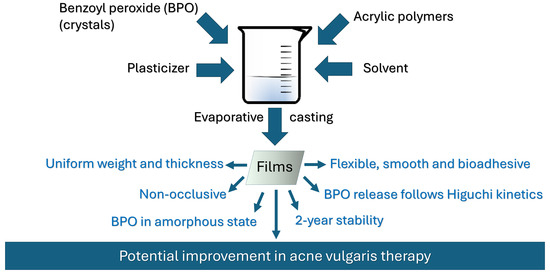
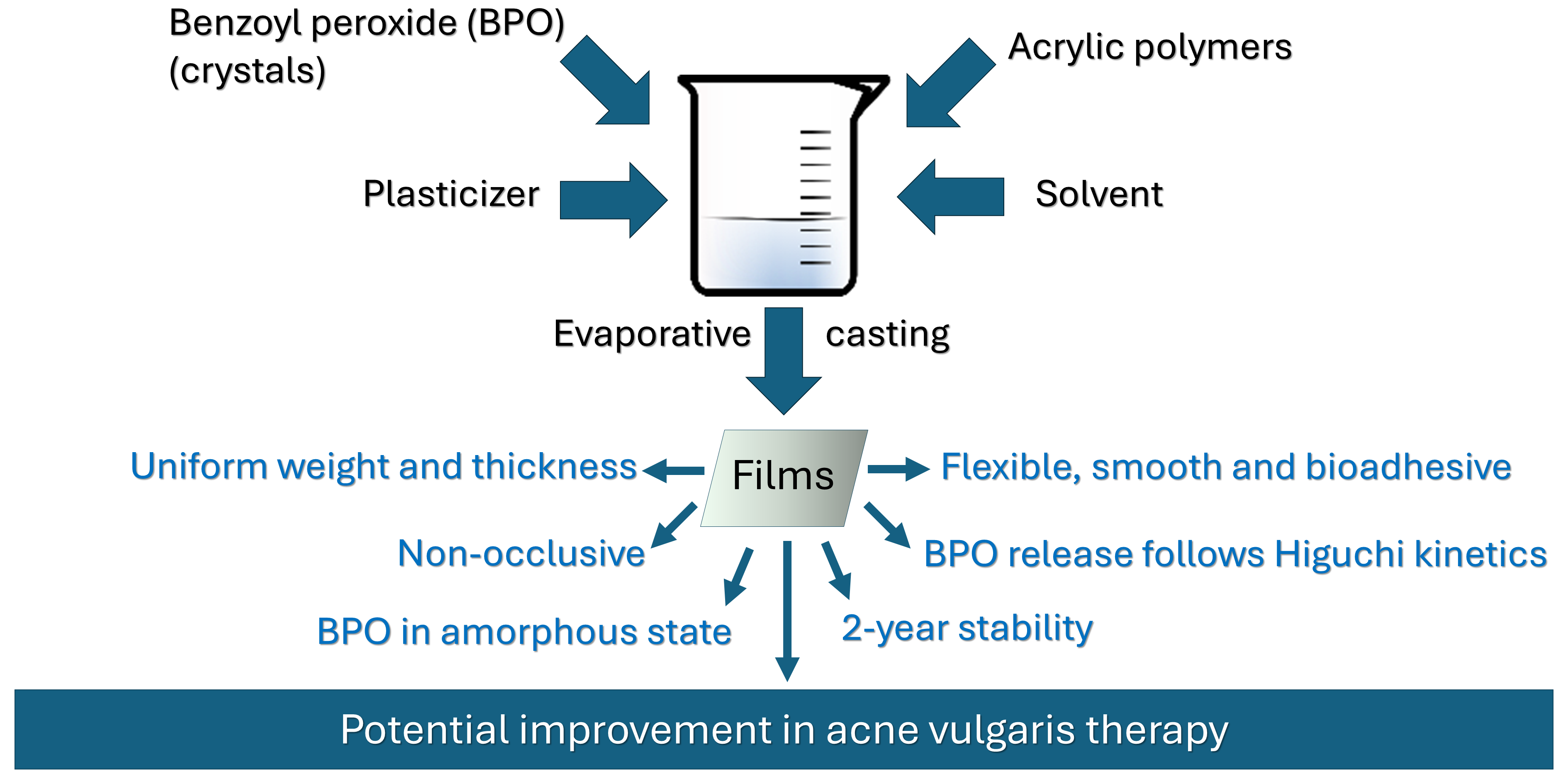
Background/Objectives: A matrix system for topical application was developed for a hydrophobic drug model, benzoyl peroxide (BPO), by turning it into its amorphous state to increase its bioavailability. BPO is commonly used to treat acne vulgaris; however, the commercially available products possess several drawbacks including poor absorption due to large crystal size and thus reduced efficacy and skin irritation. Methods: Several polymeric films containing amorphous BPO were successfully prepared for the first time from polymer + plasticizer colloidal dispersions and characterized. Results: The loaded BPO maintained its amorphous state even after 24 months of storage at 5 °C, and drug release could be modulated by adjusting the film compositions. The prepared films were obtained by solvent evaporation, and residual acetone remained below the level of quantification of the analytical method. In addition, the films were thin, flexible, transparent, bioadhesive, and able to remain on the skin for a clinically relevant period. Microscopic imaging confirmed a homogeneous and continuous morphology. Conclusions: The developed formulations may represent promising alternatives for the treatment of acne vulgaris.

Graphical Abstract

1. Introduction

A large percentage (more than 40%) of promising drug candidates under development exhibit low aqueous solubility in their crystalline state [1,2]. This characteristic leads to low in vivo bioavailability, which severely restricts their therapeutic efficacy. As a result, a considerable number of active pharmaceutical ingredients (APIs) in the development pipeline never reach clinical use, or they find a limited range of applications, due to the absence of appropriate formulation strategies. To circumvent this problem, several different Galenic approaches have been developed. A promising one involves increasing the aqueous solubility, and hence the bioavailability, of APIs by turning them into their amorphous state [3]. Amorphous APIs present higher thermodynamic free energy, and as a result, they hold the risk of reverting to an energetically more favorable crystalline state during processing or storage. The physical stability of amorphous APIs can be improved by combining them with polymers to obtain amorphous solid dispersions (ASDs). The use of ASDs to overcome poor drug solubility has gained interest in the pharmaceutical industry over the past decade. Until now, most research on ASDs has focused on immediate-release formulations, supersaturation, and stability. Only a few studies have recently reported on the manufacture of sustained-release ASDs and even fewer on sustained-release ASDs to the skin. Sustained-release ASDs for topical drug delivery can minimize the frequency of administration and lead to greater patient satisfaction. Further, the absence of crystals could facilitate the fabrication of transparent topical-delivery systems. One API with the necessary characteristics to make it an ideal choice as a model drug in the sense stated above is benzoyl peroxide (BPO), a crystalline solid organic peroxide. BPO is included in the World Health Organization Model Lists of Essential Medicines [4] and is frequently used in mild to moderate acne vulgaris (AV) as a first-line therapy. However, BPO is poorly soluble in many pharmaceutical solvents and sparingly soluble in water with an octanol/water partition coefficient −log P- of 3.46 [5]. In addition, BPO is unstable in solution due to the peroxide bond (O-O bond) present in the molecule [6,7,8,9,10,11]. Furthermore, BPO is gritty and extremely hard and requires difficult processing and milling to be incorporated into product forms such as a dispersion. The use of a dispersion limits the formulation of clear products and sprays, which are the products preferred by teenagers and young patients. The current treatment of AV is to apply a BPO dispersion of crystals entrapped in the vehicle, commonly a gel, onto the skin, and thus, unfortunately, creating an obstacle for effective delivery to the infected and inflamed follicle, delivering only approximately 0.03% to 1.0% of the available BPO to the follicle [12]. According to our investigations BPO crystals are too large to pass through the stratum corneum and remain on the skin surface, hence causing irritation. In this sense, the use of essentially undissolved hydrophobic BPO crystals is highly ineffective. In addition, BPO crystals, including those formulations in which the crystals are loaded in different developed delivery systems [13,14], have extreme difficulty penetrating into the comedone; this is because the solid horny materials that plug the follicles, which are caused by excessive follicular sebum production in AV, are a physical barrier and the size of the follicular opening is limited. This fact could also affect the efficiency of more sophisticated formulations like liposomes. The in vivo effect of the plug on permeation into follicles is missing in most of the published research. Accordingly, there is a need for more effective compositions incorporating BPO to successfully treat AV. In an ideal composition, BPO is stable and in solution by dissolving the material in a suitable solvent system.
This work focuses on the challenges and formulation approaches that have to be considered to manufacture an unprecedented prototype and cost-effective carrier system for sustained topical delivery of a model hydrophobic drug like BPO via the use of ASDs. A systematic study of the formulation variables, namely solvent composition, polymer/s and concentration/s, and the nature and amount of plasticizer/s, is presented. Moreover, the advantages of “fine-tuning” the amount of drug delivered by the appropriate balance of hydrophilic/hydrophobic polymer constituents of the matrix system are discussed. Particularly, the aim of the present study was to produce films loaded with amorphous BPO to investigate the maximum drug loading capability, storage stability, mechanical properties and drug release profile. For comparison, the “gold standard” 10% w/w benzoyl peroxide dispersed in a topical gel, and BPO acetone solutions were tested during drug release studies, to assess the therapeutic value.

2. Results and Discussion

2.1. Formulation Study

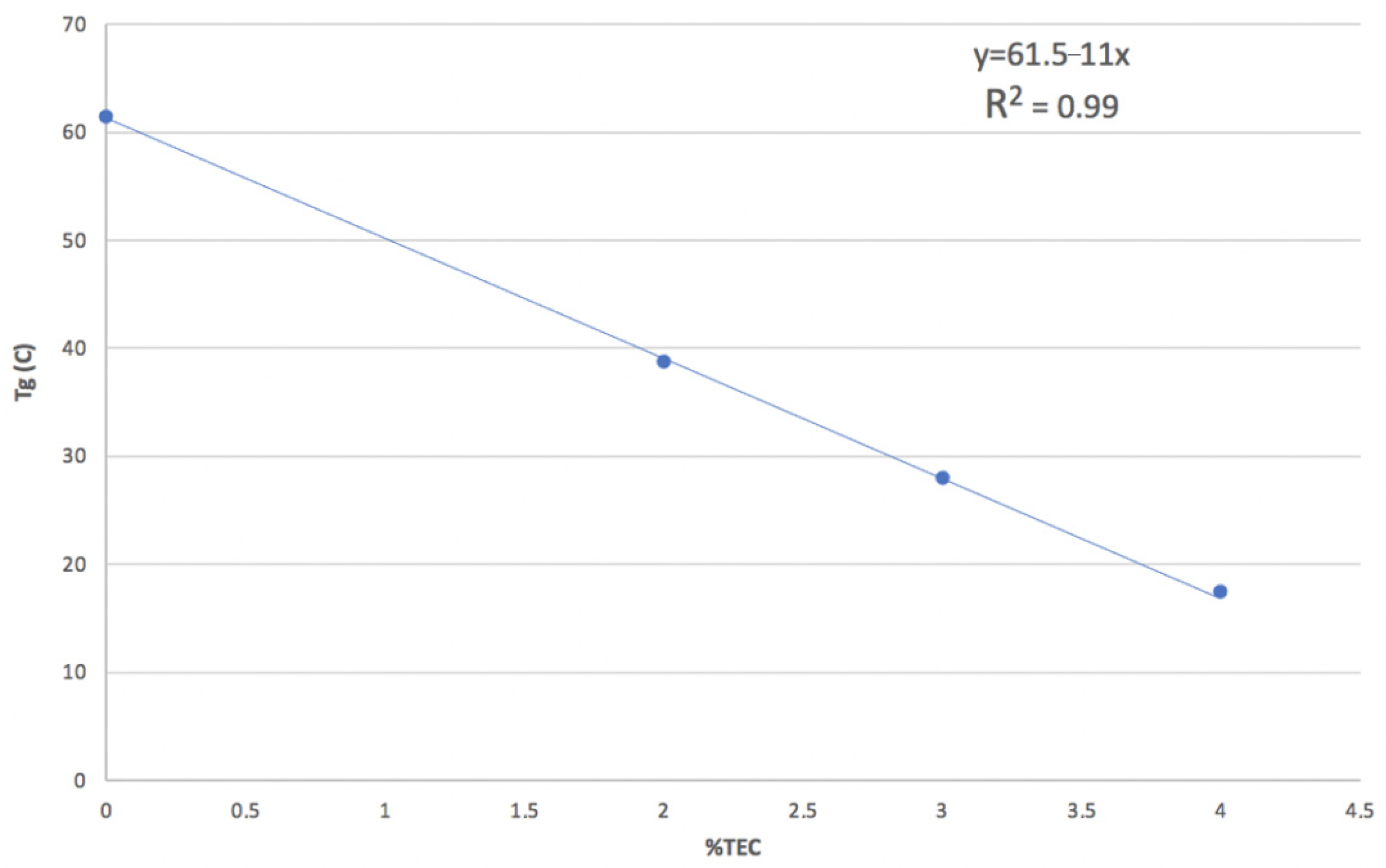
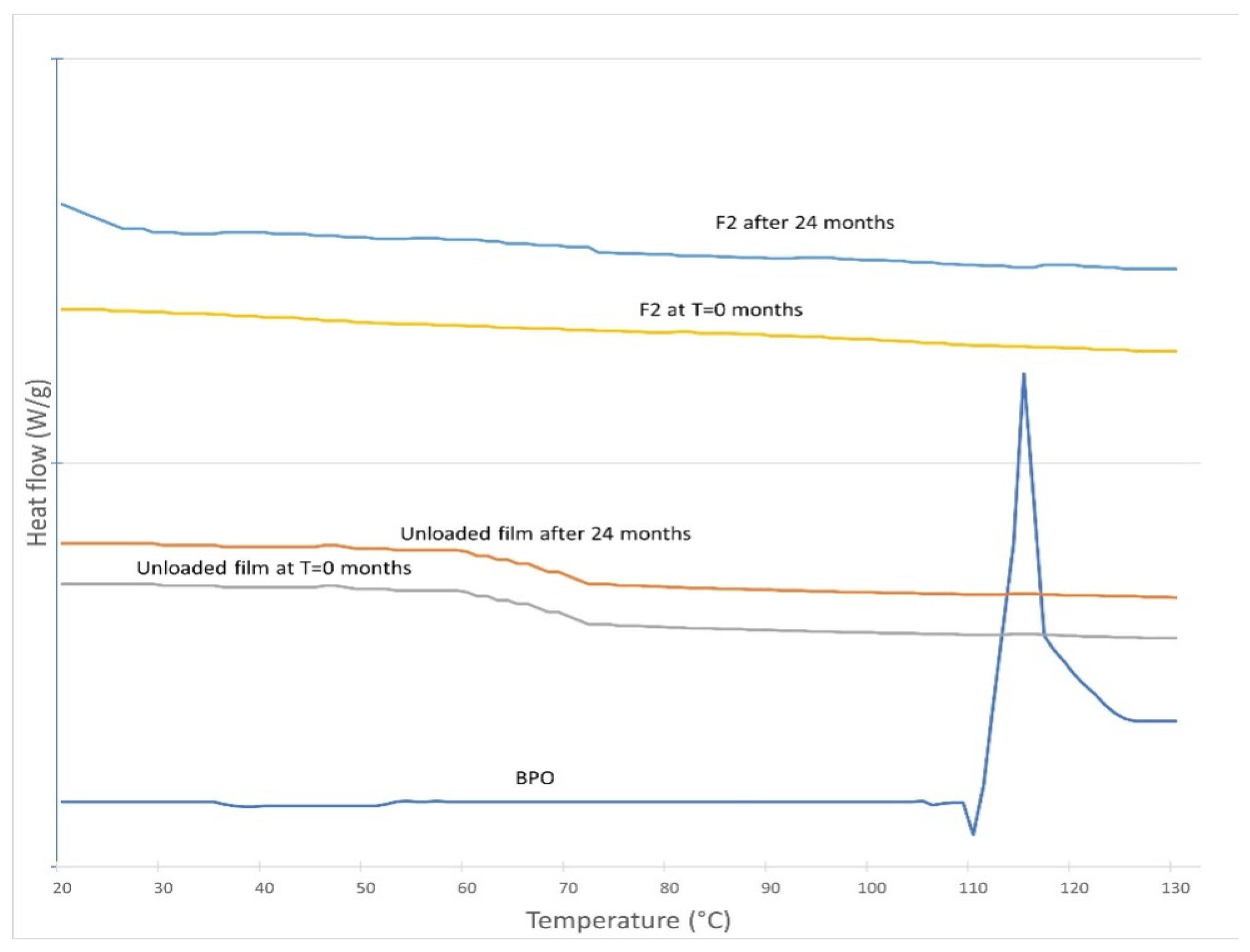
The initial screening of compositions was performed in vitro, considering film homogeneity, stickiness measured qualitatively by the thumb tack test, and the cosmetic attributes of the formed film. Homogeneous and non-sticking films formed after being cast were suitable for the purpose of this research. Two copolymers of acrylic and methacrylic acid esters with a low content of quaternary ammonium groups were utilized to produce the films, one more hydrophilic (ammonium methacrylate copolymer type A, AMCtA) and the other one more hydrophobic (ammonium methacrylate copolymer type B, AMCtB). The film-forming and dermal-adhesive properties of those polymers have been previously described and attributed to their cationic and hydrophilic groups that interact with the skin, which behaves like a negatively charged membrane under physiological conditions [15,16]. The ammonium groups are also responsible for the permeability of these water-insoluble films. Using polymer solutions in acetone: ethanol with different ratios ranging from 90:10 to 70:30 v/v, it was impossible to produce non-sticking films, and polymer concentrations of less than 50% w/w did not allow the formation of a uniform film. This finding was interesting: even though the evaporation rate of acetone is lower than that of acetone: ethanol solvent systems, which could favor drug crystallization to a certain point, the solubility of BPO in acetone was higher, reducing the extent of supersaturation and the crystallization driving force. Further, the outward stickiness is influenced by both the plasticizer and solvent composition, which can lead to a different spatial organization of the polymeric chains during the in situ formation of the film. Formulations at the highest ethanol content caused the formation of sticky films on the outer surface, independent of plasticizer content. An analog behavior was observed for films obtained from different mixtures of acetone: ethanol, even at 70:30 v/v, and therefore, only formulations with acetone as the vehicle were considered. Since the poly(acrylate)polymers employed presented a Tg in the range 55–67 °C, the addition of a plasticizer was necessary to decrease the Tg below the skin surface temperature (~32 °C), to satisfy the requirements of flexibility and elongation necessary to achieve an appropriate contact between the skin and the dosage form. The plasticizer diffuses into and softens the polymer chains, and this softening promotes film formation. Further, the permeability of the films was influenced by the presence of either water-soluble or -insoluble plasticizers in the dried films. Nevertheless, excessive plasticizer concentration in the formed film affected its properties, as it is reported that when the Tg is about 25–45 °C lower than the application temperature, the film may turn sticky [17]. Since the skin surface temperature is about 32 °C, it is reasonable to suppose that materials with a Tg lower than ~10 °C are sticky [18]. Based on these considerations, we established that the Tg of the formed film should be in the 30 °C to 10 °C range. TEC (triethyl citrate) and TRIAC (triacetine), which are both water-soluble plasticizers, were the ones that best fulfilled the above requirements in the developed formulations. The optimal concentration of both plasticizers was about 18–30% w/w in the film, with a slightly lower amount of TEC needed in each case; therefore, TEC was selected as the chosen plasticizer. The Tg of AMCtB was determined to be 61.5 °C by DSC. The Tg of the blends of AMCtB and TEC decreased as a function of the percentage of TEC added (Figure 1). A linear relationship between Tg and percentage of TEC in AMCtB was found for TEC concentration in the range of 0–30% w/w in films. Around 20% w/w plasticizer content could decrease the elastic moduli close to the modulus of skin, while above 30% w/w TEC in AMCtB, the polymer agglomerated and could not be processed. A single Tg was observed for the mixtures of AMCtB and TEC, indicating adequate miscibility between the two materials. As shown in Figure 2, a single Tg was also observed for the blends of AMCtB, plasticizer and BPO, indicating miscibility. As expected, BPO showed no plasticizing properties when loaded in the formulated films, and thus, the Tg values did not decrease. Further, the different mixtures of polymers/plasticizers in acetone, used in the developed formulations, allowed for the fabrication of suitable films, taking into account the considerations explained above. However, this was the case only up to a drug loading of 25% Cs, as when the loading was 50% Cs or higher, a crystalline component was evident upon film casting. As for the case of formulations F1, F2, F3 and F4 (see Table 1), the films were transparent, and the drug melting transition was absent on DSC thermograms, indicating that the drug was dissolved in the polymer mixtures at the melting point of BPO (see Figure 2). Also, the exothermic peak at 110 °C due to decomposition in the BPO raw-drug powder thermogram [19,20] is lost in the loaded films. According to our findings, upon drying, the colloidal polymer chains (AMCtA and/or AMCtB) are supposed to be forced together, deforming and coalescing into a continuous pore-free film. Therefore, four different formulations (see Table 1), with a polymer concentration around 15% in acetone (~70% w/w in the film), were considered for further investigations.

2.2. Residual Acetone Content

Under the optimized chromatographic conditions, the retention time for the acetone standard was approximately 3.6 min. The level of detection (LOD) was established at 50 ppm and the level of quantification (LOQ) at 150 ppm, both significantly below the International Council For Harmonisation (ICH) Q3C (R9) [21] regulatory limit of 5000 ppm. Acetone was not detected above the LOQ of the analytical method in any of the evaluated formulations. Therefore, residual acetone remained below the ICH limit established for Class 3 solvents, supporting the suitability of the drying process used to prepare the films.

2.3. Film Surface Morphology and Thickness

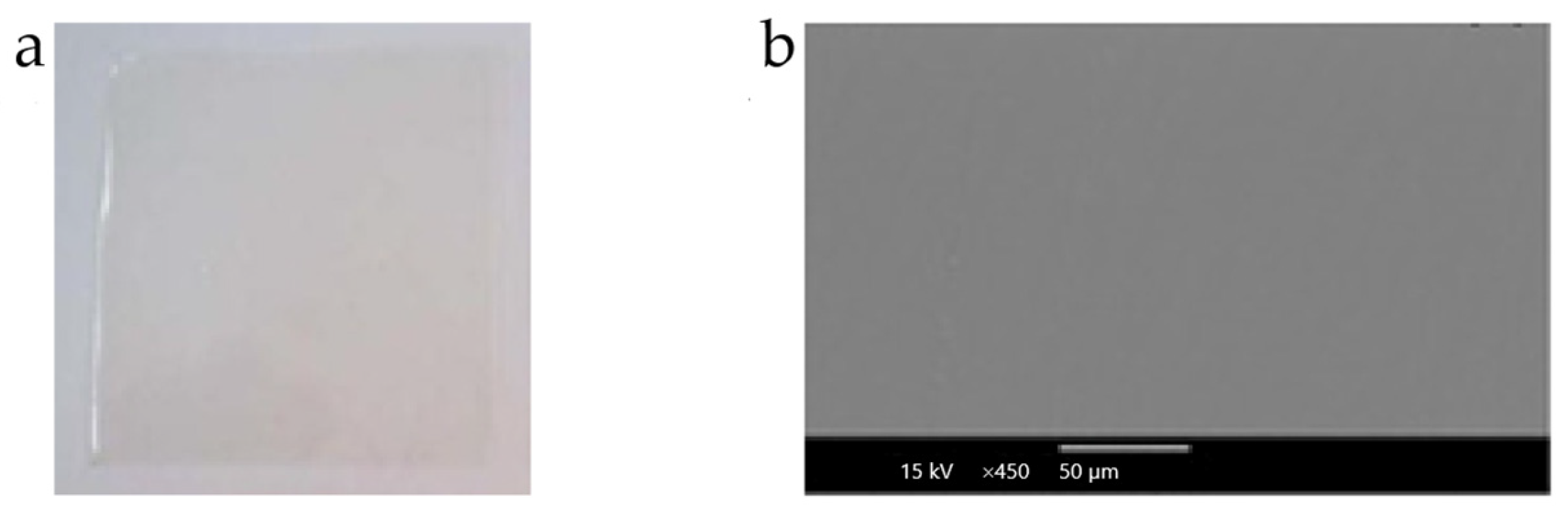
The prepared films (F1, F2, F3 and F4) were uniformly light, transparent, compact, and smooth, and presented continuous surfaces without obvious phase separations and without grainy and porous structures (Figure 3a). No crystals were visible. In addition, the detailed formulations were non-brittle, flexible, and non-tacky, as well as being strong enough to be handled without deformation and easily peelable. All prepared films showed no significant difference in thickness of 0.17 ± 0.03 mm and weight of 180 ± 8 mg (film dimensions: 27 mm × 27 mm). Figure 3 shows the image of F2. Microscopic imaging further confirmed that the optimized films exhibited a homogeneous and continuous morphology, without visible crystalline drug domains and without marked phase separation (Figure 3b). These observations were consistent with the transparency of the films and with the DSC/XRD results supporting the amorphous state of BPO in the selected formulations.

2.4. Water Permeability

The permeability to water vapor of the prepared films was assessed, and results are shown in Table 2. Average transepidermal water loss—TEWL—of healthy skin corresponds to 120 g/m2 after 24 h [22]. In all cases, the developed films were not occlusive on the skin surface. In addition, the British Pharmacopoeia limit, above which the material is permeable, is 500 g/m2 per 24 h, as was the case with the F1 and F2 films. Owing to their composition, the films were not dissolved by water.
By applying a film onto the skin surface, with a highly specific resistance to water transport, it is possible to alter the resistance to water evaporation from the body and to increase the water activity at the skin surface. This way, the spreading of a barrier film is an effective and non-invasive way to increase skin hydration. The skin permeability also increases, and this increase compensates the added resistance due to the film, so that the TEWL is nearly unchanged. This compensation is a consequence of the skin being a responding membrane [23].

2.5. Determination of Solid State

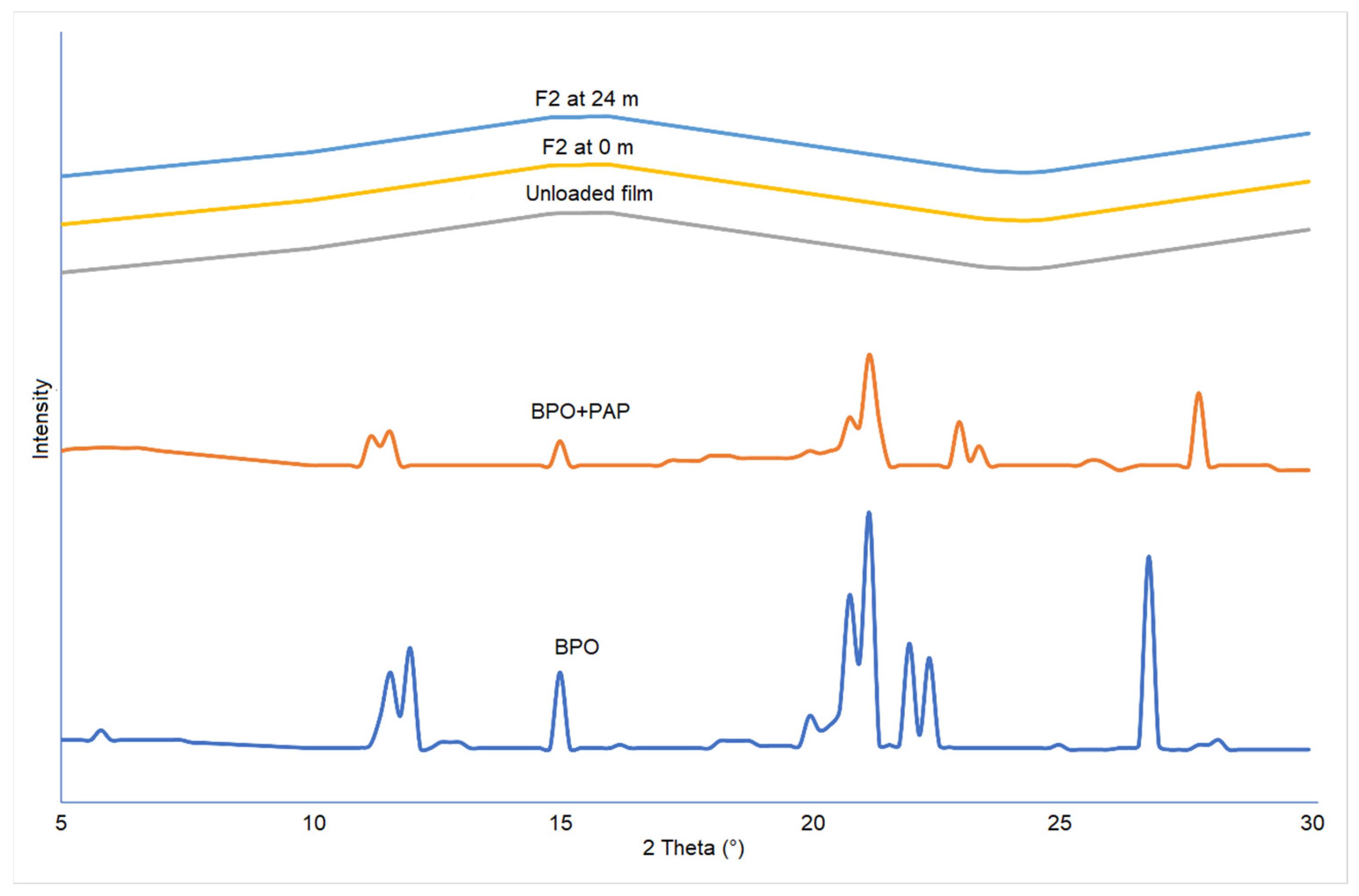
The stability of the amorphous state in the formulated films was investigated using XRD. In Figure 4, the smooth curve of the background in the X-ray diffraction patterns corresponds to the amorphous state of F2 after 1 week and 24 months of storage at 5 °C. Similar patterns were observed for F1, F3 and F4 over a storage time of 24 months. Fourier Transform Infrared Spectroscopy (FT-IR) would be an informative complementary technique for future studies aimed at further elucidating drug–polymer interactions.

2.6. Bioadhesion to Porcine Skin

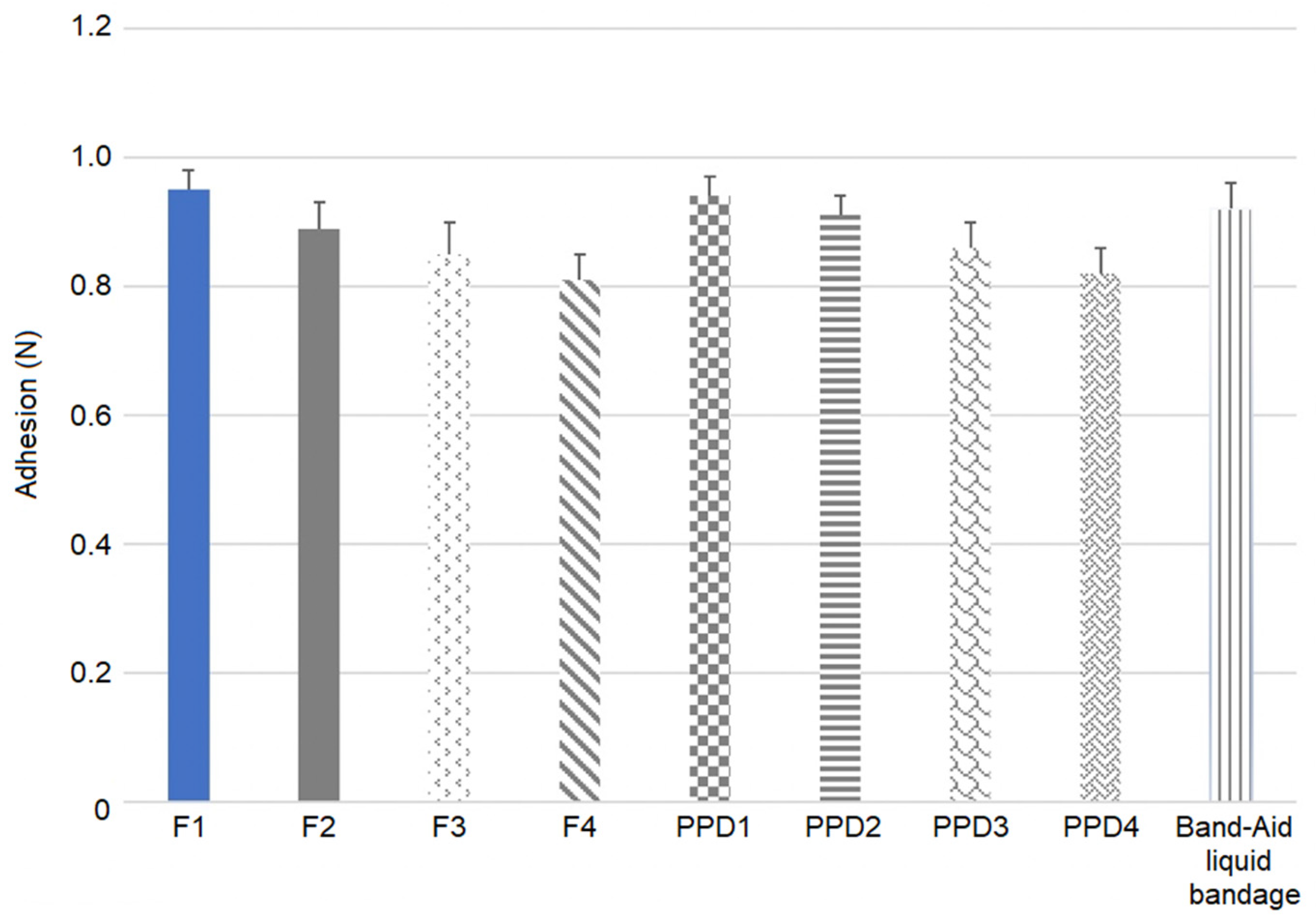
Adhesion of the developed film formulations (F1, F2, F3 and F4) was compared to the adhesion of the corresponding plasticized polymer dispersion (PPD) formulations and a typical liquid bandage.
Figure 5 shows that the adhesion force of the film formulations F1, F2, F3 and F4 is in the range 0.8–0.95 N. No significant differences were found between the adhesion forces of the developed films and their corresponding placebos; therefore, the incorporated BPO did not negatively affect the adhesion force of the developed films.
As shown in Figure 5, the adhesion forces of the developed formulations (F1, F2, F3 and F4) are similar to those of a commercial liquid bandage. No statistically significant difference was found (ANOVA; p < 0.05) for F1, F2 and F3. The bioadhesive properties of the developed film formulations could have been predicted, at least preliminarily, since they possess some of the necessary characteristics: (a) enough chemical groups capable of forming hydrogen bonds (such as -OH and -COOH) with the biological substrate; (b) high molecular mass, which is related to the size of the polymer chain; and (c) high flexibility of the polymer chain, as low flexibility leads to wrinkling of the film on the skin, decreasing its bioadhesiveness. In addition, the developed films were based on viscoelastic materials that can quickly secure adhesion to surfaces upon application of a gentle pressure, without requiring external activation such as heat or solvent treatments. The investigated films were designed to combine and balance liquid-like behavior for bonding and solid-like behavior for debonding resistance, without the formation of in-depth molecular interactions with the surface. For instantaneous and conformal contact with surfaces, based on previous studies, the elastic modulus of materials should be less than 100 kPa (at 1 Hz) to ensure a tacky surface (Dahlquist criterion) [24,25]. In particular, it was observed that the value of the adhesive force was significantly greater for F1 formulations than for F4 ones. This result can be explained by the fact that F1 films are more hydrophilic than F4 films; thus, they can interact more efficiently with the water present on the outer layers of the stratum corneum, increasing the bioadhesion, as this force is higher for materials with a more hydrophilic behavior.

2.7. In Vitro BPO Release Studies

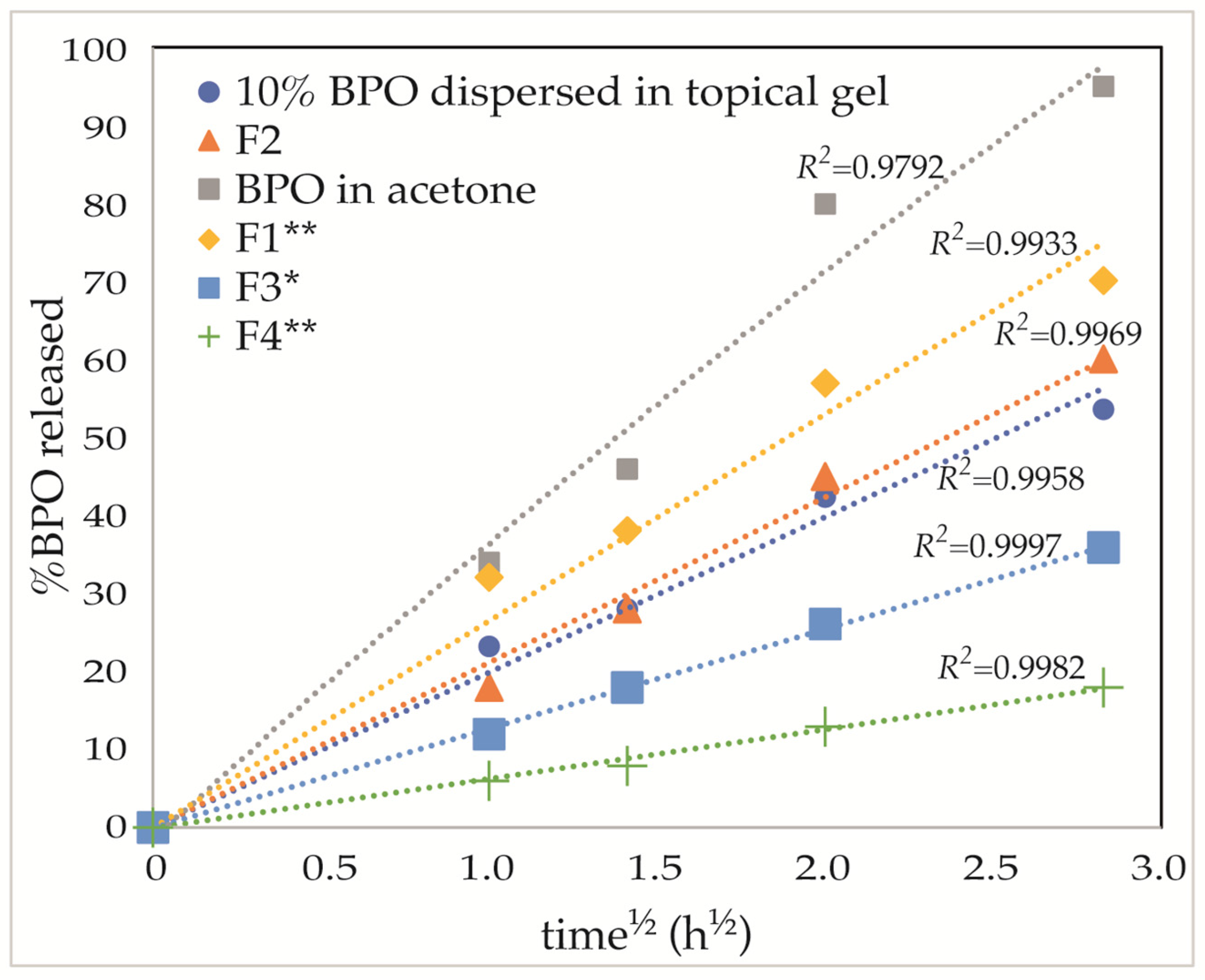
In vitro drug release experiments were carried out to compare the release of BPO from the developed films with the “gold standard” 10% w/w benzoyl peroxide, the conventional, therapeutically used gel formulation. In this sense, the effect of film composition on their release behavior was investigated. Cumulative release amounts were graphed as a function of the square root of time. Release rates were obtained as the slope of this plot by linear regression. The Higuchi equation described a linear correlation between the released amount from suspension-based formulations and the square root of time. Further experiments showed that similar kinetics are also common in the case of polymer matrices [26,27,28]. As drug release from the developed film in this research (F1, F2, F3 and F4) can be considered as a process of diffusion through a polymer matrix, the same time dependence was expected (Figure 6) [29]. In all cases, BPO was released from all developed formulations within the observation period of 8 h, which accounts for approximately 60% of BPO transport from the formulations following Higuchi kinetics. This fact confirms that the diffusion through the polymer controls BPO transport. As this is the first and slowest of the processes involved in drug release, it enables the control of the overall release kinetics. As expected, BPO in acetone solution exhibited an initial burst release, whereby more than 50% of BPO was released within the first three hours, and no linear regression could be estimated. In contrast, no burst release was observed from any developed formulations. However, the cumulative amount of BPO released after 8 h was significantly superior to that observed for the topical gel in the case of F1. The cumulative amount of BPO released after 8 h from F3 and F4 was significantly inferior to that observed for the marketed gel formulation. As for F2, the cumulative amount of BPO release after 8 h was in the same range as that obtained for the semisolid system, currently used therapeutically. In addition, it can be concluded that the film-forming developed formulations are able to deliver BPO at a rate which is expected to be therapeutically safe, and further, they can do it with a quarter of the total load amount when compared with topical gels (approximately 25 mg BPO in films against 100 mg in gel). The release mechanism from the developed films could be explained by the increased thermodynamic activity of BPO in the films, and therefore, drug partitioning from the carrier into the receptor chamber. Figure 6 shows the enhanced release efficacy of the developed films compared to the therapeutically used gel (marketed formulation). The increased solubility of the amorphous state could have contributed to the advanced delivery of the developed films due to Fick’s first law of diffusion. Furthermore, the amorphous state increased the contact area of BPO with the membrane, when compared to the crystal BPO in the gel. Thus, the films could be better delivery systems of BPO over the commercial gel formulations, in terms of their thermodynamic activity and small particle size (amorphous state vs. crystalline one). The accumulated BPO release for the 8 h study of the different developed formulations (particularly F1 and F2) was found to be greatly enhanced due to the highly dispersed, non-crystalline state and rapid diffusion of the drug from the matrix to the dissolution medium across the membrane. Additionally, the BPO release increased with an increasing amount of the more hydrophilic AMCtA.
Additional kinetic models, including Korsmeyer–Peppas, zero-order, and first-order, were evaluated to further characterize BPO release from the developed films [26,27,28]. Among them, the Higuchi model showed the best overall fit to the experimental data, as indicated by the highest R2 values for all the formulations studied. The Korsmeyer–Peppas model did not improve the fitting compared with the Higuchi model; moreover, the Higuchi equation can be regarded as a particular case of the Korsmeyer–Peppas model when the release exponent n equals 0.5, corresponding to Fickian diffusion. Therefore, according to the principle of parsimony, the Higuchi model was considered the most appropriate for describing the release behavior of the developed films. In contrast, the zero-order and first-order models yielded markedly lower R2 values and did not adequately represent the experimental release profiles.
In due concordance with the findings stated above, it is important to highlight that the aim of the present stage was to evaluate the ability of the developed films to release BPO from the polymeric matrix and to compare its availability with that of the marketed formulation, rather than to investigate its distribution across the different skin layers. In this context, the release assay was considered the most appropriate approach to determine whether amorphous BPO in the films becomes available in comparable or greater amounts than crystalline BPO in the commercial formulation. Ex vivo permeation studies would provide valuable complementary information regarding drug penetration and localization in the skin and are therefore considered a logical next step in the development of the system. Accordingly, the present work was designed to address drug availability from the carrier system rather than skin-layer distribution, since the main objective at this stage was to demonstrate improved release of amorphous BPO from the film matrix in comparison with the marketed crystalline formulation.

2.8. Stability Study

All the prepared film formulations (F1, F2, F3 and F4) were found to be stable upon fridge storage for 24 months. No change was observed in their visual characteristics, such as physical appearance, clarity, smoothness, homogeneity, and uniformity, nor in the retention of adequate adhesion and substantivity (non-tackiness, flexibility and easy peelability). Statistical testing showed that there was no significant difference (p > 0.05) in drug content between fresh and stored films on aging after 24 months of storage. The results from XRD and DSC analysis confirmed that BPO is present in a completely amorphous form, except at the highest loading (more than 25% Cs). In the latter case, the amount of drug was overloaded into the matrix; hence, partial crystallization of the drug had occurred. XRD patterns and DSC thermograms of films stored for 24 months at 5 °C, along with fresh films, are shown in Figure 2 and Figure 4 respectively. Film formulations F1, F2, F3, and F4 maintained their amorphous state up to 24 months at 5 °C (Figure 4, no crystalline peak at 24 months), suggesting a significant enhancement in their physical stability. In the case of DSC thermograms (Figure 2), films before and after stability studies did not show any significant changes. Hence, the drug has most likely been homogeneously dispersed within the film. The high stability observed could be due to the relative rigidity of the film that compactly entrapped the BPO molecules in its matrix, thus preventing them from moving freely at the chosen storage temperature, avoiding the formation of nuclei and re-crystallization. In this sense, the matrix prevents BPO devitrification, thereby preserving the viability (solubility and stability) of the amorphous state, over the shelf life of the film.

3. Materials and Methods

3.1. Materials

Poly(acrylate)polymers (PAP) were kindly donated by Evonik Industries (Essen, Germany): ammonium methacrylate copolymer Type A-AMCtA, (Eudragit RL 100) and ammonium methacrylate copolymer Type B-AMCtB-(Eudragit RS 100). Triethyl citrate (TEC), triacetine (TRIAC), acetone and peroxyl benzoate (BPO), 70% in water, were acquired from Sigma-Aldrich. NaH2PO4, KH2PO4·12H2O were Ph. Eur. grade, and acetonitrile, ethanol, isopropyl alcohol, and methanol were HPLC gradient grade.

3.2. Methods

3.2.1. Preparation of Films

According to previous investigations [30], BPO can be very soluble and stable in volatile solvents approved for topical use, in particular, acetone. The maximum dissolvable amount of BPO at 25 °C in 1 g of acetone was approximately 123 mg, representing a saturation solubility Cs in acetone of 12% (w/w); corrections per percentage of water were done. Three drug–acetone solutions were prepared for drug loading: one with a given BPO concentration representing Cs, the second with half of Cs (50% Cs) and the third with one quarter of Cs (25% Cs). Films were made from different mixtures of film-forming polymers soluble in acetone (acrylates and polyurethane–acrylates), plasticizer, BPO and acetone. The solvent evaporation method, which is usually referred to as casting, was used [31,32]. The components were weighed accurately and dissolved in the solvent. The plasticizer, if used, was then added to the polymeric solution, and mixed well. A calculated amount of BPO (Cs; 50% Cs; 25% Cs) was subsequently added to the dispersion and mixed continuously using a blade stirrer. In the next step, the de-aerated solution was cast into silicone molds in varying quantities depending on the required sample size, e.g., 13.5 or 820 mg, depending on the mold size, e.g., 3.4 × 3.4 mm2 or 27 × 27 mm2 rectangular samples or 25 mm diameter discs, respectively. The solvent was then allowed to evaporate inside a laminar flow hood. The obtained dried films were removed from the molds and stored at 5 ± 3 °C for subsequent examination. Placebo formulations without BPO were also produced. The effects of the percentage of BPO in acetone, the ratio of film-forming polymer components, and the addition of plasticizer were evaluated in terms of homogeneity, drying time, surface adhesiveness/stickiness (measured qualitatively by the thumb tack test) [33], and cosmetic attributes. The amorphous state of the samples was analyzed by XRD and DSC. The formulations, which showed the best results in the above-mentioned tests, were selected for investigation of adhesion to the skin and drug release studies.

3.2.2. Residual Acetone in the Dried Films Was Determined by Following the Harmonized Procedures Described in the United States Pharmacopeia (USP) [34] and the European Pharmacopoeia (Ph. Eur.) [35]

Instrumentation and Chromatographic Conditions: Analyses were carried out using an Agilent (Santa Clara, CA, USA) 8890 GC Gas Chromatograph (GC) equipped with a Flame Ionization Detector (FID) and an automated Agilent 7697A Static Headspace (HS) sampler. The separation was achieved using a G43 capillary column (6% cyanopropylphenyl–94% dimethylpolysiloxane, 30 m × 0.32 mm ID, 1.8 µm film thickness).
The GC oven temperature program was set as follows: an initial temperature of 40 °C held for 20 min, followed by a ramp of 10 °C/min to 240 °C, with a final hold of 20 min. The injector and detector temperatures were maintained at 140 °C and 250 °C, respectively. Helium (or nitrogen) was used as the carrier gas at a constant flow rate of 35 cm/s.
Headspace Parameters: Samples were equilibrated in the headspace vials at a temperature of 105 °C (for water-insoluble articles) for 45 min prior to injection.
Standard and Sample Preparation: Standard solutions were prepared using HPLC-grade acetone diluted in Dimethylformamide ([DMF]) to reach a concentration corresponding to the Class 3 solvent limit (5000 ppm), as per the ICH Q3C (R9) guidelines [21]. Samples were accurately weighed (approx. 250 mg) and dissolved or suspended in 5.0 mL of the same solvent in a 20 mL headspace vial.
Method Verification: The method suitability was verified by assessing the signal-to-noise (S/N) ratio for the acetone peak in the standard solution (required S/N ≥ 3 for detection and ≥10 for quantification) and the system repeatability (%RSD < 15% for peak areas of six replicate injections), in accordance with USP <467> requirements [34].

3.2.3. Film Surface Morphology and Thickness

The surface morphology of the films was examined by investigation of digital camera photographs. In addition, film surface morphology was further evaluated by scanning electron microscopy (SEM) using a JEOL JSM 35C SEM microscope (JEOL, Tokyo, Japan). Film sections (0.5 × 0.5 cm) were fixed onto metallic stubs and coated with a thin gold layer (150–200 Å) prior to imaging. Representative images were obtained to assess film homogeneity, continuity, and the possible presence of crystalline domains or phase separation. The thickness of the films was measured using a micrometer caliper (Vernier caliper Stronger, 150 × 0.02 mm). Six random locations of each film on five different samples were used for thickness determination.

3.2.4. Determination of Solid State by X-Ray Diffraction Analysis (XRD)

An X’Pert3 MRDX-ray diffractometer (Malvern Panalytical, Malvern, UK) was used to study the solid state of BPO cast films. The presence of crystalline peaks (sharp peaks) in the X-ray spectrum means that the drug was not completely in an amorphous state. The samples (crystalline BPO, developed formulations) were analyzed by irradiating either the film or powder samples with monochromatized Cu Kα radiation and measuring within a 2θ range. The voltage and current used were 30 kV and 30 mA, respectively. The range used was 5 × 10³ cps, whereas the chart speed was chosen at 10 mm/2θ.

3.2.5. Differential Scanning Calorimetry Studies

Differential scanning calorimetry (DSC) was performed using the Mettler DSC 821e module controlled by STARe software, version 18 (Mettler Toledo GmbH, Greifensee, Switzerland) to determine the glass transition temperature (Tg) of the samples as well as to study the solid-state plasticization effect of BPO and different plasticizers (particularly TEC and/or TRIAC) on polymers. Samples (crystal BPO in powder, polymers used and developed formulations) were accurately weighed (20 ± 0.01 mg), and hermetically sealed and heated in a pan in an inert atmosphere (70 mL/min of N2). Each sample was equilibrated at −10 °C for 2 min. The temperature (T) of the samples was then ramped from 10 to 120 °C/min under nitrogen flow (20 mL/min) at a scanning rate of 10 °C/min. The Tg was measured in the second cycle, as the step transition in the plot of reversible heat-flow vs. T. The samples were cycled twice to remove thermal histories of the samples [36]. The calibration of the DSC was carried out with indium as the standard prior to sample analysis [37,38,39] and an empty aluminum pan was used as the reference.

3.2.6. Water Vapor Permeability

The British Pharmacopoeia 1993 method for foam dressings was used, adapted according to Minghetti et al., 1997 [40]. Five cylindrical glass containers of the same type and size, provided with only one circular opening, were used for each formulation tested. The containers were filled with 20 mL of water, and the opening was covered with the films (25 cm diameter) without further treatment. The area available for vapor permeation was 4.8 cm2. All the containers were maintained at a temperature of 37 °C for 24 h. The weight of each container was recorded 1 h before the beginning of the test and 1 h after its end. The water vapor permeability (WVP) was calculated using the following equation:
W V P ( g m 2 × 24   h ) = W A
where W is the mean loss in weight (g) of the containers after 24 h and A (m2) is the area of the exposed surface.

3.2.7. Bioadhesion to Porcine Skin

A texture analyzer (DO-FB0.5TS; Zwick GmbH & Co. KG, Ulm, Germany) equipped with two planar experimental dies was employed. The dynamic, upper die was fitted with a strain gauge. Samples (diameter 25 mm) were punched out of dermal porcine skin. Fresh pig ears were obtained from a local market and washed with isotonic saline solution. The hair was shaved off, and postauricular skin was excised and dermatomed to reach a thickness of 1 mm (Dermatom GA 630; Aesculap AG, Tuttlingen, Germany). The remaining blood was removed with isotonic saline and cotton swabs, and the samples were then patted dry with tissue, wrapped in Parafilm® foil and stored at −18 °C. Immediately before the experiments, the samples were thawed at room temperature and epidermal surface lipids were removed from the skin with 70% (w/w) ethanol. Then, skin samples were fixed to the lower, static experimental die with pins. A film was applied onto the skin and dies were heated to 32 °C. Thereafter, the dynamic upper die was moved downward onto the skin and a load of 10 N was maintained for 1 min. Then, the upper die was moved upward at a speed of 1 mm/min. Force and displacement were registered. The adhesion of the film was detected as a negative amplitude in the force–displacement curve. The adhesion of the tested films (see Table 1) was compared to the adhesion of the corresponding “placebo” formulations (film from plasticized polymer dispersions—PPDs) and a typical transdermal patch. Experiments were performed in quintuplicate [41].

3.2.8. High-Performance Liquid Chromatography (HPLC) Analysis for Determination of Drug Content and Drug Release Studies

BPO was quantified directly in films or in release experiments by high-performance liquid chromatography (HPLC). An isocratic Shimadzu HPLC Class VP system (Shimadzu, Kyoto, Japan) with two LC-10AT VP pumps, a UV–vis Detector SPD-10A VP, and a Lichrospher 100 RP C-18 column (250 mm × 4.6 mm, particle size of 5 μm) were employed [42]. Data was processed with Class-VP series software, version 5.03. The mobile phase consisted of filtered methanol: distilled water (75:25). A flow rate of 1.2 mL/min and a detection wavelength of 254 nm were employed. The internal standard was benzophenone (50 μg/mL). The retention times were 7.2 min for benzophenone and 11.3 min for BPO. A good linear relationship was found between the peak areas of the BPO standard/internal standard in different concentration ratios. Preliminary tests were carried out to estimate the precision and accuracy of the method for BPO analysis. Different standard curves were used to estimate BPO concentration according to the study performed. Each determination was calculated in triplicate and the means of concentrations were reported.

3.2.9. In Vitro BPO Release Studies—Drug Transport Studies

In vitro release studies from the developed films (F1–F4), 10% w/w BPO marketed product and 25% Cs BPO in acetone solution were carried out using Franz diffusion cells (orifice diameter of 25 mm, area of 4.91 cm2 and receptor volume of 15 mL) (Erweka GmbH, Langen, Germany). A silicon membrane, a barrier of lipophilic character, was fitted into place between the two cell chambers. The receptor phase was composed of a mixture of phosphate buffer (pH 7.4) and acetone (50: 50), and the temperature was maintained at 37 °C. This provided a membrane temperature of 32 °C, which was confirmed with a type K thermocouple (Fisher Scientific, Loughborough, UK). The low solubility of BPO in normal saline solution required the use of a buffer–acetone mixture to provide adequate “sink” conditions. Preliminary experiments showed no interactions of the receptor phase mixture with either the membrane or the formulations placed on the “donor” side. The receptor phase was stirred at 700 rpm during the study [42]. A 10% w/w BPO dispersed in a topical gel containing the equivalent of 100 mg BPO (1 g cream) was taken for the study. The concentration of BPO was quantified at pre-determined time intervals (0.5; 1; 2; 3; 4; 5; 6; 7; and 8 h) by collecting samples (1 mL) from the receiver compartment and analyzing them using HPLC according to the method outlined previously. Following the removal of each sample, the same volume of thermostatically equilibrated receiver fluid was added to the receiver compartment. Statistical analyses of the permeation data were conducted using Graphpad Prism software (version 7.0 for Windows, La Jolla, CA, USA). Data were checked for normality using the Shapiro–Wilk test prior to statistical comparison with one-way analysis of variance (ANOVA). Post hoc comparison between groups was performed with either Tukey’s or Dunnett’s multiple-comparisons tests as appropriate. Statistical significance was accepted at the p ≤ 0.05 level. For each formulation studied, experiments were performed in triplicate, and the mean of three observations was reported.

3.2.10. Stability Studies

All the formulations were subjected to stability testing at 5 ± 3 °C for 24 months. Parameters such as homogeneity, outward stickiness, solid state and drug content were examined at fortnightly intervals during the first month and monthly thereafter.

3.2.11. Statistical Analysis

The data were presented as mean ± standard error of mean (SEM). The statistical significance was analyzed using one-way analysis of variance (ANOVA) followed by Tukey’s multiple comparison test. A p-value of <0.05 was considered statistically significant.

4. Conclusions

BPO is commonly used to treat acne vulgaris; however, the commercially available products possess several drawbacks, including poor absorption due to large crystal size, and thus, reduced efficacy and skin irritation. Several polymeric films containing amorphous BPO were successfully prepared for the first time from polymer + plasticizer colloidal polymer dispersions. The BPO was loaded and kept in an amorphous state even after 24 months of storage at 5 °C, and drug release properties could be varied by adjusting the film compositions. The prepared films were obtained by solvent evaporation, and residual acetone was below the LOQ of the analytical method and complied with ICH requirements. The manufacturing method was simple, low-cost, and potentially scalable. In addition, the several films developed were thin, flexible, transparent, bioadhesive, and able to remain on the skin for a clinically relevant period.
As this is a preclinical formulation study, the final treatment regimen has not yet been established. The intended mode of use is local topical application of the film onto clean and dry acne-affected skin, where it adheres and provides sustained release of BPO over a clinically relevant residence period. The exact duration of application and replacement frequency should be established in future pharmacodynamic, tolerability, and clinical studies. This therapeutic concept is consistent with the general behavior of film-forming dermal systems, which create a thin adherent depot after solvent evaporation.
The developed formulations may come as new and efficient alternatives to conventional emulsions or gels in the market for the treatment of AV after further evaluations such as ex vivo skin permeation, skin irritation and antibacterial activity against different species associated with acne vulgaris, which will be the topic of a complementary article.
In summary, the present work suggests that the matrix system developed for a topical hydrophobic drug model such as BPO is viable in the sense that it increases the bioavailability of a poorly water-soluble drug by turning it into its amorphous state. It is also expected that the formulations developed could improve the effectiveness of BPO in acne treatments, allowing the use of lower levels of drug and providing quicker patient response. The overall findings prove the feasibility of employing the developed prototype peel-off carrier systems for sustained topical delivery of poorly soluble hydrophobic drugs.

Author Contributions

Conceptualization J.A.R., H.J.P., A.R.B. and V.M.; data curation: M.E.A., S.H. and A.F.; investigation M.E.A., S.H., A.F. and J.P.C.; methodology M.E.A., J.A.R., S.H. and A.F.; writing—original draft M.E.A., J.P.C. and H.J.P.; writing—review and editing J.A.R., H.J.P., A.R.B. and V.M.; supervision A.R.B. and V.M.; resources V.M.; project administration V.M. All authors have read and agreed to the published version of the manuscript.

Funding

This research did not receive any specific grant from funding agencies in the public, commercial, or not-for-profit sectors.

Data Availability Statement

The raw data supporting the conclusions of this article will be made available by the authors on request.

Acknowledgments

Viviana Mouriño and Héctor Juan Prado are research members of the National Research Council of Argentina (CONICET).

Conflicts of Interest

The authors declare no conflicts of interest.

Abbreviations

The following abbreviations are used in this manuscript:
APIActive pharmaceutical ingredient
AMCtAAmmonium methacrylate copolymer Type A
AMCtBAmmonium methacrylate copolymer type B
ASDsAmorphous solid dispersions
AVAcne vulgaris
BPOBenzoyl peroxide
CsSaturation solubility
HPLCHigh-performance liquid chromatography
LODLimit of detection
LOQLimit of quantification
PAPPoly(acrylate) polymers
PPDsplasticized polymer dispersions
TECTriethyl citrate
TRIACTriacetine
TEWLTransepidermal water loss
TgGlass transition temperature
XRDX-ray diffraction

References

  1. Tran, P.; Pyo, Y.-C.; Kim, D.-H.; Lee, S.-E.; Kim, J.-K.; Park, J.-S. Overview of the Manufacturing Methods of Solid Dispersion Technology for Improving the Solubility of Poorly Water-Soluble Drugs and Application to Anticancer Drugs. Pharmaceutics 2019, 11, 132. [Google Scholar] [CrossRef]
  2. Verma, A.; Patil, R.; Kumar, D.; Agrawal, A.K. API Salt Solubility: Unresolved Problems and Innovative Solutions Beyond Conventional Approaches. Cryst. Growth Des. 2025, 25, 10651–10667. [Google Scholar] [CrossRef]
  3. Alqahtani, M.S.; Kazi, M.; Alsenaidy, M.A.; Ahmad, M.Z. Advances in Oral Drug Delivery. Front. Pharmacol. 2021, 12, 618411. [Google Scholar] [CrossRef]
  4. World Health Organization. World Health Organization Model List of Essential Medicines, 21st ed.; World Health Organization: Geneva, Switzerland, 2019; Volume 65, Available online: https://iris.who.int/bitstream/handle/10665/325771/WHO-MVP-EMP-IAU-2019.06-eng.pdf (accessed on 17 February 2026).
  5. VSDB: Veterinary Substances DataBase. Benzoyl Peroxide. Available online: https://sitem.herts.ac.uk/aeru/vsdb/Reports/1847.htm (accessed on 28 February 2026).
  6. Bartlett, P.D.; Nozaki, K. The Decomposition of Benzoyl Peroxide in Solvents. II. Ethers, Alcohols, Phenols and Amines. J. Am. Chem. Soc. 1947, 69, 2299–2306. [Google Scholar] [CrossRef]
  7. Cass, W. Kinetics of the decomposition of benzoyl peroxide in various solvents. J. Am. Chem. Soc. 1946, 68, 1976–1982. [Google Scholar] [CrossRef]
  8. Cass, W. Products of the reaction of benzoyl peroxide with certain ethers. J. Am. Chem. Soc. 1947, 69, 500–503. [Google Scholar] [CrossRef]
  9. Chellquist, E.; Gorman, W. Benzoyl peroxide solubility and stability in hydric solvents. Pharm. Res. 1992, 9, 1341–1346. [Google Scholar] [CrossRef]
  10. Court, J.; Vidal, S.; Bonnier, J. Decomposition du peroxyde de benzoyle dans des melanges carbomethoxy-4 Pyridine/Benzene. Tetrahedron 1988, 44, 6623–6631. [Google Scholar] [CrossRef]
  11. Nozaki, K.; Barlett, P. The kinetics of decomposition of benzoyl peroxide in solvents I. J. Am. Chem. Soc. 1946, 68, 1686–1692. [Google Scholar] [CrossRef]
  12. Spellman, M.; Ramirez, J. A comparison of patterns of deposition of two formulations of benzoyl peroxide on the skin and in the follicular ostia as visualized by scanning electron microscopy. J. Am. Acad. Dermatol. 2007, 56, AB22. [Google Scholar] [CrossRef]
  13. Brammann, C.; Müller-Goymann, C.C. Incorporation of benzoyl peroxide nanocrystals into adapalene-loaded solid lipid microparticles: Part I—Nanocrystalline benzoyl peroxide. Int. J. Pharm. 2019, 572, 171–179. [Google Scholar] [CrossRef]
  14. Brammann, C.; Müller-Goymann, C.C. Incorporation of benzoyl peroxide nanocrystals into adapalene-loaded solid lipid microparticles: Part II—Solid-in-Oil dispersion of nanoparticulate benzoyl peroxide. Int. J. Pharm. 2019, 572, 118792. [Google Scholar] [CrossRef]
  15. Chantasart, D.; Tocanitchart, P.; Wongrakpanich, A.; Teeranachaideekul, V.; Junyaprasert, V.B. Fabrication and evaluation of Eudragit® polymeric films for transdermal delivery of piroxicam. Pharm. Dev. Technol. 2018, 23, 771–779. [Google Scholar] [CrossRef]
  16. Cardoso, A.M.L.; Oliveira, E.E.; Machado, B.A.S.; Marcelino, H.R. Eudragit®-based nanoparticles for controlled release through topical use. J. Nanopart Res. 2023, 25, 32. [Google Scholar] [CrossRef]
  17. Lin, S.-Y.; Chen, K.-S.; Run-Chu, L. Organic esters of plasticizers affecting the water absorption, adhesive property, glass transition temperature and plasticizer permanence of Eudragit acrylic films. J. Control. Release 2000, 68, 343–350. [Google Scholar] [CrossRef]
  18. Jadhav, N.R.; Gaikwad, V.L.; Nair, K.J.; Kadam, H.M. Glass transition temperature: Basics and application in pharmaceutical sector. Asian J. Pharm. 2009, 3, 82–89. Available online: https://www.asiapharmaceutics.info/index.php/ajp/article/view/246 (accessed on 17 February 2026). [CrossRef]
  19. Rychlý, J.; Kocer, A.; Tanis, F.; Matisová-Rychlá, L.; Janigová, I.; Csomorová, K. Comparison of isothermal and non-isothermal chemiluminescence and differential scanning calorimetry experiments with benzoyl peroxide. Chem. Pap. 2009, 63, 471–478. [Google Scholar] [CrossRef]
  20. Zhao, B.D.; Wan, P.Y.; Liu, J.Q.; Wang, J.G.; Wang, T. Investigation of thermal instability of benzoyl peroxide in the presence of carbazole and its derivatives. Thermochim. Acta 2012, 543, 232–238. [Google Scholar] [CrossRef]
  21. International Council for Harmonization of Technical Requirements for Pharmaceuticals for Human Use. Impurities: Guideline for Residual Solvents Q3C(R9). 24 January 2024. Available online: https://database.ich.org/sites/default/files/ICH_Q3C%28R9%29_Guideline_MinorRevision_2024_2024_Approved.pdf (accessed on 11 April 2026).
  22. Padula, C.; Colombo, G.; Nicoli, S.; Catellani, P.L.; Massimo, G.; Santi, P. Bioadhesive film for the transdermal delivery of lidocaine: In vitro and in vivo behavior. J. Control. Release 2003, 88, 277–285. [Google Scholar] [CrossRef] [PubMed]
  23. Sparr, E.; Millecamps, D.; Isoir, M.; Burnier, V.; Larsson, Å.; Cabane, B. Controlling the hydration of the skin though the application of occluding barrier creams. J. R. Soc. Interface 2013, 10, 20120788. [Google Scholar] [CrossRef]
  24. Gdalin, B.E.; Bermesheva, E.V.; Shandryuk, G.A.; Feldstein, M.M. Effect of Temperature on Probe Tack Adhesion: Extension of the Dahlquist Criterion of Tack. J. Adhes. 2011, 87, 111–138. [Google Scholar] [CrossRef]
  25. Pocius, A.V. The Basics of Intermolecular Forces and Surface Science. In Adhesion and Adhesives Technology, 3rd ed.; Pocius, A.V., Ed.; Carl Hanser Verlag GmbH & Co., KG: Munich, Germany, 2012; pp. 85–127. [Google Scholar]
  26. Fu, Y.; Kao, W.J. Drug release kinetics and transport mechanisms of non-degradable and degradable polymeric delivery systems. Expert. Opin. Drug Deliv. 2010, 7, 429–444. [Google Scholar] [CrossRef]
  27. Bruschi, M.L. 5-Mathematical models of Drug release. In Strategies to Modify the Drug Release from Pharmaceutical Systems; Woodhead Publishing: Cambridge, UK, 2015; pp. 63–86. [Google Scholar] [CrossRef]
  28. Siepmann, J.; Peppas, N.A. Higuchi equation: Derivation, applications, use and misuse. Int. J. Pharm. 2011, 418, 6–12. [Google Scholar] [CrossRef] [PubMed]
  29. Heck, R.; Hermann, S.; Lunter, D.J.; Daniels, R. Film-forming formulations containing porous silica for the sustained delivery of actives to the skin. Eur. J. Pharm. Biopharm. 2016, 108, 1–8. [Google Scholar] [CrossRef]
  30. Acevedo, M.E.; Fernandez, A.; Pasquali, R.C.; Sorichetti, P.A.; Serrao, R.; Bregni, C.; Mouriño, V.S.L. Solubility and Stability Studies of Benzoyl Peroxide in Non-Polar, Non-Comedogenic Solvents for Use in Topical Pharmaceutical Formulation Developments. Lat. Am. J. Pharm. 2011, 30, 1737–1780. Available online: http://www.latamjpharm.org/resumenes/30/9/LAJOP_30_9_1_11.pdf (accessed on 17 February 2026).
  31. Crompton, T.R. Practical Polymer Analysis; Plenum Press: New York, NY, USA, 1993. [Google Scholar]
  32. Czichos, H.; Saito, T.; Smith, L. Handbook of Materials Measurement Methods; Springer: Berlin/Heidelberg, Germany, 2006. [Google Scholar]
  33. Minghetti, P.; Cilurzo, F.; Montanari, L.J.D.D. Evaluation of adhesive properties of patches based on acrylic matrices. Drug Dev. Ind. Pharm. 1999, 25, 1–6. [Google Scholar] [CrossRef] [PubMed]
  34. United States Pharmacopeial Convention. United States Pharmacopeia (USP-NF) General Chapter <467>. Available online: https://doi.usp.org/USPNF/USPNF_M99226_07_01.html (accessed on 11 April 2026).
  35. European Directorate for the Quality of Medicines & HealthCare. European Pharmacopoeia (Ph. Eur.) Chapter 2.4.24. Available online: https://pheur-online.edqm.eu/home/ (accessed on 11 April 2026).
  36. Hatakeyama, T.; Quinn, F.X. Thermal Analysis: Fundamentals and Applications to Polymer Science, 2nd ed.; John Wiley & Sons Ltd.: Chichester, UK, 1999. [Google Scholar]
  37. Becket, G.; Quah, S.B.; Hill, J.O. A DSC compositional analysis of some binary organic mixtures of pharmaceutical significance. J. Therm. Anal. 1993, 40, 537–542. [Google Scholar] [CrossRef]
  38. Coleman, N.J.; Craig, D.Q.M. Modulated temperature differential scanning calorimetry: A novel approach to pharmaceutical thermal analysis. Int. J. Pharm. 1996, 135, 13–29. [Google Scholar] [CrossRef]
  39. Ferrero, C.; Martino, M.N.; Zaritzky, N.E. Effect of hydrocolloids on starch thermal transitions, as measured by DSC. J. Therm. Anal. 1996, 47, 247–1266. [Google Scholar] [CrossRef]
  40. Minghetti, P.; Cilurzo, F.; Liberti, V.; Montanari, L. Dermal therapeutic systems permeable to water vapour. Int. J. Pharm. 1997, 158, 165–172. [Google Scholar] [CrossRef]
  41. Repka, M.A.; McGinity, J.W. Bioadhesive properties of hydroxypropylcellulose topical films produced by hot-melt extrusion. J. Control. Release 2001, 70, 341–351. [Google Scholar] [CrossRef]
  42. Jelvehgari, M.; Siahi-Shadbad, M.R.; Azarmi, S.; Martin, G.P.; Nokhodchi, A. The microsponge delivery system of benzoyl peroxide: Preparation, characterization and release studies. Int. J. Pharm. 2006, 308, 124–132. [Google Scholar] [CrossRef]
Figure 1. Glass transition temperature of a representative BPO: AMCtA + AMCtB + TEC: Acetone = 25% Cs: 19: 78 formulation as a function of triethyl citrate (TEC) level (n = 3). Similar plasticization trends were obtained for compositions F1, F2, F3 and F4 formulated as shown in Table 1.
Ddc 05 00031 g001
Figure 2. DSC thermogram of F2 at T = 0 (as fabricated), and after 24 months of storage at 5° C. BPO raw drug powder and unloaded film, also at T = 0 and after 24 months stored at 5 °C, are shown additionally as references.
Ddc 05 00031 g002
Figure 3. (a) Photography of the surface of a dried film (F2 formulation), showing a homogeneous and continuous transparent film; (b) scanning electron microscopy cross-sectional image of the same formulation.
Ddc 05 00031 g003
Figure 4. XRD patterns of F2 at T = 0 (as fabricated), and after 24 months of storage at 5 °C. The XRD patterns of a physical mixture of BPO and PAP, BPO raw drug powder, and unloaded film are included as references.
Ddc 05 00031 g004
Figure 5. Bioadhesion force to porcine skin of developed formulations (F1, F2, F3 and F4), their corresponding plasticized polymer dispersions (PPD), and a commercial liquid bandage; n = 5; mean ± standard deviation.
Ddc 05 00031 g005
Figure 6. Comparison of in vitro experimental release profile of developed formulations (F1, F2, F3 and F4), marketed product, and plain BPO solution in acetone over 8 h period (symbols) wih Higuchi model predictions (dashed lines). The values represent mean; n = 3. BPO: Benzoyl peroxide; marketed product: 10% BPO dispersed in a topical gel. Asterisks indicate statistical difference in comparison to drug transport from the marketed product (* p < 0.01; ** p < 0.001).
Ddc 05 00031 g006
Table 1. Preliminary compositions of the formulations used in the study.
CompositionF1F2F3F4
 (%w/w)
BPO25% Cs25% Cs25% Cs25% Cs
AMCtA15105-
AMCtB-51015
TEC4444
Acetone78787878
Table 2. Water permeation rates of preliminary formulations (F1–F4) for 24 h.
Preliminary FormulationWater Permeation Rate
Per 24 h (g/m2)
F1800 ± 48
F2587 ± 30
F3390 ± 18
F4179 ± 10
Disclaimer/Publisher’s Note: The statements, opinions and data contained in all publications are solely those of the individual author(s) and contributor(s) and not of MDPI and/or the editor(s). MDPI and/or the editor(s) disclaim responsibility for any injury to people or property resulting from any ideas, methods, instructions or products referred to in the content.