Article

A Classic Citrus Monoterpene Revisited: Protective Effects of D-Limonene on Hepatic and Aortic Vascular Dysfunctions in Type 1 Diabetic Rats


by
Leonardo da Rocha Sousa
1,†,
Nildomar Ribeiro Viana
1,†,
Renato Sampaio Mello Neto
1,
José Otávio Carvalho Sena de Almeida
1,
José Vinícius de Sousa França
1,
Emerson Iuri Rodrigues Queiroz
1,
Esmeralda Maria Lustosa Barros
1,
Ana Karolinne da Silva Brito
1,
Ana Victória da Silva Mendes
1,
Andressa Amorim dos Santos
1,
Fernanda Cerqueira Barroso Oliveira
2,
Débora Santos Lula Barros
3,
Massimo Lucarini
4,
Alessandra Durazzo
4,
Maria do Carmo de Carvalho e Martins
1 and
Daniel Dias Rufino Arcanjo
1,*
1
LAFMOL–Laboratory of Functional and Molecular Studies in Physiopharmacology, Department of Biophysics and Physiology, Federal University of Piauí, Teresina 64049550, PI, Brazil
2
Faculty of Pharmacy, Estácio Brasília University Center, Quadra CSG 9, Taguatinga Sul (Taguatinga), Brasília 72035509, DF, Brazil
3
Department of Pharmacy, Campus Darcy Ribeiro, University of Brasilia, Brasília 70910-900, DF, Brazil
4
CREA–Research Centre for Food and Nutrition, Via Ardeatina 546, 00178 Rome, Italy
*
Author to whom correspondence should be addressed.
These authors contributed equally to this work.
Drugs Drug Candidates 2026, 5(2), 27; https://doi.org/10.3390/ddc5020027
Submission received: 13 June 2025 / Revised: 8 April 2026 / Accepted: 16 April 2026 / Published: 22 April 2026
(This article belongs to the Section Preclinical Research)

Abstract

Background: Diabetes mellitus is a metabolic disturbance characterized by chronic hyperglycemia, which stems from defective secretion and/or action of insulin. D-Limonene has been studied for the confirmation of its antidiabetic and antioxidant effects. This paper aims to investigate the antidiabetic and antioxidants effects of D-Limonene in an experimental model of DM1. Methods: Female Wistar rats (180–250g) received streptozotocin (STZ, 45 mg/kg) intraperitoneally. Animals with capillary glycemia ≥ 250 mg/dL were considered diabetic. D-Limonene at oral doses of 12.5 mg/kg, 25 mg/kg and 50 mg/kg was administered during 28-day treatment. Water and food intake, weight gain and capillary glycemia were evaluated. At the end of the treatment, the following biochemical parameters were assessed: serum glucose, HbA1c, urea, creatinine, AST, ALT, GGT, ALP and albumin. The oxidative stress markers were determined in plasma, erythrocytes, and aortic homogenates: malondialdehyde, nitrite, myeloperoxidase, superoxide dismutase and catalase. Results: D-Limonene (25 and 50 mg/kg) significantly reduced serum glucose, HbA1c, AST, ALT, GGT and ALP when compared to DC, as well as plasma MDA and nitrite concentrations. Interestingly, D-Limonene (25 and 50 mg/kg) decreased both plasma and aortic myeloperoxidase activities, as well as increased both erythrocytic and aortic catalase activities. Conclusions: These findings, besides a marked D-Limonene-induced hypoglycemic effect, pave the way for further studies comprising a multi-target treatment by providing benefits on hepatic and vascular complications related to the diabetic condition.

1. Introduction

Diabetes mellitus (DM) is a metabolic disturbance of high prevalence, characterized by chronic hyperglycemia that stems from defects either in the secretion or in the action of insulin [1]. Type 1 diabetes mellitus (DM1) is seen as a self-immune disturbance, highlighted by the destruction of the β-pancreatic cells, measured by T lymphocytes, which leads to the loss of the capacity to synthesize insulin [2]. Patients with type 1 diabetes mellitus (DM1) not only need endogenous insulin but also are completely dependent on the outer administration of insulin [3]. According to Brownlee [4], most of the damage caused to the tissues by hyperglycemia stems from one main event: the exaggerated cellular production of reactive oxygen species (ROS), known as oxidative stress. Therefore, oxidative stress directly influences the occurrence of tissue lesions that affect the kidneys, nerves, eyes, and the blood flow as a whole [5]. In this sense, diabetes disrupts antioxidant defenses through hyperglycemia-induced overproduction of reactive oxygen species (ROS) via activation of NADPH oxidases and protein kinase C, mitochondrial electron transport chain leakage, endothelial nitric oxide synthase (eNOS) uncoupling, advanced glycation end product (AGE) signaling, xanthine oxidase, and 12/15-lipoxygenase (LOX) pathways, ultimately contributing to the development and progression of multiple pathological conditions, including cardiovascular disease (CVD). [6].
Many plants have been recognized for their beneficial effects on health. Studies on the use of natural compounds in the management of diabetes have progressively increased, e.g., carotenoids, flavonoids, and polyphenols [7,8]. One class of these compounds of considerable therapeutic interest is the monoterpenes, products of the secondary metabolism of plants and microorganisms. D-Limonene is a monoterpene found in several essential oils from citric fruits, such as tangerine (94%), orange (91%) and lemon (65%) [9,10]. Some studies point to the beneficial effects of D-Limonene in the treatment of DM; its hypoglycemic and antioxidant actions were previously studied by Bacanli et al. [11] and Joglekar et al. [12], who reported a pronounced reduction (p < 0.05) in serum glucose comparable with insulin treatment, and of the levels of ROS, besides an increase in the CAT and SOD activity in rats. Nonetheless, a dose–response study of the effects of D-Limonene was not performed in previous studies, but only single doses of 50 or 100 mg/kg [11,12].
Beyond its antidiabetic and antioxidant actions, D-Limonene exhibits relevant cardiovascular and vascular properties. At the vascular level, this monoterpene exerts vasorelaxant effects on isolated rat aorta through calcium channel blockade in vascular smooth muscle, independently of the endothelium [13]. In cardiac tissue, D-Limonene has demonstrated antiarrhythmic and hypotensive activity in rats, effects attributed to inhibition of L-type calcium channels [14]. At the molecular level, its anti-inflammatory and antioxidant mechanisms involve downregulation of NF-κB, COX-2, and iNOS pathways, reduction in lipid peroxidation (MDA), and restoration of enzymatic antioxidant defenses (SOD, CAT, GPx) in cardiovascular and renal tissues [15]. Furthermore, D-Limonene has been shown to upregulate VEGF expression and enhance SOD and catalase activities in vascular tissues of hypertensive stroke-prone rats, thereby attenuating cerebrovascular inflammation and vascular remodeling [16]. In the context of diabetic vascular injury—characterized by excessive ROS production, reduced NO bioavailability, and endothelial dysfunction—these properties provide a strong mechanistic rationale for investigating D-Limonene-induced effects on large vessel oxidative stress markers, as assessed here in the aortic arch of DM1 rats.
The present study employed exclusively female Wistar rats, a choice grounded in scientific and ethical considerations. Female animals remain underrepresented in preclinical metabolic research, despite the well-established impact of diabetes on cardiovascular outcomes in women. Current recommendations advocate for the inclusion of both sexes in preclinical studies to avoid male-biased data and improve translational validity. Moreover, STZ-induced diabetes has been shown to elicit comparable hyperglycemia, dyslipidemia, and systemic oxidative stress in both male and female rodents, supporting the metabolic validity of this model irrespective of sex [17]. Importantly, STZ-diabetic females may in fact exhibit greater endothelial dysfunction than males in certain vascular beds, reinforcing the scientific relevance of studying vascular complications specifically in this sex [18].
Thus, in this context, the main objective of the present work is to provide additional evidence of a dose–response D-Limonene-induced effects on parameters related to diabetes in female DM1 rats, in comparison also with standard hypoglycemic drugs. Plasma and erythrocytes biochemical parameters were assessed, as well as vascular oxidative stress in aortic tissues.

2. Results

2.1. Food and Water Intake and Weight Gain of the Animals

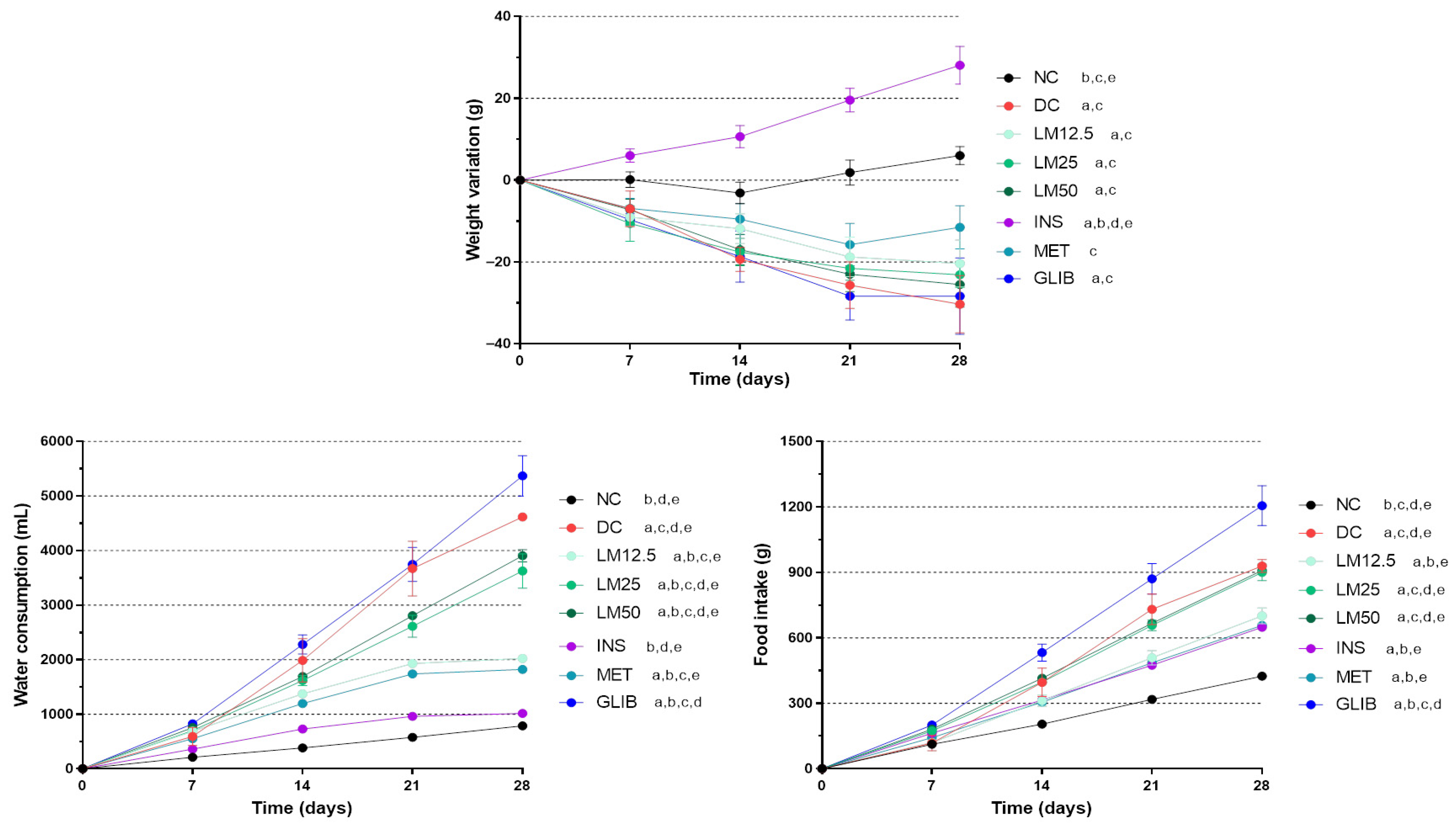
As illustrated in Figure 1, animals with streptozotocin-induced DM1 exhibited the hallmark clinical manifestations of polydipsia, polyphagia, and polyuria.
The 28-day oral treatment with D-Limonene (12.5, 25, and 50 mg/kg) failed to significantly mitigate body weight loss compared to the diabetic control (DC). Conversely, the normal control (NC) and insulin (INS) groups demonstrated significant weight gain relative to the DC, with the INS group’s weight accretion surpassing even that of the NC. Other pharmacological interventions resulted in negative weight variance; notably, the Glibenclamide (GLIB) group mirrored the weight loss observed in the untreated diabetic cohort.
Regarding hydric and caloric intake, the DC group displayed pronounced hyperphagia and polydipsia. While D-Limonene significantly attenuated water intake (mL/day) compared to the DC, this effect was even more robust in the INS and MET groups. Conversely, the GLIB group exhibited the highest water consumption, exceeding the DC. Food intake patterns mirrored those of water consumption: while the DC group’s intake significantly surpassed the NC, only the LM12.5, INS, and MET treatments achieved significant reductions. Although LM25 and LM50 showed lower consumption than the DC, these differences lacked statistical significance. Consistent with the hydric data, the GLIB group demonstrated increased food intake relative to the DC.

2.2. Capillary Glycemia

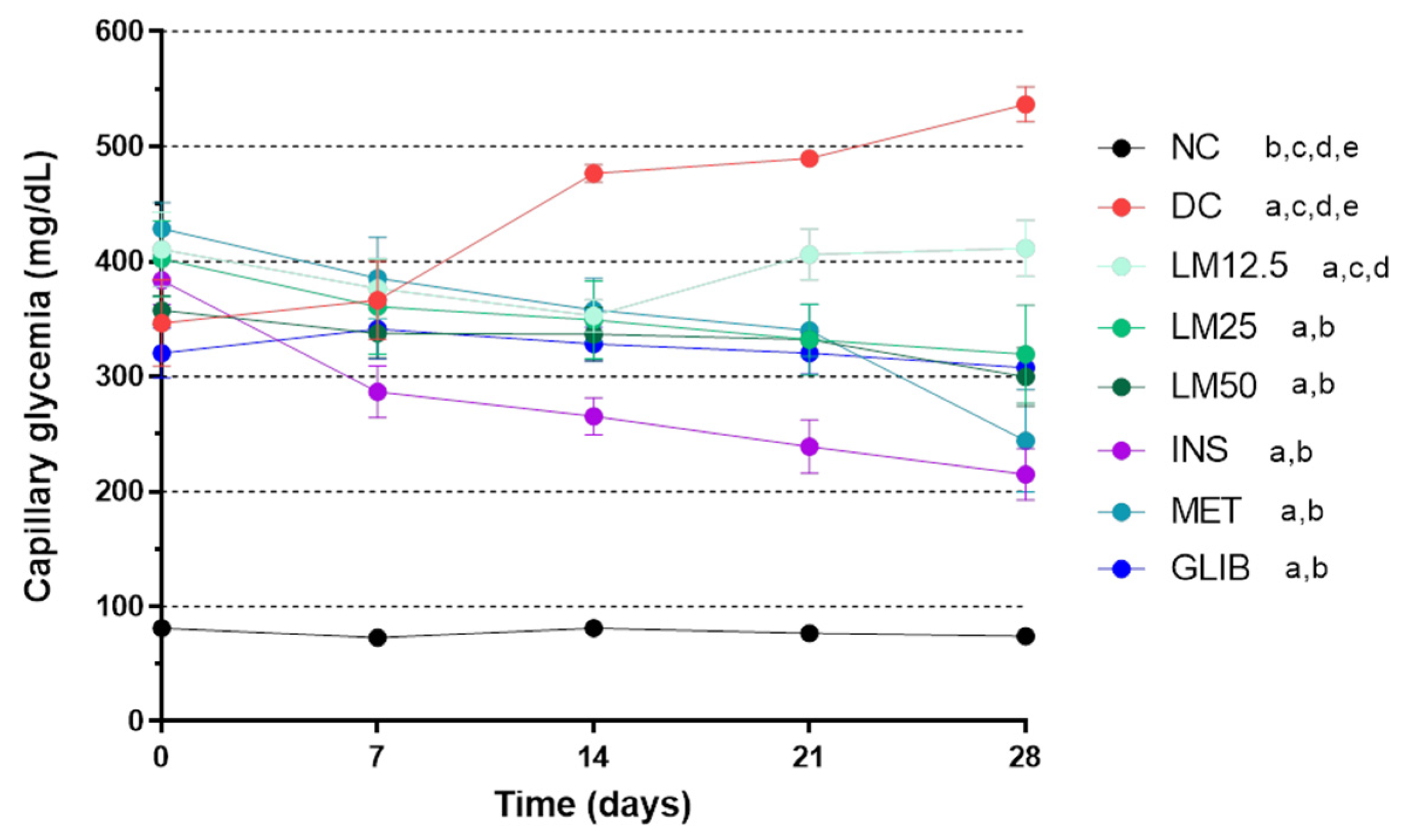
The numbers on capillary glycemia were obtained weekly, always after 12 h fasting periods. At the end of the 28-day treatment, the L25 (319.3 ± 42.5), L50 (299.6 ± 25.4), INS (214.8 ± 22.3) and MET (244.1 ± 44.6) groups showed significant reductions when compared to the glycemia measured in the DC group (530.0 ± 24.0). On the other hand, the LM12.5 (411.4 ± 24.7) and GLIB (307.8 ± 2.5) groups did not show significant reduction when compared to the DC group. The behavior of the groups on each day of measuring is also shown in Figure 2.

2.3. Serum Glucose and Glycated Hemoglobin

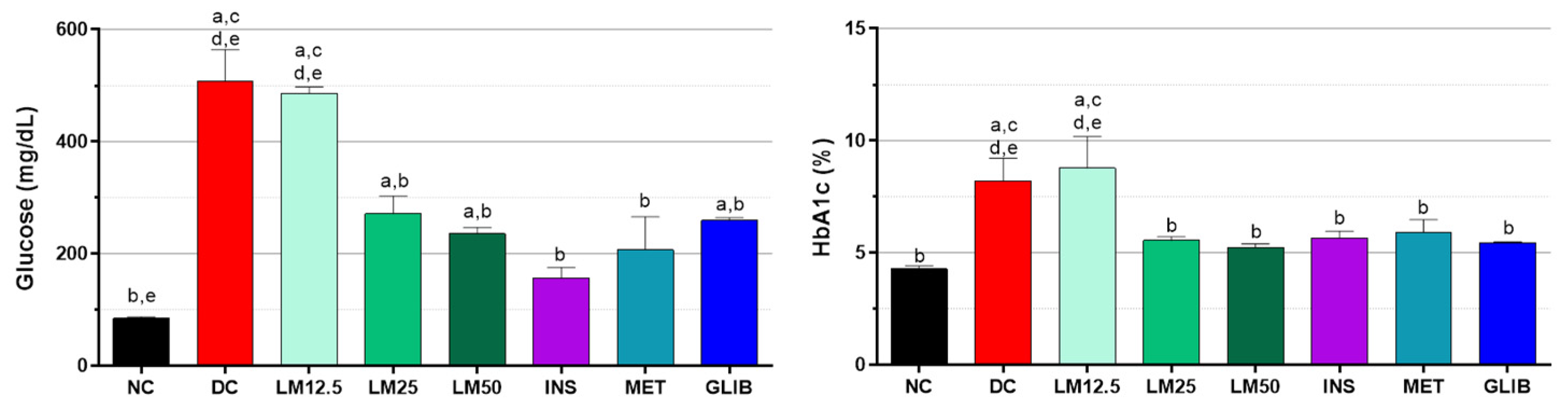
Treatment with LM25 and LM50, as well as the standard drugs (INS, MET, and GLIB), resulted in a significant reduction in both plasma glucose and glycated hemoglobin levels relative to the DC group. These experimental groups achieved values comparable to the healthy control (NC), indicating a potent antihyperglycemic effect similar to conventional pharmacological treatments. In contrast, the lowest dose tested (LM12.5) failed to produce a statistically significant improvement compared to the DC group. Overall, the results demonstrate that D-Limonene at higher doses effectively normalizes glycemic parameters (Figure 3).

2.4. Biochemical Renal Function Analyses—Urea and Creatinine

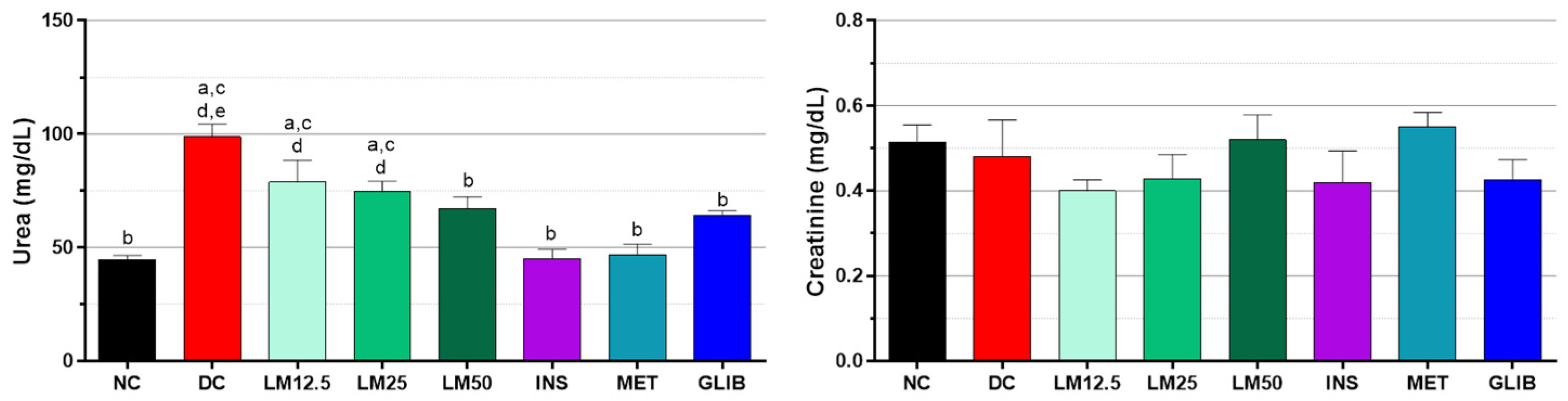
All treatment groups exhibited a reduction in blood urea levels compared to the untreated diabetic control (DC). The LM50 group, along with the standard drug treatments (INS, MET, and GLIB), showed a significant reduction in urea levels. In contrast, the effects of LM12.5 and LM25 were less pronounced. Regarding creatinine levels, no statistically significant differences were observed among any of the experimental groups. The influence of D-Limonene on these renal function parameters is illustrated in Figure 4.

2.5. Biochemical Analyses—Hepatic Function

2.5.1. Aspartate Aminotransferase (AST) and Alanine Aminotransferase (ALT)

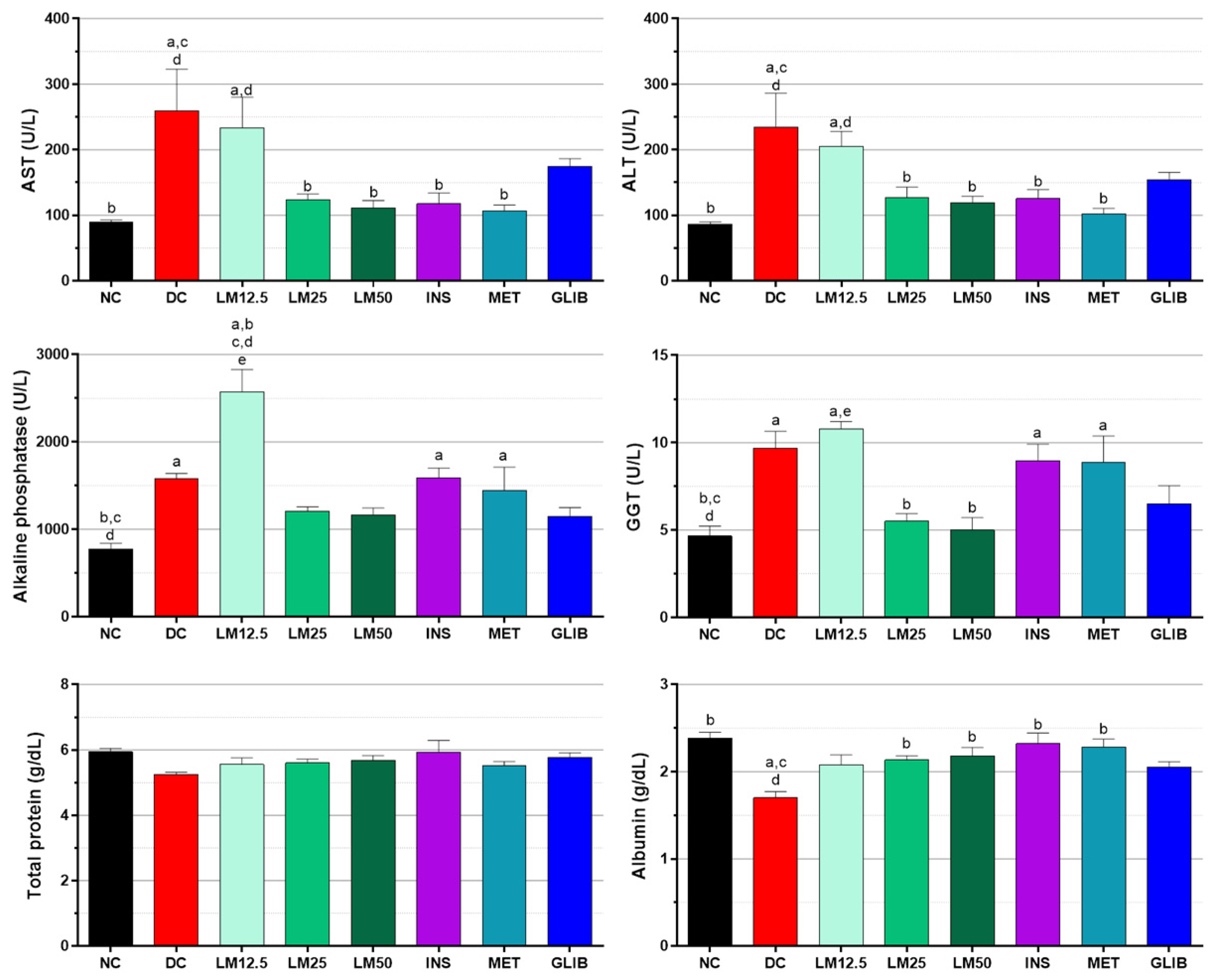
Treatment with LM25 and LM50, as well as the standard drugs INS and MET, resulted in a significant reduction in both AST and ALT enzymatic activities compared to the DC group. These treatments effectively normalized transaminase levels, as no statistical difference was observed when compared to the healthy control (NC). In contrast, the lowest dose of D-Limonene (LM12.5) and the standard drug GLIB did not produce a significant effect on these parameters.

2.5.2. Alkaline Phosphatase (AP) and Gama-Glutamil Transferase (GGT)

Regarding AP levels, no significant reduction was observed in any treatment group relative to the DC group. However, for GGT, the LM25 and LM50 groups showed a significant reduction, achieving levels comparable to the NC group. Notably, the efficacy of D-Limonene at these doses surpassed that of the standard drugs (INS, MET, and GLIB), which failed to reach statistical significance compared to the DC group. The LM12.5 dose was unable to modulate GGT levels.

2.5.3. Total Proteins (TP) and Albumin

No statistical differences were observed in total protein levels across the experimental groups. Conversely, albumin synthesis was significantly increased in the LM25, LM50, INS, and MET groups compared to the DC group. While LM12.5 and GLIB showed an upward trend in albumin levels, these results did not achieve statistical significance relative to the DC group.
All hepatic function results are illustrated in Figure 5.

2.6. Oxidative Stress Parameters

2.6.1. Plasmatic MDA

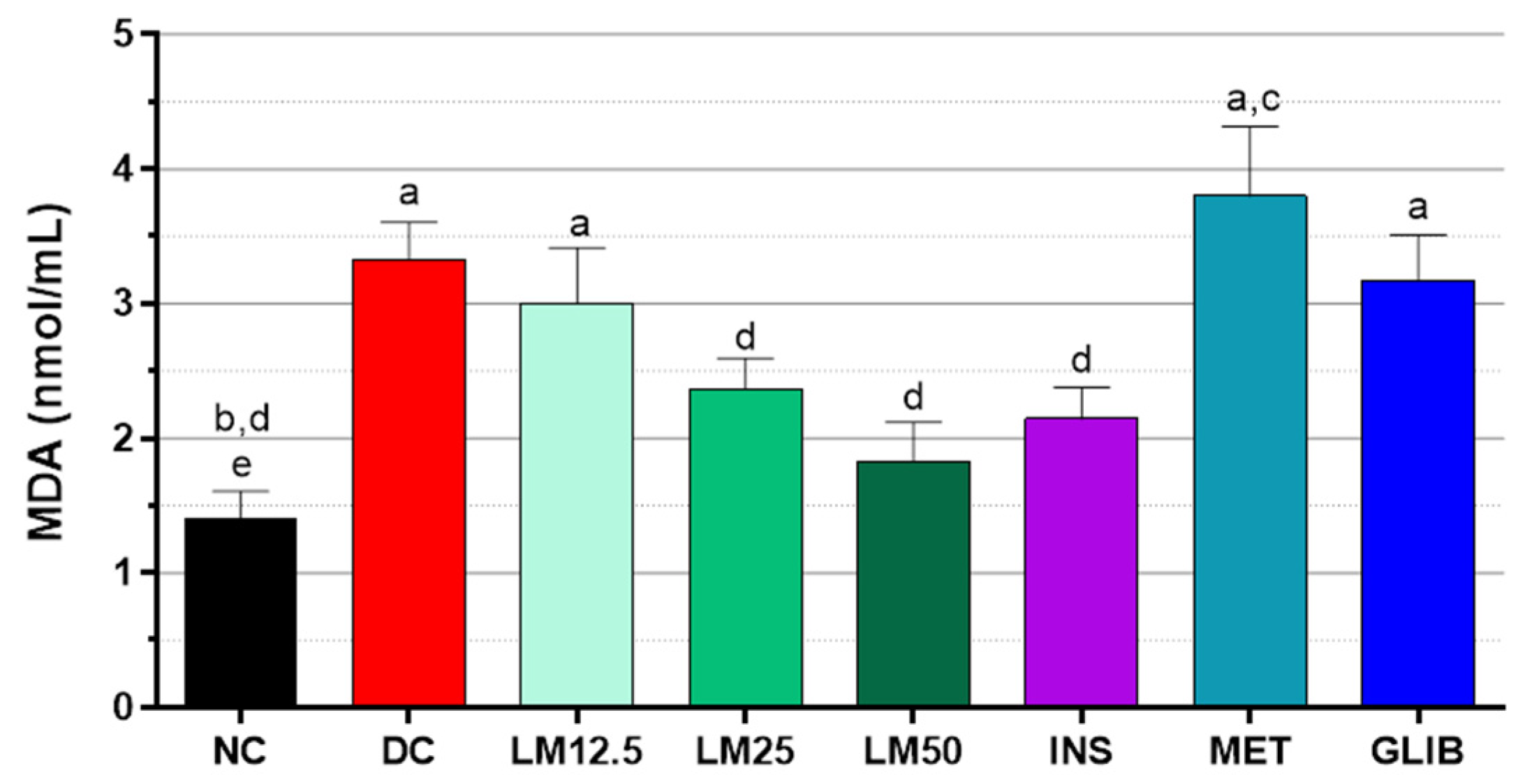
Regarding plasma malondialdehyde (MDA) levels, the groups treated with D-Limonene exhibited a dose-dependent reduction, where the decrease in lipid peroxidation was proportional to the concentration of the compound administered. Despite this visible trend, these reductions did not reach statistical significance when compared to the DC group. Notably, all tested doses of D-Limonene showed a more pronounced reduction in MDA levels than the standard drugs MET and GLIB. Furthermore, the highest dose (LM50) achieved a reduction that surpassed even that observed in the INS group. The behavior of plasma MDA across the different experimental conditions is illustrated in Figure 6.

2.6.2. Aortic and Plasmatic MPO Activity and Nitrite Contents

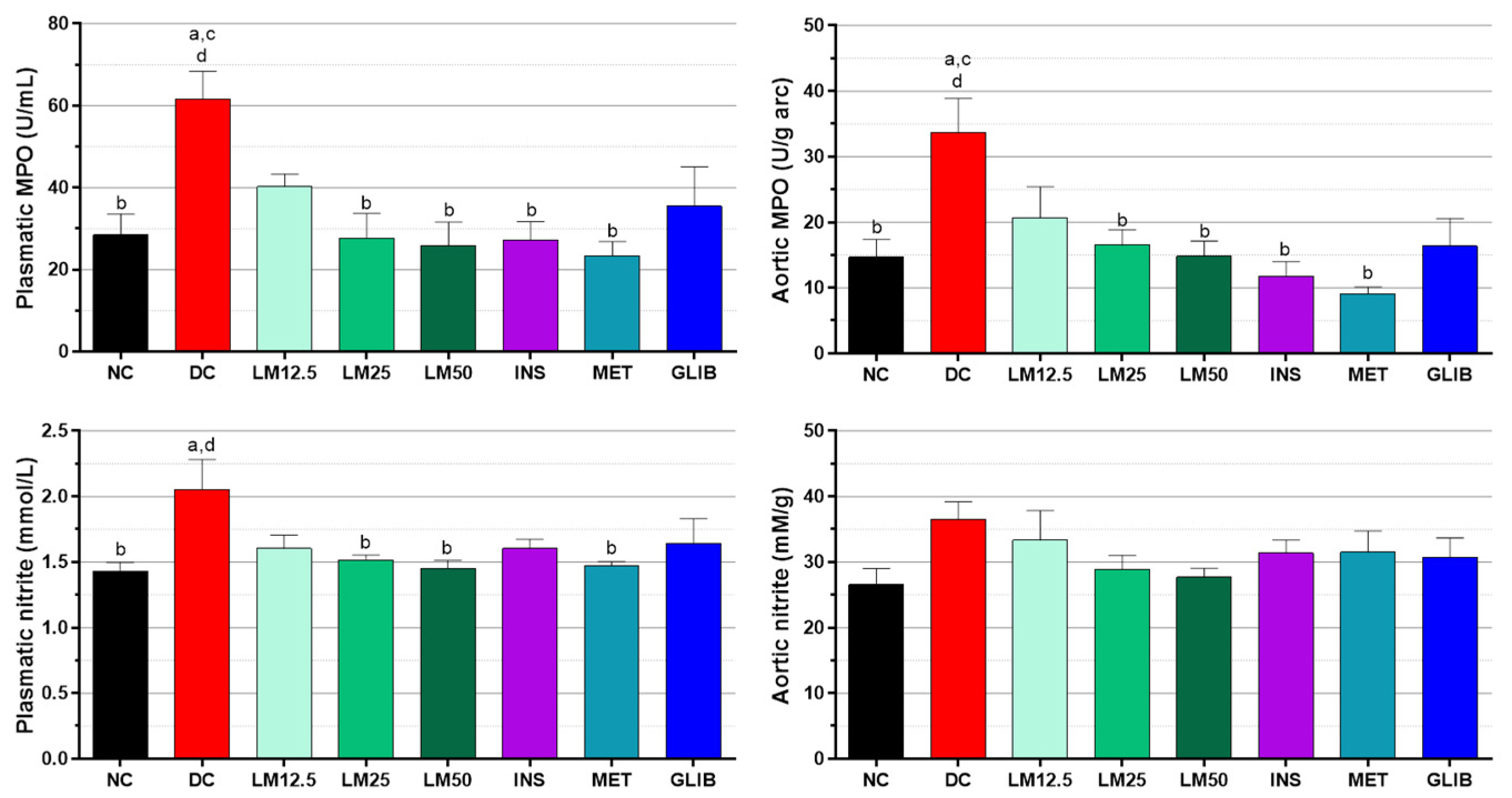
Analysis of plasma MPO, a pro-inflammatory enzyme and source of reactive oxygen species (ROS), revealed a dose-dependent reduction across all D-Limonene groups. Specifically, LM25 and LM50 significantly decreased plasma MPO levels compared to the DC group, mirroring the efficacy observed in the INS and MET treatments. This pattern remained consistent in the aortic tissue analysis, where LM25 and LM50 significantly reduced MPO levels relative to the DC group. Similarly, INS and MET showed significant tissue MPO inhibition. Conversely, the lowest dose of D-Limonene (LM12.5) and the standard drug GLIB failed to produce a significant reduction in tissue MPO levels.
Regarding plasma nitrite levels (an indicator of NO), all D-Limonene doses and standard treatments resulted in lower concentrations compared to the DC group. However, statistical significance was achieved only by the LM25, LM50, and MET groups. Notably, the LM50 group demonstrated the most substantial reduction, outperforming all standard pharmacological treatments in this parameter. In contrast, tissue NO levels in the aortic arch did not exhibit statistical variance among any of the experimental groups.
The results for MPO and NO are illustrated in Figure 7.

2.6.3. Erythrocyte and Aortic SOD and CAT Activity

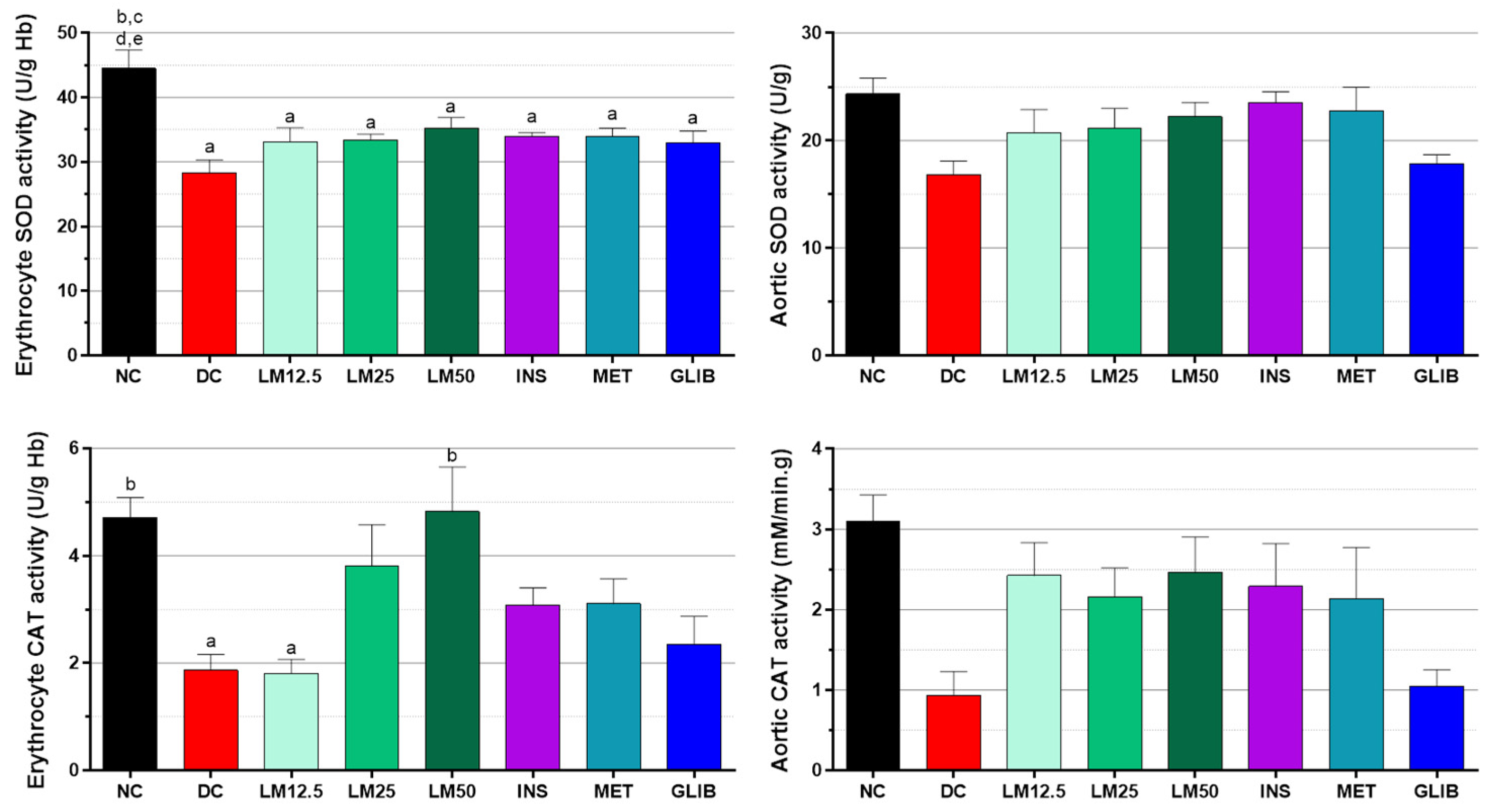
In erythrocytes, all D-Limonene and standard treatment groups showed an increase in SOD enzymatic activity compared to the DC group. However, these increments did not reach statistical significance. Notably, the LM50 group achieved the highest activity levels among all interventions, surpassing the results of the standard drugs (INS, MET, and GLIB). Regarding tissue SOD levels in the aortic arch, no statistical variance was observed across any of the experimental groups.
The evaluation of erythrocyte CAT revealed that LM25 and LM50 increased enzyme levels compared to the DC group, with LM50 achieving statistical significance. Furthermore, both D-Limonene doses outperformed all standard pharmacological treatments (INS, MET, and GLIB) in this parameter. While the standard drugs also raised CAT levels relative to the DC group, none reached statistical significance.
Regarding tissue CAT levels, all D-Limonene doses and standard treatments showed an upward trend compared to the DC group, although these results were not statistically significant. Within the D-Limonene groups, LM50 demonstrated the most pronounced effect, followed by LM12.5 and LM25. Both the LM12.5 and LM50 groups showed a superior increase in CAT activity compared to the standard treatments.
The results for SOD and CAT in both erythrocytes and the aortic arch are presented in Figure 8.

3. Discussion

Experimental models of DM1 in animals of the Rattus norvegicus species have been highlighted in research on diseases due to their clinical and laboratory resemblances to what happens to humans. Also, the models bear histopathological similarities [19,20]. Therefore, these animals have been widely employed in research on the possible pharmacological effects of several natural and synthetic additives in DM1 treatment [21,22]. In the present work, a streptozotocin-induced DM1 experimental model (STZ) in female Wistar rats was used over 28 days to assess the effects of D-Limonene and three other standard drugs used in conventional treatments of DM1. The novelty of this study in comparison with studies from Bacanli et al. [11] and Murali, Karthikeyan and Saravanan [23] is a proposal of a dose–response study regarding the D-Limonene-induced effects at doses of 12.5, 25 and 50 mg/kg, whereas previous studies have reported those effects for only single higher doses of 50 and 100 mg/kg, respectively. Interestingly, we have observed that D-Limonene has a positive effect at dose of 25 mg/kg in almost all parameters evaluated, but not at 12.5 mg/kg. Moreover, considering the absence of reports regarding D-Limonene effects in diabetes’s vascular complications, this work is the first report of antioxidant effects of D-Limonene in aortic preparations, where we have observed a marked decrease in MPO activity, which might affect the oxidative stress status.
DM1 is commonly characterized by pronounced body weight loss, mainly due to the degradation of structural proteins [24]. In this study, as expected, the untreated diabetic animals showed a significant weight reduction. When diabetic rats were treated with D-Limonene, the weight loss was attenuated (Figure 1). Murali, Karthikeyan and Saravanan [23] assessed the antidiabetic efficacy of D-Limonene in STZ-induced diabetic rats, where D-Limonene effectively improved the weight loss, thus reducing hyperglycemia and gluconeogenesis through the decrease in the activity of glucose-6-phosphatase and fructose 1,6-bisphosphatase. In addition, Bacanli et al. [11] showed that 28 days of oral administration with D-Limonene at the dose of 50 mg/kg protected STZ-induced diabetic Wistar rats from body weight loss, confirming the results found in our study.
STZ-induced hyperglycemia is considered a notable experimental model for the study of DM1 [25]. STZ causes a massive drop in the production of insulin due to the destruction of the β cells of the islets of Langerhans in the pancreas, thus leading to hyperglycemia [26]. Corroborating this theory, in the present study, we observed an increase in capillary glycemia and in the levels of serum glucose (Figure 3) in untreated diabetic female rats. In this study, the untreated diabetic rats showed a progressive increase in the capillary glucose levels, while the animals treated with D-Limonene showed a progressive reduction in this marker (Figure 2). D-Limonene at the dose of 50 mg/kg achieved, at the end of this study, values of capillary and serum glycemia inferior to the ones in the standard treatment with Glibenclamide. According to Jeppesen et al. [27], the monoterpenes can have activity in the improvement of hyperglycemia through a potentialization in the release of insulin from the β cells of the islets. Peng et al. [28] reported that plants containing D-Limonene stimulate the secretion of insulin in the β-pancreatic cells. Thus, the capacity of D-Limonene to significantly reduce the plasma glucose levels in fasting in diabetic female rats can be due to this potentialization in the secretion of insulin from the islets of the existing β cells, which in turn increases the utilization of glucose by the tissues.
The treatment applied during the four weeks with D-Limonene at the doses of 50 mg/kg and 25 mg/kg, unlike the dose of 12.5 mg/kg, orally once a day, exerted a long-term hypoglycemic effect over the glycemic control, confirmed by the reduction in the glycated hemoglobin percentage (HbA1c) when compared to the diabetic control group (Figure 3). The dosage of HbA1c (%) is a reliable parameter of the glycemic control due to its positive correlation with the estimated average glycemia (EAG), with this correlation the fundamental basis for the use of HbA1C as the diabetes control parameter [5,29]. HbA1c in non-diabetic rats generally shows values up to 6% [19,22]. The groups treated with the doses of 25 mg/kg and 50 mg/kg of D-Limonene showed a significant difference when compared to the diabetic control, reducing HbA1c by around 2% and 3%, respectively. That is an important finding, as according to the UK Prospective Diabetes Study (UKPDS) Group [30], the 1% drop in HbA1c helps in the reduction in the risk of several microvascular complications, death, and amputation, among others. The averages of HbA1C found in the normal control and diabetic control groups were similar to the ones found in the research conducted by Javidanpour et al. [31], where the average HbA1c values (%) of the normal control and diabetic control groups were 5.02 ± 0.42 and 9.72± 0.35, respectively.
Another point that was assessed was the effect of D-Limonene over parameters of the animals’ renal function. The urea and creatinine rates were assessed at the end of the 28 days of treatment. This research is justified by the fact that renal dysfunction is a chronic secondary implication of DM1. In this study, regarding urea, results similar to the ones obtained by Ali et al. [19] were found: the untreated animals (DC), at the end of the 28 days, showed increased values of urea when compared to the normal control (NC). The animals treated with D-Limonene showed a reduction in the serum levels of urea proportionally to the dose (Figure 4).
Differently, the animals used in this research did not show a significant variation in the levels of plasmatic creatinine (Figure 4), similar to what was found by Bach et al., 2018 [32]. This same behavior was observed by Konda et al. [22], who also used an experimental animal model of DM1 with STZ induction and did not find a reduction in the creatinine levels in the animals treated with D-Limonene even after 120 days of treatment.
However, it must be reinforced that urea assessment alone is not enough to determine the renal function status and the glomerular filtration rate. That is because this parameter is influenced by several factors, such as the hepatic function, the type of diet and the protein metabolism [33]. On the other hand, creatinine is influenced by muscle mass variation. As muscle mass loss is a medium- and long-term effect of DM1 [34], the study time gap (28 days) may not have been enough to demonstrate the effect of D-Limonene over this metabolite.
Next, we assessed the influence of D-Limonene over some marking parameters of the hepatic functions, aiming at investigating the repercussion of DM1 over this organ and the possible beneficial effects of the substance tested, since the liver plays a fundamental role in glycogenolysis and glyconeogenesis [35]. It is an insulin-dependent tissue that plays a fundamental role in glucose and lipid homeostasis and that is severely affected during diabetes [20]. For this evaluation, the aspartate aminotransferase enzyme (AST), alanine aminotransferase enzyme (ALT), alkaline phosphatase (AP), gama-glutamil transferase enzyme (GGT), total proteins and albumin were dosed.
According to Arkkila et al. [36], the AST, ALT and GGT levels are high in DM1. Other studies also found transaminases in high concentrations in STZ-induced diabetic animals. Ali et al. [19] found high values for ALT after a 28-day follow-up of animals with diabetes intraperitoneally induced by STZ. Konda et al. [22] also in an experimental model of STZ-induced DM1 found an increase in the levels of both ALT and AST, after 120 days of induction, when compared to the normal control. Bacanli et al. [11] demonstrated that in an experimental model of DM1 induced by STZ, the treatment with D-Limonene at 50 mg/kg significantly reduced the plasmatic levels of AST and GGT, which corroborates the present findings, where D-Limonene promoted a significant reduction in the rates of AST, ALT and GGT starting at the dose of 25 mg/kg. Otherwise, no significant reduction in the levels of alkaline phosphatase (AP) was observed (Figure 5), and that corroborates what was observed by Ramos et al. [37], who, besides finding significantly lower levels of ALT, did not observe a reduction in alkaline phosphatase in animals treated with D-Limonene (75 mg/kg/day for 45 days) when compared to the untreated diabetic animals.
The plasmatic concentration of albumin, a protein solely synthesized in the liver and a constituent of about 50% of the plasmatic proteins [6], was used as an additional biochemical marker of the hepatic function. The diabetic control group presented averages that were lower than the figures for the normal control, LM 25 mg/kg, LM 50 mg/kg, INS and MET groups, thus showing that besides the increase in transaminases, GGT and AP, the concentration of albumin was reduced in this group (Figure 5).
Hypoalbuminemia is generally only observed when 60 to 80% of the hepatic function is already compromised. The concentration of albumin can be affected not only by alteration in the hepatic function; the diet and the nutritional status of the animal, for instance, can influence its production and consumption, as well as renal losses [38]. In diabetic individuals, the lack of insulin causes inhibition of the protein synthesis and increased degradation, raising the levels of blood amino acids, which will be further used in glyconeogenesis.
The groups treated with D-Limonene at the doses of 25 mg/kg and 50 mg/kg showed an increase in the plasmatic concentration of albumin when compared to the diabetic control, with no difference when compared to the normal control group and the group treated with Metformin and insulin, thus showing efficacy in modulating these values for the spectrum considered as normal. The normal control group showed mean values close to those found by Lima et al. [39] (2.41 ± 0.76 g/dL), and close to the range found by Melo et al. [40] for female Wistar rats (3.1 ± 0.16 g/dL) in studies on the reference values for healthy animals, which corroborates our findings.
The oxidative stress is directly implicated in the development and progression of DM1, besides its secondary complications. The oxidative damage induced by reactive species of oxygen (ROSs) has been implicated in the pathogenesis of several disturbances, including diabetes mellitus [23]. The ROS, formerly known as free radicals, are disproportionally generated in DM1. High levels of these species and the simultaneous lowering of the antioxidant mechanisms may cause serious damage to the cellular organelles, peroxidative degradation of lipids and, in many cases, the onset of resistance to insulin [24].
Malondialdehyde (MDA), a reactive species of the thiobarbituric acid (TBARS), a direct product from the lipid peroxidation, can reflect the extension of this process in the tissues. In the present study, the values of this biomarker of oxidative stress were lower than in the three groups of D-Limonene tested when compared to what was found in the untreated diabetic animals, thus reaching reductions that were superior to those obtained by the standard drugs (except for insulin—INS) (Figure 6). This finding corroborates what was observed by Feillet et al. [41], who concluded from a study also on STZ-induced diabetic rats that the levels of TBARS increased and the total antioxidant activity decreased after 4 weeks of the induction of DM1. Likewise, our result was observed by Murali, Karthikeyan and Saravanan [23], who demonstrated that the levels of MDA were high in the livers of STZ-induced diabetic rats. Other evidence that supports the findings of our research was observed by Bacanli et al. [11], who assessed the lipid and antioxidant antiperoxidative capacity of D-Limonene in alterations induced by STZ in male Wistar rats. In this study, the administration of 100 mg/kg of body weight of D-Limonene for 45 days significantly diminished (p < 0.05) the TBARS in the plasma of the animals.
Myeloperoxidase (MPO), an enzyme that stems from the leukocytes, is responsible for catalyzing the formation of a number of oxidant reactive species; therefore, it is involved in the process of lipid peroxidation and is an inflammatory marker, involved in the infiltration of neutrophils into sites of tissue adhesion. MPO is, hence, a pro-oxidant and pro-inflammatory enzyme [42]. These properties of MPO motivated the research in this work on the plasma and tissue of the aortic arches of STZ-induced diabetic animals treated or not with D-Limonene and standard drugs for DM1.
In this work, a significant reduction in the plasmatic and tissue MPO levels was observed (Figure 7) in the animals treated with D-Limonene at the doses of 25 and 50 mg/kg, when compared with the untreated animal group. This result was actually similar to the standard treatments, except for Glibenclamide (GLIB), which showed milder reductions. Our results over the tissue MPO match what was observed by Bagheri et al. [43], who showed in a study conducted on Wistar male rats, with alloxan-induced diabetes and treated with D-Limonene for 8 weeks, that the MPO levels in the renal tissue of the animals diminished significantly. The results obtained in our research, just as the ones by Bagheri et al. [43], are in agreement with the evidence shown in several scientific studies that confirm the anti-inflammatory (once that MPO stems from inflammatory cells) and antioxidant properties of D-Limonene [44].
In the assessment of the nitrite levels (NO2), the values of this parameter increased both in the plasma and in the tissue (Figure 7) of the aortic arches in the untreated diabetic animals when compared to the animals of the normal control group, and that increase was, in the plasma analysis, statistically significant. The treatment with D-Limonene, both in the plasma and in the tissue, was able to reduce the nitrite levels so that the doses of 25 and 50 mg/kg could achieve a significant reduction in the plasma. This reduction found in the plasmatic nitrite level is in agreement with what was written by Babaeenezhad et al. [45], who observed that the serum level of NO2 in animals intoxicated with gentamicin and treated with D-Limonene dropped 57.06%, significantly when compared with the normal control group. Likewise, the reduction in tissue nitrite, while not significant, is also described in scientific studies such as the one by Ramos et al. [37].
Another parameter of oxidative stress analyzed was the activity of the dismutase superoxide enzyme (SOD) in the plasma and in the aortic tissue of the animals. SOD is the first enzyme in the antioxidant defense that eliminates the superoxide radicals (O2) through its dismutation into oxygen (O2) and hydrogen peroxide (H2O2), thus decreasing the superoxide toxic effects. Hence, SOD may act as a primary defense and prevent the further generation of free radicals [23]. In the present study, the SOD activity was significantly decreased in untreated diabetic rats (DC) when compared with the normal group (NC). Moreover, the groups treated with D-Limonene (12.5, 25 and 50 mg/kg) and standard drugs showed a slight increase in both erythrocyte and tissue SOD activities when compared with the DC group (Figure 8). Although no statistically significant differences were observed at a glance when compared with the diabetic group, previous studies have reported significant increases in SOD activity in plasma, liver and kidney of diabetic rats after 28 days with D-Limonene at higher doses of 50 and 100 mg/kg [15,23]. So, we hypothesize that the effects of D-Limonene on SOD activity in erythrocytes lysates and aortic homogenates might occur at higher doses.
The last marker of oxidative stress analyzed was catalase (CAT). CAT is an enzyme that contains the heme radical and is known for being involved in the degradation of H2O2. This activity results in detoxication and protection of the tissues against high peroxide levels [23]. In the present study, significant reductions in CAT activity in erythrocytes and aortic homogenates were observed in the DC group (Figure 8). The decrease in the CAT activity in diabetic female rats clearly outlines that this enzyme is easily inactivated in the presence of high levels of ROS and lipid peroxide [46]. According to Sindhu et al. [47], this decrease may still be related to the drop in the expression level of the protein expression in the condition of DM1.
The animals treated with D-Limonene presented a marked increase in CAT activity, both in erythrocytes and in aortic tissue, in comparison with DC group. The D-Limonene results were rather similar to those achieved by the standard drugs, and when compared to Glibenclamide, all the doses of D-Limonene had superior results. This observation is in agreement with what was found by Murali, Karthikeyan and Saravanan [23], who verified a significant increase in the SOD and CAT activities in diabetic rats after the oral treatment with D-Limonene. Bacanli et al. [11] also showed that the activities of the SOD and CAT enzymes significantly decreased in the diabetic group when compared to the normal control group and that they significantly increased in the diabetic group treated with D-Limonene in comparison with the diabetic group.
The present study has certain limitations that should be acknowledged. First, only female rats were used, which restricts the direct extrapolation of findings to males and precludes sex-based comparative analyses. Second, the 28-day treatment duration, whilst adequate for detecting metabolic and oxidative markers, may be insufficient to fully characterize renal structural damage and late functional parameters such as serum creatinine, which tend to change significantly only after 8–20 weeks of STZ-induced diabetes. Third, vascular assessments were limited to biochemical and oxidative stress markers in aortic homogenates; functional vascular reactivity assays (e.g., ex vivo organ bath) and histopathological evaluation of the aorta and kidney were not performed and would complement the present findings. Future studies incorporating both sexes, extended follow-up periods, and functional and molecular vascular assays are warranted to consolidate the translational relevance of D-Limonene in diabetic vascular complications.

4. Materials and Methods

4.1. Animals

Initially, 64 female Wistar rats (Rattus norvegicus) were used, obtained from UFPI’s Animal Facility, mean age of 06 months, weighing between 180 and 250 g. During the experimental period, animals were kept under a controlled temperature (23 ± 2 °C) and 12 h light–dark cycle. The animals had free access to food and water; after the induction of diabetes, food and water intake was registered daily.

4.2. Ethical Aspects

All the procedures were conducted in accordance with the ethical principles established by the National Council of Animal Experimentation Control (CONCEA) and the current national legislation (Law 11.794, 8 October 2008) [48]. The study was approved by the Ethics Committee on Animal Experimentation of the Federal University of Piauí (CEUA–protocol No. 457/18, approved on 18 May 2018).

4.3. Drugs and Reagents

D-Limonene (purity = 97%) was purchased from Sigma-Aldrich Chemicals (183164-100G; St. Louis, MO, USA). Metformin and Glibenclamide were purchased from Virgínia Regina Fortes Castelo Branco e Cia. Ltda. (Teresina, Brazil). NPH human insulin was purchased from ASPEN PHARMA Pharmaceutical Laboratory (Rio de Janeiro, Brazil). Pyrogallol and streptozotocin (STZ) were also used, purchased from Cayman Chemical (Ann Arbor, MI, USA). D-Limonene, metformin and glibenclamide were diluted in 1.0% Tween80 in distilled water (v/v), pyrogallol in distillated water, and STZ in cold citrate buffer pH 4.5 on each administration day.

4.4. Induction of DM1

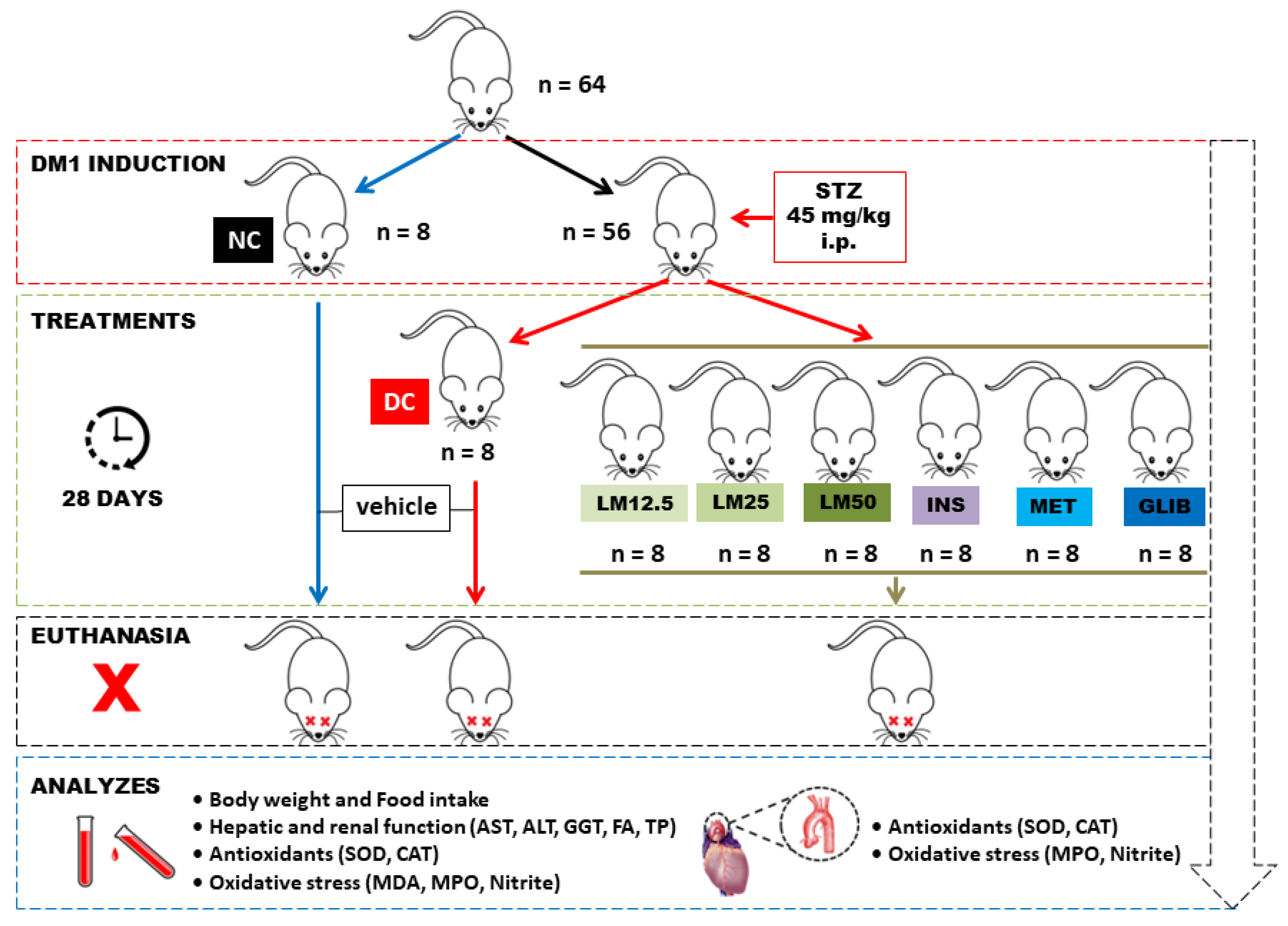
The experimental protocol is summarized in Figure 9. The animals fasted for 12 h and were further submitted to the induction of diabetes mellitus by a single intraperitoneal administration of STZ (45 mg/kg) in citrate buffer pH 4.5 [21]. The animals of the normal control group received only citrate buffer pH 4.5 intraperitoneally (IP). During the first 24 h after the induction, glucose solution at 10% was offered to the animals to avoid hypoglycemia. At 72 h after the administration of STZ, the animals fasted for 12 h and, next, had their glycemia assessed. Animals that had glycemia values equal to or higher than 250 mg/dL or 15 mM [42] were considered diabetic. The animals that had capillary glycemia lower than 250 mg/dL were considered resistant and were thus excluded from this study.

4.5. Group Division

The animals were divided into 8 groups, as described below:
  • NC—Normal control (no induction of diabetes), treated orally (PO) with vehicle (1.0% tween 80 in distilled water);
  • DC—Diabetic control (STZ-induced diabetic animals), treated with vehicle, PO;
  • LM12.5—Diabetic animals treated with D-Limonene 12.5 mg/kg, PO;
  • LM25—Diabetic animals treated with D-Limonene 25 mg/kg, PO;
  • LM50—Diabetic animals treated with D-Limonene 50 mg/kg, PO;
  • INS—Diabetic animals treated subcutaneously (SC) with NPH Human Insulin, 6 UI, in the morning;
  • MET—Diabetic animals treated with Metformin 150 mg/kg, PO;
  • GLIB—Diabetic animals treated with Glibenclamide 600 μg/kg, PO.
All the animals received only one daily dose of the treatment. Except for the INS group, which received insulin subcutaneously, all the other groups were treated orally. The treatment of all the animals lasted 28 days. At the end of the treatment, the animals were euthanized with an overdose of 150 mg/kg Sodium Thiopental anesthetic, administered intraperitoneally, preceded by 10 mg/kg Lidocaine intraperitoneally.

4.6. Water and Food Intake

On the first day after the induction of DM1, the initial amount of food and water offered to the animals was measured daily and registered. From these data, food and water intake was calculated.

4.7. Body Weight and Capillary Glycemia

All the animals were assessed weekly for their weight and fasting capillary glycemia; the latter was assessed by means of blood collection of the caudal vein through capillarity and gauged using reagent strips and an On Call Plus® glucose meter (ACON Laboratories, San Diego, CA, USA).

4.8. Obtaining Samples

Immediately after the animals were euthanized, blood was collected from the lower caudal vein for biochemical, hematological, antioxidant and oxidative stress analyses. The aortic arch was removed for the analysis of the parameters related to oxidative stress. For the obtaining of the tissue homogenate, the arch was macerated (1:20 p/v) in phosphate buffer with pH according to the analysis to be performed. Next, it was centrifuged at 4000 RPM for 15 min. The supernatant was stored at −40 °C until the analyses.

4.9. Biochemical Analyses

The biochemical dosages of serum glucose, urea, creatinine, aspartate aminotransferase (AST), alanine aminotransferase (ALT), gama-glutamil transferase (GGT), alkaline phosphatase (AF), total proteins (TP) and albumin were performed. These analyses were carried out with a commercial kit in a Labmax Plenno Labtest® automatic biochemical analyzer (Lagoa Santa, MG, Brazil). In addition, the assessment of glycated hemoglobin (HbA1c) was conducted by immunoturbidimetry (CMD 800 Series, Wiener Lab., Rosario, Santa Fé, Argentina).

4.10. Assessment of the Plasmatic MDA

The MDA concentrations were assessed through the production of thiobarbituric acid reactive substances (TBARS) [49], with modifications. The reading of the supernatant was taken at the wavelengths of 532, 510 and 560 nm; corrected absorbance was calculated using the formula ABS = 1.22 × [A532 − (0.56 × A510) + (0.44 × A560)] [50]. An analytical curve of calibration was designed using MDA as the pattern, in concentrations of 1, 5, 10, 15, 20, 25 and 30 nmol/mL. The results were expressed as nmol of MDA per mL of plasma.

4.11. Assessment of the Tissue and Plasmatic MPO Activity

MPO activity was measured with the method of o-dianisidine substrate oxidation speed in the presence of hydrogen peroxide (H2O2) and confirmed by the change in absorbance measured at 450 nm [51]. MPO activity was calculated from the maximum reaction speed, and the result was expressed as UMPO/μL of sample. An MPO unit is defined as the amount of H2O2 (μmol) degraded per minute.

4.12. Assessment of Tissue and Plasmatic Nitrite

The assessment of nitrite concentration was performed with the Griess method [52,53,54]. Absorbance was read at 550 nm. An analytical curve of sodium nitrite (NaNO2) was generated through two serial dilutions to obtain solutions at the following concentrations: 100, 50, 25, 12.5, 6.25 and 3.125 μM.

4.13. Assessment of the Tissue and Erythrocyte SOD Activity

The assessment of erythrocyte SOD was performed based on the formation of nitrite through superoxide radicals. One unit of SOD (USOD) can avoid the autoxidation of 50% of pyrogallol. The result was expressed as USOD per mg of tissue [55].

4.14. Assessment of the Tissue and Erythrocyte CAT Activity

The catalase activity was assessed according to the method described by Beutler [56], quantifying the speed of hydrogen peroxide decomposition (H2O2) by the enzyme through the optical density decrease at 230 nm and 37 °C. The results were expressed as U/g of tissue. One unit (U) of catalase corresponded to the enzyme activity that enabled the hydrolysis of 1 µmol of H2O2 per minute at 37 °C at pH 8.0.

4.15. Statistical Analysis

Data are expressed as the mean ± SEM (n = 5–8 per group). Normality (Shapiro–Wilk) and homoscedasticity (Levene’s test) were verified prior to parametric analysis using GraphPad Prism v6.0. One-way and two-way ANOVA followed by Tukey’s post hoc test were applied to datasets meeting parametric assumptions (p > 0.05 for both tests across all comparisons). No violations were detected, precluding the need for non-parametric alternatives. Statistical significance was set at p < 0.05.

5. Conclusions

The present study demonstrates that a 28-day treatment with D-Limonene effectively attenuates hyperglycemia and protein glycation in STZ-diabetic female Wistar rats, while simultaneously enhancing hepatic viability markers—specifically albumin synthesis and GGT levels—and reinforcing systemic antioxidant defenses across plasma, erythrocytes, and vascular tissues. These multi-target effects suggest that D-Limonene is a potent candidate for the phytotherapeutic and pharmaceutical industries, where it could be developed as a cost-effective, natural adjuvant in the management of metabolic disorders and the prevention of secondary diabetic complications. Ultimately, D-Limonene stands out as a versatile biomolecule with significant potential for integrative medicine, offering a promising approach to mitigating the systemic damage induced by chronic oxidative stress and glycemic imbalance.

Author Contributions

Conceptualization, A.D., M.L., M.d.C.d.C.e.M. and D.D.R.A.; methodology, F.C.B.O., M.d.C.d.C.e.M. and D.D.R.A.; software, R.S.M.N.; validation, N.R.V., L.d.R.S., R.S.M.N., A.K.d.S.B., F.C.B.O. and D.S.L.B.; formal analysis, F.C.B.O., D.S.L.B., R.S.M.N., J.O.C.S.d.A. and M.L.; investigation, N.R.V., L.d.R.S., J.O.C.S.d.A., J.V.d.S.F., E.I.R.Q., E.M.L.B., A.V.d.S.M. and A.A.d.S.; resources, D.D.R.A. and M.d.C.d.C.e.M.; data curation, N.R.V., R.S.M.N. and L.d.R.S.; writing—original draft preparation, N.R.V., L.d.R.S., R.S.M.N. and J.O.C.S.d.A.; writing—review and editing, F.C.B.O., D.S.L.B., M.L., A.D., M.d.C.d.C.e.M. and D.D.R.A.; visualization, N.R.V., L.d.R.S., R.S.M.N. and J.V.d.S.F.; supervision, D.D.R.A.; project administration, D.D.R.A.; funding acquisition, M.d.C.d.C.e.M. and D.D.R.A. All authors have read and agreed to the published version of the manuscript.

Funding

We thank to the Coordenação de Aperfeiçoamento de Pessoal de Nível Superior—CAPES, Brazil (Projeto CAPES-PROAP: 88881.647234/2021-01) for financial support.

Institutional Review Board Statement

The animal study protocol was approved by the Ethics Committee on the Use of Animals (CEUA) of Universidade Federal do Piauí (protocol code 457/2018, approved on 18 May 2018).

Informed Consent Statement

Not applicable.

Data Availability Statement

The raw data supporting the conclusions of this article will be made available by the authors on request.

Acknowledgments

We thank teacher Abilio Borghi for the assistance with the English proofreading. Daniel Arcanjo is grateful to the public Brazilian agency “Conselho Nacional de Desenvolvimento Científico e Tecnológico” (CNPq, Brazil) for his personal scholarship (#315096/2023-3).

Conflicts of Interest

The authors declare no conflicts of interest.

References

  1. International Diabetes Federation. IDF Diabetes Atlas, 7th ed.; International Diabetes Federation: Brussels, Belgium, 2015; Available online: http://www.diabetesatlas.org/ (accessed on 10 November 2025).
  2. DiMeglio, L.A.; Evans-Molina, C.; Oram, R.A. Diabete tipo 1. Lancet 2018, 391, 2449–2462. [Google Scholar] [CrossRef] [PubMed]
  3. Dirnena-Fusini, I.; Åm, M.K.; Fougner, A.L.; Carlsen, S.M.; Christiansen, S.C. Physiological effects of intraperitoneal versus subcutaneous insulin infusion in patients with diabetes mellitus type 1: A systematic review and meta-analysis. PLoS ONE 2021, 16, e0249611. [Google Scholar] [CrossRef] [PubMed]
  4. Brownlee, M. The pathobiology of diabetic complications: A unifying mechanism. Diabetes 2005, 54, 1615–1625. [Google Scholar] [CrossRef] [PubMed]
  5. American Diabetes Association. Classification and diagnosis of diabetes. Diabetes Care 2017, 40, S11–S24. [Google Scholar] [CrossRef]
  6. Satta, S.; Mahmoud, A.M.; Wilkinson, F.L.; Yvonne Alexander, M.; White, S.J. The Role of Nrf2 in Cardiovascular Function and Disease. Oxid. Med. Cell. Longev. 2017, 2017, 9237263. [Google Scholar] [CrossRef]
  7. Durazzo, A.; Lucarini, M.; Santini, A. Plants and Diabetes: Description, Role, Comprehension and Exploitation. Int. J. Mol. Sci. 2021, 22, 3938. [Google Scholar] [CrossRef]
  8. Salehi, B.; Ata, A.; Anil Kumar, N.V.; Sharopov, F.; Ramırez-Alarcon, K.; Ruiz-Ortega, A.; Ayatollahi, S.A.; Fokou, P.V.T.; Kobarfard, F.; Zakaria, Z.A.; et al. Antidiabetic potential of medicinal plants and their active components. Biomolecules 2019, 9, 551. [Google Scholar] [CrossRef]
  9. González-Mas, M.C.; Rambla, J.L.; López-Gresa, M.P.; Blázquez, M.A.; Granell, A. Volatile compounds in citrus essential oils: A comprehensive review. Front. Plant Sci. 2019, 10, 12. [Google Scholar] [CrossRef]
  10. Durazzo, A.; D’addezio, L.; Camilli, E.; Piccinelli, R.; Turrini, A.; Marletta, L.; Marconi, S.; Lucarini, M.; Lisciani, S.; Gabrielli, P.; et al. From Plant Compounds to Botanicals and Back: A Current Snapshot. Molecules 2018, 23, 1844. [Google Scholar] [CrossRef]
  11. Bacanlı, M.; Anlar, H.G.; Aydın, S.; Çal, T.; Arı, N.; Bucurgat, Ü.Ü.; Başaran, A.A.; Başaran, N. D-limonene ameliorates diabetes and its complications in streptozotocin-induced diabetic rats. Food Chem. Toxicol. 2017, 110, 434–442. [Google Scholar] [CrossRef]
  12. Joglekar, M.M.; Panaskar, S.N.; Chougale, A.D.; Kulkarni, M.J.; Arvindekar, A.U. A novel mechanism for antiglycative action of limonene through stabilization of protein conformation. Mol. Biosyst. 2013, 9, 2463–2472. [Google Scholar] [CrossRef]
  13. Cardoso-Teixeira, A.C.; Ferreira-da-Silva, F.W.; Peixoto-Neves, D.; Oliveira-Abreu, K.; Pereira-Gonçalves, Á.; Coelho-De-Souza, A.N.; Leal-Cardoso, J.H. Hydroxyl Group and Vasorelaxant Effects of Perillyl Alcohol, Carveol, Limonene on Aorta Smooth Muscle of Rats. Molecules 2018, 23, 1430. [Google Scholar] [CrossRef] [PubMed]
  14. Nascimento, G.A.D.; de Souza, D.S.; Lima, B.S.; de Vasconcelos, C.M.L.; Araújo, A.A.D.S.; Durço, A.O.; Quintans-Junior, L.J.; Almeida, J.R.G.D.S.; Oliveira, A.P.; de Santana-Filho, V.J.; et al. Bradycardic and Antiarrhythmic Effects of the D-Limonene in Rats. Arq. Bras. Cardiol. 2019, 113, 925–931. [Google Scholar] [CrossRef] [PubMed]
  15. Rehman, M.U.; Tahir, M.; Khan, A.Q.; Khan, R.; Hamiza, O.O.; Lateef, A.; Hassan, S.K.; Rashid, S.; Ali, N.; Zeeshan, M.; et al. D-limonene suppresses doxorubicin-induced oxidative stress and inflammation via repression of COX-2, iNOS, and NFκB in kidneys of Wistar rats. Exp. Biol. Med. 2014, 239, 465–476. [Google Scholar] [CrossRef] [PubMed]
  16. Wang, X.; Li, G.; Shen, W. Protective effects of D-Limonene against transient cerebral ischemia in stroke-prone spontaneously hypertensive rats. Exp. Ther. Med. 2018, 15, 699–706. [Google Scholar] [CrossRef]
  17. Albogami, S.; Hassan, A.; Abdel-Aziem, S.H.; Alotaibi, S.; Althobaiti, F.; El-Shehawi, A.; Alnefaie, A.; Alhamed, R.A. Effects of combination of obesity, diabetes and hypoxia on inflammatory regulating genes and cytokines in rat pancreatic tissues and serum. PeerJ 2022, 10, e13990. [Google Scholar] [CrossRef]
  18. Zhang, R.; Thor, D.; Han, X.; Anderson, L.; Rahimian, R. Sex differences in mesenteric endothelial function of streptozotocin-induced diabetic rats: A shift in the relative importance of EDRFs. Am. J. Physiol. Circ. Physiol. 2012, 303, H1183–H1198. [Google Scholar] [CrossRef]
  19. Ali, Y.; Paul, S.; Tanvir, E.M.; Hossen, S.; Rumpa, N.-E.N.; Saha, M.; Bhoumik, N.C.; Islam, A.; Hossain, S.; Alam, N.; et al. Antihyperglycemic, Antidiabetic, and Antioxidant Effects of Garcinia pedunculata in Rats. Evid.-Based Complement. Altern. Med. 2017, 2017, 2979760. [Google Scholar]
  20. Baragob, A.E.A.; Almalki, W.H.; Shahid, I.; Bakhdhar, F.A.; Bafhaid, H.S.; Eldeen, O.M.I. The hypoglycemic effect of the aqueous extract of the fruits of Balanites aegypticea in alloxan-induced diabetic rats. Pharmacogn. Res. 2014, 6, 1–5. [Google Scholar] [CrossRef]
  21. Chen, F.; Zhang, H.Q.; Zhu, J.; Liu, K.Y.; Cheng, H.; Li, G.L.; Xu, S.; Lv, W.H.; Xie, Z.G. Puerarin enhances superoxide dismutase activity and inhibits RAGE and VEGF expression in retinas of STZ-induced early diabetic rats. Asian Pac. J. Trop. Med. 2012, 5, 891–896. [Google Scholar] [CrossRef]
  22. Konda, P.Y.; Dasari, S.; Konanki, S.; Nagarajan, P. In vivo antihyperglicemic, antihyperlipidemic, antioxidative stress and antioxidant potentials activities of Syzygium paniculatum Gaertn. in Streptozotocin induced diabetic rats. Helyon 2019, 5, e01373. [Google Scholar] [CrossRef] [PubMed]
  23. Murali, R.; Karthikeyan, A.; Saravanan, R. Protective effects of D-limonene on lipid peroxidation and antioxidant enzymes in streptozotocin-induced diabetic rats. Basic Clin. Pharmacol. Toxicol. 2013, 112, 175–181. [Google Scholar] [CrossRef] [PubMed]
  24. Martelli, F.; Nunes, F.M.F. Radicais livres: Em busca do equilíbrio. Ciênc. Cult. 2014, 66, 54–57. [Google Scholar] [CrossRef][Green Version]
  25. Junod, A.; Lambert, A.E.; Stauffacher, W.; Renold, A.E. Diabetogenic Action of Streptozotocin: Relationship of Dose to Metabolic Response. J. Clin. Investig. 1969, 48, 2129–2139. [Google Scholar] [CrossRef]
  26. Schein, P.S.; Cooney, D.A.; McMenamin, M.G.; Anderson, T. Estreptozotocina diabetes—Estudos adicionais sobre o mecanismo de depressão das concentrações de nicotinamida adenina dinucleotídeo em ilhotas pancreáticas e fígado de camundongos. Biochem. Pharmacol. 1973, 22, 2625–2631. [Google Scholar] [CrossRef]
  27. Jeppesen, P.B.; Gregersen, S.; Poulsen, C.; Hermansen, K. Stevioside acts directly on pancreatic beta cells to secrete insulin: Actions independent of cyclic adenosine monophosphate and adenosine triphosphate-sensitive K+-channel activity. Metabolism 2000, 49, 208–214. [Google Scholar] [CrossRef]
  28. Peng, C.H.; Ker, Y.B.; Weng, C.F.; Peng, C.C.; Huang, C.N.; Lin, L.Y.; Peng, R.Y. Insulin secretagogue bioactivity of finger citron fruit (Citrus medica L. var. Sarcodactylis Hort Rutaceae). Agric. Food Chem. 2009, 57, 8812–8819. [Google Scholar] [CrossRef]
  29. Pires, A.C.; Chacra, A.R. A Evolução da Insulinoterapia no Diabetes Melito Tipo 1. Arq. Bras. Endocrinol. Metabol. 2008, 52, 268–278. [Google Scholar] [CrossRef]
  30. UK Prospective Diabetes Study (UKPDS) Group. Intensive blood-glucose control with sulphonylureas or insulin compared with conventional treatment and risk of complications in patients with type 2 diabetes (UKPDS 33). Lancet 1998, 352, 837–853. [Google Scholar] [CrossRef]
  31. Javidanpour, S.; Tabtabaei, S.R.F.; Siahpoosh, A.; Morovati, H.; Shahriari, A. Comparison of the effects of fresh leaf and peel extracts of walnut (Juglans regia L.) on blood glucose and β-cells of streptozotocin-induced diabetic rats. Vet. Res. Forum Int. Q. J. 2012, 3, 251. [Google Scholar]
  32. Bach, E.E.; Hi, E.M.B.; Martins, A.M.C.; Nascimento, P.A.M.; Wadt, N.S.Y. Hypoglicemic and Hypolipedimic Effects of Ganoderma lucidum in Streptozotocin-Induced Diabetic Rats. Medicines 2018, 5, 78. [Google Scholar] [CrossRef] [PubMed]
  33. Beigelman, P.M. Severe diabetic ketoacidosis (diabetic “coma”): 482 episodes in 257 patients; experience of three years. Diabetes 1971, 20, 490–500. [Google Scholar] [CrossRef] [PubMed]
  34. Weinert, L.S.; Camargo, E.G.; Soares, A.A.; Silveiro, S.P. Glomerular filtration rate estimation: Performance of serum cystatin C-based prediction equations. Clin. Chem. Lab. Med. 2011, 49, 1761–1771. [Google Scholar] [CrossRef] [PubMed]
  35. Hiroshi, H.; Masako, K.; Yutaka, S.; Chohachi, K. Mechanisms of hypoglycemic activity of Aconitan A, a glycan from Aconitum carmichaeli roots. J. Ethnopharmacol. 1989, 25, 295–304. [Google Scholar] [CrossRef]
  36. Arkkila, P.E.; Koskinen, P.J.; Kantola, I.M.; Rönnemaa, T.; Seppänen, E.; Viikari, J.S. Diabetic complications are associated with liver enzyme activities in people with type 1 diabetes. Diabetes Res. Clin. Pract. 2001, 52, 113–118. [Google Scholar] [CrossRef]
  37. Ramos, C.A.F.; Sá, R.C.C.S.; Alves, M.F.; Benedito, R.B.; Sousa, D.P.; Diniz, M.F.F.M.; Araújo, M.S.T.; Almeida, R.N. Avaliação histopatológica e bioquímica da lesão hepática induzida por d -D-Limoneno em ratos. Relat. Toxicol. 2015, 2, 482–488. [Google Scholar]
  38. Thrall, M.A. Hematologia e Bioquímica Clínica Veterinária, 2nd ed.; Guanabara Koogan: Rio de Janeiro, Brazil, 2015; pp. 349–360. [Google Scholar]
  39. Lima, C.M.; Lima, A.K.; Melo, M.G.D.; Dória, G.A.A.; Serafini, M.R.; Albuquerque-Júnor, R.L.C.; Araújo, A.A.S. Valores de referência hematológicos e bioquímicos de ratos (Rattus novergicus linhagem Wistar) provenientes do biotério da Universidade Tiradentes. Sci. Plena 2014, 10, 034601. [Google Scholar]
  40. Melo, M.G.D.; Dória, G.A.A.; Serafini, M.R.; Araújo, A.A.S. Valores de referência Hematológicos e Bioquímicos de Ratos (Rattus novergicus linhagem Wistar) provenientes do biotério central da Universidade Federal de Sergipe. Sci. Plena 2011, 8, 049903. [Google Scholar]
  41. Feillet, C.; Roche, B.; Tauveron, I.; Bayle, D.; Rock, E.; Borel, P.; Rayssiguier, Y.; Thieblot, P.; Mazur, A. Susceptibility to oxidation and physicochemical properties of LDL in insulin-dependent diabetics. Atherosclerosis 1998, 136, 405–408. [Google Scholar]
  42. Ghasemi, A.; Jeddi, S. Streptozotocin as a tool for induction of rat models of diabetes: A practical guide. EXCLI J. 2023, 22, 274–294. [Google Scholar] [CrossRef]
  43. Bagheri, S.; Sarabi, M.M.; Gholami, M.; Assadollahi, V.; Khorramabadi, R.M.; Moradi, F.H.; Ahmadvand, H. D-limonene in diabetic rats. J. Ren. Inj. Prev. 2021, 10, e24. [Google Scholar] [CrossRef]
  44. de Almeida, A.A.C.; Silva, R.O.; Nicolau, L.A.D.; de Brito, T.V.; de Sousa, D.P.; Barbosa, A.L.D.R.; de Freitas, R.M.; da Silva Lopes, L.; Medeiros, J.-V.R.; Ferreira, P.M.P. Physiopharmacological investigations about the antiinflammatory and antinociceptive efficacy of (+)-limonene epoxide. Inflammation 2017, 40, 511–522. [Google Scholar] [CrossRef] [PubMed]
  45. Babaeenezhad, E.; Hadipour Moradi, F.; Rahimi Monfared, S.; Fattahi, M.D.; Nasri, M.; Amini, A.; Dezfoulian, O.; Ahmadvand, H. D-Limoneno alivia a lesão renal aguda após a administração de gentamicina em ratos: Papel da via NF-K B, apoptose mitocondrial, estresse oxidativo e PCNA. Oxid. Med. Cell. Longev. 2021, 2021, 6670007. [Google Scholar] [CrossRef] [PubMed]
  46. Halliwell, B.; Whiteman, M. Measuring reactive species and oxidative damage in vivo and in cell culture: How should you do it and what do the results mean? Br. J. Pharmacol. 2004, 142, 231–255. [Google Scholar] [CrossRef]
  47. Sindhu, R.K.; Koo, J.; Roberts, C.K.; Vaziri, N.D. Dysregulation of Hepatic Superoxide Dismutase, Catalase and Glutathione Peroxidase in Diabetes: Response to Insulin and Antioxidant Therapies. Clin. Exp. Hypertens. 2004, 26, 43–53. [Google Scholar] [CrossRef]
  48. Brazil Law No. 11.794, of October 8, 2008. Regulates item VII of § 1 of art. 225 of the Federal Constitution, establishing procedures for the scientific use of animals; revokes Law No. 6.638, of May 8, 1979; and provides other measures. Off. Gaz. Union 2008, 196, 1–4.
  49. Ohkawa, H.; Ohishi, N.; Yagi, K. Assay for lipid peroxides in animal tissues by thiobarbituric acid reaction. Anal. Biochem. 1979, 95, 351–358. [Google Scholar] [CrossRef]
  50. Pyles, L.A.; Stejskal, E.J.; Einzig, S. Spectrophotometric measurement of plasma 2-thiobarbituric acid-reactive substances in the presence of hemoglobin and bilirubin interference. Proc. Soc. Exp. Biol. Med. 1993, 202, 407–419. [Google Scholar] [CrossRef]
  51. Bradley, P.P.; Priebat, D.A.; Christensen, R.D.; Rothstein, G. Measurement of cutaneous inflammation: Estimation of neutrophil content with an enzyme marker. J. Investig. Dermatol. 1982, 78, 206–209. [Google Scholar] [CrossRef]
  52. Green, L.C.; Wagner, D.A.; Glogowski, J.; Skipper, P.L.; Wishnok, J.S.; Tannenbaum, S.R. Analysis of nitrate, nitrite, and [15N]nitrate in biological fluids. Anal. Biochem. 1982, 126, 131–138. [Google Scholar] [CrossRef]
  53. Romitelli, F.; Santini, S.A.; Chierici, E.; Pitocco, D.; Tavazzi, B.; Amorini, A.M.; Lazzarino, G.; Di Stasio, E. Comparison of nitrite/nitrate concentration in human plasma and serum samples measured by the enzymatic batch Griess assay, ion-pairing HPLC and ion-trap GC–MS: The importance of a correct removal of proteins in the Griess assay. J. Chromatogr. B 2007, 851, 257–267. [Google Scholar] [CrossRef]
  54. Moshage, H.; Kok, B.; Huizenga, J.R.; Jansen, P.L.M. Determinação de nitrito e nitrato em plasma: Uma avaliação crítica. Clin. Quím. 1995, 41, 892–896. [Google Scholar]
  55. Furtado, M.M.; Rocha, J.É.L.; Mendes, A.V.D.S.; Neto, R.S.M.; Brito, A.K.D.S.; De Almeida, J.O.C.S.; Queiroz, E.I.R.; França, J.V.D.S.; Sales, A.L.D.C.C.; Vasconcelos, A.G.; et al. Effects of ω-3 PUFA-Rich Oil Supplementation on Cardiovascular Morphology and Aortic Vascular Reactivity of Adult Male Rats Submitted to an Hypercholesterolemic Diet. Biology 2022, 11, 202. [Google Scholar] [CrossRef]
  56. Beutler, E. Metabolismo das Células Vermelhas: Um Manual de Métodos Bioquímicos; Grune & Stratton: New York, NY, USA, 1975. [Google Scholar]
Figure 1. Impact of D-Limonene (12.5, 25, and 50 mg/kg) and reference drugs (Insulin 6 UI, SC; Metformin 150 mg/kg; Glibenclamide 600 μg/kg) on weight variation, hydric, and caloric intake in female STZ-induced diabetic rats. Data are expressed as mean ± SEM (n = 5–8 per group). Statistical significance was determined by two-way ANOVA followed by Tukey’s post hoc test: a p < 0.05 vs. NC; b p < 0.05 vs. DC; c p < 0.05 vs. INS; d p < 0.05 vs. MET; e p < 0.05 vs. GLIB. Inter-group comparisons among test cohorts were excluded for clarity. NC: Normal Control; DC: Diabetic Control; LM12.5/25/50: D-Limonene Dosages; GLIB: Glibenclamide; INS: Insulin; MET: Metformin.
Ddc 05 00027 g001
Figure 2. Effects of D-Limonene (12.5, 25, and 50 mg/kg) and reference drugs (Insulin 6 UI, SC; Metformin 150 mg/kg, PO; Glibenclamide 600 μg/kg, PO) on capillary glycemia in female DM1 rats over a 28-day period. Values represent mean ± SEM (n = 5–8 per group). Statistical significance at day 28 was determined via two-way ANOVA followed by Tukey’s post hoc test: a p < 0.05 vs. NC; b p < 0.05 vs. DC; c p < 0.05 vs. INS; d p < 0.05 vs. MET; e p < 0.05 vs. GLIB. Comparisons between experimental test groups were omitted for clarity. NC: Normal Control; DC: Diabetic Control; LM: D-Limonene; GLIB: Glibenclamide; INS: Insulin; MET: Metformin.
Ddc 05 00027 g002
Figure 3. Effects of D-Limonene (12.5, 25, and 50 mg/kg) and reference drugs (Insulin 6 UI, SC; Metformin 150 mg/kg, PO; Glibenclamide 600 μg/kg, PO) on serum glucose and glycated hemoglobin (HbA1c) levels in female DM1 rats. Results are expressed as mean ± SEM (n = 5–8 per group). Statistical significance was assessed by two-way ANOVA followed by Tukey’s post hoc test: a p < 0.05 vs. NC; b p < 0.05 vs. DC; c p < 0.05 vs. INS; d p < 0.05 vs. MET; e p < 0.05 vs. GLIB. Inter-group comparisons among test cohorts were omitted for clarity. NC: Normal Control; DC: Diabetic Control; LM: D-Limonene; GLIB: Glibenclamide; INS: Insulin; MET: Metformin.
Ddc 05 00027 g003
Figure 4. Effects of D-Limonene (12.5, 25, and 50 mg/kg) and reference drugs (Insulin 6 UI, SC; Metformin 150 mg/kg, PO; Glibenclamide 600 μg/kg, PO) on renal function parameters in female DM1 rats. Data represent mean ± SEM (n = 5–8 per group). Statistical significance was determined by two-way ANOVA followed by Tukey’s post hoc test: a p < 0.05 vs. NC; b p < 0.05 vs. DC; c p < 0.05 vs. INS; d p < 0.05 vs. MET; e p < 0.05 vs. GLIB. Inter-group comparisons among experimental cohorts were excluded for clarity. NC: Normal Control; DC: Diabetic Control; LM: D-Limonene; GLIB: Glibenclamide; INS: Insulin; MET: Metformin.
Ddc 05 00027 g004
Figure 5. Effects of D-Limonene (12.5, 25, and 50 mg/kg) and reference drugs (Insulin 6 UI, SC; Metformin 150 mg/kg, PO; Glibenclamide 600 μg/kg, PO) on hepatic function parameters in female DM1 rats. Data represent mean ± SEM (n = 5–8 per group). Statistical significance was determined by two-way ANOVA followed by Tukey’s post hoc test: a p < 0.05 vs. NC; b p < 0.05 vs. DC; c p < 0.05 vs. INS; d p < 0.05 vs. MET; e p < 0.05 vs. GLIB. Inter-group comparisons among experimental cohorts were excluded for clarity. NC: Normal Control; DC: Diabetic Control; LM: D-Limonene; GLIB: Glibenclamide; INS: Insulin; MET: Metformin.
Ddc 05 00027 g005
Figure 6. Effects of D-Limonene (12.5, 25, and 50 mg/kg) and reference drugs (Insulin 6 UI, SC; Metformin 150 mg/kg, PO; Glibenclamide 600 μg/kg, PO) on plasma malondialdehyde (MDA) levels in female DM1 rats. Data are presented as mean ± SEM (n = 5–8 per group). Statistical significance was determined by two-way ANOVA followed by Tukey’s post hoc test: a p < 0.05 vs. NC; b p < 0.05 vs. DC; c p < 0.05 vs. INS; d p < 0.05 vs. MET; e p < 0.05 vs. GLIB. Inter-group comparisons among experimental cohorts were omitted for clarity. NC: Normal Control; DC: Diabetic Control; LM: D-Limonene; GLIB: Glibenclamide; INS: Insulin; MET: Metformin.
Ddc 05 00027 g006
Figure 7. Effects of D-Limonene (12.5, 25, and 50 mg/kg) and reference drugs (Insulin 6 UI, SC; Metformin 150 mg/kg, PO; Glibenclamide 600 μg/kg, PO) on myeloperoxidase (MPO) activity and nitrite levels in plasma and aortic arch tissue of female DM1 rats. Results are expressed as mean ± SEM (n = 5–8 per group). Statistical significance was determined by two-way ANOVA followed by Tukey’s post hoc test: a p < 0.05 vs. NC; b p < 0.05 vs. DC; c p < 0.05 vs. INS; d p < 0.05 vs. MET. Inter-group comparisons among experimental cohorts were omitted for clarity. NC: Normal Control; DC: Diabetic Control; LM: D-Limonene; INS: Insulin; MET: Metformin; GLIB: Glibenclamide.
Ddc 05 00027 g007
Figure 8. Effects of D-Limonene (12.5, 25, and 50 mg/kg) and reference drugs (Insulin 6 UI, SC; Metformin 150 mg/kg, PO; Glibenclamide 600 μg/kg, PO) on superoxide dismutase (SOD) and catalase (CAT) activities in erythrocytes and aortic arch tissue of female DM1 rats. Data are presented as mean ± SEM (n = 5–8 per group). Statistical significance was determined by two-way ANOVA followed by Tukey’s post hoc test: a p < 0.05 vs. NC; b p < 0.05 vs. DC; c p < 0.05 vs. INS; d p < 0.05 vs. MET; e p < 0.05 vs. GLIB. Inter-group comparisons among experimental cohorts were omitted for clarity. NC: Normal Control; DC: Diabetic Control; LM: D-Limonene; INS: Insulin; MET: Metformin; GLIB: Glibenclamide.
Ddc 05 00027 g008
Figure 9. Graphic summary of the experimental protocol. Legend: LM (Limonene); GLIB (Glibenclamide); MET (Metformin); INS (Insulin); NC (Normal Control); DC (Diabetic Control).
Ddc 05 00027 g009
Disclaimer/Publisher’s Note: The statements, opinions and data contained in all publications are solely those of the individual author(s) and contributor(s) and not of MDPI and/or the editor(s). MDPI and/or the editor(s) disclaim responsibility for any injury to people or property resulting from any ideas, methods, instructions or products referred to in the content.