
The Role of Progesterone in the Reproductive Physiology of Females of Viviparous Squamata

 , , , and
Abstract
1. Introduction
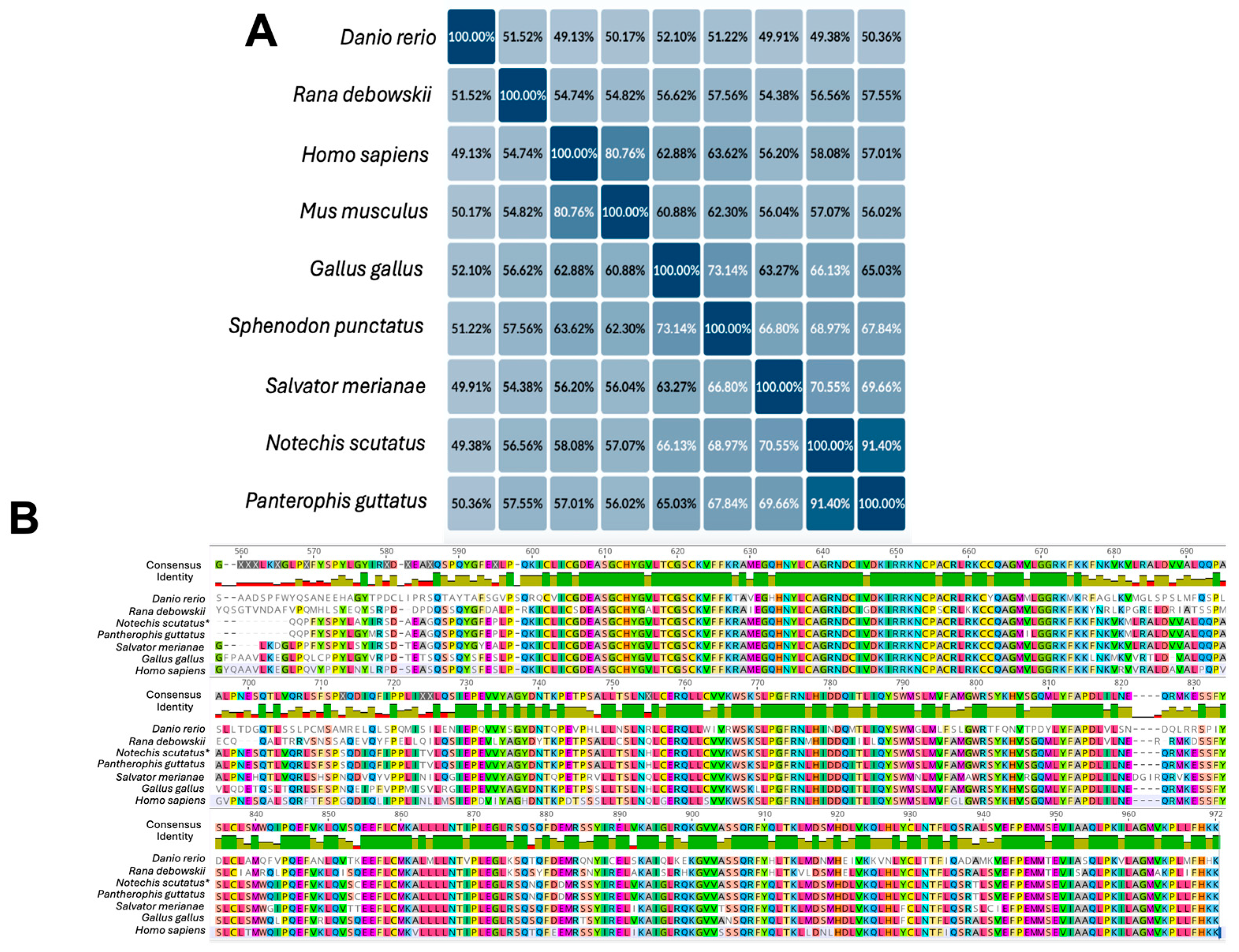
2. P4 and PR
3. Progesterone and Follicular Development
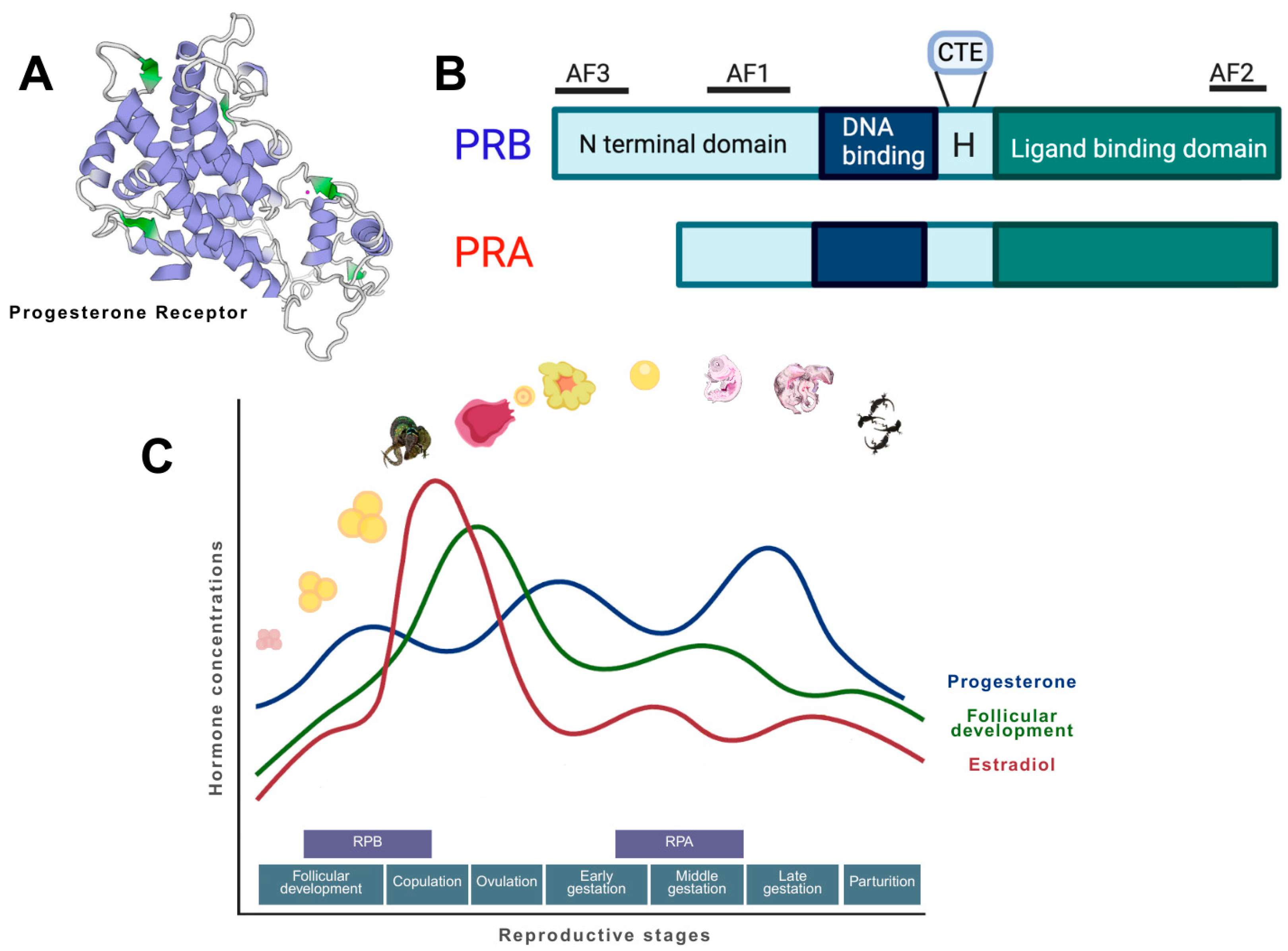
4. Progesterone and Pregnancy
5. P4 and Courtship Behavior
6. Conservation Implications
7. Conclusions
Author Contributions
Funding
Institutional Review Board Statement
Informed Consent Statement
Data Availability Statement
Acknowledgments
Conflicts of Interest
Abbreviations
| AF | Activating function |
| CL | Corpus luteum |
| E2 | Estradiol |
| FSH | Follicle-stimulating hormone |
| LBD | Ligand-binding domain |
| LH | Luteinizing hormone |
| P4 | Progesterone |
| PRA, PRB | Progesterone Receptor A, B |
| VTG | Vitellogenin |
References
- Norris, D.O. Comparative Endocrinology: Past, Present, and Future. Integr. Comp. Biol. 2018, 58, 1033–1042. [Google Scholar] [CrossRef]
- Dufour, S.; Quérat, B.; Tostivint, H.; Pasqualini, C.; Vaudry, H.; Rousseau, K. Origin and Evolution of the Neuroendocrine Control of Reproduction in Vertebrates, with Special Focus on Genome and Gene Duplications. Physiol. Rev. 2020, 100, 869–943. [Google Scholar] [CrossRef] [PubMed]
- Ikegami, K.; Yoshimura, T. Comparative Analysis Reveals the Underlying Mechanism of Vertebrate Seasonal Reproduction. Gen. Comp. Endocrinol. 2016, 227, 64–68. [Google Scholar] [CrossRef]
- Kanda, S. Evolution of the Regulatory Mechanisms for the Hypothalamic-Pituitary-Gonadal Axis in Vertebrates–Hypothesis from a Comparative View. Gen. Comp. Endocrinol. 2019, 284, 113075. [Google Scholar] [CrossRef] [PubMed]
- Blackburn, D.G. Reproduction in Reptiles. In Encyclopedia of Reproduction; Elsevier: Amsterdam, The Netherlands, 2018; pp. 573–578. ISBN 978-0-12-815145-7. [Google Scholar]
- Uetz, P.; Freed, P.; Aguilar, R.; Reyes, F.; Hošek, J. Reptile Data Base. Available online: http://www.reptile-database.org/ (accessed on 12 December 2025).
- Priyanka; Tripathi, V.; Raman, R. Conservation of Ovary-Specific Genes, Foxl2, Aromatase, and Rspo1, in the Common Indian Garden Lizard, Calotes Versicolor, That Lacks Chromosomal or Temperature-Dependent Sex Determination. Sex. Dev. 2018, 12, 295–307. [Google Scholar] [CrossRef]
- Whiteley, S.L.; Holleley, C.E.; Wagner, S.; Blackburn, J.; Deveson, I.W.; Marshall Graves, J.A.; Georges, A. Two Transcriptionally Distinct Pathways Drive Female Development in a Reptile with Both Genetic and Temperature Dependent Sex Determination. PLoS Genet. 2021, 17, e1009465. [Google Scholar] [CrossRef]
- Dias, B.G.; Crews, D. Regulation of Pseudosexual Behavior in the Parthenogenetic Whiptail Lizard, Cnemidophorus uniparens. Endocrinology 2008, 149, 4622–4631. [Google Scholar] [CrossRef][Green Version]
- Jones, S.M. Variations upon a Theme: Australian Lizards Provide Insights into the Endocrine Control of Vertebrate Reproductive Cycles. Gen. Comp. Endocrinol. 2017, 244, 60–69. [Google Scholar] [CrossRef]
- Van Dyke, J.U. Cues for Reproduction in Squamate Reptiles. In Reproductive Biology and Phylogeny of Lizards and Tuatara; Rheubert, J.L., Siegel, D.S., Trauth, S.E., Eds.; CRC Press: Boca Raton, FL, USA, 2015; pp. 109–143. ISBN 978-1-4665-7986-6. [Google Scholar]
- Crews, D.; Moore, M.C. Historical Contributions of Research on Reptiles to Behavioral Neuroendocrinology. Horm. Behav. 2005, 48, 384–394. [Google Scholar] [CrossRef]
- Johnson, M.A.; Wade, J. Neuroendocrinology of Reptilian Reproductive Behavior. In Hormones and Reproduction of Vertebrates; Elsevier: Amsterdam, The Netherlands, 2011; pp. 39–61. ISBN 978-0-12-374930-7. [Google Scholar]
- Mason, R.T.; Parker, M.R. Social Behavior and Pheromonal Communication in Reptiles. J. Comp. Physiol. A 2010, 196, 729–749. [Google Scholar] [CrossRef]
- Blackburn, D.G. Evolution of Viviparity in Squamate Reptiles: Reversibility Reconsidered. J. Exp. Zool. Pt. B Mol. Dev. Evol. 2015, 324, 473–486. [Google Scholar] [CrossRef]
- Jones, S.M. Hormonal Regulation of Ovarian Function in Reptiles. In Hormones and Reproduction of Vertebrates; Elsevier: Amsterdam, The Netherlands, 2011; pp. 89–115. ISBN 978-0-12-374930-7. [Google Scholar]
- Lovern, M.B. Hormones and Reproductive Cycles in Lizards. In Hormones and Reproduction of Vertebrates; Elsevier: Amsterdam, The Netherlands, 2011; pp. 321–353. ISBN 978-0-12-374930-7. [Google Scholar]
- Cox, R.M. Sex Steroids as Mediators of Phenotypic Integration, Genetic Correlations, and Evolutionary Transitions. Mol. Cell. Endocrinol. 2020, 502, 110668. [Google Scholar] [CrossRef]
- Dantzer, B.; Swanson, E.M. Does Hormonal Pleiotropy Shape the Evolution of Performance and Life History Traits? Integr. Comp. Biol. 2017, 57, 372–384. [Google Scholar] [CrossRef]
- Wittman, T.N.; Robinson, C.D.; McGlothlin, J.W.; Cox, R.M. Hormonal Pleiotropy Structures Genetic Covariance. Evol. Lett. 2021, 5, 397–407. [Google Scholar] [CrossRef]
- Anderson, N.K.; Goodwin, S.E.; Schuppe, E.R.; Dawn, A.; Preininger, D.; Mangiamele, L.A.; Fuxjager, M.J. Activational vs. Organizational Effects of Sex Steroids and Their Role in the Evolution of Reproductive Behavior: Looking to Foot-Flagging Frogs and Beyond. Horm. Behav. 2022, 146, 105248. [Google Scholar] [CrossRef]
- Akison, L.; Robker, R. The Critical Roles of Progesterone Receptor (PGR) in Ovulation, Oocyte Developmental Competence and Oviductal Transport in Mammalian Reproduction. Reprod. Domest. Anim. 2012, 47, 288–296. [Google Scholar] [CrossRef] [PubMed]
- Medina-Laver, Y.; Rodríguez-Varela, C.; Salsano, S.; Labarta, E.; Domínguez, F. What Do We Know about Classical and Non-Classical Progesterone Receptors in the Human Female Reproductive Tract? A Review. Int. J. Mol. Sci. 2021, 22, 11278. [Google Scholar] [CrossRef] [PubMed]
- Azeez, J.M.; Susmi, T.R.; Remadevi, V.; Ravindran, V.; Sasikumar Sujatha, A.; Ayswarya, R.N.S.; Sreeja, S. New Insights into the Functions of Progesterone Receptor (PR) Isoforms and Progesterone Signaling. Am. J. Cancer Res. 2021, 11, 5214–5232. [Google Scholar] [PubMed]
- Kolatorova, L.; Vitku, J.; Suchopar, J.; Hill, M.; Parizek, A. Progesterone: A Steroid with Wide Range of Effects in Physiology as Well as Human Medicine. Int. J. Mol. Sci. 2022, 23, 7989. [Google Scholar] [CrossRef]
- Gadkar-Sable, S. Progesterone Receptors: Various Forms and Functions in Reproductive Tissues. Front. Biosci. 2005, 10, 2118. [Google Scholar] [CrossRef][Green Version]
- Thomas, P.; Pang, Y.; Kelder, J. Membrane Progesterone Receptors on the Cell Membrane: A Review Highlighting Potential Export Motifs in mPRα Regulating Its Trafficking to the Cell Surface. Steroids 2023, 199, 109295. [Google Scholar] [CrossRef]
- Thomas, P. Membrane Progesterone Receptors (mPRs, PAQRs): Review of Structural and Signaling Characteristics. Cells 2022, 11, 1785. [Google Scholar] [CrossRef] [PubMed]
- Custodia-Lora, N.; Callard, I.P. Progesterone and Progesterone Receptors in Reptiles. Gen. Comp. Endocrinol. 2002, 127, 1–7. [Google Scholar] [CrossRef] [PubMed]
- Albergotti, L.C.; Hamlin, H.J.; McCoy, M.W.; Guillette, L.J. Endocrine Activity of Extraembryonic Membranes Extends beyond Placental Amniotes. PLoS ONE 2009, 4, e5452. [Google Scholar] [CrossRef]
- Carsia, R.V.; McIlroy, P.J.; Cox, R.M.; Barrett, M.; John-Alder, H.B. Gonadal Modulation of in Vitro Steroidogenic Properties of Dispersed Adrenocortical Cells from Sceloporus Lizards. Gen. Comp. Endocrinol. 2008, 158, 202–210. [Google Scholar] [CrossRef]
- Girling, J.E.; Jones, S.M. In Vitro Steroid Production by Adrenals and Kidney–Gonads from Embryonic Southern Snow Skinks (Niveoscincus microlepidotus): Implications for the Control of the Timing of Parturition? Gen. Comp. Endocrinol. 2006, 145, 169–176. [Google Scholar] [CrossRef]
- Maney, D.L.; Juntti, S.A. Female Sexual Behavior: Hormonal Basis in Non-Mammalian Vertebrates. In Encyclopedia of Animal Behavior; Elsevier: Amsterdam, The Netherlands, 2019; pp. 395–402. ISBN 978-0-12-813252-4. [Google Scholar]
- Morel, Y.; Roucher, F.; Plotton, I.; Goursaud, C.; Tardy, V.; Mallet, D. Evolution of Steroids during Pregnancy: Maternal, Placental and Fetal Synthesis. Ann. D’endocrinologie 2016, 77, 82–89. [Google Scholar] [CrossRef]
- Smith, C.F.; Schuett, G.W.; Hoss, S.K. Reproduction in Female Copperhead Snakes (Agkistrodon contortrix): Plasma Steroid Profiles during Gestation and Post-Birth Periods. Zool. Sci. 2012, 29, 273–279. [Google Scholar] [CrossRef]
- Hosie, M.J.; Adams, S.M.; Thompson, M.B.; Murphy, C.R. Viviparous Lizard, Eulamprus tympanum, Shows Changes in the Uterine Surface Epithelium during Early Pregnancy That Are Similar to the Plasma Membrane Transformation of Mammals. J. Morphol. 2003, 258, 346–357. [Google Scholar] [CrossRef]
- Al-Amri, I.S.; Mahmoud, I.Y.; Waring, C.P.; Alkindi, A.Y.; Khan, T.; Bakheit, C.; Al-Mawali, K.M. The Reproductive Cycle of the Male House Gecko, Hemidactylus flaviviridis, in Relation to Plasma Steroid Concentrations, Progesterone Receptors, and Steroidogenic Ultrastructural Features, in Oman. Gen. Comp. Endocrinol. 2013, 187, 23–31. [Google Scholar] [CrossRef] [PubMed]
- Kabelik, D.; Weiss, S.L.; Moore, M.C. Steroid Hormones Alter Neuroanatomy and Aggression Independently in the Tree Lizard. Physiol. Behav. 2008, 93, 492–501. [Google Scholar] [CrossRef] [PubMed]
- Mendonça, M.T.; Crews, D. Control of Attractivity and Receptivity in Female Red-Sided Garter Snakes. Horm. Behav. 2001, 40, 43–50. [Google Scholar] [CrossRef]
- Weiss, S.L.; Jennings, D.H.; Moore, M.C. Effect of Captivity in Semi-Natural Enclosures on the Reproductive Endocrinology of Female Lizards. Gen. Comp. Endocrinol. 2002, 128, 238–246. [Google Scholar] [CrossRef]
- Martínez-Torres, M.; Hernández-Caballero, M.E.; Luis-Díaz, J.A.; Ortiz-López, G.; Cárdenas-León, M.; Moreno-Fierros, L. Effects of Luteectomy in Early Pregnancy on the Maintenance of Gestation and Plasma Progesterone Concentrations in the Viviparous Temperate Lizard Barisia imbricata imbricata. Reprod. Biol. Endocrinol. 2010, 8, 19. [Google Scholar] [CrossRef] [PubMed]
- Martínez-Torres, M.; Salcedo-Álvarez, M.; Álvarez-Rodríguez, C.; Cárdenas-León, M.; Luis, J.; Moreno-Fierros, L. Does the Conceptus of the Viviparous Lizard Barisia imbricata imbricata Participates in the Regulation of Progesterone Production and the Control of Luteolysis? Anim. Reprod. Sci. 2014, 148, 212–220. [Google Scholar] [CrossRef]
- Martínez-Torres, M.; Elena Hernández-Caballero, M.; Alvarez-Rodriguez, C.; Alba Luis-Díaz, J.; Ortíz-López, G. Luteal Development and Progesterone Levels during Pregnancy of the Viviparous Temperate Lizard Barisia imbricata imbricata (Reptilia: Anguidae). Gen. Comp. Endocrinol. 2003, 132, 55–65. [Google Scholar] [CrossRef]
- Contrò, V.; Basile, R.J.; Proia, P. Sex Steroid Hormone Receptors, Their Ligands, and Nuclear and Non-Nuclear Pathways. AIMS Mol. Sci. 2015, 2, 294–310. [Google Scholar] [CrossRef]
- Garg, D.; Ng, S.S.M.; Baig, K.M.; Driggers, P.; Segars, J. Progesterone-Mediated Non-Classical Signaling. Trends Endocrinol. Metab. 2017, 28, 656–668. [Google Scholar] [CrossRef]
- Sato, T.; Miyagawa, S.; Iguchi, T. Progesterone. In Handbook of Hormones; Elsevier: Amsterdam, The Netherlands, 2016; pp. 907–909. ISBN 978-0-12-801028-0. [Google Scholar]
- Dressing, G.E.; Goldberg, J.E.; Charles, N.J.; Schwertfeger, K.L.; Lange, C.A. Membrane Progesterone Receptor Expression in Mammalian Tissues: A Review of Regulation and Physiological Implications. Steroids 2011, 76, 11–17. [Google Scholar] [CrossRef]
- Guerriero, G.; Ciarcia, G. Progesterone Receptor: Some Viewpoints on Hypothalamic Seasonal Fluctuations in a Lower Vertebrate. Brain Res. Rev. 2001, 37, 172–177. [Google Scholar] [CrossRef]
- Biazik, J.M.; Parker, S.L.; Murphy, C.R.; Thompson, M.B. Uterine Epithelial Morphology and Progesterone Receptors in a Mifepristone-treated Viviparous Lizard Pseudemoia entrecasteauxii (Squamata: Scincidae) During Gestation. J. Exp. Zool. Pt. B 2012, 318, 148–158. [Google Scholar] [CrossRef]
- Ramírez-Pinilla, M.P.; Parker, S.L.; Murphy, C.R.; Thompson, M.B. Uterine and Chorioallantoic Angiogenesis and Changes in the Uterine Epithelium during Gestation in the Viviparous Lizard, Niveoscincus Conventryi (Squamata: Scincidae). J. Morphol. 2012, 273, 8–23. [Google Scholar] [CrossRef]
- Tokarz, R.R.; Crews, D.; McEwen, B.S. Estrogen-Sensitive Progestin Binding Sites in the Brain of the Lizard, Anolis Carolinensis. Brain Res. 1981, 220, 95–105. [Google Scholar] [CrossRef]
- Godwin, J.; Hartman; Nag, P.K.; Crews, D. Androgenic Regulation of Steroid Hormone Receptor mRNAs in the Brain of Whiptail Lizards. J. Neuroendocrinol. 2000, 12, 599–606. [Google Scholar] [CrossRef] [PubMed]
- Godwin, J.; Crews, D. Hormonal Regulation of Progesterone Receptor mRNA Expression in the Hypothalamus of Whiptail Lizards: Regional and Species Differences. J. Neurobiol. 1999, 39, 287–293. [Google Scholar] [CrossRef]
- O’Connell, L.A.; Matthews, B.J.; Patel, S.B.; O’Connell, J.D.; Crews, D. Molecular Characterization and Brain Distribution of the Progesterone Receptor in Whiptail Lizards. Gen. Comp. Endocrinol. 2011, 171, 64–74. [Google Scholar] [CrossRef] [PubMed][Green Version]
- Kleis-San Francisco, S.K.; Callard, I.P. Progesterone Receptors in the Oviduct of a Viviparous Snake (Nerodia): Correlations with Ovarian Function and Plasma Steroid Levels. Gen. Comp. Endocrinol. 1986, 63, 220–229. [Google Scholar] [CrossRef] [PubMed]
- Motta, C.M.; Tammaro, S.; Di Lorenzo, M.; Panzuto, R.; Verderame, M.; Migliaccio, V.; Simoniello, P. Spring and Fall Recrudescence in Podarcis siculus Ovaries: A Role for Progesterone. Gen. Comp. Endocrinol. 2020, 290, 113393. [Google Scholar] [CrossRef] [PubMed]
- Paolucci, M.; Di Cristo, C. Progesterone Receptor in the Liver and Oviduct of the Lizard Podarcis sicula. Life Sci. 2002, 71, 1417–1427. [Google Scholar] [CrossRef]
- Hammouche, S.; Gernigon-Spychalowicz, T.; Exbrayat, J.M. Immunolocalization of Estrogens and Progesterone Receptors within the Ovary of the Lizard Uromastyx acanthinura from Vitellogenesis to Rest Season. Folia Histochem. Cytobiol. 2007, 45, S23–S27. [Google Scholar]
- Hammouche, S.B.; Remana, S.; Exbrayat, J.-M. Immunolocalization of Hepatic Estrogen and Progesterone Receptors in the Female Lizard Uromastyx acanthinura. Comptes Rendus. Biol. 2012, 335, 445–453. [Google Scholar] [CrossRef]
- Jacobsen, B.M.; Horwitz, K.B. Progesterone Receptors, Their Isoforms and Progesterone Regulated Transcription. Mol. Cell. Endocrinol. 2012, 357, 18–29. [Google Scholar] [CrossRef] [PubMed]
- Al-Amri, I.S.; Mahmoud, I.Y.; Waring, C.P.; Alkindi, A.Y.; Khan, T.; Bakheit, C. Seasonal Changes in Plasma Steroid Levels in Relation to Ovarian Steroidogenic Ultrastructural Features and Progesterone Receptors in the House Gecko, Hemidactylus flaviviridis, in Oman. Gen. Comp. Endocrinol. 2012, 177, 46–54. [Google Scholar] [CrossRef]
- Duarte-Méndez, M.; Quintero-Silva, J.; Ramírez-Pinilla, M.P. Immunohistochemical Localization of 3β-Hydroxysteroid Dehydrogenase and Progesterone Receptors in the Ovary and Placenta during Gestation of the Placentotrophic Lizard Mabuya sp. (Squamata: Scincidae). Gen. Comp. Endocrinol. 2018, 261, 136–147. [Google Scholar] [CrossRef]
- Cruz-Cano, N.B.; Sánchez-Rivera, U.Á.; Álvarez-Rodríguez, C.; Cárdenas-León, M.; Martínez-Torres, M. Sex Steroid Receptors in the Ovarian Follicles of the Lizard Sceloporus torquatus. Zygote 2023, 31, 386–392. [Google Scholar] [CrossRef]
- Bourne, A.R.; Stewart, B.J.; Watson, T.G. Changes in Blood Progesterone Concentration during Pregnancy in the Lizard Tiliqua (Trachydosaurus) Rugosa. Comp. Biochem. Physiol. Part A Physiol. 1986, 84, 581–583. [Google Scholar] [CrossRef] [PubMed]
- Guarino, F.M.; Paulesu, L.; Cardone, A.; Bellini, L.; Ghiara, G.; Angelini, F. Endocrine Activity of the Corpus Luteum and Placenta during Pregnancy in Chalcides chalcides (Reptilia, Squamata). Gen. Comp. Endocrinol. 1998, 111, 261–270. [Google Scholar] [CrossRef]
- Highfill, D.R.; Mead, R.A. Sources and Levels of Progesterone during Pregnancy in the Garter Snake, Thamnophis elegans. Gen. Comp. Endocrinol. 1975, 27, 389–400. [Google Scholar] [CrossRef]
- Albergotti, L.C.; Guillette, L.J., Jr. Viviparity in Reptiles. In Hormones and Reproduction of Vertebrates; Elsevier: Amsterdam, The Netherlands, 2011; pp. 247–275. ISBN 978-0-12-374930-7. [Google Scholar]
- Graham, S.P.; Earley, R.L.; Guyer, C.; Mendonça, M.T. Innate Immune Performance and Steroid Hormone Profiles of Pregnant versus Nonpregnant Cottonmouth Snakes (Agkistrodon piscivorus). Gen. Comp. Endocrinol. 2011, 174, 348–353. [Google Scholar] [CrossRef]
- Taylor, E.N.; DeNardo, D.F.; Jennings, D.H. Seasonal Steroid Hormone Levels and Their Relation to Reproduction in the Western Diamond-Backed Rattlesnake, Crotalus atrox (Serpentes: Viperidae). Gen. Comp. Endocrinol. 2004, 136, 328–337. [Google Scholar] [CrossRef] [PubMed]
- Taylor, E.N.; DeNardo, D.F. Hormones and Reproductive Cycles in Snakes. In Hormones and Reproduction of Vertebrates; Elsevier: Amsterdam, The Netherlands, 2011; pp. 355–372. ISBN 978-0-12-374930-7. [Google Scholar][Green Version]
- Almeida-Santos, S.M.; Laporta-Ferreira, I.L.; Antoniazzi, M.M.; Jared, C. Sperm Storage in Males of the Snake Crotalus durissus terrificus (Crotalinae: Viperidae) in Southeastern Brazil. Comp. Biochem. Physiol. Part A Mol. Integr. Physiol. 2004, 139, 169–174. [Google Scholar] [CrossRef]
- Lind, C.M.; Husak, J.F.; Eikenaar, C.; Moore, I.T.; Taylor, E.N. The Relationship between Plasma Steroid Hormone Concentrations and the Reproductive Cycle in the Northern Pacific Rattlesnake, Crotalus oreganus. Gen. Comp. Endocrinol. 2010, 166, 590–599. [Google Scholar] [CrossRef] [PubMed]
- Chan, S.W.C.; Ziegel, S.; Callard, I.P. Plasma Progesterone in Snakes. Comp. Biochem. Physiol. Part A Physiol. 1973, 44, 631–637. [Google Scholar] [CrossRef] [PubMed]
- Whittier, J.M.; Mason, R.T.; Crews, D. Plasma Steroid Hormone Levels of Female Red-Sided Garter Snakes, Thamnophis sirtalis parietalis: Relationship to Mating and Gestation. Gen. Comp. Endocrinol. 1987, 67, 33–43. [Google Scholar] [CrossRef]
- Tsai, T.-S.; Tu, M.-C. Reproductive Cycle of Female Chinese Green Tree Vipers, Trimeresurus stejnegeri stejnegeri, in Northern Taiwan. Herpetologica 2001, 57, 157–168. [Google Scholar]
- Bonnet, X.; Naulleau, G.; Bradshaw, D.; Shine, R. Changes in Plasma Progesterone in Relation to Vitellogenesis and Gestation in the Viviparous Snake Vipera aspis. Gen. Comp. Endocrinol. 2001, 121, 84–94. [Google Scholar] [CrossRef]
- Veith, W.J. Reproductive Biology of Chamaeleo Pumilus pumilus with Special Reference to the Role of the Corpus Luteum and Progesterone. Zool. Afr. 1974, 9, 161–183. [Google Scholar] [CrossRef]
- Xavier, F. Progesterone in the Viviparous Lizard Lacerta vivipara: Ovarian Biosynthesis, Plasma Levels, and Binding to Transcortin-Type Protein during the Sexual Cycle. Herpetologica 1982, 38, 62–70. [Google Scholar]
- Barbosa-Moyano, H.; Rodríguez-Chaparro, S.; Santos, R.L.S.R.; Ramírez-Pinilla, M.P. Plasma Estradiol and Progesterone Concentrations during the Female Reproductive Cycle in a Highly Placentotrophic Viviparous Lizard, Mabuya sp. Gen. Comp. Endocrinol. 2020, 295, 113530. [Google Scholar] [CrossRef]
- Bennett, E.J.; Jones, S.M. Interrelationships among Plasma Progesterone Concentrations, Luteal Anatomy and Function, and Placental Ontogeny during Gestation in a Viviparous Lizard (Niveoscincus metallicus: Scincidae). Comp. Biochem. Physiol. Part A Mol. Integr. Physiol. 2002, 131, 647–656. [Google Scholar] [CrossRef]
- Jones, S.M.; Swain, R. Annual Reproductive Cycle and Annual Cycles of Reproductive Hormones in Plasma of Female Niveoscincus metallicus (Scincidae) from Tasmania. J. Herpetol. 1996, 30, 140. [Google Scholar] [CrossRef]
- Girling, J.E.; Jones, S.M. In Vitro Progesterone Production by Maternal and Embryonic Tissues during Gestation in the Southern Snow Skink (Niveoscincus microlepidotus). Gen. Comp. Endocrinol. 2003, 133, 100–108. [Google Scholar] [CrossRef]
- Girling, J.E.; Jones, S.M.; Swain, R. Delayed Ovulation and Parturition in a Viviparous Alpine Lizard (Niveoscincus microlepidotus): Morphological Data and Plasma Steroid Concentrations. Reprod. Fertil. Dev. 2002, 14, 43–53. [Google Scholar] [CrossRef]
- Jones, S.M.; Wapstra, E.; Swain, R. Asynchronous Male and Female Gonadal Cycles and Plasma Steroid Concentrations in a Viviparous Lizard, Niveoscincus ocellatus (Scincidae), from Tasmania. Gen. Comp. Endocrinol. 1997, 108, 271–281. [Google Scholar] [CrossRef]
- Holmes, K.M.; Cree, A. Annual Reproduction in Females of a Viviparous Skink (Oligosoma maccanni) in a Subalpine Environment. J. Herpetol. 2006, 40, 141–151. [Google Scholar] [CrossRef]
- Callard, I.P.; Bayne, C.G.; McConnell, W.F. Hormones and Reproduction in the Female Lizard Sceloporus cyanogenys. Gen. Comp. Endocrinol. 1972, 18, 175–194. [Google Scholar] [CrossRef] [PubMed]
- Guillette, L.J.; Spielvogel, S.; Moore, F.L. Luteal Development, Placentation, and Plasma Progesterone Concentration in the Viviparous Lizard Sceloporus jarrovi. Gen. Comp. Endocrinol. 1981, 43, 20–29. [Google Scholar] [CrossRef] [PubMed]
- Painter, D.L.; Moore, M.C. Steroid Hormone Metabolism by the Chorioallantoic Placenta of the Mountain Spiny Lizard Sceloporus jarrovi as a Possible Mechanism for Buffering Maternal-Fetal Hormone Exchange. Physiol. Biochem. Zool. 2005, 78, 364–372. [Google Scholar] [CrossRef] [PubMed]
- Martínez-Torres, M.; Pérez-Armendariz, E.M.; Caballero, M.E.; Luis, J.; Ortíz-López, G. Histochemical Activity of 5-4-Isomerase-3-B Hydroxy Steroid Dehydrogenase in the Ovary of the Viviparous Mexican Lizard Sceloporus mucronatus (Reptilia: Prhynosomatidae) and Interelationship with Progesterone Levels during Pregnancy. Asian Pac. J. Reprod. 2012, 1, 17–21. [Google Scholar] [CrossRef]
- Edwards, A.; Jones, S.M. Changes in Plasma Progesterone, Estrogen, and Testosterone Concentrations throughout the Reproductive Cycle in Female Viviparous Blue-Tongued Skinks, Tiliqua nigrolutea (Scincidae), in Tasmania. Gen. Comp. Endocrinol. 2001, 122, 260–269. [Google Scholar] [CrossRef]
- Fergusson, B.; Bradshaw, S.D. Plasma Arginine Vasotocin, Progesterone, and Luteal Development during Pregnancy in the Viviparous Lizard Tiliqua rugosa. Gen. Comp. Endocrinol. 1991, 82, 140–151. [Google Scholar] [CrossRef]
- Holding, M.L.; Frazier, J.A.; Dorr, S.W.; Pollock, N.B.; Muelleman, P.J.; Branske, A.; Henningsen, S.N.; Eikenaar, C.; Escallón, C.; Montgomery, C.E.; et al. Wet- and Dry-Season Steroid Hormone Profiles and Stress Reactivity of an Insular Dwarf Snake, the Hog Island Boa (Boa constrictor imperator). Physiol. Biochem. Zool. 2014, 87, 363–373. [Google Scholar] [CrossRef] [PubMed][Green Version]
- Ramírez-Pinilla, M.P.; de Perez, G.R. Oogenesis and the Ovarian Cycle. In Reproductive Biology and Phylogeny of Lizards and Tuatara; CRC Press: Boca Raton, FL, USA, 2014. [Google Scholar]
- Motta, C.M.; Tammaro, S.; De Stasio, R.; Borrelli, L.; Filosa, S. How Follicle Number Is Regulated in the Ovary of the Lizard Podarcis sicula? Ital. J. Zool. 2004, 71, 109–111. [Google Scholar] [CrossRef]
- Duggan, A.E.; Callard, I.P. Lipids and Lipid-Transporting Proteins in Chrysemys picta: Role of Gonadal Steroids and Growth Hormone in Intact and Hypophysectomized Turtles. Gen. Comp. Endocrinol. 2003, 131, 176–184. [Google Scholar] [CrossRef] [PubMed]
- Giannoukos, G.; Callard, I.P. Reptilian (Chrysemys picta) Hepatic Progesterone Receptors: Relationship to Plasma Steroids and the Vitellogenic Cycle. J. Steroid Biochem. Mol. Biol. 1995, 55, 93–106. [Google Scholar] [CrossRef]
- Zalányi, S. Progesterone and Ovulation. Eur. J. Obstet. Gynecol. Reprod. Biol. 2001, 98, 152–159. [Google Scholar] [CrossRef]
- Callard, I.P.; Doolittle, J.P. The Influence of Intrahypothalamic Implants of Progesterone on Ovarian Growth and Function in the Ovoviviparous Iguanid Lizard, Sceloporus cyanogenys. Comp. Biochem. Physiol. Part A Physiol. 1973, 44, 625–629. [Google Scholar] [CrossRef]
- Ciarcia, G.; Paolucci, M.; Di Fiore, M.M. Changes in Ovarian Follicles and in Vitro Sex Hormone Release in the Lizard Podarcis sicula sicula. Mol. Reprod. Devel 1993, 35, 257–260. [Google Scholar] [CrossRef]
- Stewart, J.R.; Blackburn, D.G. Viviparity and Placentation in Lizards. In Reproductive Biology and Phylogeny of Lizards and Tuatara; CRC Press: Boca Raton, FL, USA, 2014. [Google Scholar]
- Guillette, L.J.; DeMarco, V.; Palmer, B.D. Exogenous Progesterone or Indomethacin Delays Parturition in the Viviparous Lizard Sceloporus jarrovi. Gen. Comp. Endocrinol. 1991, 81, 105–112. [Google Scholar] [CrossRef]
- Blackburn, D.G. Squamate reptiles as model organisms for the evolution of viviparity. Herpetol. Monogr. 2006, 20, 131. [Google Scholar] [CrossRef]
- Blackburn, D.G. Reptilian Viviparity: Past Research, Future Directions, and Appropriate Models. Comp. Biochem. Physiol. Part A Mol. Integr. Physiol. 2000, 127, 391–409. [Google Scholar] [CrossRef]
- Girling, J.E.; Jones, S.M.; Swain, R. Induction of Parturition in Snow Skinks: Can Low Temperatures Inhibit the Actions of AVT? J. Exp. Zool. 2002, 293, 525–531. [Google Scholar] [CrossRef]
- Adams, S.M.; Biazik, J.; Stewart, R.L.; Murphy, C.R.; Thompson, M.B. Fundamentals of Viviparity: Comparison of Seasonal Changes in the Uterine Epithelium of Oviparous and Viviparous Lerista bougainvillii (Squamata: Scincidae). J. Morphol. 2007, 268, 624–635. [Google Scholar] [CrossRef]
- Painter, D.; Jennings, D.H.; Moore, M.C. Placental Buffering of Maternal Steroid Hormone Effects on Fetal and Yolk Hormone Levels: A Comparative Study of a Viviparous Lizard, Sceloporus jarrovi, and an Oviparous Lizard, Sceloporus graciosus. Gen. Comp. Endocrinol. 2002, 127, 105–116. [Google Scholar] [CrossRef] [PubMed]
- Callard, I.P.; Fileti, L.A.; Perez, L.E.; Sorbera, L.A.; Giannoukos, G.; Klosterman, L.L.; Tsang, P.; McCracken, J.A. Role of the Corpus Luteum and Progesterone in the Evolution of Vertebrate Viviparity. Am. Zool. 1992, 32, 264–275. [Google Scholar] [CrossRef]
- Heulin, B.; Ghielmi, S.; Vogrin, N.; Surget-Groba, Y.; Guillaume, C.P. Variation in Eggshell Characteristics and in Intrauterine Egg Retention between Two Oviparous Clades of the Lizard Lacerta vivipara: Insight into the Oviparity–Viviparity Continuum in Squamates. J. Morphol. 2002, 252, 255–262. [Google Scholar] [CrossRef]
- Refsnider, J.M.; Clifton, I.T.; Vazquez, T.K. Developmental Plasticity of Thermal Ecology Traits in Reptiles: Trends, Potential Benefits, and Research Needs. J. Therm. Biol. 2019, 84, 74–82. [Google Scholar] [CrossRef]
- Atkins, N.; Jones, S.M.; Guillette, L.J. Timing of Parturition in Two Species of Viviparous Lizard: Influences of β-Adrenergic Stimulation and Temperature upon Uterine Responses to Arginine Vasotocin (AVT). J. Comp. Physiol. B 2006, 176, 783–792. [Google Scholar] [CrossRef]
- Zena, L.A.; Dillon, D.; Hunt, K.E.; Navas, C.A.; Bícego, K.C.; Buck, C.L. Seasonal Changes in Plasma Concentrations of the Thyroid, Glucocorticoid and Reproductive Hormones in the Tegu Lizard Salvator merianae. Gen. Comp. Endocrinol. 2019, 273, 134–143. [Google Scholar] [CrossRef]
- Calisi, R.M.; Hews, D.K. Steroid Correlates of Multiple Color Traits in the Spiny Lizard, Sceloporus pyrocephalus. J. Comp. Physiol. B 2007, 177, 641–654. [Google Scholar] [CrossRef] [PubMed]
- Chan, R.; Stuart-Fox, D.; Jessop, T.S. Why Are Females Ornamented? A Test of the Courtship Stimulation and Courtship Rejection Hypotheses. Behav. Ecol. 2009, 20, 1334–1342. [Google Scholar] [CrossRef]
- Jessop, T.S.; Chan, R.; Stuart-Fox, D. Sex Steroid Correlates of Female-Specific Colouration, Behaviour and Reproductive State in Lake Eyre Dragon Lizards, Ctenophorus maculosus. J. Comp. Physiol. A-Neuroethol. Sens. Neural Behav. Physiol. 2009, 195, 619–630. [Google Scholar] [CrossRef] [PubMed]
- Vercken, E.; Massot, M.; Sinervo, B.; Clobert, J. Colour Variation and Alternative Reproductive Strategies in Females of the Common Lizard Lacerta vivipara. J. Evol. Biol. 2007, 20, 221–232. [Google Scholar] [CrossRef]
- Vercken, E.; Clobert, J. Ventral Colour Polymorphism Correlates with Alternative Behavioural Patterns in Female Common Lizards (Lacerta vivipara). Écoscience 2008, 15, 320–326. [Google Scholar] [CrossRef]
- O’Connor, D.; Shine, R. Lizards in ‘Nuclear Families’: A Novel Reptilian Social System in Egernia saxatilis (Scincidae). Mol. Ecol. 2003, 12, 743–752. [Google Scholar] [CrossRef]
- Butler, J.A.; Hull, T.W.; Franz, R. Neonate Aggregations and Maternal Attendance of Young in the Eastern Diamondback Rattlesnake, Crotalus adamanteus. Copeia 1995, 1995, 196. [Google Scholar] [CrossRef]
- Graves, B.M. Defensive Behavior of Female Prairie Rattlesnakes (Crotalus viridis) Changes after Parturition. Copeia 1989, 1989, 791. [Google Scholar] [CrossRef]



| Species | Parity | Length | Uniprot Entry |
|---|---|---|---|
| Anolis carolinensis (Green anole) | oviparous | 402 | [51] |
| Aspidoscelis inornatus (Little striped whiptail) | oviparous | 902 | [52,53,54] |
| Aspidoscelis uniparens (Desert grassland whiptail lizard) | oviparous | 348 | [55] |
| Crotalus adamanteus (Eastern diamondback rattlesnake) | viviparous | 1074 | [56,57] |
| Eublepharis macularius (Leopard gecko) | oviparous | 793 | [49] |
| Uromastyx acanthinura | oviparous | 384 | [58,59] |
| Naja naja (Indian cobra) | oviparous | 849 | A0A8C6XTF0_NAJNA |
| N. scutatus (Mainland tiger snake) | viviparous | 869 | A0A6J1US99_9SAUR |
| P. guttatus (Corn snake) | oviparous | 886 | A0A6P9B9Z2_PANGU |
| Phrynocephalus forsythii | viviparous | 848 | A0A9Q0XMF7_9SAUR |
| Podarcis lilfordi (Lilford’s wall lizard) | oviparous | 894 | A0AA35P2N6_9SAUR |
| Podarcis muralis (Wall lizard) | oviparous | 831 | A0A670IQT2_PODMU |
| Pogona vitticeps (Central bearded dragon) | oviparous | 838 | A0ABM5FWE3_9SAUR |
| Pseudonaja textilis (Eastern brown snake) | oviparous | 882 | A0A670Y4G1_PSETE |
| S. merianae (Argentine black and white tegu) | oviparous | 889 869 | A0A8D0C3X2_SALMN A0A8D0BVF9_SALMN |
| Varanus komodoensis (Komodo dragon) | oviparous | 885 853 | A0A8D2JIX4_VARKO A0A8D2JFL5_VARKO |
| Species | Progesterone Receptor Location | References |
|---|---|---|
| A. carolinensis | Preoptic area | [51] |
| Cnemidophorus inornatus and C. uniparens | Cell nucleus of the preoptic area of the infundibular and ventromedial hypothalamus | [52,53,54] |
| Hemidactylus flaviviridis | The epithelial and glandular layer of the oviduct Cytoplasm and nuclei of theca interna and granulosa cells in vitellogenic and previtellogenic follicles. Granulosa cells of the corpus luteum | [61] |
| Mabuya sp. | Nucleus and cytoplasm of theca and granulosa cells of previtellogenic follicles, corpus luteum, columnar cells, lamina propria connective tissue, uterine epithelial cell cytoplasm and myometrium, muscle fibers, connective tissue, and uterine epithelium of placenta | [62] |
| Nerodia sp. | Cytosol and nucleus of oviduct cells | [55] |
| Podarcis siculus | Liver in gonadal quiescence stage and oviduct | [56,57] |
| P. entrecasteauxii | Cell nucleus in uterine epithelium | [49] |
| Sceloporus torquatus | Nucleus and cytoplasm of pyriform cells, the oocyte cortex small cells and yolk | [63] |
| U. acanthinura | RPA in the cytosol of luteal phase oviduct cells RPB in the nucleus of hepatocytes | [58,59] |
| Species | Follicular Development * | Pregnancy * | References |
|---|---|---|---|
| Snakes | |||
| Agkistrodon piscivorus | E: 8.55 ± 0.66 | ||
| M: 1.11 | [35,68] | ||
| L: 3.8 ± 0.5 PP: 0.7 ± 0.05 | |||
| Crotalus atrox | PV: 0.29 | E: 17.85 ±1.14 | [69,70] |
| V: 1.17 ± 0.43 | M: 9.47 ± 0.66 | ||
| PO: 3.63 ± 0.73 | L: 0.74 | ||
| O: 27.62 ±2.28 | PP: ND | ||
| C. durissus terrificus | V: 2.55 ± 1.17 | M: 25.34 ± 2.77 | [71] |
| PO: 4.02 ± 1.45 | PP: 6.16 ± 2.56 | ||
| C. oreganus | PV: 0.6 ± 0.1 | [72] | |
| V: 1.2 ± 0.1 | |||
| PO: 1.2 ± 0.1 | |||
| O: 0.6 ± 0.04 | |||
| Nerodia sipedon | V: 1.27 ± 0.19 | E: 4.95 ±1.41 | [73] |
| PO: 3.93 ± 0.83 | M: 6.94 ± 0.78 | ||
| L: 2.81 ± 0.44 | |||
| Nerodia taxispilota | V: 0.44 ± 0.04 | E: 1.93 ± 0.24 | [73] |
| PO: 0.91 ± 0.08 | |||
| Thamnophis elegans | E: 1.70 ± 0.30 | [66] | |
| M: 6.20 ±1.0 | |||
| L: 1.0 ± 0.2 | |||
| T. sirtalis parietalis | ND | ND | [74] |
| Trimeresurus stejnegeri | PV, V, PO: ND O: 20 ± 12 | ND | [75] |
| Vipera aspis | PV: 4 ± 1 | M: 19.2 ± 2.3 | [76] |
| V: 6.8 ± 0.8 | L: 10.3 ± 0.5 | ||
| PO: 15.3 ± 5.1 | PP: 5.9 ± 0.43 | ||
| O: 12.1 ± 0.5 | |||
| Lizards | |||
| Barisia imbricata | E: 3.07 ± 1.04 | [43] | |
| M: 1.31 ± 0.32 | |||
| L: 0.74 ± 0.24 | |||
| Bradypodion pumilum | V: 0.86 | E: 4.95 ± 3.9 | [77] |
| PO: 0.95 ± 0.71 | M: 2.30 ± 0.34 | ||
| Lacerta vivipara | PO: 57.90 ± 4.8 | M: 216.22 ± 17.92 | [78] |
| L: 347.20 ± 17.38 | |||
| PP: 3.71 ± 0.56 | |||
| Mabuya sp. | V: 1.6 ± 0.13 | E: 14.1 ± 0.63 | [79] |
| L: 4.4 ± 0.41 | |||
| PP: 3.5 ± 0.25 | |||
| Niveoscincus metallicus | PV: ND | E: 9.1 ±1.33 | [80,81] |
| V: 1.8 | M: 11.5 ± 1.93 | ||
| L: 4.3 ± 1.7 | |||
| N. microlepidotus | PO: 38.5 ± 7.9 | E: 15.4 ± 5.9 | [32,82,83,84] |
| L: 1.1 ± 0.2 | |||
| PP: 2.7 ± 0.9 | |||
| N. ocellatus | PV: 0.5 ± 0.1 | E: 5.1 ± 0.7 | [84] |
| V: 1.8 ± 0.3 | M: 5.3 ± 1.8 | ||
| PO: 2.1 ± 0.3 | L: 6.5 ± 1.5 | ||
| PP: 1.6 ± 0.22 | |||
| Oligosoma maccani | PV: 1 ± 0.1 | E: 3.5 ± 0.4 | [85] |
| V: 1 ± 0.1 | M: 15.3 ± 2.5 | ||
| L: 6.30 ± 2 | |||
| Sceloporus cyanogenys | V: 0.70 ± 0.15 | E: 3.302 ± 0.48 | [86] |
| PO: 0.90 ± 0.38 | L: 3.5 ± 0.34 | ||
| PP: 1.6 ± 0.22 | |||
| S. jarrovi | E: 0.75 ± 0.11 | [87,88] | |
| M: 0.95 ± 0.05 | |||
| L: 4.1 ± 0.94 | |||
| PP: 0.43 ± 0.06 | |||
| S. mucronatus | E: 0.48 ± 0.15 | [89] | |
| M: 2.65 ± 0.3 | |||
| L: 0.36 ± 0.09 | |||
| S. torquatus | PV: 1.79 ± 0.36 | E: 2.06 ± 0.28 | [63] |
| V: 1.59 ± 0.21 | M: 1.68 ± 0.24 | ||
| PO: 1.46 ± 0.18 | L: 1.69 ± 0.47 | ||
| Tiliqua nigrolutea | PV: 1.10 ± 0.2 | E: 8.85 ± 1.17 | [90] |
| V: 1.28 ± 0.2 | M: 12.8 ± 1.27 | ||
| PO: 1.92 ± 0.2 | L: 4.48 ± 0.96 | ||
| O: 6.40 ± 0.1 | |||
| PsO: 5.33 ± 0.6 | |||
| T. rugosa | E: 0.57 ± 0.07 | [64,91] | |
| M: 2.07 ± 0.39 | |||
| L: 0.34 ± 0.10 | |||
| PP: 0.14 ± 0.01 | |||
Disclaimer/Publisher’s Note: The statements, opinions and data contained in all publications are solely those of the individual author(s) and contributor(s) and not of MDPI and/or the editor(s). MDPI and/or the editor(s) disclaim responsibility for any injury to people or property resulting from any ideas, methods, instructions or products referred to in the content. |
© 2026 by the authors. Licensee MDPI, Basel, Switzerland. This article is an open access article distributed under the terms and conditions of the Creative Commons Attribution (CC BY) license.
Share and Cite
Cruz-Cano, N.B.; Sánchez-Rivera, U.Á.; Álvarez-Rodríguez, C.; Pérez-Mendoza, H.A.; Martínez-Torres, M. The Role of Progesterone in the Reproductive Physiology of Females of Viviparous Squamata. Receptors 2026, 5, 8. https://doi.org/10.3390/receptors5010008
Cruz-Cano NB, Sánchez-Rivera UÁ, Álvarez-Rodríguez C, Pérez-Mendoza HA, Martínez-Torres M. The Role of Progesterone in the Reproductive Physiology of Females of Viviparous Squamata. Receptors. 2026; 5(1):8. https://doi.org/10.3390/receptors5010008
Chicago/Turabian StyleCruz-Cano, Norma Berenice, Uriel Ángel Sánchez-Rivera, Carmen Álvarez-Rodríguez, Hibraim Adán Pérez-Mendoza, and Martín Martínez-Torres. 2026. "The Role of Progesterone in the Reproductive Physiology of Females of Viviparous Squamata" Receptors 5, no. 1: 8. https://doi.org/10.3390/receptors5010008
APA StyleCruz-Cano, N. B., Sánchez-Rivera, U. Á., Álvarez-Rodríguez, C., Pérez-Mendoza, H. A., & Martínez-Torres, M. (2026). The Role of Progesterone in the Reproductive Physiology of Females of Viviparous Squamata. Receptors, 5(1), 8. https://doi.org/10.3390/receptors5010008