1. Introduction
Transgender individuals are people whose gender identity does not align with the sex assigned at birth. They represent a diverse population whose health is shaped by the interaction of biological, psychological, and social factors. For many transgender individuals, gender affirmation is closely linked to psychological well-being, social functioning, and overall quality of life. However, stigma, discrimination, and social marginalization remain common and may adversely affect long-term health outcomes through both behavioral and biological pathways [
1].
Gender-affirming hormone therapy (GAHT) is a central component of care for many transgender individuals and is associated with significant improvements in mental health, body congruence, and quality of life. At the same time, exogenous estrogens, anti-androgens, and testosterone can influence vascular biology through effects on endothelial function, coagulation, inflammation, lipid metabolism, insulin sensitivity, and vascular remodeling [
2,
3]. These effects are not uniform and vary according to the hormonal formulation, route of administration, dosage, duration of exposure, and the presence of additional cardiovascular risk factors [
4,
5].
Among the vascular consequences of GAHT, venous thromboembolism (VTE) has received the greatest attention, particularly in transgender women receiving estrogen-based therapy. Existing evidence suggests that thrombotic risk is influenced by both treatment-related factors and conventional predisposing conditions such as smoking, obesity, inherited thrombophilia, immobility, and age [
6,
7]. However, vascular health in transgender populations extends beyond acute thromboembolic events and includes a broader spectrum of venous and arterial disorders, such as chronic venous disease (CVD), endothelial dysfunction, arterial stiffness, atherosclerotic remodeling, and peripheral arterial disease (PAD), many of which remain poorly characterized [
8,
9].
The vascular implications of GAHT must also be interpreted within a broader biopsychosocial framework. Transgender individuals often experience barriers to healthcare access, economic instability, and minority stress, all of which may reduce participation in preventive care and delay the diagnosis and management of modifiable vascular risk factors, including hypertension, diabetes, dyslipidemia, obesity, and tobacco use [
10,
11,
12]. Chronic psychosocial stress may further contribute to endothelial dysfunction, inflammation, and cardiometabolic dysregulation, thereby amplifying vascular vulnerability over time [
13,
14]. Accordingly, vascular risk should not be attributed to hormone therapy alone, but understood as the result of interacting endocrine, behavioral, social, and structural determinants [
15].
Despite increasing recognition of transgender health in clinical medicine, transgender individuals remain underrepresented in cardiovascular and vascular research. Most large epidemiological studies and clinical trials continue to classify participants within binary sex categories without adequately capturing gender identity, hormone exposure history, or treatment-specific variables. As a result, vascular risk prediction models and preventive strategies are largely extrapolated from cisgender populations, with limited evidence regarding their applicability to transgender individuals receiving long-term GAHT [
16,
17].
This knowledge gap is particularly relevant for vascular specialists, who may increasingly encounter transgender patients in thrombosis care, angiological medicine, chronic venous disease management, and vascular surgery. These clinical settings require familiarity with the vascular effects of hormone therapy, the interpretation of sex-sensitive biomarkers, and the importance of individualized risk assessment across the life course [
18,
19,
20].
Accordingly, the present review provides a comprehensive overview of vascular health in transgender individuals, with particular attention to the interactions between gender identity, GAHT, and vascular disease risk. Specific emphasis is placed on both venous and arterial conditions, including thromboembolic disease, chronic venous disorders, endothelial dysfunction, and peripheral arterial pathology. In addition to summarizing biological mechanisms and epidemiological findings, the review also examines the role of minority stress, healthcare access, and social determinants of health in shaping vascular outcomes. By integrating these dimensions, this article aims to support a more nuanced and clinically relevant approach to vascular risk assessment, prevention, and long-term care in transgender populations [
21].
3. Epidemiology of Vascular Risk in Transgender Populations
The epidemiology of vascular disease in transgender populations remains an evolving field characterized by increasing clinical interest but still limited by methodological heterogeneity, inconsistent definitions, underrepresentation in population datasets, and the relative novelty of large-scale longitudinal follow up. As a result, the current evidence base is informative but incomplete. Existing studies suggest that transgender individuals may exhibit distinct vascular risk profiles compared with cisgender populations, particularly in relation to venous thromboembolic events, cardiometabolic burden, and selected cardiovascular outcomes. However, interpretation requires caution, because observed differences often reflect the combined effects of hormone exposure, baseline comorbidity, healthcare access, behavioral risk factors, psychosocial stress, and surveillance intensity rather than a single isolated biological determinant [
21,
22,
23].
A major challenge in this literature concerns the very identification of transgender individuals within epidemiological research. Many large healthcare databases and cohort studies have historically classified participants according to binary sex categories without capturing gender identity, hormone therapy status, or transition-related medical history. Even in studies specifically designed to include transgender populations, definitions may vary considerably, with some cohorts including only individuals receiving endocrine treatment, others identifying transgender status through diagnostic coding, and still others relying on self-report. These differences affect comparability across studies and may produce selection bias, particularly when cohorts are restricted to individuals already engaged in specialized care. Consequently, available estimates of vascular risk likely reflect only part of the broader population and may underrepresent individuals who face greater structural barriers to care or who receive hormones outside formal medical pathways [
16,
24].
Despite these limitations, the available epidemiological literature has identified several recurrent patterns. One of the most consistently examined outcomes is VTE, especially among transgender women receiving estrogen-based gender affirming hormone therapy. Across multiple retrospective and observational studies, transgender women have shown a tendency toward higher rates of thromboembolic events compared with cisgender comparator groups, although the magnitude of this association varies considerably depending on the cohort, duration of follow up, hormone regimen, and adjustment for confounding factors. Some of the earliest studies reported relatively elevated thrombotic rates, but these findings often reflected historical treatment protocols that included ethinyl estradiol or other formulations now recognized as less favorable from a vascular safety perspective. More recent cohorts using contemporary regimens have generally suggested lower absolute risk, yet still support the need for careful individualized assessment [
22,
25,
26].
Importantly, VTE risk in transgender women appears not to be constant across time, but may increase with cumulative exposure and with the accumulation of other vascular risk factors over the life course. Age, obesity, smoking, immobility, surgery, inherited thrombophilia, HIV infection, malignancy, and chronic inflammatory conditions may all contribute to thrombotic susceptibility and may modify the vascular effects of estrogen therapy. Therefore, epidemiological findings are best interpreted not as evidence of a uniform hormone-related hazard, but as indicators of a context-dependent risk landscape in which endocrine exposure interacts with pre-existing and acquired vulnerabilities. This distinction is clinically relevant because it supports risk stratification and tailored prescribing rather than generalized concern or indiscriminate restriction of care [
25,
27,
28,
29].
By contrast, epidemiological data on venous disease beyond acute thromboembolism remain remarkably sparse. CVD, venous reflux, post-thrombotic syndrome, and microcirculatory alterations have rarely been studied specifically in transgender populations. This absence is notable, especially because venous disease is often influenced by hormonal environment, inflammatory tone, body composition, occupational exposure, and mobility patterns. It is plausible that some transgender individuals, particularly those receiving long-term estrogen therapy or experiencing prior thrombotic events, may face altered venous risk trajectories, but this remains largely speculative due to lack of targeted epidemiological investigation. The current literature therefore exhibits a disproportionate emphasis on acute thrombosis at the expense of the broader venous continuum [
22,
25,
29].
The epidemiology of arterial vascular disease in transgender populations is even more complex and less clearly defined. Several observational studies and database analyses have explored rates of myocardial infarction, stroke, and composite cardiovascular events, often as proxies for broader vascular health. Some findings suggest that transgender women may experience higher rates of selected cardiovascular events than cisgender women and, in some analyses, outcomes approaching or exceeding those observed in cisgender men. However, these comparisons are difficult to interpret because they are influenced by multiple confounders, including baseline age distribution, smoking prevalence, HIV burden in some cohorts, minority stress, obesity, metabolic alterations, and healthcare engagement. Furthermore, cardiovascular outcomes do not map directly onto peripheral vascular disease, and evidence specific to PAD, limb ischemia, and other manifestations of arterial insufficiency remains extremely limited [
9,
29,
30].
Transgender men represent an equally important but often less extensively characterized population in vascular epidemiology. Compared with transgender women, the available literature has generally reported lower concern regarding thromboembolic complications in transgender men receiving testosterone therapy, yet this should not be misinterpreted as absence of vascular relevance. Testosterone exposure may influence vascular risk indirectly through changes in hematocrit, body composition, insulin sensitivity, lipid profile, and blood pressure, and these effects may become more meaningful over long periods of treatment or in the presence of other risk factors. Some studies have reported modest worsening in selected cardiometabolic parameters, while others have found neutral or mixed effects, making it difficult to derive a uniform epidemiological profile. Moreover, because many cohorts of transgender men remain relatively young, the full long-term burden of vascular disease may not yet be visible in currently available datasets [
9,
28,
31].
Age structure is an especially important consideration in interpreting transgender vascular epidemiology. Much of the literature has been derived from relatively young or middle-aged cohorts, many of whom have not yet entered the age ranges in which chronic vascular disease becomes most prevalent. As access to gender affirming care expands and transgender populations age, the epidemiological picture may change substantially. Conditions such as PAD, CVD, arterial stiffness, carotid atherosclerosis, and long-term thrombotic burden may become increasingly relevant over the coming decades. Thus, current epidemiological data should be regarded as provisional and likely reflective of an earlier stage in the life course distribution of transgender healthcare populations rather than a definitive account of long-term vascular risk [
4,
5,
9].
Another important issue is the interpretation of traditional vascular risk factors in transgender populations. Studies suggest that transgender individuals may have higher rates of smoking, psychological distress, sedentary behavior, and reduced access to preventive care compared with cisgender populations. Increased prevalence of obesity, metabolic syndrome, and dyslipidemia has also been reported in some settings, although findings vary by age, geography, socioeconomic status, and treatment exposure. These factors may independently increase vascular risk and potentially interact with hormone therapy, yet epidemiological studies often fail to distinguish the relative contributions of endocrine, structural, and behavioral determinants [
4,
5,
15].
Minority stress and social adversity likely play a major but often undermeasured role in this epidemiological landscape. Chronic discrimination, social exclusion, housing instability, employment precarity, violence exposure, and healthcare avoidance are all disproportionately experienced by many transgender individuals and may influence vascular health through multiple pathways. These include stress mediated autonomic dysregulation, chronic low-grade inflammation, sleep disruption, increased tobacco or substance use, reduced engagement with preventive medicine, and delayed treatment of modifiable risk factors. However, because these dimensions are rarely captured in administrative datasets or conventional vascular registries, they remain largely invisible within quantitative epidemiology. This creates a risk of oversimplifying vascular disparities as purely “hormonal” when in reality they may reflect much broader patterns of structural vulnerability [
32,
33].
Geographical and healthcare system differences further complicate the interpretation of epidemiological findings. Hormone regimens, access to specialist care, prevalence of self-medication, smoking patterns, obesity rates, thrombophilia screening practices, and continuity of follow up may vary substantially between countries and healthcare systems. As a result, vascular event rates observed in one cohort may not be directly generalizable to another setting. This is particularly important for review articles and clinical recommendations, because risk estimates derived from specialized urban centers with structured endocrine care may differ significantly from those applicable to populations with fragmented or inequitable access to care. The epidemiology of transgender vascular health is therefore not only biological and clinical, but also institutional and geographic [
9,
34].
An additional concern is the potential for surveillance bias. Individuals receiving regular hormone therapy often undergo more frequent laboratory monitoring and clinical contact than the general population, which may increase the likelihood of detecting certain abnormalities or events. Conversely, those who are disengaged from healthcare systems may remain underdiagnosed or present only when complications become severe. Both patterns can distort epidemiological estimates. For example, thrombotic or metabolic complications may appear more common in medically supervised populations simply because they are more consistently recorded, while chronic vascular disease in socially marginalized subgroups may remain underrecognized. Epidemiological interpretation must therefore account not only for disease occurrence, but also for the pathways through which disease becomes visible to healthcare systems [
35,
36].
The limited evidence available on mortality and long-term vascular burden suggests the need for sustained follow up in future research. Although some studies have identified increased mortality in transgender cohorts relative to general population comparators, the specific contribution of vascular disease is not always clear, and cause-specific analyses are often constrained by small sample size or incomplete classification. Nonetheless, the cumulative interaction of cardiometabolic risk, endocrine exposure, stress burden, and healthcare inequity suggests that vascular outcomes may represent an increasingly important component of long-term morbidity and mortality as transgender populations age. This possibility reinforces the importance of integrating vascular endpoints into longitudinal transgender health research rather than confining attention to short-term endocrine or mental health outcomes alone [
37,
38].
From an epidemiological standpoint, one of the most urgent needs is the development of prospective, longitudinal, and methodologically standardized studies capable of distinguishing between different dimensions of risk. Such studies should include detailed characterization of hormone regimens, duration of exposure, smoking status, metabolic profile, body composition, psychosocial stress, and healthcare access. They should also distinguish between venous and arterial outcomes rather than collapsing all events into generic cardiovascular composites. In addition, future research should explicitly include peripheral vascular outcomes, CVD, and markers of subclinical vascular dysfunction such as endothelial reactivity, carotid intima media thickness, arterial stiffness, and microvascular impairment. These measures may provide more sensitive insight into evolving vascular risk before major clinical events occur [
38].
Finally, the epidemiology of transgender vascular health must be interpreted within an ethical framework that avoids pathologizing transgender identity itself. The goal of epidemiological inquiry is not to frame transgender populations as inherently “at risk” by virtue of identity, but rather to identify modifiable mechanisms, inequities, and treatment considerations that can improve long-term health outcomes. Risk, in this context, is best understood as an emergent property of intersecting biological, therapeutic, social, and structural conditions. Epidemiology should therefore support not exclusion from care, but more precise, equitable, and individualized prevention [
4,
39].
Current epidemiological evidence suggests that transgender populations may have distinct vascular risk patterns, particularly regarding venous thromboembolism and certain cardiometabolic and cardiovascular outcomes. However, existing studies are limited by heterogeneous designs, underrepresentation, incomplete hormone exposure data, and insufficient consideration of broader vascular health determinants. More robust epidemiological research is needed, especially as transgender populations increasingly access long-term care and age into periods of higher vascular risk. Improving our understanding of these patterns is essential for effective risk assessment, prevention, and personalized vascular medicine in transgender health [
9,
21,
40].
4. Biological Mechanisms Linking GAHT and Vascular Health
Understanding vascular health in transgender populations requires close attention to the biological mechanisms through which GAHT may influence vascular function, hemostasis, inflammation, and long-term structural remodeling. Although epidemiological studies provide important signals regarding possible clinical outcomes, they often do not fully explain the mechanistic pathways through which those outcomes arise. This is particularly relevant in transgender medicine, where exogenous hormone exposure occurs over prolonged periods and interacts with pre-existing endocrine milieu, age, body composition, metabolic state, psychosocial stress, and environmental risk factors. The vascular effects of GAHT should therefore be interpreted not as isolated pharmacological events, but as components of a broader physiological reorganization that may carry both adaptive and potentially adverse implications [
41,
42].
At the center of this discussion lies the recognition that sex steroids are not only reproductive hormones but also vascular hormones. Estrogens, testosterone, and androgen-suppressing agents act on endothelial cells, vascular smooth muscle cells, inflammatory pathways, coagulation systems, adipose tissue distribution, hepatic metabolism, and autonomic regulation. Their effects may be rapid and functional, such as changes in vasodilation or platelet activity, or gradual and structural, such as arterial remodeling, alterations in vessel wall composition, and changes in atherosclerotic susceptibility. Importantly, these effects are not universally harmful or protective; rather, they are often context dependent [
9,
43,
44].
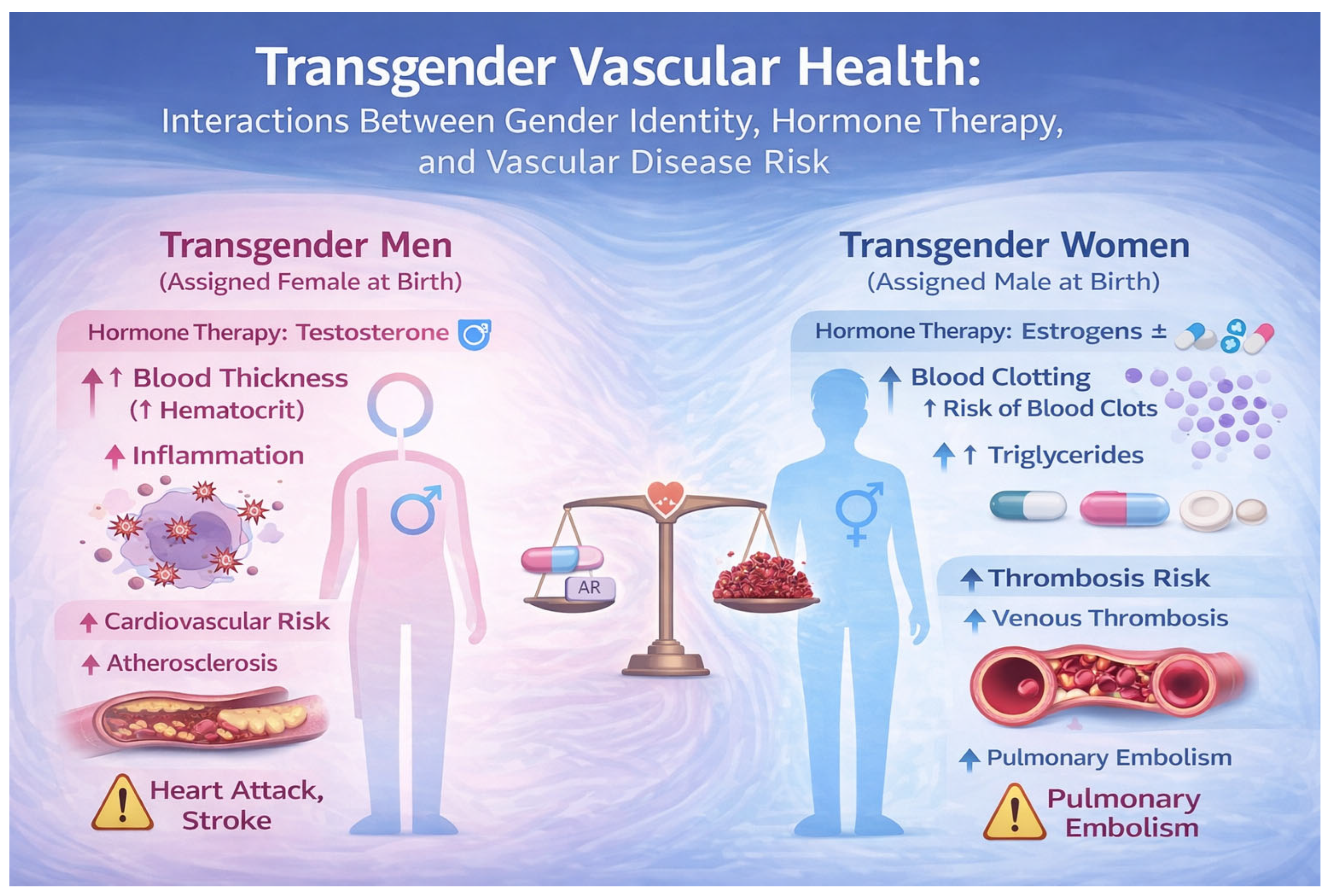
Sex steroid hormones modulate vascular function through both genomic and rapid non-genomic mechanisms involving endothelial cells, vascular smooth muscle cells, platelets, and circulating inflammatory mediators. Estrogens exert many of their vascular effects through estrogen receptors α and β (ERα and ERβ), which regulate endothelial nitric oxide synthase (eNOS) activity and enhance nitric oxide (NO) bioavailability, thereby promoting vasodilation, inhibiting platelet aggregation, and reducing leukocyte adhesion to the vascular wall. Estrogens may also attenuate oxidative stress by limiting reactive oxygen species generation and modulating redox-sensitive inflammatory pathways, including nuclear factor κB (NF-κB), with downstream reductions in cytokines such as interleukin-6 and tumor necrosis factor-α [
42,
43,
44]. At the same time, oral estrogens undergo hepatic first-pass metabolism, which increases the synthesis of coagulation factors II, VII, VIII, IX, and X, as well as fibrinogen, while reducing anticoagulant activity mediated by protein S and antithrombin, thereby shifting hemostatic balance toward a prothrombotic state [
27,
42]. Antiandrogens may further influence vascular homeostasis indirectly by altering the hormonal milieu, body composition, renal sodium handling, and metabolic regulation [
42,
43,
44]. Testosterone exerts complex effects through androgen receptor signaling in endothelial and vascular smooth muscle cells and may modulate vasoreactivity, oxidative stress, and inflammatory responses. In transgender men, testosterone therapy is also associated with increased erythropoiesis, which can lead to erythrocytosis, elevated blood viscosity, and altered shear stress, potentially contributing to endothelial dysfunction and thrombotic susceptibility in predisposed individuals. Collectively, these mechanisms illustrate how GAHT may simultaneously affect endothelial regulation, vascular inflammation, and coagulation, with the net vascular effect depending on hormone formulation, duration of exposure, and the individual’s underlying cardiometabolic and thrombotic risk profile [
28,
42].
The endothelium is a dynamic and metabolically active organ that regulates vascular tone, barrier integrity, inflammation, leukocyte trafficking, coagulation, fibrinolysis, and smooth muscle signaling. Endothelial dysfunction is widely recognized as an early and pivotal event in vascular disease, preceding clinically manifest atherosclerosis, thrombosis, and microvascular impairment. Because sex steroids can directly influence endothelial behavior, their role in transgender vascular health is particularly important [
5,
42,
44].
Estrogens exert complex effects on the endothelium through both genomic and non-genomic pathways. In some physiological contexts, estrogen has been associated with increased nitric oxide bioavailability, improved vasodilatory responses, and modulation of oxidative stress. These effects may support endothelial homeostasis and vascular compliance. However, the biological impact of exogenous estrogen is shaped by multiple factors, including formulation, hepatic first-pass metabolism, dose, age, and coexisting inflammatory or metabolic states. Oral estrogen administration may induce different systemic effects from transdermal routes, particularly because of hepatic stimulation of coagulation proteins, lipid metabolism, and inflammatory mediators. Thus, while estrogen can have vasoregulatory effects that may appear favorable at the endothelial level, these may coexist with prothrombotic or proinflammatory influences under certain conditions [
45,
46,
47].
In transgender women, prolonged exposure to estrogen and androgen suppression may therefore alter endothelial physiology in ways that are not fully captured by conventional cardiovascular endpoints alone. Subclinical endothelial changes may occur before overt vascular disease becomes clinically apparent, and these may interact with baseline cardiometabolic risk factors such as smoking, obesity, insulin resistance, or chronic stress. Because endothelial health is highly sensitive to both biological and psychosocial environments, transgender women may experience vascular effects that reflect the interaction of hormone therapy with social adversity and systemic inflammation rather than hormone exposure in isolation [
4,
42].
Testosterone also has important endothelial implications, though its effects are similarly complex and dose dependent. In transgender men, testosterone therapy may influence endothelial function through changes in vascular tone, oxidative stress, sympathetic activity, hematologic parameters, and metabolic regulation. Some evidence from non-transgender endocrine contexts suggests that androgens may have both vasodilatory and vasoconstrictive effects depending on concentration, receptor activity, and vascular bed. In practice, testosterone-related vascular changes are likely mediated less by a single direct endothelial effect than by a broader reorganization of body composition, insulin sensitivity, lipid profile, and hematocrit, all of which may shape endothelial vulnerability over time [
5,
48].
Among all proposed biological pathways linking GAHT and vascular disease, coagulation and thrombosis have received the greatest attention, especially in relation to estrogen therapy in transgender women. This emphasis is understandable, given that VTE remains one of the most clinically salient vascular concerns in this population. However, a mechanistic understanding requires moving beyond event rates to examine how exogenous hormones interact with coagulation pathways, platelet activation, and fibrinolytic balance [
49].
Estrogen exposure may influence hemostasis through several interconnected mechanisms. These include changes in the hepatic synthesis of procoagulant factors, modulation of natural anticoagulant pathways, alterations in fibrinolytic proteins, and effects on platelet reactivity and endothelial-thrombotic signaling. The net result in some individuals may be a shift toward a prothrombotic state, particularly when other predisposing conditions are present. Oral estrogen is especially relevant in this regard because hepatic first-pass metabolism can amplify the production of coagulation-related proteins, potentially increasing thrombotic susceptibility to a greater degree than transdermal administration [
27,
42,
49].
The biological significance of these changes depends not only on the hormone itself but also on the baseline hemostatic environment. Individuals with inherited thrombophilia, prior VTE, obesity, smoking exposure, inflammatory disease, prolonged immobility, malignancy, HIV infection, or recent surgery may already occupy a prothrombotic physiological state. In such contexts, estrogen therapy may act less as an independent cause than as a risk amplifier superimposed upon an already vulnerable coagulation profile. This helps explain why thrombotic events are unevenly distributed and why many individuals receiving estrogen therapy never experience clinically apparent thrombosis despite long-term exposure [
25,
27].
Anti-androgen therapy may also contribute indirectly to thrombotic biology, though its effects are less clearly defined. By altering hormonal balance, fluid distribution, metabolic profile, and body composition, anti-androgens may participate in broader systemic changes relevant to vascular risk. Some agents may also interact with renal function, blood pressure regulation, or inflammatory pathways in ways that merit consideration when assessing cumulative vascular burden [
5,
42].
In transgender men, testosterone therapy is not classically associated with the same degree of thrombotic concern as estrogen therapy, yet it may influence thrombosis through a different mechanism: erythrocytosis. Elevated hematocrit can increase blood viscosity, potentially affecting microcirculatory flow, endothelial shear stress, and thrombotic propensity, especially in individuals with additional vascular risk factors. Although erythrocytosis does not necessarily translate directly into major thromboembolic events, it remains an important biological marker requiring monitoring because of its potential to alter hemodynamic and hemorheological conditions over time [
28,
42,
50].
A growing body of vascular science recognizes chronic low-grade inflammation as a central driver of endothelial dysfunction, plaque development, venous injury, and vascular remodeling. In transgender health, inflammatory biology is likely shaped by both hormone exposure and the broader psychosocial environment, making it an especially important bridge between molecular and social determinants of vascular disease [
4,
5].
Estrogens and androgens can both modulate inflammatory signaling, although their effects are often tissue specific and dose dependent. Exogenous hormone therapy may influence cytokine expression, oxidative stress, adipokine profiles, and immune-endothelial communication. These effects may be beneficial in some contexts and adverse in others, depending on the balance between metabolic health, adipose distribution, liver function, and baseline inflammatory burden. For example, shifts in body fat composition and insulin sensitivity associated with hormone therapy may alter systemic inflammatory tone indirectly, even in the absence of direct vascular hormone effects [
4,
5].
This issue becomes even more important when considered alongside the biology of chronic stress. Minority stress, discrimination, trauma exposure, and persistent psychosocial vigilance may activate neuroendocrine pathways involving cortisol regulation, sympathetic tone, sleep disruption, and inflammatory activation. Over time, these processes may contribute to endothelial irritation, immune dysregulation, and vascular susceptibility. Thus, inflammation in transgender populations should not be conceptualized only as a pharmacological consequence of hormone therapy, but as a biosocial process in which endocrine treatment and structural stressors converge within the vascular system [
4,
5].
From a vascular perspective, chronic inflammation has implications for both venous and arterial disease. In venous biology, inflammation can contribute to endothelial injury, altered fibrinolysis, venous wall remodeling, and post-thrombotic sequelae. In arterial biology, it promotes atherogenesis, plaque instability, oxidative damage, and vascular stiffening. Therefore, even modest hormone-related or stress-mediated shifts in inflammatory tone may have clinically relevant cumulative effects when sustained over many years [
5,
42].
Many of the vascular consequences of GAHT are likely mediated not only through direct vascular signaling but also through metabolic pathways that influence long-term arterial and microvascular health. Changes in lipid metabolism, insulin sensitivity, adipose tissue distribution, and body composition may be particularly relevant in this regard [
9,
51].
In transgender women, estrogen-based therapy may be associated with changes in serum lipids, body fat distribution, and insulin handling, although the direction and magnitude of these changes vary across studies. Some individuals may experience favorable or neutral changes in selected parameters, whereas others may develop patterns more suggestive of cardiometabolic vulnerability. These differences likely reflect variation in baseline metabolic status, duration of therapy, diet, physical activity, age, and concomitant anti-androgen use. The vascular significance of such changes lies in their cumulative impact on endothelial stress, plaque biology, and arterial remodeling rather than in any single laboratory value [
5,
52].
In transgender men, testosterone therapy often produces more visible shifts in body composition, including increased lean mass and altered fat distribution, but it may also influence lipid profiles, insulin sensitivity, and blood pressure regulation. Again, these effects are not uniformly adverse or beneficial and must be interpreted in relation to baseline health and long-term trajectory. What matters from a vascular standpoint is whether these changes contribute over time to atherogenic burden, endothelial dysfunction, or proinflammatory metabolic states [
5,
9].
The interaction between hormone therapy and obesity deserves special emphasis. Adipose tissue is not merely a passive energy reservoir but an active endocrine and inflammatory organ that influences insulin resistance, cytokine production, vascular stiffness, and coagulation balance. Because body composition may change substantially during GAHT, especially in the early phases of treatment, the vascular consequences of these shifts warrant more attention than they have so far received in the literature. Future mechanistic research should therefore examine not only serum biomarkers but also fat distribution, visceral adiposity, muscle mass, and their relationship to vascular phenotypes [
53,
54].
Beyond acute functional changes and circulating biomarkers, long-term hormone exposure may influence the structural architecture of the vascular wall. This includes effects on vascular smooth muscle behavior, extracellular matrix turnover, arterial compliance, and vessel wall remodeling. These processes are especially relevant for chronic arterial disease, arterial stiffness, and potentially even venous wall integrity. Sex steroids may influence smooth muscle proliferation, collagen deposition, elastin integrity, and matrix metalloproteinase activity, all of which contribute to vascular remodeling. Over time, such changes may affect arterial stiffness, compliance, pulse wave transmission, and susceptibility to atherosclerotic or degenerative vascular disease. Although direct evidence in transgender cohorts remains limited, these pathways are biologically plausible and deserve more systematic investigation [
5,
9].
Arterial stiffness is particularly interesting because it may serve as an early subclinical marker of vascular aging before overt clinical events occur. It integrates the cumulative effects of inflammation, blood pressure exposure, metabolic stress, endothelial function, and structural remodeling. If future studies demonstrate meaningful differences in arterial stiffness or related parameters among transgender individuals receiving long-term GAHT, this could help bridge the gap between short-term endocrine monitoring and more comprehensive vascular surveillance [
9,
55].
Vascular remodeling may also have implications for microvascular health, an area almost entirely neglected in transgender medicine. Microvascular dysfunction can contribute to impaired tissue perfusion, inflammatory signaling, endothelial instability, and early vascular aging even in the absence of overt macrovascular disease. This may be particularly relevant in individuals exposed to chronic stress, insulin resistance, smoking, or inflammatory burden. A fuller understanding of transgender vascular biology will therefore require moving beyond large-vessel outcomes to include microcirculatory and subclinical vascular endpoints [
4,
5].
One of the most important mechanistic principles in transgender vascular health is that not all hormone therapy is biologically equivalent. The vascular impact of GAHT depends heavily on how hormones are delivered, which compounds are used, and for how long they are taken [
9,
31].
The distinction between oral and transdermal estrogen is especially important because of differential hepatic exposure and effects on coagulation pathways. Likewise, historical use of older estrogen compounds may not be biologically comparable to contemporary regimens. Similarly, the vascular implications of testosterone therapy may vary according to dose, serum level stability, and the degree to which hematologic or metabolic changes are monitored and managed [
9,
42].
Duration of exposure also matters. Some vascular effects may emerge relatively early, such as shifts in coagulation factors or hematocrit, whereas others, such as arterial remodeling, endothelial aging, or atherosclerotic progression, may unfold over years or decades. This temporal dimension is crucial because many currently available studies do not yet capture the full biological consequences of long-term hormone exposure across the life course [
31,
42].
Finally, individual susceptibility remains central. Genetic predisposition, baseline vascular risk, inflammatory burden, age, smoking, obesity, HIV status, physical activity, mental health, and social adversity all shape how the vascular system responds to hormonal intervention. Mechanistically, GAHT should therefore be understood less as a universal vascular determinant than as a biological modifier operating within a larger personalized risk environment [
42,
56].
Taken together, the biological pathways linking GAHT and vascular health are multiple, interconnected, and context dependent. They include changes in endothelial regulation, coagulation balance, inflammatory signaling, metabolic homeostasis, blood rheology, vascular smooth muscle behavior, and structural remodeling. None of these pathways operates in isolation, and their clinical significance is likely determined by the cumulative interaction between endocrine treatment and the broader psychosocial and cardiometabolic profile of the individual [
5,
9].
Sex steroid hormones exert complex effects on vascular biology through genomic and non-genomic mechanisms. Estrogens influence endothelial nitric oxide synthase activity, nitric oxide bioavailability, vascular smooth muscle tone, oxidative stress pathways, and inflammatory signaling. Oral estrogens may additionally increase hepatic synthesis of procoagulant factors through first-pass metabolism, thereby contributing to elevated thromboembolic risk, whereas transdermal formulations appear to exert less pronounced hepatic and coagulative effects. Testosterone may modulate vascular function through effects on body composition, insulin sensitivity, erythropoiesis, sympathetic activity, and endothelial responsiveness, although available findings remain heterogeneous. Antiandrogen therapies may further influence vascular homeostasis indirectly through metabolic and endocrine interactions. These mechanisms likely interact with baseline cardiovascular risk, age, smoking status, and duration of exposure to GAHT [
7,
8,
9,
10,
11].
This complexity has two important implications. First, it cautions against simplistic assumptions that hormone therapy is either uniformly dangerous or uniformly neutral from a vascular perspective. Second, it reinforces the need for individualized vascular assessment, especially in patients with additional thrombotic or metabolic vulnerabilities. From a clinical standpoint, the mechanistic literature supports a model of care in which hormone therapy is not avoided, but rather integrated into a broader strategy of vascular prevention, monitoring, and risk modification [
9,
27,
56].
The biological relationship between transgender health and vascular disease extends far beyond isolated concern over thromboembolic events. GAHT can influence vascular systems through multiple direct and indirect pathways involving endothelial biology, coagulation, inflammation, metabolism, and long-term structural adaptation. These mechanisms help explain why vascular outcomes in transgender populations may differ from those observed in cisgender populations, while also highlighting the importance of context, treatment specificity, and individual susceptibility. A mechanistic understanding is therefore essential not only for interpreting epidemiological findings, but also for guiding more precise and evidence-informed clinical care [
5,
42,
49].
5. Venous Vascular Disease in Transgender Individuals
Among the vascular issues relevant to transgender health, venous disease has received the greatest clinical attention, largely because of the recognized association between estrogen exposure and VTE. However, reducing venous vascular health in transgender populations to thromboembolic events alone would be overly narrow. The venous system is not merely the site of acute clot formation, but a dynamic biological and hemodynamic network involved in coagulation balance, endothelial regulation, inflammatory signaling, microcirculatory adaptation, and long-term structural remodeling. From this perspective, transgender venous health should be understood as a broader field that includes not only deep vein thrombosis (DVT) and pulmonary embolism (PE), but also CVD, chronic venous insufficiency, post-thrombotic complications, and the cumulative effects of hormonal, behavioral, and structural determinants on venous physiology over time [
27,
57].
This broader view is particularly important because many transgender individuals may be exposed to combinations of risk factors that affect the venous system in both acute and chronic ways. These include hormone therapy, smoking, obesity, reduced physical activity, psychological stress, metabolic changes, delayed healthcare access, and perioperative exposures associated with gender-affirming or non-gender-related surgery. The venous system is especially sensitive to such interactions because thrombotic and hemodynamic disturbances often emerge from cumulative rather than isolated causes. Thus, a clinically useful account of venous health in transgender populations must integrate endocrine, inflammatory, social, and procedural dimensions rather than focusing exclusively on isolated event statistics [
27,
58].
VTE, encompassing both DVT and PE, represents the best studied and most immediately actionable venous complication in transgender medicine. VTE is of particular relevance because it can occur abruptly, may be life threatening, and often has long-term consequences even when acute treatment is successful. In transgender populations, concern about VTE has centered primarily on transgender women receiving estrogen-based GAHT, although thrombotic risk is never determined by hormone therapy alone [
8,
25,
59].
The biological rationale for heightened attention to VTE is well established. Estrogen can influence coagulation pathways, fibrinolysis, platelet activity, and endothelial-thrombotic signaling, potentially creating a more procoagulant state in susceptible individuals. Yet the clinical significance of this effect is not uniform. Most transgender women receiving hormone therapy do not experience VTE, and when thrombotic events occur, they often emerge in the presence of additional risk modifiers, such as smoking, obesity, immobility, inherited thrombophilia, older age, HIV infection, malignancy, inflammatory disease, or recent surgery. For this reason, VTE in transgender women should not be understood as a simple direct consequence of estrogen therapy, but rather as the outcome of a multifactorial thrombotic environment in which hormone exposure may function as an important but context-dependent contributor [
59,
60].
Importantly, vascular risk associated with estrogen therapy should not be considered homogeneous across formulations. Earlier studies reporting markedly elevated thromboembolic risk frequently involved ethinyl estradiol, a formulation now largely avoided in gender-affirming care because of its unfavorable hepatic and coagulative profile. Contemporary regimens more commonly employ oral or transdermal 17β-estradiol, which appears to carry lower thrombotic risk, particularly when administered transdermally. Failure to distinguish between historical and modern regimens may therefore overestimate the vascular risks associated with current gender-affirming endocrine practice [
42,
43,
44,
45,
46,
47,
48,
49,
50,
51].
The distinction between relative risk and absolute risk is clinically important here. Even when epidemiological studies suggest an increased relative risk of VTE compared with certain cisgender reference groups, the absolute event rate may still remain relatively low in younger and otherwise healthy individuals using contemporary regimens. This distinction matters because exaggerated perceptions of risk can lead to unnecessary anxiety, therapeutic reluctance, or inappropriate barriers to gender-affirming care. At the same time, underestimation of risk may result in insufficient screening, counseling, or perioperative planning. The goal is therefore neither alarmism nor minimization, but a balanced clinical framework that situates VTE within individualized risk assessment [
8,
27].
One of the most important clinical insights in this area is that not all estrogen exposure carries the same venous risk profile. Historical reports of high thrombotic rates among transgender women often reflected the use of older formulations such as ethinyl estradiol, which are now less commonly recommended because of their unfavorable vascular and hepatic effects. Contemporary GAHT more frequently relies on 17β-estradiol, administered through oral, transdermal, or parenteral routes, and these formulations may have different implications for venous risk [
27,
60].
Among these, route of administration is particularly relevant. Oral estrogen undergoes hepatic first-pass metabolism, which may increase the synthesis of coagulation-related proteins and thereby contribute more strongly to prothrombotic shifts than transdermal administration. Transdermal estrogen, by avoiding much of this hepatic effect, is often considered more favorable in individuals with elevated thrombotic risk or in those with additional cardiovascular or metabolic vulnerabilities. This distinction has become increasingly important in contemporary endocrine practice and should also be integrated into vascular counseling and risk stratification [
27,
42,
49].
Anti-androgen therapy may also play an indirect role, although its independent contribution to venous risk is less well defined. Its clinical significance likely lies less in direct thrombotic activation and more in the way it shapes the broader hormonal milieu, metabolic profile, and vascular context in which estrogen acts. In practice, thrombotic assessment should therefore focus not on isolated hormone classes, but on the overall treatment architecture and its interaction with individual susceptibility [
42,
49,
61].
From a vascular medicine perspective, one of the most important practical questions is how to identify which transgender patients may be at meaningfully increased risk of VTE. Current evidence supports an individualized approach that incorporates both conventional thrombotic risk factors and treatment-specific variables. In clinical practice, venous risk stratification should include assessment of age, smoking status, body mass index and obesity, personal or family history of VTE, and the presence of known thrombophilia. Additional factors such as immobility or sedentary behavior, recent major surgery or prolonged travel, active cancer or chronic inflammatory disease, HIV infection, and other systemic illnesses should also be carefully considered. Equally important is a detailed evaluation of the type, route, and duration of hormone therapy, as these variables may substantially influence thrombotic risk [
27,
50].
This structured approach is particularly relevant because many transgender individuals may initiate or continue hormone therapy through care pathways that do not consistently include comprehensive vascular screening, especially in settings where healthcare access is fragmented, or self-medication is more common. For venous specialists and vascular clinicians, this underscores the importance of explicitly reviewing both hormone exposure and thrombotic history, elements that may not always be fully captured during routine vascular assessment [
9,
27,
28].
Importantly, risk stratification should not function as a gatekeeping mechanism that automatically discourages or restricts access to hormone therapy. Instead, it should be understood as a strategy for harm reduction and clinical optimization, enabling clinicians to identify modifiable risk factors, select safer hormonal formulations when appropriate, and establish monitoring strategies tailored to the individual patient’s profile. In this context, the venous management of transgender patients should be consistent with the broader principles of precision medicine, patient-centered care, and shared decision-making [
27,
62].
Clinically, the presentation of DVT and PE in transgender individuals does not fundamentally differ from that seen in cisgender populations. Symptoms such as unilateral limb swelling, pain, erythema, tenderness, dyspnea, chest pain, tachycardia, or unexplained hypoxemia should be approached using standard diagnostic pathways. However, awareness remains essential, because clinicians unfamiliar with transgender medicine may either overattribute symptoms to hormone use without appropriate workup or, conversely, fail to consider VTE when risk factors are present [
8,
27].
When DVT or PE occurs in a transgender patient receiving GAHT, management should generally follow standard evidence-based anticoagulation principles. Nevertheless, the question of whether and how to continue hormone therapy after a thrombotic event is often clinically and psychologically significant. For many transgender individuals, interruption of hormone therapy may carry substantial emotional and identity-related consequences, and these must be weighed carefully against vascular safety concerns. This makes interdisciplinary care particularly important, ideally involving endocrinology, thrombosis or vascular medicine, and when appropriate, mental health support [
27,
63].
In many cases, a thrombotic event should not be conceptualized as requiring permanent cessation of gender-affirming hormones in all circumstances. Instead, management may involve reassessment of route of administration, dose adjustment, treatment of coexisting risk factors, or the use of long-term anticoagulation where clinically indicated. Such decisions require careful case-by-case evaluation, but the broader principle is clear: vascular safety and gender-affirming care should not be treated as mutually exclusive domains [
27,
60].
The perioperative setting deserves particular emphasis because many transgender individuals undergo gender-affirming surgical procedures, in addition to the full range of non-gender-related operations encountered in general medical care. Surgery is a well-known precipitating factor for VTE due to immobility, tissue injury, inflammatory activation, and transient hypercoagulability. When combined with estrogen exposure and other patient-specific risk factors, perioperative conditions may meaningfully increase thrombotic vulnerability [
27,
64].
This issue is especially relevant in vascular surgery, plastic surgery, pelvic surgery, and prolonged reconstructive procedures, where operative time, postoperative immobility, and wound-related considerations may all contribute to venous risk. Historically, some protocols recommended routine discontinuation of estrogen therapy before surgery, but this practice remains debated and may not be necessary or beneficial in all cases. The decision should ideally depend on the type of surgery, overall thrombotic risk profile, route of hormone administration, and the feasibility of perioperative thromboprophylaxis [
27,
64,
65].
A contemporary approach should emphasize individualized perioperative planning. This includes conducting a thorough preoperative thrombotic risk assessment, reviewing the current hormone regimen, implementing mechanical and/or pharmacologic thromboprophylaxis when indicated, and promoting early postoperative mobilization. Shared decision-making is also essential when considering temporary modification of hormone therapy [
27,
66].
For surgeons and vascular specialists, it is important to recognize that transgender status in itself should not be considered a perioperative venous contraindication. Rather, hormone exposure should be thoughtfully incorporated into standard thrombotic risk assessment frameworks in a clinically informed and patient-centered manner [
27,
29,
67].
One of the most overlooked aspects of venous disease in transgender populations is the long-term burden of PTS and related sequelae. Even when acute DVT is successfully treated, many patients may later develop chronic venous symptoms such as limb heaviness, edema, pain, skin changes, venous claudication, or ulceration. These complications can significantly affect quality of life and functional status, yet they are almost entirely absent from current transgender vascular literature [
68,
69].
This omission is important for several reasons. First, if transgender women receiving estrogen-based therapy are indeed at somewhat elevated risk of DVT in some contexts, then PTS becomes a downstream concern that deserves explicit recognition. Second, chronic venous symptoms may be underreported or misattributed, especially in populations that already experience barriers to longitudinal specialist follow-up. Third, chronic venous sequelae may interact with body image, mobility, and psychosocial well-being in ways that are particularly meaningful in transgender care but have not yet been studied [
25,
27,
69].
Future research should therefore move beyond acute event counting and examine the full clinical trajectory of venous disease, including recurrence, residual venous obstruction, venous reflux, and quality-of-life outcomes after thrombosis. These dimensions are especially relevant for vascular medicine because they speak directly to long-term morbidity rather than acute risk alone [
70,
71,
72].
Beyond thromboembolism, the relationship between transgender health and CVD remains almost entirely unexplored. This is a major gap, given that CVD is common, clinically burdensome, and influenced by many factors that may plausibly intersect with transgender health trajectories [
9,
27].
CVD includes a spectrum ranging from telangiectasias and varicose veins to edema, skin changes, lipodermatosclerosis, and venous ulceration. Its pathophysiology involves venous hypertension, valvular incompetence, endothelial activation, inflammation, microcirculatory dysfunction, and extracellular matrix remodeling. Hormonal influences have long been recognized as relevant in venous biology, particularly in relation to venous wall tone, connective tissue behavior, and microvascular permeability. It is therefore plausible that long-term endocrine modulation may affect aspects of venous structure or function, although direct evidence in transgender populations is currently lacking [
73,
74,
75].
Several indirect pathways may be relevant. Changes in body composition, physical activity, occupational patterns, fluid balance, and vascular inflammation during or after hormone therapy could influence venous return and venous wall stress over time. Likewise, prior episodes of DVT may contribute to chronic venous insufficiency through residual obstruction or valvular damage. In transgender individuals with delayed access to preventive care or specialist evaluation, CVD may go underdiagnosed until symptoms become more advanced [
69,
73,
76].
This area deserves much more attention, particularly because CVD is often not perceived as a high-priority research topic despite its substantial impact on quality of life and healthcare burden. For a review situated within vascular medicine, highlighting this gap is important because it identifies a concrete domain in which future transgender vascular research could make meaningful contributions [
9,
73,
77].
The venous system should also be understood in relation to the microcirculation and inflammatory environment. Venous pathology is not only a matter of macroscopic thrombosis or valvular incompetence; it also involves endothelial-microvascular interactions, leukocyte adhesion, local inflammation, tissue perfusion, and capillary exchange. These mechanisms are especially relevant when considering the broader effects of hormone therapy, metabolic changes, and chronic psychosocial stress [
75,
78].
Inflammation and endothelial activation may contribute to both thrombotic susceptibility and chronic venous remodeling, suggesting that acute and chronic venous disorders are not entirely separate entities but part of a continuum of venous dysfunction. In this sense, transgender venous health should be approached not only through event prevention but also through an integrated understanding of vascular biology, tissue-level consequences, and long-term symptom burden [
9,
75,
79].
For clinicians working in vascular surgery, angiological medicine, phlebology, or thrombosis care, transgender venous health carries several important practical implications. It necessitates the routine inclusion of gender-affirming hormone exposure within venous history taking and risk assessment. It also requires familiarity with differences among hormone formulations particularly when evaluating thrombotic risk or planning surgical interventions. At the same time, it highlights the need to avoid both overmedicalization and neglect: transgender patients should neither be automatically categorized as high risk based solely on identity, nor assessed without consideration of the specific endocrine and social factors that influence venous vulnerability [
8,
9,
27].
Clinical care should therefore be grounded in an individualized approach that incorporates thorough VTE risk assessment, counseling on modifiable venous risk factors, and appropriate attention to perioperative thromboprophylaxis. It should also include recognition of chronic venous symptoms and post-thrombotic sequelae, along with collaboration with endocrinology and primary care when decisions related to hormone therapy arise [
22,
27].
In addition, the nature of the clinical encounter itself is significant. Because transgender patients may have previously experienced discrimination or avoidance within healthcare settings, venous specialists should ensure that care is not only technically rigorous but also affirming in communication. This dimension is not peripheral to vascular care; it directly influences whether patients seek timely evaluation, adhere to follow-up, and remain engaged in preventive strategies [
80,
81,
82].
Venous vascular disease represents one of the most clinically relevant and currently best recognized aspects of transgender vascular health, but it remains incompletely understood. The existing literature has focused predominantly on VTE in transgender women receiving estrogen-based therapy, and while this remains a critical concern, it should not define the entire field. Venous health in transgender populations also includes perioperative risk, recurrence, post-thrombotic syndrome, chronic venous insufficiency, and the broader inflammatory and microcirculatory dimensions of venous biology [
83,
84].
A more complete understanding of transgender venous health requires moving beyond isolated thrombotic event rates toward a longitudinal and systems-based view of venous vulnerability. Such an approach is particularly relevant for vascular specialists because it connects endocrine care, preventive medicine, hemodynamic pathology, and long-term quality of life. Future research should therefore expand the scope of inquiry to include CVD, post-thrombotic outcomes, and subclinical venous dysfunction, thereby supporting a more comprehensive and evidence-informed model of venous care in transgender populations [
5,
9].
6. Arterial Vascular Disease in Transgender Individuals
If VTE has historically dominated discussions of vascular health in transgender populations, the domain of arterial vascular disease remains comparatively less defined, yet potentially no less important. This imbalance reflects both the relative immediacy of thromboembolic complications and the methodological difficulty of studying arterial disease, which often develops gradually over years or decades and is influenced by a complex convergence of endocrine, metabolic, inflammatory, behavioral, and structural factors. As transgender populations increasingly access long-term gender-affirming care and age into periods of greater vascular vulnerability, arterial health is likely to become an increasingly relevant component of clinical assessment and preventive medicine [
5,
9].
Arterial vascular disease encompasses a broad continuum that includes endothelial dysfunction, arterial stiffness, atherosclerotic remodeling, microvascular impairment, cerebrovascular ischemia, and PAD. These conditions are not merely late-stage complications but often emerge from long subclinical processes shaped by cumulative exposures over time. In transgender individuals, these exposures may include not only conventional cardiometabolic risk factors and aging, but also the biological effects of GAHT, minority stress, chronic inflammation, healthcare inequities, and shifts in body composition or metabolic regulation. For this reason, the study of arterial vascular health in transgender populations requires a life course perspective rather than an event-based one [
9,
38,
85].
Much of the available literature addressing arterial health in transgender populations has focused on broad cardiovascular outcomes, such as myocardial infarction or stroke. While these outcomes are clinically important, they capture only a fraction of the vascular picture. Arterial disease often evolves silently long before major events occur, through progressive changes in endothelial function, vessel wall biology, inflammatory signaling, lipid deposition, and arterial compliance. Thus, an exclusive focus on overt cardiovascular events may underestimate the extent to which transgender individuals experience subclinical or early arterial vulnerability [
9,
55].
This distinction is especially relevant because many transgender cohorts studied to date remain relatively young, meaning that overt arterial events may still be infrequent even when subclinical vascular changes are already underway. A patient may not yet have experienced myocardial infarction, stroke, or limb ischemia, yet may already exhibit endothelial dysfunction, increased arterial stiffness, altered vascular reactivity, or evolving atherogenic risk. Therefore, arterial vascular health in transgender medicine should not be reduced to the presence or absence of major cardiovascular events, but rather understood as a broader and evolving biological process [
5,
9,
55].
One of the earliest and most important arterial alterations is endothelial dysfunction, which represents a state in which the vascular endothelium loses part of its capacity to regulate vasodilation, anti-inflammatory balance, antithrombotic signaling, oxidative equilibrium, and vascular homeostasis. Endothelial dysfunction is widely recognized as a precursor to atherosclerosis, arterial stiffness, and microvascular disease, making it a key concept in the study of transgender arterial health [
55,
85].
Several mechanisms may contribute to endothelial vulnerability in transgender populations. As discussed in the mechanistic section, exogenous estrogens and testosterone can influence endothelial signaling directly through sex steroid receptors and indirectly through changes in lipid metabolism, insulin sensitivity, oxidative stress, and inflammatory tone. These effects are likely to differ according to treatment type, dose, and duration. In addition, endothelial function is highly sensitive to smoking, obesity, sedentary behavior, sleep disturbance, psychosocial stress, and chronic inflammation, all factors that may be differentially distributed or less consistently addressed in transgender populations because of structural and healthcare-related inequities [
5,
42].
Minority stress may be especially relevant in this context. Chronic exposure to discrimination, social vigilance, and psychosocial strain may activate neuroendocrine and inflammatory pathways that impair endothelial responsiveness and promote vascular dysregulation over time. Thus, endothelial dysfunction in transgender individuals may represent not only a pharmacological phenomenon related to GAHT, but also a biosocial marker of cumulative vascular stress. This perspective is particularly important because it broadens the arterial discussion beyond hormone-centered explanations and situates vascular biology within lived experience and structural context [
4,
5,
86].
Atherosclerosis is a chronic inflammatory and metabolic disease of the arterial wall characterized by lipid accumulation, endothelial injury, leukocyte recruitment, smooth muscle migration, fibrous remodeling, and eventual plaque formation. Although atherosclerosis has not yet been extensively characterized in transgender-specific vascular studies, several pathways relevant to its development are clearly applicable to this population [
55,
87].
In transgender women, long-term estrogen-based therapy may interact with atherosclerotic risk in complex ways. Some hormonal effects may be neutral or even favorable under selected physiological conditions, while others may contribute indirectly to arterial vulnerability through changes in triglycerides, body fat distribution, insulin sensitivity, inflammatory signaling, or thrombotic biology. The net arterial effect is therefore unlikely to be uniform and may depend heavily on baseline metabolic status and coexisting vascular risk factors. In transgender men, testosterone therapy may likewise influence atherosclerotic biology through its effects on hematocrit, lipid profile, blood pressure, insulin sensitivity, and body composition. However, the extent to which these changes translate into accelerated plaque development remains insufficiently defined [
9,
28,
55,
61].
Importantly, atherosclerotic disease should not be conceptualized as a simple direct consequence of hormone therapy. Rather, hormone exposure may modulate the arterial environment in which more familiar drivers of plaque development, such as smoking, dyslipidemia, hypertension, diabetes, obesity, and chronic inflammation, operate. This means that transgender individuals with otherwise low baseline arterial risk may not necessarily face substantial atherosclerotic burden solely because of GAHT, whereas those with multiple metabolic or behavioral vulnerabilities may require more intensive monitoring and preventive support [
42,
56].
The concept of arterial remodeling is especially useful here. Even before clinically significant plaque develops, the arterial wall may undergo structural adaptation in response to changes in hemodynamic load, hormonal signaling, inflammatory exposure, and metabolic stress. Such remodeling may involve intima-media thickening, altered extracellular matrix composition, vascular smooth muscle proliferation, and loss of elastic resilience. These changes may remain clinically silent for years but can gradually shape long-term arterial susceptibility [
9,
55,
88].
Among the subclinical markers of arterial health, arterial stiffness deserves special attention in transgender vascular research. Arterial stiffness reflects reduced elasticity of the arterial wall and is associated with aging, hypertension, endothelial dysfunction, inflammation, metabolic disease, and adverse cardiovascular outcomes. It also serves as a useful integrative marker of cumulative vascular burden, capturing the long-term effects of multiple biological and environmental exposures [
55,
89,
90].
The potential relevance of arterial stiffness in transgender populations is considerable. Because GAHT can influence blood pressure regulation, body composition, inflammation, vascular smooth muscle behavior, and extracellular matrix turnover, it is biologically plausible that long-term hormone exposure could contribute to changes in arterial compliance. Yet this area remains underexplored. Existing research has only begun to investigate whether transgender individuals on long-term hormone therapy exhibit measurable differences in arterial stiffness, pulse wave velocity, or central hemodynamics compared with cisgender reference populations [
9,
55,
56].
This is an important gap because arterial stiffness may provide insight into vascular aging even before overt disease becomes clinically manifest. For example, a relatively young transgender individual receiving long-term GAHT may not yet show signs of clinically apparent atherosclerosis or ischemia but may already exhibit early vascular aging detectable through stiffness-related measures. Such findings could eventually support more personalized screening and prevention strategies, especially if combined with metabolic and inflammatory markers [
23,
91].
From a conceptual standpoint, vascular aging is particularly relevant because it aligns with a life course approach to transgender health. Many of the current uncertainties in the literature arise from the fact that large numbers of transgender individuals have not yet been followed across decades of continuous care. As the population ages, the question will become not only whether specific vascular events occur, but whether vascular aging differs in relation to hormone exposure, social stress, healthcare access, or cumulative cardiometabolic burden [
4,
9,
38].
One of the most clinically relevant yet least studied arterial conditions in transgender populations is PAD. This is particularly notable given the focus of vascular medicine and surgery on lower extremity ischemia, limb perfusion, claudication, critical limb-threatening ischemia, and atherosclerotic peripheral vascular burden. Despite its importance, PAD has received almost no dedicated attention in the transgender health literature [
52,
57,
92].
This absence likely reflects both the younger age of many existing cohorts and the broader under recognition of transgender individuals in vascular registries. However, the risk factors that drive PAD, smoking, diabetes mellitus, dyslipidemia, hypertension, chronic inflammation, endothelial dysfunction, and social disadvantage, are highly relevant to transgender populations. In addition, if hormone-related changes in coagulation, vascular remodeling, or metabolic profile influence arterial biology over time, they may plausibly contribute to peripheral arterial susceptibility as well [
5,
9,
93,
94].
PAD is especially important because it often functions as both a local disease and a marker of systemic atherosclerotic burden. A transgender patient presenting with claudication or limb ischemia should therefore not only be evaluated for local arterial pathology, but also considered within a broader framework of cardiovascular and vascular prevention. Conversely, because transgender individuals may encounter barriers to routine preventive care, PAD may in some cases remain undiagnosed until later or more symptomatic stages. This reinforces the need for vascular specialists to maintain clinical awareness and to integrate gender-affirming care history into standard arterial assessment [
9,
94,
95].
Future research in this area should explicitly include transgender populations in studies of ankle-brachial index, claudication prevalence, peripheral perfusion, arterial imaging, and limb-related vascular outcomes. Without such data, the management of PAD in transgender individuals will remain largely extrapolated from cisgender populations, with all the limitations that such extrapolation entails [
4,
32,
95].
Arterial vascular health in transgender populations also includes the cerebrovascular domain, particularly the risk of ischemic stroke and transient ischemic events. Some observational studies have suggested that transgender women may exhibit elevated stroke risk relative to certain cisgender comparator groups, although interpretation remains difficult because of confounding factors such as smoking, hypertension, HIV burden in some cohorts, metabolic disease, and healthcare disparities. In addition, the available literature often does not distinguish clearly between thromboembolic, atherosclerotic, embolic, or small vessel mechanisms [
29,
96].
From a vascular perspective, the relevance of stroke extends beyond neurology because it reflects the integrated effects of arterial endothelial health, coagulation balance, blood pressure regulation, inflammation, and systemic vascular aging. If certain hormone regimens or long-term risk environments contribute to cerebrovascular vulnerability, this may also have implications for peripheral and systemic arterial health more broadly [
9,
97].
Moreover, the issue of stroke highlights an important clinical principle: vascular risk in transgender populations should not be compartmentalized too rigidly into “venous” and “arterial” silos. Although these systems have distinct pathophysiological features, they also share overlapping determinants, including inflammation, endothelial dysfunction, metabolic burden, smoking, and chronic stress. A truly vascular perspective therefore requires integrated thinking across the full arterial-venous continuum [
4,
9,
29,
57].
In addition to large-vessel disease, the arterial circulation must also be considered at the microvascular level. Microvascular dysfunction is increasingly recognized as an important contributor to ischemic symptoms, tissue perfusion abnormalities, inflammatory signaling, endothelial stress, and early vascular aging. Yet it is almost entirely absent from the transgender health literature [
5,
9,
98].
This omission matters because many biologically plausible pathways relevant to transgender health, such as insulin resistance, chronic inflammation, altered endothelial signaling, smoking exposure, and stress-related autonomic dysregulation, may affect microvascular integrity even when large-vessel disease is not yet clinically apparent. Microvascular dysfunction may therefore represent an early and sensitive vascular phenotype that deserves greater research attention, particularly in relation to chronic symptoms, tissue healing, and subclinical ischemic vulnerability [
5,
85,
99].
For vascular surgery and wound-related practice, this may have practical implications. Tissue perfusion, capillary exchange, and microcirculatory resilience influence wound healing, postoperative recovery, and limb preservation. If transgender individuals experience distinctive microvascular profiles due to combinations of hormonal, metabolic, and structural factors, these could eventually become clinically relevant in surgical planning and longitudinal vascular care [
4,
9,
27].
As with venous disease, arterial vascular health in transgender populations cannot be adequately understood through physiology alone. Structural determinants, including access to preventive care, affordability of medications, continuity of primary care, health literacy, insurance coverage, and prior experiences of discrimination, play a major role in shaping arterial outcomes. Arterial disease is often the cumulative result of years of underdiagnosed or undertreated hypertension, diabetes, dyslipidemia, smoking, obesity, and inflammatory burden. If transgender individuals face more frequent interruptions in care or reduced engagement with preventive medicine, this may contribute substantially to long-term arterial vulnerability [
5,
81,
100].
This is especially important because arterial disease often develops silently. Unlike acute VTE, which may present dramatically, arterial risk often accumulates without obvious symptoms until a later event or ischemic manifestation occurs. Thus, structural barriers to routine screening and longitudinal management may be especially consequential in the arterial domain. In this sense, arterial disease in transgender populations may be viewed not only as a biological outcome, but also as a marker of preventive inequity [
4,
55,
56].
For clinicians, the available evidence supports a cautious yet proactive approach to arterial vascular assessment in transgender individuals, particularly in those receiving long-term GAHT or presenting with multiple conventional cardiovascular risk factors. At present, there is insufficient evidence to justify entirely separate arterial screening algorithms based solely on transgender status. Nonetheless, there is a clear rationale for heightened clinical attentiveness to modifiable arterial risk factors and to the ways in which hormone therapy may interact with broader cardiometabolic and inflammatory profiles [
56,
101].
In practice, this involves careful monitoring of blood pressure, lipid levels, and glucose metabolism, alongside consistent attention to smoking cessation. Clinicians should remain alert to potential endothelial or metabolic vulnerability and should evaluate symptoms such as claudication, limb discomfort, or other signs suggestive of ischemia. In individuals at higher risk, consideration of subclinical vascular markers may also be appropriate [
56,
102].
For vascular specialists, the central challenge lies in avoiding two opposing pitfalls: disregarding transgender-specific clinical contexts on one hand, or overattributing arterial risk to hormone therapy without sufficient evidence on the other. The most effective approach remains individualized, longitudinal, and focused on prevention [
9,
28].
Arterial vascular disease in transgender populations remains less well characterized than venous disease, but it is likely to become increasingly important as transgender individuals age and remain on long-term hormone therapy across the life course. Current evidence suggests that arterial health may be shaped by a combination of endothelial effects, metabolic changes, inflammatory signaling, vascular remodeling, structural inequities, and conventional cardiometabolic risk factors. Key domains of concern include endothelial dysfunction, atherosclerotic remodeling, arterial stiffness, vascular aging, cerebrovascular risk, and PAD [
5,
9,
103].
At present, the literature remains too limited to draw overly definitive conclusions, especially regarding the long-term burden of PAD and subclinical arterial dysfunction. Nevertheless, the biological plausibility and clinical importance of these issues are clear. Future research should therefore move beyond generic cardiovascular endpoints and explicitly include arterial vascular phenotypes relevant to angiological and vascular surgical practice. Doing so will be essential for building a more complete and clinically useful understanding of transgender vascular health [
5,
101].
7. Psychosocial Determinants, Minority Stress, and Social Drivers of Vascular Risk
A comprehensive understanding of vascular health in transgender populations cannot be achieved through endocrine and biological mechanisms alone. While GAHT, coagulation pathways, inflammation, and metabolic changes are clearly important, they represent only part of a much broader causal landscape. Vascular disease is increasingly recognized as a condition shaped not only by physiology, but also by lived experience, social position, chronic stress exposure, institutional access, and structural inequality. In transgender individuals, these dimensions are particularly salient. The social conditions under which transgender people live, seek care, and negotiate safety are not peripheral to vascular risk; they are part of the very processes through which vascular vulnerability becomes embodied over time [
4,
5,
32,
33].
This perspective is especially important because transgender health has historically been interpreted through an excessively biomedical lens, often focusing narrowly on identity-related interventions while underestimating the role of structural determinants in shaping long-term morbidity. Yet many of the health burdens observed in transgender populations are unlikely to be attributable to identity itself. Rather, they reflect the physiological consequences of social marginalization, repeated exposure to adversity, unequal access to health-promoting resources, and the cumulative burden of navigating institutions that are often insufficiently inclusive or affirming. In this sense, vascular risk among transgender individuals should not be understood simply as a byproduct of hormones or individual behavior, but as the result of interactions between biological processes and socially patterned vulnerability [
4,
77,
81].
One of the most useful conceptual frameworks for understanding transgender health inequities is minority stress theory. Minority stress refers to the chronic and cumulative burden imposed by stigma, discrimination, anticipated rejection, social invalidation, internalized stigma, and exposure to hostile or exclusionary environments. For transgender individuals, these experiences may occur across multiple domains of daily life, including family relationships, school, employment, housing, public space, and healthcare systems. Over time, such repeated exposures may exert significant effects on both mental and physical health [
33,
86].
From a vascular perspective, minority stress is highly relevant because chronic psychosocial stress is biologically active. Persistent exposure to stress can alter hypothalamic–pituitary–adrenal (HPA) axis regulation, sympathetic nervous system tone, cortisol dynamics, inflammatory signaling, sleep quality, and health behavior patterns. These changes are not merely transient psychological reactions; they can produce measurable downstream effects on blood pressure regulation, endothelial function, oxidative stress, metabolic homeostasis, and immune activation. Thus, minority stress may contribute to vascular risk through multiple converging pathways, some direct and others mediated through behavior or healthcare engagement [
5,
104,
105].
This is particularly important in the context of transgender health because minority stress often begins early and may remain chronic across the life course. Experiences of rejection, bullying, social isolation, concealment, and institutional exclusion can create long-standing physiological strain. In vascular terms, this may translate into increased allostatic load, the cumulative wear and tear that results when adaptive stress systems remain repeatedly activated over time. Allostatic load has been linked to hypertension, inflammation, insulin resistance, obesity, and accelerated cardiovascular aging, all of which are relevant to both venous and arterial vascular disease. Therefore, minority stress should be considered not only a psychosocial phenomenon, but also a plausible and important vascular exposure [
4,
33,
77].
One of the central pathways through which psychosocial adversity may influence vascular health is autonomic and neuroendocrine dysregulation. Chronic vigilance, fear of rejection, or repeated exposure to discrimination can contribute to sustained sympathetic activation and altered parasympathetic balance. This may lead to elevations in resting heart rate, blood pressure variability, impaired nocturnal recovery, and reduced vascular adaptability. Over time, such changes may adversely affect endothelial function, arterial stiffness, and inflammatory signaling [
4,
5,
105].
The endothelium is especially sensitive to stress-related biological perturbations. Elevated sympathetic tone, cortisol dysregulation, and oxidative stress can impair nitric oxide signaling, increase vascular reactivity, and promote inflammatory endothelial activation. These processes may be particularly relevant in transgender individuals who experience persistent social vigilance or unsafe environments. Importantly, such physiological changes may remain subclinical for long periods while still contributing to cumulative vascular burden [
4,
85,
105].
Sleep disruption is another important mediator. Many transgender individuals report elevated rates of anxiety, hypervigilance, depression, and environmental insecurity, all of which may interfere with restorative sleep. Poor sleep quality has been associated with hypertension, metabolic dysfunction, inflammatory activation, and endothelial impairment. In this way, psychosocial adversity may influence vascular health not only through acute stress responses, but also through disruption of the body’s normal reparative and regulatory cycles [
106,
107,
108].
Mental health is closely linked to vascular health, not only through direct psychophysiological pathways but also through its influence on health behavior, self-care, and continuity of medical engagement. Transgender populations experience disproportionately high burdens of depression, anxiety, trauma exposure, suicidality, and chronic psychological distress, much of which is rooted in minority stress and social exclusion rather than intrinsic pathology. These mental health burdens are relevant to vascular disease because they may shape patterns of smoking, alcohol use, substance use, eating behavior, physical activity, medication adherence, and willingness to seek preventive care [
9,
108,
109].
For example, tobacco use has often been reported at elevated levels in some transgender populations and remains one of the most important modifiable vascular risk factors. Smoking is especially significant because it affects both venous and arterial systems, contributing to endothelial dysfunction, platelet activation, chronic inflammation, thrombosis, atherosclerosis, and PAD. If smoking is used as a coping mechanism in the context of chronic stress or exclusion, then its vascular consequences cannot be understood as merely individual lifestyle choices detached from social context [
5,
32].
Similarly, depression and chronic distress may contribute to reduced physical activity, irregular eating patterns, weight gain, poor sleep, and lower engagement with long-term preventive care. These behavioral pathways may gradually amplify the vascular effects of other risk factors, including hormone therapy or pre-existing metabolic vulnerability. In this sense, mental health and vascular health are deeply intertwined, and effective vascular prevention in transgender populations requires attention to both [
9,
56,
110].
One of the most clinically significant social drivers of vascular risk in transgender populations is healthcare avoidance or delayed healthcare engagement. Many transgender individuals report prior experiences of stigma, misgendering, invasive questioning, provider ignorance, or outright discrimination in medical settings. These experiences may produce understandable reluctance to seek care, particularly for routine, preventive, or non-urgent concerns. Over time, this can have substantial vascular implications [
80,
111].
Vascular disease often develops gradually and is heavily influenced by the early detection and management of hypertension, diabetes mellitus, dyslipidemia, obesity, smoking, inflammatory disease, and sedentary behavior. If individuals avoid or delay primary care because healthcare settings feel unsafe or invalidating, these risk factors may remain underdiagnosed or undertreated for years. This is especially consequential in arterial disease, which may progress silently, but it is also relevant to venous risk, where smoking, obesity, immobility, and undetected thrombophilia can interact with hormone exposure in clinically meaningful ways [
9,
56].
Healthcare avoidance may also affect the management of GAHT itself. Some transgender individuals may self-medicate, obtain hormones outside formal medical supervision, or interrupt follow-up because of cost, mistrust, or lack of access to affirming providers. In such circumstances, vascular monitoring may be inconsistent or absent, and opportunities for dose optimization, route modification, smoking cessation counseling, or thrombosis prevention may be missed. Thus, vascular risk may be shaped not only by whether hormones are used, but by how safely and consistently they are medically integrated into care [
112,
113].
Beyond interpersonal experiences of discrimination, vascular health in transgender populations is strongly influenced by structural determinants such as employment instability, poverty, housing insecurity, and limited insurance coverage. These conditions affect access to healthy food, opportunities for exercise, medication affordability, continuity of follow-up, transportation to appointments, and the ability to prioritize preventive care. They also contribute to chronic stress and psychological burden, thereby affecting vascular health through both material and psychobiological pathways [
100,
112,
114].
Economic insecurity may be especially relevant in the context of transgender care because many individuals face substantial costs related to gender affirmation, including hormones, specialist visits, laboratory monitoring, legal documentation, and surgery. When financial resources are limited, general health needs may be postponed in favor of identity-related priorities that feel more immediately urgent or existentially important. This does not reflect irrationality, but rather the difficult triaging that often occurs under conditions of constrained access. However, the long-term consequence may be poorer management of vascular risk factors and delayed treatment of chronic disease [
5,
114,
115,
116].
Housing instability and unsafe environments may also influence vascular health indirectly through disrupted sleep, chronic stress, reduced physical activity, increased exposure to violence, inconsistent medication use, and reduced ability to maintain regular medical follow-up. These conditions may be particularly relevant to individuals at the margins of healthcare systems and are rarely captured in conventional vascular risk models, despite their likely importance in shaping real-world disease burden [
4,
117,
118].
Although much of the discussion around transgender health appropriately focuses on adversity and disparity, it is equally important to recognize protective social factors. Vascular risk is not determined only by exposure to harm, but also by access to buffering resources such as social support, community belonging, affirming relationships, and stable care environments. These factors may mitigate stress physiology, improve mental health, support adherence to treatment, encourage healthcare engagement, and facilitate healthier behavioral patterns [
4,
86,
116].
For many transgender individuals, access to affirming social networks and supportive healthcare relationships may significantly improve overall well-being and indirectly benefit vascular health. Social support has been associated in broader health literature with lower stress burden, better chronic disease management, improved medication adherence, and more consistent use of preventive services. In transgender care, affirming environments may also reduce the psychological burden associated with concealment, vigilance, or repeated invalidation, thereby attenuating some of the chronic stress pathways relevant to vascular disease [
4,
82,
86].
This protective dimension deserves more explicit attention in future research because it helps avoid a deficit-only model of transgender health. Understanding resilience, support, and community-level buffering may be as important as documenting risk and pathology, especially when designing effective prevention strategies [
4,
86].
Not all transgender individuals experience the same degree or type of vascular vulnerability. Risk is shaped not only by gender identity, but also by the interaction of multiple social positions, including race, ethnicity, migration status, age, disability, class, education, HIV status, and geographic context. This intersectional perspective is essential because structural disadvantage is not evenly distributed within transgender populations [
5,
119].
For example, a transgender person with stable housing, supportive family, access to specialist care, and economic security may face a very different vascular risk environment from someone living with poverty, unstable housing, trauma exposure, racial discrimination, and fragmented healthcare access. Yet much of the current literature tends to treat transgender populations as internally homogeneous, thereby obscuring important differences in exposure and resilience [
77,
120].
From a vascular standpoint, intersectionality matters because it shapes who is most likely to experience chronic stress, delayed care, uncontrolled risk factors, self-medication, or cumulative inflammatory burden. Future research and clinical frameworks should therefore avoid overly generalized assumptions and instead account for the fact that vascular vulnerability in transgender populations is socially stratified, not simply hormonally determined [
4,
32].
One of the most important implications of this psychosocial perspective is that it changes how clinicians and researchers should interpret hormone-related vascular risk. If transgender individuals experience higher rates of selected vascular outcomes in some studies, it is tempting to attribute those outcomes primarily to GAHT. However, such an interpretation may be incomplete or misleading if it fails to account for social and structural confounding [
4,
5].
For instance, a thrombotic or arterial event occurring in a transgender patient may reflect not only hormone exposure, but also years of smoking linked to stress coping, delayed treatment of hypertension because of healthcare avoidance, obesity shaped by economic constraints or depression, and chronic inflammation amplified by social adversity. In such cases, hormones may contribute to risk, but they do so within a broader ecology of vascular vulnerability. Overemphasizing endocrine causation alone may therefore distort both scientific understanding and clinical response [
5,
57].
This has important ethical implications. A reductionist focus on hormones risks pathologizing gender-affirming care while leaving unaddressed the structural conditions that may be equally or more important in shaping long-term vascular outcomes. A more accurate and equitable model recognizes that vascular risk is co-produced by biology and social context, and that improving transgender vascular health requires attention to both [
5,
9].
The integration of psychosocial and structural determinants into vascular care has several practical implications. First, vascular risk assessment in transgender patients should not be limited to laboratory values and hormone regimens, but should also consider care continuity, smoking, mental health, stress burden, housing or economic instability, and prior negative healthcare experiences where clinically relevant. Second, prevention strategies should be realistic and supportive rather than purely prescriptive, recognizing that health behaviors are often shaped by stress and access rather than simple knowledge deficits. Clinicians should also recognize that affirming care itself may function as a vascular intervention in an indirect but meaningful sense. Access to respectful, continuous, and competent care may improve adherence, reduce stress, facilitate risk factor management, and support safer long-term use of hormone therapy. Conversely, exclusionary or stigmatizing care may worsen vascular risk by driving disengagement and delayed treatment. In this way, the quality of the clinical relationship is not separate from vascular prevention; it is part of it [
4,
5].
Psychosocial determinants, minority stress, and structural inequities are central to understanding vascular health in transgender populations. Chronic exposure to discrimination, social exclusion, economic insecurity, healthcare avoidance, and cumulative stress may contribute to vascular vulnerability through multiple pathways involving autonomic dysregulation, inflammation, endothelial injury, adverse health behaviors, and delayed preventive care. These processes interact with hormone therapy and conventional risk factors rather than simply operating alongside them. A purely biomedical approach to transgender vascular health is therefore insufficient. To understand why vascular risk may emerge, persist, or become concentrated in certain subgroups, it is necessary to situate biological processes within the social and institutional realities that shape lived health over time. This integrated perspective is essential not only for scientific accuracy, but also for the development of more equitable and clinically meaningful approaches to vascular prevention, monitoring, and long-term care [
4,
9].
8. Clinical Implications: Risk Assessment, Prevention, Monitoring, and Multidisciplinary Care
As the field of transgender health matures, the question is no longer only whether vascular risk may differ in transgender populations, but also how clinicians should respond in practice. The current evidence, while incomplete, is sufficient to support a more structured and individualized approach to vascular assessment and long-term monitoring in transgender individuals, especially those receiving GAHT. Such an approach should not be driven by fear or by the pathologization of transgender identity, but rather by the same principles that guide good vascular medicine more broadly: early identification of modifiable risk, careful longitudinal follow-up, prevention-oriented care, and individualized clinical judgment [
9,
27,
56].
At the same time, transgender vascular care cannot simply be reduced to the routine application of existing cardiovascular or thrombotic frameworks without adaptation. The interaction between hormone therapy, social determinants, minority stress, and conventional vascular risk factors creates a clinical landscape that requires both technical knowledge and contextual sensitivity. In practical terms, this means that clinicians should integrate gender-affirming care variables into standard vascular reasoning while also recognizing that safe and effective care depends on trust, continuity, and an affirming therapeutic relationship [
5,
9,
116].
A clinically useful model of vascular care for transgender individuals should be based on several overarching principles. First, transgender identity itself should not be treated as a disease or isolated risk factor. Risk does not arise from identity alone, but from the interaction between endocrine exposure, baseline biology, comorbidity, psychosocial context, and healthcare access. This distinction is important because it prevents both overmedicalization and stigma-driven assumptions [
5,
27].
Second, GAHT should be approached as a modifiable therapeutic exposure rather than an automatic contraindication. In most cases, the clinical objective is not to withhold hormone therapy but to optimize its safety through appropriate formulation, dosing, monitoring, and risk mitigation [
27,
62].
Third, vascular care should be individualized and longitudinal. A young transgender person with no major comorbidity who is using a well-monitored modern hormone regimen may require a different level of vascular surveillance than an older individual with smoking history, obesity, hypertension, prior thrombosis, and limited access to regular care. There is no single vascular pathway that applies equally to all transgender patients [
9,
56].
Finally, the clinical encounter itself matters. Because some transgender individuals have experienced stigma or invalidation in healthcare settings, trust and continuity are not peripheral considerations but integral components of effective prevention and follow-up. A patient who avoids care because prior encounters were hostile or uninformed may ultimately face greater vascular risk than one with a similar biological profile but consistent access to affirming care [
9,
80].
A key opportunity for prevention lies in the baseline vascular assessment conducted before or early in the course of GAHT. This does not imply that therapy should be unnecessarily delayed for extensive testing in all cases; rather, clinicians should use the initiation or continuation of hormone treatment as an opportunity to identify pre-existing risk factors and to establish a structured framework for safe longitudinal monitoring [
27,
121].
In practical terms, a baseline vascular assessment should incorporate a comprehensive personal history that includes prior VTE, cardiovascular disease, stroke, PAD, hypertension, diabetes, dyslipidemia, migraine with aura, smoking, and obesity. It should also include a detailed family history of thromboembolic disease, early cardiovascular disease, thrombophilia, or premature vascular events. A careful review of current medications is essential, including any hormonal regimens obtained outside formal medical supervision. In addition, clinicians should assess levels of physical activity, tobacco and substance use, and relevant psychosocial stressors [
27,
28,
121].
Objective evaluation should include measurement of blood pressure, body weight or body mass index, and, where appropriate, indicators of central adiposity. Baseline laboratory testing should be guided by the clinical context and may include assessment of lipid profile, glucose metabolism, liver function, and hematologic parameters [
28,
56].
For transgender women, particular attention should be given to prior thrombotic history, smoking status, obesity, age, and any known thrombophilic conditions. For transgender men, the focus should include cardiometabolic profile as well as factors related to hematocrit elevation and overall metabolic burden. Importantly, the aim of this baseline evaluation is not to create barriers to care, but to establish a safer and more informed foundation for ongoing treatment and monitoring [
48,
61].
One of the most clinically relevant ways to reduce vascular risk is through thoughtful selection of hormone formulation, and monitoring strategy. This is particularly important in transgender women for thrombotic risk [
27,
49].
Where vascular or thrombotic risk is elevated, clinicians may favor transdermal estrogen over oral formulations because of its more favorable hepatic and coagulation profile. Likewise, older or less physiologically favorable estrogen formulations should be avoided where safer contemporary alternatives are available. Hormone therapy should be prescribed with an awareness that vascular safety is not only dose-dependent but also context-dependent, shaped by age, smoking, obesity, metabolic profile, and concurrent illness [
27,
62,
122].
For transgender men, testosterone therapy should be monitored with particular attention to hematocrit, as excessive erythrocytosis may contribute to altered blood viscosity and vascular strain. Although this does not necessarily translate directly into major thrombotic or arterial events, it remains an important clinical marker requiring follow-up and, if necessary, dose adjustment or regimen modification [
28,
48,
123].
The overarching principle is that GAHT should be managed in a way that balances affirming therapeutic goals with vascular prudence. Hormones should not be conceptualized as inherently incompatible with vascular safety; rather, they should be incorporated into a broader strategy of individualized preventive care [
9,
62].
Given the existing literature, VTE prevention remains one of the clearest clinical priorities in transgender vascular care, particularly among transgender women receiving estrogen-based therapy. However, prevention should be based on stratification and education rather than generalized alarm [
27,
29].
Patients with elevated venous risk may benefit from targeted counseling focused on modifiable behaviors and early recognition of complications. This includes emphasizing the importance of smoking cessation and maintaining regular mobility, particularly during long periods of travel or prolonged sedentary activity. Patients should also be educated about the signs and symptoms suggestive of DVT or PE, so they can seek timely care. In addition, attention should be given to weight management and reduction in modifiable metabolic burden. Patients should be advised to seek prompt medical evaluation in situations associated with increased risk, such as surgery, immobilization, or acute illness [
27,
56,
124].
In selected individuals with strong thrombotic histories or multiple risk factors, collaboration with a thrombosis or vascular medicine specialist may be appropriate to guide the safest hormonal approach and, in rare cases, to discuss the role of anticoagulation strategies or more intensive surveillance. However, routine thrombophilia screening in all transgender patients is not currently supported in the absence of personal or family history or other specific clinical indications. Over-testing without indication may create unnecessary anxiety and barriers without improving care [
27,
125].
Clinicians should also recognize that thrombotic counseling must be delivered in a non-deterrent and affirming manner. If counseling is framed in a way that implies hormones are inherently dangerous or irresponsible, patients may disengage or seek unsupervised alternatives. Effective prevention depends on collaborative communication rather than fear-based messaging [
27,
126].
Although venous concerns have often received greater attention, arterial prevention is equally important, particularly as transgender individuals age and remain on long-term hormone therapy. Much of arterial risk reduction in this population aligns with standard cardiovascular prevention strategies; however, the key challenge is ensuring that these measures are not overlooked within the broader focus on gender-affirming care [
28,
56,
101].
Routine clinical follow-up should therefore include regular monitoring of blood pressure, lipid profile, and glycemic status, alongside assessment of weight and body composition trends. Attention to smoking status is essential, as is evaluation of physical activity levels and sedentary behavior. Together, these elements form the foundation of comprehensive arterial risk prevention and support long-term vascular health. These domains are relevant not only because they shape long-term arterial disease risk, but also because they may interact with the metabolic and inflammatory effects of hormone therapy. Importantly, prevention should not assume that younger age or absence of symptoms equates to absence of risk. Subclinical vascular changes may develop gradually, particularly in the context of smoking, obesity, stress burden, or long-term endocrine exposure [
9,
28,
56].
Counseling should also be individualized and realistic. Recommendations around nutrition, exercise, or smoking cessation should take into account the psychosocial and structural context in which patients are living. For example, advising increased physical activity without considering safety, body dysphoria, or access to affirming exercise spaces may be less effective than tailored support that acknowledges those barriers [
127,
128].
The perioperative setting represents a particularly important clinical context for transgender vascular care, as many transgender individuals undergo gender-affirming surgical procedures in addition to routine general, gynecologic, urologic, orthopedic, or vascular operations. Surgery can increase both venous and arterial risk through immobility, inflammation, hemodynamic stress, and transient hypercoagulability, making careful perioperative planning essential [
9,
27,
67].
A structured perioperative vascular approach should therefore include a thorough review of the current hormone therapy regimen and an assessment of VTE risk factors. It should also incorporate evaluation of cardiovascular and metabolic status where relevant, along with appropriate planning for mechanical or pharmacologic thromboprophylaxis. Attention to early mobilization and coordinated postoperative follow-up is equally important to reduce complications and support optimal recovery [
27,
34].
The question of whether to temporarily discontinue estrogen therapy before surgery remains clinically debated and should not be handled through rigid universal rules. Decisions should instead be individualized according to the type of procedure, overall thrombotic risk, and the patient’s psychological and clinical priorities. For some individuals, temporary hormone interruption may be reasonable; for others, especially where distress or dysphoria would be substantial and overall thrombotic risk is manageable, continuation with appropriate prophylaxis may be preferable. The most important point is that perioperative management should be planned rather than improvised, and ideally coordinated between the surgical team, endocrine care provider, and where necessary, vascular or thrombosis specialists [
27,
67].
One of the most important but still underdeveloped areas in transgender vascular care is long-term monitoring. Much of the existing clinical focus in transgender medicine remains concentrated on early endocrine effects, immediate treatment goals, and short-term safety. However, vascular disease often unfolds over years or decades, making long-term surveillance essential [
9,
102].
A life course approach is especially relevant because transgender populations are aging and increasingly receiving hormone therapy over prolonged periods. Over time, even modest shifts in coagulation, metabolism, inflammation, body composition, or blood pressure may become clinically meaningful when combined with aging and cumulative exposure to traditional risk factors. Therefore, vascular monitoring should not end after initial hormone stabilization but should be integrated into ongoing preventive care [
9,
48].
Long-term follow-up should ideally incorporate periodic reassessment of key clinical and contextual factors that influence vascular health over time. This includes ongoing evaluation of the hormone regimen as well as monitoring of smoking status and other modifiable lifestyle behaviors. Clinicians should also regularly review the individual’s cardiometabolic risk profile and any history of thrombotic or vascular symptoms [
9,
56].
In addition, attention should be given to functional status and exercise tolerance, as these can provide important insights into overall vascular and cardiovascular health. Consideration of psychosocial and structural barriers to ongoing care is equally important, as these factors may affect adherence, access to follow-up, and long-term health outcomes [
5,
129].
For older transgender adults, or those with established risk factors, clinicians may also need to consider more formal cardiovascular or vascular surveillance depending on individual circumstances. Although evidence-based transgender-specific screening thresholds are not yet well established, the principle of proactive vigilance is justified by the emerging evidence base and the known underrecognition of vascular risk in this population [
9,
34,
121].
Effective vascular prevention in transgender populations cannot be confined to specialists alone. It requires strong integration between primary care, endocrinology, vascular medicine, cardiology, surgery, and when relevant, mental health and social support services. This is especially important because many vascular risk factors, smoking, obesity, blood pressure, diabetes, dyslipidemia, physical inactivity, are best managed longitudinally through coordinated general care rather than isolated specialty encounters [
9,
120].
Primary care clinicians play a particularly important role because they are often best positioned to provide continuity, reinforce prevention, detect early warning signs, and coordinate referral when needed. However, this requires that primary care providers feel competent and supported in transgender health, including familiarity with GAHT and its vascular implications. Where provider discomfort or lack of training exists, fragmentation of care may worsen and opportunities for prevention may be lost [
121,
130].
Multidisciplinary care is also important when vascular events occur. For example, a transgender woman who develops VTE while on estrogen therapy may require not only anticoagulation, but also endocrine reassessment, psychosocial support, and shared decision-making about long-term hormone management. Similarly, a transgender man with erythrocytosis and worsening cardiometabolic risk may benefit from coordinated endocrine and vascular review rather than isolated laboratory correction alone [
27,
49].
One of the most underestimated aspects of vascular care in transgender populations is how risk is communicated. Communication is not simply a matter of conveying information; it shapes adherence, trust, and whether patients remain engaged in care. In transgender medicine, this is especially important because many individuals have experienced clinical environments in which concerns were framed paternalistically, dismissively, or in ways that made gender-affirming treatment feel contingent upon risk perfection. A more effective approach is shared decision-making, in which clinicians clearly explain potential vascular considerations while also respecting the central importance of gender-affirming care to the patient’s well-being and identity. This allows vascular risk to be addressed honestly without turning it into a mechanism of control or exclusion [
27,
62].
For example, discussions around smoking, obesity, thrombosis history, or perioperative planning should be framed as part of a collaborative effort to support safer long-term affirmation, not as evidence that the patient is “too risky” to deserve care. This shift in framing is not merely relational; it has direct clinical implications because patients are more likely to remain in supervised care when they feel respected and supported rather than judged or threatened [
27,
62].
Taken together, the available evidence supports the development of a more personalized model of transgender vascular care. Rather than relying on one-size-fits-all assumptions or simplistic rules, such a model should integrate multiple interacting dimensions. These include hormone-specific variables such as type, route, dose, and duration, alongside traditional vascular risk factors and any prior venous or arterial history [
9,
27].
Equally important is the incorporation of psychosocial and structural context, which can shape both risk exposure and access to care over time. Consideration of life course stage and aging is also essential, as vascular risk evolves across the lifespan. Finally, patient priorities and affirming care goals should remain central, ensuring that clinical decision-making aligns with both medical safety and individual well-being. This model aligns closely with the broader direction of modern vascular medicine, which increasingly emphasizes prevention, personalization, and the integration of biological and social determinants. In transgender care, this is not an optional refinement but a clinical necessity, because standardized algorithms built entirely around cisgender populations may fail to capture the complexities of real-world transgender health trajectories [
9,
27].
The clinical implications of transgender vascular health are increasingly clear even if the evidence base remains incomplete. Safe and effective care requires structured baseline assessment, individualized hormone selection, prevention-oriented monitoring, attention to venous and arterial risk factors, thoughtful perioperative planning, and long-term follow-up across the life course. Equally important, it requires care environments that are affirming, collaborative, and capable of integrating vascular medicine into the broader framework of transgender health. The most useful clinical model is therefore neither one of excessive caution nor one of neglect, but one of personalized vigilance. By approaching vascular health as an integral part of long-term transgender care rather than as an isolated complication domain, clinicians can support both safety and affirmation while helping to reduce preventable vascular morbidity over time [
4,
9,
27].
9. Knowledge Gaps, Future Research Priorities, and Conclusions
Despite growing recognition of the importance of transgender health within contemporary medicine, the field of transgender vascular health remains at a relatively early stage of development. Existing evidence has established that vascular risk in transgender populations is a legitimate and clinically relevant area of inquiry, particularly in relation to VTE, arterial disease, hormone-associated physiological change, and the influence of social determinants of health. However, the current knowledge base remains fragmented, unevenly distributed across subtopics, and frequently limited by methodological weaknesses that constrain interpretation and clinical translation. As a result, many of the most important questions in transgender vascular medicine remain only partially answered [
4,
5].
This final section outlines the principal limitations of the existing literature, identifies key domains requiring further investigation, and proposes a framework for future research capable of supporting more accurate, equitable, and clinically meaningful vascular care. It also concludes the review by emphasizing that transgender vascular health should be understood not as a niche or peripheral concern, but as a developing field at the intersection of vascular biology, endocrinology, preventive medicine, and social medicine. Another major limitation of the available literature is the relative scarcity of long-term prospective studies extending beyond ten years of follow-up. Most currently available cohorts include predominantly young individuals with low absolute rates of cardiovascular events, limiting the ability to fully assess the cumulative vascular consequences of lifelong hormone exposure. Consequently, current estimates of cardiovascular risk may underestimate late vascular complications that emerge with aging and prolonged treatment duration [
5,
120].
The available literature on transgender vascular health has expanded considerably in recent years, particularly with regard to the cardiovascular and thromboembolic implications of GAHT. This growth reflects an important and necessary response to the increasing number of transgender individuals receiving long-term hormone treatment and the parallel need for evidence-informed clinical guidance. However, despite this expansion, the field has not yet reached full methodological maturity. Much of the current evidence base is derived from retrospective cohort studies, analyses of electronic health records, registry-based investigations, small observational studies, and narrative clinical reports [
9,
48,
131].
These study designs have provided valuable early signals, especially regarding VTE and selected cardiovascular outcomes. However, they also introduce substantial limitations, including residual confounding, incomplete control for smoking or obesity, inconsistent documentation of hormone formulations, uncertain duration of exposure, limited longitudinal follow-up, and insufficient accounting for structural determinants of health. In many studies, transgender identity is captured administratively rather than clinically, and hormone exposure is often poorly characterized or inferred rather than directly measured [
9,
132,
133].
As a result, many published findings should be interpreted as suggestive rather than definitive. This does not diminish their importance, but it does mean that clinicians and researchers must avoid overconfidence when translating current evidence into generalized assumptions about risk [
109,
128].
One of the most consistent limitations of the field is its disproportionate focus on hormone therapy as the central explanatory variable. While GAHT is undeniably important and deserves careful study, the dominance of a hormone-centered framework has had several unintended consequences [
109,
133].
First, it has tended to narrow vascular inquiry toward drug-related risk, particularly estrogen-associated thromboembolism, while leaving many other vascular domains underexplored. This includes CVD, post-thrombotic syndrome, endothelial dysfunction, microvascular disease, arterial stiffness, PAD, and long-term vascular aging [
9,
27].
Second, an excessively hormone-centered literature risks creating the misleading impression that vascular risk in transgender populations is primarily a pharmacological issue rather than a multifactorial and socially mediated phenomenon. As emphasized throughout this review, vascular health is shaped not only by endocrine exposure but also by smoking, obesity, stress, inflammation, healthcare access, discrimination, delayed care, and broader material conditions. Future research must therefore move beyond asking only whether hormones increase risk and begin asking under what conditions, for whom, and through which interacting pathways vascular vulnerability emerges [
4,
5].
Even within hormone-focused research, one of the major methodological weaknesses is the poor characterization of actual hormone exposure, as many studies do not clearly distinguish between different estrogen formulations, routes of administration (such as oral, transdermal, or injectable), dose intensity, treatment duration, adherence or interruptions, and whether the use is supervised or unsupervised. This is a serious limitation because vascular effects may differ meaningfully across these dimensions. For example, oral and transdermal estrogen may have different thrombotic implications, while unsupervised or inconsistent hormone use may carry a different risk profile than medically monitored therapy. Likewise, the vascular significance of long-term low-dose exposure may differ from that of short-term high-dose use or regimen instability [
27,
28].
Without more precise hormone exposure data, the literature risks collapsing highly heterogeneous treatment experiences into overly broad categories such as “estrogen use” or “testosterone therapy,” thereby reducing clinical usefulness and obscuring biologically meaningful variation [
134,
135].
A major unresolved question in transgender vascular medicine concerns the long-term effects of aging in the context of prolonged GAHT exposure. Much of the current literature is based on relatively young or middle-aged cohorts, often with limited follow-up periods. As a result, there is still an inadequate understanding of how vascular risk evolves across decades of hormone use and into older adulthood [
5,
9].
This is particularly important because arterial disease, CVD, vascular stiffness, atherosclerotic burden, and cumulative thrombotic risk often become more clinically apparent with age. A younger cohort may show relatively few overt events despite already developing subclinical vascular changes. Thus, the absence of high event rates in some current studies should not be interpreted as proof of long-term vascular neutrality [
9,
27,
101].
Future research should explicitly examine vascular aging trajectories, duration-dependent effects of GAHT, age-related interactions between hormones and conventional vascular risk factors, and long-term arterial and venous outcomes in older transgender adults. This area is especially urgent because the first large generations of transgender individuals receiving prolonged, medically supervised GAHT are now moving into age ranges where vascular disease becomes increasingly relevant. The next decade of research will therefore be critical [
5,
9].
One of the most important priorities for future research is the systematic study of subclinical vascular phenotypes. At present, much of the literature relies on overt outcomes such as VTE, myocardial infarction, or stroke; while these outcomes are clinically significant, they capture only the end points of vascular disease and may miss earlier pathophysiological changes that are more amenable to prevention. Future studies should more explicitly investigate endothelial function, arterial stiffness, pulse wave velocity, carotid intima-media thickness, coronary and peripheral vascular imaging markers, microvascular perfusion, inflammatory and endothelial biomarkers, as well as residual venous obstruction and venous reflux after thrombosis [
9,
42,
101].
These markers could provide a more sensitive and mechanistic understanding of how vascular changes emerge in transgender populations over time. They would also be particularly valuable for vascular specialists, as they align more closely with the kinds of biological and hemodynamic phenomena relevant to early disease detection and individualized monitoring [
4,
42].
As discussed earlier in this review, venous research in transgender populations has remained heavily concentrated on acute VTE, particularly in transgender women using estrogen; while this focus is justified, it is also incomplete. Future venous research should expand to include recurrence risk after initial VTE, post-thrombotic syndrome, CVD, and venous hemodynamics, perioperative venous outcomes, and long-term quality of life after thrombotic events [
27,
136].
This is especially relevant for vascular medicine and surgery because the burden of venous disease is not limited to acute clot formation. Chronic venous morbidity may substantially affect quality of life, mobility, wound healing, and healthcare utilization, yet remains almost entirely unstudied in transgender cohorts [
9,
73].
Among all the gaps in the field, one of the most striking is the near-total absence of dedicated research on PAD and limb-focused vascular outcomes. This is particularly notable given the central importance of PAD within vascular surgery and angiological practice. Future research should explicitly address claudication prevalence, ankle-brachial index profiles, peripheral perfusion measures, lower extremity ischemic symptoms, limb-related vascular interventions, wound healing and ischemic complications, and limb outcomes after vascular procedures [
9,
34].
This omission matters because if transgender populations face differential exposure to smoking, metabolic disease, inflammation, or delayed preventive care, then peripheral arterial burden may eventually emerge as a clinically important but currently invisible domain. Including transgender populations in peripheral vascular research is therefore essential for building a truly comprehensive field of transgender vascular medicine [
4,
5,
32].
A particularly important methodological priority for future research is the explicit measurement of social and structural determinants of vascular health. At present, many studies acknowledge that transgender populations face discrimination, healthcare barriers, and minority stress, but these factors are often discussed conceptually rather than measured empirically within vascular analyses [
4,
5,
86].
This is a major limitation. If structural factors are not systematically captured, then their effects may be incorrectly attributed to hormones or other biomedical variables. Future studies should therefore include, where feasible: Smoking and substance use patterns, Socioeconomic indicators, Insurance and healthcare access, Continuity of primary care, Mental health burden, Experiences of discrimination or healthcare avoidance, Housing or employment instability, Social support and community connectedness [
5,
109].
These variables are not ancillary. They are part of the causal architecture of vascular health and are essential for generating findings that are both scientifically valid and ethically responsible [
4,
9].
Another major priority is the need to move beyond the treatment of transgender populations as internally homogeneous. Future research should account more carefully for the heterogeneity of transgender experiences and the uneven distribution of vascular risk across subgroups. This includes attention to differences related to: Age, Race and ethnicity, Migration status, HIV status, Socioeconomic position, Access to affirming care, Type and timing of transition-related treatment, Geographic and healthcare system context. Without such granularity, research may produce overly generalized conclusions that obscure the populations at greatest vascular risk and fail to identify the mechanisms through which risk becomes concentrated. Intersectional research is therefore not only socially important but methodologically necessary [
5,
9,
133].
To address these gaps, the field urgently needs more prospective, longitudinal, and multidisciplinary research. Ideally, future studies should combine expertise from: Vascular medicine, Endocrinology, Cardiology, Epidemiology, Public health, Behavioral science, Social medicine, Gender-affirming clinical care [
9,
133].
This kind of multidisciplinary design is especially important because no single discipline can adequately capture the complexity of transgender vascular health. Hormone therapy, coagulation, endothelial biology, psychosocial stress, healthcare access, and long-term vascular outcomes are deeply interconnected and require integrated methods [
4,
9,
42].
Prospective cohort studies with well-characterized hormone exposure, repeated vascular measures, and inclusion of social determinants would represent a major advance. Such studies could help clarify not only whether vascular risk differs in transgender populations, but how, when, and through which mechanisms it does so [
9,
28].
The gaps identified above also have implications for clinical guidelines and health policy. Current practice recommendations in transgender care increasingly acknowledge cardiovascular and thrombotic considerations, but they often remain based on limited or indirect evidence. As the evidence base evolves, future guideline development should more explicitly incorporate vascular-specific considerations related to: VTE risk, Arterial and metabolic monitoring, Perioperative vascular management, Long-term follow-up, Safer hormone formulation and route selection, Prevention-oriented multidisciplinary care [
9,
27,
62].
Interpretation of cardiovascular event rates in transgender cohorts is also complicated by potential detection and surveillance biases. Individuals receiving structured gender-affirming care often undergo more frequent medical monitoring than the general population, potentially increasing the likelihood of identifying subclinical abnormalities or cardiovascular events. Conversely, transgender individuals with limited healthcare access may remain underrepresented in clinical cohorts. These factors may contribute to both overestimation and underestimation of true vascular risk. Policy implications are equally important. If vascular risk in transgender populations is partly driven by delayed care, unsupervised hormone use, interrupted follow-up, or exclusion from preventive services, then improving vascular outcomes will require not only better science but also better access to affirming, affordable, and continuous healthcare. In this sense, vascular prevention is inseparable from health system design [
9,
56].
An additional methodological issue that warrants greater consideration is the potential impact of detection and selection biases within currently available transgender vascular cohorts. Many studies are derived from specialized endocrine clinics, academic referral centers, or healthcare systems characterized by structured longitudinal follow-up, resulting in the overrepresentation of individuals already engaged in regular medical care. Such populations may differ substantially from transgender individuals with fragmented healthcare access, inconsistent follow-up, socioeconomic instability, or self-managed hormone use. Patients undergoing active clinical monitoring are more likely to receive laboratory testing, imaging studies, and cardiovascular assessment, thereby increasing the probability of identifying subclinical abnormalities or vascular events. Conversely, individuals less connected to healthcare systems may remain underdiagnosed until disease becomes clinically advanced. This imbalance may distort epidemiological estimates and complicate interpretation of vascular event rates, particularly when comparing transgender cohorts with general population controls. Accordingly, current evidence should be interpreted with awareness that many available datasets may preferentially capture medically supervised and more healthcare-engaged subpopulations rather than the full spectrum of transgender experiences and vascular risk profiles [
21,
29].
An important limitation of the currently available literature is the substantial heterogeneity in hormone formulations, routes of administration, dosing strategies, and treatment adherence across studies involving transgender individuals receiving GAHT. Earlier cohorts frequently included ethinyl estradiol, a formulation now largely avoided because of its more unfavorable thrombotic and hepatic profile, whereas contemporary practice increasingly relies on oral or transdermal 17β-estradiol, which may carry substantially different vascular implications. Similarly, oral and transdermal estrogen administration are not biologically equivalent, particularly with respect to hepatic first-pass metabolism and coagulation pathway activation. In addition, adherence to prescribed hormone regimens is inconsistently reported across studies, despite the fact that treatment interruption, self-medication, variable dosing, and unsupervised hormone use may significantly influence vascular outcomes. Consequently, vascular risk associated with GAHT should not be interpreted as a homogeneous exposure, and findings derived from different hormonal regimens or delivery methods should be compared with caution. Greater methodological standardization and more precise characterization of hormone exposure are essential for improving the interpretation of vascular risk in transgender populations [
137,
138,
139].
A further limitation of the current evidence base concerns the relatively short duration of follow-up available in most transgender vascular cohorts. Although vascular aging and cumulative lifetime exposure to GAHT are increasingly recognized as clinically important, only a limited number of studies have evaluated outcomes beyond ten years of continuous follow-up. Consequently, the long-term implications of chronic hormone exposure on arterial remodeling, peripheral vascular disease, endothelial aging, and cumulative thrombotic burden remain insufficiently characterized. In addition, many existing cohorts are composed predominantly of young or middle-aged individuals, among whom overt vascular events remain relatively uncommon. This demographic structure may substantially underestimate the future burden of chronic vascular disease, particularly conditions such as PAD, arterial stiffness, chronic venous insufficiency, and age-related atherosclerotic disease that typically emerge later in life. Therefore, the apparent absence of major vascular complications in some studies should not necessarily be interpreted as evidence of long-term vascular neutrality, but rather as a reflection of the current age distribution and limited duration of observation within available transgender cohorts [
10,
140,
141].



 ,
,