Systematic Review

Conceptualizing Aortic Center Potential in Acute Aortic Dissections: A Systematic Review of Volume Thresholds and Outcomes in U.S. Studies


1
Anne Burnett Marion School of Medicine, Texas Christian University, Fort Worth, TX 76104, USA
2
Texas Health Resources Harris Forth Worth, Fort Worth, TX 76104, USA
*
Author to whom correspondence should be addressed.
These authors contributed equally to this work.
J. Vasc. Dis. 2026, 5(3), 22; https://doi.org/10.3390/jvd5030022
Submission received: 25 March 2026 / Revised: 7 May 2026 / Accepted: 13 May 2026 / Published: 15 May 2026

Abstract

Background: Acute aortic dissection compresses diagnosis, transfer, and operative readiness into a narrow time window in which hospital capability may influence survival. Yet U.S. studies define specialized or high-volume care inconsistently, limiting translation of the literature into actionable regionalization criteria. We reviewed U.S. evidence comparing outcomes for acute aortic dissection across hospitals categorized by procedural volume or center specialization. Methods: We performed a PRISMA-aligned systematic review with narrative synthesis. We searched PubMed, Embase, Scopus, Web of Science, and CINAHL for English-language, peer-reviewed studies published from January 2000 through July 2025. Eligible studies included adult U.S. cohorts with acute aortic dissection and reported outcomes stratified by hospital volume tier or center designation. Two reviewers independently screened studies and extracted study characteristics, exposure definitions, analytic approach, and outcomes. We assessed quality to inform interpretation. Results: Searches identified 457 records, and 7 observational U.S. studies met eligibility criteria. Across most studies, higher-volume or specialized-center care was associated with lower in-hospital or 30-day mortality. Two studies showed no meaningful difference. Hospital length of stay was often longer in higher-volume strata. Neurologic complications were inconsistently associated with the center category. Definitions and thresholds used to denote “high volume” or “aortic center” varied substantially across studies. Conclusions: In U.S. observational data, higher-volume or specialized-center care for acute aortic dissection is most consistently associated with improved short-term survival, whereas secondary outcomes are heterogeneous. A major barrier to implementation is definitional inconsistency. Future work should pair transparent volume thresholds with explicit, measurable system capabilities.

1. Introduction

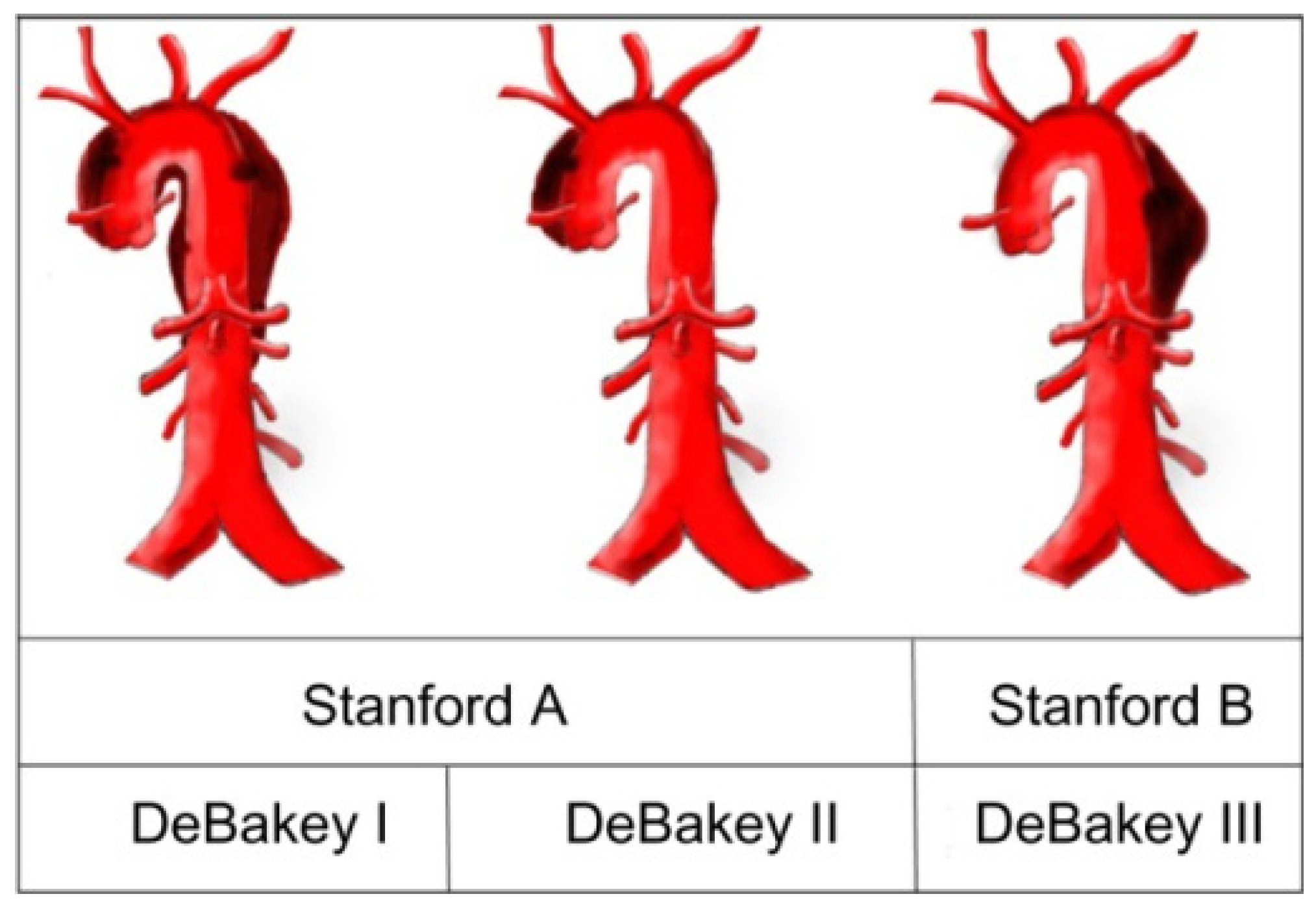
Acute aortic dissection is one of the most unforgiving diagnoses in cardiovascular care. Clinical decision-making, operative readiness, and systems coordination must occur within hours rather than days. The condition carries high mortality, and its two major phenotypes require different resources. Type A dissections involve the ascending aorta and require emergency surgical intervention. Within the DeBakey classification, Type I dissections extend beyond the ascending aorta into the arch or descending aorta, whereas Type II dissections are confined to the ascending aorta. Type B dissections involve the descending aorta distal to the left subclavian artery and are typically managed medically unless complications arise (Figure 1) [1]. In this setting, outcomes rarely depend on a single decision or surgeon. They depend on whether the receiving hospital can reliably activate a full pathway on demand.
This reality has placed acute dissection within a broader policy conversation about regionalization and specialized aortic centers. The premise is straightforward but consequential. Outcomes may improve when patients reach specialized centers with greater case volume, established protocols, and enhanced readiness. Volume is not merely a proxy for technical repetition. In the acute setting, it often co-travels with rescue capacity, staffing, and standardized workflows that determine whether complications become fatalities. Contemporary U.S. evidence supports this model through a volume–outcome relationship across high-acuity interventions.
At the same time, centralization may not be a frictionless good. Transfer pathways can improve outcomes but may also create access gradients, particularly for rural and vulnerable populations. The literature increasingly treats transfer logistics as part of the exposure itself, not as an afterthought. Recent work emphasizes transfer centers and command-hub models that reduce delays and improve resource utilization [3,4]. Even temporal vulnerability is relevant: high-volume centers may mitigate outcome disparities during off-hours, reinforcing that “centralized readiness and staffing” is a measurable system attribute rather than a slogan [5].
A persistent barrier to translation, however, is definitional. Across studies, “high-volume” and “aortic center” status are not standardized. Definitions “vary widely (e.g., ≥10 vs. ≥20 procedures/year),” hindering cross-study comparisons, policy implementation, and operationalization of regional targets. This lack of a reproducible definition creates a policy problem. It prevents volume thresholds from serving as transparent, equitable criteria for triage, transfer agreements, and network design [6].
In that context, the pragmatic question is not whether expertise matters. It is whether treatment at specialized aortic centers improves outcomes for adults with acute Stanford type A or type B aortic dissection in U.S. settings, and what “aortic center” is actually measuring across the evidence base. We therefore conducted a systematic review with narrative synthesis, reporting differences in outcomes between specialized or high-volume centers and general or low-volume hospitals, while explicitly characterizing the heterogeneity in center definitions that currently constrains implementation.

2. Materials and Methods

2.1. Study Design and Reporting Standards

We conducted a structured narrative review of U.S.-based evidence evaluating outcomes of acute aortic dissection care across different hospital types, with emphasis on specialized aortic centers and institutional volume strata. Due to the heterogeneity in center definition, aortic, specialized, and high-volume centers were grouped in comparison to low-volume and general hospitals. Study identification, screening, and reporting were organized using the PRISMA framework. A PRISMA 2020 checklist was completed accordingly (Supplementary Materials). This review was not prospectively registered in PROSPERO.

2.2. Data Sources and Search Strategy

Electronic searches were conducted across PubMed, Embase, Scopus, and CINAHL (Table 1). The search strategy combined acute aortic dissection and acute aortic syndrome terms with hospital-level exposure terms. These exposure terms captured specialization, referral patterns, center capability, volume-stratified comparisons, and center-designation comparisons. Outcome terms were then added to identify studies reporting mortality, complications, length of stay, reintervention, survival, readmission, or related endpoints. The search covered publications from January 2000 through July 2025. Only peer-reviewed articles published in English were eligible. Covidence was used throughout for citation management, screening, and workflow tracking.

2.3. Study Selection and Screening

All identified records were imported into Covidence. Two independent reviewers screened titles and abstracts for eligibility, followed by a full-text review of potentially relevant articles. Discrepancies were resolved through discussion and consensus. Full-text availability was required; records without accessible full text were excluded at the full-text stage and recorded as unavailable.

Eligibility Criteria

Inclusion Criteria
Studies were eligible for inclusion if they met the following criteria:
  • Adults ≥ 18 years.
  • Acute Stanford Type A and/or Type B aortic dissection within 14 days of symptom onset.
  • Diagnosis confirmed by imaging (CT, MRI, TEE) and/or intraoperative findings, as defined by the study.
  • U.S.-based population or U.S. hospital/health-system datasets.
  • Care delivered at specialized aortic centers (e.g., high-volume centers, referral centers, dedicated teams, continuous surgical availability) with outcomes extractable, with an explicit comparator group (general hospitals and/or lower-volume centers).
  • Comparative design evaluating outcomes between center types, volume strata, or referral/transfer patterns.
  • Reports at least one clinical outcome (e.g., mortality, complications, time to surgery, length of stay, reintervention, long-term survival, MACE).
  • Observational study designs including retrospective/prospective cohorts, registry-based studies, or national/state database analyses.
  • Published in peer-reviewed journals, in English, from the year 2000 onward.
  • Studies stratifying outcomes by Type A vs. Type B were eligible; studies including both types were eligible when outcomes were stratified. Although both acute Type A and Type B dissections were eligible, data were extracted and interpreted by dissection type when reported. Studies pooling Type A and Type B dissections without separable outcomes were excluded.
Exclusion Criteria
Studies were excluded if they met any of the following criteria:
  • Patients under 18 years, or chronic/subacute dissections (>14 days).
  • Isolated intramural hematoma, penetrating aortic ulcer, or aneurysm without dissection (unless separated dissection data were reported).
  • Animal or cadaveric studies.
  • Case reports or case series with fewer than 10 patients.
  • Studies without a clear hospital setting or center classification (no extractable center-level comparator).
  • Single-surgeon/team studies lacking broader institutional context.
  • Studies focused only on surgical technique or time periods without center stratification.
  • Outcomes focused solely on imaging, diagnostics, or biomarkers without clinical outcomes.
  • Editorials, opinion pieces, simulation studies, and non–patient-level research.
  • Abstracts, posters, or conference proceedings without full peer-reviewed text.
  • Publications before 2000.
  • Duplicate publications without new analysis.
  • Outcomes pooled across dissection types without stratification when the dissection subtype could not be separated.

2.4. Data Extraction

Two reviewers performed data extraction in Covidence using predefined categories: study identification, baseline patient characteristics when available, dissection subtype, center definition or volume thresholds, transfer or referral patterns when applicable, outcomes, analytic approach, and reported results. Discrepancies in extracted data were resolved by consensus.

2.5. Quality Assessment

Two reviewers independently assessed study quality using ROBINS-I for nonrandomized comparative studies. Evaluation focused on the methodological features most relevant to observational center-level comparisons, including confounding, participant selection, classification of center exposure, missing data, outcome measurement, and selective reporting. Reviewers resolved differences in judgment by consensus. Reviewers used these assessments to guide interpretation of the evidence during narrative synthesis rather than to exclude studies based on score alone.

2.6. Data Synthesis and Analysis

A structured narrative synthesis was performed for all included studies. Because definitions of center exposure, patient populations, and outcome reporting varied across studies, we summarized results by outcome domain in alignment with the Results figures: mortality, length of stay, and neurologic outcomes. We interpreted each result within its study-specific analytic framework. When comparative data were available, p-values were reported as provided by the source study.

3. Results

3.1. Study Identification and Selection

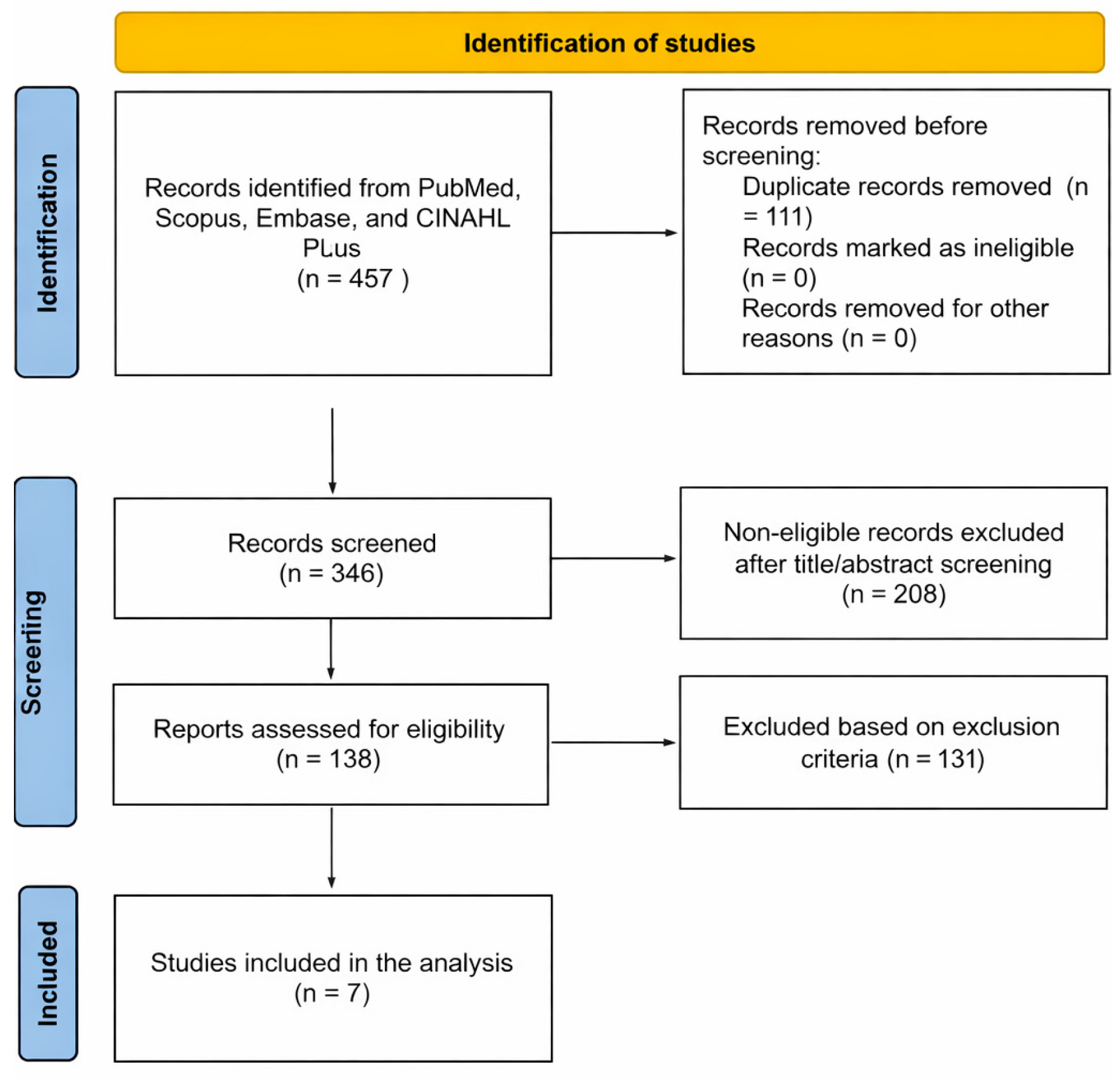
Figure 2 summarizes the search yield and screening workflow. The database search identified 457 records: Scopus, n = 207; CINAHL, n = 150; PubMed, n = 75; and Embase, n = 25. After duplicate removal, 346 unique records underwent title and abstract screening, and 208 were excluded. Duplicate records included 6 identified manually and 105 identified within Covidence. Full text was sought for 138 records; none were unretrieved (n = 0). Of 138 full texts assessed for eligibility, 131 were excluded for prespecified reasons (wrong setting n = 71; wrong outcomes n = 1; wrong comparator n = 14; wrong study design n = 11; paper inaccessible n = 16; wrong patient population n = 11; wrong intervention = 7). Seven studies were included in the final structured narrative synthesis (Figure 2).

3.2. Included Studies and Center-Definition Crosswalk

Included studies evaluated acute aortic dissection outcomes across hospital strata variably operationalized as high-volume centers, aortic centers, referral centers, or related constructs. Definitions of “high-volume” and the operational meaning of “aortic center” were study-specific rather than universal. Table 1 provides a concise crosswalk for each included study. It summarizes total cohort size, the study-defined exposure and comparator, and the outcomes contributing to Figure 3, Figure 4 and Figure 5. Not all studies reported each endpoint. We displayed studies only in the figure panels for which the relevant outcome was available. All seven included studies primarily evaluated acute Type A aortic dissection; no included study provided a direct, extractable Type B center-volume comparison suitable for synthesis. Because volume thresholds were central to the review question, Table 2 explicitly summarizes the high-volume and low-volume definitions used by each included study.

3.3. In-Hospital or 30-Day Mortality

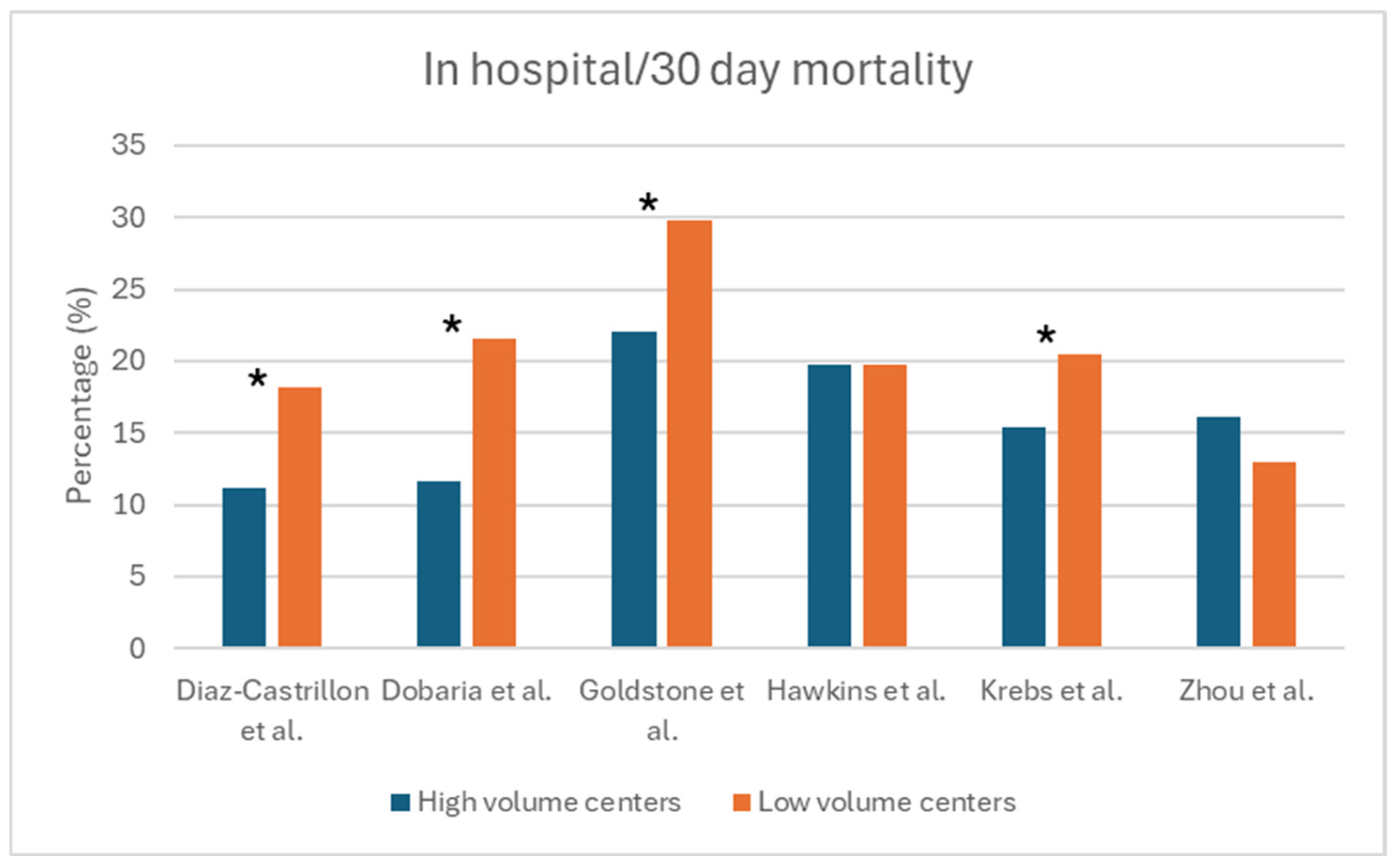
Figure 3 shows mortality comparisons across center strata. In most studies contributing to this endpoint, mortality was lower in the high-volume stratum than in the low-volume stratum. Diaz-Castrillon et al., Dobaria et al., Goldstone et al., and Krebs et al. each reported statistically significant separation favoring high-volume centers with p < 0.001 [3,4,7,8]. Zhou et al. (p = 0.55) demonstrated no statistical difference between strata [6]. Hawkins et al. reported operative mortality across operative eras rather than across explicit high-volume versus low-volume center strata, with no significant difference over time (p = 0.8) [9]. Dorton et al. did not contribute to the perioperative mortality comparison because the study’s endpoint was long-term all-cause survival rather than in-hospital or 30-day mortality. In that analysis, risk-adjusted median survival was longer at high-volume aortic centers than at low-volume centers, 6.6 years versus 4.1 years [5].

3.4. Total Hospital Length of Stay

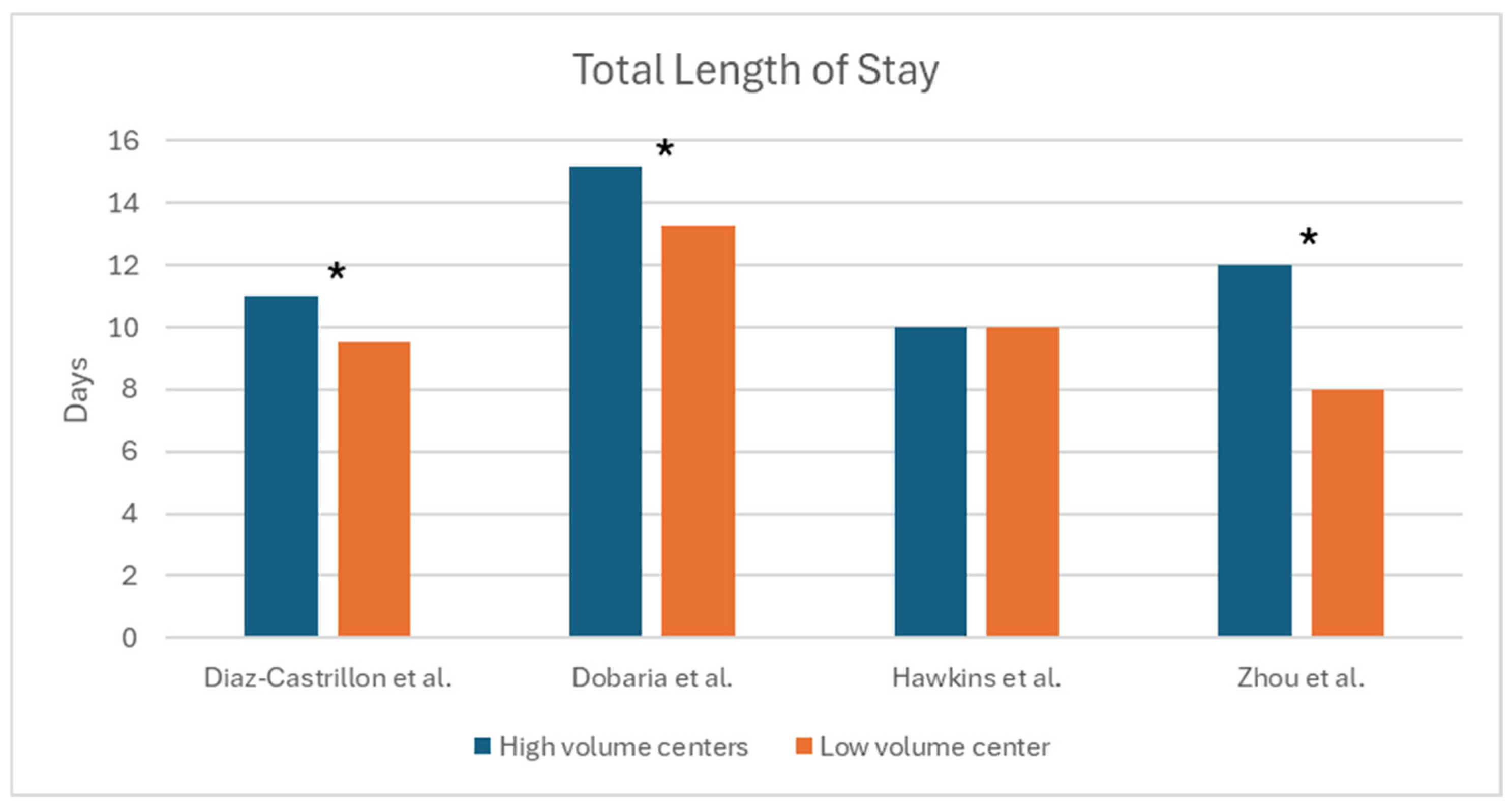
Figure 4 shows length-of-stay comparisons. Among studies contributing to this endpoint, total hospital length of stay was longer in the high-volume stratum in Diaz-Castrillon et al., Zhou et al., and Dobaria et al. These plotted comparisons were statistically significant (p ≤ 0.001) [3,6,7]. Hawkins et al. demonstrated no meaningful difference between strata (p = 0.74) [9].

3.5. Neurologic Complications

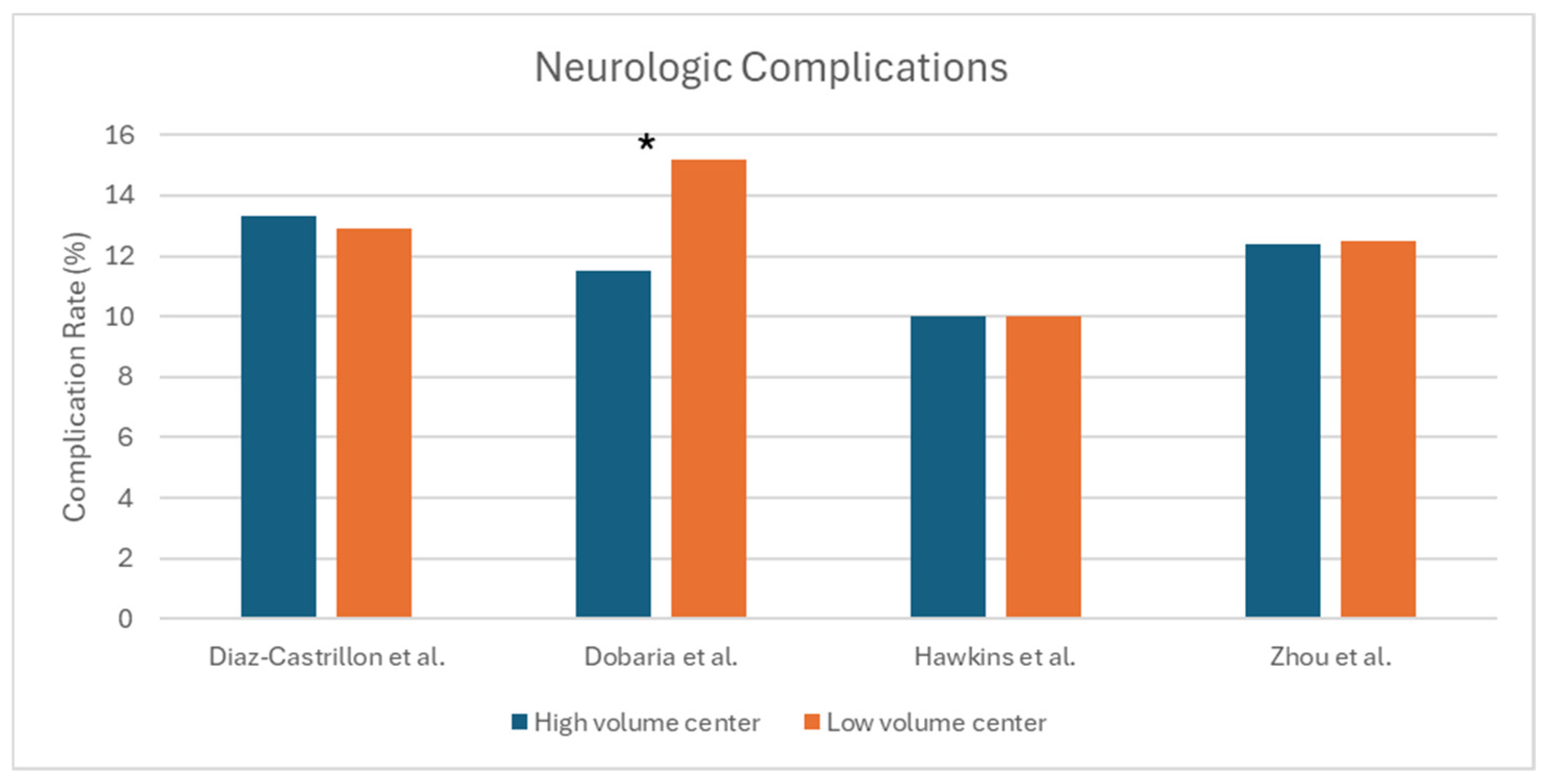
Figure 5 shows neurologic complication comparisons. Separation by center strata was less consistent for neurologic complications than for mortality or length of stay. Diaz-Castrillon et al. (p = 0.72), Hawkins et al. (p = 0.82), and Zhou et al. (p = 0.99) demonstrated no meaningful difference between strata in the plotted comparison [6,7,9]. In contrast, Dobaria et al. reported a statistically significant difference favoring high-volume centers (p = 0.002). In the plotted comparison, neurologic complication rates were higher in the low-volume stratum [3]. Goldstone et al., Krebs et al., and Dorton et al. did not contribute to the plotted neurologic complication estimates in the current neurologic complications panel [4,5,8].

3.6. Quality Assessment

Overall study quality was moderate (Table 3). The main limitations arose from the observational design of the evidence base rather than from pervasive reporting deficiencies. The strongest studies used large U.S. registry or administrative cohorts, explicit hospital-volume definitions, and adjusted analyses. These features supported a more reliable estimation of associations between center experience and mortality or failure to rescue. Across the body of evidence, the most consistent methodological concerns were residual confounding and heterogeneity in center-exposure definition. Residual confounding was especially relevant to illness severity, referral patterns, and transfer status. Outcome ascertainment was generally more robust for mortality than for secondary endpoints derived from coded complications or resource-use measures. Two studies were less directly aligned with the review question because their principal analytic comparisons were operative era or prior cardiac surgery status, rather than center category [4,9], and these were judged to be of lower methodological relevance to the target exposure. Taken together, quality assessment supported narrative synthesis. It also indicated that the observed center-outcome signal should be interpreted in the context of residual confounding and variation in exposure definition.

4. Discussion

Across a contemporary, U.S.-only evidence base, our synthesis supports a consistent “aortic-center effect” for acute Type A aortic dissection (ATAAD) care. The aortic center effect refers to patients experiencing significantly better short- and long-term outcomes after aortic surgical repair (Type A aortic dissections in this case) at specialized centers compared to lower-volume or general institutions. This effect is best understood as a systems capability phenomenon rather than a purely technical one. In the studies we included, higher-volume centers generally achieved lower in-hospital or 30-day mortality, even when they managed more complex operative case mixes [7,8]. Where complication incidence did not fully explain outcome differences, the signal pointed toward rescue capacity. This includes the ability to recognize, respond to, and physiologically support patients through postoperative decompensation [7]. This framing matters because it shifts the center-definition debate away from a single procedural threshold. It instead favors an operational definition anchored in reproducible systems of care [10].
The study flow (Figure 2) reflects a stringent screening pathway culminating in a small set of eligible studies. This is a result in itself. Despite the clinical and policy importance of ATAAD regionalization, the literature remains concentrated in administrative datasets and registry analyses with heterogeneous volume definitions and endpoints. The immediate implication is that “aortic center” cannot be treated as a settled construct in the evidence base. Instead, studies approximate it through measurable proxies, most commonly institutional volume. Thresholds vary substantially across studies. The downstream effect is that our conclusions are strongest when stated as directional and systems-based, rather than as a single universal volume cutoff.
The mortality synthesis (Figure 3) is the core clinical signal. Across multiple datasets and analytic approaches, treatment at higher-volume centers is generally associated with lower operative mortality for ATAAD [3,7,8]. Two interpretive points are worth emphasizing.
First, the directionality appears robust despite between-study heterogeneity in “high volume” definitions. This is precisely why volume has persisted as a practical proxy: it is measurable, comparable, and policy-legible, even when “aortic center” is not yet universally standardized. Second, the mechanism is plausibly not just “better surgery.” In the STS analysis, overall complication rates were high. Yet the volume relationship emerged through failure-to-rescue, with increased odds of FTR below an approximate institutional average of 10 cases per year [7]. That finding complements the broader regionalization literature. It suggests that rerouting to higher-volume hospitals can reduce mortality even when the transfer itself risks delay [8]. The longer-term signal is concordant: Dorton et al. evaluated all-cause mortality through survival analysis and found greater risk-adjusted median survival after ATAAD repair at high-volume centers than at low- or intermediate-volume centers [5]. Taken together, the mortality data favor a definition of aortic centers that includes the capacity to rescue as a first-class criterion, not an implied byproduct of volume.
A minority of included work shows attenuated or non-significant mortality differences across volume strata, which should not be dismissed. Rather, it highlights that (1) volume alone is an imperfect classifier of system maturity, and (2) patient routing, illness severity at presentation, and transfer patterns can shift apparent outcome gradients [6,9]. This is exactly the argument for a more explicit, multi-domain aortic center definition: when volume is used as the only proxy, “center” can become as much a labeling exercise as a systems designation.
Goldstone et al. is especially important to this question. Their study separated transfer, hospital volume, and regionalization effects within a national Medicare cohort of acute type A aortic dissection [8]. Using a preference-based instrumental variable design, they found no significant association between interfacility transfer itself and operative mortality. In contrast, regionalization to high-volume hospitals was associated with a 7.2% absolute risk reduction in operative mortality [8]. That distinction matters for how the present review should be interpreted. The question is not whether transfer, by itself, improves outcomes. It is whether transfer connects patients to a center with the operative readiness, perioperative infrastructure, and rescue capacity needed to change the trajectory of ATAAD. Therefore, the findings strengthen the argument that aortic-center definitions should capture regionalized capability rather than procedural volume alone.
Length of stay (LOS), as reported in Figure 4, is not a simple quality marker. It is a mixed signal of resource intensity, recovery burden, and case complexity. In several included studies, high-volume care was associated with longer hospital LOS. On first reading, this appears counterintuitive if high-volume centers are otherwise associated with lower mortality. However, longer LOS at these centers may reflect the patients and operations being concentrated there rather than inferior care. Referral centers often receive transferred, late-presenting, or higher-risk patients. They may also perform more complex proximal, root, or arch procedures that require longer postoperative recovery. This interpretation is consistent with the broader pattern in the review: high-volume centers may absorb greater operative and critical-care burden while still producing better survival. LOS, therefore, should not be interpreted as a stand-alone quality concern unless it is risk-adjusted for acuity, transfer status, operative extent, postoperative complications, discharge destination, and institutional discharge practices. In future studies, LOS would be most informative if analyzed alongside mortality, failure-to-rescue, operative complexity, and discharge disposition, rather than treated as an isolated efficiency endpoint.
This is where a policy-relevant aortic center definition becomes urgent. If referral centers are expected to bear a greater resource burden to deliver lower mortality, then designation must be accompanied by systems that support transfer coordination and capacity planning. In other words, LOS signals that regionalization is not simply moving patients; it is redistributing workload and cost toward the very centers that produce better outcomes. A credible aortic center framework should acknowledge this explicitly rather than treat resource intensity as incidental.
Neurologic complications (Figure 5) are a high-salience outcome for ATAAD, both clinically and reputationally, because stroke is often perceived as a marker of operative quality and cerebral protection strategy. The mixed pattern across studies is instructive. When volume differences are not consistently observed for neurological events, the mortality gradient may not be driven by the prevention of all major complications. It may instead reflect post-complication management, escalation pathways, and multidisciplinary rescue. Where differences do appear, they may be influenced by practice evolution and cerebral protection strategies that track with the maturation of dedicated aortic programs [3]. The broader implication is that an aortic center definition should not rely on any single complication rate as a sufficient marker of excellence. Instead, neurologic outcomes should be paired with rescue metrics and program-level cerebral protection capabilities to avoid overinterpreting a single endpoint.
The most actionable contribution of this review is not that high volume is better, although that is broadly supported. The stronger contribution is that the field is implicitly using volume as a placeholder for a package of systems that are rarely measured directly. Our results argue that the next iteration of “aortic center” definitions should be explicit about those systems. Based on the mechanisms surfaced across included studies, a defensible definition would incorporate at least three domains. First, case volume serves as an access and readiness marker because it is measurable and correlates with outcomes across multiple datasets. Second, rescue capability is a core quality construct because failure-to-rescue appears to differentiate centers even when complication rates persist. Third, regionalization infrastructure, including triage and transfer pathways, shapes both outcomes and resource utilization at referral centers.
In this review, procedural volume was treated as the dominant exposure because it was the institutional characteristic most consistently reported across the included studies. It should not be interpreted as the full definition of an aortic center. Most studies did not independently measure multidisciplinary coordination, operating room readiness, specialized ICU capacity, transfer acceptance workflows, or postoperative rescue systems. As a result, the available literature cannot reliably isolate whether these non-volume characteristics contribute independently to improved outcomes. The evidence instead suggests that volume is functioning as a measurable surrogate for a broader capability package. This distinction is important: volume may be a useful screening marker for institutional experience, but it is not a sufficient policy definition of aortic-center readiness unless paired with explicit system-level capabilities.
The 2022 ACC/AHA Guideline offers a useful benchmark for this problem because it recognizes high-volume, multidisciplinary aortic care as central to the management of acute aortic disease [10]. For acute type A dissection, the guideline supports transfer of clinically stable patients from low-volume hospitals to high-volume aortic centers when feasible. It defines high-volume status as at least 7 aortic root, ascending aortic, or transverse arch repairs annually [10]. The studies in this review, however, do not map cleanly onto that threshold. As summarized in Table 3, study definitions ranged from ATAAD-specific annual case thresholds to cumulative institutional experience, regional consortium volume, and broader proximal aortic operative volume constructs [3,4,5,6,7,8,9]. These differences create an important interpretive problem. Some hospitals labeled “low-volume” in one study may still meet or approach the ACC/AHA-referenced threshold, while others fall well below it. At the same time, at least one high-volume construct was based on broader proximal aortic operative experience rather than ATAAD-specific annual dissection volume [8]. The issue is therefore not only whether volume matters, but what volume is counting: ATAAD repairs, broader proximal aortic operations, cumulative institutional experience, or regional referral practice. Annual case volume is also shaped by the population served, referral geography, and regional capture area. For that reason, a single numerical cutoff cannot fully capture institutional readiness. As a result, the same term, “high-volume center,” may refer to meaningfully different hospital capabilities across datasets. Future studies should report whether centers meet ACC/AHA-referenced thresholds. They should also specify the operational features that make those thresholds clinically meaningful, including multidisciplinary coverage, transfer acceptance, operating room readiness, specialized ICU capacity, and failure-to-rescue performance.
Notably, this framework also helps reconcile an apparent tension in the literature. High-volume centers may show higher resource utilization and longer LOS while still producing superior survival [5,6]. That combination is not contradictory. It is the expected signature of specialized centers acting as system backstops for a high-lethality emergency.
Several limitations shape interpretation. First, the evidence base is dominated by a small set of U.S. retrospective analyses with administrative or registry data. This introduces residual confounding by disease severity, transfer selection, and center-level case mix. Second, “high volume” thresholds vary widely across studies, limiting any attempt to infer a universal cutoff from pooled narrative patterns. Third, endpoints are not uniformly defined. Neurological outcomes, in particular, can be sensitive to coding practices and surveillance intensity. Fourth, differences in transfer patterns across volume strata can bias comparisons if transfer timing and preoperative deterioration are not fully captured. Lastly, all studies reported primarily on Type A dissections. This limits direct extrapolation to Type B dissection, where initial management is often medical unless complications arise. As a result, the operative and transfer-related metrics emphasized in the included studies may not apply equally to Type B populations. A separate review-level limitation is that this systematic review was not prospectively registered in PROSPERO, and no public protocol was available before screening and extraction were completed. This limits external comparison between a prespecified protocol and the final report and leaves some residual risk of selective reporting. Nevertheless, we used predefined eligibility criteria, duplicate screening and extraction, Covidence workflow tracking, PRISMA-aligned reporting, and ROBINS-I quality assessment to reduce the risk of selective reporting. These limitations are precisely why the field should move beyond volume-only proxies. Aortic center designation will remain vulnerable to definitional disputes until rescue metrics and transfer-system performance are measured and reported in a standardized way.

5. Conclusions

This review of U.S.-based evidence supports a consistent association between aortic center status, most often operationalized by institutional volume, and improved outcomes after acute type A aortic dissection repair. The clearest signal is seen in lower mortality at higher-volume centers, while secondary outcomes such as neurologic complications remain less consistent. Taken together, the literature suggests that volume is serving as a practical proxy for a broader capability package. This package includes continuous transfer and operative readiness, coordinated perioperative care systems, and rescue capacity. The central unresolved issue is definitional. The field has progressed far enough to justify a formal, operational definition of an aortic center, but heterogeneity in exposure definitions and system-level outcome reporting still limits implementation. Future work should move beyond volume alone by pairing transparent thresholds with explicit capability-based criteria. It should also directly evaluate time-sensitive performance measures, equity and feasibility across referral networks, and workforce sustainability, especially given projected shortages in vascular and thoracic surgery personnel that will shape the real-world viability of regionalized dissection care [11,12,13].

Supplementary Materials

The following supporting information can be downloaded at https://www.mdpi.com/article/10.3390/jvd5030022/s1. Table S1: PRISMA 2020 checklist [14].

Author Contributions

Conceptualization, N.K.O.-Y.; methodology, N.K.O.-Y.; validation, N.K.O.-Y. and J.W.; formal analysis, N.K.O.-Y. and J.W.; investigation, N.K.O.-Y., J.W., A.S. and R.N.; data curation, N.K.O.-Y., J.W., A.S. and R.N.; writing—original draft preparation, J.W. and N.K.O.-Y.; writing—review and editing, N.K.O.-Y., J.W., A.S., R.N., J.C. and C.W.; visualization, J.W.; supervision, J.C. and C.W. All authors have read and agreed to the published version of the manuscript.

Funding

This research received no external funding.

Institutional Review Board Statement

Not applicable.

Informed Consent Statement

Not applicable.

Data Availability Statement

No new data were created or analyzed in this study. Data sharing is not applicable to this article.

Conflicts of Interest

The authors declare no conflicts of interest.

Abbreviations

The following abbreviations are used in this manuscript:
ATAADAcute Type A Aortic Dissection
LOSLength of Stay
STSSociety of Thoracic Surgeons
FTRFailure-to-rescue
PRISMAPreferred Reporting Items for Systematic Reviews and Meta-Analyses
ICUIntensive Care Unit
CMSCenters for Medicare and Medicaid Services
NISNational Inpatient Sample
VCSQIVirginia Cardiac Services Quality Initiatives
MACEMajor Adverse Cardiovascular Events

References

  1. Braverman, A.C. Acute aortic dissection: Clinician update. Circulation 2010, 122, 184–188. [Google Scholar] [CrossRef] [PubMed]
  2. Kumar, A.; Kumar, K.; Zeltser, R.; Makaryus, A.N. Nearly Asymptomatic Eight-Month Thoracic Aortic Dissection. Clin. Med. Insights Cardiol. 2016, 10, 75–78. [Google Scholar] [CrossRef] [PubMed]
  3. Dobaria, V.; Kwon, O.J.; Hadaya, J.; Sanaiha, Y.; Sareh, S.; Aguayo, E.; Seo, Y.J.; Benharash, P. Impact of center volume on outcomes of surgical repair for type A acute aortic dissections. Surgery 2020, 168, 185–192. [Google Scholar] [CrossRef] [PubMed]
  4. Krebs, E.D.; Mehaffey, J.H.; Hawkins, R.B.; Beller, J.P.; Fonner, C.E.; Kiser, A.C.; Joseph, M.; Quader, M.A.; Kern, J.A.; Yarboro, L.T.; et al. Outcomes After Acute Type A Aortic Dissection in Patients with Prior Cardiac Surgery. Ann. Thorac. Surg. 2019, 108, 708–713. [Google Scholar] [CrossRef] [PubMed]
  5. Dorton, C.W.; McCullough, K.A.; Pickering, T.; Banwait, J.K.; Hale, S.; DiMaio, J.M.; Schaffer, J.M. Hospital Volume and Long-Term Survival Among Medicare Beneficiaries Undergoing Surgical Repair of Acute Type A Aortic Dissection. Am. J. Cardiol. 2025, 237, 86–92. [Google Scholar] [CrossRef] [PubMed]
  6. Zhou, A.L.; Yesantharao, L.V.; Etchill, E.W.; Barbur, I.; Shou, B.L.; Aziz, H.; Choi, C.W.; Lawton, J.S.; Kilic, A. Costs and Readmissions Associated with Type A Aortic Dissections at High- and Low-Volume Centers. Heart Surg. Forum 2023, 26, E694–E704. [Google Scholar] [CrossRef] [PubMed]
  7. Diaz-Castrillon, C.E.; Serna-Gallegos, D.; Arnaoutakis, G.; Grimm, J.; Szeto, W.Y.; Chu, D.; Sezer, A.; Sultan, I. Volume-failure-to-rescue relationship in acute type A aortic dissections: An analysis of The Society of Thoracic Surgeons Database. J. Thorac. Cardiovasc. Surg. 2024, 168, 1416–1425.e7. [Google Scholar] [CrossRef] [PubMed]
  8. Goldstone, A.B.; Chiu, P.; Baiocchi, M.; Lingala, B.; Lee, J.; Rigdon, J.; Fischbein, M.P.; Woo, Y.J. Interfacility Transfer of Medicare Beneficiaries with Acute Type A Aortic Dissection and Regionalization of Care in the United States. Circulation 2019, 140, 1239–1250. [Google Scholar] [CrossRef] [PubMed]
  9. Hawkins, R.B.; Mehaffey, J.H.; Downs, E.A.; Johnston, L.E.; Yarboro, L.T.; Fonner, C.E.; Speir, A.M.; Rich, J.B.; Quader, M.A.; Ailawadi, G.; et al. Regional Practice Patterns and Outcomes of Surgery for Acute Type A Aortic Dissection. Ann. Thorac. Surg. 2017, 104, 1275–1281. [Google Scholar] [CrossRef] [PubMed][Green Version]
  10. Isselbacher, E.M.; Preventza, O.; Hamilton Black, J., 3rd; Augoustides, J.G.; Beck, A.W.; Bolen, M.A.; Braverman, A.C.; Bray, B.E.; Brown-Zimmerman, M.M.; Chen, E.P.; et al. 2022 ACC/AHA Guideline for the Diagnosis and Management of Aortic Disease: A Report of the American Heart Association/American College of Cardiology Joint Committee on Clinical Practice Guidelines. Circulation 2022, 146, e334–e482. [Google Scholar] [CrossRef] [PubMed]
  11. HRSA Health Workforce. Physician Workforce: Projections, 2023–2038; HRSA Health Workforce: Rockville, MD, USA, 2025. [Google Scholar]
  12. The Society of Thoracic Surgeons. Advocacy Issue: Physician Workforce. Available online: https://www.sts.org/advocacy-issue-physician-workforce (accessed on 15 March 2026).
  13. Moffatt-Bruce, S.; Crestanello, J.; Way, D.P.; Williams, T.E., Jr. Providing cardiothoracic services in 2035: Signs of trouble ahead. J. Thorac. Cardiovasc. Surg. 2018, 155, 824–829. [Google Scholar] [CrossRef] [PubMed]
  14. Page, M.J.; McKenzie, J.E.; Bossuyt, P.M.; Boutron, I.; Hoffmann, T.C.; Mulrow, C.D.; Shamseer, L.; Tetzlaff, J.M.; Akl, E.A.; Brennan, S.E.; et al. The PRISMA 2020 statement: An updated guideline for reporting systematic reviews. BMJ 2021, 372, 71. [Google Scholar] [CrossRef] [PubMed]
Figure 1. Stanford classification of aortic dissection. Type A involves the ascending aorta, while Type B involves the descending aorta distal to the left subclavian artery. Source: Kumar A et al. 2016, originally published in Clin Med Insights Cardiol. Reproduced under the Creative Commons Attribution-Non-Commercial 3.0 (CC BY-NC 3.0) license [2].
Jvd 05 00022 g001
Figure 2. Preferred Reporting Items for Systematic Reviews and Meta-Analyses (PRISMA) Flow Diagram Illustrating the Study Selection Process.
Jvd 05 00022 g002
Figure 3. Mortality in High-Volume Versus Low-Volume Surgical Centers Across Included Studies. Plotted values are descriptive study-level mortality estimates as reported by each source study. Non-significant numerical differences should not be interpreted as true directional effects. Hawkins et al. is included as contextual mortality evidence because outcomes were stratified by operative era rather than by an explicit high-volume versus low-volume center threshold. p-values compare findings in the reported center-types. “*” indicates statistical significance. Diaz Castrillon et al. [7], Dobaria et al. [3], Goldstone et al. [8], and Krebs et al. [4]: p < 0.001. Hawkins et al. [9]: p = 0.8. Zhou et al. [6]: p = 0.55.
Jvd 05 00022 g003
Figure 4. Total Length of Stay in High-Volume Versus Low-Volume Surgical Centers Across Included Studies. Plotted values are descriptive study-level mortality estimates as reported by each source study. Non-significant numerical differences should not be interpreted as true directional effects. Hawkins et al. [9] is included as contextual mortality evidence because outcomes were stratified by operative era rather than by an explicit high-volume versus low-volume center threshold. p-values compare findings in the reported center-types. “*” indicates statistical significance. Diaz-Castrillon et al. [7] and Dobaria et al. [3]: p < 0.001. Zhou et al. [6]: p = 0.001.
Jvd 05 00022 g004
Figure 5. Neurologic Complication Rates in High-Volume Versus Low-Volume Surgical Centers Across Included Studies. Plotted values are descriptive study-level mortality estimates as reported by each source study. Non-significant numerical differences should not be interpreted as true directional effects. Hawkins et al. is included as contextual mortality evidence because outcomes were stratified by operative era rather than by an explicit high-volume versus low-volume center threshold. p-values compare findings in the reported center-types. “*” indicates statistical significance. Dobaria et al. [3]: p = 0.002.
Jvd 05 00022 g005
Table 1. Summary of databases and search strategies.
DatabaseSearch Terms
Pubmed(“aortic dissection”[MeSH Terms] OR “type A dissection” OR “type B dissection” OR “acute aortic dissection”)
AND
(“aortic center” OR “high-volume hospital” OR “specialized center” OR “referral center” OR “regionalized care”)
AND
(“mortality” OR “survival” OR “complications” OR “neurologic outcomes” OR “ICU length of stay” OR “readmission” OR “long-term survival”)
EMBASE(‘aortic dissection’/exp OR ‘type A dissection’ OR ‘type B dissection’)
AND
(‘aortic center’ OR ‘high volume hospital’ OR ‘specialist hospital’ OR ‘referral hospital’ OR ‘regionalization’/exp)
AND
(‘mortality’/exp OR ‘neurologic complication’ OR ‘treatment outcome’/exp OR ‘readmission’/exp OR ‘length of stay’/exp OR ‘reintervention’)
ScopusTITLE-ABS-KEY(“aortic dissection” OR “type A dissection” OR “type B dissection”)
AND
TITLE-ABS-KEY(“aortic center” OR “specialized hospital” OR “high-volume center” OR “referral center” OR “regionalized care”)
AND
TITLE-ABS-KEY(“mortality” OR “outcomes” OR “stroke” OR “neurologic complications” OR “reintervention” OR “survival” OR “readmission”)
CINAHL Plus(“aortic dissection” OR “type A dissection” OR “type B dissection”)
AND
(“aortic center” OR “specialty hospital” OR “regionalized care” OR “referral system”)
AND
(“mortality” OR “complication rate” OR “readmission” OR “length of stay” OR “outcome assessment”)
Table 2. Summary of Study Characteristics for Included Studies Evaluating Outcomes in High-Volume Versus Low-Volume Centers for Aortic Dissection.
StudyData SourcePopulationCohort (N)High-Volume/Low-Volume DefinitionsOutcomesCitation Number
Dobaria et al. 2020National Inpatient Sample (NIS)Type A Dissection25,231High-volume: 100 cases/year (median); Low-volume: 10 cases/year (median)Mortality, Length of Stay, Neurologic Complications[3]
Krebs et al. 2019Virginia Cardiac Services Quality Initiative (VCSQI) DatabaseType A Dissection1332High-volume: >90 cases 2002–2017; Low-volume: ≤90 cases 2002–2017Mortality[4]
Dorton et al. 2025Medicare Administrative Claims Data (CMS)Type A Dissection15,375High-volume: >27 cases/year.
Low-volume: <6 cases/year
Mortality (≥1 year)[5]
Zhou et al. 2023Maryland Health Services Cost Review Commission (HSCRC) Inpatient Data SetType A Dissection249High-volume: 12 cases/year (mean); Low-volume: 1.2 cases/year (mean)Mortality, Length of Stay, Neurologic Complications[6]
Diaz-Castrillon et al. 2024STS Adult Cardiac Surgical Database (ACSD)Type A Dissection18,192High-volume: ≥10 ATAAD cases/year; Low-volume: <10 ATAAD cases/yearMortality, Length of Stay, Neurologic Complications[7]
Goldstone et al. 2019Centers for Medicare and Medicaid ServicesType A Dissection16,886High-volume: ≥105 cases/year; Low-volume: <105 cases/yearMortality[8]
Hawkins et al. 2017Virginia Cardiac Services Quality Initiative (VCSQI); The Society of Thoracic Surgeons (STS) Regional DatabaseType A Dissection884No explicit definitionsMortality, Length of Stay, Neurologic Complications[9]
Table 3. ROBINS-I Quality Assessment Across Included Studies.
StudyConfoundingSelection of ParticipantsClassification of Center ExposureDeviations from Intended ExposureMissing DataOutcome MeasurementSelection of Reported ResultOverall Judgment
[3]ModerateModerateModerateLowLowModerateModerateModerate
[7]ModerateModerateLowLowLow to ModerateModerateModerateModerate
[5]ModerateModerateLowLowLow to ModerateLowModerateModerate
[8]ModerateModerate to SeriousModerateLowLow to ModerateLow to ModerateModerateModerate
[9]SeriousModerateSeriousLowModerateLow to ModerateModerateSerious
[4]Moderate to SeriousModerateSeriousLowModerateModerateModerate to SeriousSerious
[6]ModerateModerateModerateLowModerateModerateModerateModerate
Disclaimer/Publisher’s Note: The statements, opinions and data contained in all publications are solely those of the individual author(s) and contributor(s) and not of MDPI and/or the editor(s). MDPI and/or the editor(s) disclaim responsibility for any injury to people or property resulting from any ideas, methods, instructions or products referred to in the content.