
Review

Extended Reality in Computer Science Education: A Narrative Review of Pedagogical Benefits, Challenges, and Future Directions


by
Miguel A. Garcia-Ruiz
1,
Elba A. Morales-Vanegas
2,
Laura S. Gaytán-Lugo
3,
Pablo A. Alcaraz-Valencia
3 and
Pedro C. Santana-Mancilla
2,*
1
Faculty of Computer Science and Technology, Algoma University, Sault Ste. Marie, ON P6A 2G4, Canada
2
School of Telematics, Universidad de Colima, Colima 28040, Mexico
3
School of Mechanical and Electrical Engineering, Universidad de Colima, Coquimatlan 28400, Mexico
*
Author to whom correspondence should be addressed.
Virtual Worlds 2025, 4(4), 56; https://doi.org/10.3390/virtualworlds4040056
Submission received: 16 October 2025 / Revised: 24 November 2025 / Accepted: 1 December 2025 / Published: 3 December 2025

Abstract

Technologies such as XR (Extended Reality), in the form of VR (Virtual Reality), AR (Augmented Reality) and MR (Mixed-Reality), are being researched for their potential to support higher education. XR offers novel opportunities for improving understanding and engagement of computer science (CS) courses, abstract and algorithmic thinking and the application of knowledge to solve problems with computers. This narrative literature review aims to report the state of XR adoption in the university CS education context by studying pedagogical benefits, representative cases, challenges, and future research work. Recent case studies have demonstrated that VR innovations are supportive of algorithm and data structure visualization, AR in programming and circuit analysis contextualization, and MR in bridging the experimental practice on virtual with real hardware within computer labs. The potential of XR to enhance engagement, motivation, and complex content understanding has already been researched. However, ongoing obstacles remain such as the high cost of hardware, technical issues in practicing scalable content, restricted access for students with disabilities, and ethical considerations over privacy and data protection. This review also presents XR, not as a substitute for traditional pedagogy, but as an additive tool that, in alignment with well-defined curricular objectives, may enhance CS learning. If it overcomes these deficiencies and progresses appropriate inclusive evidence-based practices, XR has the potential to play a powerful role in the future of computer science education as part of the digital learning ecosystem.

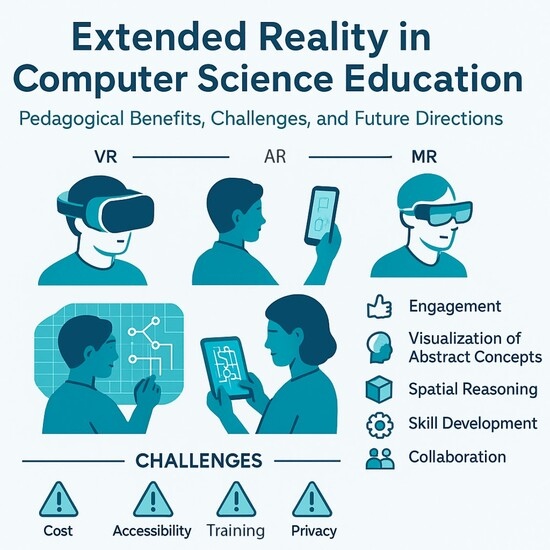
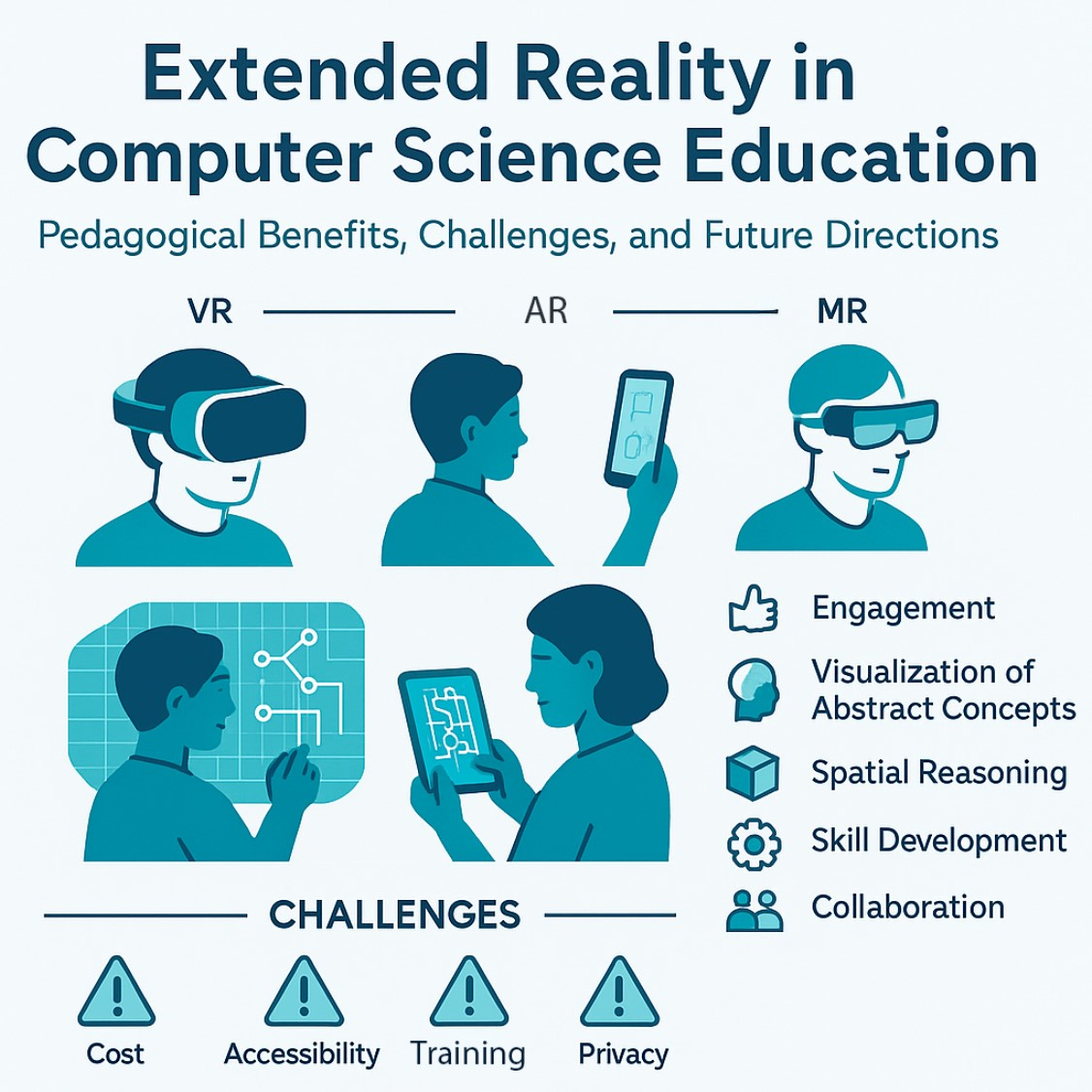
Graphical Abstract

1. Introduction

Extended Reality (XR), which includes Virtual Reality (VR), Augmented Reality (AR), and Mixed Reality (MR), is an emerging immersive group of technologies that has been successfully applied in education [1]. Since the technology can make multi-sensory, immersive interaction with virtual content possible, XR has the potential to change the higher education system by adding new dimensions to learning and making educational experiences more accessible [2,3]. These immersive tools are in line with experiential learning [4], since they offer realistic and engaging environments where students can get involved, so as to actively participate in their learning process. As a consequence, educational technologists and researchers have taken an interest in the potential of XR to deliver improved learning outcomes in a variety of fields, due to advances in technology as well as increasing awareness about XR enriching and extending traditional pedagogy [5].
University/College-level CS education in particular has a fair amount to gain from XR integration considering the unique challenges that come with teaching CS concepts. Learning CS requires students to learn with abstract, invisible processes (e.g., algorithm’s logic, data structures or program execution) that may be hard to teach in traditional forms [6,7]. However, XR has the ability to show abstract concepts more tangible with visually engaging interactive simulations [6]. For instance, immersive VR worlds can support students in visualizing and exploring algorithms in ways that foster their motivation and comprehension. In another study, students experienced a greater sense of presence and flow, more positive emotions while learning sorting algorithms in VR compared to desktop applications [6]. These findings allude to how XR may generate the motivational and cognitive conditions underpinning the learning of complex CS concepts by rendering that which is not visible, visible—turning code and data structures into an object or 3D animations learners can experience firsthand [6]. For example, AR can be used to concretize abstract concepts by visually overlaying digital information (e.g., steps of a visual algorithm calculation or data flow) on the real world so that students can understand material that is difficult to comprehend when presented just as text [8].
There are also issues in CS education that have to do with the acquisition of a visuospatial and practical abilities. Some computer topics (such as computer graphics, architecture, or networking) force students to visually and mentally simulate complex spatial structures or hardware configurations and get hands-on experience in manipulating such configurations [9]. These are the kinds of problems that XR technologies are particularly well positioned to solve. Studies have shown that hands-on tools contribute to improving learning of complex and abstract concepts because students get actively involved while experimenting virtually, as they can experiment safely in a virtual world that links up with theory [10]. In VR, students can complete virtual lab experiments or coding exercises with instant feedback, the kind of practice which facilitates skills learning and failure learning without real-world consequences. Similarly, AR can be used to enhance physical learning environments by allowing students to see and play with virtual models of computer systems or parts overlaid on computer hardware [11]. For instance, in an AR application, students would be able to dynamically explode and examine computer hardware or see algorithmic computation taking place. These affordances directly address the growth of practical skills and spatial reasoning: XR strengthens students’ spatial understanding of computing concepts by providing opportunities to manipulate 3D models or data in space, in addition to engaging them cognitively and emotionally. According to preliminary research in this field, incorporating XR into computer science classes aids students in overcoming learning challenges by offering interactive, real-world and hands-on experiences in a safe environment that are not feasible or feasible in a conventional classroom. To put it briefly, XR provides a promising toolkit for developing the applied problem-solving abilities required of computing graduates and for bringing abstract CS content to life.
The confluence of technological maturity and educational demand makes a literature review on XR in CS education especially timely. In recent years, XR hardware has become far more accessible—modern VR headsets are more affordable, comfortable, and easier to set up than those of a decade ago [6]. This improved technology base, combined with the pressures of the COVID-19 pandemic, has accelerated the adoption of XR in educational settings [12,13]. Notably, the shift to remote and hybrid learning during the pandemic prompted many universities to engage students remotely through innovative means, a change that accelerated the adoption of XR in higher education as institutions sought immersive solutions for online learning [14,15]. The result is a burgeoning body of research and practice: for instance, a recent systematic review identified 295 scholarly articles on XR in higher education published just between 2020 and 2024, spanning studies across six continents [5]. VR has been the most frequently explored XR modality in these studies, and the research spans disciplines (with science and engineering fields leading) and predominantly targets undergraduate education [5]. This rapid growth in the literature reflects a broad consensus that XR is no longer a futuristic novelty but an emerging mainstream tool in education. Integrating XR into CS curricula can help ensure students acquire skills relevant to modern industry practices, as today’s employers increasingly value experience with simulation, visualization, and other XR-enabled competencies. In short, the technological and cultural landscape has reached a point where examining the role of XR in computer science education is both necessary and urgent.
While recent systematic reviews have mapped the general landscape of XR in higher education, significant gaps remain regarding the specific pedagogical friction points in Computer Science. Existing literature often focuses on technological novelty or broad STEM applications, lacking a focused critique on how XR addresses the unique abstraction inherent in CS concepts (e.g., recursion, memory allocation). Furthermore, few reviews critically analyze the mixed results or failure modes where XR increases cognitive load. This article fills these gaps by moving beyond a descriptive catalog to provide a critical synthesis of why and when XR succeeds or fails specifically in CS curricula.
In light of these developments, this narrative literature review [16] is guided by the following questions: (1) What is the current state of XR integration in university-level computer science education? (2) What benefits and challenges of using XR in CS education have been identified in recent research? (3) What future trends or directions are anticipated for XR applications in CS teaching and learning? These questions aim to synthesize understanding of how XR is being used in practice, what impacts it is having on learning in computer science, and how the field might evolve as XR technologies and pedagogies continue to mature.
To address these questions, we present a critical narrative synthesis of the literature rather than a broad systematic mapping. Our approach goes beyond cataloguing existing studies; instead, we critically examine and connect findings to construct a coherent narrative about XR’s pedagogical role in CS education. By reviewing and interlinking evidence from diverse sources, we highlight key themes, achievements, and gaps in the current body of knowledge. The remainder of this article will delve into the literature to explore the benefits that XR brings to computer science education, the challenges and limitations encountered, and future directions for research and practice in leveraging XR to enhance CS teaching and learning. Our goal is to provide educators and researchers with an integrated perspective on how XR is currently shaping university-level computer science education and how it may do so in the years to come.

2. Materials and Methods

2.1. Review Design and Rationale

This study is a narrative literature review offering a critical synthesis of research on XR in university-level CS education. We selected a narrative approach rather than a systematic quantitative review (meta-analysis) due to the significant heterogeneity of the available literature, which comprises diverse methodologies (ranging from qualitative case studies to quasi-experimental designs) and lacks standardized outcome metrics. However, to ensure rigor and minimize selection bias, we adopted systematic search and screening procedures adapted from Kitchenham’s guidelines for systematic reviews in software engineering [17]. This methodological choice allows us to present a transparent, reproducible selection process typically found in systematic reviews while retaining the flexibility of a narrative synthesis necessary to integrate diverse pedagogical findings that cannot be statistically pooled.

2.2. Scope

The scope targets post-secondary (undergraduate/graduate) CS education, including core courses (programming, data structures and algorithms, computer architecture, graphics, networking) and CS-adjacent areas (HCI, cybersecurity) when XR is used for teaching/learning. Studies centered on K-12, non-educational deployments, or purely technical XR contributions without pedagogical analysis fall outside the scope.
The primary window was from January 2015 to June 2025, a period marked by increased maturity and availability of XR hardware/software in higher education.

2.3. Information Sources

Searches were conducted in major peer-reviewed scholarly databases relevant to CS and education:
  • Scopus and Web of Science (multidisciplinary coverage);
  • ACM Digital Library and IEEE Xplore (core CS venues);
  • SpringerLink, ScienceDirect/Elsevier, Wiley Online Library, Taylor & Francis, and MDPI (journal collections with education/technology coverage).

2.4. Search Strategy

The keyword strategy comprised three concept blocks:
(i)
XR modalities, “extended reality,” “virtual reality,” “augmented reality,” and “mixed reality;”
(ii)
The educational domain, “computer science education,” “CS education,” “higher education,” and “STEM education”; and
(iii)
Pedagogical and CS constructs, pedagog*, “learning outcome*,” assess*, curricul*, visuali*, program*, “data structure*,” and algorithm*.
To ensure search effectiveness, the three blocks were combined using Boolean operators (AND across blocks and OR within synonym sets), with limitations applied to the title/abstract/keyword fields where possible, according to the platform. Table 1 summarizes the query strings.

2.5. Eligibility Criteria

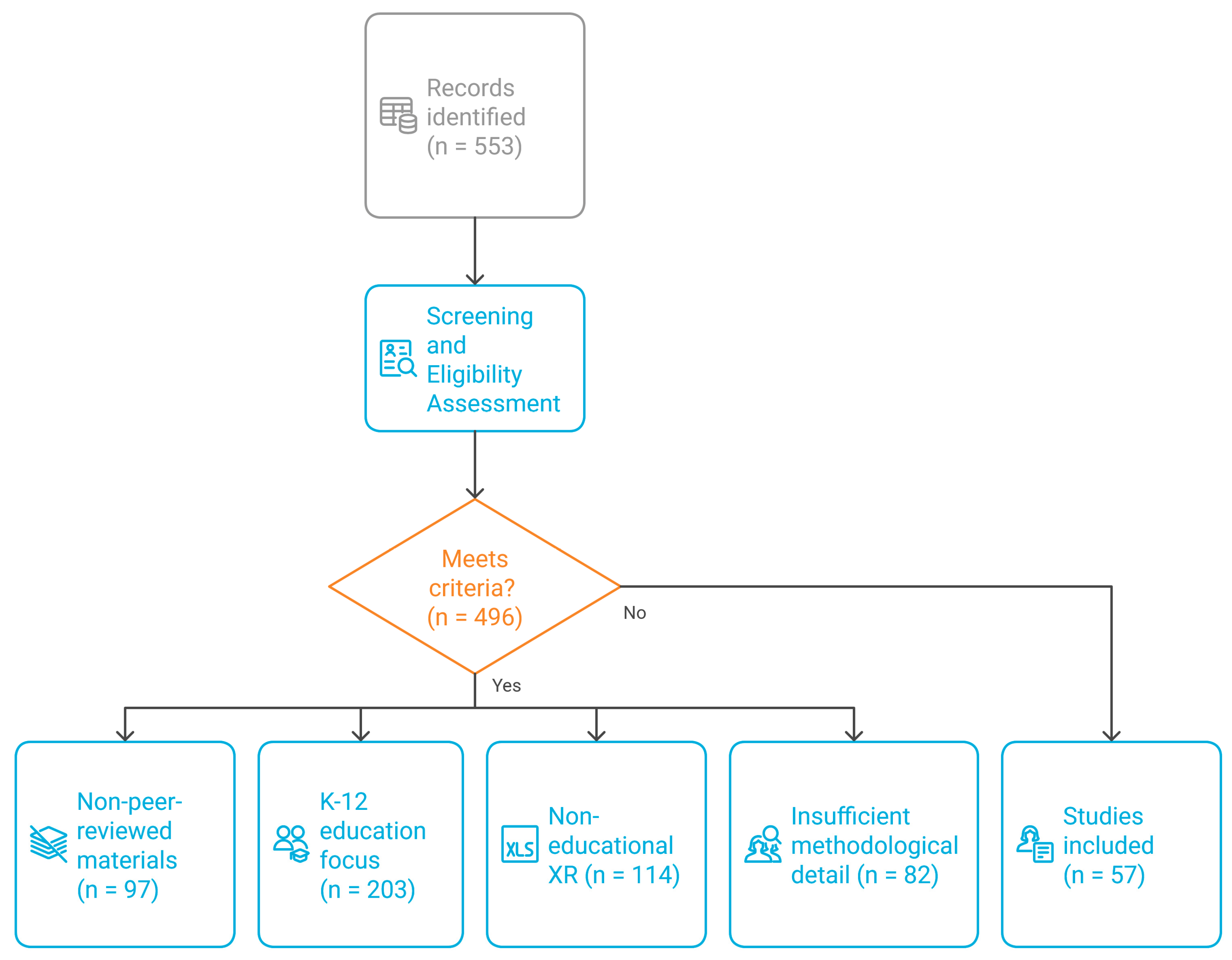
To ensure transparency in the selection of literature, a screening process was applied to the 553 records initially identified across the databases. Following the application of the inclusion and exclusion criteria defined in Section 2.5, 496 articles were removed. The primary reasons for exclusion were a focus on K-12 education (n = 203), lack of pedagogical analysis in purely technical papers (n = 114), non-peer-reviewed status (n = 97), or insufficient methodological reporting (n = 82). Ultimately, 57 studies were selected to inform the narrative synthesis. Figure 1 illustrates this selection flow.

2.5.1. Inclusion

  • Peer-reviewed journal articles and peer-reviewed conference proceedings.
  • Empirical studies (quantitative, qualitative, mixed methods), design-based research, explicitly addressing XR for teaching/learning in university CS.
  • Reports containing pedagogical outcomes (e.g., engagement, understanding, spatial reasoning, performance, skills), implementation details, or analysis of challenges/limitations.

2.5.2. Exclusion

  • Non-peer-reviewed materials; grey literature; theses; editorials without empirical or analytical substance.
  • K-12 only; training outside formal higher education;
  • Non-educational XR (marketing, entertainment) or purely technical XR papers without teaching/learning analysis.
  • Studies lacking sufficient methodological description or outcome detail to inform synthesis.

2.6. Quality Appraisal

Given the narrative nature of this review and the high heterogeneity of the included studies (ranging from technical implementation reports to quasi-experimental educational studies), the application of a single standardized risk-of-bias tool was not feasible. Instead, to mitigate subjectivity, we employed a criteria-based appraisal focused on “pedagogical utility” and “reporting clarity.” We operationalized the assessment as follows:
  • Clarity of context: Studies were required to explicitly describe the educational setting (e.g., course level, class size) and the specific XR intervention used. Studies with vague descriptions that prevented understanding the implementation were excluded.
  • Methodological coherence: We assessed whether the study design (qualitative or quantitative) aligned with the stated research questions.
  • Evidence support: We evaluated whether the reported conclusions were supported by the data presented (e.g., distinguishing between anecdotal student feedback and measured learning outcomes). While this approach is less formal than a statistical meta-analysis risk assessment, it ensured that the synthesized literature provided reliable insights into the pedagogical application of XR.

2.7. Methodological Limitations

As a narrative (not systematic) review, coverage is curated rather than exhaustive; some relevant studies may be omitted.
Heterogeneity in study designs, measures, and reporting limits cross-study comparability and precludes meta-analysis.

3. The XR Spectrum in Education

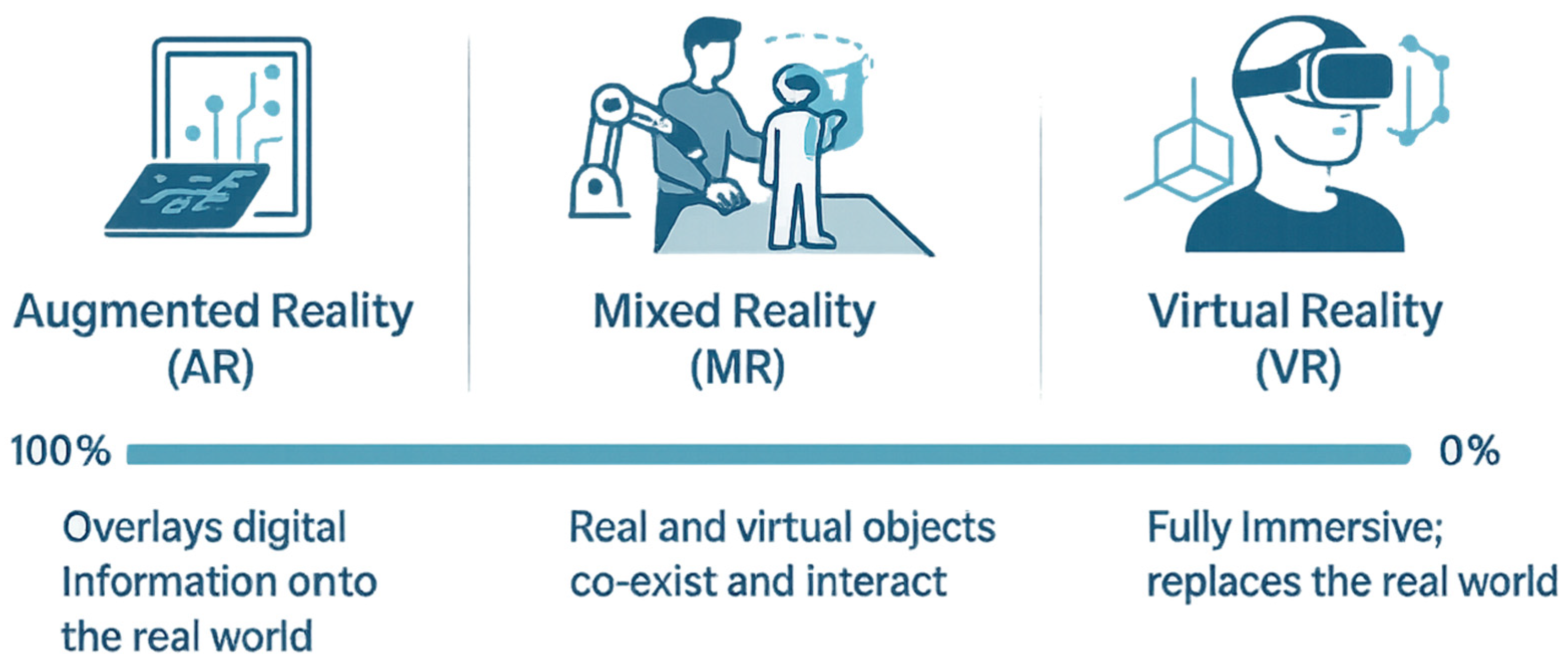
As previously mentioned, XR encompasses VR, AR, and MR. These technologies differ in how they blend the real and virtual, offering varying levels of immersion and interaction in educational settings. The concept of a Reality–Virtuality Continuum was introduced in the 1990s, spanning from the completely real environment to the completely virtual world [18]. On this continuum, AR lies toward the real end (integrating virtual elements into the real world), VR lies at the virtual end (a fully immersive virtual environment), and MR sits in the middle, blending real and virtual elements in real-time [4]. The degree of immersion and the way digital content is presented can significantly impact how students learn CS concepts. For example, a highly immersive VR simulation might be ideal for full immersion into a complex system (like a virtual network or a cybersecurity scenario), whereas an AR application could overlay information onto physical hardware for contextual learning. Understanding the XR spectrum is crucial in CS education because each modality aligns with different pedagogical strategies and practical constraints (such as equipment requirements). VR demands more powerful hardware (e.g., high-end GPUs and headsets) and completely immerses the user in a virtual world; AR is more accessible via smartphones/tablets but displays limited overlays; MR requires advanced (and often expensive) headsets that allow rich interaction between real and virtual objects. Educators in CS must choose the appropriate modality to match their learning objectives and classroom resources; for instance, using AR on common mobile devices for a quick, interactive exercise versus using VR in a dedicated lab for an in-depth, immersive project. Figure 2 represents the Reality-Virtuality continuum, highlighting the spectrum of how much of the real environment is preserved versus replaced by a virtual one.
To clarify these concepts, Table 2 compares VR, AR, and MR in terms of definition, educational affordances, and example uses:
Understanding the XR spectrum is crucial because these differences significantly impact how we design XR-based learning experiences in computer science education. The concept of the virtuality continuum emphasizes that VR, AR, and MR are not competing technologies, but rather points along a continuum [1]. The choice of medium should match the instructional goal. For instance, if the goal is to achieve high immersion and presence (such as transporting students inside a complex computer network or a data structure to observe its behavior from within), VR might be most effective. Suppose the goal is to anchor abstract concepts in a real-world context. In that case, AR can be employed (for example, overlaying code outputs onto physical devices or displaying algorithm animations on a student’s desk). MR, meanwhile, is powerful for blended scenarios, such as a project where students interact with both physical hardware and simulated components simultaneously, learning how software and hardware converge. These distinctions also matter for practical reasons: VR’s need for specialized hardware and controlled environments might limit its use to labs or special sessions, while AR’s use of ubiquitous devices makes it easier to integrate into regular classrooms. MR, offering the best of both, also poses the highest technical complexity and cost [19].

4. Pedagogical Benefits of XR in CS Education

In recent years, researchers have been investigating how VR, AR, and MR can enhance learning outcomes in computer science education. Across numerous studies, XR technologies have demonstrated potential benefits, including increased student engagement, improved understanding of abstract concepts, the development of spatial skills through embodied learning, safe practice of practical skills, and new modes of collaborative learning. This section explores these pedagogical benefits of XR for CS education.

4.1. Theoretical Framework

To ground the analysis of XR’s impact on computer science education, this review leverages two complementary theoretical frameworks: Embodied Cognition [20] and Cognitive Load Theory (CLT) [21].
Embodied cognition posits that cognitive processes are deeply rooted in the body’s interactions with the physical world. In the context of CS, concepts often remain abstract and disembodied (e.g., code on a screen). XR bridges this gap by allowing learners to use physical gestures and spatial navigation to manipulate data structures or network topologies, thereby grounding abstract knowledge in sensorimotor experience.
CLT focuses on the limitations of working memory. CS topics often impose a high intrinsic cognitive load due to their complexity. XR can mitigate this by offloading the mental visualization effort to the external display (e.g., seeing an algorithm sort itself rather than mentally simulating it), thus freeing up cognitive resources for deeper understanding. However, CLT also warns that poorly designed XR can introduce extraneous cognitive load through complex interfaces, which explains the limitations discussed later in Section 5.5.
Furthermore, these immersive experiences align with Constructivist learning theory [22], where learners actively build knowledge through direct interaction and experimentation rather than passive reception. In the context of Bloom’s Taxonomy, XR interventions are particularly effective at targeting higher-order cognitive levels, such as Application (practicing procedures in virtual labs) and Analysis (dissecting complex 3D data structures), enabling students to move beyond simple memorization toward deep conceptual mastery.

4.2. Engagement and Motivation

A major benefit reported with XR in education is a boost in student engagement and motivation. Immersive experiences tend to capture learners’ attention and interest more effectively than traditional methods. In fact, a systematic review finds that all XR modalities (VR, AR, MR) can enhance learning motivation and lead to sustained engagement in learning activities [18]. Gamification elements commonly integrated in XR (such as interactive challenges or game-like simulations) and the sense of presence in VR can make learning more enjoyable, thereby motivating students to spend more time on learning task. For example, VR can place students in a distraction-free virtual environment that is tailored to the learning activity, which has been found to increase focus and reduce off-task behavior [4]. XR’s immersive and interactive nature also often leads to improved affective outcomes; students report higher enjoyment and interest. One study noted that when students used personalized avatars and interactive VR scenarios, they showed reduced disengagement and felt more connected to the learning experience [4]. The short-term excitement of using cutting-edge technology can also translate into long-term motivational benefits: XR-based interventions have been linked to increased learner confidence and curiosity in STEM fields [18]. Valladares et al. report that implementing VR/AR role-playing “micro-stories” within an action-research design catalyzed creativity and critical thinking, while fostering collaboration and deeper course understanding, outcomes consistent with strengthened self-learning and active engagement. Students further perceived these immersive activities as bridging virtual and in-person learning contexts, yielding more meaningful learning experiences and improved educational results, underscoring XR’s motivational value in higher education [2]. In summary, XR’s gamified and immersive characteristics serve as powerful motivators in CS education, making students more eager to participate and persevere in learning difficult concepts.

4.3. Visualization of Abstract Concepts

Computer Science often deals with abstract ideas (such as algorithms, data structures, or network topologies) that can be challenging for students to grasp through text or 2D diagrams alone. XR technologies (especially AR and VR) provide a means to transform these abstractions into tangible, visual, and interactive forms. AR is particularly noted for its ability to concretize abstract concepts by overlaying virtual visuals onto the real world [8]. For instance, an algorithm’s flow or a data structure can be visualized as a three-dimensional object that students can inspect from multiple angles, making the concept more tangible. A 2013 study showed that AR helped students understand mathematical concepts by allowing them to manipulate virtual objects representing those concepts, leading to better comprehension [23]. Likewise, in CS education, researchers have created AR applications for data structures: in one experiment, students learned about linked lists and binary trees by viewing and interacting with virtual nodes and pointers superimposed on their textbook or environment. The results indicated that the AR approach not only helped students learn data structures more effectively but was also perceived as more engaging than traditional methods [10]. This excitement can reduce the intimidation of complex topics. VR, on the other hand, allows students to step inside an abstract concept. For example, a VR program can depict the execution of a sorting algorithm as a life-size animation around the student or illustrate how a computer network routes packets by immersing the learner in a 3D network graph. Such immersive visualization helps in making abstract ideas more concrete and memorable. Indeed, research in education reports that XR environments make abstract concepts tangible and complex subjects more approachable, thereby deepening understanding [24]. By visualizing what was once invisible (data structures floating in space, algorithms as moving characters, or memory allocation as a 3D room), XR can bridge the gap between theoretical concepts and the learner’s intuition. This is especially valuable in CS education, where seeing an abstract process unfold in real-time can illuminate its mechanics far better than static code or diagrams.

4.4. Spatial Reasoning

Many topics in computer science (and related fields such as software engineering or IT) benefit from strong spatial reasoning skills, for example, visualizing the structure of a complex software architecture, understanding how network nodes are arranged, or mentally mapping how data flows through a system. XR’s immersive 3D experiences can train and leverage these spatial abilities. Immersive VR environments provide unique learning affordances, including enhanced spatial knowledge for learners [25]. When students navigate a virtual world (such as moving through a VR representation of a file system or a neural network), they practice spatial reasoning by orienting themselves and understanding relationships within a three-dimensional layout. Research has shown that interactive VR tasks can indeed develop spatial abilities, especially in students who initially have lower spatial skills [26,27]. This is attributed to the way VR engages the body and senses, a concept known as embodied cognition. Theories of embodied cognition suggest that thinking is not just a mental phenomenon, but also influenced by our bodily interactions with space and objects. XR enables learners to incorporate gestures, movement, and physical interaction into their learning, thereby reinforcing cognitive processes. For example, in a mixed reality setup for learning programming, a student might physically arrange virtual code blocks in space or walk through the steps of an algorithm, effectively embodying the control flow. Such approaches tie kinesthetic experience to abstract computation, potentially improving retention and understanding. Empirical evidence supports these benefits: one study found that students who learned in an immersive VR simulation had significantly better spatial understanding of the subject matter compared to those who learned with desktop visualization [25]. Moreover, XR can adapt to learners’ spatial skill levels (providing grids or guides for those struggling, and freer exploration for those more adept), thereby personalizing the development of spatial reasoning [28]. In sum, XR’s capacity to engage multiple senses and involve the learner’s body in the experience can enhance spatial cognitive skills and exemplify embodied learning, which is particularly beneficial when mastering complex, space-intensive concepts in CS.

4.5. Skills Development

A persistent challenge in CS education is giving students hands-on experience with real systems and hardware in a way that is safe, cost-effective, and feasible within a classroom. XR technologies address this by offering safe simulation environments where students can practice and by bridging theoretical knowledge to real-world practice. VR can simulate expensive or hazardous equipment and environments, for example, a virtual server room with network switches or a virtual electronics lab, allowing students to experiment freely without damaging equipment or risking safety. Studies in medical education have long leveraged this benefit: virtual reality surgical simulators let medical students perform procedures in a risk-free setting, with research confirming that trainees can gain hands-on skills without the consequences of real-life mistakes [29]. In computer science, similarly, a VR simulation might allow a student to configure a virtual network or debug a virtual machine; if they make a critical error, the system can simply be reset, an action not always available in physical labs. This iterative practice builds proficiency. Importantly, skills learned in XR have been shown to transfer to real-world situations when the simulation is realistic [30]. For instance, a student who has practiced troubleshooting a virtual network can apply the same skills on a real network with confidence, as the core principles are the same. MR and AR further bridge theory to practice by overlaying learning onto real tasks. AR can provide live guidance or feedback as a student works on a physical device, effectively superimposing theoretical knowledge directly onto the real object. This approach has been described as providing contextual learning experiences that bridge theory and practice [24]. An example in CS education is the use of AR to teach hardware assembly or repair: a student points a tablet at a disassembled computer, and the AR app highlights components and provides step-by-step assembly instructions with virtual arrows [31]. The student learns by doing (practical skill) while simultaneously seeing the conceptual annotations (theory), tightly integrating the two. MR goes one step further by allowing interaction: imagine an MR scenario for cybersecurity training where a student sees virtual network traffic flowing through a physical network mock-up. They can then grab a malicious packet (as a virtual object) and trace its route, all within an environment that blends the real and virtual. Such experiences powerfully connect abstract theory to tangible action [32,33,34]. Overall, XR bridges the gap between classroom learning and real-world application by providing realistic and interactive simulations. It enables students to learn by doing in a manner that is safe (mistakes harm no real systems), repeatable, and often cheaper in the long run. Students can simulate a whole data center or a fleet of IoT devices without needing to purchase them.

4.6. Collaborative Learning

Collaboration and teamwork are essential skills in computer science, whether in software development teams or multidisciplinary projects. XR offers novel ways for students to collaborate, often transcending physical classroom limitations. In virtual environments, students can meet and interact in shared immersive spaces; for example, multiple users can join the same virtual world to collaborate on solving a problem together. Research indicates that well-designed VR experiences can enhance social collaboration rather than isolate individuals. By creating a shared virtual space, VR enables students to work on joint tasks, communicate via avatars, and manipulate virtual objects collaboratively, resulting in greater peer interaction and engagement compared to some traditional classroom setups [4]. Dalgarno and Lee observed that when learners are in the same virtual environment, they often exhibit high levels of discussion and teamwork, sometimes even more than they would in a face-to-face setting, because the VR context prompts them to actively coordinate, and shy students may feel more comfortable participating via an avatar [35]. AR can also foster collaboration by enabling students to collectively view and interact with the same augmented content in a real space. For example, using a shared AR app, a group of students could stand around a table and see a 3D visualization of a sorting algorithm projected on it; they can then discuss and manipulate it together from their individual viewpoints [36]. A systematic review of AR in collaborative learning found numerous benefits, including improved understanding and increased engagement and interest when students worked together with AR tools [37]. One reason is that AR anchors discussion in the real world (students can literally point to parts of the virtual object overlaid in their environment) which supports communication and collective problem-solving. MR, by blending worlds, allows both co-located and remote collaboration; students in the same room can see each other and the virtual elements, facilitating a natural collaborative experience, while remote students can join the MR space as avatars or via holoportation [38]. This kind of immersive collaborative learning can be particularly effective for project-based learning in CS. For instance, consider a collaborative coding exercise in VR: students appear as avatars in a virtual workshop, where each can grab and assemble code blocks, discussing strategies in real-time [39]. They learn not only the technical content but also how to work as a team in a tech-rich environment. By engaging in collaborative problem-solving in XR, students develop skills in communication, division of labor, and collective critical thinking. The research consensus suggests that, when implemented thoughtfully, XR can augment collaborative learning by providing a shared virtual commons where learners jointly engage with content, leading to improved learning outcomes and teamwork skills [35,37].
XR technologies provide a wide range of pedagogical benefits for computer science education. They significantly enhance student engagement and motivation by transforming learning into an immersive and enjoyable experience. Furthermore, these technologies illuminate abstract concepts through visualization and interaction, thereby converting theoretical ideas into tangible, experiential realities. By leveraging spatial and embodied learning, XR deepens understanding and provides safe, authentic practice environments, effectively bridging the gap between classroom theory and real-world application. They also unlock new possibilities for collaborative learning, connecting students in shared virtual spaces to work together on solving problems.
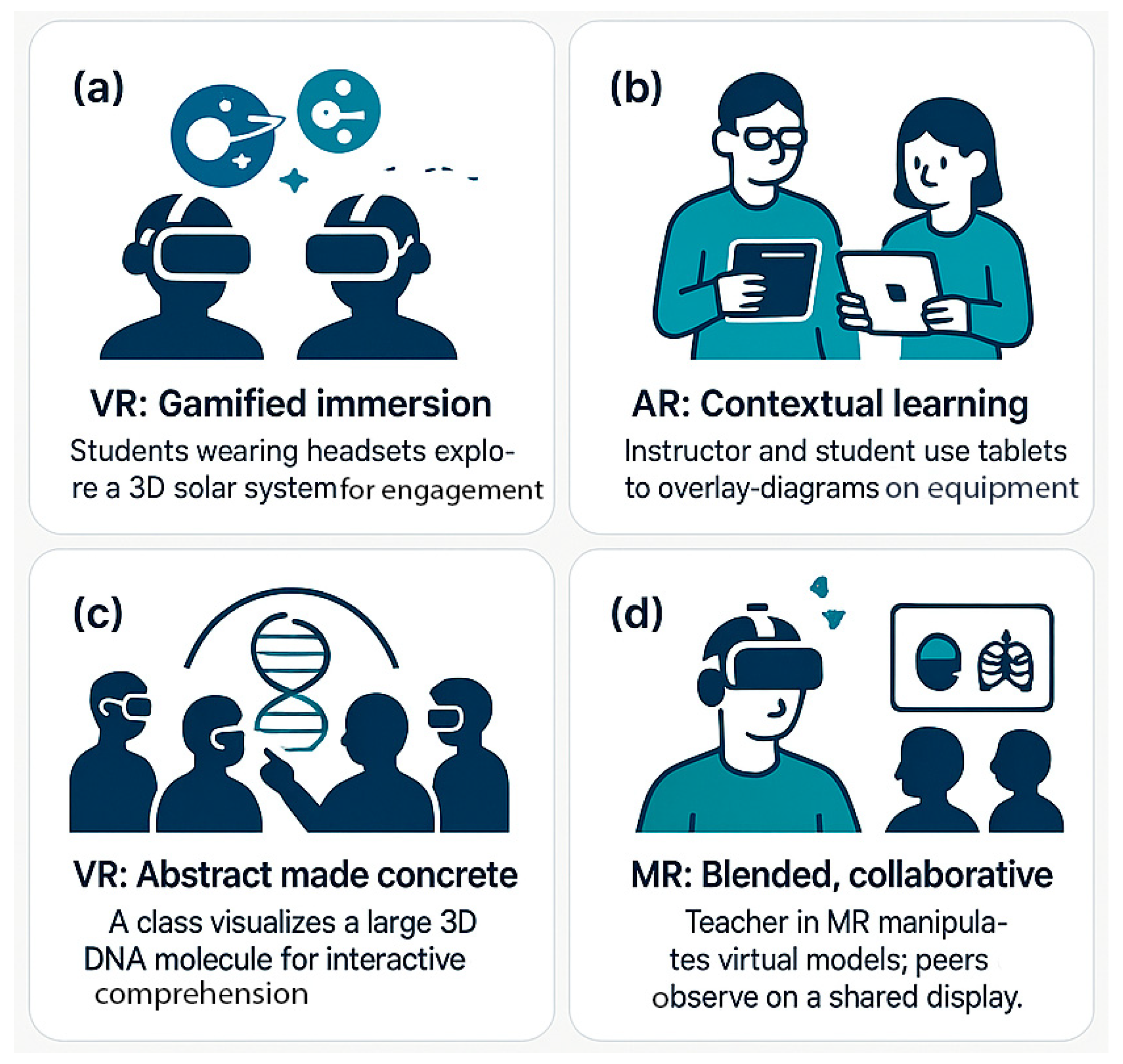
As discussed above, these advantages are increasingly well-documented in the scientific literature, with recent studies and reviews converging on the finding that XR can significantly enhance learning outcomes in both the cognitive and affective domains [40]. It is crucial to note, however, that realizing these benefits in practice necessitates thoughtful integration into curricula, considering factors such as accessibility, usability, cost, instructor training, and the avoidance of novelty effects. Nonetheless, the trajectory of research and educational innovation suggests that XR, when appropriately utilized, can transform CS education into a more engaging, multisensory, and interactive experience, ultimately better equipping students with the understanding and skills required for the digital age. The pedagogical benefits discussed in this section are summarized in Figure 3.

5. Implementations, Case Studies, Challenges, and Limitations

This section reviews current implementations, accompanied by representative case studies, and then discusses the key challenges and limitations of adopting XR for teaching computing topics. The focus of this paper is on academic evidence from 2015 to 2025, highlighting both successful educational outcomes and the hurdles that must be overcome for the wider adoption of XR in curricula.
Immersive virtual reality (VR) has been applied to visualize abstract CS concepts such as algorithms and data structures. For example, Mukasheva et al. developed a VR application for sorting algorithms, enabling students to step through bubble sort and selection sort in an interactive 3D space [41]. Their study found that 76.9% of students using VR achieved higher performance on sorting tasks compared to those learning with traditional methods. Similarly, Dewi et al. created a VR learning environment for introductory programming algorithms, incorporating visual, auditory, and kinesthetic elements. In trials involving 66 undergraduates, the VR-based approach was found to be practical and effective in learning programming algorithms, yielding improved learning outcomes compared to conventional instruction [42]. These results align with broader findings that immersive media can enhance students’ understanding of complex procedures by allowing them to directly engage with dynamic representations of code and data.

5.1. Augmented Reality

AR is also being leveraged for computer science learning, often to overlay digital information on physical coding or electronics exercises. An illustrative system is FlowARP, an AR tool that visualizes program control flows (loops and conditionals) in real-time [43]. In user studies, authors demonstrated that students using FlowARP solved code problems more quickly than a control group and reported improved comprehension of abstract programming structures, such as recursion. AR has proven valuable in both electrical and computer engineering contexts. Alvarez-Marin et al. introduced an interactive AR app for learning electric circuit theory; in a controlled trial with 28 engineering students, the AR group attained significantly better exam scores in circuit analysis than those in a traditional lab, with no negative effect on students’ emotional state [44]. Notably, these AR learners completed the experiments slightly faster on average and rated the system highly for usefulness and ease of use. These examples underscore AR’s ability to make invisible computing processes (such as code execution or electrical currents) visible and tangible to learners, thereby improving intuition and engagement.

5.2. Mixed Reality

MR approaches, which blend virtual and real-world elements, have gained traction for lab-based or hardware-linked courses. An MR control systems laboratory, as described by Guajardo-Cuéllar et al., combined a virtual apparatus (visible through a VR/MR headset) with a real microcontroller and sensors [45]. Students could tune a digital controller on a virtual inverted pendulum or robot, then immediately deploy the same code on the physical device, a seamless transition that verified the fidelity of the simulation. Such MR labs were well-received; in fact, 87% of students considered the mixed-reality lab environment valuable, citing that it helped connect theory to practical skills and increased their motivation. MR has also been explored for remote or hazardous lab scenarios (chemistry experiments) to allow students to practice procedures safely in a hyper-realistic environment [46]. These MR implementations demonstrate how blending real hardware with virtual visualization can enhance learning in courses that typically require costly or hazardous physical setups.

5.3. Platforms and Tools

To build these XR learning experiences, educators and researchers commonly utilize game engines and development kits. Platforms such as Unity3D, New York, NY, USA [47] and Unreal Engine, Cary, NC, USA [48] provide rich libraries for 3D visualization and interactivity, and have been widely adopted for educational VR/AR content [49]. For AR specifically, mobile SDKs such as Apple’s ARKit, Cupertino, CA, USA [50] and Google’s ARCore, mountain View, CA, USA [51] enable creators to anchor virtual objects in real-world classrooms via iPads or Android devices, while frameworks like Vuforia, Boston, MA, USA facilitate marker-based AR activities (often integrated with Unity). On the hardware side, accessible consumer VR headsets (e.g., Meta Quest series, HTC Vive) and MR smart glasses (e.g., Microsoft HoloLens, Redmon, WA, USA) are increasingly used on campuses to deliver immersive content [52,53,54]. Nonetheless, developing effective XR educational applications still requires substantial expertise in both software and pedagogy. Many projects report the need for interdisciplinary teams (combining educators, developers, and designers) to create XR content that is not only technically robust but also aligned with learning objectives [49].

5.4. Case Studies

The application of XR technologies in computer science education has been increasingly examined through empirical case studies that illustrate how immersive, interactive, and blended environments can enhance learning. Unlike theoretical discussions or conceptual reviews, case studies provide evidence of XR integration in authentic educational contexts, showing how students respond to these tools, how instructors incorporate them, and what measurable outcomes emerge. They also demonstrate the diversity of XR applications across various topics, including algorithm visualization, programming, circuits, and control systems. Reviewing these cases is therefore crucial for understanding not only the pedagogical potential of XR but also the challenges of implementing it in real classrooms.
Table 3 summarizes a selection of recent case studies illustrating how VR, AR, and MR have been applied to various CS topics, along with their key findings.
A dialectical comparison of these studies reveals a pedagogical distinctiveness across modalities. The VR-based interventions, such as Mukasheva et al. [41] and Dewi et al. [42], predominantly focused on conceptual visualization, isolating the learner in a virtual space to visualize abstract logic (sorting algorithms). In contrast, the AR and MR cases, like Alvarez-Marin et al. [44] and Guajardo-Cuéllar et al. [45], demonstrated superior utility for situated application, bridging the gap between theoretical diagrams and physical hardware (circuits and control systems). This comparison suggests that while VR is optimal for deep-diving into abstract theory (learning to know), AR and MR are more effective for scaffolding physical tasks (learning to do).
Beyond the individual results, these case studies reveal several important patterns. First, across modalities, XR consistently improves student engagement and motivation. Whether through the immersion of VR, the contextual overlays of AR, or the blended interactions of MR, students report higher levels of interest and reduced cognitive barriers compared to traditional methods. Second, XR tends to enhance the comprehension of abstract or complex topics, such as recursion, circuit analysis, or control theory. By externalizing invisible processes, XR reduces the cognitive load associated with abstract reasoning, allowing learners to build more concrete mental models. Third, XR environments often support affective outcomes, for example, reducing anxiety in laboratory settings or enhancing self-confidence in tackling challenging programming tasks. These affective benefits are not trivial: they contribute to persistence in CS programs, where dropout rates are often high.

5.5. Challenges and Limitations

Despite these promising results, educators face numerous challenges in implementing XR at scale, and the technology itself has inherent limitations that require consideration. High cost and limited accessibility of XR hardware remain major barriers. Fully immersive VR setups often require expensive head-mounted displays and high-end computers; even lower-cost mobile VR or AR devices can strain school budgets. Studies note that the high expense of VR/AR hardware and software often deters institutions from adoption, and can exacerbate inequities if only well-funded schools can afford the tools [55]. Additionally, technical hurdles in content development and maintenance pose important challenges. Creating interactive 3D educational content demands specialized skills in programming and design, and currently lacks standardized authoring tools for teachers [56]. Many XR systems are built as one-off prototypes, which can hinder their integration into classrooms due to interoperability issues and high hardware/software requirements. For example, Villena-Taranilla et al. found that the absence of open standards across VR platforms makes it hard to efficiently reuse or update educational XR applications, resulting in significant maintenance burdens on schools’ IT staff [57]. Moreover, effective pedagogical use of XR is not guaranteed without instructor preparation. Faculty often need training to incorporate VR/AR into their teaching strategies and to avoid using the technology for its own sake [58]. Researchers emphasize that dedicated teacher training programs are necessary to enable instructors to align XR activities with learning outcomes and manage the classroom logistics of immersive technology [59]. Table 4 illustrates that cost, technical complexity, and the learning curve are key challenges that educators face, which must be addressed through institutional support and the development of more user-friendly XR creation tools.
Beyond implementation challenges, there are intrinsic limitations and concerns with XR technology in education. One issue is usability and comfort: not all students can use VR/AR seamlessly. Prolonged VR sessions can induce cybersickness (motion sickness symptoms such as nausea or disorientation, caused by a mismatch between the VR visualization and the head motion) in a subset of users [60]. For instance, first-time VR users in an architectural education study reported dizziness and discomfort, although these effects tended to be temporary [55]. Ensuring ergonomic design and providing gradual exposure can mitigate this, but it remains an obstacle for some learners. Likewise, XR experiences often rely heavily on vision and hearing, which pose accessibility challenges for students with visual and hearing disabilities [61]. Current immersive interfaces are not fully inclusive, as Jarrell et al. note; AR/VR systems present significant barriers for people with disabilities, making it challenging for them to fully engage with immersive platforms [62,63]. For example, a student with low vision or hearing impairment may struggle if alternatives (like haptic feedback or screen readers) are not provided. These usability limitations underscore the need for more accessible XR hardware and adaptive content to cater to diverse learners.
Another critical concern involves privacy, safety, and ethics in virtual environments. By design, AR devices equipped with cameras and sensors capture aspects of the real environment, raising concerns about consent for those being recorded. The privacy of bystanders is a core issue in AR; non-users may be unknowingly filmed or have their images/data captured when students use AR in public spaces [64]. Schools must develop policies for handling such sensor data and ensure compliance with relevant data protection regulations. VR and MR platforms also collect extensive personal data; to function, they monitor users’ movements, gaze, and interactions. This “x-ray-like” data (e.g., eye tracking, head motion, biometrics) can reveal intimate information and is often processed by commercial providers [65], creating new privacy risks beyond traditional classroom technology. Researchers argue that standard consent forms are insufficient, as users may not realize how much personal information (even subconscious reactions) VR systems can infer [65]. Additionally, virtual safety and etiquette are pressing issues, especially in multi-user immersive worlds. There have been documented incidents of harassment, bullying, and even sexual misconduct in social VR settings, which can cause real psychological harm to students [66]. Venues like VRChat, San Francisco, CA, USA [67] and Rec Room, Seattle, WA, USA [68] have introduced personal boundary bubbles, muting, and blocking features to address this issue. However, managing behavior in virtual classrooms remains challenging; educators must establish clear codes of conduct and leverage safety controls to protect students from virtual harassment [66]. Ethical frameworks for XR in education are still in development, but it is widely agreed that issues of consent, privacy, and user well-being require proactive attention [69]. Table 5 summarizes these main limitations discussed.
XR technologies have shown great potential in enhancing teaching and learning of CS and SE using immersive visualization and interactive learning. Academic case studies between 2015 and 2025 show increased observed student engagement, understanding and skill performance when these tools are used carefully. However, integrating XR in mainstream education is certainly not without its challenges. The barriers of cost and technical complexity must be lowered in order to open up access, while educators need training and support to successfully bring XR into the classroom. Attention also needs to be given to limitations related to user experience (minimizing cybersickness, designing toward accessibility) and ethics with relation to privacy. As these challenges are met, XR stands to become a transformative component of computer science education, offering students first-hand insight into abstract concepts and a safe space to experiment, while educators guide their learning in both real and virtual worlds.

5.6. Critical Analysis of Mixed Results

While the majority of reviewed studies report positive outcomes, it is crucial to analyze the instances where XR failed to outperform traditional methods. The literature reveals a consistent pattern in these “negative” or neutral cases: the prioritization of technological immersion over instructional design. For example, Petruse et al. found no significant learning gains when comparing Mixed Reality to traditional methods in certain contexts [70]. This contradiction suggests that high immersion can sometimes become a double-edged sword.
We identify two primary drivers for these mixed results:
  • Extraneous cognitive load: When the XR interface is too complex or the visual stimuli are purely decorative (“seductive details”), students exhaust their cognitive resources navigating the environment rather than processing the CS concepts.
  • The novelty effect vs. significant learning: Initial engagement spikes due to the “wow factor” of VR often masquerade as learning interest. However, without structured pedagogical scaffolding (e.g., guided inquiry or assessment-embedded feedback), this engagement remains superficial and does not translate into better retention of complex algorithms or programming logic once the novelty fades.
Therefore, the contradiction in the literature is not about whether XR works, but rather a reflection of the dependency on instructional alignment. XR is most effective when it renders invisible processes visible (like data structures) but can be detrimental when applied to tasks that are easily handled by simple 2D text (like reading static code syntax).

6. Conclusions and Future Directions

One of computer science education’s most prominent challenges is helping to create a new, more engaging, interactive and immersive way for students to learn in addition to what is possible through classroom-based instructor-led training. At the conclusion of our narrative literature review, several key insights emerge that address the gaps identified in previous research. Unlike broader studies that position XR merely as a motivational tool, this review establishes that XR’s primary contribution to Computer Science is epistemic: it renders invisible processes (algorithms, data structures) visible. We have synthesized evidence showing that it engages students actively, visualizes typically theoretical CP concepts and allows for safe space exploration that would be expensive or impractical in the physical world. When appropriately integrated and aligned with curricula, XR has been demonstrated to motivate learners and enhance some learning gains, thereby increasing the richness of educational experiences [71].
In the second place, XR is strategically important to CS education because it can serve as a bridge between theory and practice. By viewing the fundamental concepts of computing in action (e.g., walking through a virtual program debugging environment or manipulating a 3D model of an algorithm), students can also better acquire and remember information. Additionally, being taught with XR within the curriculum prepares learners to understand the new types of technology they may be using and working with in the tech industry, so that their skills remain relevant in the future.
However, we caution against techno-solutionism. To embrace these opportunities at scale, a considered, evidence-based inclusion is required. XR is not a panacea for all learning difficulties in CS; its effectiveness depends entirely on overcoming the significant technical and pedagogical barriers discussed. CS instructors need to anchor XR adoption in good research and pragmatic planning: choosing use cases where immersive technology can clearly improve learning outcomes; investing in teacher training; then assessing the evidence base for success or failure. The challenges about accessibility, equity, costs, and privacy must be dealt with properly in order to allow an inclusive and sustainable deployment of XR for all learners [72]. Academic administrators and professors are advised to set clear policies and support mechanisms for XR use that promote an environment where immersive learning can work in tandem with fundamental pedagogical values and goals.
Immersive technologies have the potential to disrupt computer science education. The trajectory of XR aims towards increasingly seamless and ubiquitous integration, from lightweight AR glasses which can overlay educational content onto our view of the real world, to deeply networked virtual reality spaces in which learners are brought together into shared educational simulations across the globe. If driven by research and done thoughtfully, these could be used to produce better, more engaging and personalized learning than ever before. Instructors could set up virtual labs, where their students use XR to find new ways of solving complex computing problems in fully interactive 3D spaces alongside peer group members and collaborate on real-time projects or assignments being pursued from wherever they are sitting right at that very moment. As ambitious as it seems, that vision is now closer to becoming reality. Ultimately, it will depend on the cross-disciplinary work of educators, researchers, and developers to determine whether XR fulfils its promise in practice. In adopting the lessons shared in this article, we hope that universities will prevent it from being yet another learning technology fad, such that the compelled introduction of XR into universities can truly benefit computer science education by empowering learners with reality experiences today to change tomorrow [73].

6.1. Future Research Agenda

Based on the gaps and trends identified in this review, we propose a research agenda focused on three critical areas for the advancement of XR in computer science education. First, future investigations should prioritize the convergence of Artificial Intelligence (AI) and XR to create adaptive learning environments. While many current XR applications are static, the integration of Generative AI agents could enable the deployment of intelligent virtual tutors capable of dynamically generating coding challenges or providing real-time scaffolding tailored to the student’s performance. This technological synergy would transform XR from a passive content delivery medium into a truly responsive and personalized educational ecosystem.
Second, there is a significant, under-explored opportunity to leverage Immersive Learning Analytics. XR devices inherently capture rich behavioral data (such as gaze tracking, interaction latency, and physical movement patterns) which remain largely utilized only for technical performance rather than pedagogical assessment. Future studies should focus on translating this big data into actionable insights, allowing instructors to identify students who are struggling with abstract concepts based on their non-verbal interaction behaviors. This approach could move assessment beyond simple test scores toward a holistic understanding of the learning process in virtual spaces.
Finally, as immersive technologies become more pervasive in university curricula [74], the development of ethical-by-design principles is paramount. Given the privacy risks associated with the extensive collection of biometric and behavioral data in XR, future frameworks must prioritize data sovereignty and student safety. We call for the establishment of robust privacy-preserving standards specific to educational XR, ensuring that ethical considerations regarding user consent, data protection, and virtual safety are embedded into the software development lifecycle from the outset, rather than addressed as an afterthought.

6.2. Practical Recommendations for Implementation

To translate the potential of XR into practice, we offer the following actionable recommendations for educators and institutional decision-makers:
  • Curriculum integration strategy: Educators should adopt a targeted input approach rather than migrating entire courses to XR. We recommend identifying specific threshold concepts, topics historically difficult for students (e.g., pointers, recursion, electromagnetic fields), and deploying XR interventions exclusively for these bottlenecks. This maximizes pedagogical return on investment.
  • Evaluation criteria: Assessment in XR must move beyond self-reported engagement (“Did you like it?”). We recommend implementing performance-based assessments within the virtual environment, such as requiring a student to successfully debug a virtual circuit or optimize a sorting network inside the simulation to pass a module.
  • Teacher training pathways: Institutions must establish pedagogical sandboxes, safe, low-stakes environments where faculty can experiment with XR tools without the pressure of immediate classroom deployment. Training programs should focus less on technical troubleshooting and more on instructional design, specifically focusing on how to scaffold the transition between the virtual experience and abstract theory.

Author Contributions

Conceptualization, M.A.G.-R. and P.C.S.-M.; methodology, P.C.S.-M. and M.A.G.-R.; validation, E.A.M.-V. and P.C.S.-M.; formal analysis, E.A.M.-V. and L.S.G.-L.; investigation, E.A.M.-V., L.S.G.-L. and P.A.A.-V.; data curation, L.S.G.-L. and P.A.A.-V.; writing—original draft preparation, P.C.S.-M. and M.A.G.-R.; writing—review and editing, E.A.M.-V., L.S.G.-L. and P.A.A.-V.; supervision, P.C.S.-M. and M.A.G.-R.; project administration, P.C.S.-M. All authors have read and agreed to the published version of the manuscript.

Funding

This research received no external funding.

Institutional Review Board Statement

Not applicable.

Informed Consent Statement

Not applicable.

Data Availability Statement

No new data were created or analyzed in this study.

Acknowledgments

During the preparation of this manuscript, the authors used ChatGPT-5 (OpenAI) and Grammarly to improve language clarity and not for generating the scientific content. The authors have reviewed and edited the output and take full responsibility for the content of this publication.

Conflicts of Interest

The authors declare no conflicts of interest.

References

  1. Morimoto, T.; Kobayashi, T.; Hirata, H.; Otani, K.; Sugimoto, M.; Tsukamoto, M.; Yoshihara, T.; Ueno, M.; Mawatari, M. XR (Extended Reality: Virtual Reality, Augmented Reality, Mixed Reality) Technology in Spine Medicine: Status Quo and Quo Vadis. J. Clin. Med. 2022, 11, 470. [Google Scholar] [CrossRef]
  2. Valladares Ríos, L.; Acosta-Diaz, R.; Santana-Mancilla, P.C. Enhancing Self-Learning in Higher Education with Virtual and Augmented Reality Role Games: Students’ Perceptions. Virtual Worlds 2023, 2, 343–358. [Google Scholar] [CrossRef]
  3. Meccawy, M. Creating an Immersive XR Learning Experience: A Roadmap for Educators. Electronics 2022, 11, 3547. [Google Scholar] [CrossRef]
  4. Crogman, H.T.; Cano, V.D.; Pacheco, E.; Sonawane, R.B.; Boroon, R. Virtual Reality, Augmented Reality, and Mixed Reality in Experiential Learning: Transforming Educational Paradigms. Educ. Sci. 2025, 15, 303. [Google Scholar] [CrossRef]
  5. Burke, D.; Crompton, H.; Nickel, C. The Use of Extended Reality (XR) in Higher Education: A Systematic Review. TechTrends 2025, 69, 998–1011. [Google Scholar] [CrossRef]
  6. Pirker, J.; Kopf, J.; Kainz, A.; Dengel, A.; Buchbauer, B. The Potential of Virtual Reality for Computer Science Education -Engaging Students through Immersive Visualizations. In Proceedings of the 2021 IEEE Conference on Virtual Reality and 3D User Interfaces Abstracts and Workshops (VRW), Lisbon, Portugal, 27 March–3 April 2021; pp. 297–302. [Google Scholar]
  7. Garcia-Ruiz, M.A.; Santana-Mancilla, P.C.; Gaytan-Lugo, L.S. A User Study of Virtual Reality for Visualizing Digitized Canadian Cultural Objects. In Advances in Multimedia and Interactive Technologies; Yang, K.C.C., Ed.; IGI Global: Hershey, PA, USA, 2019; pp. 42–66. ISBN 978-1-5225-5912-2. [Google Scholar]
  8. Santana, P.C.; Juarez, C.U.; Magana, M.A. Augmented Education: An Opportunity for Digital Inclusion on Mexican Secondary Schools. In Proceedings of the 2013 Mexican International Conference on Computer Science, Morelia, Mexico, 30 October–1 November 2013; pp. 68–72. [Google Scholar]
  9. Silva, D.B.; Aguiar, R.D.L.; Dvconlo, D.S.; Silla, C.N. Recent Studies About Teaching Algorithms (CS1) and Data Structures (CS2) for Computer Science Students. In Proceedings of the 2019 IEEE Frontiers in Education Conference (FIE), Covington, KY, USA, 16–19 October 2019; pp. 1–8. [Google Scholar]
  10. Narman, H.S.; Berry, C.; Canfield, A.; Carpenter, L.; Giese, J.; Loftus, N.; Schrader, I. Augmented Reality for Teaching Data Structures in Computer Science. In Proceedings of the 2020 IEEE Global Humanitarian Technology Conference (GHTC), Seattle, WA, USA, 29 October–1 November 2020; pp. 1–7. [Google Scholar]
  11. Santana-Mancilla, P.C.; Garcia-Ruiz, M.A.; Acosta-Diaz, R.; Juarez, C.U. Service Oriented Architecture to Support Mexican Secondary Education through Mobile Augmented Reality. Procedia Comput. Sci. 2012, 10, 721–727. [Google Scholar] [CrossRef]
  12. Pallavicini, F.; Pepe, A.; Clerici, M.; Mantovani, F. Virtual Reality Applications in Medicine During the COVID-19 Pandemic: Systematic Review. JMIR Serious Games 2022, 10, e35000. [Google Scholar] [CrossRef] [PubMed]
  13. Sinou, N.; Sinou, N.; Filippou, D. Virtual Reality and Augmented Reality in Anatomy Education During COVID-19 Pandemic. Cureus 2023, 15, e35179. [Google Scholar] [CrossRef]
  14. Raja, M.; Lakshmi Priya, G.G. Using Virtual Reality and Augmented Reality with ICT Tools for Enhancing Quality in the Changing Academic Environment in COVID-19 Pandemic: An Empirical Study. In Technologies, Artificial Intelligence and the Future of Learning Post-COVID-19; Hamdan, A., Hassanien, A.E., Mescon, T., Alareeni, B., Eds.; Studies in Computational Intelligence; Springer International Publishing: Cham, Switzerland, 2022; Volume 1019, pp. 467–482. ISBN 978-3-030-93920-5. [Google Scholar]
  15. Shen, S.; Xu, K.; Sotiriadis, M.; Wang, Y. Exploring the Factors Influencing the Adoption and Usage of Augmented Reality and Virtual Reality Applications in Tourism Education within the Context of COVID-19 Pandemic. J. Hosp. Leis. Sport Tour. Educ. 2022, 30, 100373. [Google Scholar] [CrossRef]
  16. Pautasso, M. The Structure and Conduct of a Narrative Literature Review. In A Guide to the Scientific Career; Shoja, M., Arynchyna, A., Loukas, M., D’Antoni, A.V., Buerger, S.M., Karl, M., Tubbs, R.S., Eds.; Wiley: Hoboken, NJ, USA, 2019; pp. 299–310. ISBN 978-1-118-90742-9. [Google Scholar]
  17. Kitchenham, B.; Pearl Brereton, O.; Budgen, D.; Turner, M.; Bailey, J.; Linkman, S. Systematic Literature Reviews in Software Engineering—A Systematic Literature Review. Inf. Softw. Technol. 2009, 51, 7–15. [Google Scholar] [CrossRef]
  18. Huang, T.-C.; Tseng, H.-P. Extended Reality in Applied Sciences Education: A Systematic Review. Appl. Sci. 2025, 15, 4038. [Google Scholar] [CrossRef]
  19. Murala, D.K.; Panda, S.K. The Role of Immersive Reality (AR/VR/MR/XR) in Metaverse. In Metaverse and Immersive Technologies; Chandrashekhar, A., Saheb, S.H., Panda, S.K., Balamurugan, S., Peng, S., Eds.; Wiley: Hoboken, NJ, USA, 2023; pp. 159–189. ISBN 978-1-394-17454-6. [Google Scholar]
  20. Foglia, L.; Wilson, R.A. Embodied Cognition. WIRES Cogn. Sci. 2013, 4, 319–325. [Google Scholar] [CrossRef] [PubMed]
  21. Sweller, J. Cognitive Load Theory. In Psychology of Learning and Motivation; Elsevier: Amsterdam, The Netherlands, 2011; Volume 55, pp. 37–76. ISBN 978-0-12-387691-1. [Google Scholar]
  22. Chuang, S. The Applications of Constructivist Learning Theory and Social Learning Theory on Adult Continuous Development. Perf. Improv. 2021, 60, 6–14. [Google Scholar] [CrossRef]
  23. Fernández-Enríquez, R.; Delgado-Martín, L. Augmented Reality as a Didactic Resource for Teaching Mathematics. Appl. Sci. 2020, 10, 2560. [Google Scholar] [CrossRef]
  24. Merchant, Z.; Goetz, E.T.; Cifuentes, L.; Keeney-Kennicutt, W.; Davis, T.J. Effectiveness of Virtual Reality-Based Instruction on Students’ Learning Outcomes in K-12 and Higher Education: A Meta-Analysis. Comput. Educ. 2014, 70, 29–40. [Google Scholar] [CrossRef]
  25. Pulley, J.; Claflin, K.; Thompson, A. Review of Virtual Reality Applications in Agriculture Education and Recommendations for Future Research. J. Agric. Educ. 2025, 66, 15. [Google Scholar] [CrossRef]
  26. Lee, E.A.-L.; Wong, K.W. Learning with Desktop Virtual Reality: Low Spatial Ability Learners Are More Positively Affected. Comput. Educ. 2014, 79, 49–58. [Google Scholar] [CrossRef]
  27. Safadel, P.; White, D. Effectiveness of Computer-Generated Virtual Reality (VR) in Learning and Teaching Environments with Spatial Frameworks. Appl. Sci. 2020, 10, 5438. [Google Scholar] [CrossRef]
  28. Gittinger, M.; Wiesche, D. Systematic Review of Spatial Abilities and Virtual Reality: The Role of Interaction. J. Eng. Edu. 2024, 113, 919–938. [Google Scholar] [CrossRef]
  29. Lungu, A.J.; Swinkels, W.; Claesen, L.; Tu, P.; Egger, J.; Chen, X. A Review on the Applications of Virtual Reality, Augmented Reality and Mixed Reality in Surgical Simulation: An Extension to Different Kinds of Surgery. Expert Rev. Med. Devices 2021, 18, 47–62. [Google Scholar] [CrossRef]
  30. Bringhenti, D.; Marchetto, G.; Sisto, R.; Valenza, F.; Yusupov, J. Automated Firewall Configuration in Virtual Networks. IEEE Trans. Dependable Secur. Comput. 2023, 20, 1559–1576. [Google Scholar] [CrossRef]
  31. Lavric, T.; Bricard, E.; Preda, M.; Zaharia, T. A Low-Cost AR Training System for Manual Assembly Operations. ComSIS 2022, 19, 1047–1073. [Google Scholar] [CrossRef]
  32. Wagner, P.; Alharthi, D. Leveraging VR/AR/MR/XR Technologies to Improve Cybersecurity Education, Training, and Operations. J. Cybersecur. Educ. Res. Pract. 2023, 2024, 1. [Google Scholar] [CrossRef]
  33. Kullman, K.; Ryan, M.; Trossbach, L. VR/MR Supporting the Future of Defensive Cyber Operations. IFAC-Pap. 2019, 52, 181–186. [Google Scholar] [CrossRef]
  34. Rana, S.; Chicone, R. AI-Enhanced Virtual and Augmented Reality for Cybersecurity Training. In Fortifying the Future; Springer Nature: Cham, Switzerland, 2025; pp. 101–131. ISBN 978-3-031-81779-3. [Google Scholar]
  35. Dalgarno, B.; Lee, M.J.W. What Are the Learning Affordances of 3-D Virtual Environments? Brit. J. Educ. Tech. 2010, 41, 10–32. [Google Scholar] [CrossRef]
  36. Cetin, I.; Andrews-Larson, C. Learning Sorting Algorithms through Visualization Construction. Comput. Sci. Educ. 2016, 26, 27–43. [Google Scholar] [CrossRef]
  37. Kazlaris, G.C.; Keramopoulos, E.; Bratsas, C.; Kokkonis, G. Augmented Reality in Education Through Collaborative Learning: A Systematic Literature Review. Multimodal Technol. Interact. 2025, 9, 94. [Google Scholar] [CrossRef]
  38. Wang, X.; Ye, H.; Sandor, C.; Zhang, W.; Fu, H. Predict-and-Drive: Avatar Motion Adaption in Room-Scale Augmented Reality Telepresence with Heterogeneous Spaces. IEEE Trans. Visual. Comput. Graph. 2022, 28, 3705–3714. [Google Scholar] [CrossRef]
  39. Dominic, J.; Tubre, B.; Ritter, C.; Houser, J.; Smith, C.; Rodeghero, P. Remote Pair Programming in Virtual Reality. In Proceedings of the 2020 IEEE International Conference on Software Maintenance and Evolution (ICSME), Adelaide, Australia, 28 September–2 October 2020; pp. 406–417. [Google Scholar]
  40. Klingenberg, S.; Bosse, R.; Mayer, R.E.; Makransky, G. Does Embodiment in Virtual Reality Boost Learning Transfer? Testing an Immersion-Interactivity Framework. Educ. Psychol. Rev. 2024, 36, 116. [Google Scholar] [CrossRef]
  41. Mukasheva, M.; Kalkabayeva, Z.; Pussyrmanov, N. Visualization of Sorting Algorithms in the Virtual Reality Environment. Front. Educ. 2023, 8, 1195200. [Google Scholar] [CrossRef]
  42. Dewi, I.P.; Mursyida, L.; Effendi, H.; Giatman, M.; Hanafi, H.F.; Ali, S.K. Virtual Reality in Algorithm Programming Course: Practicality and Implications for College Students. JOIV Int. J. Inform. Vis. 2024, 8, 1720. [Google Scholar] [CrossRef]
  43. Venigalla, A.S.M.; Chimalakonda, S. FlowARP—Using Augmented Reality for Visualizing Control Flows in Programs. In Proceedings of the ACM Conference on Global Computing Education Vol 1, Hyderabad, India, 7–9 December 2023; pp. 161–167. [Google Scholar]
  44. Alvarez-Marin, A.; Velazquez-Iturbide, J.A.; Campos-Villarroel, R. Interactive AR App for Real-Time Analysis of Resistive Circuits. IEEE R. Iberoam. Tecnol. Aprendiz. 2021, 16, 187–193. [Google Scholar] [CrossRef]
  45. Guajardo-Cuéllar, A.; Corona-Echauri, R.; Meza-Flores, R.A.; Vázquez, C.R.; Rodríguez-Arreola, A.; Navarro-Gutiérrez, M. Mixed Reality Laboratory for Teaching Control Concepts: Design, Validation, and Implementation. Educ. Sci. 2025, 15, 883. [Google Scholar] [CrossRef]
  46. Chen, C.-M.; Li, M.-C.; Tu, C.-C. A Mixed Reality-Based Chemistry Experiment Learning System to Facilitate Chemical Laboratory Safety Education. J. Sci. Educ. Technol. 2024, 33, 505–525. [Google Scholar] [CrossRef]
  47. Unity Technologies. Unity. 2025. Available online: https://unity.com/es (accessed on 5 September 2025).
  48. Epic Games. Unreal Engine. 2025. Available online: https://www.unrealengine.com/ (accessed on 29 September 2025).
  49. Titov, D. 11 Best Augmented Reality SDKs to Start AR Development in 2021. 2020. Available online: https://invisible.toys/best-augmented-reality-sdk/ (accessed on 17 September 2025).
  50. Apple. Apple Augmented Reality. 2025. Available online: https://www.apple.com/mx/augmented-reality/ (accessed on 29 September 2025).
  51. Google. Google ARCore. 2025. Available online: https://developers.google.com/ar?hl=es-419 (accessed on 29 September 2025).
  52. Çankaya, S. Use of VR Headsets in Education: A Systematic Review Study. J. Educ. Technol. Online Learn. 2019, 2, 74–88. [Google Scholar] [CrossRef]
  53. Cabada, E.; Kurt, E.; Ward, D. Constructing a Campus-Wide Infrastructure for Virtual Reality. Coll. Undergrad. Libr. 2020, 27, 281–304. [Google Scholar] [CrossRef]
  54. Yoshimura, A.; Borst, C.W. Remote Instruction in Virtual Reality: A Study of Students Attending Class Remotely from Home with VR Headsets. In Mensch und Computer 2020-Workshopband; Gesellschaft für Informatik eV: Bonn, Germany, 2020. [Google Scholar] [CrossRef]
  55. Evans, L. Barriers to VR Use in HE. In Virtual and Augmented Reality to Enhance Learning and Teaching in Higher Education Conference 2018; IM Publications Open LLP: Chichester, UK, 2019; pp. 3–13. ISBN 978-1-906715-28-1. [Google Scholar]
  56. Dengel, A.; Iqbal, M.Z.; Grafe, S.; Mangina, E. A Review on Augmented Reality Authoring Toolkits for Education. Front. Virtual Real. 2022, 3, 798032. [Google Scholar] [CrossRef]
  57. Villena-Taranilla, R.; Diago, P.D. Challenges and Implications of Virtual Reality in History Education: A Systematic Review. Appl. Sci. 2025, 15, 5589. [Google Scholar] [CrossRef]
  58. Al-Ansi, A.M.; Jaboob, M.; Garad, A.; Al-Ansi, A. Analyzing Augmented Reality (AR) and Virtual Reality (VR) Recent Development in Education. Soc. Sci. Humanit. Open 2023, 8, 100532. [Google Scholar] [CrossRef]
  59. Ardiny, H.; Khanmirza, E. The Role of AR and VR Technologies in Education Developments: Opportunities and Challenges. In Proceedings of the 2018 6th RSI International Conference on Robotics and Mechatronics (IcRoM), Tehran, Iran, 23–25 October 2018; pp. 482–487. [Google Scholar]
  60. Cossio, S.; Chiappinotto, S.; Dentice, S.; Moreal, C.; Magro, G.; Dussi, G.; Palese, A.; Galazzi, A. Cybersickness and Discomfort from Head-Mounted Displays Delivering Fully Immersive Virtual Reality: A Systematic Review. Nurse Educ. Pract. 2025, 85, 104376. [Google Scholar] [CrossRef]
  61. Killough, D.; Ji, T.F.; Zhang, K.; Hu, Y.; Huang, Y.; Du, R.; Zhao, Y. XR for All: Understanding Developers’ Perspectives on Accessibility Integration in Extended Reality. arXiv 2025. [Google Scholar] [CrossRef]
  62. Creed, C.; Al-Kalbani, M.; Theil, A.; Sarcar, S.; Williams, I. Inclusive Augmented and Virtual Reality: A Research Agenda. Int. J. Hum. Comput. Interact. 2024, 40, 6200–6219. [Google Scholar] [CrossRef]
  63. Simon-Liedtke, J.T.; Baraas, R.C. The Need for Universal Design of eXtended Reality (XR) Technology in Primary and Secondary Education: Identifying Opportunities, Challenges, and Knowledge Gaps from the Literature. In Virtual, Augmented and Mixed Reality: Applications in Education, Aviation and Industry; Chen, J.Y.C., Fragomeni, G., Eds.; Lecture Notes in Computer Science; Springer International Publishing: Cham, Switzerland, 2022; Volume 13318, pp. 121–141. ISBN 978-3-031-06014-4. [Google Scholar]
  64. Werner, L.; Brey, P.; Henschke, A. Augmented Reality and Ethics: Key Issues. Virtual Real. 2025, 29, 122. [Google Scholar] [CrossRef]
  65. Kim, Y. Virtual Reality Data and Its Privacy Regulatory Challenges: A Call to Move Beyond Text-Based Informed Consent. Cal. L. Rev. 2022, 110, 225. [Google Scholar] [CrossRef]
  66. Abhinaya, S.B.; Sabir, A.; Das, A. Enabling Developers, Protecting Users: Investigating Harassment and Safety in VR. In Proceedings of the 33rd USENIX Security Symposium (USENIX Security 24), Philadelphia, PA, USA, 11–13 August 2024; USENIX Association: Philadelphia, PA, USA, 2024; pp. 6561–6578. [Google Scholar]
  67. VRChat Inc. VRChat. 2025. Available online: https://hello.vrchat.com/ (accessed on 29 September 2025).
  68. Rec Room Inc. Safety in Rec Room. 2025. Available online: https://recroom.com/safety (accessed on 29 September 2025).
  69. Raja, U.S.; Al-Baghli, R. Ethical Concerns in Contemporary Virtual Reality and Frameworks for Pursuing Responsible Use. Front. Virtual Real. 2025, 6, 1451273. [Google Scholar] [CrossRef]
  70. Petruse, R.E.; Grecu, V.; Gakić, M.; Gutierrez, J.M.; Mara, D. Exploring the Efficacy of Mixed Reality versus Traditional Methods in Higher Education: A Comparative Study. Appl. Sci. 2024, 14, 1050. [Google Scholar] [CrossRef]
  71. Dewi, I.P.; Ambiyar, A.; Effendi, H.; Giatman, M.; Hanafi, H.F.; Ali, S.K. The Impact of Virtual Reality on Programming Algorithm Courses on Student Learning Outcomes. Int. J. Learn. Teach. Educ. Res. 2024, 23, 45–61. [Google Scholar] [CrossRef]
  72. Obeidallah, R.; Al Ahmad, A.; Qutishat, D. Challenges of Extended Reality Technology in Higher Education: A Review. Int. J. Emerg. Technol. Learn. 2023, 18, 39–50. [Google Scholar] [CrossRef]
  73. Checa, D.; Miguel-Alonso, I.; Bustillo, A. Immersive Virtual-Reality Computer-Assembly Serious Game to Enhance Autonomous Learning. Virtual Real. 2023, 27, 3301–3318. [Google Scholar] [CrossRef]
  74. Morales-Vanegas, E.A.; Álvarez Magallán, B.A.; Gaytán Lugo, L.S.; Santana-Mancilla, P.C. Towards the Design of Personal Data Protection-Aware Artificial Intelligence Applications in Ubiquitous Smart Environments. Av. Interacción Hum. Comput. 2023, 8, 24–29. [Google Scholar] [CrossRef]
Figure 1. Flowchart of the literature selection process.
Virtualworlds 04 00056 g001
Figure 2. Reality–Virtuality continuum.
Virtualworlds 04 00056 g002
Figure 3. Pedagogical benefits of XR technologies in science education. (a) Gamified immersion (VR); (b) Contextual learning (AR); (c) Abstract made concrete (VR); (d) Blended and collaborative (MR).
Virtualworlds 04 00056 g003
Table 1. Search strategy and queries used in each database.
ConceptField ScopeTermsDescription
XR modalitiesTITLE-ABS-KEY“extended reality”, “XR”, “virtual reality”, “VR”, “augmented reality”, “AR”, “mixed reality”, “immersive technology”Captures all major XR labels and their acronyms.
Education domain (CS-specific)“computer science education”, “CS education”, “informatics education”, “programming education”, “information technologies education”Focuses on CS/IT education contexts.
Pedagogical/CS constructspedagogy, “learning outcomes”, assessment, curriculum, visualization, programming, “data structures”, algorithms, “computational thinking”, “learning effect”, “student engagement”Targets learning constructs, outcomes, and core CS instructional topics.
Higher/tertiary education filter“higher education”, university, “tertiary education”Narrow the scope to post-secondary settings.
Table 2. Definitions and educational affordances of VR, AR, and MR.
XR ModalityDefinitionKey Educational AffordancesExample Use Case
Virtual Reality (VR)A fully immersive digital environment that completely replaces the real world for the user. Typically, experienced through head-mounted displays (HMDs), VR detaches learners from physical reality.High immersion and presence; ideal for simulating scenarios that are too dangerous, expensive, or impossible to experience in real life. Enables repeated practice in risk-free settings and deep engagement with 3D content.Immersive virtual lab: Students enter a virtual computer lab or data center to practice network configuration or cybersecurity exercises safely, experiencing scenarios (such as cyberattacks) that would be risky to recreate in real life.
Augmented Reality (AR)An overlay of digital information or objects onto the real physical environment in real time. Users see the real world augmented with virtual elements (often via smartphone, tablet, or AR glasses).Contextual learning support makes abstract or invisible concepts visible in the real world. AR keeps learners grounded in their physical context while adding guidance or visualizations, which helps link theory to tangible examples. It often leverages existing mobile devices, increasing accessibility.AR coding tutor: Pointing a tablet at a circuit board causes virtual annotations to appear (pin labels, code snippets), helping CS students learn hardware programming by seeing code effects directly on the real device. Similarly, AR can render a data structure (like a graph or linked list) as a 3D hologram on a textbook page, helping students visualize abstract structures in a tangible way.
Mixed Reality (MR)A seamless blending of real and virtual environments where digital and physical objects co-exist and can interact with each other in real time. Requires advanced sensors and displays (HMDs, such as Meta Quest series) to anchor virtual objects in the real world with spatial awareness.Interactive simulations integrate real-world context with virtual content, supporting bidirectional interaction where users can manipulate virtual objects that appear in their physical space. MR affords experiential learning where theory meets practice (e.g., manipulating a virtual component attached to a real machine). Highly immersive like VR, but without completely leaving the real world, enabling collaborative and situated learning experiences.Blended simulation: In an MR environment, CS students learning robotics see a virtual robot overlay on a real robotic arm. They can program the virtual robot to move, and the real arm responds, or vice versa. This blended simulation enables them to experiment with algorithms controlling physical devices without the risk of damaging real equipment. Another example is an MR-based debugging session: a student can see a virtual visualization of an algorithm’s execution flow hovering over an actual whiteboard or computer and interact with it using hand gestures.
Table 3. VR, AR, and MR have been applied to various CS topics.
StudyXR TechnologyCS Topic/CourseMethodologySampleKey Findings
Visualization of sorting algorithms in the virtual reality environment [41]VR (Meta Quest 2)Sorting AlgorithmsQuasi-experimentalN = 150VR visualization significantly improved students’ understanding of sorting; ~77% of the VR group outperformed the control group in implementing sorts
Virtual Reality in Algorithm Programming Course: Practicality and Implications for College Students [42]VR (Custom app)Intro Programming (Algorithms)Mixed MethodsN = 65The VR learning environment (multimodal) was rated highly practical, showing better learning outcomes than traditional lectures for algorithm basics.
FlowARP—Using Augmented Reality for Visualizing Control Flows in Programs [43]AR (App on tablet)Program Control FlowControlled ExperimentN = 44An AR tool for code flow enabled faster problem-solving and enhanced understanding of loops/recursion, increasing student engagement in coding tasks.
Interactive AR App for Real-Time Analysis of Resistive Circuits [44]AR (Mobile app)Electric CircuitsControlled TrialN = 124AR circuit app users scored higher on circuit analysis and reported similar or lower anxiety than peers in a standard lab; AR provided intuitive visualization of “invisible” electrical phenomena
Mixed Reality Laboratory for Teaching Control Concepts: Design, Validation, and Implementation [45]MR (Unity + hardware)Control Systems LabSurvey/Case StudyN = 69MR lab (virtual equipment + real microcontroller) allowed hands-on practice with immediate transfer to real hardware; 87% of students found it valuable for bridging theory and practice, with increased motivation
Table 4. Key Challenges in Implementing XR in Education.
ChallengeDescription and ImplicationsProposed Mitigation Strategies
Cost and AccessibilityThe high upfront cost of XR hardware (VR headsets, MR glasses) and software limits widespread adoption [55]. Schools with limited resources may struggle to provide devices for all students, raising concerns about equity. Prices are gradually dropping, but budget constraints remain a major hurdle.Adoption of low-cost Mobile VR (using students’ smartphones).
Usage of WebXR to run content in browsers without expensive apps.
Establishing shared institutional XR labs rather than 1:1 device ratio.
Technical HurdleDeveloping and integrating XR content is a technically complex process. Educators often lack easy-to-use authoring tools, needing programming expertise to create immersive lessons [56]. Incompatibilities between platforms and frequent hardware/software updates add to maintenance burdens [57]. Without common standards, XR apps designed for one system may not be portable to another, hindering reuse across classrooms.Use of No-Code/Low-Code authoring tools (e.g., CoSpaces, Adobe Aero) for instructors.
Promoting OpenXR standards to ensure content works across different headsets.
Forming interdisciplinary teams (devs + teachers).
Pedagogical Integration and TrainingEffectively using XR requires rethinking teaching methods and training instructors to maximize its benefits. Teachers must learn to manage virtual experiences and tie them to learning objectives, which many feel unprepared for [57]. Lack of professional development and pedagogical models for XR can lead to superficial usage. Institutional support is necessary to help faculty integrate XR into their curricula, rather than treating it as a gimmick.Implementation of Train-the-Trainer workshops specifically for XR pedagogy.
Using established frameworks (like the TPACK model) to guide integration.
Creating repositories of lesson plans, not just software.
Table 5. Limitations of XR Technologies in Learning Environments.
LimitationDescription and Considerations
Usability and Accessibility IssuesSome students experience motion sickness, eyestrain, or disorientation in VR, especially during long sessions [60]. Device weight and ergonomics can also cause discomfort. Furthermore, current XR systems are not fully accessible to those with visual, auditory, or motor disabilities [62]. For inclusive education, accommodations (alternative input/output modalities, specialized hardware) are necessary, but such solutions are still in early stages.
Cognitive Load and Learning CurveImmersive environments can impose a high cognitive load: students may become so overwhelmed by the rich stimuli or complex interfaces that the learning content becomes secondary [57]. Novices may face a steep learning curve in mastering XR controls, potentially detracting from the subject matter. In some cases, studies have found no learning gains over traditional methods, or even slight performance drops, when XR is not implemented with careful instructional design [70]. This underscores that technology alone does not guarantee better outcomes; usability and pedagogy must align to avoid overload.
Privacy, Ethics, and SafetyXR devices collect detailed personal data (physical movements, biometrics), raising privacy concerns under regulations like GDPR [65]. Ensuring informed consent and data security is challenging, as users may not fully grasp what data is captured or how it is used. Ethically, questions arise regarding the psychological effects and blurring of reality (e.g., safeguarding against behavioral manipulation). Safety in shared virtual spaces is also a concern, as incidents of harassment or inappropriate behavior in VR have been documented [66]. Educators must establish protocols and utilize safety tools (such as blocking and content moderation) to protect learners. Clear community guidelines and possibly monitored sessions are required to maintain a safe virtual learning environment.
Disclaimer/Publisher’s Note: The statements, opinions and data contained in all publications are solely those of the individual author(s) and contributor(s) and not of MDPI and/or the editor(s). MDPI and/or the editor(s) disclaim responsibility for any injury to people or property resulting from any ideas, methods, instructions or products referred to in the content.