You are currently viewing a new version of our website. To view the old version click .
Pharmacoepidemiology
  • Article
  • Open Access

4 November 2025

Exploratory Signal Detection of Maternal and Perinatal Adverse ART Drug Events in EudraVigilance: Insights from Network and Cluster Analyses


and
1
PerMed Research Group, RISE-Health, Faculty of Medicine, University of Porto, 4200-319 Porto, Portugal
2
RISE-Health, Department of Community Medicine, Health Information and Decision (MEDCIDS), Faculty of Medicine, University of Porto, 4200-450 Porto, Portugal
3
Laboratory of Personalized Medicine, Department of Community Medicine, Health Information and Decision (MEDCIDS), Faculty of Medicine, University of Porto, 4200-450 Porto, Portugal
*
Author to whom correspondence should be addressed.

Abstract

Background: Medication safety in pregnancy, puerperium, and perinatal periods is underexplored because these populations are excluded from clinical trials. EudraVigilance offers post-marketing evidence, but disproportionality analyses focus on isolated drug event pairs and may miss syndromic patterns. We applied a network- and cluster-based framework to EudraVigilance reports on antiviral use in pregnancy to improve surveillance and identify meaningful constellations. Methods: We retrieved all individual case safety reports (ICSRs) from January 2015 to June 2025, including pregnancy, puerperium, or perinatal terms, focusing on suspect antivirals. After parsing terms, disproportionality metrics were computed as a benchmark. A bipartite drug–event network was built and projected to event–event co-occurrence networks; Louvain community detection identified clusters. Clusters were characterized by size, drug mix, seriousness, overlap with disproportionality signals, and stratification across periods. Results: The dataset comprised 106,924 ICSRs and 232,067 unique pairs. Disproportionality yielded 6142 signals, mainly involving antiretrovirals (ritonavir, lamivudine, zidovudine, emtricitabine/tenofovir). Network analysis revealed clusters grouping maternal and fetal/neonatal outcomes (e.g., fetal death, low birth weight), and transplacental transfer, highlighting structures not visible in pairwise analyses. Several clusters combined high-frequency exposures with clinically relevant outcomes, suggesting early-warning potential. Conclusions: Combining disproportionality with network- and cluster-based pharmacovigilance adds value for monitoring pregnancy medication safety. Beyond individual signals, this approach reveals meaningful clusters and “bridge” reactions connecting adverse-event domains, offering a richer framework for perinatal surveillance. Despite spontaneous-reporting limits, findings generate hypotheses for mechanistic and pharmacoepidemiologic follow-up and support network methods as complements to traditional pharmacovigilance.

1. Introduction

Pregnancy, the puerperium, and the perinatal period represent high-risk windows for medication safety. Physiological changes during gestation alter pharmacokinetics and pharmacodynamics, while fetal and neonatal exposures raise unique safety concerns [1]. Despite these vulnerabilities, pregnant and breastfeeding women are frequently excluded from clinical trials, resulting in critical evidence gaps on the safety of commonly used therapies [2]. In this context, post-marketing surveillance becomes the primary source of data to guide clinical practice and regulatory decision-making [3].
Spontaneous reporting systems such as EudraVigilance provide large-scale pharmacovigilance data and have been widely used to investigate adverse drug reactions (ADRs) in pregnancy. The standard analytic framework relies on disproportionality measures such as the proportional reporting ratio (PRR), reporting odds ratio (ROR), or information component (IC) [4]. While these methods are foundational for signal detection, they are limited to isolated drug–event pairs, often missing the broader context of co-occurring adverse drug reactions (ADRs) and syndromic patterns [5]. This unidimensional approach can be sensitive to sparse data and may overlook clinically meaningful constellations of maternal, fetal, and neonatal outcomes [6,7].
Recent advances highlight the value of network-based methods and community detection algorithms for pharmacovigilance. By mapping drug–event networks, these approaches reveal hidden structures and “bridge” reactions that connect adverse-event domains, offering a richer view than pairwise disproportionality alone [8,9]. For example, Fusaroli et al. report that applying the Louvain algorithm with LASSO filtering to identify syndrome-like clusters not detected by the reporting odds ratio [8]. While Ji et al. showed that integrating Bayesian models into pharmacological networks significantly improved discrimination (area under the curve (AUC) 0.8291 vs. 0.6721–0.7343) [10]. Pétervári et al. introduced the NEWS D score, which outperformed ROR across multiple outcomes [11]. Other approaches, including network representation learning [12] and ensemble strategies [13], further enhance sensitivity, robustness, and computational efficiency, in some cases doubling or tripling signal detection rates relative to standard methods.
Collectively, these studies demonstrate a growing methodological toolkit for moving beyond disproportionality analysis, yielding quantitative gains and novel insights into ADR patterns [14,15]. Despite these methodological advances, applications in pregnancy pharmacovigilance remain limited. Addressing this gap is critical, as regulatory and structural barriers continue to constrain evidence generation for safe medication use during pregnancy, puerperium, and the perinatal period [16,17]. To address this gap, we applied an integrated disproportionality- and network-based framework to EudraVigilance reports of antiviral use in pregnancy. Our goal was to evaluate how community detection can complement conventional signal detection, generating clinically meaningful clusters of maternal, fetal, and neonatal outcomes to support safer medication use during pregnancy, puerperium, and the perinatal period.

2. Results

2.1. Data Characterization

A total of 183,179 adverse event reports were retrieved, of which 100% were spontaneous reports (Table 1). Reports were predominantly submitted by healthcare professionals (53.4%), with the remainder from non-healthcare professionals (46.6%). The majority originated from non-EEA countries (68.5%), while 31.5% were from the EEA. Literature sources accounted for 12.9% of reports.
Table 1. Characteristics of ADR reports overall and by pregnancy-related subgroups. Age groups such as 0–1 month, 2 months–2 years, or 3–11 years reflect infants or children in reports flagged as pregnancy-related, not the pregnant individuals themselves. These cases result from mother–infant pairs or fetal/neonatal adverse reactions captured within the same ICSR.
Patient demographics indicated that most cases involved adults aged 18–64 years (46.9%), followed by unspecified age (35%). Elderly patients accounted for 13.4%, while pediatric and neonatal reports were rare (<2%). Classification by reporter designation showed a similar trend, with adults representing 25.8% of reports, the elderly 4.0%, and neonates/infants <1%. Females comprised 35.7% of reports, males 56.4%, and sex was unspecified in 7.9%. Parent–child reports were infrequent (2.5%).
Pregnancy-related terms were identified in 3.8% of reports, puerperium in 0.01%, and perinatal in 1.1%. As expected, pregnancy-related events were most frequently reported among adult females, whereas perinatal events were concentrated in neonates and fetuses. However, reports classified as pregnancy-related may include reactions occurring in the mother or the offspring; age group data, therefore, do not necessarily correspond to pregnant patients.
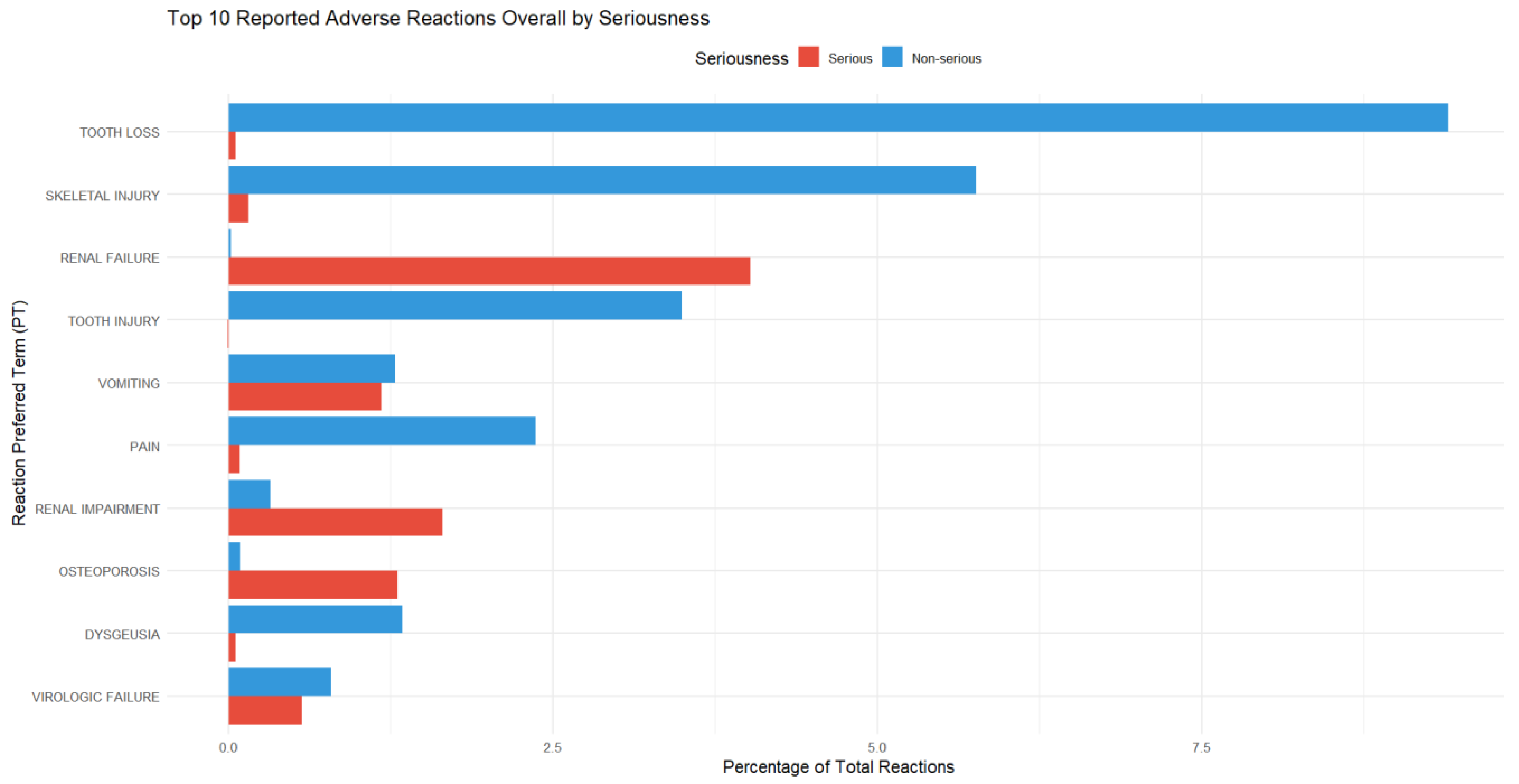
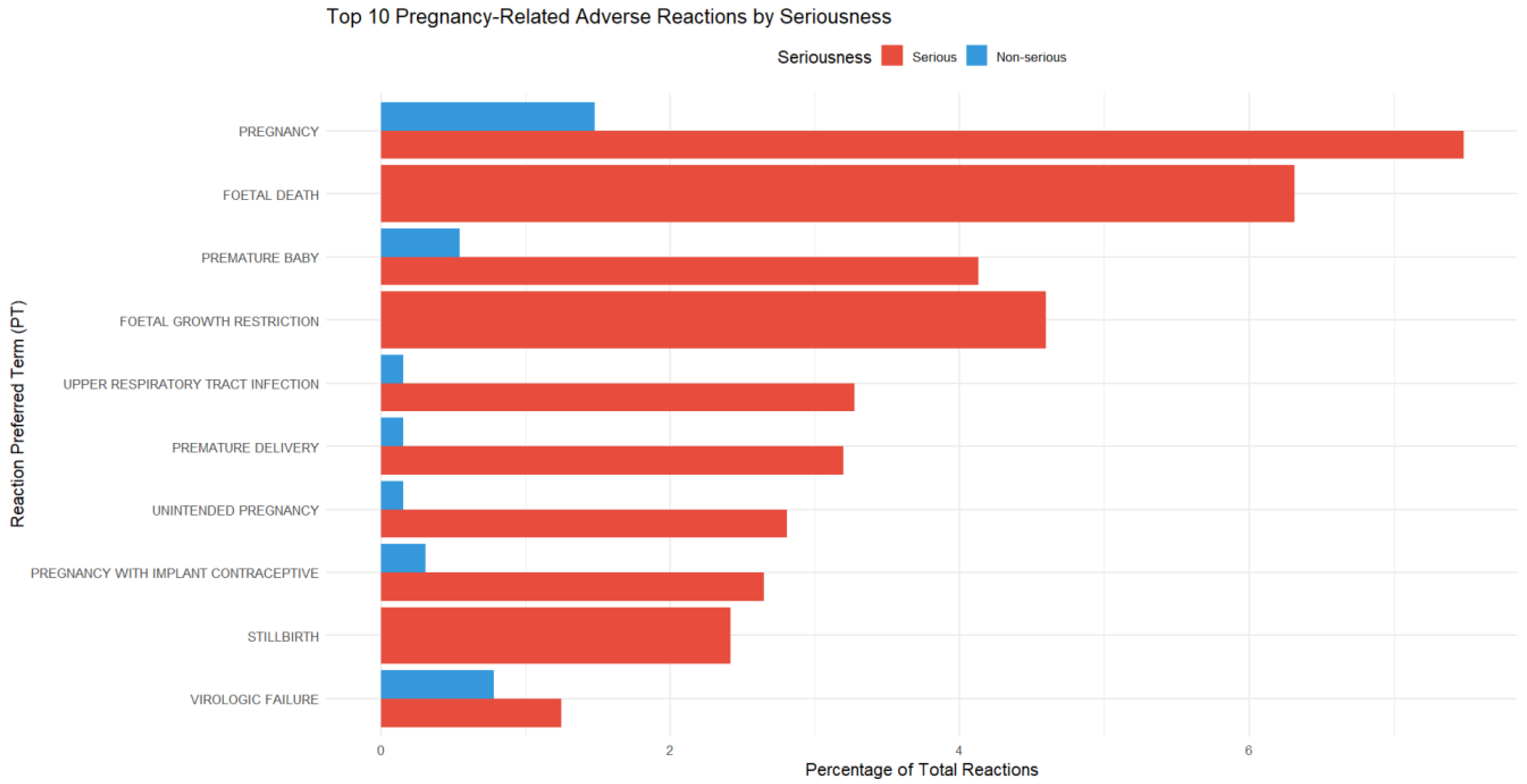
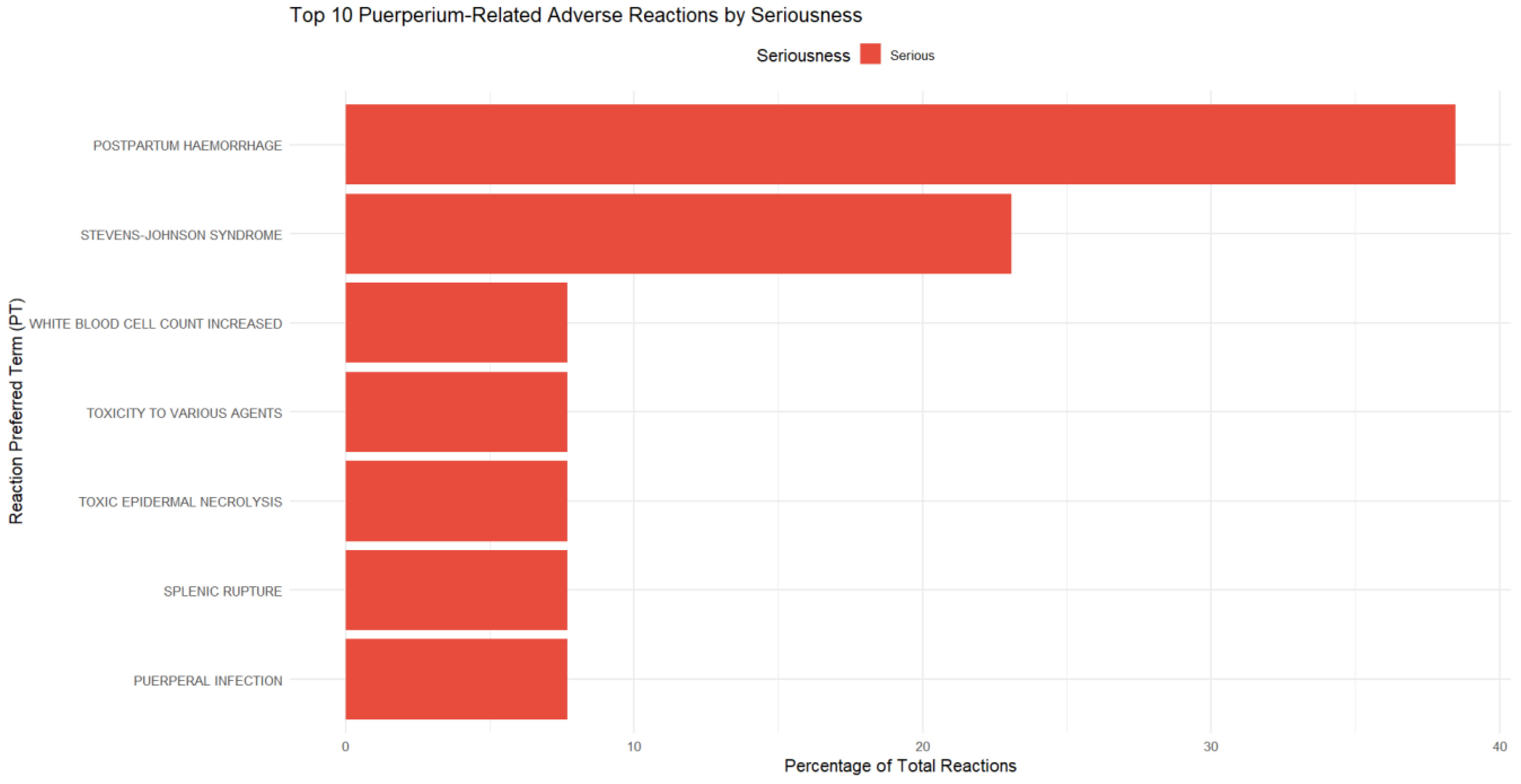
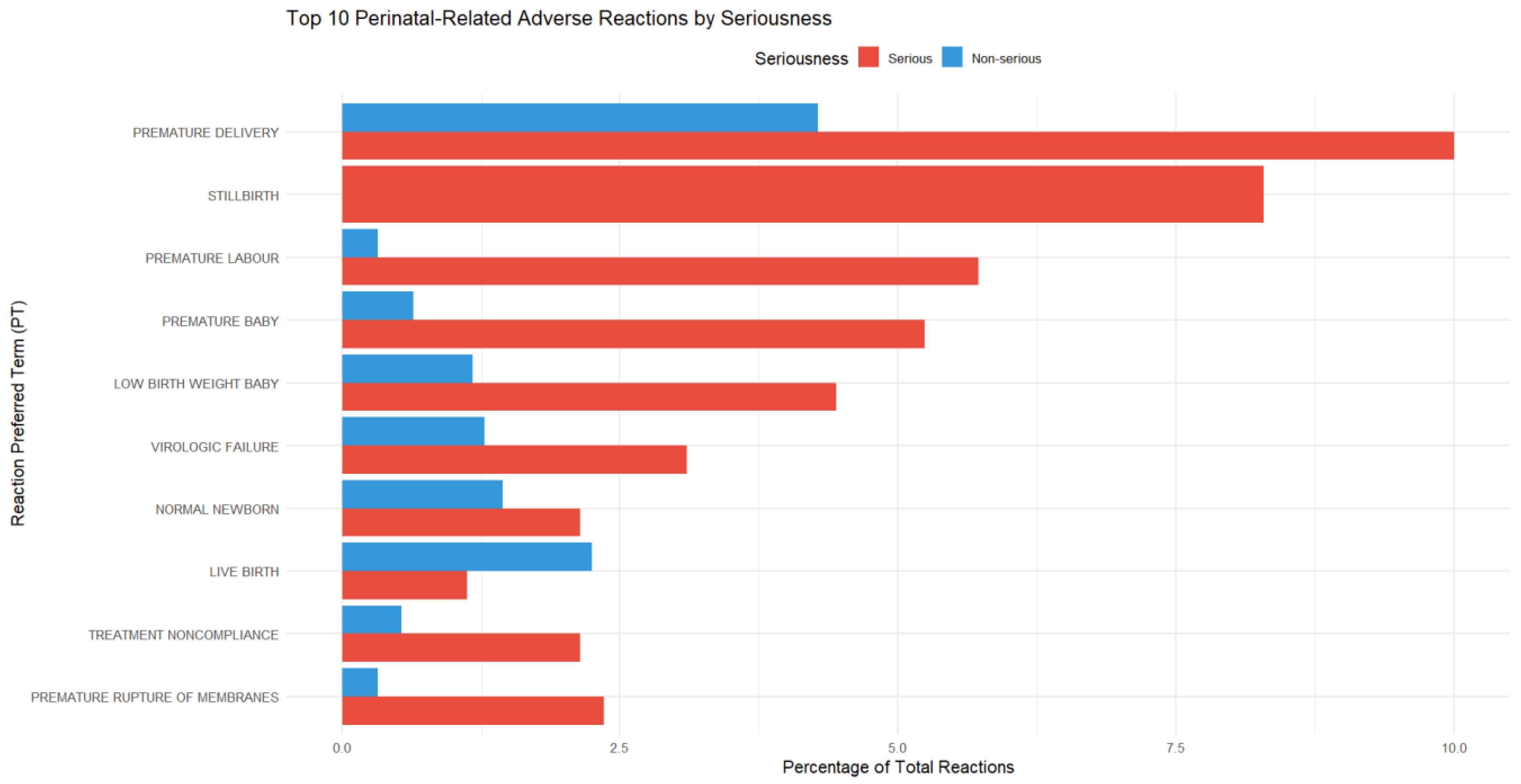
Across subgroups, the frequency and type of reported adverse reactions varied substantially. Overall, the most frequent reaction PTs reported across all groups is tooth loss (Figure 1). Pregnancy reports were dominated by maternal and fetal exposure events, with serious outcomes such as premature delivery and congenital anomalies occurring less frequently (Figure 2). Puerperium reports were extremely limited (n = 14) but disproportionately serious, with postpartum hemorrhage and Stevens–Johnson syndrome among the most common events (Figure 3). Perinatal reports (n = 1987) primarily captured neonatal outcomes such as live birth, low birth weight, and prematurity, often classified as serious (Figure 4). These differences reflect both underlying biological risk patterns and reporting intensity, and they highlight the challenges of signal detection in underpowered subgroups such as puerperium.
Figure 1. Top 10 Reported Adverse Reactions Overall. Bar plot showing the most frequent reaction PTs reported across all groups, stratified by seriousness (Serious/Non-serious). This provides an overall sense of the most common adverse events and their clinical significance.
Figure 2. Top 10 Pregnancy-related Reported Adverse Reactions Overall. Bar plot showing the most frequent reaction PTs reported across all groups, stratified by seriousness (Serious/Non-serious). This provides an overall sense of the most common adverse events and their clinical significance.
Figure 3. Top 10 Puerperium-related Reported Adverse Reactions Overall. Bar plot showing the most frequent reaction PTs reported across all groups, stratified by seriousness (Serious/Non-serious). Non-serious reports were included in this top 10. This provides an overall sense of the most common adverse events and their clinical significance.
Figure 4. Top 10 Perinatal-related Reported Adverse Reactions Overall. Bar plot showing the most frequent reaction PTs reported across all groups, stratified by seriousness (Serious/Non-serious). This provides an overall sense of the most common adverse events and their clinical significance.
In Table 2, we summarize the distribution of suspected drugs across subgroups. In pregnancy-related reports, the most frequently suspected drugs were ritonavir, lamivudine, zidovudine, tenofovir combinations, and integrase inhibitors (raltegravir, dolutegravir), with transplacental exposure being the most common route reported. Puerperium-related reports were sparse, with nevirapine, abacavir, and dolutegravir appearing alongside non-antivirals (omeprazole, clemastine, colecalciferol). Indications included HIV infection and postpartum conditions. Perinatal-related reports showed predominance of ritonavir and emtricitabine/tenofovir, reflecting maternal-fetal transmission or neonatal treatment. Compared to pregnancy reports, drug withdrawal was more frequently documented, suggesting treatment modifications after neonatal outcomes. Notably, entries labeled as “unknown” reflect missing or incomplete information in the individual ICSRs.
Table 2. Summarizes the distribution of suspected drugs, indications, routes, and actions taken across subgroups.
Concomitant (not administered) drugs were frequently recorded, though >50% of entries could not be parsed. Among parsable drugs, common co-medications were paracetamol, ritonavir, sulfamethoxazole–trimethoprim, aspirin, and lamivudine. In pregnancy-related reports, folic acid, iron, zidovudine, and dolutegravir sodium were most frequent, reflecting both HIV treatment and maternal supplementation. These co-exposures provide clinical context for maternal–fetal safety assessment but may also act as confounders in pharmacovigilance analyses.

2.2. Disproportionality Analysis Highlights Strong Pregnancy-Related Signals Compared to Puerperium and Perinatal Subgroups

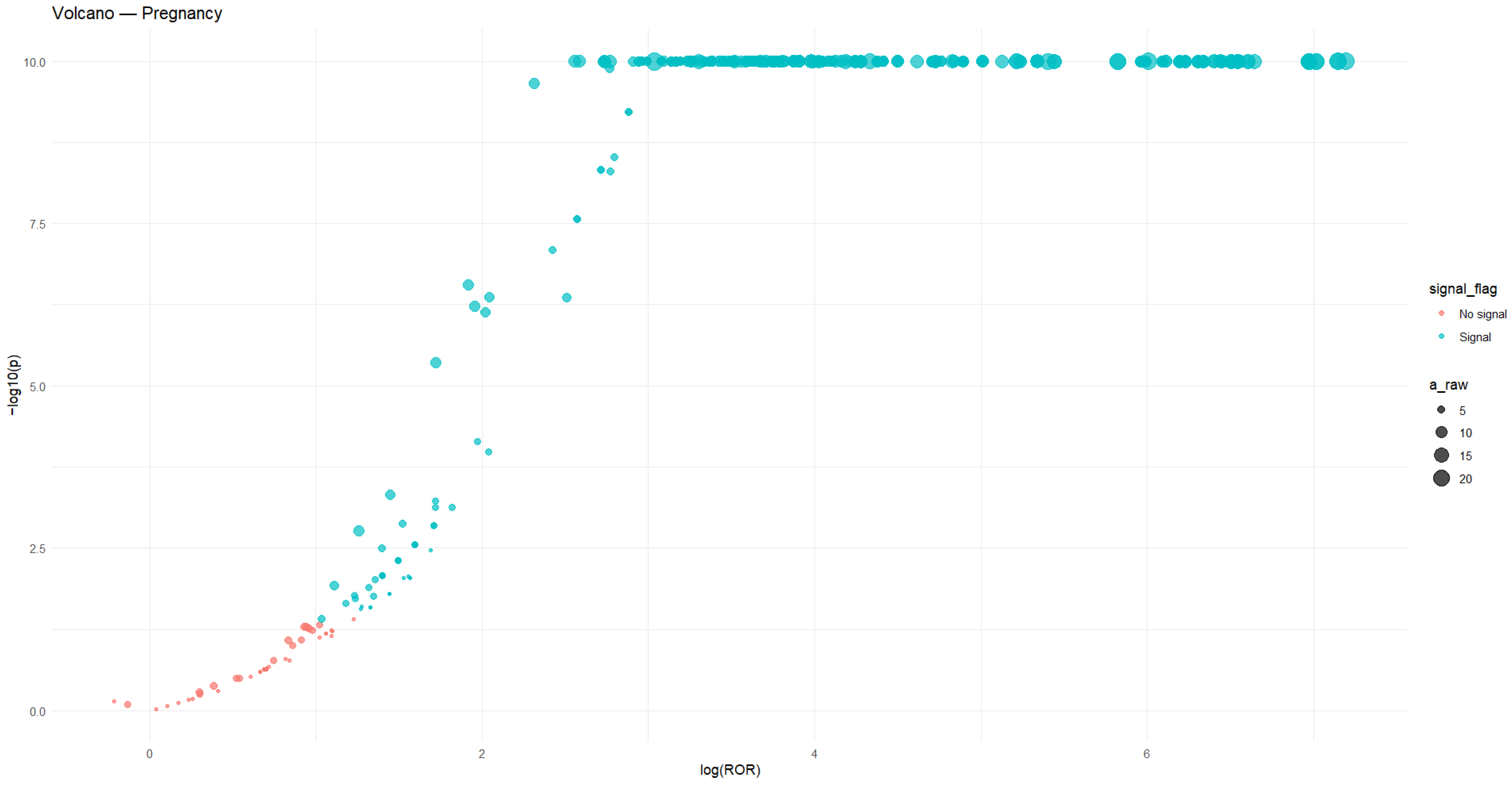
Among 680 deduplicated pregnancy reports, 7011 drug–event pairs were evaluated, of which 470 pairs met signal criteria. Most frequent signals involved antiretroviral agents, including abacavir, and immune modulators. Example pairs exhibited high PRR values (up to 62.9), positive IC (>0), and strong statistical significance (−log10 p > 8), indicating disproportionate reporting relative to the overall dataset.
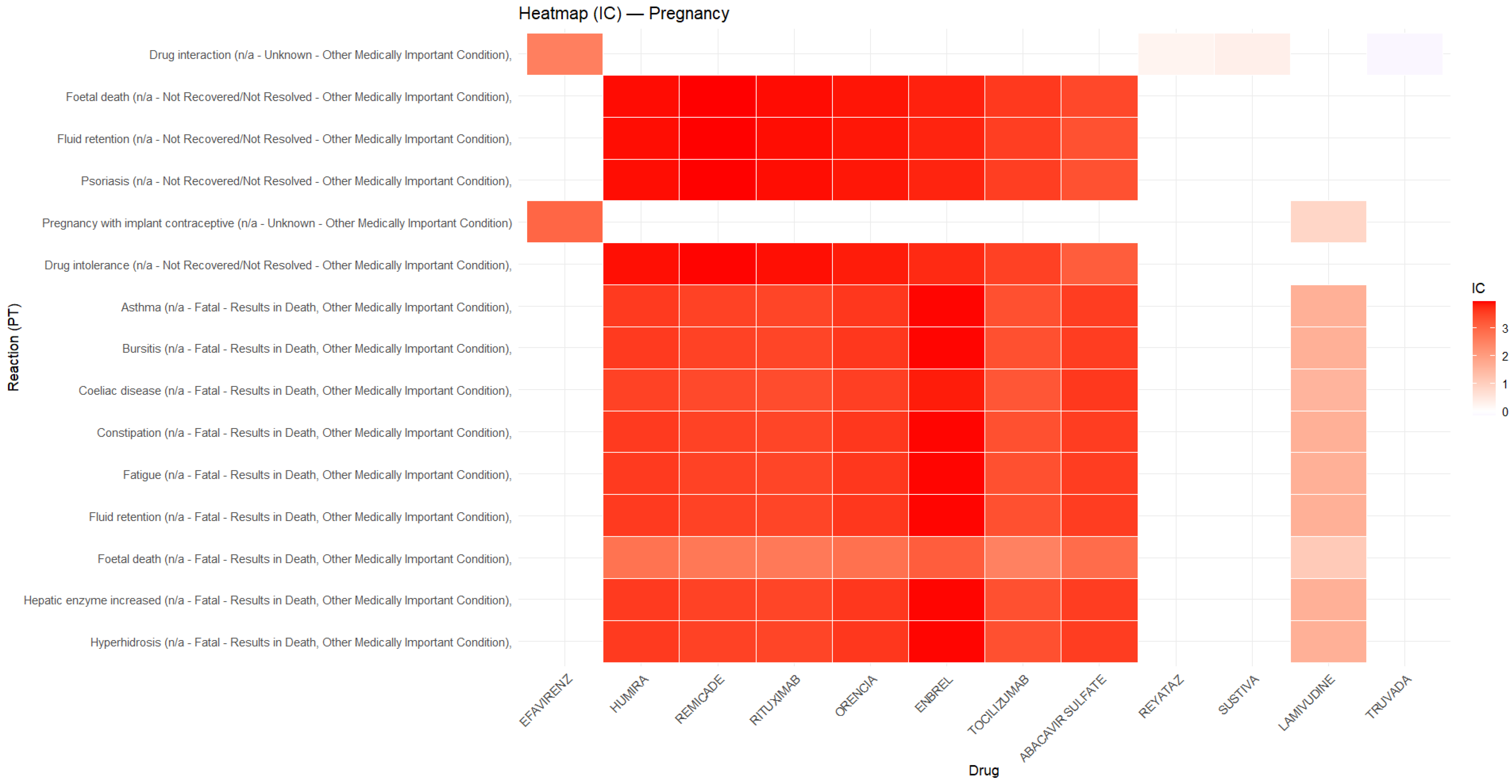
The volcano plot (Figure 5) highlights these significant associations, with points in the upper-right quadrant representing the strongest signals. Heatmaps of IC values further illustrate the relationships between frequently reported drugs and reactions, showing clustering of signals for specific antiretrovirals (Figure 6). Notably, ritonavir and certain NRTI combinations (emtricitabine/tenofovir, lamivudine) appear prominently in adverse events such as fetal death and fluid retention. Several reactions are connected to multiple drugs, suggesting broader pregnancy risk signals. Full disproportionality results are extensive; therefore, we report only the 20 most frequent pregnancy signals in Supplementary Table S1, while a summary of the smaller puerperium and perinatal subgroups is shown in Supplementary Table S2. These tables provide transparency on both the strongest signals and the rationale for restricting our analysis focus to pregnancy. These patterns provide a rationale for subsequent mechanistic clustering and pharmacokinetic/pharmacodynamic (PK/PD) modeling to explore potential clinical implications of these associations.
Figure 5. A volcano plot for pregnancy highlighted a wide distribution of drug–PT disproportionalities with strong outliers.
Figure 6. The heatmap emphasized clusters of drugs co-reported with inflammatory conditions and infections.
The puerperium subgroup included only 11 deduplicated reports, and the perinatal subgroup included 146 reports. In both cases, no drug–event pairs met signal thresholds, reflecting limited statistical power. Consequently, no volcano or heatmap visualizations were generated.
Regarding the sensitivity analysis, in the Pregnancy subgroup, 470 signals were detected under the base threshold. Applying a stricter threshold reduced the number of signals to 10, all of which overlapped with the base set, indicating that these represent the most robust associations. A loose threshold increased signal detection to 1160, reflecting weaker associations. Moreover, LOY analyses demonstrated that signal detection was largely stable across years, with minor variation (452–472 signals) when excluding most years. However, excluding reports from 2024 or 2025 led to a marked decrease in detected signals (48 and 28, respectively), suggesting that recent years contributed disproportionately to the overall signal profile. Overall, these results indicate that the base threshold signals are robust, while LOY analyses confirm temporal consistency except for very recent data.

2.3. Cluster and Network Analysis

2.3.1. Network Structure

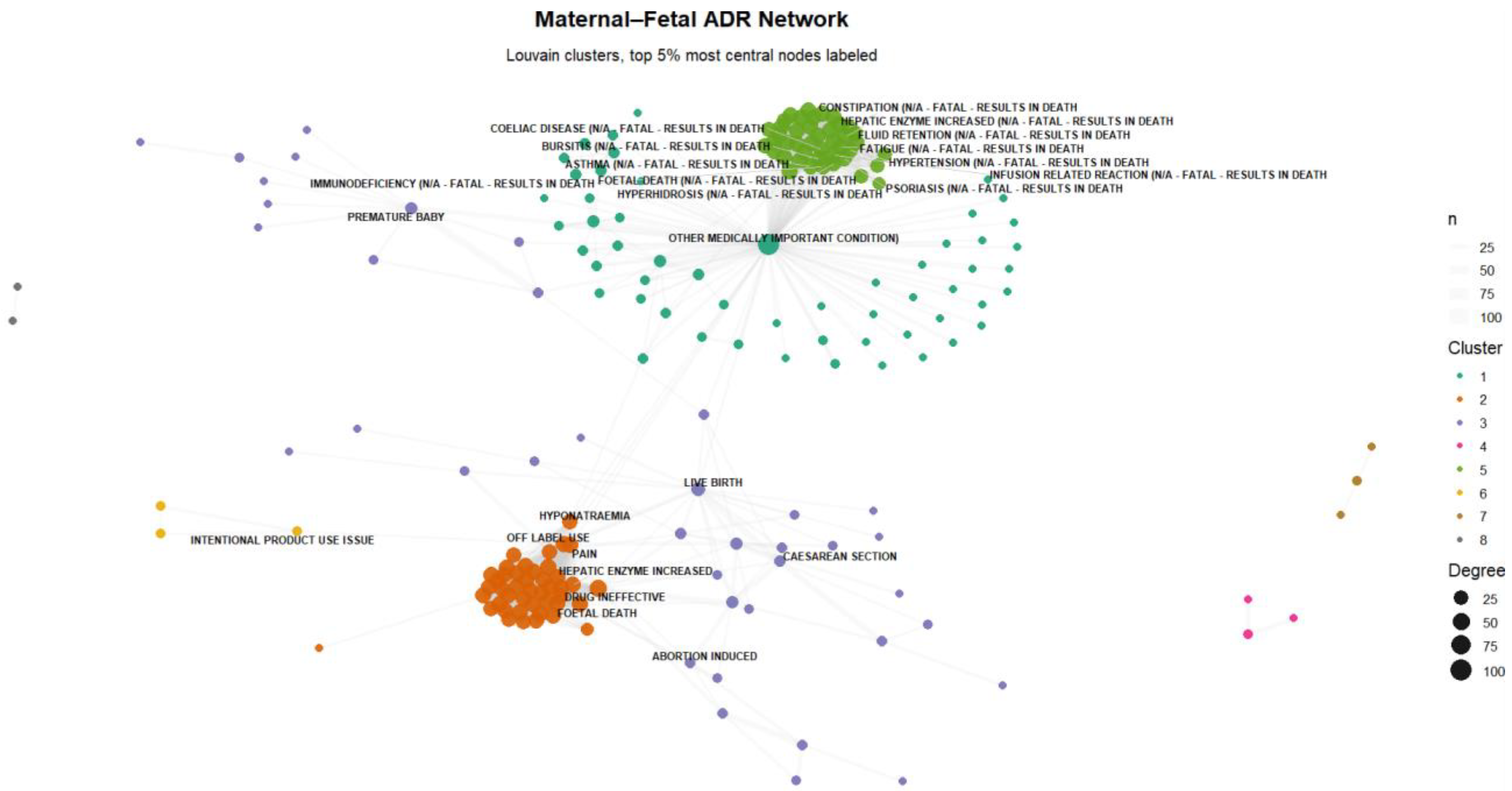
Pairwise co-occurrences of maternal-fetal adverse drug events were used to construct an undirected network graph. Reactions occurring in at least 5 reports were included as edges. The Louvain community detection algorithm identified clusters of co-reported adverse drug events, assigning each reaction to a cluster and calculating node-level network metrics, including degree and betweenness centrality. Network visualization highlighted adverse drug events with high centrality, defined as nodes in the 90th percentile for degree or betweenness. These “important” nodes represent highly interconnected or influential reactions within the network, potentially serving as sentinel signals for maternal-fetal safety. The visualization (Figure 7) depicts clusters by color and emphasizes central reactions with labels, providing an overview of network structure and relative connectivity. Cluster 1 grouped congenital anomalies and medically important conditions; Cluster 2 included fetal death and drug ineffectiveness; Cluster 3 aggregated pregnancy outcomes such as spontaneous/induced abortion, prematurity, live birth, and cesarean section; smaller clusters reflected outcomes such as hepatitis B, stillbirth, HIV transmission, and liver enzyme elevations.
Figure 7. Network visualization of adverse reaction clusters.
Robustness analyses using multiple clustering algorithms confirmed the stability of the network structure. Walktrap identified 15 clusters (modularity = 0.53; adjusted Rand index [ARI] vs. Louvain = 0.51), whereas Infomap produced 16 clusters (modularity = 0.54; ARI vs. Louvain = 0.81), indicating high concordance across methods and supporting that these clusters represent meaningful co-reporting patterns rather than random associations.
Most clusters were dominated by serious outcomes. Reports of congenital anomalies, pregnancy outcomes, stillbirth, and systemic fatal events were nearly exclusively serious, whereas non-serious reports were largely concentrated in Cluster 2, reflecting routine clinical management events. Network visualization (Figure 7) illustrates both the interconnectedness of clusters and the centrality of high-impact adverse drug events in shaping network topology.

2.3.2. Drug–Cluster Associations

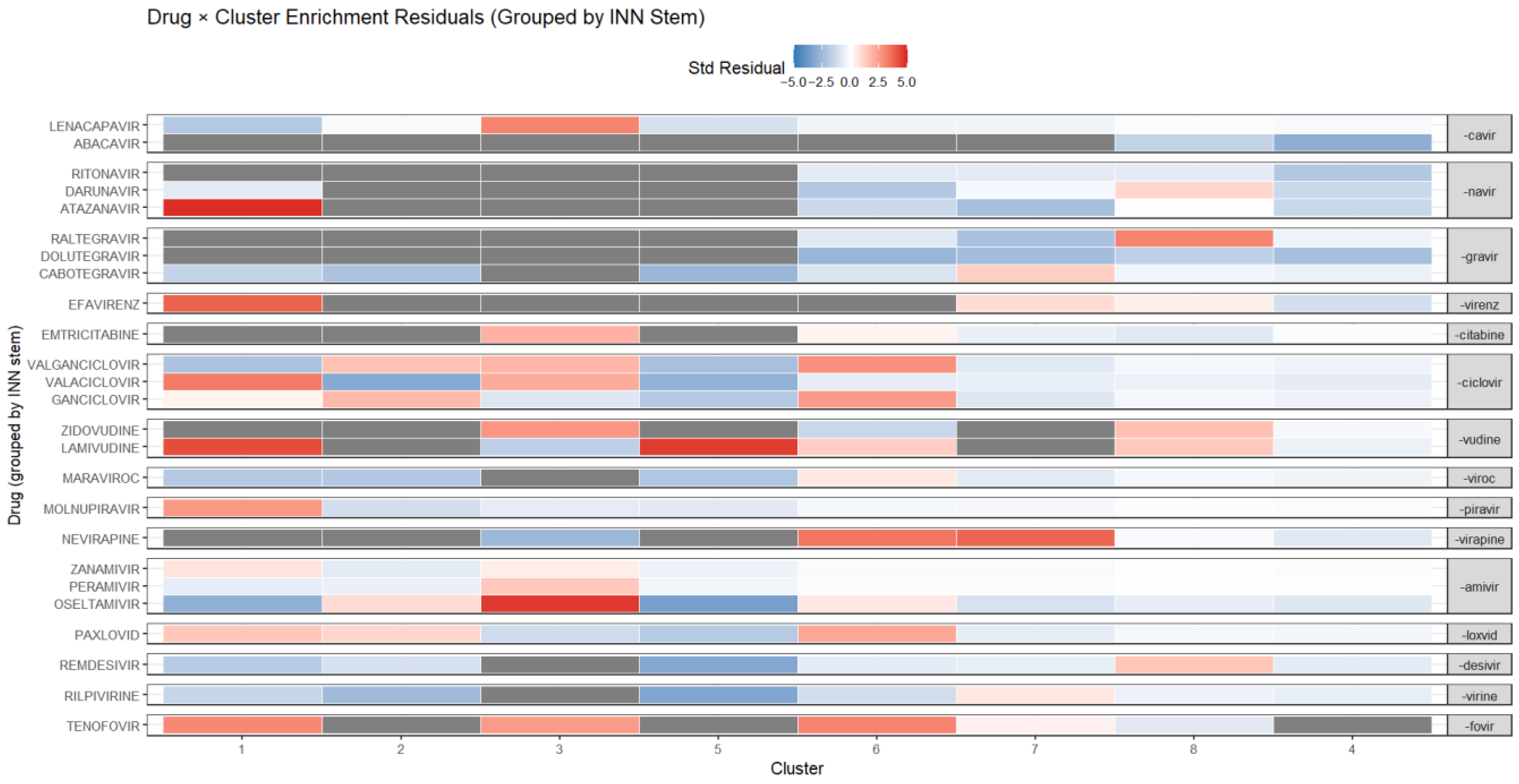
Associations were first assessed at the individual drug level. Monte Carlo chi-square tests with 10,000 simulations. Standardized residuals identified drugs disproportionately contributing to specific clusters. For example, zidovudine and nevirapine were overrepresented in congenital anomaly and fetal death clusters, while integrase inhibitors such as dolutegravir and bictegravir were more frequent in pregnancy outcome clusters. A heatmap of standardized residuals (Figure 8) visualized these associations across all antivirals, highlighting both shared and drug-specific safety signals. This drug-level analysis preserved distinctions within ARV classes and revealed heterogeneous reporting patterns not visible from disproportionality alone.
Figure 8. Standardized residuals from the Monte Carlo Chi-square analysis are shown for each drug–cluster pair. Drugs are grouped along the y-axis by their International Nonproprietary Name (INN) stem, highlighting pharmacological class structure as outlined by Balocco et al. [18]. Red cells represent positive standardized residuals (over-represented associations), blue cells negative residuals (under-represented associations), and gray cells indicate null or missing values. This visualization enables rapid identification of class-specific enrichment patterns among pregnancy-related safety signals.

2.3.3. Sensitivity Analyses

A temporal dynamics analysis shows the reporting patterns shifted markedly over time. Before 2017, ICSRs were dominated by legacy ARVs. From 2018 onwards, newer drugs rose sharply, reaching >70% of maternal–fetal ADR reports by 2021–2025. This trajectory mirrors evolving clinical guidelines and prescribing practices. Additionally, aggregating drugs into “Legacy”, “Newer”, and “Other” groups revealed differential cluster associations. Standardized residual analysis indicated that legacy ARVs were overrepresented in clusters 1 and 6, whereas newer ARVs were more evenly distributed, with slight enrichment in cluster 3. Cluster 2 showed negative residuals for legacy drugs, suggesting underrepresentation. Legacy agents were significantly enriched in Cluster 1 (congenital anomalies, where standardized residual ≈ +4.6), consistent with historical safety concerns. Newer agents were enriched in Cluster 3 (pregnancy outcomes, residual ≈ +4.7), particularly with dolutegravir and bictegravir reports. Other drugs (outside predefined ARV groups) showed enrichment in Cluster 2 (general drug issues) and Cluster 4 (hepatitis-related events).
Seriousness criteria were applied based on outcomes such as death, life-threatening events, hospitalization, congenital anomalies, or medically important conditions. Across clusters, the proportion of serious reports varied markedly: clusters 1, 3, and 5 were predominantly serious, reflecting congenital anomalies, abortions, or fatal events. Other clusters included a higher proportion of non-serious adverse drug events, such as elevated liver enzymes or less critical reactions.
Drug co-reporting analysis identified frequently co-reported events, including ritonavir, raltegravir, darunavir, and lamivudine. Multinomial logistic regression modeling the probability of cluster membership by drug confirmed the enrichment patterns observed in chi-square analyses. Coefficients indicated that specific drugs strongly predicted membership in distinct clusters, consistent with known pharmacologic profiles and risk patterns. The model converged successfully after 100 iterations, with convergence diagnostics indicating stable estimates across clusters.
Regarding regional variation, cluster profiles differ between regions. Pregnancy outcome–related reports (Cluster 3) were over-represented in EEA countries, while hepatitis-related events (Cluster 4) and stillbirth/placental disorders (Cluster 6) appeared more frequently in non-EEA submissions.

3. Discussion

This pharmacovigilance study provides a panoramic view of maternal–fetal adverse drug events associated with antiretroviral therapy (ART) in Europe, based on over a decade of EudraVigilance reports. Since the analysis relied on spontaneous reports without formal causality assessment, findings represent associations between reported drugs and events rather than confirmed adverse drug reactions. By integrating classical disproportionality metrics and reaction co-reporting networks, we were able to quantify potential signals and assess their clinical coherence. Together, these complementary approaches situate our findings at the intersection of pharmacovigilance, clinical pharmacology, and maternal health, while also pointing toward the translational potential of linking safety surveillance to pharmacokinetic/pharmacodynamic (PK/PD) modeling.

3.1. Data Characterization and Disproportionality Analysis

This study represents one of the largest pharmacovigilance analyses of maternal–fetal adverse drug events associated with ART in Eudravigilance. Maternal–fetal ADRs are detectable in large-scale pharmacovigilance data. Pregnancy-related reports provided sufficient statistical power, whereas puerperium and perinatal reports were underpowered. Our data characterization revealed patterns that align with clinical expectations: ART backbones and boosters were the most frequently implicated, often accompanied by supportive medications (e.g., analgesics, PPIs, corticosteroids) and drugs for chronic conditions (e.g., statins, antihypertensives). Comparable patterns have been described in pregnancy pharmacovigilance studies, emphasizing the high prevalence of both pregnancy-related medications and background therapies in spontaneous reports [19]. These patterns, consistently observed in pregnancy pharmacovigilance and exposure registry studies, reinforce the internal validity of our extraction pipeline while reflecting real-world prescribing behavior during pregnancy. At the same time, >50% of concomitant entries could not be parsed into structured drug names, reflecting known limitations of EudraVigilance and similar databases [20,21]. As highlighted in Good Pharmacovigilance Practice (GVP)-VI and ICH E2E guidance, such data quality gaps necessitate cautious interpretation and underscore the importance of structured medicinal coding for perinatal safety surveillance. Our disproportionality analysis confirmed that ART-related pregnancy reports generate statistically robust signals, consistent with prior evidence that highlighted increased reporting for antiretrovirals and immunomodulatory drugs in maternal populations. Puerperium and perinatal subsets remained underpowered. There is clinical alignment of these findings with current European AIDS Clinical Society (EACS) and WHO pregnancy guidelines, supporting their translational credibility: both recommend continued ART with regimen selection guided by fetal safety, treatment history, and resistance profile [22,23]. Sensitivity analyses revealed minimal single-suspect pregnancy reports and substantial overlap with supplementation therapies (iron, folic acid), illustrating that many entries represent exposures rather than event-driven adverse drug events. This highlights structural confounding by indication and co-medication, a known constraint in pharmacovigilance datasets. Complementary methodologies—such as prospective registry studies, PK/PD modeling, and linked EHR databases—remain essential for causal validation and dose–response assessments. Notably, the predominance of 2024–2025 reports in the signal pool likely reflects contemporaneous introduction of novel integrase inhibitors and evolving post-authorization safety monitoring. Such temporal dependencies emphasize the continuous nature of signal refinement throughout the pharmacovigilance cycle.

3.2. Network Analysis and Clustering

By extending analysis beyond isolated drug–event pairs, network methods provided a more comprehensive view of maternal–fetal ADRs. Eight biologically and clinically coherent clusters emerged, encompassing congenital anomalies, pregnancy complications, placental disorders, and vertical infections. These clusters broadly correspond to clinical syndromes recognized in maternal pharmacotherapy, enhancing interpretability for bedside application. Similar network-based pharmacovigilance approaches have previously facilitated mechanistic hypothesis generation in obstetric pharmacology [8]. Exclusion of exposure-only terms was essential; otherwise, the network would be dominated by artefactual co-reporting. The identified clusters persisted across sensitivity thresholds, supporting analytical robustness.
Mechanistically, legacy nucleoside reverse transcriptase inhibitors (NRTIs) were disproportionately associated with congenital anomalies, consistent with mitochondrial toxicity mechanisms hypothesized in preclinical studies and incorporated into EMA pregnancy labeling [24]. In contrast, integrase inhibitors showed enrichment for pregnancy outcome clusters, raising questions about uterine/placental pharmacodynamics or altered drug–drug interactions in maternal care. These patterns align with emerging clinical observations prompting enhanced neonatal growth monitoring in women receiving integrase-based ART regimens. Going forward, such phenotype-level clustering can directly inform PK/PD and placental transport model design, linking data-driven pharmacovigilance to mechanistic pharmacology.
Regional variation in signal composition reiterates that ADR patterns are partly determined by local prescribing practices and reporting behaviors. Harmonized implementation of pregnancy pharmacovigilance guidance (EudraVigilance, VigiBase, FAERS) will be essential to understand geographical heterogeneity and ensure guideline applicability across care settings [25,26]. The predominance of serious outcomes across clusters emphasizes the clinical importance of signals even when causal inference is not possible.

3.3. Limitations and Methodological Implications

This study illustrates the methodological complementarity of disproportionality and network-based analytics. Traditional pairwise disproportionality is strong at detecting early signals but often generates long lists divorced from biological plausibility. Network-based clustering, by contrast, enhances interpretability by aggregating related events into clinically intelligible constellations, mirror-ing syndromic reasoning in clinical pharmacology. The combined framework thus advances post-marketing maternal safety evaluation beyond signal lists toward actionable hypotheses that can inform regulatory updating, labeling decisions, and the design of mechanistic or epidemiologic follow-up studies. The absence of formal causality assessment constitutes a key limitation, as our analysis cannot distinguish between suspected and concomitant drug contributions. Some ICSRs listed multiple suspected drugs, which may confound event attribution and lead to overestimation of associations.
The limitations inherent to spontaneous reporting still persist and include: under-reporting, selective reporting, lack of denominator or treatment prevalence data, and occasional misclassification of pregnancy status or age [27,28]. Notably, while EudraVigilance provides a large-scale, multinational dataset with broad drug coverage and outcome diversity, it represents only one perspective in the pharmacovigilance landscape. Other resources, such as the FDA Adverse Event Reporting System (FAERS), VigiBase, and national pregnancy exposure registries, offer complementary strengths [29,30]. FAERS contributes high-volume U.S.-origin data, VigiBase aggregates reports from over 130 countries, and registries or claims/EHR linkage studies provide granular, prospectively collected maternal and infant outcomes. Each source has trade-offs regarding coverage, accessibility, and data completeness. Triangulating findings across these datasets can strengthen confidence in signals and clusters, and highlight areas where EudraVigilance findings may be augmented or contextualized [31]. Integrating analyses across these sources aligns with current EMA pharmacovigilance planning (ICH-E2E) recommendations and would strengthen the clinical generalizability of observed safety signals.
The novelty of this work lies not only in its scale, the largest EV-based evaluation of maternal–fetal adverse drug events with ART to date, but also in its methodological integration of disproportionality analytics and network clustering. By mapping drug–event relationships into biologically coherent clusters, these analyses bridge pharmacovigilance and PK/PD research, enabling the formulation of testable hypotheses that extend beyond traditional safety signal lists. For example, signals implicating legacy NRTIs in mitochondrial-mediated congenital anomalies and integrase inhibitors in prematurity risk now provide actionable candidate pathways for further mechanistic study, such as in vitro placenta transport models or maternal–fetal PK/PD simulations.
Crucially, the linkage of post-marketing safety surveillance with mechanistic modeling supports the proactive refinement of clinical guidelines; clusters identified herein can inform risk stratification and closer monitoring of outcomes (e.g., congenital anomalies or preterm birth) by ART drug class. This translational framework strengthens both regulatory and real-world evidence: it moves pharmacovigilance beyond signal detection, toward predictive risk assessment, drug labeling updates, and tailored monitoring recommendations for pregnant women living with HIV.

3.4. Future Directions and Clinical Integration

Improving maternal–fetal drug safety requires uniting real-world pharmacovigilance data with mechanistic and clinical insights. The next step could look like: prospective triangulation, linking EudraVigilance signals to registry cohorts, EHR-based studies, and PK/PD models. Combining longitudinal exposure data with statistical modeling will clarify dose–response and temporal associations in line with GVP-XVI signal management principles. Rigorous integration of these clusters into European and WHO perinatal pharmacology frameworks will support more nuanced, evidence-based guidelines (especially for newer ART classes).
Implementation should focus on: (1) Embedding ADR cluster findings into clinical assessment protocols, such as targeted fetal monitoring when initiating ART in pregnancy; (2) Incorporating scenario modeling (virtual trials, dose adjustments) to anticipate risk in populations underrepresented in clinical studies; (3) Collaborating across pharmacovigilance systems (EV, FAERS, VigiBase) to validate and contextualize findings, strengthening global applicability.
Ultimately, linking spontaneous reporting data to PK/PD modeling and decision-support algorithms will facilitate predictive, learning-health approaches to maternal–fetal drug safety. This supports both individualized care and regulatory adaptation, advancing the safe use of ART in pregnancy across diverse clinical contexts.

4. Materials and Methods

4.1. Data Source and Scope

We conducted a retrospective pharmacovigilance study using EudraVigilance (EV), the European Medicines Agency’s spontaneous reporting database. All Individual Case Safety Reports (ICSRs) submitted between January 2015 and June 2025 were retrieved. Reports were filtered for pregnancy, puerperium, and perinatal contexts using MedDRA Preferred Terms (PTs) containing keywords such as pregnancy, fetal, neonatal, Labor, perinatal, placenta, and breastfeeding. Because EV reports may include both the mother and the offspring (e.g., fetus, newborn, or child), some cases classified under the pregnancy group reflect adverse reactions in the infant or fetus, rather than the pregnant individual. No formal causality assessment algorithm (e.g., WHO-UMC, Naranjo) was applied because EudraVigilance does not provide causality scores. Therefore, reports were analyzed as events associated with suspect drugs as identified by the primary reporter. When multiple suspected drugs were listed within a single ICSR, each drug–event pair was treated independently, consistent with standard pharmacovigilance signal detection procedures. However, we acknowledge that co-medication and drug–drug interactions may contribute to reported events.
To assess data quality, we evaluated completeness across key metadata fields (e.g., patient sex, patient age group, report type, primary source, and reaction characteristics) and identified ICSRs with uncertain patient age or mother–child relationship. Cases where the patient age was missing, recorded as fetus/newborn/child, or flagged as a parent–child report were considered uncertain. These uncertain ICSRs accounted for 14.8% of all pregnancy-related reports.
To improve interpretability, exposure-only PTs (e.g., maternal exposure during pregnancy) were excluded from the main analyses to avoid clustering artifacts. However, they were reintroduced in sensitivity analyses. All analyses were performed in R (version 4.2.2).

4.2. Data Processing and Deduplication

EV reports are stored in long format, with multiple rows per ICSR if more than one drug or reaction is reported. The unique identifier EU.Local.Number was used to deduplicate records. When multiple versions of the same case were available, only the latest version was retained.
Drug names were parsed and harmonized against a manually curated reference list. Structured variables such as indication, route of administration, and action taken were extracted when available. Reaction terms were split into unique PTs, and seriousness was retained as a binary classification (serious vs. non-serious). Each ICSR contributed at most one unique drug–event pair to avoid within-case inflation.

4.3. Disproportionality Analysis

Disproportionality analyses were performed on the deduplicated dataset at both global and subgroup levels (pregnancy, puerperium, perinatal). For each drug–PT pair, a 2 × 2 contingency table was constructed, and standard disproportionality metrics were computed (Table 3): Proportional Reporting Ratio (PRR), Reporting Odds Ratio (ROR) with 95% confidence interval, Information Component (IC) with 95% credibility interval, and Empirical Bayesian Geometric Mean (EBGM).
Table 3. Structure of the 2 × 2 contingency table used to evaluate the association between a given drug and an adverse event.
A continuity correction (0.5) was applied to all zero cells. Signals were defined as PRR ≥ 2, ROR lower 95% CI > 1, and IC > 0, consistent with European Medicines Agency (EMA) guidance. To ensure robustness, we required ≥3 cases per drug–PT, ≥30 reports per drug, and ≥10 reports per PT. Sensitivity analyses included (i) stricter vs. looser thresholds for minimum counts, and (ii) a leave-one-year-out (LOY) procedure to assess temporal stability of signals.

4.4. Network Construction and Clustering

A reaction co-reporting network was built using filtered PTs as nodes. Edges represented the co-occurrence of two PTs within the same ICSR. To reduce noise, only edges reported in ≥5 cases were retained.
Communities were identified with the Louvain algorithm, and clusters were annotated according to clinical coherence and their top-contributing PTs. Drug–cluster associations were assessed at the individual drug level using Monte Carlo–simulated chi-square tests (10,000 permutations). Standardized residuals were computed to flag clusters disproportionately enriched for specific drugs. Drugs were grouped according to their International Nonproprietary Name (INN) stem, reflecting pharmacological class structure as described by Balocco et al. [18].
Additionally, antivirals were grouped into legacy agents (zidovudine, nevirapine, lopinavir, efavirenz, atazanavir) and newer agents (dolutegravir, bictegravir, raltegravir, cabotegravir, elvitegravir) in sub-analyses exploring temporal and regional patterns. Sub-analyses examined temporal patterns (pre- vs. post-2017 guideline changes), regional patterns (European Economic Area (EEA) vs. non-EEA), and serious vs. non-serious outcomes.

4.5. Sensitivity and Quality Control

To assess potential confounding by concomitant medications and indication, we conducted a series of sensitivity analyses. First, we restricted the dataset to reports listing a single suspect drug. Second, we excluded reports mentioning common pregnancy supplements such as iron or folic acid among concomitant drugs. Third, we restricted analyses to reports that explicitly referenced HIV infection as the indication for use. Finally, we explored an adjusted case–non-case logistic regression model (aROR) controlling for patient sex, age group, reporter qualification, and year of report. These analyses were performed using the same disproportionality pipeline as the main analysis. Following exclusion of artefactual pregnancy-related exposure terms (e.g., “maternal exposure during pregnancy”), no valid pregnancy-specific adverse reaction reports remained within the restricted datasets, reflecting the inherent sparsity and multi-exposure structure of pregnancy pharmacovigilance data.
To ensure reproducibility and minimize artifacts, we implemented several quality control steps: (1) Exclusion of purely exposure-related PTs for the main analysis (with sensitivity inclusion); (2) Deduplication of multiple ICSR versions and restriction to unique drug–event pairs; (3) Filtering out extreme outliers (ICSRs with unusually high numbers of drugs or events).

5. Conclusions

This study demonstrates that combining disproportionality analysis with network- and cluster-based approaches provides a richer understanding of antiretroviral safety in pregnancy, puerperium, and perinatal periods. Robust disproportionality signals confirmed established risks for legacy agents, while network clustering revealed biologically coherent outcome groups and identified novel patterns with newer drugs such as dolutegravir and bictegravir. Temporal and regional analyses captured the dynamic nature of prescribing and reporting, highlighting both evolving safety signals and the importance of contextual interpretation. By mapping drug–event associations into interpretable clusters, this work establishes a translational bridge between pharmacovigilance and PK/PD research. These findings not only inform regulatory risk assessment but also lay the groundwork for mechanistic studies that can optimize maternal–fetal therapy in real-world settings.

Supplementary Materials

The following supporting information can be downloaded at https://www.mdpi.com/article/10.3390/pharma4040024/s1. Table S1: Top 20 drug–reaction pairs identified in the Pregnancy subgroup; Table S2: Summary of Subgroups.

Author Contributions

Conceptualization, B.C. and N.V.; methodology, B.C. and N.V.; validation, N.V.; formal analysis, B.C. and N.V.; investigation, B.C. and N.V.; resources; N.V.; writing—original draft, B.C.; writing—review and editing, N.V.; supervision, N.V.; project administration, N.V.; funding acquisition, N.V. All authors have read and agreed to the published version of the manuscript.

Funding

This work was financed by the FEDER—Fundo Europeu de Desenvolimento Regional through COMPETE 2020—Operational Program for Competitiveness and Internationalization (POCI), Portugal 2020, and by Portuguese funds through the FCT—Fundação para a Ciência e a Tecnologia, in a framework of the projects in CINTESIS, R&D Unit (reference UIDB/4255/2020), and within the scope of the project “RISE—LA/P/0053/2020.” N.V. would also like to thank the support from the FCT and FEDER (European Union), award number IF/00092/2014/CP1255/CT0004, PRR-09/C06-834I07/2024.P11721, 2024.18026.PEX and the Chair in Onco-Innovation at the FMUP.

Institutional Review Board Statement

Not applicable.

Data Availability Statement

The original contributions presented in this study are included in the article/Supplementary Materials. Further inquiries can be directed to the corresponding author.

Acknowledgments

B.C. thanks FCT for her PhD Grant (2023.05151.BDANA).

Conflicts of Interest

The authors declare no conflicts of interest.

Abbreviations

EVEudraVigilance
ICSRIndividual Case Safety Report
PRRProportional Reporting Ratio
RORReporting Odds Ratio
ICInformation Component
EBGMEmpirical Bayesian Geometric Mean
PK/PDPharmacokinetics/Pharmacodynamics
ADRsAdverse Drug Reactions
ARTAntiretroviral Therapy
ARVAntiretroviral
NRTINucleoside Reverse Transcriptase Inhibitor
LOYLeave-One-Year-Out
EEAEuropean Economic Area
ARIAdjusted Rand Index
FAERSFDA Adverse Event Reporting System
LASSOLeast Absolute Shrinkage and Selection Operator
AUCArea Under the Curve

References

  1. Eke, A.C.; Gebreyohannes, R.D.; Fernandes, M.F.S.; Pillai, V.C. Physiologic Changes During Pregnancy and Impact on Small-Molecule Drugs, Biologic (Monoclonal Antibody) Disposition, and Response. J. Clin. Pharmacol. 2023, 63, S34–S50. [Google Scholar] [CrossRef]
  2. Caritis, S.N.; Venkataramanan, R. Obstetrical, Fetal, and Lactation Pharmacology—A Crisis That Can No Longer Be Ignored. Am. J. Obs. Gynecol. 2021, 225, 10–20. [Google Scholar] [CrossRef]
  3. Fortinguerra, F.; Belleudi, V.; Poggi, F.R.; Perna, S.; Bortolus, R.; Donati, S.; D’Aloja, P.; Da Cas, R.; Clavenna, A.; Locatelli, A.; et al. Monitoring Medicine Prescriptions Before, During and After Pregnancy in Italy. PLoS ONE 2023, 18, e0287111. [Google Scholar] [CrossRef]
  4. Richardson, J.L.; Moore, A.; Bromley, R.L.; Stellfeld, M.; Geissbühler, Y.; Bluett-Duncan, M.; Winterfeld, U.; Favre, G.; Alexe, A.; Oliver, A.M.; et al. Core Data Elements for Pregnancy Pharmacovigilance Studies Using Primary Source Data Collection Methods: Recommendations from the IMI ConcePTION Project. Drug Saf. 2023, 46, 479–491. [Google Scholar] [CrossRef]
  5. Dernoncourt, A.; Liabeuf, S.; Bennis, Y.; Masmoudi, K.; Bodeau, S.; Laville, S.; Hurtel-Lemaire, A.-S.; Gras-Champel, V.; Batteux, B. Fetal and Neonatal Adverse Drug Reactions Associated with Biologics Taken During Pregnancy by Women with Autoimmune Diseases: Insights from an Analysis of the World Health Organization Pharmacovigilance Database (VigiBase®). BioDrugs 2023, 37, 73–87. [Google Scholar] [CrossRef] [PubMed]
  6. Noseda, R.; Müller, L.; Bedussi, F.; Fusaroli, M.; Raschi, E.; Ceschi, A. Immune Checkpoint Inhibitors and Pregnancy: Analysis of the VigiBase® Spontaneous Reporting System. Cancers 2022, 15, 173. [Google Scholar] [CrossRef] [PubMed]
  7. Wang, Q.; Sun, H.; Huang, J.; Chen, Y.; Ni, J.; Tang, Z.; Liu, J. Investigation of Spontaneous Abortion and Stillbirth Adverse Events in Epilepsy Patients Treated with Levetiracetam: A Pharmacovigilance Study. Epilepsy Behav. 2024, 160, 110077. [Google Scholar] [CrossRef]
  8. Fusaroli, M.; Raschi, E.; Gatti, M.; De Ponti, F.; Poluzzi, E. Development of a Network-Based Signal Detection Tool: The COVID-19 Adversome in the FDA Adverse Event Reporting System. Front. Pharmacol. 2021, 12, 740707. [Google Scholar] [CrossRef] [PubMed]
  9. Zaccaria, C.; Piccolo, L.; Gordillo-Marañón, M.; Touraille, G.; de Vries, C. Identification of Pregnancy Adverse Drug Reactions in Pharmacovigilance Reporting Systems: A Novel Algorithm Developed in EudraVigilance. Drug Saf. 2024, 47, 1127–1136. [Google Scholar] [CrossRef]
  10. Ji, X.; Cui, G.; Xu, C.; Hou, J.; Zhang, Y.; Ren, Y. Combining a Pharmacological Network Model with a Bayesian Signal Detection Algorithm to Improve the Detection of Adverse Drug Events. Front. Pharmacol. 2022, 12, 773135. [Google Scholar] [CrossRef]
  11. Pétervári, M.; Benczik, B.; Balogh, O.M.; Petrovich, B.; Ágg, B.; Ferdinandy, P. Network Analysis for Signal Detection in Spontaneous Adverse Event Reporting Database: Application of Network Weighting Normalization to Characterize Cardiovascular Drug Safety. Drug Saf. 2022, 45, 1423–1438. [Google Scholar] [CrossRef] [PubMed]
  12. Joopudi, V.; Dandala, B.; Tsou, C.-H.; Liang, J.J. Hierarchy-Aware Adverse Reaction Embeddings for Signal Detection. AMIA Annu. Symp. Proc. 2022, 2022, 596–605. [Google Scholar]
  13. Dijkstra, L.; Schink, T.; Linder, R.; Schwaninger, M.; Pigeot, I.; Wright, M.N.; Foraita, R. A Discovery and Verification Approach to Pharmacovigilance Using Electronic Healthcare Data. Front. Pharmacol. 2024, 15, 1426323. [Google Scholar] [CrossRef]
  14. Alexe, A.; Eisele, O.; Fernandes, M.F.S.; Garg, A.; Kovacs, B.; Wurst, K.; Balramsingh-Harry, L.; Abramova, N.; Zheteyeva, Y.; Lewis, D. Call to Action: Harmonization of Pharmacovigilance Regulations for Post-marketing Pregnancy and Breastfeeding Safety Studies. Br. J. Clin. Pharmacol. 2024, 90, 715–721. [Google Scholar] [CrossRef]
  15. Crisafulli, S.; Bate, A.; Brown, J.S.; Candore, G.; Chandler, R.E.; Hammad, T.A.; Lane, S.; Maro, J.C.; Norén, G.N.; Pariente, A.; et al. Interplay of Spontaneous Reporting and Longitudinal Healthcare Databases for Signal Management: Position Statement from the Real-World Evidence and Big Data Special Interest Group of the International Society of Pharmacovigilance. Drug Saf. 2025, 48, 959–976. [Google Scholar] [CrossRef]
  16. Challa, A.P.; Niu, X.; Garrison, E.A.; Van Driest, S.L.; Bastarache, L.M.; Lippmann, E.S.; Lavieri, R.R.; Goldstein, J.A.; Aronoff, D.M. Medication History-Wide Association Studies for Pharmacovigilance of Pregnant Patients. Commun. Med. 2022, 2, 115. [Google Scholar] [CrossRef]
  17. Alexe, A.; Wurst, K.; Balramsingh-Harry, L.; Apara, O.; Abramova, N.; Eisele, O.; Fernandes, M.F.S.; Garg, A.; Kovacs, B.; Lewis, D. Points to Consider on the Use of Medicines in Pregnancy Throughout the Product Lifecycle Based on Global Regulatory Guidance. Ther. Innov. Regul. Sci. 2025, 59, 462–470. [Google Scholar] [CrossRef] [PubMed]
  18. Balocco, R.; Aronson, J.K.; Malan, S.F.; Figueras, A. Strengthening Signal Detection in Pharmacovigilance by Using International Nonproprietary Name (INN) Stems. Drug Saf. 2025, 1–7. [Google Scholar] [CrossRef] [PubMed]
  19. Saint-Lary, L.; Beau, A.-B.; Sommet, A.; Leroy, V.; Loane, M.; Cavero-Carbonell, C.; Garne, E.; Hoareau, J.; Bielenska, A.L.; Monier, I.; et al. Antiretroviral Drug Exposure in Pregnancy and Risk of Congenital Anomalies: A European Case/Non-Case Malformed Study. Eur. J. Clin. Pharmacol. 2025, 81, 697–709. [Google Scholar] [CrossRef]
  20. Sabatier, P.; Wack, M.; Pouchot, J.; Danchin, N.; Jannot, A.S. A Data-Driven Pipeline to Extract Potential Adverse Drug Reactions through Prescription, Procedures and Medical Diagnoses Analysis: Application to a Cohort Study of 2010 Patients Taking Hydroxychloroquine with an 11-Year Follow-Up. BMC Med. Res. Methodol. 2022, 22, 166. [Google Scholar] [CrossRef]
  21. Postigo, R.; Brosch, S.; Slattery, J.; van Haren, A.; Dogné, J.-M.; Kurz, X.; Candore, G.; Domergue, F.; Arlett, P. EudraVigilance Medicines Safety Database: Publicly Accessible Data for Research and Public Health Protection. Drug Saf. 2018, 41, 665–675. [Google Scholar] [CrossRef]
  22. Zeng, Y.; Lin, W.; Zhuang, W. Safety Concerns of Maternal Antiseizure Medications Exposure on Perinatal and Offspring Outcomes: A Disproportionality Analysis Based on FDA Adverse Event Reporting System. J. Neurol. 2025, 272, 429. [Google Scholar] [CrossRef] [PubMed]
  23. Rolan, E.P.; Robertson, O.; Nonkovic, N.; Marceau, K. Reliability of Prospective and Retrospective Maternal Reports of Prenatal Experiences. BMC Pregnancy Childbirth 2022, 22, 968. [Google Scholar] [CrossRef]
  24. Haynes, J.; Joshi, A.; Larue, R.C.; Eisenmann, E.D.; Govindarajan, R. Nucleoside Reverse Transcriptase Inhibitor (NRTI)-Induced Neuropathy and Mitochondrial Toxicity: Limitations of the Poly-γ Hypothesis and the Potential Roles of Autophagy and Drug Transport. Pharmaceutics 2024, 16, 1592. [Google Scholar] [CrossRef]
  25. Masiliūnienė, G.; Stankevičius, E.; Kaduševičius, E. Trends in Adverse Drug Reaction Reporting in Eight Selected Countries after the Implementation of New Pharmacovigilance Regulation in 2012: A Joinpoint Regression Analysis. Eur. J. Clin. Pharmacol. 2025, 81, 1287–1299. [Google Scholar] [CrossRef]
  26. Banovac, M.; Candore, G.; Slattery, J.; Houÿez, F.; Haerry, D.; Genov, G.; Arlett, P. Patient Reporting in the EU: Analysis of EudraVigilance Data. Drug Saf. 2017, 40, 629–645. [Google Scholar] [CrossRef]
  27. García-Abeijon, P.; Costa, C.; Taracido, M.; Herdeiro, M.T.; Torre, C.; Figueiras, A. Factors Associated with Underreporting of Adverse Drug Reactions by Health Care Professionals: A Systematic Review Update. Drug Saf. 2023, 46, 625–636. [Google Scholar] [CrossRef] [PubMed]
  28. Moore, N.; Hall, G.; Sturkenboom, M.; Mann, R.; Lagnaoui, R.; Begaud, B. Biases Affecting the Proportional Reporting Ratio (PRR) in Spontaneous Reports Pharmacovigilance Databases: The Example of Sertindole. Pharmacoepidemiol. Drug Saf. 2003, 12, 271–281. [Google Scholar] [CrossRef] [PubMed]
  29. Kazakov, A.S.; Darmostukova, M.A.; Bukatina, T.M.; Velts, N.Y.; Alyautdin, R.N. Comparative Analysis of International Databases of Adverse Drug Reactions. Saf. Risk Pharmacother. 2020, 8, 134–140. [Google Scholar] [CrossRef]
  30. Potter, E.; Reyes, M.; Naples, J.; Dal Pan, G. FDA Adverse Event Reporting System (FAERS) Essentials: A Guide to Understanding, Applying, and Interpreting Adverse Event Data Reported to FAERS. Clin. Pharmacol. Ther. 2025, 118, 567–582. [Google Scholar] [CrossRef]
  31. Pozsgai, K.; Szűcs, G.; Kőnig-Péter, A.; Balázs, O.; Vajda, P.; Botz, L.; Vida, R.G. Analysis of Pharmacovigilance Databases for Spontaneous Reports of Adverse Drug Reactions Related to Substandard and Falsified Medical Products: A Descriptive Study. Front. Pharmacol. 2022, 13, 964399. [Google Scholar] [CrossRef] [PubMed]
Disclaimer/Publisher’s Note: The statements, opinions and data contained in all publications are solely those of the individual author(s) and contributor(s) and not of MDPI and/or the editor(s). MDPI and/or the editor(s) disclaim responsibility for any injury to people or property resulting from any ideas, methods, instructions or products referred to in the content.

Article Metrics

Citations

Article Access Statistics

Multiple requests from the same IP address are counted as one view.