Review

Lateral Patellar Compression Syndrome: Surgical Techniques and Treatment

1
Heritage College of Osteopathic Medicine, Ohio University, Athens, OH 45701, USA
2
Lake Erie College of Osteopathic Medicine, Erie, PA 16509, USA
3
OhioHealth Doctors Hospital, Columbus, OH 43228, USA
4
OhioHealth Grant Medical Center, Columbus, OH 43215, USA
*
Author to whom correspondence should be addressed.
Anatomia 2026, 5(1), 4; https://doi.org/10.3390/anatomia5010004 (registering DOI)
Submission received: 3 December 2025 / Revised: 8 January 2026 / Accepted: 10 January 2026 / Published: 22 January 2026

Abstract

Anterolateral knee pain is a common complaint that can be debilitating for patients if not treated properly. Lateral Patellar Compression Syndrome (LPCS), characterized by the maltracking of the patella with flexion, placing undue stress on the lateral patellar facet, is a common mechanism causing anterolateral knee pain. Symptoms tend to be exacerbated with deep/prolonged flexion as the lateral patellar facet is compressed on the lateral trochlear groove of the femur. While conservative treatment methods are often sufficient, persistent pain may indicate surgical intervention to correct mechanical malalignment. The surgical treatment of LPCS is not widely agreed upon, with numerous techniques being practiced and no single procedure being considered optimal. This narrative review synthesizes the available literature on surgical techniques for LPCS treatment. A comprehensive search strategy was not employed, limiting the systematic nature of our findings.

1. Introduction

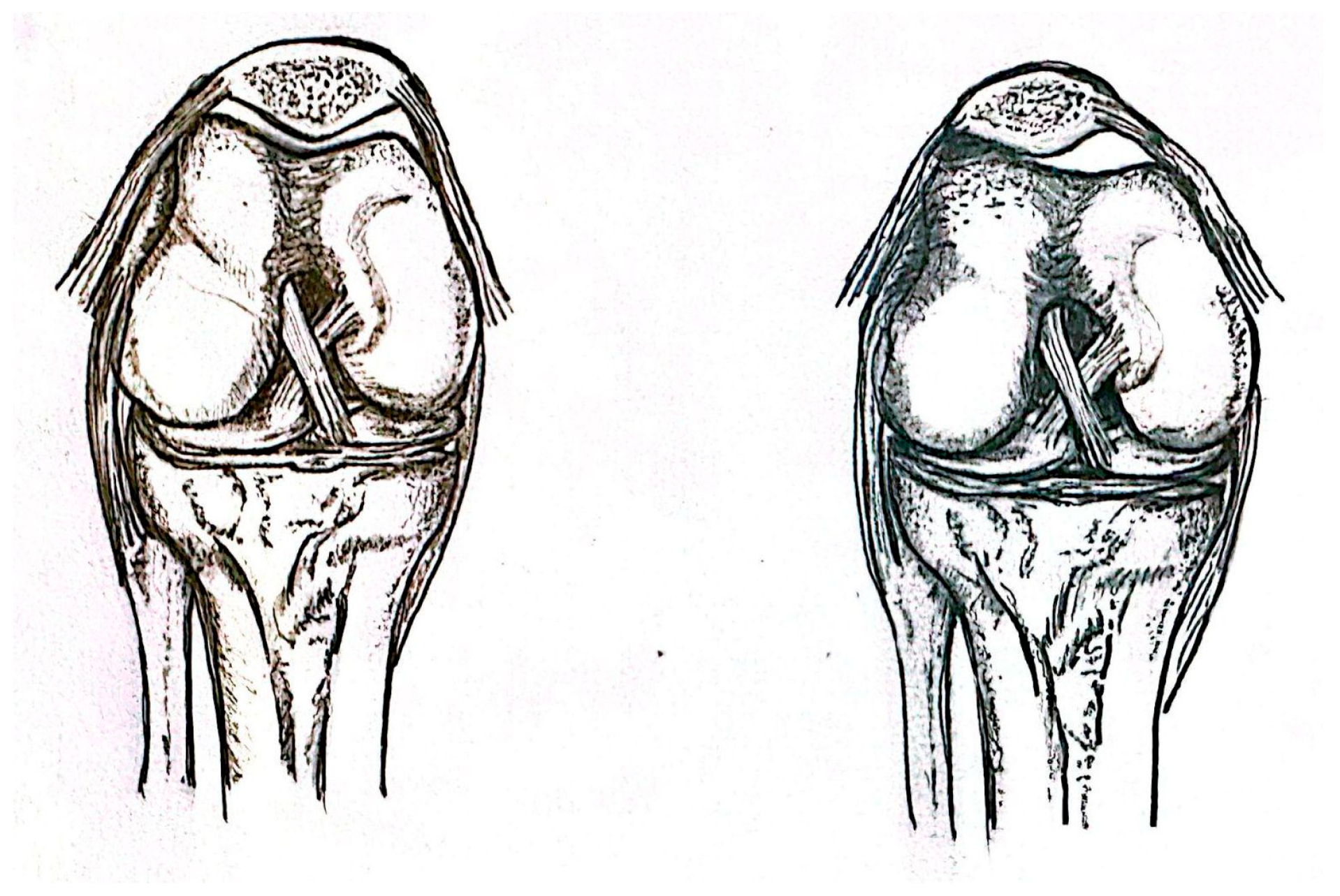
The patella is the largest sesamoid bone in the body, often referred to as the “kneecap.” It increases joint leverage to enable proper extension and increase weight-bearing capacity. The patella has a substantial neurovascular supply, making it susceptible to many complications, including Lateral Patellar Compression Syndrome (LPCS), also known as excessive lateral pressure syndrome [1,2]. This condition is a result of the patella improperly articulating with the trochlear groove of the femur, causing anterolateral pain in flexion with increased pressure on the lateral patellar facet. The patella can be affected by one or more components of the surrounding anatomic structures, which aid in its motility. Additionally, an increased quadriceps angle (Q-angle) exaggerates articulation between the lateral facet of the patella and lateral femoral condyle during weight bearing [2]. Because of the many contributing factors to the maldistribution of forces, LPCS can be difficult to diagnose and treat. Figure 1 and Figure 2 aid in demonstrating the changes due to maltracking.
The knee has a complex anatomy made up of bones, muscles, tendons and cartilage. These structures cooperatively allow dynamic movements of human activity. The quadriceps (vastus medialis, vastus lateralis, vastus intermedius, and rectus femoris) and hamstring (biceps femoris, semimembranosus, and semitendinosus) muscle groups are the most widely recognized; however, there is a much wider variety of structures that support the stability of the knee. The patella is one of the main contributors to a functional knee. It protects from trauma, provides leverage for knee extension, and serves as the attachment for much of the facial plane that encapsulates the major muscle compartments of the leg [1]. The patella, and surrounding structures, largely receives blood supply from a unique system of anastomosis with contributions from the geniculate arteries. Due to the unique function of the patella, improper articulation with the trochlear groove of the femur can limit its utility and cause anterolateral pain from increased pressure on the lateral patellar facet [2]. Other structures with contributing forces on the patella are the medial and lateral patellofemoral ligaments (applying medial and lateral force, respectively) and patellar ligament (applying inferior and superior force), along with the tangential development of the vastus medialis and vastus lateralis. The lateral retinaculum plays a large role in stabilizing the patella and counteracting medial forces from structures such as the vastus medialis and medial patellofemoral ligament. It contains structures such as the vastus lateralis fascia, iliotibial band, lateral patellofemoral ligament, patellotibial band, and transverse ligament. These structures are particularly of note during the correction of patellar maltracking.
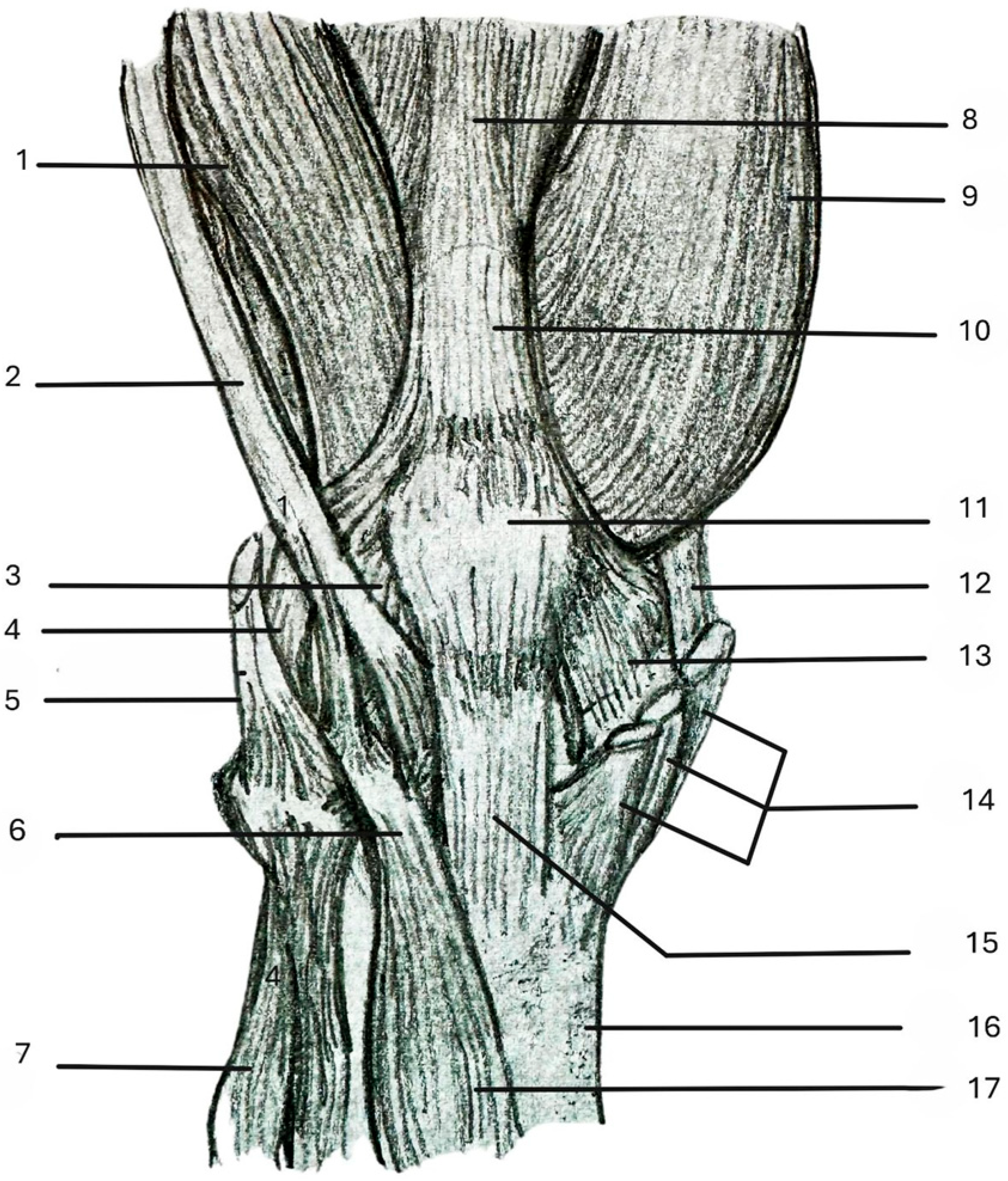
On physical examination, a patellar tilt test is a common way to evaluate for excessive tension on the lateral patellar retinaculum. The literature has recognized that a negative passive patellar tilt test is an indication of a successful release. The medial-to-lateral patellar glide of two quadrants or less and a normal tubercle sulcus angle at 90 degrees of knee flexion are protective factors against surgical management [3]. Additional tests such as the Patellar Glide or Smilie Test can be performed to evaluate the laxity of the described knee structures. The Patellar Glide Test involves mentally dividing the patella into four evenly sized quadrants before manually manipulating the patella medially and laterally. This test is performed at full extension and 30 degrees of flexion. A positive finding is the hypermobility of two or more quadrants while hypomobility indicates motion of less than one quadrant. Some natural laxity is expected. The Smilie Test, also known as the Patellar Apprehension Test, is performed by instructing the patient to relax the quadriceps muscle while supine; the patella is then manipulated in the lateral and medial planes of motion. A positive finding for this exam is a patient-reported feeling of knee instability, buckling, or a trick knee. The vastus medialis obliquus and vastus lateralis play key roles in the proper tracking of the patella (Figure 3). When soft tissue tension becomes imbalanced and pathology starts to ensue, the typical deviation exceeds the upper limit of normal (>2 mm). A deviation of 2–4 mm, 5–10 mm, and >10 mm is classified as mild, moderate, and severe, respectively [4]. Alternative differential diagnoses include excessive lateral friction syndrome, Hoffa’s disease, osteochondritis dissecans in the patella or femur, and other causes related to patellar instability should be narrowed before the surgical management of this condition is pursued. While these conditions produce knee pain, the manipulation of the patella is not expected to cause the same degree of pain as LPCS. Hoffa’s disease may be exacerbated by the inferior movement of the patella but would have inflammatory findings related to Hoffa’s pad on MRI. Osteochondritis would display knee pain but be more related to the general motion of the femur and tibia. MRI findings would suggest impaired blood flow to a region of the bone.
If the conservative management of LPCS fails, such as anti-inflammatory medications, physical therapy, and bracing, operative treatment is indicated [4]. Numerous surgical approaches, including those that are open and arthroscopic, have been described, most often with the intent to mitigate the most common postoperative complications, including medial patellar instability and hemarthrosis. Before resorting to surgical correction, the patient should be thoroughly evaluated for conditions such as patella alta, generalized ligamentous laxity, the rotational malalignment of lower limbs, frontal malalignment with a Q-angle greater than 20 degrees, and chondral dysplasia. These alternative diagnoses would also increase pressure along the lateral knee, but the management of these conditions would differ from that of LPCS and may not require surgical intervention. This review aims to provide a comprehensive report on the surgical treatment and management of LPCS.

2. Materials and Methods

This review includes works over 1989–2025 on LPCS with preference to more recent publications. Keywords used included “Lateral Patellar Compression Syndrome,” “patellar maltracking,” “patellofemoral pain,” “lateral retinaculum,” and “lateral release.” Articles were screened by title and abstract, with a full-text review for final inclusion and citation. Information was largely relayed as a narrative synthesis due to the variation in study design, technique components, and complications. The goal of this manuscript is to compile and compare multiple surgical approaches for this condition and to describe the anatomy vital to minimizing or managing LPCS. All resources were obtained through public domain databases, PubMed or Google Scholar, or through a subsequent evaluation of publications cited through works on these databases. Full-text versions linked on the database were utilized to assess and validate if the content was related and met inclusion criteria. Additional citations were collected via suggestions throughout the review process by experts affiliated with Anatomia. Studies were included if they addressed surgical techniques, anatomical features, imaging modalities, or alignment diagnostics or directly referenced Lateral Patellar Compression Syndrome (LPCS). Exclusion criteria included non-English publications and studies lacking relevance to LPCS. The literature was identified through PubMed searches; however, no systematic selection criteria was applied, representing a limitation of this review.

3. Surgical Techniques

3.1. Open Lateral Retinaculum Release Outside-In Technique

Maniar et al. [5] describe their rendition of this approach in respect to total knee arthroplasty. Firstly, a tourniquet is applied and a skin incision is made along the anterior midline of the knee. The outside-in technique is prepared with an elevation of the lateral skin flap over the patella in a plane deep to the deep fascia, exposing the lateral retinaculum. A small incision can be made in the retinaculum at the midpatellar level 1 cm lateral to the patella. The separation of the retinaculum from the synovial lining must be achieved before splitting distally to the upper tibial border. It is important to not perforate the synovial lining. Tracking can be re-evaluated to gauge the necessity of further release after each incision. The retinaculum is split from the starting point and continues proximally to the superior border of the patella. It is important to note that the superior lateral genicular artery (SLGA) lies proximally to the superior pole of the patella. If further release is necessary, staying lateral to the vastus lateralis, the SLGA is split by cutting both ends and cauterizing. Release is extended proximally until the thick fibers are replaced by relatively thinner, more loose fibers. This formatted approach requires patellar tracking to be re-evaluated after each step down of the fascial plane. Doing so allows for physician preference on the level of release in a step-down fashion and minimizes necessary incision to achieve correct patellar tracking. Complications of the outside-in technique include patellar avascularity and patellar fracture [5].

3.2. Arthroscopic Lateral Retinaculum Release Inside-Out Technique

The inside-out approach to lateral retinaculum release is a surgical method focused on releasing the lateral retinaculum by progressing from the innermost layers to the outermost ones. Patients are positioned supine with a tourniquet applied to the thigh. The knee is typically flexed at 20–30°, and anatomical landmarks are identified for incision placement. This ensures the lateral retinaculum is accessed without damaging surrounding structures [6]. Arthroscopic portals are created strategically, with the anterolateral portal commonly used as the primary viewing portal and the anteromedial portal used for instrumentation; these portals provide a clear view of the lateral retinaculum and allow precise control during dissection [7]. It is emphasized to preserve the superior lateral genicular artery if possible during the procedure [8,9]. Furthermore, careful consideration is given to the extent of the release, as an excessive dissection of the lateral retinaculum can result in functional impairment, particularly in the quadriceps mechanism [7]. Patellar tracking is reassessed after each step, with adjustments made based on intraoperative findings, such as extending the release proximally or distally. The stepwise nature of the technique minimizes over-release risks, ensuring the precise correction of maltracking [6,8]. This meticulous method provides surgeons with flexibility to adapt intraoperatively, enabling a better customization of the procedure based on the patient’s unique anatomy and severity of patellar maltracking [6]. It was developed in response to complications from the outside-in approach, namely over-release and vascular injury [8]. The technique is exceptionally valuable for treating LPCS and other patellofemoral disorders, as it offers greater control and anatomical precision [9]. Moreover, studies indicate that the inside-out approach minimizes the risk of postoperative complications such as lateral instability and ensures a better restoration of normal patellar biomechanics, particularly in patients with pre-existing varus or valgus knee deformities [8]. From a functional standpoint, its ability to align the patella without compromising the stability of the medial and lateral soft tissues makes it particularly effective for athletes and active individuals requiring rapid recovery and long-term joint stability in high-impact training [7].

3.3. Open Lateral Patellar Retinaculum Lengthening

Open lateral lengthening is a technique designed to increase the space between the patella and femur via widening the released inner portion of the retinaculum. A patellar tilt test should be performed before incision for a direct comparison after completing the release. This procedure takes place in the supine position with the knee in full extension. A 5–6 cm incision is placed just lateral to the lateral border of the patella. The lateral retinaculum is identified after subcutaneous flaps are created (Figure 3). A longitudinal incision, approximately 1 cm lateral to the lateral border of the patella, is made spanning from the superolateral to inferolateral aspect of the patella. The depth should not exceed the superficial oblique fibers of the lateral retinaculum. Distal to the proximal lateral retinacular fibers, the retinaculum is dissected at the intra-articular layer in a proximal to distal fashion. It is imperative that the outer layer of the retinaculum not be disturbed in the procedure [10]. The two layers are most distinguishable at the level of the midpatella, where the retinaculum is thicker [11,12].
Alternatively, Pagenstert et al. [13] described a differing approach with the same goals of lengthening the retinaculum. This study performed surgery with the use of tourniquets and flexed the knee at 80 degrees to lengthen it. In this position, the two layers are utilized to determine the extent of lengthening. Once the desired outcome is achieved, both layers are sutured together without tension using the “pants-over-vest” technique. This creates 1–2 cm of lateral capsuloligamentous structure lengthening [13].

3.4. Capsule-Uncut Immaculate (CUI)

In response to post-operative concerns of medial patellar subluxation and hemarthrosis that can occur following arthroscopic LR release for the treatment of LPCS [6], Li Minghao et al. [14] introduced a new method titled the Capsule-Uncut Immaculate (CUI) technique. This novel approach aims to reduce these postoperative complications by conserving the synovial membrane and preventing the excessive release of the lateral retinaculum.
The standard knee arthroscopy approach is utilized via the establishment of superolateral, anteromedial, and anterolateral portals. Patellofemoral joint trajectory and tilt are evaluated via the superolateral portal. Joint surfaces and cartilage are assessed with a hook and addressed as indicated. Meniscus tears or other soft tissue injuries may be repaired at this time. The debridement of the patellar surfaces and/or femoral trochlea may be necessary using a shaver or radiofrequency device. The anteromedial portal can be used to view the medial and lateral patellofemoral joint spaces, assessing symmetry. Decreased lateral joint space is a confirmatory finding for LPCS [14].
A lateral subcutaneous space is then created by inserting a blunt rod into the inferolateral surface of the patella through the inferolateral portal. Blunt dissection is carried to the lateral side of the patella and proximally, exceeding the superolateral portal. Once this space is created, a radiofrequency device can be inserted into the superolateral portal and employed to further shape the space toward the anterolateral portal. Using the radiofrequency device, both deep and superficial layers of the lateral retinaculum are transected beginning at the inferior pole of the patella and continuing proximally to the vastus lateralis oblique (Figure 3). The joint capsule should not be compromised. Adhesions between the VLO and the joint capsule are released. If thick and tight, the VLO may require release as well. The tendon of the vastus lateralis muscle should not be transected, as this can lead to postoperative extensor mechanism weakness [14].
Arthroscopic re-evaluation should now demonstrate symmetrical medial and lateral patellofemoral joint spaces at 30 degrees flexion and that the patellar crista is centered in the femoral trochlea. Patelloplasty may be indicated for a hooked patella. This completes the lateral retinacular release. The tourniquet is deflated and both arterial and venous hemostasis are ensured by the surgeon using electric coagulation. The wounds are closed and dressed in a cotton bandage with lateral pressure [14].

3.5. Open Lateral Retinacular Release with IT Band Rotational Flap Repair—Flexed Knee Position

Diagnostic arthroscopy is performed prior to open incision, allowing for a confirmatory visualization of the patella as it articulates with the femoral trochlea. Patellofemoral stability and medial/lateral laxity are assessed. Decreased lateral joint space between the patella and lateral femoral condyle can be viewed through the anteromedial portal, indicative of lateral compression. Intra-articular findings are noted and addressed as indicated (loose body excision, chondroplasty, meniscus repair, etc.) [2].
A 3–4 cm longitudinal incision is made midline or just lateral to the patella. Blunt dissection is carried through subcutaneous tissue and army/navy retractors are utilized, exposing the underlying retinaculum. Hemostasis is obtained throughout the procedure via electrocautery. Electrocautery can then be used to free the lateral side of the patellar tendon. The knee is flexed, placing maximal tension on the lateral retinaculum. Incision midway between the lateral patellar border and femoral condyle is made through all layers of the lateral retinaculum and synovium. This incision begins distally at the inferolateral tip of the patella and extends proximally only enough to allow the patella to shift medially into the center of the femoral trochlea. Careful attention is given to the vastus lateralis and vastus lateralis oblique muscle insertions, as compromising their tendons is associated with postoperative iatrogenic medial patellar subluxation [1,3]. Ford et al. suggest that the incision must be carried distal to the patella as far as the tibial tubercle to ensure the release of the patellotibial ligament and fat pad adhesions that contribute to lateral restriction [15].
At this point in the procedure, anteromedialization of the tibial tubercle via osteotomy and screw fixation may be indicated to further improve patellofemoral alignment if the tibial tubercle exhibits lateralization. A rotational flap of the iliotibial band is created and used to close the defect created from the release of the LR. Arthroscopic evaluation is repeated to ensure the centralization of the patella as it lies on the femoral trochlea and symmetry when comparing the medial and lateral patellofemoral joint spaces. The tourniquet is released and both venous and arterial hemostasis are ensured. Wounds are closed and dressed [1,16].

4. Discussion

Patients with LPCS tend to exhibit pain with deep or prolonged knee flexion and may be restricted from reaching full knee extension, making activities such as traversing steps or squatting painful. Lateral retinacular release is the most studied and reported treatment for LPCS. It is often utilized to minimize pain by reducing pressure between the lateral patellar facet and the lateral femoral condyle. Primary complications of lateral retinacular release include hemarthrosis and medial patellar subluxation. However, concerns arise surrounding avascular necrosis of the patella if the superolateral geniculate and medial genicular arteries are not properly identified and protected. The medial genicular vessels tend to be sacrificed during the medial approach. Thus, it is important to consider what structures are vital with each approach modality. The excessive or inadequate release of the retinaculum is also concerning as it may alter the biomechanics of the knee, exaggerating the treated condition by weakening its extension, causing medial instability of the patella, and worsening pain [16,17]. A recent study by Minghao et al. [18] assessed the general incidence in a patient population of 141 comparing arthroscopic and radiographic imaging. Their findings confirm no statistical difference in diagnosis between the two modalities but report a higher incidence in patients over 50 compared to those 20–50 and under 20 years old [18].
Other techniques, such as lateral retinacular release and the Capsule-Uncut Immaculate (CUI) technique, offer potential advantages by targeting patellar maltracking while minimizing complications. The only study of record from utilized databases reports statistically significant post-operative improvements utilizing the CUI technique in patients over 50. This retrospective evaluation compared CUI to L-shaped releases. In both surgical groups, post-operative visual analog scale scores (p < 0.001) were lowered. Additionally, Lysholm scores and International Knee Documentation Committee knee evaluation form scores were increased (p < 0.001) in both groups. However, comparing the two interventions led to findings of significantly lower Lysholm scores and larger patellar tilt in the CUI group (p < 0.001 and p = 0.016, respectively) [19]. These initial findings suggest lower advocacy for CUI in comparison to other lateral retinacular release procedures but do support findings in the Minghao et al. [14] study concerning the prevalent population of injury.
Arthroscopic and open lateral release procedures vary on multiple factors, including the degree of patellar maltracking, patient-specific anatomical considerations, and surgeon preference. Arthroscopic procedures are often preferred due to their minimally invasive nature, reduced postoperative pain, and lower risk of excessive release compared to open techniques. An isolated arthroscopic lateral retinacular release study published by Miglorini et al. [6] followed 31 patients for an average of 86 months. The established findings reported a 29% complication rate (9 out of 31) with an average Kujala Anterior Knee Pain Scale of 91.3. This pain scale is a 13-question patient-reported questionnaire used to assess symptoms and functional limitations in people with anterior knee pain, most specifically patellofemoral disorders. The scale of scoring ranges from 0 (worst) to 100 (best). However, the Tegner Activity Scale, Numeric Rating Scale, and Lysholm Knee Scoring Scales had averages of 5.0, 1.2, and 93.1, respectively. Only one of the nine complicated cases were related to hemarthrosis. The others were influenced by feelings of instability without findings of subluxation or subsequent procedures [6]. Long-term studies have declared no statistical difference between open and arthroscopic approaches of release [20,21]. However, notable findings demonstrated a 10% occurrence of medial patellar instability and scores of less than 70 on the Lysholm and Gillquist knee rating scale (modified by Tegner and Lysholm) when conducting an open release. These reports pose a slight concern for a higher degree of instability when utilizing an open technique. Both approaches are credited with improved mobility and usage after the procedure [20,21].
As with any surgical procedure, there are complications. An analysis of 446 lateral retinacular release procedures performed arthroscopically by 21 surgeons reported a 7.2% complication rate. Higher complications were reported with tourniquet use (p = 0.037), the arthroscopic technique (p = 0.057), and a postoperative suction drain left in for more than 24 h (p = 0.001). This study with a large procedure pool has a much lower reported rate of complication than that of Migliorini [6,22]. Vialle et al. [23] claim that 10–18% of lateral retinacular releases are complicated by hemarthrosis from 50 scans of the knee and may be mitigated by a minimal, close approach to the patella. The occurrence of hemarthrosis may require a revision and evacuation of the area with a risk of hematoma formation, but it may be possible to avoid this complication and damage to the lateral inferior genicular arteries by performing an arthroscopic lateral release instead of an open release. Table 1 provides information on the five techniques described earlier.
Further research is needed to find long-term functional outcomes, recurrence rates, and complication profiles between arthroscopic and open lateral release. Additionally, more studies evaluating patient selection criteria for arthroscopic versus open approaches and comparative control trials between surgical approaches could aid in optimizing surgical decision-making and overall patient outcomes. Since lateral retinacular release is associated with a risk of complications, further investigating alternative or adjunctive treatments, such as other minimally invasive non-surgical techniques or preventative measures in high-risk populations, may also provide additional management options for patients seeking to avoid surgery [24].

5. Conclusions

Lateral retinacular release causes a decrease in pain while allowing for functional improvement in knee mechanics. The arthroscopic approach has minimized the amount of release necessary and has reduced complication rates. Regardless of which approach is selected, note that this procedure is considered only after other methods of correction have failed and should not be utilized under the impression of harmlessness.

Author Contributions

Conceptualization, M.N., E.M. and J.A.; resources, J.A., M.N. and S.W.; writing—original draft preparation, M.N., E.M., S.W. and J.A.; writing—review and editing, M.N., E.M., S.W., M.T. and T.M.; illustration and visualization, S.W.; supervision, B.C.T., M.T. and T.M. All authors have read and agreed to the published version of the manuscript.

Funding

This research received no external funding.

Informed Consent Statement

Not applicable.

Data Availability Statement

Not applicable.

Conflicts of Interest

The authors declare no conflicts of interest.

References

  1. Yeung, A.Y.; Arbor, T.C.; Garg, R. Anatomy, Sesamoid Bones. In StatPearls; StatPearls Publishing: Treasure Island, FL, USA, 2025. [Google Scholar] [PubMed]
  2. Saper, M.G.; Shneider, D.A. Diagnosis and treatment of lateral patellar compression syndrome. Arthrosc. Tech. 2014, 3, e633–e638. [Google Scholar] [CrossRef]
  3. Kolowich, P.A.; Paulos, L.E.; Rosenberg, T.D.; Farnsworth, S. Lateral release of the patella: Indications and contraindications. Am. J. Sports Med. 1990, 18, 359–365. [Google Scholar] [CrossRef]
  4. Chhabra, A.; Subhawong, T.K.; Carrino, J.A. A systematised MRI approach to evaluating the patellofemoral joint. Skelet. Radiol. 2011, 40, 375–387. [Google Scholar] [CrossRef]
  5. Maniar, R.N.; Singhi, T.; Rathi, S.S.; Baviskar, J.V.; Nayak, R.M. Surgical technique: Lateral retinaculum release in knee arthroplasty using a stepwise, outside-in technique. Clin. Orthop. Relat. Res. 2012, 470, 2854–2863. [Google Scholar] [CrossRef] [PubMed]
  6. Migliorini, F.; Lüring, C.; Eschweiler, J.; Baroncini, A.; Driessen, A.; Spiezia, F.; Tingart, M.; Maffulli, N. Isolated Arthroscopic Lateral Retinacular Release for Lateral Patellar Compression Syndrome. Life 2021, 11, 295. [Google Scholar] [CrossRef]
  7. Wang, C.L.; Chen, J.B.; Li, T. Outcome and experience of arthroscopic lateral retinacular release combined with lateral patelloplasty in the management of excessive lateral pressure syndrome. J. Orthop. Surg. Res. 2021, 16, 80. [Google Scholar] [CrossRef] [PubMed]
  8. Dhanasekararaja, P.; Soundarrajan, D.; Jisanth, J.B.; Rajkumar, N.; Rajasekaran, S. Influence of Lateral Retinacular Release in Realigning the Patella Between Varus and Valgus Knees in Primary Total Knee Arthroplasty. Indian J. Orthop. 2023, 57, 2073–2081. [Google Scholar] [CrossRef]
  9. Noh, J.H.; Kim, N.Y.; Song, K.I. Intraoperative patellar maltracking and postoperative radiographic patellar malalignment were more frequent in cases of complete medial collateral ligament release in cruciate-retaining total knee arthroplasty. Knee Surg. Relat. Res. 2021, 33, 9. [Google Scholar] [CrossRef]
  10. Dragoo, J.L.; Hirpara, A.; Sylvia, S.; McCarthy, T.; Constantine, E.; Pappas, G. Arthroscopic Lateral Retinacular-Lengthening Procedure. Arthrosc. Tech. 2024, 13, 102967. [Google Scholar] [CrossRef]
  11. Hayden, D.J.; Doshi, C.; Parikh, S.N. Lateral Patellar Retinaculum Z-Lengthening. Arthrosc. Tech. 2021, 10, e1883–e1887. [Google Scholar] [CrossRef]
  12. Merican, A.M.; Amis, A.A. Anatomy of the lateral retinaculum of the knee. J. Bone Jt. Surg. Br. 2008, 90–B, 527–534. [Google Scholar] [CrossRef]
  13. Pagenstert, G.; Wolf, N.; Bachmann, M.; Gravius, S.; Barg, A.; Hintermann, B.; Wirtz, D.C.; Valderrabano, V.; Leumann, A.G. Open lateral patellar retinacular lengthening versus open retinacular release in lateral patellar hypercompression syndrome: A prospective double-blinded comparative study on complications and outcome. Arthroscopy 2012, 28, 788–797. [Google Scholar] [CrossRef]
  14. Li, M.; Shao, Z.; Liu, Q.; Cui, G. Lateral Retinacular Release for Treatment of Excessive Lateral Pressure Syndrome: The Capsule-Uncut Immaculate (CUI) Technique. Arthrosc. Tech. 2023, 12, e1991–e1996. [Google Scholar] [CrossRef]
  15. Ford, D.H.; Post, W.R. Open or arthroscopic lateral release: Indications, techniques, and rehabilitation. Clin. Sports Med. 1997, 16, 29–49. [Google Scholar] [CrossRef]
  16. Fonseca, L.P.R.M.D.; Kawatake, E.H.; Pochini, A.C. Lateral patellar retinacular release: Changes over the last ten years. Rev. Bras. Ortop. 2017, 52, 442–449. [Google Scholar] [CrossRef]
  17. Elkousy, H. Complications in brief: Arthroscopic lateral release. Clin. Orthop. Relat. Res. 2012, 470, 2949–2953. [Google Scholar] [CrossRef]
  18. Li, M.; Liu, Q.; Cui, G. Lateral patellar tilting can also result in cartilage lesions of tibial plateau—The characteristic features of excessive lateral pressure syndrome: A retrospective study of 141 cases. BMC Musculoskelet. Disord. 2025, 26, 443. [Google Scholar] [CrossRef]
  19. Li, M.; Shi, W.; Gao, J.; Hou, Y.; Yang, Y.; Cui, G. To compare the clinical outcomes of intra-capsular vs. extra-capsular lateral retinacular release in the treatment of excessive lateral pressure syndrome of patella using two novel surgical techniques: A retrospective comparative study. Chin. J. Traumatol. 2025, in press. [Google Scholar] [CrossRef]
  20. Hamawandi, S.A.; Amin, H.I.; Al-Humairi, A.K. Open versus arthroscopic release for lateral patellar compression syndrome: A randomized-controlled trial. Arch. Orthop. Trauma Surg. 2022, 142, 1–7. [Google Scholar] [CrossRef]
  21. O’Neill, D.B. Open lateral retinacular lengthening compared with arthroscopic release. A prospective, randomized outcome study. J. Bone Jt. Surg. Am. 1997, 79, 1759–1769. [Google Scholar] [CrossRef]
  22. Small, N.C. An analysis of complications in lateral retinacular release procedures. Arthroscopy 1989, 5, 282–286. [Google Scholar] [CrossRef] [PubMed]
  23. Vialle, R.; Tanguy, J.Y.; Cronier, P.; Fournier, H.D.; Papon, X.; Mercier, P. Anatomic and radioanatomic study of the lateral genicular arteries: Application to prevention of postoperative hemarthrosis after arthroscopic lateral retinacular release. Surg. Radiol. Anat. 1999, 21, 49–53. [Google Scholar] [CrossRef] [PubMed]
  24. Shellock, F.G.; Mink, J.H.; Deutsch, A.L.; Fox, J.; Molnar, T.; Kvitne, R.; Ferkel, R. Effect of a patellar realignment brace on patellofemoral relationships: Evaluation with kinematic MR imaging. J. Magn. Reson. Imaging 1994, 4, 590–594. [Google Scholar] [CrossRef] [PubMed]
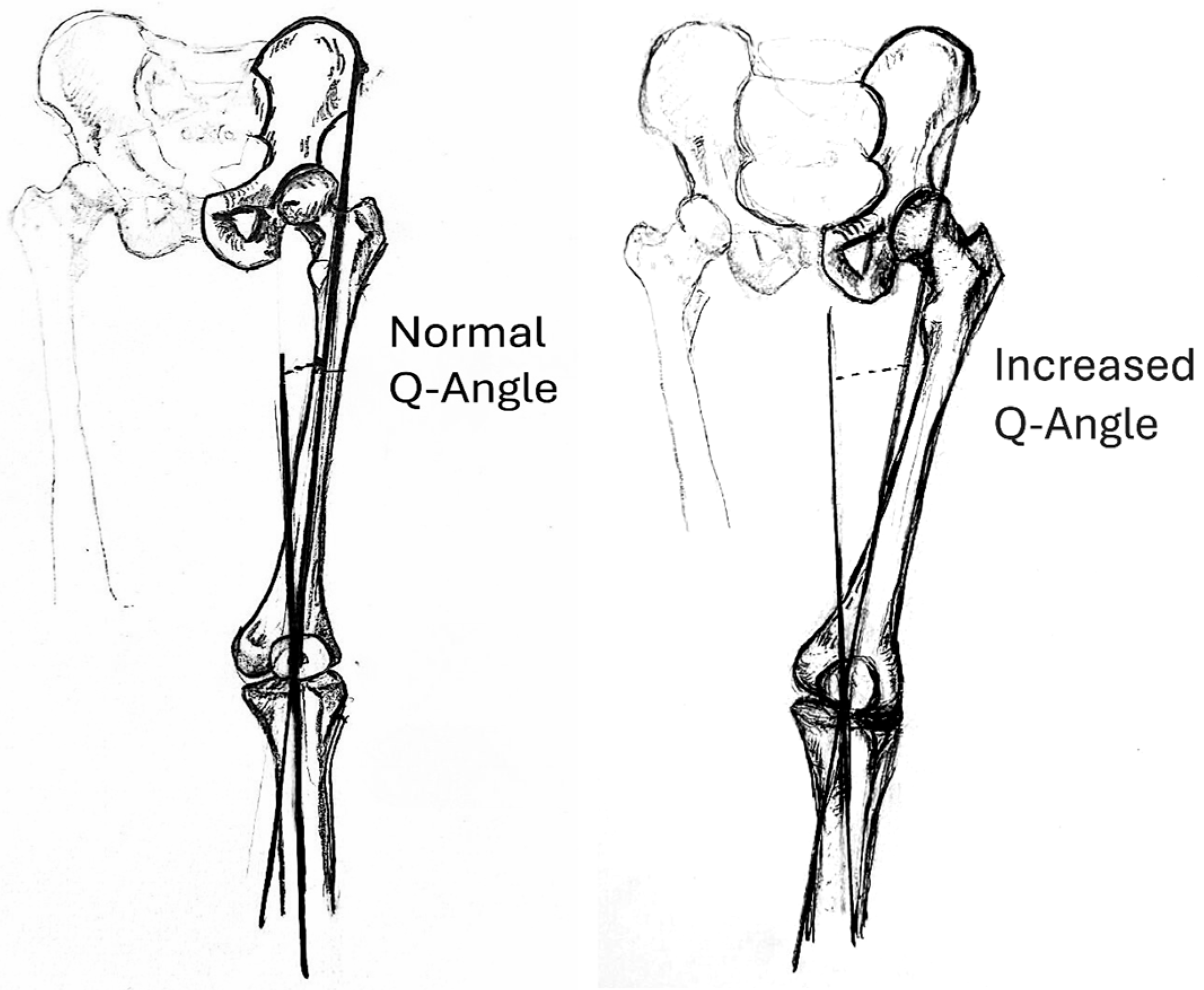
Figure 1. Normal quadriceps angle (Q-angle) (left). Increased Q-angle with exaggerated articulation between lateral condyles of femur and patella during weight bearing (right).
Anatomia 05 00004 g001
Figure 2. An anterior flexed knee comparison. Normal knee patellar tracking (left) compared to a knee with a translated lateral patella (right).
Anatomia 05 00004 g002
Figure 3. Anterior right knee. 1. Vastus lateralis. 2. Iliotibial tract. 3. Lateral collateral ligament. 4. Lateral patellar retinaculum. 5. Biceps femoris (resected). 6. Anterior tibiofibular ligament. 7. Fibularis (peroneus) longus and extensor digitorum longus muscles. 8. Rectus femoris muscle. 9. Vastus medialis muscle. 10. Quadriceps tendon. 11. Patella. 12. Medial collateral ligament. 13. Medial patellar retinaculum. 14. Pes anserinus (resected). 15. Patellar tendon. 16. Tibia. 17. Tibialis anterior muscle.
Anatomia 05 00004 g003
Table 1. Outline of indications, complication rates, and studies utilized in this manuscript to describe each surgical technique. All data were relayed from individual studies as demarcated in Table 1.
TechniqueIndication(s)Complication RateCited Works
Open Lateral Retinacular Release Outside-in TechniqueAll grades of patellar tracking (1–4)Study reported no complications during observation periodManiar et al. [5]
Arthroscopic Retinacular Release Inside-out TechniqueLPCS29% (9 of 31)Migliorini et al. [6]
ELPS/LPCSNot reportedWang et al. [7]
Open Lateral Patellar Retinaculum Lengthening Technique* LPCS, patellofemoral pain syndrome, lateral patellar arthritisN/ADragoo et al. [10]
* LPCSN/AHayden et al. [11]
* LPCS, painful
tight lateral retinaculum
Study reported no complications during observation periodPagenstert et al. [13]
Capsule-Uncut ImmaculateELPS/LPCSN/AMinghao et al. [14]
Open Lateral Retinacular Release with IT Band Rotational Flap RepairLPCSN/ASaper et al. [2]
* Studies indicate this procedure is effective in solitary treatment of LPCS but adjunctive to lateral retinaculum release for lateral patellar instability.
Disclaimer/Publisher’s Note: The statements, opinions and data contained in all publications are solely those of the individual author(s) and contributor(s) and not of MDPI and/or the editor(s). MDPI and/or the editor(s) disclaim responsibility for any injury to people or property resulting from any ideas, methods, instructions or products referred to in the content.