
Bacteriophage Applications for Controlling Pathogens in Seafood Processing and Storage


Abstract
1. Introduction
2. Search Strategy and Literature Selection
3. Bacteriophages as Targeted Biocontrol Agents in Seafood Systems
3.1. Biological and Ecological Characteristics Relevant to Seafood Applications
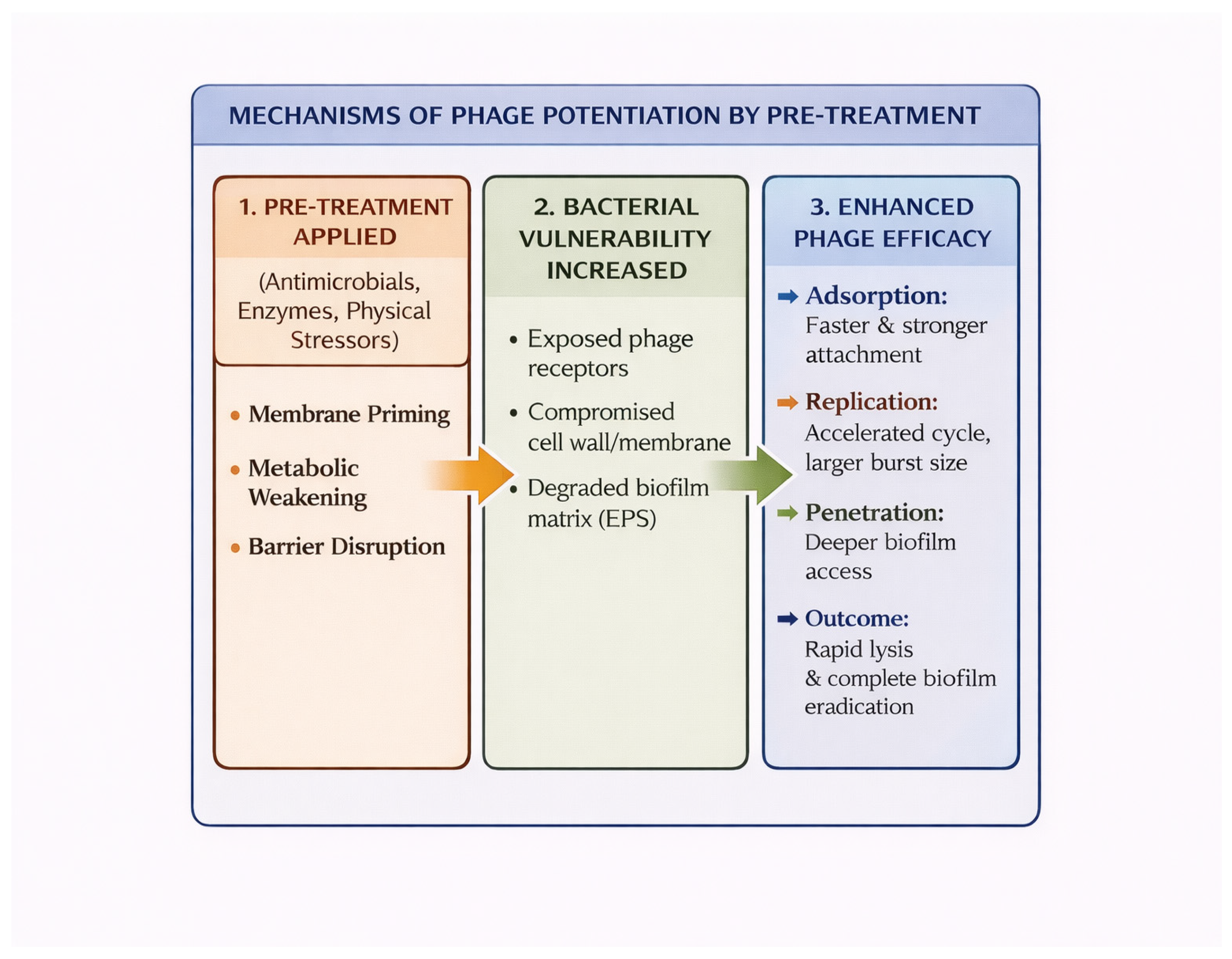
3.2. Mechanisms of Antibacterial Activity in Seafood Matrices
3.3. Advantages and Practical Implications Compared with Conventional Interventions
4. Target Pathogens and Spoilage Microorganisms in Seafood Systems Addressed by Bacteriophage Applications
4.1. Vibrio spp.
4.2. Listeria monocytogenes
4.3. Salmonella spp.

| Target Organism | Seafood/System Context | Intervention Format | Key Applied Outcome | Quantitative Outcome (Reported) | Reference |
|---|---|---|---|---|---|
| Vibrio vulnificus | Oysters | Phage + oyster extract antimicrobial factor | Reduced V. vulnificus load under chilled incubation | Approx. 1–2 log CFU/g reduction during refrigerated incubation | [52] |
| Vibrio parahaemolyticus | Sea cucumber (aquaculture) | Feed mixed with freeze-dried phage cocktail | Increased protection vs. infection; prevention-oriented approach | Improved host survival, bacterial load at harvest not quantified | [53] |
| Listeria monocytogenes | Raw/smoked fish | Bacteriocin (AS-48) + phage P100 | Enhanced control during refrigerated storage | Approx. 2–3 log CFU/g greater reduction vs. single treatments | [60] |
| Listeria monocytogenes | Smoked rainbow trout | Direct phage + alginate film containing phage | Demonstrated effectiveness in smoked trout applications | Approx. 1–2 log CFU/g reduction over storage period | [61] |
| Salmonella Typhimurium | Raw salmon fillets and scallop adductors | Phage SLMP1 | Reduced counts depending on dose/temp; storage-relevant | Up to 2–3 log CFU/g reduction, depending on conditions | [21] |
| Salmonella Typhimurium | Cockles (shellfish depuration) | Phage treatment during depuration | Reduced Salmonella load during purification process | Approx. 1 log CFU/g reduction during depuration | [62] |
| Vibrio cholerae | Seafood matrices (e.g., salmon/mussels) | Phage + HHP | Demonstrated synergy concept for nonthermal processing | Additional 1–2 log CFU/g reduction compared with HHP alone | [63] |
| Shewanella spp. | Chilled channel catfish | Virulent phage application | Biopreservation potential against chill spoilage | Shelf-life extension of 2–3 days under refrigeration | [22] |
4.4. Pathogenic Escherichia coli
4.5. Spoilage Bacteria (Shewanella spp. and Pseudomonas spp.) and Shelf-Life Extension
5. Phage-Based Technologies in Seafood Processing and Storage
5.1. Phage Cocktails
5.2. Immobilized and Encapsulated Phage Systems
5.3. Genetically Engineered and Modified Phages
6. Integration of Bacteriophages with Other Preservation Strategies
6.1. Phages Combined with Natural Antimicrobials
6.1.1. Organic Acids
6.1.2. Bacteriocins
6.1.3. Plant-Derived Compounds
6.1.4. Synergistic Effects and Practical Implications
6.2. Phages and Non-Thermal Technologies
6.2.1. High Hydrostatic Pressure (HHP)
6.2.2. Cold Plasma
6.2.3. Pulsed Electric Fields and Ultrasound
6.3. Phage-Active Packaging Systems
6.3.1. Active and Intelligent Packaging
6.3.2. Shelf-Life Extension and Cold-Chain Compatibility
7. Challenges and Limitations in Industrial Application
7.1. Host Specificity as a Practical Constraint
7.2. Phage Resistance Development
7.3. Stability Under Processing and Storage Conditions
7.4. Regulatory Frameworks and Approval Pathways
7.5. Consumer Acceptance and Perception
8. Practical Considerations for Implementation in the Seafood Industry
8.1. Integration with HACCP Frameworks
8.2. Application Points Across the Seafood Supply Chain (Harvest → Storage)
8.3. Compatibility with Existing Sanitation Programs
8.4. Cost, Scalability, and Return on Investment
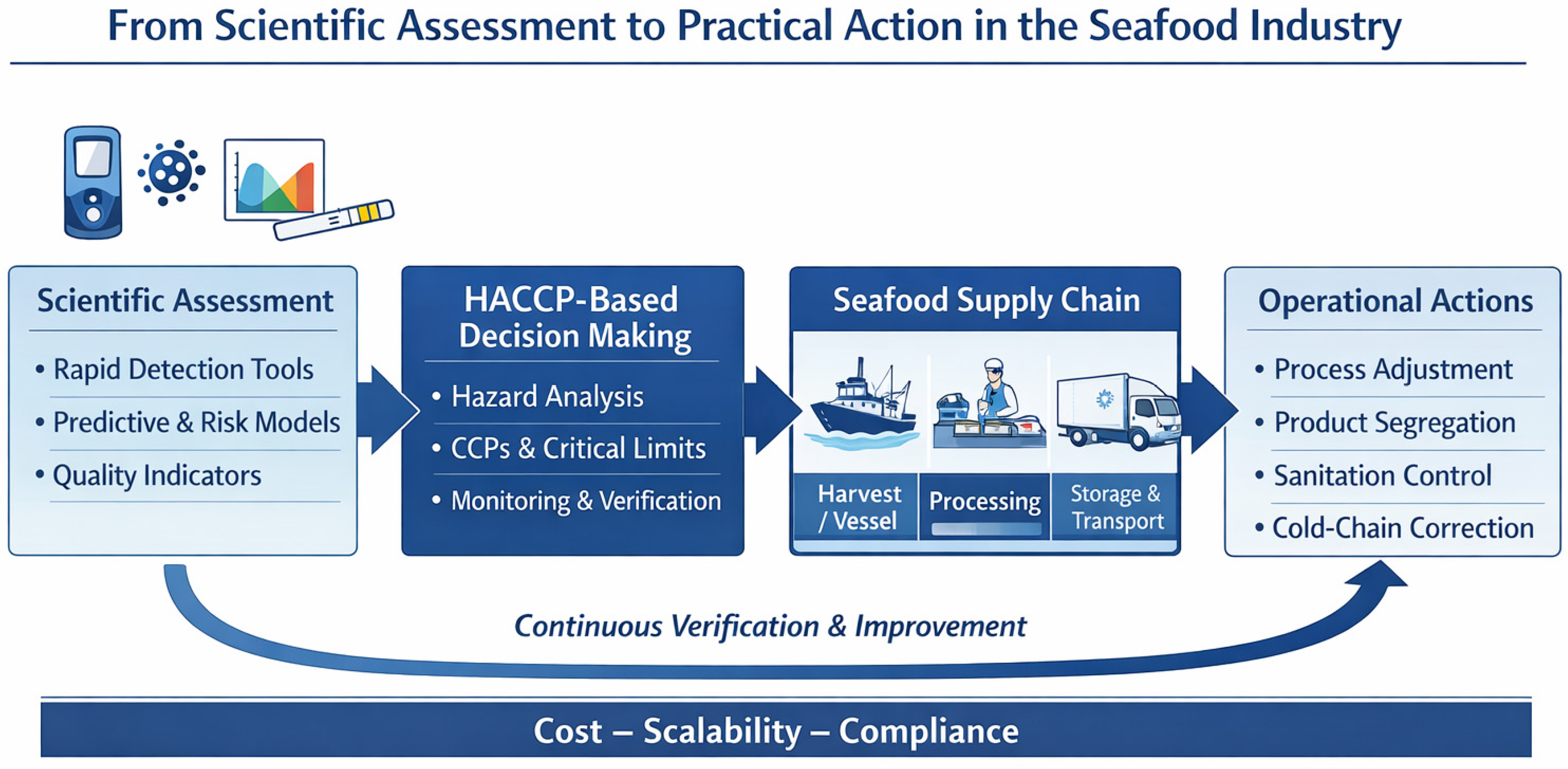
8.5. From Assessment to Action
9. Future Perspectives and Research Needs
9.1. Standardization of Application Protocols
9.2. Long-Term Resistance Monitoring
9.3. Large-Scale Industrial Trials
9.4. Regulatory Harmonization and Global Alignment
10. Conclusions
Funding
Institutional Review Board Statement
Informed Consent Statement
Data Availability Statement
Conflicts of Interest
References
- Yan, J.; Guo, Z.; Xie, J. A Critical Analysis of the Opportunities and Challenges of Phage Application in Seafood Quality Control. Foods 2024, 13, 3282. [Google Scholar] [CrossRef]
- EFSA Panel on Biological Hazards (BIOHAZ). Evaluation of the Safety and Efficacy of ListexTM P100 for Reduction of Pathogens on Different Ready-to-Eat (RTE) Food Products. EFSA J. 2016, 14, e04565. [Google Scholar] [CrossRef]
- Lee, J.H.; Oh, M.; Kim, B.S. Phage Biocontrol of Zoonotic Food-Borne Pathogen Vibrio parahaemolyticus for Seafood Safety. Food Control 2023, 144, 109334. [Google Scholar] [CrossRef]
- Akdemir Evrendilek, G. Chapter 14—Pulsed Electric Field Processing: Food Pasteurization, Tissue Treatment, and Seed Disinfection. In Food Packaging and Preservation; Jaiswal, A.K., Shankar, S., Eds.; Academic Press: Cambridge, MA, USA, 2024; pp. 259–273. ISBN 978-0-323-90044-7. [Google Scholar]
- Olatunde, O.O.; Shiekh, K.A.; Benjakul, S. Pros and Cons of Cold Plasma Technology as an Alternative Non-Thermal Processing Technology in Seafood Industry. Trends Food Sci. Technol. 2021, 111, 617–627. [Google Scholar] [CrossRef]
- Vikram, A.; Callahan, M.T.; Woolston, J.W.; Sharma, M.; Sulakvelidze, A. Phage Biocontrol for Reducing Bacterial Foodborne Pathogens in Produce and Other Foods. Curr. Opin. Biotechnol. 2022, 78, 102805. [Google Scholar] [CrossRef]
- Axelsson, L.; Bjerke, G.A.; McLeod, A.; Berget, I.; Holck, A.L. Growth Behavior of Listeria monocytogenes in a Traditional Norwegian Fermented Fish Product (Rakfisk), and Its Inhibition through Bacteriophage Addition. Foods 2020, 9, 119. [Google Scholar] [CrossRef] [PubMed]
- Carlton, R.M.; Noordman, W.H.; Biswas, B.; de Meester, E.D.; Loessner, M.J. Bacteriophage P100 for Control of Listeria monocytogenes in Foods: Genome Sequence, Bioinformatic Analyses, Oral Toxicity Study, and Application. Regul. Toxicol. Pharmacol. 2005, 43, 301–312. [Google Scholar] [CrossRef] [PubMed]
- Chan, B.K.; Abedon, S.T.; Loc-Carrillo, C. Phage Cocktails and the Future of Phage Therapy. Future Microbiol. 2013, 8, 769–783. [Google Scholar] [CrossRef] [PubMed]
- Endersen, L.; Coffey, A. The Use of Bacteriophages for Food Safety. Curr. Opin. Food Sci. 2020, 36, 1–8. [Google Scholar] [CrossRef]
- Sahu, A.; Jain, S.; Junghare, M.; Mishra, A.; Ruhal, R. Biofilm-Dispersal Patterns in ESKAPE Pathogens. Arch. Microbiol. 2025, 207, 194. [Google Scholar] [CrossRef]
- Costa, M.J.; Pastrana, L.M.; Teixeira, J.A.; Sillankorva, S.M.; Cerqueira, M.A. Bacteriophage Delivery Systems for Food Applications: Opportunities and Perspectives. Viruses 2023, 15, 1271. [Google Scholar] [CrossRef]
- Eagan, B.H.; Wang, S.; Hall, N.; Protopopova, A. Consumer Attitudes toward Bacteriophage Applications to Pet Food. Front. Vet. Sci. 2022, 9, 921508. [Google Scholar] [CrossRef]
- Rivera-Lopez, E.O.; Tirko, N.N.; Dudley, E.G. Regulatory Landscape and the Potential of Bacteriophage Applications in the United States’ Food Industry. J. Food Prot. 2025, 88, 100510. [Google Scholar] [CrossRef] [PubMed]
- Thompson, T.; Kilders, V.; Widmar, N.; Ebner, P. Consumer Acceptance of Bacteriophage Technology for Microbial Control. Sci. Rep. 2024, 14, 25279. [Google Scholar] [CrossRef]
- Hyman, P. Phages for Phage Therapy: Isolation, Characterization, and Host Range Breadth. Pharmaceuticals 2019, 12, 35. [Google Scholar] [CrossRef]
- Jayamanne, M.N.; Foddai, A.C.G. Use of Bacteriophages for Biocontrol of Pathogens in Food and Food-Contact Surfaces: A Systematic Review of the Literature. Sustain. Microbiol. 2025, 2, qvaf005. [Google Scholar] [CrossRef]
- Kim, B.H.; Ashrafudoulla, M.; Shaila, S.; Park, H.J.; Sul, J.D.; Park, S.H.; Ha, S.-D. Isolation, Characterization, and Application of Bacteriophage on Vibrio parahaemolyticus Biofilm to Control Seafood Contamination. Int. J. Antimicrob. Agents 2024, 64, 107194. [Google Scholar] [CrossRef] [PubMed]
- You, H.J.; Lee, J.H.; Oh, M.; Hong, S.Y.; Kim, D.; Noh, J.; Kim, M.; Kim, B.S. Tackling Vibrio parahaemolyticus in Ready-to-Eat Raw Fish Flesh Slices Using Lytic Phage VPT02 Isolated from Market Oyster. Food Res. Int. 2021, 150, 110779. [Google Scholar] [CrossRef]
- Zhou, C.; Zhu, M.; Wang, Y.; Yang, Z.; Ye, M.; Wu, L.; Bao, H.; Pang, M.; Zhou, Y.; Wang, R.; et al. Broad Host Range Phage vB-LmoM-SH3-3 Reduces the Risk of Listeria Contamination in Two Types of Ready-to-Eat Food. Food Control 2020, 108, 106830. [Google Scholar] [CrossRef]
- Xu, D.; Jiang, Y.; Wang, L.; Yao, L.; Li, F.; Zhai, Y.; Zhang, Y. Biocontrol of Salmonella Typhimurium in Raw Salmon Fillets and Scallop Adductors by Using Bacteriophage SLMP1. J. Food Prot. 2018, 81, 1304–1312. [Google Scholar] [CrossRef] [PubMed]
- Yang, Z.; Tao, X.; Zhang, H.; Rao, S.; Gao, L.; Pan, Z.; Jiao, X. Isolation and Characterization of Virulent Phages Infecting Shewanella baltica and Shewanella putrefaciens, and Their Application for Biopreservation of Chilled Channel Catfish (Ictalurus punctatus). Int. J. Food Microbiol. 2019, 292, 107–117. [Google Scholar] [CrossRef]
- Rindhe, S.; Khan, A.; Priyadarshi, R.; Chatli, M.; Wagh, R.; Kumbhar, V.; Wankar, A.; Rhim, J.-W. Application of Bacteriophages in Biopolymer-Based Functional Food Packaging Films. Compr. Rev. Food Sci. Food Saf. 2024, 23, e13333. [Google Scholar] [CrossRef]
- Salmond, G.P.C.; Fineran, P.C. A Century of the Phage: Past, Present and Future. Nat. Rev. Microbiol. 2015, 13, 777–786. [Google Scholar] [CrossRef] [PubMed]
- Urban-Chmiel, R.; Pyzik, E. Selected Mechanisms of Action of Bacteriophages in Bacterial Infections in Animals. Viruses 2025, 17, 101. [Google Scholar] [CrossRef] [PubMed]
- Peng, S.; Liu, Y.; Liu, H.; Chen, L.; Niu, X.; Liang, H.; Higgins, P.G.; Bai, Q. Understanding Phage Receptor-Binding Protein Interaction with Host Surface Receptor: The Key for Phage-Mediated Detection and Elimination of Pseudomonas aeruginosa. Eur. J. Clin. Microbiol. Infect. Dis. 2025, 44, 2883–2897. [Google Scholar] [CrossRef] [PubMed]
- Wang, W.; Li, M.; Li, Y. Intervention Strategies for Reducing Vibrio parahaemolyticus in Seafood: A Review. J. Food Sci. 2015, 80, R10–R19. [Google Scholar] [CrossRef]
- Wdowiak, M.; Paczesny, J.; Raza, S. Enhancing the Stability of Bacteriophages Using Physical, Chemical, and Nano-Based Approaches: A Review. Pharmaceutics 2022, 14, 1936. [Google Scholar] [CrossRef]
- Pradeep, A.; Ramasamy, S.; Veniemilda, J.K.; Vinod Kumar, C.S. Effect of pH and Temperature Variations on Phage Stability-A Crucial Prerequisite for Phage Therapy. Int. J. Pharm. Sci. Res. 2022, 13, 5178–5182. [Google Scholar] [CrossRef]
- Liu, S.; Quek, S.-Y.; Huang, K. Advanced Strategies to Overcome the Challenges of Bacteriophage-Based Antimicrobial Treatments in Food and Agricultural Systems. Crit. Rev. Food Sci. Nutr. 2024, 64, 12574–12598. [Google Scholar] [CrossRef]
- Rendueles, C.; Duarte, A.C.; Escobedo, S.; Fernández, L.; Rodríguez, A.; García, P.; Martínez, B. Combined Use of Bacteriocins and Bacteriophages as Food Biopreservatives. A Review. Int. J. Food Microbiol. 2022, 368, 109611. [Google Scholar] [CrossRef]
- Renier, S.; Hébraud, M.; Desvaux, M. Molecular Biology of Surface Colonization by Listeria monocytogenes: An Additional Facet of an Opportunistic Gram-Positive Foodborne Pathogen. Environ. Microbiol. 2011, 13, 835–850. [Google Scholar] [CrossRef]
- Amankwah, S.; Abdella, K.; Kassa, T. Bacterial Biofilm Destruction: A Focused Review on the Recent Use of Phage-Based Strategies with Other Antibiofilm Agents. Nanotechnol. Sci. Appl. 2021, 14, 161–177. [Google Scholar] [CrossRef] [PubMed]
- Mayorga-Ramos, A.; Carrera-Pacheco, S.E.; Barba-Ostria, C.; Guamán, L.P. Bacteriophage-Mediated Approaches for Biofilm Control. Front. Cell. Infect. Microbiol. 2024, 14, 1428637. [Google Scholar] [CrossRef]
- Sillankorva, S.M.; Oliveira, H.; Azeredo, J. Bacteriophages and Their Role in Food Safety. Int. J. Microbiol. 2012, 2012, 863945. [Google Scholar] [CrossRef]
- Carpentier, B.; Cerf, O. Review—Persistence of Listeria monocytogenes in Food Industry Equipment and Premises. Int. J. Food Microbiol. 2011, 145, 1–8. [Google Scholar] [CrossRef] [PubMed]
- Bridier, A.; Briandet, R.; Thomas, V.; Dubois-Brissonnet, F. Resistance of Bacterial Biofilms to Disinfectants: A Review. Biofouling 2011, 27, 1017–1032. [Google Scholar] [CrossRef]
- Latka, A.; Maciejewska, B.; Majkowska-Skrobek, G.; Briers, Y.; Drulis-Kawa, Z. Bacteriophage-Encoded Virion-Associated Enzymes to Overcome the Carbohydrate Barriers during the Infection Process. Appl. Microbiol. Biotechnol. 2017, 101, 3103–3119. [Google Scholar] [CrossRef] [PubMed]
- Topka-Bielecka, G.; Dydecka, A.; Necel, A.; Bloch, S.; Nejman-Faleńczyk, B.; Węgrzyn, G.; Węgrzyn, A. Bacteriophage-Derived Depolymerases against Bacterial Biofilm. Antibiotics 2021, 10, 175. [Google Scholar] [CrossRef]
- Zurabov, F.; Glazunov, E.; Kochetova, T.; Uskevich, V.; Popova, V. Bacteriophages with Depolymerase Activity in the Control of Antibiotic Resistant Klebsiella pneumoniae Biofilms. Sci. Rep. 2023, 13, 15188. [Google Scholar] [CrossRef]
- Roch, M.; Sierra, R.; Panis, G.; Martins, W.B.; Andrey, D. Synergistic Activity of a KL51-Depolymerase and a Sugarlandvirus Bacteriophage against ST16 Klebsiella pneumoniae. Microbiol. Spectr. 2025, 13, e02142-25. [Google Scholar] [CrossRef]
- Raza, S.; Matuła, K.; Karoń, S.; Paczesny, J. Resistance and Adaptation of Bacteria to Non-Antibiotic Antibacterial Agents: Physical Stressors, Nanoparticles, and Bacteriophages. Antibiotics 2021, 10, 435. [Google Scholar] [CrossRef]
- Huang, D.; Xia, R.; Chen, C.; Liao, J.; Chen, L.; Wang, D.; Alvarez, P.J.J.; Yu, P. Adaptive Strategies and Ecological Roles of Phages in Habitats under Physicochemical Stress. Trends Microbiol. 2024, 32, 902–916. [Google Scholar] [CrossRef]
- Khan, A.; Joshi, H. Isolation and Characterization of Stress-Tolerant Bacteriophages for Effective Biocontrol of Foodborne Pathogen. Food Bioprocess. Technol. 2025, 18, 7443–7457. [Google Scholar] [CrossRef]
- Carvalho, F.; Sousa, S.; Cabanes, D. How Listeria monocytogenes Organizes Its Surface for Virulence. Front. Cell. Infect. Microbiol. 2014, 4, 48. [Google Scholar] [CrossRef]
- Zhydzetski, A.; Głowacka-Grzyb, Z.; Chlebicka, K.; Władyka, B. Detection and Identification of Pathogens Using Agents Targeting the Bacterial Cell Wall. Folia Microbiol. 2025. [Google Scholar] [CrossRef]
- Messelhäusser, U.; Colditz, J.; Thärigen, D.; Kleih, W.; Höller, C.; Busch, U. Detection and Differentiation of Vibrio spp. in Seafood and Fish Samples with Cultural and Molecular Methods. Int. J. Food Microbiol. 2010, 142, 360–364. [Google Scholar] [CrossRef]
- Brauge, T.; Mougin, J.; Ells, T.; Midelet, G. Sources and Contamination Routes of Seafood with Human Pathogenic Vibrio spp.: A Farm-to-Fork Approach. Compr. Rev. Food Sci. Food Saf. 2024, 23, e13283. [Google Scholar] [CrossRef] [PubMed]
- Tan, C.W.; Rukayadi, Y.; Hasan, H.; Abdul-Mutalib, N.-A.; Jambari, N.N.; Hara, H.; Thung, T.Y.; Lee, E.; Radu, S. Isolation and Characterization of Six Vibrio parahaemolyticus Lytic Bacteriophages from Seafood Samples. Front. Microbiol. 2021, 12, 616548. [Google Scholar] [CrossRef] [PubMed]
- Gao, R.; Sun, K.; Abdalla, A.E.; Tian, Z.; An, H.; Zhang, Z.; Liu, Y.; Zeng, X.; He, X.; Fan, X. Isolation, Characterization, and Preliminary Application of Three Vibrio Phages in Controlling Vibrio alginolyticus. LWT 2024, 191, 115638. [Google Scholar] [CrossRef]
- Wang, N.; Li, C.; Zhao, J.; Yue, Y.; Shi, T.; Wang, Z.; Liang, Y.; Zhang, Y.; Wang, M. Enhanced Control of Pathogenic Vibrio spp. in Aquaculture Using Phages Capable of Disrupting Biofilms Outside Their Host Range. Appl. Environ. Microbiol. 2025, 91, e01673-25. [Google Scholar] [CrossRef]
- Pelon, W.; Luftig, R.B.; Johnston, K.H. Vibrio vulnificus Load Reduction in Oysters after Combined Exposure to Vibrio vulnificus–Specific Bacteriophage and to an Oyster Extract Component. J. Food Prot. 2005, 68, 1188–1191. [Google Scholar] [CrossRef]
- Ren, H.; Li, Z.; Xu, Y.; Wang, L.; Li, X. Protective Effectiveness of Feeding Phage Cocktails in Controlling Vibrio parahaemolyticus Infection of Sea Cucumber Apostichopus japonicus. Aquaculture 2019, 503, 322–329. [Google Scholar] [CrossRef]
- Letchumanan, V.; Chan, K.-G.; Pusparajah, P.; Saokaew, S.; Duangjai, A.; Goh, B.-H.; Ab Mutalib, N.-S.; Lee, L.-H. Insights into Bacteriophage Application in Controlling Vibrio Species. Front. Microbiol. 2016, 7, 1114. [Google Scholar] [CrossRef]
- Shivaram, K.B.; Bhatt, P.; Verma, M.S.; Clase, K.; Simsek, H. Bacteriophage-Based Biosensors for Detection of Pathogenic Microbes in Wastewater. Sci. Total Environ. 2023, 901, 165859. [Google Scholar] [CrossRef] [PubMed]
- Sahoo, P.K.; Paul, A.; Mishra, M. Bacterial Diseases in Freshwater Fish. In Aquatic Animal Health Management; Kooloth Valappil, R., Karunasagar, I., Eds.; Springer Nature: Singapore, 2025; pp. 3–30. ISBN 978-981-96-7987-4. [Google Scholar]
- Møretrø, T.; Langsrud, S. Residential Bacteria on Surfaces in the Food Industry and Their Implications for Food Safety and Quality. Compr. Rev. Food Sci. Food Saf. 2017, 16, 1022–1041. [Google Scholar] [CrossRef] [PubMed]
- Belias, A.; Bolten, S.; Wiedmann, M. Challenges and Opportunities for Risk- and Systems-Based Control of Listeria monocytogenes Transmission through Food. Compr. Rev. Food Sci. Food Saf. 2024, 23, e70071. [Google Scholar] [CrossRef]
- Møretrø, T.; Langsrud, S. Listeria monocytogenes: Biofilm Formation and Persistence in Food-Processing Environments. Biofilms 2004, 1, 107–121. [Google Scholar] [CrossRef]
- Baños, A.; García-López, J.D.; Núñez, C.; Martínez-Bueno, M.; Maqueda, M.; Valdivia, E. Biocontrol of Listeria monocytogenes in Fish by Enterocin AS-48 and Listeria Lytic Bacteriophage P100. LWT-Food Sci. Technol. 2016, 66, 672–677. [Google Scholar] [CrossRef]
- Gündüz, H.; Öztürk, F. Prevalence of Listeria spp. in Seafood Samples and Control of Listeria monocytogenes with Using LISTEXTM P100 Bacteriophage Applications in Smoked Rainbow Trout. J. Agric. Sci. 2021, 27, 493–499. [Google Scholar] [CrossRef]
- Pereira, C.; Moreirinha, C.; Rocha, R.J.M.; Calado, R.; Romalde, J.L.; Nunes, M.L.; Almeida, A. Application of Bacteriophages during Depuration Reduces the Load of Salmonella Typhimurium in Cockles. Food Res. Int. 2016, 90, 73–84. [Google Scholar] [CrossRef]
- Ahmadi, H.; Anany, H.; Walkling-Ribeiro, M.; Griffiths, M.W. Biocontrol of Shigella flexneri in Ground Beef and Vibrio cholerae in Seafood with Bacteriophage-Assisted High Hydrostatic Pressure (HHP) Treatment. Food Bioprocess Technol. 2015, 8, 1160–1167. [Google Scholar] [CrossRef]
- EFSA Panel on Biological Hazards (BIOHAZ). The Use and Mode of Action of Bacteriophages in Food Production. EFSA J. 2009, 7, 1076. [Google Scholar] [CrossRef]
- Heinitz, M.L.; Ruble, R.D.; Wagner, D.E.; Tatini, S.R. Incidence of Salmonella in Fish and Seafood. J. Food Prot. 2000, 63, 579–592. [Google Scholar] [CrossRef] [PubMed]
- Roy, P.K.; Roy, A.; Jeon, E.B.; DeWitt, C.A.M.; Park, J.W.; Park, S.Y. Comprehensive Analysis of Predominant Pathogenic Bacteria and Viruses in Seafood Products. Compr. Rev. Food Sci. Food Saf. 2024, 23, e13410. [Google Scholar] [CrossRef]
- Abuladze, T.; Li, M.; Menetrez, M.Y.; Dean, T.; Senecal, A.; Sulakvelidze, A. Bacteriophages Reduce Experimental Contamination of Hard Surfaces, Tomato, Spinach, Broccoli, and Ground Beef by Escherichia coli O157:H7. Appl. Environ. Microbiol. 2008, 74, 6230–6238. [Google Scholar] [CrossRef]
- Seki, H. Developing Flowcharts for Hazard Analysis in Seafood Retail: Critical Control Point Verification. J. Food Qual. Hazards Control 2024, 11, 166–176. [Google Scholar] [CrossRef]
- Akter, S.; Rahman, M.A.; Ashrafudoulla, M.; Ha, S.-D. Biofilm Formation and Analysis of EPS Architecture Comprising Polysaccharides and Lipids by Pseudomonas aeruginosa and Escherichia coli on Food Processing Surfaces. Food Res. Int. 2025, 209, 116274. [Google Scholar] [CrossRef]
- Pereira, C.; Moreirinha, C.; Teles, L.; Rocha, R.J.M.; Calado, R.; Romalde, J.L.; Nunes, M.L.; Almeida, A. Application of Phage Therapy during Bivalve Depuration Improves Escherichia coli Decontamination. Food Microbiol. 2017, 61, 102–112. [Google Scholar] [CrossRef]
- Zhang, J.; Zhan, C.; Sun, Y.; Pan, T.; Zhou, X. Exploring the Efficacy of Bacteriophage Cocktails for Mitigating Vibrio Contamination within the Seafood Production Chain: A Feasible Approach to Microbial Risk Management. Food Control 2025, 177, 111424. [Google Scholar] [CrossRef]
- Pinto, G.; Almeida, C.; Azeredo, J. Bacteriophages to Control Shiga Toxin-Producing E. coli—Safety and Regulatory Challenges. Crit. Rev. Biotechnol. 2020, 40, 1081–1097. [Google Scholar] [CrossRef]
- Oluwarinde, B.O.; Ajose, D.J.; Abolarinwa, T.O.; Montso, P.K.; Du Preez, I.; Njom, H.A.; Ateba, C.N. Safety Properties of Escherichia coli O157:H7 Specific Bacteriophages: Recent Advances for Food Safety. Foods 2023, 12, 3989. [Google Scholar] [CrossRef] [PubMed]
- Jia, H.-J.; Jia, P.-P.; Yin, S.; Bu, L.-K.; Yang, G.; Pei, D.-S. Engineering Bacteriophages for Enhanced Host Range and Efficacy: Insights from Bacteriophage-Bacteria Interactions. Front. Microbiol. 2023, 14, 1172635. [Google Scholar] [CrossRef]
- Yamaki, S.; Yamazaki, K.; Kawai, Y. Broad Host Range Bacteriophage, EscoHU1, Infecting Escherichia coli O157:H7 and Salmonella enterica: Characterization, Comparative Genomics, and Applications in Food Safety. Int. J. Food Microbiol. 2022, 372, 109680. [Google Scholar] [CrossRef] [PubMed]
- Malik, D.J.; Sokolov, I.J.; Vinner, G.K.; Mancuso, F.; Cinquerrui, S.; Vladisavljevic, G.T.; Clokie, M.R.J.; Garton, N.J.; Stapley, A.G.F.; Kirpichnikova, A. Formulation, Stabilisation and Encapsulation of Bacteriophage for Phage Therapy. Adv. Colloid Interface Sci. 2017, 249, 100–133. [Google Scholar] [CrossRef] [PubMed]
- Wagh, R.V.; Priyadarshi, R.; Rhim, J.-W. Novel Bacteriophage-Based Food Packaging: An Innovative Food Safety Approach. Coatings 2023, 13, 609. [Google Scholar] [CrossRef]
- Wagh, R.V.; Priyadarshi, R.; Khan, A.; Riahi, Z.; Packialakshmi, J.S.; Kumar, P.; Rindhe, S.N.; Rhim, J.-W. The Role of Active Packaging in the Defense Against Foodborne Pathogens with Particular Attention to Bacteriophages. Microorganisms 2025, 13, 401. [Google Scholar] [CrossRef] [PubMed]
- Pires, D.P.; Cleto, S.; Sillankorva, S.; Azeredo, J.; Lu, T.K. Genetically Engineered Phages: A Review of Advances over the Last Decade. Microbiol. Mol. Biol. Rev. 2016, 80, 523–543. [Google Scholar] [CrossRef]
- Ricke, S. Perspectives on the Use of Organic Acids and Short Chain Fatty Acids as Antimicrobials. Poult. Sci. 2003, 82, 632–639. [Google Scholar] [CrossRef]
- Peh, E.; Kittler, S.; Reich, F.; Kehrenberg, C. Antimicrobial Activity of Organic Acids against Campylobacter spp. and Development of Combinations—A Synergistic Effect? PLoS ONE 2020, 15, e0239312. [Google Scholar] [CrossRef]
- Ross, T.; Dalgaard, P.; Tienungoon, S. Predictive Modelling of the Growth and Survival of Listeria in Fishery Products. Int. J. Food Microbiol. 2000, 62, 231–245. [Google Scholar] [CrossRef]
- Theron, M.M.; Lues, J.F.R. Organic Acids and Meat Preservation: A Review. Food Rev. Int. 2007, 23, 141–158. [Google Scholar] [CrossRef]
- Guenther, S.; Huwyler, D.; Richard, S.; Loessner, M.J. Virulent Bacteriophage for Efficient Biocontrol of Listeria monocytogenes in Ready-To-Eat Foods. Appl. Environ. Microbiol. 2009, 75, 93–100. [Google Scholar] [CrossRef]
- Zheng, X.; Gao, L.; Yuan, L.; Chen, C.; Yang, Z. Control of Vibrio parahaemolyticus in Seafood Using the Combination of Lytic Phages and Citric Acid. Foods 2025, 14, 37. [Google Scholar] [CrossRef]
- Sillankorva, S.; Neubauer, P.; Azeredo, J. Pseudomonas fluorescens Biofilms Subjected to Phage phiIBB-PF7A. BMC Biotechnol. 2008, 8, 79. [Google Scholar] [CrossRef]
- Kingkaew, E.; Tanasupawat, S. Application of Antimicrobial Peptides from Lactic Acid Bacteria in Food Preservation and Human Health. In Antimicrobials in Food Science and Technology; CRC Press: Boca Raton, FL, USA, 2023. [Google Scholar]
- Sugrue, I.; Liu, L.; Ross, R.P.; Hill, C.; Cotter, P.D. Bacteriocins as Natural Antilisterial Food Preservatives. In Nonthermal Processing Technologies for Food; John Wiley & Sons, Ltd.: Hoboken, NJ, USA, 2025; pp. 787–807. ISBN 978-1-119-26566-5. [Google Scholar]
- Soni, K.A.; Nannapaneni, R. Bacteriophage Significantly Reduces Listeria monocytogenes on Raw Salmon Fillet Tissue. J. Food Prot. 2010, 73, 32–38. [Google Scholar] [CrossRef]
- Soni, K.A.; Nannapaneni, R.; Hagens, S. Reduction of Listeria monocytogenes on the Surface of Fresh Channel Catfish Fillets by Bacteriophage Listex P100. Foodborne Pathog. Dis. 2010, 7, 427–434. [Google Scholar] [CrossRef]
- Desai, M.A.; Soni, K.A.; Nannapaneni, R.; Schilling, M.W.; Silva, J.L. Reduction of Listeria monocytogenes Biofilms on Stainless Steel and Polystyrene Surfaces by Essential Oils. J. Food Prot. 2012, 75, 1332–1337. [Google Scholar] [CrossRef]
- Rani, N.; Kumar, V.; Chauhan, A. Exploring Essential Oils: Extraction, Biological Roles, and Food Applications. J. Food Qual. 2025, 2025, 9985753. [Google Scholar] [CrossRef]
- Diogo Gonçalves, S.; Paiva-Cardoso, M.d.N.; Caramelo, A. Green Preservation Strategies: The Role of Essential Oils in Sustainable Food Preservatives. Sustainability 2025, 17, 7326. [Google Scholar] [CrossRef]
- Lippi, P.; Eichmeier, A.; Puccioni, S.; Mattii, G.B.; Cataldo, E. Essential Oils Usage on Vitis vinifera L., from the Vineyard to Post-Harvest: Advantages, Limitations, and Future Perspectives. Phyton-Int. J. Exp. Bot. 2025, 94, 1047–1072. [Google Scholar] [CrossRef]
- Rais, R.; Ziyate, N.; Soubai, Z.; Chaqchaq, R.; Al-Eissa, M.S.; Al-zharani, M.; Aanniz, T.; Bouyahya, A. Harnessing Essential Oils for Sustainable Food Preservatives: Chemical Composition, Mechanisms, Applications, and Safety Insights. Food Chem. X 2025, 30, 102943. [Google Scholar] [CrossRef] [PubMed]
- Leistner, L. Basic Aspects of Food Preservation by Hurdle Technology. Int. J. Food Microbiol. 2000, 55, 181–186. [Google Scholar] [CrossRef]
- Paulsen, P.; Csadek, I.; Bauer, A.; Bak, K.H.; Weidinger, P.; Schwaiger, K.; Nowotny, N.; Walsh, J.; Martines, E.; Smulders, F.J.M. Treatment of Fresh Meat, Fish and Products Thereof with Cold Atmospheric Plasma to Inactivate Microbial Pathogens and Extend Shelf Life. Foods 2022, 11, 3865. [Google Scholar] [CrossRef]
- Rebezov, M.; Farhan Jahangir Chughtai, M.; Mehmood, T.; Khaliq, A.; Tanweer, S.; Semenova, A.; Khayrullin, M.; Dydykin, A.; Burlankov, S.; Thiruvengadam, M.; et al. Novel Techniques for Microbiological Safety in Meat and Fish Industries. Appl. Sci. 2022, 12, 319. [Google Scholar] [CrossRef]
- Salgado-Cruz, M.d.l.P.; Salgado-Cruz, J.; García-Hernández, A.B.; Calderón-Domínguez, G.; Gómez-Viquez, H.; Oliver-Espinoza, R.; Fernández-Martínez, M.C.; Yáñez-Fernández, J. Chitosan as a Coating for Biocontrol in Postharvest Products: A Bibliometric Review. Membranes 2021, 11, 421. [Google Scholar] [CrossRef]
- Nannapaneni, R.; Soni, K.A. Use of Bacteriophages to Remove Biofilms of Listeria monocytogenes and Other Foodborne Bacterial Pathogens in the Food Environment. In Biofilms in the Food Environment; John Wiley & Sons, Ltd.: Hoboken, NJ, USA, 2015; pp. 131–144. ISBN 978-1-118-86403-6. [Google Scholar]
- Perera, M.N.; Abuladze, T.; Li, M.; Woolston, J.; Sulakvelidze, A. Bacteriophage Cocktail Significantly Reduces or Eliminates Listeria monocytogenes Contamination on Lettuce, Apples, Cheese, Smoked Salmon and Frozen Foods. Food Microbiol. 2015, 52, 42–48. [Google Scholar] [CrossRef]
- Toepfl, S.; Siemer, C.; Saldaña-Navarro, G.; Heinz, V. Chapter 6—Overview of Pulsed Electric Fields Processing for Food. In Emerging Technologies for Food Processing, 2nd ed.; Sun, D.-W., Ed.; Academic Press: San Diego, CA, USA, 2014; pp. 93–114. ISBN 978-0-12-411479-1. [Google Scholar]
- Akdemir Evrendilek, G. Chapter Nine—Principles of High Pressure Processing and Its Equipment. In Non-Thermal Food Processing Operations; Jafari, S.M., Therdthai, N., Eds.; A volume in Unit Operations and Processing Equipment in the Food Industry; Woodhead Publishing: Cambridge, UK, 2023; pp. 301–318. ISBN 978-0-12-818717-3. [Google Scholar]
- Mason, T.J. Ultrasonic Cleaning: An Historical Perspective. Ultrason. Sonochem. 2016, 29, 519–523. [Google Scholar] [CrossRef]
- Martinez-Soto, C.E.; Zaitoon, A.; Wang, C.; Barbut, S.; Balamurugan, S.; Lim, L.-T.; Khursigara, C.M.; Anany, H. Phage-Loaded Electrospun Nonwovens with Antimicrobial Properties Against Salmonella Enteritidis. PHAGE 2025, 6, 212–221. [Google Scholar] [CrossRef]
- Sadekuzzaman, M.; Yang, S.; Mizan, M.F.R.; Kim, H.-S.; Ha, S.-D. Effectiveness of a Phage Cocktail as a Biocontrol Agent against L. monocytogenes Biofilms. Food Control 2017, 78, 256–263. [Google Scholar] [CrossRef]
- Lasagabaster, A.; Jiménez, E.; Lehnherr, T.; Miranda-Cadena, K.; Lehnherr, H. Bacteriophage Biocontrol to Fight Listeria Outbreaks in Seafood. Food Chem. Toxicol. 2020, 145, 111682. [Google Scholar] [CrossRef] [PubMed]
- Braz, M.; Pereira, C.; Freire, C.S.R.; Almeida, A. A Review on Recent Trends in Bacteriophages for Post-Harvest Food Decontamination. Microorganisms 2025, 13, 515. [Google Scholar] [CrossRef] [PubMed]
- Maguin, P.; Varble, A.; Modell, J.W.; Marraffini, L.A. Cleavage of Viral DNA by Restriction Endonucleases Stimulates the Type II CRISPR-Cas Immune Response. Mol. Cell 2022, 82, 907–919.e7. [Google Scholar] [CrossRef]
- Zou, H.; Huang, X.; Xiao, W.; He, H.; Liu, S.; Zeng, H. Recent Advancements in Bacterial Anti-Phage Strategies and the Underlying Mechanisms Altering Susceptibility to Antibiotics. Microbiol. Res. 2025, 295, 128107. [Google Scholar] [CrossRef] [PubMed]
- Elois, M.A.; Silva, R.d.; Pilati, G.V.T.; Rodríguez-Lázaro, D.; Fongaro, G. Bacteriophages as Biotechnological Tools. Viruses 2023, 15, 349. [Google Scholar] [CrossRef] [PubMed]
- Li, C.; Shi, T.; Sun, Y.; Zhang, Y. A Novel Method to Create Efficient Phage Cocktails via Use of Phage-Resistant Bacteria. Appl. Environ. Microbiol. 2022, 88, e02323-21. [Google Scholar] [CrossRef] [PubMed]
- Rode, T.M.; Axelsson, L.; Granum, P.E.; Heir, E.; Holck, A.; L’Abée-Lund, T.M. High Stability of Stx2 Phage in Food and under Food-Processing Conditions. Appl. Environ. Microbiol. 2011, 77, 5336–5341. [Google Scholar] [CrossRef]
- Huang, W.; Khan Mirzaei, M.; Deng, L. Comparative Evaluation of Long-Term Preservation Methods for Morphologically Distinct Bacteriophages. Microbiol. Spectr. 2025, 13, e01442-24. [Google Scholar] [CrossRef]
- Kim, E.-J.; Lim, M.-C.; Woo, M.-A.; Kim, B.S.; Lim, J.-A. Development of Stabilizing Solution for Long-Term Storage of Bacteriophages at Room Temperature and Application to Control Foodborne Pathogens. Viruses 2024, 16, 1155. [Google Scholar] [CrossRef]
- EFSA Panel on Biological Hazards (BIOHAZ); Koutsoumanis, K.; Allende, A.; Alvarez-Ordóñez, A.; Bover-Cid, S.; Chemaly, M.; De Cesare, A.; Herman, L.; Hilbert, F.; Lindqvist, R.; et al. Re-Evaluation of Certain Aspects of the EFSA Scientific Opinion of April 2010 on Risk Assessment of Parasites in Fishery Products, Based on New Scientific Data. Part 1: ToRs1–3. EFSA J. 2024, 22, e8719. [Google Scholar] [CrossRef]
- Bruhn, C.M. Consumer Perception of Food Preservation Techniques. In Microbial Control and Food Preservation: Theory and Practice; Juneja, V.K., Dwivedi, H.P., Sofos, J.N., Eds.; Springer: New York, NY, USA, 2017; pp. 373–380. ISBN 978-1-4939-7556-3. [Google Scholar]
- Alam, M.W.; Kumar, J.V.; Awad, M.; Saravanan, P.; Al-Sowayan, N.S.; Rosaiah, P.; Nivetha, M.S. Emerging Trends in Food Process Engineering: Integrating Sensing Technologies for Health, Sustainability, and Consumer Preferences. J. Food Process Eng. 2025, 48, e70035. [Google Scholar] [CrossRef]
- Feng, Y.; Bruhn, C.M. Consumer Acceptance of Nonthermal Food Processing Technologies. In Nonthermal Processing Technologies for Food; John Wiley & Sons, Ltd.: Hoboken, NJ, USA, 2025; pp. 865–879. ISBN 978-1-119-26566-5. [Google Scholar]
- Grebitus, C.; Alemu, M.H. How Do Stated Attribute Cut-Off Values Influence Attention and Subsequent Willingness to Pay? Evidence From an Eye-Tracking Food Choice Experiment. Aust. J. Agric. Resour. Econ. 2026, 70, 208–221. [Google Scholar] [CrossRef]
- Huss, H.H.; Food and Agriculture Organization of the United Nations. Assurance of Seafood Quality; Food & Agriculture Org.: Rome, Italy, 1994; ISBN 978-92-5-103446-0. [Google Scholar]
- Olafsdottir, G.; Nesvadba, P.; Di Natale, C.; Careche, M.; Oehlenschläger, J.; Tryggvadóttir, S.V.; Schubring, R.; Kroeger, M.; Heia, K.; Esaiassen, M.; et al. Multisensor for Fish Quality Determination. Trends Food Sci. Technol. 2004, 15, 86–93. [Google Scholar] [CrossRef]
- Gram, L.; Dalgaard, P. Fish Spoilage Bacteria—Problems and Solutions. Curr. Opin. Biotechnol. 2002, 13, 262–266. [Google Scholar] [CrossRef]
- Taoukis, P.S.; Labuza, T.P. Applicability of Time-Temperature Indicators as Shelf-Life Monitors of Food Products. J. Food Sci. 1989, 54, 783–788. [Google Scholar] [CrossRef]
- Nie, Z.; Cheng, X.; Jiang, S.; Zhang, Z.; Zhang, D.; Chen, H.; Ling, N.; Ye, Y. Isolation and Characterization of a Cold-Adapted Bacteriophage for Biocontrol of Vibrio parahaemolyticus in Seafood. Foods 2025, 14, 2660. [Google Scholar] [CrossRef]
- Efenberger-Szmechtyk, M.; Nowak, A. Bacteriophage Power: Next-Gen Biocontrol Strategies for Safer Meat. Molecules 2025, 30, 3641. [Google Scholar] [CrossRef]
- Antle, J.M. Benefits and Costs of Food Safety Regulation. Food Policy 1999, 24, 605–623. [Google Scholar] [CrossRef]
- Scharff, R.L. Economic Burden from Health Losses Due to Foodborne Illness in the United States. J. Food Prot. 2012, 75, 123–131. [Google Scholar] [CrossRef]
- Hoffmann, A.; Sadowska, K.; Zenelt, W.; Krawczyk, K. Post-Harvest Disease Control Using Bacteriophages: Current Strategies, Practical Applications, and Future Trends. Agriculture 2025, 15, 2261. [Google Scholar] [CrossRef]
- Labrie, S.J.; Samson, J.E.; Moineau, S. Bacteriophage Resistance Mechanisms. Nat. Rev. Microbiol. 2010, 8, 317–327. [Google Scholar] [CrossRef]
- Fokas, R.; Giormezis, N.; Vantarakis, A. Synergistic Approaches to Foodborne Pathogen Control: A Narrative Review of Essential Oils and Bacteriophages. Foods 2025, 14, 1508. [Google Scholar] [CrossRef]
- Fokas, R.; Kotsiri, Z.; Vantarakis, A. Can Bacteriophages Be Effectively Utilized for Disinfection in Animal-Derived Food Products? A Systematic Review. Pathogens 2025, 14, 291. [Google Scholar] [CrossRef]
- Havelaar, A.H.; Brul, S.; de Jong, A.; de Jonge, R.; Zwietering, M.H.; ter Kuile, B.H. Future Challenges to Microbial Food Safety. Int. J. Food Microbiol. 2010, 139, S79–S94. [Google Scholar] [CrossRef] [PubMed]
- Niazi, S.K. Bacteriophage Therapy: Discovery, Development, and FDA Approval Pathways. Pharmaceuticals 2025, 18, 1115. [Google Scholar] [CrossRef] [PubMed]
- Singh, S.; Samson, R.; Hassard, F. Phage Therapy for Environmental Biotechnology Applications. Front. Microbiol. 2025, 16, 1621103. [Google Scholar] [CrossRef] [PubMed]
- Ryder, J.; Karunasagar, I.; Ababouch, L. Assessment and Management of Seafood Safety and Quality: Current Practices and Emerging Issues; FAO Fisheries and Aquaculture Technical Paper No. 574; Food and Agriculture Organization of the United Nations (FAO): Rome, Italy, 2014; ISBN 978-92-5-107511-1. [Google Scholar]


| Characteristic | Relevance in Seafood Systems |
|---|---|
| Strictly lytic life cycle | Ensures bacterial inactivation without genomic integration |
| High host specificity | Targeted pathogen control with minimal impact on background microbiota |
| Host-dependent replication | Self-limiting activity as bacterial populations decline |
| Activity at refrigeration temperatures | Compatibility with cold-chain storage |
| Antibiofilm potential | Control of persistent contamination on food-contact surfaces |
| Target Pathogen | Seafood Matrix | Phage Application Strategy | Storage/Condition | Reported Effectiveness | Reference |
|---|---|---|---|---|---|
| Listeria monocytogenes | Raw salmon, cold-smoked fish, ready-to-eat seafood | Surface spray or dip; single phage or phage cocktail | Refrigerated storage (≈4 °C) | ~1–4 log CFU/g reduction, depending on formulation and matrix | [7,8] |
| Vibrio spp. (V. parahaemolyticus, V. vulnificus) | Shrimp, oysters, raw fish | Immersion or surface application; phage cocktails | Chilled storage | ~2–5 log CFU/g reduction reported in laboratory and pilot-scale studies | [18,19] |
| Salmonella spp. | Fish fillets, seafood contact surfaces | Surface application or wash treatments | Refrigerated storage | ~1–3 log CFU/g reduction, variable by strain and matrix | [21,22] |
| Spoilage bacteria (Pseudomonas, Shewanella spp.) | Various fresh seafood products | Surface application of spoilage-specific phages | Refrigerated storage | Delayed microbial growth and shelf-life extension of several days | [1] |
| Phage-Based Technology | Primary Objective | Mechanism/Principle | Advantages for Seafood Applications | Key Limitations and Considerations | Representative Experimental Outcomes | Representative References |
|---|---|---|---|---|---|---|
| Phage cocktails | Broaden host range and enhance robustness | Combination of multiple lytic phages targeting different receptors or strains | Effective against heterogeneous pathogen populations; reduced resistance risk; adaptable to diverse seafood matrices | Requires careful phage selection and compatibility testing; increased formulation and regulatory complexity | ~1–3 log CFU/g reductions in L. monocytogenes or Vibrio spp. on fish and shellfish during refrigerated storage (4–10 days), depending on cocktail composition | [6,9,16] |
| Immobilized phages (films/coatings) | Increase contact time at food surface | Phages embedded or bound to biopolymer matrices (alginate, chitosan, gelatin) | Improved stability during cold storage; localized antimicrobial activity; effective for surface contamination | Restricted diffusion; optimization of polymer composition and phage loading required | Sustained surface reductions (~1–2 log CFU/cm2) on smoked or raw fish surfaces during 7–21 days at refrigeration temperature | [23,61,76] |
| Encapsulated phages | Protect phages from environmental stress | Physical entrapment in microcapsules or gels | Enhanced tolerance to pH, salinity, and temperature fluctuations; prolonged phage viability | Potential delay in phage release; balance between protection and bioavailability required | Improved phage survival during storage and processing; delayed but prolonged antimicrobial activity under food-relevant pH and salinity | [76] |
| Phage-active packaging systems | Continuous antimicrobial action during storage | Incorporation of phages into packaging films or coatings | Sustained pathogen suppression during refrigerated storage; minimal impact on product sensory quality | Scale-up feasibility, cost, regulatory acceptance | Maintenance of pathogen suppression throughout chilled storage (up to 14–21 days), primarily demonstrated at laboratory and pilot scale | [23,78] |
| Genetically engineered phages | Enhance functionality (host range, antibiofilm activity) | Modification of receptor-binding proteins or addition of enzymatic functions | Potential to overcome limitations of natural phages; improved control of persistent contamination | Regulatory uncertainty; consumer perception; limited food-specific approvals | Demonstrated host-range expansion and antibiofilm activity in laboratory models; food-system validation remains limited | [16,79] |
| Combination | Target Pathogen/Spoiler | Seafood Matrix | Key Outcome | Reference |
|---|---|---|---|---|
| Phage cocktail + Citric acid | Vibrio parahaemolyticus | Shrimp, Oysters | Synergistic reduction; >4-log CFU/g reduction vs. <2-log by single treatments | [85] |
| Phage P100 + Enterocin AS-48 | Listeria monocytogenes | Cold-smoked salmon, trout | Enhanced control during storage; delayed regrowth for >21 days at 4 °C | [60] |
| Phage + Thymol | Listeria monocytogenes | Model food systems | Enhanced bacterial reduction compared to single treatments | [35] |
| Phage cocktail + Chitosan coating | Vibrio harveyi | Shrimp | Synergistic reduction in biofilms; improved preservative effect during chilled storage | [99] |
| Phage ListShield + Nisin | Listeria monocytogenes (biofilm) | Smoked salmon surfaces | Complete biofilm eradication; synergistic effect observed | [100,101] |
Disclaimer/Publisher’s Note: The statements, opinions and data contained in all publications are solely those of the individual author(s) and contributor(s) and not of MDPI and/or the editor(s). MDPI and/or the editor(s) disclaim responsibility for any injury to people or property resulting from any ideas, methods, instructions or products referred to in the content. |
© 2026 by the author. Licensee MDPI, Basel, Switzerland. This article is an open access article distributed under the terms and conditions of the Creative Commons Attribution (CC BY) license.
Share and Cite
Akdemir Evrendilek, G. Bacteriophage Applications for Controlling Pathogens in Seafood Processing and Storage. Appl. Biosci. 2026, 5, 15. https://doi.org/10.3390/applbiosci5010015
Akdemir Evrendilek G. Bacteriophage Applications for Controlling Pathogens in Seafood Processing and Storage. Applied Biosciences. 2026; 5(1):15. https://doi.org/10.3390/applbiosci5010015
Chicago/Turabian StyleAkdemir Evrendilek, Gulsun. 2026. "Bacteriophage Applications for Controlling Pathogens in Seafood Processing and Storage" Applied Biosciences 5, no. 1: 15. https://doi.org/10.3390/applbiosci5010015
APA StyleAkdemir Evrendilek, G. (2026). Bacteriophage Applications for Controlling Pathogens in Seafood Processing and Storage. Applied Biosciences, 5(1), 15. https://doi.org/10.3390/applbiosci5010015